Gordon A. Wilson's Blog, page 6
October 20, 2015
What is Medium?
 Earlier this summer I was looking around for some of that elusive substance commonly referred to as "content". My search landed momentarily on the site Medium.com. I cannot say yet exactly what I was looking for and it is irrelevant at this time but I will relate some of what I found. To make the story long, I signed up for something and received an email. Medium sends them out half way regularly highlighting several stories. I read one, it was an inspiring piece which eventually changed how I do things. I figured someone else might be interested in it as well. The platform itself is what I really want to talk about today for more than a couple of reasons. I will tell you up front I cannot truly answer the question, "what is Medium?". What I can do is share my experience. As always I encourage you to join the discussion.
 Along my journey I have read so many articles which were really helpful. I completely appreciate how people will share their finds and make the internet a better place. Do not consider me an expert on Medium, I am not but I would like to be. Medium is essentially a site where I think anyone can publish whatever they want. If they have limitations, I am unaware. I was able to use my Twitter account to get established with an account. It fairly automatically connected my in common contacts without me doing anything. Simple.
 I have heard of writers using Medium for their sole writing platform. One author I read claims to use Medium and Kindle exclusively to sell ebooks. Sounds innovative and if it works, more power to him. Medium does have a pretty decent built in word processor. I write almost everything online in one fashion or another so this is a plus. Another plus of Medium is its no nonsense interface, there is much of nothing to figure out. If I were beginning my blog today, it might make total sense to start on Medium. I can think of several reasons, but the first is because it is easy. Easy and free are typically a good combo, more on that later. The second reason is there are like a million plus users, and people looking for content are more likely to stumble upon one of my articles on Medium than many other places. Here is where I might throw in a caveat. I already have an established blog with lets say 3 or so visitors a week, so what now? I can answer that for me. I post most of my blog articles secondarily to Medium. Part of the nifty interface is a really easy to use import story feature. They could not have made this much easier. I figure it is a good place to be but I am not ready to abandon my site for obvious reasons.
 This is where things just got more interesting. Medium very recently announced the ability to bring a custom domain to the platform. It might mean giving up a little bit of flexibility and losing old articles among other things. There are advantages to consider as well. I don't believe my blog is technologically sophisticated but I can do pretty much whatever I want, if this is even a consideration. There is very little to customize on Medium, mine is not going to look much different than anyone else's. This to me is neither a pro or a con, just a consideration. I pay nothing for my hosting, so money is no object. Free is always good, unless it results in medical attention or some other bad thing. Medium may actually be providing a modern alternative to Blogger and WordPress with some advanced features. As far as I understand even these new custom domain options are free for the users, so it may actually make sense on more than one level.
One of the many things I have not figured out is how to have other people find my stuff. Honestly I am pretty iffy on discovering other peoples as well. There is a tagging system which allows three tags per article. I have searched using the tags but I find most of the interesting pieces just from logging onto the home page. I inevitably find one article which I read among the featured stories.

I see a big future for the platform and hope to get a much better grip on how to use it. I have definitely come across many articles well worth the read. If you are someone looking for content to share or a platform to develop on or interact with people of similar interest, Medium is worth a visit. Posts have features which allow readers to highlight and even comment on in addition to recommending or even sharing. The best part is, it is all native. No need to get your share buttons installed by a tech friend or worse. Curious about how much attention your article is getting? No problem, the super easy stats show views and reads in yet another straight forward interface.
To sum it up. I do believe Medium is a worthwhile platform with many advantages. The interactive experience among authors and readers is really where Medium stands to separate itself further from other alternatives. Better yet, it is free and used properly will not lead to medical attention.
https://medium.com/@gordona_wilson


7 Things I Have Learned About Publishing
Joining the discussion on publishing alternatives today is Theresa Rice. She answered the call out to talk about options available to fiction writers. She initially sent a very thoughtful email on the subject and agreed to put it together as a guest post. She is currently working on completing her first novel and finds herself wanting to learn as much about publishing as she can. I can relate. In her words...
Guest Post by Theresa Rice
Learning The Biz
I recently attended a writing conference and had the chance to meet and mingle with people involved in and knowledgeable about the industry of writing, and publishing books. I wrote a more inspirational piece about it here: http://www.sassinboots.com/?p=78 but for a less fluffy and more boiled down version of the information here is a summary of the information I took away from the conference. Take it as information to add to your arsenal, if someone tells you I’m wrong and they work for a large publishing company or have data to disprove what I heard, then by all means, listen to them.
1. I’m writing my story, when do I pitch my idea and get my advance?
Excuse me, let me catch my breath from laughing. Very few authors are receiving advances anymore. I think I heard Amy Schumer received an $8M dollar advance, but she’s Amy Schumer, and her book would sell if she just breathed a crass joke or two into it. As a largely unknown or unpublished writer, you can expect that you will need to have your entire manuscript (MS) written and ready for submission when you are ready to find a publisher.
2. How to I find a publisher?
If you are looking for a small-scale independent press, search the internet. Two small publishers I met while at the conference were Pronghorn Press and Two Dot Publishing. On their websites you can get a feel for what they publish by previewing their catalog. They also will list instructions for submitting an email query on their website and should also indicate what they are looking for (women’s fiction, commercial fiction, historic fiction, poetry, etc.)
3. But I want the fame, the money, the big city lights…
If you are looking to shoot for the stars (and you should try) and get published with a large publishing company (Hachette, Penguin Random House, HarperCollins) you will need to find an agent. Again, the internet is your friend here. Search for agents and then review what they are looking for (similar to the small-scale publisher process above) and submit a query following their instructions. I cannot stress enough to FOLLOW THE INSTRUCTIONS. I heard at least two stories from agents rolling their eyes at would-be authors who randomly send emails that clearly demonstrate their inability to read and follow instructions. There are 4500 new titles being published DAILY. Don’t get shut out before you’ve even had a chance to get your query or first few chapters read.
4. How many times do I need to edit my manuscript?
There’s not a right answer here, but the sense is the more the better. One publisher indicated she would be excited by a writer who told her he/she was on his/her eighth revision. They don’t think of it as obsessive, but rather committed to presenting the best version of their work as possible. Before you send any queries and submit your chapters, your story should be in the best possible shape. Zero spelling errors, no grammar issues, no big leaps in time that don’t make sense. There is a great post about this topic right here: http://goo.gl/4wBK0n (via Janet Reid)
5. Using the internet and randomly sending emails seems really impersonal, anything else I could do?
Attending the writing conference is one of the THE BEST things I did for myself. If you are writing about the west check out Women Writing the West. They are a very supportive and informative group. Whatever your genre, find a writers association and see if there is a writing conference that relates to your genre that you can attend. Some associations require that you be published before joining. (I’m looking at you Western Writers of America). During the conference you generally will have the opportunity to meet with agents, consultants, editors and publishers to pitch your story and see if it’s something they might be interested in. Having a One Sheet will help you think about your story in new ways and better articulate the theme and unique experience you have to tell the story.
6. I’m thinking of self-publishing, what do you think of that?
That’s great! You must be a real go-getter. I might end up going that route, but I’d like to get someone else to do some of the work for me. Even though your MS should be in tip top shape when submitted, the editor will still likely work with you on awkward spots or various changes. And the publisher will design the cover and work with you on advertising and getting your precious baby, I mean book, onto retail shelves. Be aware that the general feeling right now in traditional retail stores is that self-published books don’t belong. Unless you have a great relationship with the owner of Small Town Books down the street from your house, most retail bookstores are apparently reticent to stock self-published books, if they do at all.
7. Maybe I’ll go with the small scale publisher…
There are a few items to keep in mind if you choose to go for a small scale publisher. A small scale publisher is just that: small. Their presence in the market is small. They generally are going to print books on demand. Large brick & mortar retailers can be resistant to print-on-demand books, making it harder to get your book out there and in front of readers. So if your book is harder to discover, and not as visible, you can imagine it’s going to be harder to make very many sales. 1000 books was the average number of books sold by an author working with one small publisher I spoke to. Not per week, per month or per year. Total. When you consider you will be receiving 8-15% of the wholesale price (.80 to $1.50 on a $10 wholesale price) you realize you can’t be in this business for the money. And that lofty 15% is for proven authors who are previously published. Additionally, as an unproven or new author, you can expect to help with some of the upfront costs of publishing with a small publisher. I was quoted about $1500. The publisher is taking a risk on you, putting work into editing your manuscript and designing your cover. They want you to help mitigate some of that risk. If you have a dog in the fight you’re more likely to help make sure your book sells at least enough to break even for the publisher.
So, did I take the wind out of your sails a little bit? I know. Sorry to be a buzz kill. The great thing is that this is knowledge, and every piece of information you can get your hands on will only help you on your journey to getting published. You do not know unless you try. So if you’re going to try, then get as much information as you can to make informed decisions around the process. I wish you the best of luck in your writing endeavors.
https://twitter.com/riceforbrainshttp://www.sassinboots.com/
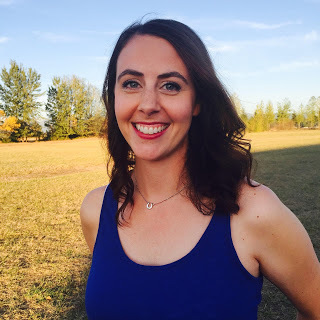
Theresa has been writing for most of her life, starting with her high school newspaper, also with the debate team, then later in college in creative writing courses. She would “journal home” via email about her exploits working on a ranch in Arizona, a fishing lodge in Alaska and at a missionary hospital in Ethiopia. Most recently she is working on her first novel, a work of fiction inspired by her experiences at the ranch in Arizona.

Guest Post by Theresa Rice
Learning The Biz
I recently attended a writing conference and had the chance to meet and mingle with people involved in and knowledgeable about the industry of writing, and publishing books. I wrote a more inspirational piece about it here: http://www.sassinboots.com/?p=78 but for a less fluffy and more boiled down version of the information here is a summary of the information I took away from the conference. Take it as information to add to your arsenal, if someone tells you I’m wrong and they work for a large publishing company or have data to disprove what I heard, then by all means, listen to them.
1. I’m writing my story, when do I pitch my idea and get my advance?
Excuse me, let me catch my breath from laughing. Very few authors are receiving advances anymore. I think I heard Amy Schumer received an $8M dollar advance, but she’s Amy Schumer, and her book would sell if she just breathed a crass joke or two into it. As a largely unknown or unpublished writer, you can expect that you will need to have your entire manuscript (MS) written and ready for submission when you are ready to find a publisher.
2. How to I find a publisher?
If you are looking for a small-scale independent press, search the internet. Two small publishers I met while at the conference were Pronghorn Press and Two Dot Publishing. On their websites you can get a feel for what they publish by previewing their catalog. They also will list instructions for submitting an email query on their website and should also indicate what they are looking for (women’s fiction, commercial fiction, historic fiction, poetry, etc.)
3. But I want the fame, the money, the big city lights…
If you are looking to shoot for the stars (and you should try) and get published with a large publishing company (Hachette, Penguin Random House, HarperCollins) you will need to find an agent. Again, the internet is your friend here. Search for agents and then review what they are looking for (similar to the small-scale publisher process above) and submit a query following their instructions. I cannot stress enough to FOLLOW THE INSTRUCTIONS. I heard at least two stories from agents rolling their eyes at would-be authors who randomly send emails that clearly demonstrate their inability to read and follow instructions. There are 4500 new titles being published DAILY. Don’t get shut out before you’ve even had a chance to get your query or first few chapters read.
4. How many times do I need to edit my manuscript?
There’s not a right answer here, but the sense is the more the better. One publisher indicated she would be excited by a writer who told her he/she was on his/her eighth revision. They don’t think of it as obsessive, but rather committed to presenting the best version of their work as possible. Before you send any queries and submit your chapters, your story should be in the best possible shape. Zero spelling errors, no grammar issues, no big leaps in time that don’t make sense. There is a great post about this topic right here: http://goo.gl/4wBK0n (via Janet Reid)
5. Using the internet and randomly sending emails seems really impersonal, anything else I could do?
Attending the writing conference is one of the THE BEST things I did for myself. If you are writing about the west check out Women Writing the West. They are a very supportive and informative group. Whatever your genre, find a writers association and see if there is a writing conference that relates to your genre that you can attend. Some associations require that you be published before joining. (I’m looking at you Western Writers of America). During the conference you generally will have the opportunity to meet with agents, consultants, editors and publishers to pitch your story and see if it’s something they might be interested in. Having a One Sheet will help you think about your story in new ways and better articulate the theme and unique experience you have to tell the story.
6. I’m thinking of self-publishing, what do you think of that?
That’s great! You must be a real go-getter. I might end up going that route, but I’d like to get someone else to do some of the work for me. Even though your MS should be in tip top shape when submitted, the editor will still likely work with you on awkward spots or various changes. And the publisher will design the cover and work with you on advertising and getting your precious baby, I mean book, onto retail shelves. Be aware that the general feeling right now in traditional retail stores is that self-published books don’t belong. Unless you have a great relationship with the owner of Small Town Books down the street from your house, most retail bookstores are apparently reticent to stock self-published books, if they do at all.
7. Maybe I’ll go with the small scale publisher…
There are a few items to keep in mind if you choose to go for a small scale publisher. A small scale publisher is just that: small. Their presence in the market is small. They generally are going to print books on demand. Large brick & mortar retailers can be resistant to print-on-demand books, making it harder to get your book out there and in front of readers. So if your book is harder to discover, and not as visible, you can imagine it’s going to be harder to make very many sales. 1000 books was the average number of books sold by an author working with one small publisher I spoke to. Not per week, per month or per year. Total. When you consider you will be receiving 8-15% of the wholesale price (.80 to $1.50 on a $10 wholesale price) you realize you can’t be in this business for the money. And that lofty 15% is for proven authors who are previously published. Additionally, as an unproven or new author, you can expect to help with some of the upfront costs of publishing with a small publisher. I was quoted about $1500. The publisher is taking a risk on you, putting work into editing your manuscript and designing your cover. They want you to help mitigate some of that risk. If you have a dog in the fight you’re more likely to help make sure your book sells at least enough to break even for the publisher.
So, did I take the wind out of your sails a little bit? I know. Sorry to be a buzz kill. The great thing is that this is knowledge, and every piece of information you can get your hands on will only help you on your journey to getting published. You do not know unless you try. So if you’re going to try, then get as much information as you can to make informed decisions around the process. I wish you the best of luck in your writing endeavors.
https://twitter.com/riceforbrainshttp://www.sassinboots.com/
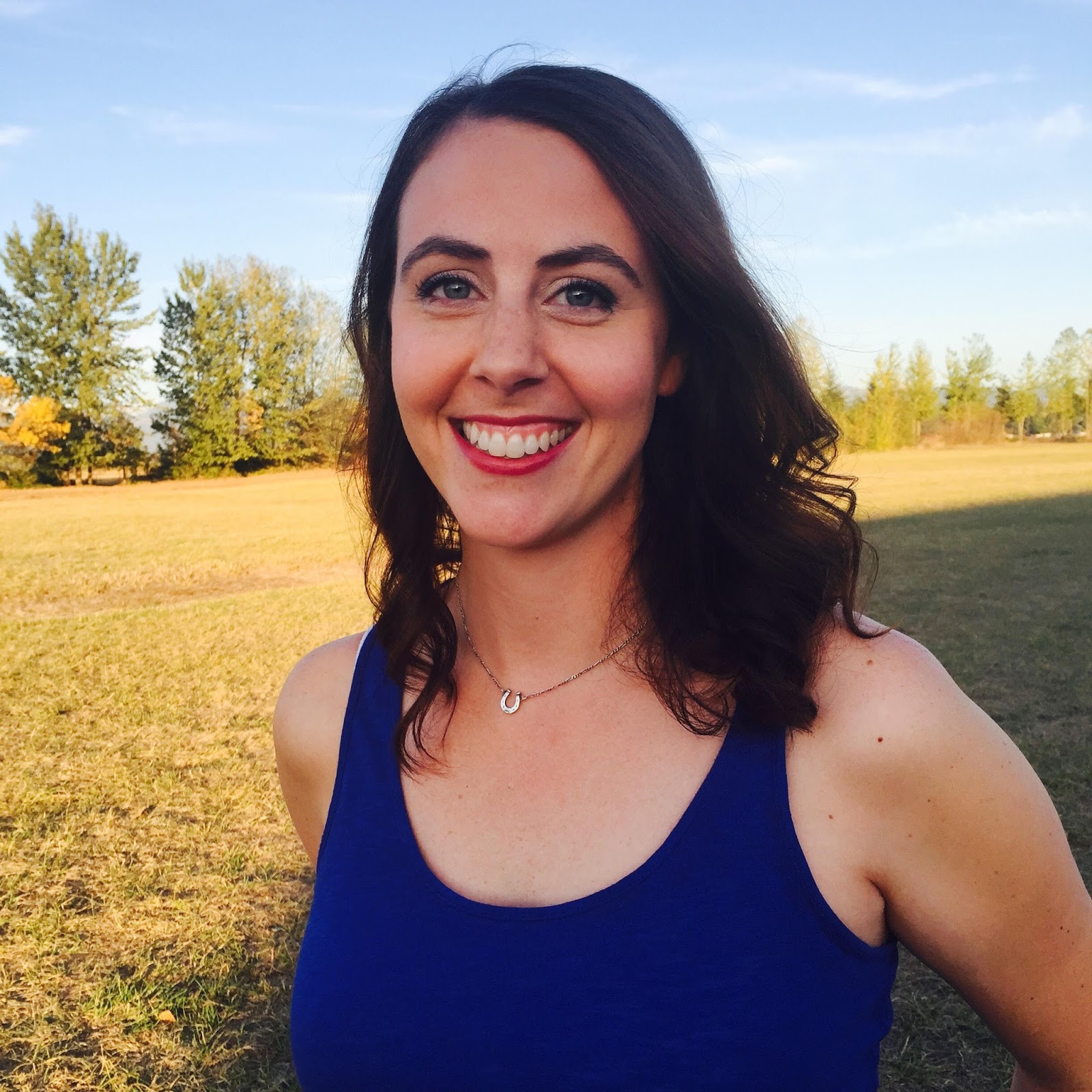
Theresa has been writing for most of her life, starting with her high school newspaper, also with the debate team, then later in college in creative writing courses. She would “journal home” via email about her exploits working on a ranch in Arizona, a fishing lodge in Alaska and at a missionary hospital in Ethiopia. Most recently she is working on her first novel, a work of fiction inspired by her experiences at the ranch in Arizona.
October 15, 2015
"Internet Porn Makes Nudity Irrelevant."
I was reading through some tweets yesterday and came across one about Playboy no longer including nudity in its magazine. I was sure it was nonsense so I followed the link and read the article. Still kind of reminded me of something from the Onion but it turns out to be true. I have not seen an actual copy of the magazine in years and will admit I am surprised it has survived.
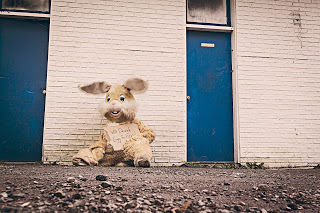
I laughed on many different levels. I looked up the press release, it used different wording but it does appear to be true. It is a year off so at least they will likely experience a huge surge around the announcement. Surge as in sales and publicity. The first article I read was written more casually and claimed the internet screwed everything up. I am sure it did.
Growing up in the 70's Playboy was part of the educational process, somewhere in the same realm of National Geographic and taking all the clothes off GI Joe and Barbie.
 Now days any kid with an Ipod or a tin can with an internet connection can stumble across any amount of hard core material, much less nudity, with little effort. This in itself is a legitimate concern for parents but it honestly would not surprise me if a modern Sears catalog or Old Navy commercial is as R rated as Playboy was when I was a kid.
I think of how much creativity the kids of today are being robbed of by not being challenged with the search for their parents secret stash. Many studies have been written over the years about the differences in generations and the general evolution away from ambition toward ambivalence. I may have stumbled upon a root cause the researchers missed.
Kids are not being challenged enough.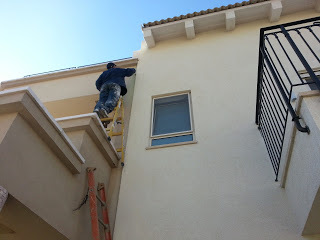
One of my childhood friends had to stack a step stool on a chair to access the secret stash in her parents closet. I realize this is only one example, but look at how many life skills she was learning. Problem solving, tenacity, logistics, physical fitness, stealth, mathematics, a little engineering and this is all before the biology or anatomy even began. Contrast this against the same kid sitting on the couch consuming solid corn syrup in some form, pushing a button on her phone. No challenge. I don't have time to conduct a formal study but it is not necessary, I have done in ten minutes what countless millions in federal money and dozens of universities would take years to accomplish.
In the early days of the internet, porn was about the only profitable industry. Back when everyone with a hand full of money scrambled to monetize this grand new technology, the sex peddlers successfully led the way.
 All these years later it hardly seems possible. The internet has woven itself into just about everything and companies who now have found a way to profit from it are innumerable. Additional irony? I find one of the reasons Playboy actually states for the change is a huge surge in popularity after relaunching Playboy.com as a work friendly publication without nudity. Does any one else understand why I am laughing? Oh gosh. This makes my head spin.
The next laughing point I had was when I continued writing headlines in none other than my head. "Internet Porn Makes Nudity Irrelevant." I see a lot to this. "Internet Porn Ruins Playboy". I ran through several and it brought up the question of what if it were true?
What if the over abundance of sex in every form, everywhere you look had really run its course. It is total nonsense but the whole thing makes me think and definitely has been good for some laughs.

I laughed on many different levels. I looked up the press release, it used different wording but it does appear to be true. It is a year off so at least they will likely experience a huge surge around the announcement. Surge as in sales and publicity. The first article I read was written more casually and claimed the internet screwed everything up. I am sure it did.
Growing up in the 70's Playboy was part of the educational process, somewhere in the same realm of National Geographic and taking all the clothes off GI Joe and Barbie.
 Now days any kid with an Ipod or a tin can with an internet connection can stumble across any amount of hard core material, much less nudity, with little effort. This in itself is a legitimate concern for parents but it honestly would not surprise me if a modern Sears catalog or Old Navy commercial is as R rated as Playboy was when I was a kid.
I think of how much creativity the kids of today are being robbed of by not being challenged with the search for their parents secret stash. Many studies have been written over the years about the differences in generations and the general evolution away from ambition toward ambivalence. I may have stumbled upon a root cause the researchers missed.
Kids are not being challenged enough.

One of my childhood friends had to stack a step stool on a chair to access the secret stash in her parents closet. I realize this is only one example, but look at how many life skills she was learning. Problem solving, tenacity, logistics, physical fitness, stealth, mathematics, a little engineering and this is all before the biology or anatomy even began. Contrast this against the same kid sitting on the couch consuming solid corn syrup in some form, pushing a button on her phone. No challenge. I don't have time to conduct a formal study but it is not necessary, I have done in ten minutes what countless millions in federal money and dozens of universities would take years to accomplish.
In the early days of the internet, porn was about the only profitable industry. Back when everyone with a hand full of money scrambled to monetize this grand new technology, the sex peddlers successfully led the way.
 All these years later it hardly seems possible. The internet has woven itself into just about everything and companies who now have found a way to profit from it are innumerable. Additional irony? I find one of the reasons Playboy actually states for the change is a huge surge in popularity after relaunching Playboy.com as a work friendly publication without nudity. Does any one else understand why I am laughing? Oh gosh. This makes my head spin.
The next laughing point I had was when I continued writing headlines in none other than my head. "Internet Porn Makes Nudity Irrelevant." I see a lot to this. "Internet Porn Ruins Playboy". I ran through several and it brought up the question of what if it were true?
What if the over abundance of sex in every form, everywhere you look had really run its course. It is total nonsense but the whole thing makes me think and definitely has been good for some laughs.
October 12, 2015
Independent Press Publishing Part 1
I believe I have stepped into quicksand with this one. Michele Barrow-Belisle's recent guest article on small or independent publishing was quite interesting and it is still racking up the reads. Awesome. What else happened? Reading her article caused numerous readers including myself to ask another question. Brace yourself, I am winding up the Jack in the Box ...
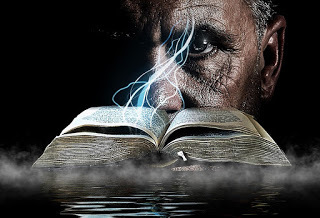
What is an independent press and what do they do?
I don't pretend to know much, here is a subject proving the point. Michele wrote a very informative piece on the benefits of "indie" publishing, but some of us are not quite sure exactly what we are talking about yet. I can't say I even knew enough about independent publishing to ask the right questions.
How many times I have stated, I don't even know yet what I don't know.
Here is another example. I found something else I am clueless about so at least I am looking. As I mentioned in Michele's post, I sent about six letters at that time to some of these small press outfits inquiring whether they might like to comment on the role they play in publishing, something like that. Not a single response back. (Still.) Author friends I asked have responded, her article is an example. I have done some of the ultra scientific research I take such pride in, reading stuff on websites and assuming it is accurate. I heard long ago if its on the internet it must be true. I thought the Dukes of Hazzard was real when I was a kid too. So let me start with what I have learned and blend it with my ignorance to see where it leads.
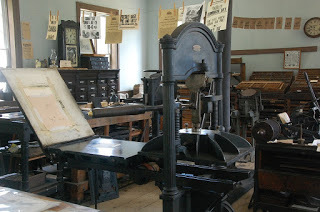
Independent publishing is not the same as "vanity" publishing. I understand vanity to be a company which takes money from an author to publish, print, possibly even promote their book. While this may be a valuable service, it is not the same as independent. I understand an independent publisher still signs a contract with an author, an agent may not be a mandatory component. The publisher agrees to pay the author a percentage of sales. The details are still more than a bit fuzzy but in general I think this is what is going on. Michele did note editing, artwork and promotion are also part of the independent deal. I am sure there is more to it. But we are making progress.
They do exist. There are publishing outfits outside of the conglomerate "big house" companies. They publish every variety of book out there. Here is my next vague learning point. These independent publishers tend to have specific genres they work within. This makes sense even to me. First I looked at one of the presses' website. Right off the bat they don't publish works with profanity, graphic violence or sex. That's cool, I love wholesome especially when it comes to multi-grain bread and especially beer, but I can barely pump gas without profanity much less write as I do. Not likely a good fit. I keep digging, and find numerous pages where someone has accumulated links to assorted small press outfits. Scratch off the ones which are dead links and look at the rest. The companies are fairly specific in what they are looking for. On the better lists, the accepted sub genre is included, this saves some wear and tear on my 1995 Dell mouse.
I need to narrow it down. My genre, I have been told is horror, so I logically trim it down to horror. Gotta start somewhere. I already know horror includes everything but history, cookbooks, foreign language map collections or something else I don't exactly recall. I have found no shortage of link lists in this category. Fortunately the publishers within horror get even more specific about the type of writing they will accept. This I suppose is very helpful, some for example don't mind monsters, others specifically prohibit them. At least I can narrow down the field up front. I don't have a monster but...
I have visited numerous sites at this point where I navigated directly to the submissions tab. It might not be a surprise how many of them quite prominently display something to the effect, "we are not accepting unsolicited submissions". Stop turning the crank, this is the part where Jack just popped his head out of the box.
Boy was I surprised. The process is still outlined even on most of the sites not accepting submissions. I will take it, we are still making progress. I think the verbiage goes something like this- Send a cover letter, a bio, a synopsis and a couple chapters. We might get back to you in a few months but don't call us, if we are interested we will contact you. (A friend of mine recently described a date which ended up just like this, its been four years and he is still waiting.) Also don't bother submitting to us unless we are the only publisher you are contacting and we will not under any circumstance send your stuff back. It all adds up.
This is beginning to sound quite a bit like querying an agent. I don't mean this to sound negative, it is not, but it does make sense. Anyone can write a book right? So why not thin it out and find a product which might be a good fit for their niche or specific market. Same idea so far. I get it. I will assume any of these companies are a business at their core. Typically businesses are looking for profit and reputable ones will be careful to guard that which makes them reputable. They should have an idea of what works for them. Opening the submission door to every person with internet access and an ability to process words would be a huge waste of time. I am however having a tough time finding information. One of the bigger well known companies I researched boasts taking on one new and one old project per year. Awesome. I think I might like to be that "one" new project. Sounds pretty elite. It would not surprise me if publishers are overwhelmed, especially those working in genres overflowing with budding artists and aspiring bestsellers.
To wrap it up for now, I keep seeing the statistics about self publishing becoming more predominant. All the articles I read point in the direction of this trend continuing, as far as I know it has not quite achieved world domination. The world domination date I predict is October 17, 2017. In the meantime, I can't help wondering how the small press fits into this whole publishing process. It further makes me wonder how much better a submission must be to find its way to the top of one of these piles and how does anyone ever get there?
As always I invite you to join the discussion. If you have first hand knowledge of this elusive process, lets talk.

What is an independent press and what do they do?
I don't pretend to know much, here is a subject proving the point. Michele wrote a very informative piece on the benefits of "indie" publishing, but some of us are not quite sure exactly what we are talking about yet. I can't say I even knew enough about independent publishing to ask the right questions.
How many times I have stated, I don't even know yet what I don't know.
Here is another example. I found something else I am clueless about so at least I am looking. As I mentioned in Michele's post, I sent about six letters at that time to some of these small press outfits inquiring whether they might like to comment on the role they play in publishing, something like that. Not a single response back. (Still.) Author friends I asked have responded, her article is an example. I have done some of the ultra scientific research I take such pride in, reading stuff on websites and assuming it is accurate. I heard long ago if its on the internet it must be true. I thought the Dukes of Hazzard was real when I was a kid too. So let me start with what I have learned and blend it with my ignorance to see where it leads.

Independent publishing is not the same as "vanity" publishing. I understand vanity to be a company which takes money from an author to publish, print, possibly even promote their book. While this may be a valuable service, it is not the same as independent. I understand an independent publisher still signs a contract with an author, an agent may not be a mandatory component. The publisher agrees to pay the author a percentage of sales. The details are still more than a bit fuzzy but in general I think this is what is going on. Michele did note editing, artwork and promotion are also part of the independent deal. I am sure there is more to it. But we are making progress.
They do exist. There are publishing outfits outside of the conglomerate "big house" companies. They publish every variety of book out there. Here is my next vague learning point. These independent publishers tend to have specific genres they work within. This makes sense even to me. First I looked at one of the presses' website. Right off the bat they don't publish works with profanity, graphic violence or sex. That's cool, I love wholesome especially when it comes to multi-grain bread and especially beer, but I can barely pump gas without profanity much less write as I do. Not likely a good fit. I keep digging, and find numerous pages where someone has accumulated links to assorted small press outfits. Scratch off the ones which are dead links and look at the rest. The companies are fairly specific in what they are looking for. On the better lists, the accepted sub genre is included, this saves some wear and tear on my 1995 Dell mouse.

I need to narrow it down. My genre, I have been told is horror, so I logically trim it down to horror. Gotta start somewhere. I already know horror includes everything but history, cookbooks, foreign language map collections or something else I don't exactly recall. I have found no shortage of link lists in this category. Fortunately the publishers within horror get even more specific about the type of writing they will accept. This I suppose is very helpful, some for example don't mind monsters, others specifically prohibit them. At least I can narrow down the field up front. I don't have a monster but...
I have visited numerous sites at this point where I navigated directly to the submissions tab. It might not be a surprise how many of them quite prominently display something to the effect, "we are not accepting unsolicited submissions". Stop turning the crank, this is the part where Jack just popped his head out of the box.

Boy was I surprised. The process is still outlined even on most of the sites not accepting submissions. I will take it, we are still making progress. I think the verbiage goes something like this- Send a cover letter, a bio, a synopsis and a couple chapters. We might get back to you in a few months but don't call us, if we are interested we will contact you. (A friend of mine recently described a date which ended up just like this, its been four years and he is still waiting.) Also don't bother submitting to us unless we are the only publisher you are contacting and we will not under any circumstance send your stuff back. It all adds up.
This is beginning to sound quite a bit like querying an agent. I don't mean this to sound negative, it is not, but it does make sense. Anyone can write a book right? So why not thin it out and find a product which might be a good fit for their niche or specific market. Same idea so far. I get it. I will assume any of these companies are a business at their core. Typically businesses are looking for profit and reputable ones will be careful to guard that which makes them reputable. They should have an idea of what works for them. Opening the submission door to every person with internet access and an ability to process words would be a huge waste of time. I am however having a tough time finding information. One of the bigger well known companies I researched boasts taking on one new and one old project per year. Awesome. I think I might like to be that "one" new project. Sounds pretty elite. It would not surprise me if publishers are overwhelmed, especially those working in genres overflowing with budding artists and aspiring bestsellers.

To wrap it up for now, I keep seeing the statistics about self publishing becoming more predominant. All the articles I read point in the direction of this trend continuing, as far as I know it has not quite achieved world domination. The world domination date I predict is October 17, 2017. In the meantime, I can't help wondering how the small press fits into this whole publishing process. It further makes me wonder how much better a submission must be to find its way to the top of one of these piles and how does anyone ever get there?
As always I invite you to join the discussion. If you have first hand knowledge of this elusive process, lets talk.
October 7, 2015
12 Rather Random Reasons to Publish with Small Publishers
Last week I put out a call to talk about smaller independent presses which are loosely defined by not being owned or controlled by anyone else. I have heard some or many do not require an agent to agree to publish a book, but what else? This in itself sounds like a logical progression from self publishing. This continues a discussion about alternatives available to an author whether they are established, aspiring or like me, on a quest to answer questions. Not a single independent press returned my inquiry which does not really surprise me. I have definitely covered some very convincing reasons to self publish with guest posts, but I am still looking for more input. If you are someone or know someone with experience in another form of fiction publishing please contact me. I am not the only person who would like to hear about it. The following article is a response to last weeks plea for the same. Friends of Firetok.com will recognize her as Michele Barrow-Belisle or maybe even Cinderella from her first guest spot here. She already has several books in print which are available on her website and she obviously has first hand knowledge. I appreciate her sharing some of her experience to help shed some light on publishing alternatives as well as her continued support of this blog.
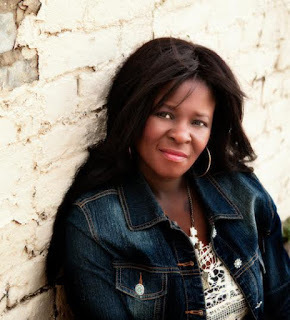
Guest Post by Michele Barrow-Belisle
1. Communication. Smaller publishers are easier to reach. No need for the added lengthy delay of finding an agent, since they accept submissions directly from authors.
2. Speed. Most go digital first, but will often put books into print after a specific time frame or sales point is reached.
3. Marketing. They do some marketing for you, but not tons. That said, even with the big publishing houses the author is responsible for doing much of the promo and marketing of their books. Social media is now your new best friend ;)
4. Books. They'll make books available for reselling to book stores on consignment, hopefully at cost or at least with a deep discount. The disadvantage for some is that books sold to stores on consignment means the cost and planning fall on the author’s shoulders. However, with proper marketing and PR, you can reap the many benefits of having your book in print. Plus book signings are such a blast!
5. Timing. Things happen quickly with smaller publishers. It doesn’t take a year or more from sale to publication. Things tend to move a lot faster.
6. Editors. You don't have to pay for an editor, or four. My books go through four rounds of edits with four different editors, which mean four sets of eyes—opinions—suggestions—proof readers and so on. That is golden.
7. Advance copies. They might arrange for some advance review copies of your book to be made available for sending out. They may even have reviewers they automatically submit to on your behalf. Some may even set up a virtual book tour for you.Want to know more about live book tours; check out Sheri McInnis' post here: Book Tour
8. Money. You keep a higher percentage of the royalties… always a nice feature, especially since there are seldom advances paid up front. You also retain your copyright.
9. Legal aspects. They likely have a small but mighty team of people working behind the scenes to secure your subsidiary rights… and if they’re asking for those rights in your contract (film, audio, foreign language, etc.) you definitely want to ask how they plan on exploiting them. I discovered the incredible powers-that-be working alongside my publisher, and the benefits of it were central to selling the movie rights for my book Fire & Ice, and the audio book and foreign language rights too.You can read a bit more about that journey here: Cinderella Story- Inspiration from Author Michele Barrow-Belisle
10. Your cover art is paid for. I suggest looking for companies that have a consistent track record of great covers, because let’s face it, your cover sells your book before a single word you’ve written does. Except perhaps the title. And you will likely get to choose that too. Plus all formatting and uploading is done for you, to make your title available at all of the various book retailers.
11. Creative Input. You’ll likely have more input on the cover design for your book. With CleanReads.com, I was able to answer a questionnaire about what I'd like on my cover and what I wouldn’t like there, and then was given input once the design was complete. I was fortunate because in both cases I loved the imagery right from the start.
12. There’s the community. You’ll belong to a group of authors and there’s something to be said for like-minded comradery, a cheering section, or a sympathetic shoulder to lean on when a bad review comes in. They'll often cross promote with you. I adore my fellow CR authors!
So those are the top advantages in my experience. What are your thoughts on the subject? I plan on experiencing all three modes in order to do a fair comparison, and reap the benefits each has to offer. Self-publishing. Small press publishing. Agented/traditional publishing.
Which option is right for you and your future bestseller?
The good news? The choice, ultimately and fortunately, is yours!
As always, I wish you massive, audacious, outrageous publishing success!
Michele Barrow-Belisle
twitter.com/MicheleBelisle
www.MicheleBarrowBelisle.com
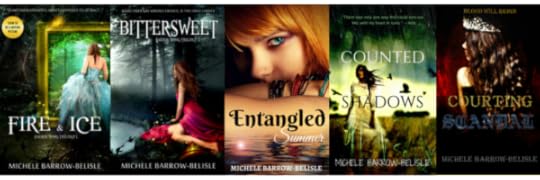
*FIRE & ICE in development for a Major Motion Picture* ~~~

Guest Post by Michele Barrow-Belisle
1. Communication. Smaller publishers are easier to reach. No need for the added lengthy delay of finding an agent, since they accept submissions directly from authors.
2. Speed. Most go digital first, but will often put books into print after a specific time frame or sales point is reached.
3. Marketing. They do some marketing for you, but not tons. That said, even with the big publishing houses the author is responsible for doing much of the promo and marketing of their books. Social media is now your new best friend ;)
4. Books. They'll make books available for reselling to book stores on consignment, hopefully at cost or at least with a deep discount. The disadvantage for some is that books sold to stores on consignment means the cost and planning fall on the author’s shoulders. However, with proper marketing and PR, you can reap the many benefits of having your book in print. Plus book signings are such a blast!
5. Timing. Things happen quickly with smaller publishers. It doesn’t take a year or more from sale to publication. Things tend to move a lot faster.
6. Editors. You don't have to pay for an editor, or four. My books go through four rounds of edits with four different editors, which mean four sets of eyes—opinions—suggestions—proof readers and so on. That is golden.
7. Advance copies. They might arrange for some advance review copies of your book to be made available for sending out. They may even have reviewers they automatically submit to on your behalf. Some may even set up a virtual book tour for you.Want to know more about live book tours; check out Sheri McInnis' post here: Book Tour
8. Money. You keep a higher percentage of the royalties… always a nice feature, especially since there are seldom advances paid up front. You also retain your copyright.
9. Legal aspects. They likely have a small but mighty team of people working behind the scenes to secure your subsidiary rights… and if they’re asking for those rights in your contract (film, audio, foreign language, etc.) you definitely want to ask how they plan on exploiting them. I discovered the incredible powers-that-be working alongside my publisher, and the benefits of it were central to selling the movie rights for my book Fire & Ice, and the audio book and foreign language rights too.You can read a bit more about that journey here: Cinderella Story- Inspiration from Author Michele Barrow-Belisle
10. Your cover art is paid for. I suggest looking for companies that have a consistent track record of great covers, because let’s face it, your cover sells your book before a single word you’ve written does. Except perhaps the title. And you will likely get to choose that too. Plus all formatting and uploading is done for you, to make your title available at all of the various book retailers.
11. Creative Input. You’ll likely have more input on the cover design for your book. With CleanReads.com, I was able to answer a questionnaire about what I'd like on my cover and what I wouldn’t like there, and then was given input once the design was complete. I was fortunate because in both cases I loved the imagery right from the start.
12. There’s the community. You’ll belong to a group of authors and there’s something to be said for like-minded comradery, a cheering section, or a sympathetic shoulder to lean on when a bad review comes in. They'll often cross promote with you. I adore my fellow CR authors!
So those are the top advantages in my experience. What are your thoughts on the subject? I plan on experiencing all three modes in order to do a fair comparison, and reap the benefits each has to offer. Self-publishing. Small press publishing. Agented/traditional publishing.
Which option is right for you and your future bestseller?
The good news? The choice, ultimately and fortunately, is yours!
As always, I wish you massive, audacious, outrageous publishing success!
Michele Barrow-Belisle
twitter.com/MicheleBelisle
www.MicheleBarrowBelisle.com
*FIRE & ICE in development for a Major Motion Picture* ~~~
October 1, 2015
What isn't Horror?
It has been quite a bit since I did a post on horror. Not especially because it has not been on my mind or because I have it figured out, no nothing like that.
Just a couple of weeks ago we had our high school class reunion. I was prepared for it to be every cliche I have seen or read. It turned out to be a very nice time and I was able to connect with school age friends whom I have not seen since the early 80's. One of these people in particular was a very good friend all through school. Our families attended the same church so over the years we had many experiences in common.
We got to talking for the first time since commencement and the questions came up about my writing and so forth. She was interested until I made the mistake of mentioning horror. If I could have a picture of the look on her face. I have seen it all too many times. But wait... the piano player stopped playing and the saloon went silent.
The sound of a single cricket became deafening. I went on to explain how I have written many articles on misconceptions of the genre. Once we moved on to the subject of how much supernatural fiction is considered horror she backed away from the edge of the bridge and pulled herself back to safety. The piano player got back to business as usual.
It was a close call.
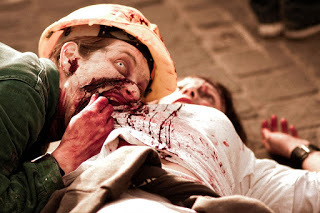
She and her husband both eagerly admitted their love of supernatural and paranormal. I wasn't left standing alone looking around like I was lost or someone noticed I crapped my pants in a crowded room. Here is what I see as an illustration of the problem though just in case that image is not enough of a problem by itself.
My mind reading app was disabled at the moment of the conversation but I am fairly confident by the time her mind processed the word horror, everything had already gone into slow motion as she looked desperately for an escape route. I am pretty sure some zombie with a chainsaw and bloody guts might have been involved. At that moment the zombie likely looked just like me... but I didn't really, not yet anyhow. The whole zombie thing didn't happen until sometime late Sunday morning when...never mind.
How does this relate to anything else?
Her initial reaction was no different from my own or nearly anyone I converse with. I have written about it here numerous times and will no doubt continue to. Why? Because I swear the deeper I dig the more fascinating it gets. The more misconceptions I find not only in my own mind but in other people I converse with. Don't get me wrong, I don't think for a second I will solve any part of the puzzle but neither will I give up the search. It is just too interesting.
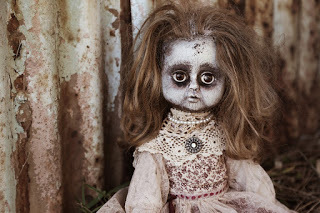
How does this have to do with what I perceive as a misunderstanding? I am starting to think part of the complexity lies in the sheer diversity of the horror genre as a whole. I have spent some time looking at this sweet graphic put out by Horror on Screen which makes it much easier to understand. They list psychological, killer, monster and paranormal as the main sub genres of horror. That just covered a lot of ground. These are just the main sub genres, from here they splinter off into what I might as well call sub-sub-genres because I cant think of a stupider sounding term. This covers the better part of the rest of the horror splinters.
To illustrate this is in a different way I went to Amazon and looked at books for sale by category. This is a pretty scientific and highly accurate method of research so please don't make fun of me (too much). I look at the top two categories, I realize this is not exactly genre, but check it out, it is close enough for this discussion. The top two are historical and none other than horror. 149,000 books for historical and 147,000 for horror, rounded up in both cases. Religious and inspirational comes in a close third at 81,000. Close my ass, it is not even in the same vicinity. The numbers start to spread out from here. I hate to get too complex but look at the sheer volume even Amazon lumps into what they call horror. That is a disproportionate amount of books. They might as well have three categories, historic, horror and all the other books. They could just call the category "other". Good grief. Why? Because so many different types of books are lumped in there. Horror is a pretty big catch-all, and it is extremely popular in all its forms.
Going back to my classmate and her adverse reaction to horror, she really had no idea that one of her favorite types of book pretty much falls into the catch all of horror. Does it really matter? I can say it really doesn't to me other than to deepen my knowledge of what I have said more than once is a very misunderstood genre. I will keep writing what I write and exercise caution when I speak to people about it depending on how long I would like the conversation to last.
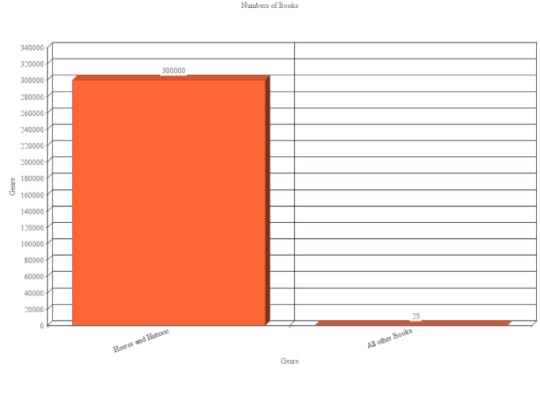 This is a total nonsense graph I created to exaggerate the point I am trying to make.
Just a couple of weeks ago we had our high school class reunion. I was prepared for it to be every cliche I have seen or read. It turned out to be a very nice time and I was able to connect with school age friends whom I have not seen since the early 80's. One of these people in particular was a very good friend all through school. Our families attended the same church so over the years we had many experiences in common.

We got to talking for the first time since commencement and the questions came up about my writing and so forth. She was interested until I made the mistake of mentioning horror. If I could have a picture of the look on her face. I have seen it all too many times. But wait... the piano player stopped playing and the saloon went silent.
The sound of a single cricket became deafening. I went on to explain how I have written many articles on misconceptions of the genre. Once we moved on to the subject of how much supernatural fiction is considered horror she backed away from the edge of the bridge and pulled herself back to safety. The piano player got back to business as usual.
It was a close call.
She and her husband both eagerly admitted their love of supernatural and paranormal. I wasn't left standing alone looking around like I was lost or someone noticed I crapped my pants in a crowded room. Here is what I see as an illustration of the problem though just in case that image is not enough of a problem by itself.
My mind reading app was disabled at the moment of the conversation but I am fairly confident by the time her mind processed the word horror, everything had already gone into slow motion as she looked desperately for an escape route. I am pretty sure some zombie with a chainsaw and bloody guts might have been involved. At that moment the zombie likely looked just like me... but I didn't really, not yet anyhow. The whole zombie thing didn't happen until sometime late Sunday morning when...never mind.

How does this relate to anything else?
Her initial reaction was no different from my own or nearly anyone I converse with. I have written about it here numerous times and will no doubt continue to. Why? Because I swear the deeper I dig the more fascinating it gets. The more misconceptions I find not only in my own mind but in other people I converse with. Don't get me wrong, I don't think for a second I will solve any part of the puzzle but neither will I give up the search. It is just too interesting.
How does this have to do with what I perceive as a misunderstanding? I am starting to think part of the complexity lies in the sheer diversity of the horror genre as a whole. I have spent some time looking at this sweet graphic put out by Horror on Screen which makes it much easier to understand. They list psychological, killer, monster and paranormal as the main sub genres of horror. That just covered a lot of ground. These are just the main sub genres, from here they splinter off into what I might as well call sub-sub-genres because I cant think of a stupider sounding term. This covers the better part of the rest of the horror splinters.

To illustrate this is in a different way I went to Amazon and looked at books for sale by category. This is a pretty scientific and highly accurate method of research so please don't make fun of me (too much). I look at the top two categories, I realize this is not exactly genre, but check it out, it is close enough for this discussion. The top two are historical and none other than horror. 149,000 books for historical and 147,000 for horror, rounded up in both cases. Religious and inspirational comes in a close third at 81,000. Close my ass, it is not even in the same vicinity. The numbers start to spread out from here. I hate to get too complex but look at the sheer volume even Amazon lumps into what they call horror. That is a disproportionate amount of books. They might as well have three categories, historic, horror and all the other books. They could just call the category "other". Good grief. Why? Because so many different types of books are lumped in there. Horror is a pretty big catch-all, and it is extremely popular in all its forms.
Going back to my classmate and her adverse reaction to horror, she really had no idea that one of her favorite types of book pretty much falls into the catch all of horror. Does it really matter? I can say it really doesn't to me other than to deepen my knowledge of what I have said more than once is a very misunderstood genre. I will keep writing what I write and exercise caution when I speak to people about it depending on how long I would like the conversation to last.
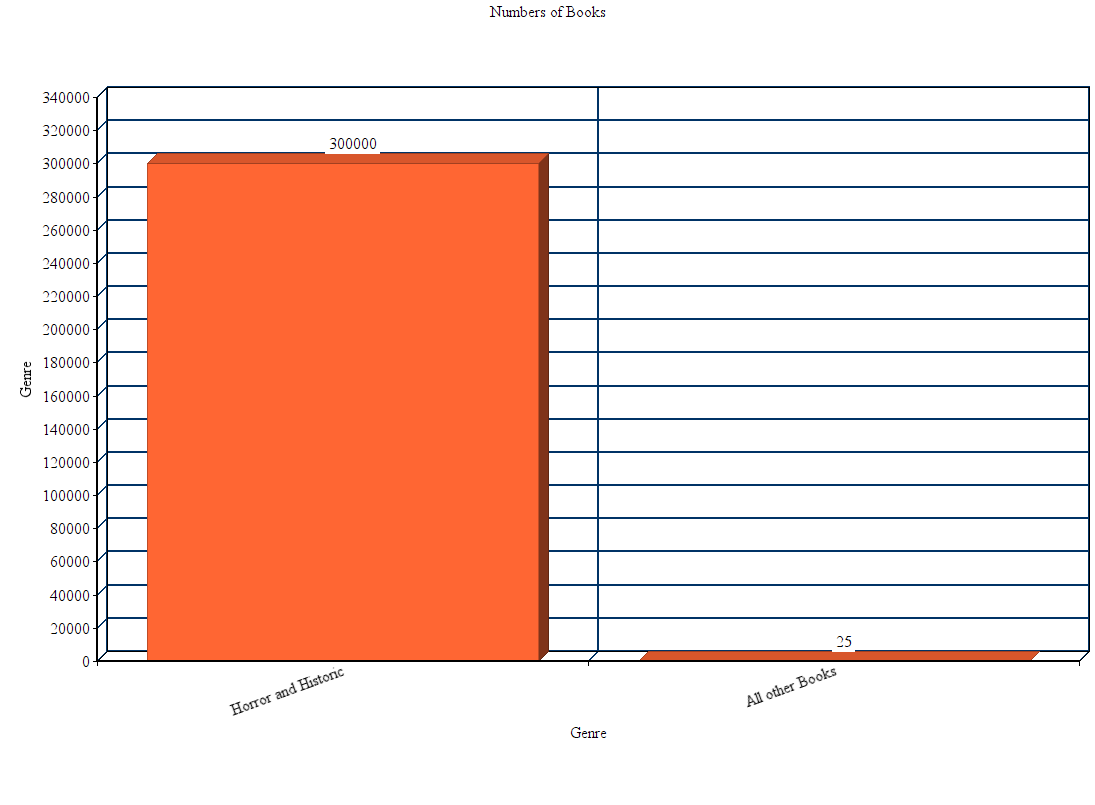 This is a total nonsense graph I created to exaggerate the point I am trying to make.
How Reading Horror Can Improve Your Life
Some time ago now I was having a conversation on Twitter about horror. It would seem I was not alone in my quest to understand the appeal of the "misunderstood genre". When someone or something strikes me as interesting, I will almost always follow a link and check out whatever site they have featured. In this case I ended up on a blog on horrormade.com. I read an author interview where the question was, something like,
" If you could have one monster live in the closet of your worst enemy, what would it be and why?"
I could not stop laughing. This is the kind of genius which mystifies and inspires me. How does anyone come up with a question like that? Think about how many questions will really be answered here, a psychological inventory, a quick intellect check, creativity, the list could go on. What I would give to hear Anderson Cooper break something like that out one night on 60 minutes. I am already imagining Donald or Hillary's response. Anyhow, the interviewer in this case was Jeanette Andromeda and what follows is an excerpt from her life journey as it relates to the "misunderstood genre". I would encourage you to wander over to her site after you read this article of course and check out her artwork, these are her original pieces scattered throughout the post.
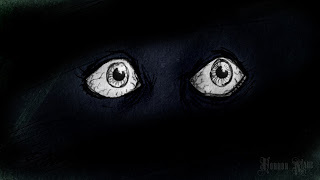
Guest Post by Jeanette Andromeda
1) Horror teaches you survival skillsGreat authors put a ton of time into researching their books, and often that means that deliciously useful little tidbits end up in your head. And, I've found, that those little tidbits remain there.
Things like: Cattail weeds are not only eatable but very nutritious - Monster by Frank Peretti &
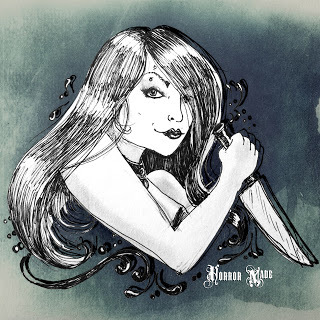
A person can die within a few short minutes if you slice open their femoral artery (the groin where your leg connects). And you can save that same (mortally wounded) person's life by using a belt as a tourniquet just above or on top of the cut. - It by Stephen King
2) Horror primes your brain to spot danger fasterSince horror lives in the land of "what if" that means readers of horror also do. And when you live primed to think about the possibility of things going wrong, that means you're able to spot dangerous situations or characters in real life that much quicker.
That dark alleyway with the dumpsters? Yeah, maybe not the best short-cut.
That stranger knocking on your door in the middle of the night? Probably best not to let him in and instead call whomever he needs for help.
3) Horror makes you deal with your fearsThis genre plays with and preys upon our fears and makes us face them. By facing them we can overcome them through the actions of the characters within the story. Maybe not entirely, but in some small way, you've beaten that fear into submission.
One of my personal fears is moving into a new house only to discover that the previous tenant never left. Be it a ghost, a body, or something all too alive living in the walls, it's something I've always feared. So I purposely seek out stories which feature that in them. Maybe it's not a recommended form of therapy, but I have found it to help me out.
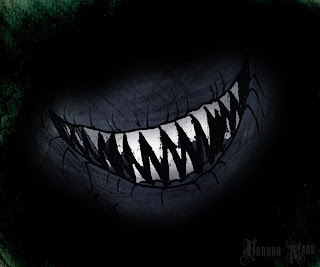 4) Horror gives you somewhere to let your demons outLet's face it, this world we live in? It's still in the land of white picket fences. If something's wrong, don't talk about it, if you're upset deal with it-- in private, if you're furious with someone swallow that anger and let it be. Passive is what society tends to want.
But horror allows you to actively purge those negative energies.
Those bullies you have to deal with in school? Yep, Jason Voorhees will take them right out for you.
Feeling trapped and overwhelmed by work like Jack in The Shining? Live vicariously through his melt-down instead of having to break apart for real.
And perhaps that sounds ugly, getting your violent aggression out through characters in a book. But I think we've all found ourselves in those moments where we really want to lash out in real life, but (rightly) hold ourselves back. Horror lets you deal with what everyone wants to pretend doesn't exist.
It does exist. And it's not going away unless you have an outlet.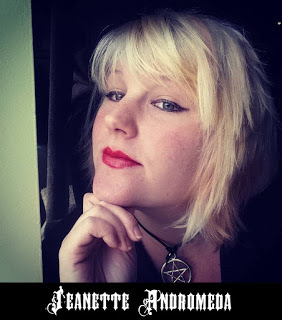
Jeanette is a blogger, artist and YouTuber exploring the delightfully dark world of horror and art through her many adventures. You can find her over on HorrorMade.com, www.facebook.com/HorrorMade, @horror_made on Twitter. Pop on by to say hello.
" If you could have one monster live in the closet of your worst enemy, what would it be and why?"
I could not stop laughing. This is the kind of genius which mystifies and inspires me. How does anyone come up with a question like that? Think about how many questions will really be answered here, a psychological inventory, a quick intellect check, creativity, the list could go on. What I would give to hear Anderson Cooper break something like that out one night on 60 minutes. I am already imagining Donald or Hillary's response. Anyhow, the interviewer in this case was Jeanette Andromeda and what follows is an excerpt from her life journey as it relates to the "misunderstood genre". I would encourage you to wander over to her site after you read this article of course and check out her artwork, these are her original pieces scattered throughout the post.

Guest Post by Jeanette Andromeda
1) Horror teaches you survival skillsGreat authors put a ton of time into researching their books, and often that means that deliciously useful little tidbits end up in your head. And, I've found, that those little tidbits remain there.
Things like: Cattail weeds are not only eatable but very nutritious - Monster by Frank Peretti &

A person can die within a few short minutes if you slice open their femoral artery (the groin where your leg connects). And you can save that same (mortally wounded) person's life by using a belt as a tourniquet just above or on top of the cut. - It by Stephen King
2) Horror primes your brain to spot danger fasterSince horror lives in the land of "what if" that means readers of horror also do. And when you live primed to think about the possibility of things going wrong, that means you're able to spot dangerous situations or characters in real life that much quicker.
That dark alleyway with the dumpsters? Yeah, maybe not the best short-cut.
That stranger knocking on your door in the middle of the night? Probably best not to let him in and instead call whomever he needs for help.
3) Horror makes you deal with your fearsThis genre plays with and preys upon our fears and makes us face them. By facing them we can overcome them through the actions of the characters within the story. Maybe not entirely, but in some small way, you've beaten that fear into submission.
One of my personal fears is moving into a new house only to discover that the previous tenant never left. Be it a ghost, a body, or something all too alive living in the walls, it's something I've always feared. So I purposely seek out stories which feature that in them. Maybe it's not a recommended form of therapy, but I have found it to help me out.
 4) Horror gives you somewhere to let your demons outLet's face it, this world we live in? It's still in the land of white picket fences. If something's wrong, don't talk about it, if you're upset deal with it-- in private, if you're furious with someone swallow that anger and let it be. Passive is what society tends to want.
 But horror allows you to actively purge those negative energies.
Those bullies you have to deal with in school? Yep, Jason Voorhees will take them right out for you.
Feeling trapped and overwhelmed by work like Jack in The Shining? Live vicariously through his melt-down instead of having to break apart for real.
And perhaps that sounds ugly, getting your violent aggression out through characters in a book. But I think we've all found ourselves in those moments where we really want to lash out in real life, but (rightly) hold ourselves back. Horror lets you deal with what everyone wants to pretend doesn't exist.
It does exist. And it's not going away unless you have an outlet.

Jeanette is a blogger, artist and YouTuber exploring the delightfully dark world of horror and art through her many adventures. You can find her over on HorrorMade.com, www.facebook.com/HorrorMade, @horror_made on Twitter. Pop on by to say hello.
September 30, 2015
MY TOP 4 BOOK TOUR TIPS
As usual, much going on around here lately, a yet to be announced little project which is taking quite a bit of time. A couple horror related posts for this weekend, research for an article I am trying to do on publishing alternatives. Surprisingly, I have encountered very few folks willing to pitch in outside of self publishing. No wonder traditional and semi traditional publishing appears like a damn secret society to the rest of us. I am not even getting responses from smaller presses, business must be real good. Keep in mind I am approaching it as a bloggist trying to write a post than an author looking for a back door, which I am not. Some might argue I am neither...
I have posted a couple hugely popular articles on the benefits of self publishing by authors Sheri McInnis and Bibiana Krall, which has led many people to the assumption this site is about self publishing. It is not. I am not sure I have figured out what this site is about yet, but I will continue to look. I would love to present some other view points if for no other reason than to educate myself.
If you know of an agent, author someone in the non self publishing world willing to talk, please send them my way. Speaking of the traditional publishing world and conspiracy. My co-conspirator Sheri is back to share a little about one of her book tours with a traditional publisher earlier in her career. Grab your surgical Michael Jackson mask and some hand sanitizer and brace yourself.
Guest Post by Sheri McInnis
When my first book came out in August of 2003, Simon & Schuster sent me on a four-day tour of the American Midwest. I was a little disappointed The Today Show and Good Morning America weren't on the list, but even if I wasn't going to meet Matt Lauer, I still wanted to look and feel my best. So about a week before I was set to leave, I decided to have a chip in my front tooth filled. Bad idea.
BOOK TOUR TIP #1: DO NOT GO TO THE DENTIST BEFORE A TOUR

It was a hot August afternoon when I waltzed into my dentist's office to see the dental assistant coughing and blowing her nose. She held up her hand. "Don't worry! It's not SARS," she said. It was the summer of SARS and everyone in Toronto – where I'm from – was on guard. "It's just a cold, I promise. I've had it checked out." SARS or not, I didn't want to get sick for my first book tour. But I hadn't had a cold in five years – and I really wanted that chip fixed – so I took a deep breath and stretched out in the exam chair. A few minutes later, the lights went out and the office, usually buzzing with drills and muzak, went quiet. As coincidence would have it, it was August 14, 2003 – the day of the big Northeast Blackout that shut down electricity to fifty million people for two days. My dentist managed to fix my chipped tooth on emergency power, but the next morning I woke up to a dark apartment – and one of the worst colds I've ever had in my life. Remember Toronto was the focus of the SARS epidemic that year. Even the World Health Organization had put the city on a travel alert. So it wasn't a good time for an author from Toronto to go on a book tour with a cold. It crossed my mind to call the whole thing off. But there were radio and TV interviews set up, readings, signings, almost every minute accounted for. I didn't want to disappoint my publisher – and I certainly didn't want to lose my chance at a book tour. But it was still miserable timing. I'll never forget walking into the airport and seeing all those big SARS signs warning travelers that if they were coughing or had a fever, they wouldn’t be allowed to fly. When I went through security, I was mopping sweat off my forehead and shivering so badly, I must've looked like I was auditioning for Midnight Express. Which brings me to …
BOOK TOUR TIP #2: BRING LOTS OF KLEENEX
I made it through that flight without attracting too many nasty stares – though I did need a lot Kleenex to blow my nose. When the author escort met me at the Minneapolis airport, he knew I was from Toronto and he was a little concerned. "No, no! It's not SARS! I promise! It's just a cold." He seemed to take that in stride, sweet soul, and after a busy day, he drove me to my first reading that night. Outside the bookstore he turned to me, like a dad dropping his daughter off before senior prom. "Now don't be too disappointed if nobody shows up," he said. "I drove Tom Wolfe once and he said nobody showed for his first reading." "Yeah, yeah," I said, sucking a Halls lozenge and so anxious about the appearance, I barely heard him. But when I walked into that bookstore, he was right. There were forty empty chairs and not a single person showed all night. Luckily, the manager had read the book and she loved it, so we had a great time chatting as I 'signed stock' and we slapped 'Signed by the Author' stickers on each of the books. But that's another reason you might need Kleenex. Because I certainly had to dry a few tears remembering all those empty chairs the next day. Luckily, people did show up for my other readings – which is where the next tip comes in …
BOOK TOUR TIP #3: PRACTICE YOUR INSCRIPTION
Do not wait until you're sitting in front of the first stranger who buys your book to come up with the catchy little phrase you'll use when you sign it. Because you might've autographed copies for your family – Dear Mom! Thanks for always believing in me! or Suck it bro! I'm an author now! – so those inscriptions will come naturally to you. But if you haven't figured out what to write for strangers, when someone is standing there waiting for you to personalize a book for them, trust me, you'll get the worst writer's block of your life. You'll be left with lame clichés like Best Wishes! and Enjoy! – which you'll probably regret forever. So practice your clever inscription before you go on tour – or even before you get published. It'll be one less stress when you're actually out there signing books. Speaking of books …
BOOK TOUR TIP #4: DON'T FORGET A NOTEBOOK
For one thing, you'll want to keep a journal of everything you see and do – because author escorts will show you around town and it'll be fun to see the sights. In Minneapolis, we went to the corner where Mary Tyler Moore threw her hat up in the air in her opening credits – and then across the river to see the big brownstone where F. Scott Fitzgerald grew up. But more importantly, you'll need the notebook to jot down the names and contact info of the great bookstore staff, TV interviewers, radio hosts, hotel employees, author escorts and new readers you'll meet along the way. Because people are so great to authors on tour, you're not even going to miss Matt Lauer. By the way, my teeth looked pretty good the whole time. But I would rather have kept the chip.

Sheri McInnis is the author of two traditionally-published novels, DEVIL MAY CARE and BY INVITATION ONLY. She's self-publishing her third novel,THE HUNTER'S MOON, and will be taking a virtual book tour this time.
Contact @slmcinnishttp://www.sherimcinnis.com/
I have posted a couple hugely popular articles on the benefits of self publishing by authors Sheri McInnis and Bibiana Krall, which has led many people to the assumption this site is about self publishing. It is not. I am not sure I have figured out what this site is about yet, but I will continue to look. I would love to present some other view points if for no other reason than to educate myself.
If you know of an agent, author someone in the non self publishing world willing to talk, please send them my way. Speaking of the traditional publishing world and conspiracy. My co-conspirator Sheri is back to share a little about one of her book tours with a traditional publisher earlier in her career. Grab your surgical Michael Jackson mask and some hand sanitizer and brace yourself.

Guest Post by Sheri McInnis
When my first book came out in August of 2003, Simon & Schuster sent me on a four-day tour of the American Midwest. I was a little disappointed The Today Show and Good Morning America weren't on the list, but even if I wasn't going to meet Matt Lauer, I still wanted to look and feel my best. So about a week before I was set to leave, I decided to have a chip in my front tooth filled. Bad idea.
BOOK TOUR TIP #1: DO NOT GO TO THE DENTIST BEFORE A TOUR

It was a hot August afternoon when I waltzed into my dentist's office to see the dental assistant coughing and blowing her nose. She held up her hand. "Don't worry! It's not SARS," she said. It was the summer of SARS and everyone in Toronto – where I'm from – was on guard. "It's just a cold, I promise. I've had it checked out." SARS or not, I didn't want to get sick for my first book tour. But I hadn't had a cold in five years – and I really wanted that chip fixed – so I took a deep breath and stretched out in the exam chair. A few minutes later, the lights went out and the office, usually buzzing with drills and muzak, went quiet. As coincidence would have it, it was August 14, 2003 – the day of the big Northeast Blackout that shut down electricity to fifty million people for two days. My dentist managed to fix my chipped tooth on emergency power, but the next morning I woke up to a dark apartment – and one of the worst colds I've ever had in my life. Remember Toronto was the focus of the SARS epidemic that year. Even the World Health Organization had put the city on a travel alert. So it wasn't a good time for an author from Toronto to go on a book tour with a cold. It crossed my mind to call the whole thing off. But there were radio and TV interviews set up, readings, signings, almost every minute accounted for. I didn't want to disappoint my publisher – and I certainly didn't want to lose my chance at a book tour. But it was still miserable timing. I'll never forget walking into the airport and seeing all those big SARS signs warning travelers that if they were coughing or had a fever, they wouldn’t be allowed to fly. When I went through security, I was mopping sweat off my forehead and shivering so badly, I must've looked like I was auditioning for Midnight Express. Which brings me to …

BOOK TOUR TIP #2: BRING LOTS OF KLEENEX
I made it through that flight without attracting too many nasty stares – though I did need a lot Kleenex to blow my nose. When the author escort met me at the Minneapolis airport, he knew I was from Toronto and he was a little concerned. "No, no! It's not SARS! I promise! It's just a cold." He seemed to take that in stride, sweet soul, and after a busy day, he drove me to my first reading that night. Outside the bookstore he turned to me, like a dad dropping his daughter off before senior prom. "Now don't be too disappointed if nobody shows up," he said. "I drove Tom Wolfe once and he said nobody showed for his first reading." "Yeah, yeah," I said, sucking a Halls lozenge and so anxious about the appearance, I barely heard him. But when I walked into that bookstore, he was right. There were forty empty chairs and not a single person showed all night. Luckily, the manager had read the book and she loved it, so we had a great time chatting as I 'signed stock' and we slapped 'Signed by the Author' stickers on each of the books. But that's another reason you might need Kleenex. Because I certainly had to dry a few tears remembering all those empty chairs the next day. Luckily, people did show up for my other readings – which is where the next tip comes in …

BOOK TOUR TIP #3: PRACTICE YOUR INSCRIPTION
Do not wait until you're sitting in front of the first stranger who buys your book to come up with the catchy little phrase you'll use when you sign it. Because you might've autographed copies for your family – Dear Mom! Thanks for always believing in me! or Suck it bro! I'm an author now! – so those inscriptions will come naturally to you. But if you haven't figured out what to write for strangers, when someone is standing there waiting for you to personalize a book for them, trust me, you'll get the worst writer's block of your life. You'll be left with lame clichés like Best Wishes! and Enjoy! – which you'll probably regret forever. So practice your clever inscription before you go on tour – or even before you get published. It'll be one less stress when you're actually out there signing books. Speaking of books …

BOOK TOUR TIP #4: DON'T FORGET A NOTEBOOK
For one thing, you'll want to keep a journal of everything you see and do – because author escorts will show you around town and it'll be fun to see the sights. In Minneapolis, we went to the corner where Mary Tyler Moore threw her hat up in the air in her opening credits – and then across the river to see the big brownstone where F. Scott Fitzgerald grew up. But more importantly, you'll need the notebook to jot down the names and contact info of the great bookstore staff, TV interviewers, radio hosts, hotel employees, author escorts and new readers you'll meet along the way. Because people are so great to authors on tour, you're not even going to miss Matt Lauer. By the way, my teeth looked pretty good the whole time. But I would rather have kept the chip.

Sheri McInnis is the author of two traditionally-published novels, DEVIL MAY CARE and BY INVITATION ONLY. She's self-publishing her third novel,THE HUNTER'S MOON, and will be taking a virtual book tour this time.
Contact @slmcinnishttp://www.sherimcinnis.com/
September 24, 2015
Inspiration from the Moon?
If I am getting this right, this weekend is a pretty rare one. Sunday will be a super moon, Blood Moon, autumnal equinox and a lunar eclipse. I wrote a big long explanation of what all this means but I didn't understand it so, I will say its a full moon with a bunch of other things which have not occurred together in over thirty years. What does that mean for me?

I have invited social media consultant, deep thinking motivator, and all around great person Katie Dufort to field some questions on the lunar events and a little on life and where she finds inspiration.

How do you think the supermoon and eclipse affect you personally?
I've always noticed when a full moon was about to happen. The moon controls the waves in the ocean, a gravitational effect, and like the waves crashing, so do my days prior to full moons.
Can you describe your personal experience?
Its like everything that can possibly go wrong will and does. Today we are merely days from the Harvest Moon on the 27th, and I kid you not, I had to take 3 detours to get to class this morning. All I can do is blame this funk I'm in on this blasted moon! This will continue for the days coming up to the moon and all I can do is just roll with the punches.
Where did you come to these beliefs?
I've always been a believer is supernatural powers, if you will. There can only be so many coincidences, before you stop and think, "okay...this is meant to be." It really makes you start to think. There's a greater plan for us out there, whether they be religious or spiritual, and we only have so much control over that. What will be, will be. You can't let it ruin you day. How I like to think about it is, that detour may have saved my life. If I had been two minutes earlier, I could have been involved in that accident on the highway, but because of my detour, I get to live another day. I get an another chance at life.
Do you feel the lunar events actually impact people or do you think the events give people a measuring point or reason to make changes?
Lunar events absolutely impact people. Haven't you ever heard? There's nothing like a night in the ER like on a full moon night. Humans are made up of 75% water. With the moon and gravity having such an effect on the earth's water, how could it not?
Why would you encourage someone to make a change during the lunar event compared to any other time?
Even with everything going wrong in a day for you, you can't let that determine how the rest of week, month, year or life, will be. There's a reason we have full moons so often; it's a chance for you to let go of the bad and take on the new. It's an opportunity to make a change. If you don't like how your life is going, do something about it, or change the way you think about it.
Do people have influence over lunar related change? Or am I even asking the right question here?
I think that people have influence over how they accept what's happening to them during lunar phases. I could have easily given up after the first detour I was forced to take. But I didn't, and I continued on and was faced with two more. You have to think about the long term more than the short term. If I would have given up and went home, I'd have missed class. If I'd have missed class, I'd be behind in school and miss a chance at a degree. A better home and life are at stake, my children's future could be altered. You can't let it stress you, but you should let it propel you. Don't give up just because of one little detour. Look at that moon and all it's craters. Every single crater is proof that it has taken a beating time and time again. But no matter what, it keeps going and shining on and so should you.
Summing things up.
Unfortunately all too often we think, we suspect, sometimes even know we need to make a change. But what happens? If there is a way out of getting our cheese moved, we keep it right where it is? Yes. Don't move the cheese until it becomes unavoidable. I am not alone here.
What does any of this have to do with the ultra rare lunar events about to occur? Could be a lot if you believe in it but even if you dont, it is still a significant enough of an event for anyone to stop and take stock of their current situation. Is there that one little nagging item I have been ignoring? Is there an elephant in the room? Maybe something anywhere in between. I can only answer for it myself but I think this weekend will be a good time to slow down and really look inward. Maybe even before I run out and howl at the moon.

Thanks for the insite Katie.Follow her on Twitter @KatieDufort https://twitter.com/KatieDufort
Inspiration from Authentic Learning
This guest post is yet another example of taking inspiration from where you find it. I was on Twitter one night and there was this video of a terrifying sea monster thing in the ocean. I thought it was awful, one of those things that would keep me from swimming for years. The caption was something about showing this to my young daughter for her bedtime story. I asked what awful thing the child did to deserve such a punishment. Turns out the child loves this kind of stuff, me, I will not be going near water for awhile. What does this have to do with anything? The mother of the child is Jennifer Lopez and she is guest posting today on the subject of inspiration. I need to say no more, in her words...
What is Inspirational Learning?
The word: “genre” is most often used when speaking of a specific style in literature, writing, music and the arts; referring to a similarity in subject matter. Recently, I had the privilege to make the acquaintance of an author who introduced me to a new genre in writing: ‘Inspirational Horror.’ When I first saw this term, Inspirational Horror’ it stayed in my mind and curiosity developed over the paradox in these two juxtaposed terms. To start, I am not a traditional horror fan and the term in general is one that I typically tend to shy away from. As time passed, I got to know and sincerely like the person within this thinker, this writer. So, I wanted to read some of his writing I had avoided because of the word horror and become a bit more familiar with what these two words- when put together- actually mean as a writing genre.
Gordon was gradually becoming an inspiration to me personally in my own writing because his words expressed an undeniable authenticity. I felt his brutal honesty and forthcoming nature. I admired this stand he took with his truth-telling words and kind-hearted soulfulness. When you can connect with a writer’s expressive voice and their words take you on a journey of your own self-discovery, it can heighten your knowledge and inspiration about life. This is when you know you have found a treasure. So, I decided it was time to understand his “Inspirational Horror,” trusting that it must not be so bad, coming from a person I already admire.
Though I am growing in my understanding of this genre and its seriously profound meaning for anyone in life, I will leave the details of it to an expert. What I will say is this: think of the times in your life that have been the deepest, darkest, most challenging moments or experiences. Ok, I get it! You may be thinking, “Why in the heck would I want to do that? They were bad enough the first time, no need to relive them again.”
But aren’t those the times in your life that you grew the most, changed your course and
gained deeper wisdom for what really mattered to you?
That is a little hint or how my own mind processes the idea behind this genre of ‘Inspirational Horror.’ We all live it at some point or another and Gordon harnesses these experiences in a way that allow others to feel what’s on the “other-side” of those painful experiences...the good that comes from them and the learning.
So, why is the title of this post, ‘Inspirational Learning’ then? Good Question! My friendship with Gordon could be seen as paradoxical to some, who might unfortunately only judge a “book by its cover” or believe that first impressions tell us everything we need to know about someone or something. But thank goodness there are people willing and wanting to create the deeper connections that can be made in life when you don’t have pretense or pigeon-holed thinking. These connections are waiting and present for all of us when we push our socialized-selves aside and encourage our authentic-selves to be happy and reach beyond our comfort zones. Amazing knowledge and progress in life come in the most unexpected forms when meaningful connections are made. This, to me is: ‘Inspirational Learning!’
So I’d like to coin the term, ‘Inspirational Learning’ in honor of Gordon and as a genre of learning for all ages alike. Just as ‘Inspirational Horror’ as a genre in writing allows us to learn from extreme hardships in our lives; ‘Inspirational Learning’ encourages us to thrive and enrich our knowledge when we permit ourselves to be in situations that fully inspire us to re-connect with our true selves. To me, this is where the purest form of learning takes place, the type of learning that sticks. When we feel a spark of enthusiasm or a sense of passion about what we are doing, learning occurs just as naturally as darkness gives way to light.
This is ‘Inspirational Learning’ and IT IS BASED ON THE REAL YOU! This type of learning doesn’t have to come from a schoolteacher, a classroom or even a book (though books are AMAZING!). It can come from anyone, anywhere and at anytime when we learn to make authentic connections in some aspect of our life. This “Inspirational Learning” heightens your sense of purpose and propensity for doing good.
In this day and age, authenticity in our relationship with life can often seem challenging to achieve, especially for adults who have become entrenched in what others think or following only what they believe will bode well in their perception of socially acceptable norms. People actually forget who they are or what they themselves believe and value. These same individuals may even feel completely “connected” through a whole different lens called social media. But the authentic connections I am referring to ONLY occur when we allow our most genuine selves to emerge, share, collaborate, appreciate and learn from others. This requires the putting aside of all pretense and facade: a high calling in a world thick with ‘sheeple’ and the ‘smoke & mirrors’ affect.
Authentic Learning, or as we can now call it: The genre of ‘Inspirational Learning,’ has been my greatest most profound passion aside from my family since I was in middle school and wondered why the teaching process seemed so backwards. It’s why I became a teacher, because my perspective on acquiring knowledge is that it’s a process as unique as our fingerprints. In order to tap into and inspire the learner within us most fully- we ultimately only need to understand our true nature as individuals in the world.
When Gordon asked me to write a Guest post, I felt so privileged and chose to write about the ideas I believe connect us and what might hopefully connect you (if you are reading this) with the desire to get in closer touch with WHAT individual choices inspire you to learn and WHO those choices encourage you to learn with most authentically.
I couldn’t be more appreciative to have met a couple of kindred spirits in writing, in learning and in life recently and Gordon is most definitely one of them. Our sincere hope is that this might inspire you to ‘dig-deeper’ and find the true “connections” in life and learning that will inspire you as well.
Jennie
@thejennieration
http://www.thejennieration.com/
 Jennie is a devoted family girl, lover of culture, nature and animals. She is an avid reader, aspiring author and is passionate about helping others through education. She lives with her husband, daughter and their Boston Terrier.
What is Inspirational Learning?
The word: “genre” is most often used when speaking of a specific style in literature, writing, music and the arts; referring to a similarity in subject matter. Recently, I had the privilege to make the acquaintance of an author who introduced me to a new genre in writing: ‘Inspirational Horror.’ When I first saw this term, Inspirational Horror’ it stayed in my mind and curiosity developed over the paradox in these two juxtaposed terms. To start, I am not a traditional horror fan and the term in general is one that I typically tend to shy away from. As time passed, I got to know and sincerely like the person within this thinker, this writer. So, I wanted to read some of his writing I had avoided because of the word horror and become a bit more familiar with what these two words- when put together- actually mean as a writing genre.
Gordon was gradually becoming an inspiration to me personally in my own writing because his words expressed an undeniable authenticity. I felt his brutal honesty and forthcoming nature. I admired this stand he took with his truth-telling words and kind-hearted soulfulness. When you can connect with a writer’s expressive voice and their words take you on a journey of your own self-discovery, it can heighten your knowledge and inspiration about life. This is when you know you have found a treasure. So, I decided it was time to understand his “Inspirational Horror,” trusting that it must not be so bad, coming from a person I already admire.
Though I am growing in my understanding of this genre and its seriously profound meaning for anyone in life, I will leave the details of it to an expert. What I will say is this: think of the times in your life that have been the deepest, darkest, most challenging moments or experiences. Ok, I get it! You may be thinking, “Why in the heck would I want to do that? They were bad enough the first time, no need to relive them again.”
But aren’t those the times in your life that you grew the most, changed your course and
gained deeper wisdom for what really mattered to you?
That is a little hint or how my own mind processes the idea behind this genre of ‘Inspirational Horror.’ We all live it at some point or another and Gordon harnesses these experiences in a way that allow others to feel what’s on the “other-side” of those painful experiences...the good that comes from them and the learning.
So, why is the title of this post, ‘Inspirational Learning’ then? Good Question! My friendship with Gordon could be seen as paradoxical to some, who might unfortunately only judge a “book by its cover” or believe that first impressions tell us everything we need to know about someone or something. But thank goodness there are people willing and wanting to create the deeper connections that can be made in life when you don’t have pretense or pigeon-holed thinking. These connections are waiting and present for all of us when we push our socialized-selves aside and encourage our authentic-selves to be happy and reach beyond our comfort zones. Amazing knowledge and progress in life come in the most unexpected forms when meaningful connections are made. This, to me is: ‘Inspirational Learning!’
So I’d like to coin the term, ‘Inspirational Learning’ in honor of Gordon and as a genre of learning for all ages alike. Just as ‘Inspirational Horror’ as a genre in writing allows us to learn from extreme hardships in our lives; ‘Inspirational Learning’ encourages us to thrive and enrich our knowledge when we permit ourselves to be in situations that fully inspire us to re-connect with our true selves. To me, this is where the purest form of learning takes place, the type of learning that sticks. When we feel a spark of enthusiasm or a sense of passion about what we are doing, learning occurs just as naturally as darkness gives way to light.
This is ‘Inspirational Learning’ and IT IS BASED ON THE REAL YOU! This type of learning doesn’t have to come from a schoolteacher, a classroom or even a book (though books are AMAZING!). It can come from anyone, anywhere and at anytime when we learn to make authentic connections in some aspect of our life. This “Inspirational Learning” heightens your sense of purpose and propensity for doing good.
In this day and age, authenticity in our relationship with life can often seem challenging to achieve, especially for adults who have become entrenched in what others think or following only what they believe will bode well in their perception of socially acceptable norms. People actually forget who they are or what they themselves believe and value. These same individuals may even feel completely “connected” through a whole different lens called social media. But the authentic connections I am referring to ONLY occur when we allow our most genuine selves to emerge, share, collaborate, appreciate and learn from others. This requires the putting aside of all pretense and facade: a high calling in a world thick with ‘sheeple’ and the ‘smoke & mirrors’ affect.
Authentic Learning, or as we can now call it: The genre of ‘Inspirational Learning,’ has been my greatest most profound passion aside from my family since I was in middle school and wondered why the teaching process seemed so backwards. It’s why I became a teacher, because my perspective on acquiring knowledge is that it’s a process as unique as our fingerprints. In order to tap into and inspire the learner within us most fully- we ultimately only need to understand our true nature as individuals in the world.
When Gordon asked me to write a Guest post, I felt so privileged and chose to write about the ideas I believe connect us and what might hopefully connect you (if you are reading this) with the desire to get in closer touch with WHAT individual choices inspire you to learn and WHO those choices encourage you to learn with most authentically.
I couldn’t be more appreciative to have met a couple of kindred spirits in writing, in learning and in life recently and Gordon is most definitely one of them. Our sincere hope is that this might inspire you to ‘dig-deeper’ and find the true “connections” in life and learning that will inspire you as well.
Jennie
@thejennieration
http://www.thejennieration.com/
 Jennie is a devoted family girl, lover of culture, nature and animals. She is an avid reader, aspiring author and is passionate about helping others through education. She lives with her husband, daughter and their Boston Terrier.