Gordon A. Wilson's Blog, page 3
August 22, 2016
Brianna West on Paranormal and her new Book
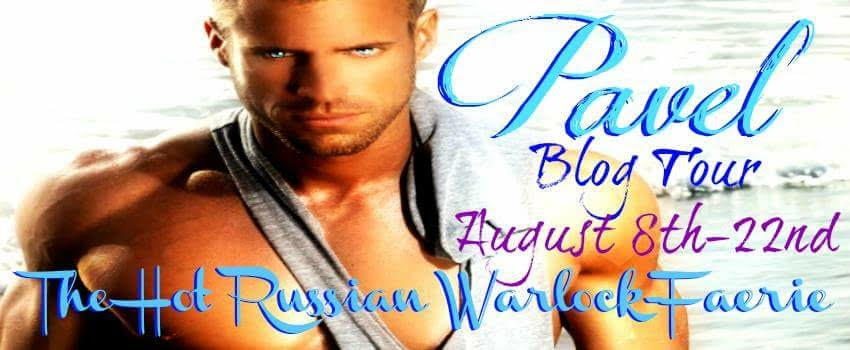
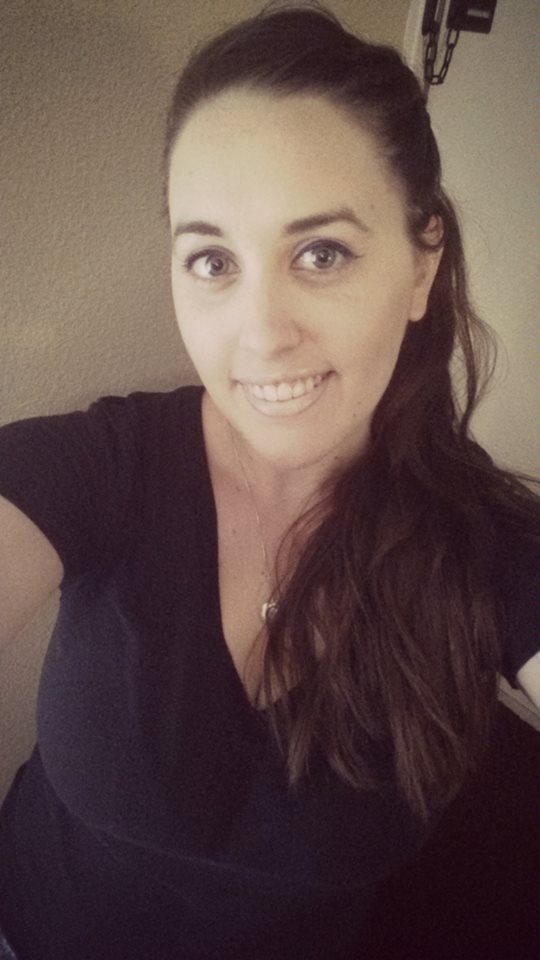
Author Brianna West is back at it again with a new book release. Congrats and continued success. Independant authors needs to support each other and she definitely does that, I encourage you to check out her interview here and check out her books. Her release very well lines up with the genre discussion we are in the middle of so I asked a couple questions for her input.
How do you categorize Pavel as far as genre?
I would say it’s more of a fantasy romance that has paranormal elements. There is quite a lot of action and kickassness that appeals to a wider range of people, but the romance is the main plotline.
What separates paranormal from supernatural fiction, not technically but in your opinion?
I would say since my series delves more into the demon versus angel type that it would be considered more paranormal. However, I’ve heard that supernatural and paranormal can sometimes be interchangeable.
Do you consider paranormal whether it is romance or not as a subgenre of horror?
Not truly. I believe that you can read a paranormal story that doesn’t inflict fear, which in the horror genre that would be the main element. Paranormal simply means that there are elements that are not traditional in a normal world, like demons and angels for example.
When you hear the word paranormal in a fiction sense what is the first thing that comes to mind?
Personally, I think of vampires and demons. Everything else is additional to that genre, but those are the first two I think of. Same question for supernatural and horror? Supernatural is similar for me, delving into unnatural elements that can’t be explained in a realistic world. Horror would be a genre, in my mind, which seeks to cause fear in its readers. To scare, in so many words.
What makes your book special from other books you have enjoyed aside from the part about you authoring it? My characters give life to the books I write. You’ve met someone like this in your everyday life, but never like this, and never under these circumstances. The plot is something that I haven’t seen written; the Promiscus Guardian world being an entirely different world from any other I’ve read. I’ve seen similar, but not to the extent I wield this world. The humor is also an element I’m very proud to say is featured in high quantity in all my stories. You’ll be laughing at the playful antics of both main and secondary characters.
What is something about yourself you wouldn't actively promote but wouldn't be too personal to share? I don’t actively promote that I am a mother to almost four kids or living a life that is beyond anyone’s dream of happiness with a man that is the ultimate in all things. If not for my content life, I wouldn’t write, and without the support of those around me, I wouldn’t be where I am today. My kids drive me to write, mostly so I can get away from the crazy for a bit, but it’s the very reason that I’m motivated to do well and succeed, to show them that one day they can attain anything they set to do as long as they have to drive and perseverance.

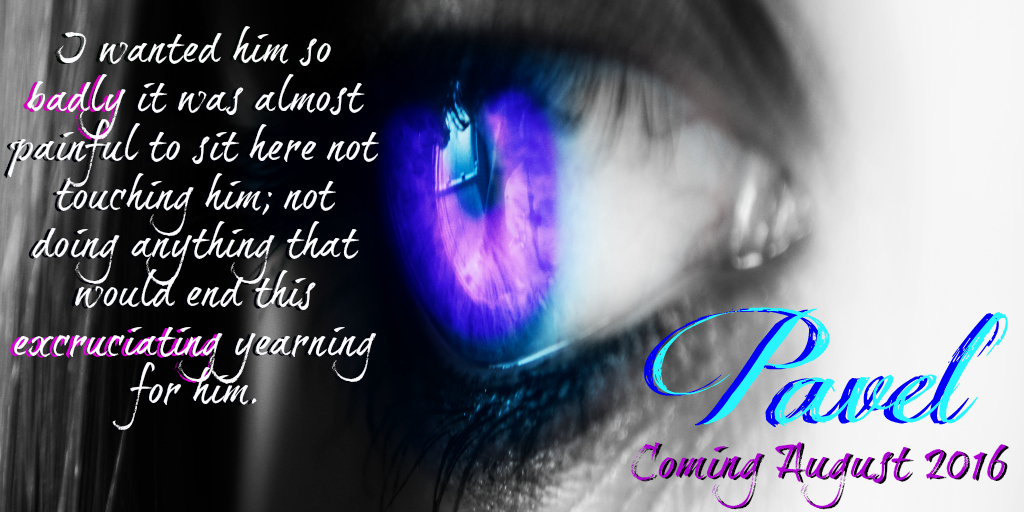
Pavel (Guardians In Love #2) by Brianna West Genre: Paranormal Romance Release Date: August 12th 2016 Blurb: Eve's entire existence and the secret power she harbors is forever changed when she meets the incredibly gorgeous Russian, Pavel Volkov, one night after he single-handedly saves her from being attacked. Claiming he's part of an elite group of Guardians that police the Light and Dark, Pavel takes her into his protection. The playboy warlock-faerie helps Eve unlock the secrets of her past, training the hidden power within as they attempt to keep her from the Dark that seeks to capture her. But with nothing short of disdain for the man claiming to be her protector, can Eve discover the truth behind who she really is? Will she be able to learn how to use her powers efficiently? And more importantly, will she be able to deflect the relentless advances of her so-called protector?
Author Links: Amazon: http://www.amazon.com/Brianna-West/e/B016APSN6Q
Facebook: http://www.facebook.com/authorbriannawest
Blog: briannawest.wordpress.com
Twitter: https://twitter.com/bwest0426
Goodreads: https://www.goodreads.com/briannawest
Newsletter: http://eepurl.com/bTxG9z


August 11, 2016
Genre Wars Part 1&2 - Horror vs. Paranormal and Supernatural?
Warning 3 authors talking about Paranormal, Supernatural and Horror fiction. https://t.co/4dZ4UGf4Mi pic.twitter.com/AkdH5sjuWX
— Gordon A. Wilson (@gordona_wilson) August 11, 2016
Genre Wars Part 2- Horror Vs. Paranormal and ...
This oh so interesting topic of genre. I will start my post by thanking MJ for starting this series in a thought provoking and illuminating way. I will also suggest Amazon changed its book categories or at least how they are grouped. I am sure it is largely to do with my past posts on how nearly all books were lumped under horror and then separated out by subgenre so roughly 3/4 of all books were in the subcategory of horror under fiction. They make it really hard to find this, think I'm exaggerating? Don't take my word for it. I will not say my observation was necessarily a complaint, rather a statement of fact. As I re-looked at the categories, it seems they have done just the opposite now.

I want to backup a degree or two from the straight comparison of paranormal and horror. I want to shift to supernatural vs. paranormal for a couple of reasons. There is a fantastic graphic floating around the internet with the horror genres and subgenres listed in a flow chart. I like it but don't want to use someone else's graphic without permission so I will describe it instead. The main horror sub genres listed are, Gore and Disturbing, Psychological, Killer, Monsters, Zombie, Paranormal. Wait a minute. At the bottom of the Paranormal category is Supernatural under Ghosts and Spirits, Haunted House, Possession, Devil &; Demon, Witches and Occult. All are under the banner of Horror.

Oh crap. According to this our discussion is moot because it's all a subgenre of horror. Oh no. Aside from the technical definitions, I will start with why I believe a supernatural element is what pushed Firetok into the horror category, more in the vein of how MJ describes it. Alright, some of the content it turns out is very dark and deals with human trafficking, a dark subject in its own right. I honestly think outside of the supernatural aspects of this particular story, it would be suspense or thriller with some flashes of gruesome not unlike any other gritty non horror (did I really say that?) book. I do not see the light horror and some graphic scenes in this particular story being horrific enough to stand alone as a horror book. The focus is not primarily to disturb, the focus is the story, the adventure, and during the course, some horrific things happen. The sole intent is not just to disturb or horrify, if it were, as far as I am concerned it has not earned its horror merit badge.
The supernatural element is where the road splits for me. Paranormal and supernatural by definition can nearly be used interchangeably until you start talking about fiction. This I suppose is where I have found myself so confused and it is a cloud of confusion which never dissipates, instead it moves around to shadow fresh confusion. As MJ explained, paranormal readers are expecting psychic abilities, werewolves, vampires etc... They are not necessarily expecting it to be part of anything disturbing. Why not? Aren't they in a subgenre of horror? Maybe not so much anymore is my suspicion. Lets push it a little further. I have a character with an ability, she is psychic. Supernatural or paranormal? Not so fast right. Same ability, might have to explore a little more about the story to come to a conclusion. Not necessarily black and white yet. I do find MJ's comment about Paranormal usually being part of something else like. This may be important to our discussion.

I found an interesting analogy among the countless opinions scattered across the internet. This one claims if the paranormal/supernatural (by definition, not genre) aspect of a story is the good guy they would categorize it as paranormal. If that same element is the bad guy it's horror. What? Agree or disagree, it is actually an interesting way to look at it. This is how they categorized books on a macro level. I am not sure whether I agree or not myself, but it is moving the cloud of confusion a few feet. I'll go another step here in the discussion to point out an interesting aspect of MJ's post. Paranormal to her conjures good and evil. What is interesting about this? That is exactly what my mind conjures when I think supernatural. Paranormal in my mind is more ghostly. Are we both right or wrong? How odd? Not really, ask 10 different people the difference, I bet you get 7 3/4 different answers. They might all be right even, except for the dope who only provided three quarters of an answer. He just doesn't give a crap.

Here is an ever important fact I will restate for the who knows how manieth time. Genre is more about marketing than anything else. Think I'm wrong, please show me evidence, I have a wide open mind. Whether it is a library (a historical building where people walked or rode horses to see paper books) or a book store (a historical building where people walked or rode horses to buy paper books), there has to be a way to group books so we don't have to search through them all. Does the content within these categories shift? I am pretty confident it does. Is it an ever moving evolution? Pretty sure, why else would Amazon be shifting its categories around? You tell me, like I said my empty head has plenty of room for more knowledge.

What does this have to do with our discussion here? Why do I keep asking questions? Sorry, my next point is that it is entirely possible as genres evolve, they expand or contract to follow a market. It's not like there is a set of regulations everyone can adhere to. Let me add another example from my experience using Firetok as another specific. Were I to categorize this story as paranormal, some of the graphic scenes may be entirely too horrific for someone expecting let's say a paranormal romance, MJ brought this to my attention. Is the graphic content enough for it to be straight horror? I say not but that's just me. Would the horrific content be shocking for a reader expecting horror? Not likely, if they were looking for a straight out blood and gore read, they would likely be just as disappointed.
Have either of us answered a question? I suppose yes but then hopefully we have asked enough to keep the discussion moving forward.

What do you say? When you hear paranormal what comes into your head? Now ask the same about supernatural and please post a comment. I changed the comments so you no longer need a google account, if that person indeed exists. Thanks for reading and joining the conversation.
Genre Wars Part 1- Horror vs. Paranormal

Welcome to the unending discussion of fiction genre. With a tagline like "the girl next door with a dark side" she's gotta be interesting right? MJ Labeff, author, animal lover, liker of hot weather and all around great person has offered to do a multi part series on the subject. She and I go back and forth with questions and theoretical answers enough for it to develop into a series of its own. As always I have a curiosity for exactly what gets lumped under the horror banner and as she will explain, it doesn't always make sense. Please comment on the post with your own take, who knows, it may end up in my part two. Thanks MJ for continuing the discussion. By all means if you have something to contribute or have something to offer, please get ahold of me for further discussion, I'm always looking for a good guest post.
Genre Wars Part 1 with MJ Labeff
Genre wars- Horror versus Paranormal.
What’s the difference between the two?
It’s an ongoing discussion that Gordon and I have discussed over a few emails. Ha! I was one of your emails that didn’t get deleted. All right enough joking around- here we go. MJ LaBeff’s interpretation of horror and paranormal or as Gordon says, “my personal wiki.”

Paranormal
When referring to the word paranormal in books, I equate that to a story that either involves vampires, werewolves, witches, other shape shifters or characters with psychic abilities. I think of the supernatural where a strange occurrence has happened, some might refer to it as divine intervention. It's similar to the term super human. We've all watched news stories or read articles about a person who has exhibited super human strength. A car always seems to be involved in these situations. A person is pinned under a car and a man comes by and somehow lifts the car and simultaneously is able to save the person from imminent death. Paranormal conjures ideas of good and evil. I think of it as being an intentional force either perpetrated by a living or dead being for good or evil purposes.
Isn't it interesting that books featuring superheroes aren't in the genre of paranormal?
Superheroes are characters who usually live ordinary lives and then when needed change into their superhero counterpart with special powers. Hmmm, I'd almost think they'd fall in the genre of paranormal but seem to end up in the science fiction realm. Well, let's not confuse things. Back to paranormal. According to The Free Dictionary by Farlex online the word paranormal is an adjective defined as beyond the range of normal experience or scientific explanation- of or pertaining to events or perceptions occurring without scientific explanation, as clairvoyance or extrasensory perception.
So I wasn’t too far off in my line of thinking.

Horror
What about books where there’s a force of evil to be reckoned with- a restless spirit or soul seeking revenge, retribution, retaliation. It's the entity that causes strange things to happen, the unexplained which often scares. Speaking of scary, what is horror?
Gordon, you've written so many great blog posts on this subject I'm hesitant to discuss my thoughts, but here goes. Horror to me implies the macabre. It's taking what's evil or tragic and writing about that aspect in great detail, but it's much, much more. It's all that's leading up to that moment, it's what keeps a reader completely on edge like hearing the theme music to Jaws or Friday the 13th, but you've got to write it- there's no music in books- and then BOOM tragedy strikes and here's where all of the gore comes into flourishing description.
In my humble opinion the biggest differences between the genres would be this. In paranormal you don’t have to have anything “evil”- an author can choose to create a story with good shape shifters or psychics without any malevolent forces. I’m pretty certain if a reader picks up a horror book and it doesn’t horrify there’ll be great disappointment.
According to The Free Dictionary by Farlex online the word horror is a noun defined as a genre of fiction or other artistic work evoking suspense and horror, especially through the depiction of gruesome or supernatural elements.
So how does an author choose a genre?
We associate authors Stephen King, Dean Koontz, and Anne Rice with horror but couldn’t some of their novels be classified as paranormal? In the world of mad algorithms, yes, but in theory paranormal is not a genre that can stand on its own. It’s always combined with a genre romance, suspense, mystery, thriller, science fiction, fantasy, urban fantasy.

What say you?
Readers, writers, agents, editors what are your thoughts on these genres? What are your expectations when you read a horror novel versus a novel with paranormal elements? Authors when pitching your book to an agent or editor or promoting it how do you choose between these genres?
Happy reading and writing!
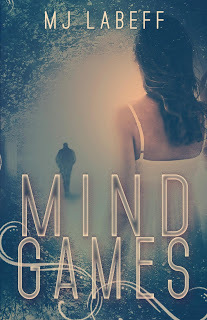
 MJ grew up in northeastern Ohio but traded snow for sunshine and moved to southern Arizona over a decade ago where she lives with her husband and two dogs. When not at her day job in the financial services industry, she spends her free time working out, volunteering for the American Cancer Society and writing crime fiction.
She has completed two romantic suspense novels, Mind Games and Haunting Lyric and three books in a suspense/thriller series, Last Summer’s Evil, Last Fall’s Hunted and Last Winter’s Taken. Currently, she is writing Last Spring’s Stranger, the final book in the Last Cold Case series. She signed the series with Muse It Up Publishing. Last Summer’s Evil is scheduled to release fall/winter 2016. Last Fall’s Hunted is scheduled to release Spring 2017. Check back for future release dates in the Last Cold Case series.
http://mjlabeff.com/
@MJLaBeff
Genre Wars Part 1- Horror vs. Paranormal
Welcome to the unending discussion of fiction genre. With a tagline like "the girl next door with a dark side" she's gotta be interesting right? MJ Labeff, author, animal lover, liker of hot weather and all around great person has offered to do a multi part series on the subject. She and I go back and forth with questions and theoretical answers enough for it to develop into a series of its own. As always I have a curiosity for exactly what gets lumped under the horror banner and as she will explain, it doesn't always make sense. Please comment on the post with your own take, who knows, it may end up in my part two. Thanks MJ for continuing the discussion. By all means if you have something to contribute or have something to offer, please get ahold of me for further discussion, I'm always looking for a good guest post.Genre Wars Part 1 with MJ Labeff
Genre wars- Horror versus Paranormal.
What’s the difference between the two?
It’s an ongoing discussion that Gordon and I have discussed over a few emails. Ha! I was one of your emails that didn’t get deleted. All right enough joking around- here we go. MJ LaBeff’s interpretation of horror and paranormal or as Gordon says, “my personal wiki.”
Paranormal
When referring to the word paranormal in books, I equate that to a story that either involves vampires, werewolves, witches, other shape shifters or characters with psychic abilities. I think of the supernatural where a strange occurrence has happened, some might refer to it as divine intervention. It's similar to the term super human. We've all watched news stories or read articles about a person who has exhibited super human strength. A car always seems to be involved in these situations. A person is pinned under a car and a man comes by and somehow lifts the car and simultaneously is able to save the person from imminent death. Paranormal conjures ideas of good and evil. I think of it as being an intentional force either perpetrated by a living or dead being for good or evil purposes.
Isn't it interesting that books featuring superheroes aren't in the genre of paranormal?
Superheroes are characters who usually live ordinary lives and then when needed change into their superhero counterpart with special powers. Hmmm, I'd almost think they'd fall in the genre of paranormal but seem to end up in the science fiction realm. Well, let's not confuse things. Back to paranormal. According to The Free Dictionary by Farlex online the word paranormal is an adjective defined as beyond the range of normal experience or scientific explanation- of or pertaining to events or perceptions occurring without scientific explanation, as clairvoyance or extrasensory perception.
So I wasn’t too far off in my line of thinking.
Horror
What about books where there’s a force of evil to be reckoned with- a restless spirit or soul seeking revenge, retribution, retaliation. It's the entity that causes strange things to happen, the unexplained which often scares. Speaking of scary, what is horror?
Gordon, you've written so many great blog posts on this subject I'm hesitant to discuss my thoughts, but here goes. Horror to me implies the macabre. It's taking what's evil or tragic and writing about that aspect in great detail, but it's much, much more. It's all that's leading up to that moment, it's what keeps a reader completely on edge like hearing the theme music to Jaws or Friday the 13th, but you've got to write it- there's no music in books- and then BOOM tragedy strikes and here's where all of the gore comes into flourishing description.
In my humble opinion the biggest differences between the genres would be this. In paranormal you don’t have to have anything “evil”- an author can choose to create a story with good shape shifters or psychics without any malevolent forces. I’m pretty certain if a reader picks up a horror book and it doesn’t horrify there’ll be great disappointment.
According to The Free Dictionary by Farlex online the word horror is a noun defined as a genre of fiction or other artistic work evoking suspense and horror, especially through the depiction of gruesome or supernatural elements.
So how does an author choose a genre?
We associate authors Stephen King, Dean Koontz, and Anne Rice with horror but couldn’t some of their novels be classified as paranormal? In the world of mad algorithms, yes, but in theory paranormal is not a genre that can stand on its own. It’s always combined with a genre romance, suspense, mystery, thriller, science fiction, fantasy, urban fantasy.
What say you?
Readers, writers, agents, editors what are your thoughts on these genres? What are your expectations when you read a horror novel versus a novel with paranormal elements? Authors when pitching your book to an agent or editor or promoting it how do you choose between these genres?
Happy reading and writing!
MJ grew up in northeastern Ohio but traded snow for sunshine and moved to southern Arizona over a decade ago where she lives with her husband and two dogs. When not at her day job in the financial services industry, she spends her free time working out, volunteering for the American Cancer Society and writing crime fiction.She has completed two romantic suspense novels, Mind Games and Haunting Lyric and three books in a suspense/thriller series, Last Summer’s Evil, Last Fall’s Hunted and Last Winter’s Taken. Currently, she is writing Last Spring’s Stranger, the final book in the Last Cold Case series. She signed the series with Muse It Up Publishing. Last Summer’s Evil is scheduled to release fall/winter 2016. Last Fall’s Hunted is scheduled to release Spring 2017. Check back for future release dates in the Last Cold Case series.
http://mjlabeff.com/
@MJLaBeff
July 8, 2016
Book Marketing with Yancy Caruthers Part 2 - Hiring a Publicist
 Yancy Caruthers is back sharing more experience on what has worked and not for him, we both would love to get a discussion going if we can get anyone else to divulge their "secrets". Thanks for visiting and thank you Yancy for sharing your experience.
Recently, I wrote a guest post for Firetok.com titled “Book Marketing and Amazon Ads,” in which I discussed the formula for calculating return on your advertising dollar, and what factors were important in getting a positive return, such as ad quality and placement.
Shortly thereafter, I decided to jump in to promotion with both feet – and retained a publicist. I’d done some shopping, and discovered a wide range of quality and price, from “so cheap it can’t possibly work” to a ceiling of about $8000 for a service that guaranteed appearances on national television.
How to choose the right publicist?

Price is a factor, and I won’t pretend it’s not – but hoping that some “expert” in India that I found on Fiverr tweeting my book to his 50,000 fake followers is not my idea of a good investment. Even so, I couldn’t afford to plunk down thousands of my hard-earned dollars for national TV exposure. I was looking for a company in the midrange, one that would charge me a few hundred dollars and do its best to deliver some real value.
Equally important is the second factor – one I learned right after my book launch when I dropped $150 for a “blog tour”- and sold exactly zero books as a result. In defense of the tour coordinator, the abysmal sales had little to do with the product she delivered. Her contacts were in a different genre. I needed a publicist who had a history of promoting books similar to mine.
With both of these conditions satisfied, I chose a company, which I won’t name here, although he did everything he said he would and did it well. My new publicist promised to score several media appearances over a short period of time, and also agreed to rewrite one of my old ads and provide me with a press release. Full disclosure: The bill came to $370.

What I got for my money…
Within days, my new media rep began scheduling interviews. Over the ten-day period leading up to Memorial Day, I shared my thoughts on the current state of Veterans Affairs and veteran suicide, important messages that I could link back to my Iraq War memoir, Northwest of Eden. Some of the interviews I aced, and some were mediocre. One in particular, I bombed.
I was standing my the phone, waiting for the interviewer to call me – I’d be doing it live, so I was sitting in my big comfy chair with my laptop open to several tabs of reference material. I didn’t want to get stumped, so I was ready to branch out if the host went in an unforeseen direction. It began smoothly, but halfway through, one of the open articles began playing an audio pop-up. At full volume! I was right in the middle of an important point, and couldn’t summon enough multitasking power to mute my computer, so I closed the lid and walked across the room. OOPS. There went my notes, and I stumbled the recovery and failed to talk about my book even once!
Moral: Print out handwritten notes for when technology fails. I’d learned that lesson as a special assistant to a U.S. Ambassador. I just hadn’t remembered to apply it.
The next six interviews went well – I did AM talk radio spots in Denver, Minneapolis, and Boston, along with two nationally syndicated shows. As unexpected bonuses, I scored an interview on a cable news channel and a piece that was converted into a Bloomberg TV spot.
Running the numbers…was it worth it?

As you might have guessed from my previous post, I keep a tight watch on my sales numbers. It’s important for an author (or any businessperson) to analyze trends. If I put a ton of effort into a Twitter campaign, for instance, and it doesn’t produce sales to match my effort, then I won’t do it again. Conversely, if something is working, I want to know about it so I can do more.
The numbers were in, and I’d made 14 sales. It was only part of my total for that period, but the rest came from online ads I could directly source. On a $2.99 e-book, I make $2.05 – it was a score of $28.70 from my $370 investment – or an ROI of 7.75%. Not something I wanted to repeat every month.
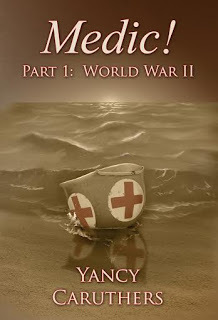
My publicist had done a great job, but in the end it wasn’t worth it. To the other authors reading this, you’ll have to make your own call. Since I only have one full-length title and a handful of 99c chapbooks, my potential payoff per customer is relatively low. If you have an entire series of books in your library, or a product that delivers a higher profit per sale, then this type of publicity campaign might be more valuable to you. I’ll let you make that decision. When the collection of Medic! makes its debut this fall, I’ll look into doing this again. With a second product to sell, the math changes…on everything I do.

In wrapping this up, I’ll share that I definitely received a benefit beyond the cost of a dinner for one – I honed my interviewing skills and learned about preparation. I made a handful of mistakes that I won’t make again, and that’s life. Sometimes life comes with a tuition payment.
Authors, what sort of marketing has been the most successful for you? Signings? Ads? Interviews? Public appearances?
Please post your stories in the comments.

Links to my books and part one of this series- http://www.firetok.com/2016/05/book-marketing-with-yancy-caruthers.html
@YancyCaruthers
yancycaruthers.com
July 1, 2016
Cell phones and pigs.
I think back to the days when I inadvertently breathed life into this blog. Every post I wrote was initially about inspiration of some sort. Not cheesy store bought inspiration but inspiration from real life and the struggles it brings. This post isn't necessarily anything like that, almost the opposite actually.

I have the opportunity to work with kids on a daily basis. I am so glad I am not trying to grow up in the times we live in. Seeing what they are exposed to and things they have to deal with which as an adult I can barely conceive, makes me cringe. I have said it before and will say it again, I believe my biggest single failure as a parent was giving our kids cell phones. They all had them by the time they were in high school for certain maybe earlier and this was tenish years ago.
Cell phones aren't the problem per se, that is too simplistic. It's the culture which really bothers me. This disconnected, I'm in my phone don't bother me attitude. I hate it. I see so many kids who are growing up with this disconnect from interpersonal interaction because they can't look up from their devices. Its ridiculous and sad.
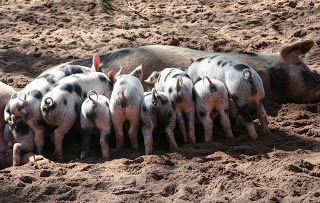
Awhile back my daughter was visiting from the planet where she resides and we went to some fancy Chinese-ish restaurant. The kind where everyone dresses up like it's a big deal. I watched this family of five across the way. Mother, father and three kids who were not even teens yet. Everyone of them was on their own phone the whole time. I know I am prone to exaggeration but this time I am not, really. What's the point? I think of pigs at a trough. That slop hits the trough and each pig charges for it concerned only about feeding itself and nothing else. Another pig in the way? No problem push him over and get your own food. I don't get it. I truly don't.
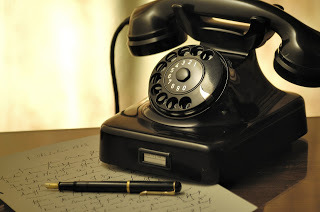
How often we joke and reminisce about the days when there was one phone at our house, for the WHOLE family. Oh my. I have at least four phone numbers myself now. I remember finally getting the nerve to call, let's say a girl for dramatic effect, only to have her dad answer. Then comes the awkward divulging of who you are and trying to politely leave a message in hopes it might be delivered by a father who, if he had any sense would not want me within a mile of his daughter. (And he did not.)
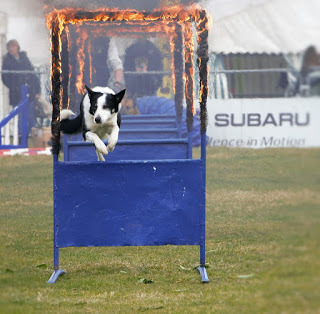
But look at the courage it took to make the call as well as the cunning and research necessary to figure out what his work schedule was for example in order to avoid the awkwardness. Shit, nowadays you just text the person directly and gain no sense of accomplishment or building of character. Honestly one might argue the way people hide behind their devices, it is doing just the opposite. I guess there is a reason old people are old and youth is squandered on the young. I just don't know what it is yet.
Technology has its place. I get it and I use it. I just really don't like the way people are disconnecting from real interaction and replacing it with whatever it is I am missing in a phone.
What is inspirational about this? Great question.
Got a comment? Please post it, let's talk. I would love to hear an opposing viewpoint which makes sense.

I have the opportunity to work with kids on a daily basis. I am so glad I am not trying to grow up in the times we live in. Seeing what they are exposed to and things they have to deal with which as an adult I can barely conceive, makes me cringe. I have said it before and will say it again, I believe my biggest single failure as a parent was giving our kids cell phones. They all had them by the time they were in high school for certain maybe earlier and this was tenish years ago.
Cell phones aren't the problem per se, that is too simplistic. It's the culture which really bothers me. This disconnected, I'm in my phone don't bother me attitude. I hate it. I see so many kids who are growing up with this disconnect from interpersonal interaction because they can't look up from their devices. Its ridiculous and sad.

Awhile back my daughter was visiting from the planet where she resides and we went to some fancy Chinese-ish restaurant. The kind where everyone dresses up like it's a big deal. I watched this family of five across the way. Mother, father and three kids who were not even teens yet. Everyone of them was on their own phone the whole time. I know I am prone to exaggeration but this time I am not, really. What's the point? I think of pigs at a trough. That slop hits the trough and each pig charges for it concerned only about feeding itself and nothing else. Another pig in the way? No problem push him over and get your own food. I don't get it. I truly don't.

How often we joke and reminisce about the days when there was one phone at our house, for the WHOLE family. Oh my. I have at least four phone numbers myself now. I remember finally getting the nerve to call, let's say a girl for dramatic effect, only to have her dad answer. Then comes the awkward divulging of who you are and trying to politely leave a message in hopes it might be delivered by a father who, if he had any sense would not want me within a mile of his daughter. (And he did not.)

But look at the courage it took to make the call as well as the cunning and research necessary to figure out what his work schedule was for example in order to avoid the awkwardness. Shit, nowadays you just text the person directly and gain no sense of accomplishment or building of character. Honestly one might argue the way people hide behind their devices, it is doing just the opposite. I guess there is a reason old people are old and youth is squandered on the young. I just don't know what it is yet.
Technology has its place. I get it and I use it. I just really don't like the way people are disconnecting from real interaction and replacing it with whatever it is I am missing in a phone.
What is inspirational about this? Great question.
Got a comment? Please post it, let's talk. I would love to hear an opposing viewpoint which makes sense.
June 16, 2016
Going into the Tunnel. Just Writing.
I call it the tunnel. A year ago I planned on going into it in the fall. That is the fall that past 9 or 10 months ago. I'm in the tunnel now, took a while. The relaunch took way more effort and time than I would have ever guessed, totally worth it, don't get me wrong. Now I'm in so deep in fact I had to come up for air to realize I have not done a blog post in a little too long.
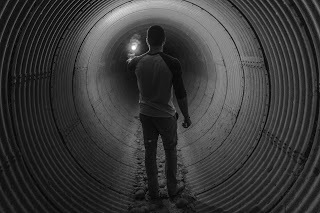 There is no light in my tunnel.
Where is the tunnel? It moves from place to place but it's a state of mind. The tunnel at this moment is upstairs on my old dust and Windows XP box with the antique Compaq keyboard which has been enabled with supernatural powers like no other. The good news for me is this, I'm getting the next Firetok book written, in rough terms it is likely twice as long as the first but it is in rough draft. I have wondered numerous times whether I am actually putting together books 2 and 3. If anyone knows, please tell me. When I say rough I mean RUFF rough. I blurt it all out in whatever form it comes without holding back. I won't worry about the word count with how ruthlessly I know it will get pruned. I prune bushes the same way and have to get supervision when using the hedge clippers.
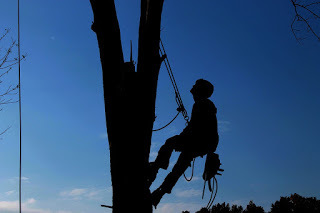 My idea of pruning. TIMBERRRRRR
I tried to do an ad campaign on Amazon based on Yancy's post a few weeks back. One was accepted the other was denied because my book cover showed graphic violence or gore. Go figure. The ad that was accepted did absolutely nothing for me, not even a click but I believe it was limited in where they placed it due to the graphic violence and gore on my cover. For shits sakes. I think I will fiddle with the bid price some more based again on Yancy's advice but not just yet. There is a lot of red. Hmmm.
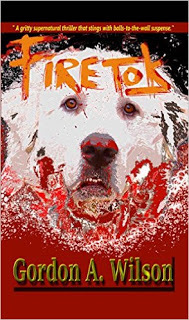 Pretty gore-iffic? Here's my graphic violence.
The biggest thing I have learned here lately is the course and direction the book is taking. There were several points I wont say I was worried about but I definitely thought they would go in a specific way. Months later as the details revealed themselves through my aforementioned Compaq keyboard it's nothing like what I expected. Nowhere near. Little surprises along the way also include a character who showed up out of nowhere and about the time I was considering throwing her from the plane everyone else suggests recruiting her as an ally. It's a bitch second guessing my creative voice but it is a lesson as well. I have to let it happen. All the planning and thinking and plotting and trying to figure it out don't do me all that much good. I have to let it happen. More importantly I have to take the time to write and allow it to flow from me.
 I love pencils.
That is the bottom line for me. If I am not doing it, it's not getting done. I know there will be people who disagree, I have heard it before. You have to do this and that or bla bla bla.
It's not as simple as "just writing". Balderdash.
Writing is as simple as just writing. I am not talking about learning how to write better or publishing or marketing or any of the other ing words we need to speak of once the book is written. Just writing. Just write. Take the time to do it. Fight the battle between what you think you should do and what you feel coming out. In a sense it looks like I am contradicting many of the things I have written in the past. I know writing a book gets incredibly more complicated if you want to do anything more with it than just write it. That is an entirely different subject.
If it's what you want to do, write. Take pleasure in it. Enjoy it. Let your mind take you for a ride.
Thanks so much for reading. Please take the time to join the discussion. What surprises have you found when you allowed your creativity to flow? Send me a message or post a comment.
 There is no light in my tunnel.
Where is the tunnel? It moves from place to place but it's a state of mind. The tunnel at this moment is upstairs on my old dust and Windows XP box with the antique Compaq keyboard which has been enabled with supernatural powers like no other. The good news for me is this, I'm getting the next Firetok book written, in rough terms it is likely twice as long as the first but it is in rough draft. I have wondered numerous times whether I am actually putting together books 2 and 3. If anyone knows, please tell me. When I say rough I mean RUFF rough. I blurt it all out in whatever form it comes without holding back. I won't worry about the word count with how ruthlessly I know it will get pruned. I prune bushes the same way and have to get supervision when using the hedge clippers.
 My idea of pruning. TIMBERRRRRR
I tried to do an ad campaign on Amazon based on Yancy's post a few weeks back. One was accepted the other was denied because my book cover showed graphic violence or gore. Go figure. The ad that was accepted did absolutely nothing for me, not even a click but I believe it was limited in where they placed it due to the graphic violence and gore on my cover. For shits sakes. I think I will fiddle with the bid price some more based again on Yancy's advice but not just yet. There is a lot of red. Hmmm.
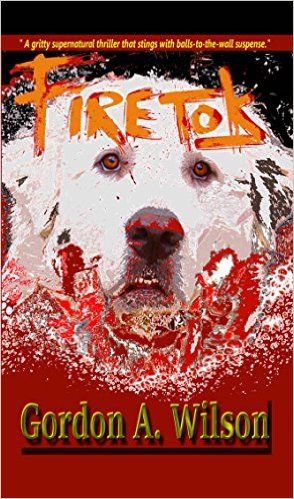 Pretty gore-iffic? Here's my graphic violence.
The biggest thing I have learned here lately is the course and direction the book is taking. There were several points I wont say I was worried about but I definitely thought they would go in a specific way. Months later as the details revealed themselves through my aforementioned Compaq keyboard it's nothing like what I expected. Nowhere near. Little surprises along the way also include a character who showed up out of nowhere and about the time I was considering throwing her from the plane everyone else suggests recruiting her as an ally. It's a bitch second guessing my creative voice but it is a lesson as well. I have to let it happen. All the planning and thinking and plotting and trying to figure it out don't do me all that much good. I have to let it happen. More importantly I have to take the time to write and allow it to flow from me.
 I love pencils.
That is the bottom line for me. If I am not doing it, it's not getting done. I know there will be people who disagree, I have heard it before. You have to do this and that or bla bla bla.
It's not as simple as "just writing". Balderdash.
Writing is as simple as just writing. I am not talking about learning how to write better or publishing or marketing or any of the other ing words we need to speak of once the book is written. Just writing. Just write. Take the time to do it. Fight the battle between what you think you should do and what you feel coming out. In a sense it looks like I am contradicting many of the things I have written in the past. I know writing a book gets incredibly more complicated if you want to do anything more with it than just write it. That is an entirely different subject.

If it's what you want to do, write. Take pleasure in it. Enjoy it. Let your mind take you for a ride.
Thanks so much for reading. Please take the time to join the discussion. What surprises have you found when you allowed your creativity to flow? Send me a message or post a comment.
May 19, 2016
Literary Agent. Myth or Not.
What is the secret ingredient for landing an agent? This is one of those questions which assumes something, in this case it is assumed agents exist.
My Personal Wiki on Literary Agents.
I received an interesting question this week I thought I might as well talk about it for a few minutes while it's on my mind. Someone asked me about getting an agent, the specifics, the timing, you get the idea. I answered the question to the best of my ability with something very similar to"I have no idea". And it's true. I don't. Agents are genre specific more or less and they get way more queries than they can possibly deal with much less represent. Authors doing well on their own often attract them, beginning authors not so much. Many authors wear their rejection number like a scouting badge and flash it like a credential. I won't go as far as to state my knowledge as fact like Wikipedia factual, but in my head I consider it so. Which by the way may well be as accurate as Wiki, depending upon which medication I have taken and the time of day you approach me.

It's been danced around, tickled and touched by several guest posts here, check 'em out. Pretty sure Michele B.B. has agents for different things and no agent at all for others. Hows that for a sampler plate? Everything but ranch dip. Agents for the domestic rights might be different from those for foreign rights. Right Sheri M.? An agent for every purpose and purpose for every season. I think I may have mixed that up with an old song. The agent thing is a pretty common question. Here is my exploration as far as agents go, outside of what I already mentioned.
Somewhere between Unicorns and Sasquatch.
They should be categorized similar to Bigfoot, yeti, chupacabra, unicorns and leprechauns. It is a subcategory I suspect between unicorns which are most commonly accepted as mythical and the Bigfoot type which are purported to be mythical but their existence is still debated. I don't see Bigfoot as being mythical because too many people still believe. Using this alone, literary agents wouldn't be mythical because too many people believe in them. More specifically they believe that breaking through some unknown rejection barrier will actually conjure the appearance of one or their presence like in an email or something better. It's kind of like the old witchcraft spell thing. You get the right spell you obtain powers. Sweet idea, think Harry Potter capitalized on a similar notion.
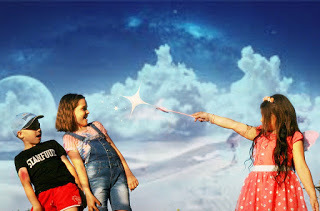
The main difference between a Bigfoot creature and a unicorn for example, I see is this. There are many, many people who firmly believe the whole Bigfoot thing is not mythical although to many it is. Unicorns on the other hand are pretty commonly considered mythical almost in a factual sense. I for one believe, wait forget about what I believe. I learned many years ago you have to be very careful who you mention things related to subjects such as UFO's or Bigfoot sightings to. It's just not worth it. Let me say many believe many do not. The fact that many believe influences the mythability. (I did not misspell this, I made it up. Say it out loud, its kind of fun.)
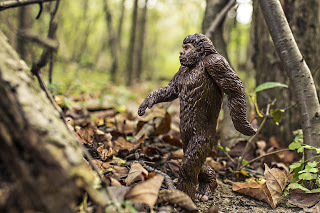
...you must have some identifiable attribute
An agent or literary agent as they are called in some areas is a somewhat mythical creature whose appearance as I understand it, varies from one geographical area to another. It is suspected most industrialized countries have their own version just as the Himalayas have a white Yeti version of North America's brown Sasquatch. I have a couple friends who have and or did have agents. One actually had a face to face encounter with hers, possibly on multiple occasions. Did this prove the agent was real? Not necessarily since the agent looked like a person, exactly like a person, there would have been no way to really check, removing her wig to reveal her horn or something easy. Not that simple. Does this qualify as a sighting? I can't answer this. I will say she totally believed it was real so to her it was. Right? I will say to be mythical you must have some identifiable attribute. A horn, a hairy back, the ability to spin straw into gold. Something beyond "I said so."
What does a literary agent look like?
Everything I read suggests agents are experts at imitating their surroundings so well they can purportedly fit in with nearly any global variation of the human species containing a monetary system. I say this is quite a feat considering the diversity of indigenous people on every continent. I suspect the ability to blend with the surroundings and avoid predators while absorbing currency would indeed, greatly enhance the species survival. Assuming of course their existence. The very fact that legends claim they look like any other person leads me to the less than believable. Not exactly balderdash unbelievable but Hillary or any other politician is a caring, sensitive person not motivated by power- unbelievable.
To be a true mythical character you need a gimmick.
Let's use Leprechauns for example. Forget for a moment everything you think you know about them while I change the rules. Leprechauns look just like any other ordinary person, they are tall, they don't wear green clothes or speak in an Irish accent, and most confusing of all they don't even eat breakfast cereal, let alone endorse it. Nonsense right? If leprechauns look just like everyone else I could just say look there's a leprechaun and you would have to prove I'm wrong. In the previous example my friend could have been meeting with a leprechaun or an agent and theoretically would have never known the difference. Besides the fact that it would be entirely unfair to double dip in the mythical character, it just doesn't seem right. Besides the obvious confusion considerations it would be just boring and who really would trek to the end of the rainbow to see someone who looked just like you or me. Bo-ring. To be a true mythical character you need a gimmick.
You need legend. Period.
If this example isn't glaring enough, please consider Sasquatch or Bigfoot as they are called around here. Everyone knows they are big, real big and hairy and they live in the woods or the mountains depending upon where we are talking about. Changing the rules once again, Sasquatch looks like a normal person and they fit in with any surrounding. The only way you can identify them is by following one home to see where they go on Mother's day. It's just absurd. Stories have been told for unknown generations of the giant beast roaming the forests of North America. For hundreds of years the tales of the hairy subhuman beast taking refuge in the mountains of Mexico have been told and retold. To be a true mythical character you need legend. It's just part of the deal.
You need a mythical quality. Rejections don't count.
Mythical creatures by my definition must possess a mythical quality or ability. How many times I have read or someone has told me the amount of rejections from agents they received. I am pretty sure one of my friends recently said the number 60 rejections before finally finding a happy home with a publisher of some sort. This example however on the surface could be misleading. If I am not mistaken she actually signed directly with the publisher outside of an agent, go figure. The ability to reject people and their writing is less than mythical to me. Rejection at our house was called- say anything at the dinner table. Reality based reality but nothing very mythical.
Santa rejected me, is he an agent?
In my town they put up a giant mailbox and huge statue of Santa before Christmas. The mailbox is for letters to Santa. Think about how easy it would be for the mythical Santa to spread rejection here. I don't remember putting a letter in the box as a child but as an adult I might consider dropping a few letters in the box and seeing what happened before I chose to self purchase if you will and take the whole idiotic Christmas gift buying thing into my own hands. On the other hand, receiving a letter back from Santa would most certainly prove his existence regardless of the true origin of the response. Think about that one will you?
The search for Bigfoot, a UFO and a literary agent.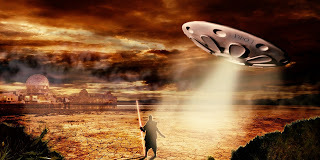
I think it might be a worthwhile endeavor to start sending Bigfoot letters. If this works out right I could prove its existence by it ignoring my letters for a given amount of time. I have a hard time believing the scientists haven't already explored this first but I will be willing to share my ideas at any time in the name of advancing science.
What do you think? Do literary agents exist outside of the big name author arena? What is your rejection number and do you wear it on your lapel? As always, please join the discussion and thanks for reading. In the meantime I believe I will start crafting a letter which I might be able to use as a query for Bigfoot, Santa, the guy who drives the UFO's and a literary agent dealing specifically in Supernatural Thrillers or General Nonsense.
My Personal Wiki on Literary Agents.
I received an interesting question this week I thought I might as well talk about it for a few minutes while it's on my mind. Someone asked me about getting an agent, the specifics, the timing, you get the idea. I answered the question to the best of my ability with something very similar to"I have no idea". And it's true. I don't. Agents are genre specific more or less and they get way more queries than they can possibly deal with much less represent. Authors doing well on their own often attract them, beginning authors not so much. Many authors wear their rejection number like a scouting badge and flash it like a credential. I won't go as far as to state my knowledge as fact like Wikipedia factual, but in my head I consider it so. Which by the way may well be as accurate as Wiki, depending upon which medication I have taken and the time of day you approach me.

It's been danced around, tickled and touched by several guest posts here, check 'em out. Pretty sure Michele B.B. has agents for different things and no agent at all for others. Hows that for a sampler plate? Everything but ranch dip. Agents for the domestic rights might be different from those for foreign rights. Right Sheri M.? An agent for every purpose and purpose for every season. I think I may have mixed that up with an old song. The agent thing is a pretty common question. Here is my exploration as far as agents go, outside of what I already mentioned.
Somewhere between Unicorns and Sasquatch.

They should be categorized similar to Bigfoot, yeti, chupacabra, unicorns and leprechauns. It is a subcategory I suspect between unicorns which are most commonly accepted as mythical and the Bigfoot type which are purported to be mythical but their existence is still debated. I don't see Bigfoot as being mythical because too many people still believe. Using this alone, literary agents wouldn't be mythical because too many people believe in them. More specifically they believe that breaking through some unknown rejection barrier will actually conjure the appearance of one or their presence like in an email or something better. It's kind of like the old witchcraft spell thing. You get the right spell you obtain powers. Sweet idea, think Harry Potter capitalized on a similar notion.
The main difference between a Bigfoot creature and a unicorn for example, I see is this. There are many, many people who firmly believe the whole Bigfoot thing is not mythical although to many it is. Unicorns on the other hand are pretty commonly considered mythical almost in a factual sense. I for one believe, wait forget about what I believe. I learned many years ago you have to be very careful who you mention things related to subjects such as UFO's or Bigfoot sightings to. It's just not worth it. Let me say many believe many do not. The fact that many believe influences the mythability. (I did not misspell this, I made it up. Say it out loud, its kind of fun.)

...you must have some identifiable attribute
An agent or literary agent as they are called in some areas is a somewhat mythical creature whose appearance as I understand it, varies from one geographical area to another. It is suspected most industrialized countries have their own version just as the Himalayas have a white Yeti version of North America's brown Sasquatch. I have a couple friends who have and or did have agents. One actually had a face to face encounter with hers, possibly on multiple occasions. Did this prove the agent was real? Not necessarily since the agent looked like a person, exactly like a person, there would have been no way to really check, removing her wig to reveal her horn or something easy. Not that simple. Does this qualify as a sighting? I can't answer this. I will say she totally believed it was real so to her it was. Right? I will say to be mythical you must have some identifiable attribute. A horn, a hairy back, the ability to spin straw into gold. Something beyond "I said so."

What does a literary agent look like?
Everything I read suggests agents are experts at imitating their surroundings so well they can purportedly fit in with nearly any global variation of the human species containing a monetary system. I say this is quite a feat considering the diversity of indigenous people on every continent. I suspect the ability to blend with the surroundings and avoid predators while absorbing currency would indeed, greatly enhance the species survival. Assuming of course their existence. The very fact that legends claim they look like any other person leads me to the less than believable. Not exactly balderdash unbelievable but Hillary or any other politician is a caring, sensitive person not motivated by power- unbelievable.
To be a true mythical character you need a gimmick.
Let's use Leprechauns for example. Forget for a moment everything you think you know about them while I change the rules. Leprechauns look just like any other ordinary person, they are tall, they don't wear green clothes or speak in an Irish accent, and most confusing of all they don't even eat breakfast cereal, let alone endorse it. Nonsense right? If leprechauns look just like everyone else I could just say look there's a leprechaun and you would have to prove I'm wrong. In the previous example my friend could have been meeting with a leprechaun or an agent and theoretically would have never known the difference. Besides the fact that it would be entirely unfair to double dip in the mythical character, it just doesn't seem right. Besides the obvious confusion considerations it would be just boring and who really would trek to the end of the rainbow to see someone who looked just like you or me. Bo-ring. To be a true mythical character you need a gimmick.
You need legend. Period.
If this example isn't glaring enough, please consider Sasquatch or Bigfoot as they are called around here. Everyone knows they are big, real big and hairy and they live in the woods or the mountains depending upon where we are talking about. Changing the rules once again, Sasquatch looks like a normal person and they fit in with any surrounding. The only way you can identify them is by following one home to see where they go on Mother's day. It's just absurd. Stories have been told for unknown generations of the giant beast roaming the forests of North America. For hundreds of years the tales of the hairy subhuman beast taking refuge in the mountains of Mexico have been told and retold. To be a true mythical character you need legend. It's just part of the deal.
You need a mythical quality. Rejections don't count.
Mythical creatures by my definition must possess a mythical quality or ability. How many times I have read or someone has told me the amount of rejections from agents they received. I am pretty sure one of my friends recently said the number 60 rejections before finally finding a happy home with a publisher of some sort. This example however on the surface could be misleading. If I am not mistaken she actually signed directly with the publisher outside of an agent, go figure. The ability to reject people and their writing is less than mythical to me. Rejection at our house was called- say anything at the dinner table. Reality based reality but nothing very mythical.
Santa rejected me, is he an agent?

In my town they put up a giant mailbox and huge statue of Santa before Christmas. The mailbox is for letters to Santa. Think about how easy it would be for the mythical Santa to spread rejection here. I don't remember putting a letter in the box as a child but as an adult I might consider dropping a few letters in the box and seeing what happened before I chose to self purchase if you will and take the whole idiotic Christmas gift buying thing into my own hands. On the other hand, receiving a letter back from Santa would most certainly prove his existence regardless of the true origin of the response. Think about that one will you?
The search for Bigfoot, a UFO and a literary agent.

I think it might be a worthwhile endeavor to start sending Bigfoot letters. If this works out right I could prove its existence by it ignoring my letters for a given amount of time. I have a hard time believing the scientists haven't already explored this first but I will be willing to share my ideas at any time in the name of advancing science.
What do you think? Do literary agents exist outside of the big name author arena? What is your rejection number and do you wear it on your lapel? As always, please join the discussion and thanks for reading. In the meantime I believe I will start crafting a letter which I might be able to use as a query for Bigfoot, Santa, the guy who drives the UFO's and a literary agent dealing specifically in Supernatural Thrillers or General Nonsense.
May 12, 2016
Email is Dead?
 I read an interesting article yesterday while trying to accomplish a task on Linkedin, something about unlocking a secret spell which could lead to my invisible slipper merit badge. Or maybe it was something else I didn't get. I might describe the network itself as a bit of a mystical land where people you don't know award you credentials for reasons I really don't understand yet, but at least the platform gives me a completely confusing way to interact with other people. I have published several of my posts on Linkedin and I do believe it is a totally different group of people than I would communicate with typically, it's just the interface is so clunky I avoid it like the KMart on the south end, where nobody who works there seems to give a shit.
Email serves few legitimate purposes(?)
 My intent is not to talk about the confusing, clunky network, rather a notion suggested in the piece I read. Yes, back to the piece. The author listed his credentials and sounds pretty important, big shot, head of a company bla bla bla, I get it. The thrust of his article was this, email is a thing of the past and only serves 3 legitimate purposes. None of these were interpersonal communication per se. His claim is, the younger generations don't consider email legit, much like my opinion of the few people including parts of the government, insisting on faxes. Good grief. There's some cutting edge tech.
I like email...now.
 I kind of like email anymore. I will admit, the job I was working prior to my current situation, I hated email. I try to keep this blog rated PG but I hated it with a fucking whatever the opposite of passion is. Hundreds of email every day. Many times by the time I worked my way from the oldest to the newest, the dumbass at the other end would have already negated the first several. It was idiotic. I feel my blood pressure rising and the sweat on my forehead indicates it not my imagination, you get the idea. I subscribe to different blogs if I really like them, then their posts and ads come directly to my email inbox. I like it. To me it's easier than trying to check back on someone's site. I do get plenty of advertisement email as well, usually from something I signed up for. Due in part to Google's advanced detection, very seldom anymore do I get those unsolicited messages which unfairly stole the title from everyone's favorite canned meat. Once in awhile it's a nuisance but in general it's not that big of a deal. I enjoyed a free ribeye dinner on my birthday as an unsuspected surprise from Lone Star recently from being on their mailing list. That's at not all bad.
I know during the email flood period I received messages from people I truly would have wanted to communicate with, but legitimately couldn't find the right time or presence of mind to get it done. I find this interesting for more than a couple of reasons. I still get a few emails a day to do with work, some is idiotic but not all, and the sender's likely think they are making an effort at communication, like scheduling a meeting which will be cancelled by a subsequent email. The more important part I figure is that I actually use email as a primary mode of personal communication with my friends and even some relatives, not necessarily the people who might live nearby but definitely I have gone back and forth with email to my mom who lives only blocks away. She and I are on opposite sides of the clock among other things.
DM's my personal Toxic Wasteland
 Anyone I have dealt with on a personal level even to do with this blog will know, if I accidentally stumble upon their message in a DM and they want to talk, I move it over to email right now since my DM box is a toxic wasteland which I ignore almost exclusively. So what are the younger people using? I did find during the relaunch an interesting aspect of Facebook where I was able to use the equivalent of a direct message but also attached an advance copy of Firetok with it. That could be a viable alternative to email, if I were on Facebook more than once every week or so. I don't know. Doesn't come close for me.
Interpersonal Communication- where you actually TALK to the other person.
 In almost any circumstance of interpersonal communication, I would rather it be in person. Too much can get lost in a conversation when it is taken out of the context of having the benefit of gauging the response of the person you are talking to. Countless times, maybe everytime I talk to someone, I back up and resay something based upon real time feedback of one nature or another. An email is much more deliberate typically for me, I might throw a quick response out from my phone which recipients will recognize by the misspelled words, autocorrected words I couldn't see and complete brevity. One of my friends calls it robot Gordon. Even then, it never feels like anything more than a pacifier till I mount the computersaurus rex and complete the communication in a legit email. Text messaging? I'm sure it has its place. I use it occasionally and think of it like the dentist. Enough said.
Put me out of your misery.
 Too many people I see effectively use texting in its many forms as a way to create an identity lacking shame or pride and use it to shoot messages at people they would never consider saying it to in person. Never. I'm not sure this is exclusive to texting, anyone could use any platform essentially for the same purpose, I realize it's the person not the medium, but it sure is common. I get some hilarious drive bys on Twitter and I use them for entertainment. Anonymous drive by attacks and insults are way too easy. It doesn't fit me. Hell if I am going to say something behind someone's back it would make more sense to say it to their spouse or someone close so I would know the person I was afraid to say it to might still get the message. Oh, my. Somebody please hit me in the head with a shovel next to the river if I ever say something so idiotic and mean it.
If I were to wrap this thing up I think I would have to say for me email does maintain a purpose. In general, might a phone call be better? Absolutely. Might it also be impractical? Yes. Is there a one answer solution to any question involving more than one person? Not likely, my experience is not the same as yours and neither is our position, not to mention- all of our positions change over time. In the meantime I will keep my meaningful conversations in person, on email, on the phone when I can and on Twitter DM's, never. And for those of you who read this as an email from subscribing to the blog, I think we are in the same school. Thank you all for reading.
What do you think? Is email dead to you?
Thanks for reading the post as always I encourage you to join the discussion.
Following Up
As an update to Yancy Caruthers guest post last week, I initiated an Amazon ad campaign for Firetok for fun and experimentation under his guidance. I can see you have to be very careful how you do this or you will be going backwards in the profit department, spending more than you earn, and we are talking pennies here.
May 6, 2016
Book Marketing and Amazon Ads with Yancy Caruthers
Continuing the conversation on book marketing and getting into some specifics here with a fellow Army vet and author and student of "sellin' books". I for certain learned something from this and appreciate his willingness to share. Check this out and please join the discussion, all of his info is at the bottom of the post. Enjoy.
Guest post-
Book Marketing and Amazon Ads with Yancy Caruthers
As authors, we are all looking for something that works to sell books, and we make excuses why we don’t. We even make excuses for the people we pay to promote us like, “I’m getting exposure.”
Exposure isn’t accepted at most major banks. We need people to read us, and we’d prefer they pay for the privilege. But isn’t exposure worth something?
Absolutely, but not as much as those peddling it would lead you to believe. I’m going to show you how to value it.
We see thousands of ads every day, and perhaps not a minute rolls by that we aren’t bombarded with ads, targeted at us via the searches we have done. As if that’s not creepy enough, I’m a writer, so my searches include recipes from Cyprus, the mating habits of the North American Screech Owl, and ways to dissolve human flesh with household chemicals. There are NSA concerns, but I’m just happy that at least one agency within the government is paying attention to me.
I ignore over 99.9% of the ads I see, assuming I even notice them, and on average, so do you. But there is a percentage of people who will see your ad and click on it because they want to learn more. This rate is called “Click-through-rate,” or CTR.
This is why Twitter advertising can be so frustrating – one company promises to Tweet your book ad to 660,000 followers for $19/day. Even with multiple Tweets, will 10% of them see it? 5%? Let’s say that for ease of math, that 40,000 people see your ad at least once. Apply the average CTR of 0.1%, and only 40 people will click on your book’s page to learn more.
Let’s apply the second number – the conversion rate. This is the number of lookers who become buyers. At a 5% conversion, you sold two books in the above scenario.
That’s $4.10 in royalties on a $2.99 eBook. Hardly worth $19, but that doesn’t mean you shouldn’t advertise somewhere! Isn’t promotion what we have to do to be read?
Let’s go back and look at the formula again. The CTR is a function of two things – how good your ad looks, and where it is placed. Spamming an ad to 100,000 random Twitter users might not get you a good CTR, but what if I could reach the same number of people who were readers in my genre?
Real example: I currently run ads on Amazon in my genre and also in related genres – these are people who are looking for something to read, or they wouldn’t be on Amazon in the first place, so I’m not sure my audience could be any more ideal. My current CTR is 0.62%. This means that for every 100,000 viewers, there are 620 people who are interested enough to click through to my book page. Incidentally, Amazon prices these ads by the click, not the view. I don’t pay for the 100k, but rather the 620.
How much are those clicks worth? Well, it depends on how many clickers become buyers – my conversion rate. This is a factor of one thing, and one thing only, and listen up, authors, because this is important.
Your book page has to be engaging, even interesting - and free of typos. You may have written hundreds of pages for your book, but this is the most important one. This is because EVERYTHING you do, whether it be radio, TV, print ads, personal appearances, social media, guest blogging…is designed to get people to that page, because that’s where they click the button that says “Buy.” All roads that lead anywhere lead to Rome.
I wish I could tell you the best way to write it, but it’s something I’m still challenged with. I’m still looking at it and making minor modifications. And I don’t have a clue what I’m doing. I will say, however, that over the past six months, my conversion rate has been between 4% and 6%. So those 100,000 Amazon views I mentioned above? The ones that scored 620 clicks? At a 5% conversion, those yield 31 sales. My royalties on that $2.99 sale pay me $63.55. That’s about 10 cents/click. If I’m paying 9 cents (hopefully less), then I’m still making a profit. It’s slight, but if I can do it thousands of times, then why not?
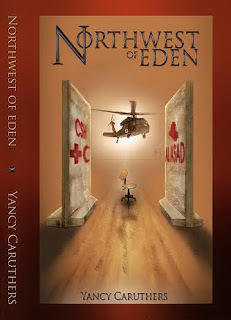
What about spill over into other books? I’m a one-book wonder for a few more months. Northwest of Eden is the only full-length title I have, although I’ve released four 99c chapbooks based on the true experiences of Army medics from different eras. I don’t advertise the short reads, but I do sell quite a few. I also score about 20% of my book revenue from Kindle Unlimited. I would speculate that an author with multiple titles should see some action on the rest of the library. In fact, it might be useful to run an ad or more than one book at a time. Once my full collection of stories is released this summer (The series is called “Medic!”) then I’ll try running an ad for that, too, which should give me more data.
I don’t claim to know all the secrets, but I at least understand the math. I’d leave you with three solid piece of advice in terms of book promotion:
1. Write the best book you can, well-edited with a good cover. If your book sucks, then you don’t actually want people to know about it, because they will tell their friends.
2. Put together an exciting and engaging book page. It should be nothing but “hook,” compelling the reader to click that BUY button.
3. Do everything within your power and budget to get people to that page.
Good luck to all of you! I invite all of you to take a look at the book page for Northwest of Eden or one of the Medic! chapbooks. Of course I want you to buy all of them, but if you don’t, and if there is something about those pages you don’t like, please comment below! I’m always trying to improve and I welcome your feedback.
http://www.amazon.com/Yancy-Caruthers/e/B00KDE445A/ref=dp_byline_cont_ebooks_1
http://yancycaruthers.com/
https://twitter.com/YancyCaruthers

Yancy Caruthers is a two-tour Iraq War veteran (U.S. Army). He was a registered nurse for 18 years, working emergency/trauma and aviation medicine, then went on to serve for another 5 years as a diplomat with the Department of State. He now lives in Missouri with his family and stays busy writing, speaking, and volunteering for veterans’ organizations.
Guest post-
Book Marketing and Amazon Ads with Yancy Caruthers

As authors, we are all looking for something that works to sell books, and we make excuses why we don’t. We even make excuses for the people we pay to promote us like, “I’m getting exposure.”
Exposure isn’t accepted at most major banks. We need people to read us, and we’d prefer they pay for the privilege. But isn’t exposure worth something?
Absolutely, but not as much as those peddling it would lead you to believe. I’m going to show you how to value it.
We see thousands of ads every day, and perhaps not a minute rolls by that we aren’t bombarded with ads, targeted at us via the searches we have done. As if that’s not creepy enough, I’m a writer, so my searches include recipes from Cyprus, the mating habits of the North American Screech Owl, and ways to dissolve human flesh with household chemicals. There are NSA concerns, but I’m just happy that at least one agency within the government is paying attention to me.
I ignore over 99.9% of the ads I see, assuming I even notice them, and on average, so do you. But there is a percentage of people who will see your ad and click on it because they want to learn more. This rate is called “Click-through-rate,” or CTR.
This is why Twitter advertising can be so frustrating – one company promises to Tweet your book ad to 660,000 followers for $19/day. Even with multiple Tweets, will 10% of them see it? 5%? Let’s say that for ease of math, that 40,000 people see your ad at least once. Apply the average CTR of 0.1%, and only 40 people will click on your book’s page to learn more.
Let’s apply the second number – the conversion rate. This is the number of lookers who become buyers. At a 5% conversion, you sold two books in the above scenario.
That’s $4.10 in royalties on a $2.99 eBook. Hardly worth $19, but that doesn’t mean you shouldn’t advertise somewhere! Isn’t promotion what we have to do to be read?
Let’s go back and look at the formula again. The CTR is a function of two things – how good your ad looks, and where it is placed. Spamming an ad to 100,000 random Twitter users might not get you a good CTR, but what if I could reach the same number of people who were readers in my genre?
Real example: I currently run ads on Amazon in my genre and also in related genres – these are people who are looking for something to read, or they wouldn’t be on Amazon in the first place, so I’m not sure my audience could be any more ideal. My current CTR is 0.62%. This means that for every 100,000 viewers, there are 620 people who are interested enough to click through to my book page. Incidentally, Amazon prices these ads by the click, not the view. I don’t pay for the 100k, but rather the 620.
How much are those clicks worth? Well, it depends on how many clickers become buyers – my conversion rate. This is a factor of one thing, and one thing only, and listen up, authors, because this is important.
Your book page has to be engaging, even interesting - and free of typos. You may have written hundreds of pages for your book, but this is the most important one. This is because EVERYTHING you do, whether it be radio, TV, print ads, personal appearances, social media, guest blogging…is designed to get people to that page, because that’s where they click the button that says “Buy.” All roads that lead anywhere lead to Rome.
I wish I could tell you the best way to write it, but it’s something I’m still challenged with. I’m still looking at it and making minor modifications. And I don’t have a clue what I’m doing. I will say, however, that over the past six months, my conversion rate has been between 4% and 6%. So those 100,000 Amazon views I mentioned above? The ones that scored 620 clicks? At a 5% conversion, those yield 31 sales. My royalties on that $2.99 sale pay me $63.55. That’s about 10 cents/click. If I’m paying 9 cents (hopefully less), then I’m still making a profit. It’s slight, but if I can do it thousands of times, then why not?
What about spill over into other books? I’m a one-book wonder for a few more months. Northwest of Eden is the only full-length title I have, although I’ve released four 99c chapbooks based on the true experiences of Army medics from different eras. I don’t advertise the short reads, but I do sell quite a few. I also score about 20% of my book revenue from Kindle Unlimited. I would speculate that an author with multiple titles should see some action on the rest of the library. In fact, it might be useful to run an ad or more than one book at a time. Once my full collection of stories is released this summer (The series is called “Medic!”) then I’ll try running an ad for that, too, which should give me more data.
I don’t claim to know all the secrets, but I at least understand the math. I’d leave you with three solid piece of advice in terms of book promotion:
1. Write the best book you can, well-edited with a good cover. If your book sucks, then you don’t actually want people to know about it, because they will tell their friends.
2. Put together an exciting and engaging book page. It should be nothing but “hook,” compelling the reader to click that BUY button.
3. Do everything within your power and budget to get people to that page.
Good luck to all of you! I invite all of you to take a look at the book page for Northwest of Eden or one of the Medic! chapbooks. Of course I want you to buy all of them, but if you don’t, and if there is something about those pages you don’t like, please comment below! I’m always trying to improve and I welcome your feedback.

http://www.amazon.com/Yancy-Caruthers/e/B00KDE445A/ref=dp_byline_cont_ebooks_1
http://yancycaruthers.com/
https://twitter.com/YancyCaruthers
Yancy Caruthers is a two-tour Iraq War veteran (U.S. Army). He was a registered nurse for 18 years, working emergency/trauma and aviation medicine, then went on to serve for another 5 years as a diplomat with the Department of State. He now lives in Missouri with his family and stays busy writing, speaking, and volunteering for veterans’ organizations.

Book Marketing with Yancy Caruthers
Continuing the conversation on book marketing and getting into some specifics here with a fellow Army vet and author and student of "sellin' books". I for certain learned something from this and appreciate his willingness to share. Check this out and please join the discussion, all of his info is at the bottom of the post. Enjoy.
Guest post with Yancy Caruthers
As authors, we are all looking for something that works to sell books, and we make excuses why we don’t. We even make excuses for the people we pay to promote us like, “I’m getting exposure.”
Exposure isn’t accepted at most major banks. We need people to read us, and we’d prefer they pay for the privilege. But isn’t exposure worth something?
Absolutely, but not as much as those peddling it would lead you to believe. I’m going to show you how to value it.
We see thousands of ads every day, and perhaps not a minute rolls by that we aren’t bombarded with ads, targeted at us via the searches we have done. As if that’s not creepy enough, I’m a writer, so my searches include recipes from Cyprus, the mating habits of the North American Screech Owl, and ways to dissolve human flesh with household chemicals. There are NSA concerns, but I’m just happy that at least one agency within the government is paying attention to me.
I ignore over 99.9% of the ads I see, assuming I even notice them, and on average, so do you. But there is a percentage of people who will see your ad and click on it because they want to learn more. This rate is called “Click-through-rate,” or CTR.
This is why Twitter advertising can be so frustrating – one company promises to Tweet your book ad to 660,000 followers for $19/day. Even with multiple Tweets, will 10% of them see it? 5%? Let’s say that for ease of math, that 40,000 people see your ad at least once. Apply the average CTR of 0.1%, and only 40 people will click on your book’s page to learn more.
Let’s apply the second number – the conversion rate. This is the number of lookers who become buyers. At a 5% conversion, you sold two books in the above scenario.
That’s $4.10 in royalties on a $2.99 eBook. Hardly worth $19, but that doesn’t mean you shouldn’t advertise somewhere! Isn’t promotion what we have to do to be read?
Let’s go back and look at the formula again. The CTR is a function of two things – how good your ad looks, and where it is placed. Spamming an ad to 100,000 random Twitter users might not get you a good CTR, but what if I could reach the same number of people who were readers in my genre?
Real example: I currently run ads on Amazon in my genre and also in related genres – these are people who are looking for something to read, or they wouldn’t be on Amazon in the first place, so I’m not sure my audience could be any more ideal. My current CTR is 0.62%. This means that for every 100,000 viewers, there are 620 people who are interested enough to click through to my book page. Incidentally, Amazon prices these ads by the click, not the view. I don’t pay for the 100k, but rather the 620.
How much are those clicks worth? Well, it depends on how many clickers become buyers – my conversion rate. This is a factor of one thing, and one thing only, and listen up, authors, because this is important.
Your book page has to be engaging, even interesting - and free of typos. You may have written hundreds of pages for your book, but this is the most important one. This is because EVERYTHING you do, whether it be radio, TV, print ads, personal appearances, social media, guest blogging…is designed to get people to that page, because that’s where they click the button that says “Buy.” All roads that lead anywhere lead to Rome.
I wish I could tell you the best way to write it, but it’s something I’m still challenged with. I’m still looking at it and making minor modifications. And I don’t have a clue what I’m doing. I will say, however, that over the past six months, my conversion rate has been between 4% and 6%. So those 100,000 Amazon views I mentioned above? The ones that scored 620 clicks? At a 5% conversion, those yield 31 sales. My royalties on that $2.99 sale pay me $63.55. That’s about 10 cents/click. If I’m paying 9 cents (hopefully less), then I’m still making a profit. It’s slight, but if I can do it thousands of times, then why not?
What about spill over into other books? I’m a one-book wonder for a few more months. Northwest of Eden is the only full-length title I have, although I’ve released four 99c chapbooks based on the true experiences of Army medics from different eras. I don’t advertise the short reads, but I do sell quite a few. I also score about 20% of my book revenue from Kindle Unlimited. I would speculate that an author with multiple titles should see some action on the rest of the library. In fact, it might be useful to run an ad or more than one book at a time. Once my full collection of stories is released this summer (The series is called “Medic!”) then I’ll try running an ad for that, too, which should give me more data.
I don’t claim to know all the secrets, but I at least understand the math. I’d leave you with three solid piece of advice in terms of book promotion:
1. Write the best book you can, well-edited with a good cover. If your book sucks, then you don’t actually want people to know about it, because they will tell their friends.
2. Put together an exciting and engaging book page. It should be nothing but “hook,” compelling the reader to click that BUY button.
3. Do everything within your power and budget to get people to that page.
Good luck to all of you! I invite all of you to take a look at the book page for Northwest of Eden or one of the Medic! chapbooks. Of course I want you to buy all of them, but if you don’t, and if there is something about those pages you don’t like, please comment below! I’m always trying to improve and I welcome your feedback.
http://www.amazon.com/Yancy-Caruthers/e/B00KDE445A/ref=dp_byline_cont_ebooks_1
http://yancycaruthers.com/
https://twitter.com/YancyCaruthers
Yancy Caruthers is a two-tour Iraq War veteran (U.S. Army). He was a registered nurse for 18 years, working emergency/trauma and aviation medicine, then went on to serve for another 5 years as a diplomat with the Department of State. He now lives in Missouri with his family and stays busy writing, speaking, and volunteering for veterans’ organizations.
Guest post with Yancy Caruthers
As authors, we are all looking for something that works to sell books, and we make excuses why we don’t. We even make excuses for the people we pay to promote us like, “I’m getting exposure.”
Exposure isn’t accepted at most major banks. We need people to read us, and we’d prefer they pay for the privilege. But isn’t exposure worth something?
Absolutely, but not as much as those peddling it would lead you to believe. I’m going to show you how to value it.
We see thousands of ads every day, and perhaps not a minute rolls by that we aren’t bombarded with ads, targeted at us via the searches we have done. As if that’s not creepy enough, I’m a writer, so my searches include recipes from Cyprus, the mating habits of the North American Screech Owl, and ways to dissolve human flesh with household chemicals. There are NSA concerns, but I’m just happy that at least one agency within the government is paying attention to me.
I ignore over 99.9% of the ads I see, assuming I even notice them, and on average, so do you. But there is a percentage of people who will see your ad and click on it because they want to learn more. This rate is called “Click-through-rate,” or CTR.
This is why Twitter advertising can be so frustrating – one company promises to Tweet your book ad to 660,000 followers for $19/day. Even with multiple Tweets, will 10% of them see it? 5%? Let’s say that for ease of math, that 40,000 people see your ad at least once. Apply the average CTR of 0.1%, and only 40 people will click on your book’s page to learn more.
Let’s apply the second number – the conversion rate. This is the number of lookers who become buyers. At a 5% conversion, you sold two books in the above scenario.
That’s $4.10 in royalties on a $2.99 eBook. Hardly worth $19, but that doesn’t mean you shouldn’t advertise somewhere! Isn’t promotion what we have to do to be read?
Let’s go back and look at the formula again. The CTR is a function of two things – how good your ad looks, and where it is placed. Spamming an ad to 100,000 random Twitter users might not get you a good CTR, but what if I could reach the same number of people who were readers in my genre?
Real example: I currently run ads on Amazon in my genre and also in related genres – these are people who are looking for something to read, or they wouldn’t be on Amazon in the first place, so I’m not sure my audience could be any more ideal. My current CTR is 0.62%. This means that for every 100,000 viewers, there are 620 people who are interested enough to click through to my book page. Incidentally, Amazon prices these ads by the click, not the view. I don’t pay for the 100k, but rather the 620.
How much are those clicks worth? Well, it depends on how many clickers become buyers – my conversion rate. This is a factor of one thing, and one thing only, and listen up, authors, because this is important.
Your book page has to be engaging, even interesting - and free of typos. You may have written hundreds of pages for your book, but this is the most important one. This is because EVERYTHING you do, whether it be radio, TV, print ads, personal appearances, social media, guest blogging…is designed to get people to that page, because that’s where they click the button that says “Buy.” All roads that lead anywhere lead to Rome.
I wish I could tell you the best way to write it, but it’s something I’m still challenged with. I’m still looking at it and making minor modifications. And I don’t have a clue what I’m doing. I will say, however, that over the past six months, my conversion rate has been between 4% and 6%. So those 100,000 Amazon views I mentioned above? The ones that scored 620 clicks? At a 5% conversion, those yield 31 sales. My royalties on that $2.99 sale pay me $63.55. That’s about 10 cents/click. If I’m paying 9 cents (hopefully less), then I’m still making a profit. It’s slight, but if I can do it thousands of times, then why not?
What about spill over into other books? I’m a one-book wonder for a few more months. Northwest of Eden is the only full-length title I have, although I’ve released four 99c chapbooks based on the true experiences of Army medics from different eras. I don’t advertise the short reads, but I do sell quite a few. I also score about 20% of my book revenue from Kindle Unlimited. I would speculate that an author with multiple titles should see some action on the rest of the library. In fact, it might be useful to run an ad or more than one book at a time. Once my full collection of stories is released this summer (The series is called “Medic!”) then I’ll try running an ad for that, too, which should give me more data.
I don’t claim to know all the secrets, but I at least understand the math. I’d leave you with three solid piece of advice in terms of book promotion:
1. Write the best book you can, well-edited with a good cover. If your book sucks, then you don’t actually want people to know about it, because they will tell their friends.
2. Put together an exciting and engaging book page. It should be nothing but “hook,” compelling the reader to click that BUY button.
3. Do everything within your power and budget to get people to that page.
Good luck to all of you! I invite all of you to take a look at the book page for Northwest of Eden or one of the Medic! chapbooks. Of course I want you to buy all of them, but if you don’t, and if there is something about those pages you don’t like, please comment below! I’m always trying to improve and I welcome your feedback.
http://www.amazon.com/Yancy-Caruthers/e/B00KDE445A/ref=dp_byline_cont_ebooks_1
http://yancycaruthers.com/
https://twitter.com/YancyCaruthers
Yancy Caruthers is a two-tour Iraq War veteran (U.S. Army). He was a registered nurse for 18 years, working emergency/trauma and aviation medicine, then went on to serve for another 5 years as a diplomat with the Department of State. He now lives in Missouri with his family and stays busy writing, speaking, and volunteering for veterans’ organizations.