Kat Sanders's Blog, page 4
April 21, 2013
The Wheel of the Year: Beltane


March 30, 2013
News and Updates: Past, Present and Future

March 14, 2013
The Wheel of the Year: Spring Equinox

February 17, 2013
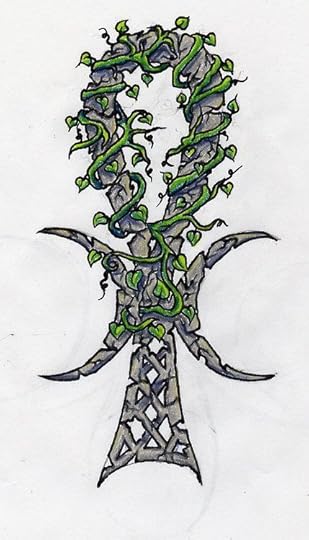
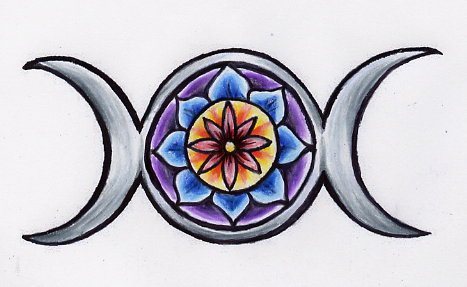
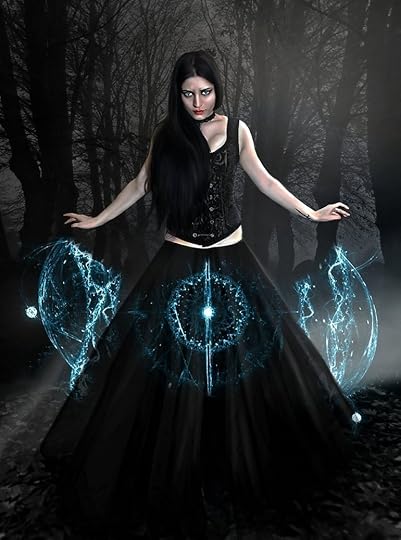
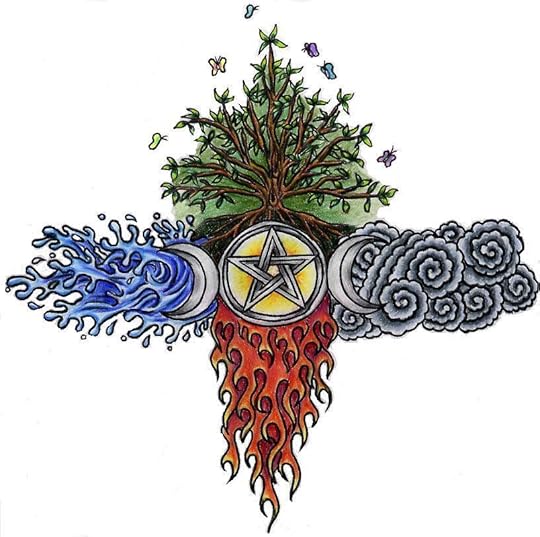
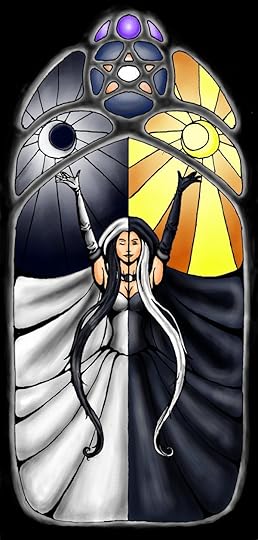
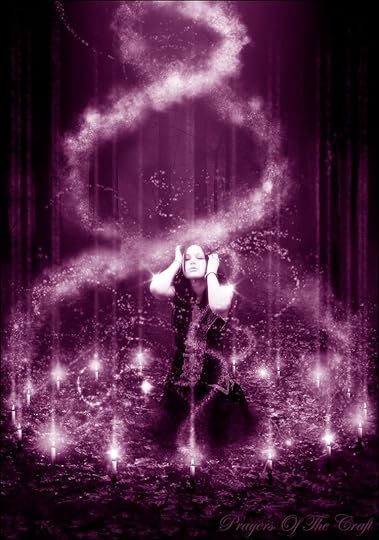
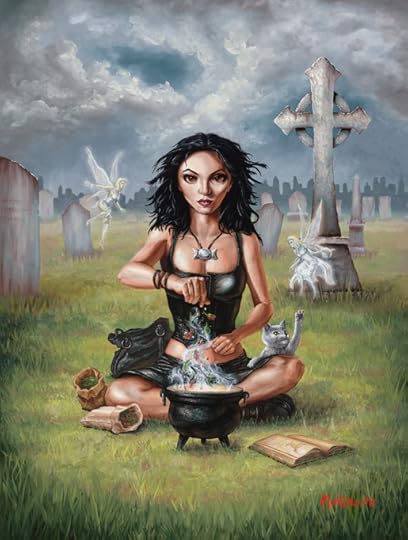
Wiccan Artwork

January 31, 2013
10 Informative Candlemas/Imbolc Sites
The first Sabbat of the modern calendar year is Candlemas, otherwise known as Imbolc or Imbolg. Candlemas is a time of healing, inspiration and artistic endeavors. Here are some websites that give additional information on Candlemas and its rituals:
School of the Seasons: Celebrating Candlemas
About.com: History of Imbolc
World Spirituality: Imbolc
Pagan Holidays: Imbolc
Wicca.com: Imbolc
Spells and Witchcraft: Imbolc
Pagan Pages: Imbolc
Pagan News: Imbolc
Wicca Spirituality: Imbolc A Fresh Start
Witchvox: You Call It Groundhog Day, We Call It Imbolc

January 27, 2013
The Wheel of the Year: Candlemas
Candlemas, or Imbolgc, is the ritual of the coming Spring. The Goddess is recovering from the birth of the God.This celebration represents the earth preparing itself for the coming spring. This is the celebration of healing, inspiration and artistic endeavors. It is also called the “The Festival of Lights” and candle magick is frequently used.Candle Magick is where you take a candle that represents the color of your desire, light it and chant your desire. This ritual is most powerful at Imbolgc.Once the ritual or spell is complete, take your candle and place it on your personal altar. Light it each day until it is gone or until the Spring Equinox .
Correspondences
Date: 2nd February
Other Names: Imbolc, Imbolg
Meanings: health, omen observation, animal kinship, safety, improving finance
Colors: white, silver
Elements: fire, air
Symbols: lit candle
Aromas: wood burning

January 24, 2013
Three Differences Between A Ritual And A Spell
“Ritual: the established form for a ceremony; specifically: the order of words prescribed for a religious ceremony; a ritual observance; specifically: a system of rites; a ceremonial act or action; an act or series of acts regularly repeated in a set precise manner
Spell: a spoken word or forms of words held to have magic power; a state of enchantment; a strong compelling influence or attraction”
Merriam-Webster’s Dictionary
The difference between a ritual and a spell can be just about anything and depends on how the practitioner defines the meanings of those words. I like Merriam-Webster’s definitions. A ritual is a ceremony and an established form. A spell is a spoken word, a state of enchantment or a compelling influence. The two are vastly different but still work together.
Sometimes a spell is part of the ritual. At the heart of the ritual, you perform your Ritual Observance or Magickal Work. The magickal work could be a spell and is usually considered such. Using a spell at the center of your ritual allows you to add more power to the spell and receive the blessing of the deities or entities you have called upon.
Using these definitions, here are three differences between a spell and a ritual:
Steps
Time
Types of Power
Steps
Rituals and spells both have steps. The number of steps is greatly decreased with a spell.
When I write a formal ritual, there are 13 steps. Each step builds on the step before until you get to the Ritual Observance/Magickal Work. This is where you release the power you have gathered into the world. After that, the steps are ones of gratitude. You think the deities, entities and people involved before releasing the ritual. After the release, you eat and drink to replenish your body and the body of your circle. In an informal or daily ritual, you may not use the entire set of steps but the general outline is still there.
A spell may only take a few steps. They are usually:
Gather Your Power
Perform Your Spell
Release Your Power
The ‘perform your spell’ step may take the form of an incantation, a gesture, the use of supplies or the combination of the three. It depends on why you are performing the spell and what you hope to accomplish.
Time
Rituals and spells take time. Each one takes a piece of your day, but how much time differs. A ritual usually takes a lot of time. You have to decide what you want to accomplish, either find or write the ritual and gather supplies. Then you have to perform the ritual. Since each ritual takes a multitude of steps, the physical time it takes to perform the ritual can be anywhere from 15 minutes to a couple of hours. Then there are rituals that have a continuous component where you continue the ritual over a series of days, weeks or months. It all depends on what you want to accomplish.
Spells tend to be quick and easy. You say an incantation and see your power out into the world to work your will. It works or doesn’t work depending on what you hope to accomplish and how much power you put into it. Depending on the spell, there may be a gesture, a lying on of hands or a small amount of supplies needed for the spell, but usually it is something simple and easy to find around the house.
Types of Power
Rituals and spells usually use two different types of power, unless you are performing your spell as part of your ritual.
A ritual usually calls on the powers of a deity or an entity. You call the four quarters for protection. You ask your deity or entity for a blessing of energy to add their power to your own. You gather that energy, the energy around you and add those energies to your own. Using the combined powers, you start your magickal work and send all that energy into the world to power your spell.
A spell usually uses personal power. Instead of asking a deity or entity for help, you put your personal power into your spell. If that isn’t enough, you may pull some energy from the world around you. All that energy then powers your spell.
Using only personal energy means that a spell isn’t as strong as a ritual. Depending on what you want to happen, your reason for having that happen and your time limits, you may want to use a ritual for the really important things. The more energy used and the purer the purpose, the stronger the spell and the longer it will last.
Take into account what you want to happen before deciding you want to do a ritual or a spell. Most of the time, the decision is easy, but every so often what you decide won’t be the right choice. You can take a ritual and turn it into a spell and a spell into a ritual. You just have to decide what you want to accomplish and how much power you will need.
Homework: When would you need both a ritual and a spell to accomplish the same goal?

January 20, 2013
Spells and Rituals: An Overview
As you read through this website, there are four main definitions that I will be using when referring to rituals and spells.
Daily spells are the shortest and take the least amount of time. Usually they can be done on the go and anywhere. These will rely on personal power only.
Formal spells are a few minutes in length and usually are part of a ritual. They can be done on their own with your personal power but also can have power added to them to make them more powerful.
Daily rituals are quick rituals usually used to continue or reconfirm a ritual already set up or completed. Daily rituals usually last about half an hour and not all the steps of a formal ritual are used.
Formal rituals are the longest as you will need to plan these out in advance and set aside enough time to complete the ritual. There are times when a formal ritual can be shortened but that is rare.
There will be other types of rituals and spells on this site but these four are the main ones. I will note what type of spell or ritual it is on each one and let you know just how simple or complicated they are.

January 17, 2013
Poetry and Photography: Keep Moving On
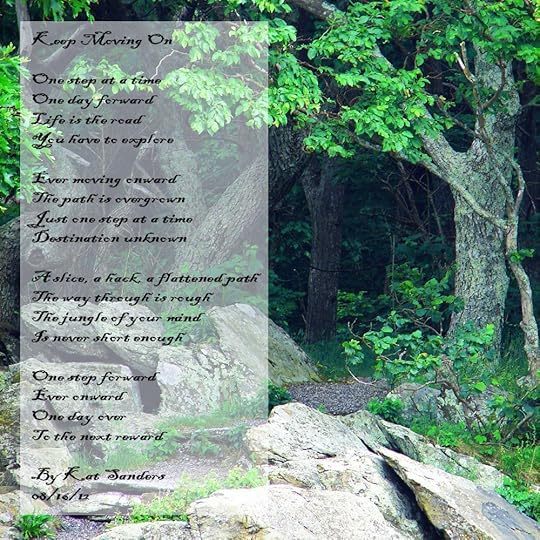
Poetry and Photography by Kat Sanders
Buy my artwork and photography as art prints and canvases at Imagekind by clicking here.

January 13, 2013
Five Types of Altars
There is not right or wrong answer to this question. It is individual to each Wiccan or Pagan. What is right for you, might not work for someone else.
For some practitioners, a single permanent altar is fine and will work for whatever spell or ritual they choose to perform. It is like always cooking with the same set of pots and pans. They will do what you want, but they may not do it as well or as timely.
For some practitioners, they need more variety. They may change their altar by the seasons, by the spell or ritual, or even just because they changed their mind on the color scheme. Sometimes, this fresh outlook works well and other times it is a disaster. Learning to use a new ritual set up can be time consuming, but it usually pays off in the long run.
Five types of altars
There are different ways to set up your altar depending on what your wants and needs. Here are five different ways to set up your altar:
By Tradition:
Each tradition from Alexandrian to Seax-Wica has their own way to set up their altar. If you are learning or following a particular tradition, then you should incorporate their ideals into your altar.
Scott Cunningham, in Wicca: A Guide to the Solitary Practitioner, says that your altar should be split into three areas. The left area is for the Goddess. The right one is for the God and the center is for both deities together.
By Deity
When setting up an altar based on the deity or deities that you believe in, you will want to make that deity or deities your focus. Find a representation of those deities and place it in the center of your altar. Surround it with other things that represent those deities.
Aphrodite is the Greek Goddess of Love, Beauty and Sexual Rapture. For an altar of Aphrodite, you might have a bust of Aphrodite in the center and surround it will items that represent love, beauty and sex. You might have the bust sitting on a bed of roses with a brush and mirror on one side and a picture of you and your lover on the other side.
Ares is the Greek God of War. For an altar of Ares, you might have a dagger to represent the God with other weapons surrounding it. The name Ares means destroyer or avenger. If you are a geeky Wiccan or Pagan, you could have representation of Marvel’s Avengers on your altar.
By Spell
Each spell or ritual you perform requires different ingredients and supplies. This will mean changing your altar to accommodate those supplies. If you are writing your own rituals, then you can decide what goes on the altar. If you are using a ritual or spell from a book or website, then that ritual or spell will dictate what is needed on your altar.
For a love spell, you would have hearts and roses. For a money spell, you would have money and other financial representation. It all depends on what is the goal of your spell.
By Holiday
Each Sabbat or Esbat has its own associations that would change the way your altar is set up. A lot of the Sabbat supplies are based on the season it is in. This allows for fresh flowers, fruits and veggies to be added to your altar. For Samhain, you can use pumpkins. For Yule, you can use holly and mistletoe. It all depends on what holiday it is and what you like about that holiday.
Eclectic Mix
This is probably how most Wiccans and Pagans have their altar set up. The altar will usually start out in a traditional style and then change and grow as you change and grow in your spirituality. Everyone has different things that work well with them or different needs that they are focused on.
For someone who is looking for love they may have Aphrodite as their Goddess and use roses and candy kisses on their altar. For someone who is has health issues, they may have healing stones and gems placed on their altar in a healing rune configuration. For someone who is embracing astral projection, they may have their altar set up with spells and wards for psychic protection and have gems and stones that enhance their psyche.
It all depends on what you need or desire from your altar. It changes with you and with your beliefs. Each practitioner is different and when you add two or more practitioners using the same altar, which will change how it is set up as well.
What type of altar do you have? Answer below in the comments.