
Lori Hatcher's Blog: Refresh Blog, page 36
July 17, 2019
Was Job's Wife a Loser?
 I’ve always thought Job’s wife was a loser. A loser with a capital L.
 To be honest, I try not to ponder Job and his wife’s story too deeply. I’m afraid if I get too close I might catch the plague that ravished their lives. So I keep my distance, skimming the book that bears Job’s name instead of stepping inside.
But today as I breezed past the land of Uz in my Bible reading, Job’s wife opened the door and invited me in.
I considered slapping on a mask and gloves and running the other way, but instead I took a deep breath and accepted her invitation.
 Heartbreak was everywhere. A series of tragedies had robbed Job of almost everything he held dear. His ten children had died in a catastrophic accident. Bands of raiders had ravaged his flocks, stealing thousands of animals. Pus-filled, oozing boils covered his body, disfiguring his skin and making him wish he’d never been born.
 Imagine what it would be like to be married to Job.
Scripture records the two lines that immortalized Job’s wife: "Do you still hold fast to your integrity? Curse God and die!” (Job 2:9).
Wow. What a woman.
Instead of reminding Job of the goodness of God in the face of tragedy, she encourages him to jump off a cliff. “How can you believe in a God who has turned his back on you?” I can imagine her saying. “Spit in his face and return to the ground from whence you came.”
Some of the women in the Bible inspire me with their bold and courageous faith, but not Mrs. Job. Her faithless, bitter words make me squirm.
 Ready to judge her and move on, I glance her way. And for the first time, I see—really see—the woman behind these gut-wrenching lines.
 Somehow, she looks different up close. It’s interesting how our perspective changes when we look into a person’s eyes instead of down our noses at them.
Gazing into her grief-ravaged face, I realize three things:
Job’s ten dead children were her dead children, too.
The valuable animals that rode off into the sunset behind the bandits? Her defense against hunger and poverty also.
And that deathly-ill man oozing with infection? Her beloved husband.
No wonder her words sound bitter and faithless. They erupt from the depths of her grieving soul. Like the suffering Psalmist, she voices the question every believer asks during times of tragedy, but few dare to say aloud, “Did I purify my heart and wash my hands in innocence for nothing?” (Psalm 73:13). God, have I wasted my life serving you?
Pastor/Teacher John Piper calls words like these “words for the wind.”
“There are words with roots in deep error and deep evil,” he writes in the online article, “When Words Are Wind.” “But not all grey words get their color from a black heart. Some are colored mainly by the pain, the despair. What you hear is not the deepest thing within. There is something real within where they come from. But it is temporary—like a passing infection—real, painful, but not the true person.”
Asaph, the Psalmist agrees. He explained the hurt that spawned his faithless words. “When I became embittered and my innermost being was wounded, I was a fool and didn’t understand; I was an unthinking animal toward You” (Psalm 73:22).
Yet Asaph returned to the faith that held him when he was too weak to hold himself. I believe Job’s wife did, too. “Yet I am always with You;” Asaph declared to the God he had doubted. “You hold my right hand. You guide me with Your counsel, and afterwards You will take me up in glory. Whom do I have in heaven but you? And I desire nothing on earth but You. My flesh and my heart may fail, but God is the strength of my heart, my portion forever” (Psalm 73:23-26).
Looking deeply into Job’s wife’s eyes, I lowered the gavel I’d been prepared to strike in judgment and draped the mantle of mercy over her grieving shoulders.
I believe this is what God did, too.
Unlike Lot’s idolatrous wife, whose backward glance revealed her true heart condition, Job’s wife suffered no judgment from the Lord, only healing and restoration. When God blessed Job again with health, wealth, and family, I believe Mrs. Job was standing right there beside him, a testimony to God’s goodness and mercy.
“So the Lord blessed the latter part of Job’s life more than the earlier. He owned 14,000 sheep, 6,000 camels, 1,000 yoke of oxen, and 1,000 female donkeys. He also had seven sons and three daughters. . . . Job lived 140 years after this and saw his children and their children to the fourth generation. Then Job died, old and full of days” (Job 14:12-13, 17).
What should we do when we encounter someone staggering under the pain of tragedy?
Piper suggests we pray for discretion and wisdom. “Let us learn to discern whether the words spoken against us or against God or against the truth are merely for the wind — spoken not from the soul, but from the sore. If they are for the wind, let us wait in silence and not reprove. Restoring the soul, not reproving the sore, is the aim of our love.”
I left Job’s house that day with a new opinion of his wife. I realize now that she isn’t a loser. Only a woman who bowed low under the weight of sorrow and grief, struggling to make sense of it all and desperate for hope and compassion.
In my quickness to judge, perhaps I was the loser.
Now it’s your turn. When have you misjudged someone, only to discover later that there was much you didn’t understand? Leave a comment below and share your story. If you’re reading by email, CLICK HERE to visit Hungry for God online and share your thoughts.
 Are you hungry for God, but starving for time?
 I’d love to send you a 5-minute e-mail devotion twice a week to start your day off with the Lord.
Sign up for a free subscription to Hungry for God by CLICKING HERE.
Then, be sure to VALIDATE the confirmation email you receive.
Note: I promise never to spam you or share your email address.
Because busy women need to connect with God in the craziness of everyday life.
If this post was meaningful to you, would you consider sharing it with a friend by clicking on one of the buttons below? Did you know you can receive bi-weekly Hungry for God posts sent directly to your email inbox? Visit http://www.lori-benotweary.blogspot.com and click on the link in the right hand corner to Subscribe Via Email.
Copyright 2018 by Lori Hatcher


July 14, 2019
Waiting for a Bus that Never Comes
My watch read 10:58 and the 11Y bus was nowhere in sight. According to the electronic sign that tracked the bus’ progress, it was due to arrive in three minutes.
 Two minutes.
 One minute.
The flashing display announced: ARRIVED.
Except it hadn’t.
Five minutes ticked by. Then ten.
Should we be worried that the 10:58 bus is twelve minutes late? I texted my son-in-law, an Alexandria local.
No. Sometimes they get behind. I’ll check the transit schedule. . . Hm. That’s strange. It says it’s already come.
Not good. Especially since my husband and I had tickets for a tour of Ford’s Theatre at noon. In the city. Thirty minutes away.
I’ve never lived in a place where I had to depend on public transportation, so standing on a street corner waiting for a bus that never came was a new experience. As the minutes ticked by, we realized we had a choice to make—continue to stand on the corner, abandon our plans for the tour, or explore other options.
I just checked with Uber, my son-in-law texted. They can have a car there in 5 minutes.
Let’s do it, I responded, and soon we were on our way.
Thinking back on the experience, I realized it wasn’t the first time I’ve stood on that street corner. Figuratively at least. You’ve probably been there, too.
You made your plans, and they were good ones. You prepared, worked hard, and did everything you could do to ensure their success. But the bus never came.
The recruiter didn’t call you back.

That first date didn’t lead to a second one.
The email that should have said Yes said No.
The promotion, project, or pregnancy never happened.
You had a choice to make. Cling to your dream, give up, or explore other options.
Unfortunately, exploring other options is a little more difficult than opening the Uber app and requesting a driver. It begins with knowing your dream.
• Is it from the Lord?
• Does it agree with Scripture?
• Is it a natural progression on the path God has been leading you?
• Can you look back and see how past events and circumstances have brought you to this place?
• Has your dream been confirmed by godly people?
• Has your desire grown stronger as time has passed or wavered or waned?
No one can answer all these questions for us, but I believe if we earnestly seek God’s will, he’ll reveal it to us.
Two years ago, God planted the idea in my heart to write a devotional book. Knowing God can’t guide our steps unless we’re walking, I crafted a book proposal, sent it to my agent, and began to write.
From time to time my agent would forward a rejection letter. Lord, I’d pray, am I supposed to keep writing this book?Every time I asked, in the deepest part of my heart, I’d sense God’s response:
Write the book.
So I kept writing. Before long, every publisher had rejected it. The bus didn’t come.
But instead of shriveling up and dying, my desire to write the book grew stronger. And stronger.
Lord?
Write the book.
I prayed. I read God’s Word. I brainstormed with other writers, consulted with my agent, and talked to professionals in the industry.
Out of the ashes of my first proposal arose another one. A better one. Stronger and more true to the calling God had given me. My heart leapt with excitement, and my mind exploded with inspiration.
Within two months, Discovery House had extended an offer to publish Refresh Your Faith – Uncommon Devotions from Every Book of the Bible.
During the long wait, I continued to obey the voice that urged me to keep writing. Because I had, the manuscript was complete and ready to submit before I’d even signed the contract. Not the normal order of events for a non-fiction book, but right on schedule with God’s timeline.
And while the first bus to publication didn’t arrive, an Uber driver waited in the wings, ready to take my new and improved book idea where it needed to go.
If you’re standing on the street corner watching for a bus that hasn’t come, I urge you to sincerely and humbly examine your dream. Stop telling God what you want, and listen with an open heart to what he wants for you. Surrender your will to his, knowing you can trust him.
Then ask yourself, is this dream from the Lord? You can never be completely sure, but if it satisfies the questions above, it probably is.
"I know that you can do all things; no purpose of yours can be thwarted" (Job 42:2).
Unless God closes the door and/or removes the desire from your heart, you have a choice to make. Are you going to continue to stand on the corner and wait, abandon your plans, or explore another option?
Receiving 16 rejection letters could have been the end of my book dream, but God’s calling was clear to write the book. At the time, I didn’t know why. Maybe the process was for my own growth. Or to create material to share on my blog. Or maybe he called me to write the book because he intended for it to become a book.
Regardless, God had given me a dream. My responsibility was to do everything within my power to make it happen. After that, the results were up to him.
Now let’s talk about your dream. Are you standing on a corner waiting for a bus that hasn’t come? Is it time to give up on your plans? Or maybe it’s time to explore other options. Whatever the Lord tells you to do, do it.
If you leave a comment below, I'd be honored to pray for you.
Are you hungry for God, but starving for time? I’d love to send you a 5-minute e-mail devotion twice a week to start your day off with the Lord.
Sign up for a free subscription to Hungry for God by CLICKING HERE.
Then, be sure to VALIDATE the confirmation email you receive.
Note: I promise never to spam you or share your email address.
Because busy women need to connect with God in the craziness of everyday life.
If this post was meaningful to you, would you consider sharing it with a friend by clicking on one of the buttons below? Did you know you can receive bi-weekly Hungry for God posts sent directly to your email inbox? Visit http://www.lori-benotweary.blogspot.com and click on the link in the right hand corner to Subscribe Via Email.
Copyright 2018 by Lori Hatcher
July 10, 2019
Trust God's Timing: Don't Put a Period Where God Has Put a Comma, and Likewise . . . A Guest Post by Jean Wilund
 Today's it's my pleasure to welcome my dear friend, writing buddy, and resident theologian, Jean Wilund to Hungry for God. Read deeply, think carefully, and be encouraged. And follow the link at the end to subscribe to Jean's inspiring blog.
Punctuation Matters “Don’t eat, Gigi.” OR “Don’t eat Gigi.”
Big difference. Punctuation matters.
Punctuation also matters when it comes to trusting God’s timing.
Don’t put a period where God has put a comma.
And likewise . . .
Don't put a comma where God has put a period.
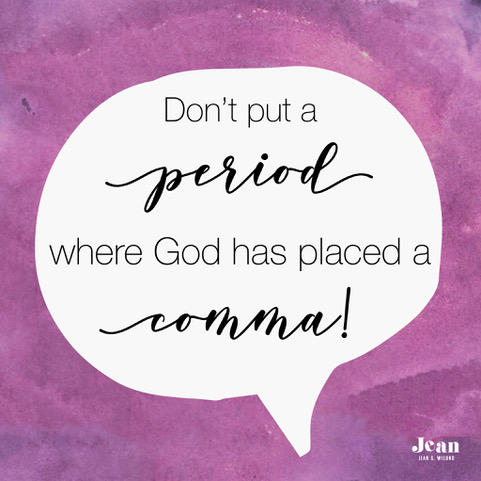 Commas pause us and encourage us to wait. And rest. They mean God’s still working in the situation. Keep walking by faith. God has not given His final answer.
 Periods stop and turn us. It’s over. Move along. They mean God has spoken. We don't need more information. We need to obey. And rest. We Walk by Faith, Not by Sight.
When we're in a waiting and wondering phase, figuring out God's timing can feel like navigating a fog-covered road. You have no idea if you're almost at your destination or still far from it. God sees what we can't -- He sees the end from the beginning.
We, however, must walk by faith through the fog of our future. Our sight doesn’t go even a millisecond beyond the next step.
But we don't walk in blind faith. God has given us 1,189 chapters of His wisdom and instruction within the pages of the Bible to guide us. And He's given Christians His Holy Spirit to help us understand God's Word and to lead us in all things -- including divine punctuation.
How Can We Know if God Has Given Us a Period or a Comma?
One of the surest ways to know if God has given you a period or a comma is to ask yourself if your situation/decision agrees with the Bible.
If not, there’s your period.
If it does, rest in the comma.
Actually, rest in both. If that seems contradictory, let me explain.
Don't Put a Comma in Marriage Where God has Placed a Period And Vice Versa
Imagine someone who's not married meets a fascinating guy. They really like him, but he’s married. Period. Done. Move along. There’s no comma on that path. Only a period.
God may be in the process of bringing them the perfect husband (comma), but it’s not going to be someone else’s (period).
Embrace the period (it's a good thing) and rest in the comma (it's a good thing.)
Likewise, don't assume if you're single that you'll never get married. Don't put a period where God has placed a comma.
God created and blessed the wonderful institute of marriage. A single person has every right to assume they’re living in the comma. Some commas just have longer tails.
BTW, singleness isn't a curse. It's as much a blessing as marriage. If God calls you to singleness, He will bless you in it. It's not a curse.
Vice versa, marriage isn't a curse -- in case some of your experiences made you think it is.
If You've Trusted in Jesus, Don't Put a Comma in Salvation Where God has Placed a Period
If you've trusted in Jesus Christ for the payment of your sins, your eternal salvation is sealed. Period. It's done. Or as Jesus said, "It is finished." God will not remove the period. Rest in it. Don't put a comma where God has placed a period.
A comma wrongly says I've trusted in Jesus, and now I must also be baptized or I won't be saved. Or something like I've trusted in Jesus, and now I must do good works or I won't be saved.Rest in the period of the assurance of your salvation, and enjoy the comma phase between when you received your salvation to when you'll see the Lord face-to-face.
If You've Never Trusted In Jesus, Embrace the Comma of Grace, But Understand a Period is Coming
If you've never trusted in Jesus for your salvation, you're in a comma. A comma of exceeding grace. But please understand: a period is coming. There's no second chance to trust Christ after we pass from this life. Period.
Take advantage of the comma and trust in Jesus now before the time comes when the period will settle your destiny with an irrevocable and horrific period. Praise God for the comma He's given you now and turn to Christ. Embrace the period of salvation before the period of judgment makes you long for the comma again. Got it?
For he [God] says, "In the time of my favor I heard you, and in the day of salvation I helped you." I tell you, now is the time of God's favor, now is the day of salvation. ~ 2 Corinthians 6:2
Listen, Obey, and Rest: God's Timing is Perfect Life happens every day.
Profound, I know. But it does. And sometimes what happens jolts us and threatens to send us into a tailspin. But it doesn't have to. The truth sets us free when we:
Listen to what God has to say in His Word.
Obey Him in whatever He's shown us to do.
Rest in God's faithful timing. Period.
(Oh, and don't eat Gigi. Ever.)
PS -- If you're living in an exclamation point -- and your shrieks aren't from delight -- seek help. God has commanded us to care for each other. Reach out to your family, friends, church, and even medical professionals if needed.
Jean Wilund is passionate about coffee, comedy, and chocolate, but mostly about sharing God’s life-changing truths through writing, speaking, and teaching. She lives in Lexington with her husband. Their children live scattered around the country. Visit Jean at www.JeanWilund.com.
Are you hungry for God, but starving for time? I’d love to send you a 5-minute e-mail devotion twice a week to start your day off with the Lord.
Sign up for a free subscription to Hungry for God by CLICKING HERE.
Then, be sure to VALIDATE the confirmation email you receive.
Note: I promise never to spam you or share your email address.
Because busy women need to connect with God in the craziness of everyday life.

If this post was meaningful to you, would you consider sharing it with a friend by clicking on one of the buttons below? Did you know you can receive bi-weekly Hungry for God posts sent directly to your email inbox? Visit http://www.lori-benotweary.blogspot.com and click on the link in the right hand corner to Subscribe Via Email.
Copyright 2018 by Lori Hatcher
July 7, 2019
One of the Sweetest Ways to Change the World
 When you grow up in a small town in New England, you don’t have much to brag about. Nestled on the shores of Narragansett Bay, the sleepy little town where I was born is home to about 23,000 people.
 But once a year, it goes from obscure to ostentatious.
 On July 4th, Bristol, Rhode Island makes headlines by hosting the oldest continuously-running Fourth of July parade in the world. As a Girl Scout from troop #229, I proudly marched with my band of sisters in this parade on more than one occasion.
 Organized in 1785 by Henry Wright, a Congregational minister and veteran of the Revolutionary War, the celebration attracts more than 200,000 visitors from around the world. It’s not uncommon to see the Today Show broadcasting "The Military, Civic and Firemen's Parade" from a perch on Hope Street.
 In preparation for the celebration, the town paints the town red. And white. And blue. Literally. A tri-color stripe down the middle of Hope Street marks the parade route. Fire hydrants painted to look like minute men dot the main thoroughfare. Bunting, flags, and flowers adorn every home within ten miles of the town center. It’s no wonder Bristol has earned the nickname, “America’s Most Patriotic Town.”
 When my family moved from Rhode Island to South Carolina, I discovered that the biggest parade in Columbia took place in the winter. Smart. Very smart. In a land where July temperatures often reach 100 degrees or more, hosting a grand celebration in one of the cooler months of the year makes sense.
The Columbia Christmas Parade has all the parade elements I grew up with and more. Because Columbia is home to Fort Jackson, the largest basic training facility in the country, we always see an impressive display of military power. Fly overs by jets from Shaw Air Force base, rolling tanks and Armored Personnel Carriers from the fort, and music by the Army band add a chest-swelling patriotic touch.
I was half way through my senior year of dental hygiene school when parade organizers invited me to represent the Allied Health Department. Dressed in my white uniform and cap and accompanied by a five-foot wooden tooth, I waved and smiled until my face hurt.
One of the funnest parts of the parade was throwing candy to the kids along the route. (Ironic in light of my life-long pledge to fight tooth decay, but hey, it was Christmas.) Before event organizers decided it was dangerous and banned the practice, we had the freedom to fling handfuls of candy into the crowds that lined the streets.
Reveling in the memory of digging into that bucket of candy and scattering sweets far and wide, I realized something. Although safety concerns has ended the tradition of distributing candy at a parades, we as Christians can share a blessing that far surpasses Fireballs, Starburst, and Jolly Ranchers.
We can scatter prayers.
God showed me this early one morning as I walked the streets of my neighborhood. What if you scattered prayers the way you once scattered candy? The Holy Spirit whispered to my heart. Fling them far and wide. See how many people you can touch in my name today.
So I did.
I prayed for my closest neighbors as I walked past their houses.
Father, bless that hard-working university professor. Help her shine the light of Christ in her classroom.
Heal that precious friend with cancer and keep her faith strong. Meet her every need according to your riches and glory.
Protect that young couple as they travel. Give them a restful time away and bring them home safely.
I also prayed for neighbors I haven’t yet met, flinging petitions their way with abandon.
Lord, there’s that young girl I pass every morning jogging with her dog. Keep her safe. Keep her pure. If she doesn’t know you as Savior, help her find you.
And the man who leaves for work every morning at 6 a.m. Bless his home and his family. Draw him close to you.
And the grumpy lady who never smiles. Help her find joy.
Unlike the big bucket of candy on the parade floats, these sweet offerings multiplied the more I scattered them. I prayed for the policeman who lives at the entrance to our neighborhood. For the contractor who parks his trailer in a cul de sac. For the couple whose toy poodle barks every time I walk by.
 The house with a fleet of bicycles reminded me to pray for the next generation that will one day lead our country. The home with a Navy flag prompted me to pray for our military and their families. The house with the handicap ramp led me to pray for the health and safety of all my neighbors.
 Everywhere I walked, I scattered prayers with abandon, knowing God hears every one of them and promises to fulfill his purpose in each person’s life.
What a privilege to be part of his work in the world.
Would you like to join me? What if, instead of mindlessly walking, driving, or moving through your day, you grabbed a bucket of sweet prayers and flung them wherever you went? Who knows how God might use your petitions to accomplish his work in the lives of those around you.
One day we’ll be part of the parade to end all parades. Instead of a red, white, and blue stripe down the middle of the road, we’ll march on golden pavement. The King of kings and Lord of lords will lead the throng, and behind him will walk people from every tribe, tongue and nation.
How many will be there because of your prayers?
Now it’s your turn. How have you incorporated prayer into your daily routine? Leave a comment below and share your thoughts.
Are you hungry for God, but starving for time? I’d love to send you a 5-minute e-mail devotion twice a week to start your day off with the Lord.
Sign up for a free subscription to Hungry for God by CLICKING HERE.
Then, be sure to VALIDATE the confirmation email you receive.
Note: I promise never to spam you or share your email address.
Because busy women need to connect with God in the craziness of everyday life.

If this post was meaningful to you, would you consider sharing it with a friend by clicking on one of the buttons below? Did you know you can receive bi-weekly Hungry for God posts sent directly to your email inbox? Visit http://www.lori-benotweary.blogspot.com and click on the link in the right hand corner to Subscribe Via Email.
Copyright 2018 by Lori Hatcher
July 3, 2019
Are Your Words Grounded and Timed in Love? A Guest Post by Lori Roeleveld
 It's my pleasure to welcome my friend, fellow-writer, and fellow-Rhode Islander (who just happens to share my name), Lori Roeleveld to Hungry for God ... Starving for Time today. I admire Lori for her courage to speak and write the truth, even when it's unpopular. Follow the link at the end of the blog to read more from her. But be warned, hanging around with her will make you do hard things, just like Jesus did.
Above all, keep loving one another earnestly, since love covers a multitude of sins. (1 Peter 4:8)
I was surprised when Carly invited me to lunch. Our church had been experiencing a conflict that had divided many. Carly and I had had numerous hard conversations about her attitude. Our last conversation had been particularly adversarial, so I was nervous that our meeting might be a vengeful ambush.
Carly arrived after I did, and once we ordered, she didn’t keep me in suspense. “I need your help and your prayers. My doctor called me to discuss my most recent test results, and I don’t want to face it alone. Can you come along?”
I was taken aback. “Of course. Still, I’m surprised you’re asking me.”
“Why?” she said, leaning back in the booth. “Well, our last few exchanges haven’t been the most comfortable,” I replied.
 She nodded. “In fact, I hated those conversations. But through everything, one thing that’s always been clear is that you love me. It takes a huge commitment to love to stick with someone through talks like that. Other people probably have thought those things and just given up on me or walked away. I’ll take the tough talks as long as there’s the love.”
 Love is a multidimensional quality. It’s both a noun, representing a feeling, and a verb, representing actions that put others first. In John 21, after Jesus has risen from the dead, He appears to some of the disciples on the shore of the Sea of Tiberias.
In verses 15–19, over breakfast, Jesus asks Peter three times about his love for Him. Peter answers three times that He does, indeed, love Jesus. Jesus’s response to each affirmative answer is to call Peter to action—feeding Jesus’s sheep—in demonstration of this love.
To say that we love others is to say we’re willing to risk our own discomfort to speak hard things to them.
To say that we love Jesus is to say we are ready to obey Him by living and speaking the truth.
To say that we love Jesus is to say we are willing to reflect Him by loving and serving others.
To say that we love others is to say we’re willing to risk our own discomfort to speak hard things to them.
Love is a feeling that leads to action.When we prepare for any hard conversation, we must ask ourselves questions about love. Do I love this person, and if not, what am I going to do about that? Am I being loving to speak this truth in this way, at this time, to this person?
Some believers falsely assume that to be loving means to stay silent about truth or to compromise it in some way. Others are so afraid that loving feelings will lead to a softening of truth, they harden their hearts toward others and eschew mercy.
This is dangerous thinking—both for the church of Jesus Christ and ultimately for the world.The world (meaning people who don’t follow Jesus) has absconded with love, replacing God’s idea of love with a facsimile that many buy as the real thing.
And not just the world. Some parts of the body of Christ believe that to be loving, biblical truth must be muted or modified.
Not so.
Jesus walked on Earth living out perfect love while delivering perfect truth. It is possible. It’s not possible without Jesus, but it’s possible. Love and truth can occupy the same space, just as surely as Christ was fully human and fully God.
I’m aware that these two words frustrate, frighten, or trigger a wound reflex in some people. We’ve heard this phrase before, perhaps tossed around the church like a beach ball (or a dodge ball).
“I’m just speaking the truth in love, is all.”
“Well, don’t you know you have to speak truth in love?”
Intended for useful instruction, this power-filled phrase from Ephesians 4 is too often snapped from its context like a tree branch and used to club innocent passersby in Jesus’s name. The misguided speaker is often leaning heavily toward a personal interpretation of truth, while offering only a passing nod at anything others might recognize as love.
Inhale.
Exhale.
It’s tempting to edit from Scripture any passage that’s been misused, but this would be detrimental (not to mention heretical). Agreed, there has been a shameful amount of bullying that’s occurred in Jesus’s name. This speaking the truth in love concept has too often been the last word spiritually bludgeoned victims hear just before they hit the mat.
The worse thing we can do, though—worse than lancing the wounds—is to allow the bullies and abusers the last word on God’s Word. It will challenge some of us to revisit “speaking the truth in love,” but these are our Father’s Words. We must reclaim them from the bullies.
Of course, we can fairly represent love and truth simultaneously. Parents do it with children every day. Spouses do it. Church leaders, doctors, friends, and others all speak truth and communicate love, sometimes in the same breath.
Love is our high calling. The highest. We need to be trained and transformed by love, so that love is our first language, our initial reflex, and our emotional default setting. We need to foster loving hearts, if we want that love to influence our words.
(Excerpted from The Art of Hard Conversations, Lori Stanley Roeleveld, February 2019 by permission Kregel Publications)
[image error] Lori Stanley Roeleveld is an author, speaker, and disturber of hobbits who enjoys making comfortable Christians late for dinner. She’s authored four encouraging, unsettling books. Her latest release is The Art of Hard Conversations: Biblical Tools for the Tough Talks that Matter. She speaks her mind at www.loriroeleveld.com.
 Are you hungry for God, but starving for time?
 I’d love to send you a 5-minute e-mail devotion twice a week to start your day off with the Lord.
Sign up for a free subscription to Hungry for God by CLICKING HERE.
Then, be sure to VALIDATE the confirmation email you receive.
Note: I promise never to spam you or share your email address.
Because busy women need to connect with God in the craziness of everyday life.
If this post was meaningful to you, would you consider sharing it with a friend by clicking on one of the buttons below? Did you know you can receive bi-weekly Hungry for God posts sent directly to your email inbox? Visit http://www.lori-benotweary.blogspot.com and click on the link in the right hand corner to Subscribe Via Email.
Copyright 2018 by Lori Hatcher
June 30, 2019
Learning from the Wonder Boys
When you hear the words Wonder Boy, who comes to mind?
 The best modern example I can think of is Tim Tebow. Smart, handsome, athletic, and successful, he exemplifies everything a man should be. And when you add godliness to all his other characteristics, whoo boy, he’s a hero.
In Old Testament days, King Uzziah was Tim Tebow’s equivalent. Crowned before the stubble had fully grown on his cheeks, Uzzy took his father’s seat on the throne at age 16. He was brave, strong, courageous, and creative.
Second Chronicles 26 elaborates on his qualities, describing his military prowess, his ambitious building projects, and his “love for the soil.” But there’s more.
If brave, strong, courageous, and creative weren’t solid enough adjectives for his college application, Uzzy was also an entrepreneur. He took other men’s clever designs and produced devices to launch arrows and stones at Judah’s enemies, giving them a serious technological advantage in battle (v. 15).
Like Tim Tebow, Uzziah loved the Lord. “He sought God in the days of Zechariah.” And God blessed him. “As long as he sought the Lord, God made him prosper” (v. 5). Everyone knew God’s favor rested squarely on his broad shoulders—Wonder Boy Uzziah “had the hand of God on everything he did.” “So his fame spread far and wide, for he was marvelously helped till he became strong” (v. 15).
But ...
Oh, don’t you hate those “buts” after a compliment?
“But when he was strong his heart was lifted up, to his destruction” (v. 16). Taking his cue from the pagan cultures around him, Uzziah disregarded God’s clear instructions for temple worship. Although only Levitical priests were allowed to enter the house of God to offer incense on the altar, Uzziah barged into the temple, royal robes flapping, swinging his censer. Surely those laws don’t apply to me, he reasoned. I’m God’s favored son. He blesses everything I touch.
Unless you touch something God has declared off limits.
“Hold it right there, Wonder Boy,” Azariah, the high priest, flanked by 80 valiant men, rushed in after him. “It is not for you, Uzziah, to burn incense to the LORD, but for the priests, the sons of Aaron, who are consecrated to burn incense. Get out of the sanctuary, for you have trespassed! You shall have no honor from the Lord God” (v. 18).
As I shake my head at Uzziah’s audacity, I also recognize that the dangerous ground he stood on rests firmly beneath my feet. And perhaps yours as well.
Remember the days when you were young and inexperienced. Maybe you were tiptoeing into the college years, stepping into a new job or profession, or easing into the waters of parenting. You knew nothing and sought help from every credible source, especially God. You combed your Bible, highlighting every nugget of practical advice you could find, determined to apply them to your life. You prayed often, asking God to give you wisdom and direction.
But then you found your professional sea legs. You grew in knowledge and confidence and enjoyed a measure of success. The anxiety eased and people began coming to you for input and advice. You matured spiritually. You could find the book of Amos without looking in the table of contents. During Bible study, you had insight to share. People sought your advice and asked you to pray for them. You grew casual in your faith.
And herein lies the danger.
When we grow comfortable and confident professionally, personally, and spiritually, we often forget Who is the ultimate source of our success. Pride appears at the door of our hearts. Sometimes it elbows its way in like King Uzziah did at the temple, shoving humility to the side and plopping itself on the throne only God has a right to occupy. Other times it slithers in, silent and subtle. We don’t realize it’s there until we step on its scaly tail, and it bites us.
Sometimes we don’t recognize pride because it has as many masks as the Halloween aisle at Walmart.
The most obvious mask is self-confident arrogance. There’s no need to listen to or consider anyone else’s opinion or perspective because, of course, I know best.
A more subtle form of pride is independence. No need to stop and pray about a decision, because I already know what’s best. God gave me a brain, and he expects me to use it. Why bother him?
Complaining is another form of pride. The antithesis of gratitude, complaining says to God, “I don’t like my circumstances. There’s no way you can use them for good in my life. You’re not serving me the way I want.”
Direct disobedience to God’s Word is perhaps the most dangerous form of pride, as King Uzziah discovered. He was convinced his plan was best, even though it directly contradicted God’s Word. God will be moved by my great idea, he thought.
And God was moved—so moved he struck Uzziah with leprosy until the day he died. Even the king had to learn to obey God’s law.
What can we learn from Uzziah’s example? If we want to finish well, we must guard against pride.
Here are a few ways to do so:
 1. Pray every morning and throughout the day, “Lord, what would you have me to do? How would you have me answer this person, accomplish this task, deal with this situation?” We are most successfully independent when we acknowledge and embrace our dependence on God.
2. Be willing and eager to consider others’ opinions and insight. There’s wisdom in a multitude of counselors (Proverbs 15:22).
3. Practice gratitude. True gratitude acknowledges every good and perfect gift comes from God (James 1:17). When we walk through each day looking for God’s blessings, we’re less likely to grumble about what we lack.
4. Obey God’s Word. This seems like a no-brainer, but how many times do we directly disobey a principle or command in God’s Word? We worry when God tells us to pray. We vent our anger when he tells us to practice self-control. We compromise when he tells us to take a stand. Every time we do this, we declare that our way is better than God’s way. How prideful and presumptuous is this?
King Uzziah’s story didn’t end well, but Tim Tebow’s and ours are still being written. King Uzziah spent the rest of his life in exile. We can spend the rest of our lives (and all eternity) in God’s presence.
By praying daily, listening to others, practicing gratitude, and obeying God’s Word, we can resist pride and live humble, God-honoring lives. How’s that for a success story?
Now it’s your turn. Which face of pride do you find most challenging? Leave a comment below and share your thoughts. If you’re reading by email, CLICK HERE to visit Hungry for God online and leave a comment.
 Are you hungry for God, but starving for time?
I’d love to send you a 5-minute e-mail devotion twice a week to start your day off with the Lord.
Sign up for a free subscription to Hungry for God by CLICKING HERE.
Then, be sure to VALIDATE the confirmation email you receive.
Note: I promise never to spam you or share your email address.
Because busy women need to connect with God in the craziness of everyday life.
If this post was meaningful to you, would you consider sharing it with a friend by clicking on one of the buttons below? Did you know you can receive bi-weekly Hungry for God posts sent directly to your email inbox? Visit http://www.lori-benotweary.blogspot.com and click on the link in the right hand corner to Subscribe Via Email.
Copyright 2018 by Lori Hatcher
 The best modern example I can think of is Tim Tebow. Smart, handsome, athletic, and successful, he exemplifies everything a man should be. And when you add godliness to all his other characteristics, whoo boy, he’s a hero.
 In Old Testament days, King Uzziah was Tim Tebow’s equivalent. Crowned before the stubble had fully grown on his cheeks, Uzzy took his father’s seat on the throne at age 16. He was brave, strong, courageous, and creative.
Second Chronicles 26 elaborates on his qualities, describing his military prowess, his ambitious building projects, and his “love for the soil.” But there’s more.
If brave, strong, courageous, and creative weren’t solid enough adjectives for his college application, Uzzy was also an entrepreneur. He took other men’s clever designs and produced devices to launch arrows and stones at Judah’s enemies, giving them a serious technological advantage in battle (v. 15).
Like Tim Tebow, Uzziah loved the Lord. “He sought God in the days of Zechariah.” And God blessed him. “As long as he sought the Lord, God made him prosper” (v. 5). Everyone knew God’s favor rested squarely on his broad shoulders—Wonder Boy Uzziah “had the hand of God on everything he did.” “So his fame spread far and wide, for he was marvelously helped till he became strong” (v. 15).
But ...
Oh, don’t you hate those “buts” after a compliment?
“But when he was strong his heart was lifted up, to his destruction” (v. 16). Taking his cue from the pagan cultures around him, Uzziah disregarded God’s clear instructions for temple worship. Although only Levitical priests were allowed to enter the house of God to offer incense on the altar, Uzziah barged into the temple, royal robes flapping, swinging his censer. Surely those laws don’t apply to me, he reasoned. I’m God’s favored son. He blesses everything I touch.
Unless you touch something God has declared off limits.
“Hold it right there, Wonder Boy,” Azariah, the high priest, flanked by 80 valiant men, rushed in after him. “It is not for you, Uzziah, to burn incense to the LORD, but for the priests, the sons of Aaron, who are consecrated to burn incense. Get out of the sanctuary, for you have trespassed! You shall have no honor from the Lord God” (v. 18).
As I shake my head at Uzziah’s audacity, I also recognize that the dangerous ground he stood on rests firmly beneath my feet. And perhaps yours as well.
Remember the days when you were young and inexperienced. Maybe you were tiptoeing into the college years, stepping into a new job or profession, or easing into the waters of parenting. You knew nothing and sought help from every credible source, especially God. You combed your Bible, highlighting every nugget of practical advice you could find, determined to apply them to your life. You prayed often, asking God to give you wisdom and direction.
But then you found your professional sea legs. You grew in knowledge and confidence and enjoyed a measure of success. The anxiety eased and people began coming to you for input and advice. You matured spiritually. You could find the book of Amos without looking in the table of contents. During Bible study, you had insight to share. People sought your advice and asked you to pray for them. You grew casual in your faith.
And herein lies the danger.
When we grow comfortable and confident professionally, personally, and spiritually, we often forget Who is the ultimate source of our success. Pride appears at the door of our hearts. Sometimes it elbows its way in like King Uzziah did at the temple, shoving humility to the side and plopping itself on the throne only God has a right to occupy. Other times it slithers in, silent and subtle. We don’t realize it’s there until we step on its scaly tail, and it bites us.
Sometimes we don’t recognize pride because it has as many masks as the Halloween aisle at Walmart.
The most obvious mask is self-confident arrogance. There’s no need to listen to or consider anyone else’s opinion or perspective because, of course, I know best.
A more subtle form of pride is independence. No need to stop and pray about a decision, because I already know what’s best. God gave me a brain, and he expects me to use it. Why bother him?
Complaining is another form of pride. The antithesis of gratitude, complaining says to God, “I don’t like my circumstances. There’s no way you can use them for good in my life. You’re not serving me the way I want.”
Direct disobedience to God’s Word is perhaps the most dangerous form of pride, as King Uzziah discovered. He was convinced his plan was best, even though it directly contradicted God’s Word. God will be moved by my great idea, he thought.
And God was moved—so moved he struck Uzziah with leprosy until the day he died. Even the king had to learn to obey God’s law.
What can we learn from Uzziah’s example? If we want to finish well, we must guard against pride.
Here are a few ways to do so:
 1. Pray every morning and throughout the day, “Lord, what would you have me to do? How would you have me answer this person, accomplish this task, deal with this situation?” We are most successfully independent when we acknowledge and embrace our dependence on God.
 2. Be willing and eager to consider others’ opinions and insight. There’s wisdom in a multitude of counselors (Proverbs 15:22).
3. Practice gratitude. True gratitude acknowledges every good and perfect gift comes from God (James 1:17). When we walk through each day looking for God’s blessings, we’re less likely to grumble about what we lack.
4. Obey God’s Word. This seems like a no-brainer, but how many times do we directly disobey a principle or command in God’s Word? We worry when God tells us to pray. We vent our anger when he tells us to practice self-control. We compromise when he tells us to take a stand. Every time we do this, we declare that our way is better than God’s way. How prideful and presumptuous is this?
King Uzziah’s story didn’t end well, but Tim Tebow’s and ours are still being written. King Uzziah spent the rest of his life in exile. We can spend the rest of our lives (and all eternity) in God’s presence.
By praying daily, listening to others, practicing gratitude, and obeying God’s Word, we can resist pride and live humble, God-honoring lives. How’s that for a success story?
Now it’s your turn. Which face of pride do you find most challenging? Leave a comment below and share your thoughts. If you’re reading by email, CLICK HERE to visit Hungry for God online and leave a comment.
Are you hungry for God, but starving for time? I’d love to send you a 5-minute e-mail devotion twice a week to start your day off with the Lord.
Sign up for a free subscription to Hungry for God by CLICKING HERE.
Then, be sure to VALIDATE the confirmation email you receive.
Note: I promise never to spam you or share your email address.
Because busy women need to connect with God in the craziness of everyday life.
If this post was meaningful to you, would you consider sharing it with a friend by clicking on one of the buttons below? Did you know you can receive bi-weekly Hungry for God posts sent directly to your email inbox? Visit http://www.lori-benotweary.blogspot.com and click on the link in the right hand corner to Subscribe Via Email.
Copyright 2018 by Lori Hatcher
June 26, 2019
Is Your Bible a Tool or a Treasure?
For years I seldom opened my Bible.
 Like my favorite purse, I’d carry it to church on Sunday and Wednesday nights. When the pastor introduced the text of his sermon, I’d flip to the passage and follow along. If I attended a Bible study, I’d look up verses in my Bible and pencil in my answers onto the worksheet. My Bible was a tool, not a treasure.
Today I read about Chinese Christians who are memorizing huge portions and even entire books of the Bible. At a recent seminar, 18 of the 22 Christians attending had been imprisoned for their faith. One woman shared how, in prison, “you have lots of time.” She spent much of it memorizing Scripture.
Although guards confiscate Bibles and other Christian material, believers smuggle in portions of the Word of God on scraps of paper. “We memorize it as fast as we can,” the woman said, “because even though they can take the paper away, they can’t take what’s hidden in your heart.”
Amos 8:11-12 prophesied what this woman described:
"’Behold, the days are coming,’ says the Lord GOD, ‘That I will send a famine on the land, Not a famine of bread, Nor a thirst for water, But of hearing the words of the LORD. They shall wander from sea to sea, And from north to east; They shall run to and fro, seeking the word of the LORD, But shall not find it.’”
Chinese Christians' love for and commitment to God’s Word has shamed me. Because of the Bible’s scarcity in her world, even one verse of Scripture a precious treasure. Every encounter she has with the Bible is a feast and a delight.
Compared to my brothers and sisters in China, I’m a Bible glutton. There’s enough contraband in my house that if I lived in their country, I’d be imprisoned for life. Or executed.
A quick scan of my bookshelves unearthed more than 20 Bibles: The Chronological Study Bible I read every morning; three copies of my favorite Bible, the MacArthur Daily Bible; the cardboard-cover Holy Bible I received at Vacation Bible School; the Scofield Reference Bible I received at my baptism; my late mother-in-law’s Bible, my late brother-in-law’s Bible, the Bible I bought to give to my granddaughter on her birthday, and so on, and so on, and so on.
I’ve come a long way in the 35 years since I carried my Bible as an accessory. Now I read my Bible almost every day. But it’s been more than a year since I memorized a passage of Scripture. The days are coming—and in some places are already here—when there will be a famine of the Word of God.
If all 20 of my Bibles were taken away tomorrow, would I have enough spiritual food in my mental refrigerator to stay alive? To thrive? To share with others? I suspect not.
It’s time to remedy this. First Corinthians 4:2 (NIV) says, “He who has been given a trust must prove faithful.” In light of this trust, the amazing privilege of being able to own a Bible—or enough Bibles to stock a small bookstore—I must faithfully steward the gift God has given me. I must begin committing significant portions of Scripture to memory.
What about you? When was the last time you memorized a portion of God’s Word? If it’s been too long, we can remedy this. Will you join me in honoring the God who gave us his Word and the believers all over the world who are starving for a piece of it by starting, today, to hide it in our hearts?
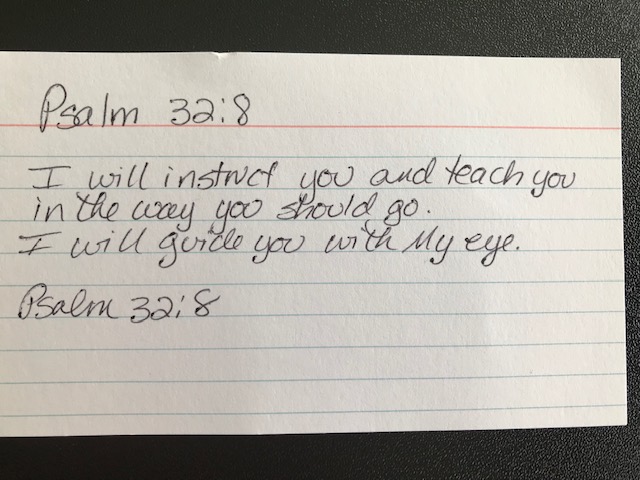
I plan to begin by memorizing Psalm 32:8: “I will instruct you and teach you in the way you should go; I will guide you with My eye.”
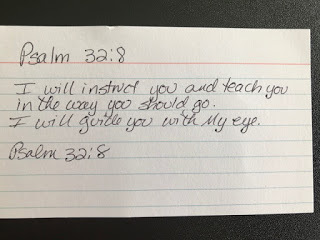 If you’ve never memorized Scripture, or if you’ve struggled to find an effective method, let me describe a method that’s worked well for me in the past.
1. Write the verse on an index card, including the Scripture reference.
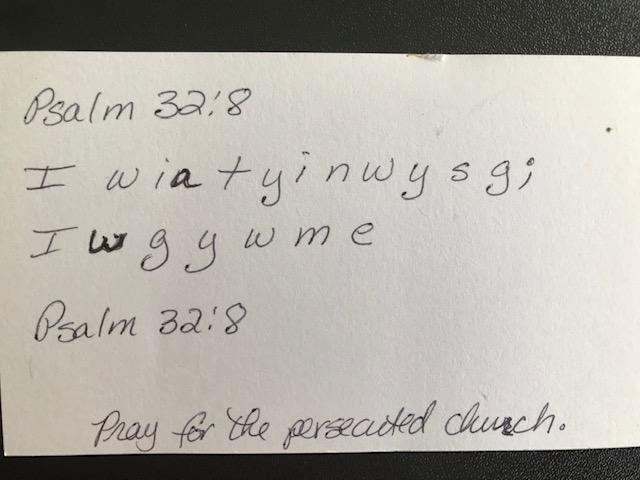
2. Write the first letter of every word and the reference on the back of the card.
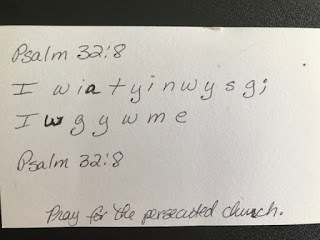 3. Put the card where you’ll see it every day. On your bathroom mirror, beside your bedside table, taped to the refrigerator. I keep my card in my car and redeem the time I spend waiting at stop lights.
4. Read the verse on the card several times every day. After I’ve read it a few times, I flip the card over and try to recite the verse using only the first letters to prompt me. After a day or two (or more) I begin with the side containing only the letters.
5. Attempt to say the entire verse from memory with no prompts. You’ll be pleasantly surprised how quickly you’ll learn the verse.
6. Once you've learned a verse or passage, add it to your stack of verses and review it at least once a week. The keys to long term retention is repetition and review.
Finally, at the bottom of each card I write a reminder: Pray for the persecuted church. This reminds me, every day, to pray for those who are suffering for Christ’s sake. Like the Chinese Christians, I want my Bible to become more than a tool. I want it to become a treasure.
So what do you think? Are you in? Leave a comment below and share your thoughts, including what verse or passage you intend to memorize. If you’re reading by email, CLICK HERE to visit Hungry for God online and leave a comment.
If you’d like to read the full article from Christianpost.com, Chinese Christians Memorize Bible in Prison: Gov't "Can't Take What's In Your Heart" that prompted this post, click this link.
Are you hungry for God, but starving for time?
I’d love to send you a 5-minute e-mail devotion twice a week to start your day off with the Lord.
Sign up for a free subscription to Hungry for God by CLICKING HERE.
Then, be sure to VALIDATE the confirmation email you receive.
Note: I promise never to spam you or share your email address.
Because busy women need to connect with God in the craziness of everyday life.
If this post was meaningful to you, would you consider sharing it with a friend by clicking on one of the buttons below? Did you know you can receive bi-weekly Hungry for God posts sent directly to your email inbox? Visit http://www.lori-benotweary.blogspot.com and click on the link in the right hand corner to Subscribe Via Email.
Copyright 2018 by Lori Hatcher
 Like my favorite purse, I’d carry it to church on Sunday and Wednesday nights. When the pastor introduced the text of his sermon, I’d flip to the passage and follow along. If I attended a Bible study, I’d look up verses in my Bible and pencil in my answers onto the worksheet. My Bible was a tool, not a treasure.
 Today I read about Chinese Christians who are memorizing huge portions and even entire books of the Bible. At a recent seminar, 18 of the 22 Christians attending had been imprisoned for their faith. One woman shared how, in prison, “you have lots of time.” She spent much of it memorizing Scripture.
Although guards confiscate Bibles and other Christian material, believers smuggle in portions of the Word of God on scraps of paper. “We memorize it as fast as we can,” the woman said, “because even though they can take the paper away, they can’t take what’s hidden in your heart.”
Amos 8:11-12 prophesied what this woman described:
"’Behold, the days are coming,’ says the Lord GOD, ‘That I will send a famine on the land, Not a famine of bread, Nor a thirst for water, But of hearing the words of the LORD. They shall wander from sea to sea, And from north to east; They shall run to and fro, seeking the word of the LORD, But shall not find it.’”
Chinese Christians' love for and commitment to God’s Word has shamed me. Because of the Bible’s scarcity in her world, even one verse of Scripture a precious treasure. Every encounter she has with the Bible is a feast and a delight.
Compared to my brothers and sisters in China, I’m a Bible glutton. There’s enough contraband in my house that if I lived in their country, I’d be imprisoned for life. Or executed.
A quick scan of my bookshelves unearthed more than 20 Bibles: The Chronological Study Bible I read every morning; three copies of my favorite Bible, the MacArthur Daily Bible; the cardboard-cover Holy Bible I received at Vacation Bible School; the Scofield Reference Bible I received at my baptism; my late mother-in-law’s Bible, my late brother-in-law’s Bible, the Bible I bought to give to my granddaughter on her birthday, and so on, and so on, and so on.
I’ve come a long way in the 35 years since I carried my Bible as an accessory. Now I read my Bible almost every day. But it’s been more than a year since I memorized a passage of Scripture. The days are coming—and in some places are already here—when there will be a famine of the Word of God.
If all 20 of my Bibles were taken away tomorrow, would I have enough spiritual food in my mental refrigerator to stay alive? To thrive? To share with others? I suspect not.
It’s time to remedy this. First Corinthians 4:2 (NIV) says, “He who has been given a trust must prove faithful.” In light of this trust, the amazing privilege of being able to own a Bible—or enough Bibles to stock a small bookstore—I must faithfully steward the gift God has given me. I must begin committing significant portions of Scripture to memory.
What about you? When was the last time you memorized a portion of God’s Word? If it’s been too long, we can remedy this. Will you join me in honoring the God who gave us his Word and the believers all over the world who are starving for a piece of it by starting, today, to hide it in our hearts?
I plan to begin by memorizing Psalm 32:8: “I will instruct you and teach you in the way you should go; I will guide you with My eye.”
 If you’ve never memorized Scripture, or if you’ve struggled to find an effective method, let me describe a method that’s worked well for me in the past.
 1. Write the verse on an index card, including the Scripture reference.
2. Write the first letter of every word and the reference on the back of the card.
 3. Put the card where you’ll see it every day. On your bathroom mirror, beside your bedside table, taped to the refrigerator. I keep my card in my car and redeem the time I spend waiting at stop lights.
 4. Read the verse on the card several times every day. After I’ve read it a few times, I flip the card over and try to recite the verse using only the first letters to prompt me. After a day or two (or more) I begin with the side containing only the letters.
5. Attempt to say the entire verse from memory with no prompts. You’ll be pleasantly surprised how quickly you’ll learn the verse.
6. Once you've learned a verse or passage, add it to your stack of verses and review it at least once a week. The keys to long term retention is repetition and review.
Finally, at the bottom of each card I write a reminder: Pray for the persecuted church. This reminds me, every day, to pray for those who are suffering for Christ’s sake. Like the Chinese Christians, I want my Bible to become more than a tool. I want it to become a treasure.
So what do you think? Are you in? Leave a comment below and share your thoughts, including what verse or passage you intend to memorize. If you’re reading by email, CLICK HERE to visit Hungry for God online and leave a comment.
If you’d like to read the full article from Christianpost.com, Chinese Christians Memorize Bible in Prison: Gov't "Can't Take What's In Your Heart" that prompted this post, click this link.
Are you hungry for God, but starving for time? I’d love to send you a 5-minute e-mail devotion twice a week to start your day off with the Lord.
Sign up for a free subscription to Hungry for God by CLICKING HERE.
Then, be sure to VALIDATE the confirmation email you receive.
Note: I promise never to spam you or share your email address.
Because busy women need to connect with God in the craziness of everyday life.
If this post was meaningful to you, would you consider sharing it with a friend by clicking on one of the buttons below? Did you know you can receive bi-weekly Hungry for God posts sent directly to your email inbox? Visit http://www.lori-benotweary.blogspot.com and click on the link in the right hand corner to Subscribe Via Email.
Copyright 2018 by Lori Hatcher
June 23, 2019
The Doggiest Cat I Know
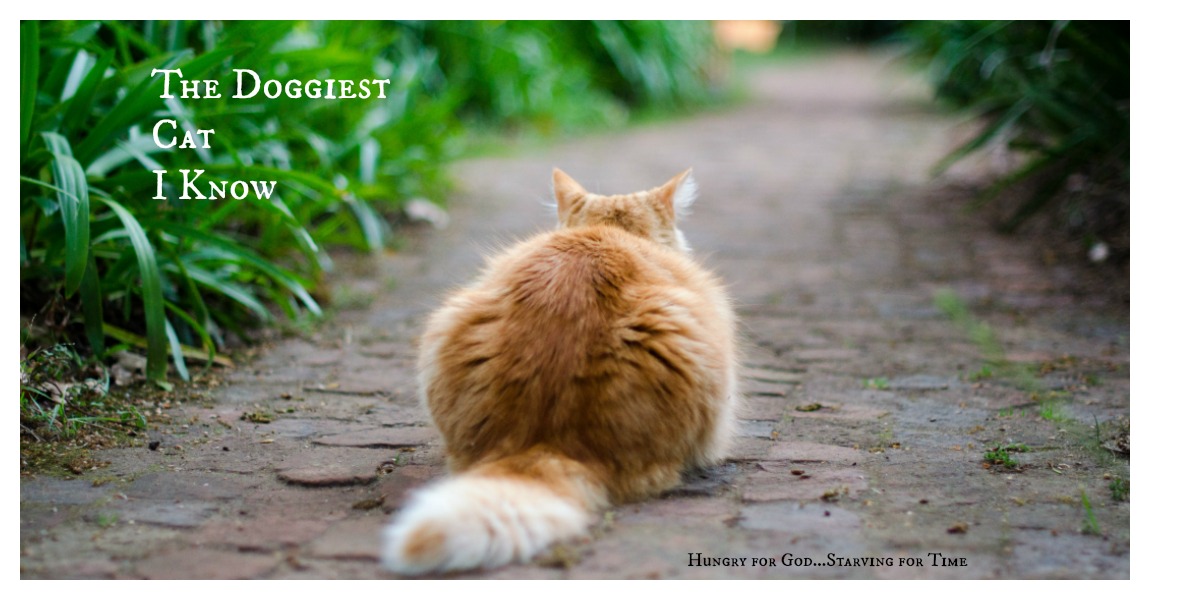 Mushu is the doggiest cat I know. Primarily an outside pet, Mushu lives two cul de sacs over from my house. I see him every day on my morning walk.
 But he always sees me first.
As soon as I turn the corner and head down the street, he bounds toward me, tail held high and white paws flashing. He greets me with chirrups and meows, delighted I’ve come his way. Leaning into my fingers as I scratch behind his ears and down his spine, he knows every encounter with me is good.
Unlike other neighborhood cats who run, hide, or approach me hesitantly, Mushu runs toward me with a confidence born of trust and relationship.
Hebrews 4:14-16 reminds me I can enjoy this same confidence in my relationship with God.
“Seeing then that we have a great High Priest who has passed through the heavens, Jesus the Son of God, let us hold fast our confession. For we do not have a High Priest who cannot sympathize with our weaknesses, but was in all points tempted as we are, yet without sin.
“Let us therefore come boldly to the throne of grace, that we may obtain mercy and find grace to help in time of need” (Hebrews 4:14-16).
Because Jesus Christ has removed the sin barrier that separated us, I can come boldly to him in prayer. Our relationship gives me full access to his mercy and grace. I need not fear his wrath, judgment, or disapproval.
My Father is always eager to see me approach. Before a word leaves my lips, he is already working on my behalf. Scattering good gifts like raindrops, he waters my thirsty soul. I rest secure, knowing that he who knows me best loves me most.
Father, remind me every day how you eagerly wait for me to approach you in prayer. Even before I turn my gaze toward you, your eyes are upon me, and your ears are attentive to my cry. Silence the voice of the enemy that sows seeds of fear, confusion, and timidity into my heart. Help me rest in confidence, knowing you are my Savior and my advocate, my protector and my friend.
Are you hungry for God, but starving for time? I’d love to send you a 5-minute e-mail devotion twice a week to start your day off with the Lord.
Sign up for a free subscription to Hungry for God by CLICKING HERE.
Then, be sure to VALIDATE the confirmation email you receive.
Note: I promise never to spam you or share your email address.
Because busy women need to connect with God in the craziness of everyday life.

If this post was meaningful to you, would you consider sharing it with a friend by clicking on one of the buttons below? Did you know you can receive bi-weekly Hungry for God posts sent directly to your email inbox? Visit http://www.lori-benotweary.blogspot.com and click on the link in the right hand corner to Subscribe Via Email.
Copyright 2018 by Lori Hatcher
June 19, 2019
That Bird on My Chimney
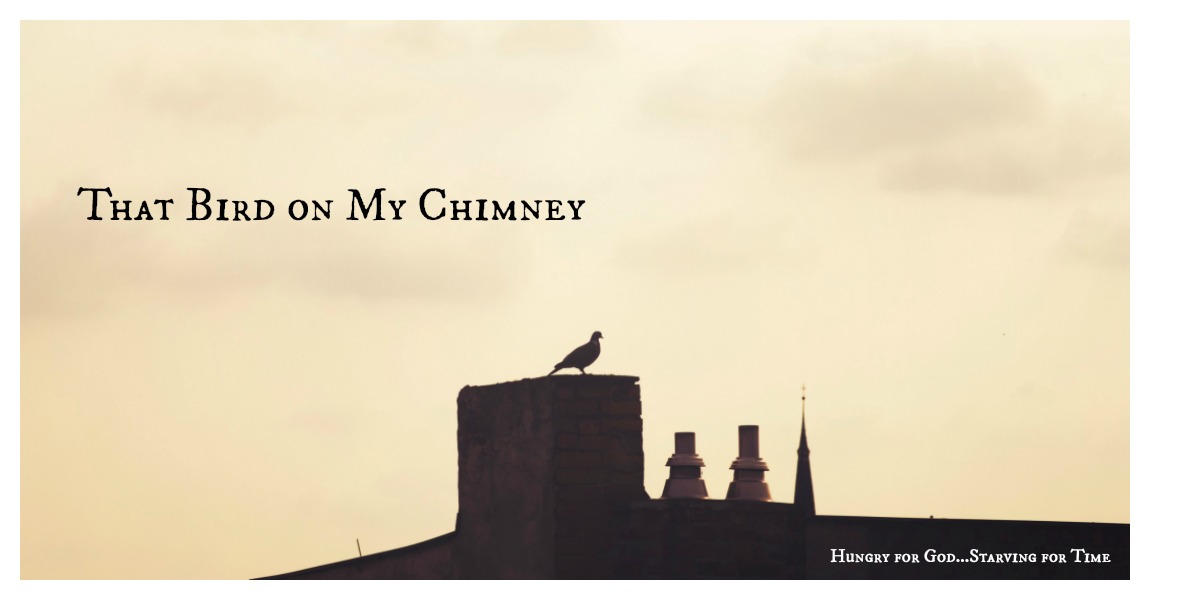 Oh, that bird on my chimney. Dastardly thing perches itself atop the fireplace vent and tweets and chirps and sings. Its bothersome noise echoes down through the fireplace and into my living room, elbowing itself into my peaceful silence.
 When the television is on, I wonder, why is a bird tweeting in the middle of an operating room scene? What in the world could it be trying to communicate so zealously? And so obnoxiously? No one’s listening anyway, except those of us forced to endure its non-stop chorus like a tortured parent at a fifth-grade choir rehearsal.
Oh, that bird on my chimney. Lovely thing alights upon my rooftop and sends happy peeps and chirrups down the shaft. It doesn’t know I’m listening, but I hear every sharp and flat it joyfully sings. The first note drops into the silence of my morning like a single raindrop on parched ground. Soon others join it until my thirsty soul drinks in the heavenly music.
I laugh at the way its tweets blend with the scene on the morning news, wondering if, perhaps, there are birds on space stations or inside great cathedrals. My feathered friend has an extensive repertoire, and to my untrained ear, every note is different.
Its passion is unmistakable, and its determination to sing on is impressive, especially without the sound system or water bottles most singers deem necessary. I never know when one concert will end or the next begin, but, regardless, I stop what I’m doing to listen and marvel.
Today, a bird is going to land on your chimney. Or a child will knock upon your door. Or a family member will insert themself into your day. How will you view the interruption?
Your response will make all the difference.
Choose well.
Are you hungry for God, but starving for time? I’d love to send you a 5-minute e-mail devotion twice a week to start your day off with the Lord.
Sign up for a free subscription to Hungry for God by CLICKING HERE.
Then, be sure to VALIDATE the confirmation email you receive.
Note: I promise never to spam you or share your email address.
Because busy women need to connect with God in the craziness of everyday life.
If this post was meaningful to you, would you consider sharing it with a friend by clicking on one of the buttons below? Did you know you can receive bi-weekly Hungry for God posts sent directly to your email inbox? Visit http://www.lori-benotweary.blogspot.com and click on the link in the right hand corner to Subscribe Via Email.
Copyright 2018 by Lori Hatcher
June 16, 2019
Unlocking God's Word by Asking, "So What?"
“So what?” If someone asked me this question, I’d probably be offended. It sounds snarky, slightly rude, and in your face. Yet I include this question in my list of questions to answer each week in my adult Sunday School class.
 We’ve begun a comprehensive survey of the Bible, studying a book a week until we’ve covered the entire Bible. So far, it’s been a blast. When I prayed about how to approach each book, my training as a newspaper reporter kicked in. Ask the five W’s and an H—Who, What, When, Where, Why, and How. Of course, brilliant!
 Who wrote the book and to whom is it written? What was the main theme? When did the events take place? Where did the events take place? Why did the author write the book? How did the events unfold?
Looking over my list of questions, I knew I was on the right track to teach the historicity of each book, but something was missing.That’s when I added, “So what?” “Now that I’ve studied the facts of the book, so what? Why does this matter? How should this impact my life?”
“So what?” might just be the most important question at all, because if we read the Bible for information only, it probably won’t change our lives. And we should never leave an encounter with God’s Word unchanged.
The Bible is a living book, one that has the power to bolster faith, transform people’s hearts, and make us more like Christ. But studying the who, what, when, where, why, and how of Scripture can be more like reading a biography of Lincoln instead of meeting Lincoln himself. It’s only a shadow of everything it could be.
This is why we must also ask, “So what?”
Here are a few examples of what this looked like in our study of Genesis:
FACT: God deliberately created mankind in his image instead of human life spontaneously occurring.
SO What? My life and the lives of those around me aren’t accidents. They’re part of God’s plan and purpose for the world. Every life matters, because God creates every life.
FACT: God created Adam and Eve with a free will, even though he knew they’d use it to sin against him.
SO What? God doesn’t force people to love him. He gives us the ability to choose.
FACT: God made a promise in Genesis 3:15 that he would send a Redeemer to save mankind from their sin. Thousands of years later, God kept his promise by sending Jesus Christ to die on the cross for the sins of the world.
SO What? I can trust God to keep his promises in my life as well.
FACT: God called Abraham to offer his only son as proof of his love for God. Abraham was able to be willing to obey his command because he believed God was a promise-keeping God.
SO What? Sometimes God calls me to do difficult things. If I truly trust God, I’ll demonstrate my trust by obeying him.
FACT: God used the unjust circumstances of Joseph’s life to bring deliverance to thousands of people.
SO What? God can use the difficult circumstances of my life to bring about good in other people’s lives.
FACT: God placed the infant nation of Israel in the incubator of Egypt so they could grow and begin to establish themselves as a people without interference from dangerous nations. In Egypt, they grew from 70 people to 2.5 million.
SO What? Similarly, God can orchestrate unlikely situations or circumstances in my life for good.
Studying the facts of a book gives us vital information to help us understand God’s message. Asking “So what?” helps us apply God’s message to our lives. So the next time you open your Bible to study a passage, I encourage you to learn the who, what, when, where, why, and how of a passage. Then, prayerfully and intentionally, ask God to show you how each passage applies to your life right now. You’ll be amazed at how God’s Word comes alive.
Now it’s your turn. What is your approach to studying the Scripture, and how has it enhanced your understanding? Leave a comment below and share your insights. If you’re reading by email, CLICK HERE to visit Hungry for God online and leave a comment.
Are you hungry for God, but starving for time?
I’d love to send you a 5-minute e-mail devotion twice a week to start your day off with the Lord.
Sign up for a free subscription to Hungry for God by CLICKING HERE.
Then, be sure to VALIDATE the confirmation email you receive.
Note: I promise never to spam you or share your email address.
Because busy women need to connect with God in the craziness of everyday life.
If this post was meaningful to you, would you consider sharing it with a friend by clicking on one of the buttons below? Did you know you can receive bi-weekly Hungry for God posts sent directly to your email inbox? Visit http://www.lori-benotweary.blogspot.com and click on the link in the right hand corner to Subscribe Via Email.
Copyright 2018 by Lori Hatcher
 We’ve begun a comprehensive survey of the Bible, studying a book a week until we’ve covered the entire Bible. So far, it’s been a blast. When I prayed about how to approach each book, my training as a newspaper reporter kicked in. Ask the five W’s and an H—Who, What, When, Where, Why, and How. Of course, brilliant!
  Who wrote the book and to whom is it written? What was the main theme? When did the events take place? Where did the events take place? Why did the author write the book? How did the events unfold?
 Looking over my list of questions, I knew I was on the right track to teach the historicity of each book, but something was missing.That’s when I added, “So what?” “Now that I’ve studied the facts of the book, so what? Why does this matter? How should this impact my life?”
“So what?” might just be the most important question at all, because if we read the Bible for information only, it probably won’t change our lives. And we should never leave an encounter with God’s Word unchanged.
The Bible is a living book, one that has the power to bolster faith, transform people’s hearts, and make us more like Christ. But studying the who, what, when, where, why, and how of Scripture can be more like reading a biography of Lincoln instead of meeting Lincoln himself. It’s only a shadow of everything it could be.
This is why we must also ask, “So what?”
Here are a few examples of what this looked like in our study of Genesis:
FACT: God deliberately created mankind in his image instead of human life spontaneously occurring.
SO What? My life and the lives of those around me aren’t accidents. They’re part of God’s plan and purpose for the world. Every life matters, because God creates every life.
FACT: God created Adam and Eve with a free will, even though he knew they’d use it to sin against him.
SO What? God doesn’t force people to love him. He gives us the ability to choose.
FACT: God made a promise in Genesis 3:15 that he would send a Redeemer to save mankind from their sin. Thousands of years later, God kept his promise by sending Jesus Christ to die on the cross for the sins of the world.
SO What? I can trust God to keep his promises in my life as well.
FACT: God called Abraham to offer his only son as proof of his love for God. Abraham was able to be willing to obey his command because he believed God was a promise-keeping God.
SO What? Sometimes God calls me to do difficult things. If I truly trust God, I’ll demonstrate my trust by obeying him.
FACT: God used the unjust circumstances of Joseph’s life to bring deliverance to thousands of people.
SO What? God can use the difficult circumstances of my life to bring about good in other people’s lives.
FACT: God placed the infant nation of Israel in the incubator of Egypt so they could grow and begin to establish themselves as a people without interference from dangerous nations. In Egypt, they grew from 70 people to 2.5 million.
SO What? Similarly, God can orchestrate unlikely situations or circumstances in my life for good.
Studying the facts of a book gives us vital information to help us understand God’s message. Asking “So what?” helps us apply God’s message to our lives. So the next time you open your Bible to study a passage, I encourage you to learn the who, what, when, where, why, and how of a passage. Then, prayerfully and intentionally, ask God to show you how each passage applies to your life right now. You’ll be amazed at how God’s Word comes alive.
Now it’s your turn. What is your approach to studying the Scripture, and how has it enhanced your understanding? Leave a comment below and share your insights. If you’re reading by email, CLICK HERE to visit Hungry for God online and leave a comment.
Are you hungry for God, but starving for time? I’d love to send you a 5-minute e-mail devotion twice a week to start your day off with the Lord.
Sign up for a free subscription to Hungry for God by CLICKING HERE.
Then, be sure to VALIDATE the confirmation email you receive.
Note: I promise never to spam you or share your email address.
Because busy women need to connect with God in the craziness of everyday life.
If this post was meaningful to you, would you consider sharing it with a friend by clicking on one of the buttons below? Did you know you can receive bi-weekly Hungry for God posts sent directly to your email inbox? Visit http://www.lori-benotweary.blogspot.com and click on the link in the right hand corner to Subscribe Via Email.
Copyright 2018 by Lori Hatcher
Refresh Blog

A place to refresh your faith, hope, and prayers with 5-minute weekly posts.
- Lori Hatcher's profile
- 101 followers

