
Nicholas Fox Weber's Blog, page 29
March 11, 2013
The Sacred Modernist
The Sacred Modernist: Josef Albers as a Catholic Artist


To distribute material possessions is to divide them.
To distribute spiritual possessions is to multiply them.
Easy to know that diamonds are precious.
Good to know that rubies have depth.
But more to see that pebbles are miraculous.
Josef Albers wrote these aphorisms, and then rewrote them frequently.
Sometimes he scribed them by longhand; on other occasions he pecked
them out with the manual typewriter he used to imprint texts on the thin
white tissue paper he preferred heavier stock. That translucent, feather–weight paper, like the
flowing strokes of his fountain pen, had some of the same charm and ethereality as his art and
words: for all of his adamant practicality, Albers lived in a mystical realm. He was reverential
about the mysteries and wonders of existence, the holiness he found in earthly life.
Words like “spiritual” and “miraculous” were vital to him. The great Bauhaus-trained modernist
was the quintessential craftsman, devoted to technical capability, rigorous in his standards
concerning materials and the way one worked, but he also was profoundly interested in the
other-worldly. For his was a deeply religious sensibility.
Albers was born and raised a Catholic. (His native Westphalia was then, as it remains, one of the
strongly Catholic regions of Germany, even if the country had a Protestant majority.) At the end
of his life, when I knew him, he regularly attended Sunday Mass, and went to confession. Yet the
role of Christian belief, the strong connection to liturgy, the vital function of the Trinity in his art,
has never before been explored.
The Sacred Modernist: Josef Albers as a Catholic Artist presents this abstract artist’s work in a new
way. Having directed the Albers Foundation for nearly thirty-five years, and curated the major
retrospective of Albers’s work held on the hundredth anniversary of his birth in 1988 at the
Guggenheim Museum in New York and other venues, this show at the Glucksman Gallery is a
project of great personal importance to me. For it presents the ambient spiritualism of his life’s work
in a way that has never before been considered in any depth.
It emphasizes in particular the strong basis which Josef’s art has in Christian tradition—not unlike the
underpinnings of work by artists like Giotto and Durer (two of Josef’s preferred painters). It is also a
deliberate way of linking Josef Albers’s art to Ireland, a place he and I often discussed, even though
he had never been there.
The exhibition will begin with Josef’s early drawings of country churches as well as great cathedrals,
ranging from bold lithographs of naves seen from within to vibrant sketches of steeples. It will also
include an early drawing of a Christian graveyard; Josef said that at the age of twelve he “painted
and lettered crosses for grave markers,” so the subject was one he knew well. For the Glucksman
exhibition, the Josef and Anni Albers Foundation is reproducing the stained glass window, Rosa
Mystica, which Josef made for St. Michael’s church, in his hometown; the original was destroyed
during World War II, but we have sufficient records of it, including Josef’s notes on colors, to make
an effective facsimile, which we will do with a stained-glass specialist in Germany. There will be an
ample amount of Josef’s splendid glass assemblages and flashed glass constructions, some with specific
religious imagery (the cruciform shape), others with the more subtle suggestion, going back to Flemish art
and in particular the paintings of Jan Van Eyck, that light passing through glass is the perfect metaphor
for the Immaculate Conception.
In his years at Black Mountain College, in the US, Albers did various paintings with specific religious
themes, including abstractions of crosses and other images that encapsulate the essential elements of
traditional representations of Annunications. He also made prints of Mexican gods, and geometric
abstractions with names like “Sanctuary”. At the same time, he took remarkable photographs of angels
made from folded paper, church facades, and other clearly religious subject matter. And he designed
fantastically imaginative Christmas cards. All will be featured in this exhibition.
Finally, there will be a judicious selection of Homage to the Square paintings. The choice will be made
with an eye to those with the most distinctly cosmic, alchemical attributes.


press release
Josef Albers: Spirituality and Rigor
Galleria Nazionale dell’Umbria, Perugia
20 March - 20 June 2013
Press view: 19 March, 12am
Further information and pictures: www.studioesseci.net
Press release
From 20 March to 20 June the Monuments and Fine Arts Office of Umbria, in conjunction with the Josef and Anni Albers Foundation,
presents the first monographic exhibition on the sacred art of Josef Albers.
The exhibition, curated by Nicholas Fox Weber, Executive Director of the Albers Foundation, and Fabio De Chirico, Head of the
Monuments and Fine Arts Office and Director of the Galleria Nazionale dell’Umbria, celebrates the 125th anniversary of the birth
of the great German-born American artist (Bottrop, 19 March 1888).
For the Josef and Anni Albers Foundation the exhibition is also a homage to Josef Ratzinger, Emeritus Pope of the Catholic Church,
a figure who embodies the values of “Spirituality and Rigor” referred to in the title of the exhibition.
Albers always lived in a powerfully mystical realm. Words like “spiritual” and “miraculous” were vital to him.
The great Bauhaus-trained artist was the quintessential craftsman, devoted to technical capacity, rigorous in his standards with
regard to materials and their use. At the same time he was also profoundly interested in the other-worldly, deeply immersed in
the transcendental and intensely religious. Which explains the title of the present exhibition: Spirituality and Rigor.
Born and brought up in Westphalia, one of the most strongly Catholic regions of Germany, Albers remained a devout Catholic
throughout his life.
This is the first exhibition to explore fully his sacred art, influenced both by his religious education and by his admiration for the
great masters of Christian art and architecture, especially Giotto and Dὓrer.
It brings together works from all the phases of his career, beginning with his first sketches of country churches and cathedrals,
his bold lithographs of naves and his vibrant sketches of steeples. It also includes one of his first drawings, depicting a Christian
graveyard, a subject he knew well, since at the age of twelve he was already painting crosses for grave markers in his hometown.
It ends with a selection of his later geometrical and abstract works.
The Perugia exhibition also features a reconstruction of the stained-glass window, Rosa Mystica, which Albers designed for the
St. Michael’s Church in Bottrop, and which was destroyed during the Second World War. Thanks to a careful study of archive
materials at the Josef and Anni Albers Foundation, in this exhibition the Lewis Glucksman Gallery presents for the first time a
full-scale reconstruction of Albers’ design.
Albers worked extensively with glass assemblages and constructions, used to explore the traditional themes of religious iconography,
such as the Cross, strongly influenced by Flemish art, and in particular by Jan van Eyck, as the works in the exhibition clearly show.
In his years at Black Mountain College, in the United States, Albers did various paintings with religious themes: abstractions of crosses
and other images that encapsulate the essential elements of traditional representations of the Annunciation.
His interest in the religious sphere also led him to make prints of Mexican gods, to create graphic abstractions with names like
Sanctuary, to take photographs of angels made from folded paper, churches or other places of worship, and to design extremely
original Christmas cards.
Finally, the exhibition presents the famous Homage to the Square series, drawings and paintings with a distinctly cosmic, alchemical
character from the final phase of his career as an artist.
The exhibition is accompanied by an illustrated catalogue, in Italian and English, curated by Nicholas Fox Weber and Fabio De Chirico,
with contributions by Julie Agoos, Oliver Barker, Leland del la Durantaye, Mark Patrick Hederman, Fiona Kearney and Colm Toibin.
The catalogue is distributed by the Glucksman Gallery.
The exhibition and catalogue have been made possible by the generous support of the Josef and Anni Albers Foundation.
Perugia, Galleria Nazionale dell’Umbria
Opening hours: from 10.30 to 19.30
Telephone: + 39 075 58668415
www.gallerianazionaledellumbria.it
www.artiumbria.beniculturali.it
Press Office:
Studio ESSECI – Sergio Campagnolo. Telephone. +39 049 663499; info@studioesseci.net
March 10, 2013
letter from nfw
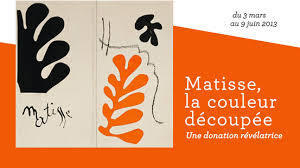
Letter From NFW to the Organizers of MATISSE, LA COULEUR DÉCOUPÉE,
Musée Matisse, le Cateau-Cambrésis
March 10, 2013
Dear Carrie, Patrice, and Dominique,
Please feel free to pass this email on to anyone you would like. And I would be grateful if you would forward it to
both Jacqueline and George, since I do not have their email addresses.
I cannot emphasize it enough: the exhibition you have put together and which opened yesterday is one of the
greatest artistic events of all time.
I think it is safe to say that I have gone to every major Matisse exhibition to which I had access since I first obtained
my driving license in 1964. (It must have been shortly thereafter that I drove from West Hartford, Connecticut to Boston
for a show at the MFA, having invited a girl I was trying to impress to join me for the day’s outing; alas, her main reaction
was to say that she considered “Woman with a Hat” to be “most unattractive looking”.) I have visited the chapel in
Vence on multiple occasions, always utterly wonderful. I have spent many fantastic hours in the galleries of your
permanent collection, always thrilled. But never have I seen anything like your current show.
I walked through it time and again; especially after lunch, it was relatively quiet in the galleries, and just a splendid
chance to take it all in. Today I cannot stop seeing in my mind’s eye those incredible forms dancing all over the place.
The generosity of the Matisse family is of course utterly exemplary for an artist’s estate. They have succeeded, thanks in
large part to your amazing museum, in making the work of one of the greatest artists of all time available to the larger
public. And what you have done with those cut-outs, and in bringing together the other work that is in the current
exhibition, contributes immeasurably to human pleasure.
The show is simply unlike anything else I have ever seen (including the amazing galleries of cut-outs with which various
Matisse shows, notably at MoMA and Tate, have concluded.) It has an intimacy. It takes one to a place one has never
been before. Even to someone who since the age of four had the shapes of the “Mimosa” rug in his lifeblood, this is new,
the vibrancy off the charts, although part of what makes it so wonderful for me (as it would for my sister, if I can get her
to the show) is the way that everywhere I felt the echoes of a particular form of joy I have known ever since my parents
spent $100 for that object they hung in their front hall to the bemusement of most people who entered the house.
Every collage has such force. And there were single cut-outs that made me gasp and talk out loud.
And the point you made about Matisse’s use of color as a means of articulation is something I feel Josef Albers would
have understood in spades. It comes alive in new ways in this material.
I am eager for so many people to get to the exhibition. Gill talked about Nick Serota seeing it (he would love it); I hope
he will. And John Elderfield. And every possible critic, and everyone who likes great, energetic, imaginative, courageous
art. I assume you have notified the various people who should be there, but please let me know if I might help in any way.
I woke up this morning thinking about the exhibition and also remembering going inside Le Corbusier’s amazing Assembly
building in Chandigarh. There, too, I felt as if I had been injected with a magic potion, and as if I were inside a human
heart, and witnessing a stretch of imagination without precedent or equal. Then I thought about what le Corbusier wrote
Matisse in August of 1951, after he made the 45-minute drive to Vence from his summer retreat, a bare-bones cabin in
Roquebrune-Cap-Martin. Corbu clearly did not know that after Pere Couturier has proposed that Corbu be the architect
of the chapel. Matisse had refused; he chose Auguste Perret instead, claiming, “He’ll do as I say”– which Matisse clearly
knew would not have been the case with Corbu.)
Corbu wrote Matisse,
“I visited the chapel at Vence. Everything there is joy, limpidity, youth… Your work has given me an impulse of courage–
not that I am lacking in that department, but at Vence I renewed my supply. That little chapel is a great testimonial–
of truth. Because of you, once again, life is beautiful. Thank you.”
Your show has, in a similar yet entirely different way, those same qualities of joy, youth, truth, and beauty. And, by the
way, the day you organized yesterday, and the people were there, had the qualities of warmth and pleasantness and
openness and generosity, all so rarecin life, that suited the exhibition to a “t”. Like Corbu to Matisse, I am signing off by
saying, “Because of you, once again, life is beautiful. Thank you.”
In admiration –
Nicholas
LETTER FROM NFW
Letter From NFW to the Organizers of MATISSE, LA COULEUR DÉCOUPÉE,
Musée Matisse, le Cateau-Cambrésis
March 10, 2013
Dear Carrie, Patrice, and Dominique,
Please feel free to pass this email on to anyone you would like. And I would be grateful if you would forward it to
both Jacqueline and George, since I do not have their email addresses.
I cannot emphasize it enough: the exhibition you have put together and which opened yesterday is one of the
greatest artistic events of all time.
I think it is safe to say that I have gone to every major Matisse exhibition to which I had access since I first obtained
my driving license in 1964. (It must have been shortly thereafter that I drove from West Hartford, Connecticut to Boston
for a show at the MFA, having invited a girl I was trying to impress to join me for the day’s outing; alas, her main reaction
was to say that she considered “Woman with a Hat” to be “most unattractive looking”.) I have visited the chapel in
Vence on multiple occasions, always utterly wonderful. I have spent many fantastic hours in the galleries of your
permanent collection, always thrilled. But never have I seen anything like your current show.
I walked through it time and again; especially after lunch, it was relatively quiet in the galleries, and just a splendid
chance to take it all in. Today I cannot stop seeing in my mind’s eye those incredible forms dancing all over the place.
The generosity of the Matisse family is of course utterly exemplary for an artist’s estate. They have succeeded, thanks in
large part to your amazing museum, in making the work of one of the greatest artists of all time available to the larger
public. And what you have done with those cut-outs, and in bringing together the other work that is in the current
exhibition, contributes immeasurably to human pleasure.
The show is simply unlike anything else I have ever seen (including the amazing galleries of cut-outs with which various
Matisse shows, notably at MoMA and Tate, have concluded.) It has an intimacy. It takes one to a place one has never
been before. Even to someone who since the age of four had the shapes of the “Mimosa” rug in his lifeblood, this is new,
the vibrancy off the charts, although part of what makes it so wonderful for me (as it would for my sister, if I can get her
to the show) is the way that everywhere I felt the echoes of a particular form of joy I have known ever since my parents
spent $100 for that object they hung in their front hall to the bemusement of most people who entered the house.
Every collage has such force. And there were single cut-outs that made me gasp and talk out loud.
And the point you made about Matisse’s use of color as a means of articulation is something I feel Josef Albers would
have understood in spades. It comes alive in new ways in this material.
I am eager for so many people to get to the exhibition. Gill talked about Nick Serota seeing it (he would love it); I hope
he will. And John Elderfield. And every possible critic, and everyone who likes great, energetic, imaginative, courageous
art. I assume you have notified the various people who should be there, but please let me know if I might help in any way.
I woke up this morning thinking about the exhibition and also remembering going inside Le Corbusier’s amazing Assembly
building in Chandigarh. There, too, I felt as if I had been injected with a magic potion, and as if I were inside a human
heart, and witnessing a stretch of imagination without precedent or equal. Then I thought about what le Corbusier wrote
Matisse in August of 1951, after he made the 45-minute drive to Vence from his summer retreat, a bare-bones cabin in
Roquebrune-Cap-Martin. Corbu clearly did not know that after Pere Couturier has proposed that Corbu be the architect
of the chapel. Matisse had refused; he chose Auguste Perret instead, claiming, “He’ll do as I say”– which Matisse clearly
knew would not have been the case with Corbu.)
Corbu wrote Matisse,
“I visited the chapel at Vence. Everything there is joy, limpidity, youth… Your work has given me an impulse of courage–
not that I am lacking in that department, but at Vence I renewed my supply. That little chapel is a great testimonial–
of truth. Because of you, once again, life is beautiful. Thank you.”
Your show has, in a similar yet entirely different way, those same qualities of joy, youth, truth, and beauty. And, by the
way, the day you organized yesterday, and the people were there, had the qualities of warmth and pleasantness and
openness and generosity, all so rarecin life, that suited the exhibition to a “t”. Like Corbu to Matisse, I am signing off by
saying, “Because of you, once again, life is beautiful. Thank you.”
In admiration –
Nicholas
March 9, 2013
Josef Albers Spirituality and Rigor
 Josef Albers Spirituality and Rigor
The Galleria Nazionale dell’Umbria and the Josef and Anni Albers Foundation present a
new exhibition - Josef Albers Spirituality and Rigor — opening Tuesday 19 March 2013 at
6PM (the 125th anniversary of Josef Albers birth) Perugia, Italy
info@albersfoundation.org
Klee and Kandinsky posing as Goethe and Schiller
 Klee and Kandinsky took no little pleasure in the great
legacy of “the German Athens”
The Bauhaus Group Six Masters of Modernism
Franz Marc
Franz Marc, 1880 –1916 
Der Blaue Reiter (The Blue Rider)

With Franz Marc and Alexy Jawlensky,
two other highly competent artists who
painted bold forms in vibrant colors, Klee
and Kandinsky created Der Blau Reiter
(The Blue Rider Group)
March 7, 2013
THE BALTHUS ENIGMA — The New Yorker
From the New Yorker
I NVESTIGATIONS about the painter Balthus, Balthasar Klossowski… He was
born February 29, 1908… Writer tells about calling Balthus in Switzerland in
1990, and fixed a date for a visit… Three weeks later, he arrived at
Le Grand Chalet, which was built between 1752 and 1756, and contains
forty-five rooms… Balthus and his wife Setsuko bought it in the late seventies…
Describes the opulent setting… His art, he maintained, had been misunderstood:
it was neither graphic nor mysterious. Above all, it was not autobiographical…
Balthus is one of the great loners of twentieth-century art; he belongs to no school, no “ism,” but his own.
Read more: http://www.newyorker.com/archive/1999/09/06/1999_09_06_034_TNY_LIBRY_000018986#ixzz2MuDSHPSR
March 6, 2013
Kandinsky Paintings
Kandinsky’s paintings of the period have elements of the marvelous Italian cornmeal. The word “synaesthetic” was key; the Russian
invented it to describe the commingling of the various senses that was one of his artistic goals. The soft explosions of polenta cooking,
the repetitive popping noise, conjured a realm that increasingly obsessed him: the sonic effects of visual experience. Beyond that,
the abstract forms that appear to be in continuous motion — growing, bursting, and condensing — are like polenta when it is being
cooked, with the delicate grains absorbing water and air and transmogrifying. Inevitably, too, Kandinsky’s oils and watercolors have
a sphere of the same vibrant yellow that the painter admired in the cornmeal, which evokes a spiritual force.
Improvisation XIV, 1910



![[image error]](http://www.nicholasfoxweber.com/wp-content/uploads/2013/03/kandinsky_2.jpg)