Russell Atkinson's Blog, page 48
March 19, 2020
Crossword: Wisdom


March 18, 2020
Crossword: Bug Off!
Click on the image to go to the interactive puzzle or click on the PDF link below for a printable copy.
BUG OFF!

The post Crossword: Bug Off! appeared first on OnWords.
March 17, 2020
Crossword: Pandemic
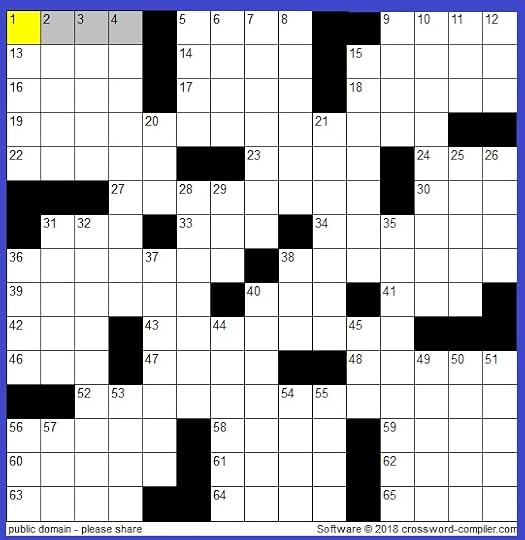
Here in the Bay Area we are in a “shelter in place” mode, so I thought people might need things to do while cooped up. Here is my crossword Pandemic. Click on the puzzle to go to the interactive version, or click on the PDF link below to get a printable copy. I’ll try to keep these coming during the restriction period, so watch this blog. Please feel free to share or forward.
PANDEMIC
The post Crossword: Pandemic appeared first on OnWords.
March 14, 2020
Stalactites vs. stalagmites

courtesy Pardon my Planet
My sister taught me, “When the mites crawl up, the tights come down.”
The post Stalactites vs. stalagmites appeared first on OnWords.
March 10, 2020
Women’s words, Men’s words
Are there such things as women’s words and men’s words? An article I read in Stanford Magazine recently about children’s language development got me curious. I have found some books irritatingly “chick lit” in nature, usually relating to the frequent use of long fashion and makeup descriptions for the characters. I decided to see if I could measure this. Consider the following illustration.
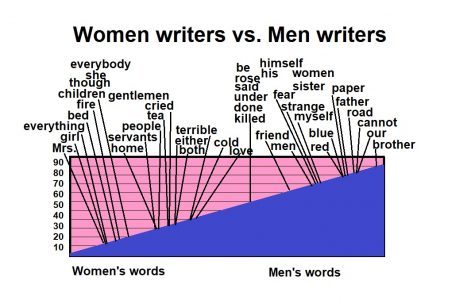
I didn’t have access to the full texts of modern novels, so I decided to take public domain works from both men and women authors from gutenberg.org and total the words used by each. I didn’t want to be comparing different genres, so I chose four mysteries by women and four by men (list below). For some of the longest ones, I took only a section of the book roughly equal in size to the average of the other books, so that the weights should not be skewed heavily by a single book. For each word I measured what percentage of the total words in the male authors’ books it represented; then I did the same for the women authors. I then compared the men’s percentage to the women’s percentage and graphed the results as shown above. The words on the right (blue) side were used more often by men and the left (pink) side more often by the women authors. Bear in mind these books are quite old and surely do not represent modern views about women’s roles, but they are interesting. The words shown in the graphic are selected purely as illustration. The complete list is given below, and includes every word that appears at least five times in the women’s combined and five in the men’s combined novels. Names of persons and places have been ignored.
The blue section represents the percentage of appearances of a word that were by the male writers. The most male-leaning word, brother, was used nine times as often men as by women. The line thus shows it connected to the 90% mark. The most female-leaning word was Mrs., for which 13% of the uses were by the men and 87% by women when normalized. Gender-related words tended to skew toward the writers of the same gender, although that wasn’t completely consistent. One might object on the grounds that this tendency is only because of the characters in the books, but that’s rather the point: women populate their novels with more female characters than men do, and have them more central to the story. What I find more interesting are the non-gender related words that skew heavily. Why, for example, is our the second most male-skewed word? That was consistent with all the male writers and female writers. And why everything the third-most female skewed? As the graphic shows, the words be and rose were used almost exactly equally by the men and women. I didn’t check to see if rose referred more to the verb or the noun.
The four male books were The Red House Mystery, by A.A. Milne (1922), The Man Who was Thursday by G.K. Chesterton (1908), The Sign of Four, by Arthur Conan Doyle (1890), and The Woman in White by Wilkie Collins (1869). The women’s were Whose Body? by Dorothy Sayers (1923), The Mystery of Mrs. Blencarrow by Margaret Oliphant (1890), The Mysterious Affair at Styles by Agatha Christie (1916), and The Circular Staircase by Mary Roberts Rinehart (1907).
The list of words is ordered with the most male-used at the top and most female-used at the bottom. Everything before the word be was used more by men and below by women.
brother
london
our
cannot
road
street
father
paper
also
blue
secret
red
police
spoke
cumberland
become
understand
arrived
papa
instant
women
truth
sister
silence
beard
questions
opposite
ordinary
question
high
human
myself
already
papers
feet
shot
nearly
rapidly
world
hardly
strange
sense
answer
wall
least
heard
letters
low
opinion
repeated
master
meeting
fear
thoughtfully
set
word
men
four
glad
comes
faces
chance
moved
evidently
french
river
anyone
necessary
subject
broken
send
remember
windows
money
afterwards
white
stop
fair
begin
returned
lost
yes
because
position
direction
eagerly
trust
drink
doorway
inspector
case
may
whose
has
between
now
slowly
surprise
talking
mad
kindness
handed
shoulders
expression
library
give
miss
curiosity
bright
fathers
my
wanted
revolver
really
ah
thank
smile
carefully
struck
often
care
altogether
ground
vague
received
instinctively
his
present
isnt
prospect
shadow
finding
common
blood
post
foot
smiling
himself
once
sort
point
smiled
else
situation
mystery
suppose
yourself
friend
above
knowing
ought
remained
live
garden
staying
simple
while
certainly
hear
call
straight
order
life
he
your
again
new
voice
replied
soon
you
dark
yet
are
passage
across
turn
sudden
within
help
servant
appeared
inside
read
appearance
station
character
knocked
pulled
impression
lamp
knowledge
passing
lets
general
excited
duty
astonishment
giving
walking
listened
allowed
habits
boots
throat
seriously
speaking
gloom
approaching
atmosphere
box
keeping
especially
attitude
kindly
length
move
loud
coming
watch
nature
getting
thrown
upon
am
is
mr
me
well
ask
dead
woman
will
than
minutes
we
drive
short
waiting
from
keep
these
forward
led
want
let
more
whole
manner
experience
further
tonight
TRUE
stranger
hand
can
houses
ago
much
table
matter
hair
listen
natural
frightened
entirely
rather
mind
only
way
say
fact
peculiar
talked
months
write
school
sat
show
words
first
most
cases
city
cool
personal
generally
respectable
reply
form
observation
beside
chair
towards
i
even
indeed
exactly
pocket
nodded
course
certain
this
him
might
shall
almost
means
wrong
mouth
court
profession
cup
imagine
pressed
placed
sooner
handle
presence
reached
appear
nights
join
stared
living
us
death
please
heart
note
hesitated
change
surprised
aunt
other
why
another
added
evening
says
crime
man
told
each
second
an
circumstances
mine
water
tried
died
heavy
right
have
hour
hall
should
distant
expected
shut
company
seems
opening
asked
of
looking
themselves
lips
curious
know
however
room
possible
as
that
about
which
here
black
view
wait
seem
somewhat
sorry
marriage
wondering
features
suggested
line
ears
yours
hed
by
perhaps
such
open
do
given
quite
through
held
sight
passed
end
window
quietly
try
interest
bring
bedroom
if
see
others
sir
good
hes
accident
remarkable
teeth
murmured
today
naturally
touch
nervous
calling
false
escape
different
information
particularly
liked
same
far
stopped
looked
at
mysterious
hard
fell
difficult
the
for
to
kind
reason
asking
enough
left
friends
youre
in
pleasure
air
walked
name
round
place
didnt
few
some
moment
story
close
gentleman
think
small
afternoon
wonder
start
used
directly
tall
threw
lodge
killed
done
under
said
so
what
rose
be
like
clear
large
front
ever
began
during
save
years
any
thats
three
locked
extraordinary
explain
opened
and
one
but
being
turned
great
together
having
tears
unless
pass
watson
difference
dignity
mothers
breakfast
own
better
importance
suddenly
a
saying
thought
best
mean
make
itself
whatever
sake
clothes
written
state
putting
calm
telling
door
no
with
too
were
gave
behind
or
taking
it
went
part
met
history
beyond
property
into
against
took
light
hat
followed
detective
top
ready
seen
before
back
head
since
could
down
two
park
who
time
feel
does
lived
big
notice
spirits
heads
carriage
showed
cut
entered
remembered
eyes
tell
just
face
seemed
out
never
able
drove
closed
found
how
then
when
not
thus
occurred
news
stay
wouldnt
pause
pretty
finally
all
bit
leave
pale
little
those
on
thing
going
dont
side
speak
poor
away
was
up
still
im
until
hope
ten
ladies
discovered
grateful
among
laughing
instead
car
country
five
six
account
worse
village
visible
knows
stepped
many
did
there
night
alone
get
perfect
very
last
love
outside
walk
bad
glass
had
its
where
meet
pointed
day
gone
came
book
mans
arms
likely
rooms
guests
late
always
empty
names
pay
eye
known
run
nothing
old
taken
half
house
business
cold
kept
times
been
they
put
usual
terrible
after
morning
brought
wish
meant
go
chapter
called
would
whom
them
work
something
nor
believed
son
several
sigh
tired
leaning
forgotten
hurried
take
trouble
come
stood
later
nobody
corner
step
fellow
must
long
feeling
need
easy
except
got
hands
person
sometimes
sent
turning
dropped
over
body
next
town
both
their
making
fine
either
happened
doubt
perfectly
seeing
shoulder
anybody
ill
every
less
dear
days
young
saw
doctor
knew
idea
doing
without
somebody
sure
cried
till
neither
off
figure
tea
felt
things
wasnt
happy
sun
finished
shook
ive
drew
pleasant
early
theres
suspicion
tomorrow
afraid
believe
oclock
family
mother
moments
people
lock
became
anything
standing
cant
made
wont
look
train
quarrel
use
home
servants
full
caught
gentlemen
lay
oh
everybody
along
quiet
lady
whether
dress
ran
she
near
find
stairs
though
attention
her
herself
children
sound
fire
bed
everything
girl
mrs
The post Women’s words, Men’s words appeared first on OnWords.
March 8, 2020
Deep River Blues – guitar video
I haven’t made any new guitar videos in the last couple of years. I have arthritis in my hands now and don’t play enough to keep my skill level up. I’ve even lost the calluses on my fingers. But I realized I have some I put up on YouTube years ago that I never posted here, so I’ll be putting one up from time to time. This one is Deep River Blues.
The post Deep River Blues – guitar video appeared first on OnWords.
March 4, 2020
The Girl With Seven Names by Hyeonseo Lee
My rating: 4 of 5 stars
I read this because my friend Becky recommended it. I enjoyed it very much. The author is a North Korean “defector.” I use the quotes because there was no political aspect to her leaving North Korea. She was an impulsive teenager who wanted to visit relatives in China. She waded across the Yalu River intending to return, but got trapped on the other side due to a crackdown at the border. This is actually typical of so-called defectors there. The brainwashing in North Korea is so complete, so successful, that the citizens there think of South Korea, America, and the west as evil and impoverished – not some place of freedom and wealth, not a place anyone would want to live.
The life she describes in North Korea is so appalling it is mind-boggling, yet growing up in that environment, it seems normal. She had a happy childhood. The book is worth reading just to appreciate how evil the Kim regime and all totalitarian states are. The author was undoubtedly bold and resourceful, yet also foolish in many of the choices she made. Most had little forethought and potentially dire consequences. She was taken advantage of many times and almost ended up as a white slave. She taught herself Mandarin and English out of necessity after becoming stranded abroad. She changed her identity many times to avoid capture and repatriation, hence the book title.
The writing style is a quirky combination of eloquent English (probably crafted by her co-writer, e.g. ghost writer, David John) and some phrasings that must have been translations of Korean phrases, like “the rain came down in lead rods.” It was at times charming and other times awkward.
The post appeared first on OnWords.
March 1, 2020
Covid Death rate by age
Someone on Nextdoor posted this:
Covid-19 risk is very low for people under 50 in good health
Age of Coronavirus Deaths Based on all 72,314 cases of COVID-19 confirmed, suspected, and asymptomatic cases in China as of February 11, a paper by the Chinese CCDC released on February 17 and published in the Chinese Journal of Epidemiology [1] has found that the risk of death increases the older you are, as follows: COVID-19 Fatality Rate by AGE: *Death Rate = (number of deaths / number of cases) = probability of dying if infected by the virus (%). This probability differs depending on the age group. The percentage shown below does NOT represent in any way the share of deaths by age group. Rather, it represents, for a person in a given age group, the risk of dying if infected with COVID-19.
AGE DEATH RATE
80+ years old 14.8%
70-79 years old 8%
60-69 years old 3.6%
50-59 years old 1.3%
40-49 years old 0.4%
30-39 years old 0.2%
20-29 years old 0.2%
10-19 years old 0.2%
0-9 years old no fatalities
The post Covid Death rate by age appeared first on OnWords.
February 28, 2020
Map of Congressional Seat Changes after 2020 Census
The following map shows which states are likely to gain or lose seats after the 2020 Census and by how much. The two big gainers are Texas (3 seats) and Florida (2 seats). They were also the biggest gainers after the 2010 Census. All the other colored states either gain one seat (pale yellow) or lose one seat (dark green). The white ones stay the same.

These results are based on estimates of the populations of the various states by the census bureau. The actual Census results may differ. Assuming they are accurate, the influence of the yellow states in Congress will increase after the redistricting takes effect. The states are required to complete redistricting after the 2020 Census and before the filing deadline for the 2022 Congressional elections so they will have more representatives in 2023.
Considering the current 2016 Presidential race, many people will likely be interested in how this will affect future presidential elections. All the yellow states except for Oregon are generally considered red, or Republican, states, which could lead one to conclude Republicans will have improved chances for the 2024 presidential race. This is not necessarily the case. The green ones are mixed on the red-blue political scale. The colors do not necessarily indicate which states have gained or lost populations. The large majority of the states gained population, but some gained more than others. California gained in population, but will lose one seat, while Alaska lost population but will stay the same. The complicated formula for apportionment and the extreme population differences between states cause these anomalies.
Many things contribute to how this will affect the voting preferences. Bear in mind that most population increases occur in urban areas and those areas tend to be blue, or Democratic, strongholds. The Increases in Texas, for example, might indicate high numbers of young people moving to jobs in cities there, resulting in a shift from red to blue politically, but in Florida it may be older, more conservative, voters retiring. Another factor is gerrymandering. Most of the yellow states have GOP-controlled state legislatures, which gives that party an advantage in drawing favorable district lines. It may be fun to speculate, but it is really impossible to know how the census will shift the political makeup in Washington.
The post Map of Congressional Seat Changes after 2020 Census appeared first on OnWords.
February 25, 2020
Google Trends – coronavirus, flu
Some interesting results from Google trends on the terms coronavirus, flu, primary, and caucus:
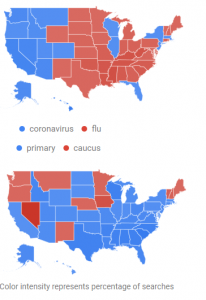
The top map is for the period 12 months. The lower one is for the past 7 days.
The post Google Trends – coronavirus, flu appeared first on OnWords.