Annie Cardi's Blog, page 56
January 31, 2013
The Non-Stress Approach to Applying for Writing Grants, Fellowships, and Residencies
Most writers I know can’t make a living on royalties from books or selling short stories to magazines. One way to find money/time for writing is to apply for grants, fellowships, and residencies. You think, “People are just giving way money for writing? Heck yeah!” Then you see the application and spend a few hours crying in the bathroom.
Okay, applying for grants/fellowships/residencies doesn’t have to make you cry. On her blog, Erika Dreifus shares some suggestions for powering through the application process. One tip that I’m taking to heart:
“Don’t delay reference requests. I’ll admit that I *hate* having to ask for letters of recommendation (to the point that I’m sometimes dissuaded from submitting applications that require them). But when they can’t be avoided, I try not to delay. I try to request recommendations a minimum of three to four weeks before the recommendations must be filed.”
I hate asking for letters of recommendation and, like Erika, am sometimes dissuaded by apps that require them. And when I do, I inevitably put it off until the last minute and have to ask, “Hi, I know this is last minute, but maybe you could write about how awesome I am and send in that letter like today?” Not fun.
Most people are totally cool writing letters of recommendation, if given enough time. If they can’t do it, they can say so. Usually, they’re excited that you’re trying for a grant and want to help you succeed. It’s not as awkward as you think it is.
Make sure to check out the rest of Erika’s suggestions. The only other point I’d add is to apply to as many things as possible. So what if you get rejected? Usually all it cost you was some time and postage. You never know what might come from applying. Even if you applied last year and got rejected, try again. I know so many writers who were accepted to residencies after their third or fourth try. So don’t stop applying!
Other suggestions? Share them in the comments!


January 30, 2013
Links Galore
A few more links to get us through the middle of the week:
This app based on Anne Frank’s life and diary sounds fascinating. What an awesome way to use technology.
Judy Blume on writing about the realities of preteen/teen life and dealing with the backlash.
A Pride and Prejudice playlist? Yes please!
Great interview with this year’s Newbery-winning author, Katherine Applegate.
Do you memorize poetry? All I really know is “My Love is Like a Red, Red Rose” and “One Winter Night in August.”
Best case for New Adult I’ve seen yet.
An article about most of my favorite local bookstores? Heck yeah!
Things I like: Virginia Woolf and bread. Must. Bake. This. Now.


The Sound of Silence
I have a very clear memory of learning about long vowels and the silent letters that often accompany them. I was in first grade, and writing in my class journal. I wanted to spell “made” and thought “Okay, I’ve got an M sound and an A sound and a D sound,” but when I tried to spell that out, it came out “mad,” which I knew wasn’t right. Fortunately, that was the day my teacher introduced long vowels. (Nice timing, Miss O’Neil!)
So I was really intrigued by this video, which demonstrates the part that silent letters play in languages like English, French, and Danish.
Language is so fascinating. As someone who has a hard time learning foreign languages, I was really interested to see their use of silent letters as well.
Click through for more information about the Silenc project.
(via The Dish)


January 29, 2013
This Is Not My Book Trailer
This Is Not My Hat by John Klassen won the 2013 Caldecott medal yesterday–woohoo! In case you haven’t seen the book yet, this trailer gives you the general vibe:
Make sure to check out the rest of Candlewick’s We Believe in Picture Books campaign, too. And congratulations to John Klassen!


January 28, 2013
ALA Monday
In case you weren’t at ALA or didn’t catch the livestream today, here’s the ALA Youth Media Award list for 2013–aka, your list of books you already love or books that are immediately going on your to-read list.
I was especially excited to hear that that the Laura Ingalls Wilder Award went to Katherine Paterson and the Margaret A. Edwards Award went to Tamora Pierce. They’ve done so much for generations of young readers and totally deserve these major awards.
Books that are immediately going on my library loan request list: Bomb: The Race to Build—and Steal—the World’s Most Dangerous Weapon by Steve Sheinkin, The One and Only Ivan by Katherine Applegate, and Code Name Verity by Elizabeth Wein (I KNOW, I KNOW).
Share your post-ALAYMA thoughts in the comments.


It’s Getting Haet In Here
Let’s start the week with a super fun grammar video:
I didn’t know that was how the possessive apostrophe s came to be; what a cool bit of language history. Although now I do want to bring up “haet” in everyday conversation.
(via The Dish)


January 25, 2013
Friday Fifteen
Another Friday, another Friday Fifteen, in which I review five books in fifteen words or less. Onto the books!
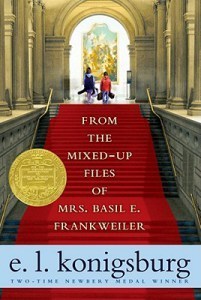 1. Cures for Heartbreak by Margo Rabb
Read a short story excerpt of this in Seventeen; was excited to find the novel.
2. The McSweeney’s Joke Book of Book Jokes by McSweeney’s Publishing and John Hodgman
My dad saw this randomly and bought it for me. Nice move, Dad.
3. From the Mixed-Up Files of Mrs Basil E. Frankweiler by E.L. Konigsburg
Running away to the Met and figuring out an art history mystery? So much yes.
4. Our Town by Thornton Wilder
Excuse me, I’m having all the feelings. Simple but powerful.
5. Life Stories: Profiles from The New Yorker ed. by David Remnick
Excellent collection of profiles ranging from Marlon Brando to dog show people.


Links Galore
A few links to round out the week:
Happy birthday, Virginia Woolf! Might have to buy some flowers in your honor.
Glad to hear about all these new independent bookstores.
This story of a library’s Kirsten doll and what she meant to young readers is so heartwarming.
A wizard’s guide to problem solving.
I tend to be a shoe myself–what does your Monopoly token say about you?
I’m pretty sure “sick lit” was bigger in the 90s thanks to Lurlene McDaniel.


To Thine Own Self Be True
 A personality quiz based on Shakespeare characters? Just what Friday ordered!
I got Ophelia and although they don’t give any reasoning for this result, I’m going to assume this means that I’m really trying to hold it together surrounded by a lot of evil and crazy. And I like flowers.
In case you want even more Shakespeare, tonight PBS airs Shakespeare Uncovered, which explores some of Shakespeare’s most famous plays, including Hamlet, Twelfth Night, and The Tempest. And heads up, Whovians–there’s an episode in which David Tennant talks about Hamlet.


January 24, 2013
Libraries Are More Than Just Basic Information
Today in things-that-fuel-my-rage, this article about the death of the library, including this quote:
“I don’t personally use the library. I kind of have the feeling that libraries are going the route of the video rental stores but I’m probably… wrong about that,” said Coun. Ian Paton. “With the access to information now, with everyone having computers in their home, why do we spend so much money?”
My initial reaction:
My second reaction:

Then I finally got around to putting my thoughts into something resembling words.
Libraries are about way more than just accessing information. Sure, when I have a general question (“When was Abraham Lincoln born?” “What’s the difference between flours?”) I turn to the internet. But what about when I need more information than just the basics? That’s when I turn to a library’s resources. Librarians are people who are trained to help you find information. They know way more than just how to Google something, and they have the resources to help you find that information. For example, not all newspaper articles are available online–if you want to read an article from say, 1987, you might want to check with your library. Also, not everyone has internet access at home–but the library sure does.
Also, I don’t know about Paton, but I’m a reader and I can’t always afford (or keep) the books I want to read. Fortunately, the library has books and e-books for free. This is where I cannot understand why anyone would think that library’s aren’t worthwhile. How else are you supposed to get all the books you want to read?
Libraries also offer readings, social events, trainings, etc. A lot of the community loves and depends on events like these. Libraries can also serve as a meeting place for study groups, as an office for writers, or as a safe place for kids and teens to meet and interact.
Basically, I think it’s really short-sighted to assume that the internet can take over pretty much everything a library does. Libraries are invaluable resources for readers and communities, and we need to support them.
(H/T bookshelves of doom)