Annie Cardi's Blog, page 50
April 16, 2013
Marathon Monday, 2013: We Always Come Together
I love the marathon.
[image error]
Cheering at the 2011 Boston Marathon. So in awe of all the runners.
I’ve been a Bostonian for the last six-and-a-half years, and nothing (except for fall, maybe) makes me feel like a Bostonian quite like the Boston Marathon. Even if you’re not a runner or an athlete, it’s hard not to get swept up in the joy and enthusiasm of the day. Unlike other sporting events, at the marathon you can cheer for everyone–from the fastest elite runners to the first-time marathoners to the charity teams to the military groups walking in full gear. Last year, I wrote a little about why I love the marathon so much and why it makes me feel so connected to the community.
Usually I’d be out on Beacon Street, cheering for runners in the Brookline area (just around mile 23/24). This year, I was on my way back from visiting family when I heard about the attack. It felt so personal–I used to live directly behind where the second blast occurred and walked around Boylston Street all the time. How could someone attack the marathon, an event that brings so many people together?
Fortunately, in the midst of this tragedy there are so many reports of people helping other people. Of first responders and volunteers rushing in to help the victims. Of runners having finished the race and, after that kind of feat, going to give blood. Of strangers offering up their homes to people without a place to stay. And this is why I love the marathon–because the people who run and volunteer and cheer are all in it for each other. It’s not about winning or supporting just one person. You’re out there with everyone and for everyone. It’s a relief to remember that in the face of this tragedy.
I’m glad to report that, so far, all I know are safe and sound, but my heart is with people who continue to feel the damages of yesterday. And rereading “The Thing Is” by Ellen Bass, a poem that feels so appropriate during times like these.
Hoping all you readers are doing okay.


April 12, 2013
Friday Fifteen
Let’s kick Friday off with this week’s fifteen-word book reviews:
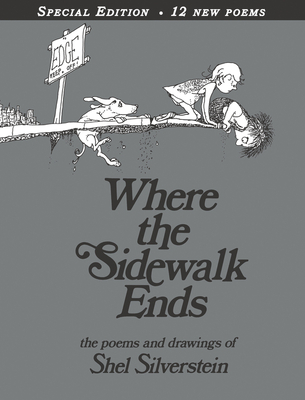 1. Where the Sidewalk Ends by Shel Silverstein
“Sick” was my favorite. I think I looked at the illustrations more than the poems.
2. Lucky Jim by Kingsley Amis
The ultimate novel about academia. Which says it all for me.
3. Felicity Saves the Day (American Girls: Felicity #3) by Valerie Tripp
No, Ben, you can’t fight in the Revolutionary War because you already have a job!
4. The Adoration of Jenna Fox by Mary E. Pearson
Sci-fi YA takes on Frankenstein. Really dug it, but felt complete; why’s there a sequel?
5. The Bad Beginning (The Series of Unfortunate Events #1) by Lemony Snicket
I liked that the Baudelaires never solved problems easily. Lots of literary fun sprinkled throughout.


April 11, 2013
The #14me Contest is Open! What Would You Tell Your Fourteen-Year-Old Self?
Me at fourteen:
Clunky shoes, carpenter jeans, wacky t-shirts, a different nail polish color on every finger
Fangirl for The Outsiders and Buffy the Vampire Slayer
New school–losing old friends, finding new ones
Writing a couple of really bad novels That Will Never See the Light of Day
Collages and quotes all over my walls
Not sure about this whole high school thing. Or growing up.
Sometimes I wish I could sit down with my fourteen-year-old self and let her know that it’s all going to work out (for the most part). To keep reading, to keep writing, to keep finding kindred spirits. That it’s okay she doesn’t really care about going to the cool parties. That she can maybe speak up more in class (in general) and not be afraid of her own voice. That she’s got some great stuff coming in a few years, so power through the stress and insecurity.
Wish you could talk to yourself at fourteen? The Fourteenery (a fabulous group of 2014 debut YA authors) is hosting a contest in which you’re invited to share a little advice to your four-year-old self. Share your funny/sweet/thoughtful/dramatic advice by reblogging on our Tumblr or tweeting with the #14me hastag. And you can win some seriously awesome (signed!!!) books.
Check out all the details on the Fourteenery and get brainstorming. The contest runs through midnight on Sunday, April 14. Spike’s excited:
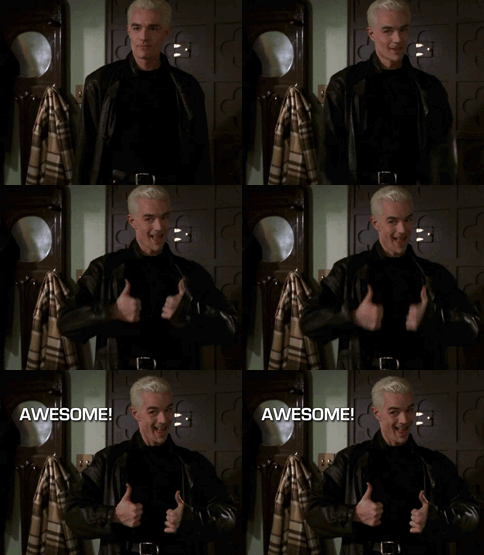
So get reblogging/tweeting!


April 10, 2013
No One Can Tell You When You’re “Ready” to Write
One of the ongoing debates in the creative writing world surrounds creative writing programs vs. real-life experience. Can you learn writing by being in a classroom, or do you need to go live and have lots of varied experiences? This article from the Atlantic emphasizes the importance of having life experiences so that when you sit down to write, your stories are filled with meaningful characters and adventures. Reiner says:
“But what [creative writing programs] can’t do is provide writers with real-world experience and the perspective to make sense of it, without which there is no storytelling, there is no “editor I’m going to work with” giving the green light. Creative writing programs can teach you how to write, but they can’t teach you what to write. No instructor or Zellowship can transform you into a storyteller without experience strutting your ambition.”
I agree. While creative writing programs and workshops can be a great place to examine craft, they’re not going to give you ideas.
But.
I don’t necessarily think people with more life experience write better stories. There are lots of people who have had compelling life experiences that would make amazing stories, but don’t have the skills to bring those stories alive in a complex, subtle way on the page. And there are people who have lived quiet, “ordinary” lives that see deeply into the human experience and have great perspective on their experiences. Some people have a knack for attuning themselves to character details and making emotional connections. These people can write at 16 and 35 and 52 and 97. They can certainly hone their skills over time, but I don’t think they necessarily need to wait for some magical length of time before they’re able to write stories.
Examples: Emily Dickinson wrote stunning poetry while being largely a recluse. I don’t think she had a lot of “life experience.” And Keats got all his writing in before he died at 25.
Basically, writing is different for everyone. There’s no age at which you’re “ready” to write amazing stories or experiences that will guarantee to make you a better writer. I’m a great believer in practice, not time or experience, making people better writers. Focus on your craft, where that’s in a formal workshop or at your own desk. No matter where you are, notice details and listen to people. Open yourself up to everyday experiences and making emotional connections. If you’re someone who already thinks of story ideas, those will come to you no matter where you are or how old you are.


April 9, 2013
Days of Remembrance and Why Stories Matter
This week is the national Days of Remembrance, which commemorates Holocaust victims and survivors. I remember learning about the Holocaust in school, primarily with two main books. The first was Number the Stars by Lois Lowry, which my class read in third or fourth grade. I knew about WWII in general, but this was the first time I remembered hearing about the significant threat to Jewish people during that time. The book provided a safe way to learn about a very scary part of history; the threat to Ellen’s family is very real but Lowry is careful not to go into too much detail about what could have faced the Rosens if they’d been caught.
Night by Elie Wiesel was another significant book in my learning about the Holocaust. By the time I read it, I was in eighth grade and knew millions of innocent people had been tortured and killed. I didn’t expect Night to affect me so, but I read it in one evening and spent the entire time crying. For me, it was an opportunity to understand the Holocaust in a very personal way. Somehow it’s easy to gloss over statistics about how many people died; it’s far harder to ignore real stories about the horrors that individual people experienced.
Which is why the Days of Remembrance and honoring all the specific victims and survivors are essential. We need to hear their stories and remember that these were/are specific people with specific lives. They were mothers and singers and readers and kids who liked silly jokes and lawyers and on and on. All of their stories are valuable and need to be shared.
The United States Holocaust Memorial Museum has resources for taking part in the Days of Remembrance, including a webcast of the national ceremony on Thursday, April 11 at 11:00am. In case you can’t take part in an organized event, you can also share the stories of victims and listen to the stories of survivors, as documented on the museum website. Make sure their voices are heard.


April 8, 2013
All Distances of Place, All Distances of Time
 It’s the kind of morning when I need to be reminded of the interconnectedness of the universe. What better way to do that than with a little Whitman? From Leaves of Grass, On the Beach at Night, Alone:
ON the beach at night alone,
As the old mother sways her to and fro, singing her husky song,
As I watch the bright stars shining—I think a thought of the clef of the universes, and of the future.
A VAST SIMILITUDE interlocks all,
All spheres, grown, ungrown, small, large, suns, moons, planets, comets, asteroids,
All the substances of the same, and all that is spiritual upon the same,
All distances of place, however wide,
All distances of time—all inanimate forms,
All Souls—all living bodies, though they be ever so different, or in different worlds,
All gaseous, watery, vegetable, mineral processes—the fishes, the brutes,
All men and women—me also;
All nations, colors, barbarisms, civilizations, languages;
All identities that have existed, or may exist, on this globe, or any globe;
All lives and deaths—all of the past, present, future;
This vast similitude spans them, and always has spann’d, and shall forever span them, and compactly hold them, and enclose them.
Click through to check out the rest of Leaves of Grass. Any poems you’re inspired by today?
(image: Thayer and Eldridge, via Wiki Commons)


April 5, 2013
Friday Fifteen
Hey guys, it’s finally Friday! Time for some book reviews in fifteen words or less.
 1. Rapunzel’s Revenge by Shannon Hale, Nathan Hale, and Dean Hale
A fun wild-west take on the fairy tale. Can see this working for reluctant readers.
2. Daughters of Eve by Lois Duncan
At thirteen I had mixed feelings about this feminist-cult book; felt very dated.
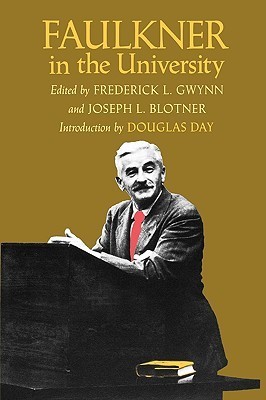
3. Faulkner in the University ed. Frederick L. Gwynn, introduction by Douglas Day
Read The Sound and the Fury, matriculating at UVA. Of course I snatched this up.
4. Stone Soup by Marcia Brown
Or “How to Host a Dinner Party Without Having to Cook.” Our 2nd grade play.
5. The Older Boy (Sweet Valley #15) by Francine Pascal
You’re sixteen and think a sixth grader looks like an average high school girl? Riiiight.


An Excuse to Post About To Kill a Mockingbird and Gregory Peck
Happy birthday to Gregory Peck, all-around cool guy and the man who brought Atticus Finch to the screen with so much sensitivity and thoughtfulness.
To Kill a Mockingbird is one of my favorite books and movies. (Just hearing the score to the film gets me teary.) It’s a beautiful example of how an amazing text can be brought to life on the screen. So often we argue about whether a book is better than a movie. Why can’t we love both for different reasons?
Oddly enough, I was thinking about Gregory Peck last night and came across this video, in which Peck talks briefly about filming To Kill a Mockingbird with Harper Lee on set:
So cute! I would have freaking loved to be on that set. And while we’re at it, here are Atticus Finch’s closing arguments:
And after the trial:
Now I’m going to be all emotional thinking about To Kill a Mockingbird. May we all endeavor to be like Atticus Finch.


April 3, 2013
Links Galore
Lots of good links today.
More evidence that teen years mater: study finds that teens who establish positive peer connections do better later on.
Fascinating article on Louise Fitzhugh and the relationship between clothing and sexuality in Harriet the Spy.
Not too surprised to see To Kill a Mockingbird voted as the Great American Novel.
Still unsure about this whole Goodreads/Amazon thing.
The Doctor: Literary Hero. (My favorite has to be his encounter with Agatha Christie.)
A list of fictional characters who would make terrible boyfriends in real life. I’d add Maxim de Winter and the Wizard Howl. (I know, I love Howl as a character, too, but he got super lucky with Sophie.)
William Shakespeare: grain hoarder!
Your agent doesn’t need to be a social media “rock star.” They have to be a kick-ass agent for you and your book.
My haiku-loving heart digs these unintentional poetry from the New York Times. (H/Y Elizabeth Brenner)
When I’m an eccentric billionaire, I’m going to do a world tour inspired by children’s books.
“Those leaves are totally foxed!” and other book anatomy terms.
Are you an urban fantasy fan, or do you prefer alternate worlds? The Hub looks at the different categories of fantasy.
Be an activist for library and early literacy resources!


April 2, 2013
Aprill Shoures Brung May Flours: April Is for Poetry
 April is National Poetry Month, so it makes sense that one of English literature’s oldest poems opens with a reference to this very month. Check out this opening to Chaucer’s Canterbury Tales:
Whan that aprill with his shoures soote
The droghte of march hath perced to the roote,
And bathed every veyne in swich licour
Of which vertu engendred is the flour;
Whan zephirus eek with his sweete breeth
Inspired hath in every holt and heeth
Tendre croppes, and the yonge sonne
Hath in the ram his halve cours yronne,
And smale foweles maken melodye,
That slepen al the nyght with open ye
(so priketh hem nature in hir corages);
Thanne longen folk to goon on pilgrimages,
And palmeres for to seken straunge strondes,
To ferne halwes, kowthe in sondry londes;
Um…what does that mean? Don’t worry, I’m not exactly fluent in Middle English myself. Fortunately there’s a translation:
When April with his showers sweet with fruit
The drought of March has pierced unto the root
And bathed each vein with liquor that has power
To generate therein and sire the flower;
When Zephyr also has, with his sweet breath,
Quickened again, in every holt and heath,
The tender shoots and buds, and the young sun
Into the Ram one half his course has run,
And many little birds make melody
That sleep through all the night with open eye
(So Nature pricks them on to ramp and rage)-
Then do folk long to go on pilgrimage,
And palmers to go seeking out strange strands,
To distant shrines well known in sundry lands.
Whether April’s inspired you to make a pilgrimage to Canterbury or not, you can check out the rest of The Canterbury Tales here. I didn’t have the best experience with Chaucer in college, which of course makes me think I should go back and investigate this Chaucer guy. I mean, dude did popularize the English language. We need to give him props for that.
May your April showers be sweet with fruit!