Maura Casey's Blog, page 4
March 31, 2025
Spring, hope and protest
Spring is here, sorta, kinda, maybe. But the signs are unmistakable.
It started with the sound of one lone peeper, then two, then a chorus around the first week of March. They are little tree frogs, which are a sure sign of spring in New England, and they sound like a hundred piccolos all making the same notes, over and over. I hear them at night, as I peer up at the stars while I walk our dogs before putting them to bed.
That’s when I see the constellation Orion in the western sky, finally beginning its descent to the horizon. It’s been high in the sky through the cold months, but it is on the wane now, disappearing behind the trees that line our property.
And the red-winged blackbirds arrived two weeks ago, filling the branches of our maple tree, noisy with their characteristic cackling and fresh from spending the winter months in Mexico. Lucky them!
 Photo by CHU TAI on Unsplash
My husband, who has been sidelined for the last three months after he broke his leg on New Year’s Eve, is finally out of his boot and is walking without a walker or even a cane. None too soon; he is a farmer and impatient to get out to the fields. Seedlings are growing under lights all over the house. I always wonder whether or not our neighbors think we are just growing marijuana and only pretending to have trays of tiny plants: kale, peppers, eggplant, tomatoes, broccoli. He is getting started late, but if a farmer has no choice but to spend two months with one leg elevated, unable to bear weight, winter is surely the most convenient time to be inconvenienced.
And me? April 1 — tomorrow, as I write this — is when Skyhorse Publishing will release my book, “Saving Ellen: A Memoir of Hope and Recovery.” It’s also available at bookshops.org, the home of independent bookstores, and, I hope, in libraries soon. Five years after I began writing my memoir, it seems fitting that it is being published during the season of new beginnings.
And yet, the natural hope that comes with spring clashes with the Trump Administration’s gleefully heartless betrayal of allies and its targeted destruction of our Constitution, government services, and help for the less fortunate that have been the hallmark of our better angels since the Great Depression. Like any sentient adult I am capable of holding two contradictory thoughts at the same time. But it is often downright confusing to have hope for the biggest creative endeavor of my life while feeling white-hot rage at what our government is becoming, aided by amoral enablers in the Republican Party who put power ahead of the good of the country. It’s why I’m attending one of the hundreds of nationwide “Hands Off” protests this Saturday, April 5. (The link will help you find the nearest protest if you are interested in attending).
It is downright confusing to have hope for the biggest creative endeavor of my life while feeling white-hot rage at our government.Not everyone can attend protests, but everyone can raise their voices, write letters, and keep abreast of what is happening. There’s a new tool for that: The Project 2025 Tracker, put together by two people on Reddit who had read Trump’s plan of destruction for the government before the election, even as he lied repeatedly that he never heard of Project 2025. I read as much of the 900-plus pages of its cornerstone, smugly titled, “2025 Mandate for Leadership: The Conservative Promise,” that I could stand without becoming clinically depressed, and wrote about it last August. But with this tracker, complete with sources, you can follow the actions of what Trump and his allies are trying to do in real time.
By using this tool, we can all object and we can all take action, each in our own way.
So there you have it, friends. I am excited for my book, concerned for our shared future, determined to protest what I believe is wrong. Amidst this clash of emotions is an appreciation for spring, and – dare I say it? – hope. Hope that we will all get through this time and we are able to fashion a better country for our children and grandchildren. We will make it if we hang on to one another, and insist on being part of the good in the world.
***
PS – Writer’s Digest Magazine was kind enough to accept an article I wrote about how my habit of writing journals prepared me for a career as a professional writer – and helped me write my memoir. It’s here. Thank you for reading!


March 24, 2025
Time to get loud, people
Last year I applied, online, for Social Security (I know…I don’t look nearly old enough). Then I waited for my first monthly retiree payment, scheduled to arrive on May 8.
It never came.
So I called a Social Security office. That’s when I learned I would collect nothing from the system to which I had contributed for 50 years until I went to an office in person, produced several forms of ID, and proved that I was, in fact, me. I did just that the same day. My first payment arrived three days later.
Elon Musk and Donald Trump’s recent claims of rampant fraud in the Social Security system is a big, fat lie like so many of the whoppers that come dribbling out of their mouths every day. So are claims that benefits are going to those who are 150 years old. It’s a trillion-dollar-plus a year system, and fraud indeed occurs, but at a rate of less than 1 percent.
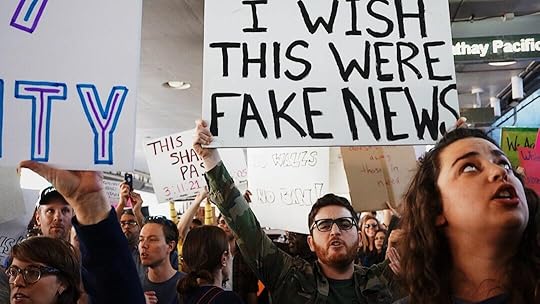 Photo by Kayla Velasquez on Unsplash
No matter. They are at war with government to both milk its largess and cripple its ability to erect the flimsiest of guardrails to regulate companies that the rich and powerful own. They are doing this through indiscriminate firings across government, closing thousands of offices, and getting rid of the inspectors general who provide oversight. Once they have torn government apart like the jackals they are, they and Republicans will point to the carcass as proof of their claim that government doesn’t work.
The Administration’s contempt for most Americans, but particularly the working class and the poor - far too many of whom voted for Trump - is becoming more obvious by the day.
If the whole world were covered with asphalt, one day, a crack would appear, and in that crack, grass would grow. - Poet Ilya EhrenburgA counselor to Trump, Alina Habba, revealed plenty when she criticized New York Congresswoman Alexandria Ocasio-Cortez (AOC) for being critical of Musk. Her argument? The congresswoman once worked as a bartender. Horrors. “You were in a bar. You were in a bar, AOC, calm down — and not to have a drink, to serve one,” Habba said.
AOC, no shrinking violet, clapped back immediately at a speech in Las Vegas, Nev,. (video in the link) where she appeared with Sen. Bernie Sanders during his “Fight Oligarchy” tour.
“I don’t care what this woman says about me — but I want you to understand that she isn’t just talking about me, she’s talking about you. She’s talking about all of us,” said the congresswoman. “Trump hired her to speak for him. Imagine what it means for our country that the president’s own lawyer cannot even conceive of a working-class person being intelligent simply because of the job that they have … This kind of disdain for working people by the most powerful people in the country doesn’t just come from not being raised right. It’s a shorthand for … a certain ugly kind of politics, lying to and screwing over working people so they can steal from our health care, veteran’s care, and Social Security to pay for tax cuts for the wealthiest and their crypto-billionaire friends. There is a word for this. Corruption.”
Precisely. Time to rise up, people.
Besides all of the above, add this: the horror and shame of Trump, and therefore America’s, utter betrayal of Ukraine; the disrespect and appalling treatment of Canada, our neighbor and friend, in harsh tariffs and Trump’s referring to that country as “the 51st state;” his idiotic threats to take over Greenland, a sovereign country, and the real possibility that the president either has dementia or is merely unhinged.
We Americans need to raise our voices.
One way is to become active in Indivisible, a nationwide organization with chapters in all 50 states with the stated mission of electing progressive leaders, rebuilding our democracy, and defeating the Trump agenda. Trump is a symptom, not a cause. American democracy is extremely sick if conditions were ripe to elect a man like Trump in the first place - not once, but twice. If you aren’t interested in joining a chapter, join one of its activities - they are all listed on the website.
Another time-honored method of protest is to write. Write letters to the editor, letters to Congress, the White House, and publish commentaries in newspapers and other publications. An organization, Writers for Democratic Action, can help if you are hesitant and also has activities in which to get involved. I am thrilled that The Oped Project, an organization I have been involved with for more than 15 years, is also helping and is listed on the website of Writers for Democratic Action. (Oped is shorthand for “opposite the editorial page,” the traditional page for longer commentaries in American newspapers.)
The Oped Project was the brainchild of founder and CEO Katie Orenstein, who saw nearly 20 years ago that the bylines in newspaper commentary pages where overwhelmingly male and usually white. She knew it was because women and minorities weren’t submitting enough commentaries to have their voices heard, so she put together excellent workshops and other activities to teach these skills. But you don’t necessarily need a workshop. Her website has all the tools you need to get started - outlines for a good oped, how it works, places to send the oped when you are done.
And, take it from me, a former oped editor: Your writing need not melt the stars to get published. All you need is passion, a point to make, and facts to back it up. So do it.
Finally, Indivisible has organized a nationwide protest scheduled for April 5 taking place in cities across the country. It’s another opportunity to get off the sidelines.
I’ll close with my favorite line from poet Ilya Ehrenburg: “If the whole world were covered with asphalt, one day a crack would appear, and in that crack, grass would grow.”
The concrete is spreading. Time for all of us to be the grass.
March 17, 2025
St. Patrick, the saint next door
I grew up thinking St. Patrick’s Day was all about wearing green hats, drinking green beer and perhaps attending a parade. I had only the haziest idea about what it meant to be Irish, but I knew it probably involved music, drinking and making wisecracks, often all at the same time. Nobody I knew had ever gone to Ireland, but that didn’t keep us from shedding a tear during “Danny Boy” and raising a glass or five.
My mother’s grandfather, Mike Murray, left Ireland in the 1880s, although I never thought to ask why. My father’s family came to America much earlier, around 1825. Our links to the Old Country were tenuous at best.
But during one four-month period at the age of 34 I lost my beloved sister Ellen and had a miscarriage. I felt crushed by grief. I wanted to do something different, a salve to my own pain. With more instinct than planning I brought home three round-trip tickets to Ireland for my husband, our 4-year-old daughter Anna and me. My brother Tim soon joined us. The four of us set out one warm spring day, to arrive in a blustery morning in the land of our ancestors.
“Patrick is spreading his wings,” Sara said.We headed for County Mayo. The Murray farm was still in the family, outside the town of Westport, and our elderly second cousins, Sara and Mary, were waiting for us.
When we entered the peat-warmed home they insisting we have shots of John Powers Whiskey, “the Catholic whiskey,” Sara said, to toast our “coming home.” When I demurred, saying I was five years sober, Sara immediately poured me a shot of orange juice.
Sara was the more outgoing, Mary much more shy, due to her deafness since early adulthood.
But both ladies made little Anna hot tea with milk and what looked like a half cup of sugar, told her tales of the Wee People, the mischievous leprechauns, and swore that they were real. During a walk down the dirt road in front of the farm they pointed out a lush meadow down a hill nearby.
“Patrick said Mass down there,” Sara said confidently, as if she were referring to something that had happened last week instead of 1,500 years before. In fact, they spoke of St. Patrick as if they had recently shared a pint with him. To them, St. Patrick’s Day was a celebration of a beloved friend. And indeed, the farm had a great view of Croagh Patrick, the pyramid-shaped holy mountain where St. Patrick is said to have fasted 40 days and driven the snakes out of Ireland.
My husband and brother announced they would hike the mountain, called “the Reek,” the next day. I didn’t go. Instead, I wanted to breathe in the crisp air, run my hands over the stone walls my great-grandfather had built but which were still sturdy, and watch Anna run over the fields her ancestors had played upon. I began to feel my grief easing in the embrace of this place that seemed at once so foreign and so intimate.
Ireland healed me. My family would eventually make five family trips there: Pete, Anna, me, and Tim, the son I had after my miscarriage. On every trip, we headed straight to County Mayo and the farm that became, over the years, a place I loved. In between, I would call Sara, especially after Mary died. She would talk with satisfaction about how St. Patrick’s Day was celebrated far and wide - even in Moscow!. “Patrick is spreading his wings,” she would say to me. That familiarity, again.
My last trip was a decade ago. I thought I could put off a visit for a year, but I hesitated because Sara had been so evasive about her age. I called Sara’s cousin, Mary Gillivan, to confer. Mary wasn’t sure of her age either, so she went to Town Hall, examined the records, and called me back immediately. “SHE IS TURNING 99!!” Mary said in astonishment. It was clear I couldn’t delay. I booked flights and took my son and daughter. Anna, 26, got time off from work, and Tim, 20, arranged time away from college. They had both grown up visiting Ireland and the farm every five to seven years.
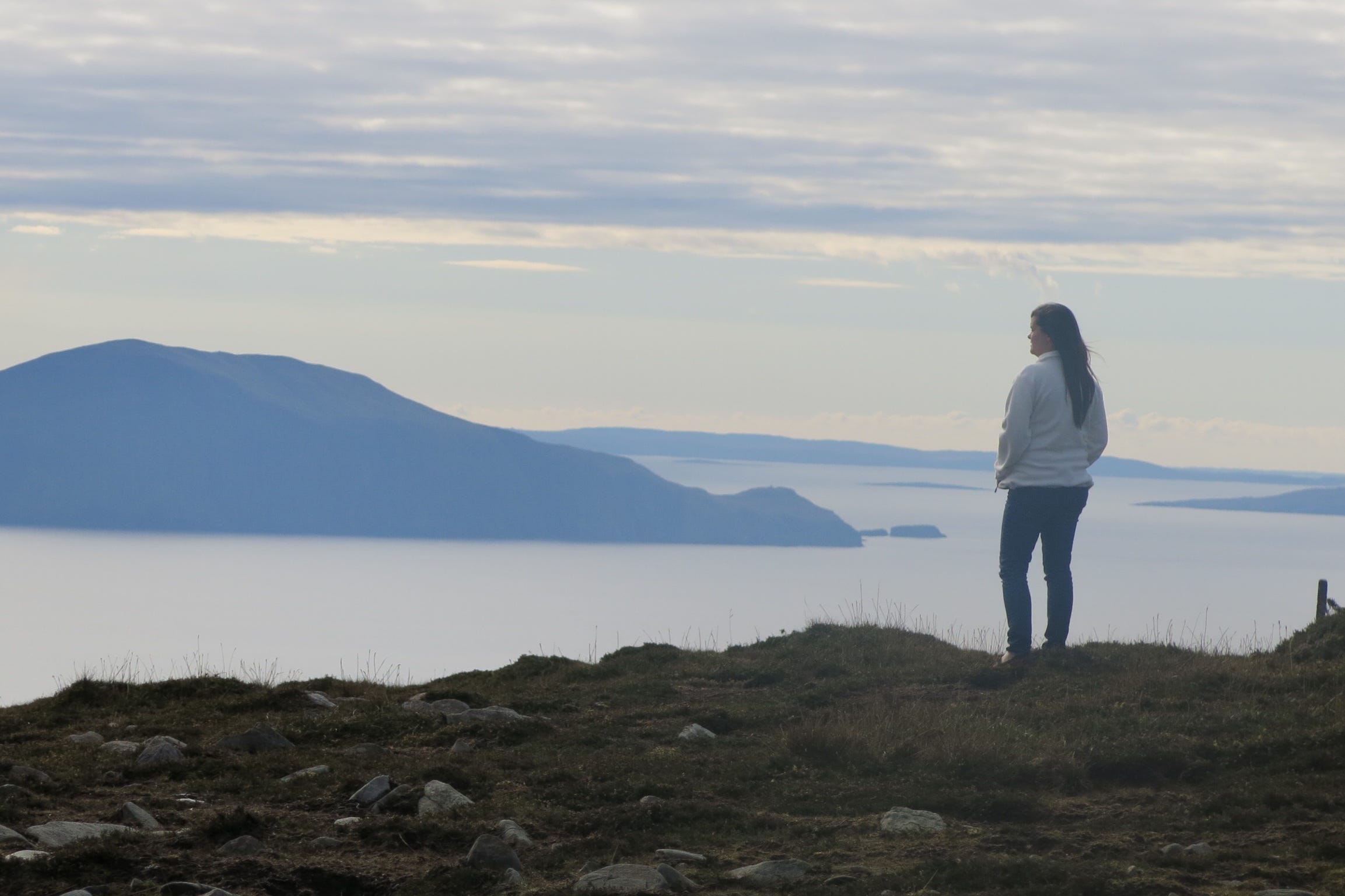 Anna looking at Clew Bay from a vantage point about 30-minutes from the farm.
 Sara by then was in a nursing home, but always ready to talk, stacks of newspapers beside her. For four days she told us family stories. About how her mother had secretly helped the rebels fight for Irish independence after World War I. About our great-great granduncle, John MacHale, was the archbishop of Ireland for 50 years. And how my great-grandfather Mike Murray had joined the Fenian movement for Irish independence in the 1880s, but was discovered, and emigrated to America in haste rather than face arrest by the British. Sara confessed she had often wished to live in town, near shops and bustle, but when given the opportunity, she just couldn’t part with the farm. “The land is like your mother,” she said. “It is part of us.”
We talked and listened, and told her we loved her.
Six months later, on March 16, Sara died quietly, on the eve of the day set aside to honor the saint she spoke of as if he lived next door. That very night we were having friends over to celebrate St. Patrick’s Day with a traditional Irish dinner, which is lamb, by the way, and not corned beef.
On hearing of Sara’s passing, my husband knew just what to do. He bought shot glasses, and a bottle of John Power’s Whiskey - the Catholic whiskey, after all. I got orange juice, our guests got booze, and we all toasted Sara, now spreading her wings along with St. Patrick, the saint she loved so well.
 Anna and Tim on the farm with Croagh Patrick in the background.
March 10, 2025
The storm, the dogs, the books and me
When you have been with one person for a LONG time, there comes a moment when the insulation wears just a little thin. Particularly when a situation has taxed the patience of both of us.
That happened to me last week. Let me say up front that my overall grumpiness wasn’t Pete’s fault, who is still hobbling with his leg in an immobilizing boot after breaking it on New Years Eve. He is just now getting around with a cane, happy to have set a walker aside. But the healing process is slow, and I’m still dog-walker, cook, and bottle washer. In the next four weeks things should edge back to normal.
In the meantime, our two large golden retrievers need to be walked several times a day, and every night around 9. Five nights ago that meant walking outside in a hellish rainstorm. Umbrellas were of no used in the bitter gale that pummeled the house and made me wonder if the wind would rip off the shutters. I hooked up Bella to the leash, zipped up my coat, put on a hood, and said to Pete, with no grace at all, “You can’t get out of that boot one minute too soon.”
Then I opened the door and winced. It was like walking into a hose, or several of them. To make it worse, there was a large box on the outside stairs, a heavy one, too. I wasn’t in the mood. “Now what?” I muttered, exasperated. “More farming equipment? Seeds? Too heavy. Soil? What the hell?” I didn’t bother looking at the address label; Pete gets a steady stream of packages with the approach of planting season. My coat was already soaking through as I picked up the box, the cardboard softening in the damp, pushed it in the mudroom and closed the door.
The sides sloughed off the cardboard box. Could the books possibly have survived the storm?I walked Bella, then dried her with a towel when I brought her back in and repeated the process with Zoey. Rivulets ran from long fur of both dogs and left puddles on the floor, their wagging tails making droplets fly everywhere. They were clearly delighted with the weather. Me? Not so much.
But Pete was waiting for me, his face wreathed in smiles. Somehow, with his leg still immobile, he managed to pick up the heavy box and lug it to the kitchen table. “Your books are here,” he said. The box was not from Johnny’s Seeds, the Maine Potato Lady or any of the other organic agriculture companies that are signs of spring in our house. It was from Simon & Schuster.
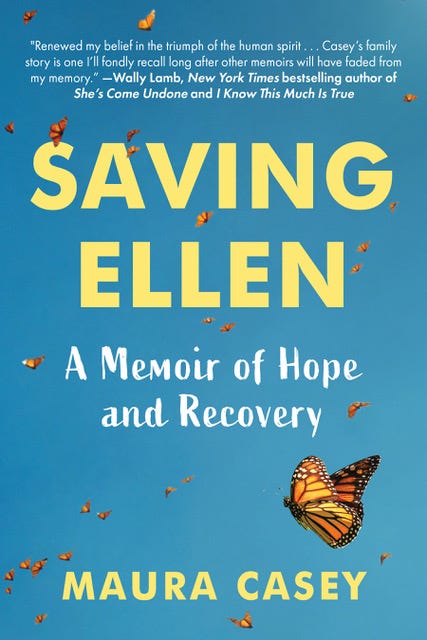
I forgot the wind, the rain, and the dogs as I reached for the box. The cardboard was so soaked the sides sloughed off, the tape holding them together unraveling. Could the books possibly have survived? But there were layers of paper on top, the last bastion of defense against the storm, and the books, somehow, were fine. Pete smiled and hugged me and I lifted my book, “Saving Ellen: Memoir of Hope and Recovery,” with its lovely blue cover, out of the now ragged box. The book will be published April 1, but here was an initial 10 copies, just for me.
That’s when I realized: If I didn’t need to do a chore that left me so short-tempered, it’s a safe bet that all the books would have been ruined. Another 15 minutes is all that it would have taken. Then I realized, chastened, what a privilege it is to have someone to care for, someone I can rely upon to cheer me up, and cheer me on, no matter what the weather, outside or in.
It was a good reminder.
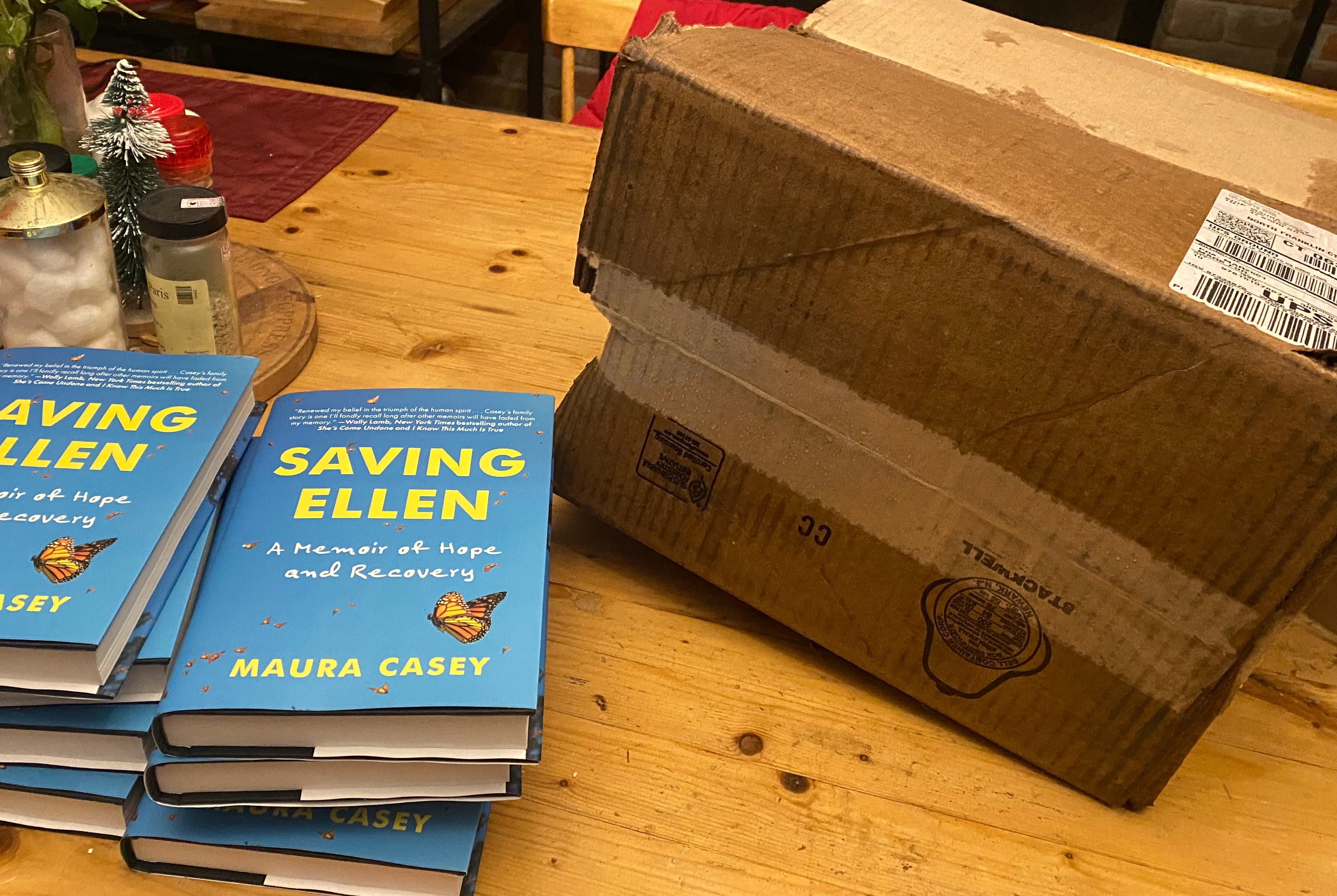
And the books? I felt oddly numb holding a copy, suddenly realizing that the journey that began almost exactly five years ago this week, was over and another had begun. Here was my life, my memoir about my family and the bewildered young person I once was trying to find my way in a chaotic household. But does any of it matter? It feels like America is going to hell in a hand basket. We have a megalomaniac in the White House and the world will soon hate us, if it doesn’t already. And when it comes down to it, my story is just one of millions.
Yet, it’s mine. Thanks to the storm, the dogs, and my sweet husband, the books survived. On to the next phase.
March 4, 2025
A true friend, and a good writer
In September of 1988, the newspaper at which I had worked for barely one month published a special section on the 50th anniversary of the Hurricane of 1938. I was only dimly aware of this historic storm, which had slammed into the New England coast without warning and killed more than 600 people.
That morning at The Day of New London, Conn., I began to read the section’s lead story, written in vivid and powerful prose. I could almost hear the screaming wind and see the terrifying waves that once pummeled the shore just steps away from the building. I didn’t know the reporter who wrote the article, a man named Stan Simon, but that was no surprise; I was still getting to know people at the paper, where I would spend the next 17 years. I found Stan in the newsroom and introduced myself as his latest fan. I was 30. Stan was more than 20 years older. We became instant friends.
Stan died last month at the age of 88, and I can just hear him saying that I am doing way too much telling and not enough showing in the paragraph above. He’s right, of course. I spent two fruitless hours on the internet trying to find that story that so captivated me, the spark to our friendship. So my memory will have to do.
Stan bought a sailboat without knowing how to sail.He was a terrific journalist, the kind of dogged, never-give-up reporter a healthy democracy will always need, never more so than now. In one investigation, Stan uncovered criminal wrongdoing by Connecticut’s state police in the deaths of two brothers; his reporting showed the police shot the men in the back and planted guns on them. Stan developed a recidivism study that showed two out of three prison inmates in Connecticut were ending up back in prison within five years. He also covered the 1970s trial of the self-declared revolutionaries, the Black Panthers, for The New York Times, the Washington Post, and the Hartford Courant. He directed reporters covering a protest even when two bombs exploded, the newspaper’s office caught fire and had to be evacuated.
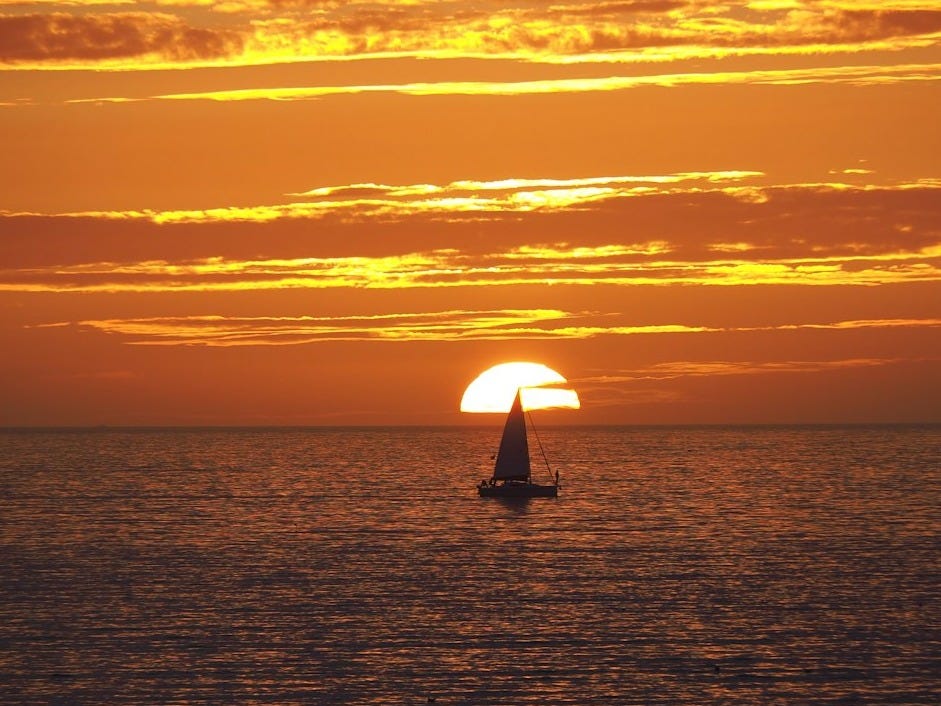 Photo by Rafael Garcin on Unsplash
He was always in the thick of things. That was Stan.
I thought of him when the federal government eliminated thousands of web pages with needed information on topics such as climate change (the existence of which the administration denies) and any health topic remotely having to do with gender, such as HIV or transgender bias. I thought of him again when President Donald Trump exiled the Associated Press from White House coverage, but shamefully, welcomed a reporter from Tass, the Russian news agency, into the Oval Office. As Trump acts more and more like a Kremlin stooge, we will need all the gumshoe reporters like Stan to push back, to speak the truth.
I wish I could talk to him about all this.
We both loved sailing. When we had lunch last year, I asked Stan to tell me all over again one of my favorite stories from his long life, even though it had little to do with journalism and more to do with dumb luck.
In 1979, Stan had invested some money and had about $18,000 in the stock market – about $80,000 today. Feeling flush, he quit his reporting job and bought a 34-foot sloop to sail from Connecticut to Florida. Except he didn’t really know how to sail. Details! Details! No worries; Stan found an experienced hand willing to sail south and, along the way, teach him.
But without warning, his nascent teacher deserted him in Virginia, about 400 miles into a 1,200 mile voyage. Stan had to fend for himself. He managed to sail to Key West, Florida, and docked in triumph. That’s when he discovered that his investments, which he relied on for support, had all gone bust. In the days with no computers, no cell phones, and without a thought to making expensive long-distance calls to his stockbroker, Stan had lost everything. He had just enough cash to stay overnight at a bed and breakfast while he pondered what to do.
The next morning, other guests asked him if he really had a sailboat. Yes, he did. They asked if they could pay him for a cruise in the nearby waters. Why, yes, he could. And that’s how Stan managed to live the good life after all, taking people on trips and sailing his boat for years in the Caribbean, the Bahamas and off the East Coast – before finally agreeing to return north, and work for The Day, where I met him.
He always told me he wanted to write his autobiography, but never got much past the first few words, which were, “I have sailed on a sea of serendipity.” That he did. But he was a hell of a journalist, too, and luck had nothing to do with that – just a fierce desire to find the facts and write with power and grace. And as Wilbur, the always-radiant pig, once observed in E.B. White’s timeless children’s tale, “Charlotte’s Web,” “It is not often that someone comes along who is a true friend and a good writer.”
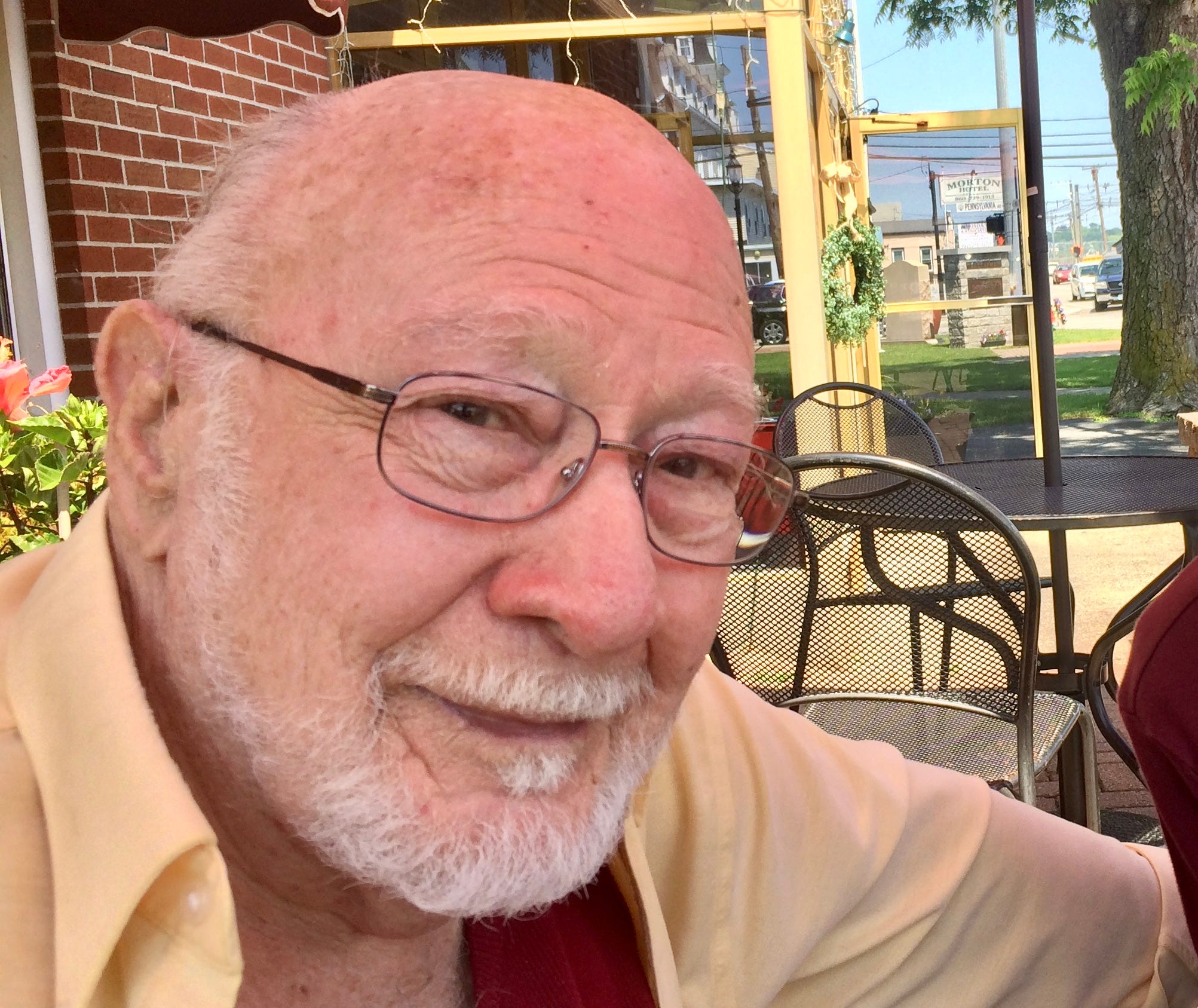 Stan Simon
February 25, 2025
A letter across the years, miles
My dear Natasha,
I’ve lost track of you. Most of my Russian friends’ Facebook pages are frozen since the war in Ukraine began three years ago this month. That’s when Vladimir Putin blocked most social media sites, including Facebook, and since has taken down a half million websites.
You are the most courageous of journalists, so of course Putin also took aim squarely at your online newspaper, declaring it a “foreign agent,” a Soviet-era label tantamount to being accused of being a traitor. Within the scope of this law, anyone who works for a “foreign agent,” carries that designation for two years, even after severing ties. That comes with more restrictions on personal freedoms. Your newspaper, once blocked, is online again, but you are no longer the editor and your name is not listed anywhere.
This bothers me most of all because your country needs the kind of kick-ass journalism you once practiced, the kind that Putin won’t tolerate.
We met during journalism exchanges 35 years ago and became instant friends. I thought that America had so much to teach journalists in the then-Soviet Union, and you immediately declared that you would start your own newspaper, one based on the American model of reporting facts. You went home and did just that. I loved your energy. I was sure that just as our democracy would become stronger, your country, in its first shaky steps towards free speech and a free press, would too.
I was naive, of course, and wrong on both parts. These last nine years have taught me how fragile our own democracy is, how it is dependent on two strong political parties and on the willingness of leaders to follow traditions and norms laid down decades, even centuries, before.
The Republican Party is a husk of what it once was, groveling to Donald Trump as he takes a sledgehammer to our government. He is firing thousands, putting utterly incompetent loyalists in charge of departments and lying more often than a heroin addict. He’s pardoned hundreds of thugs, insulted our allies, embraced oligarchs and proved that he will do Russia’s bidding. He’s blackmailing Ukraine, demanding half its minerals, blamed it for the Russian invasion, and presented the country with a bill for aid we gave freely. Shamefully, at the United Nations this week, my country joined with yours to oppose a resolution calling on Russia to withdraw from Ukraine.
If we could be together, brewing tea from the Russian samovar that sits in my office, purchased during my visit so long ago, you would probably ask me what I am doing about all this.
Well. I’m writing, of course. There is a growing opposition movement in America coordinated by various organizations. Some have called for a nationwide boycott on Feb. 28 of companies cutting back on diversity, equity and inclusion policies, encouraging people to just shop at small businesses that day. I support that; anything against our homegrown oligarchs is fine by me. Organizations such as 50/50/1 movement are sponsoring protests in all 50 states - the next one is March 4. Indivisible is another opposition organization with chapters in all 50 states, each sponsoring different activities. This is a good start. But it is early yet. This, I fear, will be a long game, like the Civil Rights movement in the 1960s.
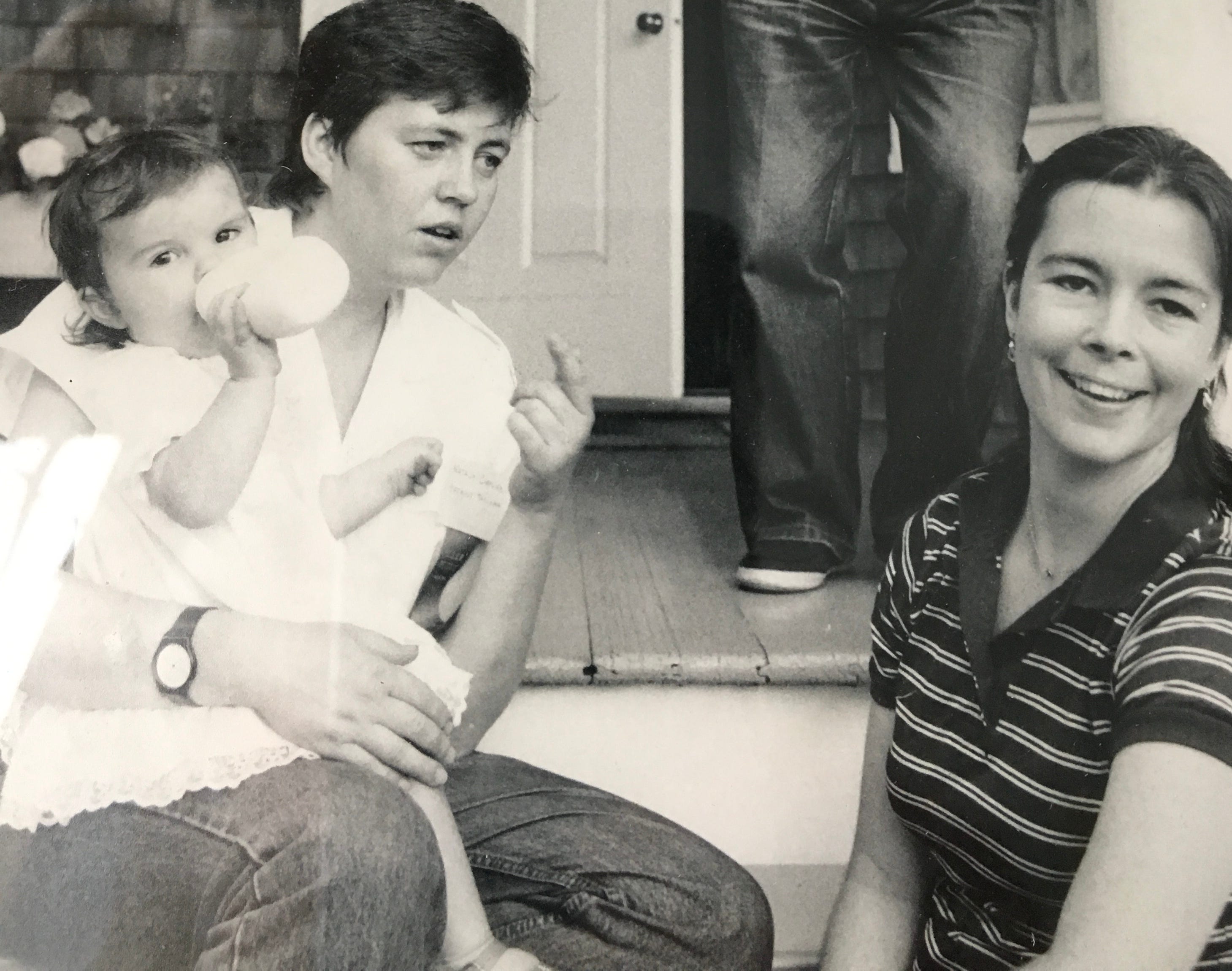
I still have the photo of the two of us, taken when we had just met 35 years ago. You were a member of a journalists’ exchange program between New England and the then-Soviet Union. I was an editorial writer for The Day of New London. I had my daughter with me then; she was just 18-months old. You immediately put your arm around her and she willingly settled in your lap, and said you said something to me that made me laugh. It’s a great photo. Later that week, I gave you a copy, and soon I framed it and put it in my office.
When I visited you a year later at the newspaper you founded, you had the same framed photo on your wall. It still binds us together. Several years ago I messaged you on Facebook with a copy of the photo. I wrote, “We were so young then!” And you responded, “
Yes, remember? We were both journalists, and both so happy!”
Wherever you are, I hope you have found happiness, my friend. I pray for both you and the democratic movements in both our countries. And I promise, I will roll up my sleeves, just as I know you would in my place.
February 17, 2025
Snow: Nature's newspaper
February may be the shortest month, but in New England it packs the kind of weather that makes me think twice about my love of four seasons.
It has been snowing. A lot.
But the white stuff also provides the Great Reveal.
Here in the country, a new-fallen snow exposes what I suspect is going on most of the time but for which I usually have no proof – just a hunch based on a subtle sign here and there. Yet after a good snowfall, two things become obvious:
There are so many animals nearby that I may as well be living in a zoo.
There is so much traffic around my barn that it might as well be New York’s Grand Central Station.
Tracks. Are. Everywhere.
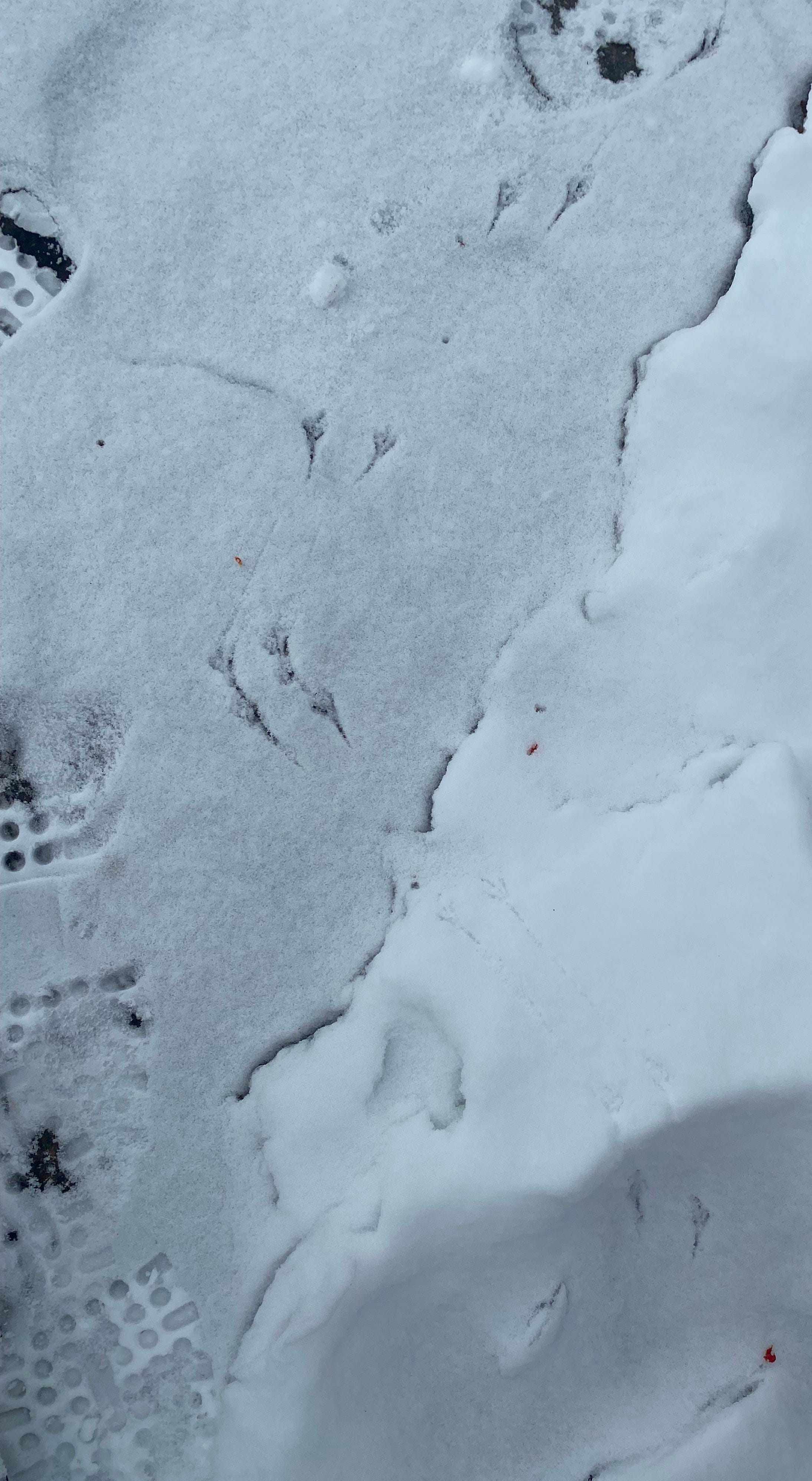
There are rabbit tracks and tracks of the opossum, pawprints of coyotes, tiny prints of squirrels scrabbling for the acorns they just know they hid somewhere around here months ago and the cloven hooves of deer nosing around for a few sprigs of grass under the ice. There are tracks that force me to surf the internet for clues because I can’t imagine what or who on Earth they are from.
Which begs the question – where is everyone going?
Snow is nature’s newspaper. It tells us everything that has been happening, but don’t normally notice. We might think of this land as ours, but there is enough forest and impregnable brush lining our property to provide plenty of room beyond the reach of humans for dens, holes and hidden places to curl up.
A nearby meadow abundant with faded grass shows multiple indentations where animals huddled together to get warm one recent night. Whether deer or a pack of coyotes I don’t know.
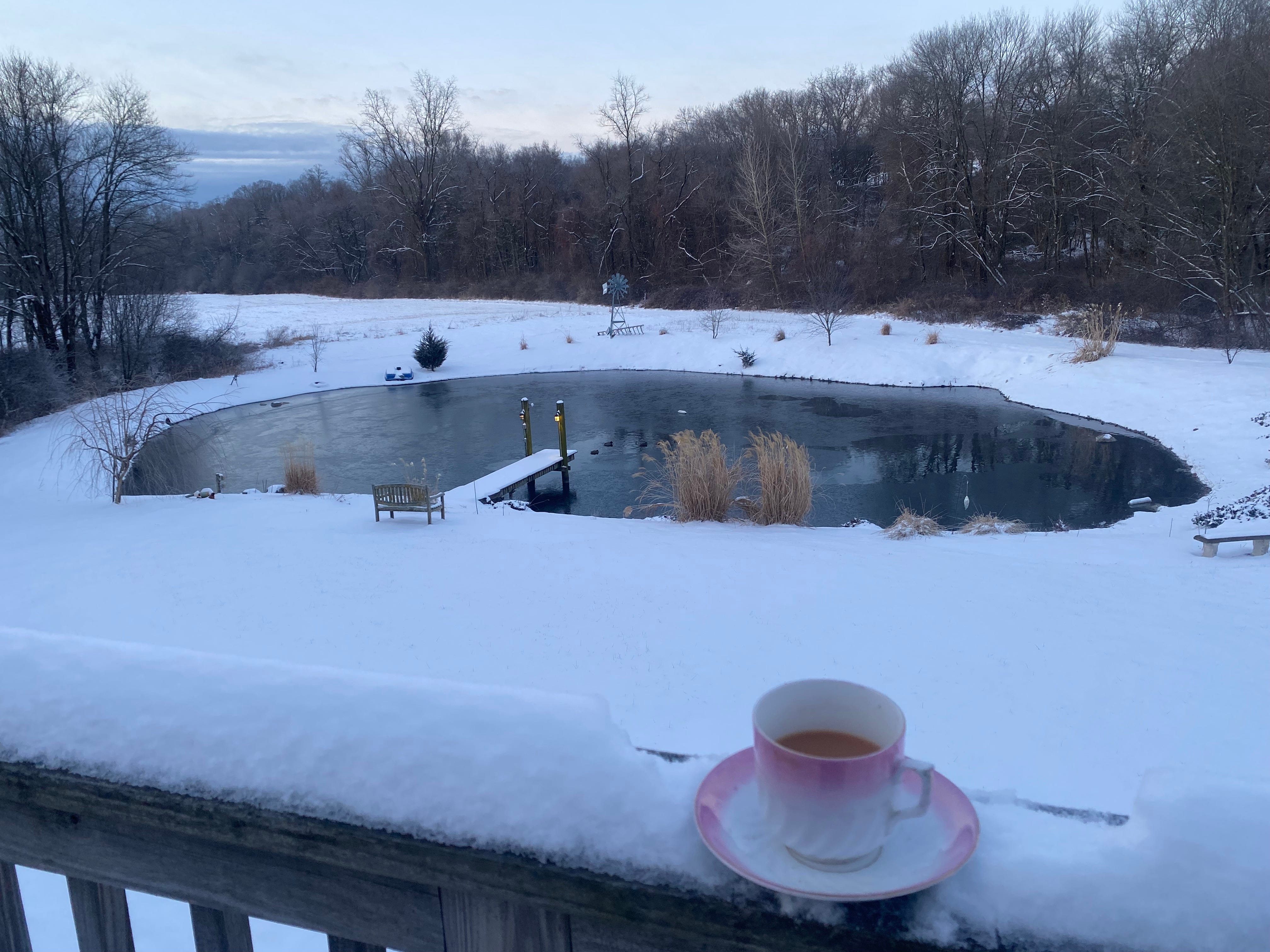 Morning tea with the ducks (near the dock), as the pond, ever so slowly, ices over.
Because our spring-fed pond almost never freezes, in winter several pairs of ducks always come by and hang out. But several weeks ago a flock of about 80 geese evicted them, taking over the pond completely, apparently delighted to find open water. This has never happened before, and I wondered how long the big birds would stay. I watched them sleep at night, floating on the water and swimming in unison during the day.
I may as well be living in a zoo.Then came a serious cold spell. Finally, inch by inch, the pond began to slowly freeze. The geese left in a huff, replaced, within hours, with our friends the ducks, who must have been waiting nearby for the larger birds to tire of the pond’s smaller confines. Yet only five ducks at first came back, not six.
There is endless drama in the country, and here was a mystery: The three feathered couples were suddenly two-and-a-half. Could one of the ducks have gotten hurt? Ducks are often monogamous, but could one couple have split up? This begs the question: Do ducks get divorced?
Finally, after a few days, the sixth duck joined the other five. Water that had become too small for scores of geese was plenty large enough for the six of them. The three couples had enough room in our now half-frozen pond and resumed swimming in circles, quacking and gossiping.
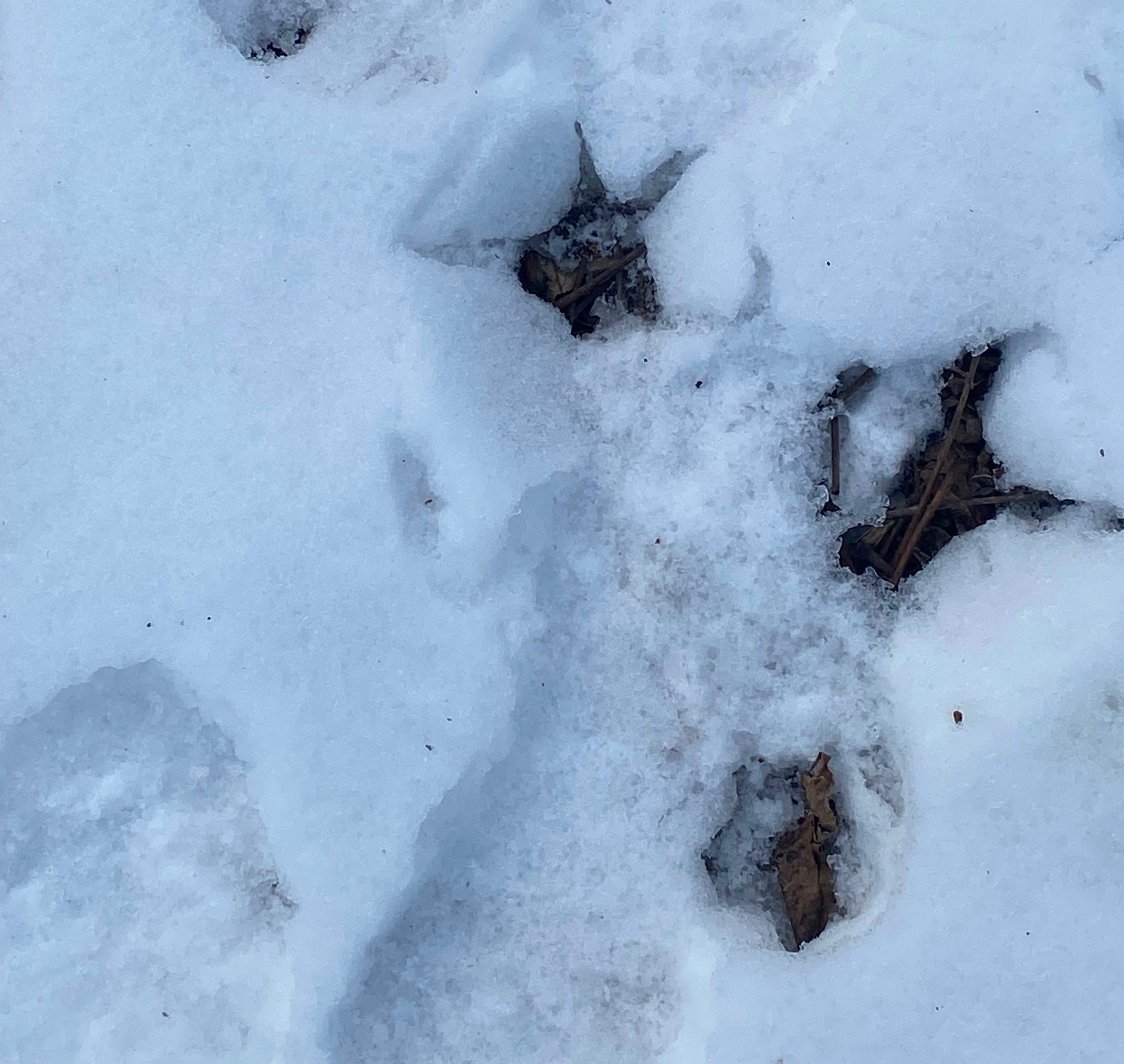 These tracks have me stumped. Any ideas, gentle readers?
Speaking of gossip, the snow – and a video doorbell across the street – has revealed something I never knew about my cat Kiko, First of Her Name, Queen of the Barn. Kiko is gray and quite petite but has a big personality. She’s got swagger. When Pete insisted on bringing home two puppies three years ago, Kiko tried to make it work for a month but, eventually, said the feline equivalent of “Hell, no,” and moved out of the house and into the barn where I have my office.
She’s never left. She’s a solitary cat, and always has been, so I was surprised a few weeks ago at what the snow revealed.
There it was: the familiar paw prints of Kiko and much larger nearby paw prints of another cat. Those prints turned out to be the telltale signs of a black and white feline from across the street named Frankie, who is, apparently, a friend. Maybe a little more. The two of them have been caught hanging out together and grooming one another, the incriminating evidence spied with the help of my neighbor’s doorbell camera.
Well. Kiko has a social life. Who knew?
We’re expecting more snow later this week. Who knows what else the snow will reveal in its latest edition? Read all about it, as the saying goes.
February 8, 2025
My book, ChatGPT and me
I’m giving birth in the spring.
No, God no, not THAT kind of birth. At 67, I’m well past the morning-sickness stage, thank goodness. But I am still giving birth, sort of, and the gestation has lasted nearly five years.
Barely 10 days past the vernal equinox this year, on April 1, my book, “Saving Ellen: A Memoir of Hope and Recovery,” will be published. Ellen was my sister, and she would be rolling on the floor laughing at the publication date, April Fool’s Day.
Nothing happens quickly in publishing. I began writing the book a few weeks before the COVID-19 lockdown in 2020, spurred on by reading diaries I began when I was 13. The book involves the impact on my big Irish family when my sister Ellen contracted kidney disease, then considered terminal.
We lived in Buffalo, New York. My father dissolved into alcoholism and a very public affair. His married girlfriend had nine kids. Our family had six. We kids knew each other. One was in my class in elementary school.
Awkward. And not at all helpful.
My mother, who was funny and smart, became determined to help us all hang on through the chaos and save Ellen no matter what. She managed to do that in the end, but the decisions she made had consequences that she kept secret. I had to write a book to figure out exactly what happened.
When I began the book, I anticipated few surprises or difficulties. After all, I had written for daily newspapers for more than three decades. But tackling a book project is different.
For one, changes in technology have resulted in a flood of self-published books, about 2.3 million of which hit the market every year in the United States. In addition, around a million traditionally published books are released.
In other words, every 10 seconds, a book is published. Talk about competition.Just 20 years ago, in 2005, about 282,000 books were published annually, according to a report published in 2010. No more.
The typical rules of the publishing industry are also daunting, to say the least. Most publishing companies insist on having the final say over book covers and titles, which frankly scared the hell out of me. So when a conventional publisher finally offered a contract (after 47 rejections from other publishers) I insisted that the term “meaningful collaboration” be written in the agreement.
Fortunately for me, Skyhorse Publishing was willing to be a partner. There was a tug-of-war over titles, though. At first, my title was just “Saving Ellen: A Memoir.” Then for a brief period it became “Buffalo Diaries.” Then I switched it back to “Saving Ellen.” I was apprehensive that Skyhorse would, in the end, slap any old title on my book, so I kept trying to brainstorm alternatives lest the title become, “Ellen Does Buffalo.”
So one day I turned to ChatGPT, fed it the plot of the book, asked for title suggestions and sat back to see what would happen.
It was hilarious. Here’s a sample:
"Whispers from Elmwood Avenue: A Story of Family, Struggle, and Strength.”
"Buffalo Bound: A Journey Through Poverty, Illness, and Unyielding Love.”
"Tales from the Rust Belt: Swimming Against Adversity in the Queen City of the Lakes.”
And, my all-time favorite, which still makes me laugh:
“The Struggle Beneath the Snow: A Memoir of Resilience in Buffalo's Cold Embrace.”
The publisher and I eventually agreed on the current title, with no blood spilled in the process.
So, countdown to April Fool’s Day. Of course, it’s available already for pre-order on Amazon and even better, my local independent bookstore, Bank Square Books in Mystic, Connecticut, where I will have a book launch April 16. It’s also available for pre-order at Talking Leaves Bookstore, another independent bookstore located on Elmwood Avenue in Buffalo. Talking Leaves will provide the books for my Buffalo launch April 29 at the James L. Crane Library, my old neighborhood library where I spent hundreds of blissful afternoons growing up. What a homecoming that will be.
As I slouch towards publication, I hope you all won’t mind if if write about the process from time to time in the next several months. It’s interesting being a debut book author at my age, particularly after spending a career writing thousands of shorter pieces.
And, hey, it might give us all a break from the raving madness coming out of the White House. God only knows the titles that ChatGPT would give that mess.
If you deem this post worthy of hitting the “like” button, you will not only make me happy, but you will make it easier for others to find Casey’s Catch in the thicket that is Substack.
February 3, 2025
Kiss a Canadian
My niece is an engineer who has worked around the world for both the Peace Corps and USAID. She has drilled village wells in places where clean water is not an ordinary convenience, but a revelation. She has built schools in villages which are accustomed to scant supplies and open-air classrooms. Both projects took place in Africa. The work is rewarding, a blessing for the people who have so little and, for pennies, they gain for the United States enormous goodwill in areas where China has growing influence.
My niece, who will go unnamed, is meticulous about supervising construction, buying supplies and hiring responsible locals. She makes sure the work is done well, on time, and doesn’t hesitate to fire people who have misused even small amounts of supplies. She has accomplished much, with the backing and generosity of the United States. I am proud of her. We all should be proud of such good work.
But now the USAID website is shut down. Elon Musk has said, in essence, that the agency is going to be closed too. Musk, of course, is the unelected South African billionaire and Trump BFF who now, inexplicably, has direct control of the nation’s $6 trillion checkbook in the U.S. Treasury. Shutting down USAID is illegal; the agency is independent and financed by Congress.
 A school constructed in Africa with USAID funding.
 Sadly, the Republicans who are in the majority in Congress have their tails between their legs and are uttering not a peep. So far, the objections to this outrage are mostly coming from Democrats, who are not in power.
Just as bad is the despicable way in which Donald Trump is hosing Canada, our closest neighbor and largest trading partner.
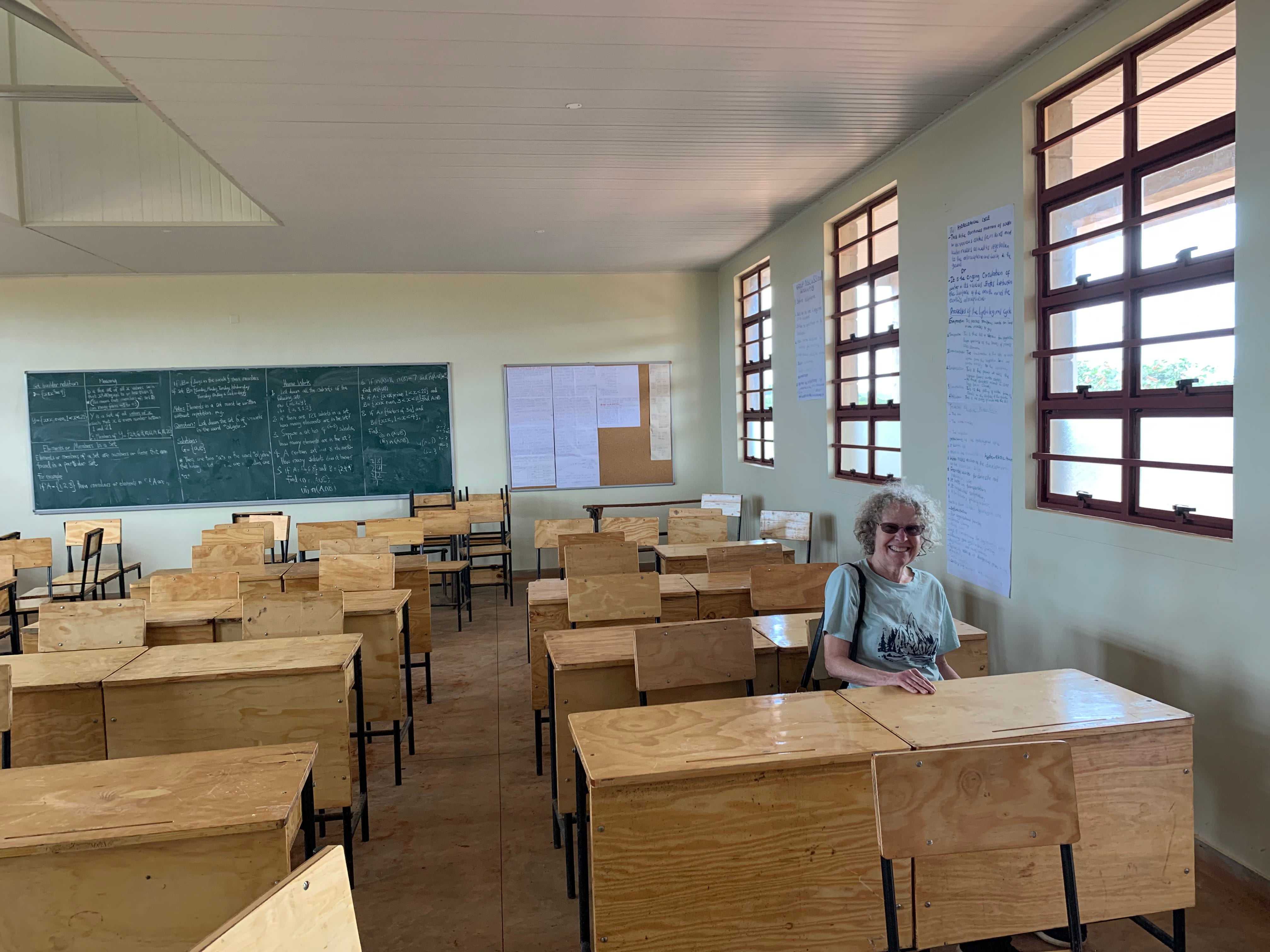 The inside of the school, which educates boys and girls. Imagine going from having no place to learn or poor facilities to a nice classroom like this one. The “student” here is my sister-in-law, whose daughter directed the USAID project.
I grew up in Buffalo, New York. I know the words to the Canadian national anthem, “O Canada” just as well as I do “The Star Spangled Banner.” Many in my hometown do. For many years the Buffalo Sabres were the only American hockey team that routinely played both the Canadian and the American national anthems at the beginning of every game. It was polite, after all; many Canadians played on American teams and besides, Canada was just a few miles away over the Peace Bridge.
It was not unusual to find many in my hometown of Buffalo who knew the Canadian national anthem as well as our own.The border we share with Canada is the longest, least guarded border between two countries in the world. During the Iran hostage crisis in 1979, when Iranian students took over the American embassy in Tehran and captured dozens of American diplomats for 444 days, it was only the swift action of the Canadian embassy to hide Americans that kept six of our citizens from being captured. I still remember signs in Buffalo saying, “Thank you, Canada!” They faced Fort Erie, Ontario, across the Niagara River. We were grateful, but not surprised. We knew the Canadians, our friends, would help.
This is the country, our friend and ally, that the imbecile in the Oval Office insists should be our 51st state. He’s slapped a 25 percent tariff on Canadian imports, claiming drugs are coming across the border (perhaps 1 percent of our drug trade comes from Canada). violating the very trade agreements his first administration negotiated.
It takes a lot for the conservative Wall Street Journal to write angry editorials against Donald Trump’s policies, but that it did. The first editorial was titled, “The Dumbest Trade War In History.” If anything, it’s an understatement.
These are just two examples of the fire hose of outrageous and illegal actions coming from the White House. I encourage everyone reading this to raise hell in every way you can. Help immigrant neighbors who are frightened by Trump’s sweeps. Write your congressman. Donate to nonprofits like the ACLU that will fight the Trump Administration in court. Heck, kiss a Canadian. And when you are done smooching, don’t forget to apologize. Trump’s actions do not reflect the will of the majority of Americans, I believe. Even those who voted for him wanted lower prices, not a trade war.
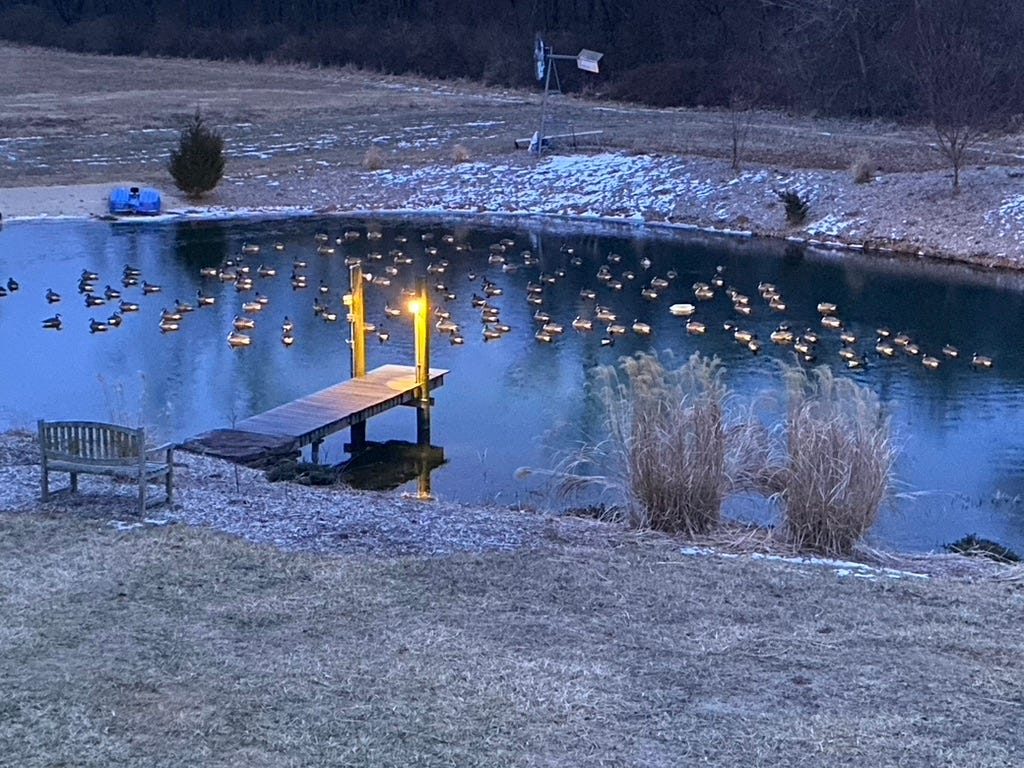
In the middle of this, we have to remember to seek some peace because that will make us stronger. A few days ago, I awakened early, upset about the political news, and walked to my barn office to write. That’s when I happened to glance out the window. It was dawn. The weather has been below freezing for weeks, and a large flock of geese had settled on our spring-fed pond as it is the only open water for miles.
The lights on the dock, and the rays of the rising sun, gleamed on the feathers of scores of floating geese, making them radiant, glowing in the sweet morning.
The moment was beautiful and serene. I needed that. We all do. Don’t forget to reach for such moments of peace. At this rate, we are in for a long four years.
January 28, 2025
Even I can do man chores....
I have learned something about my own thought processes as my husband hobbles through his recovery after breaking his leg New Years Eve.
I am sexist in my thinking. Feminist though I am, I am sexist, through and through.
I have discovered that in my mind, I divide work into tasks that are gender neutral and those I think of as “man chores.”
Vaccuming?…