Maura Casey's Blog, page 2
September 1, 2025
Customers mattered, once
I was stumped.
I figure out all my bills around the first of every month. On Saturday, I spread out the invoices and immediately could see I had a problem.
I bought a used car two weeks ago, and through the dealer, obtained a loan from a national credit union I had never heard of. The company had sent me a congratulatory letter, but nothing else. How do I pay this bill? I wondered.
Sighing, I called the number on the letter, fully expecting a robot, a recording telling me to call back later or to go to hell. Or perhaps an endless loop leading to a communication cul-de-sac, as is the case with just about every company I deal with lately.
Instead, after answering a question or two from an automatic system, I got a HUMAN BEING. On a Saturday. During a holiday weekend for Labor Day. I almost dropped the phone. Honestly, I nearly had a heart attack.
She was pleasant and efficient, and when I mentioned the company had not yet sent me a loan number, she gave that to me, along with the bill due date and instructions on where to send the check.
 Photo by Icons8 Team on Unsplash
I hung up, stunned. When is the last time anyone got service over the telephone? From a real person? The experience left me almost confused.
I know a couple who are having an epic struggle with Xfinity to get problems with their bills for home internet resolved, spending pointless hours on the phone. The only people they have encountered have offered one excuse after another and little else.
For my part, I’ve been trying to find just one warm body at ExxonMobil’s credit card company to help me change the telephone number on my record. The number has been disconnected for more than 20 years. But without a telephone number that can accept texts, I can’t get anywhere with the automatic system. And God forbid the corporation would provide any people to help.
Fuggedaboutit, as they say in Jersey.
Despite this, I can offer an occasional glimmer of hope, like the nice lady I talked to Saturday about my loan.
About six years ago, I switched cell telephone providers because Sprint coverage in my area became, in a word, appalling. (Sprint soon merged with another company, T-Mobile) But I kept getting bills from Sprint. I haggled. I begged. All to no avail. Finally, I got angry. I wrote a letter to the president of the company laying out the problem, saying that I hadn’t left Sprint, the company had left ME. A few days later I got a call from company headquarters. It was the president’s administrative assistant, who told me she would handle the problem and I would stop getting bills. She was as good as her word.
Oh, come on. Subscribe, already!
My favorite story about a rare success in the perennial case of Corporate America v. All Customers Anywhere is from wonderful Alice Fitzpatrick, one of my wisdom figures in southeastern Connecticut where I live. More than 30 years ago she paid cash for a brand new car, a Chrysler, and before she had gone 100 miles the car interior filled with smoke when she so much as drove around the block. She went back to the dealer to request a new car only to get the patronizing, “now, now, little lady” treatment. The dealer told her that her husband (who had recently absconded) could surely fix the car. He would most certainly not undo the sale.
He had no idea.
Alice fumed, paced, railed against a man’s world and the unfairness of it all. Then she began to work the phone. Alice talked her way up the chain of the Chrysler Corporation until she connected with the president of the company, the iconic Lee Iaccoca himself. She told him the problem. He listened. He said he had no control over individual dealerships, but he would see what he could do.
Indeed.
Within the hour, the dealership called Alice and gave her a new car she was proud to drive. “It became a symbol of my own empowerment, all because I, as a customer, encountered empathic, humane service providers along the way,” Alice wrote me in an email. Lucky for her that AI had not yet been invented
Yet telephone trees, automatic messaging or any new-fangled system we have now is not the problem. The issue is that far too many companies simply don’t care about ordinary customers. That’s the problem.


August 25, 2025
ICE, writer's block, and me
I’m not prone to writer’s block. There is a simple reason: I’m addicted to writing, so the act of churning out prose is generally my fix.
But last week I spun my wheels. That’s why this column is days late.
I’m lucky; my life is generally calm. It is harvest time on the farm, and late-summer fruits and vegetables are at their peak while crops such as beans and most lettuces have run their course. I blanched and froze the last of our peas yesterday and began to process a bushel basket of peaches to make jam. I bought 12 jars and a bag of lemons, and peeled and chopped several dozen peaches.
The peace of my life contrasts with the uproar occurring across the country as the shadow of authoritarianism lengthens. Masked men in black uniforms from the U.S. Immigration and Customs Enforcement and other government agencies are eager to please their bosses and earn hefty bonuses. They earn their keep by snatching and imprisoning people who may be here without visas or documentation. Or they may not. They may be criminals. Or not. The number of arrests matters, not facts, not humanity. It is an outrage.
But it mostly doesn’t affect me.
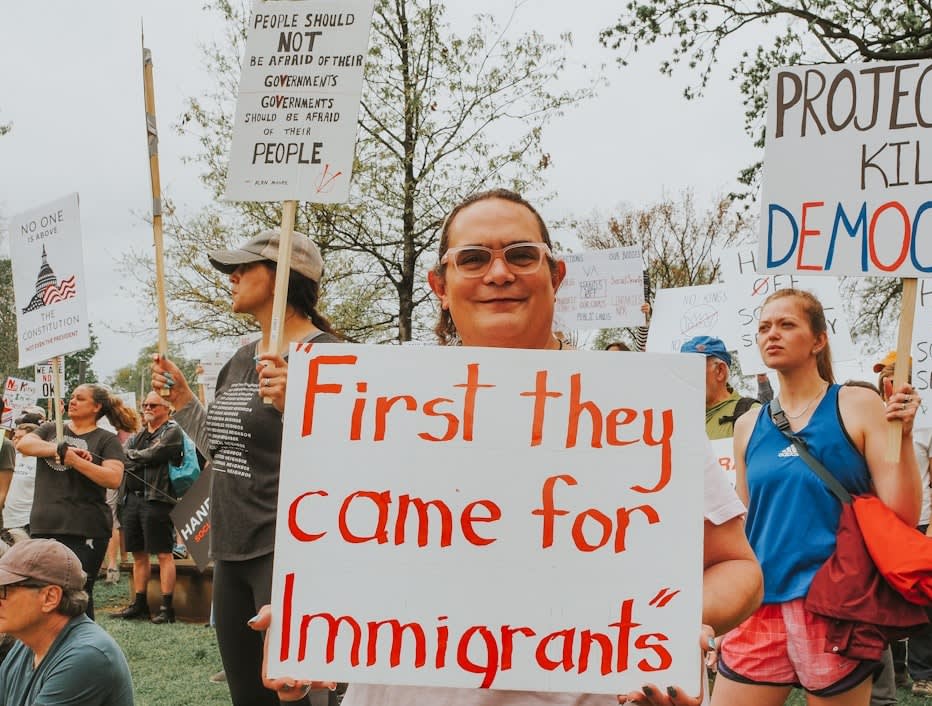 Photo by Barbara Burgess on Unsplash
Until I began to worry about a friend, whom I will call Diego to protect his identity.
Diego does odd jobs. He employs his entire family to help. They are all hard workers. In the last several years, we have hired them to work on our too-large property mulching and weeding so vegetation does not cover our house and choke every structure in sight. Pete has enough to do with farm chores – the last task he needs is to weed anything other than his vegetable beds.
We’ve gotten to know Diego over the last two years. One day this spring I said, “Forgive me for asking, but are you a citizen, or on your way to becoming one?”
That’s when he told me that his undocumented parents brought him to America when he was 14. Now he is married, has four kids, pays taxes and has never broken the law.
But despite his having gotten protection in the past from deportation through the DACA program (Deferred Action for Childhood Arrivals) he is in limbo; there is no real path forward for him. Congress has tried and failed for more than 20 years to pass a bill giving a path to citizenship for “dreamers” as they are called - the 3.4 million whose parents brought them here when they were children.
I made Diego promise to get in touch with me if he ran into trouble, and he said he would. But, he said, smiling, he wasn’t worried. And I didn’t worry, either - until Diego didn’t pick up a check I owed him for work. I called him. I texted. A few weeks passed with no response. I got concerned.
Most “dreamers” are in California where many of the ICE raids have taken place. In my tiny state of Connecticut (the third-smallest state in the union) ICE arrests have happened mostly on the other side of the state close to the New York State border, a 90-minute drive from my house.
But Connecticut has seriously enraged the Trump Administration by passing a law called the “Trust Act,” directing police not to cooperate with federal officials in arresting undocumented people unless they have an arrest warrant signed by a judge, or the people in question are violent criminals.
Which makes sense. Why not go to a judge and present evidence for permission to make an arrest? Because that would take too long and permission might not be granted.
For the large-scale scooping up and deporting immigrants, officials depend upon the cooperation of local and state police to arrest and detain anyone they want for 48 hours -- just on the federal say-so. But in Connecticut, the state’s Trust Act is a barrier.
In retaliation, federal officials labeled my fair state a “sanctuary” state and conducted raids 10 days ago that arrested 65, calling the arrests, “Operation Broken Trust" in a swipe at the state law. ICE spokesmen claimed many arrested were guilty of violent crimes and the rest were gang members.
As a citizen, I would like to believe them. Really, I would. But more than half the undocumented immigrants so far arrested have no prior criminal record. And ICE is quick to arrest or detain many U.S. citizens who video the arrests of undocumented people.
The other problem is this: the Administration lies so often it is only a matter of time before the White House will demand arrests of the Sisters of Mercy and call them gang members, too.
In the middle of all this, Diego called. He is fine. I was finally able to pay him. He promised, again, to be careful.
Today I simmered and stirred peaches. I poured them into sterilized jars, dipped them in a boiling water bath and stored the golden containers on shelves. Diego, I thought, is OK.
And I can finally write about my concerns and the ugly direction the country has taken.
I often feel like a hypocrite, when I write about nonpolitical issues. So many injustices are taking place. I wonder whether it is trivial to write about anything else other than the wrecking ball being taken to democracy.
Last week, the contrast between my peaceful corner and injustice elsewhere paralyzed me. This week, I’m writing again. Baby steps.
August 14, 2025
'Kindness changes the lives of people'
I’m entering that stage of life when I am the reluctant witness of end-of-life stories, and I am all too aware that this trend will only become more pronounced as I get older. In the last four months I’ve lost several friends. All were in their 80s so the news of their passing was not necessarily a tragedy, of life snuffed out far too soon.
Three of the four worked at newspapers at which I was a journalist. But the fourth, George C. White, was a giant of the American theater. He founded the Eugene O’Neill Theater Center in 1964, which helped shape new plays and developed the talents of playwright August Wilson and movie stars such as Michael Douglas and Meryl Streep when they were unknown.
All four of these friends were very different. But there was one quality they shared: They were all kind.
Our society worships all the wrong things too often. We idolize celebrities, no matter how loathsome their behavior. We put intellect on a pedestal when intelligence without a moral compass is the gateway to so many of society’s ills. We discount simple goodness, confusing it with weakness. And given the callous disregard of our politics, particularly from the current American government, kindness seems a vestige of a gentler age.
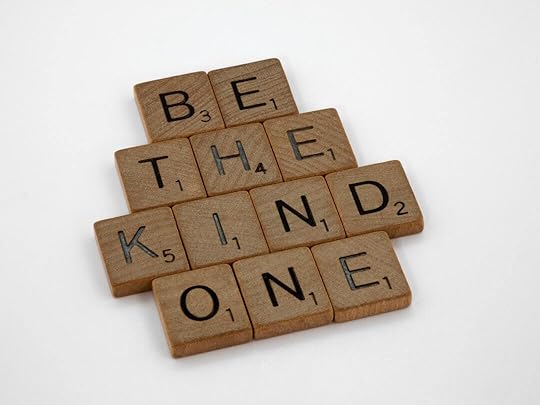 Photo by Brett Jordan on Unsplash
But it isn’t.
Kindness isn’t on anyone’s resume. But it should be.
My elementary school had too many bullies and too few people willing to intervene. But the school crossing guard always made me feel better. She had a broad smile for everyone, and on her corner I always felt safe and cared for, if only for a few minutes. Twenty years after I escaped 8th grade I was driving in my hometown of Buffalo and I saw her; there she was, standing patiently on the same corner of Delaware Avenue, the busy street she had ferried me across hundreds of times. I parked, introduced myself and told her that her kindness was like food and drink to me when I was young. Her face, now wreathed in wrinkles and framed by gray hair, broke into the same wide smile I remembered.
George was legend for his thoughtfulness and indeed, was one of the very nicest people I had ever met. He worked at it, and everyone who shared his orbit has anecdotes about his sweet consideration of others. I could tell dozens of stories of his graciousness, but I will share just a minor one: I mentioned to him in passing one day that I was taking my sister to dinner in New York City. George recommended a restaurant, which he loved to do. Claudia and I went there and had a lovely dinner. When I requested the bill, the smiling waiters told me, “Mr. White has taken care of that.” I had the feeling the restaurant staff were accustomed to George’s interventions.
Multiply my experiences with the hundreds of people he knew and you have a constellation of kindness – absolute proof of a shining life, well beyond his many accomplishments that landed his passing in The New York Times (gift link included).
Kindness is something anyone can show. It doesn’t require a college degree or a fat bank account. You are never too young or too old to practice it. Kindness need only take seconds, and can just be a smile, like that sweet crossing guard of blessed memory, standing on the windswept corner across from my elementary school.
It took the human rights activist Aung San Suu Kai more than a decade to collect the Nobel Peace Prize that had been awarded in 1991, as she was under house arrest for most of that time. But when she did, she spoke of the life-saving, life-changing nature of kindness:
“Of the sweets of adversity, and let me say that these are not numerous, I have found the sweetest, the most precious of all, is the lesson I learnt on the value of kindness. Every kindness I received, small or big, convinced me that there could never be enough of it in our world. To be kind is to respond with sensitivity and human warmth to the hopes and needs of others. Even the briefest touch of kindness can lighten a heavy heart. Kindness can change the lives of people.”
That is the legacy of the pals I have lost this summer.
You’ve done good, my friends. I’ll try to pass it on.
August 7, 2025
Attitudes come before acts
Progress never occurs in a straight line; it’s always two steps forward, three steps back. That occurred to me when I found a dusty file in my attic reminding me of long-forgotten issues, and the then-pervasive attitudes behind them.
I attended American University graduate school a little over 40 years ago. Our classes were held on the third floor of a building that only had women’s bathrooms on the first and second floor. The second-floor bathroom was frequently locked. So women had to troop down two stories to use the facilities, while men had bathrooms on every floor.
I led a cabal to demand changes, alas, to no avail, detailed in a communications school newsletter. The dean wouldn’t make facilities unisex and implied that any changes would inconvenience men, which was, to him, unacceptable. His attitude enraged me then. Now? Such comments would be met with outrage, or so I once thought. But given the current atmosphere in Washington, would it? I’m not so sure.
The second issue in my musty files involved a story that I wrote as a student. The Smithsonian Institution conducted a 1983 study listing every monument of historical figures in Washington. The study discussed scores of statues and monuments – men on horseback, men depicted in statues looking noble, men looking contemplative. Then and now the edifices dominate every circle, park and building in the nation’s capital. Even John Ericsson, the inventor of the screw propeller, has an elaborate, imposing monument.
But then, the only two statues of female historical figures in the nation’s capital were a bust of Eleanor Roosevelt and a statue, erected in 1974, of civil rights leader and educator Mary McLeod Bethune. Outrage, again. I went to the Smithsonian and tracked down the author of the study. He was bemused at my questions about the lack of women in monuments; he didn’t quite laugh in my face, but certainly thought it was no big deal
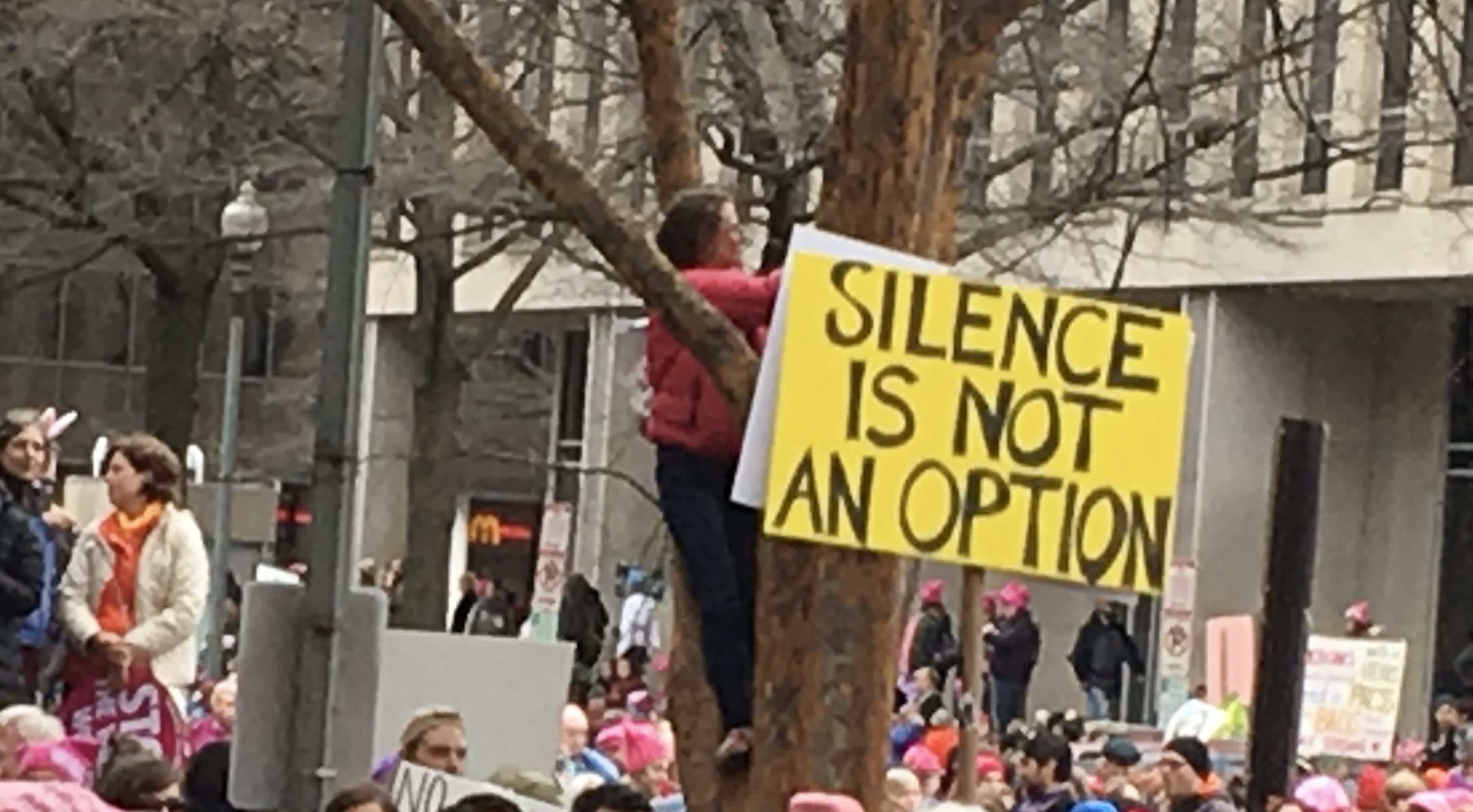
These are attitudes that were once common decades ago. I thought the world was changing, however slowly, but the Trump Administration is Making America Discriminate again: firing women and Blacks holding high-level jobs, and attempting to whitewash history as justifiable steps against quashing “DEI” efforts, short for Diversity, Equity and Inclusion. The president has fired female heads of the U.S. Coast Guard, chief of Naval Operations and the U.S. Naval Academy, as well as the Black general who was chairman of the Joint Chiefs of Staff.
His defense secretary, the imbecilic Pete Hegseth, wants to strip Harriet Tubman’s name off a Navy ship because the 19th century abolitionist hero who smuggled scores of slaves to freedom isn’t in line with his desire to restore a “warrior culture” to the military. Ha. There isn’t an example much more courageous than Tubman’s repeatedly leading people to freedom despite most of the South wanting to kill her. But heat erasing Tubman’s name from a ship; the late Supreme Court Justices Thurgood Marshall and Ruth Bader Ginsburg are on his list, along with murdered civil rights leader Medgar Evers and gay rights activist Harvey Milk.
It’s pretty obvious what’s going on here. Being gay, Black, or female means you don’t deserve to be remembered, let alone honored, no matter how impressive your accomplishments. It ignores the fact that throughout the history of the Western world, being white or male was required to get anywhere in life while laws, religion and tradition kept a boot on the necks of women and people of color.
I realized while looking through the papers detailing my first steps as a young journalist, just how familiar are the Trump Administration’s disgraceful and unjustified acts in these and too-many issues to count. Attitudes come before actions. Equality in bathrooms 42 years ago may be trivial or quaint to look back on; the scarcity of female statues in Washington D.C. has long begun to be rectified. But things changed because the majority of people turned against discrimination and condemned attitudes which discarded and even debased the views and talents of more than half the population.
That’s what Donald Trump is trying to change.
It was the late, great John Lewis who said in a 2016 interview, when Trump first ran for office, “Donald Trump is dividing the American people. He is not good for America. It's not good for our standing in the rest of the world. To divide people based on race, a color, a religion, a sexual orientation, it's just ... it's just wrong. and the only acceptable reaction is to keep pushing back.”
July 30, 2025
When swallows leave…
I’m a relentless optimist, but there is always a moment in the middle of summer when I realize that soon it will be over. It doesn’t matter how oppressive the weather, (and it is plenty hot this week, with temperatures in the 90s Fahrenheit/30s Celsius). Despite the heat, I can almost smell the snow to come.
For me, the feeling of time slipping away comes from three things: The slant of light, the stars, and the birds.
I had an author event at Buffalo, N.Y.’s West Side Rowing Club in mid-June. Two generations of my family belonged to the club and rowed, including my sister Ellen. Her desire to row despite barriers years ago that kept women from membership formed a subplot of my book, “Saving Ellen: A Memoir of Hope and Recovery.”
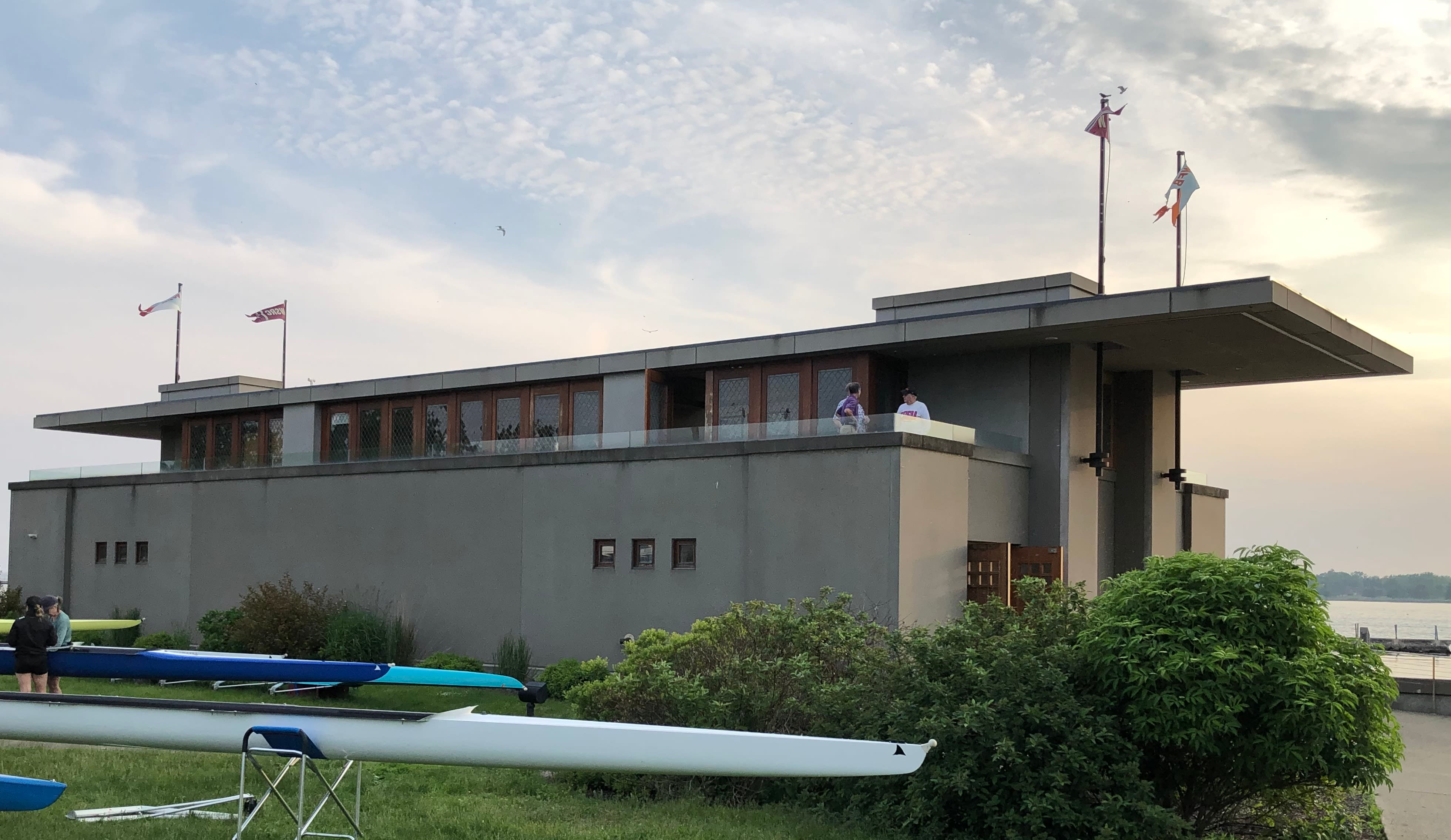
I knew the club’s Frank Lloyd Wright’s Fontana Boathouse, built to the specifications of century-old blueprints from the famous architect himself, would be a beautiful setting for an author talk. Knowing that the sun wouldn’t set in the city’s northern latitudes until 9 p.m. or later, I scheduled the event at 8 in the evening to avoid getting in the way of the club’s other activities. The evening was perfect, with light skies, a beautiful sunset, with friends, coaches and cousins all kind enough to show up.
 View toward the Peace Bridge, spanning the Niagara River from Buffalo to Canada, the evening of the event
Alas, now the light is quickly fading. Last night, when I took the dogs out at 9 p.m., it was dark and I needed a flashlight to walk in the fields.
In the darkness, I looked up. The Big Dipper, the constellation that rose in the east when the first flowers bloomed this year, is now swinging to the northwest.
At least the constellation Orion isn’t visible yet. Then I will really know the party is over.
But the birds truly help me mark the passage of time.
Barn swallows seem to think the barn we built on our property 13 years ago is a bird hotel, constructed especially for them. I wish I could put up a “No Vacancy” sign that they would heed, but alas, it would be a waste of time. The word is out. From just one mud-and-grass nest a few years ago, now two to three couples arrive and built several. I used to try to keep the barn doors shut, but they always find a way to squeeze in through the gaps.
They arrive early, in April from Central and South America, unpack their bags, and quickly begin swooping in and out of the barn, with their chittering call, gathering all the grass and damp earth they can find. Then they get to work.
And much as I appreciate their appetite for mosquitos and other insects, frankly, they make a god-awful mess. I leave old coverings draped in the barn where I don’t appreciate daily droppings.
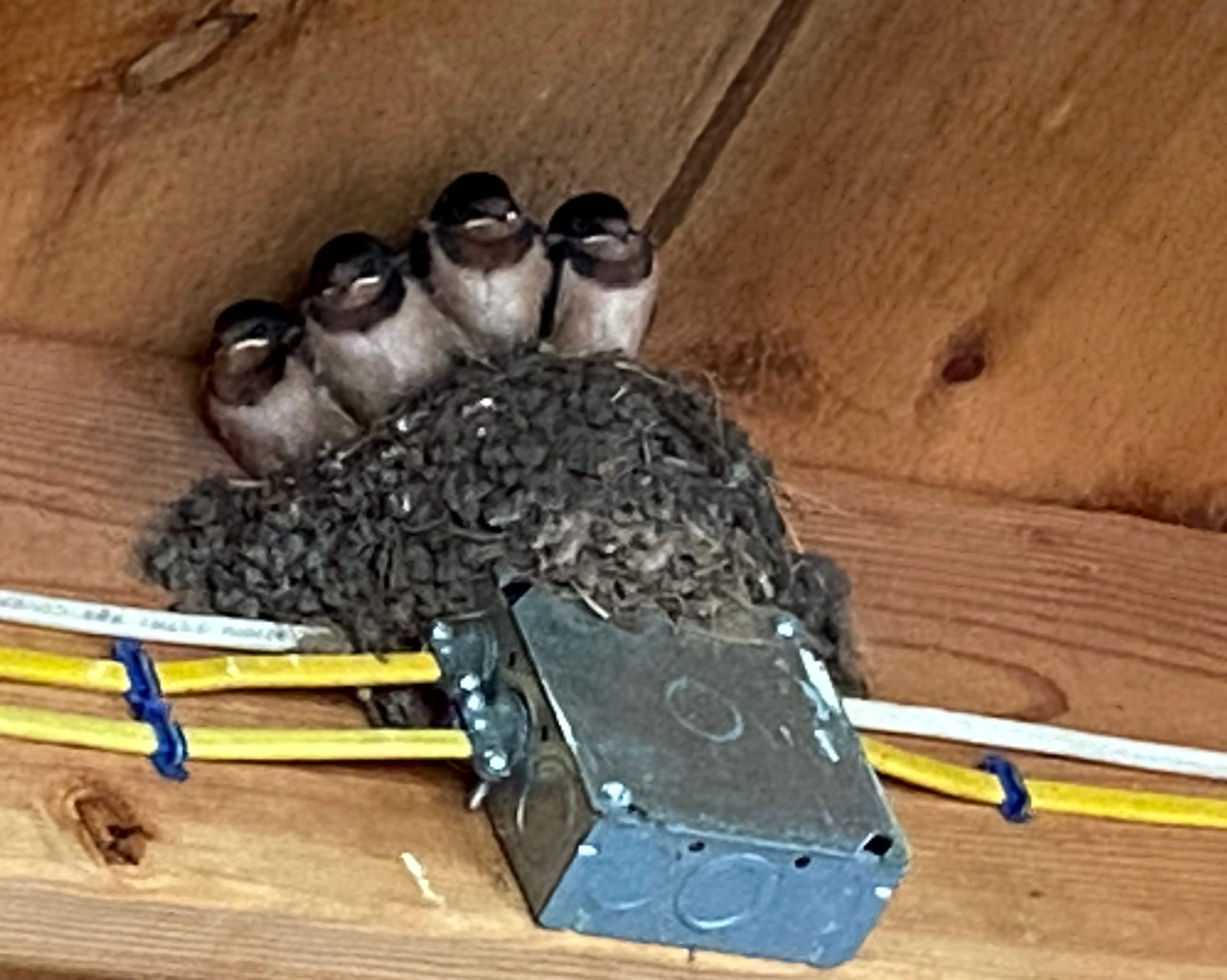
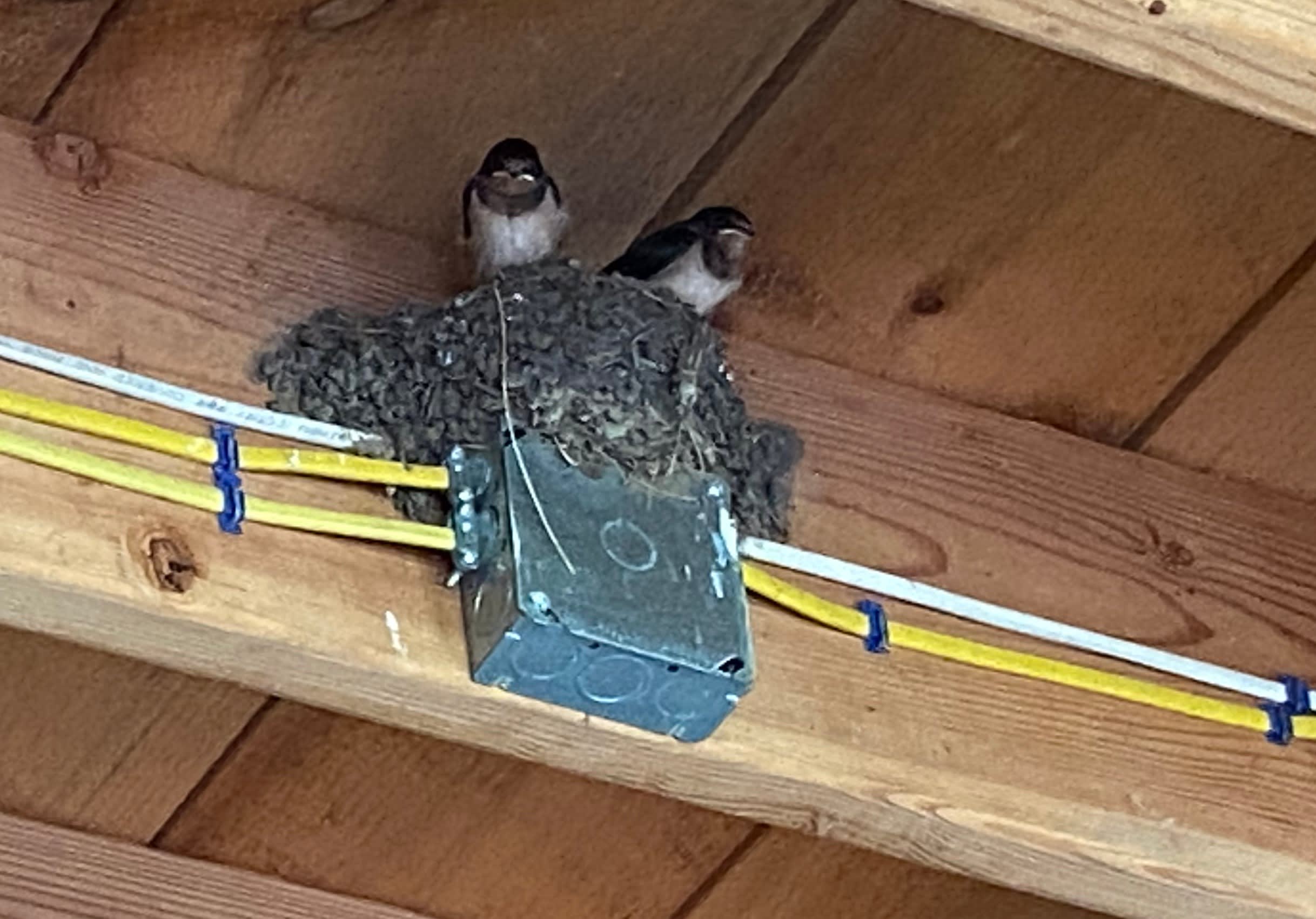
Fledglings generally appear by the middle of June, with their distinctive white chests that will become tawny as they age. From the main nest in our barn, this year’s crop of four young’uns proved to be particularly amusing. I couldn’t resist photographing their adolescence as they gazed down at me and the waiting world, trying to work up the nerve to fly
.
For several days they huddled together anxiously in the nest, looking like fat toes with eyes and beaks, as if to say, “You try it. No, you,” to one another. Their parents kept a wide berth. This was not their bridge to cross. The young ones had to start their personal journey alone.

Finally, one little guy flew off and circled the nest, encouraging his brothers and sisters.
Then another took the plunge.
It took another full day, but finally, a third jumped off the mud ledge and joined the other two.
The three swooped in and out of the barn, while the remaining fledgling stared at them helplessly from its perch atop a junction box for electrical wiring.
The siblings all chirped encouragement flying in and out, over and over. Night fell and the little bird still huddled in the now-empty nest.
The next morning, I arrived at my usual early hour and immediately searched the ceiling for the remaining feathered family member.
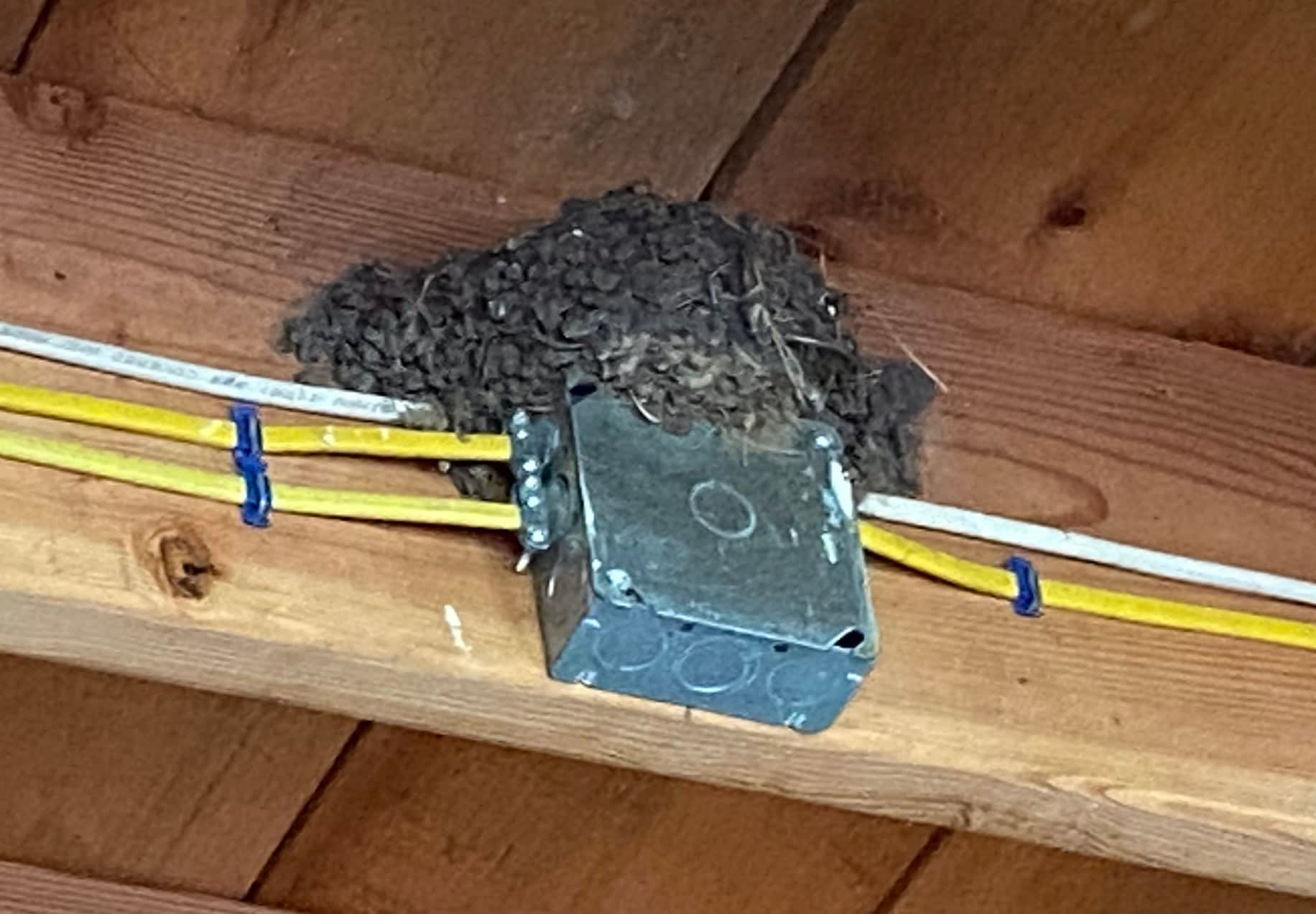
The nest was empty. Instinct, and maybe encouragement of others, had conquered avian fear. For a few days all the fledgelings partied together, swirling around the yard, honing their techniques for mid-air bug-snatching, working on soaring take offs and soft landings. “Look Ma! See what I can do!” They seemed to chirp.
Then, one day last week they all left, en masse, heading south for the Americas. They packed light, leaving their nests behind. Finally, I can shake out the old sheets and sweep up the mess they left.
We have the barn back to ourselves, but it seems a little lonely. And now I know, with the swallows’ departure, that summer days are waning too.
—————
With the coming advent of fall, I know the Okoboji Writers and Songwriters Retreat in late September can’t be far behind! This is a fabulous learning and networking experience on the shores of beautiful Lake Okoboji in Iowa. I’ll be teaching opinion and memoir writing there, but it offers dozens of workshops for writers of any level and it is far less expensive than similar writer’s retreats. Come join us!
—————
Connecticut peeps, I’ll be giving author talks and mini-workshops on writing in a variety of venues starting tomorrow, when I will be at my town of Franklin’s Janet Carlson Calvert Library at 6 pm talking about writing. I’ll be appearing weekly in a neighborhood near you until mid-November. Check out my website for more dates - I’d love to see you.
July 22, 2025
After decades, sweetness remains
I’m sitting in a Washington, D.C. airport waiting to board a flight that has been delayed three times. I should have been home by now. American Airlines has given us one promise after another. Our plane was always on the verge of arriving, but for a long time, never seemed to quite get here. Once it rolled into the gate, maintenance issues abounded.
It is my wedding anniversary. I am trying not to mutter in frustration.
I just glimpsed a view of myself in a restroom mirror and laughed at my short white hair, so different than the long, flowing black hair I had as a bride. Mindful of the day, Pete and I just exchanged anniversary greetings via cellphone text. This is something I could not have imagined 42 years ago, when we married, he in his new suit, me in my $56 dress.
I had tried to purchase a dress from a bridal shop, but once in the store, the sight of so many young women with their moms, shopping and laughing together, just wrecked me. My mother had been dead for five years. The sudden waves of grief I felt took me by surprise, and I realized I should have asked someone to come with me – my mother’s cousin Marie, my sisters, my cousin Chris. Yet I was here, and I needed a dress, and I had no idea how to manage it. I turned and fled to a nearby store. It specialized in gowns for proms and special occasions. There I found a lovely dress, and the women in the store assured me it would be perfect.
I was nervous, even grumpy, on that July morning in 1983. My father thought my irritable mood was hilarious. I didn’t appreciate his levity. He soon made up for it, though.
Mindful of the absence of my mother, he wanted to give me something to wear on this special day. He produced a beautiful pair of pearl earrings that he had purchased the week before. I was touched. Our relationship had been rocky through much of my life. But on this, my wedding day, he wanted me to know that he was thrilled in my choice of a husband and offered a token of his love – however imperfect our relationship had been.
At the Unitarian Church ceremony, my sister Claudia, a captain in the Army, gave a reading looking splendid in her dress blue uniform. My sister Ellen, my maid of honor, but still a quintessential tomboy, had insisted beforehand that she couldn’t possibly wear heels but did so anyway. She managed not to trip walking down the aisle before me. My friend and graduate school classmate Dorothy Goldberg, who has always had a glorious, operatic voice, sang before, during and after the ceremony.
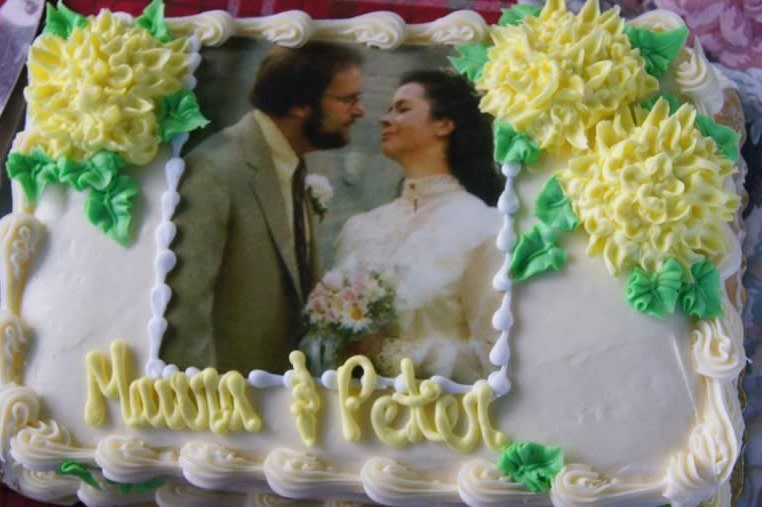 A cake my friend Lucille arranged for our 30th anniversary showing one of our wedding pictures. How do you like my $56 dress?
 One tune she sang that day has always stayed with me. Its melody floated out in the church as people found their seats. Dottie - fittingly, now a cantor, but who once worked as a singing waitress in Cape May, N.J. - knew how to match a mood. She found the perfect song for my sense of joy and sorrow, remembrance and anticipation: “What I Did For Love,” from “A Chorus Line.”
Kiss today goodbye
The sweetness and the sorrow
Wish me luck, the same to you…
But I can’t regret what I did for love…
Pete, waiting for me at the front of the church, looked radiant. I imagine that I did too.
Every marriage is a gamble, a leap of faith. That’s what my mother’s friend Irene told me in so many words when I got engaged. She had been married for 35 years, which was to me an astonishing length of time.
“Marriage is like mapping the ups and downs of the stock market,” she said.“Sometimes you’re in a bull market – things couldn’t be better. Sometimes you’re in a bear market and you wonder when things will start looking up. If you are married for several decades, you can almost graph it.”
She was right. You can graph the good times and tough ones, the sleepless nights, the difficulty of labor, the tumult of losing jobs, the uprooted feeling of moving more than once, the funerals of beloved parents. But also: The joy of dancing at a daughter’s wedding, the pride of graduations, the trips as varied as watching a full moon rise over Chicago’s Wrigley Field during a Cubs baseball game, hearing the sweet, longing call of loons on a lake in Maine and walking over my great-grandfather’s green fields in Ireland.
In a journal I kept early in my marriage, I recorded this: My husband Pete turned to me during our first anniversary dinner, raised a glass with a flourish and said, “It will always be our first year.”
Forty-plus years later, I laughed to read those lines. I said aloud, “Well, no, not exactly.”
But sweetness remains and it is enough.
July 15, 2025
Fighting the pitchfork parade
Early in my journalism career I learned just how powerful political cartoons can be.
I was editorial page editor of The Eagle Tribune in Lawrence, Mass., then a 60,000 circulation afternoon newspaper. My job title sounded more impressive than it was in reality; I was an opinion page one-man band. I wrote editorials, laid out the pages, edited letters and, as it so happened, chose which political cartoons from regional and national cartoonists I would run every day.
One such talent was Dave Granlund, who drew cartoons for 31 years at The Middlesex News in Framingham, Mass., and is still drawing cartoons all these years later (portfolio here). After then-Archbishop Bernard Law of Boston proclaimed in 1984 that Catholic voters should only vote for political candidates who opposed abortion, Granlund was ready. He drew a picture of Law in all his vestments sitting in a voting booth that looked like a Roman Catholic confessional. A voter, entering to cast his ballot, looked startled to see the archbishop, who is sitting beneath a sign saying, “Catholic Voting Booth.”
I thought it was interesting, provocative, and ran it immediately.
Then the fun began.
The day after the cartoon ran, the paper’s saintly editor of the living section, Mary Fitzgerald, stopped by my desk as she arrived in the newsroom after attending daily Mass. That morning she had the pleasure of listening to the homily of her parish priest as he denounced the newspaper and me in particular for running such an outrageous cartoon.
My phone began to ring constantly. I got nothing done that day except listen to outraged subscribers. It took a solid seven hours for the phone calls to subside.
But you know what didn’t happen? Nobody threatened to kill me or the cartoonist. Nobody said they would harm my family. Nobody spread lies or made it necessary to call the FBI.
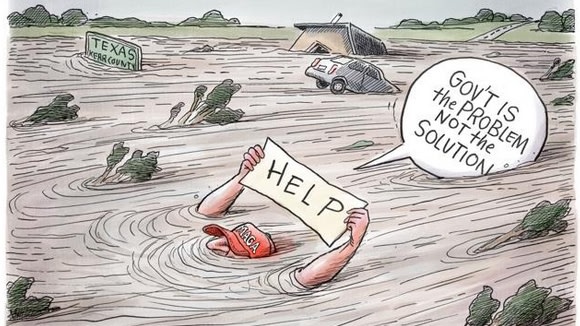
All of which The Buffalo News cartoonist Adam Zyglis experienced after he penned a tough, edgy cartoon pointing out the hypocrisy of Texas officials who routinely denounce big government but who quickly rattled their tin cups pleading for federal money in the aftermath of floods that killed more than 130 people. The cartoon shows a drowning man wearing a MAGA hat saying, “Government is the problem not the solution,” and holding a sign saying, “HELP!”
I am indebted to my friend Roberta Baskin, who sent me Margaret Sullivan’s excellent column on this issue from her substack, “American Crisis.” Sullivan is a former editor of The Buffalo News, my hometown paper. She is also a former public editor of The New York Times and a former media critic for The Washington Post. She is smart, a good thinker and writer on media topics. Her take is that the right-wing media machine is always ready to push back on the media. The conservatives began sharpening their words, many of them threats, as soon as someone on X, formerly Twitter, inaccurately accused the cartoonist of criticizing anyone who voted Republican.
To me, this is only the latest example of how violent and threatening political discourse and actions have become, mostly emanating from those on the right but never acceptable from any source. It’s an echo of Brownshirt terror-tactics widespread in 1930s Germany. It is disgusting, unacceptable, and becoming common as dirt.
Fear is dominating America since Donald Trump regained office. His only strategy is to swing a club, from threatening countries with tariffs for no good reason other than he can, pardoning and thus freeing hundreds of imprisoned thugs, threatening lawmakers who don’t vote the way he wants and requiring immigration authorities to terrorize the undocumented.
Since bullies now lead our government, we need a nationwide movement to organize against them. One of the best ways to fighting bullying in schools is the Olweus Bullying Prevention Program. Begun in Norway 40 years ago, it has many components but at its core it helps innocent bystanders intervene in bullying. It gives students strategies to speak out and makes it not only not OK for bullies to harass others, but also makes it unacceptable for the vast majority to look the other way.
We need a national, organized Olweus-like program to help ordinary citizens push back against the threats, fear and attacks. Many people who are so quick to threaten violence can’t be easily shamed because they are anonymous and amoral; they need to be exposed for the cowards they are. We also need more countries, colleges, lawmakers, states to stand up to the president, who thrives on inciting fear.
Many have suggested that the current environment shows that we need an emphasis on civics education. I disagree. An understanding of how the government runs doesn’t make people better behaved. Those who incite fear need to face demands for civility and decency, not to mention pushback from the majority who find their behavior odious.
I don’t know how such a movement would work. All I know is that there are more decent people than there are bullies, more of us than them. We need to get organized.
July 6, 2025
What a paper kite taught me
My husband Pete planted 16 blueberry bushes on our small farm about 10 years ago, to complement the eight blueberry bushes planted decades ago by a previous owner. I love blueberries. But for the last two years, blueberry season has been the cause of my discontent.
The reason? Birds. We have hundreds of them here, and they stuff themselves on the tangy fruit so much that I am surprised that they can still haul their fat bodies off the ground and manage to fly.
For a few years we planted a plastic statue of a menacing-looking owl amid the bushes, but it was stationary and the birds all but laughed at our attempt to scare them off. They stripped the berries from their branches so fast last year I had barely time to pick a cupful before our farm’s feathered friends snarfed down all the berries my cereal and muffins be damned.
“That’s it,” I sputtered to Pete. “We have to build a frame over the bushes that will hold netting.” He agreed it would be a good winter project. Bob, a friend of ours with his own apple orchard and dozens of blueberry bushes, gave us reams of netting he no longer needed. Pete decided on the lumber he would purchase.
Then Pete fell and broke his leg on New Year’s Eve. Hobbling is not conducive to construction. By the time his full mobility returned he was so far behind in his planting and other work on the farm that I resigned myself to the infuriating sight of birds feasting on our blueberries for one more year.
But Pete researches everything. I mean, everything. And he hadn’t given up.
The kite almost unnerves ME, let alone our avian residents.A few weeks ago, a box arrived. He opened it and showed me the contents. Pete had purchased a kite in the shape of a very large and menacing-looking eagle. It came with string, a flexible and very lengthy rod, much like a long fishing rod, and a way to anchor the whole thing in the ground. Pete had it up in a half hour, and Sam the Eagle began to dive and swoop over our blueberry bushes every time there was a puff of wind.
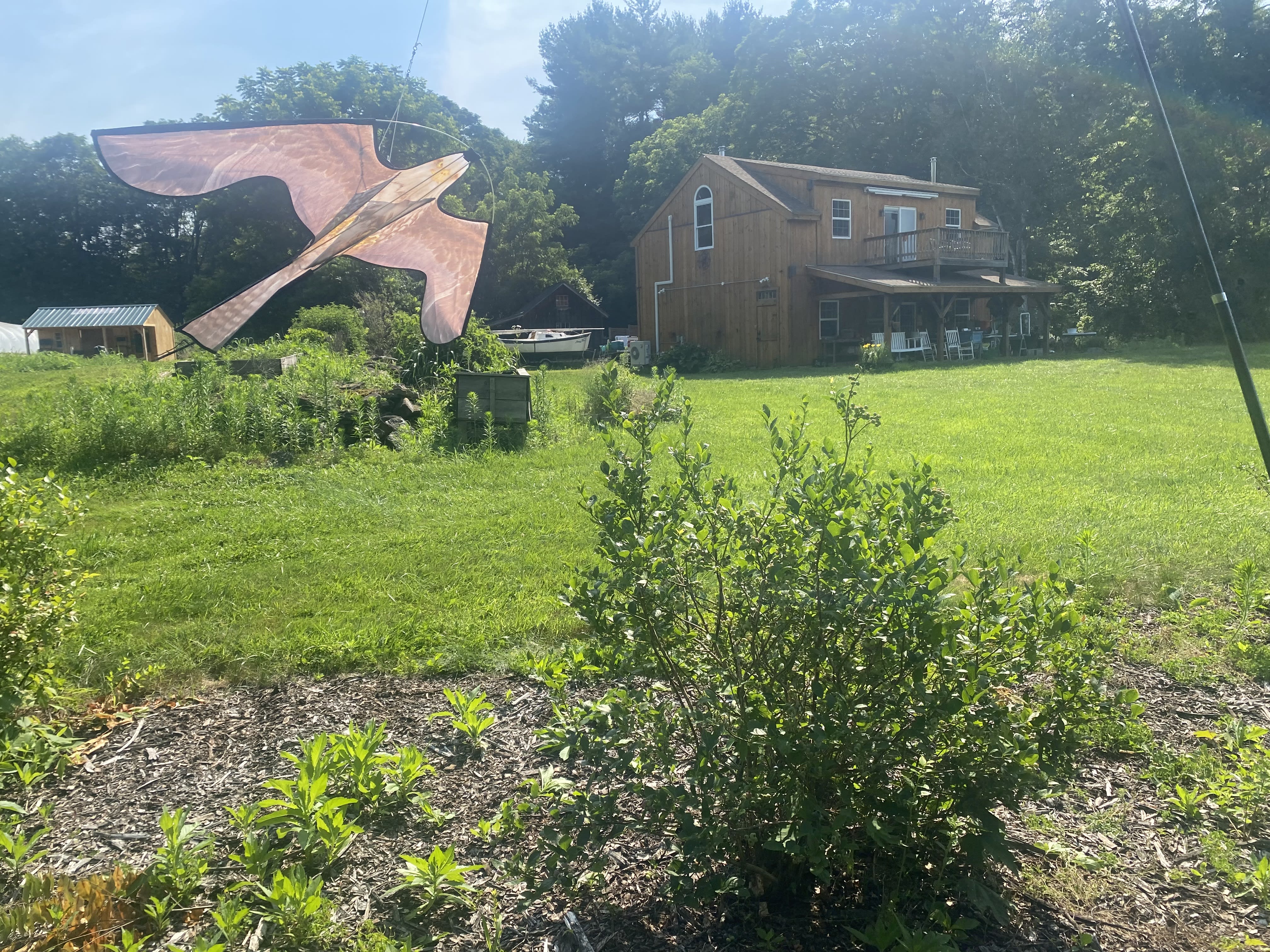
Ever since Sam got to work the birds have given the area a wide berth. I have had to duck a few times while picking blueberries myself, impressed by the sight of the paper bird’s big eyes and the nasty rattling sound of its wings when the wind is high enough. The kite almost unnerves ME, let alone our avian residents, who have decided that the berries are not worth risking certain death from a mere kite. The kite is no more a danger to them than the plastic owl we had perched in the middle of the blueberry fields for the last two years.
But the birds don’t know that it is perfectly harmless. They see it as a threat to life and limb. Reality tells a different tale.
This morning, as I filled containers of blueberries, I began to think of Sam as a metaphor. What am I afraid of that I see as a threat … that might not be one at all? What are the harmless kites that I see as menacing, when they are nothing of the kind?
Who knows? On some issues, I may be just as timid as the birds who now quake every time Sam swoops.
Washington DC peeps! I will be at Busboys & Poets Takoma, 235 Carroll St. N.W. Washington, DC. 20012, Thursday, July 17 from 6 pm to 8 pm for an author talk/reading for my book, “Saving Ellen: A Memoir of Hope and Recovery.” I would love to see you there, but please register beforehand here. If the bookstore doesn’t collect at least 25 registrations in advance of the event, it will be “postponed” until God knows when. So please come, and let the store know ahead of time to expect you!
June 30, 2025
Cell phone - who owns whom?
I took the radical act today of shutting down my phone and putting it in a drawer just to get away from it. I needed a “staycation” from my phone. Last week, disrupted by back trouble (the reason why I didn’t write a column), I was on my phone for hours every day. It was a little horrifying to see how many hours I was on it.
Shutting it off was relaxing. It made me realize how often I check the damn thing, a habit that can only lead to the speedy deterioration of what remains of my mental health.
I subscribe to four newspapers, a habit left over from when I worked at newspapers and had access to at least a half dozen to read every day.
But those were the days when I didn’t worry about democratic institutions because, heck, I worked at a democratic institution - the Fourth Estate - and we were doing absolutely fine, thank you. That was then, of course, a very different era. I don’t remember the act of reading the newspaper being so depressing way back when, but it might be that I was younger and much more optimistic.
At any rate, with my cell phone in a drawer I realized that it has an unnerving habit of telling me whether or not I am meeting my goals.
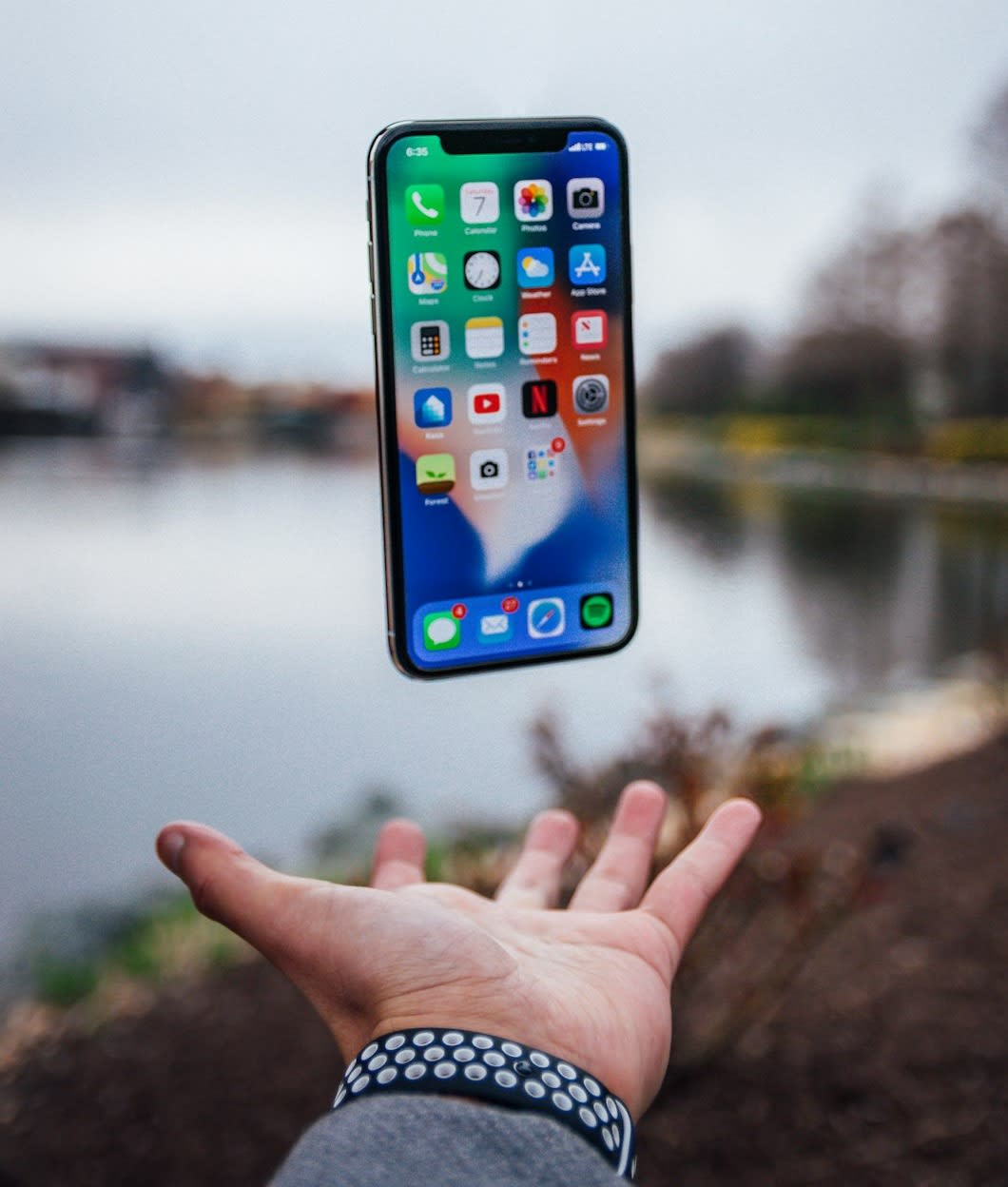 Photo by Neil Soni on Unsplash
I didn’t choose these goals, mind you. They are the brainstorm of a computer algorithm that I had absolutely no say about.
I’m not one for computer games except solitaire and Words With Friends. Since Facebook - known as Meta - bought Words With Friends the prompts throughout the game have gotten downright annoying. Goals, again. No, I really don’t have a goal of finding new players to verbally spar with, thanks very much. I have my friend Cynthia and a nice middle school teacher from Louisiana. That’s it.
No, I tell the game, I don’t have a goal of a certain score, or achieving an artificial tier status that means absolutely nothing.
The same nagging holds with solitaire. No, I don’t have a goal of playing so many games in a month. Go away. Solitaire is strictly a tension reliever that helps me fall asleep at night.
Everything I do on the internet lately has a survey attached. If I order a pizza, see my doctor, or pay a credit card bill, the company sends out a survey. And you aren’t given a choice of simply saying “yes” or “no.” Quite frequently, the choice of filling out a survey or not is a button which says, “YES! I’ll help.” Or, “NO, I won’t help.” The company, which has intruded on my privacy, wants to make ME the bad guy.
Well, forget it. I may be Catholic, but I am way beyond some forms of guilt. This is one variation that won’t touch me.
Then, Facebook. Again. Every week when I log on, it says, “Maura, we care about you and want to share this memory from (2, 4, 6, 8, fill in the blank) years ago.”
That, of course, is a complete and total whopper. Facebook doesn’t give a flash-frozen rat’s ass about anyone or anything, least of all me, except for mining every scrap of information about me and everyone else that is possible to sell to the highest bidder. Facebook is also a complete time suck, which is why I took it off my phone years ago, so when I dabble on the site I do so from a desktop computer once or twice a week. At least that is one thing for which I do not use my phone.
Facebook doesn’t give a flash-frozen rat’s ass about anyone or anything, least of all me.Sometimes getting away from cell phones is not our choice. About 15 years ago in my state of Connecticut we had a storm bad enough that it knocked out power to my neighborhood for around four days. We had no generator, but it was mild out, so we weren’t cold. Our cell phones stopped working after a day when the cell towers ran out of back-up power.
Since we had AT&T for phone service, and had telephone wires that worked without electricity, I dug out an old rotary phone, plugged it in, got a dial tone and showed my kids the mysteries of dialing an old phone if they needed to make a phone call. They stared at it as if it were a piece of equipment from another world, which I suppose it was.
Next, I had to finish a report and my laptop had run out of battery power, so I got one of my typewriters - my 1925 Underwood Number 5, as I recall — and typed my report the old-fashioned way. I was just thinking how satisfying was the sound of the clacking keys when my son Tim yelled, “Do you have to make so much racket!” Which gave me giggle fits.
Finally, we all read books at night. Real books, that we held in our hands.
It was lovely. Then the lights went back on and we were thrust once again into the attention economy.
Which brings me back to my cell phone, which is hardly a phone at all, but a mini-computer, ever present, ready to help me find the best route to the airport, take a picture, order a pizza, play solitaire, watch a video, read a newspaper, answer email, or listen to a book.
The weekly report of my cell phone tells me I am using this thing hours and hours every day. Which is keeping me from the rest of life.
And leads me to wonder: Do I own my cell phone, or does it own me?
June 16, 2025
Glimpses of hope amid the turmoil
I didn’t attend the welcome and wonderful “No Kings” protest that occurred nationwide in the United States this past Saturday. Months before I knew the importance of this weekend, I had back-to-back activities planned out of town.
I visited with a beloved friend I had somehow lost touch with for 20 years, an absence that still befuddles me, but will not continue. I planned an author reading and book signing in my hometown of Buffalo at the West Side Rowing Club where my sister Ellen was an oarswoman and coach. And I attended a reunion with the amazing women with whom I graduated from our small, girls high school 50 years ago (gulp!).
I told myself I had attended the other protests and would again, to fight the United States’ slide into a corrosive mix of harshness, persecution of immigrants, and ignoring the rule of law. Not to mention Donald Trump’s bullying and insulting every democratic country on the planet that isn’t among the dictatorships he so admires.
During my travels I found glimmers of hope in the least expected places, far from the offensive display of Trump’s shameful military parade, or the direction the country has taken since he took the oath to a Constitution he probably has never read completely and certainly doesn’t understand.
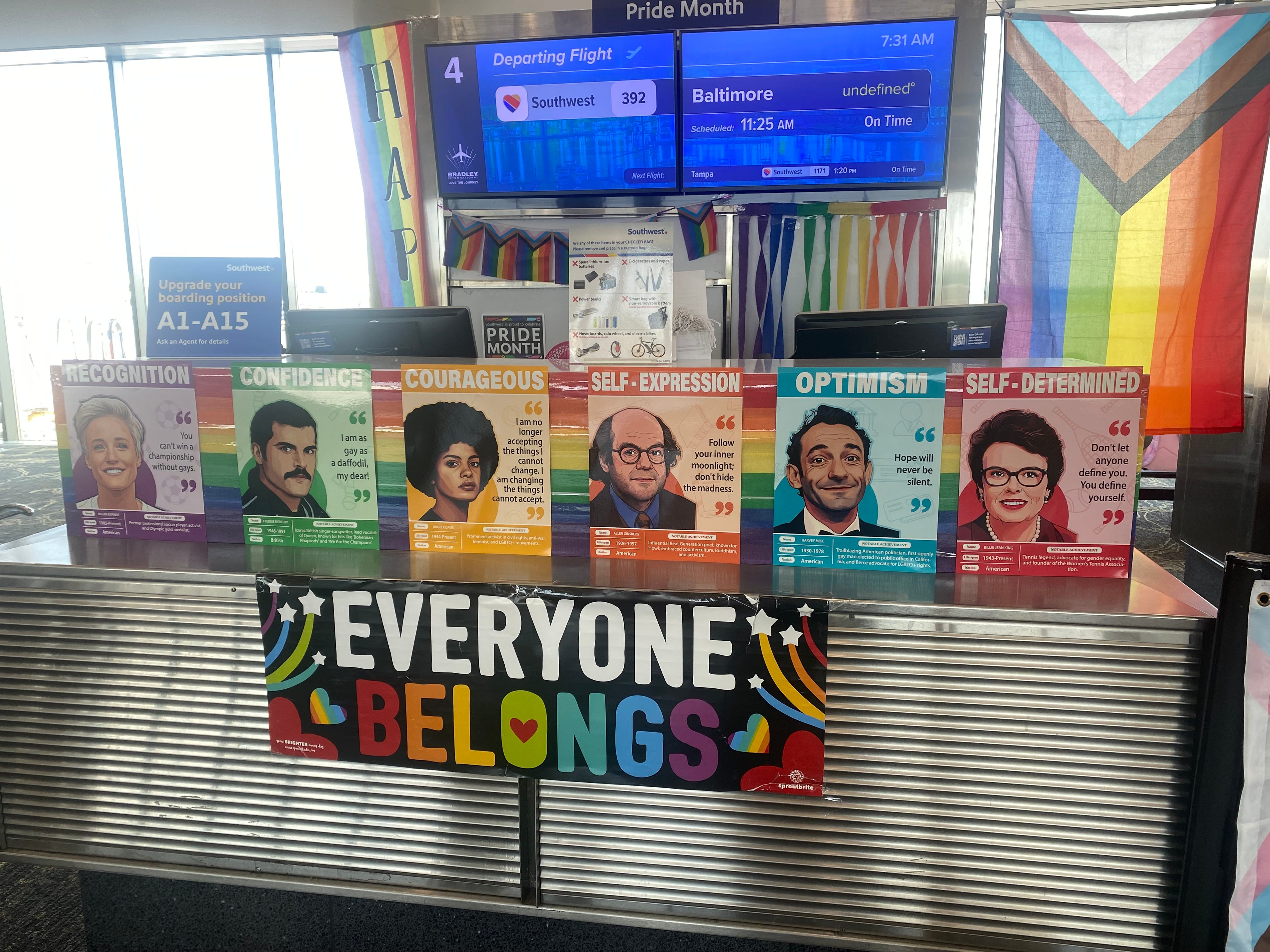
Let me tell you about those signs.
The first occurred when I approached the Southwest Airlines gate for my flight to Buffalo. Southwest has always been a little different from other airlines. Less formal. More fun. And ready to decorate for any holiday.
June is Pride Month in the U.S. to coincide with the anniversary of the Stonewall riot in 1969 protesting police brutality against gays. It was the beginning of their long-overdue affirmation and acceptance on the part of society.
The counters at the gates in the Hartford, Conn. airport were festooned with rainbow flags, pictures of civil rights heroes along with pithy sayings, such as, “Don’t let anyone define you. You define myself,” from tennis champion Billie Jean King and “Hope will never be silent,” from gay rights icon Harvey Milk. The biggest banner said, “EVERYONE BELONGS” in capital letters.
Damn right.
After I landed, I drove to Talking Leaves Books in Buffalo to wrap up any last-minute details for that evening’s signing for my book, “Saving Ellen: A Memoir of Hope and Recovery.” I chose Talking Leaves because it is the nearest bookstore in the heart of my old stomping grounds, Elmwood Avenue in Buffalo. The area has gotten fashionable and the section of the city is called the “Elmwood Village,” which would have made my parents snort with laughter when they moved in 60 years ago. But they would have loved Talking Leaves, an eclectic and independent bookstore that was flying a rainbow flag when I stopped by.
It, too, had a sign in the window proclaiming that everyone was welcome, and everyone is. Just the kind of place I like to patronize – and I am happy to report that by the end of the evening employees told me that they have sold nearly 60 of my books since the end of April.
The last sign of hope was the least unexpected of all. It came from a hard-working and tiny woman, a Chinese immigrant, who worked as a maid at my hotel. I saw and – more to the point – heard her several times during my visit. Not because she was talking loudly. She wasn’t.
As she worked, she played a recording of questions common to United States citizenship exams.While she set about all of her tasks, she tested herself continually.
The questions would float down the hall:
“How long is a term for a United States Senator?” “Six years,” she said, walking down the hall with a stack of towels.
“When did President Lincoln issue the Emancipation Proclamation?” “1863,” came her soft response, taking out a new dust rag.
I wondered whether most Americans could answer the same questions.
The next day I heard the recording again.
“Name two of the rights found in the First Amendment.”
“Freedom of speech and assembly,” she whispered, taking out her vacuum cleaner.
I stopped to congratule her on her study, telling her that she will make our country stronger.
She beamed even as she shied away from sharing her name. She admitted she is a long way from being able to take the test for real. But she wants to be ready. And I suspect she will be.
As I returned home, I spied one more saying, courtesy of the still-decorated Southwest ticket counter:
“I am no longer accepting the things I cannot change. I am changing the things I cannot accept.”
Words to live by. See you at the next protest.
Connecticut peeps, I will be at RJ Julia Booksellers’ Debut Author Book Club today, June 16th, in Madison, Conn., at 6:45 pm. It’s open to the public. Imagine me, a debut author at my age!