Kath Middleton's Blog, page 9
December 1, 2015
Author Chat - Jim Webster
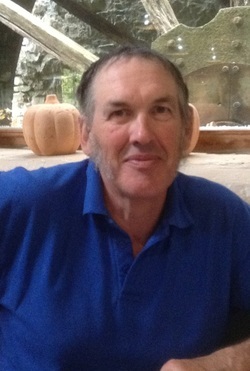 Hello, Jim. Welcome to my hot seat! There's another issue of that excellent periodical The Port Naain Intelligencer out this week. Can you give us a clue as to what’s in the latest edition?
This one is called ‘A Much Arranged Marriage’
In this story Benor is asked to help warn off a blackmailer who appears to be threatening a young girl's chances of marriage. But the deeper he digs, the more dangerous things become.
If you were writing a Land of the Three Seas tourist guide, what would you tell us about Port Naain?
The tourist guide waxes lyrical.
“Sun-kissed Port Naain, the jewel of Partann, cultural capital of the Land of the Three Seas, home of scholars, poets, merchants and fine dining. Enjoy the quaint houses of the Sump, marvel at the architectural wonder that is the Insane Asylum, explore the quaint passages and ginnels of the Warrens.”
After reading from Benor Dorfinngil’s guide written for travelling merchants one might gain a somewhat different picture.
“Port Naain is situated on the Paraeba Estuary. When the wind is coming from the wrong direction it stinks. When the wind is stronger it’s raining. Much of the city, the Ropewalk, the Docks, is perfectly safe for travellers. The Northern suburbs and Dilbrook; plus the southern suburbs of Saskadil and Roskadil on the south side of the estuary are also salubrious enough. (Although travellers of a squeamish disposition might find tastes a little strong in Dilbrook so make friends with care.)
The Warrens is a seething anthill of human degradation and depravity, do not go there, the locals do eat people. The Sump is less bad, but still not a place where the innocent should lightly wander abroad on their own.”
It's the way he tells 'em! Your wonderful and resourceful character, Benor Dorfinngil, first appeared as a gentleman of mature years. What was it about him that made you want to tell these prequel stories?
I have travelled with Benor for a number of years and we get along well and I know how he thinks and how he will react. The problem is, in the last book he featured in, Dead Man Riding East, he ended up happily married with one child and another probably on the way. This isn’t conducive to the sort of adventuring he did get up to. I wondered about it and realised that there was a huge amount of Benor’s story not told. The ‘Cartographer’s Apprentice’ merely picked up on throw-away lines about his past in the other books. I enjoyed writing it and people enjoyed reading it so I decided that there was time for Benor to spend a year or two exploring Port Naain, ‘Because it was there.’ It’s been great fun, Benor is still Benor, perhaps cockier because he’s younger, but then he might wear his heart on his sleeve more as well.
Also at some point I full intend to go back to writing about Benor’s later adventures. His lady wife is a character worth exploring in her own right and I can see myself having an awful lot of fun letting them out to play together.
You do write excellent female characters. You also write science fiction as well as fantasy. What's your own favourite genre to read?
Here I hold up my hands and confess. I read far more non-fiction than I do fiction. The vast majority of my library is history and most of it about the world pre-1400AD.
I like to know how things work, how they hang together and how one situation leads into another. I like to think this is one reason why my Land of the Three Seas works so well.
But having dodged your question, I’ll dodge it again. I’m a great lover of the work of the late, great, Jack Vance. He wrote Fantasy and Science Fiction and wasn’t ashamed to set books on that broad fuzzy borderland between the two genres. So for me there is really only one genre. At one end is the very hard SF, seriously technical, and at the other end there’s the really high fantasy, probably with elves and hobbitsess and magic rings. I can enjoy books at both extremes.
And in the middle there is an ocean of fabulous books and I’m not going to let arbitrary labels stop me enjoying them.
And finally, the place you have created for Benor and his friends to live out their adventures is credible and very compelling to read about. Would you personally like to live there? Why, or maybe, why not?
Certainly I could live quite happily in the Land of the Three Seas. Admittedly some areas are perhaps less pleasant than others but I think I could cheerfully spend years wandering round seeing what the places I created were actually like. Probably under an assumed name, just in case people felt that I was in any way to blame.
As a rule I think writers ought to be able to live in their creations. After all, one day we might have to.
Now there's a thought! thanks Jim. You can find Jim's latest story, A Much Arranged Marriage, on his amazon author page here.


November 25, 2015
Author Chat - David Wailing
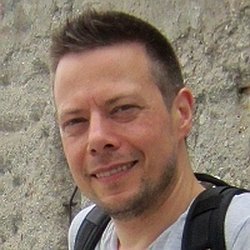 David, welcome to my blog. I have to admit to being a bit of a fan-girl here as I think I’ve read just about everything you’ve published. Have you been writing from your cradle?
Well, you obviously have excellent taste, Kath! Yes, I’ve been writing books since before I learned to read. I also learned to tell big fat lies around the same time.
The truth is I don’t remember a time when I wasn’t writing something or other. The reason my homework was late, my exams were failed and I didn’t go to university was because I was too busy working on my own stories. [shakes fist] Damn you, writing bug, you’ve ruined my life!
You look well on it!
Your book Auto started out as a number of separate short stories, sharing a theme. They are science-fiction set in the very near future and alarmingly accurate so far. Where did the idea come from to draw them together and not just publish as a collection but make a real novel out of them?
It was while writing Friend Request, the third short story, that I started thinking about collecting them into one book. For plot reasons, I had to think up some background and work out what was ‘normal’ in the year 2022. That’s when I realised how much scope there was, not just to connect the stories in a consistent way but build on them to tell a bigger novel-sized tale. By that point I also realised that autos themselves were ‘story generators’, as I was continually coming up with plotlines involving them. That’s still happening… I’d have to write a dozen books to use them all.
Auto 2 – the new book. The ideas you postulate have a real feeling of possibility – or is it the way you tell ‘em? Are you really a geek? Any further science-fiction ideas you want to explore?
I’ve tried to keep the Auto Series grounded in the modern world, albeit even more reliant on technology and the internet than we are now. Most adults nowadays have lived through a period of incredible technological advancement, and things which would have been science fiction when we were kids are now commonplace. I think that may be why the Auto stories feel possible. We’ve already experienced so much change, it’s not hard to imagine that self-driving cars, clothes with medical sensors, digital eyewear and autos themselves are all going to be ‘the new normal’ in a decade or so.
I am absolutely not a geek, and the next carbon-based life form to call me that gets blasted out of the space/time continuum by my superlaser!
Right now, I find that the Auto Series is satisfactorily scratching my itch to write science fiction, so I don’t plan to explore any other SF ideas. There’s still plenty for me to get my head around with these stories.
I think we’re catching up on 2022 so fast that you might have a very short shelf-life for an Auto 3! What’s next for you?
By the time Auto 3 comes out, it’ll be in the historicals category!
I’m keen to have a break from this series, which has dominated my life since 2012, and write something different. So my very next project is… another Auto story! But this is just a one-off for a speculative fiction anthology being produced by Lucas Bale. After that I’ll be working on a short novel which will be out next year. I have a few options so can’t confirm any details about it yet.
But you heard it first here, people! A year or so ago you began a new career as an editor. Now that indie publishing is so well established, are you finding it a successful career move?
I really enjoy being a self-employed editor. The secret of happiness is to get paid doing something you’d have done for free anyway! Over the years, I’ve unofficially helped a lot of people write everything from CVs to novels, so it feels like I was always going to end up here.
There were risks, though. I knew that it wouldn’t be as secure as a traditional job, and would involve a drop in income. But there are so many upsides, not least of which is working with lots of fantastic, inventive, funny and bonkers indie authors. They’re my people! If not for places like the Kindle Users Forum where I made so many friends, I doubt it would have been as painless a transition as it was.
Additional info:
Auto 2 was published as an Amazon eBook on Monday 23rd November. Auto, the first book in the series, will be FREE to download from Amazon between 23rd and 27th November.
You can find David's books on his Amazon Author page here. And thank you, Mr Auto, for coming to chat.
November 24, 2015
Author Chat - Rosen Trevithick
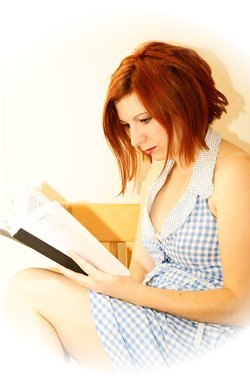 Today I'm handing over my blog to Rosen Trevithick, the lady whose chocolate making book I've been babbling on about for weeks. I asked her to tell me about her journey to chocolate making and here it is.
I’m a chocolatier, and you could be too. For some reason, a world obsessed with chocolate, seems to be populated almost entirely with people who don’t know that you can make your own. Well I’ve got great news for you, you can! (And I really think you should.)
There are many reasons to create your own chocolate, but the most poignant for me, is the sheer joy you get from the process. The aroma that spreads though your kitchen is divine, chasing chocolate around a slab is relaxing, and don’t get me started on the flavour … Basically, you can customise chocolate to perfectly match your personal taste and, being relatively unprocessed, the depth of flavour is like nothing you can buy.
Using my recipe book, you can make chocolate in less than an hour. It took me considerably longer because, although the internet is full of suggested recipes, very few of them actually work without additional insight. The journey was further exacerbated by the fact that what seemed to work one day, didn’t the next.
So how did I find out how to make chocolate?
It started well. I bought some cocoa butter, melted it, added some cocoa, then some honey and waited for it to set. It was divine. I repeated this five or six times, experimenting with stevia, sugar and agave nectar.
However, making delicious, smooth milk and white chocolate was much more difficult than plain. Naturally, my first port of call was to find out how other people make theirs. You aren’t exactly spoilt for choice if you look up recipes for milk and white chocolate on the internet, but you will find some. Frustratingly, none of them worked for me. Milk powder made chocolate gritty, white chocolate tasted bitter, and ingredients typically separated out in the moulds. The recipes I found online didn’t address these potential pitfalls.
No matter how hard I tried to follow other people’s recipes, the results were never satisfactory. I even watched a YouTube video in which a man effortlessly made milk chocolate using a method that simply didn’t work for me. I felt mocked.
If recipes worked for some and not others, I knew there must be additional factors at work – perhaps there were different varieties of ingredients, speeds of working or ambient temperatures involved.
One recipe did not fit all. Why?
I broke down every part of the process, meticulously labelling experiments ‘A’ through ‘D’ and asking willing participants to taste the results. The typical responses where, “It’s nice, but it just isn’t chocolate’.
Back to the drawing board. Again. Then again. Then again. I started buying wholesale cocoa butter.
Little breakthroughs kept me going, for example finding a way to process powdered milk so that it doesn’t destroy the texture.
The best discovery was realising that you can make white chocolate at home. You just need to combine a very particular type of cocoa butter with my secret ingredient – something divine, readily available and not something I’ve seen used in any other home chocolate recipes.
I spent days juggling not just different varieties of ingredients, but ways of combining and cooling them. For some time I was in denial about the importance of a process called tempering – used when working with shop-bought chocolate to control crystal structure. It sounded scary, and not the sort of thing I could write about in a cookbook aimed at the lay person. This posed two challenges: how to apply to wealth of scientific information about melting chocolate to making it, and finding a way to work the process into a recipe without alienating anybody.
I got around this problem by keeping the recipes relatively brief and providing a detailed introduction and an extensive trouble shooting section.
Writing the book was a steep learning curve, and I have a new found respect for our ancestors, who saw a cocoa bean and not only recognised its potential, but developed the process of turning it into chocolate.
Chocolate Making Adventures, like chocolate making itself, is something you can either dip into or completely immerse yourself within. There’s something for every ability level. It’s not a consortium of hundreds of recipes, it’s an educational tool that will open up infinite possibilities.
Kath had been making chocolate for less than a week when she started adapting recipes and creating her own flavours. In fact, it’s Kath’s experimentation that led coffee chocolate to end up in the final publication.
Exciting, impressive and some-times counter-intuitive, home chocolate making is a skill like no other, which, once you’ve mastered, you’ll want to do again and again.
Thanks, Rosen. You certainly inspired me! You can find Chocolate making Adventures and all Rosen's books on her Amazon Author Page - here.
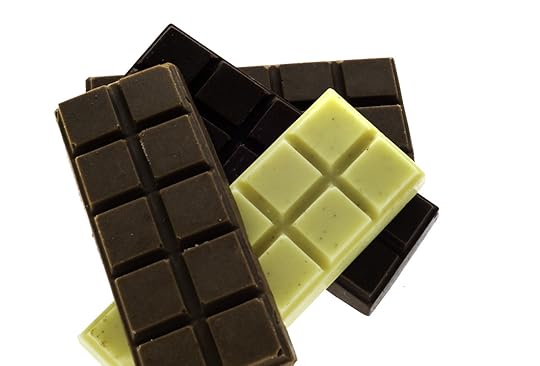
Just to whet your appetite, here's some of the chocolate Rosen made. Photo courtesy of Claire Wilson who took all the photos used in the book.
November 9, 2015
The Festival of Drabbles
 This week-long homage to the 100 word story is the brainchild of Michael Brookes and you can see the calendar of events for the week here. There is a Facebook page too, where you can read some of the posts and drabbles we'll be sharing this week.
 Drabbles have been around for decades and have recently regained popularity. They must have exactly one hundred words, not including the title and they are a means of trying out little story ideas and making the writer aware of the value and importance of every word. They have to be a real story, not merely one hundred words of description, for example. I remember my first drabble very well. I’d been reading them on the daily free newsletter BOOKHIPPO. We were away for a long weekend and my husband, having set the Satnav, proceeded to ignore it because he knew a better way. There's the result.
SATNAV
“I don’t know why you bought that bloody Satnav,” I complained to my husband. “You just ignore it!”
“It’s giving me the fastest route,” he said. “Mine’s a better one.”
When the voice said “At the next exit, take the turn,” and he blithely sailed on, I finally flipped. “Oh, for god’s sake, turn the sodding thing off if you won’t take any notice!”
He pulled onto the hard shoulder, undid my seatbelt, leaned over to open the door and pushed me out, then drove off.
I rang the AA. “I need a recovery vehicle. My marriage has broken down.”
I followed that up with several hundred more over the course of the next year. My production of drabbles only slowed when I began to write longer fiction. At its height, I contributed to a book of 120 drabbles Beyond 100 Drabbles by my friend Jonathan Hill. You'll be hearing more about this later in the week on Jonathan's blog.
I still write the occasional 100 word story. If you ever feel you've got a short story you'd like to tell, give it a go. Most writing software will count the words for you and it's amazing how much you can say in that short space. It's a lesson to authors not to waste words.
And here’s a more recent one –
Inspiration
James took up painting in his retirement. 'Paint from life,' they told him but he soon ran out of flowers in his garden and trees in the park. 'Use your imagination,' he read. His dramatic picture of racing cars crashing was followed by a news report of a similar collision resulting in a fatality. His colourful 'Burning Building at Sunset' presaged a local hotel fire. His work seemed to predict the future. Terrified, he was about to consign his materials to the bin when inspiration struck. He painted himself handing over the winning lottery ticket. Must remember to buy one!
November 7, 2015
Author Chat - Rick Haynes
 Hi, and welcome to my blog, Rick. Have you always written or is it something you came to later in life?
Firstly, may I extend my sincere thanks for the invitation, Kath.
I was born in Southern England when food rationing was the norm. Coming from a working class family, life was tough, but I really enjoyed my childhood. That has to be down to my parents and I can’t thank them enough. My dad told me a story from his own vivid imagination, every night. I still remember the tale of the dragon; he even made me a sword, but mum was none too pleased when I hacked down her giant sun flower.
I wrote a few poems at school and over the years a few more, probably from boredom to be honest. My reading was spasmodic until I discovered The Lord Of The Rings. All my birthdays had arrived in one day and hooked, I was.
Over the following decades I began to write one or two lines, made a few notes but going nowhere if you know what I mean. I even wrote about 15,000 words of a novel but those pages are hidden in a dusty box somewhere.
After several operations in a short space of time, the walls closed in and I was going nuts. I asked my wonderful wife what I could do, but when she suggested the ironing or washing-up, the thought of Hara-kiri came to mind. Luckily she followed up with the magical words. ‘Why don’t you write a story?’
I was up and running in no time. My first effort was utter dross, but I am very proud of my novella, Bolt Out Of The Blue. The words of wisdom in your review stayed with me and I amended about twenty per cent of the book. One reviewer subsequently posted that it was unusual for any tale to be lacking in cynicism. As that was my initial aim, my smile could be seen for days.
I was even prouder to see my first novel, Evil Never Dies, in paperback. It was love at first sight with the cover and my mind was completely blown away when I viewed the YouTube video.
I love writing. Medieval fantasy is my passion but I write short stories and Drabbles in any genre. My Drabble, Spectral Morning, has recently won an international Drabble competition and that really made my day.
To cap it off, The Portsmouth News carried a three page spread on my life. I had no control over the poetic licence but the main reasons for me commencing writing are all true. They even put my mug-shot on the front page.
My motto is LAUGH LOUD-LOVE ALWAYS-LIVE LONG.
And wherever the writing journey takes you, make sure you have FUN along the way.
I think most people who attempt a book have written shorter things in their youth.
Who are your favourite authors?
Without any doubt, J.R.R.Tolkien is my idol. His work changed my life. The genius of the man will live forever. He created not only a massive story, but races of believable people, fantastic plot lines, a world and a language. Wow!
The late David Gemmell has also inspired me. His mastery of heroic fantasy has kept me awake well into the early hours on many an occasion.
I also love the work of Bernard Cornwell, especially his Azincourt series.
Some good books in there!
Do your preferred reading and writing genres overlap?
I would have to say yes and no.
I enjoy reading medieval fantasy as well as writing it. But at the same time I love funny stories; my favourite being, Bob Monkhouse and his autobiography ‘Crying With Laughter.’ I write a few humourous bits and pieces, but Bob was the absolute master of his genre. My attempts are quite feeble by comparison.
I write short stories and Drabbles in almost any genre but when it comes to reading I can be very picky. Simply put, I have so many things in my life to do, that I can only find enough time to read a book that I am really interested in. Second World War Stories are a prime example. I am currently reading about the exploits of the British 6th Airborne landing in Horsa gliders and via parachute at Pegasus Bridge in Normandy on June 6th 1944 – D Day. Having visited the bridge, I wanted to learn more but had never seen the book until recently. Makes you feel proud of our fore-fathers doesn’t it?
I do read all the stories from my local book club, even when our beloved leader, Carol, insisted that we wrote a romantic tale. Romance! Me! She did indeed, but I’m not going to share her critique.
I don’t think I could write romance either. Not without making myself laugh!
What are you currently working on?
I have written about 7000 words of my follow up novel, Heroes Never Fade. Unfortunately the plot line has dried up. I am at the crossroads of whether to continue or start again. With my first novel the words arrived quicker than I could type (I am very slow, unlike you lovely ladies) but this time, poo!
I have also submitted several tales into competitions and have nearly finished a story come travel promotion about a Greek island.
Writing is the nastiest, craziest and most fulfilling addiction known to mankind. At times I want to break free, but naturally, that is impossible.
And finally – any great ambitions, whether connected with writing or not?
It’s a great pleasure to be here, and at my age it’s a great pleasure to be anywhere. As long as I continue to wake up, write and enjoy my life, then thank you very much. I truly believe that writing has saved me from the steep slope of decline.
Of course I would love to sell enough books to cover my initial outlay, yet hearing the words ‘I love your book’ is more important.
I am still a beginner in a tough environment. Yes, I have learnt a great deal, but there is so much more to take in.
My only real ambition would be to have the gift of promotion; to know how to put my work in front of those readers most interested in my genre. I expect most other writers feel the same but if anyone has some good advice, please let me know.
It’s been a pleasure, Kath, and I thank you most kindly for the opportunity.
Thank you, Rick.
And here’s Rick’s Amazon page so you can have a look at his books.
November 1, 2015
National Novel Writing Month
 National Novel Writing Month
Pardon? National Novel Writing Month, also known as NaNoWriMo because it’s quicker to say, takes place every year in November. I joined up last year (it’s free) and managed to write a book over fifty thousand words in length. That was the target, so I was, in the organisation’s terms, a winner. What did I actually win? Nothing really; it’s just a smugness award.
Some while later, I revisited the story and it has ended up at 61,330 words which is acceptable for a novel, though evidently fifty thousand counts. It still lives on my hard disk awaiting my further attention, but it is in essence a finished novel, so for me, last year’s efforts paid off.
This year I have signed up to the site, declared myself a participant and given my non-existent book a title. That’s the easy bit – it’s all uphill from now on! I promise not to inundate you with daily totals (tempting though that is) but I might mention passing the tens of thousands as they are landmarks. And if I make 50k again, you can be sure you’ll hear about it!
The working title? Beyond Recall. I wish I could remember what it’s about…
October 23, 2015
Author Chat - Julie McLaren
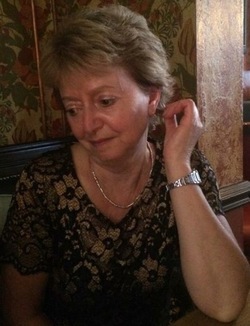 Today I'm chatting with Julie McLaren.
Welcome to my blog, Julie. I’ve been following your writing since your first novel, The Music of the Spheres, was published. We know that the first book people publish isn’t usually the first thing they’ve written. Can you tell us about your writing journey to that point?
I've always loved writing. I suppose all authors say that, but it is true nevertheless. In fact I started writing before I could actually write, if that doesn't sound stupid. I can remember being in my back garden in London and narrating what I was doing, using the past tense and calling myself by another name! We moved when I was five, so I must have been quite young.
I wrote my first novel many years ago and sent it off to a handful of publishers, only to receive the dreaded rejection postcards and I stopped writing for a while. Then I started attending a creative writing class, and that evolved into a writing group which I found very supportive. I wrote The Music of the Spheres at that time. Getting a chapter ready for the class was a great motivator, especially as I had started teaching and had very little time for anything other than family stuff and lesson preparation. In 2001 there was no route to publication other than submitting manuscripts to publishers or agents, so I tried again but with no success. I was promoted at work, my workload increased, and 'The Music of the Spheres' joined my first novel in a drawer.
Then semi-retirement came. Oh, the joy of it! I had time to write several times a week if I wanted to, so I retrieved 'The Music of the Spheres' from its drawer, completely re-wrote it, and became a published author at last.
I'm very glad it came out of that drawer. I loved it! Like many indie authors, you don’t stick to a genre, going from comedy to thriller with apparent ease. Do you have a favourite genre to read?
I suppose I like literary fiction best. I like books that are challenging both in content and form, although I hate it when authors make a work impenetrable just to seem cleverer than their readers!
I read a lot of poetry and I often think the same! And what about writing? Is there any genre you can’t see yourself trying at some stage?
I can't see myself ever writing erotica or Mills and Boon type romances. I don't think I have the patience to write science fiction, with the necessity to create a whole new world or universe with its own structures and laws that I would then have to remember. In fact, I don't think I would tackle anything that involved masses of research. Basically, I'm a lazy writer.
I'm with you on the erotica. I'd just make myself laugh! Your new publication, The Art of Forgetting, features a woman who suffers from Alzheimer’s. As someone who has had a parent and parents-in-law with this disease, I can see you’ve caught it very accurately. The way people can go from good days to days when they really are lost in their own minds. What made you choose this subject?
My own mother-in-law died from Alzheimer's. She was a strong and remarkable woman and the disease ruined the last years of her life as well as affecting us. I know she wouldn't have minded me using those experiences in my writing. I also needed a reason for my character to write down what had happened when she was young, even though she had said nothing about it for all those years, and memory loss worked well in that respect.
Yes, it rang a lot of bells for me. And have you got any further irons in the fire? What can we expect from you next? Not that I’m pushing, or anything!
Yes, I've started the next one. I've written about 10,000 words. The plot is still evolving, but I knew that some of it was going to be set in 1963 so I am writing that section while I work out what is going to happen in the present day. I think I will be exploring further the way the past can come back to bite you, as I find that quite interesting. The difference will be that there will only be one point of view in this book, and the main character will be a woman of my age, not somebody a lot younger. That's all I can say for now – not because I'm being cagey, but because I don't know the rest myself!
I look forward to it. You've not written a duffer yet! You can find Julie's Amazon Author page here and I hope you'll pop in to have a look. Thanks, Julie, and best of luck with the new release.
September 27, 2015
A Meeting of Friends
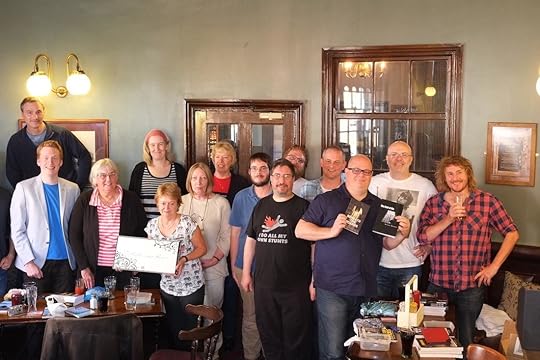 I spent the afternoon yesterday in the company of the most delightful, if slightly barmy, bunch of people you could ever meet. Some of the authors and one top reviewer from the KU Forum decided that Derby was, for our purposes, the centre of the world, and we met in a fabulous pub just a hundred yards from the station.
 We ate, we drank, we had fun and we munched chocolates. We also spoke about books and writing, of course, but mainly it was a group of people who, through the internet, were already mates, getting together for a natter. Authors are a very supportive bunch and many of those there helped me when I first ventured to write. Cameras came out and the above photo (courtesy of Alex Roddie) has appeared on Facebook, tagged here and there. I have one or two of my own, mostly of those unfortunates who happened to pass before my eyes when I had my camera switched on.
There's been a suggestion that we do this again and I really hope we do. Some people think we should make it an annual event and I'm up for that, too! A room full of creative types makes for a great afternoon. I hated having to leave.
Thanks to you all for your friendship and here's to the next time.

 Thanks to Alex Roddie for the group photo.
September 24, 2015
Author and Illustrator Chat - Katie W Stewart
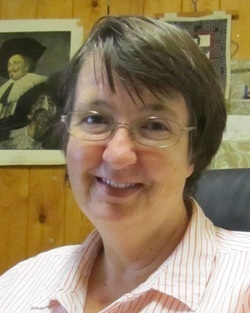
Welcome, Katie, from half way across the world. How long have you been writing and what got you started?
I’ve been writing for as long as I can remember. I always loved story writing time at school. I didn’t really start writing seriously though, until after we adopted our second son. After three years of jumping through bureaucratic hoops, I missed the pressure of deadlines, so I took a writing course. I never actually finished it, but it did encourage me to start writing novels.
Your writing instincts go back a long way, then.
You’re known for your stories for Young Adults. I’ve read and loved them. Have you considered an adult novel?
I’ve always considered Treespeaker to be an adult novel, but apparently my writing style leads everyone to think that my stories are for younger people. That, and the fact that I don’t put in any ‘naughty bits’, not even swear words. I just write the way that feels natural to me, so my books will probably always be considered young adult…or kids’, if that’s what I’ve actually set out to write.
I’m an adult (I was going to say obviously but it maybe isn’t) and I love that series.
You’re also an illustrator and your work appears on some of my favourite authors’ book covers. How do you work? Paint? Something electronic?
Most of my work these days is done digitally. I have a nifty drawing tablet called a Cintiq 13HD, which allows me to draw straight onto it, just like drawing onto a piece of paper except that the eraser doesn’t make smudge marks and I don’t need white-out for mistakes. I usually use Photoshop, but I also have another great program called ‘Mischief’ which lets you do natural-looking pencil sketches (amongst other things) and I recently downloaded ‘Rebelle’ which does watercolour and oils quite convincingly. I’m still playing with that.
Wow! I think many of us wouldn't know where to begin with programs like that.
This new book is a departure in that the pictures are not just on the cover, but are an integral part of the book. How did you go about getting it printed?
Yes, this one is quite different from my usual work, although of course I’ve illustrated other people’s books – Rosen Trevethick’s Smelly Troll books for example. The printing part has been quite a learning curve. I didn’t want to go with CreateSpace for two reasons. Firstly, I’d tried to set up my own novels for print through CreateSpace and nearly went mad. In the end, a friend in England took pity on me and we came to a deal where she sets my books for print and I do her covers. The other reason I didn’t want to go through CreateSpace though, was that I wanted this book to be really well-printed with good quality ink on good quality paper. IngramSpark offered that, so I went with them. Unfortunately, they didn’t tell me that doing that meant that I could only get the books printed in the US, meaning slower dispatch times. From what I can gather though, the postage is not higher. The books are shipped to Melbourne and postage charged from there, so it’s not such a big deal.
To set a book for printing with IngramSpark, you need to know how to use InDesign. I didn’t. I had the programme through Creative Cloud, but I didn’t even know how to set up a document. Fortunately, my eldest son does and during his university holidays he very patiently led me through setting up the pages and bleeds and how to place pictures and text. He even found my ‘toolbox’ for me when I managed to lose it completely. (Thanks, Michael!)
And where can people buy this? Have you got a link we can use?
The book should be available just about everywhere, online and in the real world. I’ve even seen it on sale on a Dubai site! It’s print-on-demand which means it will only get printed as it’s ordered, but it’s available through all the major distributors and if it’s not in your local bookshop, they should be able to order it for you. Watch out for the price though. I’ve seen some pretty huge mark-ups.
If you prefer to go to go to Amazon, (where the price is what I set it as), the link is here. The price is slightly higher at Book Depository, but the postage is free from there.
Thanks for letting me ‘talk’ to you, Kath!
My pleasure, Katie. I've got two copies of your Famous Animals books because it's too lovely only to give to children. There's one here for me!
If you'd like to look at Katie's Amazon page it's here.
September 17, 2015
Author Chat - Marianne Wheelaghan
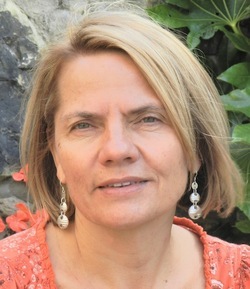 Welcome to the Hot Seat, Marianne. The first book of yours that I read was The Blue Suitcase which is a fictionalised telling of your mother’s early life in Silesia. It’s a stunning story and is really thought-provoking. What made that switch click which made you decide to write it as fiction?
Thanks for the invite, I'm delighted to be here. Thank you too for your generous praise of The Blue Suitcase.
When I set out on the rocky road to becoming a writer I never once imagined I'd write a book about my mother – fictional or otherwise. You see, my mother was a very private person. You could rarely tell what she was thinking and she never talked about her early life in Nazi Germany. And while I was curious about her “mysterious” past when I was growing up, I never asked her about it – this was the 60s and 70s, not that long after WW2 and Germans were still very much the bad guys: the thought that my mum could have been a baddy made my stomach churn. As I grew older I lost all interest in mum's early life. It was only when I found her diaries and letters after her death that I discovered the truth about it. I became determined to tell her story, if only to right a wrong I had committed as a child in thinking that Mum could have been a baddy. But every time I sat down to write about her life I was stumped. Why? Mainly because writing about my very private mother felt like a huge betrayal. And on a seemingly trivial level, every time I wrote Gertrude, Mum's name, I squirmed: it was common knowledge she hated that name. Then there were the gaps. For example, Mum had nine brothers and sisters but there was virtually no reference to three of them in the documents. Plus, some letters and diary extracts were so old they were illegible, it was impossible to know what had happened for sure. You could say her early life was like a woolly cardigan the moths had been at, full of holes. Then I went to a talk by historic fiction writer Philippa Gregory. During the talk Gregory was asked why, given her historical background, she wrote fiction and not fact. She said she thought more people read stories than histories and she wanted as many people as possible to read her books so she wrote stories. That was my switch click moment: I would write a fiction based on the facts. Freed from the constraints of reporting the events exactly as they happened, I was able to distance myself emotionally from the retelling of my mother's life. I started knitting the diaries and letters and documents into a story, using the knowledge I had gained from extensive research to help fill the holes. And I knitted until it was finished. The writer Margaret Culkin Banning once said, “Fiction is not a dream, nor is it guesswork. It is imagining based on facts, and the facts must be accurate or the work of imagining will not stand up.” I like to think my work of imagining stands up. I'd also like to think Mum would have approved – after forgiving my intrusion.
Thanks. That’s really interesting and I’m sure your mother would have been really pleased.
More recent publications have featured Louisa Townsend, the ‘Scottish Lady Detective’ in two very un-Scottish settings. Again, what prompted this, rather than setting her to work in, say, Aberdeen?
Ha ha ha! I may eat my words, but I don't think I'll ever set a story in Aberdeen, it's too cold and windswept!
From when I was very wee I wanted to travel and used to dream of visiting faraway places, the further the better. It could have been in the blood: my Scottish granny worked as a stewardess on ship and went to Russia when she was 19, and my Scottish granddad was a seaman and went to such exotic places as Hawaii and Samoa – this was at a time when most people thought the world was still flat, well apart from the likes of Robert Louis Stevenson ;o). So, maybe it's no surprise that I ended up teaching in the Pacific, namely in Papua New Guinea, Fiji and Kiribati – according to the World Tourism Organisation, Kiribati is the third most remote place in the world. The best and worst thing about living in a different country is that you are a foreigner. Best because as a non-native you don't have to fit in or follow customs as natives do – and are often readily forgiven when you get things wrong. Worst because you are far from home, looked upon as alien and can feel isolated. The really very best thing, however, that I found about living in other countries was how it made me see my life in new and fresh ways. Oops, I am digressing! I set my Louisa Townsend novels in these overseas places for a few reasons: firstly, I knew these countries well and enjoyed living there: they are quirky and interesting and I thought others may enjoy reading about such different places – especially in the case of Kiribati, because if global warming predictions are correct it may soon cease to exist. Secondly, I personally love reading stories set in foreign places, so it follows I would set my novels in faraway locations if I could. Thirdly, a surprising aspect of being a foreigner is that it can make you a little paranoid, it's that thing to do with feeling alien. Such feelings can lead to prejudices and misunderstandings until, that is, we realise that underneath we are all very much the same. Such feelings also lend themselves to drama and tension, which can be helpful when writing about murder ;) Finally, I am fascinated by identity and heritage and what makes us different as much as what makes us the same – maybe this is because I am of dual Scottish-German heritage, who knows? But by setting my novels in faraway places I'd like to think I am indirectly dispelling the idea that “differences” have to be a barrier. Something like that, anyway ;o)
What an interesting life – and you’re still living it!
Louisa gets results but, poor lass, she battles with her own nature. She has Obsessive Compulsive Disorder. It’s very convincing, too. Have you, or anyone you know, had experience of this, or did you just do plenty of research to make life difficult for her?
Yes, I know quite a few people who have some kind of obsessive compulsive disorder, ranging from only ever drinking out of the one cup and only eating off the same plate, to washing their hands repeatedly, to changing their clothes repeatedly, to cleaning manically. But I have one friend in particular who you could say Louisa is modelled on, but in this aspect only. I've also researched the disorder and am particularly fascinated by the strategies people use to keep their disability a secret while living functioning lives and often holding down very successful jobs. Plus, given one in four of us suffer from one kind of mental illness or another, it seemed to me about time characters in novels reflected real life a bit more. And, as you suggested, it's a handy device to make life that little bit more difficult for Louisa ;)
I really admire people who can find a work-around for something like that which would simply floor some of us.
Can you tell us what you’re currently working on and whether you have any other projects in the pipeline after that?
I'm working on the follow up to The Blue Suitcase. It's tentatively called The Brown Paper Parcel – I'm not totally happy with that title, though. The story continues where The Blue Suitcase finishes. It’s also based on real life events and set in the 1950s (my mum's diaries and letters etc carry on into the 80s!). The reader will discover what happens to my mother character in Scotland and to her family in Argentina and Germany. The reader will also get to know the Scottish family. Like The Blue Suitcase, it won't necessarily be a book for the bedtime table but there may will be lighter moments.
After that there will be another Louisa Townsend novel set in Papua New Guinea – but due to popular demand I am also considering writing a Louisa novel set in Edinburgh! Finally, there will be a third book in The Blue Suitcase trilogy, set in the 1980s.
I am also director of the online creative writing school www.writingclasses.co.uk and we have a new session starting on the 21st September, so I'll be busy organising the new session for a while.
Thanks for the questions, Kath, really enjoyed answering them.
And thank you Marianne. You can find Marianne's Amazon page here.