
Matador Network's Blog, page 2146
February 11, 2015
Are you as traveled as James Bond?
JAMES BOND HAS BEEN all over the place. Over the course of 24 movies, the character has visited over 50 countries on 5 continents. He’s also been into outer space. Wanderforth, a luxury travel site, has put together this infographic of all the places Bond has been to, as well as how far that distance would have been by plane and how much he’s spent on martinis for good measure.
How do you stack up to 007? 

Wanderforth are a UK based luxury tour operator selling destinations around the globe including, South Africa, USA, Indian Ocean and Dubai. Visit www.wanderforth.com for more information.


Girl cannot prove her US citizenship
Alecia Pennington is an undocumented American citizen.
As strange as this may seem, Alecia has no record of her birth and has no proof of her living in the United States for the past 19 years. She was born at home, she was home-schooled, and her parents never bothered to declare her existence to any administrative authorities.
She cannot attend college, she cannot take her driver’s licence, she cannot work legally, and she cannot travel.
Alecia tried in vain to obtain a delayed birth certificate, and her parents refuse to help her out of this very difficult situation. This young woman of 19 years of age now faces an administrative wall.
In a desperate attempt to finally get the paperwork that could provide her with the freedom all American citizens should have, Alecia is sending a cry for help. If you have any advice, support, or guidance that could allow her to finally obtain a proof of her identity, please email her at helpmeproveit@gmail.com
How to use science to avoid jetlag

Photo by Rob Cottingham
JETLAG IS THE BANE of every traveler everywhere. It cuts into our travel, it sends us to bed earlier than we’d like, and it wastes our waking hours on the moments we spend in our beds staring up at the dark hotel ceiling in the middle of night. And then, when you get back home, it serves as a sort of secondary post-trip hangover, just to make leaving the world of travel behind that much worse.
Fortunately for us, though, science has turned its all-seeing eye on jetlag, and has determined what causes it, and as such, we now have the tools we need to fight jetlag and make our trips and our returns home that much less painful. Here’s how to do it.
Before you leave
Your body tells you when to wake up and when to go to sleep based on your circadian rhythms, which are, for the most part, based on the amount of light you’re exposed to, and also a little bit on when you eat. These rhythms haven’t had the chance or reason to evolve to deal with rapid travel around the world, so when you suddenly change your location, it throws the rhythms off.
So the first thing you can do — if you’re traveling east — for the three days before your trip, wake up an hour earlier each day and expose yourself to the sun or some other bright light. This will allow your body to start to adjust before you leave. If you’re traveling west, do the reverse, and wake up an hour later each day (though typically, as the study that discovered this trick noted, westward travel is easier on the rhythms anyway).
When you’re on the plane
The first thing to do when you get on the plane is to reset your watch to the local time of whatever your destination is. The resetting itself doesn’t do anything (obviously), but if you use local time at your destination as a guide to when you should be eating and sleeping while you’re on the plane, then your body will feel less jarred when you land and are suddenly on that schedule anyway.
Next, you need to control the sunlight on the plane. Sunlight messes with your head if you’re trying to sleep, so it’s best to sit in a seat on the side of the plane where the sun isn’t shining in your face. Sure, you can pull that little plastic cover down, but you can’t make everyone else do the same thing. So it’s better to choose a seat on the shadow side of the plane. You can figure out which side that is using the site Sunflight. Most airlines let you choose your seat now anyway.
In terms of sleeping on the plane, you’re trying to sleep when you would normally sleep at your destination, so you want to keep in-flight naps during the “daytime” to a minimum. Watch a movie, play a game, read a book, walk up and down the cabin, and avoid self-medicating with stuff like alcohol, sleeping pills, or caffeine. It’s better to just stay hydrated instead.
Once you get there
Sleep scientist Richard Wiseman suggests monitoring your exposure to sunlight once you’ve arrived to: at times when you’re trying to sleep, avoid sunlight, but at times when you’re trying to stay awake, get out in it. If you use apps like Entrain, you can figure out exactly when you should be seeking sunlight, and when you should be avoiding it. If you can’t avoid the sunlight, try using sunglasses instead. If you have to nap, do it around midday rather than in the morning or late afternoon so as to not throw yourself off too badly.
If you’re still having trouble keeping a regular sleep pattern, you can talk to a doctor about the possibility of using melatonin supplements to help regulate your sleep during the trip. But obviously you should not self-medicate.
6 lies when you move to New Jersey

Photo by Damiana the Girl
“I’m not going to become a pizza snob.”
Yeah, yeah. You’ve been living in other states, and you’ve tried other pizza. You’ve had Chicago deep dish, you’ve dipped Pennsylvania pies in ranch dressing, and you’ve had vegan flatbreads in Portland. I’m sure they were all great. But the problem with living in a place that makes the best is that it ruins your palette for everything that’s not the best. Bagels that aren’t made in Jersey or New York are going to be ruined for you, too.
Don’t sweat it too much. Philly residents are going to be snobs about cheesesteaks made elsewhere. Kansans are going to be snobs about barbecue. This is just your burden to bear.
“Sure, I know how to make left hand turns.”
The jughandle is an inexplicable quirk of Jersey road planning, and you’re going to have to get used to it. You’ve got to learn to stay in the right hand lane, or get used to a life of U-turns. And you’re going to have to accept the fact that a lot more of your life is going to be spent at red lights.
“I’ll never pay to go to the beach.”
Suck it up. It’s pretty cheap, the beaches are gorgeous, and the money helps towns that are still recovering from Sandy. If you’ve got a problem paying, just sit back and get drunk on the boardwalk.
“I’m not gonna get defensive when people shit on New Jersey.”
Before I left D.C. for Jersey, a friend of mine said, “It’s just a state of suburbs. It’s the suburban sprawl of Philly and New York with an Ivy League school thrown in the middle. It’s a commuter state.” My friends back in my hometown, Cincinnati, all invariably said, “Ugh, why?” when I told them I was moving to Asbury Park.

More like this: How to piss off someone from New Jersey
I could give them plenty of answers about the appeal of living on the Shore, on the plusses of living in a state with a pretty solid public transportation system, or on the joy of always being a stone’s throw away from a delicious sandwich, but my stock answer quickly became, “Bruce Springsteen, motherfucker.”
“I should be able to limit my pork roll intake.”
Accept it: you are fat now. You can’t do anything about this. Taylor Ham is just too goddamn delicious to not eat every time it’s presented to you. Sure, it’s got enough sodium in a single slice to give hypertension to a hippo, and sure, it’s technically less healthy than bacon, but on the other hand, you can put it on everything. Pork roll sliders? Yes, please. Pork roll nachos? Sweet Jesus, yes. Pork roll plain with some eggs and toast? Let’s do this.
“I refuse to mispronounce mozzarella.”
You’re not a character from The Sopranos. You aren’t interested in saying “gabagool” instead of capicola. You don’t want to sound like Luca Brasi when you’re asking for cheese, either. But after a while, it gets tiring asking for “mozz-a-rella,” and getting sad, knowing looks from the butcher that say, “Aww, you’re not from around here, are you?”
At some point, you’re going to have to assimilate. At some point, you’re going to walk into the deli, and say, “Extra moozadell, please.” Only then will you be a New Jerseyan.
Tito's yearly mota-run across Oaxaca
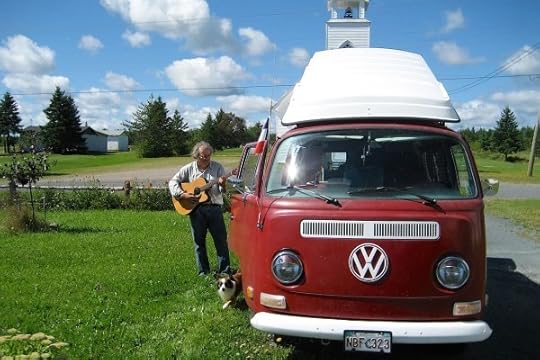
Photo: Munir Squires
“Now if anybody asks, if anything happens — which it won’t — you don’t know anything, you hear? You know nothing. You’re just a friend of mine, hitching a ride.”
“Yeah ok. I’m a hitchhiker you picked up.”
“No c’mon now, girl! You’re smarter than that, I know you are. Don’t go telling lies. You’ll need ten more lies to cover it up and one day you’ll forget it all and then you’ll really be in some hot water, you know? OMISSION,” he said, shaking his pointer finger at me while I worried his hand had left the wheel. “O-MISS-SION. Now that’s how it’s done.”
These were some of the first words of wisdom from Tito,* the 74-year-old Louisiana gentleman turned Mexican Papi who was, as he spoke, taking hairpin turns through the Sierra Madres as if he had been born to drive them, which — for all intents and purposes — he had. Tito, born Timothy Beaufort Laurent in a wealthy Louisiana family, had been living part-time in Mexico for nearly 40 years, full-time for the last 12. Twice a year he made the pilgrimage through the barren Oaxacan desert, dotted with mezcal plants and cartoon-inspiring cacti forests, to stock up on marijuana that he purchased from his friend in Mitla. “There’s mota in Tonala, of course,” he said. “But not like they have in Mitla.”
The truth that Tito was encouraging me to tell, if (in the off-chance, he assured me) the authorities stopped us and they found the pound of marijuana he was planning to carry back in his underwear, was that I was a friend of his. The friendship was albeit a very new one. I had only met Tito the week before, through the people for whom I was volunteering on a mango farm in Chiapas. Never one to turn down a road trip in a vintage Westfalia van with a man who had more stories than Hemingway, I had decided to accompany him on the trip.
It was 7am when I hopped into the rattling, unassuming Volkswagon, just as the sun was beginning to stretch her golden legs across the Sierra Madres. The bustle of the early-rising pueblas slipped away behind us into saffron morning light as the van rumbled through the largest windmill farm I’d ever seen. Tito lit a joint as soon as we passed the first military checkpoint, and turned up José José’s crooning. “Now we’re on our way, girl,” Tito shouted over the music, smiling and nodding. “Now we’re really on our way.”
The Sierra Madres look like a cross of rural Southern California and South Dakota’s Badlands, but with bizarre patches of Bolivia’s Salar de Uyuni. Tito recounted stories of driving through Oaxaca in a red Corvette in 1960, diving with the first Mexican scuba diver in Cancun, flying politicians to Acapulco in his private plane just weeks before the first luxury hotel opened on the beach, and how lawless Tonala had been in the 1970s. I soaked in his stories and the colors of the Mexican desert; sweet winter air whipped my hair and chapped my cheeks.
“Girl, this is where Mother Earth just really ground it all up, you see that? Ground down, spit up, crumpled that soil. This is her warm-up to the mountains,” Tito pointed out the window, again making me nervous he didn’t have both hands on the wheel. “See that creek-bed there? Now just wait ‘til we get to the mezcal fields. I can guarantee you haven’t seen anything like it.” He was right.
We stopped at a roadside stand where a woman prepared the best damn quesadilla I’d ever had (being from New York, I had assumed I “knew” Mexican food — how wrong I was). Across the valley, red and purple flowers lilted idly in the dry breeze. Hens clucked in a hand-made cage behind me as old women served horchata to truck drivers making the daily haul through the hills. Somewhere in the distance floated the sticky sweet romance of traditional Mexican ballads. There was something simple and unassuming about Mexico that I hadn’t felt in South America, or in any of my travels in the East — something pure and colorful and clean.
When we got to Mitla — a quaint little mountain town with typically colorful adobe construction, plastic flags that look like rainbow paper snowflakes spanning cobblestone streets, tuk-tuks lazily cruising the strip for passengers — Tito made his phone call and confirmed plans to meet his man at the pool hall later that evening. Like most Mexican pueblas, the streets of Mitla are lined with concrete walls, behind which are multi-house compounds where several generations of one family live. The modest cement walls betray what’s behind them: these compounds are usually immaculate, decorated with rich vegetation, framed in flawless and often intricately carved wood. The pool hall was the entranceway to one of these compounds, and we laughed with Eddie in the late afternoon sun under a hibiscus tree, sampling his product and sipping Coronas. After shooting a couple games of pool, Tito’s mission was accomplished.
The next day we got back into the old Westfalia and took a day trip to the Hierve el Agua, a natural rock formation outside of Mitla that resembles a frozen waterfall, calcified over thousands of years by drops of mineral-rich water streaming off a cliff. At the top of the cliff are several manmade pools the color of polished turquoise, buffered by delicate salt formations akin to those in Death Valley, pockmarking the mountaintop like the surface of the moon. In all my travels I’d only come across such a bizarre landscape a handful of times.
The area is extremely remote; when we arrived in the early morning we were the only visitors. Tour buses from Oaxaca showed up midday, and gringos in wide-brimmed hats sat out the heat in one of the handful of taco stands set up around the entranceway. Eddie’s wife had packed us a lunch at Tito’s behest, and we wandered past the food stalls to an abandoned group of cabins, a project Tito claimed was the result of government graft. We ate fried pork sandwiches slathered in pickled jalapenos and avocado, toasting cold white wine under the shade of a straw palapa.
“This is the life, girl, I’m telling you,” Tito said, stretching out his feet and surveying the purple tints of the valley hillsides.
That night we sampled mezcal at Alejandro’s shop, where his family had been distilling for nearly 100 years. Alejandro took us out back to show us the antique distillery that still functioned; how he’d take the giant seed of the mezcal plant and how to extract its juice. The warmth of the liquor and the stress of the sun mixed in my tired bones and rocked me immediately to sleep that night, despite the wire boning poking through my lumpy mattress.
We weren’t asked to stop once at any of the many military checkpoints on the ride back to Tonala. “Ahh, jefe! Buenos tardes, permiso por favor?” Tito said through the window, barely slowing down, either oblivious to or uncaring of the guards snickering at his poor accent. The risk of the business and the instruction of what to say “if when” never came into play.
“You can have all the brains in the world but if you don’t have experience, you have nothing,” Tito told me, as he pulled into the mango farm to drop me off. “And this, girl, let me tell you, THIS was an experience.”
I couldn’t agree more.
*Names have been changed for the safety of characters involved. The author’s name is her real one.
37 signs you're a millennial in NYC
Photo: Jorge Quinteros
1. You never got to try a cronut. You were too poor and too hungover to wait in line.
2. Your ass looks fantastic after walking up and down five flights of stairs to your apartment.
3. You don’t actually “know” anyone who was born and raised in NYC. It just feels like after ten years, everyone is automatically a native New Yorker.
4. You know where the best $1 pizza slice places are.
5. Your sleeping habits are all kinds of cray. It’s just so hard to sleep when you can order pancakes from the diner at 10pm, or catch a burlesque show in a Williamsburg basement at 3am.
6. You think Bushwick is the best part of Brooklyn. It’s not, but it’s cheap, and it’s probably the first place you moved when you came to New York, so of course it seems awesome.
7. You took an unpaid internship. Mainly because you didn’t think paid internships for Birchbox or NBCUniversal existed.
8. You struggled with your first job. We all started out as someone else’s bitch, making $10 an hour to feel worthless and cry into our $3 Happy Hour vodka sodas.
9. You’ve had to explain how to “Tweet” something to your boss at PwC. Yes, getting paid to run Morgan Stanley’s Facebook page is an actual job.
10. You scour the “Missed Connections” section on Craigslist, hoping to find a romantic depiction of you riding the subway.
11. You share an apartment with at least two other people. Roommates are fun, it’s like you’re still in college but there’s no homework and you all get your own room.
12. You have attended and / or helped plan a few weddings for your LGBT friends. And you thought it was completely ridiculous that Gay Marriage didn’t exist in NYC prior to 2011.
13. You have friends who grew successful businesses from a Kickstarter campaign, having a celebrity patron, or creating a sexting app.
14. You buy everything from your local bodega. Toilet paper, fruit, alcohol…it’s all there. Whole Foods might have gluten-free donuts, but it doesn’t have a one-eyed cat standing guard over the Poland Spring bottles.
15. You helped Liza Dye pay for her medical expenses after she got hit by a subway car. That girl is so fucking funny and she needs to come back to NYC STAT!
16. You made the mistake of getting into an empty subway car. And you’ll never do it again.
17. You don’t have dishes because ordering from Seamless is easy and more delicious than whatever you could possibly cook.
18. Your apartment looks something like this:

19. Or like this:

20. You’ve traveled to Randall’s Island for the Electric Zoo, Governor’s Ball, or a Dave Matthews Band concert.
21. You pay extra to have someone else do your laundry. It’s just easier to pay $9 per pound until you can live in an apartment building that has a laundry room in the basement.
22. You have read and sympathize with every NYC-centered article on Thought Catalog. You were there all through Ryan O’Connell’s romanticized NYC, and when he got burned out and ditched this place.
23. You have no aspirations to own property anytime soon. Why commute to the city, when you could already BE in the city?
24. You danced on a rooftop somewhere after Obama was re-elected in 2012.
25. Your name is on every mailing list for all of the places in town offering one-hour open bar lotteries or free drinks on your birthday.
26. You or someone you know participated in Occupy Wall Street.
27. You justify trips to the Crocodile Lounge because there is “nothing to eat” in your fridge. Because free pizza tastes better than pizza you have to pay for.
28. You get overwhelmed by Tinder. You have to slide through 73 people, and that’s just the people who live within a two-block radius of your apartment.
29. Your Sundays consist of Bottomless Brunching on the Lower East Side.
30. You have perfected the art of never paying full price for anything. SoHo sample sales and secret consignment shops keep you looking fabulous.
31. You relate more to the characters on Broad City than the characters in Girls.
32. You know someone who has slept with James Franco.
And they probably went to NYU.
33. A lot of your friends work in Food and Bev.
And sometimes, they do improv.
34. You only use cabs when you’re drunk.
Or are super lazy.
35. You don’t think you’re part of the gentrification problem.
36. Places like Queens and The Bronx freak you out. Unless you live there, in which case it’s really no big deal.
37. You constantly complain about how broke you are…as you sip on a $14 cocktail at PDT.
Visit Arizona for Spring Training

Photo: Austin Rutledge
Catching a game at Spring Training is like getting a peek into the past, a glimpse of an honest relationship between the game and its fans that no longer exists during the regular season. Corporate sponsors and big stadiums have made Major League Baseball less intimate than ever from the months of April to October, but March still belongs to the fans who fell in love the first time they heard the crack of the bat on a warm, summer afternoon.
At Spring Training, “good” seats are not only great seats, they’re affordable. The small stadiums allow you to hear the whipping of the bat through the air from the on-deck circle and the crunching of cleats in the dirt. You can see the expressions on the players’ faces and hear the calls of the umpires — all experiences that have gone by the wayside with the creation of the mega-stadiums used during the regular season.
2. You get to ditch winter for better weather.

Tempe Diablo Stadium. Photo: Dave Nakayama
While most of the country is still coated in winter’s chill, Phoenix enjoys an average high temperature of 74.5 degrees in March. Enough said…
3. You can visit all the cities that make up Phoenix.
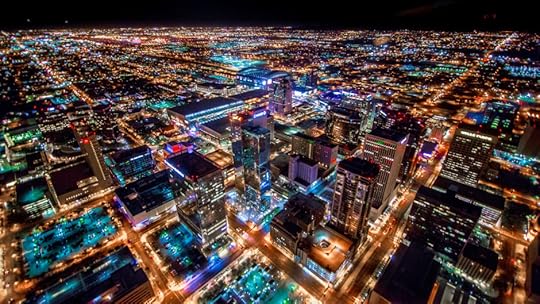
Photo: Jerry Ferguson
Sprawling across 60 miles of desert from tip to tip, Phoenix is a city made up of cities. Glendale, Scottsdale, Mesa, Tempe, and even “downtown Phoenix” stand on their own two feet as individuals that together make up the big picture.
With stadiums located throughout these municipalities, baseball fans get the chance to explore as they catch games. You’ll check out Tempe, home to Arizona State and loved for its college-town atmosphere and social scene along Mill Avenue. And then there’s Scottsdale, spring home of the World Champion San Francisco Giants and some of the city’s best shops and restaurants.
4. You’ll be on the doorstep of Arizona’s world-class outdoor adventures.

Photo: Daniel Weinand
Despite all the attention the Grand Canyon receives, Arizona remains one of the most overlooked states when it comes to adventure travel. From the red-rock “energy vortex” of Sedona and southern Arizona’s “sky-island” mountain chains, to the beauty of the Sonoran Desert and the water-based adventures of Lake Havasu, there’s plenty to explore after the games are over, all within striking distance of Phoenix.
Check out more in 8 incredible natural areas in Arizona you’ve probably never heard of.
5. You can get the jump on your golf game.

Photo: Phil Sexton
Golf season might be over for the ballplayers, but with over a dozen golf courses within city limits, yours is just beginning. The TPC Scottsdale has bragging rights as the home of the — the largest-attended golf tournament in the world — while Troon North Golf Club’s lush greens and fairways beautifully contrast with the surrounding Sonoran Desert. Just watch out for cacti when you inevitably land in the rough.
If you don’t have a ton of time between baseball games, check out Bellair Golf Club in Glendale, known for its short par-3 and par-4 holes.
6. There are oases in the desert.

The view from Paradise Valley’s Sanctuary Camelback Mountain Resort & Spa
The purpose of Spring Training is to prepare for the long road ahead. That, too, should be your mission. A wide range of resorts and spas can provide respite after a long day in the sun — try Wigwam Resort & Country Club, Talking Stick Resort, or the Phoenix Marriott Tempe at the Buttes, all within easy striking distance of Spring Training stadiums. Or relive the old days of Hollywood and check into Scottsdale’s Hotel Valley Ho. Opened in 1956, it was originally a hideaway for LA’s rich and famous.
7. Phoenix redefines the concept of urban hiking.

Photo: Andrew A
“Urban hiking” is often used to describe the act of turning a city into an outdoor playground. Take San Francisco, for example, where the hilly streets act as trails that lead to various lookouts. Phoenix, on the other hand, brings the true outdoors right into town. South Mountain, the largest municipal park in the country, offers 51 miles of trails for hiking and biking. Even closer are the trails of the iconic Camelback Mountain, visible throughout the valley and a popular workout spot for locals.
8. The craft breweries here are amazing.
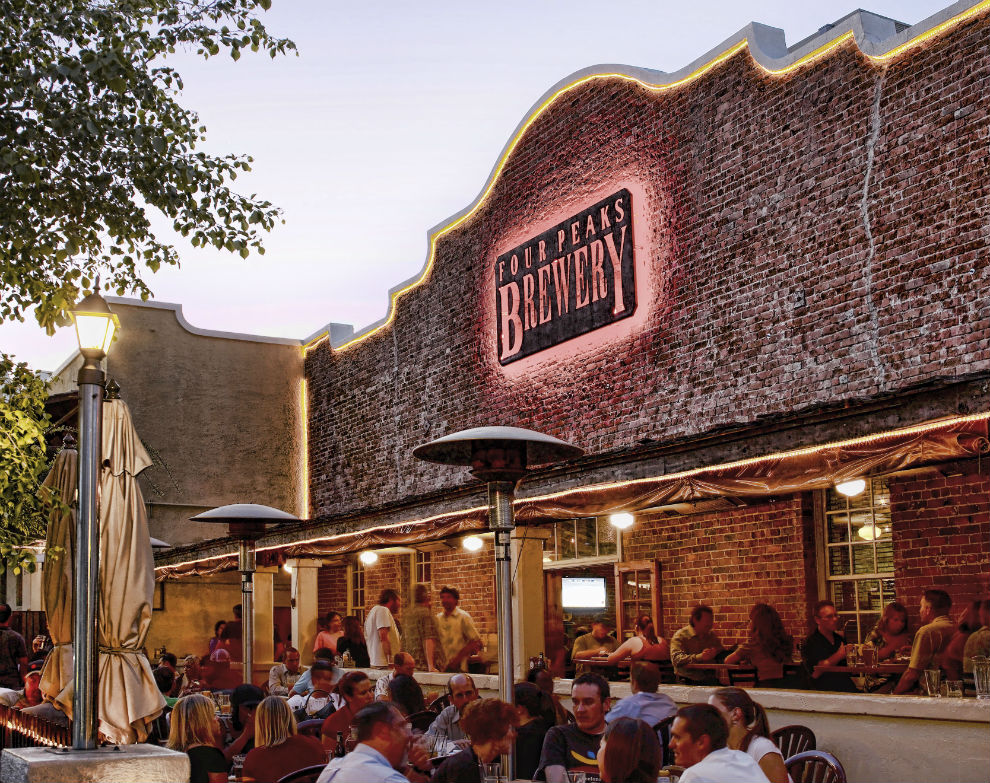
Photo: Four Peaks Brewery
You’ll want to drink a lot of water, for sure, but what goes better with baseball than beer? Four Peaks Brewery, named after the nearby Four Peaks Mountain, is the city’s most heralded operation. Cut through a hot day with the award-winning flagship brew, the Kilt Lifter (Scottish ale with caramel flavors), or the easy-drinking Sunbru (Kolsch style ale). Locations in both Scottsdale and Tempe make this a great spot for pre- and post-game socializing. Bring it on.

This post is proudly produced in partnership with the Arizona Office of Tourism. Visit their site to start planning your Arizona spring training adventure today.
American habits I lost in Germany

Photo: Jonas K
1. Idle chit chat.
During my first days of work in Germany, I made sure to be super friendly to all of my coworkers. Whenever anyone passed me in the hallway, I would grin maniacally, wave, and yelp, “Hi! How’s your day going?” The responses ranged from bemused looks to a total lack of reply. Confused but not discouraged, I continued trying to work my charms on my new friends.
One morning, I passed Roger, the department’s statistician. I laser-beamed him with my eyes and yelled out my usual “How are you?!” He paused for a moment, staring at me bewilderedly and scratching his fluffy, mad-professor hairdo.
“Do you really want to know?” he asked, one eyebrow raised.
“Uh, yes,” I stammered, unsure of what to make of this.
Twenty minutes later, he was still going strong on a breathless diatribe about how the students’ inferior grasp of basic stats and unbearably messy datasets were contributing to his ever-increasing workload.
Eventually sensing my discomfort, Roger paused and gave me a blank look. “Well you asked,” he muttered, rolling his eyes before continuing down the hall to his office.
2. Thin skin.
Germans don’t like small talk, and they don’t like bullshit. Idle comments and feel-good messages have no place here. German flirting is particularly brutal; “Your big nose looks good on your face” is about the best compliment you can expect to get in Germany.
3. Fear of nudity.
Especially in the former East, Freikörperkultur, or free body culture, is an important part of German identity. Decades of oppression led to a particular appreciation for the experience of freedom and nudity without a direct relationship to sexuality.
This can sometimes be difficult for Americans to buy, particularly when your coworkers casually invite you to the office’s nude sauna or suggest a naked swim in a nearby lake. Adjusting to this culture without getting weird took some grit, finesse, and more than a few awkward encounters.
4. Expectation of safety above all.
The pervasive fear of litigation that infuses most public activities in the United States is virtually nonexistent in Germany. Germans take a much more casual, reasonable approach to public safety. On a hike in Sächsische Schweiz, a beautiful, mountainous region of Saxony, I once commented on the lack of guardrails and warning signs surrounding the steepest cliffs. “Only an idiot would fail to realize that a steep cliff is dangerous,” my German co-worker stated matter-of-factly.
A few months later, after a particularly brutal snowstorm, I remember seeing an older gentleman faceplant on the ice while waiting for the tram. He stood up, casually wiped the trickle of blood from his forehead, and resumed his position on the platform without so much as grimacing.
I love this attitude.
Every year, a local artist would put on a crazy party called “Bimbotown” in one of the warehouses in the Spinnereistrasse neighborhood of Leipzig. The party was crawling with machines that this artist made — giant metallic worms slithering across the ceiling, bar stools that would eject their occupants at the push of a button from across the warehouse, couches that caved in and dumped you into a secret room, beds that could be driven around the party and through the walls. It was an incredible event that would have never been allowed to happen in the US because of all the safety violations — someone could hit their head, fall off a bed, get whacked in the eye. And it was one of the best parties I’ve ever been to.
5. Assumption of others’ guilt.
Unlike Americans, Germans are often more concerned with protecting others than they are with shielding themselves from the mistakes of other people.
When I was filling out rental paperwork for my first apartment in Germany, one of the secretaries in at my office asked me if I’d purchased insurance yet.
“Oh no,” I said, “I don’t really own anything worth insuring, to be honest.”
“It’s not for you,” she replied, puzzled. “It’s to protect other people, in case you damage their property in some way.”
6. Frenetic pace / work above all.
Moving to Germany meant an inexorable slowing of the pace of my life. Particularly in Saxony, there are strict rules about when stores can remain open. Most businesses are closed in the evenings and all day on Sunday. Additionally, Germans benefit from frequent holidays and typically at least a month of paid vacation.
This gave me some anxiety at first, particularly when I forgot to leave work early enough to get groceries or didn’t have time to go to the bank. Over time, however, I learned to both plan my days and to enjoy the break from chores rather than obsessing over lost time. After a few months, I was occasionally leaving work at 3pm to go watch the football game with friends instead of trying to cram in a few more hours of work. I still got as much done as usual, but I felt much happier and less burned out.
7. Rule breaking.
In Boston, jaywalking is a way of life. The streets are so crazy and the lights so uncoordinated that you’ll die of old age waiting for the crosswalk. When I moved to Germany, I took this attitude with me but quickly found that it was not a universally acceptable behavior. Even if it’s late in the evening and no cars are in sight, crossing the street without the right of way will get you some heat from native Germans, with “Think of the children!” being the top rebuke hurled your way.
Same deal with “forgetting” to pay your tram fare — if you get caught, the icy stares heaped upon you by an entire car full of people will be enough to freeze your blood. The German system relies on people contributing to the common good even when no one is watching, and so freeloaders and rule-breakers are heavily sanctioned in German culture.
8. Buying on credit.
Credit cards are also virtually nonexistent in Germany. This presented a problem for me when my American bank account decided to shut down after my first “suspicious” attempt to withdraw money in Leipzig, but once I got that squared away, being required to plan my expenditures and live on a cash-only system helped me keep my finances under control.
9. Assumptions about Germans.
A few months into my time in Leipzig, I started really feeling like I had the hang of things. I knew my way around, I was pretty well set-up at work and home, and most importantly, I felt like I had the German attitude figured out.
One morning, I was biking to a conference and felt like it was unusually difficult to keep the bike moving. “Jesus, I’m out of shape,” I thought, heaving my shaking legs around the wheels as I tottered slowly down the street.
While I was waiting at a red light, a man on the sidewalk flagged me down. “Ich spreche kein Deutsch,” I hissed, tired and irritated.
“Your tire is flat,” he said in perfect, clipped English, gesturing at my pitiful heap of a bike.
“I know that,” I lied, aggravated by this typical German statement-of-the-obvious. I tensed my foot on the pedal, ready to hurl myself forward as soon as the light turned.
The man paused and looked at me for a moment, unsure of whether to continue. “It’s just that, I have a pump,” he finally stammered, waving his hand almost apologetically at his backpack. “I could pump your tire for you.”
February 10, 2015
Surreal hyperlapse of Seoul
Follow Matador on Vimeo
Follow Matador on YouTube
IN THIS INCREDIBLE HYPERLAPSE, Scott Herder expertly captures Seoul’s frenetic energy. Shot from sunrise to sunset and way into the night, Herder says, “I wanted to share all the places that I would take you to see if you had one day in Seoul with me.”
From jutting mountains to slinky skyscrapers, traditional hanoks to the crowded streets of Myeongdong, if you’ve ever been to Seoul, get ready for a huge and happy blast of nostalgia.
The most impressive part? Inspired by timelapse master Rob Whitworth, Herder had just 12 weeks to learn timelapse and film the capital before leaving South Korea for good. And the results are awesome.
Matador Network's Blog

- Matador Network's profile
- 6 followers

