
Sharlyn J. Lauby's Blog, page 60
December 5, 2021
Organizations: Get Employees Excited About Wellness

Estimated reading time: 7 minutes
I’d like to think we would agree that getting physical activity in our lives is important for our wellbeing. And the kind of activity is really up to the individual. For years, Mr. Bartender and I went to Pilates classes, and we loved them. Then when the pandemic hit, we couldn’t spend time in a Pilates studio, and we had to find something else.
We spent a lot of time looking at options and finally decided to buy a Peloton. Now, I must admit when we first started looking at Peloton, we were concerned about the price. But then we did the math and discovered that a Peloton was cheaper than the Pilates classes we were going to. And the Peloton app offers us other programs like strength training, Pilates, Yoga, stretching, and more. It was a big decision for us to buy a Peloton, but we’re glad we did. It allows us to get the type of exercise we want, when we want, and where we want.

“As the workplace evolves towards a flexible and distributed structure, the ability to connect with your coworkers and teams through shared experiences like fitness is key to addressing feelings of isolation, burnout, loneliness, and depression.”
— Cassidy Rouse, Peloton
I was recently reminded about the importance of employee wellness during SAP’s SuccessFactors event. One of the speakers was Cassidy Rouse, Peloton’s global general manager of corporate wellness, who talked about the connection between wellness programs and employee engagement. I’ve read some articles indicating that getting employees to participate in wellness programs can be a challenge so I asked him if he would share his thoughts here as well. Thankfully, he said yes.
Cassidy, thanks for being here. Let’s start by talking about the connection between employee wellness, engagement, and business outcomes?
[Rouse]It is more important now than ever before for companies to be committed to providing employees access to innovative mental and physical health resources. In a recent study, 77% of employees say that new benefits would help improve wellbeing and ease stress. Investing in the health and wellness of your people is no longer an option. It is a requirement.
We believe that the wellness of any company’s employees is prerequisite to positive business outcomes. That’s why we started Peloton Corporate Wellness to enable other companies to grow into their best selves – starting with the wellness of their own team members.
Peloton goes way beyond just fitness as members not only gain physical benefits, but also reported improved mental health, higher workplace engagement, and productivity. We surveyed members in the U.S., United Kingdom, Canada, and Germany, and 83% of respondents felt more accomplished, 65% reported better mental health and over 60% felt more productive and focused on work when using Peloton.
When some people think of Peloton, they might immediately think about the Bike. How is Peloton contributing to employee wellness beyond the Bike?
[Rouse] We go beyond being just a ‘Bike’ company – we’re a health and wellness company that uses a thoughtful integration of hardware, software, and content to empower our 6+ million community to be the best versions of themselves. And as I mentioned, we’re hearing from our member community that Peloton is having a remarkable impact on their physical and mental wellbeing.
Peloton’s inclusive community is what makes us unique, and ultimately the best member experience in wellness. Peloton Corporate Wellness has the unique opportunity for organizations to bring benefits that prioritize their workforce’s overall health and wellness – while also investing in company culture – by helping drive employee engagement and retention.
You mentioned the Peloton community. One aspect to Peloton is the “leaderboard,” which tracks our individual progress and within the group. How can organizations use leaderboards to help promote individual wellness? How can individuals use the leaderboard to improve their personal wellness?
[Rouse]If you’re a Peloton member, you’ve likely heard the phrase ‘together we go far’ during one of your classes. It’s one of the core values that guides our organization, and it perfectly sums up how a group of individuals working hard towards their goals can ultimately work together to reach an even bigger one.
While the Peloton leaderboard allows for some friendly competition among members, it also enables members to connect, support and inspire each other through high-fives and #Tags – a popular feature where members can create or join a group. We’ve heard that many colleagues – whether they were on different teams or continents – began creating company and team-based tags to connect with their colleagues and others within the same industry.
As the workplace evolves towards a flexible and distributed structure, the ability to connect with your coworkers and teams through shared experiences like fitness is key to addressing feelings of isolation, burnout, loneliness, and depression. Peloton’s community-based approach is perfectly positioned to drive this new wave of corporate wellness programs.

I believe that one of the challenges when it comes to wellness is travel. Sometimes our schedule isn’t our own. Travelers might be reluctant to work out in a hotel gym while we’re still in a pandemic. How can people bring (and keep) wellness in their lives when traveling?
[Rouse] Nothing can disrupt your fitness routine like a busy travel itinerary. At Peloton, we believe in meeting our members wherever they are and making it easy to find the right workout that fits your schedule.
If you feel comfortable heading to the fitness center, our Hotel Finder tool will help you find all the hotels that have Peloton Bikes at your desired destination. Or if you prefer the comfort of your hotel room, the Peloton app – which is available on phones, tablets, smart TVs, and the web – provides access to thousands of live and on-demand classes – including yoga, HIIT, strength training, and meditation – with no equipment needed.Also, if you happen to be a Delta flyer – you may notice that you’ll be able to meditate and stretch while in the clouds with free Peloton classes on all Delta Air Lines flights equipped with seatback entertainment globally.It’s one thing to initiate a wellness program, and it’s another to get employees excited about participating. What are 2-3 things that organizations can do to get employees committed to using a corporate wellness program?
[Rouse]There’s never been a more challenging time to be a people leader as it has forced companies to rethink what employees need to be happy, healthy, and productive. Because when there’s a theme of uncertainty, which is what the pandemic brought, the biggest resource someone can be provided is flexibility – especially as people rightfully prioritize their mental health and wellness.
Employee wellness programs cannot be one-size-fits-all. They need to provide personalized experiences that are accessible across multiple devices and platforms, and inclusive of all lifestyle and fitness preferences. So, whether you’re at home or in the office – and no matter where you are in your wellness journey – you should be able to access the physical or mental exercise that fits your schedule and level.The program needs to be rooted in a community-based approach. One of the unfortunate results from the pandemic was employees’ increased feelings of isolation, being physically fatigued, stressed and disengaged from work. For several months, we were hearing from organizations that their employers were using the Peloton platform to maintain company culture and build a community within their organization by interacting with colleagues, combat burnout, and fatigue.Lastly, the program needs to be fun and intuitive. Employees are consumers too and they have high expectations for the products they use – even in the workplace. Peloton provides the best experience in fitness by making it entertaining, approachable, engaging, and convenient. And the results speak for themselves, with over 16 workouts per connected fitness membership per month, and as of last week, our members have taken over 1 billion classes!I want to thank Cassidy for sharing his knowledge about corporate wellness programs and educating us on the Peloton brand. If you want to learn more about Peloton’s Corporate Wellness offerings, you can check out their website. Organizations like Accenture, Nasdaq, and Samsung are offering Peloton wellness options to their employees.
As Cassidy mentioned, employee wellness programs need to be flexible for them to be utilized. And we want employees to use them – not just because we’re paying for an employee benefit – but because wellness benefits both the individual and the bottom-line.
Image captured by Sharlyn Lauby somewhere off the coase of Miami, FL
The post Organizations: Get Employees Excited About Wellness appeared first on hr bartender.




December 2, 2021
Managers: Know the Difference Between Employee Engagement and Commitment
As recruiting remains a challenge, I believe organizations should be focusing their resources toward making sure that they can keep the employees they have (i.e., employee retention). Just like it’s easier to retain a customer versus getting a new one, organizations are realizing the same about employees.
So, employee retention will be a priority for organizations, which means employee engagement will be a priority as well. Because organizations cannot keep employees who are not engaged. Please note: I said engaged, not committed. As I spend more time thinking about it, employee engagement and commitment are two different things.
I know, I’m guilty of using the terms interchangeably. But I think it’s time we examine the distinction. As a starting point, I looked up both definitions.
Employee Engagement: The intersection of maximum contribution for the company and maximum satisfaction for employees. It’s a sustainable level of high performance that benefits both parties.
Organizational Commitment: An employee’s positive emotional attachment to the organization.
I can see how an employee could feel a positive connection to the organization but not necessarily be engaged. I think about some of my former employers with great fondness. Keyword there being “former” employers. Even though I enjoyed working there, it wasn’t enough to retain me. That’s where I think companies could get lulled into a false sense of “we have a highly engaged workforce, so we don’t need to worry about retention” when the reality is, the company has a lot of people who are proud of their affiliation with the company.
In thinking about the definitions, it seems to me that employee engagement comes from a different place. Employees do work that they know has value or meaning. It’s satisfying work. In addition, the company acknowledges the employee’s contribution as being valuable. Both pieces need to exist. Have you ever worked someplace where you knew that you were doing great work, but no one else seemed to notice? I have and that’s not engaging (at least to me it wasn’t). It’s not enough just for the employee to know they’re doing good work. The company needs to acknowledge it as well.
Now, if my logic makes sense, then it’s possible that organizational commitment can lead to employee engagement. But I’m not sure it works the other way around. Which is why organizational efforts to improve culture with bean bag chairs, open office environments, free food, and bring your pet to work day are great for building commitment but not necessarily engagement. Let me say, this doesn’t mean any of these things are bad or wrong. They can build a great foundation for employee engagement – which needs to happen.
But to truly build employee engagement, companies need to make the investment in activities that create the win-win. Employees need the tools and resources to do their jobs well. Or they won’t be satisfied with their work. Managers need the tools and resources to communicate and coach employees. Both need to know that the work they do brings value. “No news is good news” isn’t how people learn the value they bring to the company.
Regardless of what you think of the term employee engagement, it’s an important concept and it’s an essential ingredient for employee retention. Companies cannot afford to ignore it. Too much talent will leave the organization.
Image captured by Sharlyn Lauby while exploring the streets of Fort Lauderdale, FL
The post Managers: Know the Difference Between Employee Engagement and Commitment appeared first on hr bartender.


November 30, 2021
Talent and Technology [Episode 9]: Workforce Management is About More Than Numbers
Estimated reading time: 3 minutes
I learned a long time ago that staffing and scheduling are two different things. Yes, organizations need to have enough employees. But it’s equally important to have the right people with the right skills showing up at the right time. That’s the basis for the discipline of workforce management and I can’t think of a better person to talk about the topic than Mark Wales.
Mark has over 30 years of retail experience both in the US, Europe, and Asia with leading retailers, such as Starbucks, Ralph Lauren, Williams-Sonoma, and Selfridges. He has provided retail consultancy with IBM and Price Waterhouse Coopers.
His recent focus has been on developing a next generation model for workforce management. This model centers on investing in the employee experience to drive the customer experience and ultimately, company performance. Mark believes that the role of workforce management is to coordinate and facilitate the various critical activities into a management discipline that brings together operations, HR, training, payroll, finance, logistics, planning, and legal into a holistic approach. This way the modern business can create and sustain real performance improvement.
As organizations continue to think about their short- and long-term staffing plans, they might want to take a moment to make sure that everyone on the executive team is aligned. It will be difficult if not nearly impossible to hire, engage, and retain the best talent if the senior management team is not working together consistently on the employee experience.
Connect with Mark Wales
LinkedIn: https://www.linkedin.com/in/mark-wales-23a381/
Twitter: https://twitter.com/MarkCWales
Mark mentioned the latest Workforce Institute book “Being Present: A Practical Guide for Transforming the Employee Experience of Your Frontline Workforce”. I hope you’ll check out Mark’s chapter on the alignment of workforce management and risk management
Episode 9 – Mark Wales Show Notes
Episode 9 – Mark Wales Transcript
Thanks for listening to our podcast. This season of the HR Bartender show is brought to you by our friends at Ultimate Kronos Group (UKG), a leading global provider of human capital management, payroll, HR service delivery, and workforce management solutions.

You can subscribe to the HR Bartender show on Apple Podcasts, Spotify, Google Podcasts, Stitcher, and TuneIn. And we would absolutely love it if you would leave a review.
If you enjoyed this episode, be sure to check out other episodes on our podcast page.
The post Talent and Technology [Episode 9]: Workforce Management is About More Than Numbers appeared first on hr bartender.


November 21, 2021
Company Wellbeing Programs Must Be Employee Centric
Estimated reading time: 3 minutes
One of my takeaways from the past year is that wellbeing must be employee centric. Organizations cannot mandate wellbeing. When it comes to wellbeing programs, organizations do need to create the environment, then get out of the way and let employees engage with it. That being said, there are a few specific things organizations should consider when it comes to supporting employee wellbeing and creating the right environment for wellbeing programs to thrive.
Wellbeing and wellness are two different things. Many of us use the terms interchangeably, but there’s a distinction to be made. Wellness tends to focus on our physical health. Wellbeing not only includes our physical health but our emotional, financial, spiritual, etc. Gallup research shows that 85% of large companies have wellness programs but only 40% use them. Why? Because the focus is on wellness and not wellbeing.Learn how to set expectations. Life goes on while we’re sleeping, eating, etc. We don’t have to answer non-emergency communication within ten minutes. Emergencies – yes, those need immediate attention. But define what constitutes an emergency and needs an immediate response.Then learn how to respect other people’s boundaries. If we want other people to respect our boundaries, we have to respect theirs. This doesn’t mean that we can’t send an email at 10p – maybe we’re in another time zone. It does mean we shouldn’t expect someone to answer it right away.Each of us has a different burnout point. Stress and wellbeing are very subjective things. What is stressful to one person might be completely natural to someone else. It’s important for us to recognize how stress impacts us personally and be prepared to discuss our stress triggers.Digital devices aren’t a substitute for communication. Technology is a wonderful thing. Both individuals and organizations benefit from mobile devices. That doesn’t mean we can or should stop speaking to each other. It also doesn’t mean that we’ve instantly become omnipotent. Communication still needs to exist in many forms. We need to match the message with the right medium.Organizations cannot mandate digital detoxes. Instead, they should support an employee who would like to take a digital detox. Especially when we’re talking about vacation. Employees work hard to wrap up loose ends before they go on vacation so they do not have to pay attention to their email inbox while they’re out. For wellbeing, give them their much-deserved break.Never underestimate the value of a good night’s sleep. There’s tons of research talking about the value of sleep. It helps our productivity. It makes us think better. It improves our physical health. Not to mention that whole reduction of crankiness. Allow employees to get their sleep. It will improve their performance.Don’t confuse wellbeing with being organized. Although disorganization can lead to unproductivity which can lead to being overwhelmed and stressed, being organized doesn’t mean we’re automatically productive and not overwhelmed. We should try our best to get organized then discover the best way to deal with our stress.The American Psychological Association reports in their “Stress in America 2020” report that 64% of adults cite work as a source of stress. There’s so much conversation about the presence or absence of work / life balance and the importance of employees having a sense of wellbeing. Addressing employee wellbeing isn’t some feel good mantra. It’s a workplace imperative.
Organizations who are able to support employee wellbeing will find more engagement and retention as a result.
The post Company Wellbeing Programs Must Be Employee Centric appeared first on hr bartender.


November 18, 2021
OSHA Vaccination Standard: Where to Start

Estimated reading time: 10 minutes
On November 5, 2021, the Occupational Safety and Health Administration (OSHA) issued an emergency temporary standard (ETS) related to employee COVID-19 vaccinations. I’m sure you’ve seen articles about it. And I’m sure you’ve seen that some states are filing lawsuits about it.
Regardless of your views about the ETS, it’s important that organizations understand the basics about this standard. As a human resources professional, I’ve always felt it was important to have a solid working knowledge of requirements like this when they’re published because when things change (and you know they will), I’m in a good position to find the answers – either by visiting the agency website or speaking with individuals more knowledgeable than myself.
Which is exactly why I asked my friend and labor attorney Carrie Cherveny to join us for a conversation about the ETS and what employers should know. Carrie is senior vice president of strategic client solutions in HUB International’s risk services division. In her role, she works with clients to develop strategies that ensure compliance and risk mitigation when it comes to insurances such as health and welfare programs and employment practices liability. Carrie has been helping us throughout the pandemic to understand the matters that organizations need to consider.
And while Carrie is a lawyer, please don’t forget that her comments shouldn’t be construed as legal advice or as pertaining to any specific factual situations. If you have detailed COVID questions, they should be addressed directly with your friendly neighborhood labor and employment attorney.
Carrie, thanks for being here. Let’s talk about the new OSHA ETS. What employers are impacted by this new rule?

[Cherveny] The ETS applies to all employers with a total of 100 or more employees except those covered by the healthcare Emergency Temporary Standard, the Centers for Medicare and Medicaid Services (CMS) vaccine mandates, and the Executive Order mandating vaccines for federal employers and contractors.
For an employer to be subject to the ETS, it must have 100 or more employees. Employers should include all full-time, part-time, seasonal, and remote/home-based U.S. employees employed on November 5, 2021. Notably, the headcount does not include independent contractors or staffing agency temporary employees. (As a side note, in scenarios in which employees of a staffing agency are placed at a host employer location, only the staffing agency would count these jointly employed workers for purposes of the 100-employee threshold for coverage under this ETS.)
Employers that fall below 100 on November 5, but later increase in size will become subject to the ETS at the time that they reach 100 or more employees. Likewise, employers that are at 100 or more employees on November 5th – but fall below that number later (let’s say in January), that employer will remain subject to the ETS for the entire duration. The headcount should occur at the organizational/employer level, and not at the worksite or location. If there are two or more related companies that handle safety matters as one company, the employer should aggregate all employees.
Additionally, the headcount does not aggregate franchisors and franchisees. This means, for example, that each franchisee stands on its own and the headcount should include only the franchisee employees. Likewise, employees of multi-worksite employers are counted based on their separate employers. For example, a construction site often has multiple employers – each company represented would only need to count its own employees rather than the total number of workers at each site.
When does the new rule go into effect?
[Cherveny] The ETS is effective immediately upon publication in Federal Register November 5, 2021. But, employers have some time to get in compliance. There are two key deadlines in the ETS. The first deadline applies to all components of the ETS except for testing and the second applies only to testing:
DEADLINE #1: Employers must comply with most provisions by 30 days after the date of publication in the Federal Register (December 5, 2021):
Determine whether each employee has been vaccinated, obtain proof of vaccination, keep records of each employee’s vaccination status, and keep a list of each employee’s vaccination statusDevelop, implement, distribute, and enforce a mandatory vaccination policy or a ‘vaccine or test’ policy compliant with all OSHA ETS requirements along with related notices and fact sheetsProvide employees reasonable time, including up to four hours of paid time, to receive each primary vaccination dose, and reasonable time and paid sick leave to recover from any side effects experienced following each primary vaccination doseEnsure that each employee who is not fully vaccinated wears a face covering when indoors or when occupying a vehicle with another person for work purposesBe prepared for OSHA reporting requirements such as work-related COVID-19 fatalities to OSHA within 8 hours of learning about them and work-related COVID-19 in-patient hospitalizations within 24 hours of the employer learning about the hospitalizationMake required records available for examination and copying to an employee (and to anyone having written authorized consent of that employee) or an employee representative (i.e., that employee’s vaccination or testing records, the aggregate number of fully vaccinated employees at a workplace, and the total number of employees at the workplace).DEADLINE #2: Employers must comply with the testing requirement by 60 days after the date of publication in the Federal Register (January 4, 2021):
Implement testing requirements for a ‘vaccinate or test’ policyHave a program in place for testing resourcesImplement your organization’s testing protocolsThe ETS mentions having a “vaccination policy”. What should organizations consider to be the basics of a workplace vaccination policy?
[Cherveny] The ETS requires covered employers to develop, implement, and enforce a mandatory COVID-19 vaccination policy, with an exception for employers that instead establish, implement, and enforce a policy allowing employees who are not fully vaccinated to elect to undergo weekly COVID-19 testing and wear a face covering at the workplace. In other words, covered employers must develop and implement a policy that either: 1) mandates COVID-19 vaccines; or 2) allows employees to elect either to get vaccinated or to undergo regular COVID-19 testing and wear a face covering at work.
Other policy considerations include:
Information provided to employees. The ETS requires employers to provide employees the following in a language and at a literacy level the employees understand: 1) information about the requirements of the ETS and workplace policies and procedures established to implement the ETS; 2) the CDC document ‘Key Things to Know About COVID-19 Vaccines’; (3) information about protections against retaliation and discrimination; and (4) information about laws that provide for criminal penalties for knowingly supplying false statements or documentation.
Paid time off. Employers must provide employees reasonable time (up to four hours of paid time) to receive each vaccination dose. Employers must also provide reasonable time (OSHA says 2 days may be reasonable) and paid sick leave to recover from side effects from the vaccine.
Face coverings for unvaccinated employees. Unvaccinated employees must wear a face covering when indoors or when occupying a vehicle with another person for work purposes, except in certain limited circumstances.
COVID-19 testing for unvaccinated employees. Employers must ensure that each employee who is not fully vaccinated is tested for COVID-19 at least weekly (if in the workplace at least once a week) or within 7 days before returning to work (if away from the workplace for a week or longer). While the ETS does not require employers to pay testing costs, employers should proceed with caution – the Fair Labor Standards Act (FLSA) and state equivalents have specific rules regarding the reduction and modification of pay for both exempt and non-exempt employees. Some states also have specific rules regarding passing along certain operational costs to employee. Employers that want to pass the testing cost along to employees should speak with outside employment law counsel.
COVID in the workplace. Employers must: 1) require employees to promptly provide notice when they receive a positive COVID-19 test or are diagnosed with COVID-19; 2) immediately have the COVID positive employee leave the workplace (regardless of vaccination status); and 3) ensure the employee remains out of the workplace until they meet the criteria for a return to work. Notably, unvaccinated employees who experience COVID and later return to work do not have to undergo weekly testing for 90-days but still must wear a face covering.
Availability of records. Employers must make available for examination and copying an employee’s COVID-19 vaccine documentation and any COVID-19 test results to that employee and to anyone having written authorized consent of that employee. Employers are also required to make available to an employee, or an employee representative, the aggregate number of fully vaccinated employees at a workplace along with the total number of employees at that workplace.

Are there penalties or fines for non-compliance?
[Cherveny] Covered employers could face OSHA citations and penalties of up to $13,653 for each violation. Penalties increase when OSHA (or state OSHA) finds a willful or egregious failure to comply.
The Occupational Safety and Health Act (OSH Act) allows individuals to share their concerns directly with the agency (aka whistleblowers). If an employer or employee isn’t following the rules, can individuals express their concerns directly to OSHA?
[Cherveny] The OSH Act prohibits retaliation against employees for exercising their rights guaranteed under the Act, including filing an occupational safety or health complaint, reporting a work-related injury or illness, or otherwise exercising any rights afforded by the OSH Act.
An employer may not terminate and/or retaliate against an employee because the employee exercised any right under the OSH Act. For more information, readers can visit www.osha.gov/workers. A worker cannot be fired or discriminated against for filing a complaint with OSHA. Employees who believe they experienced retaliation may file a complaint at www.whistleblowers.gov or calling OSHA directly at 1-800-321-OSHA (6742).
To follow-up on our last question, if an employee is concerned about what’s going on, is there anything they might want to consider before contacting OSHA directly?
[Cherveny] Oftentimes, an employee’s perception and belief about an employer’s workplace decisions and polices is not entirely accurate. In my career I would say more than 75% of the cases I handled were based on a disconnect between the employee and employer.
If an employee has a concern – for example – that the employer is not following the rules of the ETS – then the employee should start by having an open and transparent conversation with the employer. HR should be sure to make itself available – not just with time but with a sincere desire to hear from the employees and genuinely understand their concerns. In other words, employees should bring their concerns to HR – providing facts, details, dates, witnesses, etc. and give HR/the company an opportunity to respond and resolve the issue. The dialogue between HR and employees can be enlightening for both parties and may achieve an insight and understanding that can avoid complicated (and sometimes expensive) and unnecessary disputes.
Last question, if employers or employees have additional questions about the ETS, where can they go to get answers.
[Cherveny] OSHA has developed vast and robust resources for employers and employees. Anyone interested in learning more can visit the OSHA COVID-19 ETS landing page for fact sheets, FAQs, and information regarding employee rights.
A HUGE thanks to Carrie for sharing her knowledge with us. HUB International has a COVID-19 and Vaccine Resource Center that you can refer to for additional information.
I wish I could say that there will not be any changes to this rule, but we all know that’s not going to happen. I do feel comfortable saying that we need to understand the foundation of this rule so we can help our organization today and in the future. As HR professionals, we need to know how to find reliable information, ask good questions, and offer the organization recommendations on the best way to move forward.
Image captured by Sharlyn Lauby while exploring the streets of Gainesville, FL
The post OSHA Vaccination Standard: Where to Start appeared first on hr bartender.


November 16, 2021
Organizations: Your Talent Strategy Must Include Upskilling and Reskilling
Estimated reading time: 4 minutes
(Editor’s Note: Today’s article is brought to you by our friends at Criteria , a leading provider of pre-employment testing services. To learn more about how pre-employment testing can benefit your talent acquisition strategy, check out Criteria’s “ Definitive Guide to Pre-Employment Testing ”. I’ve found it to be a comprehensive guide that I keep handy all the time. Enjoy!)
A couple of months ago, I published an article about “How to Develop a Workforce and Staffing Plan”. When organizations start that activity, they often realize that they have some skills gaps they need to address. This shouldn’t be a surprise. It’s been difficult to plan over the past couple of years. Organizations might have had plans to implement training programs and it just didn’t happen. But now it’s time to address those plans.
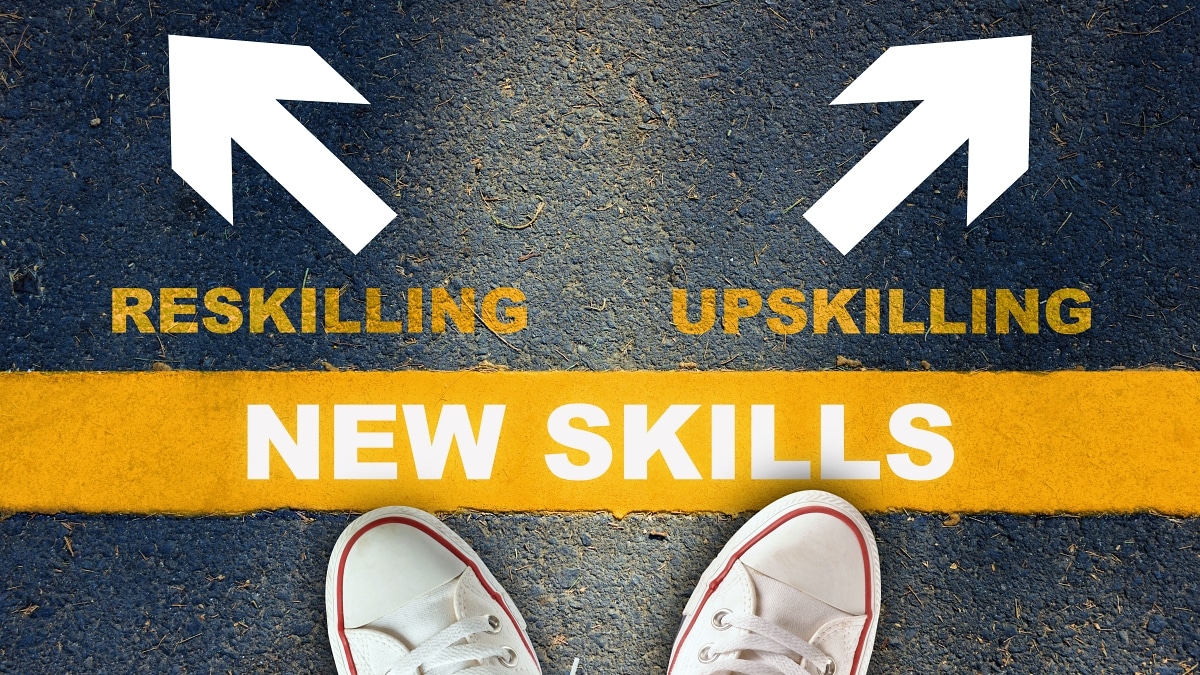
Two of the most common ways to bridge skills gaps are reskilling and upskilling.
Upskilling is giving employees new skills for the job they have today. An example of upskilling would be like manager onboarding. A new manager has the skills for the role but there are additional things they need to know such as budgeting and scheduling, which aren’t typically learned in management development programs.
Reskilling is giving employees new skills for the job they will have in the future. A great case study example of reskilling comes from AT&T. As the organization transitioned from being the “telephone company” to a “digital communications company”, they needed to give employees new skills to grow with the organization. Examples of reskilling would be training in-store customer service representatives to work as remote agents. They’re still doing customer service but they’re doing it a different way. Or a delivery driver who is trained to deliver packages via drone. They’re still delivering packages but the way they do it is different.
Upskilling and reskilling are so important in today’s business environment. We’re already seeing organizations change the way they do things as we emerge from the pandemic. They’re finding new – and better – ways to get things done, service customers, and make profits. But this means that organizations need to give employees the skills to support this new way of doing business.
Naturally, organizations that recognize the need for upskilling and reskilling programs will want to create successful ones. This isn’t a one and done activity. Here are four things to consider as you’re building an upskilling or reskilling program:
Include continuous learning in the organizational culture. The process of learning new skills becomes successful when it’s viewed as a logical normal activity, not a chore mandated by the management team or human resources department. The good news is there are so many different forms of learning – especially in the areas of social media, eLearning, microlearning, etc. – that when we talk about continuous learning it doesn’t always mean traditional classroom learning.
Allocate resources for learning. Learning costs money. It doesn’t have to costs unreasonable amounts of money, but it’s not free. Even programs with free registration costs like a MOOC (massive open online course) require employees to have time away from their daily responsibilities for the purpose of learning. So, companies need to find ways to include learning in their financial and time budgets.
Assess where current employees are and where they need help. Organizations can use a classic gap analysis to determine where they need to target their efforts. Two things can help with this. First, technology systems can tell you the skills that employees currently have. Second, assessments can identify an employee’s level of trainability and competence. Together, these two pieces of information can help the organization begin the process.
Meet with employees to set reskilling or upskilling goals. Managers should meet with employees to discuss where employees are right now from a performance perspective and where they would like their career to be in the future. Employees need to buy-into their skills development plan. Any agreed upon upskilling or reskilling goals can be documented in a format like SMART for monitoring.

Organizations and individuals that want to be ready for the future must think about the skills gap and skills development. As the business world changes, all of us will have to learn new things. And that’s okay. In fact, it’s great. But we need to have a plan in place to make the learning happen.
While reskilling and upskilling are two common activities that organizations need to do to prepare for the future, there are others. I hope you can join me and the Criteria team for a webinar on “Recruitment Strategy: 5 Ways to Future-Proof Your Organization”. It will take place on Thursday, December 2, 2021 at 10a Pacific/1p Eastern. And if you’re already booked that day, sign up to get the recording. It’s going to be a great conversation.
The post Organizations: Your Talent Strategy Must Include Upskilling and Reskilling appeared first on hr bartender.


November 12, 2021
UKG HR and Payroll eSymposium: A FREE Professional Learning Event
(Editor’s Note: Today’s article is brought to you by our friends at UKG – Ultimate Kronos Group . Formed by two leaders in HR solutions, UKG combines the strength and innovation of Kronos and Ultimate Software. They are committed to inspiring workforces and helping pave the way for their people, customers, and industry . Enjoy the article!)
One of the challenges that organizations and individuals can face this time of year is “end of the year resource management.” This includes companies that are close to meeting goal so they’re looking for ways to increase revenue or decrease expenses. Or they’ve made goal and they’re looking for ways to hit those stretch targets.
When these moments are in sight, we might get asked to postpone budgeted activities, like attending educational events. I’ve had it happen many times. But the reality is — I need and want to continue my professional development.
So, I’m always on the lookout for FREE learning and development events that deliver on quality. I want to share with you an event that does just that.
Adapt: Embracing a People-Centric FutureThe UKG HR and Payroll eSymposium will be held on Wednesday, December 1, 2021 from 10a to 4p Eastern. I’ve been participating in these eSymposiums for a few years and always found them to be a high-quality learning and development program. The theme of this event is “Adapt: Embracing a People-Centric Future” — a very timely subject. Here’s a sneak peek of some of the sessions being offered:
The Business Imperative of DEI&B: The Key to Continued Innovation – As companies continue to gain a competitive advantage and market share, diverse voices are necessary for continued innovation. In this session, Brian K. Reaves, UKG’s chief belonging, diversity, and equity officer, and Sue Collard, UKG’s senior director of strategy and operations for belonging, diversity, and equity, will discuss the role each of us plays in creating an environment that sets a company and its customers up for future success.
The Cost of Doing Nothing in Payroll – Organizations and leaders everywhere are concerned with business costs, which is why every company needs a reliable payroll team. Teresa Smith, strategy consultant manager at UKG, will be talking about the impact and cost of non-compliance on payroll and some practical tips for getting ahead when it comes to payroll processing.
Reviewing 2021 Compliance Updates: When the Only Constant is Change – The UKG compliance team has a great session planned focused on recent legislation, case development, and the employment law trends we need to watch. This includes a discussion about how states are handling pay equity and transparency, global data privacy, and wage and hour practices.
The New Normal? 3 Workplace Norms Challenged by COVID-19 – We’ve seen some very encouraging reports lately about cases, hospitalizations, and deaths declining but that doesn’t mean we’re done with the pandemic. Karina Monesson, senior manager of HCM advisory and research at UKG, will be talking about the changing expectations regarding everything from scheduling flexibility to dress code autonomy to how to make office spaces an attractive and productive place to work.
Again, this is just a handful of the sessions being offered. You can check out the entire agenda, speaker profiles, and save your spot by visiting their website.
UKG HR & Payroll eSymposium: 3 Benefits to AttendingI know HR and payroll professionals are focused on a lot of things right now. Not only all of our usual responsibilities, but we are working with the management team on post-pandemic strategies like when and how to welcome employees back to the office. There are days when we can’t possibly think about taking time off to attend a professional development program. But we just have to.
Now is the time to take some of our own advice. If an employee or manager came to us about not having time for professional development, we’d tell them that “developing our knowledge and skills makes us better at our jobs”. And it’s true. Here are three benefits to remember:
Recertification credits. Recertification credits are important, especially if budgets are tight. The eSymposium is FREE and sessions have been pre-approved by the Society for Human Resource Management (SHRM) and the Human Resources Certification Institute (HRCI). In addition, many have been approved by the American Payroll Association (APA). And for my Canadian friends, this event is also pre-approved by the Human Resources Professionals Association (HRPA) and The Canadian Payroll Association (CPA) recertification credits. UKG will be providing a certificate of participation for your files.
Quality content. I really like that this event brings together HR and payroll. I’ve been responsible for both a few times in my career, and this is one of the few events that has topics which are relevant to both. Since the event is free, your company can have multiple people sign up, listen to the content, and then maybe set up a meeting to discuss the sessions. It’s a great way for HR and payroll to learn from each other.
Session recordings. If you’re not able to attend the live sessions on December 1, no worries. Most sessions will be made available on demand for registrants. That way if you’re torn between two sessions then you can listen to one live and the other on demand. And honestly, there are times when I actually prefer listening to the recordings. I can schedule my learning over time. That way, if I do have to step away for an emergency, I know that I can still listen to the recording and not miss out on the information.
Your Learning and Development is ImportantI hope you find this event as interesting as I do. The UKG one-day eSymposium for HR and payroll professionals is designed to deliver education on the topics we face every day and could potentially face in the future. It has, what I think, are the three ingredients many of us look for in professional development opportunities: 1) high-quality content, 2) no cost to attend, and 3) pre-approved for recertification. We all know this doesn’t happen very often.
Find some time to focus on your professional development. It’s important. Sign up for the UKG eSymposium. Here are the registration details:
Wednesday, December 1, 2021
10 a.m. to 4 p.m. Eastern Time
Look forward to seeing you there!
The post UKG HR and Payroll eSymposium: A FREE Professional Learning Event appeared first on hr bartender.


November 9, 2021
Consistent Performance Management Can Help Employee Retention
(Editor’s Note: Today’s article is brought to you by our friends at HRdirect , a trusted source for employee-related compliance, administration, and motivation tools. They serve as a one-stop shop to make employee management easier. Enjoy the read!)
With all the talk about employee retention, I think it’s important to talk about some of the activities that organizations do which contribute to retention. A few weeks ago, we talked about the Family and Medical Leave Act and the way we administer leaves can impact employee engagement and retention. We also recently discussed safety and the fact that employees want to work at places that are safe.
Well today, let’s talk about another aspect to employee retention – performance management. Everyone cares about performance. Organizations care because high performing employees help them reach their goals. Employees care because excellent performance can help them get better pay and promotions.
One of the most common tools in performance management is the annual performance review. Unfortunately, the annual performance review has been a constant source of criticism by both managers and employees. It’s also been very difficult to properly administer performance reviews during the pandemic.
Just because performance reviews aren’t perfect doesn’t mean they should be abandoned. In fact, maybe the answer is to reevaluate the process. And again, I don’t mean eliminate the review. Even organizations that have announced they’ve “eliminated” the performance review haven’t eliminated feedback. Which is what the performance review is supposed to be – an opportunity for a feedback conversation.
It’s the perfect time to reevaluate performance managementIf you’re looking to insert some freshness into your performance management process maybe the place to start is building a great foundation. Our friends at HRdirect offer a Performance Management Forms Library that might be exactly what your organization’s performance review process needs. The Library contains:
Employee Performance Review forms, including a self-reviewSMART goals worksheetWarning and disciplinary notices, should performance coaching progress to that pointEach form in the Library has been reviewed by an attorney and is 100% compliant. The Library could be used in conjunction with performance management training for supervisors.
What I like about this Library is that it contains some forms that I believe should be a part of the annual review process:
Self-reviews are a great activity for employees. When an employee is hired, the manager can review the form with the employee. They can discuss how performance will be evaluated and the rating scale. Then prior to an employee’s review, the manager can ask the employee to complete the form and come prepared to discuss their performance.
Corrective conversations are sometimes necessary. I know that we don’t like to talk about disciplinary action during a review. I’m a fan of a performance review not being a surprise. That being said, I’m also not so naïve to think that we don’t have to mention corrective steps during a review. The Library provides some forms related to putting an employee on notice in a supportive and compliant way.
Goal setting is an essential part of the performance process. While it’s important to review past performance, it’s equally important to talk about the future. And regular readers of this blog know that I’m a fan of SMART goals. The Library provides a worksheet for managers and employees to create a SMART plan for the employee’s performance goals.
There’s also a little bonus in this Library – exit interview forms! Some of you might be saying, “Didn’t you say that one of the goals of performance management is to retain employees?” And you would be correct. But my immediate thought about the exit interview forms was this could offer some creative inspiration to include a few stay interview questions into the performance management process.
Performance review conversations typically have a “future” component to them. Managers and employees talk about the employee’s future career and what they would like to accomplish. Managers shouldn’t assume they know what an employee is going to say about their career goals. Now more than ever – in a candidate’s market – organizations need to get feedback about the employee experience. So, consider using the information on the exit interview forms to craft a few stay interview questions.
Give employees a consistent performance review processOrganizations and individuals care about performance which means that performance conversations are necessary. One of the keys to a successful performance discussion is consistency – in communicating performance expectations and discussing results. A forms library could offer the consistency that managers and employees are looking for to make their discussions more actionable and accountable. That’s a win for everyone.
P.S. Our friends at HRdirect are offering HR Bartender readers 20% off their products. You don’t want to miss out on this opportunity – just use this link to receive the discount.
The post Consistent Performance Management Can Help Employee Retention appeared first on hr bartender.


November 7, 2021
Talent and Technology [Episode 8]: How Technology Can Make Work More Human
Estimated reading time: 3 minutes
In today’s business world, there’s so much information available online that people sometimes don’t know what to trust or how to use it. Organizations and individuals need to figure out how to effectively have a relationship with technology.
Which is why, in this mini-season on Talent and Technology, I wanted to speak with Dan Schawbel. He’s a New York Times bestselling author and managing partner of Workplace Intelligence, a research and advisory firm helping HR adapt to trends, drive performance, and prepare for the future.
Long considered a go-to authority on HR, talent, and leadership, Dan has spent his career researching and advising on workplace and career success. Through dozens of studies, he has exposed some of the biggest work trends of our time, such as the skills gap, the 4-day workweek, and the burnout epidemic, which have been highlighted as cover stories in The Wall Street Journal, Money Magazine, and HR Magazine.
His latest book is “Back to Human: How Great Leaders Create Connection in the Age of Isolation”.
In general, we are becoming a “more tech” society. That means organizations need to provide technologies that help employees do their jobs well. As individuals, we need to keep our skills current. Creating a balance between everything – work, life, tech – will be essential. Notice – I didn’t say easy. I think maintaining a healthy and productive relationship with technology will be a constant juggling act.
Connect with Dan Schawbel
Website: http://workplaceintelligence.com
LinkedIn: https://www.linkedin.com/in/danschawbel/
Twitter: https://twitter.com/DanSchawbel
During the show, Dan mentioned a couple of research studies that you might find interesting: Case Study: WeWork on a “Hybrid Workplace” and The digital transformation dilemma: U.K. employees want pandemic-era tech to stay, says research. Also, be sure to check out the Workplace Intelligence Expertise Exchange.
Episode 8 – Dan Schawbel Show Notes
Episode 8 – Dan Schawbel Transcript
Thanks for listening to our podcast. This season of the HR Bartender show is brought to you by our friends at Ultimate Kronos Group (UKG), a leading global provider of human capital management, payroll, HR service delivery, and workforce management solutions.
You can subscribe to the HR Bartender show on Apple Podcasts, Spotify, Google Podcasts, Stitcher, and TuneIn. And we would absolutely love it if you would leave a review.
If you enjoyed this episode, be sure to check out other episodes on our podcast page.
The post Talent and Technology [Episode 8]: How Technology Can Make Work More Human appeared first on hr bartender.


November 4, 2021
Quitting: How Much Frustration Can You Deal With – Ask #HR Bartender
Estimated reading time: 5 minutes
One of the things we’re hearing about more often in the news is employees quitting or just walking off the job. Or staging protests. Or filing labor charges. Those employee actions shouldn’t be taken lightly. Sometimes employees get so frustrated and exhausted because they don’t feel that management is listening. It reminds me of this story from an HR Bartender reader. It’s a long story, but worth the read.
For about the last six months, there’s been an ongoing problem in my workplace. Every employee has witnessed it and brought to the attention of the owners and still nothing is being done about it.
Shortly after I was hired, another employee was rehired (after being fired for stealing tips). Upon coming back, she has pranced around the place like she is someone of authority. When brought to our manager’s attention, he says he will simply have a talk with her, and nothing is done. Then the crew started noticing that the tips at the end of the night were significantly shorter when working with her than working with anyone else. This was also brought to management’s attention. AGAIN……NOTHING. These were same concerns from the crew that got her fired in the first place.
So instead of any action being taken, she gets extras handed to her like keys and responsibilities that were given to other people. She gets away with leaving work early, taking things from the bar (i.e., beer, t-shirts) without paying for them. She has continuously been rude to customers as well as employees and still has no disciplinary actions taken against her. Personally, she has yelled at me in front of customers telling me to leave and taking it upon herself to clock me out. The crew has threatened quitting because they all insist that there has got to be something going on for her to be getting away with all this crap.
PLEASE HELP, I don’t know what to do. I have taken this to the owners and even confronted her on the money stealing part of it and nothing is being done. I don’t even want to go to work anymore because I feel that my efforts to do my job to the best of my ability are going to be null because as soon as she comes in, she’s going change it all anyway. The way she wants is, even if that means going against health departments orders.
There’s a lot to unpack in this scenario. First of all, there are mentions of activity that could be fine, but they could also be considered inappropriate or illegal like ignoring the health department and clocking out an employee without proper authority. We don’t have enough information on these matters, so we’re not going to directly address them except to say that they do need attention. Again, they could be explained and fine, but they could be a concern.
But what I’d like to talk about is the frustration in this note.
I hate to say it but sometimes organizations hire the wrong people. Sometimes they make what looks like are illogical and bad decisions. Sometimes they ignore employee feedback. I’m not saying that’s what happened here or making excuses for organizations or managers. The reality is though…it happens. And hopefully, organizations are able to get back on track without causing irreparable harm to employee engagement and retention.
I don’t know if the organization in this scenario realizes how employees feel about what’s going on. And if they did, I don’t know if they would do anything about it.
But I do know that the employees who work at this company have a decision to make: How much frustration are you prepared to endure? Only the individuals involved can answer that question. But here are a couple of resources that might help.
3 Reasons You Might Want to Consider Leaving Your Current Job
How to Resign from Your Job Properly
Job Candidate Disclosing Why They Quit a Job
Don’t Contact My Boss for a Job Reference
Employees: When Should You Lawyer Up
There are so many dynamics in this situation, I believe the employees are best equipped to determine what’s good for them. That doesn’t mean they have to do it with no information. And there are many other articles on the internet about when to consider quitting your job and how to talk about it during job interviews.
If the employees decide that they plan to stay with the organization, then think about how you’re going to manage the frustration. Find some personal strategies that work for those moments when it’s going to get crazy.
High Performance Involves Taking Care of Yourself
Know Yourself [Self-Management Series]
How to Create the Perfect Morning Routine
Personally, I want to commend the employees for sharing their concerns with management and trying to figure out a way to make things work before thinking about quitting. As a HR pro, that’s what we hope happens. Employees give us feedback to make the workplace better. But I also know that when employees bring feedback, the organization has to be prepared to do something with it. And if they don’t, then employees will make their own decisions.
Image captured by Sharlyn Lauby while exploring the streets of Fort Lauderdale, FL
The post Quitting: How Much Frustration Can You Deal With – Ask #HR Bartender appeared first on hr bartender.


Sharlyn J. Lauby's Blog

- Sharlyn J. Lauby's profile
- 10 followers


![[image error]](https://www.hrbartender.com/wp-content/uploads/2021/11/HR-Direct-Performance-Management.jpg)