
Sharlyn J. Lauby's Blog, page 59
January 6, 2022
6 Resources for Creating a Better Employee Experience

Estimated reading time: 4 minutes
Reddit was founded in 2005 as a social discussion website. It ranks as one of the top 20 most visited sites in the world and the top 10 in the U.S. They have about 430 million users and, from a work perspective, mostly individuals in the early stages of their career.
If you haven’t seen it, there’s a subreddit that’s gaining a lot of attention lately. It’s called “antiwork”. I’ve been paying attention to it for several weeks and I’m not sure that the discussion isn’t really opposed to work as much as it is opposed to working in a terrible organization. When you have a moment, check it out. The stories from employees about the way they are treated … well, check it out for yourself.
Not every organization is treating employees with the complete disrespect mentioned in the antiwork subreddit. But it does prompt the question for businesses: “What is our employee experience like?” and “How would employees describe it?”
The employee experience isn’t a “set it and forget it” strategy. It should be regularly monitored and updated. Now could be a perfect time to audit the company’s employee experience and make some adjustments. Here are a few resources that might help.
How Organizations Can Build an Intentional Culture
We all know that the past couple of years have been tough. Organizations want to shift their focus toward economic recovery. And let’s be clear – economic recovery doesn’t necessarily mean “back to the pre-pandemic days”. During the pandemic, organizations and employees have learned smarter ways to work, and those discoveries need to be incorporated into the business.
The process of redefining organizational values and behaviors then using those to create an intentional culture could be exactly something for organizations to consider right now.
3 Areas to Include in an HR Compliance Self Audit
As we’re starting the New Year, conducting an audit is a helpful way to check the status on your compliance. Because compliance activities like labor law posters don’t follow a set schedule. It’s not like “every January labor law posters change”.
2022 is going to be a busy year. As such, I can see a lot of organizations wanting to start the year focused and ready. This includes the HR department. HR will want to know that compliance matters are in order so they can spend much of their time on recruiting, training, and helping the organization accomplish its business goals.
Human Experience Management #HXM – 4 Essential Culture Components
Now more than ever, employees are looking for a real authentic human work experience. They want to know that the organization views them that way. This isn’t to say that employees aren’t prepared to do hard work – trust me, they are. But they expect to be treated as a human first.
HXM is exactly what it sounds like – it’s about treating individuals as humans versus employees. But what does that mean? What are the key components of having a human experience? HXM isn’t about separate programs. It’s about bringing all the components together into everything the organization does.
How to Build a New Employee Benefits Plan Post Merger
Mergers and acquisitions can be exciting times for businesses. M&As can create opportunities for new products and services. They can unleash innovation and disrupt industries.
But make no mistake M&As are also tough and present many challenges. One of the biggest is merging talent management strategies, such as employee benefits. There are lots of decisions to be made and we often don’t make everyone happy. But, if we make decisions in alignment with company values, and if we’re transparent about how we made those decisions, then I believe employees will respect the process.
The Employee Lifecycle Has Not Changed but the Employee Experience Needs To
The business world is constantly changing and as a result, the employee experience should constantly evolve with it. I’m not talking about the different phases of the employee lifecycle: hiring, onboarding, engagement, development, retention, and separation. Those really don’t change much.
What should be changing is the organization’s approach to these lifecycle phases, which is the essence of the employee experience. Organizations should ask themselves, “What is our candidate experience?”, “How will the organization conduct onboarding?” Those experiences can and should change over time because employee wants and needs change.
Employers and Employees are Responsible for Retention
Organizations should care about employee retention and put strategies in place to retain employees. But this doesn’t mean that employees don’t have any responsibility in retention.
Organizations are unable to put retention strategies in place if they don’t understand what employees want (i.e., what makes them stay with the company). Employees need to provide honest feedback to the organization. Retention occurs when organizations create a strategy to engage and retain employees based on feedback from employees.
Over the past few years, employee expectations have changed about work. If organizations want to retain employees, they need to offer a complete employee experience that aligns with today’s employee expectations. Organizations should solicit feedback from employees and try to align the experience appropriately.
Image captured by Sharlyn Lauby while exploring the streets of Los Angeles, CA
The post 6 Resources for Creating a Better Employee Experience appeared first on hr bartender.




January 4, 2022
Employees Want to Work at Diverse and Inclusive Organizations
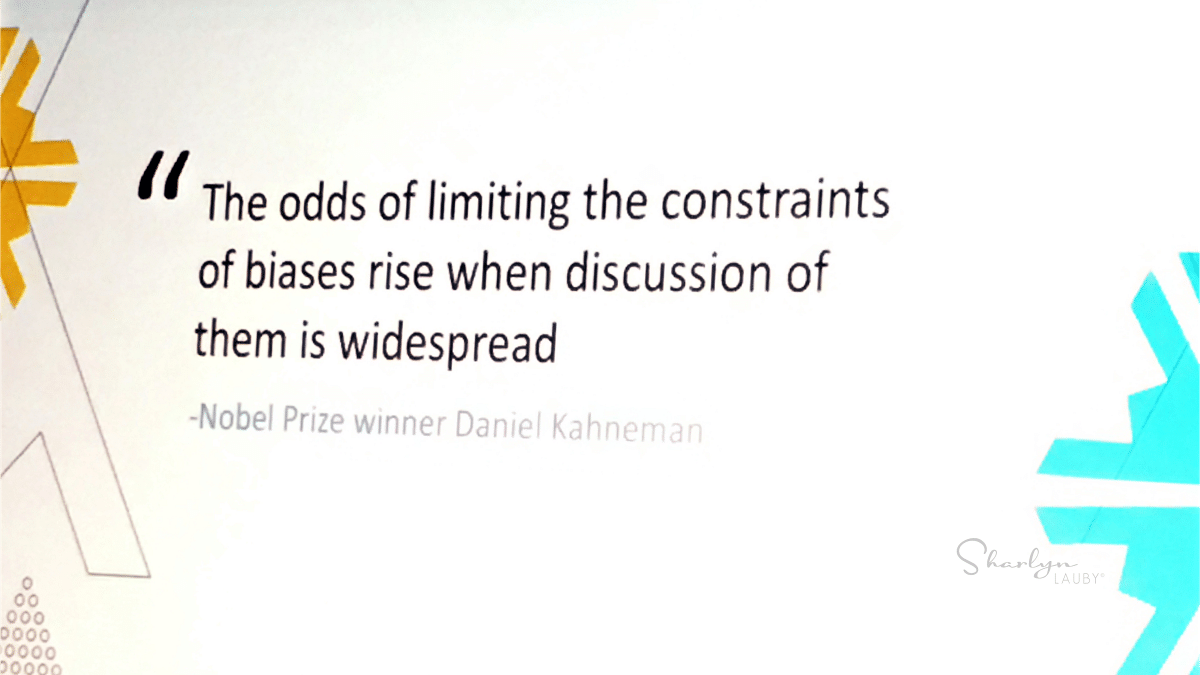
Estimated reading time: 4 minutes
While I know there’s a tremendous focus on recruitment right now, organizations can’t ignore the employee experience. Because that’s what attracts and retains employees.
And when we think about the employee experience, one of the most common themes I’m seeing is diversity, inclusion, equity, and belonging (DEIB). Employees want to work for organizations that bring together different people because it helps individuals learn and grow. They want to be a part of organizations where everyone is welcomed and valued. Employees want to know that equity exists in their organization.
Lots of organizations talk about DEIB, but we need more organizations to show it. If you’re looking for a few ways to start taking action, here are a handful of articles that might help.
Job Seekers Want to Work at Organizations that Align with Their Social Views
While social views might not have been the number one reason that an employee has left or is considering leaving the organization, it could be one of the things that attracts someone to a new employer. In a survey from Gartner, 75% of employees expect employers to take a stance on current societal or cultural issues, even if they have nothing to do with them directly.
The First Step to Building a More Inclusive Workforce is Having More Inclusive Job Postings
A job description may seem like a small part of your hiring process, but it influences nearly everything else that follows. The job description cements the essential requirements for a role and determines the sourcing strategy. It is one of the first signals that the organization sends to candidates about whether they will feel welcome and included in working for you. The more inclusive, inviting, and accessible your job description, the stronger the foundation for a diverse workforce.
Organizations Can Create Workplace Belonging
Employees want to work for companies that make them feel welcome. They want to work at places where they feel they belong. And when it doesn’t happen, everyone suffers. But when belonging happens, employees can bring their best selves to work, and everyone is better for it. In this episode of The HR Bartender Show, we talk about the role employee resource groups (ERGs) can play in creating belonging. We also discuss how important it is for individuals to have a clear understanding of their personal values, including knowing when to stand up for them.
How to Help Employees Learn About Pronoun Sharing
Pronoun sharing is more than just a trend. Pronouns are attached to our identity, like our names or nicknames. For example, like it or not, we now have an image in our heads when people talk about “Karen”. And in my opinion, it’s not fair. We want others to use our name correctly and not give us a nickname that we don’t feel represents us. Pronouns are part of who we are, and it helps us and others when we share the pronoun that we would like for others to use when interacting with us.
Recruiting and Retention: Low Empathy Workplaces Are Not Attractive
Organizations that truly want to make a positive impact on DEIB need to do more than just talk. And they need to do more than a generic training program. Providing employees with an opportunity to build empathy is good for them and good for the company. It starts with leadership. Why? Because adopting an attitude of empathy will trickle down throughout the staff if there is ownership for empathy and empathetic behavior at the top.
Is It Time to Move from Family Friendly to Life Friendly
Over the past few years, organizations have realized the value of employee experience. They also have realized that employees will have a better experience at work if they are allowed to bring their whole selves with them. No more of this “leave your personal life at the front door” stuff. I think it’s the reason that organizations are offering more in terms of parental leave programs, wellbeing programs, etc. What I loved about the term “life friendly” is that it applies to everyone: parents, non-parents, and those individuals who might not have “blood relatives” but they have people in their lives who are their number one priority.
Candidates and employees are smart. They will notice those organizations that “talk” about DEIB and those that genuinely “act”. Employees know that work is an important part of their lives, and they spend a lot of time with their employer. The last thing they want to do is spend it with companies that don’t get DEIB and aren’t willing to work toward being more diverse and inclusive.
Image captured by Sharlyn Lauby at an employee experience goal summit in San Francisco, CA
The post Employees Want to Work at Diverse and Inclusive Organizations appeared first on hr bartender.


December 28, 2021
Employees: Drive Your Own Career Development
Estimated reading time: 5 minutes
I don’t think I’m alone when I say this is the time of year when I like to reflect on the past twelve months and what I’ve accomplished. And I like to think about what my goals will be for the upcoming year. While there’s always a certain amount of “doing the same” where my long-term career development goals are concerned, there are small goals I want to accomplish. And small goals are just as important as the big ones.
One of the things I do during my year-end career review is look at articles I’ve bookmarked. The articles might mention a book I want to read or a process I want to check out. Here on HR Bartender, we’ve published a few career development articles that might help with your own year-end review process.
You Should Give Yourself an Annual Review
One of the things that’s been tough over the past couple of years is dealing with the lack of feedback. We’re used to getting reactions to our work and when we work remotely, it can be a challenge. I know there are a few companies that either scaled down or put their performance reviews on pause because of the pandemic.
Conducting your own annual review is a good way to recognize how much you’ve accomplished. If your organization does annual reviews, great! This document could be a way for you to prepare for your annual review conversation. If you’re a freelancer or consultant, this could be a perfect way to evaluate your own work and set some goals for the upcoming year. And if you’re looking for a new opportunity, you might be able to use your self-review to start planning your job search.
What To Expect in 2021: Employee Driven Career Development
I really need to rename this article “What to Expect in 2022” because employee-driven career development isn’t going away anytime soon. With an increase in remote work, I believe we’re going to see a greater level of employee driven career development. Learning doesn’t stop when you work from home. But organizations are going to want and need employees to offer some direction in terms of what remote learning looks like. Not only the best way to deliver remote learning but the topics that employees might find valuable.
Career development is about the organization and employees working together to identify learning opportunities. There’s no rule that says managers have to tell employees what to learn. And there’s also no rule that says all learning must happen in the office. Use this as an opportunity to build a career development plan that meets both employee and employer needs.
When To Tell Your Employer That You Are Pregnant
Mr. Bartender and I do not have children. So when a reader asked about telling their new employer that they’re expecting, I wasn’t sure that I had enough personal experience to draw on for an answer. My initial thought is that this is a very personal matter, so “it depends”.
However, to get some insights, I decided to reach out to a few colleagues and friends for their thoughts. Our friend Kate Bischoff offered some great thoughts. “Prioritize telling your friends and family first. Talking to an employer about having kids is really hard because of the stereotypes we have about parenting, flexibility, and the ire that we think employers might have about us needing leave, including leaving work to pick up a sick kid. I know that not all employers have a dim view of working with pregnant and parent employees. Hopefully, this employer cares about you and wants what’s best for you too. Here’s what I recommend: Work on a plan and be open to talking about that plan.”
Start the New Year Betting on You and Your Career
During 2021, I had the opportunity to interview Laurie Ruettimann about her book, “Betting on You” and career development. Laurie shared her love for premortems. “I’m obsessed with the premortem. It’s an old stoic exercise to help you mitigate risk. You begin by thinking of something that will fail. Then set a timer for 60 seconds and write down all the ways it will fail. When the timer is up, you have a list of things to fix before you start your endeavor.”
One of my big takeaways from the book is that the key to success lies in being yourself. Sometimes that means doing the unpopular thing. Sometimes it means you’re going to fail first and succeed later. “Betting on You” is the book you want to have on your bookshelf or on the corner of your desk as a reminder that you’re not alone. We all need that encouragement.
5 Books Every HR Professional Should Own
Speaking of books, an HR Bartender reader asked me about putting together an HR library and I got the chance to share a few of my favorite reads. Whether you’re just starting in HR, or you’ve been in the field for a few years, having a good resource library is important.
And your resource library doesn’t need to solely consist of HR books. A well-rounded HR library should include books on communications, technology, and marketing. I often tell people that I have a marketing textbook on my bookshelf. It’s a valuable reference when it comes to employment branding and recruitment marketing.
One last thing about having a career development review. Be sure to celebrate your successes – big or not-so-big. It’s very easy to focus on the things that didn’t get done. Or the stuff that didn’t go exactly as planned. But I’m sure there are plenty of things that went right. Maybe one of those things that didn’t go well initially, ended up being exactly the right thing. My point is … celebrate your successes and small victories. Then get ready for the New Year.
Image captured by Sharlyn Lauby while exploring the streets of San Francisco, CA
The post Employees: Drive Your Own Career Development appeared first on hr bartender.


December 21, 2021
Hire the Best Employees: Start with the Best Recruiting Strategy
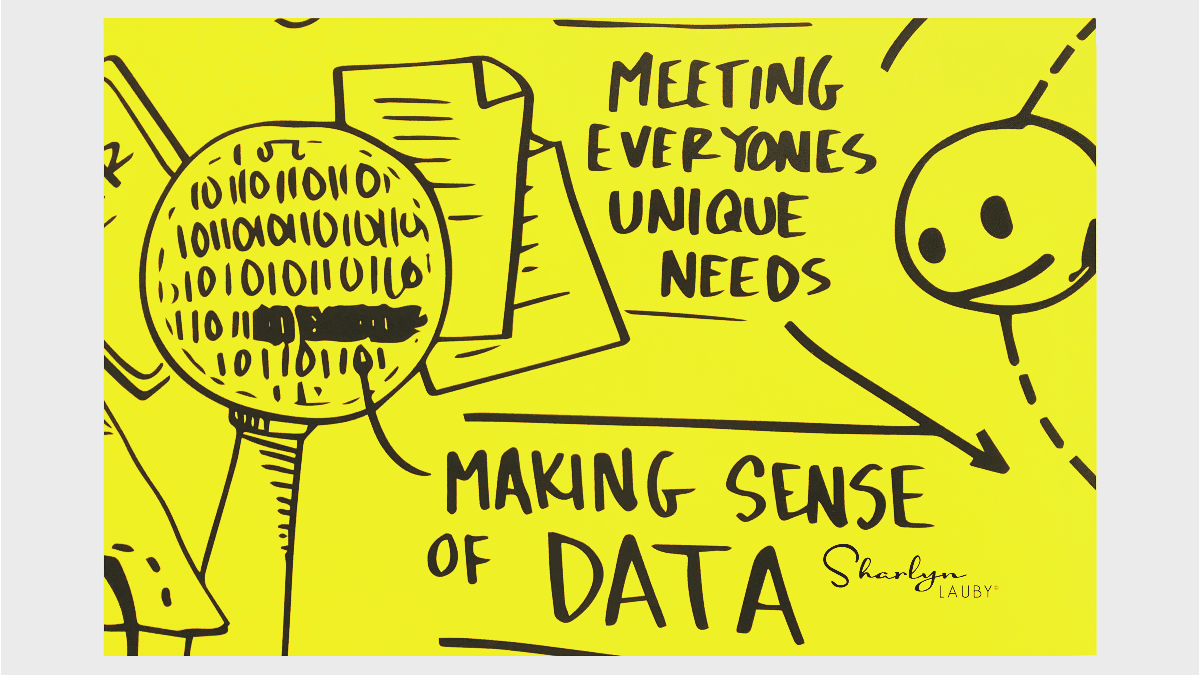
Estimated reading time: 4 minutes
Many of you know that I’m a planner. I like to plan. That doesn’t mean I don’t like the implementation or execution of plans; but I just find if I take time to plan the implementation/execution is easier. And often better. That’s why I encourage organizations to plan, especially where their talent needs are concerned.
I realize that right now organizations have lots of job openings. They’re focused on hiring people. But now would also be the perfect time to do some recruitment strategy planning. That way, the organization is thinking about both their short- and long-term talent needs at the same time. If you’re looking for resources to get your recruiting strategy plan started, here are a few articles that might help.
Agile Talent Strategy: Why You Need It and How to Develop One
Talent and business performance have always been intertwined. And the solution for both is intertwined. We’ve been talking for a while about how business agility is important to business success. Organizations need to be able to quickly react to changing business conditions. Well, the same holds true for talent. Organizations should adopt an agile talent strategy that allows them to react quickly to changes in the labor market.
How to Develop a Workforce and Staffing Plan
Organizations cannot afford to waste time and resources. Having a plan to get the talent you need does that. But plans only work if you use them. Having a documented strategy that identifies the talent that the organization needs is a big part of helping the organization accomplish its goals. Because you can’t do it without people.
Talent Intelligence Should Be Part of Your Workforce Planning
Workforce planning is one of the biggest challenges facing businesses today. Talent Intelligence takes the stress and bias potential out of the early parts of the recruitment process and frees up the time recruiting teams need to do the work that technology can’t do: connecting with candidates, evaluating their fit, building company culture, and setting new hires up for success.
Contingent Workers Should Be Part of Your Recruiting Strategy
Contingent workers can be a great addition to the organization’s recruiting strategy. They can provide high level performance when it is needed most. This could involve an organizational shift in focus. But it definitely means spending time to develop and communicate a strategy.
The Future Workplace [Episode 1] – Recruiters Need Budgets to Source the Best Employees
A few times in my career, I’ve been tasked with “turning around” or fixing HR departments. During those times, I’ve frequently come to realize that one of the departments’ biggest challenges was recruiting. Hiring managers were frustrated because they didn’t feel that the recruiters were sending qualified candidates in a timely fashion. When the recruiting function suffers…everything in the business suffers. Organizations link their brands to talent. They build entire marketing campaigns around being able to deliver the best products and services. That begins with finding the best employees.
10 Ways to Recruit More Effectively Against the Competition
We all know there are various reasons that people are searching (or not searching) for new opportunities. The bottom line is that organizations need to focus on their recruiting strategy in a highly competitive labor market. If you’re a good employer, job seekers will want to work for you. Organizations need to get the word out about their culture, jobs, and benefits. Now isn’t the time to be shy about the benefits of working at your organization. Because you can bet that your competition is telling candidates the benefits of working for them.
The challenges we’re seeing right now in the recruitment market are not going away any time soon. Pew Research Center has said over 10,000 people a day turn retirement age. While they’re not all going to leave the workforce at the same time, it’s a reminder that Boomers are planning their exit strategy. That means organizations need to plan for how they will get the work done. Having a recruiting strategy will help organizations manage the change.
Image captured by Sharlyn Lauby at the SHRM Annual Conference in Las Vegas, NV
The post Hire the Best Employees: Start with the Best Recruiting Strategy appeared first on hr bartender.


December 19, 2021
Creating a Learning Organization Includes Developing a Positive Learning Culture
Estimated reading time: 3 minutes
The concept of a learning organization is one where the company regularly facilitates learning to make the business better. The concept originated in Peter Senge’s book “The Fifth Discipline”, where he talks about the five disciplines in creating a learning organization. They are:
Personal Mastery is being proficient in the knowledge, skills, and abilities (KSAs) necessary to do the work. We don’t have to be perfect, but we do need to understand how the work gets done.Team Learning is focused on those attributes that make us a good team player. Organizations accomplish their goals through people working together.Systems Thinking focuses on understanding all the organization’s parts – both internal and external. For an organization to be able to continuously learn, they need to understand how the organization operates.Mental Models are the assumptions we have as individuals and organizations. For learning to be effective, we need to be able to challenge and sometimes discard mental models.Shared Vision provides all individuals with a common goal. And while having a common goal seems obvious, it’s important for everyone to know the goal and why it exists.I’ve been hearing a lot lately about the learning organization and I believe there’s one other component that’s critical – creating a positive learning culture. If organizations want employees to learn the KSAs to do their job and be an excellent team player, they need to look forward to training. Employees should understand how training helps the organization’s systems work to achieve shared goals. Finally, employees need to know when they need to learn new things because the old assumptions just aren’t valid anymore.
During this year’s SAP SuccessFactors conference, I listened to a panel discussion on internal mobility and one of the panelists mentioned the idea of “work” sustainability. I immediately loved the phrase because it really speaks to creating a positive learning culture necessary for a learning organization.
But the concept of work sustainability might involve a change in mindset for everyone. In the past, we might have thought of our career in terms of one long journey. Maybe now, we need to think of it as many small trips, each bringing value to that concept of “career”.
As a result, it also means that we need to think of the learning and development function a little differently. I wrote an article earlier in the year asking the question, “Should Learning and Development Be Renamed the Opportunity Department?” The conversation about work sustainability reminded me of the article and the need for an “opportunity marketplace” where employees can look forward to getting the learning they need to sustain their careers.
Becoming a learning organization should be a goal for everyone. A learning organization helps us remain competitive by having employees who know the goal, work hard to achieve the goal, and are willing to learn new things. But creating a learning organization isn’t about simply having a whole bunch of programs. It’s about creating an opportunity marketplace that will get employees excited about learning, so they want to grow in their roles.
Image captured by Sharlyn Lauby while exploring the streets of Las Vegas, NV
The post Creating a Learning Organization Includes Developing a Positive Learning Culture appeared first on hr bartender.


December 16, 2021
It is okay to not have all the answers
Estimated reading time: 2 minutes
One of the best conversations at this year’s Society for Human Resource Management (SHRM) Annual Conference was between Chipotle Mexican Grill’s Chairman and CEO, Brian Niccol and Chief Diversity, Inclusion, and People Officer, Marissa Andrada. Specifically, the part of the conversation that I found very insightful was when they talked about the pandemic and how they’ve been communicating with employees.
I’m paraphrasing but basically they said that they told everyone, “We don’t have all the answers. But we’ll figure it out. And we might not get it right. But we’ll fix it. And learn.” Honestly, more organizations and individuals need to learn how to comfortably say this. And not just in relationship to the pandemic, but all the time.
It’s okay not to have all the answers. Go find them.
Sometimes we’re going to miss something and get it wrong. Go make it right.
We can learn from our mistakes and become stronger for it.
While Niccol and Andrada made saying these words sound so easy, the truth is it’s very difficult. In the business world, we tend to reward people for “having all the answers”. Employees are promoted because they always know the answer. As a result, not having an answer could be perceived as a bad thing. Organizations have to change that thinking and reward people for being curious and always working to find good answers.
And note that this isn’t just an organizational paradigm shift. It’s a communication exercise as well.
Over the next few months, organizations and individuals are going to find themselves in situations where they don’t have all the answers. Start thinking about the best way to respond. Start practicing how you’re going to say those words. I know, that might sound silly but practice saying with confidence and empathy “I don’t know the answer but I’m going to find out.” Like I said, this is harder than it looks.
Because the goal isn’t for someone to walk away from the conversation wondering. It’s for them to leave knowing you’re going to do the right thing, even if they don’t get an immediate answer.
Image captured by Sharlyn Lauby while exploring the streets of Las Vegas, NV
The post It is okay to not have all the answers appeared first on hr bartender.


December 14, 2021
Help Employees Be More Productive Through Apps
Estimated reading time: 7 minutes
(Editor’s Note: Today’s article is brought to you by Jotform , a powerful online forms solution that helps organizations go from busywork to less work in minutes. Check out this FastCompany article by Jotform Founder Aytekin Tank on “ 4 ways to ensure workplace cliques don’t take root in your organization ”. And enjoy the article!)
According to Pew Research Center, 85% of Americans own a smartphone. 15% of those individuals are “smartphone only” meaning they use their phone as their primary internet device and do not have traditional broadband at home. The reason I’m mentioning smartphone statistics is because when we’re using our smartphones, we’re often using apps.
An app can help us store and process information. I like to think of apps as almost a personal assistant to remind me about details that I don’t want to forget – at exactly the moment I need them.
This means when I find an app that helps me be more productive, I become reliant on it. And selfishly speaking, there are times when I would really love an app developer to add a feature that would make things better for me. And of course, I don’t want to sit around just hoping for an app to give me that exact update I’m looking for. My guess is I’m not alone.
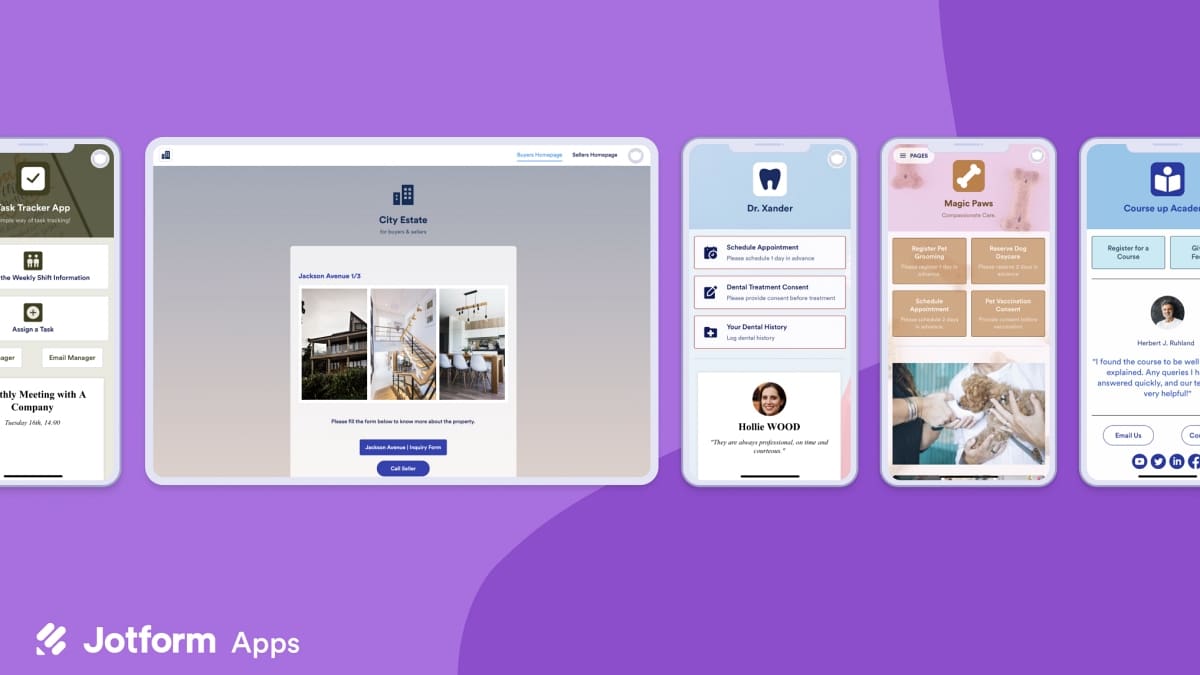
Our friends at Jotform have created an Apps product. Jotform Apps is a no-code drag and drop app builder that enables anyone to create an app with ease. It provides responsive design that is compatible with iOS, Android, and Windows. While Jotform Apps can be used in all aspects of the business – regardless of your industry or company size – it can also be as a simple way for organizations to create employee portals.
How to Create Employee AppsBefore I share with you some practical examples of how Jotform Apps can make employee interactions easier, I just want to mention that you have three options when it comes to creating an app.
Convert your existing Jotform forms into an app. You don’t have to recreate anything!Use one of the 200+ predesigned app templates. Perfect way to get some creative inspiration.Create something new and custom to suit your needs. This can be a lot of fun!As I was test driving the Jotforms Apps feature, there were a few uses that immediately jumped out to me.
CHECKLISTS: There are lots of things that HR and hiring managers need to do with employees – preboarding, onboarding, and even offboarding. Checklists are perfect in these situations to provide consistency, prevent a task from being forgotten, and possibly sending the wrong message to employees.
Another popular use for checklists is procedures, like in opening or closing duties. When I worked in the hospitality industry, we had opening and closing checklists. I know other industries have the same. Instead of printing paper, why not create an app that the employee to work from.
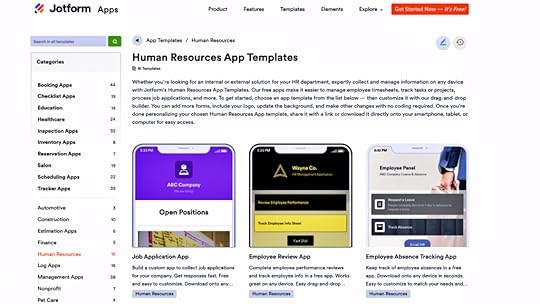
HUMAN RESOURCES: There are several HR related apps in the templates section. One of the first I came across was a directory. I can’t imagine that I’m alone in saying that I like the people I work with, but I really don’t want to memorize their contact info, nor do I want to store their contact information in the same place as my personal contacts. Having a work directory would be helpful.
Secondly, if you’re an organization that doesn’t have a formal timekeeping system, but you want to find an automated process for tracking time off requests and shift trades, an app could be helpful.
Thirdly, I saw a customer satisfaction survey template and it made me wonder if I could tweak it to monitor the candidate experience? Not only would the survey allow me to gather good information from candidates, it sends the message that we’re a feedback and tech friendly company.
CAREER: “Daily Logs” was another set of templates that I thought was very cool. It’s basically a way for employees to log activity. I could see it being very helpful when an employee is trying to develop new habits. For instance, we’ve talked here on HR Bartender about employees creating a “career portfolio” and tracking their self-learning.
SALES AND FINANCE: I wanted to bring other departments into the conversation because what Jotform has created isn’t exclusive to HR. Other departments can use Apps to make work processes easier. For instance, if you have salespeople who don’t have access to customer relationship manager (CRM) software, creating an app is an easy way for them to make appointments and send proposals. We all know that making the selling process easier is beneficial to the bottom-line.
In addition, I saw some expense reporting templates. Let’s face it – no one likes to fill out expense reports. Accounting departments don’t like to chase after employees who haven’t completed their expense reports. An app could be a win for everyone.
Now, if you’re saying to yourself, “This is great but I’m a design amateur. This is going to look cheesy, and no one will use it.” Jotform thought of that – users have access to a media library where you can download images to make your app align with your brand. You can add your company logo and even upload some video. There are also some widgets that you can use to insert QR codes, a countdown clock (which could be fun to countdown to a big employee or customer event), and social media buttons.
Consider Developing an Employee App PlanI spent some time trying to create an app and found the app builder to be very intuitive. I could see someone converting a form to an app in a matter of minutes. Then it becomes an exercise in adding logos, etc. which I admit could take longer, especially if you have perfectionist tendencies like me. Honestly, based on the time that I spent with the app, the most time-consuming part is going to be deciding what you want your app to do and look like because there are many options. Organizations might want to develop an “app plan” prior to actually building one.
There’s one last thing we should discuss – maintaining and updating apps.
After you create your first app and see how easy it is, you’re going to want to create more. The last thing you want is for your apps to get stale and have employees stop using them. I asked the Jotform team for a couple of tips on the best way to maintain and update apps. Their answer? Get feedback. “To make sure your app stays current, we suggest asking your employees for feedback regularly to understand if it’s still meeting their needs and expectations. After gathering feedback, you’ll be able to easily modify your app in the App Builder in just a few minutes!”
Candidates and employees want to have the same experience with technology at work as they do at home. The good news is that apps don’t have to be complex and flashy. In fact, I believe it’s the simple ones – the ones that do a couple of things incredibly well that can really make a difference. Give employees what they’re looking for by creating an internal app.
If you’re looking for ways to get more valuable data and create a better employee experience, think about trying Jotform. They offer FREE Starter plans so you can see firsthand the value that they can provide.
The post Help Employees Be More Productive Through Apps appeared first on hr bartender.


December 12, 2021
Bookmark This! The Talent and Technology Podcast Edition
Estimated reading time: 3 minutes
In our first season of The HR Bartender Show, we came up with the theme of “The Future Workplace”. We’re in the height of the pandemic and it seemed to make sense to talk about the future and what the next normal might look like. If you haven’t listened to it, I hope you will.
One of the topics that came up quite a bit was technology. It makes total sense. Technology is an important part of our personal and professional lives. So, when we decided to produce a mini-season, it seemed logical to talk about the intersection of talent and technology.
In this wrap-up episode, I wanted to share with you my final takeaways on talent, technology, and learning. Technology is going to continue to evolve. To me, that’s a good thing. But it also means we need to have a positive working relationship with our technology. In this episode, I offer a few tips for learning in our high-tech business world.
If you haven’t listened to the previous episodes, here they are for easy listening:
Feedback is HR Currency According to Julie Develin and Chas Fields Dan Schawbel Shares How Technology Can Make Work More Human Mark Wales Discusses the Art and Science of Workforce ManagementI want to extend a huge thanks to our guests – Julie, Chas, Dan, and Mark. It’s amazing how connected their thoughts and ideas are since we were recording separate episodes. And that’s one of the great things that technology can do for us. We can bring smart people from all over together for a conversation. Enjoy this mini-season!
Thank you so much for supporting HR Bartender. We appreciate you!
Episode 10 – Sharlyn Lauby Podcast Show Notes
Episode 10 – Sharlyn Lauby Podcast Transcript
Thanks for listening to our podcast. This season of the HR Bartender show is brought to you by our friends at Ultimate Kronos Group (UKG), a leading global provider of human capital management, payroll, HR service delivery, and workforce management solutions.

You can subscribe to the HR Bartender show on Apple Podcasts, Spotify, Google Podcasts, Stitcher, and TuneIn. And we would absolutely love it if you would leave a review.
If you enjoyed this episode, be sure to check out other episodes on our podcast page.
The post Bookmark This! The Talent and Technology Podcast Edition appeared first on hr bartender.


December 9, 2021
5 Qualities of High Performing Talent Acquisition Departments
Estimated reading time: 3 minutes
There’s no doubt that talent acquisition departments are in the spotlight right now. This doesn’t have to be viewed as a bad thing. In fact, it’s an opportunity to shine and show value to the organization. I think companies recognize the value of finding and hiring talent. But I’m also hearing about organizations not giving talent acquisition departments all the resources they need – both in terms of financial resources and time.
At the latest SAP SuccessFactors conference, Jim Stefanchin, research director with Aberdeen Strategy and Research, shared some data about what best-in-class (aka high performing) talent acquisition functions are doing. I thought his presentation really provided a blueprint for how talent acquisition departments can assess their capabilities and get the resources they need. Here are the five qualities:
PROCESS – What do we need? This is related to workforce planning. What knowledge, skills, and abilities (KSAs) should we be hiring for? And once we identify the KSAs, should we “buy, build, or borrow” the talent? One data point that stood out: Stefanchin mentioned that most organizations are currently utilizing 11-20% of their workforce in contingent labor. Best-in-class organizations are reporting 31-40%.
MEASURE – What will success look like? Obviously, this will look different for each organization. But the answer isn’t zero open job requisitions. Success is about shifting from reactive hiring to proactive recruiting. Talent acquisition departments need to develop workforce plans and regularly monitor their talent pipelines to ensure that they are ready when the organization is ready.
ORGANIZATION – What organizational changes need to be made? One of the areas that I’ve been talking about lately is not only having a talent acquisition process that aligns with organizational goals but making sure that talent acquisition is aligned with the rest of the HR functions (i.e., total rewards, learning and development, performance management, etc.) What’s promised to a candidate during the hiring process needs to be what they receive as an employee.
DATA – What do we need to track? Regular readers of HR Bartender know I’m a fan of metrics like time to fill and cost per hire. But there are other data points to consider. Stefanchin shared that best-in-class talent acquisition functions are more likely to have a steady pipeline of candidates and link succession planning to their efforts.
TECHNOLOGY – How will technology support the process? I believe the four qualities above really point to using technology to accelerate hiring. Technology can help us automate process, collect data, and create reporting to help make decisions. The question becomes are you using tech to simply cut costs, which is okay. But the real value is using talent acquisition technology proactively.
The big takeaway from this session and the reason I wanted to share it with you is that high performing talent acquisition departments are willing to make the investment in the resources they need to deliver. They are making the transition from reactionary recruitment and filling job requisitions to proactively building pipelines of qualified candidates. And they’re making the investments in people, process, and technology to support that plan.
Image captured by Sharlyn Lauby while exploring the streets of Las Vegas, NV
The post 5 Qualities of High Performing Talent Acquisition Departments appeared first on hr bartender.


December 7, 2021
HR Professionals: We Need to Take Care of Ourselves
Estimated reading time: 5 minutes
(Editor’s Note: Today’s article is brought to you by our friends at Paycom , a leading provider of comprehensive, cloud-based human capital management software. Paycom’s newest innovation, . Congratulations! And enjoy the read.)
HR professionals are often described as the “people who take care of the employees who take care of the customers”. Personally, I like the description. It shows a connection between HR and the customer as well as the connection to the bottom-line. We accomplish this goal by helping the organization hire, engage, and retain the best talent.
However, one of the challenges to the definition is that sometimes we can forget to take care of ourselves. It can be hard for us to be effective in taking care of others when we’re not feeling our best.
Over the past couple of years, HR professionals have been working to keep employees safe and healthy. They’ve been working with senior management to keep the operation staffed. And they’ve been planning, unplanning, and replanning remote and hybrid work environments. As a result, HR professionals could be experiencing stress, fatigue, and burnout.
Please don’t misunderstand me. Today’s post isn’t to tell HR pros that what you’ve been doing is wrong. Honestly, I would have done the same. But it’s to send a gentle reminder that it’s time to refocus. Because we do our best work when we take care of ourselves. And the organization needs us to do our best work.
Self-Actualization Allows Us To Do Our Best WorkWhen I think about doing my best work, one of the first things that comes to mind is Maslow’s Hierarchy of Needs. Developed by American psychologist Abraham Maslow in 1943, the hierarchy is used to discuss motivational needs using five levels: physiological, safety, belonging, social, and self-actualization.
Over time, Maslow’s Hierarchy has been used not only to describe our personal motivations but to explain our motivations from a work or career perspective. In fact, some of you might use Maslow’s Hierarchy in employee programs like new hire orientation and onboarding. The “goal” if you will of Maslow’s multilevel pyramid is to reach a level of self-actualization, which can be defined as reaching your full potential.
Using that self-actualization definition, individuals go up and down the levels throughout their lives and careers. An employee would start a new job at the bottom of the pyramid and as they learn and grow in the role, they move up. Then it’s possible that the employee gets a promotion or a transfer and starts all over again. That’s why understanding the entire pyramid, all its levels, and how to make the most of the journey is important.
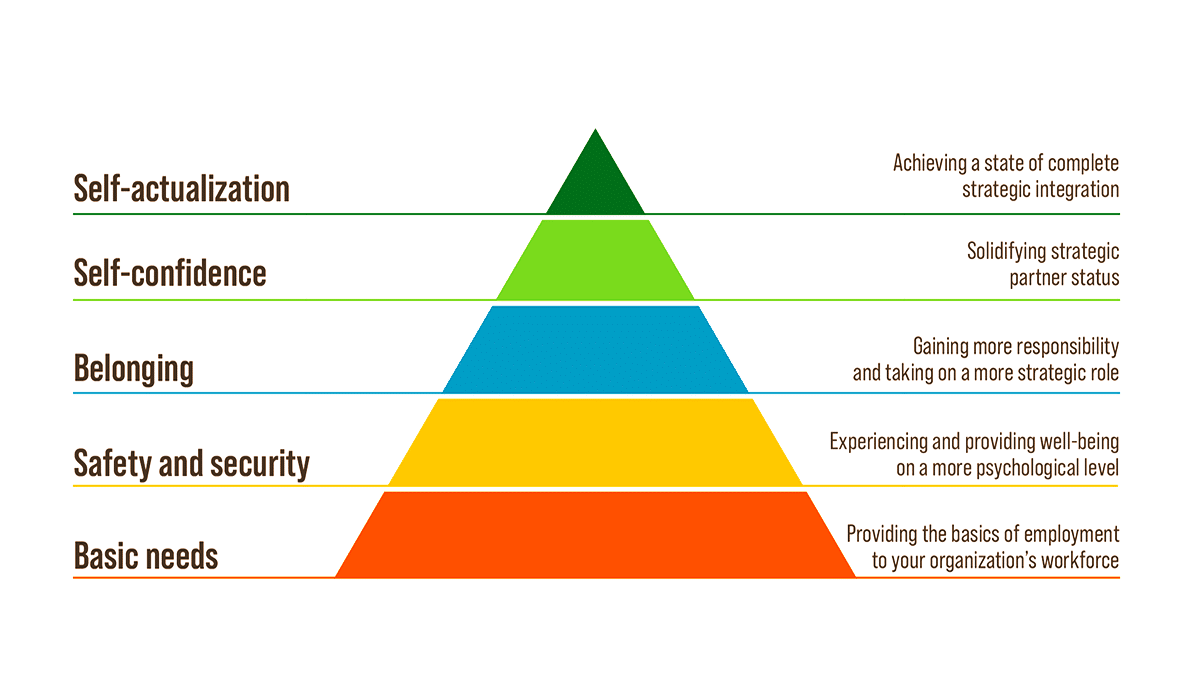
I know that sometimes when I’m busy with employee projects, I can forget that the models – like Maslow’s Hierarchy – that we use to make our employees successful would also be great for ourselves. Luckily, our friends at Paycom have put together a version of Maslow’s Hierarchy for us as HR professionals. Here’s a brief overview of the model:
BASIC NEEDS: HR is handling the basic administrative functions – benefits administration, payroll, time and attendance, and maybe even facilities.SAFETY AND SECURITY: At this stage, HR is providing compliance in the areas of employee handbooks, anti-harassment training, and some policies like performance reviews.BELONGING: HR is starting to drive initiatives within the organization like team building, employee surveys, and diversity, equity, inclusion, and belonging activities (DEIB).SELF-CONFIDENCE: At this level, HR is beginning to develop proactive strategies like coaching and mentoring, corporate social responsibility (CSR), and digital transformation.SELF-ACTUALIZATION: HR plays a role in creating and communicating the organization’s talent strategies and employee value proposition (EVP).As I was learning more about Paycom’s HR Hierarchy of Needs, one of the first questions I asked myself is “Where would I be on this pyramid? And if I’m not at self-actualization, how do I get there?”
Make a Plan Towards Self-ActualizationSelf-actualization is going to look different for each of us. And that’s okay. Before we can start on the path to self-actualization, we should define what it means in our organization and culture.
To define my self-actualization, I like to ask myself the question, “What does my most productive self look like? What kind of work am I doing? How is my boss supporting me? Who am I working with?” And if it’s helpful, ask the opposite, “When was I my least productive? What kind of work was I doing? What was going on around me?”
These answers will give me the vision for my self-actualization. Then I can compare it with where I believe I am right now. We can ask ourselves, “When it comes to self-actualization, where am I as an HR professional right now? Where’s the HR team? And if we’re not where we want to be, how do we get there?”
The answers to these questions could help me create the plan I need for HR pros and the department to become it’s most productive. This is always the time of year when I’m planning, goal setting, and budgeting for the upcoming year. I can use this information to consider retraining, upskilling, reskilling, and development. I can also use this information to make sure we have the right technology and tools to get the job done.
Once we’ve asked all the questions, it could make some sense to put the answers into a SMART plan with goals to move toward self-actualization. This becomes our roadmap for success. It allows us to get focused, so we can do our best work – which is exactly what the organization wants and needs from us.
If you want to learn more about self-actualization and how it can benefit HR, visit Paycom’s Maslow landing page for more information. The site also has a quiz to help set your path to self-actualization.
The post HR Professionals: We Need to Take Care of Ourselves appeared first on hr bartender.


Sharlyn J. Lauby's Blog

- Sharlyn J. Lauby's profile
- 10 followers

