
Ripley Entertainment Inc.'s Blog, page 52
December 8, 2022
How the Black Death Is Still Affecting Our Immune Systems
Featured in Ripley's Believe It or Not!

In the 14th century, the Black Death swept through North Africa, the Middle East, and Europe, wreaking havoc on local populations. It killed indiscriminately and without mercy, striking down between 30 and 60 percent of the populations it infected.
But did you know the plague continues to impact the human population today? Keep reading to find out more about its “biological legacy.”
Horrifying HistoryAlso known as bubonic plague, it comes in two primary varieties: septicemic and pneumonic. The first infects the blood with bacteria and the second attacks the lungs. Both prove deadly unless treated early.
Of course, in a world without antibiotics or even a clear understanding of how diseases spread, the kill rate proved devastating. Europe saw more than 50 million individuals perish from it. In some cases, it wiped out whole families or even villages.
We now know the disease was caused by the bacteria Yersinia pestis, usually found in small mammals and fleas. And while you might think the Black Death sits firmly in the past, you might be surprised to find out how it continues to affect humans in modern times.
The Plague’s Biological LegacyResearchers at the University of Chicago, the Pasteur Institute in Paris, and the McMaster University in Ontario, Canada, recently announced a stunning find — one that’s rewriting how we view the history of the bubonic plague and the human genome.
According to these scientists, the bubonic plague had a massive impact on the human immune system, and is still being felt today.
Genetic twist: Medieval plague may have molded our immunity https://t.co/iElhORrM7D pic.twitter.com/1ex6gNALaJ
— The Associated Press (@AP) October 19, 2022
These researchers painstakingly sampled the bones of more than 200 people from Denmark and the British Isles. The individuals involved in the sampling lived within a century of the plague. What did the scientists ultimately find? Four genes that dictated how likely a given individual was to die of the Black Plague.
Bubonic Plague and Autoimmune DisordersSurprisingly, the scientists discovered that the very genes that helped medieval people survive the plague contribute to a host of other conditions today. These ailments include lupus, Crohn’s disease, and rheumatoid arthritis. All of these diseases share something in common: they are autoimmune conditions caused by the immune system attacking itself.
Hendrik Poinar, an anthropology professor at McMaster, puts it this way: “A hyperactive immune system may have been great in the past but in the environment today it might not be as helpful.” That’s an understatement.
Autoimmune Disorders TodayToday, there are more than 100 autoimmune diseases impacting more than 50 million Americans daily. Put another way, one in five Americans have some form of autoimmune problem. If researchers are correct, many (if not most) are descendants of plague survivors.

The scientists’ colleagues have lauded this research as a significant breakthrough. At the same time, it’s also hard to deny the strange irony associated with this discovery. After all, it’s mindboggling to realize the same gene that helped one generation dodge the Yersinia pestis bullet now makes their descendants chronically ill.
By Engrid Barnett, contributor for Ripleys.com
EXPLORE THE ODD IN PERSON! Discover hundreds of strange and unusual artifacts and get hands-on with unbelievable interactives when you visit a Ripley’s Odditorium!Source: How the Black Death Is Still Affecting Our Immune Systems


Sultan Kösen, the World’s Tallest Man, Celebrates 40th Birthday at Ripley’s Believe It or Not!
Featured in Ripley's Believe It or Not!

Towering 8 feet 3 inches tall, with the ability to not only palm a regulation NBA basketball but also drop it through the hoop with ease, Sultan Kösen is hard not to miss. Although his stature is large, his personality is even larger!
Tall OrderSultan Kösen celebrated a milestone — his 40th birthday — at Ripley’s Believe It or Not! Orlando, visiting all the way from Turkey!
Born on December 10, 1982, Sultan didn’t start his incredible growth spurt until he was 10 years old. His unique stature is caused by a condition known as “pituitary gigantism,” which is the result of an overproduction of growth hormone. In Sultan’s case, his pituitary gland was damaged by a tumor, releasing an excess of the hormone.
While at Ripley’s, Sultan stopped to pose next to the tallest man to have ever lived, Robert Wadlow, of Alton, Illinois. When last measured in 1940, right before his death, at age 22, Wadlow was 8 feet 11.1 inches!

Sultan Kösen, the world’s tallest man, poses next to the tallest man to have ever lived at Ripley’s Believe It or Not! Orlando. Robert Wadlow of Alton, Illinois, measured 8 feet 11.1 inches tall when last measured in 1940. Credit: AP Images for Ripley Entertainment Inc.
Believe It or Not!, there are only ten reliable cases in history of a person reaching 8 feet or more. In 2009, Sultan Kösen became the first man over 8 feet to be measured by Guinness World Records in more than 20 years!
High on Life“After that day [that I was announced the tallest man in the world] I was born,” Sultan explained to Ripley’s. “Before that, I was a very silent person. Now, I can talk. I’m happy. I’m funny. I enjoy my life.”

Sultan Kösen, the world’s tallest man, celebrates his 40th birthday at Ripley’s Believe It or Not! Orlando. Credit: AP Images for Ripley Entertainment Inc.
Gaining international recognition for his lofty stature, Sultan has visited 127 countries. Celebrating another year, he blew out his birthday candles at our Orlando attraction wishing to “travel the remaining countries which I have not visited so far… and to keep my record title. I hope there will be no one taller than me,” he joked.
New HeightsSultan also holds the record for largest hands on a living person, each one measuring 11.22 inches from the wrist to the tip of the middle finger. To better put his hand size in perspective a size 7 basketball (the official size of the NBA) has a circumference of 29.5 inches which means it sits comfortably in Sultan’s palm!

Sultan Kösen, the world’s tallest man, poses with guests at Ripley’s Believe It or Not! Orlando. In addition to his record height, Kösen also holds the record for the largest hands on a living person — measuring 11.22 inches from his wrist to the tip of his middle finger! Credit: AP Images for Ripley Entertainment Inc.
More recently, Sultan has expanded to movies and television. In 2016, Sultan fulfilled a life-long dream by making his Hollywood debut in Achieving the Impossible, before going on to tour with the Magic Circus of Samoa! Believe It or Not!, Sultan is now a cultural ambassador for Turkey and recently participated in a cooking show on Romanian TV!
We here at Ripley’s were honored to spend time with Sultan and are so grateful for his willingness to collaborate with us. Be sure to check out the video of Sultan’s visit below!
EXPLORE THE ODD IN PERSON! Discover hundreds of strange and unusual artifacts and get hands-on with unbelievable interactives when you visit a Ripley’s Odditorium!View this post on Instagram
A post shared by Guinness World Records (@guinnessworldrecords)
Source: Sultan Kösen, the World’s Tallest Man, Celebrates 40th Birthday at Ripley’s Believe It or Not!

December 7, 2022

December 6, 2022
This Behavior-Altering Parasite Makes Wolves Go Alpha
Featured in Ripley's Believe It or Not!
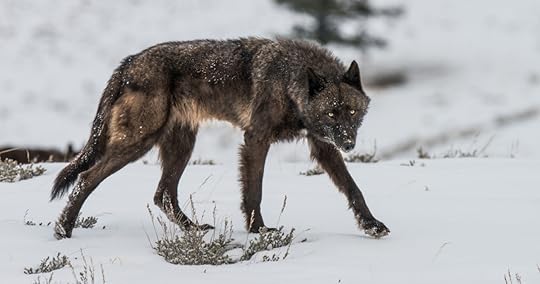
Whether you’ve studied the “hero’s journey” in school or watched tons of movies, you’re familiar with its powerful narrative. During this journey, the main character transforms from wimp to warrior.
One of the most iconic steps in the hero’s journey remains the mentor’s introduction. After all, who would Luke Skywalker be without Yoda, Harry Potter without Dumbledore, or the Karate Kid without Mr. Miyagi? That said, a new study published in Communications Biology has people rethinking what it takes to be a hero… or at least what it takes to be fearless.
Apparently, one answer is Toxoplasma gondii, a single-celled parasite that transforms beta wolves into pack leaders. Here’s everything you need to know.
Invasion of the Body SnatchersThe thought of a mind-controlling parasite influencing an organism’s behavior sounds like something out of a B-rated sci-fi flick. But a group of scientists has discovered there may be more truth to the idea of body snatching than previously imagined.
After studying more than 200 gray wolves, these researchers came to a startling conclusion: Wolves in Yellowstone National Park infected with the bloodborne pathogen T. gondii act gutsier than their parasite-free counterparts!

The authors explain, “We identified a substantial increase in the odds of dispersal and of becoming a pack leader, both risky behaviors.” In fact, attempting to become head of a pack or abandoning it altogether are the two of the most life-altering events wolves can experience. And these events aren’t limited to the individual — they affect the survival of the entire pack.
Indiscriminating InfectorsHow did the wolves of Yellowstone acquire this illness? By eating the feces of infected mountain lions. Even though the parasite prefers felines, they’ll settle for any warm-blooded critter, human beings included.
One-third of humans on the planet (and 10 percent of the U.S.) harbor the pathogen. Although people with healthy immune systems likely won’t manifest signs of serious illness, chronic exposure to the parasite leads to behavioral changes and increased testosterone in people, too.

Toxoplasma gondii oocyst under the microscope. Credit: Todorean-Gabriel / shutterstock.com
Guts Don’t Always Precede GloryWolves and humans aren’t the only animals that behave weirdly under the influence of T. gondii. Parasite-infected hyenas lose their fear of African lions. The same goes for rodents and house cats. Even parasite-influenced chimps get extra brazen around natural predators like leopards.
Unfortunately, guts don’t always lead to glory in the animal world. Instead, they get animals eaten, which is often the outcome with critters on T. gondii. But the problems don’t end there. Wolves that vie for dominance without the muscle to back it up face severe injury or death. And abandoning a wolf pack can leave other members in a life-and-death bind.
What’s more, female wolves are more likely to have miscarriages, sometimes losing a whole litter simultaneously. And pack leaders infected with T. gondii may place their entire pack at greater risk with over-the-top antics. This may include leading them into panther-infested areas where the whole pack can get infected (or become puma party favors).
In other words, it’s better to stick to the traditional path when on a hero’s journey and find yourself a wise mentor when looking to up your bravery game.
By Engrid Barnett, contributor for Ripleys.com
EXPLORE THE ODD IN PERSON! Discover hundreds of strange and unusual artifacts and get hands-on with unbelievable interactives when you visit a Ripley’s Odditorium!Source: This Behavior-Altering Parasite Makes Wolves Go Alpha

December 5, 2022

December 4, 2022

December 3, 2022

December 2, 2022
British Man Reels in Giant Goldfish Weighing Nearly 70 Pounds
Featured in Ripley's Believe It or Not!

A man named Andy Hackett from Worcestershire, England, was fishing in the northeast region of Champagne, France, in late November when he reeled in a specimen that has been dodging anglers for two decades— a giant goldfish that’s one of the largest on record. The fish that has eluded many anglers for many years finally met its match.
An Absolute UnitDubbed “The Carrot,” the fish was placed in the Bluewater Lakes 20 years ago, according to the BBC. Hackett captured the infamous leather carp and koi carp hybrid after a 25-minute showdown.
Initially it was questionable if there was equipment large enough to properly weigh the specimen, but a weigh-in was eventually conducted. The goldfish clocked in at staggering 67 pounds!
A White Whale of a GoldfishHackett has visited the fishery several times, and while The Carrot is spotted regularly in the lake, it is difficult to catch. “Just like a general big fish, they’re heavy, they’re slow, they plod around,” Hackett explained. He told the BBC it wasn’t hard to miss due to its bright orange color; however, not many people have been able to reel in the sought-after specimen.
The Carrot only spent a short time out of the water before he was released back into the French fishery so other fisherman can try their hands at reeling him in. Anyone interested in mimicking Hackett’s fishing prowess can do so — but they have to be patient. The French fishery has a five-year waiting list.
Is This Normal?Pet goldfish are significantly smaller than The Carrot and typically grow only 2 inches long in captivity, according to Live Science. However, they are members of the carp family, which can grow very large, especially if they are released into the wild. One goldfish that was caught in Lake Tahoe in 2013 weighed more than 4 pounds and was almost 1.5 feet long.
It can be problematic to release multiple goldfish into lakes at once because they can cause issues with the local ecology. “They grow bigger than you think and contribute to poor water quality by mucking up the bottom sediments and uprooting plants,” officials from Burnsville, Minnesota, tweeted in 2021. The previous year, around 50,000 goldfish were extricated from local waterways in Carver County, Minnesota.
The Carrot is part koi, which is a popular variety, particularly among Japanese collectors. They can also be very valuable — one sold for a whopping $1.8 million in 2017.
By Noelle Talmon, contributor for Ripleys.com
EXPLORE THE ODD IN PERSON! Discover hundreds of strange and unusual artifacts and get hands-on with unbelievable interactives when you visit a Ripley’s Odditorium!Source: British Man Reels in Giant Goldfish Weighing Nearly 70 Pounds
Ripley Entertainment Inc.'s Blog

- Ripley Entertainment Inc.'s profile
- 52 followers

