Michael Hyatt's Blog, page 34
December 18, 2018
The Four Horsemen of Goal Failure
Conquer These Invaders and Finally Reach Your Goals

We all miss big goals occasionally. When that happens, it can be lonely and embarrassing. It’s tempting to simply forget about the failure and move on. When that happens, we miss a key learning opportunity. In order to achieve in the future, we must become excellent students of our own failure. Michael and Megan reveal the four most common reasons for goal failure, and how to fix them.






The Science of Tackling Large Projects
Get Your Brain Addicted to Achievement

My sister is obsessed with games. Video games, board games, role-playing games – she loves them all. She will readily admit that the pure glee she derives from unlocking achievements fuels this obsession.
She isn’t alone. Quests result in gold, each round of Tetris earns additional points, and grown adults spend more time searching neighbor’s yards for imaginary Pokemon than they should admit. Gamification has even become a catchy concept in productivity literature. Despite the trendy buzzword, the concept is based on relatively old science.
The secret sauce of gamification is neurobiological in nature, and you don’t need badges, prizes, or points to use biology to your advantage. Breaking larger tasks into smaller pieces and celebrating each small accomplishment will do the trick. Welcome to the science of dopamine.
The power of dopamine
Dopamine is a scrappy neurotransmitter that plays many important biological roles. It has been linked to learning, attention, mood, movement, pleasure, and motivation. That’s just the short-list. The mechanics of how dopamine influences so many different pathways is still being explored and many scientists have shifted focus from dopamine as the prime pleasure molecule, to dopamine as the intrinsic motivator.
Two important dopamine pathways – the mesolimbic and mesocortical – are involved in how we experience internal rewards. Once thought to cause pleasure, researchers now believe that these dopaminergic pathways trigger a different sort of reward mechanism. The mesocortical pathway also plays a role in motivation.
Dopamine and motivation
Though the nuts and bolts are still heavily debated and researched, we learn more about how dopamine influences motivation each year.
In a 2008 study, scientists studied mice genetically engineered to become dopamine deficient unless given a specific treatment to rescue dopamine production. With depleted dopamine levels, the mice were unwilling to engage in goal-oriented activities. By five weeks old, they had starved to death. Their motivation was restored when dopamine levels were rescued.
Research suggests that the dopamine-motivation paradigm is just as relevant to people. Disorders associated with a lack of motivation involve dysfunction in dopamine-related pathways. A study comparing the brains of go-getters and slackers found higher levels of dopamine in the more motivated individuals.
Research involving manipulation of dopamine levels in human participants shows similar results.
In one study, smokers with reduced levels of dopamine in their systems were less willing to exert effort for a nicotine reward. In another, researchers administered d-amphetamine, an agonist of dopamine, to volunteers. Based on a monetary-based Effort Expenditure for Reward Tasks, they found that participants were more willing to expend effort when they had been given the drug.
Dopamine and productivity
Short of injecting dopamine agonists as a method of enhancing motivation, how can regular people tap into this resource?
Dopamine is naturally released during reward anticipation. The best way to fit long term goals into the dopamine paradigm is to reconstruct them into smaller, more manageable chunks and celebrate each win. By constructing our goals to manufacture more frequent rewards, we orchestrate a corresponding dopamine response.
Let’s say your goal is to lose fifty pounds. That takes time. Done correctly, it takes a lot of time. Months of hard work will have passed before you taste the sweet dopamine-laden payoff of success.
In those months, you will have nothing but pure willpower to see you through.
If you break your goal into more manageable chunks – like meeting a calorie goal each day, spending twenty minutes at the gym twice a week, or even losing five pounds – dopamine can help you out. Every time you hit one of these micro-goals, a concoction of happiness neurotransmitters will remind you to come back for more.
The same applies to business goals. When you break long-term goals into smaller chunks, your innate reward and motivation system starts to work with you.
Dopamine and willpower: turning foes into friends
If dopamine is the biological wildcard of motivation, willpower is its well-disciplined older brother. Where dopamine operates unbeckoned, without practice or training, willpower is a muscle with limited capacity. It must be trainined and used sparingly.
All too often, these two tricks of the trade are diametrically opposed to one another. Dopamine sparks our wants, and we use willpower to keep ourselves in check. Willpower doesn’t always win.
The best way to maintain motivation and accomplish your goals is to tap into the motivational synergy of dopamine working in coalition with willpower. When you break larger tasks into smaller targets, surges of dopamine allow you to accomplish more while using less willpower. Each success bolsters your confidence, adding to your willpower reserves.
And as incremental steps become entrenched habits, you’ll find yourself slaying ambitious goals in record time.


How to Handle Own Goals
You Are Not Your Mistakes

Steve Smith is a Scotland-born, Canada-raised hockey defenseman whose NHL career spanned 15 seasons. He is less well known for winning three Stanley Cup championships than for a single mistake.
In 1986, while a rookie skating for the 2-time defending Stanley Cup champion Edmonton Oilers, Smith took the puck behind his own net and looked up ice for a teammate to hit with an outlet pass. He fired the puck through the slot, but before it reached its intended target, it hit the back of the left leg of Smith’s own goaltender, Hall of Famer Grant Fuhr. The puck ricocheted into the Edmonton net and became the excruciating deciding goal in a 3-2 Oilers loss in Game 7 of a playoff series.
After that disastrous own goal, Smith fell to the ice on his hands and knees, perhaps hoping that a giant hole would open up beneath him and swallow him up.
Our own own goals
We’re going to come back to what happened to Smith after that unforgettable own goal. But first let’s remember that the difference between his own goal and the ones we make in everyday life is that so many people were watching.
We make own goals – unforced errors that hurt and embarrass us – all the time. We have the sale clinched but we keep on talking and talk the buyer out of it. We finish fixing a laptop computer only to stumble over the cord and send it crashing to the floor.
The real question isn’t are we going to make own goals but how are we going to deal with own goals – our own and the foibles of others? And the Steve Smith story turns out to be a good example of what to do after an own goal. Three lessons stand out.
1. Smith didn’t let it define him
After Smith collapsed to the ice, he got back up. His rookie season came to a thudding close, but he played for 14 more seasons. The next season, he played well enough, and with a sufficiently good attitude, that it made a real contribution to team morale.
2. His team didn’t let it define them
Sometimes a bad break can break a team. That was not the case with the Oilers, and their mindset probably had something to do with it. They viewed Smith’s own goal as essentially a hiccup or a speedbump. It was a distraction on the way to better things.
As is tradition, the Commissioner of the NHL presented the Stanley Cup to Wayne Gretzky, all-time NHL scoring leader and Captain of the 1987 Edmonton Oilers. Another less formal tradition is that the Captain, after taking a victory lap, hands the Cup off to a teammate, who holds a special place of honor. Gretzky handed the Cup to Steve Smith, who skated a victory lap around the rink a year after an unforgettable failure.
3. Smith learned from it
The mistake Smith made was one that hockey purists understand was avoidable. He could have – and should have – made a safer pass, rather than one that was sent through the middle of the defensive zone. But rarely does such an error – made dozens of times in the course of a season by even the best players – have such a devastating result.
Smith continues his hockey career as an NHL assistant. Surely there is no one better positioned to pull aside one of his players after he has made a mistake and offer encouragement, with a unique personal story to back up his words.


December 11, 2018
You Say You Want a Resolution
The Science of New Beginnings

For all of the champagne, new diets, and gym memberships folks are about to experience, only about eight percent of resolution-takers succeed in attaining their goals. What goes wrong?
Any number of answers might hold a kernel of truth, but I’d offer the following: New Year’s Day is not a real new beginning.
Much as the day after your birthday is eerily similar to the day before, New Year’s Day is a superficial temporal landmark. It is fun to celebrate, and a wonderful time to take stock of the year, but it does not mark a shift in outlook, experience, or environment.
Resolutions made in celebration of New Year’s Day are powered by willpower alone. Usually, this is not enough. When willpower is coupled with a truly new beginning, however, breaking out of old routines becomes much easier.
The power of new beginnings
Though we all like to believe we are the master of our own destiny, the captain of our ship, this is not entirely the case. Much of our lives are routine. We frequent the same restaurants, purchase the same groceries, and pop into the same shops on our way to and from work.
Some of these decisions were made consciously before they evolved into habits, but others were not. Many choices were made solely upon the most convenient options. If there is a fast food joint in your new office building and the nearest alternative in a sizable walk, an increase in burger consumption may very well be in your future.
This can work in our favor as well. The only time in my life that I consistently visited the gym Monday through Friday was when I worked two blocks from one. Coincidence? I think not.
Science agrees. Dr. Wendy Wood has spent her career looking at habits. Study after study has shown that environmental cues matter. In one study, students who habitually attended sporting events spoke more loudly when shown pictures of stadiums. In another, cinema popcorn-eaters ate similar amounts independent of hunger levels or popcorn quality.
The human default is routine and environmental cues are key. The sights and sounds of familiar habit-associated places trigger our routines. Pulling ourselves from the familiar requires willpower. New beginnings that disrupt these environments tear up all the cues, recalculate the options, and allow us the luxury of building new routines from scratch.
A 1994 qualitative study found that of 119 stories of success and failure, changing location played a statistically significant role. 36% percent of successful reports included a change of location, while only 13% of failed attempts to change involved a move.
Inspired by this work, Wood and her colleagues set out to quantify the effect. Instead of concentrating on habit development, however, they looked at habit disruption.
In a 2005 paper, Wood and her colleagues track a cohort of college-aged transfer students. They looked specifically at how exercise, newspaper reading, and tv watching habits evolved as the young people changed schools. The students were surveyed with questions about their current and intended habits a month before their transfer. They completed a second survey a month after.
Across all three activities, strong habits were generally maintained if the performance context remained constant. When the context had changed (if, for example, trail runners had to acclimate to the gym), intention became crucial in habit maintenance. Intention was also the deciding factor for those with previously weak habits. This applied across all three habits.
“Away from familiar cues to bad habits, people are freed to act in new ways. Beware, though, that changing everyday contexts also removes cues to good habits,” Wood explains.
Bringing this science to everyday life
Major changes in environment, such as moving or changing jobs, are great for restructuring habits, but they don’t come along every day. What can people do to use the science of new beginning in everyday life?
Small, physical cues can shift your environment enough to make a difference. The idea is the same only applied on a smaller scale. You may not be able to change restaurants available near your office, but you can change the contents of your refrigerator in a way that makes packing lunch an easier option.
The same logic can be applied to any number of goals. If you’d like to limit your screen time, keep the television in a closet. You’re less likely to watch it if you have to pull it out. If you’re not drinking, skip happy hour at your favorite bar.
Replace your living room rug with a yoga matt to remind yourself to stretch out and strike a pose. It likely won’t be as effective as moving to a Rishikesh, but you may be surprised by how small cues can make a big difference.


How to Fix New Year’s Resolutions
A Tool Kit for Goal Achievement
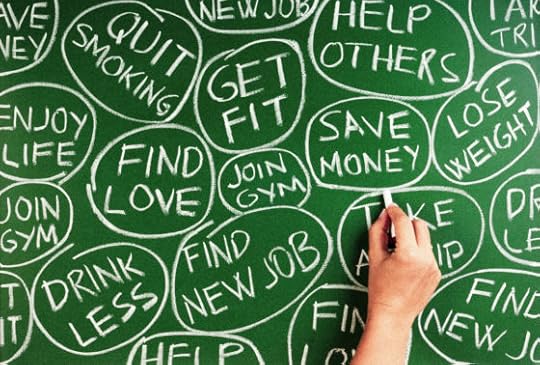
All of us, especially leaders, want to make positive change in our lives. But we’ve tried and failed many times. We’ll show you why New Year’s resolutions are a flawed system, and how to set achievable personal goals instead. You can avoid that sick feeling every January, and create a new habit or achievement that will change your life for good.


When Life Throws You a Curveball
Sometimes You Need to Change Your Goals

With the holiday season upon us and the New Year just around the corner, especially driven people are in introspection mode as we analyze the year that was and make intentions for the year to come. Goal setting is extremely important and valuable, and I am going encourage you to do the necessary soul-work for writing meaningful goals.
I am also going to give you permission to push pause, possibly even abandoning some of your professional goals to pursue personal and familial flourishing.
Young and married
This topic hits very close to home because the 29-year-old version of me (8 years ago) would have viewed my current lot(t) in life as a disappointment. Yet here I sit content in most areas of life, making goals with a much different focus and looser grip on their outcome than in the past.
In 2010, I was in my second year of marriage. We had come through a challenging first year in which we adopted the Dave Ramsey method of personal finance. We paid off close to $40,000 in a little over a year and achieved our first major married goal of becoming debt-free.
To achieve this goal, we said yes to almost every money-making opportunity imaginable on top of our full-time jobs. We house-sat, baby-sat, dog-sat, and cat-sat. We sold stuff, we used coupons, we found enjoyment in doing free activities, and we avoided the inside of any restaurant that wasn’t offering a BOGO special. Everything went toward the debt and we knocked it out fast!
There goes that plan!
The singular focus was effective for paying off the debt but was trying on our newly married relationship. So once we were debt-free we loosened up a little and gave ourselves a small spending budget.
We established our next major goal of saving up enough money for and agreeing on the best location to launch a Crossfit gym. We purchased plane tickets to Colorado. I secured a job with a company that had transfer opportunities in Colorado. We were on our way.
Right before our trip, my wife got sick. A trip to the ER revealed that she was not only fighting off an infection but was also pregnant! We had hoped that kids would be in our future but not until after we had established the careers that we desired, had the schedule that we wanted, and lived in the city that we most enjoyed.
The pregnancy caused us to push pause on the business venture. We chose to stay put in the Dallas-Fort Worth area, and I was forced to grow quickly with my employer as we made a new plan.
Pushing pause
As our situation changed, so too did our goal setting priorities. I want to encourage readers whose life factors have or will change to not lose heart. In fact, give yourself permission to do goal setting differently than you have ever done before.
The first lesson that we learned from the experience was that our identity and goals were too strongly tied to one factor. In a recent Fireside Chat, Tim Ferris stated that it is “important to diversify your identity so that you’re not reliant on one single thing for your fulfillment and happiness.”
Preparing for parenthood caused us to push pause on our entrepreneurial endeavor which felt like settling at the time. As it turns out, we were on our way to achieving a major life goal of becoming parents, but it was hard to see amidst the disappointment.
Highly motivated people tend to be ambitious and self-critical. Their “sole focus on self-improvement can be misguided and can lead to depression and anxiety,” Ferris explains. To combat this phenomenon, he recommends improving in two areas of your life at a time that are most important to you.
What not to change amidst change
We could have forced a business startup to happen, but it would have been a compromise of some of our parental and marital values. Instead of focusing on starting a business, we put our energies into securing a parenting structure and work schedule that would be hands-on, adventurous, and give us shared responsibility.
By diversifying our identity, we found that we held our goals more with less attachment to the actual outcomes. Goals are made for man and not man for goals. A looser grip on the outcomes freed us up to create realistic goals for our season in life.
It also allowed us to create goals that considered factors outside of making money and building our career. Our goals became less all-consuming, more risk averse. This new mindset may not sound appealing to highly ambitious readers, but it was a blessing to new parents trying to survive on very little sleep who didn’t need the added stressor of a start-up business. It had to be a season of slowing down for us to prepare to become the kind of parents we claimed to value.
To readers who are entering a season of significant change, I would encourage you to focus on a couple of areas that you want to do well for the next 3-6 months and to hold other areas loosely, even saying no to things that you once prioritized.
Valuing values
The next lesson that we learned from our experience was that goals need to align with core values. Our trap was that we prioritized money and career and forgot about other extremely important goals.
From career coach Dan Miller we got the idea of establishing a personal mission statement to help keep us focused when life threw us curve-balls. A quality mission statement includes three things:
Your skills and abilities (what you like to do)
Your personality traits (how you operate)
Your values, dreams and passions (why you want to excel)
For many goal setters, accomplishing one goal leads to another and before we know it we have become productivity junkies. However, major life factors like marriage, becoming parents, making a career change/losing your job, making a move, caring for a loved one with ailing health, or experiencing your own health trials can change the amount of margin that you have in your life to set and achieve goals.
By creating your own mission statement, you can make clearer goals, prioritizing the things that align with your mission statement. During our season of change we created personal mission statements which helped drive our decision-making process. Our first kiddo showed us just how different life was going to be for the foreseeable future and we decided that we needed to establish a family mission statement to better drive our decisions.
Our family now has a mission statement that includes ideas like serving others, fostering community, having adventures, and finding laughter. As our kids grow, we will allow them increased input in changing our mission statement.
For now, we have a family mission statement that allows us to make joint decisions quickly. We are better prepared to say yes or no to options in life. And we know how to focus our attention on a few of the most important factors in our life.


December 4, 2018
The Peter Principle and How to Avoid It
Don't Go From Good to Stuck

“In a hierarchy, every employee tends to rise to his level of incompetence.” Laurence J. Peter wrote those words as satire in 1968. But as with most effective satire, it points to an underlying truth.
The Peter Principle describes what can happen when an employee does well in one job and is subsequently promoted. She does well in the new role and is promoted again. This continues up and until the employee is put in a position where she stops performing well and is, therefore, left in a position where she is incompetent.
The underlying truism of the Peter Principle is so pervasive we see versions of it portrayed in movies quite often. It’s become almost a universal inside joke.
Peter in the office
In the 1999 movie Office Space, the main character named – wait for it – Peter works hard but cannot get ahead. It’s only when he refuses to work overtime, plays games at his desk, and incessantly misses work that he gets promoted to a managerial position. This happens because the work consultants brought in to evaluate the company, “the Bobs,” see themselves in him. Clearly, he must be management material.
Office Space is a workplace satire that many people find to be too close to their own reality. Peter and his friends are observing real corporate incompetence in action.
For an employee who has always done so well in your positions that you’re promoted and entrusted with more responsibility and expectations, bumping up against your own limits is not fun. It can lead to frustration and burnout. It can also lead to resentment from folks lower in the pecking order trying to make their way up – and from colleagues burdened with some of the workload that you find yourself suddenly unable to manage.
At the same time, you find that higher-ups who were only too happy to see you succeed before are suddenly dissatisfied with your performance. Hence, stagnation at your level of incompetence.
How not to Peter out
If you’ve been in a position where you feel you’ve run into this wall, you know how defeating it can feel. But there are ways you can avoid the stagnation and frustration of reaching the level of career incompetence Laurence Peter so clearly defined.
One way to avoid the Peter Principle in your life is to commit to continuous learning. It might be fun to think that once we’re done with school that that’s all there is to it. However, heading off to a career thinking you’ve learned all you needed to know for the next 40-50 years is a sure way to find yourself stuck in a position you cannot move beyond, or even ushered into early redundancy.
Thankfully, continued learning is now available at our fingertips. Many lessons are available online for free or for a nominal fee. In most cases, you don’t have to go to night-school or pay thousands of dollars to attend a semester’s worth of classes. You can watch or listen to lectures on you phone during your lunch break, commute, or time at the gym.
This may take some effort, but getting at the knowledge is easier than ever. And avoiding the Peter Principle requires devoting oneself to continuous learning.
What are you really good at?
Another way to avoid personifying the Peter Principle should be obvious. We often talk ourselves into doing work outside our best aptitudes because “that’s life,” right? Yet there are certain career fields each of us know we are not best suited for.
When I was in my gap year between high school and college, my older sister was a newly minted nurse. She’d always wanted to follow in our grandmother’s footsteps in that career. It’s a career that has been wonderful for her.
However, nursing is not a good career for me. Any time we would talk about what I wanted to go to college for, she would push me toward nursing. I would remind her I was asked not to donate blood anymore because I blacked out and vomited every time. I am hemophobic. In fact, simply thinking about blood too long can make the room start spinning.
Nursing is a fulfilling and well-paying career for many. But it is not an aptitude of mine at all.
That doesn’t mean that if I had a passion for healthcare, I would be unable to put my aptitudes of writing, organization and time management to use in some way. Hospital administrators and medical office staff are all integral parts to helping people obtain quality care without quite so much fainting.
So there you have it, leaders: Devote yourself to continuous learning while at the same time being mindful of your natural talents and you too can avoid stagnation and self-satire. Or to put it another way, you can rise and rise and never find the level of your incompetence.


The Science of Record-Breaking
Discover Your Own Path to Excellence

May 6, 1954 was a cold and windy day in Oxford, England. It was far from ideal conditions for a race, but it was also the day Roger Banister broke a record. He wasn’t a professional athlete, but a medical student with a knack for running. He set out on a wet race track and completed a feat that no one before him had managed: the four-minute mile.
Perhaps more incredible than the first four-minute mile is the second. In June of that year, John Landy joined the club. Four additional runners managed the feat the following year. The trend continued until, in 2017, Reed Brown became the tenth high school student to run a mile in under four minutes.
The mile run isn’t the only record to be repeatedly broken over time. By Dr. David S. Gardner’s calculations, running times have improved 12-13 percent since 1950.
The numerous record-breaking successes of our athletes flies in the face of traditional philosophies of human performance.
There must be a ceiling, a limit. Why, with athletes striving to be the very best they can be, have we not hit the maximum possible peak of human performance? At the very least, records should only be broken by superhuman He-Man-esque prodigies that somehow end up birthed to human mothers despite their unparalleled, possibly mutation-derived capabilities.
How is it that today a high school student can do what scores of grown men failed to do in the 1950s?
The answer is likely a carefully coordinated dance involving multiple factors. Technology probably plays a role and a more robust understanding of nutrition and sports science could come into play. More interesting, however, is the science of physical limitations and how mindset influences those limitations.
The 40% rule
It will come as little surprise that the human body does indeed have a breaking point. There are physical limits. What is less clear is how those limits are communicated to our consciousness. How often are we really doing our best? The moto of Navy SEAL David Goggins comes to mind: When you think you’re through, you’re only 40% done.
Though science hasn’t put a number on it, studies do indicate that we begin getting signals we’ve hit the limit long before we really have. In one study, participants given a placebo and manipulated into thinking it made physical work easier did more muscle work while also reporting less fatigue.
Another study recruited rugby players to cycle to their perceived limits, offering cash prizes for endurance. Immediately after the players had declared defeat, the researchers asked them to perform a five-second cycling sprint. They did, with more power than they had demonstrated during the longer run.
Each of these cases is an example of shifting mindsets. The placebo led people to believe they had more in them. The five-second limit made our rugby players realize that they could push a little harder. In the same way, knowing that a record has been broken may signal to other athletes that they, too, are capable of more than they thought.
Measuring an endurance mentality
Endurance isn’t only physical, and athletes aren’t the only professionals whose minds and bodies signal empty when there is still gas in the tank. Though we don’t understand the mechanisms at work, the same grit that helps a runner break a record can help anyone break free of their own mental barriers.
Science, however, is based on measurement, not fuzzy feelings about applied endurance. To apply science to the record-breaking mentality we need to measure an endurance mindset.
In a 2015 study, researchers recruited a group of elite athletes. Matching them with volunteers of similar backgrounds, they gave all the recruits a simple continuous task. The catch? As they were completing their task they would be breathing through a tube. Air flow would be experimentally varied.
Using MRI imaging technology, the scientists recorded brain activation throughout the exercise. The control group performed their simple task to the same level of accuracy independent of air flow. The right insular cortex was one of several brain areas to light up with activity as flow rate became uncomfortably low.
In contrast, the athletes saw improvements in accuracy under stress. Though most of their brain activated similarly to the other participants, the right insular cortex region showed less activation.
Might this small area of the brain hold the secret to endurance?
The scientists needed more. There had been several potentially confounding variables. The athletes had higher scores on sensation seeking, as measured by a survey, than the controls. They also likely had more experience with feeling oxygen-deprived.
The next year a team including many of the same scientists published a related study. The test was the same, but the subjects were different. Instead of athletes and controls, researchers recruited nearly 300 marines and divided them into two groups. One group received mindfulness training. The other didn’t.
Marines that had been trained in mindfulness demonstrated a weaker right insular cortex response when under air restriction conditions when compared to their pre-training MRI scans. The others did not. Though a sensation seeking survey was not included in the study, the number of participants lends credence to the results.
If we really do have 60 percent more to give (or even 20 percent), the science indicates that we can train ourselves to tap into these hidden reserves. Athletic endurance and mindfulness are two ways we’ve studied, but there are undoubtedly other paths to excellence waiting to be discovered.


Do You Have an Upper Limit Problem
3 Personal Barriers You Must Break

Leaders have big goals, but most of us have at least one limiting belief that keeps us from achieving them. Based on years of coaching leaders, we’ve identified their three most common limiting beliefs. You might just see yourself in one of them.


Practice Doesn’t Always Make Perfect
Why Your Race Is a Puzzle, and How to Solve It

Apple made a great leap forward in communications and mobile computing in 2007 when it launched the iPhone. It couldn’t have done this by sticking to all the things that made it a pioneer in desktop computing.
The company tried to launch the Newton handheld computer in 1993. The product failed and this setback stung. It took years after for the company to accept that mobile computing would become reality and that any device it produced would eventually cannibalize sales of its then-flagship Macintosh computer line.
But that wasn’t all. Apple had to rethink how people would use these handheld devices – especially since they wouldn’t elements of traditional desktop computers such as separate keyboards. It even had to develop a less-complex operating system that works just as well on a device with less memory than Apple’s own Mac operating system uses for a traditional computer.
Apple also had to wait on and incorporate other developments. First came the advent of the public Internet, which made it possible to move apps from hard drives to what we now call the cloud. Then came the growth of cellphone networks, which brought in customers ready to try out new technology. The emergence of laptops was also making the idea of mobile computing more appealing.
Palm, BlackBerry, Motorola, and Microsoft developed features of what we now come to expect in smartphones – from handwriting recognition to touchscreens – and succeed in the marketplace in ways Newton did not. Apple itself would push the evolution further in 2001 when it launched the iPod.
Once it proceeded with development of the iPhone in 2004, Apple spent three years embracing new techniques – many borrowed from the telecom industry. It also pitted two teams against each other to drive results – a practice that wasn’t the norm even during CEO Steve Jobs’s first tour running the company.
By the time the iPhone was released in 2007, Apple had become a different company, paving the way for its spectacular current success.
Doing what you’ve always done won’t work
Certainly few of us will ever develop anything as revolutionary as the iPhone – or break a world record. But we will all face a point in which the habits and practices that brought us success will not help us make the breakthroughs needed to reach the next level.
Vince Lombardi may have been right when he said only perfect practice makes perfect. But doing exactly what you have been doing, but better, won’t help you reach beyond your upper limits.
Making your breakthrough requires two critical steps. The first starts with accepting that you will have to step into your discomfort zone. The second step requires you to change the way you work.
Accept the uncomfortable
We have all been in this situation. After years of steady promotions and raises, you are now in a position of discomfort. Perhaps it is a new role in a field in which you have no expertise. Or a new boss is casting a critical eye on how you and your colleagues handle projects. It may even be a speaking opportunity at an industry event – and you are an introvert.
The natural response is to resist that change. After all, there are risks with taking on anything new. As Gay Hendricks notes in The Big Leap, you will then decide to sabotage yourself, either by telling yourself that you’re not knowledgeable or capable of taking on the challenge, or by rejecting new opportunities.
Before you do that, stop, look yourself in the mirror and, as Michael Jackson would say, make that change.
Comfort is so often the enemy of progress. It keeps you from exploring talents that haven’t been tapped or building existing strengths that can be used to go to the next level. At the same time, comfort creates a vacuum of sorts that nature, being what it is, will always abhor. Becoming uncomfortable is the way your mind and body tells you to become better in every aspect of your life.
Accepting the uncomfortable starts with applying Jobs’s famed adage that “you can only connect [the dots] looking backward.” Often, it means looking at your past successes, as well as previous episodes of adversity. See how they can help you tackle the challenges and opportunities ahead.
Rethink how you do your work
Over the past four years, Nike’s Breaking2 project has focused on breaking one of the greatest endurance and speed challenges in sports: Completing a marathon – 26.2 miles of running under grueling conditions – in under two hours. While Breaking2 didn’t succeed in its initial goal, it paved the way for a wave of recent success in marathon running.
Olympian Eliud Kipchoge, one of the three runners who participated in the effort, set a new world record last September by finishing the Berlin Marathon in two hours, one minute and 39 seconds – a full minute faster than the previous record set at the same event four years earlier. Another, Lelisa Desisa won this year’s New York City Marathon (and come close to beating the seven-year-old men’s record).
Nike and its runners couldn’t come close to breaking what some call the greatest feat in running not involving Roger Bannister or Usain Bolt without breaking with existing training methods and shoe design. Instead of focusing on developing a lightweight shoe, Nike came up with VaporFly, a specially shaped sneaker that features a combination of foam normally reserved for insulating airplanes and carbon fiber that positions the runners as if they are going downhill. Not only did it help Kipchoge and others run faster, it helped Nike develop its wildly successful VaporMax line.
After a series of experiments in wind tunnels, Nike developed a special formation that blocks headwinds (a key culprit for why no one has broken the two hour mark) and greatly increased a runner’s speed. By carefully monitoring how runners paced a half-marathon within 60 minutes (as well as checking the amount of acid their muscles produced during races), Nike helped the marathon runners improve their running styles, diet regimes, and overall performance.
Better is not enough
What Nike shows is that doing the same thing but better isn’t enough to achieve any breakthrough. You also need smarter.
As music performance psychologist Noa Kageyama observes, the problem with doing exactly what you have always done is that it isn’t deliberate enough to improve your work. You become so used to doing the same thing that you can’t see the roots of your shortcomings.
Unless you specifically look for mistakes and figure out ways to address them, all that practice does is help you make the same errors over and over again. That can’t be overcome unless you do something fresh and unfamiliar, pushing you into your discomfort zone.
What this all means is you probably need to practice something new to get to the next level. This can start small by taking on new routines and habits that can reveal areas for improvement. Doing something as new and novel as, say, taking on a new exercise routine or developing a new workflow can reveal shortcomings that can be addressed over time.
And as you pull apart your old routine and put together a newer, better one, don’t be hasty. Experiment, prod, tinker, challenge, read, see what works and what doesn’t. Come out of those blocks and think your way to the finish line.