Michael Hyatt's Blog, page 16
October 20, 2020
Four Mindsets to Drive Your Success

The ability to navigate the business world with nimbleness and grit can be the difference between devastating loss and wild success. Entrepreneurs have cracked the code on how to adapt and persevere. Their success is rooted in their thinking—and mindsets are skills you can develop.






October 19, 2020
Review of The 7 Perspectives of Effective Leaders by Daniel Harkavy
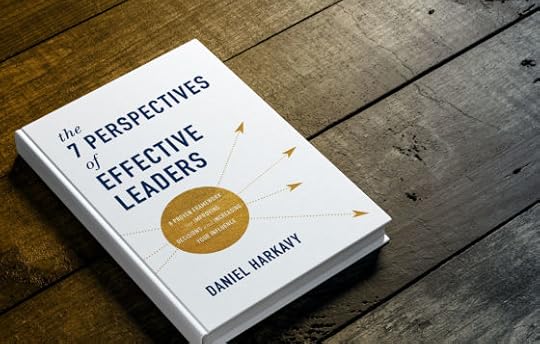
Business leaders have to have two things in order to achieve, according to Daniel Harkavy: decision-making ability and influence. Arriving at that rare combination of strengths is largely a matter of mindset.
In seven concise chapters, Harkavy identifies the seven perspectives that produce great decision making and strong influence. He argues that every leader must have a perspective on seven things that goes beyond their own knowledge and experience. That mindset of openness and a willingness to learn in these areas distinguishes a great leader from a good one. The seven perspectives are Current Reality, Vision, Strategic Bets, Team, Customer, Role, and Outsider.
Some of the seven are straightforward enough for experienced business leaders to readily grasp. Others require a bit of illustration, and Harkavy provides that through a number of real-business examples of each idea. That’s one of the most helpful aspects of the book.
Another is a step-by-step guide to executing these concepts in a business setting. Harkavy argues that the perspectives form a framework that leaders must consistently apply to their decision-making process. A final chapter explains how to do that, making the book a how-to manual rather than a purely theoretical doctrine.
As a business coach with over 25-years’ experience in helping leaders grow, Harkavy is well qualified to write on the subject. His style is straightforward and accessible. At 144 pages, this book is a practical, empowering read for busy leaders.
Visit https://7perspectives.com/


October 18, 2020
How to Spot Your Business Vulnerabilities
Deep roots aren’t enough to survive storms. You need flexibility. To start, identify where you need to adapt by proactively identifying your vulnerabilities.
The coast is a gusty place. You may own windblown oceanside family photos. Perhaps you’ve ventured to the beach to beat the heat. But even if your knowledge of beaches is confined to television, you’ve probably noticed that palm trees are quite at home near the sea.
It can be a bit daunting to walk underneath these tall, often thin trees when the wind starts really blowing. The fronds above rattle. The trunk creaks. Sometimes, a tree bends so far you think it might snap. And yet, these trees bear the wind far better than oaks and pines and cedars. Such sturdy behemoths can snap during severe storms. As they crash down, they expose deep, complex root systems that once anchored them in place. When the dust settles, it’s the palm trees that remain—still swaying in the breeze.
The key, of course, is flexibility. Rigidity in the face of winds eventually gives way to increasing pressure. Palm trees bend without breaking.
This flexibility is a posture entrepreneurs learn to master early on. And you can learn it, too. The key to successfully adapting in the face of changing winds is your ability to proactively identify vulnerabilities in four specific domains.
Suppliers
This is the domain where you receive the raw materials needed to accomplish your work. If you work in production, these raw materials are obvious. You can’t print books without paper. You can’t make pizza without cheese.
But even in the knowledge or services industries, it’s important to take a closer look. You can’t clean houses without cleaning supplies. You can’t work on the back end of a website with slow internet. You can’t sell vacations to exotic places when borders are closed.
To identify vulnerabilities, ask:
What outside resources do we rely on to accomplish our most important work?
How do recent changes impact these suppliers?
Are there alternative methods of attaining the necessary supplies?
Are there alternative strategies that could decrease the impact of supply losses on my business?
Operations
This is the domain that represents the product development and client services you offer. It’s the place where people are writing the books, preparing the pizzas, cleaning the houses, writing the code, and so on. It includes any necessary back-office support and probably includes the bulk of your team.
To identify vulnerabilities here, ask:
What internal resources do we rely on?
What about recent changes might hinder our day-to-day operations?
How have the roles of my team been impacted?
“
The key to successfully adapting in the face of changing winds is your ability to proactively identify vulnerabilities.
—MICHAEL HYATT

Customers
This is the realm of sales, marketing, and customer service. It’s the place to consider what your customers need, and how their methods of meeting those needs are shifting right now. It’s also the place to consider your outward-facing team and the changes to their work.
To identify vulnerabilities here, ask:
How has demand for my product changed?
What are my customers’ most pressing needs?
How have recent changes impacted my customers’ ability to access my product?
Will marketing spend have to escalate or deescalate?
What changes can my team make to best meet our customers’ needs?
Environment
The environment is the world beyond your business. It includes governmental mandates, the state of the economy, critical infrastructure and the social environment. While completely outside of your control, the environment can have a big impact on your business.
To identify vulnerabilities here, ask:
What recent legislation impacts my business?
How do current social concerns affect the appeal and relevance of my product or service?
By what criteria should I evaluate my pricing in light of the current economic reality?
What research or information do I need in order to make the most informed decisions?
When you take a lesson from palm trees, your business is more likely to survive unexpected storms. Reassessing your position by identifying vulnerabilities is vital for increasing the flexibility of your business. But knowledge alone is not enough.
Learn how to identify emerging opportunities and respond with action in my new book, Entrepreneurs Will Save The World.


October 13, 2020
Why Entrepreneurs Matter Now More Than Ever

The initial shock has faded and the dust has begun to settle. As you look at your business and the economy, you find yourself wondering how to move forward. How can we rebuild? And what’s your part to play? The answer might surprise you. We need more entrepreneurs.


October 11, 2020
“If At First You Don’t Succeed . . .”

Any entrepreneur will tell you: it’s almost impossible to create a solution that works on the first try. Resilience isn’t just essential for entrepreneurial success. It’s essential for your success. But how can you cultivate it?
You’re probably familiar with the story of The Little Engine That Could. Saddled with a huge load, she slowly made her way over the mountain, repeating the phrase “I think I can” over and over until she made it to the other side.
Children’s books have a way of getting to the heart of the matter.
Resilience is the ability to keep going. To push through in the face of adversity and rebound in the face of failure. A 2014 survey by the American College Health Association found that levels of resilience in college students—the employees of tomorrow— are falling. And that was before the crises of 2020.
Resilience is a skill you can learn and strengthen. Entrepreneurs are experts in resilience out of necessity. When you set out to do something no one has done before, you learn to become friends with failure. But the source of their resilience isn’t simple necessity. It’s their belief.
“
Resilience is the ability to keep going. It is a skill you can learn and strengthen.
—MICHAEL HYATT
These two entrepreneurial mindsets, resilience and belief, go hand in hand. They’re not just important for start-ups. Any leader who solves the problems of customers stands much to gain by leveraging the power of belief to grow in resilience.
Your beliefs define the constraints of your resilience. They set your limits. I’m not in favor of living in a kind of Pollyanna optimism that denies reality. But, in the words of Henry Ford, “Whether you think you can or you can’t, you’re right.” You won’t win a race you expect to lose. You can’t create a successful product if you quit after the first prototype fails. And you can’t push through challenges if you’re convinced you don’t have what it takes to persevere.
You need new beliefs. Here are three that entrepreneurs rely on. They can kindle your resilience—empowering you to move forward whatever curveballs life throws your way.
“This problem needs to be solved.”
The only businesses that stay in business are those that solve real problems of real people. Perhaps you’re not delivering a huge load to the other side of a mountain, but solving someone’s problem is the reason behind the work you do. That problem might even be the reason you started the business or took the job. In the face of discouragement, setback, and defeat, you need to be reminded of the reason for your work. In the words of my wife, Gail, “People lose their way when they lose their why.”
“My solution solves the problem.”
You don’t just need to believe in the importance of the need. You need to be convinced of the power of your solution. Ken Davis, author of Secrets of Dynamic Communication, tells the story of attending an expo. While drifting from table to table, he noticed a young man demonstrating a particular product. He half-listened for a moment, then drifted on. That would have been the end of the story. But on his way out, Ken passed the same table a second time. This time, someone else was demonstrating the product, and Ken was riveted. The scripts were identical. What had changed? Ken learned moments later that the second man had founded the company. He believed in his solution, so his audience did, too.
Your conviction in the power of your solution won’t just help you sell to your customers. It will help you sell to yourself when life has knocked the wind out of you. Your customers have a problem, and you have the solution—which fuels your why.
“I can overcome setbacks.”
Beyond the magnitude of the need and viability of your solution, you need to believe in yourself. Specifically, you need to believe in your ability to keep going. Being resilient requires believing that you are. You can do hard things. You can overcome challenges. You can dust yourself off after failure, after embarrassment, after loss. You can find a new way forward. You haven’t lost until you admit defeat.
The cost of failure is high. But the cost of giving up too soon, on the brink of success, is even higher. Press on.
Say, “I think I can,” and you probably will.
To learn more about how to adopt entrepreneurial mindsets that will promote your success and help rebuild our economy, order my new book, Entrepreneurs Will Save The World.


October 5, 2020
How Life Works: A More Empowering Model

You’re not satisfied with the results you’re seeing. You’ve tried fine-tuning strategies and revisiting your decisions. You know you’re not just a victim of your circumstances. But what are you supposed to do now? You don’t just need to alter your actions. You need to rewire your thinking.


October 4, 2020
3 Lessons from Entrepreneurs Anyone Can Use to Grow Their Organization

Entrepreneurs unlock potential. They turn ideas into realities, creating jobs and fueling economies. They’re professional problem-solvers. And following their example can lead your business into new opportunities for success.
“If you want to build a ship, don’t drum up the men to gather wood, divide the work, and give orders. Instead, teach them to yearn for the vast and endless sea.” These words, credited to Antoine de Saint-Exupery, strike at what sets entrepreneurs apart. While the attention of some is fixed on the work at hand, the eyes of entrepreneurs are always fixed on the distant horizon.
With such a focus, the word can’t lose its weight. At some point in time, we couldn’t sail across the world, couldn’t fly, couldn’t venture into space—until we could. This is how entrepreneurs serve us. They push the bounds of possibility and bring us toward progress.
And they also teach us. By learning these three lessons from entrepreneurs, you can guide your business to new horizons of success.
Focus on Problems That Need Solving
Not all entrepreneurs invent new products or build companies from the ground up. In fact, I’ve met pastors I’d call entrepreneurs. All entrepreneurs have this in common: they are dauntless problem-solvers. They don’t just notice the issue, but risk time, money, reputation, or some other asset to deliver a solution or gain.
Your company exists because it is the answer to some felt need of your customer. The problem is key. When you become undivided in your efforts to solve the problems of your customer, your business will flourish. When you lose sight of what’s causing your customers pain, you’ll begin to flounder. Find the problems. Solve them. And watch your contributions pay off.
“
Entrepreneurs push the bounds of possibility and bring us toward progress.
—MICHAEL HYATT
Take the Risk
Entrepreneurs put skin in the game. They often take out sizable loans, invest their life savings, or stake their reputation to bring their ideas to life. They know exactly what they have to lose because they’ve lost before. And they can’t help but dare to press on toward possibility.
They also don’t get hung up waiting for all the conditions to be “just right.” In fact, some of the most household brands began during recessions and economic downturns, including Hewlett-Packard (1939); Burger King (1953); Hyatt Hotels (1957); Trader Joe’s (1958); Microsoft (1975); Apple (1976); CNN (1980); MTV (1981); Netflix (1997); Mailchimp (2001); Airbnb, Groupon (2008); Slack, Square, Uber, Venmo (2009); Instagram, Warby Parker (2010). Entrepreneurs plunge forward.
Playing it safe is the sure way to the slow death of your business. Kodak, Blockbuster, Toys“R”Us—these companies learned firsthand the danger of sticking to what you’re good at as the world around you continues to evolve. Change always requires risk. And it might come at a cost. But you can’t afford not to take the risk.
Befriend Failure
Entrepreneurs have befriended failure out of necessity. They’ve learned to reframe it as the key to growth. They use it to tweak ideas, avoid repeating old mistakes, and improve already successful products and services. They’ve turned failure into the fuel for success.
Thinking differently about failure will drive your business growth. Why did your product launch flop? Why has productivity plummeted? What’s disrupting the communication on your team? You can turn failure into a tool for success. But first, you have to stop fearing it.
We owe much to entrepreneurs, and we need them now more than ever. They model how to rebuild, adapt, and move forward. And we need to be willing to follow their lead.
To learn more lessons from the entrepreneurial mindset, join Michael Hyatt’s free newsletter and community, Countdown to 2021. He’ll be sharing content about the entrepreneurial mindset through exclusive interviews with CEOs released only in this community.


September 28, 2020
Unleash the Power of Constraints

You never could have expected it. The diagnosis, the accident, the pandemic, the family crisis, the job loss. You knew where you wanted to go and how to get there. Then the rules changed. Now, you’re chafing under the new restrictions and longing to return to what used to be normal. But what if constraints are exactly where new possibilities lie?


September 27, 2020
How to Lead with Gentleness, Not Fear

“Who’s got something scary?” asked my friend’s producer. The if it bleeds, it leads mentality hung over the newsroom. The scarier the headline, the more views it would receive. It’s no secret that people respond to fear, and unfortunately, many leaders take this approach with their employees.
But fear breeds complicity, not commitment. Instead of fear-based tactics, mature leaders use gentle power. They gain influence through building trust and casting a strong vision. They are known to be for their people, not against them.
Respect is a far better motivator than fear. While fear produces behavioral compliance, it degrades self-motivation. Internal motivations are stronger than external ones. To influence performance improvements in employees, you’ll have to show respect in a way that fuels internal drive.
Leaders must prioritize self-awareness. Research shows that as people grow in positional power, they tend to lose empathy for others. It doesn’t have to be this way. As you advance in your career, you can pursue empathy-building exercises and gentle leadership methods.
Gaining influence can be difficult. To help you confidently lead with gentle power, I’ve identified three tools that generate long-term motivation in your team.
Tool 1: Courtesy
Don’t underestimate the impact of kindness. In considering others, you should behave with tact, punctuality, and attentive listening. Make eye contact when people speak to you. Introduce yourself to visitors and introduce your team to people you know. Each of these actions says, “I acknowledge your value.”
Everyone knows they should treat others the way they want to be treated, but followers of this rule are rare. As culture seems to grow coarser by the minute, the impact of civility increases.
Consider the response when a flight is cancelled. The air fills with groans and complaints. People get angry. They yell at gate attendants. The few who keep their cool and act politely to the people behind the counter stand in stark contrast. Often, attendants feel motivated to work the hardest for the kind ones. When people feel respected, they become more energetic and productive.
Tool 2: Candor
Say what you mean and mean what you say. Candor is about speech and conduct. Many corporate leaders make the mistake of keeping everything too close to vest. This leads to distrust.
You don’t have to tell everything you know, but what you do and say has to be true. Sometimes leaders avoid telling the truth because they think employees are too fragile. Instead of hiding negative facts, consider saying, “I respect you enough to believe you’re able to handle this, so I’m going to tell you the truth.”
The shortest distance between where you are and where you want to be is the truth. The quicker you share about employee underperformance and company issues, the sooner people can help correct the problem.
“
The shortest distance between where you are and where you want to be is the truth.
—MICHAEL HYATT
Tool 3: Challenge
When you challenge people, you communicate a subtle sort of respect that says, “You’re capable.” Your team will not rise to the challenge until they are given the opportunity. Your job is to provide the opportunities. You may be surprised by the results. In my own company, I’ve found that people generally perform better than I anticipate.
Consider incorporating challenges into your annual review process. As you evaluate performance, ask yourself, “What are this individual’s strengths and capabilities? How can I provide an opportunity where they express those strengths as they grow?”
You can also delegate items you’ve traditionally held tightly. Ignore titles and offer up key reports, important speech writing, project leadership, etc. Give your people a chance to shine. Provide the resources and coaching to help them succeed. In the end, both of you will win. You can clear your to do list, and they will grow through the process.
When it comes to motivation, fear works—up to a point. For lasting impact, motivate with courtesy, candor, and challenge. When you believe the best about your team, they will deliver their best.


September 21, 2020
There’s No Success without Succession

You want the freedom to move on from the position you hold at your company right now. But you’d be leaving a big gap that needs to be filled sooner than later. You know someone could thrive in your position and should be equipped to take your place, but preparing for succession feels like a monumental task, emotionally and practically.