Michael Hyatt's Blog, page 14
January 4, 2021
Press Release: Michael Hyatt & Company Announces New CEO

FRANKLIN, TN — Michael Hyatt, founder of Michael Hyatt & Company, is stepping down as CEO of the company. Megan Hyatt Miller, current Chief Operating Officer, has agreed to become President and Chief Executive Officer in his place. Michael will assume the role of Founder and Chairman of Michael Hyatt & Company.
Megan Hyatt Miller has been with Michael Hyatt & Company since its inception and played a pivotal role in the company’s success. As the leader responsible for its strategic direction, growth initiatives, and operations, Megan Hyatt Miller has been instrumental in the high-performance culture Michael Hyatt & Company is known for. She is the natural choice for the company’s next Chief Executive Officer.
Michael and Megan started the company that would become Michael Hyatt & Company, LLC in 2012, which has become a world-premier leadership development and performance coaching company. After more than 40+ years as an entrepreneur and leader, Michael is ready to step back from the day-to-day operations of Michael Hyatt & Company, and focus on content creation and developing new frameworks that are transferable to the company’s clients.
“I’m really excited for what this change means for Michael as he realizes his own Double Win,” says CEO Megan Hyatt Miller. “He’s at his best when he gets to figure out new and innovative ways to help people who want more from their business and from themselves. His new focus will benefit our clients, internal team, and everybody.”
Michael Hyatt & Company has been listed on Inc. 5000’s list of fastest-growing private companies in America for the past three years and was named one of Inc. 5000’s 2020 Best Places To Work. The company’s coaching and productivity systems continue to lead the industry in sales and impact.
“I couldn’t be more excited for the future of Michael Hyatt & Company under Megan’s leadership,” says Chairman Michael Hyatt. “She is a truly great leader, and I know all the growth we’ve experienced over the past 8 years is only the beginning.”
About Michael Hyatt & Company: Michael Hyatt & Company is a performance coaching company helping leaders and their team win at work and succeed at life. They provide bestselling books, online curriculum, corporate training, and group coaching dedicated to helping leaders and their teams achieve more without sacrificing their personal lives. Their bestselling product, the Full Focus Planner, has sold more than 600,000 copies around the world and is a leading tool for helping achievers plan their years and organize their days. You can find out more at michaelhyatt.com.






January 3, 2021
How to Overcome Your Obstacles

A new year is here and with it comes a renewed sense of hope and drive for many of us as we begin a fresh start on our goals. Last year may have had setbacks and challenges, you may not have accomplished all you set out to do. This year can be different, but in order to accomplish the goals that you have set, you must have the right mindset.
There are several different traits that I consider critical components of a winning mindset, and each of them work together to create long-term success. There is one that stands out to me as a foundational shift in your thinking that is prerequisite for success—ownership.
It’s Time to Shift
This past year was difficult for many and included numerous obstacles that were outside of your control. You might be feeling tired or disempowered. But what if I told you that could change?.
If you want to find success in the new year, I challenge you to view this as a chance to reframe the current circumstances and consider how you can change your life for the better.
I want to tell you this will be the only crisis you face. But the fact is it probably isn’t. Life always seems to throw curveballs.
An ownership mindset is one that the most successful CEOs, entrepreneurs, and business leaders I know have. Once people with an ownership mindset are aware of a problem—whether it technically falls under their responsibility or not—they use their resources to solve it.
This type of mindset is empowering, and from what I have seen it is contagious as well. Someone who possesses a true mindset of ownership will inspire those around them to do the same. And what happens then, you have a company full of people who are willing to lean in and fix any problem.
So how can you shift your mindset to embrace ownership?
Here are three practical tips that you can use to begin practicing the ownership mindset.
Focus on what you can do. When you hear of a problem that feels outside of your control and causes you to feel doubt, stop and make a list of what you can do to help. Chances are it’s more than you first thought. Take ownership of brainstorming solutions. Take ownership of your attitude. Take ownership of how you can help those around you do the same.
Don’t pass the buck. I get it. That mess isn’t your responsibility or that unhappy customer should be talking to someone else. Instead of thinking to yourself, that’s not my job, practice thinking “I now know about it, I’m going to fix it.” See the solution all the way through and take responsibility.
Don’t micromanage. Sometimes, people might take this too far and begin to micromanage those around them. When we talk about a mindset of ownership that’s really not what should happen. Instead, this attitude towards problems should inspire your coworkers or team to do the same. It’s a feeling of empowerment that you are able to share with others because you believe that they can learn this mindset as well.
So this year, I challenge you to look at any adversity or obstacle that comes your way and ask “What does this problem now make possible?” This shift in thinking will set you up to accomplish your most challenging goals yet.


December 29, 2020
You Need a Goal, Not A Resolution
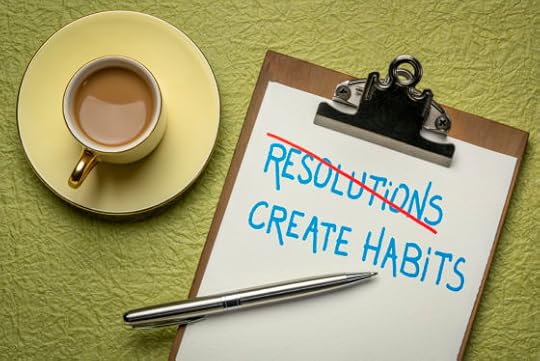
2020 is coming to an end. Before us is a year full of possibility and opportunity, and we have agency to influence what happens. But if you want 2021 to be your best year ever, follow this advice: Don’t create resolutions. Set goals instead.


December 27, 2020
How to Set Goals You’ll Actually Achieve

Over the years one thing has become evident to me. The most successful people I know don’t end up there by mistake. While from the outside it can sometimes seem like luck or that it “happened overnight”, I believe that the key to their success is having a clear set of written goals that outline and provide action steps toward their dreams.
I believe that no matter what happened this past year, you have the power within you to achieve your dream. I encourage you to close the chapter on 2020, and use the lessons you have learned to write goals driven by what truly motivates you.
For many of us, this year has helped provide new clarity about what is most important to us. Use that to really hone in on what you want to achieve this next year.
I’ve outlined the seven steps of the SMARTER goal system below to help you as you write your goals the next year.
Write specific goals. The more focused your goal, the more you will find yourself motivated to accomplish it. If a goal is too vague it can be hard to know where to even start.
Goals should be measurable. As you write your goal, you need to ensure that it has built in markers for what it would mean to achieve it. You should be able to break the goal down into specific milestones along the way in order to track your progress.
Make your goals actionable. Use action verbs to help ensure that your goals define what it is you are going to do. This type of goal will prompt you into action. This will help you throughout the year to stay motivated.
Risky goals are better than playing it safe. I challenge you as you write your goals for this next year, to make them ones that will stretch and challenge you. If you set goals that you know you can achieve you aren’t forcing yourself to rise to the challenge.
SMARTER goals must be timebound. The most successful goals are those with a sense of urgency. But how can you ensure that your goals will trigger that response in you throughout the year? You need to time-key your goals with either a deadline, frequency or a time trigger.
Create exciting goals. An exciting goal is one that connects with your internal motivation and inspires. This is a critical step. If your goal isn’t compelling to you personally then it will be very difficult to stick with it when obstacles come up. And they will.
Set relevant goals. I look at this as a necessary “gut-check”. Before you commit to your goals, you must review them and ensure that they are taking into account your life circumstances as well as your values. What you hope to achieve this year must be balanced with the reality of your circumstances.
I believe that this year can be the year you accomplish more than you ever thought possible. And it begins by writing down clear, SMARTER goals. What goal do you want to set first?


December 22, 2020
Setting Goals for A Well-Rounded Future

It’s the time of year we look around and remember what matters most—and look ahead and decide where we want to go next. That means it’s time to talk about goals.


December 20, 2020
How to Use Your Past to Make the Most of Your Future

Each December as I get ready to set my goals for the upcoming new year, I do this pivotal step first. I take the time to think backward and complete the past. By doing so, I am able to close that chapter and fully move forward into the next year. But how do you effectively think backward?
For many of us, avoidance comes much easier than truly addressing our past. It has been tempting for me to do that as well. It’s hard to analyze what went wrong and sort through the emotions that come with disappointment or failures.
I believe it is worth it. Thinking backward will allow you to learn and move into a better future with more relevant goals.
Are you ready to complete the past?
The process that I teach our clients is modeled after the U.S. Army’s After Action Review. It encompasses four steps that help you to deal with your past experiences and move forward.
State what you wanted to happen. In order to effectively reflect on the past year, you must be honest with yourself about what your goals were when you started. If you have a written list of goals for 2020 pull them out to look at. If you didn’t write a list at the beginning of this past year, that’s ok. Take some time now to think back on what your plans were for 2020. Reflect on all areas of your life and write down what you had hoped would happen this past year.
Acknowledge what actually happened. Use the lists above and see where the gaps are between what you hoped would happen and what actually took place. Be sure to write down any unexpected wins in each area as well. Given all that happened in 2020 and the many ways in which we each had to quickly adapt to new and continually changing circumstances, there are bound to be several successes that you didn’t expect. Even if you missed a goal that you had set, you need to acknowledge what you did accomplish. Take note of both the disappointments and the successes.
Learn from the experience. What life lessons did your failures teach you? How can you apply these lessons to help keep yourself from making the same mistakes? When circumstances outside of your control forced you to quickly adapt, what did you learn about yourself? Write down these lessons so that you can remember them and use that list later as you set your goals for the next year.
Adjust your behavior. Now is when you apply the lessons you have learned this past year and use them to modify your behavior. What performance or habit can you improve on based on this new knowledge? I want to remind you to encompass more than just one area of your life as you do this exercise. For example, how did your experiences at work affect your marriage? Your health? Your finances? How do you want to adapt next year in order to achieve your new goals?
This process can bring up several emotions as you work through each step.* Use it to find closure and peace for what happened this past year. And get ready to turn the page to a new chapter!
*If you are finding anything difficult to process or deal with, please seek out a professional. There is no shame in asking for help.


December 15, 2020
How to Take Small Steps to Accomplish Big Goals

When the tasks before us are too big, we tend to procrastinate until we give up or hustle until we burn out. Either way, it’s discouraging. It can be tempting to play it safe and set “more manageable” goals. But when we do, we undermine our motivation and our success. The solution? Breaking bigger goals into smaller steps.


December 13, 2020
Change Your Thinking, Change Your Life

It is in our nature to make assumptions. To take whatever we experienced in the past and allow it to shape how we see the future. And this affects how we set our goals for the future.
You’ve probably heard the phrase “self-fulling prophecy”. It’s when people allow what they believe or expect to influence their reality of what is possible. And it can have both positive and negative consequences.
For those of us who have experienced failure and disappointment, if we aren’t careful we can allow that doubt to creep in and influence the very core of what we believe. In an effort to shield ourselves from future disappointment we begin to limit ourselves. We begin to think it’s not even possible, so why try? But this self-limiting belief can be traded in for a better, more liberating truth.
But how?
In my experience coaching and working with business leaders and entrepreneurs, it starts with your mindset. Is it one driven by limiting beliefs or liberating truths?
I believe that it comes down to two ways of thinking: scarcity thinkers or abundance thinkers.
Scarcity thinkers are driven by limiting beliefs. These beliefs are developed by past setbacks, negative influences such as the media, or negative relationships. They allow this mindset to become the lens through which they set their goals for the future.
But in order to set life-changing and effective goals for 2021, you must free yourself from any limiting beliefs holding you back. Instead, allow yourself to choose to become someone who recognizes that these doubts can be overcome. You can become an abundance thinker by believing in what is possible, not just in what was.
I challenge you to do the following to help overcome any limiting beliefs you may have. When you do, you will find you have freed up your mind to create goals that will allow you to follow your dreams.
Recognize the limiting belief and write it down . Take the time to think about what doubts you have. Reflect and take the time to actually record them.
Review the belief. How is this belief affecting you? Are you allowing it to be the reason you modify or eliminate goals?
Reject and revise the belief. Evaluate where this belief came from, and write down the liberating truth.
Reorient yourself to the new belief . Use the new beliefs to create goals and visions for your life that are no longer limited by your own false assumptions.
It is easy to fall into the trap of limiting beliefs. But they can be overcome. You have what it takes to free yourself. Set goals that will change your life. Imagine what is possible. And have your best year ever.


December 8, 2020
Action Steps for a More Purposeful Life

When we’re living with purpose, we experience greater meaning. But how can we discover our purpose? It’s a flawed question. Because purpose isn’t discovered. It’s cultivated. That means you have the power to take actions that lead to a more meaningful life.:48


December 6, 2020
Achieve More Than You Thought Possible in 2021

As we get ready to wrap up 2020, I encourage you to take the time to reflect on this past year—the challenges, the unforeseen changes to your normal routine, and the clarity that has come from being forced to reevaluate what is most important.
It’s safe to say that this year threw us all quite a few curveballs. We have had to learn to pivot in almost every area of life—work, vacation, school, gathering with friends and family. I can certainly see where this could open up the door to allow fear to creep in. But I want to challenge us all, myself included, to slam the door on fearful thinking.
Instead, let’s focus on thinking big. Let’s end the year by reflecting on all that has been overcome and using this new understanding to break through any fear and insecurity that could be holding back your dreams and vision for the future.
If thinking big doesn’t come naturally to you, you are not alone. But this mindset can be learned. I want to encourage you to use these strategies to help unlock the dreams you have and use it to create a clear vision as you move into a new year.
How to Shift Your Mindset
What sets apart some of the most successful people you know? Some might answer this question with various skills or even luck. I would say it is knowing how to dream big. But how do you learn to ignore all of the doubts or fears that can cause you to ignore what it is you really want? You’ve got to shift your mindset from one that focuses too much on the how and not enough on the what.
Here are four strategies to use to create your vision and think big.
1. Imagine the life you want. When I say this, I don’t mean just as a passing thought. I mean really take the time to clear your schedule, sit down, and envision what you want out of life. What do you want from your career? Where do you see yourself in the next five years? The next decade? How do you picture your personal life?
I have used the strategy throughout my career, and it has allowed me to continue to grow and stretch myself along the way. It has also changed over time. As I have encountered various obstacles and challenges along the way, the vision of what I would consider a successful life has also adapted. By annually setting aside time to reflect on my dreams and aspirations for my life, I have been able to stay nimble and use this understanding to adapt my goals accordingly.
2. Write it down. It’s amazing the commitment that can come from the simple act of writing down your dreams. In doing so, you help to really define your vision. It goes from an abstract idea to a concrete description of what you want.
Not only that. Writing down your big ideas also gives you something tangible to look back on and motivate you. Thinking big will mean that you will encounter challenges. Any dream that stretches you outside of your comfort zone is challenging. A written list of what you want will help you stay on the path to achieving it.
3. Define what is at stake. This can be a hard step for many of us, myself included. When it comes to thinking big though you have to understand just exactly what is at stake. Think through what your life will look like if you don’t live out your vision. What would the consequences be? What would it mean for your life, your coworkers, your family? Now compare that to what will happen if you are able to achieve your dream.
This step is critical to understanding the heart of what is behind your vision. It will keep you motivated when the temptation comes along to settle for less. Knowing what is at stake gives you the grit it takes to think big and keep thinking big.
4. Break down your vision into actionable steps. Once you have created a vision for your future, the next step is to think through what you need to achieve in the next year to help set you up to achieve it. When you are thinking big, you have to define the path you believe will best get you to where you want to go. Create a timeline for yourself with goals to achieve each year to help you accomplish your dream.
It doesn’t stop there. Thinking big requires clear actionable goals along the way. But before you can create your goals, you have to know what your dream is for your life. Otherwise, any goal you set will keep you inside your comfort zone. I challenge you to think big for 2021.