
Beth M. Howard's Blog, page 2
November 16, 2022
The Power of One Pie
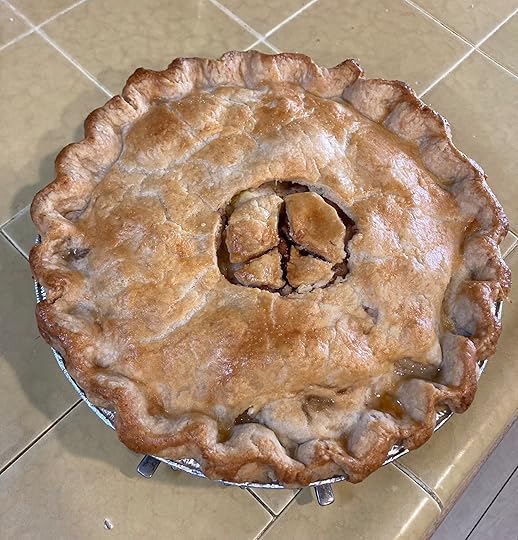 “Pie makes people happy.” Especially this one.
Allison Engel is a playwright, a journalist, a political activist, a communications director, and so much more. She’s a force! (Read her bio and you’ll see what I mean.) We have a lot of writer friends in common because she lived part-time in Iowa, but she was also living part-time in LA, so when I was in California last year I reached out to her. We met for lunch and had a great conversation; I was glad I made the effort to connect. (Never hesitate to email someone you admire.)
A lot can happen in a year. Allison lost her husband to cancer and moved to Pasadena full-time after his death to be closer to her daughter.
In my sympathy card, I had written that I wished I could bring her a pie. So when I was back in LA a few weeks ago, and we made plans to meet for lunch, I knew what I had to do.
The apple pie was still warm when I got the restaurant and she thanked me for it. But then I told her, “There’s one condition—you have to share it with someone.”
We talked for nearly three hours—I remember this because I was worried about getting a parking ticket. I didn’t care. Spending time together was worth more than whatever the ticket might cost. (I didn’t get one.)
Allison sent me several emails after our lunch. The first one said, “I am still gobsmacked that you made me a pie. That’s a first in my 71 years. It’s so beautiful. I took a photo of it and am going to have a slice for breakfast and share it with my new neighbors.”
The second one said, “This pie is so, so good. The crust is amazing. I am a very critical pie-eater, and this is one of the tops in my pantheon of all-time favorites.”
But her last email was by far the best. “I took pieces of pie next door to my new neighbors (they are renovating their unit), and they had gone back to the East Coast, but all their workmen were there. So I shared the rest of the pie with four tile-setters and painters, and they LOVED it. They were pretty incredulous that this amazing treat just appeared at the work site. Their English was limited, as was my Spanish, but the pie was the only language we needed.”
My reply was this: “I cried when I read your email this morning. I was at my mom’s and I told her about it, and she teared up too! THIS is world peace (piece) in action!!!! This is the magic of pie and you experienced it firsthand. I’m tearing up again as I write this. Remember our conversation over lunch, when I was saying I don’t really know how to measure success—is it a certain number of book sales? Is it making the bestseller lists? No, THIS is the measure of success. You, the workmen, the pie, period. Success is measured in kindness. Seriously, I still want to cry because this is choking me up so much.”
I once took a photo of a sign that read, “Never stifle a generous impulse.” To that I would add: Never underestimate the power of a small gesture, like baking someone a pie. You never know how far the ripples will reach.


September 20, 2022
Diary of a Book Launch: Vulnerability and Trust
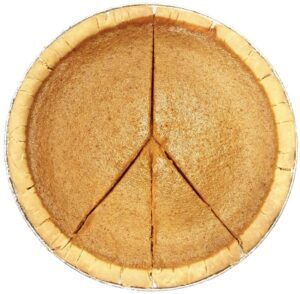
My official book launch date for World Piece is tomorrow, September 21, International Day of Peace. That said, the book has already been available for about a week, thus the release has been a slow roll-out versus a singular moment—a tide coming in instead of a wave crashing on the sand. Unfortunately, it doesn’t make the launch any easier. It’s still a big ocean out there where anything can happen.
I went on my World Piece pie-making journey seven years ago, though it didn’t take me seven years to write the book. I wrote another book during those years, about my four years living in the American Gothic House, a time that was maybe even more adventurous than circumnavigating the earth. That book didn’t get published, but even when you write a book that doesn’t sell, nothing is wasted, because it took me in an unexpected direction and I rewrote it as a TV pilot and a feature film script. I had never written a script before and it turns out I love writing in that format. Visualizing how the story will look on a screen, writing all that dialogue, and being able to fictionalize it came naturally to me. But trying to sell a TV or film project is even more difficult than selling a book! Even if it never gets made, it doesn’t matter because I loved doing it. I learned a new skill and stretched myself beyond my comfort zone.
Also in the past seven years I oversaw the paperback publication of my first memoir, Making Piece, and of my cookbook, Ms. American Pie, giving a new life to the books, both of which I’m very proud. I also published Hausfrau Honeymoon: Love, Language, and Other Misadventures in Germany, the prequel to Making Piece, about my relationship with Marcus and my unexpected struggle to adapt to his German culture—and his language. (German is so hard to learn!!) It’s funny, sometimes outrageous, and romantic, and for once it’s not about pie.
There were other things that side-tracked me in these past seven years: the passing of my dad in 2017, the loss of Jack (my terrier) in 2019, the splintering of democracy, and the upheaval of COVID. Throughout all of this I carried the weight of World Piece and how the book remained unfinished. I always had a goal to write about my round-the-world travels, about all the places pie took me, the people I met, and the lessons I learned. But it was difficult to write about world peace when it seemed more elusive than ever.
I know how precarious life is—Marcus dying so unexpectedly at age 43 taught me that—which is why I often think about what I still want accomplish before my time is up. One thing was clear: I did not want to leave this planet without telling my story. So I got busy. I focused. I became fully, completely, obsessively determined. And now my book is making its way into the world, its lively pages contained between its bright cover—a blue sky, a red suitcase with a rolling pin strapped to it, and a horizon that leads to who knows where.
It’s done! It’s published! So why do I feel so . . . out of sorts?
My friend Nan, a screenwriter explained, “After I finish a project, I feel a little empty, like ‘I worked so hard, now what? What’s next?’ So what you’re feeling is normal.”
Her note was very much appreciated, and it helped, but “empty” wasn’t quite the right word. It took going for a three-mile walk on the gravel road to conclude that what I’m feeling is “vulnerable.” By sharing my story, I am exposing myself to the world. This is beyond just standing naked in front of an audience revealing my dimpled skin—I’ve unzipped my flesh jacket, laying bare the deepest parts inside of me, all the way down into my raw and troubled soul. It’s so unsettling I want to crawl under my cotton sheets and cry.
But then another word came to me as I continued on my walk through the cornfields: “Trust.”
Exposing myself—every part of me—in an honest way is what I do. It’s what I’ve always done—when talking about my grief in Making Piece, when revealing my struggles in my marriage in Hausfrau Honeymoon, and when pouring my guts out in pretty much every blog post I’ve ever written. Without fail, I have always been met with compassion and kindness from my readers.
I have to trust that this time will be no different.
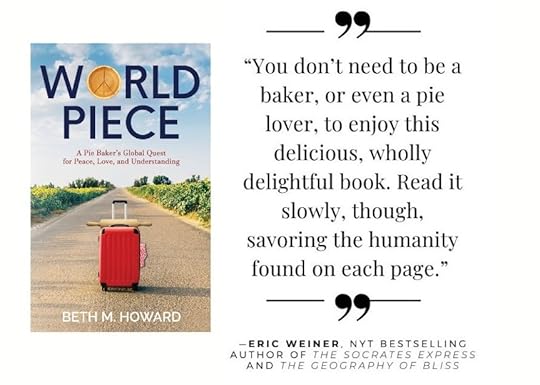
My trust should already be bolstered by the quotes I got from other authors for my book cover. The quotes were glowing compliments, but it was in their private emails to me where I found the most encouraging words. One said, “You have something very special here.” Another said, “This is life-changingly good.”
Life changing? If my World Piece memoir can change someone’s life for the better, or help make the world a better place in even the smallest of ways, then the 30,000 miles traveled, the hundreds of pies baked, the very long, exhausting hours spent at my desk—and above all, the terrifying vulnerability—will have been worth it. I have done my best to tell the most honest story I could, and I trust that that honesty is what the world needs right now—maybe even more than pie.
You can buy World Piece: A Pie Baker’s Global Quest for Peace, Love, and Understanding in paperback and eBook on Amazon, Barnes and Noble, Kobo, or better yet, from your local bookstore.
If you’re interested in having me speak to your group, do a reading at a bookstore, or have an idea for an event, please get in touch. XO Beth
September 14, 2022
My World Piece Memoir is Coming!
Seven years after baking my way around the world, my memoir about the journey is going to be published. The Kindle version is now available for pre-order; the paperback can be purchased on SEPTEMBER 21—International Day of Peace (also World Gratitude Day).
People are already saying glowing things about the book“A book about pie? Yes, but Beth Howard’s delightful and delicious World Piece is much more than that. It is about being scared and senseless by the thought of doing something—and doing it anyway. It is about the terrible persistence of grief, the transformative power of travel, and the love of a good dog. It is about leaving home in order to find it. Beth Howard is the Marco Polo of the baking world. With her trusty rolling pin in hand, she circles the globe in search of peace—the absence of war, yes, but also the more elusive peace of mind. She writes with a keen eye and open heart, leavening her tale with dollops of humor. World Piece is part travelogue, part culinary adventure, part love story—and wholly delightful. You don’t need to be a baker, or even a pie lover, to enjoy this delicious book. Read it slowly, though, savoring the humanity found on each page.”
—Eric Weiner, NYT bestselling author of The Socrates Express and The Geography of Bliss
“As any pie lover will tell you the secret to a good pie is the balance between crust and filling. The same is true of good books: a delicious tale wrapped in a good narrative storyline. Herein, content and coating meld into a thrilling story with all that we humans love to think about. There is love, humor, drama, fear, and more humor. From Mumbai’s Dhobi Ghat open-air laundry, to the most nuanced pie-making instructions ever written, you will be carried along on this bumpy, swerving, exhilarating ride by a wonderful wit and an infectious enthusiasm for pie and life.”
—Bill Yosses, host of Baker’s Dozen on Hulu, former White House Pastry Chef, and author of Desserts for Dummies
“Part call-to-action, part memoir, all heart, Howard takes us with her on a whirlwind journey to some of the most challenging spots on the planet. With a raw authenticity similar to Anne Lamott, Howard’s zest for life sings on every page.”
—Libby Gill, author of You Unstuck and The Hope-Driven Leader
“Beth Howard’s delicious sense of humor, self-awareness, and sensitivity brings alive her personal journey, as it intersects with critical issues facing our planet today. Beth reminds us how world peace starts with small acts of kindness—like offering someone a slice of pie.”
—Kathy Eldon, founder of Creative Visions Foundation
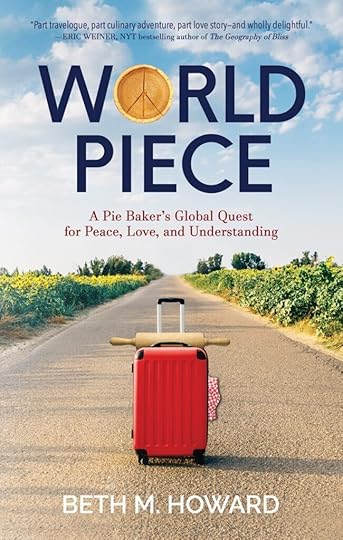
SYNOPSIS
Beth Howard always dreamed of circumnavigating the planet; not to tick off a list of tourist sites, but to immerse herself in the culture of each country by making pie with local residents. Pie had healed her grief after her husband’s death, so why not use it to heal the world and promote peace? Hauling her rolling pin from New Zealand to Australia, Thailand to India, Lebanon to Greece, Switzerland to Germany, and Hungary, Howard uses America’s iconic comfort food as a means for connecting with people in their homes, kitchens, and cafés. In each region, she offers pie lessons and, in turn, learns about the surprising origins of ingredients and traditional dishes—including pie in its myriad forms. During her demanding three-month journey, she meets charming characters, experiences uncanny coincidences, and finds kindness when she least expects it. She also encounters geopolitical unrest (past and present) that prompts the
questions: Why is world peace so elusive? And what can we do to achieve it? She offers some answers in her feisty, often funny, always unflinching voice. Underlying her pie and peace mission is her personal story about overcoming fear, letting go of grief, searching for a new home, and making room for new love. A balanced blend of multi-cultural insight, world history, social commentary, immersive travel, and the comfort of pie, World Piece could be described as Waitress meets Anthony Bourdain: Parts Unknown. Come along for the wild ride as Howard takes the reader on a deeply intimate, delicious, and inspirational global adventure. FOR MORE DETAILS, AND TO READ THE FIRST CHAPTER, VISIT THE WORLD PIECE PAGE ON THIS SITE.
May 23, 2022
An Unsung Hero of my Own
This post originally aired as a commentary on Tri States Public Radio. To listen, go here.
NPR has started airing a new series called My Unsung Hero. Produced by Hidden Brain Media, its mission is to provide an antidote to the despair brought on by the daily news, with the goal of renewing faith in humanity. According to the HiddenBrain.org website, each episode reveals everyday acts of kindness and courage that have transformed someone’s life.
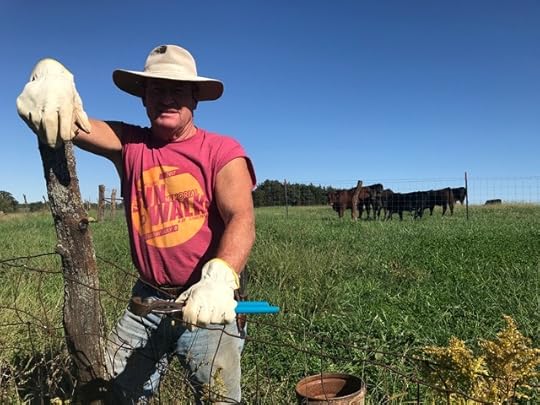
I know first-hand how daily news can cause despair—the issues are too many and too depressing to bother listing them—but after listening to a few episodes of My Unsung Hero I’ve started focus not on what’s wrong with the world, but what is good about it—not just what is good but who—because I have an unsung hero of my own: my partner, Doug Seyb.
A third-generation farmer, Doug grew up on his family’s farm in Donnellson, Iowa. While many others have traded rural life for an urban one, Doug chose to stay and nurture the land of his ancestors. He grows corn and soybeans to feed the nation. He also raises cows, who may be the most well-cared-for in America, given their access to fresh grass. Doug works hard, building his own fences and baling hay, and never complains, even when his body aches from the physical labor.
He serves on an education foundation board for the local high school, offering financial support to kids who want to go to college or trade school. He donates a large portion of his income to causes like Doctors Without Borders and Camp Courageous, a summer camp for the disabled, and also to public radio stations like this one. He contributes more than just money. He’s given 25 gallons of blood—so far—to the Red Cross, he recently delivered a year’s supply of firewood to widow on a nearby farm, and he subscribes to the Storm Lake Times to support the survival of local journalism, even though we live 500 miles away from the region the newspaper covers.
For 13 years, he hosted a music series, renting out Donnellson’s American Legion Hall and booking bands from all over the country to provide entertainment to our otherwise quiet community. He’s in the process of creating a new music series to raise money for the Democratic party and for Ukrainians, demonstrating just how much—whether in his hometown or on the other side of the globe—he cares about people.
He also cares about me. He has supported me during the many hardships I’ve faced in the seven years we’ve been together. He provided his muscular shoulder to cry on when my dad died, and when my 15-year-old dog died soon after. He has driven me to the airport every winter, braving icy roads, to save me from my Seasonal Affective Disorder. He has listened for hours as I’ve voiced my struggles over my career as a writer. He has also been there to celebrate every special occasion—birthdays, anniversaries, and sometimes just an ordinary day—quick to show up with a bouquet of flowers, a good bottle of wine, and a card that says “I love you.”
He finds joy in the simple things, like walking the creek after a rainstorm to hunt for arrowheads. He pays attention to minute details that most of us miss, like the patterns in the clouds, the sun shining through a spider web, and the way snow melts in stripes on the barn roof. He notices the butterfly on the fencepost and points out the trumpeter swans in the distance. He feeds the hummingbirds religiously and protects the meadow of wildflowers remembering how much it meant to the previous landowners. He cares about nature and the planet. To Doug every day is Earth Day.
He’s a man of few words, but when he does offer advice, his counsel is wise, and for someone who doesn’t travel often, his world view is expansive and all-inclusive. When I spin like a cyclone with worry or fear, he grounds me. As a farmer who plants seeds and waits for them to grow, he has taught me to be more patient. As a big tipper at restaurants, explaining, “That waitress needs that extra dollar more than me,” he has taught me to be more compassionate and generous. His practical way of wearing T-shirts and jeans until the threads disintegrate, and gluing the soles of his shoes together before even thinking about getting new ones, has taught me to be more conscious of waste and to buy less, which is better for the environment. And in his reticence to seek attention or praise—qualities of a true hero—he has taught me about humility. The world needs more unsung heroes like Doug—and like the others featured in Hidden Brain’s radio series.
The news will continue to cause anxiety and despair, which is why I encourage you to think about the unsung heroes in your own life. They’re out there, whether they’re strangers, coworkers, friends, or family. They may be old or young, have opposing beliefs, or speak a different language; Kindness does not discriminate. There is still so much goodness right in front of us. We just have to change our focus to see it.
*****
Beth Howard is an author and essayist. She blogs at www.theworldneedsmorepie.com. The opinions expressed are not necessarily those of Western Illinois University or Tri States Public Radio. Diverse viewpoints are welcomed and encouraged.
*****
Past posts you might also like:
February 24, 2022
Need Hope? Jane Goodall Will Give You Some
This post originally aired as a commentary on Tri States Public Radio. To listen, go here.
 Author E.B. White once said, “I get up every morning determined to both change the world and have one hell of a good time. Sometimes this makes planning my day difficult.”
For me, planning my day is never the problem. I get up every morning determined to change the world – but only after I’ve had my coffee and listened to the news.
For the past two weeks, the top story has been Russia’s looming threat to invade the Ukraine, adding “the possibility of World War III” to the mountain of anxieties I already have. With the pandemic, the climate crisis, gun violence, greed, racism, and more, it’s a Mount Everest of despair. It feels so impossible to change anything, let alone have any influence at all, that I swing the opposite direction, figuring if we’re all gonna die, I might as well have “one hell of a good time.” And so, I help myself to the second slice of chocolate pie. I take the spontaneous trip to Cancun. I buy the $25 bottle of Cabernet instead of the $6 one and drink a glass too many. But all that’s done is pack on nine extra pounds and deplete my bank account.
Indulgence is not the answer.
I know I’m not alone in this feeling of futility to change the world. But I also know there are optimists among us who can inspire us to keep trying. Jane Goodall is one of them.
After hearing about her latest book, “The Book of Hope: A Survival Guide for Trying Times,” I ran out to buy it. Given that Jane Goodall is a naturalist, I was surprised to find it in the self-help section of the bookstore. But help is what I needed to ward off heart palpitations and further weight gain.
The book is coauthored by Douglas Abrams, who, in a series of interviews with Jane, presses the 87-year-old to answer the question: How can you still be hopeful when everything seems so dire?
She lists four reasons:
• the amazing human intellect
• the resilience of nature
• the power of young people
• the indomitable human spirit
We may have created the problems, but she believes with our intellect, we are smart enough to solve them. And that with our instinct for survival, our human spirit will drive us to not give up, even when there’s a chance we won’t succeed. Jane acknowledges that things are indeed dire, but she insists we can turn things around if we get together and act now. Every small action helps. Each of us must do our bit.
“Hope is contagious,” she says. “Your actions inspire others.”
This snowball effect makes sense, but where do we start? “It’s in nature where we can find the answers and the hope,” she explains.
The only time Jane has lost hope was when her husband died, but turning to nature helped restore it, claiming, “It was the forest that helped me most of all.” The natural world is also where she feels most connected with a Great Spiritual Power. She says it’s that power that gives her the courage and strength to keep going, to keep sharing her message and continue fighting for justice, environmental and otherwise.
I was surprised to learn that the grief we feel over climate crisis has a name – eco-grief. Jane suggests that our survival depends on confronting that grief and getting over our feelings of helplessness and hopelessness. We can find healing in nature, she reminds us, as well as wisdom, cautioning that when we lose the connection with the natural world, we lose our wisdom.
“The Book of Hope” is packed with many more of Jane’s insights and is absolutely worth reading. Equally inspiring, listen to Jane’s interview, titled “What it Means to Be Human,” on Krista Tippett’s “On Being” podcast.
This past weekend, I channeled my inner Jane Goodall, and went for a hike with three girlfriends. While walking through the forest and fields, we determined that in addition to picking up empty beer cans and other litter, which we do on all our hikes, we could plant more trees to replace the ones a local farmer recently cut down. These are the small but impactful actions we can take that add up to bigger change.
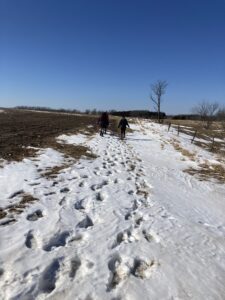
Energized by the sun, the wind in our faces, and the beauty of the landscape, we walked four miles, talking and laughing the whole way. Between the camaraderie of friends and the immersion in nature, our spirits were restored. And as a bonus, the exercise was a step toward dropping those extra nine pounds. In the words of E.B. White, our hike was “a hell of a good time.” And, best of all, it left me feeling hopeful.
October 18, 2021
My Pie Cookbook, Now in Paperback
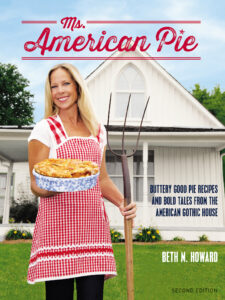 Finally! It’s back! Now in paperback, and as an ebook.
If you just want to buy the book, you can get in on Amazon, IndieBound, or ask your local bookseller. If you want to hear the story of how the book came back into print, read on.
My cookbook, MS. AMERICAN PIE, originally published in hardcover in 2014, sold well at first, so well that the publisher did a second print run. But the book’s trajectory was shorter lived than anticipated, because several months after its release, I closed the Pitchfork Pie Stand and moved out of the American Gothic House.
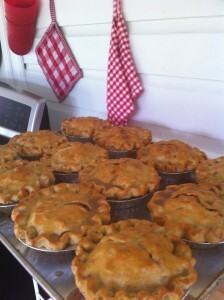 Suicidal business move? Maybe. Good for my mental health? Definitely. Do I regret it? Sometimes. There’s so much I miss about the house, the pie stand, and the community that sprung up around it.
Anyway, the publisher was not too happy about my departure, and when the inventory sold out they wouldn’t print any more copies. “PLEASE,” I begged them, “people are still asking to buy it.” “No,” they said.
Welcome to the life of an author. Unless you are a legend like Julia Child, or your pie shop is still in business to guarantee ongoing sales, your cookbook will likely be left behind in the flour dust.
I had worked too hard on this book to let it die. So I got my text rights back from the publisher, and bought the design files from them, which included the layout, photos, illustrations, all of it. I paid way more than I will ever recoup in future book sales — I could have bought a car for less — but at least my book is back in print and once again available for purchase.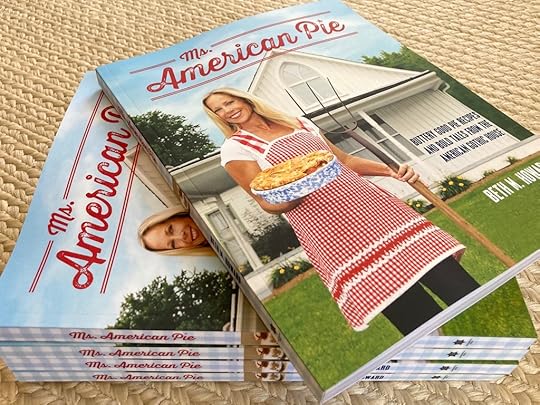
I had talked with other publishers about printing the second edition, but there were downsides to this. One, I’d give up my text rights again. Two, the book wouldn’t be out until 2022. And three, it would be printed in China, and the shipment may get stranded on a ship with all the supply-chain delays. This is why I opted tp self-publish it.
I’ve written about self-publishing before on my blog, about its advantages, about print-on-demand being better for the environment, about the satisfaction of having creative control. Yes, distribution to bookstores is a challenge, but the biggest challenge to self-publishing a full-color cookbook with a lot of photos is the cost. A self-published hardcover edition would have required me to raise the cover price from $28 to $40 — only to make 50 cents per copy. As it is, the price of the paperback is the same as the original hardcover — $28 — the lowest price allowed by the self-publishing platforms due to the sizable cut they take. My take on that is around a dollar per copy.
Clearly, I’m not in this for the money.
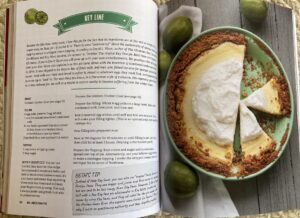 The feedback on the paperback version has been good. It’s got everything the hardcover has — it’s packed full with the same recipes (plus 2 new ones) — and because it’s lighter weight it’s easier to use. Also, you won’t have to wait for it — it’s available now! One customer got her copy the very next day. This means you can get my cookbook in time for Thanksgiving — and for Christmas presents. HINT!!
Thank you for encouraging me to get my book back out there. I really appreciate your support!
***** To order go to Amazon, IndieBound, or ask your local bookseller. *****
October 13, 2021
A Glimmer of Light to Keep Going
You can also listen to this story on Tri States Public Radio: https://www.tspr.org/post/commentary-...
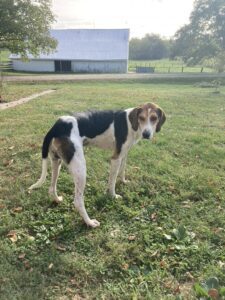 A stray dog showed up on our farm a few weeks ago. At first, he only came around at night, lurking in the shadows as we sat around the fire pit after supper. He was tricolored and as tall and lanky as a colt. I did an internet search and discovered he was a Treeing Walker Coonhound. He was young and puppy-like, probably about a year old, and judging by his aversion to being touched, he had likely been living on his own for a long time. Was he lost? Or was he dumped in a field by some heartless person who couldn’t be bothered with him?
I called several local vets and posted a notice on social media. People as far as five miles away had seen him, but no one claimed him. When we learned he had been making the rounds, we began referring to him as Rounder.
He continued to show up at our place, so I left food out for him. Soon he enough, instead of slinking away under the cover of darkness, he stuck around for breakfast. He joined us on our walks with our other dogs, napped on our porch, and stayed for supper. This went on for about five days. Having fostered animals before, I knew what was happening: Dogs adopt you and not the other way around. It’s how we came to have our other two dogs, a chihuahua from Arizona and a Spaniel mix, who turned up in Doug’s barn one January morning 17 years ago. They show up, you show them kindness, they stay. But just as we had gotten used to the idea that the coonhound was joining our family, he got spooked when our neighbor’s dog came through our yard and ran away.
[image error]
I couldn’t call for him, because he didn’t know his name. And I couldn’t drive around looking for him, because he had taken off across a cornfield. When night fell, there was no point looking for him anyway. Distraught, my friends assured me he would be back by morning, but he wasn’t.
The world is already such a dark place these days, filled with unprecedented trauma and loss—the loss of almost five million lives due to the global pandemic, the decimation of everything from whole cities to whole species due to the climate crisis, and the dismantling of our American democracy due to a self-serving, uncompromising, win-at-all-costs mentality. And that’s just the big stuff. It doesn’t include all the personal grief, like the loss of parents, loss of income, and, ultimately, loss of hope for the future. All of this combined is so overwhelming, so unfixable, and so depressing, that we rely on little glimmers of light to keep us going. I can’t save the world, but if I could just save this one dog, it would give me that welcome glimmer of light, that helpful spark to restore some faith in life.
Rounder had seemed so happy with us, so eager to be part of our pack. And though we didn’t need another pet, I was happy with him, too. After less than a week, I had already formed a strong attachment. But he was gone, on the run again. My mind spun with all the bad things that could happen to him in rural Iowa. We live a mile from the four-lane highway; he could get hit by a car or a semi. Hunting season is starting; he could be mistaken for a deer and get shot by a hunter. Or, as it happens too often in rural areas, he could get shot or poisoned by a farmer who doesn’t want him on his land. Equally concerning, he was already so skinny and underfed, with winter coming, he could starve or freeze to death.
The second night he was gone I lit another fire in the fire pit. It’s what had attracted him to us in the first place, so maybe the smoke signal would lure him back. I held vigil for six hours, adding more logs and constantly looking in the direction where he had first appeared, but he never showed up.
When I finally stopped crying long enough, I reminded myself to take solace in the fact that we had gotten a few good meals in him, along with de-wormer and a flea and tick treatment. There was nothing more I could do but pray for the thing I wish for every stray animal—that he would find some other compassionate person to give him the safe home he deserved.
The next morning, when it was still dark, I heard a loud howl beneath my window. I’m used to be woken up by animal sounds on the farm—cows bawling, coyotes yipping, owls hooting, raccoons cussing. I would normally put a pillow over my ears and go back to sleep. But I knew this sound, this voice.
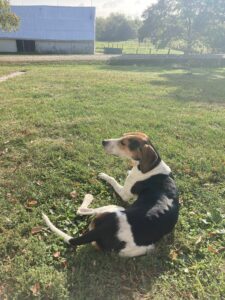 I smiled, jumped out of bed, and ran downstairs. I passed through the kitchen, where the Sunday paper was spread out on the table, every headline indicating the world was still a mess—another mass shooting, another GOP member downplaying the January 6 insurrection, another unvaccinated person infecting others with COVID-19. But for the moment, none of that could bring me down, because right outside the door was a long-legged coonhound waiting for breakfast. A glimmer of light brighter than the sun, Rounder was back.
May 28, 2021
What Did You Decide About the Pie Stand?
 A few weeks ago, I posted a couple of polls on my Facebook business page, The World Needs More Pie, about reprising my Pitchfork Pie Stand. Bring it back for the summer at the American Gothic House, or rent a retail space within walking distance of the house on Eldon, Iowa’s main street? I stirred up expectations along with an outpouring of support, and now some of you are asking what I decided to do.
 I wanted to give you an update about my decision, my activities, and my plans.
I’ve decided not to rent the retail space. 95% of the responses were an enthusiastic “GO FOR IT!” including the one from my mom. But there was one friend, who knows me maybe even better than my mom, who said, “ARE YOU CRAZY? You don’t want to be tied down.” Her words snapped me out of my fantasy, though it was an exciting one while it lasted. I miss people. I miss the community that pie creates. So a newly renovated space where I could sell pies, teach pie classes, sell pie-baking supplies, and provide a space where people could gather seemed like a good solution.
It sounded so good on paper...
But the reality check was this: I’m a terrible businessperson; I suck at bookkeeping. I want (and need) to travel; a year-round retail space would require me to stay put. The rent was very high for a rural town; I’m not prepared to take out loans or drain my savings. While my shop would bring people to town, the tourist season is short; it would be hard to sustain business (and pay rent) in the winter. And then there’s winter itself. I suffer from S.A.D. and the ONLY solution that works for me (and I’ve tried them all) is go south like a snowbird.
Which brings me back to my original idea: reprising the Pitchfork Pie Stand inside the American Gothic House for the summer months.
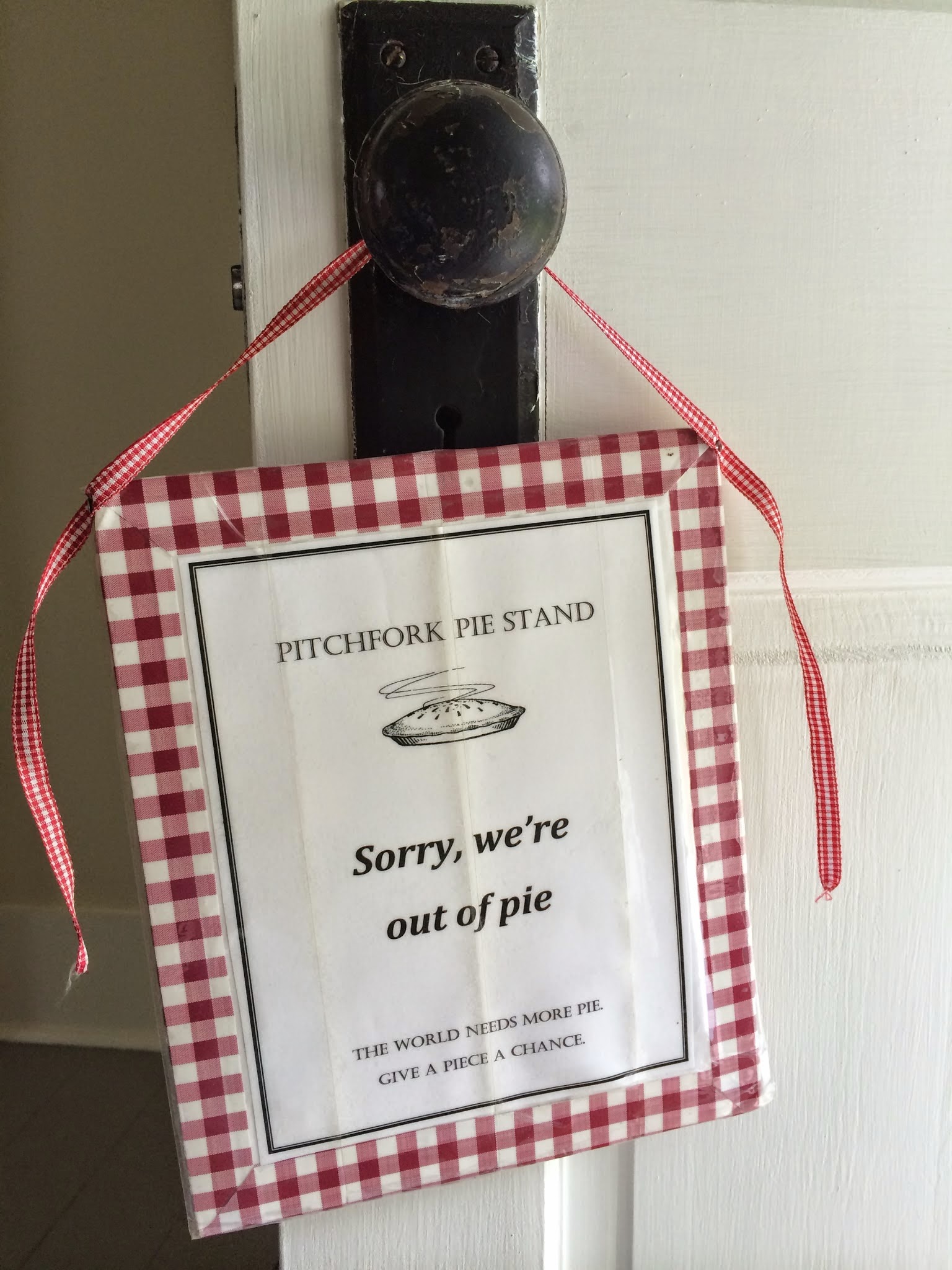 Sadly, the pie stand will not be returning to the American Gothic House. The AGH is owned by the State Historical Society of Iowa and the state employee who manages it, along with six other historical sites, has a blanket policy for all: No Baking Inside. No matter that I baked THOUSANDS of pies in the house during the four years I lived there. No matter that bringing the pie stand back for the summer would draw more tourists, create community, and contribute to the local economy. Policy is policy.
 Not one to take no for an answer, I considered going above his pay grade and asking for permission from his boss, his boss’s boss, hell, I’d have gone all the way to the governor. Or I might have organized a public campaign with my supporters to lobby for the pie stand. But I have too many other things to do with my time than battle bureaucracy. (For the record, I did consider baking elsewhere and transporting the pies to the AGH, but there's a long list of reasons why that's not a viable solution.)
I’m sorry that Eldon's visitors will miss out on pie. I’m sorry that I won’t get to bake with you. But I’m especially sorry that the AGH is not getting utilized. (The historical society won’t even allow you to plug in a Crockpot!) The AGH has a soul—I felt it the first time I saw I stepped inside—and I know it's happier when it's filled with life. And I don’t mean snakes! The pie stand would have been a win-win for everyone. It’s a shame the rule-makers in Des Moines don’t see it that way.
So what’s next then?
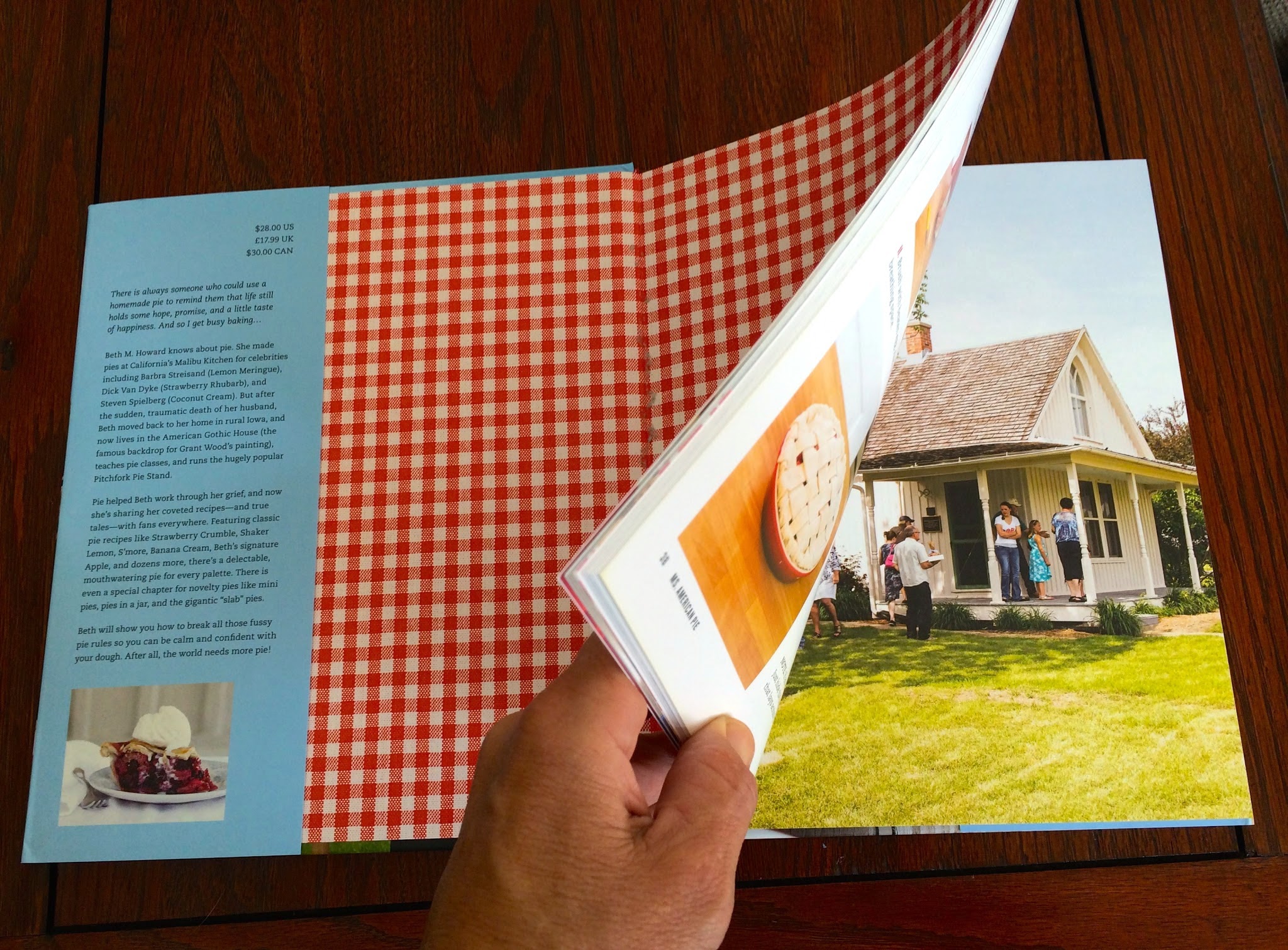
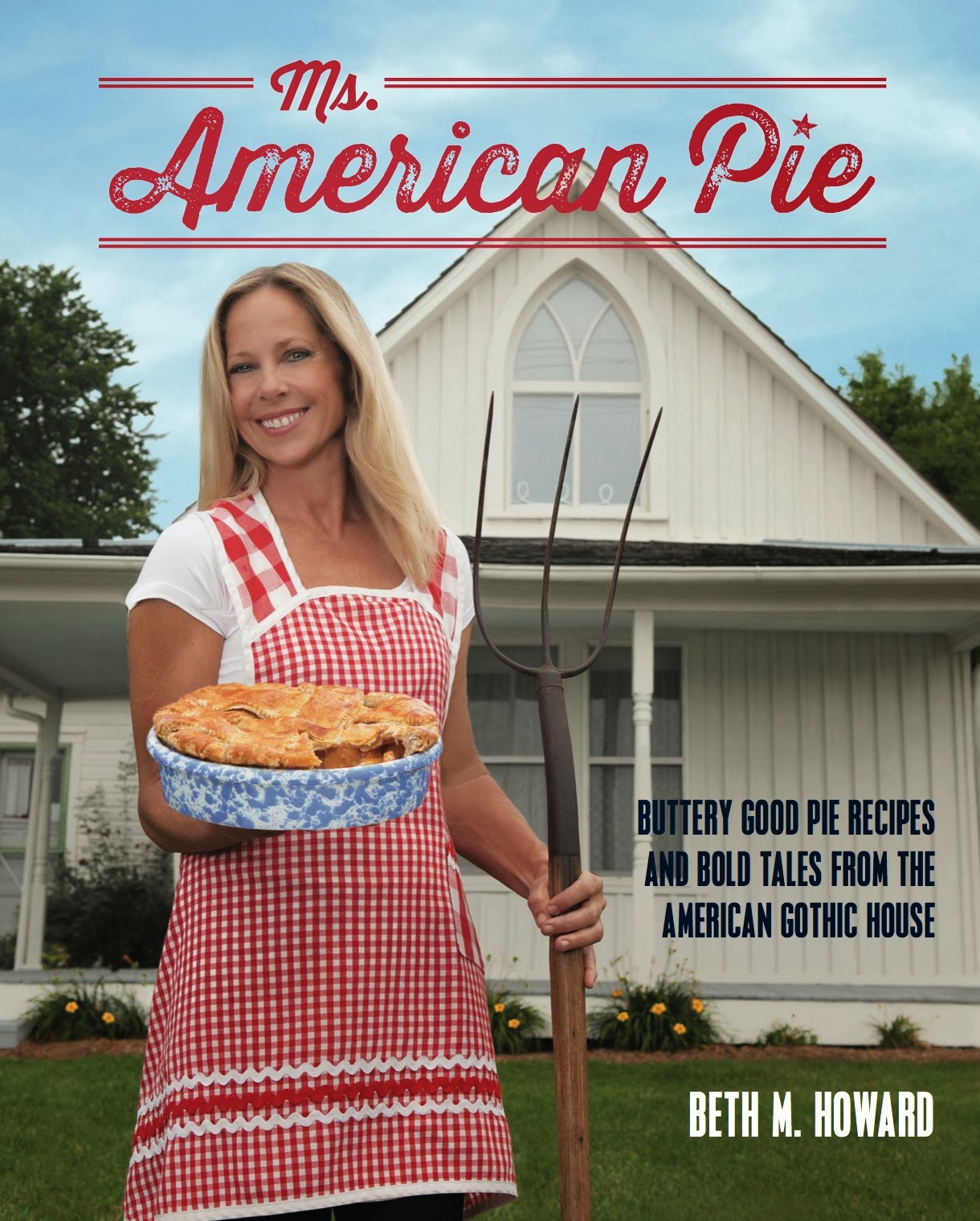 I’ve been working on edits for the second edition of my cookbook, “MS. AMERICAN PIE.” My original publisher took it out of print—such are the disappointments an author faces. I was planning on self-publishing it just so I could get it back out there in the world, but at the last minute, I signed on with Interlink Books. They will release the book next March (2022), and possibly with a new cover. Ten months seems like a long time, but given the high quality of Interlink’s printing, along with its sales, marketing, and distribution abilities, it will be worth the wait. It's—hashtag—somethingtolookforwardto.
  I’m also working on my next book, “WORLD PIECE: One Woman, One Rolling Pin, Nine Countries, and the Desire to Make a Difference.” I completed my three-month round-the-world pie-making journey in 2015 (watch the 23-min film here), and did not expect writing the memoir would take far more time and effort than the trip itself. But that’s partly because I’ve only been working on it intermittently since my return. I dedicate myself to it in spurts, but I keep getting sidetracked. I’m finally ready—I swear—to get it to the finish line by the end of the summer. Which is another reason for not doing the pie stand.
 One of the projects that sidetracked me from “World Piece” was television—not watching it; writing for it. After a friend encouraged me to enter, I won a contest for a TV Pitch Workshop with Marta Kauffman. You may not recognize her name but you know her TV shows, “Friends” and “Grace and Frankie.” I was always terrified of the script format, but after downloading the software and giving it a try, I discovered that I actually LIKE writing scripts! I wrote my first TV pilot, have a good start on the second episode, and have outlined five seasons of the story arc. I even made a video pitch:
What’s my scripted TV show about? What is anything in my life about? PIE, of course! I had tried—and failed—to sell my memoir about the four years I lived in the American Gothic House, but winning the TV Pitch contest prompted me to repurpose it as a TV series. It works MUCH better as a dramedy than a memoir, because by fictionalizing it I can tell the real story about what happened and no one will know the difference! Marta likes my idea, but said she’s got too much on her plate to take it on. But now that the “Friends Reunion” is finally done, maybe she’ll reconsider.
That’s the long answer to “What did you decide about the pie stand or pie shop?” Yes, it’s disappointing—for me, too—but I’ve got plenty of other pie-related projects to keep me busy. And I have not discounted the possibility of doing a pop-up pie stand, maybe this summer, maybe at the American Gothic House Center (the museum and gift shop next door to the AGH), maybe somewhere else. Thank you for your continued support and enthusiasm. Life as a writer can get lonely; it helps to know you’re out there, just a Facebook comment or text message away.
One last thing before you go...
 If you've read my books would you mind writing a review on Amazon? It would help so much. It's a sad new reality in publishing that agents and publishers look at the reviews on that giant (some would say evil) website when considering representing authors. This goes for all authors, not just me. Those book reviews matter.
 💟
Some previous blog posts you might like:
World Piece Homecoming: But Where is Home?
American Gothic House: It was a Magical Four Years
The Book That Doesn't Want to be Born...Yet (on writing my AGH memoir)
A Sneak Preview of my Pie Cookbook (first edition)
May 18, 2021
Forget First or Second, I Am Third
I hear myself saying a little too often these days that I’m glad I grew up when I did, before cell phones and selfies. Before the internet became a runaway train of disinformation. Before being famous was valued more than being a good person. Before this current era of entitlement where the prevailing attitude is “It’s all about me.” Me first. America first. Look at me. Like me. Follow me. Me. Me. Me. Me. Me.
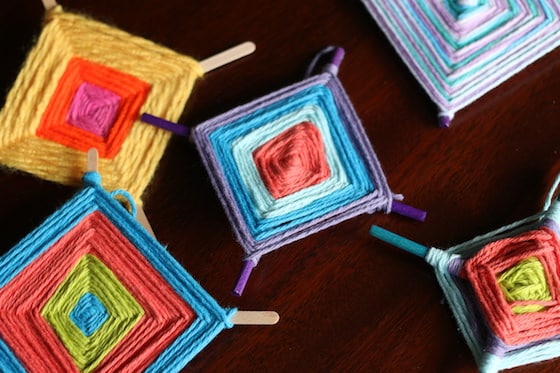 I’m starting to feel like my grandparents, when they expressed their disapproval of modern ways by starting sentences with, “In my day…” I get it now. It troubles me to see the Christian values I was taught when I was young devolve into the so-called Christian values demonstrated today.
 I grew up in Iowa in the 70s and spent my summers at Camp Abe Lincoln, a YMCA camp on the Mississippi River, just south of the Quad Cities. “The YMCA is a non-profit organization whose mission is to put Christian values into practice through programs that build healthy spirit, mind, and body for all.” This mission was incorporated into every camp activity. As we sat around the nightly campfire, the counselors told stories of peace and love, and led us in songs like “Kumbaya” and “Michael Row the Boat Ashore.” When we rode and groomed horses, we learned about respect and care for animals. Archery and riflery were a means to teach focus and hand-eye coordination, with an emphasis on safety and non-violence. And when we did crafts, braiding lanyards and weaving colorful yarn around popsicle sticks to create a “God’s Eye,” counselors artfully worked in messages of morality.
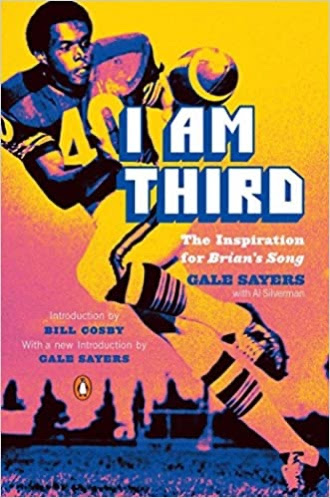
More than 40 years later, one of those messages still sticks with me. It was about humility and selflessness delivered in the form of a quote by Gayle Sayers, a Hall of Fame football player for the Chicago Bears. The quote was, “The lord is first, my friends are second, and I am third,” though I didn’t remember it in those exact words. I thought it was “God is first, others are second, and I am third.” I like to think my version is more all-encompassing, as every religion, not just Christianity, worships God, even if they call it by a different name. And by declaring “others are second,” it can include making an outsider feel welcome, helping people less fortunate than you, or simply being nice to strangers, like letting the person with only one item go ahead of you in the grocery line when you have a full cart. All of which leaves you open to making more friends.
“God is first, others are second,
and I am third.”
Sayers lived his life by this credo, which you can learn more about in his autobiography titled “I Am Third: The Inspiration for Brian’s Song.” He passed away at the age of 77 this past September. If he were still alive, I would reach out to him to ask what he thought about the world today.
 What do you think about people hacking pipeline computers causing others to hoard gas in plastic bags? What about the Israeli-Palestinian conflict, how instead of sitting down to talk things through, they’re firing missiles at each other? How about antivaxxers refusing to wear a mask during a global public health crisis, claiming it infringes on their personal rights? What about mobs storming the Capitol because their candidate didn’t win? What do you think about the suppression of voting rights, the bullying on social media, and the proliferation of guns, as if we need to arm ourselves against our own neighbors? How about people—church-going, God-fearing Christians at that—closing borders in an outright refusal to aid poor and hungry immigrants, ignoring the fact that not only are these our brothers and our sisters but that we are all immigrants ourselves?
What happened to “I am third?” And how can we bring that message back?
[image error] We can’t all go to a YMCA summer camp, and Gayle Sayers is no longer here to lead the charge, but ironically there is another football player, a coach actually, who is trying to help. His name is Ted Lasso. He’s not a real person; he’s the main character in the charming Apple TV series of the same name. Ted, played by Jason Sudeikis, is hired to coach a soccer team in England. But to everyone’s astonishment he doesn’t care about winning. What’s more important, he insists, is to be a unified team. The problem is, the star player is egocentric and refuses to pass the ball to his teammates; he makes all the goals himself so he can reap all the glory. His selfishness erodes the morale of the team, until Ted finally gets through to him, teaching him, like my camp counselors taught me, the most valuable lesson in the game of life: I am third.There is no “I” in team. For a safe and healthy planet, we need to work together. For a more unified world, we have to put others first. Life is better and less lonely when it’s not all about me, me, me. The solution is easy. All you have to do is pass the ball.
March 5, 2021
How to Help the World
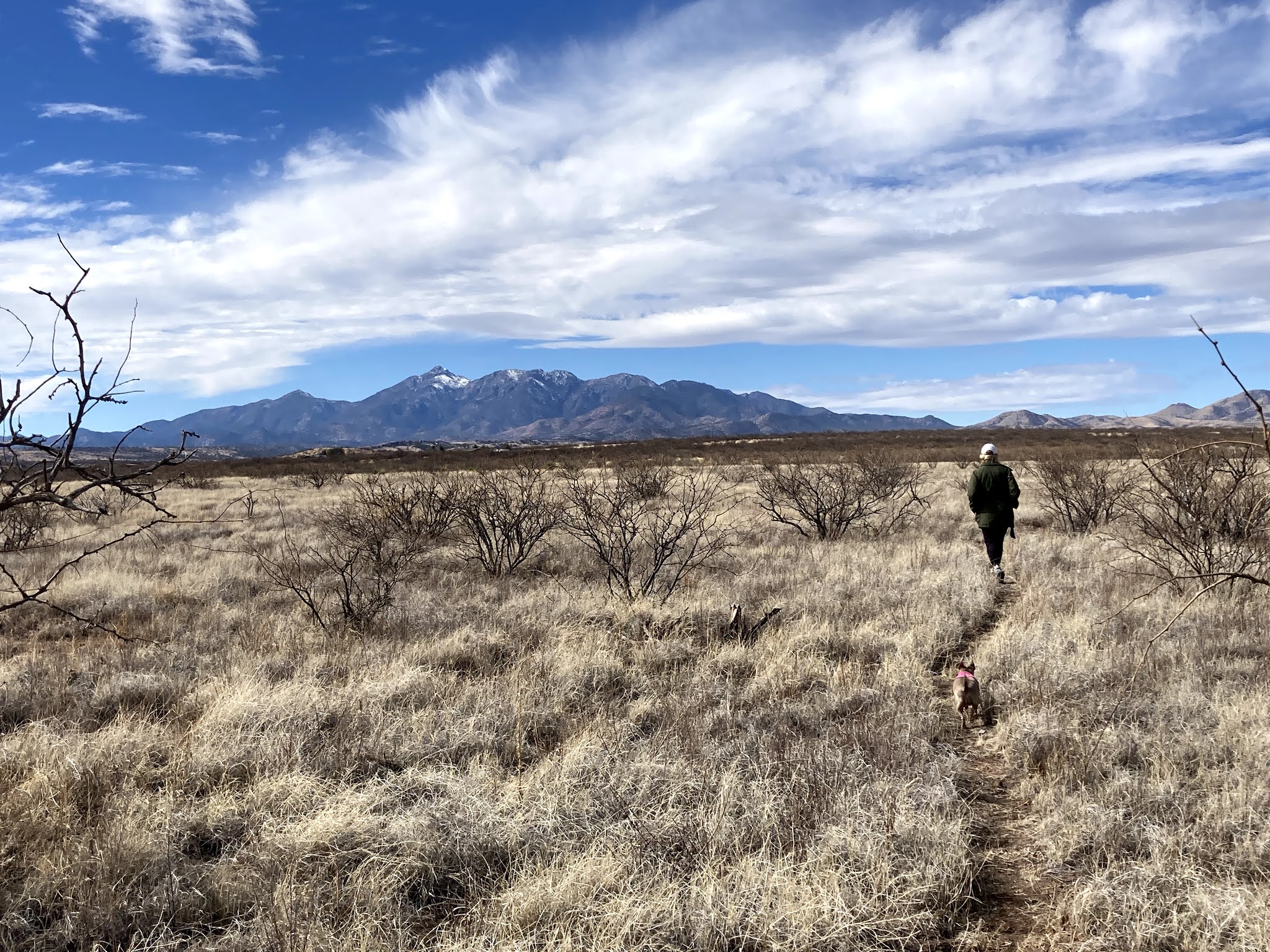 Taking a walk on the wild side
Yesterday morning I wrote in my journal that I want to do more to help the world, but that I don’t know where to start. The world is so desperately in need of help just thinking about it made me feel bad that I’m not doing more. The feeling only became worse as the buffalo herd of “shoulds” charged at me in a stampede of shame. I should be involved with a cause. I should be volunteering for a homeless shelter, an immigration center, a women’s crisis hotline. I should be working with World Central Kitchen. No, I should have started World Central Kitchen. I should join the Peace Corps. I should be giving my time, my money, my plasma, my groceries, my winter coats, my life, to help others in need. It’s my civic duty as a human being to help others in need.
All this to say I made myself feel so overwhelmed, so unworthy of taking up space on this planet, I wanted to go back to bed.
 My casita (before I moved in)
Instead, I spent an hour cleaning the tiny house I’m renting for the winter on an Arizona horse ranch. My landlord is selling the property and informed me a photographer was coming at 5:30 to take photos for the real estate listing. All she requested is that I make my place tidy. Having spent a better part of the week looking at rentals and Airbnb listings in Los Angeles, where I’m heading next, I know what “sells” a place and that means no wet towels or sponges in the kitchen, no shampoo bottles in the shower, no pile of clutter on the desk, no ratty dog bed in the living room, no rumpled sheets on the bed. Luckily this place has ample storage space, so I hid my personal items in the cabinets and closets, down to the dwindling roll of paper towel, dish soap, reading glasses, and space heaters. I fluffed the pillows and smoothed out the duvet cover. I didn’t have to. But I know how important it is to her to find a buyer so I wanted do my small part to make it look enticing. By the time I was done it looked so immaculate and adorable even I would have wanted to buy the place!
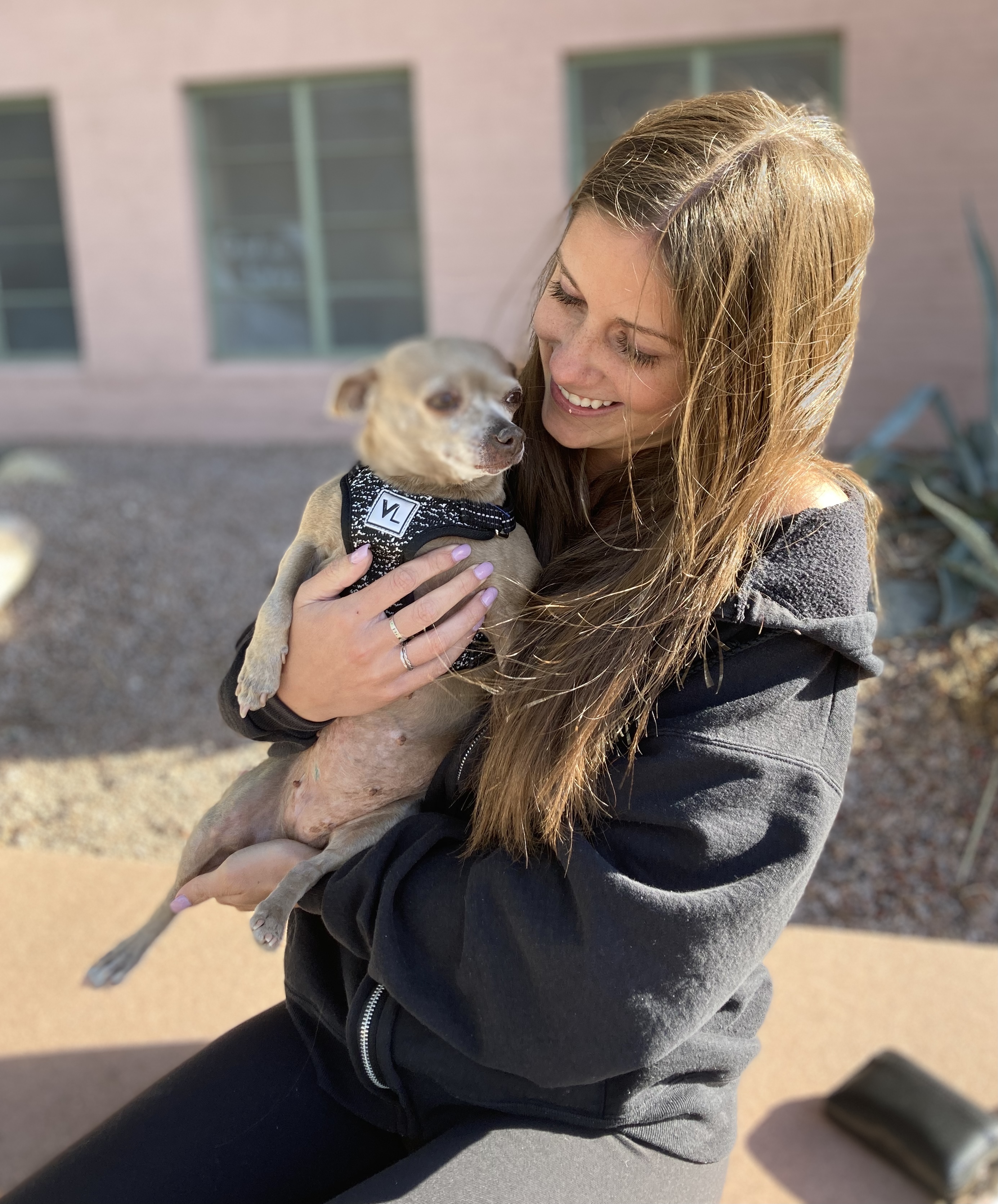 Needing to be out of the house at 5:30 gave me a good excuse to take my niece, a sophomore at University of Arizona, out for an early dinner. We met at “our spot” in Tucson, Time Market, for pizza and kale salad. We talked about boys and school and careers, about family and dogs and dreams. It did both of us good to spend time together.
 On my way home I got a text from my landlord. “You get an A+ on the casita.” I wanted to text her back and tell her that I had been happy to do it, but I was driving, so I just smiled, glad that she appreciated my effort.
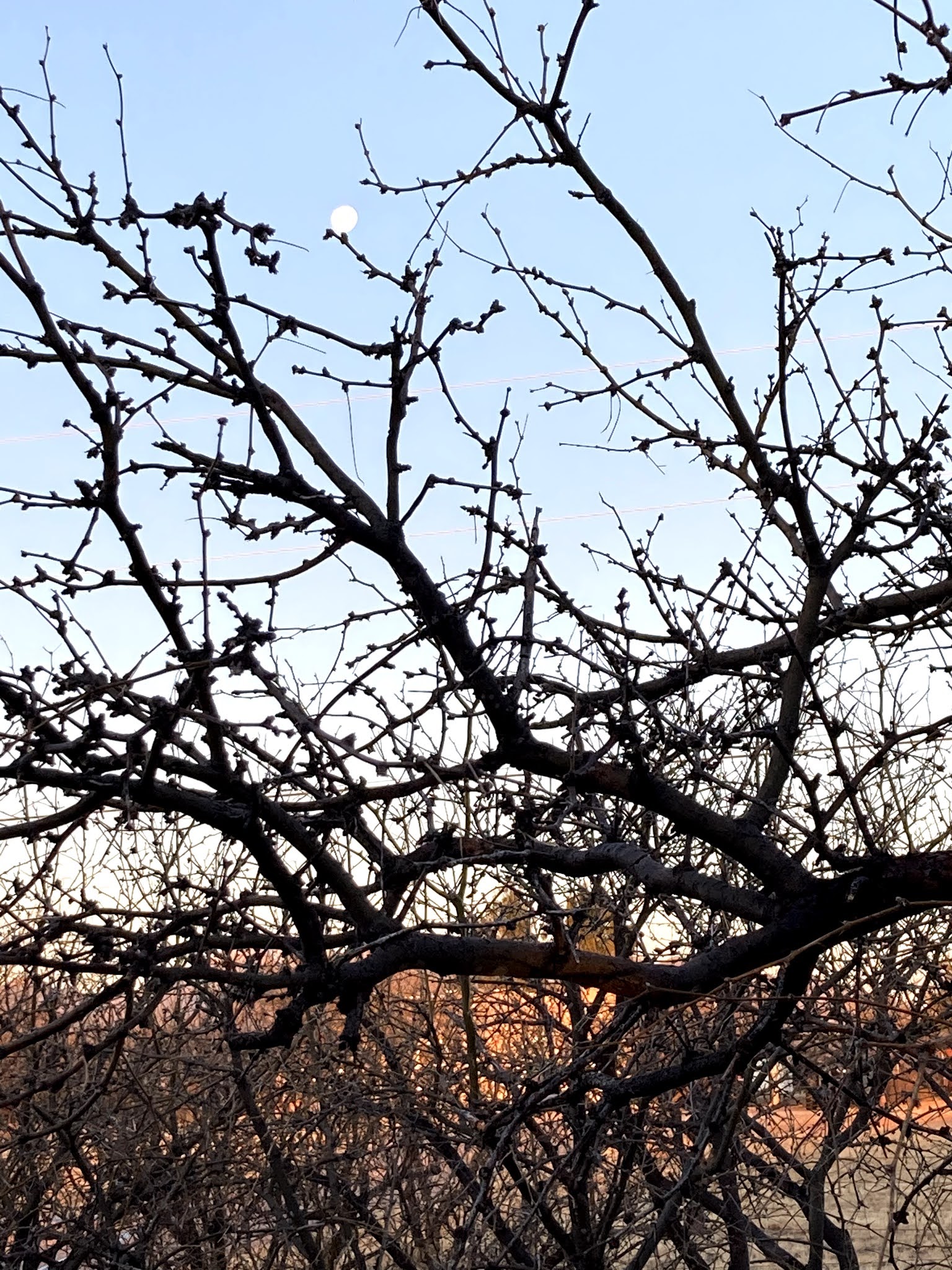
Later that evening, having just settled in on the couch to read, I heard yelling outside, not a normal occurrence on a ranch where approximately six people live within a six-mile radius. The only nighttime noise you hear is the coyotes howling and an occasional rooster crowing. I peeked past the curtains and saw the beam of a flashlight sweeping across the black desert landscape. There are a few RV parking spots about fifty yards away from my casita, one is occupied by a couple with a large motorhome and two dogs. It was the wife calling for one of their dogs, Buddy, a Jack Russell terrier. A small dog on the loose at night in this remote area is a death sentence. Even in daylight it can be dangerous as I know from losing my own Jack Russell mix, Daisy, six years ago. Predators don’t discriminate.
I threw on my coat and boots, found my glasses, turned on my flashlight app, and went outside to see if I could help, grabbing a bag of dog treats on my way out the door.
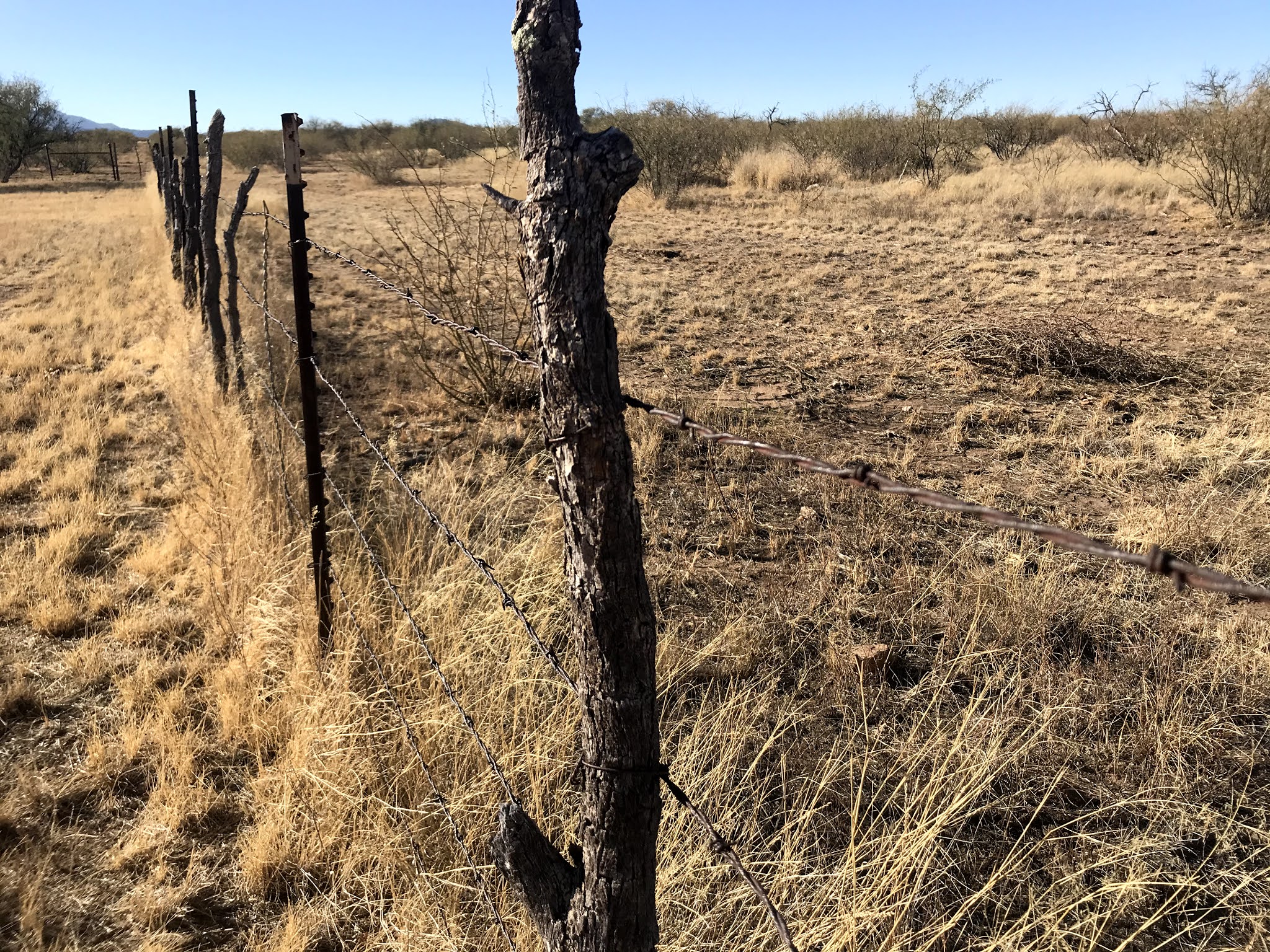
The ranch is surrounded by national forest and open range; it’s as wild as the Wild West gets. The only thing separating us from the wilderness is a saggy barbwire fence, and the woman (let’s call her Susan), as well as her wayward dog, were on the wild side of it. I crawled through the fence to join Susan, who was not wearing a coat, even though the temp was 40 degrees and dropping.
“The more I call him, the more he runs away,” she said. “The only one he listens to is my husband.”
“Where is he?” I asked.
“He’s asleep in the camper.”
“Well, let’s go wake him up.”
“No,” she said. “He’s been drinking. You know how that is.”
The way she said it broke my heart a little.
We stood in silence for a moment, listening for a clue as to Buddy's whereabouts. I dreaded the sound of coyotes yipping, the way they do when circling in for a kill, but the only sound was the wind blowing over the mountains, across the rolling grasslands, and through the dried scrub. And then . . . a faint bark. I rattled the bag of dog treats and instantly, appearing in the beam of the flashlight, was Buddy. White and brown, macho and all attitude, he looked up at me with his big brown eyes as if to ask, “What’s the problem?” As if he hadn’t caused the heart rates of not one, but two people to spike.
Susan grabbed hold of his collar while I doled out treats.
 “I ran after him in such a hurry I’m just in my slippers,” she said as we walked back to her motorhome. I pointed my flashlight at her feet. These weren’t slippers; they were nylon footies no more protective than if she’d had bare feet!
“I’m sure the adrenaline is keeping you from feeling any thorns,” I said.
“I haven’t stepped on any,” she replied, “but I just got poked in the face by a branch.”
“Be careful. These mesquite trees are evil and can take an eye out.”
We reached the RV, but between Buddy and her flashlight she didn’t have a free hand to unlatch the door. I opened it for her, careful not to let her other dog out—part black lab, part antelope, a sprinter who would have traveled farther and faster than Buddy, and not one to be bribed back by a measly little dog treat. Susan wedged her body inside, while I blocked the door to prevent the other dog’s escape.
“Thank you so much,” she said. “Now I know how to get him to come.”
“Here, keep the dog treats,” I said.
On my way back to my casita, I thought about what I had written in my journal that morning: “I want to help the world.” I had been thinking on a grand scale, too grand. Because what I realized is that helping the world starts with small acts close to home. Be it supporting my landlord’s efforts to sell her property, treating my niece to a meal while listening to her concerns about becoming an adult, and saving a reckless dog from becoming a coyote snack, helping the world is about making the effort—better yet, the extra effort. To hide all your clutter in your cupboards for the photoshoot when you were basically asked to just make your bed. To drive an hour each way, down the mountain and back up again, for a conversation and a slice of pizza with a family member. To head out into the dark and dangerous wilderness to find a neighbor's dog when you could have just stayed in your warm house reading on the couch.
Small acts of kindness. Every day. That’s how we help the world. At least it's a good place to begin.
*****
You might also like to read my other blog posts:


![[image error]](https://1.bp.blogspot.com/-iKYSKV5hq0g/YKQsmo9VydI/AAAAAAAAEks/-GC6hQCH7JUbkuD0tSuD_PVQoDox35HBwCNcBGAsYHQ/s274/E49DF1AF-DADF-4B93-8429-F866165DFE1A_4_5005_c.jpeg)