David Gullen's Blog, page 24
March 11, 2014
Top Ten Writing Tips #6 – Weasel Words
Everything in writing is personal – style, subject matter, genres, themes. Half of it you don’t know you’re doing. War is a backdrop in several of my stories, though I’m not that interested in writing war stories. At least, I didn’t think I was until I looked back through my short stories.
The personal includes things that bug you. Some are useful because they can inform your writing – injustice and inequality for example. Others bug you by turning up in your writing and messing with it. Here are some of mine:
Weasel Words
Pwimula Nesbytt pulled the saddle from Bismarck, her faithful battle-mole. She seemed to be upset about something.
Only seemed to be? And only about something. That’s OK then, no need to worry.
Either Pwimula is upset, or she isn’t. If she isn’t, don’t mention it. If she is, then say so and why.
Pwimula brushed away a tear as she unsaddled Bismarck. She laid her head against the side of her faithful battle-mole and listened to its faltering heart.
It’s easy to use words like ‘seemed’, ‘appeared,’ and ‘something’ in lazy ways. Words should be specific and exact. These words introduce uncertainty or doubt, so use them when you want to do exactly that.
‘How was she?’
‘She seemed to be upset. Then she laughed. I didn’t know what to make of it.’
But
This is a perfectly acceptable word, but I find I’m using it more often than I’d like to.
But it’s a useful part of the connective tissue of sentences, I hear you say. You can use it to start whole sentences or introduce clauses, just like ‘and’ or ‘then’. But to me ‘but’ feels more obvious because it’s an active word with an implied counter-argument, but maybe that is just me.
There’s more to the use of ‘but’ than this – Longman’s Guide to English Usage has a whole page. (This is a great reference book. If you were a strange child like me and liked reading dictionaries you’ll definitely enjoy this.) We all have lazy habits or favourite ways of putting things. It’s useful to know what they are so they don’t become mannerisms*.
He and She
I once became frustrated with the opening of a book because the main character was introduced as ‘She’. Page after page the novel wore on, and She did this and She did that. If the author had been in the room I’d have been begging on my knees, ‘Just tell me her name, FFS.’
This is really no more than deliberate withholding of something the reader needs to know. It doesn’t create drama, mystery or tension, it’s just bad technique. ‘He’ should never break the catch and slip through the window, it should at least be the assassin, the lusty prince, or the desperate messenger. And if it’s the hero of the story, dear God just tell us his or her name. Give the reader something to work with.
Passive Voice
Argh fuck, I just hate passive voice. Everything feels flat, the sentences are over-extended.
Don’t do it. Just don’t. Ever.
She had stood there all day and was bored to tears.
Words ending ’ing’
There’s a place for these words (inflected verbs) but keep them on a tight leash because too many of them stifle description and flatten tone. You can’t get away with writing ‘It rained.’ as easily as you can say ‘It was raining.’ You need to qualify ‘It rained’ with description, sensation. How was it raining? Falling like soft mist or stinging whips?
You can do this with ‘-ing’ words but you can also slide into the dreaded passive tense.
A good exercise is to go through a piece of writing and remove all the ‘ing’ words.
Profanity
That master of style, Jack Vance, said he avoided foul language because he didn’t like to make things hard for the reader. Times have changed, and I’ve no personal objection to a bit of fucking swearing.
Swear words are like exclamation marks – use them sparingly for greater effect. (And like exclamation marks this usually means using them one at a time.) There’s no need to have a bloody swear word on every fucking page. That’s too sodding much.
Less is more.
Bogus accents
There are two main ways of doing this, both horrid. They are character speech and writing style, both here, lightly seasoned with rampant anachronism:
Buboe sprang from his artful hidey-hole.
‘Gis ‘e’ ‘ere yer blimmin’ fancies, posh boy.’
‘Avaunt, blaggard, step thee kerb-wards, pronto!’ quoth Fauntleroy.
Cod formalism and mangled speech are not how you create texture and tone.
And it’s, like, completely bogus, dude.
So these are some of the things that bug me, and I try to avoid them . I’m sure you have a few of your own.
Next week: Nothing is precious.
~
* I once worked with someone with an office nickname of ‘Norbert’ because every time he disagreed with something he started, ‘No, but-’ I think it encouraged him.
~


March 7, 2014
Friday Flash – Beer O’Clock
He’d survived it all, and more. He’d taken every hellish thing life had thrown at him and here he was, under blue skies with sand between his toes.
Alf limped back from the café, two ice-cream cones in good his hand. That he was simply here was enough, one marvel among many.
They sat on a rock and ate the cones, the sun warm on their backs. Seagulls wheeled and cried, kids played in the tumbling surf.
They didn’t talk, they didn’t need to. A feeling of immense calm suffused Carl. Sometimes life really could be a beach.
~
No. 27 in the ‘Beyond the Streets‘ sequence – a series of 100-word flash fiction.
March 5, 2014
Top Ten Writing Tips #5 – Who Do You Write For?
Ask an agent or editor whether your next novel should have the themes or settings of whatever is currently popular (vampire romance, suburban porn, etc.) and they’ll invariably say: ‘No, just write what you want.’ They’ll justify this by saying the time to print of a new book, especially by a new author, is one or two years, that popular trends will change, and nobody can spot a winner. Then they go ahead and publish more vampire romance and talk about how they can pull a manuscript out of the slush pile and into the shops in just a few weeks now that suburban porn is selling like hot – um – buns.
So it goes. Publishing is a business, in the main it follows the fleet. It’s good advice but I don’t think those are the real reasons not to write to the market. Or rather, they may well be good reasons for publishers and agents – after all, what they want is what they want. However, those are not the primary ones for writers.
When I first started writing I decided the sort of stories I wanted to write were the ones I would like to read. It was an instinctive, gut-feel that this was what I should do. Later on I realised I’d fallen on my feet because the result was this: I wrote what I wanted to write.
The world is full of people who want you to do what they want you to do. If it’s the boss in your day job, fair enough. To be fair, publishers are not those people. Yes, they want you to work to a deadline, again, fair enough, but what they really want you to do is what most of them* can’t do themselves – write a brilliant book.
Writing for other people means you are going to do two things:
- Second-guess what they want you to do
- Not write the story you want to write.
You’ll never be able to get far enough inside another person’s head to give them exactly what they want. They’ll say ‘The same, but different.’ Your different will be too much or not enough. Pwimula Nesbytte is a rangy, determined blonde, they wanted petite vulnerability; she flies an undergound airship, they wanted hot air balloons. As for Battle Moles, forget it. You’ll focus so hard on that process you’ll be completely diverted from what you should be doing – writing the best story you can.
The best way to write the best book you can write is to tell a story you are passionate about – the plots and worlds and characters you simply cannot get out of your head. Ideas that fascinate and compel you so much you think about them all day and dream them at night, so in the end you have to write it all down just to get the damned things out of your head. Do that and you’re writing for just one person.
Of course if you can do all this and write to the current market – go for it, fill your boots and good luck to you. If you’re into a franchise and get the chance to write a spin-off book, why not? It’s not for me, I’d rather write about my own ideas and characters. If it excites you, enjoy.
Call this all self-centred egotism** if you like, but that’s part of being a writer. You’ll be beset by worries, crises of confidence, and crushing setbacks – and you’ll keep on going. Any artistic creation is driven by self-belief: that what you are doing will be so good that strangers will give a damn. That’s why you should write for the one person who really understands what you are trying to do – yourself.
~
* Though some do write very well (Rule #2)
** Will Self put it very well in an interview in the Guardian:
“I don’t really write for readers … I think that’s the defining characteristic of being serious as a writer. I mean, I’ve said in the past I write for myself. That’s probably some kind of insane egotism but I actually think that’s the only way to proceed – to write what you think you have to write. I write desperately trying to keep myself amused or engaged in what I’m doing and in the world. And if people like it, great, and if they don’t like it, well, that’s that – what can you do? You can’t go round and hold a gun to their head.”
~
February 28, 2014
Guest post by Warren Lapine – Genre Magazines, the way things once were
Warren recently posted this article on Facebook, the main part of which was written some years ago. I thought it was an interesting snapshot of the way things used to be and asked Warren if I could re-post it here, and he kindly agreed.
~
I was going through my archived files and found this. It’s an article I wrote for the SFWA hand book edited by Hal Clement. The book was ultimately scrapped, though I do have two copies of the uncorrected proofs. The entire deal was done on a hand shake deal with the writers and just before it went to print one of the writers got greedy and claimed they’d been offered more than they had and it killed the entire book. At ay rate, I thought some people might find this article interesting. This was written when DNA Publications was at it’s Zenith and everything looked like it would go on forever.
I was quite pleased when Hal Clement asked me if I’d be willing to write about magazines for the new SFWA handbook, as he’s one of my favorite authors and someone I respect immensely. A lot has changed since the last edition of the handbook came out in 1995. There’s been a reduction in the number of professional magazines. We’ve lost SF Age, Amazing, Tomorrow, and Marion Zimmer Bradley’s Fantasy Magazine. Beyond the folding magazines there were a lot of other changes: Dell, the publisher of Analog and Asimov’s, was sold to Penny Press; Gordon Van Gelder took over The Magazine of Fantasy and Science Fiction from Ed Ferman; and DNA Publications increased the number of magazines that it publishes (Absolute Magnitude and Dreams of Decadence) by purchasing Weird Tales, Science Fiction Chronicle, and reviving Fantastic Stories. The changes in the small press were simply too numerous to list.
Those were just the changes in the genre magazine players. The magazine industry has also seen a lot of changes that have affected genre publishing. The clearinghouse-type subscription services have all dropped genre titles, which has caused the genre’s top magazines’ circulations to drop from the 50,000 to 100,000 range to the 10,000 to 40,000 range. This may not be as bad as it sounds, since very little, if any, money was made from those subscriptions. More troubling was the collapse of the independent distribution system. In 1995 Absolute Magnitude and Pirate Writings were each distributed by as many as twenty independent distributors. At that time there were more than 400 independent distributors. That number has dwindled to less than 15, as bigger distributors gobbled up the smaller ones. The bigger distributors are much less likely to take genre magazines than the smaller ones were, which of course has also affected the genre magazines’ circulations. The number of Barnes & Noble and Borders superstores have increased while the number of independent book stores has decreased. This has been bad for book publishers, but not for magazine publishers, as the superstores stock more genre magazines than the independents that they’ve replaced. This has been a boon for the semipro magazines, giving them a larger and more reliable newsstand audience than ever before.
Electronic rights have become more important than ever before as webzines have begun to proliferate and Analog, Asimov’s, and F&SF all have electronic editions. Still, the audience for electronic magazines seems to be a few years away. Thus far, no webzine has been able to supplant even the smaller semipro magazines, and none of the pro magazines with electronic editions has increased their pay rate to compensate writers for the purchase of the electronic rights. This is largely because they’re not making enough money yet from electronic sales. As the publisher of DNA Publications, I’ve turned down a number of deals with electronic publishers because none of those publishers could assure me that we could make even enough to pay my writers an extra penny a word for their electronic rights. I’m not comfortable with that kind of a rights grab and will not move into electronic publishing until there’s enough money to pay my writers for the additional rights. But electronic publishing is definitely something to watch. While I don’t believe that electronic publishing will ever supplant print publishing, I do believe that it will eventually become a viable publishing form.
Over the years I’ve been hearing more and more people dismiss the importance of the magazines in genre publishing. This is shortsighted and fails to understand the function that the magazines actually serve. As a field, we would do well to remember that genre fiction as we know it was born in March of 1923, with the publication of the first issue of Weird Tales. Two years later Amazing followed, and publishing has never been the same since. So magazines established the genre fiction field, the book side came along later. I know a number of people reading this are right now objecting to my stance because speculative fiction was being published much earlier than 1923. Indeed, what we would recognize as genre fiction has been with us since the very beginning of publishing, but it was in 1923 that genre fiction separated from mainstream publishing. Whether this was a good thing or not I will leave up to others to debate.
Magazines have always been where the action is. New movements and innovations can always be seen in the magazines first. Both Cyberpunk and the New Wave were born in the magazines. A magazine editor’s job does not hang on the performance of a single story. A book editor’s often does. Why is this? Should a magazine editor take a risk that doesn’t pan out, it has little effect on the magazine’s bottom line. Most of a magazine’s distribution is presold in the form of subscriptions and as long as the subscribers like most of the stories in a given issue, they will return. This allows the more traditional stories to support the risky and innovative stories. As a magazine editor (Absolute Magnitude), I’ll allow myself one risk per issue. That means I may take a risk with every single issue that I publish. No book editor could ever do that. Books are not presold, an audience must be built for each book and if a book fails to sell the editor who purchased it has cost their publisher money. If a book editor fails to make money consistently, they’ll soon find themselves out of a job. As a result of this, book publishing tends to be more staid than magazine publishing. All of the real growth in genre fiction has come from the magazines. If the magazines were to disappear, genre publishing would become much more conservative than it is now and would, I believe, eventually stagnate and die.
Magazines have also traditionally introduced us to the stars of the future. While it is possible to sell a novel in today’s market without ever having sold a single short story, it is still relatively rare. Again, new writers don’t have a built-in audience. This makes the selling of their books problematical for book editors. Magazine editors have a built-in audience and can publish new writers every time out if they are so inclined and if they can find that many good, new writers. Without magazines, genre publishing would have a lot less new blood and the more quirky, new writers would almost certainly disappear.
I won’t go into the basics of submitting to a magazine as there are numerous other places that writers can find that information. If you’re planing to write for the short fiction markets, I would recommend subscribing to a magazine that has market lists, the best of which are Scavenger’s Newsletter, Speculations, and Science Fiction Chronicle. This will help you keep up with the ever-changing magazine market. The average semipro or professional magazine gets between 500 and 1,000 submissions a month. That sounds like a lot, and it is, but there are a number of things you can do to increase your chances of a sale. You must remember, selling a story is not a matter of statistics. Your story does not have a one in one thousand chance just because there are one thousand other stories in the slush pile along with yours. Editors are not pulling manuscripts out at random, really we’re not, we’re reading them and making editorial decisions. In reality more than 90 percent of all the stories in any given slush pile have absolutely no chance of making a sale and a smaller percentage have a 100 percent chance of making a sale. The bottom line is it’s the quality of the story that makes or breaks the sale, not the quantity of the submissions.
To get yourself out of the 90 percent group there are few things you can do that many writers don’t. You can pay close attention to a magazine’s guidelines. If a magazine says no fantasy, they mean no fantasy. The number of stories that come in to Absolute Magnitude that violate my guidelines is just stunning. The second thing you can do is read the magazines. While the guidelines are a good place to start, nothing can give you more insight into what an editor buys than reading what they’ve purchased. I’ve heard a number of writers say that they won’t buy a copy of a magazine until they’ve sold to it. The reasoning is that they support the magazine with their submissions rather than their money. Most editors wish that writers would stop supporting them with inappropriate submissions. Going to conventions and meeting the editors can also be helpful. Should an editor have the space or money to only purchase one more story, they’ll probably go with the story from the person they’ve met. It’s only human nature. If you have professional credits, always list them on a cover letter. No matter who you are, never assume that the first reader will have heard of you. Also, never include a synopsis of your story in the cover letter. Writing a synopsis and writing fiction are two very different skills and a bad synopsis can prejudice an editor against a perfectly good story.
To many it may look as though the genre magazines are in the final stages of their decline, as the largest genre magazines have all been shrinking year after year. I don’t see it that way. The collapse of the independent distributor system has hurt the book industry more than the magazine industry. Many racks are no longer available to paperback books that once were. As a result fewer paperback books are being sold. This has of course driven up the price of paperbacks and caused some book companies to publish more and more of their books only in hardcover and trade editions. Magazines on the other hand have been able to keep their prices quite steady for the last five years. As the difference in price between a magazine and a mass market paperback grows, I suspect we’ll see an increase in the newsstand sales of magazines.
Publishing has changed, and magazine publishers must change the way that they do business to keep up with today’s markets. DNA Publications has been able to grow by at least 10 percent per year every year that it’s been in existence; this has been accomplished by getting better deals with distributors and printers because they publish seven magazines, and increasing circulation numbers by offering deals when readers subscribe to more than one magazine at a time. Ironically, this is how the pulps used to do business. Perhaps the magazine of tomorrow will resemble the magazine of yesterday more than it does the magazine of today.
~
Friday Flash – Beer O’Clock
Last night the lights came down from the sky, the first time for years. Marek watched from the stern rail as they pelted away, silent and golden.
Afterwards, he went down to his cabin, undressed, and climbed into bed beside Amroye. She woke briefly, curled against him, warm and wonderful.
In the morning they started repairs to the ship. Blowzabella’s canon had given Ustral a bloody nose but he fought back. For a moment Marek thought Ustral had them.
But he hadn’t. They’d won free, and they would be back! Marek stretched and smiled, filled with sudden optimism.
~
#27 in the ‘Beyond the Streets‘ sequence – a series of 100-word flash fiction.
~
February 27, 2014
More Goodreads Giveaways
Well, my first giveaway for Shopocalypse is over and the winners’ copies are in the post.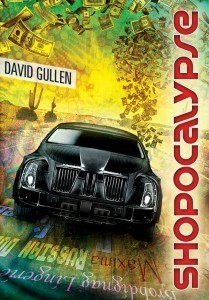
5 copies were on offer to residents of the USA, Canada, Australia and the UK, and 688 people put their hands up. I have no idea if this is a good result for the first giveaway of a first novel but I am very pleased with that much interest.
I’ve just set up another giveaway This one is for European countries, and Russia* – once again, five more books up for grabs.
Once that is over I shall do a third and final one for the rest of the world.
~
*This book giveaway is for the following countries: AT, BE, BG, HR, CY, CZ, DK, EE, FO, FI, FR, DE, GI, GR, GL, GG, HU, IS, IE, IM, IT, JE, LV, LI, LT, LU, MT, MD, MC, NL, NO, PL, PT, RO, RU, RS, SK, SI, ES, SJ, SE, CH, and UA.
~
February 25, 2014
Top Ten Writing Tips #4 – Killing Those Darlings
Half the world says this, the rest of us nod wisely and turn away. I used to be a wise nodder and I was thinking, ‘But what does this mean?’ It’s a good question.
The earliest reference I could find comes from 1916, when Arthur Quiller-Couch wrote ‘Murder your darlings’* in one of his Cambridge lectures, where he was professor of English. You can read it in full here. It’s in the style of its time, Quiller-Couch refers to his audience exclusively as ‘Gentlemen’, but still a worthwhile read. William Faulkner paraphrased him, King quoted Faulkner. Everyone’s at it.
What it doesn’t mean is that you should go through your ms and get rid of all the good bits. Think about it – the whole thing is meant to be one great long good bit.
Neither does it mean you should cut out your favourite bits. Knowing you have favourite bits tells you something else – that you also have non-favourite bits. Good bits and favourite bits, go back and look at the rest of your writing, figure out why those not-so-good sections are not working, and make them better.
Killing for pleasure and profit. Thrillers, horror, murder mystery, SF, fantasy, historical drama. Readers and writers both enjoy a bit of timely death and mayhem through a whole range of fiction.
The death of one of my major characters in Shopocalypse was a tragic surprise to me. I was happily writing the story and there it was. I didn’t want her to die, I liked the character, but time and tide had brought her to that situation. The story required it, demanded it, and she had to go. I did what I could to help her. I kept it quick.
Killing off your favourite characters? It doesn’t mean that either.
Murder your darlings is when you cut your favourite bits whether it is an example of good writing, vivid characterisation, or great action, when it contributes nothing to the story you are telling.
Sometimes minor characters can bid for stardom, they walk through the door and look you in the eye and say ‘I have a part to play.’ Half the time it’s true, the other half they send you all over the place telling their own stories, subverting the narrative away from the one you are supposed to be telling.
Here’s one of mine, from my current work in progress, a fantasy called ‘Beyond the Streets We Know’.
I loved that character Kyril, and I know he was trying to help me out of a difficult situation with my protagonist, but there was no place for him. He was too interesting, his character too strong, his background too rich and vivid. He was taking over and he had to go.
But I digress. Deciding when to cut can be a difficult call. One person’s irrelevance is another person’s entertaining digression and for some writers digression is part of their style and part of the reason people read them. (Rule #2 – There are no rules.)
If you do cut, paste as well. Each of my projects has a file called the Word Moraine where all these unwanted bits and pieces go.. Because sometimes I’m wrong, and when I take a look at the file at the end of the draft some of the word moraine needs to go back in. Not often, and not very much, but enough to make it worthwhile.
And some bits are just too good to throw. Some bits you just know will someday, somewhere, find a home.
Next week: Who do you write for?
~
*“Whenever you feel an impulse to perpetrate a piece of exceptionally fine writing, obey it–wholeheartedly–and delete it before sending your manuscript to press. Murder your darlings.”
~
February 21, 2014
Friday Flash – Boxing Clever
The glass of a scope glinted on the roof of another skyscraper.
‘Got you.’ Vincent tagged the location, sat behind the parapet and uploaded his data.
Who watched the watchers? Vincent knew the answer to that one. He wondered how far it went but in all honesty lacked the imagination. He shrugged it off, he’d never seen any evidence. Being watched was part of the territory.
The important thing was, the Watched knew nothing of this hermetic world.
Something punched through the parapet, through Vincent. It came to him, during that long last moment, she’d known all along.
~
No. 26 in the ‘Beyond the Streets‘ sequence – a series of 100-word flash fiction.
February 19, 2014
Top Ten Writing Tips #3 – Writers Write
There have been times when I’ve tried to write myself out of a shitty life situation. I can now report my findings – it didn’t work. What I did manage to do was write a lot. I took it seriously, I was motivated.
Rule #1: Writers Write. That piece of advice was right up there in the first ‘How To’ books I read. Later on I turned my back on it as trite truism, I thought I knew it all. Of course writers write, that’s what they do, well, duh. One day I got it through my thick skull that writing is a journey and the learning never ends. (In fact why would you ever want it to?) That I did in fact know three-quarters of fuck all and I would be a wise man indeed if I remembered that. Then I rediscovered this simple piece of advice and it unfolded all of its koan-like wisdom.
You can’t edit a blank page, and no matter how much pleasure you get from the finished work, you cannot experience the satisfactions of having written unless you’ve actually written something in the first place. I do know some people who seem to prefer having written to the writing itself. Personally, I think they’re focused on the wrong thing – getting published. It’s important but it follows on. First of all – well, you know where I’m going here.
So, writers write. Except that often we don’t. So often it seems we’d rather be doing something else.
How can it be so difficult to actually do the thing we want to do? There’s no such problem with the day job*. The more I write the more I understand the clichéd theatrical lovies telling each other how marvellous they were. When you write you’re putting yourself out there, your writing will be judged, and as a consequence so will you. ‘Darling, you were wonderful.’ You have no control over all those various opinions, including being totally, utterly and comprehensively ignored. What with your own opinion of their opinions it can all get a bit anxious. That’s just your ego talking.
Getting started at the beginning of the session is the thing for me. Once I can do that, I’m off. Wake up, shower, cup of tea, sit down and write. This is the method that gets me started and if I insert anything else into that process I can easily waste an hour, or a morning, an entire day.
Keeping going is another thing. My concentration during writing time ebbs and flows. Some days I’m head down and writing for hours at a time, the more usual day has a lot of wandering around. I’ve learned to take deliberate breaks. Words should pull you along, you shouldn’t have to push them. If they’re not coming then ten minutes in the garden , a little housework, some brief exercise lets me refocus. Often it’s because I need to think about what I’m doing, and insisting on writing, writing, writing, doesn’t let me do that. (Writers write, don’t they?)
Long term concentration on the project is something else. My opinion on my writing changes almost hourly – This is the best thing anyone ever wrote, ever! This is a steaming crock, I don’t know why I bother. We’ve all been there. One thing I’ve learned is not to compare the current first draft with the finished piece I wrote before. You have to be motivated, and that means you need to love what you’re writing, be fascinated by it, the story, the characters, the situation. Pwimula Nesbytt and the Underground Empire!. Yay! If you don’t, nobody else will.
I think it’s vital to get your own ego out of the way of the writing process. It’s not about you, it’s the story. I’ve told myself this so many times it’s almost become a mantra.
Yes, put your passion into your writing, yes, write about what you want, say what you want to say. Be as funny or scary, weird or sexy or exciting as you can (or all of them, if you can do that I salute you.). Whatever some people tell you there is no Must or Must Not in writing. Rule #2 – There are no rules of technique. That’s not to say there are not plenty of guidelines and strong suggestions, from punctuation to mythic structures. You’d be wise to learn them, but there are always exceptions.
However you do it make your writing time part of your routine, build it into life so it becomes as automatic as breakfast. Be serious about your writing but don’t take it seriously. It’s not about you, it’s about the story. Writers write.
Next week – Kill your darlings.
~
*The best way I ever found to prevaricate is to have two jobs. Mine were writing and leatherwork. I prevaricated about one by doing the other. It was quite productive.
~
February 17, 2014
Free Fiction – Where the Sun Shines Brightly
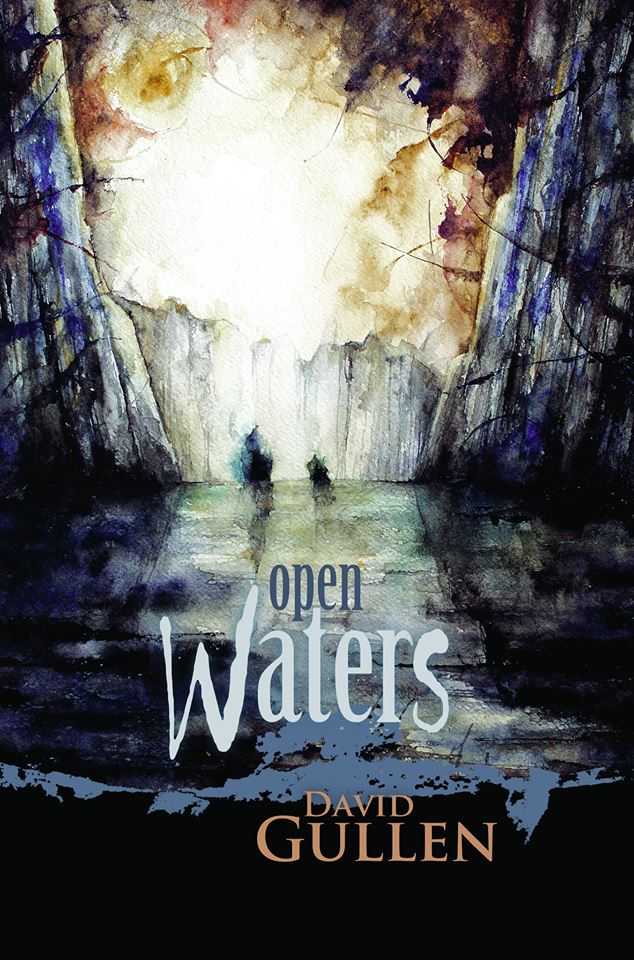 Not only is Where the Sun Shines Brightly one of the winners of the 2011 Aeon Award, it’s also one of the stories from Open Waters, my collection from theEXAGGERATEDpress.
If that wasn’t enough, you can read it free here:
Free Fiction – Where the Sun Shines Brightly
If you prefer, it’s on Wattpad too.
~