David Pilling's Blog, page 86
December 9, 2011
Slag ende Stoot!
Something a little different today, because I like to keep things varied. Slag ende Stoot is a group of professional musicians based in Holland specialising in medieval and early 16th century acting and music.
Some rather splendid photos of them in action can be seen on their website below:
www.slagendestoot.nl
And you can see and hear more of them on Myspace, Youtube and Facebook!
www.myspace.com/slagendestoot
www.youtube.com/slendest
www.facebook.com/SlagendeStootenConsort
Some rather splendid photos of them in action can be seen on their website below:
www.slagendestoot.nl
And you can see and hear more of them on Myspace, Youtube and Facebook!
www.myspace.com/slagendestoot
www.youtube.com/slendest
www.facebook.com/SlagendeStootenConsort


December 7, 2011
The Swords of Albion


Some very fine blades for you all to admire today, made by the talented folks at Albion Swords, based in New Glarus, Wisconsin!
Albion Swords is a small company in New Glarus, Wisconsin, hand-crafting what can only be described as "painfully authentic recreations" of swords – both historical and fantasy/film pieces.
Their recreations not only look like the museum originals, but function just like them as well, (when newly made.) They are far more expensive than the swords you see made elsewhere, but their customers agree that they are well worth the added expense!
Please see the links below if you would like to more about this very fine-looking company:
http://www.albion-swords.com/
http://filmswords.com/

December 5, 2011
Apocrypha!


Today sees the return of the rather wonderful Suzanne G Rogers, fellow Musa author, to this blog, to promote her rather wonderful-sounding new short story, "Apocrypha."
Suzanne, you have the floor...
Being dedicated to the diabolical doesn't seem to satisfy Jem anymore. When the gorgeous demon poses for elderly artist Greer Richmond, the two form a connection. Greer senses good in her, but Jem rebels against the idea by going on a Vegas bender. After Jem gets word Greer is about to die, she inexplicably wants to make sure he gets to heaven—but her boss has other plans. As penance for her interference, Jem is assigned to take one of Greer's descendants instead. Unfortunately handsome Dare Richmond awakens feelings in Jem a demon isn't supposed to have. Will Jem be able to complete her task, or has fate dealt the demon an impossible hand?
Apocrypha…because sometimes, even for a demon, love is in the cards.
Excerpt:
"I've been experiencing a little job dissatisfaction," I said.
It just popped out. I couldn't believe I'd said it, but the old man had the sort of face you could talk to. He didn't respond, however, and I flicked a glance at him to make sure he was listening.
"Hold steady, my dear," he said. "After I get your mouth right you can tell me about it."
I sighed and waited for the geezer to finish sketching my mouth. To be honest, I really did want him to get it right. I have a very nice pair of lips for a demon, even if I do say so myself. It was too bad he couldn't just take a picture, but since demons can't be photographed, we were stuck doing my portrait the old-fashioned way. I shouldn't have called him a geezer, even though technically that's what he is. His name is Greer Richmond and he's older than dirt. Of course, I am too, but I look considerably fresher than he does.
"You were saying?" Greer prompted, a few moments later.
"Oh, yeah—well, when I started out as a young demon, it was all fun and games," I continued. "I made a big splash with the whole missing Roanoke colony thing."
"That was you?" Greer asked. "I've often wondered what the Lost Colony was all about."
He was sketching my hair at that moment. I had to squelch the temptation to toss a lock of it over one shoulder. That took some doing—squelching temptation isn't one of my strong suits. I'm usually better at egging it on.
"Yeah, Roanoke was one of my first projects. I really scored points with the Boss on that one.
"Lizzie Borden was another high point," I gloated. "Those were the days."
"What has changed?"
"A lot of up-and-coming newbies are total buzzkillers. It's become a demon-eat-demon world, and a bunch of recent flashy 'inexplicable' events have made it impossible to stand out from the crowd," I said.
"Don't get me wrong—9/11 was impressive, I'll grant you. But it seems as if demons are increasingly sacrificing quality for the quick thrill."
Greer leveled a look at me that had nothing to do with the sketch. "Are you sure that's all there is to it?"
****
As it turns out, no, that's not all there is to it. What would be the fun of that? And to celebrate the twelve days of Christmas, Musa Publishing will release Apocrypha as a free read on December 7th.
Download Apocrypha through December, 2011 HERE. Happy Holidays!
Author Bio: In her former lives, S.G. Rogers was a lawyer and an actress, but she's now grown up and settled down as an author. Drawn to fantasy literature, she's lived in some of the most magical places in America, including La Jolla, California, Asheville, North Carolina, and currently Savannah, Georgia. She resides with her son, husband, and two hairless cats—which look and act quite a bit like dragons. When she's not writing, she enjoys practicing martial arts. You can find S.G. Rogers at www.childofyden.com.

December 1, 2011
Medieval Mafiosos

Back on topic again, with the antics of James Coterel/Cottrill and his gang. James is another player in Folville's Law, a ruthless outlaw and accomplice to Eustace Folville, though he was also very much his own man.
The Coterel gang haunted the Peak District in Derbyshire and the northern part of Sherwood Forest from the late 1320s to the early 1330s, their high period being from about March 1331 to September 1332. Professor J.G. Bellamy of Nottingham University made a study of the gang and in 1964 published his findings in a paper entitled "The Coterel Gang: an Anatomy of a Band of Fourteenth-Century Criminals". His paper is comprehensive and contains all one might wish to know about this particular gaggle of charismatic medieval thugs.
Like his sometime partner in crime, Eustace, James was of minor gentry stock, his father Ralph Coterel having held a few small manors scattered about Derbyshire. Ralph died in 1315 and within a few years his fiery sons were making a nuisance of themselves. One of them, Nicholas, was an adherent of the rebellious Thomas, Earl of Lancaster, and received a pardon in 1322. In later years the gang were to work alongside the Bradbourn gang of Derbyshire, who had also been among the doomed earl's followers, suggesting that the Coterels were affiliated with those who opposed Edward II's catastrophic rule.
Whatever their political allegiances, the Coterels wasted no time in taking advantage of the collapse of Edward's government. Like the Folvilles and the various other well-heeled armed mafiosos roaming up and down the country, they enjoyed the profits of pillage, robbery, extortion, kidnapping and murder, though they weren't formally outlawed until 1331. By 1330 they had been accused of pillaging the estates of Henry, Earl of Lancaster (clearly their Lancastrian sympathies had evaporated by this time), were 'attached' (accused) of a spate of murders, and had formed alliances with other criminal fraternities.
Despite his long criminal career, James was never arrested. Shrewdly, he cultivated support from the nobility and the church, often by hiring out his violent services to them in exchange for cash and protection from the law. When the young King Edward III made a determined effort to stamp out the criminal gangs ruining his kingdom, James escaped arrest because he was warned beforehand of the approach of the justices by one of his hugger-mugger chums, the Prior of Lenton. The canons of Lichfield were also repeatedly mentioned as receivers (shelterers) of the Coterels and their wide network of followers.
Possibly realising he could not survive much longer as an out-and-out highway robber and murderer, James had the bright idea of eschewing actual violence and demanding money with menaces and blackmail. This has some correlation with the peculiar form of blackmail practised on travellers by Robin Hood in the medieval ballads, and like the famous ballad hero James Coterel would have had intimate knowledge of Sherwood. It's quite feasible that his career had some influence on the legend.
Such was his reputation and his links to the church and nobility, his victims usually paid up without him having to lay a finger on them. He also set to work currying royal favour, and managed to get his brother Nicholas appointed as bailiff of Queen Philippa's liberty in Derbyshire and Leicestershire. Nicholas later distinguished himself in this office by being hauled before the court on charges of embezzlement and corruption.
Having found a way of making outlawry a profitable business, James went on to purchase lands and properties and serve as a tax collector. At one point he was even entrusted with powers of arrest, though he was obliged to obtain a royal pardon for 'extortions, oppressions, receivings of felons, usurpations, and ransoms'. All in a day's work. In 1351 he received his pardon at the Queen's personal request, but his date of death is unknown.
So what's the moral of his tale? Crime does pay, unfortunately, providing you work hard at it!

November 29, 2011
Jonny Alexander behind the camera!

A very different topic for this blog update, but I would highly recommend that everyone checks out my good friend Jonny Alexander's photography! Please click on the image to access the lovely images on his Facebook page :)

Sons of the Wolf!
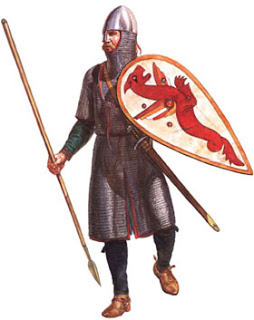
Today I have a guest slot for Paula Lofting Wilcox, whose novel, Sons of the Wolf, is due to be released by Silverwood next February. The following is Paula's description of what sounds like a great historical tale:
1054, and pious King Edward sits on the throne, spending his days hunting, sleeping and praying, leaving the security and administration of his kingdom to his much more capable brother-in-law Harold Godwinson, the powerful Earl of Wessex.
Against this backdrop we meet Wulfhere, a Sussex thegn who, as the sun sets over the wild forest of Andredesweald, is returning home victoriously from a great battle in the north. Holding his lands directly from the King, his position demands loyalty to Edward himself, but Wulfhere is duty-bound to also serve Harold, a bond forged within Wulfhere's family heritage and borne of the ancient Teutonic ideology of honour and loyalty.
Wulfhere is a man with the strength and courage of a bear, a warrior whose loyalty to his lord and king is unquestionable. He is also a man who holds his family dear and would do anything to protect them. So when Harold demands that he wed his daughter to the son of Helghi, his sworn enemy, Wulfhere has to find a way to save his daughter from a life of certain misery as the daughter-in-law of the cruel and resentful Helghi, without comprising his honour and loyalty to his lord, Harold.
Following the fortunes of his family, we meet Ealdgytha, his golden-haired wife, attractive, neurotic and proud. Her lust for success and advancement threatens to drive a wedge between her and her husband, while Wulfhere's battle with his conscience and his love for another woman, tears at the very heart of their relationship.
Also central to the story are his children; Freyda, his eldest daughter, reckless, defiant and beautiful; Tovi, his youngest son, his spirit suppressed by the pranks of the red-haired twins, Wulfric and Wulfwin; Winflaed, a younger daughter, whose submissive acceptance of womanhood belies a stronger spirit and a longing to hold a sword in battle like her warrior father.
Sons of the Wolf is snap shot of medieval life and politics as the events that lead to the downfall of Anglo-Saxon England play out, immersing the reader in the tapestry of life as it was before the Domesday Book. With depictions of everyday life experienced through the minds of the people of the times; of feasts in the Great Halls to battles fought in the countryside, it cannot help but enlighten, educate and entertain.

November 25, 2011
Young Ned

Sandwiched between the warring factions in Folville's Law is young Prince Edward, eldest son of Edward II and Queen Isabella. The image is a contemporary likeness of him, done in his later years when he apparently sported a truly magnificent forked beard that should definitely come back into fashion. You have to love the massive sparkly hat as well.
Edward was later to become arguably the greatest monarch England ever had, but at this early stage in his life (he is just fourteen in the book) he was little more than a valuable pawn. His father, the increasingly embattled King Edward, needed to keep hold of his son and heir to prove that he was still in control and that the fate of the Plantaganet dynasty was in his hands. His mother needed to wrench the boy away from her estranged husband, thus making her and Mortimer look like deliverers rather than conquerors when they invaded England.
What did Edward make of it all? The pressures on his young shoulders must have been immense, but there is no way of knowing his inner thoughts. In contrast to the aggression and dynamism that characterised the high years of his reign, he was strangely passive at this stage, apparently willing to be used and exploited. His mother proved to have the greater influence on him, succesfully spiriting him away to France and keeping him there, despite the increasingly angry and pathetic letters his father sent demanding his return. At lat the King warned his son that unless he returned to England, his father would make a terrible example of him that would act as a warning to all faithless sons. The threat was hollow, and the prince stayed in Paris with his mother and the Flashman-esque Roger Mortimer, until the time came for the invasion fleet to gather in Hainault...

November 11, 2011
Released!
Folville's Law is released today by MUSA PUBLISHING. Exciting times ahead :))
http://www.musapublishing.com/index.p...
http://www.musapublishing.com/index.p...
Released!
Folville's Law is released today from MUSA PUBLISHING! Exciting times :)
http://www.musapublishing.com/index.p...
http://www.musapublishing.com/index.p...
November 9, 2011
Guest blog!
Medieval historian and expert on all things Hugh Despenser the Younger-related (as well as early 14th century England in general) has very kindly given me a guest spot on her blog!
Check it out below:
http://despenser.blogspot.com/
Check it out below:
http://despenser.blogspot.com/