John Ironmonger's Blog, page 6
October 20, 2022
My Book List. (1) ‘The World According to Garp,’ by John Irving (posted on 19 October 2022)
I’ve always been a pretty avid reader. And I do so love books. When we moved home in 2017, from Shropshire into Cheshire, we brought with us 52 boxes of my books, much to the dismay of the removal men. But it could have been worse. Before we moved, in an effort to down-size my library, I gave 27 boxes of books to charity shops and, gulp, threw 12 boxes away. And over the years I have probably lent, given away, or simply lost almost as many books as I now possess. But that’s the thing with books. They are curious possessions. I rarely read a book twice (unless it’s a very special book) – so why do I keep them? If you were to steal a book a day from my shelves, I probably wouldn’t notice. Not for quite a while. And yet I love them all. They feel, to me, as if they are part of my memory – a kind of off-line archive – a record of who I am and what I’ve read for more than half a century.
I don’t want to turn this blog into a book-blog. There are book bloggers who do a really good job and I’ll never compete. But what I thought I might do is to share some of my favourite books and authors. In no particular order, you understand. So, without further ado, let’s unchain the first contender. I give you, ‘The World According to Garp.’
The World According to Garp by John Irving *****
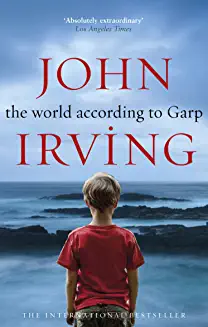
This is the book that made me want to be a writer. It was, I think, the first time I truly understood the extraordinary power and poetry of good writing. There is a scene, early in the novel, when Garp and his mother, Jenny Fields, visit the school gymnasium on a mission to find young Garp a sport. They settle on wrestling. But the scene the novel gives us is so vivid and multidimensional, the emotions so strong, the images so striking, that I found myself as a young man re-reading these pages over and over to try and figure out how Irving had done it.
Is this John Irving’s best book? Perhaps not. It is clearly the work of a young writer (Irving was in his early thirties when he wrote it) and it ranges rather loosely over a shopping-list of issues (single motherhood, writing, bereavement, feminism, mutilation) in a way that risks losing focus. Its hippy vibe may not have aged well. It was made into a rather mediocre film. It deals with tropes that have rather been left behind by contemporary novelists. The conceit of a strong single woman arranging her own insemination and raising her son to manhood is not especially radical these days. But. But. But. Irving has somehow created a character with such depth, and painted a landscape with such detail, we cannot help but be drawn in to Garp’s odd world and the curious cast of characters that surround him. There is something deliciously experimental about the novel. Garp is finding his voice as a writer and Irving shares with us whole tracts of his (Garp’s) writing. ‘The Pension Grillparzer,’ (very much like Irving’s later novel – ‘The Hotel New Hampshire,’) and ‘The World According to Bensenhaver,’ an angry piece of work – not unlike, er, ‘The World According to Garp.’ I can’t imagine a publisher these days letting all this through. And I can’t imagine the older Irving toying with his readers like this. ‘The World According to Bensenhaver,’ is almost 40 pages long and it drops plumb into the manuscript at such a crucial point in Garp’s life you start by begging it to wind up and let you back into the story. Until it too has you in its clutches. If I was to lend you an Irving I would probably go for ‘The Hotel New Hampshire’ or ‘The Cider House Rules,’ or even the super-heavy ‘Until I Find You.’ But I have an enormous soft spot for Garp.
If you've never read John Irving you've missed a real treat. There is something about his use of language - like Turner's use of paint - that enchants you. He's a fan of the semi colon, and italicised words. He writes with rhythm. He is unafraid of repetition. He digs deep into character. All those are good qualities. There are negatives too. He writes long. Probably too long. I suspect that no editor now would dare trim his work which is a shame because it needs it. My copy of 'Until I Find You,' is 820 pages. I love it, but I might have loved it more at 400 pages.
I have yet to read Irving's latest 'The Last Chairlift.' (912 pages). But until I do, here are my other John Irving recommendations - with my star ratings.
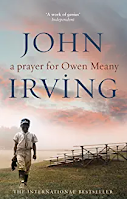 'A Prayer for Owen Meany.' *****
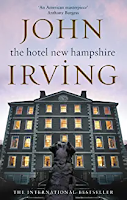 'The Hotel New Hampshire.' *****
 'The Cider House Rules,' *****
 'A Son of the Circus.' ***
 'A Widow for One Year.' ***
 'Last Night in Twisted River.' ****
 'Setting Free the Bears.' **
 'The 158lb Marriage.' ***
 'The Fourth Hand.' **
 'The Water Method Man.' ***
 'Until I Find You.' *****
 'In One Person.' **
 'Avenue of Mysteries.' ***


August 28, 2022
Greenland - and 'The Wager and the Bear:' The Video
May 27, 2022
The Greenland Ice Sheet (Point 660: My Map Pins 38) and ‘The Wager and the Bear.’ May 2022
 Point 660They call this place Point 660. I never figured out why. Our guide Daniel Jonssen (thanks Daniel) didn’t know, and he knew everything. It’s probably a map reference. Or something. Anyway, this is a quick blog about our (carbon neutral) visit there last week (me and Jon), and it's a shameless plug for a new novel. More about that in a moment.
 It’s a five hour round trip from Kangerlussuaq to Point 660 (if you go via the Russell Glacier and you really should). You’ll need a good 4x4 and a guide who frankly isn’t bothered if he bends the vehicle in half. That’s because the route is rough. You will see reindeer, musk ox, and even arctic hares. If you're lucky (we were) you'll see chunks of ice calving from the glacier. Some intrepid adventurers trek this journey on foot and camp overnight, and I rather envy them. Maybe next time.
 The Russell Glacier
If you look at the map of Greenland you’ll spot a swathe of green down the west coast, and roughly where this landscape is at its widest, you’ll find the village of Kangerlussuaq (population 450) (pronounce it kang ul schwua). Remarkably there is a road to nowhere that leads east from here for 26 kilometres. The road was apparently built by Volkswagen to test cars on the ice. It is the longest road in Greenland (unsurfaced of course) and it winds steadily upwards along the desolate glacial valley alongside the Sandflugtsdal meltwater river, through sandy desert, hills, and utterly breath-taking landscapes, past frozen lakes and glaciers, and then it ends abruptly when it meets the Greenland Ice Cap. This is Point 660. You won’t have passed a living soul for almost two hours. You leave the ‘comfort’ of the 4x4 and you trek on foot over a rocky moraine – like the spill from a gravel quarry – and after a while, you find yourself on the ice sheet. And here you draw a very deep breath.

The Greenland ice sheet is one of the great natural wonders of our planet. It is colossal. From Point 660 you’d need to walk 600 km in a straight line over ice to reach the west coast. The walk to the northernmost point would be 1,000 km, and it’s 800 km south until you run out of ice. That is a seriously big lump of ice. And it’s deep. Really deep. Most of it goes down more than 2 km. That’s well over a mile for English readers. And while we might idly imagine that Greenland could lose a little ice and still have plenty to spare, it might be helpful to consider the impact this immense block of ice has on the globe. A lucky accident of geography has plonked it right at the top of the Atlantic, where it acts as a global air conditioner, keeping the world from heating up too much by cooling down winds and reflecting away a lot of sunlight. It also holds a heck of a lot of freshwater. If (or maybe when) it all melts it would raise sea levels all around the world by 7 metres.
My new novel for 2023, 'The Wager and the Bear,' features the Greenland ice sheet. (The title may be subject to change of course.) The story unfolds in the fictional village of St Piran in Cornwall, and it begins with a very public altercation between two villagers – one a climate activist and the other an ambitious politician. The argument concludes with a dangerous wager that only one man should be able to survive. Events spiral out of control and somehow both men find themselves alone on the Greenland ice sheet, and then adrift on a giant iceberg, floating down Baffin Bay. It does make sense I promise. It is a novel about climate change, but it is also about enduring love, friendship, and community. Watch this space – or follow #thewagerandthebear on Instagram or Twitter and I’ll let you know when it is available for pre-order.
So back to Point 660. It is an awesome destination. Desolate and beautiful. It made me feel quite emotional to walk out and stand on the ice. I hope it stays, pristine and forever frozen. I fear that it won’t. The what3words link below takes you there.
https://w3w.co/superhero.spelled.crooned
May 11, 2022
Dogs (11 May 2022)
 PoppyOn 4th March this year we lost our beautiful golden-retriever, Poppy. She was fourteen years old - not far off fifteen. Which is old for a retriever. And of course we knew the day was coming. We could see her health failing. She had been stone-deaf for over a year (which meant she never had to come when anyone called her, and this suited her just fine). Her back legs were weak and getting progressively weaker, and she had small cancerous growths on her belly. But she still enjoyed a walk right up to the end, and she never lost her appetite. We still couldn’t leave food out in the kitchen without returning to find it had mysteriously disappeared while Poppy gave us her ‘who - me?’ innocent-face. But knowing that the day was coming doesn’t make it easier when it does come. You may need to be a dog-owner yourself to appreciate how heart breaking it is to lose a family dog. Losing Poppy was hard.
 Rosie
Rosie
 Rosie
Rosie
So may I introduce Rosie. She’s an eight-and-a-half week old Welsh collie. And she’s adorable. She has already given us two sleepless nights and our kitchen floor is covered with wee-mats. And we couldn’t be happier. Dogs eh!
April 27, 2022
Driving the Plymouth to Banjul Rally (2007): (Posted in April 2022)
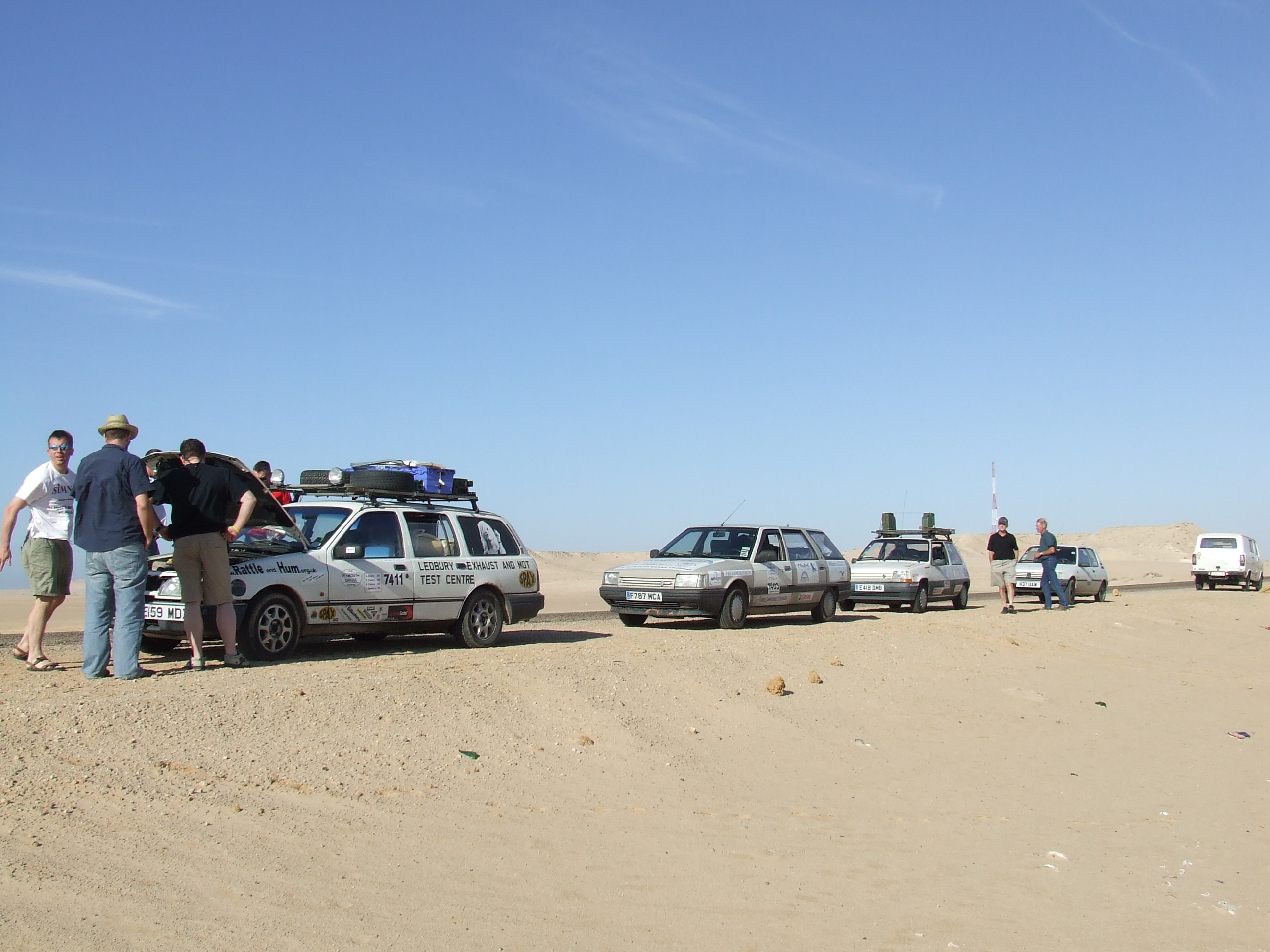
 Here’s how it all came about. Some of this might be apocryphal. You will need to decide. Once upon a time (so the legend goes) a London banker called Julian Nowill thought it might be fun to drive the Paris-Dakar rally. But when he looked into it, he discovered that a realistic entry could cost anything up to a quarter of a million pounds – once you’ve paid for several high-performance cars, a huge support team, a trailer load of spare tyres, and salaries and expenses for a retinue of mechanics and PR people and film crews and hairdressers and cooks. So he decided to set up a rival rally. This would go from Nowill’s hometown of Plymouth to Banjul in the Gambia, following a similar compass setting to the Paris-Dakar. The difference would be that cars should generally cost less than £100, teams should try not to spend more than £15 on preparations, and the whole event would lack organisation or support. Now admit it. That sounds a whole lot more fun. And to top it off, cars (or what was left of them) would be auctioned off at the end and the proceeds would go to Gambian charities.It is fifteen years since Mike Taylor and I drove the Plymouth-Banjul Challenge. Dozens of cars set off on the same day and teams broadly choose their own routes, and you meet up from time to time along the way. Or you don’t. It’s all a bit random but that’s kind-of how it works. There were six of us, in three cars. Mike and I drove a 1988 Renault 5 we bought from a scrapyard in Brest. (The car costs us €200 so we had already broken the rules. But no one really cares, which is part of the charm of this rally.) My mate Graham Ibbotson (who appears from time to time in this blog) drove a big old Renault (I can’t recall the model) along with his son Tom. And Tom’s mates Adam Flowerday and Don Howarth drove some kind of Fiat Panda rip-off. (I don’t know what it was). Anyway, there you have our little convoy, and on the way, we grew to include two farmers in a little hatchback, two prison officers in a huge van, three guys in an unreliable Ford Modeo and a pair of Portuguese teenagers in an ancient Hillman Humber. (One of the two wasn’t old enough to drive, apparently).
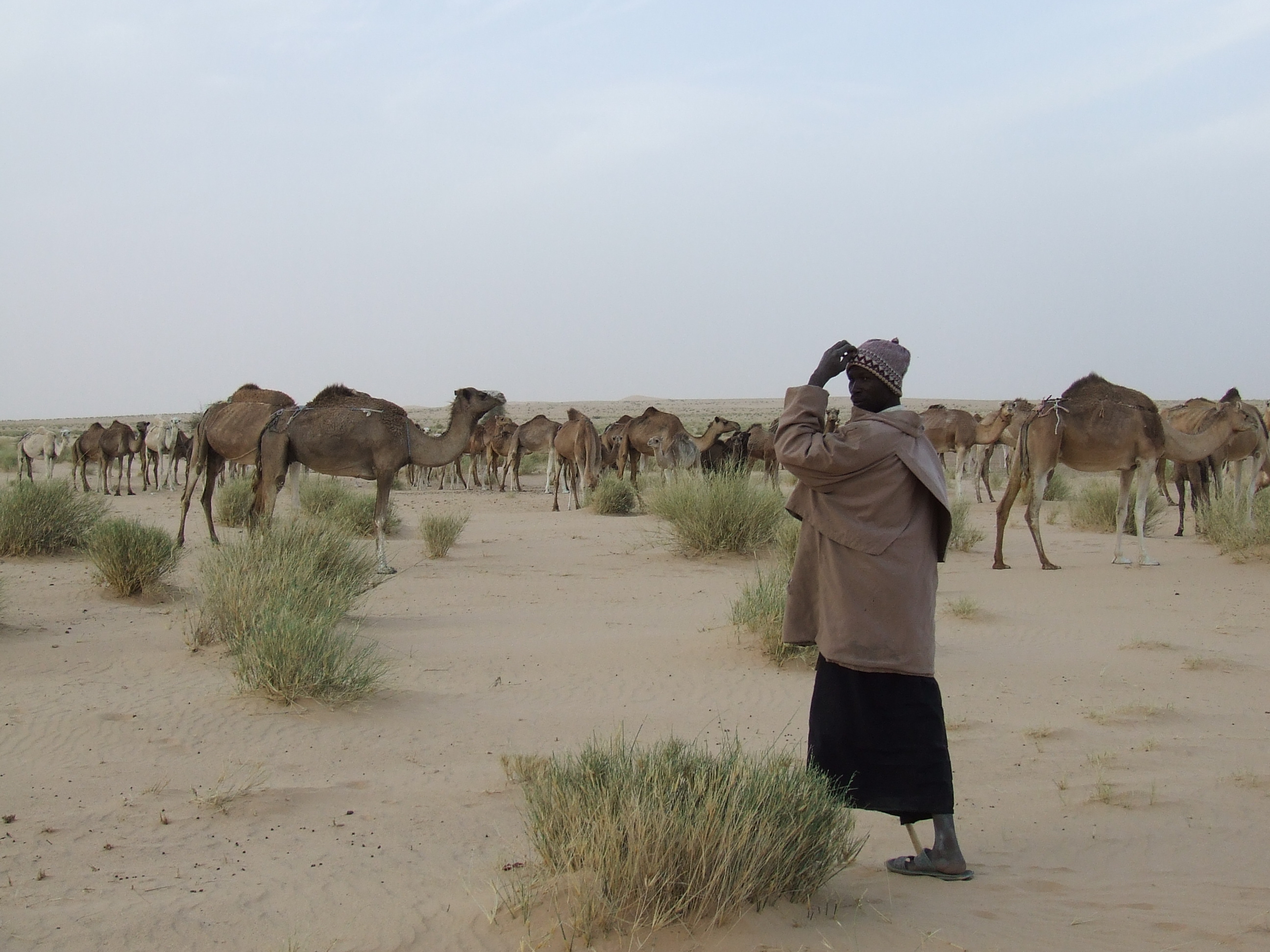
It is an absolutely madcap rally. Bonkers. It isn’t a race (thank goodness). It’s a kind of test of endurance for man and machine. It rattles through eight countries (UK, France, Spain, Morocco, Western Sahara, Mauritania, Senegal, Gambia), has three ferry crossings (the Channel, the Straits of Gibraltar, and the Gambia River), and it includes one serious mountain range (the Atlas), one active minefield (see my blog on Guelta Zemmur), hundreds of miles of appalling roads, and around 350 miles of open desert sand. Which is AWESOME!
I would recommend this event to anyone with a sense of adventure. It takes three weeks – which is a lot of driving – but it is never, ever boring. There are days off in Gibraltar, Marrakech, Daklha and St Louis. The camaraderie is amazing. The adventures come thick and fast. I won’t regale you with stories because once I start I really won’t know where to stop. But trust me. The stories are good. Our little Renault barely made it. None of the dashboard dials worked. Ever. Which was a relief because we didn’t have any warning lights to worry us. We trashed the gears in the desert when we hit a massive rock so we did most of the second half of the rally with only third gear (the only gear that worked). And we bent the car so badly in Mauritania that afterwards the doors wouldn’t properly close. But hey. We kept going, we made it to Banjul, and we raised a shed load of cash for Kid’s Action.
As well as being an adventure, the experience was also pretty humbling. Mauritania is one of the world’s poorest countries. Senegal and Gambia have their challenges too. We are used to thinking that problems like these are somewhere on the other side of the world. We don’t imagine them as close enough to drive to. We all learned a lot on this trip. We grew up a lot. We are all linked. We all live on the same road. Literally. I still find it helpful to think of humanity this way. All of us just different numbers on the same road.
My what3words link takes you to the beach. (Did I mention that you drive along 200 miles of beach! That’s 200 miles of BEACH!)






You can find some of the video that Tom took on YouTube. Here are the links:
Plymouth Banjul Rally 2007 Part One - YouTube
Plymouth Banjul Rally 2007 Part Two - YouTube
Plymouth Banjul Rally 2007 Part Three - YouTube
April 21, 2022
My Map Pins 37: Grenada (21st April 2022)

My sister Lorraine lives in Grenada. She farms bell peppers on the windward side of the island along with my nephew Sean, and Sean's son Graham. Their farm is right by the sea. So, you see, we had a perfect excuse to visit. But here's the thing. No one should need an excuse to visit Grenada. It's the original spice island, a jewel in the Caribbean, and it's a truly tropical island - a lush rainforest, mountainous and green, with perfect beaches and a genuine, laid-back, reggae-music-infused, West-Indies vibe. It may not have the brand identity of Barbados, or the huge tourist infrastructure of St Lucia, but it has charm, and it feels curiously undiscovered, and I love it.
Here are the stats. Grenada is one of the smallest countries in the world. It ranks 179th (out of 195) by population (113,000 people), and 185th by land area (just 133 sq kilometers). This makes it marginally larger than Malta but only three fifths of the size of the Isle of Man. It's a dot on the map, basically. And it feels like it. You're never far from the sea, and you're never more than around 15 miles from anywhere else on the island (although slow winding roads mean those 15 miles could take you an hour to drive).
.jpeg) They really don't know how to do tourism in Grenada (apart from wham-bang ferrying around of passengers from the cruise liners). We hired a car (pretty much essential) and we criss-crossed the island until we felt we knew it all. Almost. Driving is easy. The roads aren't busy. Just slow.
They really don't know how to do tourism in Grenada (apart from wham-bang ferrying around of passengers from the cruise liners). We hired a car (pretty much essential) and we criss-crossed the island until we felt we knew it all. Almost. Driving is easy. The roads aren't busy. Just slow.
 Sandy IslandSignposts are rare (or non existent). Google maps reception is patchy. You need to navigate with the one rather unhelpful map provided by the island authorities. But it's ok. You can't get too lost. And anyway, exploring is fun. The Grand Etang rainforest park in the centre of the island is the must-see location. But my what3words map pin today is Sandy Island - an uninhabited paradise island a couple of miles off the North East coast. You pay a chap in a boat to take you there and maroon you for most of the day. It's the place where they filmed the Bounty Ad back in the day ( https://youtu.be/h8S7B8lnOL4 ) and it is still utterly unspoiled and lovely.What3words: decisions.trickled.deeply
.jpeg) Grand Anse Beach
Grand Anse Beach
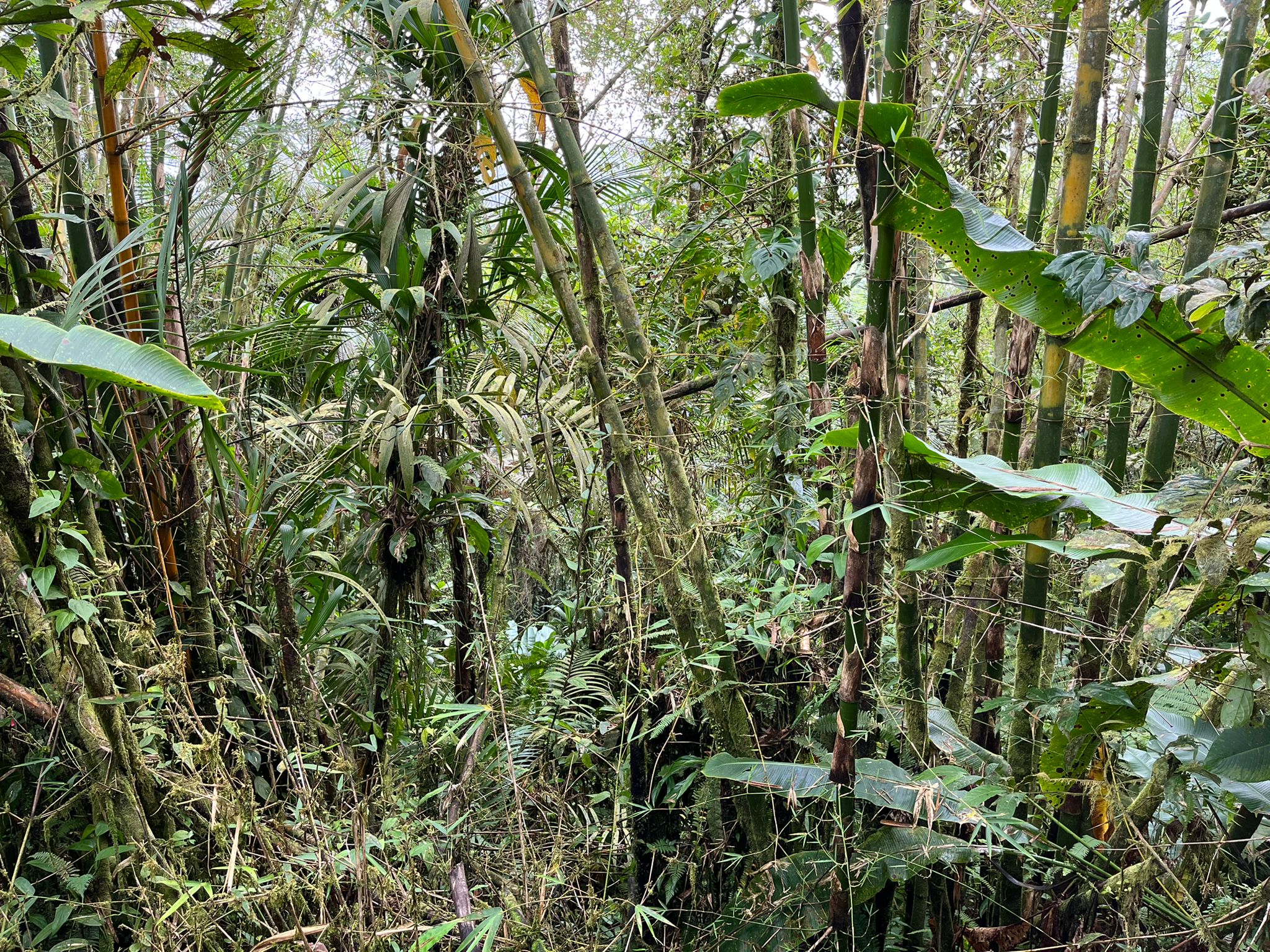 Grand Etang
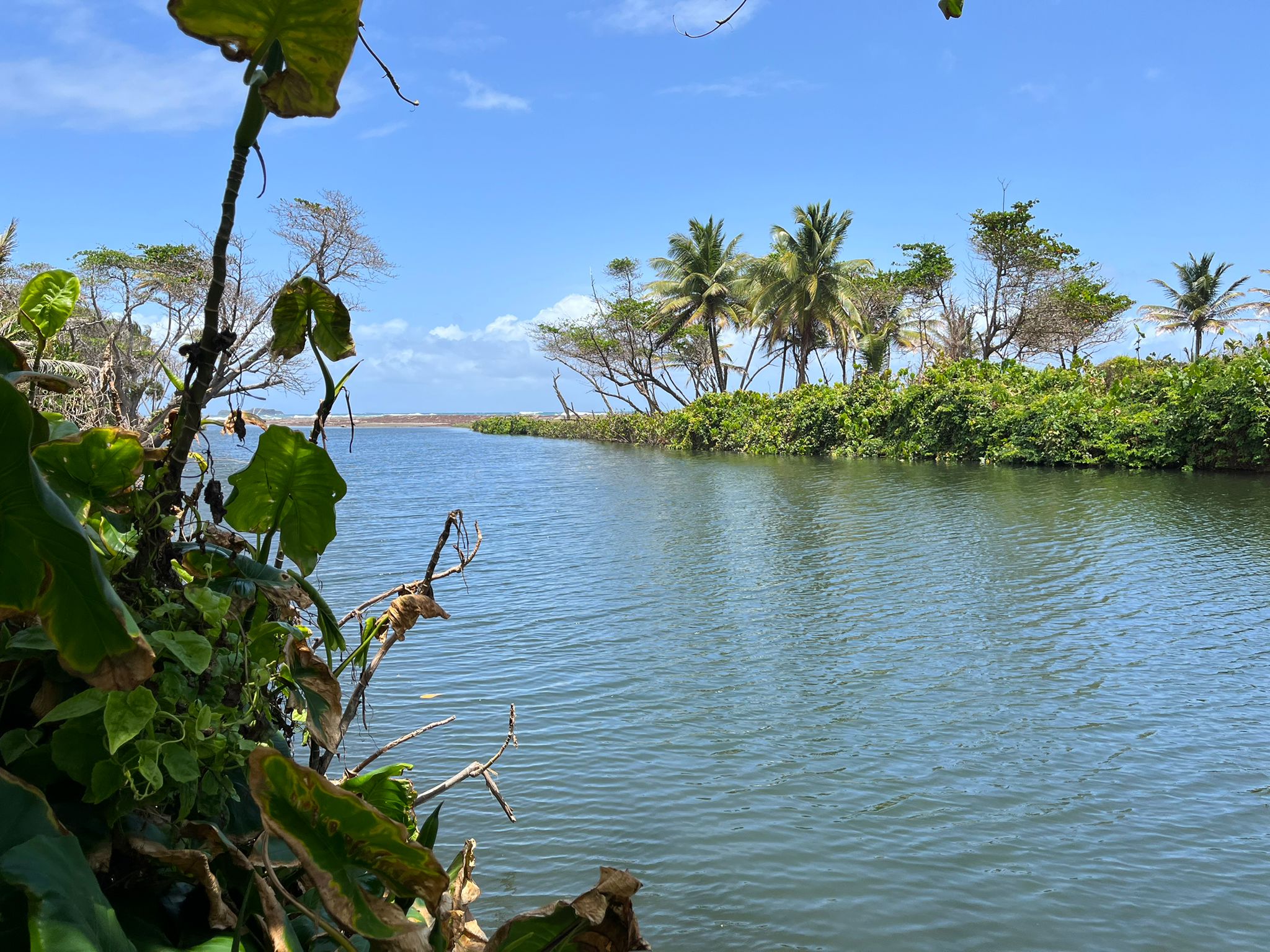 The view from my sister's farm. Yes, really!
My Map Pins 37: Grenada
My sister Lorraine lives in Grenada. She farms bell peppers on the windward side of the island along with my nephew Sean, and Sean's son Graham. Their farm is right by the sea. So, you see, we had a perfect excuse to visit. But here's the thing. No one should need an excuse to visit Grenada. It's the original spice island, a jewel in the Caribbean, and it's a truly tropical island - a lush rainforest, mountainous and green, with perfect beaches and a genuine, laid-back, reggae-music-infused, West-Indies vibe. It may not have the brand identity of Barbados, or the huge tourist infrastructure of St Lucia, but it has charm, and it feels curiously undiscovered, and I love it.
Here are the stats. Grenada is one of the smallest countries in the world. It ranks 179th (out of 195) by population (113,000 people), and 185th by land area (just 133 sq kilometers). This makes it marginally larger than Malta but only three fifths of the size of the Isle of Man. It's a dot on the map, basically. And it feels like it. You're never far from the sea, and you're never more than around 15 miles from anywhere else on the island (although slow winding roads mean those 15 miles could take you an hour to drive).
They really don't know how to do tourism in Grenada (apart from wham-bang ferrying around of passengers from the cruise liners). We hired a car (pretty much essential) and we criss-crossed the island until we felt we knew it all. Almost. Driving is easy. The roads aren't busy. Just slow.
Sandy IslandSignposts are rare (or non existent). Google maps reception is patchy. You need to navigate with the one rather unhelpful map provided by the island authorities. But it's ok. You can't get too lost. And anyway, exploring is fun. The Grand Etang rainforest park in the centre of the island is the must-see location. But my what3words map pin today is Sandy Island - an uninhabited paradise island a couple of miles off the North East coast. You pay a chap in a boat to take you there and maroon you for most of the day. It's the place where they filmed the Bounty Ad back in the day ( https://youtu.be/h8S7B8lnOL4 ) and it is still utterly unspoiled and lovely.What3words: decisions.trickled.deeply
Grand Anse Beach
Grand Etang
The view from my sister's farm. Yes, really!November 1, 2021
Out today for COP26 ... 'The Year of the Dugong.' (1st November 2021)

My novella for COP26, 'The Year of the Dugong,' is now available in English as a Kindle Novella. I should dearly love you to read it. I would especially love you to read it during COP26. It isn't a long read. It's about one quarter the length of a full novel. But I hope it packs a serious punch all the same. Here is the link: https://www.amazon.co.uk/dp/B09KQRY62...
I wrote this as a short story to highlight issues around climate change and extinction. If you like it, and if it moves you at all, do please let me know.
The story has been published exclusively as a hardback novella in German by S Fischer Verlag - as 'Das Jahr des Dugong.'
Out today for COP26 ... 'The Year of the Dugong.'
My novella for COP26, 'The Year of the Dugong,' is now available in English as a Kindle Novella. I should dearly love you to read it. I would especially love you to read it during COP26. It isn't a long read. It's about one quarter the length of a full novel. But I hope it packs a serious punch all the same. Here is the link: https://www.amazon.co.uk/dp/B09KQRY62...
I wrote this as a short story to highlight issues around climate change and extinction. If you like it, and if it moves you at all, do please let me know.
The story has been published exclusively as a hardback novella in German by S Fischer Verlag - as 'Das Jahr des Dugong.'
July 23, 2021
Why I’m retiring (but not from writing) (23rd July 2021)
The overwhelming response when I’ve told people I’m retiring from full-time paid employment has been, ‘what kept you?’ ‘You should have retired when your first novel came out and devoted yourself to writing,’ one friend told me. Others are astonished that I’ve still been working all this time. ‘What!’ they exclaim. ‘You’re still working!’ As if this was somehow a sin.
A lot of novelists never give up the day job of course. Anthony Trollope wrote ten novels while working for the post office. Conan Doyle was a doctor. Kafka was an insurance clerk. T.S. Eliot was a publisher. Nabokov was a lepidopterist (I bet you never knew that). Most of the writers I know still do a nine-to-five of some kind. Personally, I never wanted to give up the day job. Not really. I have always rather enjoyed working. I like the people I work with. I get carried along with the projects we’re doing and the ambitions we have. It’s fun. I have worked in my industry (healthcare computing) for so long that I’ve become something of a sage. There are very few of us left who recall the early days. I remember one of the first computer systems I was involved with (a lab system at a London hospital). It had 512KB of memory. Half a megabyte. It seemed a lot at the time. I remember the clunky green screens and the colossal monitors and the achingly slow response times. I remember learning BASIC programming on a Commodore PET. And all those things that might now be hard to explain. Queuing for the photocopier. The telex machine. Memorising phone numbers. Carbon copies. The tea trolley. Circulation envelopes. Treasury ties. Ties! Fax paper. Floppy discs…
… and now, like a very-slow-motion movie, the decades have passed, and I’ve watched things change. The kind of systems we’re installing today would have been extraordinary science-fiction to my twenty five-year-old self. The almost limitless power of mobile tech, and the coming of AI are transforming this space beyond recognition.
I have been incredibly lucky. I’ve visited hospitals in ten US states, in UAE, Australia, Saudi Arabia, Qatar, and Kuwait and most of Europe. I’ve worked on deals in South Africa and Malta and Nigeria and Scotland and Ireland and too many other places to mention. It has been a blast.
I am, however, now in my, er, mid-sixties. And here is the truth. I’ve become a bit of a dinosaur. I didn’t see it coming. But perhaps we aren’t supposed to. Maybe it takes everybody by surprise. You wake up one morning and you realise, with a start, that your time has come. There is the door, there is your coat, what’s your hurry? This is what happened to me. I can escape it no longer. I am no longer a programme manager.
But I am still a novelist.
I won’t ever give up writing. I couldn’t. It is what I do. So I am doubly lucky – to have had a first career I enjoyed, and a second to keep me going. Thank you to all the amazing, fascinating, brilliant people I have met and worked with for so many years. I will miss you guys a lot. Do, please, stay in touch. Keep on making the world a better place. I want to read about your great successes. And, by the way, if you fancy, just occasionally, putting your feet up with a good book – ask in any good bookshop or check out my page on Amazon.