Eric C. Sheninger's Blog, page 41
August 27, 2017
Be the Example
“The world is changed by your example, not by your opinion.” – Paulo Coelho
Change is hard. I have been writing about this fact for years now. It becomes even harder when we are not modeling the expectations that we set for others. This was the case for me early on during my days as a principal. When it came to technology and innovation, I was great at telling others what they should be doing. After getting on Twitter in 2009 I realized that we had to be better for our kids. As such I did what I was trained to do and what I thought was the most logical course of action to get buy-in from my staff. I drafted memos and emails that provided guidance and examples. I spent a great deal of time writing numerous detailed memos on everything from technology tools to improve assessment, developing a Personal Learning Network (PLN), and embracing innovative ideas. Then I waited.
The wait for any sort of change was never-ending. I probably would have been still waiting if I hadn’t grabbed a teacher I had a good relationship with and asked him why no one was embracing all these new ideas and strategies I was pushing out. He was pretty blunt and to this day I am indebted to him. Basically he told me that no one was integrating technology or implementing innovative ideas because I wasn’t doing any of it myself. His words and simple advice provided a great lesson in leadership.
Asking others to do what we are not doing, or have not done, ourselves doesn’t lead to meaningful change. Research supports this claim. James Kouzes and Barry Posner have researched the topic of leadership for over 30 years looking at thousands of leaders in a wide range of industries throughout the world. Below are some key takeaways in relation to being the example:
Leadership is not about telling people what do to, but instead taking them where they need to be. Setting an example through your own practice illustrates to others that change is a shared endeavor. It is about the collective where a title, position, and power don’t give someone a pass. When it all is said and done leadership is about action, not talk and opinion (or memos and emails in my example). Setting an example and modeling are the first step. The next is a combination of support, accountability, and evidence that leads to efficacy. When everyone sees how the change(s) actually improve teaching, learning, and leadership the path to sustainability is started.
In my case I began to learn how to use certain technology tools after which I made myself available to then train my staff after school. I made my learning through a PLN visible and used the new acquired knowledge and skills during training sessions, faculty meetings, observation post-conferences, and evaluations. The practice of modeling expectations actually strengthened the emails encouraging my staff to improve their practice. Over time change took hold and evidence of improvement bolstered our resolve to keep pushing the envelope. Together we were then able to show efficacy aligned to technology use and innovative ideas.
Take time to reflect on whether or not your words are supported by appropriate actions. Change is a collaborative process if it is to be successful. Showing others that you are not just willing to learn, but how changes to practice actually improve teaching, learning, and leadership can and will have a lasting impact. Evidence matters and when aligned with the example you set no goal is out of reach. In the end it’s not about what is said, but what is done. Be an example that empowers others to change.
Change is hard. I have been writing about this fact for years now. It becomes even harder when we are not modeling the expectations that we set for others. This was the case for me early on during my days as a principal. When it came to technology and innovation, I was great at telling others what they should be doing. After getting on Twitter in 2009 I realized that we had to be better for our kids. As such I did what I was trained to do and what I thought was the most logical course of action to get buy-in from my staff. I drafted memos and emails that provided guidance and examples. I spent a great deal of time writing numerous detailed memos on everything from technology tools to improve assessment, developing a Personal Learning Network (PLN), and embracing innovative ideas. Then I waited.
The wait for any sort of change was never-ending. I probably would have been still waiting if I hadn’t grabbed a teacher I had a good relationship with and asked him why no one was embracing all these new ideas and strategies I was pushing out. He was pretty blunt and to this day I am indebted to him. Basically he told me that no one was integrating technology or implementing innovative ideas because I wasn’t doing any of it myself. His words and simple advice provided a great lesson in leadership.

Asking others to do what we are not doing, or have not done, ourselves doesn’t lead to meaningful change. Research supports this claim. James Kouzes and Barry Posner have researched the topic of leadership for over 30 years looking at thousands of leaders in a wide range of industries throughout the world. Below are some key takeaways in relation to being the example:
Eloquent speeches about common values are not nearly enough. Exemplary leaders know that it’s their behavior that earns them respect. The real test is whether they do what they say; whether their words and deeds are consistent. Leaders set an example and build commitment through simple, daily acts that create progress and build momentum.
The personal-best projects we studied were distinguished by the fact that all of them required relentless effort, steadfastness, competence, and attention to detail. It wasn’t the grand gesture that had the most lasting impact. Instead it was the power of spending time with someone, of working side-by-side with colleagues, of telling stories that made values come alive, of being highly visible during times of uncertainty, of handling critical incidents with grace and discipline, and of asking questions to get people to focus on values and priorities.
Leadership is not about telling people what do to, but instead taking them where they need to be. Setting an example through your own practice illustrates to others that change is a shared endeavor. It is about the collective where a title, position, and power don’t give someone a pass. When it all is said and done leadership is about action, not talk and opinion (or memos and emails in my example). Setting an example and modeling are the first step. The next is a combination of support, accountability, and evidence that leads to efficacy. When everyone sees how the change(s) actually improve teaching, learning, and leadership the path to sustainability is started.
In my case I began to learn how to use certain technology tools after which I made myself available to then train my staff after school. I made my learning through a PLN visible and used the new acquired knowledge and skills during training sessions, faculty meetings, observation post-conferences, and evaluations. The practice of modeling expectations actually strengthened the emails encouraging my staff to improve their practice. Over time change took hold and evidence of improvement bolstered our resolve to keep pushing the envelope. Together we were then able to show efficacy aligned to technology use and innovative ideas.
Take time to reflect on whether or not your words are supported by appropriate actions. Change is a collaborative process if it is to be successful. Showing others that you are not just willing to learn, but how changes to practice actually improve teaching, learning, and leadership can and will have a lasting impact. Evidence matters and when aligned with the example you set no goal is out of reach. In the end it’s not about what is said, but what is done. Be an example that empowers others to change.


August 20, 2017
The Impact of an Educator
I fondly remember when I was first asked to consider what my future career path might be. Mrs. Williams, my kindergarten teacher, asked the class to draw a picture that articulated what we wanted to be when we grew up. I immediately knew exactly what I was going to draw. That was the easy part. The difficult task, for me at least, was to then utilize what limited artistic abilities I had to create an illustration that depicted my future career. To this day I still remember the image I created of a farmer tending to his crops. This was a natural career choice for me as a six-year-old having grown up in a rural area of northwestern NJ with a farm right across from our house. I had no idea how to farm, but being outside the rest of my life was good enough for me.
As I aged the thought of becoming a farmer faded as I began to focus more on careers in the biological sciences. Growing up surrounded by nature and spending each summer at the Jersey Shore helped to kindle and sustain an interest in this area. I never gave much thought, nor did either of my brothers, about becoming an educator. Quite honestly, I told myself, and my parents, that I would never become an educator. My response might have stemmed from the fact that I really didn’t understand what they actually did and the impact they were having on kids. All I knew with a great deal of certainty was that a career in education was not in the cards.
My mom, after taking many years off to take care of us, eventually became an elementary teacher where she had a celebrated career. I say celebrated because at her retirement dinner I was able to witness firsthand the impact that she had on students and colleagues alike. Their stories of her passion and dedication for helping kids learn made me so proud. My father was a successful school administrator for what seemed like forever. He held many positions, but what I was most in awe of was the fact that he was an elementary principal at the same school for close to 30 years. When he retired they gave him a key to the city. I don’t know if you can be more successful than that. I never knew the impact my parents had as educators until after I myself became one. Hearing story after story about their work as their careers ended taught me that sometimes the ultimate reward for an educator comes years after we have had direct impact with kids or adults.
 Image credit: http://www.teamworkandleadership.com/
Herein lies the motivation behind this post. I recently received a text message from a former student and athlete of mine. It started off like this:
My response was a simple yep.
He then went on to text me the following:
I really was not prepared for what followed next, but I can tell you that his words below touched my heart and soul.
It goes without saying that I was totally humbled by Spencer’s message. As educators we all chose a profession that would not lead to riches in a financial sense. We chose to become educators so that we could not only help kids learn, but hopefully impact them well beyond just grades and achievement. Education is a calling. It is a calling to make a difference. That’s what educators do on a day-to-day basis. Never forget that your work matters and that each day you get up in front of a class, help lead a building, or collaborate with others to run a district that you have an opportunity to positively impact kids. This also applies to your work with adult learners.
Below is the response I sent to Spencer.
Why did you become an educator? Who were those people and experiences in your life that led you to your current role? In my new role, I still see myself (and other amazing speakers and presenters) as an educator. Each day is still a calling to try to make a difference. Whether or not I make a real difference is in the eye of the beholder. Nonetheless, I am driven by the same passion I had as a teacher and principal to help others see the greatness that is within all of us.
Thank you to every educator out for the work that you do.
As I aged the thought of becoming a farmer faded as I began to focus more on careers in the biological sciences. Growing up surrounded by nature and spending each summer at the Jersey Shore helped to kindle and sustain an interest in this area. I never gave much thought, nor did either of my brothers, about becoming an educator. Quite honestly, I told myself, and my parents, that I would never become an educator. My response might have stemmed from the fact that I really didn’t understand what they actually did and the impact they were having on kids. All I knew with a great deal of certainty was that a career in education was not in the cards.
My mom, after taking many years off to take care of us, eventually became an elementary teacher where she had a celebrated career. I say celebrated because at her retirement dinner I was able to witness firsthand the impact that she had on students and colleagues alike. Their stories of her passion and dedication for helping kids learn made me so proud. My father was a successful school administrator for what seemed like forever. He held many positions, but what I was most in awe of was the fact that he was an elementary principal at the same school for close to 30 years. When he retired they gave him a key to the city. I don’t know if you can be more successful than that. I never knew the impact my parents had as educators until after I myself became one. Hearing story after story about their work as their careers ended taught me that sometimes the ultimate reward for an educator comes years after we have had direct impact with kids or adults.
 Image credit: http://www.teamworkandleadership.com/
Herein lies the motivation behind this post. I recently received a text message from a former student and athlete of mine. It started off like this:
"Coach Sheninger, is this still your number?"
My response was a simple yep.
He then went on to text me the following:
"Well hey, its Spenser Brenn just in case you lost my number. Sorry if it’s super early. As sappy as this is going to sound…."
I really was not prepared for what followed next, but I can tell you that his words below touched my heart and soul.
"I was just working out with my athletes and kids yesterday and it reminded of when I was in high school. You let me workout with you and would push me in the weight room, classroom, and on the football field. I have always been asked why did you want to become a teacher and coach. To be honest, I wasn't sure of that answer until I had this moment yesterday when I realized that those seemingly trivial moments of the two of us working out at lunch or study hall were more impactful than most other moments during high school for me. You were tough on me (a pain in the butt, or at least in the eyes of a stupid high school kid), deservingly so, considering I was a pain right back to you. However, you taking me under your wing and motivating, mentoring, and challenging me (whether you knew it or not) meant and still means more to me than you probably know, or more than I knew until yesterday. So I just wanted to reach out and say this - a small gesture like working out with a pain in the butt kid meant the world to him. It showed that you cared, something he, and all people, needed at that time. Thank you. I now know why I became a teacher, a coach, and a mentor to the youth."
It goes without saying that I was totally humbled by Spencer’s message. As educators we all chose a profession that would not lead to riches in a financial sense. We chose to become educators so that we could not only help kids learn, but hopefully impact them well beyond just grades and achievement. Education is a calling. It is a calling to make a difference. That’s what educators do on a day-to-day basis. Never forget that your work matters and that each day you get up in front of a class, help lead a building, or collaborate with others to run a district that you have an opportunity to positively impact kids. This also applies to your work with adult learners.
Below is the response I sent to Spencer.
Well you just made my day, well week actually (maybe the entire summer). Life is so much more than what we are made to think is important. Everything comes down to relationships built on trust, empathy, compassion, understanding, and honesty. I really never knew until later in my education career that one of the most important things we can do is to show kids we care. It's not until much later in life that we learn of the impact we have on our students. You will one day be in the same position as me, a proud person humbled by the feedback that you receive knowing that you positively influenced others. Thank you so much for taking the time to send that text. It meant more than you will ever know.
Why did you become an educator? Who were those people and experiences in your life that led you to your current role? In my new role, I still see myself (and other amazing speakers and presenters) as an educator. Each day is still a calling to try to make a difference. Whether or not I make a real difference is in the eye of the beholder. Nonetheless, I am driven by the same passion I had as a teacher and principal to help others see the greatness that is within all of us.
Thank you to every educator out for the work that you do.
August 13, 2017
Leading is Not Easy
This post, like so many, has been inspired by something I read. One of my favorite sites to glean more insight and knowledge on leadership is Inc. Even though the site shares content specific to business growth and innovation so many of the articles and opinion pieces connect to leadership in the education space. By using Flipboard I have instant access to many of the pieces that appear on Inc thanks to the fact that I have leadership set as one of my magazine categories. If you are not using this app please download it to your mobile device. It is one of the best ways to create your own personalized magazine based on your interests and social network activity that you can literally flip through.
The other day Flipboard exposed me to this gem written by Nicolas Cole titled The Brutal Truth About Why Being a Leader is So Hard. The premise of the article, as the title implies, is the inherent difficulties associated with any leadership position. Cole goes on to explain the following:
His synopsis really resonated with me. It is difficult to adequately prepare any leader for the challenges he or she will face as well as the decisions that will have to be made. There are so many unique variables that just cannot be taught. Learning about how to prepare a budget is entirely different than creating one on your own when all the unique challenges are factored in. It’s tough work knowing that difficult decisions will have to be made at times, including letting staff go. Making decisions in time of crisis is also a topic that is regularly explored in leadership courses. The solutions addressed always sound great in theory, but their application typically isn’t very practical.
Looks can be, and are, deceiving. Talking the talk has to be accompanied with walking the walk. That’s the hard part. It’s relatively easy for people to tell others what they should do. However, true leaders go through the challenging work of showing how it can be done. Here is some sage advice that I learned long ago as a new principal who started drinking the digital and innovation Kool-Aid long ago – “Don’t ask others to do what you are not willing or have not done yourself.” Modeling is one of the most impactful elements of leadership. It builds trust leading to powerful relationships.
Accomplishments and success are earned through the actions that are taken that result in evidence of improvement. Leaders know that it is not the work of one person that moves an organization in a positive direction, but rather the collective efforts of all. The premise of every decision and action has to be geared towards the “We” instead of “I”. It’s not about coming up with all the ideas, but helping people implement not only the ones you develop, but also the ones that they develop. Leading from the front is an outdated style that doesn’t foster shared ownership.
It’s our experiences that help all of us to develop into better leaders coupled with the support we get from colleagues. From experience, we learn that trying to be right all the time only makes the job exponentially harder. Work inside out to make leading a little easier by focusing on the why, how, and what in that order. Make the time to hone your communication skills, as you will not find an effective leader who is not an effective communicator. Mastering this art is no easy task and takes constant practice and reflection in order to improve.
Regardless of your position leading is hard, yet gratifying work. Keep an open mind, regularly reflect, pursue learning opportunities that push your thinking, and understand that you will never have all the answers (which is quite ok). It is also helpful to be flexible. I leave you with some more thoughts from Nicholas Cole that might just build greater leadership capacity in you and others:
Stealing from Ghandi, be the change you wish to see in education. Just know that any change journey is not an easy one.
The other day Flipboard exposed me to this gem written by Nicolas Cole titled The Brutal Truth About Why Being a Leader is So Hard. The premise of the article, as the title implies, is the inherent difficulties associated with any leadership position. Cole goes on to explain the following:
"What's difficult about leadership is that nobody ever sits you down and "teaches" you what being a real leader is all about. There's no class in early education that defines leadership. Peers in group projects tend to label leaders as "overachievers" (and not in a good way). In college, leadership is reduced down to who is going to talk the most during a presentation. And even on sports teams, the leader is usually the best player--and wears a letter on his or her jersey as a trophy of their accomplishments."
His synopsis really resonated with me. It is difficult to adequately prepare any leader for the challenges he or she will face as well as the decisions that will have to be made. There are so many unique variables that just cannot be taught. Learning about how to prepare a budget is entirely different than creating one on your own when all the unique challenges are factored in. It’s tough work knowing that difficult decisions will have to be made at times, including letting staff go. Making decisions in time of crisis is also a topic that is regularly explored in leadership courses. The solutions addressed always sound great in theory, but their application typically isn’t very practical.
Looks can be, and are, deceiving. Talking the talk has to be accompanied with walking the walk. That’s the hard part. It’s relatively easy for people to tell others what they should do. However, true leaders go through the challenging work of showing how it can be done. Here is some sage advice that I learned long ago as a new principal who started drinking the digital and innovation Kool-Aid long ago – “Don’t ask others to do what you are not willing or have not done yourself.” Modeling is one of the most impactful elements of leadership. It builds trust leading to powerful relationships.
Accomplishments and success are earned through the actions that are taken that result in evidence of improvement. Leaders know that it is not the work of one person that moves an organization in a positive direction, but rather the collective efforts of all. The premise of every decision and action has to be geared towards the “We” instead of “I”. It’s not about coming up with all the ideas, but helping people implement not only the ones you develop, but also the ones that they develop. Leading from the front is an outdated style that doesn’t foster shared ownership.

It’s our experiences that help all of us to develop into better leaders coupled with the support we get from colleagues. From experience, we learn that trying to be right all the time only makes the job exponentially harder. Work inside out to make leading a little easier by focusing on the why, how, and what in that order. Make the time to hone your communication skills, as you will not find an effective leader who is not an effective communicator. Mastering this art is no easy task and takes constant practice and reflection in order to improve.
Regardless of your position leading is hard, yet gratifying work. Keep an open mind, regularly reflect, pursue learning opportunities that push your thinking, and understand that you will never have all the answers (which is quite ok). It is also helpful to be flexible. I leave you with some more thoughts from Nicholas Cole that might just build greater leadership capacity in you and others:
"True leadership is the ability to communicate and effectively reach each and every person you work with, in the way that works best for them.
It's the ability to be flexible.
When everyone else is stressed, you're calm.
When everyone else is out of gas, you inject more fuel.
When everyone else doesn't know what to do next, you lead by example.
When someone has an issue, you work with them and listen to them on a personal level."
Stealing from Ghandi, be the change you wish to see in education. Just know that any change journey is not an easy one.
August 6, 2017
Avoiding Initiative Overload
As many of us know all too well, the process of change is not always a successful venture. It is fraught with twists and turns, not to mention challenges that come in all shapes and sizes. Out of the chaos excuses materialize, further complicating the process. One common excuse, or challenge depending on your point of view, is too many initiatives at once. In business, some estimates indicate that 70 percent of change initiatives fail. That’s right. Research has shown that up to 7 in 10 corporate initiatives have not led to sustainable change (Blanchard, 2010).
 Image credit: johnrchildress.files.wordpress.com
Initiative overload is just as common in education as it is in business. The numbers referenced above could easily correlate to education, and the percentages may even be worse. Today, schools and leaders work to juggle numerous initiatives simultaneously. This can result in a drain on resources as well as a lack of focus on the primary task at hand – improvement of student learning. While each separate initiative is established to improve school culture, the more tasks that are added to the proverbial plate increase the likelihood that they all will not be sustained over time. For every new initiative launched, another one slows down or ceases altogether.
Tony Sinanis, a newly appointed superintendent and great friend, tackled this topic on his blog. He makes the point that many initiatives are problematic from the start.
Tony goes on to outline four specific reasons, based on his experience as a practicing school leader, why too many initiatives can be problematic:
Initiatives are about a program and not about a skill set.Initiatives are piled one on top of the other.Initiatives are often about doing the new "trendy" thing in education and not about doing what is best for OUR kids.We are shocked when educators express feeling overwhelmed by a new initiative and are in need of more time to successfully implement it.
Tony provides some wise advice for all educators as we grapple with mandates, directors, the “flavor of the month”, and a need to innovate while also increasing achievement. A general understanding that the student learning experience must be transformed has created incredible opportunities for the future yet has simultaneously caused significant turmoil. As school leaders work to redesign their schools, they must be careful not to immerse themselves, their teams, and their students in an alphabet soup of initiatives. This is something Tom Murray and I address in Learning Transformed. In our experience, initiative overload is one of the primary reasons that transformational change fails. When making investments in the form of time and money, think about where you will get the most bang for your buck. Investing in people is the best investment one can make. That’s the key to sustainable change.
Throughout the book, we present a plethora of research, evidence, stories, and practical steps to transform learning, but school leaders cannot lead change in all areas, at all times. It’s easy for leaders to get excited about what could and should be, especially for those who are most passionate about creating new innovative opportunities for students and staff. Although well intended, too many ongoing initiatives can easily dilute the effectiveness of sustainable change. Avoiding initiative overload by maintaining a laser-like focus on what evidence indicates is required and essential for sustainable growth and transformation.
It all comes down to this basic piece of advice. Do one thing great instead of several things just ok Leading transformational change isn’t easy. But our kids are worth the effort.
 Image credit: johnrchildress.files.wordpress.com
Initiative overload is just as common in education as it is in business. The numbers referenced above could easily correlate to education, and the percentages may even be worse. Today, schools and leaders work to juggle numerous initiatives simultaneously. This can result in a drain on resources as well as a lack of focus on the primary task at hand – improvement of student learning. While each separate initiative is established to improve school culture, the more tasks that are added to the proverbial plate increase the likelihood that they all will not be sustained over time. For every new initiative launched, another one slows down or ceases altogether.
Tony Sinanis, a newly appointed superintendent and great friend, tackled this topic on his blog. He makes the point that many initiatives are problematic from the start.
"I would argue that initiatives, as they are generally rolled out within education, are often doomed for failure before they even have a chance to impact educators and learners."
Tony goes on to outline four specific reasons, based on his experience as a practicing school leader, why too many initiatives can be problematic:
Initiatives are about a program and not about a skill set.Initiatives are piled one on top of the other.Initiatives are often about doing the new "trendy" thing in education and not about doing what is best for OUR kids.We are shocked when educators express feeling overwhelmed by a new initiative and are in need of more time to successfully implement it.
Tony provides some wise advice for all educators as we grapple with mandates, directors, the “flavor of the month”, and a need to innovate while also increasing achievement. A general understanding that the student learning experience must be transformed has created incredible opportunities for the future yet has simultaneously caused significant turmoil. As school leaders work to redesign their schools, they must be careful not to immerse themselves, their teams, and their students in an alphabet soup of initiatives. This is something Tom Murray and I address in Learning Transformed. In our experience, initiative overload is one of the primary reasons that transformational change fails. When making investments in the form of time and money, think about where you will get the most bang for your buck. Investing in people is the best investment one can make. That’s the key to sustainable change.
Throughout the book, we present a plethora of research, evidence, stories, and practical steps to transform learning, but school leaders cannot lead change in all areas, at all times. It’s easy for leaders to get excited about what could and should be, especially for those who are most passionate about creating new innovative opportunities for students and staff. Although well intended, too many ongoing initiatives can easily dilute the effectiveness of sustainable change. Avoiding initiative overload by maintaining a laser-like focus on what evidence indicates is required and essential for sustainable growth and transformation.
It all comes down to this basic piece of advice. Do one thing great instead of several things just ok Leading transformational change isn’t easy. But our kids are worth the effort.
July 30, 2017
Beyond Perception
"People only see what they are prepared to see." - Ralph Waldo Emerson
Life is full of twists and turns as well as ups and downs. In my opinion, it is a never-ending test that determines the trajectory of our career paths. It is not about passing or failing, but rather taking what we have learned to improve our position in life, whether that be professional or personal. Never did I once think that my professional life would have evolved as it has. I was fortunate to become an administrator at the relative young age of 29. Three years later I became the Principal of New Milford High School. It was in this position that I really began to learn about effective leadership.
 Image credit: http://jonlieffmd.com/
My journey to become an administrator almost didn’t come to pass. As a teacher, I was only afforded the opportunity to work with a limited number of students who I had the pleasure of teaching. To increase my potential impact on more students I coached three different sports (football, lacrosse, ice hockey) and volunteered to advise the environmental club. I was hungry to have an even greater impact on more kids, which led me to pursue my administrative credentials. Excited and determined to lead change in a broader context, I began to look for administrative openings where I could serve more kids. I could not wait to face and overcome the challenges ahead while working collaboratively with a staff of educators committed to helping students learn.
My excitement quickly turned into despair. Countless cover letters and resumes were sent out with no response. I then worked to improve my cover letter and made sure my resume articulated how highlighted experiences applied to the field of educational administration. What followed was a pleasant surprise. I began to receive numerous interviews and was on top of the world. My confidence grew, but just like a roller coaster ride it soon plummeted. In many cases I didn’t make it out of the first round, as it was determined that I lacked the needed experience. When I eventually became a finalist for positions I often lost out to others that had applicable experience. I sure don’t miss those interviewing days.
I was plagued by the perception that my age and lack of experience would prohibit me from doing the job of administration. Truth be told that many of us have been in this same position. The best way to counter this perception is to keep moving along and constantly seek out our experiences that will prepare us for new positions. If you are a teacher or instructional coach ask your administrator if you can volunteer as an intern. We did this at my former school. In lieu of a non-instructional duty, teachers could request a yearlong administrative internship where they assisted with day-to-day leadership tasks. This was not only a great help to me and my team, but more importantly it gave these teachers relevant experience that they could put on their resume. If you are an aspiring administrator or looking to move up the ladder, find ways to get involved with the budget, observations, evaluations, curriculum development, walk-throughs, professional development, and master scheduling.
Perception always surrounds our work and us. As I have moved on from Principal to my new role as a speaker and author many people assume that I am, or always have been, gifted in these areas. The reality though is that I struggle in both areas. Public speaking has been a bit easier for me than writing. I was always terrified to speak in public prior to social media. My worst day of the school year was graduation when I had to deliver a speech and then correctly pronounce all the names of the graduating class. This posed to be quite the challenge when the parents of your students speak over 40 different languages. To successfully get through this I meticulously planned and wrote the speech weeks prior to graduation. I also met with every single student beforehand to phonetically write out their names.
Over time I became a more confident and polished speaker. Through social media I found my voice. It was naturally easier to speak in public when afforded the opportunity to present on the work of my students and staff. This does not infer that I am now a gifted speaker. Some might think this is the case, but again this is far from the truth. I work harder now than I did as a principal to prepare for diverse audiences who all have different needs and expectations. In reality, it is the preparation beforehand and attempts to share strategies that are not only practical, but also aligned to research that aid in my delivery.
Writing on the other hand is something with which I struggle. As an author of six books, numerous articles, and a blog, I am dogged by a perception that I am a good writer. Quite frankly I am not in my humble opinion. Over the years I have had to deal with some harsh critical reviews. One reviewer of Digital Leadership said the book shouldn’t be published. Each week I labor over creating a blog post. Coming up with a topic is hard, but what’s even harder is putting succinct words to create a post that people want to read and find valuable. I begin writing on Monday with the goal of having a post ready to go by the following Sunday. My mom also edits all of my posts and I try to get feedback from family and friends before the post goes live. She says my writing has really improved, by as my mom I think that is what she is supposed to say to build my confidence.
So why do I continue to write then? Just because I am not as gifted as others doesn’t mean that I don’t have important ideas and thoughts to share. Every time I write it is a constant reminder how I am working to overcome a weakness and turn it into a strength. I battle the perception that some have placed on me, but more importantly I tackle head on the perception that I often develop for myself. Reality is determined by what people see and the actions that we take behind the scenes. I am not sure any of this actually makes sense to you, but in my reality it makes perfect sense to me.
Perception is important for our students and their success. They should never perceive that they are inferior to their peers if they don’t do well on standardized tests or more traditional, one-size-fits-all assessments. Some students just don’t learn this way. We also have to be careful of developing a perception that some students don’t want to learn, as we are unaware of the challenges or demons they are tackling at the moment. All kids (and adults) have greatness hidden inside them. It is the job of a caring educator to help them find and unleash it.
Don’t let perception define you, your work, or your students. Helping others to look through a different lens can lead to a more accurate reality, which benefits all of us.
Life is full of twists and turns as well as ups and downs. In my opinion, it is a never-ending test that determines the trajectory of our career paths. It is not about passing or failing, but rather taking what we have learned to improve our position in life, whether that be professional or personal. Never did I once think that my professional life would have evolved as it has. I was fortunate to become an administrator at the relative young age of 29. Three years later I became the Principal of New Milford High School. It was in this position that I really began to learn about effective leadership.
 Image credit: http://jonlieffmd.com/
My journey to become an administrator almost didn’t come to pass. As a teacher, I was only afforded the opportunity to work with a limited number of students who I had the pleasure of teaching. To increase my potential impact on more students I coached three different sports (football, lacrosse, ice hockey) and volunteered to advise the environmental club. I was hungry to have an even greater impact on more kids, which led me to pursue my administrative credentials. Excited and determined to lead change in a broader context, I began to look for administrative openings where I could serve more kids. I could not wait to face and overcome the challenges ahead while working collaboratively with a staff of educators committed to helping students learn.
My excitement quickly turned into despair. Countless cover letters and resumes were sent out with no response. I then worked to improve my cover letter and made sure my resume articulated how highlighted experiences applied to the field of educational administration. What followed was a pleasant surprise. I began to receive numerous interviews and was on top of the world. My confidence grew, but just like a roller coaster ride it soon plummeted. In many cases I didn’t make it out of the first round, as it was determined that I lacked the needed experience. When I eventually became a finalist for positions I often lost out to others that had applicable experience. I sure don’t miss those interviewing days.
I was plagued by the perception that my age and lack of experience would prohibit me from doing the job of administration. Truth be told that many of us have been in this same position. The best way to counter this perception is to keep moving along and constantly seek out our experiences that will prepare us for new positions. If you are a teacher or instructional coach ask your administrator if you can volunteer as an intern. We did this at my former school. In lieu of a non-instructional duty, teachers could request a yearlong administrative internship where they assisted with day-to-day leadership tasks. This was not only a great help to me and my team, but more importantly it gave these teachers relevant experience that they could put on their resume. If you are an aspiring administrator or looking to move up the ladder, find ways to get involved with the budget, observations, evaluations, curriculum development, walk-throughs, professional development, and master scheduling.
Perception always surrounds our work and us. As I have moved on from Principal to my new role as a speaker and author many people assume that I am, or always have been, gifted in these areas. The reality though is that I struggle in both areas. Public speaking has been a bit easier for me than writing. I was always terrified to speak in public prior to social media. My worst day of the school year was graduation when I had to deliver a speech and then correctly pronounce all the names of the graduating class. This posed to be quite the challenge when the parents of your students speak over 40 different languages. To successfully get through this I meticulously planned and wrote the speech weeks prior to graduation. I also met with every single student beforehand to phonetically write out their names.
Over time I became a more confident and polished speaker. Through social media I found my voice. It was naturally easier to speak in public when afforded the opportunity to present on the work of my students and staff. This does not infer that I am now a gifted speaker. Some might think this is the case, but again this is far from the truth. I work harder now than I did as a principal to prepare for diverse audiences who all have different needs and expectations. In reality, it is the preparation beforehand and attempts to share strategies that are not only practical, but also aligned to research that aid in my delivery.
Writing on the other hand is something with which I struggle. As an author of six books, numerous articles, and a blog, I am dogged by a perception that I am a good writer. Quite frankly I am not in my humble opinion. Over the years I have had to deal with some harsh critical reviews. One reviewer of Digital Leadership said the book shouldn’t be published. Each week I labor over creating a blog post. Coming up with a topic is hard, but what’s even harder is putting succinct words to create a post that people want to read and find valuable. I begin writing on Monday with the goal of having a post ready to go by the following Sunday. My mom also edits all of my posts and I try to get feedback from family and friends before the post goes live. She says my writing has really improved, by as my mom I think that is what she is supposed to say to build my confidence.
So why do I continue to write then? Just because I am not as gifted as others doesn’t mean that I don’t have important ideas and thoughts to share. Every time I write it is a constant reminder how I am working to overcome a weakness and turn it into a strength. I battle the perception that some have placed on me, but more importantly I tackle head on the perception that I often develop for myself. Reality is determined by what people see and the actions that we take behind the scenes. I am not sure any of this actually makes sense to you, but in my reality it makes perfect sense to me.
Perception is important for our students and their success. They should never perceive that they are inferior to their peers if they don’t do well on standardized tests or more traditional, one-size-fits-all assessments. Some students just don’t learn this way. We also have to be careful of developing a perception that some students don’t want to learn, as we are unaware of the challenges or demons they are tackling at the moment. All kids (and adults) have greatness hidden inside them. It is the job of a caring educator to help them find and unleash it.
Don’t let perception define you, your work, or your students. Helping others to look through a different lens can lead to a more accurate reality, which benefits all of us.
July 23, 2017
Research-Influenced Learning Spaces
“We need to move away from classroom design that is “Pinterest pretty” and use research/design thinking to guide the work.” – Eric Sheninger and Tom Murray
When Tom Murray and I set out to write Learning Transformed our goal was to connect as much research as possible to our ideas and statements as well as the amazing work taking place in schools, known in the book as Innovative Practices in Action (IPA’s). Research should be used to inform as well as influence the actions we take to implement sustainable change at scale. It is also a great way to move those who are resistant to change to embrace new ideas. Below is an adapted section of Chapter 4 from our book that looks as research that can influence learning space design in classrooms and schools.
 Image credit: http://www.naturalinteriors.com/wp-co...
One area where we found a growing body of research was learning space design. In studying various pieces of literature on the effect of design, Barrett and Zhang began with the understanding that a “bright, warm, quiet, safe, clean, comfortable, and healthy environment is an important component of successful teaching and learning” (p. 2). Their research suggested direct connections between the learning space and sensory stimuli among students. The evidence of such connections came from the medical understanding of how human sensory perception affects cognitive calculations. As such, Barrett and Zang (2009) identify three key design principles:
Naturalness: Hardwired into our brains, humans have the basic need for light, air, and safety. In this area, the impact of lighting, sound, temperature, and air quality are prevalent.Individualization: As individuals, each of our brains is uniquely organized and, we perceive the world in different ways. Because of this, different people respond to environmental stimuli in various ways. Therefore, the opportunity for some level of choice affects success.Appropriate Level of Stimulation: The learning space can offer the “silent curriculum” that affects student engagement levels. When designing the space, it’s important for educators not to overstimulate and thus detract students’ ability to focus but to provide enough stimuli to enhance the learning experience.
Supporting this notion, a research study out of the University of Salford Manchester (UK), followed 3,766 students in 153 elementary classrooms from 27 different schools over a three-year period, analyzing classroom design elements along the way. The report indicates clear evidence that “well-designed primary schools boost children’s academic performance in reading, writing, and math” (Barrett, Zhang, Davies, & Barrett, 2015, p. 3). The study found a 16 percent variation in learning progress due to the physical characteristics of the classroom. Additionally, the study indicated that whole-school factors (e.g., size, play facilities, hallways) do not nearly have the level of impact as the individual classroom.
School leaders will often write off the notion of redesigning learning spaces due to financial constraints. However, research indicates that schools don’t need to spend vast amounts of money to make instructional improvements. In fact, changes can be made that have little to no cost yet make a significant difference. Examples include altering the classroom layout, designing classroom displays differently, and choosing new wall colors (Barrett et al., 2015). These research-based factors are minimal financial commitments that can help boost student outcomes.
The effect of learning spaces on various behaviors—territoriality, crowding, situational and personal space—has been the focus of some sociological and environment behavioral research. The consensus of this research is that the space itself has physical, social, and psychological effects. One study measured the impact of classroom design on 12 active learning practices, including collaboration, focus, opportunity to engage, physical movement, and stimulation (Scott-Webber, Strickland, & Kapitula, 2014). The research indicated that intentionally designing spaces provides for more effective teaching and learning. In this particular study, all of the major findings supported a highly positive and statistically significant effect of active learning classrooms on student engagement.
In a research study on the link between standing desks and academic engagement, researchers observed nearly 300 children in 2nd through 4th grade over the course of a school year (Dornhecker, Blake, Benden, Zhao, & Wendel, 2015). The study found that students who used standing desks, more formally known as stand-biased desks, exhibited higher rates of engagement in the classroom than did their counterparts seated in traditional desks. Standing desks are raised desks that have stools nearby, enabling students to choose whether to sit or stand during class. The initial studies showed 12 percent greater on-task engagement in classrooms with standing desks, which equated to an extra seven minutes per hour, on average, of engaged instruction time.
There’s little disagreement that creating flexible spaces for physical activity positively supports student learning outcomes. However, it’s important to note that it’s not simply the physical layout of the room that affects achievement. One particular study investigated whether classroom displays that were irrelevant to ongoing instruction could affect students’ ability to maintain focused attention during instruction and learn the lesson content. Researchers placed kindergarten children in a controlled classroom space for six introductory science lessons, and then they experimentally manipulated the visual environment in the room. The findings indicated that the students were more distracted when the walls were highly decorated and, in turn, spent more time off task. In these environments, students demonstrated smaller learning gains than in cases where the decorations were removed (Fisher, Godwin, & Seltman, 2014).
In addition to the physical and visual makeup of the learning space, a building’s structural facilities profoundly influence learning. Extraneous noise, inadequate lighting, low air quality, and deficient heating in the learning space are significantly related to lower levels of student achievement (Cheryan, Ziegler, Plaut, & Meltzoff, 2014). Understanding how the learning space itself can affect the way students learn is key. Part of the issue facing school leaders today is that quite often the decision about learning space design is made by those without recent (or any) experience teaching or by those with little knowledge of classroom design. If learning is going to be transformed, then the spaces in which that learning takes place must also be transformed. Design can empower learning in amazing ways.
Today’s educational paradigm is no longer one of knowledge transfer but one of knowledge creation and curation. The “cells and bells” model has been prevalent for more than a century, but it is no longer relevant for today’s learners. As educators work to shift to instructional pedagogies that are relational, authentic, dynamic, and—at times—chaotic in their schools, learning spaces must be reevaluated and adapted as necessary. Pedagogical innovation requires an innovation in the space where learning takes place. Simply put, if the space doesn’t match the desired learning pedagogy, then it will hinder student learning outcomes.
Fore more research-influenced ideas and strategies to transform education grab a copy of Learning Transformed. There is also a free ASCD study guide aligned to the book that can be accessed HERE.
Cited Sources
Barrett, P., & Zhang, Y. (2009). Optimal learning spaces: Design implications for primary schools.Salford, UK: Design and Print Group.
Barrett, P., Zhang, Y., Davies, F., & Barrett, L. (2015). Clever classrooms: Summary findingsof the HEAD Project (Holistic Evidence and Design). Salford, UK: University of Salford,Manchester.
Barrett, P., Zhang, Y., Moffat, J., & Kobbacy, K. (2013). A holistic, multi-level analysisidentifying the impact of classroom design on pupils’ learning. Building and Environment, 59, 678–689.
Cheryan, S., Ziegler, S., Plaut V., & Meltzoff, A. (2014). Designing classrooms to maximizestudent achievement. Behavioral and Brain Sciences, 1(1), 4–12.
Dornhecker, M., Blake, J., Benden, M., Zhao, H., & Wendel, M. (2015). The effect of standbiaseddesks on academic engagement: An exploratory study. International Journal of Health Promotion and Education, 53(5), 271–280.
Fisher, A., Godwin, K., & Seltman, H. (2014). Visual environment, attention allocation, andlearning in young children: When too much of a good thing may be bad. PsychologicalScience, 25(7), 1362–1370.
Scott-Webber, L., Strickland, A., & Kapitula, L. (2014). How classroom design affects studentengagement. Steelcase Education.
<!-- /* Font Definitions */ @font-face {font-family:"Cambria Math"; panose-1:2 4 5 3 5 4 6 3 2 4; mso-font-charset:1; mso-generic-font-family:roman; mso-font-format:other; mso-font-pitch:variable; mso-font-signature:0 0 0 0 0 0;} @font-face {font-family:Calibri; panose-1:2 15 5 2 2 2 4 3 2 4; mso-font-charset:0; mso-generic-font-family:auto; mso-font-pitch:variable; mso-font-signature:-536870145 1073786111 1 0 415 0;} /* Style Definitions */ p.MsoNormal, li.MsoNormal, div.MsoNormal {mso-style-unhide:no; mso-style-qformat:yes; mso-style-parent:""; margin:0in; margin-bottom:.0001pt; mso-pagination:widow-orphan; font-size:12.0pt; font-family:Calibri; mso-ascii-font-family:Calibri; mso-ascii-theme-font:minor-latin; mso-fareast-font-family:Calibri; mso-fareast-theme-font:minor-latin; mso-hansi-font-family:Calibri; mso-hansi-theme-font:minor-latin; mso-bidi-font-family:"Times New Roman"; mso-bidi-theme-font:minor-bidi;} .MsoChpDefault {mso-style-type:export-only; mso-default-props:yes; font-family:Calibri; mso-ascii-font-family:Calibri; mso-ascii-theme-font:minor-latin; mso-fareast-font-family:Calibri; mso-fareast-theme-font:minor-latin; mso-hansi-font-family:Calibri; mso-hansi-theme-font:minor-latin; mso-bidi-font-family:"Times New Roman"; mso-bidi-theme-font:minor-bidi;} @page WordSection1 {size:8.5in 11.0in; margin:1.0in 1.0in 1.0in 1.0in; mso-header-margin:.5in; mso-footer-margin:.5in; mso-paper-source:0;} div.WordSection1 {page:WordSection1;} </style></div>-->
When Tom Murray and I set out to write Learning Transformed our goal was to connect as much research as possible to our ideas and statements as well as the amazing work taking place in schools, known in the book as Innovative Practices in Action (IPA’s). Research should be used to inform as well as influence the actions we take to implement sustainable change at scale. It is also a great way to move those who are resistant to change to embrace new ideas. Below is an adapted section of Chapter 4 from our book that looks as research that can influence learning space design in classrooms and schools.
 Image credit: http://www.naturalinteriors.com/wp-co...
One area where we found a growing body of research was learning space design. In studying various pieces of literature on the effect of design, Barrett and Zhang began with the understanding that a “bright, warm, quiet, safe, clean, comfortable, and healthy environment is an important component of successful teaching and learning” (p. 2). Their research suggested direct connections between the learning space and sensory stimuli among students. The evidence of such connections came from the medical understanding of how human sensory perception affects cognitive calculations. As such, Barrett and Zang (2009) identify three key design principles:
Naturalness: Hardwired into our brains, humans have the basic need for light, air, and safety. In this area, the impact of lighting, sound, temperature, and air quality are prevalent.Individualization: As individuals, each of our brains is uniquely organized and, we perceive the world in different ways. Because of this, different people respond to environmental stimuli in various ways. Therefore, the opportunity for some level of choice affects success.Appropriate Level of Stimulation: The learning space can offer the “silent curriculum” that affects student engagement levels. When designing the space, it’s important for educators not to overstimulate and thus detract students’ ability to focus but to provide enough stimuli to enhance the learning experience.
Supporting this notion, a research study out of the University of Salford Manchester (UK), followed 3,766 students in 153 elementary classrooms from 27 different schools over a three-year period, analyzing classroom design elements along the way. The report indicates clear evidence that “well-designed primary schools boost children’s academic performance in reading, writing, and math” (Barrett, Zhang, Davies, & Barrett, 2015, p. 3). The study found a 16 percent variation in learning progress due to the physical characteristics of the classroom. Additionally, the study indicated that whole-school factors (e.g., size, play facilities, hallways) do not nearly have the level of impact as the individual classroom.
School leaders will often write off the notion of redesigning learning spaces due to financial constraints. However, research indicates that schools don’t need to spend vast amounts of money to make instructional improvements. In fact, changes can be made that have little to no cost yet make a significant difference. Examples include altering the classroom layout, designing classroom displays differently, and choosing new wall colors (Barrett et al., 2015). These research-based factors are minimal financial commitments that can help boost student outcomes.
The effect of learning spaces on various behaviors—territoriality, crowding, situational and personal space—has been the focus of some sociological and environment behavioral research. The consensus of this research is that the space itself has physical, social, and psychological effects. One study measured the impact of classroom design on 12 active learning practices, including collaboration, focus, opportunity to engage, physical movement, and stimulation (Scott-Webber, Strickland, & Kapitula, 2014). The research indicated that intentionally designing spaces provides for more effective teaching and learning. In this particular study, all of the major findings supported a highly positive and statistically significant effect of active learning classrooms on student engagement.
In a research study on the link between standing desks and academic engagement, researchers observed nearly 300 children in 2nd through 4th grade over the course of a school year (Dornhecker, Blake, Benden, Zhao, & Wendel, 2015). The study found that students who used standing desks, more formally known as stand-biased desks, exhibited higher rates of engagement in the classroom than did their counterparts seated in traditional desks. Standing desks are raised desks that have stools nearby, enabling students to choose whether to sit or stand during class. The initial studies showed 12 percent greater on-task engagement in classrooms with standing desks, which equated to an extra seven minutes per hour, on average, of engaged instruction time.
There’s little disagreement that creating flexible spaces for physical activity positively supports student learning outcomes. However, it’s important to note that it’s not simply the physical layout of the room that affects achievement. One particular study investigated whether classroom displays that were irrelevant to ongoing instruction could affect students’ ability to maintain focused attention during instruction and learn the lesson content. Researchers placed kindergarten children in a controlled classroom space for six introductory science lessons, and then they experimentally manipulated the visual environment in the room. The findings indicated that the students were more distracted when the walls were highly decorated and, in turn, spent more time off task. In these environments, students demonstrated smaller learning gains than in cases where the decorations were removed (Fisher, Godwin, & Seltman, 2014).
In addition to the physical and visual makeup of the learning space, a building’s structural facilities profoundly influence learning. Extraneous noise, inadequate lighting, low air quality, and deficient heating in the learning space are significantly related to lower levels of student achievement (Cheryan, Ziegler, Plaut, & Meltzoff, 2014). Understanding how the learning space itself can affect the way students learn is key. Part of the issue facing school leaders today is that quite often the decision about learning space design is made by those without recent (or any) experience teaching or by those with little knowledge of classroom design. If learning is going to be transformed, then the spaces in which that learning takes place must also be transformed. Design can empower learning in amazing ways.
Today’s educational paradigm is no longer one of knowledge transfer but one of knowledge creation and curation. The “cells and bells” model has been prevalent for more than a century, but it is no longer relevant for today’s learners. As educators work to shift to instructional pedagogies that are relational, authentic, dynamic, and—at times—chaotic in their schools, learning spaces must be reevaluated and adapted as necessary. Pedagogical innovation requires an innovation in the space where learning takes place. Simply put, if the space doesn’t match the desired learning pedagogy, then it will hinder student learning outcomes.
Fore more research-influenced ideas and strategies to transform education grab a copy of Learning Transformed. There is also a free ASCD study guide aligned to the book that can be accessed HERE.
Cited Sources
Barrett, P., & Zhang, Y. (2009). Optimal learning spaces: Design implications for primary schools.Salford, UK: Design and Print Group.
Barrett, P., Zhang, Y., Davies, F., & Barrett, L. (2015). Clever classrooms: Summary findingsof the HEAD Project (Holistic Evidence and Design). Salford, UK: University of Salford,Manchester.
Barrett, P., Zhang, Y., Moffat, J., & Kobbacy, K. (2013). A holistic, multi-level analysisidentifying the impact of classroom design on pupils’ learning. Building and Environment, 59, 678–689.
Cheryan, S., Ziegler, S., Plaut V., & Meltzoff, A. (2014). Designing classrooms to maximizestudent achievement. Behavioral and Brain Sciences, 1(1), 4–12.
Dornhecker, M., Blake, J., Benden, M., Zhao, H., & Wendel, M. (2015). The effect of standbiaseddesks on academic engagement: An exploratory study. International Journal of Health Promotion and Education, 53(5), 271–280.
Fisher, A., Godwin, K., & Seltman, H. (2014). Visual environment, attention allocation, andlearning in young children: When too much of a good thing may be bad. PsychologicalScience, 25(7), 1362–1370.
Scott-Webber, L., Strickland, A., & Kapitula, L. (2014). How classroom design affects studentengagement. Steelcase Education.
<!-- /* Font Definitions */ @font-face {font-family:"Cambria Math"; panose-1:2 4 5 3 5 4 6 3 2 4; mso-font-charset:1; mso-generic-font-family:roman; mso-font-format:other; mso-font-pitch:variable; mso-font-signature:0 0 0 0 0 0;} @font-face {font-family:Calibri; panose-1:2 15 5 2 2 2 4 3 2 4; mso-font-charset:0; mso-generic-font-family:auto; mso-font-pitch:variable; mso-font-signature:-536870145 1073786111 1 0 415 0;} /* Style Definitions */ p.MsoNormal, li.MsoNormal, div.MsoNormal {mso-style-unhide:no; mso-style-qformat:yes; mso-style-parent:""; margin:0in; margin-bottom:.0001pt; mso-pagination:widow-orphan; font-size:12.0pt; font-family:Calibri; mso-ascii-font-family:Calibri; mso-ascii-theme-font:minor-latin; mso-fareast-font-family:Calibri; mso-fareast-theme-font:minor-latin; mso-hansi-font-family:Calibri; mso-hansi-theme-font:minor-latin; mso-bidi-font-family:"Times New Roman"; mso-bidi-theme-font:minor-bidi;} .MsoChpDefault {mso-style-type:export-only; mso-default-props:yes; font-family:Calibri; mso-ascii-font-family:Calibri; mso-ascii-theme-font:minor-latin; mso-fareast-font-family:Calibri; mso-fareast-theme-font:minor-latin; mso-hansi-font-family:Calibri; mso-hansi-theme-font:minor-latin; mso-bidi-font-family:"Times New Roman"; mso-bidi-theme-font:minor-bidi;} @page WordSection1 {size:8.5in 11.0in; margin:1.0in 1.0in 1.0in 1.0in; mso-header-margin:.5in; mso-footer-margin:.5in; mso-paper-source:0;} div.WordSection1 {page:WordSection1;} </style></div>-->
July 16, 2017
Authenticity in Leadership
Leading change in any organization is a difficult task. In many cultures the status quo is so entrenched that shifting mindsets and behaviors can be daunting. Clearly establishing the why is a natural starting point and can help to propel the change effort at hand. The how and finally the what should then follow this. Even when leaders tackle issues and problems using this recipe, other challenges and obstacles frequently rear their ugly head. The research that Tom Murray and I share in Learning Transformed can help guide anyone, regardless of his or her position, to move change efforts forward that sustain over time no matter what issue might arise. The best LEADERS:
LearnEmpowerAdaptDelegateEngage (face-to-face and digitally)ReflectServe
In many cases, buy-in is a common strategy used to implement and sustain change. Looking for buy-in might serve as a temporary fix, but sustainable change is driven by embracement. People need to understand the inherent value that comes with them being asked to change their practice or thinking. When it comes to change, most people are naturally against it as our brains are wired to keep us safe. The only group of people who really love change all the time are wet babies (the power of a dry diaper has a magical effect). Our practices and actions must make it more palatable and doable. Modeling, providing support, listening, and alignment to research are sound strategies that many leaders consistently utilize. Sustaining any effort relies on substance in the form of evidence of improved outcomes and efficacy.
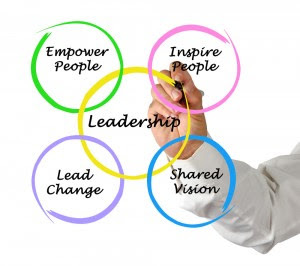 Image credit: https://www.linkedin.com/pulse/4-ways...
With the many challenges that leaders face when it comes to change, what overreaching strategies can be utilized to make leading it successful? The answer lies in authenticity. Mark Bilton recently penned a piece on this topic. In his article he states the following:
Authentic leaders embrace digital to lead successful change efforts. He goes on to state:
Digital leadership is authentic in nature. It is about leveraging digital tools and spaces to develop relationships, promote transparency, showcase success, openly reflect, and share powerful stories. By communicating the why, how, and what, leaders can be proactive in creating a narrative rich in evidence, connected to research, and clearly showing efficacy. Authentic leaders understand the power of engaging face-to-face, but are also constantly working to create a new playing field by thinking forward. That’s where the digital piece comes into play.
Mark Bilton goes on in his article to describe the five pillars of authentic leadership: collaboration, vision, empathy, groundedness, and ethics. Each is a defining characteristic that embodies great leadership. In a digital world it is difficult to be authentic if you are not leveraging digital strategies to become better at what you do. Leaders can now collaborate locally and globally without the constraints of time and space. A vision for change, as well as the actions that follow, can be shared across various channels to build greater embracement. By engaging in digital spaces, leaders can develop a greater sense of empathy by listening to the concerns and challenges of others and then offering support. Digital spaces can provide a needed break from the daily ups and downs of the job while also providing a platform to reflect. Finally, ethical behavior can be put on display highlighting appropriate and professional use. This type of modeling can go a long way to empowering others to not just change, but to become digital leaders themselves.
Be true to yourself and others. When you fail (and you will), showcasing your vulnerable side will only help to strengthen the bonds with those you work with. Being human is more important that being right all the time. You will never have all the answers or solutions needed to move large change efforts forward. Look to others to find answers to questions and help you achieve your change goals. Continue to improve in ways that push you outside your comfort zone. With authenticity on your side finding success will be much easier.
LearnEmpowerAdaptDelegateEngage (face-to-face and digitally)ReflectServe
In many cases, buy-in is a common strategy used to implement and sustain change. Looking for buy-in might serve as a temporary fix, but sustainable change is driven by embracement. People need to understand the inherent value that comes with them being asked to change their practice or thinking. When it comes to change, most people are naturally against it as our brains are wired to keep us safe. The only group of people who really love change all the time are wet babies (the power of a dry diaper has a magical effect). Our practices and actions must make it more palatable and doable. Modeling, providing support, listening, and alignment to research are sound strategies that many leaders consistently utilize. Sustaining any effort relies on substance in the form of evidence of improved outcomes and efficacy.
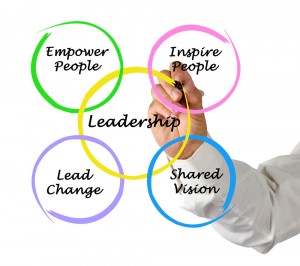 Image credit: https://www.linkedin.com/pulse/4-ways...
With the many challenges that leaders face when it comes to change, what overreaching strategies can be utilized to make leading it successful? The answer lies in authenticity. Mark Bilton recently penned a piece on this topic. In his article he states the following:
"The fast-paced, dynamic world of rapid change that used to be confined to distressed organizations is now everyone’s world. We are in a marketplace changing at digital speed. With so much disruption, new generations and a hyper-connected world where information is a commodity, the leadership paradigm has to shift. The industrial revolution model of command and control leadership is no longer effective."
Authentic leaders embrace digital to lead successful change efforts. He goes on to state:
"To enable an organization to thrive today, leaders have to embrace an authentic leadership style. It promotes an engaged, flexible and innovative environment, one able to match the pace of change we now face."
Digital leadership is authentic in nature. It is about leveraging digital tools and spaces to develop relationships, promote transparency, showcase success, openly reflect, and share powerful stories. By communicating the why, how, and what, leaders can be proactive in creating a narrative rich in evidence, connected to research, and clearly showing efficacy. Authentic leaders understand the power of engaging face-to-face, but are also constantly working to create a new playing field by thinking forward. That’s where the digital piece comes into play.
Mark Bilton goes on in his article to describe the five pillars of authentic leadership: collaboration, vision, empathy, groundedness, and ethics. Each is a defining characteristic that embodies great leadership. In a digital world it is difficult to be authentic if you are not leveraging digital strategies to become better at what you do. Leaders can now collaborate locally and globally without the constraints of time and space. A vision for change, as well as the actions that follow, can be shared across various channels to build greater embracement. By engaging in digital spaces, leaders can develop a greater sense of empathy by listening to the concerns and challenges of others and then offering support. Digital spaces can provide a needed break from the daily ups and downs of the job while also providing a platform to reflect. Finally, ethical behavior can be put on display highlighting appropriate and professional use. This type of modeling can go a long way to empowering others to not just change, but to become digital leaders themselves.
Be true to yourself and others. When you fail (and you will), showcasing your vulnerable side will only help to strengthen the bonds with those you work with. Being human is more important that being right all the time. You will never have all the answers or solutions needed to move large change efforts forward. Look to others to find answers to questions and help you achieve your change goals. Continue to improve in ways that push you outside your comfort zone. With authenticity on your side finding success will be much easier.
July 9, 2017
Own What You See
As a former science teacher I was always a fan of the scientific method. It was a great process for students to actually do science in order to learn by designing an experiment to deeply explore observations and develop/answer questions. The process itself was guided by inquiry, problem solving, and reflection. I fondly remember developing and testing out numerous hypotheses in the many science courses I took in high school and college. This type of learning was messy, unpredictable, and challenging, but it was also fun. I think I refuted more hypotheses then validated, but the learning experience kept driving me to pursue eventual degrees and a teaching certificate in the sciences.
Even though my science teaching days are long behind me, the scientific method has always stuck with me, as there are direct applications to leadership. Leaders must constantly make observations and own what they see. In the context of education, leaders must challenge the status quo if observations lead to a conclusion that a business as usual model is prevalent. What is seen, or not, can be a powerful tool to develop critical questions that can drive needed change or improvement.
This is extremely important regarding instruction. As a leader do you really know or have a good handle on what is happening in your classrooms daily? Does your school or district work better for kids or adults? How do you know if technology and innovative practices are actually improving learner outcomes? Owning what you see requires improving observation and evaluation practices. The first step is to get into classrooms more to not only make observations, but to also begin collecting evidence that either validates or refutes the claims of improvement that are now heard more and more. Getting into classrooms both formally and informally can provide a much-needed critical lens to support professional practice while also building powerful relationships in the process.
Owning what you see doesn’t just have to come from being physically present to make observations. Developing strategies to ensure a return on instruction through the collection of standards-aligned artifacts (lesson plans, projects, student work) and portfolios can clearly illustrate whether changes to professional practice are occurring or not. Making observations and looking at evidence (or lack thereof) can lead to more questions that can drive change. This is a good start, but ultimately owning what you see requires action that results in improved outcomes. The more we can quantify this through multiple measures the better our chances are of initiating sustainable change that improves learning for all.
When you look around your building(s) or classrooms what do you see?
Even though my science teaching days are long behind me, the scientific method has always stuck with me, as there are direct applications to leadership. Leaders must constantly make observations and own what they see. In the context of education, leaders must challenge the status quo if observations lead to a conclusion that a business as usual model is prevalent. What is seen, or not, can be a powerful tool to develop critical questions that can drive needed change or improvement.

This is extremely important regarding instruction. As a leader do you really know or have a good handle on what is happening in your classrooms daily? Does your school or district work better for kids or adults? How do you know if technology and innovative practices are actually improving learner outcomes? Owning what you see requires improving observation and evaluation practices. The first step is to get into classrooms more to not only make observations, but to also begin collecting evidence that either validates or refutes the claims of improvement that are now heard more and more. Getting into classrooms both formally and informally can provide a much-needed critical lens to support professional practice while also building powerful relationships in the process.
Owning what you see doesn’t just have to come from being physically present to make observations. Developing strategies to ensure a return on instruction through the collection of standards-aligned artifacts (lesson plans, projects, student work) and portfolios can clearly illustrate whether changes to professional practice are occurring or not. Making observations and looking at evidence (or lack thereof) can lead to more questions that can drive change. This is a good start, but ultimately owning what you see requires action that results in improved outcomes. The more we can quantify this through multiple measures the better our chances are of initiating sustainable change that improves learning for all.
When you look around your building(s) or classrooms what do you see?
July 2, 2017
Actions Change Things
Conferences are a hallmark of the summer season. Thousands of educators attend events around the United States to connect, learn, and grow. For the past three years I have had the honor of attending and participating in the Model Schools Conference. You can check out a video of my opening mini-keynote HERE. The goal of this event is to set the stage with the latest innovative practices improving school and to begin to lay the foundation for districts and schools to begin planning long-term, job-embedded professional growth opportunities that are anything but the drive-by variety.
What separates this conference from all others is the fact that the program is built around district and school teams who have closed achievement gaps, bridged the digital divide, and implemented innovative practices aligned to research. The model schools and districts put on a display of evidence focusing on what works to create a learning experience driven by practitioner success in the field. It doesn’t get much better than that.
Regardless of the conference you attend, what you do afterwards is what truly matters. Hopefully you are exposed to new ideas, evidence-based strategies, research, and tools that will push your thinking while motivating you to move outside your comfort zone. The experience should result in the construction of new knowledge that can be used as a catalyst for change. Reflecting on what was learned typically comes next. This is something that I see happening at every Model Schools Conference. As the sessions end, you can walk around the conference center and always see district and school teams gathered in rooms or common spaces reflecting on their learning while mapping out a plan for action.
What must happen next is the most critical aspect of any conference or professional growth experience – you must ACT! It is our individual, and most importantly our collective, actions that will help us to move from an old status quo to creating a new status quo. As you begin to develop action plans that tackle both large and small changes pause to think deeply on the process involved. The process of change results in action, but there are many key elements that must be considered if success is the goal. Consider current obstacles and challenges as you navigate the process that culminates with action to transform learning for all students.
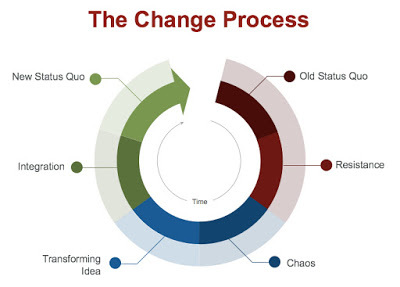
Talk, opinions, and assumptions might be catchy and motivating, but quickly lose their luster not if, but when a lack of substance surfaces (which it always does eventually). The same could be said about presentations that just focus on tools. Take a critical lens to the ideas and strategies that you are exposed to. Then ask a few questions to help establish a plan for action:
Why will this help transform practice and improve teaching, learning, and/or leadership?Is the idea or strategy scalable? How will we sustain the effort and show efficacy?What research and evidence can be aligned to support the actions to be taken?
Don’t get sucked into the rabbit hole of fluff. Always pause to reflect on anything you are exposed to whether it is from a conference, workshop, keynote, presentation, book, article, video, blog, tweet, etc. This definitely applies to anything you read or hear from me! We have isolated pockets of excellence in schools across the world, but every kid deserves excellence. More collective, meaningful action will help to scale effective practices while preparing students for the new world of work. Let’s get to work!
What separates this conference from all others is the fact that the program is built around district and school teams who have closed achievement gaps, bridged the digital divide, and implemented innovative practices aligned to research. The model schools and districts put on a display of evidence focusing on what works to create a learning experience driven by practitioner success in the field. It doesn’t get much better than that.
Regardless of the conference you attend, what you do afterwards is what truly matters. Hopefully you are exposed to new ideas, evidence-based strategies, research, and tools that will push your thinking while motivating you to move outside your comfort zone. The experience should result in the construction of new knowledge that can be used as a catalyst for change. Reflecting on what was learned typically comes next. This is something that I see happening at every Model Schools Conference. As the sessions end, you can walk around the conference center and always see district and school teams gathered in rooms or common spaces reflecting on their learning while mapping out a plan for action.
What must happen next is the most critical aspect of any conference or professional growth experience – you must ACT! It is our individual, and most importantly our collective, actions that will help us to move from an old status quo to creating a new status quo. As you begin to develop action plans that tackle both large and small changes pause to think deeply on the process involved. The process of change results in action, but there are many key elements that must be considered if success is the goal. Consider current obstacles and challenges as you navigate the process that culminates with action to transform learning for all students.
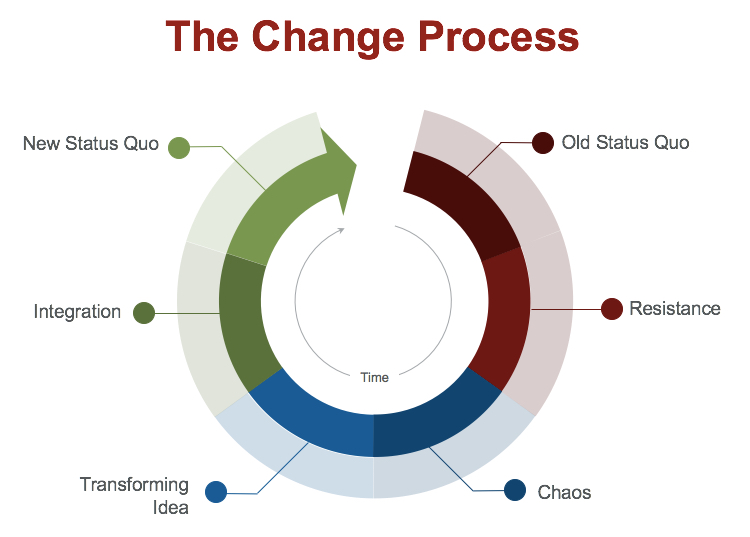
Talk, opinions, and assumptions might be catchy and motivating, but quickly lose their luster not if, but when a lack of substance surfaces (which it always does eventually). The same could be said about presentations that just focus on tools. Take a critical lens to the ideas and strategies that you are exposed to. Then ask a few questions to help establish a plan for action:
Why will this help transform practice and improve teaching, learning, and/or leadership?Is the idea or strategy scalable? How will we sustain the effort and show efficacy?What research and evidence can be aligned to support the actions to be taken?
Don’t get sucked into the rabbit hole of fluff. Always pause to reflect on anything you are exposed to whether it is from a conference, workshop, keynote, presentation, book, article, video, blog, tweet, etc. This definitely applies to anything you read or hear from me! We have isolated pockets of excellence in schools across the world, but every kid deserves excellence. More collective, meaningful action will help to scale effective practices while preparing students for the new world of work. Let’s get to work!
June 25, 2017
Mindsets for a Bold New World #LT8Keys
There are points in our professional lives that change us for the better. I vividly remember one such moment in 2009 when I took a device from a student as he had it out in the hallway. Since this was a violation of school policy I immediately confiscated the device, as this is what I thought I was supposed to do to ensure a school culture free from distraction and solely focused on traditional learning. I helped write the district policy blocking social media and at the school level made sure no mobile devices were seen or heard. As the student handed me his device to avoid a one day in-school suspension for open defiance, his message to me rocked my world and not in a good way. He thanked me for creating a jail out of what should be a school. This was the moment in time that I began to move from a fixed to a growth mindset.
 Image credit: http://alsearsmd.com/
Ever since Carol Dweck’s landmark research on mindsets the world has been buzzing about how this concept applies to respective fields of study. What exactly is a mindset in simple terms? It is an attitude, disposition, or mood with which a person approaches a situation. In short, a mindset is a belief that determines the decisions we make, actions that are undertaken, and how situations are handled. How we think and ultimately act can help us identify opportunities for improvement. Mindsets can also function as a roadblock to progress. Our natural apprehension and fear associated with change inhibits our ability to pursue new ideas and implement them with fidelity. For sustainable change to take root and flourish there must be a belief that our actions can significantly improve outcomes. The best ideas come from those who constantly push their thinking as well as the thinking of others.
Mindsets go well beyond what a person thinks or feels. Gary Klein eloquently articulates what mindsets are and why they matter:
There is no one particular mindset. They are not limited in scope and can be broken up into numerous subsets. What I believe is that the end goal of our work is to transform all facets of education to fundamentally improve teaching, learning, and leadership. The will and desire to change must be backed with action, accountability, and reflection. The hard, but needed, work is taking a critical lens to our work before and after embracing a mindset shift. Different, new, and claims of better, only matter if there is actual evidence of improvement.
Our mindset is a critical component associated with the process of change. Cultivating a transformational mindset, which incorporates a dynamic mix of qualities and attributes, can help to create schools that prepare students for a bold new world. It can also help educators take that much-needed critical lens to their work to transform professional practice. A transformational mindset consists of the following sub-mindsets and dispositions:
Empathetic
When my student shared his feelings with me it led me down a path towards being a more empathetic leader. If we want change leading to a transformation of practice we need to put ourselves in the positions of others to better understand their feelings. It all comes down to relationships. Without trust, there is no relationship. Without relationships, no real learning occurs. Empathy must also be better developed in our students.
Entrepreneurial
A great deal can be learned from entrepreneurial thinking leading to the rise of the edupreneur. Think about the following qualities, dispositions, and characteristics associated with this sub-mindset: initiative, risk-taking, creativity, flexibility, critical thinking, problem solving, resilience, and innovation. For our students, Quad D learning (see Rigor Relevance Framework) is geared to ensure students have the competence to think in complex ways and to apply their knowledge and skills they have acquired. Even when confronted with perplexing unknowns, students are able to use extensive knowledge and skill to create solutions and take action that further develops their skills and knowledge. All kids have greatness hidden inside them. It is the job of an educator to help them find and unleash it.
Competency-based
Skills focus on the “what” in terms of the abilities a student needs to perform a specific task or activity. Competencies outline "how" the goals and objectives will be accomplished. They are more detailed and define the requirements for success in broader, more inclusive terms than skills do. There is also an increased level of depth that considers skills, knowledge, behaviors, dispositions, and abilities. The goal should be to develop competent learners. This applies to both students and adults.
Maker
Grades and standardized tests do not accurately depict what all students (and adults) know and can do. There should be multiple paths to mastery where students can use real-world tools to engage in meaningful work. Making and makerspaces allow students to do to learn, as opposed to always learning to do. Allowing students to identify a problem and then giving them the freedom to develop a working solution not only builds confidence, but also shows kids that all learning matters.
Storyteller
There is a great deal of scientific backing on how storytelling positively impacts the brain. Thanks to technology students now have the means to share their learning journey and tell a story in the process. When aligned to well-developed assessments and standards the use of learning stories can be leveraged to articulate how educators are preparing students in better ways. Adults can also embrace becoming the storyteller-in-chief to change the narrative. Define or be defined. The choice is yours.
Efficacy-driven
Efficacy is the degree to which desired outcomes and goals are achieved. Evidence matters. Not only does it matter, but in the real work it is what our stakeholders expect. It is important to identify what the Return on Instruction (ROI) is when implementing new ideas and technologies. Evidence helps to quantify success. Success breeds success.
To transform teaching, learning, and leadership we must transform our thinking and then act. Actions change things. Don’t prepare students for something. Prepare them for anything. For transformation to result, you must also be prepared for anything. Think boldly, but act courageously. Your work matters more than ever.
 Image credit: http://alsearsmd.com/
Ever since Carol Dweck’s landmark research on mindsets the world has been buzzing about how this concept applies to respective fields of study. What exactly is a mindset in simple terms? It is an attitude, disposition, or mood with which a person approaches a situation. In short, a mindset is a belief that determines the decisions we make, actions that are undertaken, and how situations are handled. How we think and ultimately act can help us identify opportunities for improvement. Mindsets can also function as a roadblock to progress. Our natural apprehension and fear associated with change inhibits our ability to pursue new ideas and implement them with fidelity. For sustainable change to take root and flourish there must be a belief that our actions can significantly improve outcomes. The best ideas come from those who constantly push their thinking as well as the thinking of others.
Mindsets go well beyond what a person thinks or feels. Gary Klein eloquently articulates what mindsets are and why they matter:
"Mindsets aren’t just any beliefs. They are beliefs that orient our reactions and tendencies. They serve a number of cognitive functions. They let us frame situations: they direct our attention to the most important cues, so that we’re not overwhelmed with information. They suggest sensible goals so that we know what we should be trying to achieve. They prime us with reasonable courses of action so that we don’t have to puzzle out what to do. When our mindsets become habitual, they define who we are, and who we can become."
There is no one particular mindset. They are not limited in scope and can be broken up into numerous subsets. What I believe is that the end goal of our work is to transform all facets of education to fundamentally improve teaching, learning, and leadership. The will and desire to change must be backed with action, accountability, and reflection. The hard, but needed, work is taking a critical lens to our work before and after embracing a mindset shift. Different, new, and claims of better, only matter if there is actual evidence of improvement.
Our mindset is a critical component associated with the process of change. Cultivating a transformational mindset, which incorporates a dynamic mix of qualities and attributes, can help to create schools that prepare students for a bold new world. It can also help educators take that much-needed critical lens to their work to transform professional practice. A transformational mindset consists of the following sub-mindsets and dispositions:
Empathetic
When my student shared his feelings with me it led me down a path towards being a more empathetic leader. If we want change leading to a transformation of practice we need to put ourselves in the positions of others to better understand their feelings. It all comes down to relationships. Without trust, there is no relationship. Without relationships, no real learning occurs. Empathy must also be better developed in our students.
Entrepreneurial
A great deal can be learned from entrepreneurial thinking leading to the rise of the edupreneur. Think about the following qualities, dispositions, and characteristics associated with this sub-mindset: initiative, risk-taking, creativity, flexibility, critical thinking, problem solving, resilience, and innovation. For our students, Quad D learning (see Rigor Relevance Framework) is geared to ensure students have the competence to think in complex ways and to apply their knowledge and skills they have acquired. Even when confronted with perplexing unknowns, students are able to use extensive knowledge and skill to create solutions and take action that further develops their skills and knowledge. All kids have greatness hidden inside them. It is the job of an educator to help them find and unleash it.
Competency-based
Skills focus on the “what” in terms of the abilities a student needs to perform a specific task or activity. Competencies outline "how" the goals and objectives will be accomplished. They are more detailed and define the requirements for success in broader, more inclusive terms than skills do. There is also an increased level of depth that considers skills, knowledge, behaviors, dispositions, and abilities. The goal should be to develop competent learners. This applies to both students and adults.
Maker
Grades and standardized tests do not accurately depict what all students (and adults) know and can do. There should be multiple paths to mastery where students can use real-world tools to engage in meaningful work. Making and makerspaces allow students to do to learn, as opposed to always learning to do. Allowing students to identify a problem and then giving them the freedom to develop a working solution not only builds confidence, but also shows kids that all learning matters.
Storyteller
There is a great deal of scientific backing on how storytelling positively impacts the brain. Thanks to technology students now have the means to share their learning journey and tell a story in the process. When aligned to well-developed assessments and standards the use of learning stories can be leveraged to articulate how educators are preparing students in better ways. Adults can also embrace becoming the storyteller-in-chief to change the narrative. Define or be defined. The choice is yours.
Efficacy-driven
Efficacy is the degree to which desired outcomes and goals are achieved. Evidence matters. Not only does it matter, but in the real work it is what our stakeholders expect. It is important to identify what the Return on Instruction (ROI) is when implementing new ideas and technologies. Evidence helps to quantify success. Success breeds success.
To transform teaching, learning, and leadership we must transform our thinking and then act. Actions change things. Don’t prepare students for something. Prepare them for anything. For transformation to result, you must also be prepared for anything. Think boldly, but act courageously. Your work matters more than ever.