Eric C. Sheninger's Blog, page 44
January 29, 2017
Learning is Not Linear
I think, for the most part, everyone strives for success. We want to be successful in our professional as well as our personal lives. I strived to be the best possible principal for my students, staff, and community. Whether I was successful is a matter of perspective. My evaluations seemed to support the fact that I might have been. I was far from perfect, but always strived for constant improvement. When I reflect upon what was accomplished during my time leading New Milford High School I think many observers would consider my leadership a success based on what we all accomplished together. Our digital transformation, backed by evidence of improved learner outcomes, has been well documented. In the eyes of many this is success.
As I have transitioned into my new role over the past two years as a Senior Fellow for the International Center for Leadership in Education, I continue to set the bar high for myself. Again, whether I am successful is open for debate. Some observers might see the publishing of books as an indicator of success. Others could equate keynotes in the same manner. No matter what someone’s view of success is, I can tell you one thing for certain – it is not a linear process. No one goes from point A to B by following a predetermined path or script. The question then becomes why does school, for the most part, focus on a linear transition that manifests itself in the form of curriculum? This is just one example that flies in the face of unleashing the talents of our students while teaching them what success really is.

Success results from a series of experiences that include constructing then applying new knowledge, failure, persistence, commitment, perseverance, adaptation, evolution, and most of all reflection. There are so many images out there that illustrate the concept of success being like an iceberg. In the eyes of many people, success is only what you see or a final product. The reality is that success really is a unique combination of behaviors, skills, and mindset shifts. The recipe is different for everyone as well as the criteria used to determine success. The fact remains though that the path to success is always convoluted.
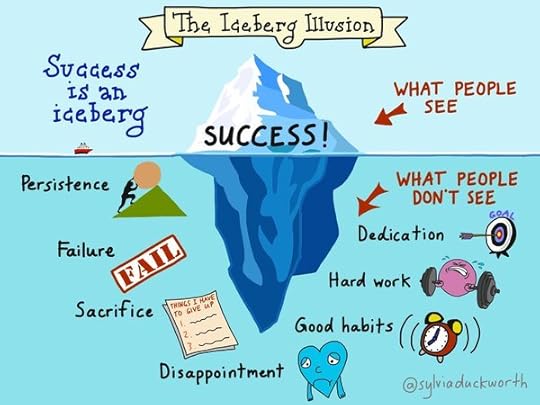 Image credit: Sylvia Duckworth
Learning and success are intimately intertwined. You can’t be successful if you don’t learn. You learn to eventually experience some sort of success in life. Learning, like success, is anything but a linear process. As such we need to be more mindful of the experiences and structures in our schools if the goal, which it should be, is to prepare students to succeed in their future. This includes the new world of work where in a few short years many of the jobs that exist today won’t. If we continue to prescribe students to a one-size-fits-all approach in classrooms that have remained relatively unchanged we are in a sense forcing them down a linear path. Instead of a focus on learn to do, schools need to shift their practices and create a culture where students do to learn.
Students learn differently and have hidden talents that we must unleash. This is why I love the maker movement and makerspaces in particular. Nothing, in my opinion, illustrates to kids the many pathways to success than learning with their hands through trial and error, open-ended exploration, and authentic problem solving. Education needs some disruptive innovation. We must lend a critical eye to our pedagogy, especially the way we assess and provide feedback to students. It is time for us to work harder to upend the status quo by redefining success in learning. Are you with me?
As I have transitioned into my new role over the past two years as a Senior Fellow for the International Center for Leadership in Education, I continue to set the bar high for myself. Again, whether I am successful is open for debate. Some observers might see the publishing of books as an indicator of success. Others could equate keynotes in the same manner. No matter what someone’s view of success is, I can tell you one thing for certain – it is not a linear process. No one goes from point A to B by following a predetermined path or script. The question then becomes why does school, for the most part, focus on a linear transition that manifests itself in the form of curriculum? This is just one example that flies in the face of unleashing the talents of our students while teaching them what success really is.

Success results from a series of experiences that include constructing then applying new knowledge, failure, persistence, commitment, perseverance, adaptation, evolution, and most of all reflection. There are so many images out there that illustrate the concept of success being like an iceberg. In the eyes of many people, success is only what you see or a final product. The reality is that success really is a unique combination of behaviors, skills, and mindset shifts. The recipe is different for everyone as well as the criteria used to determine success. The fact remains though that the path to success is always convoluted.
 Image credit: Sylvia Duckworth
Learning and success are intimately intertwined. You can’t be successful if you don’t learn. You learn to eventually experience some sort of success in life. Learning, like success, is anything but a linear process. As such we need to be more mindful of the experiences and structures in our schools if the goal, which it should be, is to prepare students to succeed in their future. This includes the new world of work where in a few short years many of the jobs that exist today won’t. If we continue to prescribe students to a one-size-fits-all approach in classrooms that have remained relatively unchanged we are in a sense forcing them down a linear path. Instead of a focus on learn to do, schools need to shift their practices and create a culture where students do to learn.
Students learn differently and have hidden talents that we must unleash. This is why I love the maker movement and makerspaces in particular. Nothing, in my opinion, illustrates to kids the many pathways to success than learning with their hands through trial and error, open-ended exploration, and authentic problem solving. Education needs some disruptive innovation. We must lend a critical eye to our pedagogy, especially the way we assess and provide feedback to students. It is time for us to work harder to upend the status quo by redefining success in learning. Are you with me?


January 22, 2017
How an #EdTech Lens Can Improve a Learning Culture
I remember the days when I was not a very big believer in educational technology. For one, I saw the use of tools just as a means to become more efficient at delivering instruction. Man, could I rock a PowerPoint lecture. As Chris Lehmann says, “You deliver pizzas, not instruction.” Boy, did I have it all wrong. As I moved from the classroom to administration, I still saw technology from a mere delivery aspect. My goals were all about replacing overhead projectors with LCD projectors and screens or interactive whiteboards. Updating the few computer labs was also a priority so students could complete projects using the Internet in a safe, controlled environment.
From 2004 through 2008, I basically rubber-stamped the status quo while adding a splash here and there of technology. My personal views towards social media and mobile devices remained unhinged during this time, as I was adamantly opposed to both. Not only did I run around the halls of my school taking devices away from terrified students who dared to take them out during the instructional day, but I also helped write the policies that blocked many social media sites. To say I had a fixed mindset would be a gross understatement. Enlightenment eventually came in the form of a little blue bird. The informal learning in digital spaces taught me about the real role technology could play in our transformational process. Social media was my savior and helped me to develop a growth mindset.
 Image credit: http://www.walktallarena.com/
Technology is a fantastic tool that when integrated with purpose can support and enhance learning in ways that many of us never imagined. With all tools there are limitations as to what they can do. As I have said over and over, I truly believe that pedagogy trumps technology, especially in the classroom. Success is inherent upon how students and educators use tools to transform teaching, learning, and leadership. The successful digital transformation that took place at my school is well documented. However, I am the first to acknowledge that the most significant catalyst for change that resulted from our entry into the edtech world was a new lens to critically reflect on professional practice.
Engaging in several technology initiatives over a five-year span brought to light many areas of our school culture that could be dramatically improved. We must reflect on past practice in order to improve current practice. The edtech lens helped to develop a focus on examining not only our pedagogical practices, but also other core components of the learning culture at our school. This lens enabled us to see more clearly as to what had to improve for edtech to actually live up to the lofty expectations that have been promoted by so many pundits. In terms of improvement the edtech lens compelled us to reflect on the following:
Instructional design (aligned to the Rigor Relevance Framework)AssessmentsFeedback to students Observation and evaluation of staffProfessional development with accountability (no more drive-by PD)Student Agency
All of the above elements are critical in determining that there is a Return on Instruction (ROI), which is evidence of improved student learning outcomes when integrating technology. Integrating technology and innovating just for the sake of it will never pay off in the long run. If we don’t hold others and ourselves accountable for purposeful technology integration aligned to real results, we run the risk of precious time and money being wasted.
Schools and educators across the world are doing amazing things with technology. We must always be cognizant of the way in which technology is integrated. Does technology support high-level learning? Are students using technology to demonstrate conceptual mastery in ways that they couldn’t without it? How do we know if teaching, learning, and leadership have changed in order to unlock to full potential of technology?
Be proud of the steps you have taken to make learning more relevant and meaningful with technology. Continue to embrace innovative practices in order to implement new learning pathways for students. I ask you though to always lend a critical eye to both technology and innovation using a lens that peels away the talk, hype, and surface-level appeal. Improve and strengthen the foundation of your professional practice. Identify elements of school culture that are being held back by the status quo. Most importantly, continually look to build powerful relationships with stakeholders, especially students.
From 2004 through 2008, I basically rubber-stamped the status quo while adding a splash here and there of technology. My personal views towards social media and mobile devices remained unhinged during this time, as I was adamantly opposed to both. Not only did I run around the halls of my school taking devices away from terrified students who dared to take them out during the instructional day, but I also helped write the policies that blocked many social media sites. To say I had a fixed mindset would be a gross understatement. Enlightenment eventually came in the form of a little blue bird. The informal learning in digital spaces taught me about the real role technology could play in our transformational process. Social media was my savior and helped me to develop a growth mindset.
 Image credit: http://www.walktallarena.com/
Technology is a fantastic tool that when integrated with purpose can support and enhance learning in ways that many of us never imagined. With all tools there are limitations as to what they can do. As I have said over and over, I truly believe that pedagogy trumps technology, especially in the classroom. Success is inherent upon how students and educators use tools to transform teaching, learning, and leadership. The successful digital transformation that took place at my school is well documented. However, I am the first to acknowledge that the most significant catalyst for change that resulted from our entry into the edtech world was a new lens to critically reflect on professional practice.
Engaging in several technology initiatives over a five-year span brought to light many areas of our school culture that could be dramatically improved. We must reflect on past practice in order to improve current practice. The edtech lens helped to develop a focus on examining not only our pedagogical practices, but also other core components of the learning culture at our school. This lens enabled us to see more clearly as to what had to improve for edtech to actually live up to the lofty expectations that have been promoted by so many pundits. In terms of improvement the edtech lens compelled us to reflect on the following:
Instructional design (aligned to the Rigor Relevance Framework)AssessmentsFeedback to students Observation and evaluation of staffProfessional development with accountability (no more drive-by PD)Student Agency
All of the above elements are critical in determining that there is a Return on Instruction (ROI), which is evidence of improved student learning outcomes when integrating technology. Integrating technology and innovating just for the sake of it will never pay off in the long run. If we don’t hold others and ourselves accountable for purposeful technology integration aligned to real results, we run the risk of precious time and money being wasted.
Schools and educators across the world are doing amazing things with technology. We must always be cognizant of the way in which technology is integrated. Does technology support high-level learning? Are students using technology to demonstrate conceptual mastery in ways that they couldn’t without it? How do we know if teaching, learning, and leadership have changed in order to unlock to full potential of technology?
Be proud of the steps you have taken to make learning more relevant and meaningful with technology. Continue to embrace innovative practices in order to implement new learning pathways for students. I ask you though to always lend a critical eye to both technology and innovation using a lens that peels away the talk, hype, and surface-level appeal. Improve and strengthen the foundation of your professional practice. Identify elements of school culture that are being held back by the status quo. Most importantly, continually look to build powerful relationships with stakeholders, especially students.
January 15, 2017
The Value of School
For all intents and purposes I had a great K-12 education. I got relatively good grades, stayed out of trouble, and participated in a wide range of sports and extracurricular activities. Best of all though were some of the amazing teachers and administrators I had during those years who consistently showed they cared. In the end I was deemed college ready and was accepted to almost all of the schools to which I had applied. I was so excited to attend Salisbury University in Maryland and study Marine Biology as I was so intrigued by this area of study. I was again surrounded by some great educators and went on my way to further study in the sciences, eventually finding my way to the field of education.
 Image credit https://media.licdn.com
As I think back many years later, I have now realized that I was good at school. The system worked the way it was designed. It worked for me, or so I thought. Never was there any question about what I was learning or even why. It was just accepted that this was how school was supposed to be. Conformity and compliance were well ingrained into the culture of school. As I continue to reflect, I now ponder whether or not I would be successful in a K-12 system today. Things have really changed as a result of advances in technology. The process of going through the motions of doing school the way I did it would have been a monumental challenge in my opinion. Do students value school today? With exponential changes to technology and the ubiquitous access to information will students of the future value it?
What really got me thinking about the value of school was the video below. I am not saying that I agree with everything in it, but there are many points that really resonated with me.
Now try to think back to when you were a student and what you learned. How much of what you learned do you actually use today? Even though progress is being made and innovative practices are being implemented in schools across the globe, we still must look at the big picture of education. There should be inherent value in what students learn today as they need to have the skills, mindset, and confidence to succeed in the new world of work. If anything in the above video resonates with you, then engage your students in a conversation about the value of school.
Engaging kids in a conversation about the value of school can and will pave the way to a brighter future. We need to listen, then act.
 Image credit https://media.licdn.com
As I think back many years later, I have now realized that I was good at school. The system worked the way it was designed. It worked for me, or so I thought. Never was there any question about what I was learning or even why. It was just accepted that this was how school was supposed to be. Conformity and compliance were well ingrained into the culture of school. As I continue to reflect, I now ponder whether or not I would be successful in a K-12 system today. Things have really changed as a result of advances in technology. The process of going through the motions of doing school the way I did it would have been a monumental challenge in my opinion. Do students value school today? With exponential changes to technology and the ubiquitous access to information will students of the future value it?
What really got me thinking about the value of school was the video below. I am not saying that I agree with everything in it, but there are many points that really resonated with me.
Now try to think back to when you were a student and what you learned. How much of what you learned do you actually use today? Even though progress is being made and innovative practices are being implemented in schools across the globe, we still must look at the big picture of education. There should be inherent value in what students learn today as they need to have the skills, mindset, and confidence to succeed in the new world of work. If anything in the above video resonates with you, then engage your students in a conversation about the value of school.
Engaging kids in a conversation about the value of school can and will pave the way to a brighter future. We need to listen, then act.
January 8, 2017
Relationships Are Everything
I recently had the honor of being a guest on Dr. Will Deyamport’s podcast called the Dr. Will Show. You can view the Google Hangout video HERE. We had a vibrant conversation on the topic of Digital Leadership with a focus on school culture, embracing change, strategic use of social media, the Model Schools Conference, and innovation. A major theme that resonated throughout our discussion was the importance of becoming a connected educator and how this in itself can be a powerful catalyst for meaningful change.
If you watch the video you will see light-hearted back and forth banter between Will and me. He totally deserved the grief I gave him as it only took about five years for him to actually invite me onto his show. In all seriousness though, something Will said to me really resonated. At one point during our conversation he told me how much it meant to him when I gave him a shout out during my keynote at the 2013 Mississippi Educational Computing Association Conference. To be honest, I really didn’t remember doing this as I routinely try to promote the great work of educators I know every opportunity I get. This made me reflect on the journey Will and I have taken together as connected educators and the resulting relationship we have cultivated.
 Image credit https://behappy.me
Will and I met virtually on Twitter way back in 2009. At the time he was known as @peoplegogy on Twitter. I remember vividly sitting at my desk when I was a principal and seeing Will tweet out each morning “How is the coffee brewing?” Our connection began like many other educators who use social media as part of a Personal Learning Network – we wanted to learn, grow, and get better. Over time we began to communicate and collaborate across an array of social media networks exchanging ideas, providing support, and dispensing out advice. I can’t even count the number of times we have now connected over the years just to check in on one another.
A professional relationship was cultivated. I always admired Will’s passion for educational technology and genuine interest in becoming a better educator. There are so many benefits associated with becoming a connected educator regardless of your role. Professional relationships based on a mutual desire to improve professional practice are probably the most important outcome in my opinion. Through every connection you get new sets of virtual ears to vent to and shoulders to lean on. Silos or isolated islands are often a fact for many of us during the daily grind. A focus on innovative practices also tends to create a lonely place for educators who go against the flow. Not having a virtual network to complement our face-to-face relationships just seems silly to me now.
Over the years Will and I have gotten to know each other quite well. Our professional relationship eventually blossomed into a great friendship. When I moved to Texas I drove down from New York City with my twin brother. As I was looking at our route I noticed that we would be driving through Hattiesburg, MS. I didn’t think twice about reaching out to Will and inviting him and his wife to join my brother and me in his hometown for lunch and some brews. As I think about this story I am overwhelmed by how many other professional relationships forged through social media have resulted in great friendships.
Becoming a connected educator has definitely resulted in an exponential increase in professional relationships for me. Each of these connections over the years helped give me the knowledge, skills, and motivation to lead a successful digital transformation at my former school. These relationships also assisted me in overcoming fears such as writing, public speaking, and failure. I am who I am today in part because of the connected network of amazing educators I have come to know over time like Will. It is important to embrace a connected mindset ourselves and then help others build professional relationships themselves as part of a digital leadership strategy. As appreciative as I am about the professional connections I have made, it is the personal relationships and resulting friendships that I have formed that I cherish the most.
Focus on building better professional and personal relationships with any and all means (or tools) at your disposal. In the end you will be stronger, more confident, and inspired as you journey down the path of professional and personal growth.
If you watch the video you will see light-hearted back and forth banter between Will and me. He totally deserved the grief I gave him as it only took about five years for him to actually invite me onto his show. In all seriousness though, something Will said to me really resonated. At one point during our conversation he told me how much it meant to him when I gave him a shout out during my keynote at the 2013 Mississippi Educational Computing Association Conference. To be honest, I really didn’t remember doing this as I routinely try to promote the great work of educators I know every opportunity I get. This made me reflect on the journey Will and I have taken together as connected educators and the resulting relationship we have cultivated.
 Image credit https://behappy.me
Will and I met virtually on Twitter way back in 2009. At the time he was known as @peoplegogy on Twitter. I remember vividly sitting at my desk when I was a principal and seeing Will tweet out each morning “How is the coffee brewing?” Our connection began like many other educators who use social media as part of a Personal Learning Network – we wanted to learn, grow, and get better. Over time we began to communicate and collaborate across an array of social media networks exchanging ideas, providing support, and dispensing out advice. I can’t even count the number of times we have now connected over the years just to check in on one another.
A professional relationship was cultivated. I always admired Will’s passion for educational technology and genuine interest in becoming a better educator. There are so many benefits associated with becoming a connected educator regardless of your role. Professional relationships based on a mutual desire to improve professional practice are probably the most important outcome in my opinion. Through every connection you get new sets of virtual ears to vent to and shoulders to lean on. Silos or isolated islands are often a fact for many of us during the daily grind. A focus on innovative practices also tends to create a lonely place for educators who go against the flow. Not having a virtual network to complement our face-to-face relationships just seems silly to me now.
Over the years Will and I have gotten to know each other quite well. Our professional relationship eventually blossomed into a great friendship. When I moved to Texas I drove down from New York City with my twin brother. As I was looking at our route I noticed that we would be driving through Hattiesburg, MS. I didn’t think twice about reaching out to Will and inviting him and his wife to join my brother and me in his hometown for lunch and some brews. As I think about this story I am overwhelmed by how many other professional relationships forged through social media have resulted in great friendships.
Becoming a connected educator has definitely resulted in an exponential increase in professional relationships for me. Each of these connections over the years helped give me the knowledge, skills, and motivation to lead a successful digital transformation at my former school. These relationships also assisted me in overcoming fears such as writing, public speaking, and failure. I am who I am today in part because of the connected network of amazing educators I have come to know over time like Will. It is important to embrace a connected mindset ourselves and then help others build professional relationships themselves as part of a digital leadership strategy. As appreciative as I am about the professional connections I have made, it is the personal relationships and resulting friendships that I have formed that I cherish the most.
Focus on building better professional and personal relationships with any and all means (or tools) at your disposal. In the end you will be stronger, more confident, and inspired as you journey down the path of professional and personal growth.
January 1, 2017
10 Tips to Make Learning REAL
Another Christmas has passed and I am continually amazed by the technologies that kids now have access to. For example, my son received a drone from my mother-in-law and has been playing with it non-stop for days now. At first, he was focused on just the basics of flying the device. After having mastered take off, landing, and balance, his focus now is on using the camera to take photos and video. It is awesome to see how engaged he is with the drone, but that he is also learning in the process. Technology for him, like most kids today, has become an embedded component of their lives. They have grown up in a world where they have become accustomed to the fast-paced evolution of everything digital.
The world as we know it has fundamentally changed our learners. It is not that they are learning differently per say, but the environment in which they learn has dramatically changed. The challenge for educators and schools today is to make learning REAL (relevant, engaging, authentic, and lasting) for all students and aligning it more with their world. A great deal of emphasis has been placed on personalized opportunities for students. Whereas there are many benefits with this approach, the reliance on technology platform and human interaction can take away from intended outcomes. REAL learning places a greater emphasis on making learning personal for students.
 Image credit: http://pblstem.com/
Below are some quick tips that can make learning more REAL (relevant, engaging, authentic, and lasting):
Provide students access to real-world tools to do real-world work (i.e. makerspaces).Allow students to select the best tool to complete a learning task while moving away from a one-size-product-fits-all approach.Provide meaningful feedback in a timely fashion.Connect standards and learning outcomes to their interests and passions.Implement Academy programs (school within a school).Offer virtual course options and innovative self-paced learning opportunities in lieu of traditional independent study programs (i.e. IOCS).Transform outdoor spaces into flexible classrooms and stimulating learning environments.Broaden student horizons by bringing in experts both face-to-face and virtually who work in emerging fields of work. Take kids on field trips through virtual reality technology.Move away from traditional grading and homework practices.Clearly articulate the “why” all the time so that students understand how what they are learning impacts them now and in the future.REAL learning should be a reality for all of our students. What would you add to the list I have started above?
The world as we know it has fundamentally changed our learners. It is not that they are learning differently per say, but the environment in which they learn has dramatically changed. The challenge for educators and schools today is to make learning REAL (relevant, engaging, authentic, and lasting) for all students and aligning it more with their world. A great deal of emphasis has been placed on personalized opportunities for students. Whereas there are many benefits with this approach, the reliance on technology platform and human interaction can take away from intended outcomes. REAL learning places a greater emphasis on making learning personal for students.
Image credit: http://pblstem.com/Below are some quick tips that can make learning more REAL (relevant, engaging, authentic, and lasting):
Provide students access to real-world tools to do real-world work (i.e. makerspaces).Allow students to select the best tool to complete a learning task while moving away from a one-size-product-fits-all approach.Provide meaningful feedback in a timely fashion.Connect standards and learning outcomes to their interests and passions.Implement Academy programs (school within a school).Offer virtual course options and innovative self-paced learning opportunities in lieu of traditional independent study programs (i.e. IOCS).Transform outdoor spaces into flexible classrooms and stimulating learning environments.Broaden student horizons by bringing in experts both face-to-face and virtually who work in emerging fields of work. Take kids on field trips through virtual reality technology.Move away from traditional grading and homework practices.Clearly articulate the “why” all the time so that students understand how what they are learning impacts them now and in the future.REAL learning should be a reality for all of our students. What would you add to the list I have started above?
December 26, 2016
Blended Family Engagement
To this day I still remember the article that I read about Twitter in the Staten Island Advance one cold Sunday in March of 2009. As someone who was totally against the use of social media for both personal and professional reasons, that article was intriguing to read as it essentially reinforced my negative perception. However, as I neared the end of the piece a light bulb went on. Finally I saw a professional connection as to how I could use social media to be a better communicator and engage more stakeholders in everything that was happening at my school. This was the beginning of my digital leadership journey that started with the simple goal of building better relationships with families in the community.
Developing the means to communicate more effectively and better engage families was one of the main goals of our Twitter strategy that evolved from the article I read. We were still using traditional means of communication such as memos, on-site events such as our annual Back to School Night, PTO meetings, email blasts, and face-to-face conferences when needed. We also instituted a positive referral system that combined a paper note sent home and a phone call. I am not saying that we were awful at engaging our families, but in a rapidly evolving digital world we were not meeting them where they were at, let alone giving them a choice as to how they wanted to engage with us. It was time to transform our communications for a digital world.

The fact of the matter was that many of our parents and students were disconnected from the school. Many parents worked multiple jobs and just didn’t have the time to attend events and meetings on-site or even read an email or memo. In terms of our students we were pretty much clueless as to the tools and means they were using to communicate. With Twitter as a starting point, my goal was to engage just a few more parents and students and if I did then that was a success. I still remember getting so giddy when parents would tell me that they read my tweet or a student would comment on a news item I shared. These little morale boosters helped me to develop a more comprehensive digital strategy, which integrated more and more tools.
Over time we learned that the real key to success was meeting these key stakeholder groups where they were at and engaging them in two-way communications using a blended approach. I was all about getting rid of paper, but we soon realized that this was still an effective way to get information out. Some families did not have Internet access or were not on social media. Thus, I still communicated using these tried and true methods. Over time I began to integrate a variety of tools in addition to Twitter such as Flickr, Instagram, YouTube, Facebook, Google+, Google Docs, Google Voice, and a school app for push notifications. Email messages were still blasted out, but instead of just all text I began inserting video messages using YouTube to make my message more personal.
The blended approach served our school community well as we provided numerous choices as to how parents and students wanted to interact with our school. We embraced the storyteller-in-chief mindset to unleash the positive energy embedded in the great work that was taking place in our school on a daily basis. The lesson learned here was how we could create an image and identity for our school through transparency that would forge greater trust and support from our stakeholders. Thus, our concerted strategy of consistent communications and taking control of public relations resulted in the creation of a positive brand presence. Going forward the brandED strategy was all about better engaging our families while building relationships in the process.
Engaging families goes well beyond just sending out information whether it is through traditional or digital means. Communication in general tends to be impersonal even if video is used. As part of our engagement strategy we made improved efforts to interact with families face-to-face. In addition to the annual Back-to-School night we began hosting more interactive events to educate parents on our emerging innovative practices. Parents and students were invited to sit on interview committees for new teachers and administrators. When we changed homework practices as a district, parents and students were invited to be part of the entire process, including reviewing synthesized research.
All in all we looked for more opportunities to give families a greater sense of involvement in the school community. As partnerships were formed near and far, we always looked for ways to make the connection to an improved school culture. Involvement, either active or passive, was one of our goals. However, the major goal was to build better relationships with families by showing them how much we cared about the success of their kids and the pride we had as a school in the local community.
Developing the means to communicate more effectively and better engage families was one of the main goals of our Twitter strategy that evolved from the article I read. We were still using traditional means of communication such as memos, on-site events such as our annual Back to School Night, PTO meetings, email blasts, and face-to-face conferences when needed. We also instituted a positive referral system that combined a paper note sent home and a phone call. I am not saying that we were awful at engaging our families, but in a rapidly evolving digital world we were not meeting them where they were at, let alone giving them a choice as to how they wanted to engage with us. It was time to transform our communications for a digital world.

The fact of the matter was that many of our parents and students were disconnected from the school. Many parents worked multiple jobs and just didn’t have the time to attend events and meetings on-site or even read an email or memo. In terms of our students we were pretty much clueless as to the tools and means they were using to communicate. With Twitter as a starting point, my goal was to engage just a few more parents and students and if I did then that was a success. I still remember getting so giddy when parents would tell me that they read my tweet or a student would comment on a news item I shared. These little morale boosters helped me to develop a more comprehensive digital strategy, which integrated more and more tools.
Over time we learned that the real key to success was meeting these key stakeholder groups where they were at and engaging them in two-way communications using a blended approach. I was all about getting rid of paper, but we soon realized that this was still an effective way to get information out. Some families did not have Internet access or were not on social media. Thus, I still communicated using these tried and true methods. Over time I began to integrate a variety of tools in addition to Twitter such as Flickr, Instagram, YouTube, Facebook, Google+, Google Docs, Google Voice, and a school app for push notifications. Email messages were still blasted out, but instead of just all text I began inserting video messages using YouTube to make my message more personal.
The blended approach served our school community well as we provided numerous choices as to how parents and students wanted to interact with our school. We embraced the storyteller-in-chief mindset to unleash the positive energy embedded in the great work that was taking place in our school on a daily basis. The lesson learned here was how we could create an image and identity for our school through transparency that would forge greater trust and support from our stakeholders. Thus, our concerted strategy of consistent communications and taking control of public relations resulted in the creation of a positive brand presence. Going forward the brandED strategy was all about better engaging our families while building relationships in the process.
Engaging families goes well beyond just sending out information whether it is through traditional or digital means. Communication in general tends to be impersonal even if video is used. As part of our engagement strategy we made improved efforts to interact with families face-to-face. In addition to the annual Back-to-School night we began hosting more interactive events to educate parents on our emerging innovative practices. Parents and students were invited to sit on interview committees for new teachers and administrators. When we changed homework practices as a district, parents and students were invited to be part of the entire process, including reviewing synthesized research.
All in all we looked for more opportunities to give families a greater sense of involvement in the school community. As partnerships were formed near and far, we always looked for ways to make the connection to an improved school culture. Involvement, either active or passive, was one of our goals. However, the major goal was to build better relationships with families by showing them how much we cared about the success of their kids and the pride we had as a school in the local community.
December 18, 2016
Leadership Transformed
For every education professional, adversity is a constant reality: lack of time, not enough resources, outdated facilities, resistant staff, and a slew of mandates/directives, to name a few. It can be difficult at times to envision and implement progressive change when you feel buried by these challenges. I wish I could tell you that these daily demands will dissipate in the near future, but that would create an allure of false hope. Instead, I will tell you what, in my opinion, is the greatest adversary we as leaders face: our own mindset.
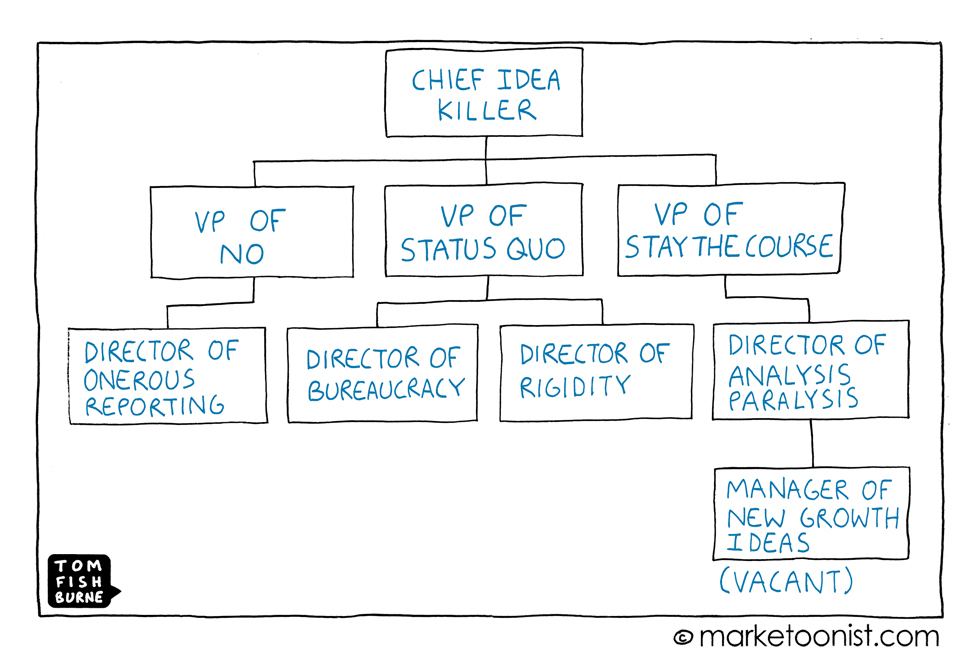
The human brain is wired to keep us safe, and as a result we often become averse to change. The status quo and our personal comfort zones create a perceived safety net that is difficult for many leaders to break free from. In many cases, we teach the way we were taught and lead the way we were led; our past experiences often dictate or influence professional practice. When this mindset is combined with silos that have been erected to protect organizations from information and new ideas, it becomes more clear as to why transformational change is often just an idea that never gets put into motion.
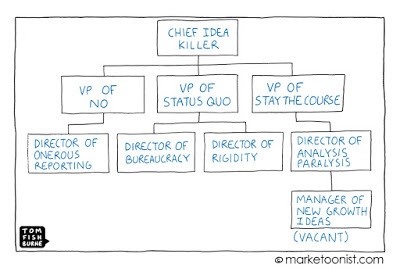
We must take a critical look at the effect fixed mindsets can have on a learning culture. Shifting our mindset begins with a renewed focus on our senses. As leaders, we must constantly make observations and own what we see. One important reflection point: is your school is preparing students for life or only to do well in school? Just as important as observing the reality is listening, not just hearing your stakeholders. When leaders don’t listen, people will shut down and withdraw. Saying no or refusing to embrace new ideas has become the safe bet against unwanted risk in a time of disruptive change. However, the unfortunate result is a dramatic decrease in motivation, enthusiasm, willingness to innovate, and respect for one’s ability to lead.
A shift in mindset empowers leaders to create change, not respond to change. It is this shift that can begin to lay the foundation for transformation. How do we do this? By beginning to challenge the way things are done; by replacing the word “no” with the word “yes” more often; and by focusing on the “what ifs” instead of the “yeah, but’s.” This is where a growth mindset begins to reap professional rewards. Leaders who shift to a growth mindset:
Embrace challengesPersist in the face of setbacksSee effort as the path to masteryLearn from criticismFind lessons and inspiration in the success of others
When leaders shift to a growth mindset, the foundation is set to really transform learning cultures. Transformational leadership is the collaborative responsibility for taking action to reach future-oriented goals while meeting the intellectual, emotional, and physical needs of each student. Transformational leaders consistently make observations, listen intently, leverage a growth mindset, and most importantly, take action to improve the organization. These leaders:
Focus on vision and empowerment.Embrace risk to facilitate changeEngage in future-focused problem-solving to create learning opportunitiesAdapt to situations effectivelyDevelop and articulate a vision about the future needs of students to ensure that all stakeholders are using the same language about leadership in the schoolWork with people in a manner that ignites their passions, talents, and desires to attain a shared vision
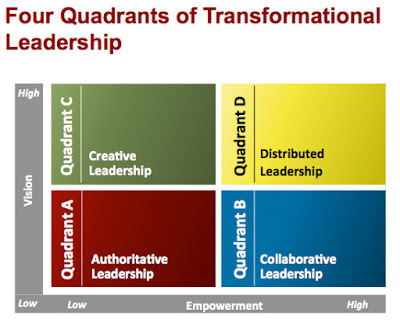
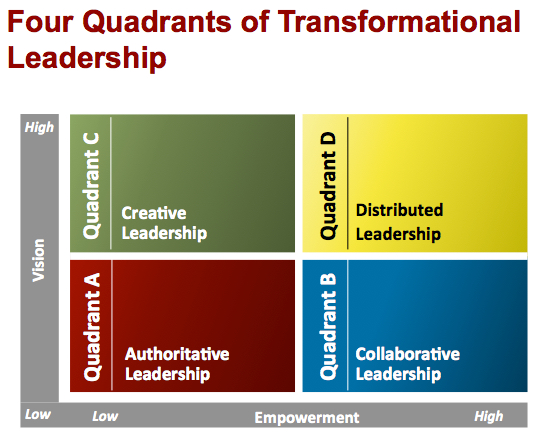
The Transformational Leadership Framework above that we have developed at the International Center for Leadership in Education has four quadrants. The vertical axis is the vision continuum, or the level of thinking about what is important in a school. At its lowest level—quadrant A—leaders are authoritative and focus on school rules, practices, and the management of day-to-day tasks. At higher levels, leaders anticipate the future and consider what skills and knowledge students will need and what should be added to current programs and services to help students succeed.
The horizontal axis is the empowerment continuum. On the left side, leaders execute leadership practices more unilaterally, making decisions and solving day-to-day problems themselves. Moving to the right, leadership shifts from the actions of a single leader to decision making by a leadership team to distributed leadership throughout the district or school.
There is no such thing as a perfect leader, school or district. Each day we have the opportunity to improve professional practice to create a better learning culture for students and educators. Think about your own practice and the steps you can take to make transformation a reality instead of an overused buzzword.
The human brain is wired to keep us safe, and as a result we often become averse to change. The status quo and our personal comfort zones create a perceived safety net that is difficult for many leaders to break free from. In many cases, we teach the way we were taught and lead the way we were led; our past experiences often dictate or influence professional practice. When this mindset is combined with silos that have been erected to protect organizations from information and new ideas, it becomes more clear as to why transformational change is often just an idea that never gets put into motion.
We must take a critical look at the effect fixed mindsets can have on a learning culture. Shifting our mindset begins with a renewed focus on our senses. As leaders, we must constantly make observations and own what we see. One important reflection point: is your school is preparing students for life or only to do well in school? Just as important as observing the reality is listening, not just hearing your stakeholders. When leaders don’t listen, people will shut down and withdraw. Saying no or refusing to embrace new ideas has become the safe bet against unwanted risk in a time of disruptive change. However, the unfortunate result is a dramatic decrease in motivation, enthusiasm, willingness to innovate, and respect for one’s ability to lead.
A shift in mindset empowers leaders to create change, not respond to change. It is this shift that can begin to lay the foundation for transformation. How do we do this? By beginning to challenge the way things are done; by replacing the word “no” with the word “yes” more often; and by focusing on the “what ifs” instead of the “yeah, but’s.” This is where a growth mindset begins to reap professional rewards. Leaders who shift to a growth mindset:
Embrace challengesPersist in the face of setbacksSee effort as the path to masteryLearn from criticismFind lessons and inspiration in the success of others
When leaders shift to a growth mindset, the foundation is set to really transform learning cultures. Transformational leadership is the collaborative responsibility for taking action to reach future-oriented goals while meeting the intellectual, emotional, and physical needs of each student. Transformational leaders consistently make observations, listen intently, leverage a growth mindset, and most importantly, take action to improve the organization. These leaders:
Focus on vision and empowerment.Embrace risk to facilitate changeEngage in future-focused problem-solving to create learning opportunitiesAdapt to situations effectivelyDevelop and articulate a vision about the future needs of students to ensure that all stakeholders are using the same language about leadership in the schoolWork with people in a manner that ignites their passions, talents, and desires to attain a shared vision
The Transformational Leadership Framework above that we have developed at the International Center for Leadership in Education has four quadrants. The vertical axis is the vision continuum, or the level of thinking about what is important in a school. At its lowest level—quadrant A—leaders are authoritative and focus on school rules, practices, and the management of day-to-day tasks. At higher levels, leaders anticipate the future and consider what skills and knowledge students will need and what should be added to current programs and services to help students succeed.
The horizontal axis is the empowerment continuum. On the left side, leaders execute leadership practices more unilaterally, making decisions and solving day-to-day problems themselves. Moving to the right, leadership shifts from the actions of a single leader to decision making by a leadership team to distributed leadership throughout the district or school.
There is no such thing as a perfect leader, school or district. Each day we have the opportunity to improve professional practice to create a better learning culture for students and educators. Think about your own practice and the steps you can take to make transformation a reality instead of an overused buzzword.
December 11, 2016
The Potential of Virtual Reality
Many educators, including myself, routinely talk about the need for innovation in education. If we continue to employ the same type of thinking then we will get the same or results. We also run the risk of taking a step backwards and experiencing worse results than anticipated. Change isn’t coming; it is already on our doorstep! Thus we must begin to embrace new ideas and methodologies. It can be concluded then that change is necessary in a digital world thanks to the exponential evolution of technology.
We must begin to explore and implement innovative learning activities beyond isolated pockets of excellence. Innovation in education can defined as creating, implementing, and sustaining transformative ideas that instill awe to improve learning. Technology not only awes, but it can also empower our learners in amazing ways. It’s time to start asking and focusing on the right questions. It is difficult for many educators, including myself, to keep up with the evolving digital landscape. Being able to access information is only a start. When you think about it we are drowning in a sea of information. Access only matters if it is turned into new knowledge and action.
Lets now apply the elements of innovation, change, access, and knowledgeable action to the evolving technology of virtual reality. Just a few years ago this type of technology was financially out of reach for the majority of schools across the world. Now, however, educators can provide access to an artificial world that consists of images and sounds that is affected by the actions of a student who is experiencing. Thanks to innovative products like Google Cardboard virtual experiences can be provided to students with just one smartphone and a $15 cardboard box outfitted with two lenses.

There are so many educational experiences that students can engage in using Google Cardboard, the world’s most affordable VR headset. Teachers can bring lessons to life with Google Expeditions and take students on interactive, virtual field trips. Below is the description from Google:
Google Expeditions enable teachers to bring students on virtual trips to places like museums, underwater, and outer space. Expeditions are collections of linked virtual reality (VR) content and supporting materials that can be used alongside existing curriculum. These trips are collections of virtual reality panoramas — 360° panoramas and 3D images — annotated with details, points of interest, and questions that make them easy to integrate into curriculum already used in schools.
To get started and view a complete list of Google Expeditions click HERE. The benefit of VR and Cardboard is not limited to Google Expeditions. There is an array of free and paid apps available. For a list of some free apps that can be utilized in the classroom click HERE.
The potential of VR lies well beyond just accessing and viewing information on a device such as Google Cardboard. For an innovative learning activity such as this to have real value the information gleaned from the experience should be transformed into knowledge and action. Take a look at the video below to see what I mean.
As the mother states, innovation saved her daughter’s life. The doctors not only used VR and Google Cardboard, but they did these important steps:
Accessed and collected vital informationConverted information into new knowledgeUsed new knowledge to develop a solution and act
This example is the epitome of innovative learning. It is my hope that we will move students well beyond just viewing and accessing information through VR technology and use the simple process above. Actually, we need to lend a more critical eye to why and how technology is currently being used in education to veer away from surface level integration and substitution. The Rigor Relevance Framework provides great guidance on how to make this happen.
We must begin to explore and implement innovative learning activities beyond isolated pockets of excellence. Innovation in education can defined as creating, implementing, and sustaining transformative ideas that instill awe to improve learning. Technology not only awes, but it can also empower our learners in amazing ways. It’s time to start asking and focusing on the right questions. It is difficult for many educators, including myself, to keep up with the evolving digital landscape. Being able to access information is only a start. When you think about it we are drowning in a sea of information. Access only matters if it is turned into new knowledge and action.
Lets now apply the elements of innovation, change, access, and knowledgeable action to the evolving technology of virtual reality. Just a few years ago this type of technology was financially out of reach for the majority of schools across the world. Now, however, educators can provide access to an artificial world that consists of images and sounds that is affected by the actions of a student who is experiencing. Thanks to innovative products like Google Cardboard virtual experiences can be provided to students with just one smartphone and a $15 cardboard box outfitted with two lenses.

There are so many educational experiences that students can engage in using Google Cardboard, the world’s most affordable VR headset. Teachers can bring lessons to life with Google Expeditions and take students on interactive, virtual field trips. Below is the description from Google:
Google Expeditions enable teachers to bring students on virtual trips to places like museums, underwater, and outer space. Expeditions are collections of linked virtual reality (VR) content and supporting materials that can be used alongside existing curriculum. These trips are collections of virtual reality panoramas — 360° panoramas and 3D images — annotated with details, points of interest, and questions that make them easy to integrate into curriculum already used in schools.
To get started and view a complete list of Google Expeditions click HERE. The benefit of VR and Cardboard is not limited to Google Expeditions. There is an array of free and paid apps available. For a list of some free apps that can be utilized in the classroom click HERE.
The potential of VR lies well beyond just accessing and viewing information on a device such as Google Cardboard. For an innovative learning activity such as this to have real value the information gleaned from the experience should be transformed into knowledge and action. Take a look at the video below to see what I mean.
As the mother states, innovation saved her daughter’s life. The doctors not only used VR and Google Cardboard, but they did these important steps:
Accessed and collected vital informationConverted information into new knowledgeUsed new knowledge to develop a solution and act
This example is the epitome of innovative learning. It is my hope that we will move students well beyond just viewing and accessing information through VR technology and use the simple process above. Actually, we need to lend a more critical eye to why and how technology is currently being used in education to veer away from surface level integration and substitution. The Rigor Relevance Framework provides great guidance on how to make this happen.
December 4, 2016
The Silo Effect
It is hard to debate that education is the key to the future. With each passing day new opportunities and challenges arise that will require a new generation of thinkers who can rise to the occasion. Schools must unlock the potential within our students while preparing them for a rapidly changing world. For this to happen we must rethink the very essence of education and ask ourselves if our students will be adequately equipped to succeed in their future, not ours. As the world changes, education and leadership must change as well. If it does not change, we then run the risk of preparing students for a world that no longer exists.

Herein lies the problem. The silo effect in schools has created a false dichotomy as to what constitutes essential learning and skills in the 21st Century and beyond. As a result, many school leaders think everything is awesome. Just listen to the theme song of the Lego Movie and you will know exactly what I am talking about. Then ask yourself if everything is really awesome in your school? Or better yet, ask your students to come up with a list of all the awesome learning activities they get to engage in on a daily basis. Their answers alone can best predict the learning culture of a school and whether or not it is meeting their needs. It really doesn’t matter if the adults keep beating the drum that teaching and learning are changing. Proof is in the pudding. In this case the proof comes from conversations with students.
Everything is Awesome - Lego Movie
The silo effect creates a mirage that everything is great. It also restricts the thinking of the collective in order to implement innovative ideas that can transform teaching, learning, and leadership. Many schools are unwilling to change because a factor such as high achievement on standardized tests is, in their view, an indicator of high performance. The reality for many learners is an environment focused on a traditional model of education and criteria for success that lack relevance, meaning, and value. Thus, a natural disconnect occurs the second they enter a school building. Looking beyond our walls while moving outside comfort zones are key actions that can begin the process of breaking down school silos.
The same silo effect applies to our own learning and views or that of our colleagues. Information is readily available to all who are willing to venture in the digital space to take advantage of it. Being a disconnected nomad is no longer an option if the goal is to improve professional practice and the learning culture of a school. Accessing the wealth of information out there is just a start though. To truly break free of the silo effect teachers and administrators must turn the information they access into new knowledge and action.
The best ideas and strategies are now at our fingertips. We can now break free from the self-imposed silos and begin to have critical conversations about innovative change schools need. To begin to break free from the silo effect consider these questions:
Is our school/district relevant? Am I relevant?How can we prepare students for the future if we are stuck in the past?How do we know if we are meeting the needs of our learners?What are other schools and educators doing around the globe?Do we collaborate and connect with educators near and far to push our thinking as well as access the best resources, ideas, strategies, feedback, and support? It is important to peel away the many layers at the surface in order to gain a better understanding of where a school culture is currently. The silo effect often creates a feeling of content and satisfaction since the doorway to fresh ideas is not open. Learning from others beyond our walls and traditional comfort zones presents limitless opportunities for innovative change. This will not only greatly impact learners, but also each other.

Herein lies the problem. The silo effect in schools has created a false dichotomy as to what constitutes essential learning and skills in the 21st Century and beyond. As a result, many school leaders think everything is awesome. Just listen to the theme song of the Lego Movie and you will know exactly what I am talking about. Then ask yourself if everything is really awesome in your school? Or better yet, ask your students to come up with a list of all the awesome learning activities they get to engage in on a daily basis. Their answers alone can best predict the learning culture of a school and whether or not it is meeting their needs. It really doesn’t matter if the adults keep beating the drum that teaching and learning are changing. Proof is in the pudding. In this case the proof comes from conversations with students.
Everything is Awesome - Lego Movie
The silo effect creates a mirage that everything is great. It also restricts the thinking of the collective in order to implement innovative ideas that can transform teaching, learning, and leadership. Many schools are unwilling to change because a factor such as high achievement on standardized tests is, in their view, an indicator of high performance. The reality for many learners is an environment focused on a traditional model of education and criteria for success that lack relevance, meaning, and value. Thus, a natural disconnect occurs the second they enter a school building. Looking beyond our walls while moving outside comfort zones are key actions that can begin the process of breaking down school silos.
The same silo effect applies to our own learning and views or that of our colleagues. Information is readily available to all who are willing to venture in the digital space to take advantage of it. Being a disconnected nomad is no longer an option if the goal is to improve professional practice and the learning culture of a school. Accessing the wealth of information out there is just a start though. To truly break free of the silo effect teachers and administrators must turn the information they access into new knowledge and action.
The best ideas and strategies are now at our fingertips. We can now break free from the self-imposed silos and begin to have critical conversations about innovative change schools need. To begin to break free from the silo effect consider these questions:
Is our school/district relevant? Am I relevant?How can we prepare students for the future if we are stuck in the past?How do we know if we are meeting the needs of our learners?What are other schools and educators doing around the globe?Do we collaborate and connect with educators near and far to push our thinking as well as access the best resources, ideas, strategies, feedback, and support? It is important to peel away the many layers at the surface in order to gain a better understanding of where a school culture is currently. The silo effect often creates a feeling of content and satisfaction since the doorway to fresh ideas is not open. Learning from others beyond our walls and traditional comfort zones presents limitless opportunities for innovative change. This will not only greatly impact learners, but also each other.
November 27, 2016
5 Tips to Strengthen Your School’s Identity
There are many lessons we can learn from the business world and adapt in ways that align with education. Take the concept of branding. Since the advent of media organizations across the globe have worked tirelessly to build a positive brand presence that resonates with potential consumers. In short it represents a promise that is woven into a combination of words, design, colors, music, video, logo, service, etc. The promise that companies promote is aligned to specific attributes with the goal of creating a memorable experience. If this goal is met the likelihood increases that a consumer will purchase their product. Mega brands like Apple, McDonald’s, and Nike have long embraced this concept of branding and the result has been the creation of a clear identity.
When it comes to education people line up on both sides of the branding debate. From a purely business sense I would be against the concept myself. The purpose of school is not to sell and increase profits. This is something that we can all agree on. However, a schools’ identity is extremely important in the eyes of the beholder, which in this case are key stakeholder groups consisting of students, parents, community members, local businesses, and educators. The idea of a promise to educate all learners and prepare them for success in a rapidly changing world is an expectation that cannot be ignored. If this can’t be promised then why would stakeholders support our schools or trust their children to educate them?
Identity matters in a digital world. Do you want this created for your school or would you like to be proactive in developing one? This is where the concept of branding has value and significance for schools. The overreaching goal of a brandED strategy is to develop and sustain positive relationships with all stakeholders. It is not about selling, but a consistent focus on sharing and telling your story. The bottom line is that if you don’t tell your story someone else will and the result could be an identity that does not align with your school’s mission, vision, or values.
 Image credit: http://iambusinessmarketing.com/
Embracing these elements of brandED thinking by becoming the storyteller-in-chief can begin to the process of developing a powerful school identity that resonates. Strengthen your school’s identity with these simple tips:
Amplify great work that takes place on a daily basis by consistently sharing using a multi-faceted approach that blends traditional (newsletters, email, phone, face-to-face) with digital age tools (social media). With social media tools make sure your account pages are up to date (website links, avatars, profile information, etc.). It is also wise to educate your stakeholders on social media tools and how you will be using them to increase engagement.Build trust through transparency. The benefits here are numerous including attracting families to move to your local district or in the case of tuition (private, parochial, independent) schools, make a greater financial investment. It can also help when it comes to referendums, passing the school budget, and engaging alumni with the hopes of donating time, money, and resources.Focus on elements that align to a thriving school culture such as innovative learning, student achievement, staff accomplishments, college/career readiness, partnerships, unique traditions, and extra-curricular activities.Empower others to be active sharers and avoid a gatekeeper mentality when it comes to sharing the story of your school. Encourage different departments, student groups, parent organizations, and extra-curricular activities to maintain social media accounts.Regularly recognizing the work of educators and students in your school can be inspirational. The result can be greater levels of motivation and appreciation, which helps to develop a positive school culture. Develop a template to curate all the great work occurring on a monthly basis. The report can then be shared in it's entirety or broken up into numerous blog posts. In an education sense the identity of your school (or even yourself) is not only determined by the work, but also how the work is shared. It stands for who you are. Being cognizant of this fact allows you to be proactive in creating an identity that resonates with all stakeholders. Think about the identity that you, your students, and staff want. By using the tips above, engaging stakeholders in two-way communications, and taking control of your public relations, in time you will create an identity that truly depicts the amazing work taking place on a daily basis.
When it comes to education people line up on both sides of the branding debate. From a purely business sense I would be against the concept myself. The purpose of school is not to sell and increase profits. This is something that we can all agree on. However, a schools’ identity is extremely important in the eyes of the beholder, which in this case are key stakeholder groups consisting of students, parents, community members, local businesses, and educators. The idea of a promise to educate all learners and prepare them for success in a rapidly changing world is an expectation that cannot be ignored. If this can’t be promised then why would stakeholders support our schools or trust their children to educate them?
Identity matters in a digital world. Do you want this created for your school or would you like to be proactive in developing one? This is where the concept of branding has value and significance for schools. The overreaching goal of a brandED strategy is to develop and sustain positive relationships with all stakeholders. It is not about selling, but a consistent focus on sharing and telling your story. The bottom line is that if you don’t tell your story someone else will and the result could be an identity that does not align with your school’s mission, vision, or values.
 Image credit: http://iambusinessmarketing.com/
Embracing these elements of brandED thinking by becoming the storyteller-in-chief can begin to the process of developing a powerful school identity that resonates. Strengthen your school’s identity with these simple tips:
Amplify great work that takes place on a daily basis by consistently sharing using a multi-faceted approach that blends traditional (newsletters, email, phone, face-to-face) with digital age tools (social media). With social media tools make sure your account pages are up to date (website links, avatars, profile information, etc.). It is also wise to educate your stakeholders on social media tools and how you will be using them to increase engagement.Build trust through transparency. The benefits here are numerous including attracting families to move to your local district or in the case of tuition (private, parochial, independent) schools, make a greater financial investment. It can also help when it comes to referendums, passing the school budget, and engaging alumni with the hopes of donating time, money, and resources.Focus on elements that align to a thriving school culture such as innovative learning, student achievement, staff accomplishments, college/career readiness, partnerships, unique traditions, and extra-curricular activities.Empower others to be active sharers and avoid a gatekeeper mentality when it comes to sharing the story of your school. Encourage different departments, student groups, parent organizations, and extra-curricular activities to maintain social media accounts.Regularly recognizing the work of educators and students in your school can be inspirational. The result can be greater levels of motivation and appreciation, which helps to develop a positive school culture. Develop a template to curate all the great work occurring on a monthly basis. The report can then be shared in it's entirety or broken up into numerous blog posts. In an education sense the identity of your school (or even yourself) is not only determined by the work, but also how the work is shared. It stands for who you are. Being cognizant of this fact allows you to be proactive in creating an identity that resonates with all stakeholders. Think about the identity that you, your students, and staff want. By using the tips above, engaging stakeholders in two-way communications, and taking control of your public relations, in time you will create an identity that truly depicts the amazing work taking place on a daily basis.