Gretchen C. Hohmeyer's Blog, page 43
February 26, 2016
Review: “Choosing My Religion” by Stephen J. Dubner
 Choosing by Religion by Stephen J. Dubner
Choosing My Religion is a luminous memoir, crafted with the eye of a journalist and the art of a novelist by New York Times Magazine writer and editor Stephen J. Dubner. By turns comic and heartbreaking, it tells the story of a family torn apart by religion, sustained by faith, and reunited by truth.
Two stars



February 25, 2016
Thesis Thursday: Sources Book Haul
Thesis Thursdays is a weekly(ish) feature where I rant, love and talk about young adult books I’m reading because I’m conning my college into thinking this is all for academia! Find out more here!
Alright, enough messing around. I’ve started reading hardcore for this second chapter. The goal is to have the draft done by spring break. …we’ll see if that happens. This is going to be a really brief post, since I’m still hashing so many things out, but I wanted to share some of the sources I’ve found along the way with you guys. I may be the only one this fascinates, but if it doesn’t … well, this is for you.
First up is actually a TEDTalk by the fabulous Chip Kidd. He designs … so many book covers. He’s probably designed a lot of things that you’re familiar with. He has a few talks on the subject, but this is one called “Designing books is no laughing matter” – and it’s really quite funny and enjoyable!
https://embed-ssl.ted.com/talks/chip_kidd_designing_books_is_no_laughing_matter_ok_it_is.html
 I’ve also found a couple of books related to the design and study of book covers. The first is called By Its Cover: American Book Cover Design by Ned Drew and Paul Sternberger. This book focuses on the history of American book cover design, from the first book jackets to “postmodern” book design. It was published in 2005, so it’s not extremely recent, but I picked it for the historical overview it provides.
I’ve also got Judging a Book by Its Cover: Fans, Publishers,  Designers, and the Marketing of Fiction, edited by Nicole Matthews and Nickianne Moody. This is a collection of essays from different people about how the book cover has been approached over the years, what makes a book popular, how books connect with films and internet and–my favorite–how to market to moving-target audiences like young adults.
 There’s also this giant textbookish thing from McGraw Hill that I have called Young Adult Literature in the 21st Century by Pam B. Cole. The kind of material in it is getting less and less relevant as my topic shifts, but it looks impressive in any case.
Speaking of irrelevant, I also picked up this really cool book called Names and Naming in Young Adult Literature by Alleen Pace Nilsen and Don L. F. Nilsen. I don’t think I’ll be using it anymore, but I’m still interested in reading it. It’s all about how different character names and book titles function for different effect. Naming things is very important to me, even if it isn’t to this thesis anymore!
I do, of course, have plenty of other scholarly articles and stuff, but I don’t want to bore you with all of them now. I’m literally reading the theses of other people and collecting my own data from YALSA lists and cover art searching. I’m making Taylor take me to a Barnes and Noble for PURELY RESEARCH REASONS. I just thought I’d share what I have in book form, it case you were at all interested!
Maybe next week I’ll be out of my panicked funk enough to explain to you what the hell happened with this second chapter. Maybe I’ll even know.


February 24, 2016
Worth It Wednesday: “Insignia” by SJ Kincaid
Worth It Wednesdays is a weekly post where I feature my favorite YA titles. Find out more about it here!
 Title:
Insignia
Title:
Insignia
Author: SJ Kincaid
Goodreads Description: The earth is in the middle of WWIII in Insignia, the first entry in S. J. Kincaid’s fast-paced sci-fi adventure trilogy perfect for fans of Ender’s Game.
The planet’s natural resources are almost gone, and war is being fought to control the assets of the solar system. The enemy is winning. The salvation may be Tom Raines. Tom doesn’t seem like a hero. He’s a short fourteen-year-old with bad skin. But he has the virtual-reality gaming skills that make him a phenom behind the controls of the battle drones.
As a new member of the Intrasolar Forces, Tom’s life completely changes. Suddenly, he’s someone important. He has new opportunities, friends, and a shot at having a girlfriend. But there’s a price to pay. . . .
Why it’s worth it: This book has been on my mind since my From the Notebook video titled Where is the YA for Boys? Insignia is one of the books that I mention me and my brother both having enjoyed, so I figured that it was fitting to give it it’s own time in the spotlight.
The fast way to say why this book is worth it is: it’s FUN. It’s SO MUCH FUN. I’m not the easiest person to make laugh out loud, but this is one of the books that did it for me. The main characters in this book–the whole ensemble, in fact–really stick out at me every time I think of it because they all had such a genuine friendship and good time with each other. When I read back over my ARC review in preparation for this post, I remembered the exact scene of hilarity I was referencing in it despite not having read it since that initial review in 2012.
I am not usually easy to sell scifi too either, since whenever I see it in book form I’m usually annoyed with it for one reason or another. Kincaid’s use of science and world building was good but also easy to access, painting a world that I could understand without hitting me in the head with weird and difficult science concepts. I enjoyed the space action immensely–but, again, super happy that the emphasis stayed on the characters and not the explosions.
Sure, there are some not so great things about this book. It straddles the line between YA and middle grade, so there is this weird half-hearted romance that happens, but it doesn’t particularly overrun the story. The ending villain reveal isn’t as in-depth as one might hope either, but in terms of a first book in a trilogy I’ll give it a pass.
It’s hard not to love something that was just FUN. Also, that me and my brother both enjoyed reading. Though I never read the rest of the series, I find this to be a serious failure on my part. Hey, at least I got my brother into the series. He finished it–and now it’s time to borrow his books.
Read it if you’re looking for: Great cast of characters, science fiction, books like Ender’s Game but better, laugh out loud humor, male protagonists, realistic characters, space battles, action, adventure, fast paced reads, fun


February 23, 2016
Betwixt the Books Review: “The Gracekeepers” by Kirsty Logan
Look what we’ve managed! A second joint review. Unlike with Paper Towns, this one is a lot more divided – but that is why we do these things! Michaela liked it more than I did, but we both had our issues with this one. Turns out, hype is not always what it’s cracked up to be!
 The Gracekeepers by Kirsty Logan
A lyrical and moving debut in the tradition of Angela Carter and Margaret Atwood, introducing an original and commanding new voice in fiction
As a Gracekeeper, Callanish administers shoreside burials, sending the dead to their final resting place deep in the depths of the ocean. Alone on her island, she has exiled herself to a life of tending watery graves as penance for a long-ago mistake that still haunts her. Meanwhile, North works as a circus performer with the Excalibur, a floating troupe of acrobats, clowns, dancers, and trainers who sail from one archipelago to the next, entertaining in exchange for sustenance.
In a world divided between those inhabiting the mainland (“landlockers”) and those who float on the sea (“damplings”), loneliness has become a way of life for North and Callanish, until a sudden storm offshore brings change to both their lives–offering them a new understanding of the world they live in and the consequences of the past, while restoring hope in an unexpected future.
Inspired in part by Scottish myths and fairytales, The Gracekeepers tells a modern story of an irreparably changed world: one that harbors the same isolation and sadness, but also joys and marvels of our own age.
Gretchen’s Rating: 3 stars | Michaela’s Rating: 4 stars


February 22, 2016
From the Notebook: Where is the YA for Boys?
This week’s video is rather long, but this is what happens when I talk about something I’m extremely passionate about. In response to some thoughts Michaela had about YA in her review of Eon by Allison Goodman, I had some thoughts of my own. Well. A lot of thoughts. Reading is a passion I’m lucky enough to share with one of my younger brothers, but … well … YA doesn’t exactly create a lot of common ground of interesting stories for us. This is one part recommendations of books my brother and I have both read, one part life story of my experience trying to share YA with my brother and one part impassioned speech about how YA needs to include more stories for boys. It barely scratches the surface of my thoughts, so I look forward to continuing the conversation with you!


February 21, 2016
Weekly Wrap Up + What We Read 2/21/16
Welcome back to another weekly wrap up! This week was FILLED with different kinds of reviews and content that you won’t want to miss! Once again, Michaela outdoes me in the reading department, but what can I say? I have some strange books I read for school to share instead!
Links mentioned in video:
Monday
Gretchen’s Back to School Book Haul
Michaela’s Monday Musing on Audiobooks
Tuesday
Betwixt the Books Discuss! DNFing Books
Wednesday
Michaela’s answer to Marvel or DC?
Thursday
Gretchen’s Thesis Thursday: Babbling about YA Book Covers
Michaela’s Review of An Invitation to a Modest Breakfast by Hannah Gamble
Friday
Gretchen’s ARC Review of Lions in the Garden by Chelsea Luna
Michaela’s ARC Review of The Last Man by Tobias Wade


February 19, 2016
ARC Review: “Lions in the Garden” by Chelsea Luna
 Lions in the Garden (The Uprising #1) by Chelsea Luna
Prague, 1610
Ludmila Novakova–Mila–has barely set foot outside Prague Castle in her seventeen years. But with the choice between braving the bandits and wolves of Bohemia’s uneasy roads or being married off to a disgusting old baron, she’s taken what she can carry and fled.
Escape won’t be easy. Even Mila has heard the rumors of a rebellion coming against the court. The peasants are hungry. The king hasn’t been seen in months. Mila’s father, the High Chancellor, is well known and well hated.
But Mila can’t sit behind a stone wall and let fear force her into a life of silk gowns and certain misery. Her mother’s death has taught her that much. She has one ally: Marc, the son of the blacksmith. A commoner, a Protestant–and perhaps a traitor, too. But the farther she gets from the castle, the more lies she uncovers, unraveling everything she thought she knew. And the harder it is to tell friend from enemy–and wrong from right…
Three stars
Thanks to NetGalley, Kensington Books and Lyrical Press for this eARC! This title will be published on March 1, 2016.
As a lover of anything vaguely historical fiction, I knew I had to request this from NetGalley. Luna tackles a period of history and a place that I had never read anything of before, and that alone hooked me. However, the first few chapters … well, they were really rough.
The story sure does open with Mila running away from home, but don’t let that fool you. She makes it nowhere before a band of thieves catch her in a trap, kill her horse and almost kill her. Thankfully, she is rescued by Marc, the middle son of the local blacksmith. He takes her back to the castle, with the promise to help her find passage to Spain if she has to marry the fat old guy who came by the castle last week. Oh, and of course on that horse ride back, they have to both ride on his horse and sparks fly and yadda yadda.
The opening feels extremely contrived, especially when it’s revealed that Mila doesn’t have to marry that old guy because the young, hot duke–Radek–who’s known her since childhood is making a very territorial claim on her–and had always planned to, so I guess she was never in danger of marrying anyone but him anyways? No idea. Anyways.
By this point, I was panicking. There was way more insta-love and shades of love triangle than I wanted to see, and too little of the historical that I had originally come for. Amazingly, however, no love triangle emerges. Mila dislikes Radek immensely–independently of meeting and falling instantly in love with Marc, which is important to me–and really, really doesn’t want to marry him. It’s helpful to the plot that Marc falls instantly in love with Mila as well, after seeing her for like sixty seconds, but having dodged the love triangle bullet I could live with it.
Enough about the insta-love. It did make the opening sequence of this novel painful, but after that I found myself quite intrigued. Luna does finally dig into the issues between the Catholics and the Protestants, and initially I found her treatment of it really great. Mila is a life-long Catholic and naive to a fault, so she ends up having some good discussions with Marc about how not all Catholics are as evil as he thinks they are and stuff like that. Marc also teaches Mila not to be prejudiced towards Protestants and Gypsies and gets her to see his side of the coin. This was the historical flavor that I had come for, and I–eventually–did get it, and I really enjoyed it.
Also, the way that Mila interacts with Radek throughout the novel is beautiful. For some reason, so many YA novels want to make the main character fall half in love with anyone who’s interested in them, and Mila was so violently NOT ABOUT Radek the whole time. Even if she did fall insta-love with Marc, it was refreshing to see her stand up for herself where Radek was concerned. She knew Radek’s possessiveness did not equal love, and that was very important to me.
The side stories about King Rudolf and Mila’s mother were also well done. I can’t go into them without spoiling a great deal of the plot, but their characterization and backstories were interesting and dovetailed in nicely to give the plot a more multidimensional feel. Though the story was 90% about Mila and Marc, the 10% given to these other stories were strong and enjoyable.
On a not so great random note, however, Mila experienced a lot of physical roughness that I found rather … discomforting. You could play a mild drinking game with how many times men try to assault her and/or knock her out. It’s nothing graphic and nothing major ever happens, but she always need to be saved and people keep physically roughing her up. She does make some strides towards the end of the novel to begin to learn to defend herself, which I hope she continues in the next book because YIKES.
Just as I was getting into the Catholic/Protestant conflict and Mila and Marc’s great back and forth on the subject, however, the ending happens. I’m going to be extremely vague here to avoid spoilers, but basically one side ends up being characterized as completely evil and one side as the greater good and it was … frustrating. It completely destroyed the back and forth that had happened before, both in how that character had been previously characterized as religious and the great discussion about how neither was right but neither was wrong. Instead, the historical element and religious discussion seemed to bend entirely to the whim of a hyperbolic Romeo and Juliet retelling. I’m not even religious, but this treatment bothered me.
All in all, I found this book to be a bit of a roller-coaster. I originally thought I wouldn’t enjoy it at all, but once I got into the meat of it I found a rhythm that was interesting. The ending frustrated me again, to the point where I had to even out my rating to three stars. Luna clearly has storytelling talent and Mila’s character has serious potential now that most of the naivete has (literally) been knocked out of her. Though the next book won’t be something I’m raring to pick up, the history and Mila interested me enough that I would read it to see if her character improves in the way that I hope she does.


February 18, 2016
Thesis Thursday: Babbling about YA Book Cover Trends
Thesis Thursdays is a weekly(ish) feature where I rant, love and talk about young adult books I’m reading because I’m conning my college into thinking this is all for academia! Find out more here!
After getting out of my thesis meeting today, it turns out that I have too many thoughts about YA book covers. I want to say too much about them, in too many angles, in too many ways. I could write a million papers about YA book covers.
So, while that is not productive to me, I’m going to talk about a few things that came up for me and see if you guys think I’m crazy or if you’ve noticed this too. I’m going to make a serious effort to stay quick and to the point–and not get my professorial lecturing on–so many of these ideas will stay surface level. Tell me what you find interesting!
Book cover trends in general – like, literally, what is going on with this? Books that
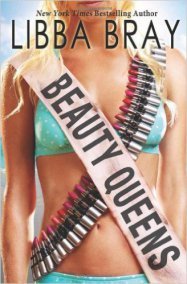 are all different genres–dystopian, fantasy, paranormal, realistic–they all look the same. Each one of them was just as likely to have a “girl in dress” or “half girl face” cover as the next. That doesn’t help you figure out what the book is supposed to be about? Sure, those were some pretty dresses, but do we care? I’d rather see actual content related covers, if you don’t mind. Of particular concern to me:
Book covers that partition the female body – Why do we need book covers that focus just on female torsos? Why not give them heads or full bodies? Fragmentation of the female body has been long studied in advertising as a way to help objectify it. Which is doubly weird, since most YA books are marketed towards female readers.
 Girls in dresses – Okay, on some overs this is fine. Like, for instance, Kiera Cass’s Selection series. That makes sense. But on books where we’re supposed to get a strong female character, why are they shown in inactive poses in dresses that will not be very helpful in a fight? Or, at the very least, they never wear in the actual book?
Book cover changes mid-series publication – Am I
insane, or did this never used to happen? I never used to have to flip out because I bought one book in hardcover,

The original ToG cover.
but by the time the next book came out, the covers had completely changed. Now, oftentimes this change IS for the better (I’m looking at you, Throne of Glass), but … it’s annoying if you want your covers to all look the same. But seriously, help me out here. This is a rather new phenomenon, isn’t it?
Book series repackaging through the years – This is more of a pet peeve with a related example. I will never forget standing in a Barnes and Noble with Tamora Pierce as she lamented about the new “Twilight covers” of her Alanna series where it looked like her characters were wearing clothes “from the Gap.” I understand that the Alanna series is older now, but packaging it to look like Twilight doesn’t seem to be the best marketing strategy. It’s a very different book series. Have you seen other books that have be repackaged in weird ways?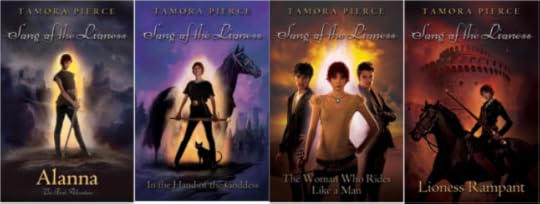
 Book cover white washing – this is very much a last but certainly not least moment. I know that this is a long and storied tradition of publishing, but it really hit home with me when Julie Kagawa’s Blood of Eden series came out. Why would you use the half face of a white girl on the cover of a book about an Asian-American character? Okay, I know the annoying answer to that question, but seriously. Then, after the uproar, the books got new covers–but not of an actual Asian-American half faced girl. No, the books went the route of the symbol covers instead. Yes, that’s a new fad, but I’m also going to add an eyebrow raise to that movement. What are some other whitewashed covers that have annoyed you guys?
I think I want to say something along the lines of how YA book covers have become really 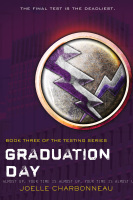 frustrating, because they–like the inside flaps of the books they contain–are starting to all look the same. Don’t get me wrong, there is some FABULOUS cover art out there, but there are also books that just seem so … samesie. I’m really not a fan of the new symbol art thing. It seems like too many books are trying to be The Hunger Games. At the very least, it seems the symbols are leading back around to more artsy designs than the half-girl faces used to give us.
 Can you see how my ideas are flip flopping all over the place? I understand that books can’t all be fabulous pieces of art like the Throne of Glass redo covers or literally anything written by Jay Kristoff, but …sigh. There is SO MUCH IMPORTANT INFORMATION tucked into these covers. I want to talk about it all with my scholar cap on, but I can’t cover all this stuff with the breadth it deserves in the same paper.
Sigh. I need to decide soon. Fingers crossed.


February 16, 2016
Betwixt the Books Discuss! DNFing Books
Welcome to this week’s Betwixt the Books content – a live discussion of me and Michaela’s views towards DNFing books (online 4:30PM, 2/16/16). We have very different opinions on the topic, which stands for books that we Did Not Finish for one reason or another. If you’re watching this live, feel free to tweet at us with the hashtag #btbdiscuss. If you aren’t, that’s cool too! No conversation is too late to have, so hit us up on social media!
Links I mention in this video:
The Grave Mistake I made with Grave Mercy
C’mon guys, let’s get real: Why I stopped reading “Ink” by Amanda Sun


February 15, 2016
From the Notebook: Back to School Book Haul
Now that Amazon/Chegg have finally delivered all my school books for the year, I thought that it might be cool to do a book haul! Don’t worry: not a text book in sight. In fact, these books are all either fantasy/scifi short story collections, memoirs or–okay–some really strange philosophy texts. Some of them you’ll see on the blog … some of them you won’t. Either way, here’s a really cool 16 book haul for you guys!