Randy Alcorn's Blog, page 206
November 9, 2012
A Response to Tina Fey’s Rebuke of Prolife Men
 Cassi is a dear sister in Christ who heads up the disability ministry at our church. Her response to comedian Tina Fey’s much publicized rebuke of prolife men is well worth reading. And she (Cassi, I mean, not Tina Fey) is daily devoted to ministry to the weak and needy. Her voice is one of the kind of voices in the church we most need to hear, to the glory of our risen Jesus:
Response to Tina Fey {In That I Am Not a Gray-Faced Man with a $2 Haircut}
This post isn't likely to gain me any friends. But it's one of those that has been bouncing around in my head (and on my heart) for quite some time. I sit down in hopes of writing something else—anything else—but I just can't get around this thing.
So I apologize in advance.
I know this is going to offend some of you. Feelings will be hurt; tempers may flare.
And I'm sorry for that.
I am not sorry for writing it though.
Truth be told—I will be feeling the same hurt and anger as I type these words.
Here goes....
"If I have to listen to one more gray-faced man with a two-dollar haircut explain to me what rape is, I’m gonna lose my mind!” —Tina Fey
Rape is inexcusable. It's disgusting. Under no circumstances are there any exceptions to that fact.
Rape hurts the victim and the victim's family. Likely for the rest of her life she will experience the affects of being brutalized in this most horrific way.
Rape is a crime that should be punished to the fullest extent of the law. Every time.
Without exception.
But who should be punished for this horrific crime? The rapist.
End of story.
Rape shatters hearts—crushes spirits. Rape makes it extremely difficult to experience real intimacy for a long, long time...if ever. Rape steals innocence, leaving anxiety in its wake.
Please know that I hear you on these things.
So does my husband and everyone else who has chosen to love me.
I have a hard time remembering without crying. A hard time writing these words without wanting to throw up. But can I just tell you that through that absolute most traumatic experience I have ever had....God had a plan! Rape was not His plan but from the beginning of time He knew how He would use it.
That is what I believe Richard Mourdock was saying.
Here's the thing, my rape did not result in a pregnancy. But it did set forth a chain of events in which I found myself giving birth to a precious baby boy at the age of 15. And while I was not violently assaulted by my son's father, I was taken advantage of, emotionally/psychological abused and manipulated, lied to, stolen from, threatened....for years. The time I spent with him is in close competition with the time I spent with my rapist (wow. Hardest two words I've ever put together).
Obviously my son is a reminder of the time I spent with his abusive father. But that is NOT who he is. He does not deserve to be punished in any way for the pain I suffered as a result of the actions of his father. He is one of my greatest joys. A life created so intentionally, with a PURPOSE, a perfect blessing.
We have to stop telling girls who have just experienced the horror of rape that ending their babies’ lives will make the hurt go away. It absolutely will not.
As I write this, tears flow, but not for my own painful memories. My heart hurts for the girl out there RIGHT NOW carrying a child in her belly, no one loving her enough to tell her the truth.
And then be there for her no matter her choice.
I am not writing this to bring shame to any woman who has chosen abortion. I am not claiming to know anything about the road that led her to that point. I don't. But what I do know is that from great pain can come great blessing. There are options. Options that don't require ending a life.
If you truly do not think that abortion ends a life, this post is not for you. I believe there is overwhelming evidence in support of that....but I am not sharing today in hopes of convincing anyone.
I'm speaking to those who believe abortion is wrong, except in cases such as rape. I cannot wrap my mind around exceptions in this case. If it's not murder, it's not murder...and should be allowed no matter the circumstance.
Likewise, if abortion is taking the life of another human being and not an acceptable option when a baby would simply be an "inconvenience"...it's not an acceptable option no matter the circumstance.
Rape does not justify murder.
And I feel like I can say that because I am not a "gray-faced man with a $2 haircut".
-Cassi
(Note: I chose to use female pronouns for this post; however I am well aware that men can also be victims of rape. My intention was not to ignore that fact.)


Tina Fey photo credit


November 7, 2012
Don’t Stop Voting (you do it every day with the choices you make)
 The election is over, but the truth is that every season of our lives is election season. Voting isn’t something you do just every few years. We cast multiple votes each day. We cast votes for Heaven or Hell, for grace or truth. For self-control or self-indulgence. For the Spirit or the flesh. For abiding in Christ, or independence from Christ. For wisdom or foolishness, and blessing or curse.
Every decision we make, every action we take—and the heart attitude with which we conduct our lives—casts a vote for one kingdom or another. Every vote counts. Eternity will be affected by them.
We can’t solve all our nation’s problems, but we can address the issues of our own hearts. “If my people who are called by my name humble themselves, and pray and seek my face and turn from their wicked ways, then I will hear from heaven and will forgive their sin and heal their land” (2 Chronicles 7:14).
You can still talk to parents and kids in your neighborhood about the value of unborn children, and offer support and help as needed. You can go to city streets and homeless shelters and offer your service. Your ballot may or may not have made a difference, but your vote to love your neighbor will. God won’t overlook it, as He won’t overlook a single cup of water given to little ones in His name.
 Our next chance to vote is right here and right now, whether we spend time with God, pray for His help, read His Word, serve our family, help the poor, dying and needy, entertain this thought, speak these words, watch this television program, or click on this Internet site. (You already vote often; vote wisely.) The key to change and influence in this world is not, and never has been, politics. It is faithfulness to Jesus. In the end (which will never end) acts of faithfulness—many of them quiet, some seen only by God—are the votes that will count, bringing the eternal results that will matter. “For we are God’s workmanship, created in Christ Jesus to do good works, which God prepared in advance for us to do” (Ephesians 2:10).
Just as nonchristians won’t have a second chance to go back and this time accept Christ, so we as Christians won’t have a second chance to go back and this time serve Him. Today may be our last opportunity to represent Christ to our neighbors and to the needy.
As missionary C.T. Studd put it, “Only one life, ‘twill soon be past, only what’s done for Christ will last.”
Read more in EPM's magazineRandy shares more Post-Election Perspectives in the latest issue of our ministry's Eternal Perspectives magazine. This issue issue also includes the articles, "Seven People Lying at the Side of the Road" by George Verwer, "No Hypocrites!" by Joni Eareckson Tada, and "Quality Christian Fiction: an Oxymoron?" by Randy Alcorn.
Eternal Perspectives is sent free to all who request it. To subscribe by mail or to receive an email notification when the latest edition is posted online, go to www.epm.org/subscribe.
girl photo credit: abcdz2000 via photopin cc
November 5, 2012
Resting in God’s Sovereignty over Human Events, Including Election Day
Tomorrow is Election Day. Like many of you, I'll be very glad for the election season to be over.
If at this late date you are still wanting to think about who to vote for, check out any of the series of blogs I wrote in the last four weeks:
Part 1: Racial Issues, Helping the Poor and Financial Responsibility
Part 2: Which Candidate Will Best Protect Religious Liberties?
Part 3: Which Candidate Has More Christian Beliefs? (And Should I Vote for a Mormon?)
Part 4: Do the Candidates Have Different Positions on Abortion and Does it Matter?
Part 5: Is it Wrong to Vote for the Lesser of Evils? Shouldn’t We Instead Vote for a Third Party Candidate?
Part 6: Responses to six comments, including that we should never vote for a candidate who would allow abortion for rape and incest
Part 7: Responses to 12 More Comments, Including “It’s wrong to vote pragmatically,” “Politics is a waste of time” and “I’ll only vote for a Christian”
Or, you may wish to see my interview regarding the candidates that I did Saturday night at my home church with one of my pastors:
Regardless of the election results, let’s all pray for our president, our country and our world.
First of all, then, I urge that supplications, prayers, intercessions, and thankgivings be made for all men, for kings and all who are in high positions, that we may lead a quiet and peaceable life, godly and respectful in every way. This is good and it is acceptable in the sight of God our Savior who desires all men to be saved and to come to a knowledge of the truth. (1 Timothy 2:1-4)
Proverbs 29:2 says, “When the righteous thrive, the people rejoice; when the wicked rule, the people groan.” Let’s pray too for our churches. We may increasingly experience persecution in the years to come, as our belief in Scripture will continue to separate us from the culture around us. As Romans 8:28 indicates, God brings good things out of bad:
And on that day a great persecution arose against the church in Jerusalem; and they were all scattered throughout the region of Judea and Samaria, except the apostles. Devout men buried Stephen, and made great lamentation over him. But Saul was ravaging the church, and entering house after house, he dragged off men and women and committed them to prison. Now those who were scattered went about preaching the word. Philip went down to a city of Samaria, and proclaimed to them the Christ. And the multitudes with one accord gave heed to what was said by Philip, when they heard him and saw the signs which he did. For unclean spirits came out of many who were possessed, crying with a loud voice; and many who were paralyzed or lame were healed. So there was much joy in that city. (Acts 8:1–8)
Note the church’s fruitfulness and even joy in the midst of persecution! If churches in American face more adversity in years to come, which I think we will, may we too experience greater zeal for Christ, fruitfulness, and joy in our Lord.
 May we pray too for those who will be back in the trenches bringing the gospel to the lost, and trying to save unborn children from being killed and women from having to endure the horrors of abortion. That's a hard job under any president. I thank God they're doing their work alongside the compassionate people who work all over the world to care for the needy of all kinds. It is our privilege to support all of these great causes.
Where should our focus be in the final hours leading up to the election? Certainly we should be trusting God and seeking his sovereign will for tomorrow’s outcome. Before the last presidential election, Albert Mohler wrote the article “A Prayer for America on Election Day,” which I encourage you to read. It includes some thoughtful points on praying for the election process.
There is great comfort in acknowledging and embracing Scripture’s teaching that God is sovereign over human events, including elections. In Isaiah 46:10, God says, “I make known the end from the beginning, from ancient times, what is still to come. I say: My purpose will stand, and I will do all that I please.” Those who believe in a God who knows “the end from the beginning” can relax because even though they don’t know what lies ahead, their sovereign God does: Charles Spurgeon wrote, “There is no attribute of God more comforting to His children than the doctrine of divine sovereignty.”
It might seem that acknowledging we aren’t in control would raise our level of fear. But that’s not true. Recognizing God’s in control should allow us to rest in His sovereignty. A spirit of fear and timidity is not from God (2 Tim. 1:7).
 No matter what the outcome of tomorrow’s election, our hope should not be in America’s president. Nor should we give in to fear or hopelessness if the results are not what we hoped. (Things may not be as bad as we anticipated if it doesn’t go our way, and may be worse than we anticipated if it does go our way.) Our hope should be in a good God who is all-powerful, and who is working out his eternal plan. Scripture says, “I know that you can do all things; no plan of yours can be thwarted” (Job 42:2).
Nations will rise and fall, but through it all, “God is our refuge and strength, an ever present help in trouble. Therefore we will not fear, though the earth give way and the mountains fall into the heart of the sea” (Psalm 46:1-2). “The LORD foils the plans of the nations....But the plans of the LORD stand firm forever, the purposes of his heart through all generations” (Psalm 33:10-11).
Scotty Smith has written an excellent prayer that encourages us to focus our gaze on our sovereign Lord:
A Prayer about God’s Sovereignty and Gospel Sanity
At the end of the days I, Nebuchadnezzar, lifted my eyes to heaven, and my reason returned to me, and I blessed the Most High, and praised and honored him who lives forever, for his dominion is an everlasting dominion, and his kingdom endures from generation; all the inhabitants of the earth are accounted as nothing, And he does according to his will among the host of heaven and among the inhabitants of the earth; and none can stay his hand or say to him, “What have you done?” Dan. 4:34-35
Almighty Father, I need to “bookmark” this passage and return to it often, even daily, for it doesn’t just tell the conversion story of a pagan King; it’s the ongoing story of my distractible heart. Pundits, social-media soothsayers and side-walk prophets abound, all clamoring for our attention. But we’re never more sane than when we raise our eyes toward heaven and focus our gaze on you. Navel gazing, circumstance watching and daily news fixating never serve us well.
“At once I was in the Spirit, and there before me was a throne in heaven with someone sitting on it (Rev. 4:2). Father, help us to see and understand the glorious implications of the occupied throne of heaven, and the peace that comes from savoring your uncontested perpetual enthronement. Your dominion is the only eternal dominion. November elections and political insurrections; the world economy and temperature instability; earthquakes and oil leaks; multiplied conspiracies and grassroots rebellions… none of these things affect your reign one micro-bit for one nanosecond.
For your kingdom endures from generation to generation. There never has been, nor will there ever be, any nervous sweat, furrowed brows or anxious pacing in heaven. There will never be one moment of consternation or vexation in the corridors of paradise; no need for a plan B to emerge from the “big boardroom.”
Father, you do as you please with the powers of heaven and the peoples of earth. We praise you for marshalling the powers of heaven for the salvation of ill-deserving rebels like us, and for the ultimate transformation of the entire cosmos. Though many tried to hold back your hand and many have arrogantly said, “What are you doing?” Nevertheless, you chose the sacrifice of your Son and the “foolishness” of the cross (1 Cor. 1:18) as the greatest demonstration of your sovereignty and grace.
The only King who could say, “Behold the world I have made,” is the only King who would say, “Behold the people for whom I die.” Father, the greatest sanity is gospel sanity. Keep us sane, Father; keep us gospel sane.
We choose to lift our eyes to heaven today and fix our gaze on Jesus, the author and perfecter of our faith; and we cry with unfettered, unabated joy, “Hallelujah, what a Savior! Hallelujah, what a salvation!” May your kingdom come, and your will be done, on earth as it is in heaven. So very Amen we pray, in the mighty and merciful name of King Jesus.
Nanci and I are thanking God for His sovereign grace, and entrusting ourselves, our children and grandchildren, our churches and our country to His care and mercy.
Joining you in prayer,
worship photo credit: Will Foster via photopin cc
ocean photo credit: ...-Wink-... via photopin cc
November 1, 2012
Election 2012, Part 7: Responses to 12 More Comments, Including “It’s wrong to vote pragmatically,” “Politics is a waste of time” and “I’ll only vote for a Christian”
 The comments I’ll respond to were on the previous blogs, in case you wish to check out any of them:
Part 1: Racial Issues, Helping the Poor and Financial Responsibility
Part 2: Which Candidate Will Best Protect Religious Liberties?
Part 3: Which Candidate Has More Christian Beliefs? (And Should I Vote for a Mormon?)
Part 4: Do the Candidates Have Different Positions on Abortion and Does it Matter?
Part 5: Is it Wrong to Vote for the Lesser of Evils? Shouldn’t We Instead Vote for a Third Party Candidate?
Part 6: Responses to six comments, including that we should never vote for a candidate who would allow abortion for rape and incest
The good news is that with the election next week, this is my final election blog! (Monday’s blog will be Scripture and prayer for our nation.) I’m relieved to finish, because I’m disillusioned by politics and I feel torn by the ethical dilemmas. I have heard things I agree with said by nearly everyone who disagrees with me. I keep finding myself thinking, “Yeah, that’s exactly what I used to say!” Below are comments I’ve received, followed by my responses.
“I don’t have to vote for someone perfect, but he does have to be a Christian.”
 I’ll answer with what someone said in another comment: “Neither Sir Winston Churchill nor Franklin Roosevelt were believers as far as I'm aware. Yet God sovereignly used them to deliver the democratic nations. Many Christians at the time perhaps would not have chosen these men for various reasons, but because one is saved does not mean he is fitted for a governmental role.”
“Anyone who is on the ballot is electable, and Virgil Goode is on more than half the state ballots.”
Virgil Goode, of the Constitution Party, is favored by many who have made comments. One article quotes Goode as saying, "We won't win the popular vote probably but we have a shot of winning the Electoral College.”
 But he is polling at less than 1%, with the two leaders both at 47%, and the Libertarian candidate getting most of the rest. Under any scenario, how could the Electoral College move his way? I welcome disagreement in the comments, but in my opinion, either Virgil Goode believes what he said and is out of touch with reality, or he does not believe it and is speaking falsehood. Neither is a good sign.
Dan Phillips wrote me, “If by some parting-of-the-Red-Sea level miracle a third party candidate won, he would have BOTH parties of BOTH houses of Congress opposed to him. He would have no one to draft and champion his legislature. He would be like a third-team player on a football field. It wouldn't matter if he were smarter, more savvy…they all would be focused on bringing him down.”
“I don’t believe in voting against a candidate, only for a candidate. I can’t vote for the one and I am not going to just vote against the other.”
But when there are only two people who can win, you do vote against one by voting for the other. (Why do we oppose voting against someone? Because it sounds negative?) If you do not vote for the only candidate who can defeat the one you most oppose, then you are not using your vote to oppose the evil you are most against.
If anything is at stake in this election, there are things you are for and things you are against. You vote for the one you are most for and least against. You vote against the one you are least for and most against. That’s just how it works.
“We are living in the last times, and evil is bound to increase. Government isn’t going to make a difference anyway.”
 This is the old argument that caused many Christians to withdraw from our culture in the first place. The idea is, “Why rearrange the furniture on the Titanic? The Bible says the ship’s going down, so no reason to try to keep it afloat.”
Ever since I came to Christ in the early 1970’s, I’ve been told by people that Christ must return in the next five years. Well, it’s been forty years and there’s a lot more Christians could have done but didn’t.
We don’t know when this world is going to sink. Our grandchildren may grow old on it. So if we can do some good, and do what we can to hold on to some of the freedoms people died to protect, why shouldn’t we? If the price of getting someone in office to protect religious liberties is voting for a very flawed candidate, is that worth it? I think it may be.
“Please discourage everyone from wasting their time on politics. Get them involved in serving the sick and delivering good news to the poor.”
I certainly agree that we should focus on the gospel and helping the needy. But we are stewards, and as such are responsible for multiple callings, and all that God has entrusted to us. Ironically, the gospel’s reach has been impaired by so many Christians withdrawing from art, music, politics and so many other aspects of our culture.
 If we had no influence on the direction of our culture, as the early Christians had no voice in the Roman Empire, that would be different. But America is a nation that affirmed the rights to life and liberty, and there’s a long history of people fighting for and dying for those rights. The person who submitted this note has probably enjoyed those rights her whole life. In fact, those rights have allowed her the freedom to deliver the good news without being arrested or beaten. Yet she apparently doesn’t believe in doing what’s necessary to pass them on to others.
Some people do waste their time in politics by making it their god, as other people do sports, food preparation, crafts, music and art. But politics, like all these other things, certainly has its place.
“So whether you eat or drink or whatever you do [music, art, sports, politics, evangelism, helping the poor], do it all for the glory of God” (1 Corinthians 10:31).
“I'll just have to agree to disagree with you on your support of the Republican Party.”
 The funny thing is, I am no supporter of the Republican Party. I’ve never given them a dime. I have not voted Republican in three of the previous six elections. Every election I vote for and against candidates and ballot measures, not parties.
Five years ago I wrote a controversial blog in which I called upon Christians not to support Rudy Giuliani for president after Pat Robertson had come forward to support him as the Republican Party nominee. I said, and I still say, I will never vote for a president who does not defend the righto life of unborn children.
Now, will I vote for someone who would save 98% of unborn children, while permitting the death of the 2%? I profoundly disagree about the 2%, but realizing we live in a country where forty years of federal laws have protected 0% of unborn children, I will support a candidate who wants to save 98%, when the only alternative who could win is a candidate utterly committed to insuring that not one unborn child would have legal protection. People keep telling me how Romney has flip-flopped on abortion. Of course he has. But has he flip-flopped the right direction? I only wish President Obama would flip-flop on abortion!
I don’t believe we should seek to be either conservative or liberal, but to be Christian, which sometimes means helping as many people as you possibly can, even when you can’t yet help all of them.
“To me, voting is not to influence results, but simply to follow my conscience and obey God.”
Some godly people have said this, grieved that I would take into consideration such unspiritual things as whether someone has a chance of winning an election. A good man wrote a blog disagreeing with me, saying, “My perspective precludes me from voting for either of the two majority candidates. I view voting as a choice between obedience and disobedience to the instructions of God.”
The implication is that those who vote differently than he does are disobeying God. But I find myself looking at a godless post-Christian culture. Apart from a great spiritual awakening from God, America will not return to its godly roots.
So for me, voting is not a pulpit from which I affirm the greatest ideals, without any hope of influence, but merely a tool to do the best I can to support what good is possible, and to resist evil to the limited extent that I can.
My vote does not mean I’m aligning with all of a candidate’s views or his religion. But I seek to be obedient to God by praying for direction and making a decision that is in keeping with a conscience that compels me to believe I should use my vote to—possibly, at least—make a difference.
“Christians should stop saying the right candidates will never be elected, and simply vote for them so they WILL be elected.”
I’ve been there and said that! In two elections I wrote in Alan Keyes, because he was a solid prolife believer with great vision. I hoped and prayed that he would be our first African American president. But when I talked about him to my Christian friends, they’d say, “He’d be great, but he’ll never be elected.” So I responded, “Vote for him and maybe he will be elected!”
In a blog five years ago I addressed the question of whether Mike Huckabee was electable. I wrote:
I confess I get impatient with Christian leaders who withhold support from the best candidates because other candidates, including prochoice ones, are supposedly more “electable.” If we’d just, on the basis of conscience, give support to people of God-honoring conviction instead of withholding it, some of them would become electable.
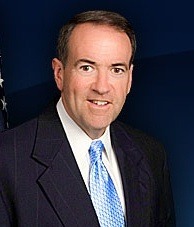 I will never forget when National Right to Life came forward to support Fred Thompson, who was not as solidly prolife as Mike Huckabee. A friend who worked for NRTL admitted to me, “We just thought Huckabee wasn’t electable.” Thompson stayed in the race just long enough to ensure McCain had the nomination instead of Huckabee. Prolifers cancelled out each other’s votes. That happens every election.
Sadly, many Christians will just vote the party line. If they’re Democrats they’ll vote for Obama, if Republicans for Romney, if Libertarians for Gary Johnson (or write in Ron Paul), if Constitutional for Virgil Goode. And a number, unhappy with all those alternatives, will write in Jesus for president. As the website says, “Say NO to Satan by writing in Jesus, as he is the only alternative.” (Not sure who his vice-president would be.)
The argument, “If Christians would just support the best candidate, he would win!” has a fatal flaw—politically, you cannot get evangelicals to agree on who’s the best candidate. Typically our votes are spread between four or five candidates. No matter who the best candidate is, if he’s third party many won’t vote for him, and if he’s Republican many won’t vote for him (that includes Christians in the Democratic Party and in all the third parties).
Take an increasingly unchristian national consensus, then couple it with the fact that the declining number of serious Christians are hopelessly split in their convictions about who to vote for. This is a formula that is a recipe for failure. And everyone, including me, has this great solution—“All of you just vote for the candidate I believe is best!” Alan Keyes, Mike Huckabee and Rick Santorum all come to mind, but not many of you seemed to agree with me…nor I with you. :)
So we need to ask God for direction, then do the best we think we can with the vote given to us. If “vote your conscience” for you means vote for the best man even if he can’t possibly win, so be it. If it means vote for the man who could possibly win and would be better in defending religious liberties and the right to life and financial responsibility than the alternative candidate, so be it. Just realize that “vote your conscience” is what we’re all trying to do, but it never results in Christians voting for the same person.
“President Obama is the candidate who cares most about the poor and needy. He will get my vote.”
I don’t doubt that our president genuinely cares about many poor people. I do believe that like many politicians of both major parties, he thinks just giving people money solves their problems, when often it only increases dependence and insures ongoing poverty by removing incentives to work to the degree they are able.
But what troubles me most is how selective he is about which needy people he cares for. Clearly he cares nothing for unborn children. But what about people with disabilities? Speaking of Mike Huckabee, he wrote this a few weeks ago:
This week, Obama’s campaign website posted a letter from a young woman with Down Syndrome. She wrote that she works and pays taxes, but because she gets some government support, she’s one of the 47 percent that Mitt Romney doesn’t care about. It’s sad that she’s been convinced of such a false idea, and it’s sickening to use her to score political points. I know of no Republicans who begrudge help to those who genuinely need it. But I do know the Democratic Convention was practically a four-day infomercial for taxpayer-paid abortion, for any reason. Today, as many as 91 percent of babies diagnosed prenatally with Down Syndrome are aborted. If you’re going to claim to be the only party that cares about people with Down Syndrome, seems to me the least you could do is defend their right to live.
“No matter what, I still can’t vote for a Mormon.”
I understand this position. I am not one who has ignored or minimized the biblical problems with Mormonism. I would recommend reading the article by Pastor Robert Jeffress, pastor of First Baptist Church in Dallas, who ignited the country a year ago when he said that Mormonism was a cult. (Which, of course, it is.) Now he has changed his mind not about Mormonism, but about Romney as a candidate. It’s worth reading. I will quote here two things he said that I haven’t:
In October of 2011, the Obama Justice Department argued before the Supreme Court in the case of Hosanna-Tabor Evangelical Lutheran Church and School v. EEOC that the ministerial exemption to federal hiring standards should be rescinded. The revocation of that exemption would mean that churches could be forced to violate their doctrinal beliefs and hire homosexuals as pastors or women as priests.
An astonished Supreme Court asked the Obama representative if the federal government should have jurisdiction over whom a church hired as its minister and the representative said “Yes.” Fortunately, the Supreme Court unanimously rejected that claim. Yet, the fact that the Obama administration would state such a position should be chilling to people of any faith.
….A second milestone development this past year was President Obama’s public approval of homosexual marriage in May of 2012 which has both energized efforts of evangelical Republicans and at the same time diminished his support among evangelical Democrats (primarily Hispanics and African-Americans).
One does not have to be a homophobe to understand that it is impossible to reconcile homosexual marriage with the teaching of Jesus Christ who described God’s design for marriage as one man and one woman in a lifetime relationship (Matthew 19:4-6). Any deviation from that standard—adultery, polygamy, pre-marital sex, or homosexuality—is a sin according traditional Christian and Jewish teaching.
Beyond the theological objection to homosexual marriage, evangelicals see a flood of societal problems that will be unleashed on a country that attempts to redefine marriage.
“Pragmatism is compromise, and compromise is a sin.”
Some things, such as upholding the Bible and standing up for Christ, should never be compromised. But what about if you’re in management or representing a union in a dispute? Is compromise sin? No, compromise is necessary to reach an agreement. In fact, it can be a sin not to compromise. Yes, some families, churches and businesses have been hurt by compromise. But many families, churches and businesses have been hurt by a parent or leader who refuses to compromise.
Some of the same Christians who understand that compromise is part of the business and sports worlds, part of athletics, part of nearly everything, view politics completely differently.
 If this country is like a car driving 70 MPH toward a cliff that is 100 miles away, of course you want to stop it and preferably turn around. But what if, on the day you have to vote, your two options are to keep driving 70 MPH or slow it down to 30 MPH? At least if you slow it down, you buy some time to make an adjustment.
Is this a pragmatic action? Sure. So is brushing your teeth, or putting gas in your car. Using your brain to make wise choices between limited options is being pragmatic. Compromising values is wrong, but making wise decisions to bring about the best possible results in keeping with your values can be right.
As there is good and bad cholesterol (so my doctor tells me), I think there is bad pragmatism and good pragmatism. Bad pragmatism is when principles are violated; good pragmatism is when godly wisdom is exercised to make the best of the available options.
“There is no difference between Obama and Romney.”
Now, you can argue that in some areas the candidates don’t differ much. But it’s simply inaccurate to say there’s no difference at all. One is absolutely committed to using tax dollars to fund abortions overseas. The other has promised to stop this through reinstating the Mexico City Policy. And if he is as concerned about his image as his critics say, surely he would not begin his presidency by breaking that promise.
 PolitiFact’s Truth-o-Meter demonstrates that both President Obama and Governor Romney have said things that are true, mostly true, mostly false, and false. It also measures what issues they’ve flip-flopped on. While it recognizes Romney has flip-flopped from prochoice to prolife, it maintains he has not flip-flopped on gay marriage, which he opposes.
President Obama, PolitiFact indicates, has flip-flopped on gay marriage. He said in 2008, "I believe marriage is between a man and a woman. I am not in favor of gay marriage."
In contrast, On Wednesday May 9, 2012 President Obama said, "I’ve just concluded that for me personally it is important for me to go ahead and affirm that I think same-sex couples should be able to get married."
What bothers me about President Obama’s change on gay marriage is not that he flip-flopped but that he landed on a position that would radically redefine marriage and family.
On the question of religious liberties, the two candidates are substantially different. Does anyone seriously believe Mitt Romney would act no differently than Barack Obama in regard to the right to hold minority religious positions? Of course he would. He is a Mormon, a religious sect that considers liberty precious. Were these liberties taken away, his own faith would be threatened. Hence, I believe he will be more likely to defend religious liberties than President Obama, who has attempted to take them away unlike any president before him.
We’ve recorded a four-minute video in which I share what is at stake in President Obama’s demand that Christian organizations and employers pay for insurance that provides abortions and contraceptives for their employees. I did a more detailed assessment of this in an earlier blog.
Since you don’t even like politics, why have you written these blogs?
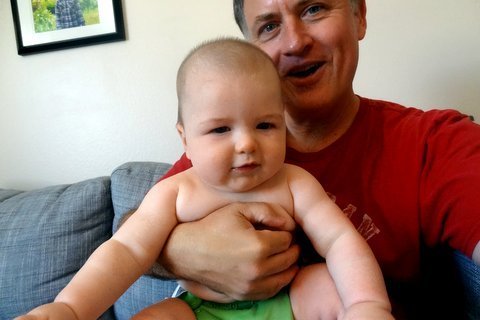 This one is my own question. I answered it the last time I wrote political blogs, four years ago. The answer was, because of my four grandsons, and my wanting them to have rights and not have to suffer under God’s judgment landing on a society in rebellion against him. And now, this time, I have a fifth reason—David Franklin.
I have mixed feelings about this election. Partly because, whichever candidate wins, I will have low expectations. But lower expectations of government need not be cynicism. It can also be a reminder of the good news that God is the sovereign King, and that he alone is the hope of this nation. And even if this nation crumbles (which could happen under either presidential candidate, or be delayed to sometime in the future), God is the only hope of each person and each family. He has been that all along, but perhaps this time it will be just a little more obvious.
Meanwhile, regardless of our country’s direction, may we devote ourselves to passing on to our families what they so desperately need, so that they may love our Savior in this broken world, for God’s glory and their good:
We will not hide them from their children; we will tell the next generation the praiseworthy deeds of the LORD, his power, and the wonders he has done….which he commanded our forefathers to teach their children, so the next generation would know them, even the children yet to be born, and they in turn would tell their children. Then they would put their trust in God and would not forget his deeds but would keep his commands. (Psalm 78:4-7)
This is my last election blog in which I’ll say anything about the candidates. Monday’s blog will be Scripture and prayer for our country. Then the blog will be back to “normal,” with a variety of articles, videos, and matters of eternal perspective. We invite you to visit regularly, or sign up for our feed by email (enter your email address in the form at the top left corner of the blog). If you’re on Facebook or Twitter, please join me there too, where I share Scripture and great quotes daily.
Trusting in the Risen Jesus,
More Election 2012 Blog PostsPart 1: Racial Issues, Helping the Poor and Financial Responsibility
Part 2: Which Candidate Will Best Protect Religious Liberties?
Part 3: Which Candidate Has More Christian Beliefs? (And Should I Vote for a Mormon?)
Part 4: Do the Candidates Have Different Positions on Abortion and Does it Matter?
Vote here photo credit: mhartford via photopin cc
Arlington photo credit: Stuck in Customs via photopin cc
Supreme Court photo credit
Speeding car photo credit: alwarrete via photopin cc
October 29, 2012
Election 2012, Part 6: Responses to six comments, including that we should never vote for a candidate who would allow abortion for rape and incest
It’s ironic that my politically related blogs are getting a lot of mileage (the last one got 12,000 hits in the first 18 hours, five times the usual.) If you read my normal blogs, Facebook or Twitter, you know that I regularly focus on Scripture and great quotes of a Christ-centered nature, and almost never talk about politics. I sometimes address the value of human life, but that’s not politics, that’s just loving your weak and vulnerable neighbor, like Jesus said to do (Matthew 22:37-39).
I don’t watch political programs or listen to political radio and rarely read political articles. I do care about helping the poor and needy (including unborn children), and I care about religious liberties, as they relate to our call to follow Christ and love God and our neighbors, and as I try to pass on to my children and grandchildren freedoms that were passed on to me. These are what have motivated me to address these subjects.
In this blog, I’ll respond to some of the many comments submitted to these previous blogs:
Part 1: Racial Issues, Helping the Poor and Financial Responsibility
Part 2: Which Candidate Will Best Protect Religious Liberties?
Part 3: Which Candidate Has More Christian Beliefs? (And Should I Vote for a Mormon?)
Part 4: Do the Candidates Have Different Positions on Abortion and Does it Matter?
Readers’ comments and my responses
1. “Don’t put your trust in Mitt Romney to save this country!”
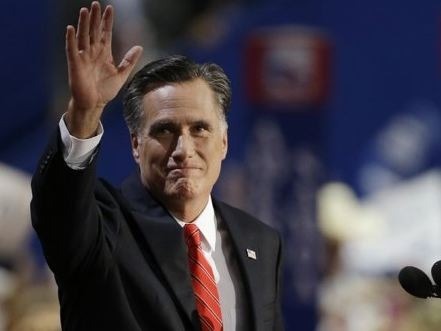 My trust isn’t in Mitt Romney. Not for a moment. No candidate can save this country, not in this election or any other! Mitt Romney couldn’t save this country if he were the most godly man ever to inhabit the White House. He is only one man, he’s flawed, and, sadly, as I’ve said, especially in the third blog, I believe his view of Christ, the gospel and the true church are seriously in error, contradicting Scripture.
God’s Word is emphatic: “Do not put your trust in princes, in mortal men, who cannot save” (Psalm 146:3).
Only Jesus Christ is Savior and Lord. Only he can bear the weight of our trust. “This is what the LORD says: ‘Cursed is the one who trusts in man, who depends on flesh for his strength and whose heart turns away from the LORD’” (Jeremiah 17:5).
My trust isn’t in this country either. “But our citizenship is in heaven, and from it we await a Savior, the Lord Jesus Christ” (Philippians 3:20).
Only God can save the USA, and I don’t know whether He will. Clearly, we don’t deserve it, but that doesn’t always stop God, does it? But whether or not this country survives the judgment due us (for many things, including the shedding of innocent blood), we DO know that our God of sovereign grace will go right on saving people.
If Mitt Romney becomes president he could certainly fail. He may come no closer to balancing the budget than Presidents Bush and Obama. Some think he may lead us into an unnecessary war against Iran, or another country. Others have warned that Romney will be guided by the Mormon White Horse Prophecy. Some have commented they believe a Romney presidency would be a great platform for Mormonism. This idea troubles me, though Mormonism has sometimes made converts precisely because its true nature is not known. It’s possible that more public scrutiny will help some not to choose it. Others say that a Romney presidency will be no more dictated by Mormonism than the Kennedy presidency was by Catholicism.
Presidents face many events and world leaders outside their control. Sometimes the difference between a great presidency and a failed presidency is simply what good and bad things happened in the world, and in America, that were outside the president’s control.
Governor Romney is not the ideal candidate. The only question is whether he is a better alternative than the only other man who can possibly win. And whether God wants us to use our vote to choose less evil and more good, or whether he would be more honored if we use our vote to make a statement of our ideals even if our preferred candidate cannot win.
2. “I’m voting for the candidate I most believe in. If we elect a president who takes away religious liberties then we’ll get exactly what we deserve. And maybe persecution is what we need anyway.”
 There’s a half-truth in this. As He did in the spread of the early church, God often uses persecution to spread the gospel. In fact, in this world under the curse, God often uses suffering to draw people to Himself (as I share in my books If God is Good and The Goodness of God). Persecution for the gospel will draw a line in the sand so that nominal faith will be sifted out. So perhaps persecution is something God will use to get us serious about living out the gospel.
Still, don’t wise people do what they can, short of denying Christ and his truths, to avoid being persecuted? After all, God uses sickness and accidents to accomplish good. But it is still reasonable to try to avoid sickness and accidents. God does indeed use persecution, but isn’t it still reasonable for us to take steps to avoid persecution by defending religious liberties and seeking to elect a president who will preserve those liberties?
I think the “it’s not my fault” approach can be a bit irresponsible. Might not it be partly our fault if we didn’t vote for the only person in this election who could reverse the stripping away of religious liberties?
The argument that we’d be getting exactly what we deserve is certainly true. But that doesn’t mean we should seek to get what we deserve or stand by apathetically as freedoms people died to purchase are taken away from us. What we should do is stand for liberty, make efforts to preserve it, and then if it is taken away, trust God to use our suffering—and that of our children and grandchildren—for His glory.
3. “ The Apostle Paul was a Roman citizen, but do you see in any of his writings an attempt to use his rights as a citizen to influence a city? No. He used the message of the Gospel, the power of God to those being saved.”
It is absolutely true that Paul’s great faith was in God and in the power of the gospel. But in fact, Paul did use his rights as a Roman citizen to call for justice in how he was treated: “As they stretched him out to flog him, Paul said to the centurion standing there, ‘Is it legal for you to flog a Roman citizen who hasn't even been found guilty?’” (Acts 22:25).
Paul appealed to his rights once again, with God’s kingdom in the forefront:
Paul answered: “I am now standing before Caesar’s court, where I ought to be tried. I have not done any wrong to the Jews, as you yourself know very well. If, however, I am guilty of doing anything deserving death, I do not refuse to die. But if the charges brought against me by these Jews are not true, no one has the right to hand me over to them. I appeal to Caesar!” After Festus had conferred with his council, he declared: “You have appealed to Caesar. To Caesar you will go!” (Acts 25:10-12)
 Scripture models for us how to have our minds on God’s kingdom, and not put our hope in the kingdoms of men. But at the same time, we should recognize that God has sovereignly used American churches, with our liberties, to send out missionaries all over the world. Now, persecuted churches can also send out missionaries. But while we still have rights, it makes sense to steward them and protect them. This is why I applaud the many Christian organizations that have filed lawsuits against the government for attempting to take away their freedoms by forcing them to pay for insurance to provide abortions and contraceptives for all their employees (see my blog on religious liberties).
4. “I won’t vote for any candidate that would allow a single baby to die. Since Mitt Romney and Paul Ryan would allow babies conceived by rape or incest to be aborted, it would be wrong to vote for them.”
There have been dozens of comments to this effect.
Now, this would be exactly right if the other viable candidate’s position saved more children’s lives. But we are in a general election in which 95% of voters have indicated they will vote for either President Obama or Governor Romney. President Obama supports the legality of all abortions. He favors no law which would save the life of a single child. Governor Romney favors laws which would keep legal only 2% of abortions, while making illegal 98% of all abortions in this country.
Yes, you can vote for Virgil Goode of the Constitution Party, who believes all abortion should be made illegal. But in the last poll I saw, he has the support of less than 1% of the population. If he cannot come anywhere close to winning the election, he cannot help any children.
By refusing to vote for Mitt Romney, who favors saving 98% of children, and casting your vote for a man who would save 100% if he could (but of course he never will when getting 1% of the vote), you end up helping elect another man who favors abortion for 100% of those children.
Now, I realize the president doesn’t have any power to implement such a law. But I am addressing this because a number of states have attempted to enact various lifesaving laws, including informed consent, parental consent, and making abortion illegal except in cases of rape, incest and endangering the life of the mother. So just think in terms of what the candidates favor, not simply what they have the power to do. After all, the point is many are refusing to vote for such candidates because of this position.
 “We don’t dare think pragmatically.” More on this in the next blog, but for now, can I just say that if 100 babies are drowning, I would rather jump in and save 98 of them than stand on the shore and say, “I’m not going to do what I can to save any of those babies unless I can save all of them.” If saving as many babies as you can even when you know you won’t save them all is “pragmatism,” so be it. It is also just doing what you can to save precious children God loves. No one believes more strongly than I do that children conceived by rape and incest are just as precious as other children. But we must begin somewhere, and after 40 years of legalized abortion, every poll shows that people will not approve a law that wouldn’t allow for abortions in the cases of rape and incest.
Be sure you are thinking clearly about this. If you have 100 babies who are going to live, and you say it’s okay for two of them to die, that is horrific! But this is not our situation! If you have 100 babies who are already going to die, and you can’t save all 100 but you can save 98, shouldn’t you do so? To sacrifice the 98 because two are going to die is illogical. It can be argued that it is immoral. How ironic that people would take the moral high ground by allowing the 98 to die when their brothers and sisters are trying to save their lives. Can’t we do what is possible to save the 98% and then do all we can to persuade people not to kill the other 2? (I’ve also written on the question of the life of the mother being at stake.)
Twenty years ago in Oregon there was a ballot measure that would have made abortion illegal except in the cases of rape, incest and danger to the life of the mother. Had it passed, it would have saved tens of thousands of lives. But two groups rose up against it. The abortionists, with Planned Parenthood on the one hand, and on the other hand many prolife Christians who said they would not support a measure that allowed even a single child to die. But of course, those children and fifty times more were already dying. And since they couldn’t save every life, by voting against the measure they chose not to save a single life (to the utter delight of Planned Parenthood and the abortionists).
These no-compromise believers may have slept well at night, but all those babies whose lives were not saved kept crying out to me.
5. “The Republican Party is not consistent with its prolife platform.”
 Many have commented they believe the Republican Party is not telling the truth when it affirms a prolife platform. Or, at least, you can’t count on a Republican president following through (never mind the Mexico City Policy, which they have followed through with). But I have another question. Is there anything about the Democratic Party’s platform and actions that makes you doubt even for a moment that it will fully support the death of every unborn child at every stage of pregnancy right up until birth? So if you’re really prolife, you can be skeptical whether Republicans will do the right thing, but you can know for sure—and if you doubt this for a moment look at what was emphasized again and again at the Democratic National Convention—that if President Obama is reelected, abortion will be more firmly entrenched than ever in any policies and healthcare mandates that come from the White House. (See this African American pastor’s plea to Christians in the black community to not go along with this and other agendas.)
I will tell you this—if the Republican Party’s platform called for the legalized death of any poor and needy person, any person of any race, gender, sexual orientation, age or size, I would not retain membership in that Party. (I say this recognizing that the Republican Party is very flawed, and I am not enamored with it in any way, and I respect people who have left it to become independents or members of a third party.)
6. “These blogs have seemed to embody the very opposite of an eternal perspective.”
Therefore we do not lose heart. Though outwardly we are wasting away, yet inwardly we are being renewed day by day. For our light and momentary troubles are achieving for us an eternal glory that far outweighs them all. So we fix our eyes not on what is seen, but on what is unseen, since what is seen is temporary, but what is unseen is eternal (2 Corinthians 4:16-18).
 This is an eternal perspective—to always look beyond our circumstances and trust that God is sovereign, and that He is working all things together for the good of his children (Romans 8:28-29). If this election turns out different than we hope, so be it. God will still be on the throne.
Our jobs are temporary, our health is temporary, our culture is temporary, our lives in this world are temporary. However, having an eternal perspective doesn’t mean you quit your job, refuse medical care, and don’t step out of the way of an oncoming car!
An eternal perspective doesn’t mean indifference to the world. You can have an eternal perspective and at the same time have a realistic view of what you can and cannot accomplish with a single vote in a single election.
You cannot bring in God’s kingdom with a vote. So some of us, seeking to honor our King and to help government restrain evil, vote for less evil and as much good as we can among the candidates who can possibly win. Then, regardless of the results, we move on, serving Christ and living in light of eternity, and reminding people America is not their true home. (In some cases, you might also spend the next four years investing in alternatives so that next time there is a candidate with even a remote chance to win who is better than either of the two electable choices were this time.)
More Election 2012 Blog PostsPart 1: Racial Issues, Helping the Poor and Financial Responsibility
Part 2: Which Candidate Will Best Protect Religious Liberties?
Part 3: Which Candidate Has More Christian Beliefs? (And Should I Vote for a Mormon?)
Part 4: Do the Candidates Have Different Positions on Abortion and Does it Matter?
photo credit for political party icons
photo credit: Bas Lammers via photopin cc
October 25, 2012
Election 2012 Part 5: Is it Wrong to Vote for the Lesser of Evils? Shouldn’t We Instead Vote for a Third Party Candidate?
If you haven’t read some of the previous blogs, you may wish to, since this one flows out of them:
Part 1: Racial Issues, Helping the Poor and Financial Responsibility
Part 2: Which Candidate Will Best Protect Religious Liberties?
Part 3: Which Candidate Has More Christian Beliefs? (And Should I Vote for a Mormon?)
Part 4: Do the Candidates Have Different Positions on Abortion and Does it Matter?
 I’ve received many comments from those who believe that we should vote for a third party candidate. Why? Because voting between President Obama and Governor Romney involves choosing between the lesser of two evils, which means choosing evil, something no Christian should do.
First, let me say that I appreciate the vigorous exchange in the blog comments and take no offense at those who disagree with me. I appreciate it when Christians can make their arguments without painting those who disagree as stupid, less spiritual, or lacking an eternal perspective. I was very encouraged to see some asking each other’s forgiveness for what they said. Godly people land on different sides of this issue, but still love the same Jesus.
To begin with, I think there are radically different understandings of what a vote is. In this presidential election, what does your vote mean to you? Is it:
1) The expression of your highest hopes and ideals
2) An affirmation of doctrinal agreement
3) A statement to the world about your Christian convictions
4) An unqualified endorsement of a candidate’s character and wisdom
5) A means of protest against the established parties that have both failed miserably
6) A choice of the better of the only two viable candidates who remain, both of them very flawed, and one of whom will be president
Your answer to this question will largely determine your voting choices. Do you view voting like choosing a marriage partner? (Be extremely choosy.) Or like choosing a school or job? (Choose wisely, but know you can change schools or jobs.) Or like choosing a seat on the bus? (The best seats are already taken, but you choose the best alternative that’s left.)
What will you do in this election? Here are some options:
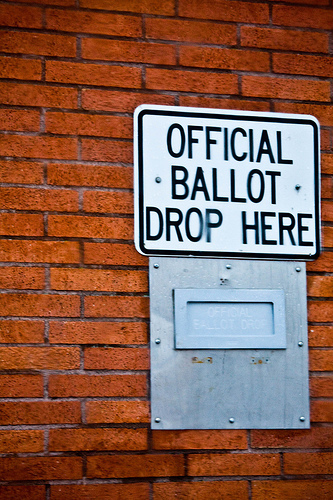 1) Abstain from voting because you are so disillusioned, and/or your citizenship is in Heaven, not earth.
2) Vote for a candidate you know has no chance of winning, but you’ll sleep better knowing you didn’t vote for the lesser of evils.
3) Vote for whichever one of the two electable candidates you believe will do the most good for the most people and inflict the least amount of harm; who will most uphold and least undermine our moral base and liberties.
Years ago, dissatisfied with the Republican and Democratic candidates, in two elections I wrote in Alan Keyes. Once I voted for Howard Philips. So I understand that perspective.
When voting within a party, I’ve chosen my closest-to-ideal candidate in the primaries. I don’t care whether anyone thinks he’s electable. But in the general election, things have shaken out and it usually comes down to only two candidates who can win. In recent years, I’ve voted for the one I think would do better than the other, despite my serious reservations about both.
So I’ve done it different ways at different times, always following my conscience and asking the Lord’s leading. I think what pushes me away from the third party options in this election is the stark nature of a few of the issues. Yes, there is abortion and the Mexico City Policy and the Supreme Court nominations. And there is the changing definition of marriage. (See Does the Fight for Marriage Really Matter?).
But what sticks out to me most is the urgency created by the dramatic erosion of religious liberties. I seriously wonder if the continued dismantling of our religious freedoms for another four years might permanently strip us of the very rights we will need if we are to influence our country’s direction—including through third party politics, pastors still being able to pass out voter’s guides, etc. This is one of the main reasons I’m determined to make my vote count this time.
Probably a dozen commenters wrote, “Voting for the lesser of two evils is still evil.”
I understand the logic. I’ve used it. But there is another way to look at it: To vote for the lesser of evils is to vote for less evil.
Think about it. Don’t we want less evil? Doesn’t less evil mean more good? I’m voting for the greater good my children and grandchildren and this country will experience than if the only other viable choice were elected. (Please don’t write saying others were far better candidates and Christians should have supported them. The only point I’m making is, regardless of the reasons, none of them will win the election.)
Yes, I don’t like either candidate. But, for instance, let’s say I believe only one single claim Governor Romney has made. A few blog posters have claimed everything Romney has ever said is a lie, which is quite a trick if you think about it, but I’m 99.9% sure this one is true: If elected, he will reinstate the Mexico City Policy, so that American taxes no longer pay for abortions overseas. If he failed to follow through on appointing prolife justices, and everything else, that one single thing is compelling, isn’t it? What makes me think he would keep that promise? Because every Republican since Ronald Reagan has implemented it, and every Democrat has rescinded it. Even if you believe Romney cares about nothing but trying to make himself look good (as one person commented), he would look very bad to break his promise to reinstate the Mexico City Policy. Does it matter to you that your taxes are paying for abortions around the world? It matters to me.
So this is one clear demonstration of how a vote for “the lesser of evils” is a vote for less evil. By voting for the third party, and not voting for the only person who can and will reinstate the Mexico City Policy, isn’t the voter in effect making more likely the greater of evils?
 If there are two men and I’m choosing between them, unless their degree of good and evil is exactly the same, and their commitment to religious liberty, human rights, morality, sanctity of marriage and financial responsibility is identical, then righteousness is at stake in my vote.
“But by definition, the lesser of evils is still evil.” Yes, and also by definition, the lesser of evils is less evil.
We all know that the ideal is no evil. If we lived in Eden or on the New Earth, as all who know Christ one day will, there would be no evil. But that’s not where we live. And no party, candidate or vote will get rid of all evil. The best we can do is vote for less evil and more justice than the other electable candidate offers.
“But that’s just thinking pragmatically.” Or is it simply thinking logically, and trying to make a positive difference with the only power now left to me? Is voting my individualized expression of ideals? Or is it bringing my ideals to bear on the messy choice between two very flawed alternatives?
One woman commented on a previous blog: “I am going to cast my vote for Jesus Christ.” It’s a nice gesture, but I think Jesus wants us to use our vote in a way that matters. Jesus is not running for president. He already sits on a throne. A year ago there were more than two electable people, but now that there are two, shouldn’t we try to choose the one likely to do the most good and the least evil?
There’s something very flawed in the argument that “choosing the lesser of evils is always evil.” Scripture says every man is a sinner, an evil-doer (Romans 3:23). Even born-again Christians struggle with evil-doing (Romans 7:14-25).
“For whoever keeps the whole law and yet stumbles at just one point is guilty of breaking all of it…We all stumble in many ways. Anyone who is never at fault in what they say is perfect.” (James 2:10, 3:2) To deny our sin is to call God a liar (1 John 1:10).
What does this mean? It means—wait for it—that your third party candidate is also a sinner, a doer of evil. Maybe you think he is a Christian, but then, consider how many Christians have made terrible decisions and have become corrupt when put into positions of power they weren’t prepared to handle.
Presumably you believe your man would do less evil than the Republican or Democratic candidates. I understand that. You’re probably right. But do not imagine you are taking the high road by refusing to vote for the lesser of two evils. In fact, by voting for your third party candidate, you are choosing the lesser of three evils.
And if your candidate cannot win, your vote is effectively insuring the victory of the greater of three evils.
Frank Turk, in “Math and Elections”, makes what I believe is a compelling argument that demonstrates how voting for a third party, if enough people do it, assures that the greater of evils will win. He argues, “You have to vote for someone with a mathematical likelihood of winning if you really want to affect change… a vote against Obama but not for Romney ensures Obama’s victory.” (Read it if you don’t understand why.)
Some say, “But my principles compel me to vote for the best possible candidate, even if he can’t win.” If a vote is only a statement of best-case-scenario ideals, that’s understandable. But what if instead you view your vote as a practical tool that wouldn’t violate your principles because it can actually reduce evil, which should be one of your principles? Someone commented, “Logically, a vote for a third party candidate is as much not a vote for Obama as it is not a vote for Romney.” That sounds logical until you look at the math, then you see it isn’t true. If you are serious about thinking this through, please do not dismiss Frank Turk’s logic without actually reading him.
No matter how pure our intentions, votes can be used strategically or counterproductively. When we think we are taking the moral high ground, we may inadvertently help bring about a less moral result. If you are thinking of not voting or of voting for a third party candidate I would encourage you also to read the provocative article by Dan Philips.
Now, both Turk and Philips can be blunt. Philips is at times downright insulting. (I give more benefit of the doubt to third party voters and candidates than he does, perhaps because I’ve voted that way myself.) However, something can be insulting but also largely true, even if overstated. I have learned from the logic of those who have insulted me, and you can too. I would ask that you listen with an open mind, and ask God to guide you. “Listen to advice and accept instruction, that you may gain wisdom in the future” (Proverbs 19:20-21).
I just read an argument against pragmatism, from the Constitution Party. Much of it is very good, biblical quotes and all. But it’s reasonable to ask whether enough people can or will get behind this or any party for it to become a political force. Is it possible that our secular nation, or nominally religious nation, would elect a man from this party to the White House? Years ago I thought there might be a chance, so I voted for the party’s founder, Howard Philips. Now, apart from a widespread Great Awakening, I don’t believe it’s going to happen. (I truly hope I am wrong.) But if that great awakening does happen, it won’t come through political parties, but through the Holy Spirit of God working through his people, as churches and families. Meanwhile I try to faithfully serve Jesus, reach people with the gospel, serve in my local church, and exercise my vote to the limited extent that it reduces evil and increases good.
 Jesus said, “I am sending you out like sheep among wolves. Therefore be as shrewd as snakes and as innocent as doves” (Matthew 10:16). The person who lives his life in doctrinal and moral compromise needs to be reminded to be as innocent as a dove. The person who lives his life expecting of his country a degree of Christian spirituality that can’t be realized in a fallen world (e.g. returning or moving a post-Christian society to biblical values across the board), needs to be reminded to be as shrewd as a serpent.
To be shrewd is to be wise in the sense of Proverbs, which means being pragmatic not by compromising doctrine but by realizing which strategies work and which don’t. (More on that in the next blog.) The innocent dove may have noble ideals, but he must realize that sometimes his choices are limited. He must not think only of what could be done in the best of all possible societies, but also what can be done in his society as it is now, to make it better instead of worse.
“Follow your conscience,” many commenters say. I agree. My conscience once told me not to vote for a candidate unless he was the best of all. My conscience now tells me, in this general election, to vote for the better of the only two candidates who can win. My convictions haven’t changed. But my life experiences, including my long conversations with Americans whose worldviews are radically different than mine, have changed my views on what’s realistically possible in a post-Christian nation.
One caution for some who disagree. Isn’t it a bit presumptuous and condescending to believe you are listening to your conscience and following the Lord by “not voting for the lesser of evils,” but your brothers and sisters are not listening to their conscience or following the Lord by using their votes to “vote for less evil”?
One person said, “I want to send a message with my vote.” I understand. What I want to do is make a difference with my vote.
 Is there truth to the old saying, “Politics is the art of the Possible”? Are some of us trying to do what is impossible? Ask yourself what is actually possible on Election Day. Ask yourself which of the only two candidates who can win might do a better job.
In Monday’s blog I will address what I believe is a highly inaccurate charge stated in the blog comments: “There is no difference between the candidates.” Really? Not on the tax funding of abortions overseas? Not on gay marriage? Not on religious liberties, which are of deep concern to any member of a religious minority that could be persecuted?
I’ll also address the questions related to pragmatism, compromise, whether God wants America to get the candidate it deserves, whether your view of the end times relates to voting, and whether it’s right to vote for someone who supports abortion in some cases (e.g. rape and incest), even if he opposes it in the great majority of cases.
I’ll conclude by saying I disagree with the comments saying if you have an eternal perspective you will never vote for the lesser of evils. Choosing to endure torture rather than deny Christ, seeing God at work in your worst adversity, laying claim to God’s promises of a New Heavens and New Earth (2 Peter 3;13)—all these involve eternal perspective. But an eternal perspective may also motivate you to vote for less evil and more good that could actually happen, as compared to the more idealistic positions of a candidate who is supported by 3% of the country.
Because you know this world is not your home, and that it is terribly fallen, you put your hope in Christ, not in this country. But as a steward of your American citizenship, you try your best to support good and resist evil, realizing how that is best done in politics isn’t spelled out in Scripture, and godly people will see it differently. Then, together with those who agree on Christ who is primary and disagree on what’s secondary, you trust God and serve him and hold up Jesus Christ and the gospel of grace as the only hope for this nation and this world.
More Election 2012 Blog PostsPart 1: Racial Issues, Helping the Poor and Financial Responsibility
Part 2: Which Candidate Will Best Protect Religious Liberties?
Part 3: Which Candidate Has More Christian Beliefs? (And Should I Vote for a Mormon?)
Part 4: Do the Candidates Have Different Positions on Abortion and Does it Matter?
ballot drop site photo credit: amanky via photopin cc
photo credit: fatedsnowfox via photopin cc
flag photo credit: ladybugbkt via photopin cc
October 22, 2012
Election 2012 Part 4: Do the Candidates Have Different Positions on Abortion and Does it Matter?
First: Due to the many blog comments raising questions about third party candidates, and issues of conscience in not voting for “the lesser of two evils,” I will devote Thursday’s blog to that subject.
Meanwhile, if you haven’t thought through abortion—and I’m convinced most people haven’t—you need to or this blog just won’t make sense. At least please read this two-page handout I wrote. It succinctly states the biblical and historical position that unborn children are created by God, in his image, and that God expects his people to defend their right to live.
If you wish to dig further, I’ve written many other articles on this subject and two books, ProLife Answers to ProChoice Arguments and Why Prolife?
Someone recently posted a comment saying, “All you care about is abortion.” Not true. I care about the poor, about racial issues, equal pay for equal work, and women’s rights. As I stated in the first blog, “Election 2012, Part 1: Racial Issues, Helping the Poor and Financial Responsibility,” I believe in helping the truly poor and empowering those who are capable to work out of their poverty.

I devoted the second blog to religious liberties. This may prove the single most important issue in this election, and will have profound impact on our future rights.
In the third blog I addressed my serious problems with the Mormon faith of one candidate and the nominal Christianity of the other.
Now I come to the subject of abortion. And while it is not the only issue, it’s vitally important. I recently addressed the question, “Shouldn’t we care about other social injustices besides abortion?” My answer was an emphatic yes, which is why our ministry gives financial resources, time and attention to fighting these other injustices. But when I bring it up, many Christians refuse to stay on track with the issue of abortion. They immediately say, “But what about….?” I think it’s revealing how many people always change the subject.
When an entire people group is being stripped of its rights, enslaved, or killed, it is hard to imagine how any Christian could not be deeply concerned. The Jews weren’t the only suffering people in Nazi Germany, the slaves weren’t the only suffering people in America, and the unborn aren’t the only people today whose rights are violated. But when you consider that over fifty million American children have been killed by legalized abortion in the last forty years, I find it incredible that many Christians speak out less on their behalf than that of any other needy people. (Consider a recent evangelical justice conference where every human rights cause was addressed by the speakers, with one exception: abortion.)
President Obama has relentlessly denied the most basic right—the right to life—to the poorest of the poor: weak and helpless unborn children who cannot vote and cannot speak for themselves.
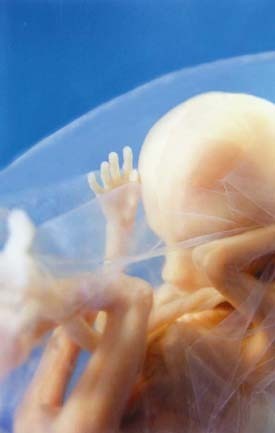
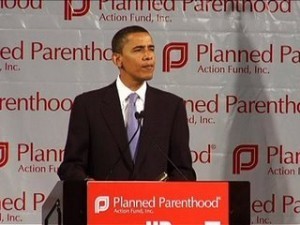 The president has been a voice for the abortion industry, supporting the right to abort a child at any time during the pregnancy, until the moment of birth. He has defended partial birth abortion. It is a matter of fact that the President of the United States fully endorses the following: a doctor beginning delivery of a live newborn baby, then shoving scissors in the back of his or her skull and sucking out his or her brains. (See this medical depiction of the process.)
These are not just words. Don’t pass over them. Contemplate a baby 80% out of the womb, who millions of Americans would love to adopt (with no inconvenience to the mother, whose pregnancy is over). Instead of this child being taken eight more inches outside the womb, she is viciously murdered by scissors, then her brains are literally sucked out. This is not a horror movie. This is an actual procedure publically defended by the President of the United States. His wife wrote in defense of partial birth abortion, calling it “a legitimate medical procedure.”
If THIS is not evil, could you please explain to me what IS evil?
When I get comments from angry people, as I will because of saying what I just did, I always find it interesting that they are not angry at those who defend the hideous killing of children, including the president and his wife. Rather, they are angry at people who oppose that killing, and are simply pointing out the truth about what it really entails.
(Similarly, I am baffled when people get upset at anyone showing the pictures of murdered children. Why not get upset with those who are actually murdering and defending the murder of the children in the pictures? When the pictures of murdered Jews were published in The New York Times, who did people get upset with: The New York Times, or the Nazis?)
As an Illinois state senator, Obama opposed the Born-Alive Infants Protection Act, which simply said that if a child survived an abortion, and was lying there helplessly, that his life should be saved by hospital staff.
 A prominent evangelical, who supported Barack Obama in 2008, earnestly assured me that abortions would decrease under his presidency. I pointed out that he had promised Planned Parenthood that he would rescind the Mexico City Policy, so that American tax money would fund abortions around the world. My friend told me, “No way would he do that!” I said, “Are you calling him a liar?” I only wish he had been lying. Within days of his inauguration President Obama revoked the Mexico City Policy. Now all of us who pay taxes—including the prolifers who voted for Barack Obama—are paying for the killing of children all over the world.
People point out that Mitt Romney has flip-flopped on abortion, which he supported in 2002 when running for Massachusetts governor. That’s absolutely true. Some say he put his finger in the political wind and changed his mind. But sometimes people mean it when they change their minds. Converts to a position can earnestly embrace it. And sometimes when they defend a position they come to hold it as a true conviction. Doesn’t it make sense to judge someone by where he landed, not by where he started?
Many say it makes no difference whether or not the president is prolife, since presidents don’t initiate legislation and vote on it. But presidents do nominate Supreme Court justices. Unfortunately, prolife presidents have made a number of poor choices, leading people to say it makes no difference.
Mitt Romney says he’s prolife now. Paul Ryan is unmistakably prolife, and will unquestionably do what he can to influence judicial appointments. In contrast, both President Obama and Joe Biden are staunchly in favor of legalized abortion. Romney and Ryan would likely nominate prolife Supreme Court justices. President Obama will not appoint any Supreme Court judge who’s not fully approved by Planned Parenthood, the world’s largest abortion provider.
Mitt Romney says he believes Roe v. Wade should be overturned. President Obama emphatically states it should not be. Planned Parenthood is so convinced that there will be a huge difference on the abortion issue, that their president, Cecile Richards, says she’s campaigning full-time for Barack Obama!
I don’t agree with all George W. Bush’s choices. But in 2006 he nominated a prolife Supreme Court justice, Samuel Alito. Despite the opposition of the proabortion lobby and its politicians, Alito’s nomination was upheld. In 2007 Alito voted to uphold the ban on partial birth abortion. Everyone agrees there is a strong chance he will vote against Roe v. Wade if it’s reconsidered. This is an example of a president’s position on abortion making a difference.
The Supreme Court appears split 4-5 on Roe v. Wade. Three Supreme Court justices will be entering their 80′s in the next four years, and another will be in his late seventies. The balance of the court’s view on abortion could change radically with only one or two appointments, and that change could affect decisions for decades. Those who are prolife but not planning to vote, or to vote for a third party, need to prayerfully consider this reality. Don’t dismiss it as a vote for the lesser of evils (more on that in my next blog) when it could oppose a horrific evil and ultimately save the lives of millions of children. (I’m not sure it will—I am saying it certainly could.)
But even if the president makes no judicial appointments, the Mexico City Policy alone determines whether all U. S. taxpayers are funding the killing of children around the world. Governor Romney has specifically said he will reinstate the policy.
Because of this, I cannot see how any prolifer can seriously argue (as some have in the comments on these blogs) that it does not matter what the next U. S. president believes about abortion. Does it really make no difference to you whether your taxes are paying for abortions around the world? Of course it matters.
Planned Parenthood and National Right to Life agree on only one thing—whether the next president is prolife or prochoice may radically affect our abortion laws. If this election won’t make any difference concerning abortion and its future legality, do you really believe Planned Parenthood would be spending millions of dollars to keep Romney from being elected?
Is it consistent with the Scriptures and with the heart of Jesus to suggest it makes no difference to God whether the President of the United States staunchly defends or opposes the killing of unborn children? How can you reconcile this with the repeated biblical statements that God hates the shedding of innocent blood and will bring judgment on the nation who does it?
Do this so that innocent blood will not be shed in your land…and so that you will not be guilty of bloodshed. (Deuteronomy 19:10)
Surely these things [judgment and destruction by other nations] happened to Judah according to the Lord’s command, in order to remove them from his presence because of the sins of Manasseh [head of state] and all he had done, including the shedding of innocent blood. For he filled Jerusalem with innocent blood, and the LORD was not willing to forgive. (2 Kings 24:2-4)
What God says here doesn’t apply only to unborn children, but it certainly includes them:
Defend the cause of the weak and the fatherless;
Maintain the rights of the poor and oppressed.
Rescue the weak and needy;
Deliver them from the hand of the wicked (Psalm 82:3-4).
 Consider the words of Jesus: “The King will reply, ‘Truly I tell you, whatever you did for one of the least of these brothers and sisters of mine, you did for me…whatever you did not do for one of the least of these, you did not do for me.’” (Matthew 25:40,45). Christ takes personally what we do and don’t do for God’s most vulnerable children (not restricted to the unborn, but certainly including them).
I will grant that some needy people may fare better, for a season, under an Obama presidency. Others may get more long-term empowerment under a Romney presidency. The men embody two different ways of helping. Personally, I believe that we as Christians are responsible to step forward and help the poor however we can, not just with our taxes but our personal assistance, financial and otherwise.
I always welcome comments, and read every one of them (that’s why my next blog will respond to those saying we shouldn’t vote for the lesser of evils). But based on my long experience, I have a few requests before you comment on the present blog:
1) Please don’t tell me unborn children are all I care about. Of the seven million dollars of my book royalties we’ve given away, far more has gone to help the born than the unborn—feeding and clothing poor women and children, providing them fresh water and immunizations, and providing shelters in their war-torn countries. We’ve also given a great deal to help women who’ve chosen to give birth to their children.
2) Please don’t change the subject from abortion by saying how much you care about other people. I’m truly glad that you do. I’ve written many other blogs about helping those other people. But this one is about unborn children. Can you please talk about them?
3) Every time I write about abortion, people start their comments with “I’m a prolife Christian, but….” What follows usually renders these words meaningless.
I’ve been part of the prolife movement for about thirty years. The word “prolife” has an historic meaning. You can say you are “prolife” when it comes to the environment, wars, feeding the hungry, sex trafficking, or even animals. That’s great that you care about these things. But historically to be prolife means this: that you believe that unborn children are in fact children, just as valuable as the rest of the human race. It means you believe the weakest and most vulnerable children have the right to life, and should be legally protected from the moment of conception.
You are free to agree or disagree with the above, but that’s what the word has long meant. So if you say “I’m a prolife Christian, but…” and what follows is an explanation of why you think abortion should remain legal, or it doesn’t matter whether those you vote for favor or oppose legalized abortion….well, go ahead and say that, but you’re not prolife. Saying you are may comfort you, but you are laying claim to something you don’t really believe. No one can be prolife who says, “I support a candidate who is unswervingly committed to the legalized killing of innocent children.” (This is the equivalent of saying, “I’m pro-environment, but I support a candidate who is absolutely committed to the legalized dumping of toxic chemicals into all America’s rivers.”)
So, go ahead and say it if the only people you really care about are the ones who are already born. That may be cruel and selfish, but it is at least honest. I have had unbelievers tell me this. From their naturalistic Darwinian worldview, it makes sense that the more powerful would have the right to take precedence over the weaker. They are wrong, but are consistent with their beliefs. Saying “I am a prolife Christian” should require that you be consistent with yours.
I am no great fan of the Republican Party, but it does have a platform unequivocally committed to the protection of unborn children. In contrast, the Democratic platform is emphatically in favor of legalized abortion. The Democratic National Convention featured speaker after speaker celebrating the unqualified right to abortion. It sounded exactly like a Planned Parenthood convention. (If any organization openly celebrated the killing of three-year-olds, what would we think? If we are less offended by celebrating legalized killing of the unborn, it demonstrates a simple fact—we don’t really view the unborn as human beings. But a true Christian must ask, how does God their Creator view them?)
If you are grateful your parents didn’t choose to take your life, I would encourage you to vote for a candidate who will defend the right to life of an unborn child. And don’t vote for a candidate who celebrates the right to kill what he once was and you once were. (And who your parents, friends, spouse, children and grandchildren all once were—unborn children.)
All advocates of legalized abortion, all candidates who defend abortion, and all who vote for those candidates, have one thing in common—they were not aborted. Had they been, they would not be here to run for office. And you would not be here to vote.
Speak up for those who cannot speak for themselves,
for the rights of all who are destitute.
Speak up and judge fairly;
defend the rights of the poor and needy.
Proverbs 31:8-9
Photos source: prolife images from Priests for Life | Supreme Court image | abort73 shirt design
October 18, 2012
Election 2012 Part 3: Which Candidate Has More Christian Beliefs? (And Should I Vote for a Mormon?)
 My previous blog, on religious liberties, concerned the response of Christian organizations and business owners filing suit against the Obama administration because of its demand that organizations pay for, via their insurance coverage, their employees’ surgical abortions and contraceptives (including abortifacients).
I was surprised reading my blog’s comments to hear professing Christians say that they do not believe it is an infringement of religious liberties for a Christian university, ministry or business to be required to do this. If you haven’t read that blog you may wish to. This subject has far-reaching importance. I find it difficult to understand how the administration’s demands can be seen as anything other than a fundamental violation of historic religious liberties.
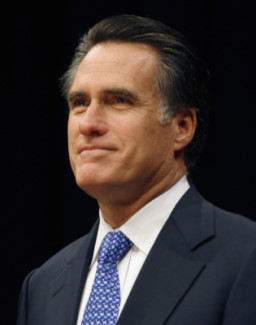
Well, time to move on so that I can offend others. :) (Truthfully, I’m not trying to offend anyone. But that won’t keep it from happening.)
Regarding Mitt Romney’s Mormonism…. I grew up in a nonchristian home. My dad was a tavern owner, we never went to church, and even Billy Graham was persona non grata in our house. I was empty and searching, but in high school my life was radically changed. The Jesus I came to know was the one I learned about through reading Scripture. This Jesus is not “however you wish to define him.” Rather, he is the second member of the triune God, not creature but Creator (John 1:1-3; Colossians 1:16).
I believe in the gospel of God’s grace secured on the cross by Jesus Christ, the God-man. It cannot be earned or achieved in by human works, ceremonies or church affiliations (Ephesians 2:8-9; Titus 3:5). This is the only true gospel, the one of which Scripture says, “But even if we or an angel from heaven should preach to you a gospel contrary to the one we preached to you, let him be accursed” (Galatians 1:8).
 The Mormon faith began with the appearance of an angel to Joseph Smith, proclaiming a gospel contrary to Scripture’s. Am I troubled by the idea of voting for a candidate who has served as a bishop in, and continues to be part of, a religious group that misrepresents both Jesus Christ and the gospel? In a word: Yes.
Some will argue that it’s hateful and bigoted to say this. I feel no hatred. I know and love a number of Mormons. (I also know atheists and agnostics—and for that matter, Steelers and Raiders fans—and countless others whose beliefs and passions I don’t share, but whose company I still enjoy :).
Others will say, “You don’t know what you’re talking about—you know nothing of Mormonism.”
 On the contrary, I have studied it extensively. Years ago I read all the Mormon holy books, including the Book of Mormon, Doctrine and Covenants, and Pearl of Great Price. I went to a Mormon library to read portions of Journal of Discourses, the 26-volume collection of sermons by early leaders of The Church of Jesus Christ of Latter-day Saints. Published by the stenographer of Brigham Young, it records over 1400 sermons of the most prominent LDS leaders in the first four decades of Mormonism. It includes sermons by Brigham Young, Orson Pratt, Heber C. Kimball and fifty-some others.
I have met at length with Mormon elders, current Mormons and former Mormons who left the church after coming to faith in Christ. We have together looked at passages in their documents that teach many things that contradict Scripture. I know enough about Mormonism to know it is distinctly different from biblical Christianity. (I know I will hear from sincere Mormons grieved that I have said this. I truly do not want to offend you or any of my Mormon friends, including those I grew up with; what I want you to know is the saving grace of Jesus, the God-man revealed in Scripture, who went to the cross and paid for our sins, offering to us an eternal life we cannot in any sense earn or achieve.)
Al Mohler expressed some helpful, clear thoughts about Mormonism. I will quote a paragraph, but his article is well worth reading:
Mormonism does not claim to be just another denomination of Christianity. To the contrary, the central claim of Mormonism is that Christianity was corrupt and incomplete until the restoration of the faith with the advent of the Latter-Day Saints and their scripture, The Book of Mormon. Thus, it is just a matter of intellectual honesty to take Joseph Smith, the founder of Mormonism, at his word when he claimed that true Christianity did not exist from the time of the Apostles until the reestablishment of the Aaronic and Melchizedek priesthoods on May 15, 1829.
There are various websites where former Mormons present the church’s doctrine as it was taught to them, and is recorded in the writings of LDS leaders God supposedly spoke through. Had I not personally studied Mormon writings and dialogued with Mormon leaders, I doubt I would believe that the following are teachings of the church. Here are just some of them:
God was once a man like us.
God has a tangible body of flesh and bone.
God lives on a planet near the star Kolob… The sun receives its light from the star Kolob.
God the “Heavenly Father” has at least one wife, our “Mother in Heaven,” but she is so holy that we are not to discuss her.
Jesus was married.
There are many gods, ruling over their own worlds.
We can become like God and one day rule over our own universes.
Jesus and Satan (“Lucifer”) are spirit brothers, and they are our brothers—we are all spirit children of Heavenly Father
Jesus Christ was conceived by God the Father by having sex with Mary, who was temporarily his wife.
Before coming to this earth we lived as spirits in a “pre-existence”, during which we were tested; our position in this life (whether born to Mormons or savages, or in America or Africa) is our reward or punishment for our obedience in that life.
The Garden of Eden was in Missouri. All humanity before the Great Flood lived in the western hemisphere. The Ark transported Noah and the other survivors to the eastern hemisphere.
If a Gentile becomes Mormon, the Holy Ghost actually purges his Gentile blood and replaces it with Israelite blood.
A righteous Mormon will actually see the face of God in the Mormon temple.
I see Mormon websites denying these are their doctrines, but when I look a number of them up in their texts they are there. I recently read a Mormon scholar in a popular magazine saying that a number of these doctrines have never been taught by the church. He said it was absolutely false that Mormons believe God the Father took on a human body and had sex with Mary in order for her to conceive Jesus.
 Yet here is Brigham Young, second president of the LDS, whose words were supposedly inspired by God: “The birth of our Savior was as natural as are the births of our children; it was the result of natural action. He partook of flesh and blood—was begotten of his father, as we were of our fathers” (Journal of Discourses, volume 8, p. 115). Look it up for yourself.
Or, if you think the star Kolob stuff is made up, just read Pearl of Great Price as posted by the Mormon church online. Please don’t leave me a comment saying this is not what the church teaches. Just go to the link, search for “Kolob” and you can see for yourself what it says (see Abraham 3:2–16, on page 36 of the linked file). Read it in context. It will be an eye-opener. Read the article by former Mormon Sandra Tanner on the location of the Garden of Eden. Here’s a summary of the teaching of the Heavenly Mother. And here’s Jesus and Satan as spirit brothers.
Here’s another summary of Mormon teachings. (link to). And a helpful comparison between Mormon and Christian doctrines.
Okay, so where does this leave me in regard to Mitt Romney’s Mormonism? Honestly, in the past I would have said, “No way would I vote for a presidential candidate with those beliefs.” I don’t like the idea of the president of the United States being the most prominent face of Mormonism in the world. I don’t like the idea that as a sharp, well-spoken person he could draw people toward a faith that denies the deity of Christ our Savior, and distorts the gospel of grace.
But none of that changes the fact that one of only two candidates will become president of the United States. And while the presidential candidates both profess to be Christians, in my opinion they each have beliefs that sharply contradict historic, biblical Christianity.
In Governor Romney’s case there is a rejection (though likely never explicit) of the biblical gospel and identity of Christ, as well as a number of bizarre beliefs unique to Mormonism. What President Obama believes in his heart about Christ, I cannot tell you. But I do know that he has been a devastatingly outspoken opponent of the right to life of our smallest and most vulnerable children. He has boldly implemented a healthcare plan that violates historic religious liberties, actually attempting to compel Christian organizations to pay for their employees’ abortions (which they believe to be child-killing). He also has affirmed that gay marriage should be established on a legal level equal to heterosexual marriage, changing the historic view of the family.
I believe each of these positions is a dramatic departure from Scripture, and from the historic Christian faith. I don’t just mean from modern evangelical Christianity, I mean Roman Catholicism, Eastern Orthodoxy and every tradition within Protestantism that has ever professed belief in the Bible. (Modern liberal Protestantism is different in that it simply follows secular culture in either explicitly or implicitly denying the Scriptures.)
So how do I choose between two candidates who in my opinion fall far short? I must consider not simply the candidates’ professed religious beliefs, but their past positions on moral issues, their promises and statements of intentions of what they will do in office.
Respected evangelical theologian Wayne Grudem says of Mitt Romney, “He seems to me to stand for policies that reflect biblical values, including all or nearly all of the policies that I advocated in my book Politics — According to the Bible.” Grudem says,
 Romney is a Mormon, and I strongly disagree with a significant number of Mormon theological beliefs, which I find to be inconsistent with the Bible and with historic Christian teachings. But many Mormon teachings on ethics and values are similar to those in the Bible….
…Have we come to the point where evangelicals will only vote for people they consider Christians? I hope not, for nothing in the Bible says that people have to be born again Christians before they can be governmental authorities who are used greatly by God to advance his purposes.
Grudem has more to say about this, and you may find it helpful.
Some believers are saying that given the choices, they’re not going to vote. I understand. I’ve been there. But not this time. Part of me really resists the lesser of two evils approach. I find it hard to explain what’s different this time, except that in the last four years we have lost things (particularly in the arena of religious liberties) which, if not recovered in the next four, I think may never be recovered. I have children and grandchildren. I don’t want them to pay the price for my disenchantment and unwillingness to choose between two candidates. I am voting for their sake because I can’t figure out, this time at least, how I can help them by not voting.
I was just finishing this blog when I saw John Piper’s “I am Going to Vote.” He explains, “The likelihood that both presidencies will be identical in the good and evil they do is infinitesimal. One will very probably do more good amid the bad, even if only a little.” If I might make a lot of difference for my children and grandchildren, I will certainly do it. And if I could make even a little difference I will do that too.
 All Christians should do our best and search the Scriptures, weigh and measure the relative strengths and weaknesses of the candidates, and vote as best we can considering the options before us. So, yes, I am troubled voting for a candidate who is a Mormon. But am I more or less troubled voting for the other candidate? Ravi Zacharias says, “If you are choosing between those for whom the Christ is not supreme in salvation, you have to choose the one who will give you the best moral soil in order to live for Christ and to live out your faith.”
I take comfort in the fact that we are not voting for a pastor, but a president. (If we were voting for a pastor, I would definitely do a write-in!) In a Christianity Today article “Is There Anything Wrong With Voting for a Mormon? Three Views”, Molly Ziegler Hemingway quotes Martin Luther as saying, “Christians are not needed for secular authority. Thus it is not necessary for the emperor to be a saint. It is not necessary for him to be a Christian to rule. It is sufficient for the emperor to possess reason.”
Luther meant not only wisdom, but moral reason. So as you consider who to vote for in an election that lacks an ideal candidate, ask yourself which man’s (and include the vice presidents too) stated values and track record is in the best interests of: a sound moral framework, care for the needy that motivates and empowers them, financial responsibility, the upholding of civil and religious liberties, and a reasonable national defense.
Subsequent blogs in the short time before the election will include abortion, gay marriage, and a few other issues. So if there is one more person left I haven’t yet offended, take heart. I’m not done. :)
October 15, 2012
Election 2012, Part 2: Which Candidate Will Best Protect Religious Liberties?
 In part one, I addressed the issues of race, helping the poor and financial responsibility.
This blog is about religious liberties. I believe where the next president stands on this issue will profoundly influence the culture in which our children and grandchildren will live. Will they be free to live out their religious convictions, even when unpopular, without being punished?
On March 12, 2012, the Obama administration issued a final rule under the Patient Protection and Affordable Care Act (PPACA) that requires many health insurers to charge all enrollees for elective abortions, as well as for providing contraceptives of all kinds, including those which cause abortions.
The U.S. Conference of Catholic Bishops (USCCB) published a two-page analysis explaining what this regulation means for American taxpayers who do not want to pay for others to kill unborn children. They said:
Under this Act, millions of American taxpayers will be forced to help support abortion coverage, in two ways:
(1) Through their tax dollars all taxpayers will be forced to subsidize overall health plans that cover elective abortions, contrary to the policy of the Hyde amendment and every other major federal program, and
(2) Many of these Americans will also be forced to pay directly for other people’s abortions.
Some will say this is technically not “tax funding of abortions,” because the required surcharge will be a premium payment rather than a tax payment as such. But what the payment is called is less important than what it actually does.
Attorney Hannah Smith says, “This mandate is one of the most troubling intrusions on the right of religious freedom in our country that we’ve seen in a long time…It puts religious organizations in a terrible position of having to choose between following their convictions and obeying the law, and I think that is a perilous place for religious organizations. It is troubling that the government has chosen to impose this on them.”
These actions by the Obama Administration have provoked an unparalleled number of lawsuits by Christian organizations. Knowing some of these organizations, I am convinced that they are not overreacting, nor are they motivated by political posturing. On the contrary, most of them avoid politics, and do not have money to burn. They are undertaking these great legal expenses only because they feel that they have no other choice. Many of them will, if necessary, close their doors before they will do what they believe is morally wrong in God’s sight. (Good for them—if it comes to it, may we all have the courage to do the same. But if we can keep it from coming to that, shouldn’t we?)
Here is one example:
The U.S. Supreme Court amicus brief filed on February 13, 2012 by lead counsel Bioethics Defense Fund exposes how the individual mandate not only forces individuals into private purchases, it also effectively mandates millions of Americans to violate their consciences by being put into policies that require direct personal payment into a special insurance fund for other people’s elective abortions.
Bioethics Defense Fund filed the amicus brief in the United States Supreme Court in support of the twenty-six State Attorneys General; organizations represented on the brief include the American College of Pediatricians, Christian Medical and Dental Association, American Association of Pro-Life Obstetricians and Gynecologists, Catholic Medical Association, Physicians for Life, National Association of Prolife Nurses, and Medical Students for Life of America.
In August, Wheaton College filed suit against the government because, according to President Phillip Ryken, this mandate “runs roughshod over Wheaton’s religious beliefs, and the beliefs of millions of other Americans, by forcing it to provide health insurance coverage for abortifacient drugs and related education and counseling.”
Biola University, Grace College, and other highly respected colleges have filed similar lawsuits against the Obama Administration. Wheaton’s case was dismissed under a “safe harbor” ruling, meaning they will not have to comply with the mandate until August of 2013. But this simply means they can hang on to their religious liberties for one more year before time expires!
 America’s religious organizations aren’t looking for an extra year before they are forced to violate their consciences or be fined out of existence. They are looking for their liberties not to be stripped from them in the first place.
The Obama administration has repeatedly assured concerned citizens that there is a religious exemption to their mandate. But it is written so narrowly that most religious organizations cannot qualify. It is a token exemption, apparently designed to calm people’s fears.
Vice presidential candidate Paul Ryan called enforced-payment-for-abortion (or payment for insurance covering abortions) “an assault on religious liberties.” Vice President Joe Biden responded by saying, “Let me make it absolutely clear: No religious institution, Catholic or otherwise, including Catholic Social Services, Georgetown Hospital, Mercy Hospital, any hospital, none has to either refer contraception, none has to pay for contraception, none has to be a vehicle to get contraception in any insurance policy they provide. That is a fact. That is a fact.”
The U.S. Conference of Catholic Bishops responded by saying Biden’s statement was simply untrue.
This is not a fact. The HHS mandate contains a narrow, four-part exemption for certain ‘religious employers.’ That exemption was made final in February and does not extend to Catholic social services, Georgetown hospital, Mercy hospital, any hospital, or any other religious charity that offers its services to all, regardless of the faith of those served.
HHS has proposed an additional ‘accommodation’ for religious organizations like these, which HHS itself describes as ‘non-exempt.’ That proposal does not even potentially relieve these organizations from the obligation ‘to pay for contraception’ and ‘to be a vehicle to get contraception.’ They will have to serve as a vehicle, because they will still be forced to provide their employees with health coverage, and that coverage will still have to include sterilization, contraception, and abortifacients. They will have to pay for these things, because the premiums that the organizations (and their employees) are required to pay will still be applied, along with other funds, to cover the cost of these drugs and surgeries.
The week before last this all came close to home for me, when one of my publishers, Tyndale House, also took action against the administration:
WASHINGTON — Alliance Defending Freedom attorneys representing Tyndale House Publishers filed a federal lawsuit Tuesday against the Obama administration’s abortion pill mandate. Tyndale House is one of the world’s largest privately held Christian publishers of books, Bibles, and digital media.
The publisher is subject to the mandate because Obama administration rules say for-profit corporations are categorically non-religious, even though Tyndale House is strictly a publisher of Bibles and other Christian materials and is owned by the non-profit Tyndale House Foundation. The foundation provides grants to help meet the physical and spiritual needs of people around the world.
In a statement to their employees, Tyndale’s president, Mark Taylor—a man I deeply respect—said, “We should be allowed to follow our own moral and religious beliefs in the way we operate our business and our employee health plan…. This is against our biblical values as a company, and it is a violation of religious freedom.”
Alliance Defending Freedom Senior Legal Counsel Matt Bowman says,
Bible publishers should be free to do business according to the Book that they publish…To say that a Bible publisher is not religious is patently absurd. Tyndale House is a prime example of how ridiculous and arbitrary the Obama administration’s mandate is. Americans today clearly agree with America’s founders: the federal government’s bureaucrats are not qualified to decide what faith is, who the faithful are, and where and how that faith may be lived out.
 Tyndale says it filed suit because “The mandate forces employers, regardless of their religious or moral convictions, to provide insurance coverage for abortion-inducing drugs, sterilization, and all forms of contraception under threat of heavy penalties.” I am told that if they refuse to go along with the government’s mandate, it would cost Tyndale $100 per employee per day, amounting to something like $8 million in a year.
Christian business owners are being faced with the same dilemma. That’s why at least five for-profit companies have filed similar suits. They include Hobby Lobby in Oklahoma, O’Brien Industrial Holdings in Missouri, Hercules Industries in Colorado, Seneca Hardwood Lumber Company in Pennsylvania, and Weingartz Supply Company in Michigan.
Hobby Lobby has come under attack for daring to file suit against the government, including cries of “Boycott Hobby Lobby.” I know and respect the Green family, owners of Hobby Lobby. Founder and owner David Green stated, “Our government threatens to fine job creators in a bad economy. Our government threatens to fine a company that’s raised wages four years running. Our government threatens to fine a family for running its business according to its beliefs. It’s not right.”
Hobby Lobby says their failure to comply with the mandate could subject the company to as much as $1.3 million in daily fines. Their attorney says, “They’re being told they have two choices: Either follow their faith and pay the government [ultimately] half a billion dollars or give up their beliefs.”
David Green refuses to provide or pay for two specific abortion-inducing drugs such as the so-called “morning after” pill, because Green’s “most deeply held religious belief” is that life begins at conception.
Refering to the lawsuit filed by Tyndale House, senior legal counsel Matt Bowman says, “The new health-care law demands that Americans choose between two poison pills: either desert your faith by complying, or resist and be punished.”
I have read widely on this matter, and it is for real. There is no way I can express how truly serious and stunning this violation of religious liberties is. For now it applies to nonprofit Christian organizations and for-profit Christian businesses and everyone else. But even though they are given a temporary exemption, how long will it be before every local church in America is told exactly the same—they must pay insurance that provides abortions and abortion-causing contraception for its employees, or be punished so severely they will have to close their doors?
 If the current administration stays in office, I think it’s likely that the religious liberties we are on the brink of losing will not only be lost, but may never be regained.
Historically, I have not been a big fan of Governor Mitt Romney. But I do know he has stated he is emphatically opposed to any government mandates forcing Christian organizations to pay for abortions and contraceptives. He has stated that under his administration he will reestablish and respect the religious rights that have been and are being taken away. (And as much I disagree with his Mormonism, his being part of a religious organization makes it more likely that he is telling the truth about protecting religious rights.)
What is at stake in this election? I don’t think it’s unfair to say that Christian liberties have never been assaulted in our history as much as they are being right now. If it continues, the damage done in the next four years might never be undone.
On this particular issue, my opinion about the candidates is obvious. But you must answer for yourself. Which candidate, President Obama or Governor Romney, is more likely to defend America’s religious liberties? Which candidate is more likely either to continue or reverse the policies already in motion that will force Christian organizations and businesses (and eventually churches) toward a choice between civil disobedience, severe fines, closing their doors or violating their biblical convictions?
And, finally, how important do you think these religious liberties really are?
In upcoming blogs I plan to address the troubling issue of Mitt Romney’s Mormonism (FYI, it does bother me), as well as the issues of gay marriage and abortion. What matters most, and what doesn’t?
“Seek the peace and prosperity of the city to which I have carried you into exile. Pray to the Lord for it, because if it prospers, you too will prosper.” (Jeremiah 29:7)
October 12, 2012
Remember Us and Pray for Us: the Persecuted Church
 Today’s guest blogger, Tami Yeager, is the bookkeeper at EPM. She also happens to be an area coordinator for The Voice of The Martyrs. (Read more about Tami.)
...
This month marks the 45th anniversary of The Voice of The Martyrs (VOM). It was in October of 1967 with $100, an old typewriter, and 500 names and addresses that Richard Wurmbrand published the first issue of Jesus to the Communist World, later renamed The Voice of The Martyrs. It was a newsletter dedicated to sharing the testimonies from our brothers and sisters in restricted and hostile nations.
Both Richard and his wife Sabina had been imprisoned in Communist-ruled Romania. Richard spent nearly 14 years in prison, three of which were in solitary confinement. Sabina spent three years in forced labor on the Danube Canal. Birthed from their time of torture came a passion to share the stories of the persecuted church with the free world.
 Today, VOM continues to stay the course originally set by Richard and Sabina. One of the main purposes is to bring encouragement to persecuted Christians, especially by giving their testimonies a voice and sharing them with the American church.
My introduction to The Voice of The Martyrs came through a newsletter handed to me in 2003. The stories in this publication disturbed me greatly, yet I was compelled to learn more. I found in the words of these pages real people with real stories. I was being confronted with a reality that did not fit into the neat package I had unknowingly wrapped my knowledge of God in.
 I would soon learn that the stories being introduced to me were only the beginning. The reality is, they represent what following Christ looks like for most of the church in the world. Richard Wurmbrand speaks of this in his book Tortured for Christ when he writes, “Persecution is not, nor ever will be, foreign to the Church on the earth.”
As I learned more about the persecuted church, I sensed a passion for those who suffer igniting within me. In 2004, I attended a Regional Conference at the Voice of the Martyrs headquarters in Oklahoma. As each speaker took the platform, I witnessed the purest form of humility and sweet surrender to Christ (see 2 Corinthians 2:14-15).
The first evening I listened as a man from Pakistan explained the hardships the Pakistani church endures, and then described the torture and eventual murder of a young Christian boy. This young man died at the hands of his torturers simply because he was a Christian. For the first time in my life I contemplated the possibility that God does not intervene in every situation and take the suffering away from His people.
That evening I went back to my hotel room and had a heart-to-heart talk with the Lord. Up until that time I had been crying out to the Lord to “Send me!” Now I was asking Him to not fulfill those prayers. The burden in my heart for those who suffer was greater than I felt I could bear. I spoke to the Lord again from the neatly-crafted package of comfort, safety, and control I wanted to create for my life. He graciously listened to me try to tell Him what to do.
Day two of the conference began with me feeling assured—certainly my talk with the Lord was successful and I had effectively canceled out all those “send me” prayers! It was then that a young man from the Middle East began to share about his work, which includes traveling great distances into hostile territories controlled by militant Islam. These are places where Christians die for their faith. He shared his family’s pleas not to do the work God had called him to.
Pictures were displayed on a screen behind him of people receiving the Bibles he delivered. Their expressions of curiosity and delight captivated me. As he spoke, he seemed puzzled by those who ask why he goes to such dangerous places. His response was simply, “Since when has the gospel been safe?”
I felt as if I were alone with the Lord in the room. This statement seared my heart, and I knew the Lord was speaking directly to me. I recalled the list of demands I called “a prayer” the night before, and heard Him say to me, “I did not create you that way.” At that moment, I said “Yes!” to His way in all my life.
Shortly thereafter I joined the Voice Volunteer Network, a ministry of VOM. As area coordinator I lead area representatives from Oregon, Idaho, and Alaska. We are among over 300 area representatives and area coordinators who speak for the persecuted church in the United States. It is a joy to share the stories of our brothers and sisters who are persecuted for their faith with the American church. “Remember them that are in bonds, as bound with them; and them which suffer adversity, as being yourselves also in the body” (Hebrews 13:3).
When asked how we can help the persecuted church, the number one request is, “Remember us, and pray for us.” I will never forget representing VOM at one of our regional conferences years ago. We had decorated a display table with books and a large chain-link, a visual reminder of our bond with those who suffer. A young Chinese woman named Sarah was one of the speakers at this conference. (Her testimony is shared in part in a DVD story called Sarah’s Trail of Blood.) Sarah was at the display table, and I watched as she quietly ran her hand slowly across the chains that were displayed. She looked up at me and said with tears in her eyes and deep appreciation in her voice, “Thank you for remembering us.”
 The church in America can join with the body of Christ around the world to pray and remember the persecuted church on November 11th, which is the International Day of Prayer (IDOP). This year will be the fourth year Christians have prayed for the release of Asia Bibi, a young wife and mother of two from Pakistan who was arrested by police on June 19, 2009. You can read more about Asia and other prisoners at www.prisoneralert.com.
And the smoke of the incense, which came with the prayers of the saints, ascended up before God out of the angel's hand (Revelation 8:4).
Tami
100% of the royalties for Safely Home support the persecuted church, but for each copy of Randy's novel Safely Home sold this week (October 19-26), EPM will donate a dollar from our general fund to support persecuted Christians all over the world. Partner with us to raise awareness and support for our brothers and sisters who are oppressed for their faith!