Randy Alcorn's Blog, page 197
June 3, 2013
The Urgent vs. the Important
When it comes to time management, the greatest principle for us as Christians is truly a liberating one: In the final analysis, I have only one thing to do. Does this principle sound strange? It comes straight from the mouth of Jesus. Do you remember when the two sisters from Bethany, Martha and Mary, gave a dinner party for Jesus and His disciples in their home? Martha was busily doing dozens of things that “needed to be done”—or so she told herself. Mary, meanwhile, was taking the opportunity to sit at Jesus’ feet and enjoy His company.
Martha got uptight because there was so much to do and so little time. She finally confronted Jesus with her resentment toward Mary for spending time with Him instead of helping her serve the meal. We can imagine Jesus gently placing His hand on Martha’s shoulder as He said:
Martha, Martha, you are worried and upset about many things, but only one thing is needed. Mary has chosen what is better, and it will not be taken away from her. (Luke 10:41–42)
The passage says Mary chose “what is better” or literally, “the better portion.” The word is used normally of food, and it sets up an interesting contrast. While Martha devoted herself to preparing physical food, Mary devoted herself to receiving spiritual food. She was a hungry soul, single-mindedly devoted to the spiritual meal served by Jesus.
 The time we spend with God determines the direction and the quality of all the rest of our time. Because of this, the more stress we’re under and the more pressures we face, the more time we need to spend with God in order to face them properly. That’s why Martin Luther did what at first glance seems senseless—on days when he had more to do he spent more time in prayer.
Charles Hummel’s booklet The Tyranny of the Urgent reminds us we must learn to discern between the urgent and the truly important. Serving the guests seemed much more urgent to Martha than listening to Jesus. But she failed to realize that it was also far less important.
Every person’s day is filled with things that are urgent—work, appointments, housework, homework, phone calls, carpools, shopping, and checking the Facebook pages of family and friends. If I don’t do the wash tonight, there’ll be no clean clothes tomorrow. If I don’t study, I’ll fail tomorrow’s final exam. All of us feel the urgency. But if we don’t spend time with the Lord or read to our children or call our parents, life goes on. These things are not emergencies. In neglecting them we don’t neglect something urgent. We neglect something important.
At the end of our lives, when we look back, most of the seemingly urgent things will be long forgotten. What we will thank God for—or regret—is what we did about the important things.


Related Resources
Blog: Planned Neglect: Saying No to Good Things So We Can Say Yes to the Best
Audio: What is your personal quiet time like?
Book: Help for Women Under Stress
photo credit: tom1 via. sxc.hu


May 31, 2013
How do I respond with grace and truth if I’m invited to a gay wedding?
Many people wonder, “What if I’m invited to a gay wedding?” In the following video and transcript, I share some thoughts.
I have been invited to one, even where it might not have been legal. There are also ceremonies to “honor” this union.
I’ll take the question a step further. What if it’s a heterosexual couple where a Christian is marrying a non-Christian? I believe that 2 Corinthians 6 says it is an unequal yoke for believers to be married to unbelievers. What if there is some other reason why I believe this wedding is wrong? Should I still attend?
I would say a general rule would be that you have to figure out what constitutes approval. For instance, if you’re invited to the home of your gay neighbors and they want to serve you a meal, is it a form of approval to have dinner with them? No. I think that’s just being a nice person and a good neighbor. You’re not making any comment on the choices they make by accepting the invitation. Likewise, having them into your home for a meal would be appropriate.

A wedding, it seems to me, is a little bit different—maybe a lot different. The old wedding ceremonies would often talk about (and sometimes they still do today) how people are all joined together to witness the ceremony and the couple are making themselves accountable to all who are attending. The very attendance is in some way an expression of approval—not just, “I wish you well in general in life,” but specifically, “I wish for you the greatest happiness in this union.”
Well, if you fundamentally believe it is wrong, are you expressing approval by attending? I have counseled people before and encouraged them not to get married because I saw some huge red flags. If they still chose to get married, in the end I did not attend those weddings. This was not because I was “trying to make a statement”; I just couldn’t say I felt good about those weddings.
By the way, one of those people years later came to me and said, “Thank you for telling me the truth. You were absolutely right. Our marriage ended in disaster.” (If everyone who knew a couple like this and believed the marriage wasn’t right and was not going to work said to them, “I love you, and have always wanted to be your groomsman or bridesmaid, but I can’t in this situation”, maybe we could avoid that sort of thing.)
So yes, I’m not comfortable with the implicit approval involved in attending a gay wedding.
On a similar note, somebody asked about having people in their home. I would say, when they’re inside your home and under your roof, you are accountable to God for that. This is a place where you have dominion and responsibility. I would not say to a couple that is living together, “You guys sleep in this bedroom.” Instead, I would have the uncomfortable conversation with them and say, “We love you. You are welcome to stay at our house. Because of our convictions, would you mind the separate bedrooms?” They might say, “Well, then maybe we should stay at a motel or wherever.” I would respond with, “But please understand that this truly is us trying to honor God. This is not something we just came up with.”
What about your child marrying somebody and you know it isn’t right? Do you allow them to stay in the same room together in your house? I think when they’re husband and wife and the marriage is a real marriage, even if you didn’t approve of it, I would say yes, sure.
But is “gay marriage” truly a marriage in God’s sight whether it’s made legal or not? I don’t think it is. I think that’s another component that’s involved.
Of course we’re to speak the truth in love and share grace with people. But I do think there is a time to say, “You know what? In the name of love, I can’t make the statement that I approve of this by attending.” (I share some specific thoughts on how to turn down the invitation in this article.)
You just have to find ways to graciously communicate this. This is very tough to do.
Related Resources
Blog: "Are homosexual sins worse than other sins?"
Resource: How can we lovingly decline attending my sister’s lesbian wedding?
Book: The Grace and Truth Paradox
Cake photo credit: bjearwicke via sxc.hu
May 29, 2013
Ways to Connect with Our Ministry Online

Our ministry, EPM, encourages people to live in light of eternity, and one of the ways we seek to do so is by having a presence on several major social media sites.
When it comes to the dangers of social media, I’ve shared some thoughts here in a past blog. Can Facebook, Twitter, and Pinterest really be Christ-honoring, eternity-pointing tools? I believe when done carefully, they can be.
Some of you may follow us one place, but don’t know we’re present elsewhere in a different form. Here’s where you can find us online:

Since you’re reading this, it’s likely that you’ve already discovered my blog, where I post three times a week. However, you may not know that you can subscribe to receive the posts directly in your inbox. Go to www.epm.org/blog and in the left-hand column under “Subscribe to receive posts by email”, enter your email address.

If you’re on Facebook and aren’t yet following my page (www.facebook.com/randyalcorn), I invite you to join me there, where I regularly post thoughts, Christ-centered quotes, Scriptures, and the occasional pictures of my grandkids and our dog Maggie. :) I check my page daily and really enjoy reading the comments and interaction.
I encourage you to also like EPM’s Facebook page (www.facebook.com/EPMinistries). It’s a great way to get the latest news from our office, including specials and promotions, information on ministries we support around the world, and more.

I post regularly on Twitter (www.twitter.com/randyalcorn), including Scriptures, quotes, and shorter versions of the thoughts that appear on my Facebook page. So if Twitter is your thing, I invite you to give me a follow.
You can also find EPM on Twitter (www.twitter.com/epmorg), where you can get updates from our ministry and links to resources.

I know some of you really enjoy Pinterest, so thought you might like to know that EPM has a presence there (www.pinterest.com/randyalcorn). Jenny at our office has done a fantastic job of gathering up attractive visuals related to my books and things I’ve written. We have pins ranging from scripture graphics, book quotes, ministries we support and many things in between. I hope you enjoy taking a look.

If you’re always on the lookout for a great book and are part of Goodreads, you’ll find us there as well (www.goodreads.com/author/show/4862.Randy_Alcorn). I share titles of books I’ve read and recommend, and we run occasional giveaways for my books.

The EPM staff post all of my videos, including everything from short Q&A clips to full-length sermon messages, on our Vimeo site (www.vimeo.com/randyalcorn). We have over 600 videos now, so there’s plenty to browse and watch. Feel free to share and use the videos as you wish.

Due to the questionable and often offensive content that’s unfortunately available on YouTube, we’ve hesitated to refer people to their site in the past. However, YouTube is the place to be when it comes to video and we want to make our content as readily available and searchable as possible. If you subscribe to YouTube channels, you can find us at www.youtube.com/eternalperspectives, where we’re adding new videos each week.
Our EPM staff would like to hear from you: What social media sites do you use and enjoy? And if you have content-related suggestions for any of our social media sites, we’d love to hear them!
Related Resources
Blog: Living Life or Documenting Insignificance?
May 27, 2013
All Men Seek Happiness

Blaise Pascal wrote this, and I think it’s very insightful:
All men seek happiness. This is without exception. Whatever different means they employ, they all tend to this end. The cause of some going to war and of others avoiding it, is the same desire in both, attended with different views. The will never takes the least step but to this object. This is the motive of every action of every man, even of those who hang themselves.
In this video and the following transcript, I share some thoughts:
This is a very powerful statement. Pascal is saying, “Look, we all do want to be happy. So let’s get real about it. Everything we do is motivated not by what will make us happy, but by what we believe will make us happy.” If what we believe will make us happy is indeed what will make us happy, then great—we’re starting at the right place.
But why is he saying that even the person who hangs himself seeks happiness? The person who commits suicide is tired of all the unhappiness and wants it to end. They want to be “more happy,” so they even hang themselves to do it.
It’s so descriptive and has a lot of explanatory power to say, “We all seek happiness.” So what we need to do is figure out the best object of our happiness. Where should we seek happiness? Where will we find and experience a real and lasting happiness?
According to the Bible, that is in God. God is the Source and Creator of all happiness. It is only in Him, and in a right relationship with Him, that we’ll be able to experience the lesser happiness in life as flowing out of the great fountain of God’s own happiness.
Related Resources
Blog: Longing for Happiness, in Blaise Pascal
Resource: True Happiness!
Book: Managing God's Money
May 24, 2013
The Romantic Rationalist: God, Life, and Imagination in the Work of C.S. Lewis
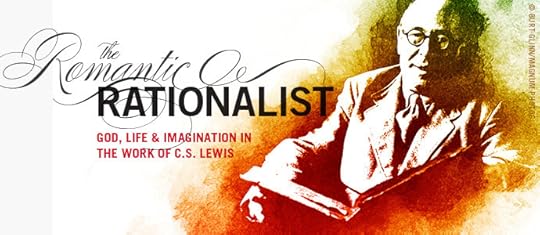
No writer has had greater impact on me than C. S. Lewis. I find both his fiction and nonfiction to be penetrating and life-shaping. That’s one of the reasons I’m excited to be speaking at this year’s Desiring God National Conference, “The Romantic Rationalist: God, Life, and Imagination in the Work of C.S. Lewis,” in Minneapolis, Minnesota on September 27-29. My topic is “C.S. Lewis on Heaven and the New Earth: God’s Eternal Remedy to the Problem of Evil and Suffering.”
John Piper will be giving two plenary messages, and there will be other main sessions from Phil Ryken, Douglas Wilson, Kevin Vanhoozer and me. On Friday, there will be breakout sessions from Lyle Dorsett, Colin Duriez, Joe Rigney, and N.D. Wilson. There will also be a variety of 10-minute short monologues in the exhibit hall related to Lewis. In the words of DG’s David Mathis, “Our hope is this will be the next best thing to visiting Narnia yourself.”
In this 2-minute video, John Piper shares more:
I’m honored to be sharing at the Desiring God conference, which Nanci and I think of as the best we’ve ever participated in (we’ve been to two other DG conferences).
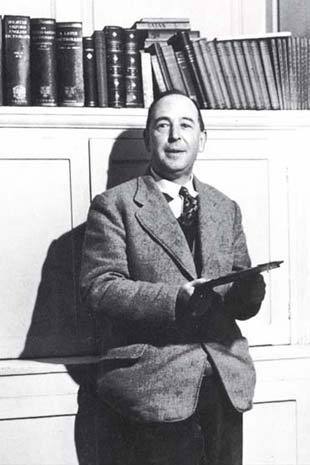 Raised in a nonchristian home, I came to Christ as a teenager. My first Lewis books were The Problem of Pain, then the Space trilogy, then Mere Christianity. By the time I’d been a believer for two years, Lewis’s fingerprints were all over me.
It was Lewis who convinced me that the same person could write good nonfiction and fiction, and emboldened me to try. Those who read my books know how often I quote him. Lewis’s mentorship and impact on my own life, and indirectly on my ministry, has been profound, and I’m grateful to God for him.
As I shared in part 1 and part 2 of an extended blog about Lewis, I learned long ago what he knew, that an author can become a friend, someone you can rejoin at will and pick up right where you left off. In that sense, Lewis has been my friend now for over forty years. I’m looking forward to the conference not just as a speaker, but also as an eager listener.
If you’re interested in attending this year’s conference, Desiring God is offering a super early-bird rate of $125 when you register by June 1. Learn more and register on the event page.
Related Resources
Book: Lord Foulgrin's Letters
Blog: C. S. Lewis's Influence on My Life and Writing, Part 1
Resource: Randy Alcorn Reminisces About His Visit to C. S. Lewis’s Office in England
May 22, 2013
Christian Universalism
There’s a movement among Christians today towards what’s called Christian Universalism. It’s a belief that everybody ultimately will be saved—there will be no Hell, or at some point Hell will be depopulated and everyone will live forever with Christ in Heaven. It’s a wonderful thought. But does the Bible really teach it?
In the following video and transcript, I share some thoughts:
A lot of people look at all the passages where Jesus talks about Hell and immediately and intuitively realize that no, of course that’s not taught in Scripture. But at the same time, there are passages (which I believe are taken out of context) that “Christian Universalists” cite to prove their viewpoint.
One of those passages is 2 Corinthians 5:19, which says, “God was reconciling the world to himself in Christ.” They point out, “Look, it says ‘God was in Christ reconciling the world to Himself.’ That means not just Christians, but the whole world is reconciled.”
I heard in an interview a Christian Universalist (C. Baxter Kruger) say that there are (according to this passage), 1) those who know they have been reconciled to God in Christ, and 2) those who do not yet know they’ve been reconciled, but the point is that all of us have been reconciled and one day all of us will know that. That sounds pretty persuasive to a lot of people. It certainly sounds attractive.
(Here’s a video in which Baxter Kruger doesn’t say that, but something quite similar. Krueger is now regularly making presentations with Paul Young, author of The Shack. You may wish to see my blog I wrote about the book).
 There are some major problems with this position on 2 Corinthians 5, one of which is the issue of context. This interpretation ignores something critical. In verse 19 Paul goes on to say “And He has committed to us the message of reconciliation.” Who’s the “us”? It’s believers who are going out to tell people about the importance of reconciliation. So you say, “Well, that could still just mean telling people they’re already reconciled. There’s nothing they have to do. They’re already going to go to Heaven.” (That obviously undercuts the urgency of the Gospel message, doesn’t it?)
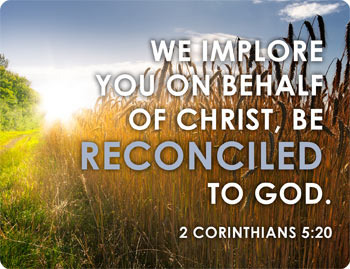
Picking back up in verse 20, Paul says, “We are therefore Christ’s ambassadors, as though God were making his appeal through us. We implore you on Christ’s behalf: Be reconciled to God.” What’s he saying? He’s saying that you need to be reconciled, so get reconciled, “be reconciled.” Whatever it means that God was in Christ reconciling the world to Himself, therefore, it does not mean everybody is already reconciled in the sense the word is used in verse 20!
Maybe it means that God did a work of reconciliation that is available to all people and He’s already accomplished that. But to say that this is teaching Christian Universalism negates the larger context, where Paul is challenging believers to go forth as Christ’s ambassadors to take the gospel to the world, that people may be reconciled to God!
There’s numbers of places in the book of 2 Corinthians that refer to believers and unbelievers. In the very next chapter Paul talks about not being yoked together with unbelievers, contrasting light and darkness (2 Corinthians 6:14-18). Clearly Paul’s entire argument rests upon there being a fundamental distinction between regenerate and unregenerate people. Can you imagine him saying that the unbelievers God’s people are not to be yoked with are already reconciled to God just as we are, but just don’t know it yet? No, this is a radical distinction, not just in the potential, but the actual, not in just what is known or not, but what is true or not.
What shall we say about Colossians 1:13, “For he has rescued us from the dominion of darkness and brought us into the kingdom of the Son he loves”? Is our message to unbelievers to be, “God has already rescued you from the dominion of darkness and brought you into Christ’s kingdom—we just need to tell you”? Is it that “you have already been born again, we just need to tell you”? That “you are already going to Heaven, Hell isn’t even a possibility, and that’s the good news you can enjoy, whether or not you believe it”? Do we say repentance and turning from sin to trust in Christ’s atonement is necessary, or do we say “repentance doesn’t matter, you’ve already been forgiven, you just don’t know it, and haven’t asked for it, but it’s true anyway”?
What’s true of 2 Corinthians 5 is true of all the so-called Universalism passages. If you take them as one verse by itself, it can sound like all people will eventually be saved. But when you compare it to all the other passages, numbers of them spoken by Christ Himself, then you realize that’s a myth. Jesus said there’s a wide road and a wide way that leads to destruction, and there are many who go through it. He also said straight is the gate and narrow is the way that leads to life, and few there be that find it (Matthew 7:14). Yes, there will be people from every tribe and nation and language in Heaven, as Revelation 5 and 7 makes joyfully clear; but to say all people will be there is to do great violence to countless passages, including those where Jesus emphatically speaks of the fearful reality of Hell.
(EPM staff member Julia Stager has written some more perspectives on this subject which I find insightful.)
The message of “Christian Universalism” sounds like good news, but it is ultimately a false message that sabotages and undermines the true good news of the Gospel of Jesus.
Related Resources
Book: If God Is Good
Blog: Universalism: Will Everyone Go to Heaven?
Resource: Reflections on The Shack
Image credit: Krappweis via sxc.hu
May 20, 2013
How to Fight Modern-Day Slavery

The problem of human slavery, with at least 30 million known victims in the world today, is a staggering one. [i] There are many organizations and people around the world who are dedicated to fighting this injustice, and this is good. (One such ministry that EPM supports is Make Way Partners and their work in places like Sudan, Romania and Peru.) However, you may not be aware of the ways that you personally can help contribute to this fight.
In this post from Desiring God, Ben Reaoch shares about five ways we can help:
What Christians Do About Modern-Day Slavery
by Ben Reaoch
If you are a believer, be reminded that you were a slave. Jesus redeemed you from that slave master called sin. And he has given us freedom. Therefore, as freed slaves, we should have a heart for those who continue in bondage — whether spiritual or physical, and in many cases, it’s both. It should be our desire to continue in the path that Jesus set out for us in his earthly ministry: to proclaim good news to the poor, to proclaim liberty to the captives, to set at liberty those who are oppressed (Luke 4:18).
An amazing thing about the gospel of Jesus Christ is that it’s a message not only for the oppressed, but also for the oppressors; not only to the victim, but to the perpetrators. Remember, “Love your enemies.” And don’t forget that God saved Saul of Tarsus, who was persecuting the church. Our gut response would be, “Free the slaves, and to hell with the cruel criminals who are keeping them in bondage.” But the gospel goes beyond that.
The good news of Jesus crucified for sinners and victorious over death is a message of hope for both the slave and the human trafficker.
In reality, the human trafficker is a slave as well. The predators are slaves to lust, power, money, and all kinds of perversion. The pimps, the predators, the pedophiles, the traffickers, the enslavers are shackled with bonds of a different kind. So, as Christians, we ought to pray for them. We ought to pray for the sex tourists who travel the world exploiting women and children. We ought to pray for the business owners who are taking advantage of their employees. The gospel is a message of hope for all who will repent and believe.
Five Ways to Fight Evil
Now apart from praying for supernatural conversion of the oppressor, what else can we do to fight against the international epidemic of modern-day slavery?
I have at least five practical action points in mind for the Christian community. I understand that God calls us to various areas of ministry, and we are not all obligated to engage in every area of need. But I do hope to make us aware, and to call many Christians to action, in opposition to this grave evil in our world.
Related Resources
Book: The Treasure Principle
Blog: The Least of These: Street Children
Resource: From Sexual Slavery to Restoration and Rebirth
[i] www.makewaypartners.org/what_we_do.html
Image credit: glendali via sxc.hu
May 17, 2013
My Thoughts on “The Disappearing Book”
A lot of people have asked me my thoughts about the possible “disappearance” of physical books, due to the fact there are all the different eReaders people are now reading on: the Kindle, the iPad, the Nook, and others.
In the following video and transcript, I share some thoughts:
The first thing I say to people is that the book is not disappearing; it’s taking another form. These ebooks are still books. You still read them. Physically, you don’t have a tangible book in your hand, but what some people discover is that they’re reading more because it is so convenient and lightweight for them to have dozens or even hundreds of books on their eReader. I’ve got a Kindle, and I love it.
 Now the majority of the books I read are still physical books. That’s because I do a lot of underlining and a lot of notations in the margins. Yes, you can underline in a Kindle and actually type in little notes, but it’s really not built for that. So I love physical books, but I also love ebooks. I’ve got some friends who find themselves reading books much more now because of the convenience of always having it with them. They just love it. You can adjust the font, and you don’t have to have reading glasses if that’s an issue for you.
Another thing that I love about the Kindle (and the same is true of other eReaders), is that you can download audio onto them. So I go to www.audio.com and get a lot of great novels (as well as non-fiction) on audio. I love listening to them. Sometimes I just listen to them in the background.
I actually think that some people are reading more because of ebooks. And listening to an audiobook is a good and convenient form of reading. So to be honest, I’m really not afraid of the reading of physical books disappearing. I think it’s a huge part of human history and of our culture.
My advice is, take books in whatever form you love. There’s something about the feel, the heft, even the smell sometimes of an old book that I just love. But I also enjoy reading ebooks.
The most important thing is this: READ.
How do you like to read? Printed books? An eReader? A tablet? Audiobooks?
Related Resources
Book: Eternal Perspectives
Blog: An Alarming Trend: The Illiteracy of Boys
Resource: Setting a Reading Goal
May 15, 2013
Sports and the Christian Life
In this video and the following transcript, I share some thoughts on Christians participating in and watching sports.
Here’s the deal with sports. The fact is that God made us the way we are, not Satan. We often think that everything about us is because of the Fall and our sinfulness.
Some people look at sports and say, “They bring out the worst in people.” I coached high school tennis for years, so yes, I’ve seen the worst come out in people. But I’ve also seen the best come out in people.
 Even in this fallen world, sports can bring out some very good things, including teamwork and the development of physical skills in our bodies that God has made. Can people abuse sports? Can they make it all about themselves? Can they become prideful and arrogant? Of course. We’ve all seen athletes who are prideful and arrogant, and it’s terrible. But I also know athletes who are humble and truly Christ-centered.
As far as watching sports, do some people turn it into a god? Absolutely. Some people turn art and movies into a god. Others turn food or cars into a god. But it doesn’t make any of these things inherently wrong.
I anticipate that on the New Earth we will engage in sports. God has put playfulness and desire to compete in us. Competition doesn’t have to be a bad thing—it can be a good thing if you have a right perspective.
But what about the fact that sports can bring out the worst in some of us? Well, when we’re resurrected and on the New Earth, there will be no worst in us to bring out. It will all be fun. I will rejoice in someone else beating me if there’s competition. I’ll try my best, and when I win I’ll be happy. When I lose I’ll still be happy, because I’ll rejoice that my friend won. We have that to look forward to, and I think it’s something we shouldn’t minimize.
1 Corinthians 10:31 tells us, “When you eat or drink, whatever you do, do all to the glory of God.” If you watch or participate in sports, do it for the glory of God.
I have friends who play in the NFL. They’ve told me (and several other professional athletes from other sports have told me the same thing) that you can say what you want about God and it won’t offend anyone. You can say, “I thank God for this victory”—or maybe it was a defeat—“but I thank God anyway.” You can thank God for staying healthy during a game and people will not turn and look at you. Nobody’s going to get mad at you.
But when you start talking about Jesus and thanking Him, all of a sudden it’s “Wait a minute. I’m not so sure.” If you start talking about Jesus, the One who said, “I am the way, the truth and the life. No man comes to the Father but by me”, that’s different than just talking about “God.” All of a sudden there’s a barrier between you and some of your fellow athletes, and you and the coaches, and in particular you and the media and you and the public. As a professional athlete, if you get serious about Jesus and talk about Him (and this would also apply to an actor or actress in Hollywood), that’s where the challenge is.
That’s why I think a big test of those who are celebrities, and are in the limelight and the public eye, is this: how willing are you to speak up about your faith in Jesus Christ, the Son of God, who went to the cross for the sins of all people? That implies some things about people’s sinfulness, and their need to repent and turn to Jesus. Those aren’t popular subjects. I think it’s a test of Christ’s lordship in your life. Are you willing to talk about Him?
True, people are going to talk about it in different ways. Some people are going to be more outspoken than others. But certainly all followers of Christ—no matter what we do—are to speak up for Jesus and share the gospel as God gives us opportunity.
Related Resources
Book: Heaven
Blog: Books on Preaching, Managing Time, and Sports Nanci and I Watch: Part 2 of a Q&A
Video: Sports, Art, and Creativity: Part of Being Made in God's Image
Trophy image credit: tome213 via sxc.hu
May 13, 2013
A Simple Sound Check and the Power of Christ

In We Shall See God, I share a remarkable story that Spurgeon told about an experience early in his ministry:
In 1857, a day or two before preaching at the Crystal Palace, I went to decide where the platform should be fixed; and, in order to test the acoustic properties of the building, cried in a loud voice, “Behold the Lamb of God, which taketh away the sin of the world.” In one of the galleries, a workman, who knew nothing of what was being done, heard the words, and they came like a message from heaven to his soul. He was smitten with conviction on account of sin, put down his tools, went home, and there, after a season of spiritual struggling, found peace and life by beholding the Lamb of God.
It was on his deathbed that this man told the story of his conversion, the result of God speaking to him through a single verse of Scripture uttered by Spurgeon. When Spurgeon preached in that building a day or two later, it was to a crowd of 23,654 people. But such is the power of Christ, the Lamb of God, who takes away the sin not only of the world, not only of a potential 23,654 people, but of one lone man working in a building when a preacher came to test the acoustics. This man will be forever grateful that when Spurgeon stood up front to do a sound check, he did not simply count to ten!
Related Resources
Book: We Shall See God
Blog: Charles Spurgeon Meets Shai Linne
Resource: Charles Spurgeon: A Man Faithful To God's Word