
Caitlin Hicks's Blog: Book Reviews, page 18
January 26, 2019
The Only Woman in the Room
Review published in NY Journal of Books
Reviewer: Caitlin Hicks
A stunning beauty, a brilliant mind. 1933, Europe, pre-World War II. Spying in plain sight. Secrets about The Enemy.
The Only Woman in the Room is a fascinating story told from the point of view of a beautiful woman, a talented and charismatic performer, an Austrian Jew, Hedy Keisler. The reader gets a view behind the scenes in this milieu from this woman’s point of view and in her own voice. My favorite kind of read. Up close and personal.

We hear from Hedy herself: her beloved father ‘s analysis of the political dangers and growing anti-Semitism in Europe as early as 1933. He encourages his daughter to date and then to marry an older, powerful suitor who “manufactures arms” and is one of the most powerful men in Austria. Her father reasons, Fritz Mandl is so well-connected and powerful, he could save Hedy and her family if things go awry. We understand that the stakes are high, as the author takes us through the political landscape between Austria, Germany and Italy. We see Hedy’s attraction to her suitor’s ostentatious ways, his wit, his ability to recognize her intelligence — until after the honeymoon. We experience the glamour from the color and fabric of the magnificent dresses Hedy wears for her husband’s parties; we see the impact Hedy herself has on men; we understand she dated ‘boys’ and this is person is a man; and so we feel trapped with her during her marriage to this volatile man, a glass doll on a sparkling stage.
Themes run through this book, many still relevant today, especially women’s worth in a man’s world. I thought of the #MeToo movement every time Hedy encountered a man who assumed she was would bed him – felt again the pervasive misogynistic culture that all women are born into and that until recently, was business-as-usual. I loved Hedy’s response to these men, strong and fierce, backed by her powerful beauty and confidence.
By some strange omission of my own mind, I forgot that the book was about Hedy Lamar, and so in Part II when I realized who she was becoming, I was delighted with the discovery. Here the reader gets an inside Hollywood first-person narrative. However, it lacked what I was looking for: the real, hot blooded woman that Hedy Lamar might have been. She was driven by the guilt of knowing war secrets and not revealing them in a timely manner after her escape from her controlling husband. I didn’t feel her guilt or any of the emotions she talked about having, but her journey towards assuaging this guilt was quite interesting as a tale of events, and I was in awe of the author and her amazing research into this story. More astonishing was Hedy’s unexpected success with an invention that pre-dated and influenced the invention of the cell phone.
The novel was well-imagined and easy to read; if a bit distant and general in its telling; I felt the book was a fictionalized summary told from a distance of time and somewhat emotionally removed, especially since it was told in the first person. Hedy’s choices in marriage never seemed anything more than practical; I didn’t feel the passion I was hoping she had, but it’s a worthy read about this gorgeous woman. As a work, it’s successful if it generates curiosity in the reader – and for me – there’s more to discover.
Now I’m going to see all the movies starring Hedy Lamar!
The post The Only Woman in the Room appeared first on Caitlin Hicks.


January 24, 2019
The Glass Ocean
Published in NY Journal of Books
by Caitlin Hicks
The Glass Ocean, an ambitious project written by three New York Times bestselling authors is a work of historical fiction mixed with a huge mystery at its core and a couple of romances whose passion is expressed in two different centuries.
The story crosses the Atlantic Ocean and spans a century with intrigue and clues unearthed almost a hundred years apart, about the sinking of the Lusitania and the lives of half a dozen passengers on board.

The telling begins in 2013 with Sarah Blake, a bestselling New York Times author at a stalemate after the furor of her wildly successful debut novel. In a scene many authors can relate to, Sarah is invited to a book club meeting without her publicist and arrives late. Her hosts are all quite loose with white wine and not really listening to their famous guest of honor. Instead, they erupt into bursts of giggles over finding an online site where they were able to get Sarah’s novel for almost nothing. When Sarah walks out the door, cut low by the clueless disrespect of her hosts, the reader is firmly in her camp.
But she has run through the money from her first novel and needs to prop up her Alzheimer-afflicted mother about to be evicted from a care home. It’s enough motivation for Sarah to open a forbidden family chest with her great-grandfather’s last belongings – taken off his body when they pulled him from the waters around the sinking Lusitania, torpedoed by the Germans in 1915 on its way from New York to Great Britain. Sarah finds a note, somehow preserved on the back of a first-class luncheon menu, which begins the mystery: “No more betrayals. Meet me B-deck prom starboard side.”
And we’re off!
Sarah launches herself on a mission to discover and to tell the full story of that mysterious note and the tragic journey of the ocean liner. She has plans for it to be the inspiration of her 2nd novel—the story is big enough to change history—and snatch her from the jaws of imminent bankruptcy. The reader delights in the opulent journey of an ocean liner on a doomed voyage. The questions are everywhere, beginning with does anyone survive? Then, when we learn there are survivors, Who will live and who will perish?
The book is divided into three points of view. Caroline Hochstetter, an elegant Southern Belle, married to and in love with Gilbert, a super-rich industrialist; Tess Fairweather, a fraudulent opportunist reluctantly trying to carry out her last sting; and Sarah, our modern author on the lookout for the story of her career.
As each chapter tells from the POV of each of these three characters, the reader quickly understands there is a plot afoot on the Lusitania, and all the characters we meet onboard, from the maid to the chief steward, to the two sisters plotting together seem to be somehow involved. Hints of treason, mention of Germans spies captured on the ship, a rare, handwritten Strauss waltz with scribblings in German, and a few misrepresented identities. And, between all the sleuthing across a century, a couple of romances begin to bloom.
To the reader, the clues are discovered in both centuries—1915 and 2013—in New York and London as we step into the private luxury suites on the Lusitania, the coffee shops of London, and a deserted family estate in British countryside. Through Caroline Hochstetter we dance in the arms of a romantic suitor named Robert Langford, who happens to be a key player in the intrigue and illicit romance on the ship. Through Sarah Blake in 2013, we meet the tall, handsome John Langford, a disgraced member of Parliament and the grandson of Robert Langford. Both Sarah and John are conveniently at a crossroads in their lives and ripe for romance.
Through John, Sarah gets an opportunity to look through Langford family archives, and bit by bit, details emerge. It’s intriguing how all the clues are revealed, sometimes through the action on the Lusitania, sometimes from a scrap of paper discovered almost a hundred years later. The reader is kept guessing and doesn’t learn who survives the voyage until we’re in the midst of the spectacular, disastrous sinking.
How three writers were able to orchestrate the mystery, intrigue and historic tale is quite a wonder to ponder, and ultimately, very much worth the read. Entertaining, intriguing, educational, and satisfying.
Caitlin Hicks is an author, playwright, and actress. Her debut novel is A Theory of Expanded Love, winner of the 2015 Foreword Indie Bronze Medal for Literary Fiction
Buy on Amazon
The post The Glass Ocean appeared first on Caitlin Hicks.
The Glass Ocean: NY Journal of Books
by Caitlin Hicks
The Glass Ocean, an ambitious project written by three New York Times bestselling authors is a work of historical fiction mixed with a huge mystery at its core and a couple of romances whose passion is expressed in two different centuries.
The story crosses the Atlantic Ocean and spans a century with intrigue and clues unearthed almost a hundred years apart, about the sinking of the Lusitania and the lives of half a dozen passengers on board.
The telling begins in 2013 with Sarah Blake, a bestselling New York Times author at a stalemate after the furor of her wildly successful debut novel. In a scene many authors can relate to, Sarah is invited to a book club meeting without her publicist and arrives late. Her hosts are all quite loose with white wine and not really listening to their famous guest of honor. Instead, they erupt into bursts of giggles over finding an online site where they were able to get Sarah’s novel for almost nothing. When Sarah walks out the door, cut low by the clueless disrespect of her hosts, the reader is firmly in her camp.
But she has run through the money from her first novel and needs to prop up her Alzheimer-afflicted mother about to be evicted from a care home. It’s enough motivation for Sarah to open a forbidden family chest with her great-grandfather’s last belongings – taken off his body when they pulled him from the waters around the sinking Lusitania, torpedoed by the Germans in 1915 on its way from New York to Great Britain. Sarah finds a note, somehow preserved on the back of a first-class luncheon menu, which begins the mystery: “No more betrayals. Meet me B-deck prom starboard side.”
And we’re off!
Sarah launches herself on a mission to discover and to tell the full story of that mysterious note and the tragic journey of the ocean liner. She has plans for it to be the inspiration of her 2nd novel—the story is big enough to change history—and snatch her from the jaws of imminent bankruptcy. The reader delights in the opulent journey of an ocean liner on a doomed voyage. The questions are everywhere, beginning with does anyone survive? Then, when we learn there are survivors, Who will live and who will perish?
The book is divided into three points of view. Caroline Hochstetter, an elegant Southern Belle, married to and in love with Gilbert, a super-rich industrialist; Tess Fairweather, a fraudulent opportunist reluctantly trying to carry out her last sting; and Sarah, our modern author on the lookout for the story of her career.
As each chapter tells from the POV of each of these three characters, the reader quickly understands there is a plot afoot on the Lusitania, and all the characters we meet onboard, from the maid to the chief steward, to the two sisters plotting together seem to be somehow involved. Hints of treason, mention of Germans spies captured on the ship, a rare, handwritten Strauss waltz with scribblings in German, and a few misrepresented identities. And, between all the sleuthing across a century, a couple of romances begin to bloom.
To the reader, the clues are discovered in both centuries—1915 and 2013—in New York and London as we step into the private luxury suites on the Lusitania, the coffee shops of London, and a deserted family estate in British countryside. Through Caroline Hochstetter we dance in the arms of a romantic suitor named Robert Langford, who happens to be a key player in the intrigue and illicit romance on the ship. Through Sarah Blake in 2013, we meet the tall, handsome John Langford, a disgraced member of Parliament and the grandson of Robert Langford. Both Sarah and John are conveniently at a crossroads in their lives and ripe for romance.
Through John, Sarah gets an opportunity to look through Langford family archives, and bit by bit, details emerge. It’s intriguing how all the clues are revealed, sometimes through the action on the Lusitania, sometimes from a scrap of paper discovered almost a hundred years later. The reader is kept guessing and doesn’t learn who survives the voyage until we’re in the midst of the spectacular, disastrous sinking.
How three writers were able to orchestrate the mystery, intrigue and historic tale is quite a wonder to ponder, and ultimately, very much worth the read. Entertaining, intriguing, educational, and satisfying.
Caitlin Hicks is an author, playwright, and actress. Her debut novel is A Theory of Expanded Love, winner of the 2015 Foreword Indie Bronze Medal for Literary Fiction
Buy on Amazon
The post The Glass Ocean: NY Journal of Books appeared first on Caitlin Hicks.
January 15, 2019
Host Me / Host You
How do I get my work ‘out there’?
It’s one of the most important – and aggravating questions of my creative life. I’m a member of the Writer’s Union of Canada and an active local rep for the Federation of BC Writers. As a performer who writes her own work, as an author, I know that touring other communities is an essential step in exposing my work to a wider audience.

Catch 22: In order to tour, you always need a host in the ‘far’ community who chooses a venue, puts the word out and gathers an audience for your moment in the spotlight. But how can you find someone – or some organization and interest them in hosting you if you don’t even know them and of course, they don’t know you?
Why not trade that host responsibility with another writer in a far community where you want to tour? If we writers had a mechanism to put us in touch with each other like this — and we did this for each other, we could tour more frequently, share our work and make friendships afar. I’ll host you in my community, you host me in yours. It works a bit like choosing a date on a dating app. You have your profile made available with what you offer as a touring writer; you search your ‘twin’ in the same way. We rely on each other’s web presence
The Writers Union of Canada manages the Reading Tours Programme
When BC Fed board member and writer Jacqueline Carmichael heard that I wanted to tour, and that I was eligible for TWUC Reading Tours funding, she offered to host me in her community of Port Alberni. It turned out that in the calendar year, the last of these subsidies was still available through BC FED to any TWUC member.
The following is how this idea worked for us. Under the National Reading Tours Program, the host pays $79.10 (for a full reading) and provides accommodation; the writer is reimbursed from the Canada Council for travel costs and paid a fee for a reading that is free to the public.
Home Town Invitation Jacqueline invited me to Port Alberni to be a guest speaker at an Open Mic event: Alberni Valley Words on Fire at Chars Landing. To offer max opportunity to earn $ and to share my experience, Jacqueline asked me to conduct a workshop for writers, and gave me the proceeds @ $15 person for a 2-hour gathering.The workshop I led was called What’s Your Story?

I was thrilled to share my published work, my debut novel A Theory of Expanded Love; I was also happy to try out new writing from my just finished novel Kennedy Girl. Afterwards, flush with gratitude for the effort Jacqueline did to make these events successful I said “Ok, your turn. Let’s arrange your visit to the Sunshine Coast.”
Money-making opportunities Truthfully, I didn’t know how I was going to make it financially viable for Jacqueline because she was not eligible for the subsidy, since she was not yet a member of TWUC. And travel is expensive from the Island, with ferry charges both ways.
I have produced a lot of theatre, especially in my home community of The Sunshine Coast, so I knew I could generate curiosity, excitement and audience for whatever Jacqueline had to offer. I only had one other public event in the planning: a show for Remembrance Day that I had been wanting to produce for years.
“I’m finishing up a new book called ‘Tweets From The Trenches’ for the 100th anniversary of Armistice,” Jacquie said. As she told me about her book, inspired by her own Grandfather who survived the trenches of World War I, I couldn’t believe the synergy! I could invite her to showcase her book, and we could share the stage. Her work covered World War I and I had many first-person stories from World War II.
It Begins with a Calendar Date for Performance
I chose the Saturday before Remembrance Day. I planned to offset Jacqueline’s costs from the Island: #1. We have a B & B, so her accommodation costs were covered by me; #2, book sales at the event; #3, a $15/per participant workshop #4. proceeds from the door. But as the planning intensified, I kept getting messages from Jacqueline that she wanted to accept bookings in other cities as she was getting great coverage and many opportunities.
Necessity is the Mother of Invention
Why not host her book? It seemed natural to give TWEETS the first half of the show. The book has short monologues and vignettes that could translate easily to the stage. Jacqueline was happy for extra exposure and I didn’t have to worry about covering her expenses. She sent me her book and I got busy reading and choosing monologues for Act I of a show I would call NEXT OF KIN, Descendants of War, which featured Tweets from the Trenches, by Jacqueline Carmichael.

Jacqueline had been a journalist and as I read, I admired the effort, research and creativity she had used in the writing of this historical work. Many of the entries, some only 45 seconds long when read aloud, were the words of actual soldiers and participants of the war from letters and journals. Others were short, moving poems Jacqueline wrote herself and ‘tweets’ – glimpses into the complicated and varied picture of World War I from multiple voices and historical anecdotes. I wanted the show to be emotional and so I chose poems and first-person accounts over more narrative historical notes. I needed the voices of men, so I invited actors from my community.
At the first rehearsal, with four actors, I sensed the excitement as they read their monologues from ‘Tweets’. I chose two excerpts in the voices of two aboriginal soldiers and asked the former chief of the Sechelt Nation to bring those characters to life. He accepted! and brought his drum! My partner provided music of the era between the readings, accompanied by his ukelele. At each subsequent rehearsal, I could feel the anticipation building. For Act II, I chose from the many stories I’d gathered from old timers on the Sunshine Coast who’d lived through the 2nd World War; plus two pieces – about my own mother and the childhood sweetheart she’d lost in a battle in France. I named the full show NEXT OF KIN: Descendants of War.

Almost every day, I received tweets that Jacqueline was sending into the social media sphere about our show. I carried flyers in my pockets and encouraged everyone I knew to attend via A Facebook event page and numerous digital posters of NEXT OF KIN, plus the cover image of Jacqueline’s book to media, friends, my own Facebook page. But without Jacqueline as the feature in person, I couldn’t predict the audience as there was lots of competition in our community that night.
One of the actors was so keen, he memorized his presentation, and when we didn’t see much mention in any of the local papers, he kindly wrote to the editors of The Local and The Coast Reporter, asking them to take note of our show and mention it to their readers. By this time, I was inside the journey Jacqueline had been on as she gathered the stories and I felt close to her as a writer. NEXT OF KIN, Descendants of War was a new show and it was our show and yet separately, she had a lot of well-deserved attention as the writer of her new book.
I decided to stage the show more as a radio show; each cast member wore black and we chose long scarves for drama, color and simplicity. We had two mics – one for music, one for voice.

Both newspapers covered the show with full length articles a day before the event. As the doors opened, we could see we were going to have a full house. (!) Audience members arrived wearing red and white poppies. A friend handled admissions at the door; (discounts for union members, freebies for low income); one actor’s mother provided cookies, and coffee was donated by a new business called Gibsons’ Coffee & Tea.
At intermission, the audience buzzed about the show. Many were grateful for this alternate to usual Remembrance Day events: wreaths reverently placed on the graves of soldiers lost in battle, pipes, gloved soldiers marching in uniform. This show asked questions and revealed glimpses of the complexity of war – an event I realized, after reading Jacqueline’s book, which is such a huge part of our heritage as a country, as human beings, as children of war.
After the show I counted the proceeds: we’d earned $600, $200 going to the expenses to mount the show. There were 8 shares, including 2 for writers. As a writer, Jacqueline and I each got $50. Although it was a mere honorarium, I was proud to write the check.
Over the next few days, actors and audience emailed and commented enthusiastically on their Facebook pages of their involvement, telling how the show stayed with them and continued in discussions throughout the weekend. The entire exercise enriched both communities of Port Alberni and the Sunshine Coast.
A Potential School Show
And I saw another possible audience for Jacqueline’s book in our community: the three or four high schools up and down the coast; it’s a perfect study of the history of World War I. A worthy theatrical show can be made from it, just by selecting pieces from her book in the simple way I did.
Connect with other writers!
If we as members of The Federation of BC Writers, put the word out about Host Me / Host You– if we put ourselves in connection with other writers across the province — and host one another in our communities, we will be more connected than ever before. We will have enriched and strengthened our community of writers.
The post Host Me / Host You appeared first on Caitlin Hicks.
January 8, 2019
PJ Reece throws Mama overboard
“the cold clobbered him like a side of frozen beef.”
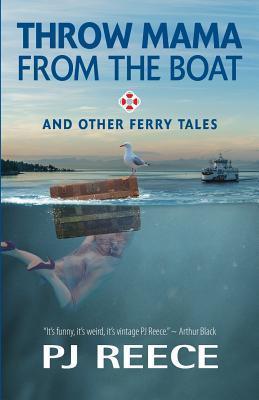
PJ Reece’s “Throw Mama from the Boat and Other Ferry Tales” is a delightful romp into one aspect of life on the Sunshine Coast, travel to and from Vancouver on a boat. But Reece has taken this premise and turned it into a high concept collection of short stories that occur during the short space of a ferry ride. He takes it a step further by adding magical realism wherever it serves his storytelling. People disappearing out of photographs, the shadow of an animal creature that no one can identify except for the trusty and mysterious animal whisperer. People turning themselves into birds and hairy animals of the forest. The reader’s experience with each of his characters are fleeting, their dramas told with a bemused smile. There’s no need for, nor is there deep emotional attachment, as there’s not enough time. But you see his characters stumbling onto the upper deck in a wind, converging at the Ship’s Captain’s office for a wedding ceremony between two dogs, or on the car deck, or in an ambulance, or the belly of a whale. And even as we’re in the familiar interior of our car in an inching ferry line, Reece distracts – with a touch of whimsical fantasy that seems to occur in this witty world of misfits and seekers, and just enough bizarre intrigue to keep you reading. I found myself re-reading whenever this occurred – thinking ‘What did he mean by that?’ You’re never quite sure what actually happened, was it in the suggestion, your mind, a reflection? Some of the tales fit together with each other, as you’ll observe a character from a previous story on the ferry two months later, figuring into someone else’s story. Most of his characters get into conversations where they reveal that they’re searching for meaning in life and others are caught unawares, as the man who loses his girlfriend to morphing into a seagull, or the woman whose house burns down as she stands helplessly on deck in the midst of another drama. Two ask, “Where are we going?” Another, in a phone conversation says, “I don’t know, Rolf – evolution tends to lean forward, doesn’t it? So, which way are we headed?”
Ah, existential questions and double-entendres. Art imitating life and hell freezing over. A character dressed in a headscarf and sunglasses who reminds of Zsa zsa Gabor or Rita or Audrey or Marilyn, until Reece finally decides, it’s Zsa Zsa. The burning question: when would it be time to throw Mama from the boat? She seems to want it and as the reader tries to unravel what is fiction and what is magical, Reece’s characters reach their epiphanies: “That’s what old age looks like. You want to be shot.” I really enjoyed these stories and the unique aspect of our geography, and the slightly exotic aspect of the ferry – all told together made me feel proud with recognition to be a Sunshine Coast resident, one of his ferry goers.
The cover? Unable to reject #MeToo now that it’s out of the bottle and we can talk about these things, it’s unsettling to see the good design of this book spoiled (for me) by the image of a woman’s body struggling under water (is she naked? is she drowning?) as part of the joke, even as the sentient beings on the ferry, oblivious, ride off into a beautiful sunset. Disappoints me to think that with this ‘just for laughs’ title and story, ‘boys will (still) be boys’. Makes me hear the famous go-to line of fifties and sixties comedy routines– “Take my wife – please.”, when women were the object of all sorts of things, the least of which, was a laugh. In spite of the cluelessness of this joke, my enjoyment of PJ and his twisted, witty but searching sense of life = 4 stars.
(less)
The post PJ Reece throws Mama overboard appeared first on Caitlin Hicks.
December 2, 2018
Christmas in Cornucopia, A magical holiday event
The evening will be an exclusive gathering with music, stories, lights and treats. Tickets include complimentary Christmas confections, coffee or tea. Two door prizes will be won at the event: a Christmas basket of treats provided by Gibsons Coffee & Tea, and a free audio book of the show with music by some of the best Sunshine Coast musicians.
Christmas in Cornucopia is a collection of original winter stories inspired by Coastal British Columbia, told in the first person by a variety of characters: an ice skater who remembers a moment when she chooses her creative life path; a young French Canadian mother and her newborn daughter who flee family violence on Christmas Eve; a child who is surprised by Santa Claus after her Mother warns her that he will never find them on remote Read Island, a Christmas Eve adventure on boat in the fog on the Strait of Georgia near Ripple Rock.
The signature story, Christmas in Cornucopia, tells of a magical town where every Christmas carol ever composed, was created.
The show was written and will be performed by Caitlin Hicks. Gordon Halloran will sing vocals with ukulele.
Extremely limited seating; advance tickets required. Tickets can be purchased at Gibsons Coffee & Tea at 459 Marine Drive. (604) 562-0024.
A short sample of the songs and stories of Christmas in Cornucopia will be showcased at St. Hilda’s Church Saturday, December 15th @ 2 PM as part of their annual church choir sing-along.
The post Christmas in Cornucopia, A magical holiday event appeared first on Caitlin Hicks.
September 28, 2018
Next of Kin, Descendants of War

Sunshine Coast Arts Centre hosts
Next of Kin:
Descendants of War
Inspired by true, personal histories
told by Caitlin Hicks
Also featuring new book ‘Tweets from the Trenches’
By Jacqueline Carmichael
Saturday, November 10th
7:30 – 9:00 PM
Tickets $15 – $20 at the door
RSVP to reserve your space: caitlin@caitlinhicks.com
Playwright, performer and author Caitlin Hicks is curating and will perform in a show called Next of Kin on Saturday, November 10th from 7:30 – 9:00 PM at The Sunshine Coast Arts Centre. The evening will feature true stories from World War I and World War II.
Hicks will tell stories that relate factually and emotionally to Remembrance Day. The first is her dramatic monologue UNDER THE PORCH, in the voice of a young woman on the day of her marriage to her second husband mere months after her first husband was killed in World War II.
NEXT OF KIN is Hicks’ true story of visiting the grave in France of the soldier who married her own mother and was killed during the twenty-one day assault by American and French forces, that saw the Colmar Pocket of the German 19th army ‘elminated as an effective force’.
She will also tell first person accounts from a show she wrote called THE LIFE WE LIVED, The War Years. The show was a compilation of stories Hicks gathered from Sunshine Coast locals, who experienced the war from various points of view: such as Tony Onno, a Japanese tree faller in Toba Inlet who was told ‘to get the hell out’ in February 1942, Leon Arthur, a man who participated in developing the bomb that was dropped on Hiroshima and Nagasaki and other first person accounts.
In addition, Caitlin will bring to life the work of journalist Jacqueline Carmichael who has written a new book called Tweets from the Trenches, Little True Stories of Life and Death on The Western Front, a post-modern collage of poetry, historical documents, tweets and photographs from her grandfather, a veteran of the Western Front. Published in the centenary of the last 100 days of the “Great War,” Tweets from the Trenches is an odyssey into the dugouts of WWI history. Written in flash documentary creative non-fiction, it encompasses excerpts of journals, letters and memoirs of Allied participants from Prince Edward Island to Yorkshire to South Carolina. The war unfolds chronologically in stories of valour and heartbreak, on everything from rationed rum and brave homing pigeons to post-traumatic stress disorder.
Doors open at 7 o’clock on Saturday, November 10th. Tickets are $20 at the door.
The post Next of Kin, Descendants of War appeared first on Caitlin Hicks.
August 28, 2018
What readers are saying about KENNEDY GIRL

KENNEDY GIRL, a new novel by Caitlin Hicks
It’s 1968. The Beatles Magical Mystery Tour hits Number #1 on the charts, HAIR opens on Broadway and the Vietnam War rages, impacting communities across the United States as young men come home in coffins. 17-year old California-girl high school senior ANNIE SHEA escapes the claustrophobia of her Pasadena life when she sneaks out of her conservative Catholic home to volunteer for Robert Kennedy’s Los Angeles campaign for Presidency of the United States. In the wake of RFK’s assassination, ANNIE SHEA is caught in the zeitgeist of The Sixties between her own future, her Black Panther boyfriend and her AWOL brother as they run from the police, the war and their own secrets.
_________________________________________________
“Caitlin Hicks has done it to me again. I LOVE Kennedy Girl! With such an authentic voice, Annie, who readers will remember from A Theory of Expanded Love, narrates that magical combination of innocence, spunk, chaotic feeling, and burgeoning understanding of the conflicts that people who came of age in the 1960s and 70s had to reconcile. Once again, the power and the weakness of her Catholicism, the magnetic force of her family and the true issues of the nascent civil rights, anti-war and women’s movements are expertly revealed in the intricate plot.
“Those of us who lived through those days know Annie to the bottom of her very big heart and are grateful for the gift of being brought back to that fraught time with such a credible character. I also love the character Lucas, and Hicks has managed to keep him free of caricature, creating a full measure of understanding, empathy and sorrow in the reader for what he and Annie must face.
Another tour de force…” -Barbara Stark Nemon, award-winning author of Even in Darkness, and Hard Cider.
http://www.barbarastarknemon.com

“Just as good as A THEORY OF EXPANDED LOVE. Strong, complex characters, vivid descriptions, tension and dialogue that move the story forward at just the right pace.
“I love Annie’s heart. I love that she can hold her frustration, anger and outrage at her parents and her love for them at the same time. Her ability to do that carries over into her relationship with Lucas—she’s sees both his potential (intelligence, talent, kindness) and the forces that push him. . .” – Sydney Avey author of The Trials of Nellie Belle

The post What readers are saying about KENNEDY GIRL appeared first on Caitlin Hicks.
March 31, 2018
Martin Luther King Slain in Memphis – excerpt from KENNEDY GIRL, by Caitlin Hicks
Friday, April 5, 1968. Something terrible and unbelievable that has happened again and all the newspapers are announcing it: MARTIN LUTHER KING IS SLAIN IN MEMPHIS; A WHITE IS SUSPECTED; JOHNSON URGES CALM. It’s just like the Watts riots a few years ago, the smashing of storefront windows and blacks being beaten with billy clubs and attacked by vicious German Shepherd dogs and hosed off with fire hydrants. The police look like combat soldiers attacking their own citizens. The blacks are angry and now the white people can’t hide. Here in Pasadena, we’re safe but I hope it dies down before I have to go to the Kennedy headquarters tomorrow.
On TV, Robert Kennedy gave a speech from the back of a flatbed truck in Indianapolis. He said that even if the blacks want revenge, we must make an effort, after all a white man shot his own brother, too. A poem he read made me cry “pain we can’t forget even in our sleep”.
What is going on? Martin Luther King? It’s shocking to a planetary level of shocking. What can you count on anymore? He’s an important leader for the black people. Supposedly holding our world together. And if Martin Luther King can be shot dead in broad daylight while he’s having a cigarette – what’s to stop the Pope from being drowned with just his boxers on? I mean, it’s just – sky’s the limit!
At the Kennedy-for-President headquarters, the name Martin Luther King bubbled off everybody’s lips. The room brimmed with a chaos driven by animated conversation and the urgent sound of a news announcer on the television. A photographer stood by the water cooler, several cameras draped around his neck, looking confused and weighted down by the sadness in the air. I recognized the familiar comfort of being invisible in a crowd but also a melancholy, like dusk, permeating the room, as we viscerally understood the irrevocable nature of what had just happened. This person, Martin Luther King, had been shot in an instant and was really dead and gone.

Giant posters of Bobby Kennedy’s hopeful face filled a huge wall between glass storefront windows. I couldn’t take my eyes off the reassuring familiarity of that face. The image of him, with those big buck teeth and boyish grin had a certain innocence, like the poster was already a relic, something representative of an era gone by. Today, we lived in a world where a famous person could be cut down at any moment. But Robert Kennedy was still alive and among us. We had to count our blessings.
I felt the tumbling momentum of an invisible force surrounding us. What had we come to, as a nation with another public murder like this?
I listened to the conversations around me. Apparently there were no riots in Indiana where Kennedy gave his speech about peace, and the blacks there had gotten his message. This was considered a triumph. A buzz of unintelligible noise filled the room, incessantly interrupted by the sound of telephones ringing. The television in one corner screamed sirens at half blast, with moving black and white images of the riots in Chicago and Washington, D.C. The announcer said the word ‘Kennedy’ and people crowded around the screen with renewed excitement, murmuring then shushing when he spoke.
“What kind of nation are we?” he asked and you could almost hear everyone thinking. “What we need in the US is not hatred, is not violence and lawlessness, but love towards another,” he said, with that great Boston accent, and everyone in the room applauded. It’s a message the original Jesus Christ would have given two thousand years ago, but obviously it was a message that didn’t stick to everyone over the years.
I thought about Daddy and Mother who are always talking about that original message, as if it lives alongside the message of the Vietnam war and both of them make sense together. Daddy said he was relieved that Martin Luther King was out of the way. How can anyone be happy that someone’s life has been taken away from him in an instant like that? I think he lumped King together with Malcom X because they were both negros, giving speeches about black rights and inciting people. What kind of nation are we? It occurred to me that Daddy was afraid of them, and because he was my Father, and I had learned about the world through his eyes – I was afraid of them too. My father wasn’t perfect but I loved him; now I was as ashamed of him as I was of myself for being afraid to speak up.
Facing the backs of everyone grouped around the tv screen, I noticed a negro woman sitting at the edge of a table to my left. When she put the phone down she covered her face with her hands, while everyone in the room was listening to Robert Kennedy on the tv. I turned away, wanting to give her a moment to herself, even though I was drawn to her. I didn’t know Martin Luther King, or all the reasons for his speeches and why he was so controversial. But now he was gone and this woman was quietly sobbing, like she had loved him. I realized that I had no idea what life was really like for her, or even for the black girls in my senior class who were always making us all laugh.
I was in a room staring at everything but I couldn’t see the meaning of what I was looking at. Bart stood by the water cooler, like he had been a volunteer for weeks. Madcap was coming out of the bathroom with a lit cigarette in her hand. I sat across from a black woman, trying not to look at her cry. Another famous leader had been murdered yesterday in broad daylight. The brother of the first assassinated leader was somehow consoling all of us. He was running for President of the United States and in this room we could almost touch him. His voice was being beamed into our ears from a snowy black and white television in the corner, filtering through all the noise of our grief and disbelief. We were in the middle of something big, so very big and important and I didn’t understand what it was. Suddenly, I wanted to know more about the world we live in, about all the things that had been invisible to me before, and how these things happen in a country like ours.
In the end, the rioting that swept the nation in 100 cities killed 46 people, all blacks, except five. LBJ declared a National Day of Mourning. On April 8th, Coretta King marched through Memphis with 42,000 people in a completely silent march to protest against treatment of black sanitation workers. On April 9th, King’s funeral was held in Atlanta. 120 million Americans watched on tv and I was one of them. Jackie Kennedy was crying alongside her brother-in-law Edward Kennedy, with one hundred thousand people who surrounded Ebenezer Baptist Church. Seeing all those people together, you could feel the disbelief and the irrevocable sadness of a unique person missing forever in an instant. I saw Bobby Kennedy among the thousands holding hands singing ‘I do believe / We shall overcome’. We were right there again, staring at a coffin with a man inside, wondering about all the futility and permanence of such a stupid thing: the killing of another human being.
The post Martin Luther King Slain in Memphis – excerpt from KENNEDY GIRL, by Caitlin Hicks appeared first on Caitlin Hicks.
March 30, 2018
Writer’s Sunshine Coast Spring Workshop * April 27 – 29 @ The Linwood House
The Writers Union of Canada presents
SPRING WRITER’S RETREAT at The LINWOOD
April 27 – 29
The Writer’s Union of Canada (TWUC https://www.writersunion.ca/ ) in cooperation with Federation of BC Writers (http://www.bcwriters.ca) is hosting SPRING WRITER’S RETREAT at The Linwood in Roberts Creek at the end of April. All local and BC writers are welcome to participate in a variety of activities over the weekend.
Workshops featured at the retreat include: Creative Non Fiction with Lynne Van Luven, From Research to Fiction with Michelle Barker (www.michellebarker.ca) , Maneuvering the Media Ocean: Social Media for Authors with Sapha Burnell (http://www.saphaburnell.com), and FIRE UP YOUR COMMITMENT to Your Writing with Donna Barker as well as Shut Up and Write! sessions, concurrent with the workshops over the weekend. An Open Mic on Saturday night will feature writers reading their best work, and all registrants are invited to enjoy a variety of delicious and healthy meals served at The Linwood.

Admission to the workshops is f r e e for writers who are currently paid-up members of TWUC or BC FED of Writers . For writers who cannot show membership at the door, admission to each workshop is $15. Shut Up and Write! sessions are free. Out of town writers and local writers who want accommodation and / or to participate in the meals served at The Linwood, register directly with Gwen McVicker: (604) 885-0214. Space is limited at The Linwood, so book now! https://www.linwoodhouse.ca

Workshops & Instructors:
Creative nonfiction: Finding your way to story, with Lynne Van Luven. Vital stories dance all around us, but how do we share them in the best way possible? This workshop focuses on the types of creative nonfiction and the techniques best suited to each kind of story. Lynne Van Luven taught creative nonfiction and journalism at the University of Victoria in the Department of Writing for almost two decades. She is now a professor emerita and is exploring a series of personal essays on aging and death.

From Research to Fiction with Michelle Barker. Anyone who writes fiction has probably come up against the challenge of doing research, and then the added challenge of incorporating their research into the story without making it sound like a textbook. This workshop will address the pitfalls and joys of researching. A few writing exercises will hone new skills. Michelle Barker is an award-winning author and poet from Vancouver, BC. Her newest book, an historical novel for teens called The House of One Thousand Eyes (Annick Press), comes out this fall. Michelle has an MFA in creative writing from UBC and works as a workshop leader and editor. (www.michellebarker.ca)

Maneuvering the Media Ocean: Social Media for Authors with Sapha Burnell. (www.saphaburnell.com) Sapha’s tells you all you need to know and more! about Twitter, Facebook, Amazon, Goodreads and how you as an author should spend your precious time promoting yourself on social media. Sapha Burnell: Overlapping science, myth & gender. Public Speaker. Activist. The Writers’ Union of Canada BC/Yukon Rep. Comparative mythologist.

FIRE UP YOUR COMMITMENT to Your Writing with Donna Barker (http://www.donnabarker.com) Why is it so hard to commit? To your writing practice, that is! To getting the story — the one you know you have to tell — out of your head and into the world? Writers who have successfully committed to their writing practice often speak of a trigger event that pushed them past their blocks, sometimes after years of flailing. In this workshop you’ll identify your own personal triggers and milestones.
Donna Barker, in her own words: “It took me 10 years to write my first, never-to-be-published manuscript and less than 2 months to write the book that made me a published author. What created that change? Milestones — figuring out the ‘what’ that would fuel my commitment to get my story told. And since science backs up my personal experience, it’s a secret I love to share!”

The post Writer’s Sunshine Coast Spring Workshop * April 27 – 29 @ The Linwood House appeared first on Caitlin Hicks.
Book Reviews

From the main page, click on 'Reviews' ...more
- Caitlin Hicks's profile
- 39 followers

