
Hannah Farver's Blog, page 9
February 6, 2012
hollow mornings
Tumbling out of bed (literally),
leaving warm blankets behind
knocking over my roommate's stockpile of macaroni
the sound of noodles in boxes
(ugh, like maracas…falling everywhere)
hitting the floor
shattering morning
a dream, interrupted.
It's hard to believe in beauty, and an underlying pulse of glory and grace beneath our lives, on mornings that start with falling macaroni (and no coffee). My left shoe has warped overnight and (for some reason) keeps wanting to fly off when I walk. And I keep daydreaming about road trips, because it's Monday and winding roads are far away. It's a bless-your-heart, but-I-hate-your-guts sort of day.
We ache for the beauty, the perfect, the gift. We want wholeness—soul embiggenment. Today, I'm pretty sure my soul looks like a four year-old raisin.
I am not quite brave; not quite awake; not quite even myself. Stealing words from Amy Dryansky, "I'm still standing here, half in the light." Shy, half-made; insufficient and hollow.
But my denseness does not negate the glory. Just because I feel this way does not mean God is working any less exciting, wonderful, fantastic things for His glory today than He was yesterday.
Elizabeth Barrett-Browning wrote,
"And I said in underbreath —
All our life is mixed with death, —
And who knoweth which is best?
And I smiled to think God's greatness
Flowed around our incompleteness, —
Round our restlessness, His rest."
I can bear infinite weight (of far sterner frustrations than tumbling macaroni), because the Infinite bears me. That in itself is the beauty of this day. Abject weakness, filled by strength that is not my own.


thoughts in philosophy class
If God is the One Necessity and we are Contingent,* how beautiful is it that He loves us? More than a lion loving a lamb; more than angel loving mortal—this is all-power loving all-frailty. What then did the universe hear screamed when the Necessary, who cannot be destroyed, submitted Himself to bear the weight of our destruction? There is glory here that finite beings cannot see…because we don't know how to feels to be both First Mover, and moved.
*essentially, unnecessary for the universe' existence, and dependent upon the prime mover to set everything in motion.
February 2, 2012
the quiet
The poetess Mary Oliver wrote,
"I do know how to pay attention…
how to be idle and blessed, how to stroll through the fields,
which is what I have been doing all day.
Tell me, what else should I have done?
Doesn't everything die at last, and too soon?
Tell me, what is it you plan to do
with your one wild and precious life?"
I was born in a fury. My parents testify that I emerged, blue-black bruises under my eyes, jet black hair standing on end. As they would tell it, I spent the first year of life screaming.
This fury (I'm sure it's ingrained my cells) taught that life is running: "Forward or back, just move." So I became a fireball with no place to land; shooting across the sky, incinerating at both ends.
Enough about me. I have a great many friends who are propelled by similar fury. We do everything and we tire easy. Ashes flake off us still.
Mary Oliver posed a worthy question: "What will you do with your one wild and precious life?" Before, I would've assumed that sentence was some kind of motivational saying, meant to keep the world rushing. "Do more; be more; make your mark. Accomplish everything." Not so anymore. The baby born-bruised is tired of fighting.
What will you do with your one wild and precious life? What will give it meaning? What moments do you want to hold on to, to make, to keep, to define you?
Here is an observation that humbles me: all my meaningful moments have been the quiet, ordinary ones. Roadtrips with my family to the beach (including some absolutely epic rounds of Charades). Being spontaneously hugged and hand-held by an overjoyed little girl—an orphan with Down's Syndrome. To finally trust and shed fears to a friend, only to look up and see they're actually crying on your behalf. Tip-toeing out of the house at midnight just to watch the stars spin, and listen to the wind creak open our rusty gate.
The greatest splashes of beauty and wild grace I have ever known, have taken place amongst the ordinary.
I'm not suggesting a complete disregard of all important efforts to live in a cabin in the woods. As that great sage, Dr. Seuss, wrote, "Unless someone like you/cares a whole awful lot,/nothing is going to get better./It's not." I care about advocating for the oppressed, speaking up for what's right. More than that, Jesus calls us to a Christian life that is action. It involves carrying crosses, loving neighbors, going and telling—all verbs. In that way, by God's grace, I will keep running.
But I doubt fury-for-the-sake-of-fury is a life worth living. It's hard to count blessings and have joy in a life that only emphasizes verbs.
And just maybe, the reason that our lives are filled with mostly ordinary moments is because they're mostly not ordinary at all. No experience is small. What if our pivotal moments are not in the arrival of great and terrible events—but in silence, or amidst the laughter of friends? What if our personal Thermopolaes, Waterloos and Normandy's take place in prayer while walking to class or washing dishes? We are no less brave because there were no witnesses; they are no less poignant for their smallness.
What will I do with my one wild and precious life? I have no idea, but there's one option I'm starting to like: I want to live in the glorious ordinary.
January 19, 2012
"Without the sun, there is no morning.
More than a source, it is passion;
it is meaning. The sun is..."
Without the sun, there is no morning.
More than a source, it is passion;
it is meaning. The sun is dawn
to the aching earth.
My glory is found in waiting.
My glory is Your arrival.
I cannot come to You,
But every moment I watch
for Your faithful coming, daily,
breathing me anew.
As the sun is to the morning,
so are You to me.
when i distrust the Bible
I have an automatic distrust of the Bible. It's true. I read with reverence until one of those difficult verses, like, "Delight yourself in the Lord and He will give you the desires of your heart," pops up. I wince, like at the bottom of a forward email that says, "Pass this on to four friends and your prayer will be answered."
I distrust such guarantees—even from the Bible. John 15 says that if you abide (dwell) in God, "…whatever you ask the Father in my name, He may give it to you." (John 15:16) Crazy. What do we do with verses like that? Or again in 1 John 3, "Beloved, if our heart does not condemn us, we have confidence before God; and whatever we ask we receive from Him, because we keep His commandments and do what pleases Him."
Meanwhile, I read these verses and wonder, "Is this really true? How far does this go?" Obviously, there are restrictions—caveats in place in the text. "If" we abide in God, and "if" we keep His commandments and do what pleases Him. This means automatically, I think, that the sort of things we ask for are not going to be things against the Bible, and the prayers answered are not against His will. "God, please help me successfully cover up a lie," is therefore, not a prayer guaranteed to be answered under these stipulations. But I state the obvious here.
What about the amoral prayers? What about the good ones—when we ask for a friend's healing? Or for healing in relationships? For the provision of something you don't technically "need"? (e.g., friend and I prayed in the Nike store the other day; she wanted shoes without paying a ridiculous amount of money.) These are objectively good things, even arguably within the will of God. Will God answer these prayers?
I'm not sure. His will trumps everything. But I think Scripture would have us do two things:
1) Don't assume God will say "no." Believe that God is naturally inclined to rescue, to give you joy; and if it doesn't happen it's because He has a greater plan of rescue or a greater plan of joy in mind. Expect good gifts from God.
2) Ask often, ask boldly. This seems presumptuous. My soul trembles to do this—to pester the throne of grace. But amazingly, this is what Jesus says to do. He tells the story of a socially awkward, presumptuous man who battered his friend's door at midnight to ask for bread (Luke 11). He also tells of the widow who pestered a judge until he granted her justice (Luke 18). In both cases, Jesus tells us to pray in the same way. On what do we base our presumption?
3) …Jesus is our High Priest, our Advocate. 1 John 3:1 says, "See what kind of love the Father has given to us, that we should be called children of God; and so we are." Children depend on their parents. Loving parents bid their children to come with their desires, needs, and especially their hurts. By virtue of our High Priest and Advocate, our adoption is secure. We are children, kept and loved. Abba says, "Come…again and again, come."
Even if I don't get it half the time, the Bible seems plain here. The promises on prayer may seem to grand, but what else can I do but trust? That's what children do. I am content that the promises are left to Him for the keeping.
January 12, 2012
sameness
His love is true. This time several years ago, I clung to that in a hospital waiting room. I cling to it still.
In Matthew Henry's Commentary on Ecclesiastes, he noted how God's love for us is never evidenced by our treatment in this life. I wouldn't agree completely—obviously God's particular affection for His people is demonstrated in visible action on their behalf—but I get what Henry was saying. Our circumstances here can never change God's love for us. He set it upon us. It's secure. And don't think because your circumstances are shifty that God's love for you is shifting.
We may mishear His will. We may be too weak to discern it.
We may carve gods in our image. We may maintain idols we don't even know are there.
We may fail to love people well.
We may make so, so many mistakes.
But the God we serve is the same powerful, miracle-working God as at Pentecost; the same defender of His people as when He decimated Philistines; and—
He is the same redeeming,
restoring,
loving God
whose Son's life was traded for us. That same love resonates just as strongly for us today. There is One unchanging through history, comforting in His sameness, hope-giving in His sovereignty. This One Thing remains.
January 11, 2012
Because He meant it.
Because He meant it.
January 7, 2012
bookishness
I received an email the other day from a blog reader, Brooke (Hi Brooke!), who asked if I could post book recommendations. Part of me rubbed my hands together, giddy at the prospect of indulging in bookishness; the other half groaned because it is just so hard to pick favorites. But Brooke made the case that, difficult as they are to write, book recommendations are helpful to other people. Therefore, writing them is a worthwhile project.
Here's me, convinced. Lo, a list of the best books I've read in recent times. Let me know if you have further recommendations. Comments are open. I'd love to know what books I should keep a look out for.
Books that have helped me know Jesus better/transform my mind:
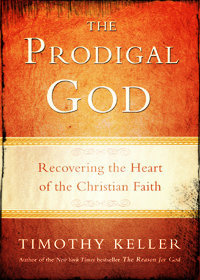
The Prodigal God - Tim Keller
Heaven - Randy Alcorn
One Thousand Gifts - Ann Voskamp
Crazy Love - Francis Chan
Doing Things Right in Matters of the Heart - John Ensor
God is the Gospel - John Piper
Poets:
Christina Rossetti (Haven't read everything she's written, so I don't want to give a carte blanche endorsement…but she was a believer, and everything I've read from her so far has been gorgeous. For instance: "Beyond this passage of the gate of death/I charge you at the Judgment make it plain/My love of you was life and not a breath." Lovely.)
T.S. Eliot (Okay, it takes a certain mood to enjoy Eliot. Plus a cup of tea. Also, know that his poetry from before his conversion is very weird. After his conversion, his poetry is sometimes still weird, but a sanctified weird. "Four Quartets" is my favorite, though "The Hollow Men" and "The Waste Land" is full of food for thought…though I needed an annotated version of the last poem to understand it. I don't have a Ph.D. in British Lit.)
On the aching of the world:
Nothing to Envy - Barbara Demick (A journalist who writes like a novelist compiled this book, so it's a fascinating read. Paints a picture of North Korea during the past fifteen years, as told by North Korean defectors.)
God is Red - L—- Y—- (Not permitted into certain countries, so I don't particularly want it listed here, but you can look it up on Amazon. Excellent, informative read.)
Terrify No More - Gary Haugen (I hesitate to recommend this because it is simply so jarring and graphic. If you're inclined to read it…pray first. I've only read the book once, but once was all that was needed. Unforgettable.)
Random happiness:
Made to Stick - Chip and Dan Heath (I've re-read this book so many times. Most practically helpful book on marketing, presentation, and storytelling I've ever read. No matter if you work in PR or just want to be able to tell a story well…it's fun to read.)
The Little Prince - Antoine de Exupery (Delightful children's book. Just delightful.)
Perpetua - Amy Rachel Peterson (Not necessarily a "happy" book, but it's a beautiful interpretation of the life of Perpetua, an early martyr from North Africa. Worth reading.)
Most anticipated to-read's:
The Explicit Gospel - Matt Chandler and Jared C. Wilson (Set to release April, 2012)
Socrates in the City - Eric Metaxas
Orphanology - Rick Morton and Tony Merida
January 6, 2012
do.

At Passion 2012 a few days ago, Francis Chan talked about living out what we read in the Bible. It wasn't a novel message, and he said that much himself. But then again, it was. How often do we read the Bible, then set it down, and work the rest of the day at obeying it? I'm not just saying spiritually—like aligning ourselves to worship in our hearts, but hands-and-feet doing what it says to do.
In Luke 11, Jesus tells a parable of a widow who sought justice by pestering a judge. Jesus relates the story to prayer. My pastor preached on it this week, in a sermon that left me wrecked. He pointed out that Jesus tells us, through that parable, to literally pester God. Our constant prayers do not bother Him. "Cry out to God so much that you wonder if it annoys Him," the parable says. He wants us that much. He wants to hear us; for us to have faith enough to ask Him to help.
Furthermore, Hebrews speaks of Jesus being the great High Priest who constantly "lives to" intercede for us. Crazy, crazy thought.
I can't wax poetic on it, because I'm still in awe. Frankly, it doesn't make sense. "You want me to pester You? For real?" It related to Francis' point, though.
The 73 times (or so) I've heard just that parable alone since childhood, how often have I acted on it? Has it changed me? And what about every other command in the Bible that we know and skim over because we know it? Yeah, those commands. Do we even try to follow them?
Hannah Farver's Blog

- Hannah Farver's profile
- 12 followers

