
Hannah Farver's Blog, page 4
August 25, 2013
Hi, lovely people! I said I’d update this blog. I even...
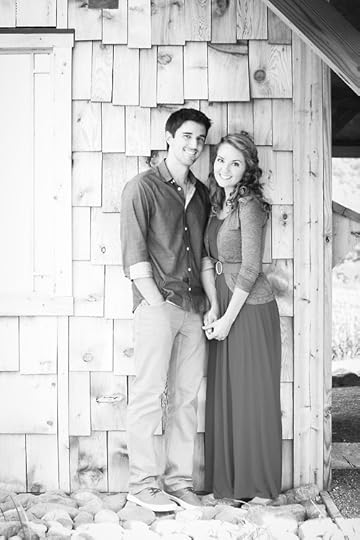

Hi, lovely people! I said I’d update this blog. I even scheduled a time to do it. But these days are busy and rich and good, and just posting pictures made more sense.
I’m working at Hope for Orphans, mostly with graphic design, and also on more freelance projects. (If you want help with branding your small business, let me know!)
Oh, and I’m getting married in November to the kindest man I know. (Some engagement pictures, above! I think we look a little on the happy side.) I honestly don’t know what to say about us, except that God has showered us with grace. This is all such a gift.
So, there’s wedding planning too.
And, sometimes annoyingly, the itch to write hovers above my head all the time. But mostly when I’m supposed to be falling asleep. Who knows? Maybe it’s time for this blog to wake up again.
'Til then,
Hannah


April 6, 2013
The world is breathtaking.
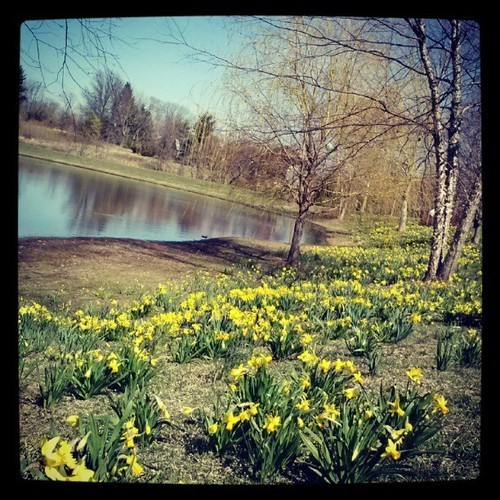
The world is breathtaking.
March 21, 2013
poultry and the soul
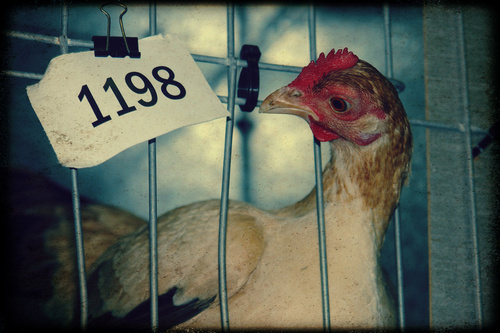
“I do not like viewing animals like that,” he said. “They’re not just machines that exist to produce my food.”
I imagined chickens enclosed in cages too tight to move, and although I’m no animal rights activist, I believe he’s right. He mentioned how Lewis wrote in the space trilogy of animals serving humans as humans serve God; we may have the power to do what we want to them, but it is not kind to view them as simple instruments.
This makes me think: God does not view us exclusively as instruments.
Today, I didn’t have the strength to do what I needed to do. Class was starting soon, but I skipped. And I went to bed. The doctor had told me about this—that my veins are tired.
If I were only an instrument, I’d be a terrible one. If I were a hammer, I’d be broken. If I were one of those pitiful caged birds I’d be the one with feathers shedding in clumps on the ground.
Matthew Henry wrote that men are “but instruments in the hand of Providence,” and he was correct in a sense. We were created for God, and He may do with us what He wants. But we are not merely means by which He accomplishes great things. We are also the great things He accomplishes. “For we are His workmanship, created in Christ Jesus for good works, which God prepared beforehand, that we should walk in them.” (Eph. 2:10) Here is the mystery: We are created as instruments, but amazingly, we are part of the end goal.
Created souls in relationship with God are not the neatly diagrammed subjects the psychiatrists would like us to be. We can be understood in terms of charts and data, as animals may be known as poultry or pork, but we cannot be truly known as we are.
I cannot accomplish much today in terms of God’s calling on my life: But in me, Christ may yet accomplish something, as He brings me to know Him as I am fully known.
January 3, 2013

At Once I Knew

I’ve never looked at Facebook before and felt small. Bored, annoyed, intrigued—yes. Never small. But as a couple hundred diverse lives updated their statuses on my feed, I suddenly felt, working from my couch, that my life was very unimportant.
Businessmen in Korea are signing deals in right now. Children in Saudi Arabia are scurrying to school, as some hikers are probably lost in the woods somewhere in Wyoming, and some boat is probably taking on too much water while tuna-fishing in the Bering Sea.
The world is like one gigantic beehive, with all our lives crammed together, humming away. I sit here, simply breathing, as lights flicker on And I am very, very small.
It’s not so bad. I don’t mind being small. The whole spinning universe looks all the more magnificent when you know you’re an unnecessary part.
But there’s the catch. Knowing we’re unnecessary doesn’t exactly give the warm fuzzies.
I was told the other day that the reason the Harry Potter books were such bestsellers was because every highschool and middle school kid could identify with Harry’s struggles. He was a perfectly ordinary, bullied little boy. He was also secretly, in his own way, magnificent.
In the pit of our stomachs, we know we’re perfectly ordinary; but we live with the hope that, like Harry, we’ll be proven wrong.
This started me wondering how many things we do to prove our own magnificence. Every contest-driven reality TV show (Cupcake Wars or Elite Models) is fueled by this urge to stand out. The winner is eventually the one who does. But maybe the whole racket is designed so the viewer at home can critique the winner the entire time, bolstering their own sense of superiority, and knowing that if that person on the screen is magnificent, they are even better.
Jane Austen asked, “What are men to rocks and mountains?” and Shakespeare said through Hamlet that even kings are never really more than the dust that will one day get caught on a traveler’s shoe. This could lead to nihilism; reaching out, Gatsby-like, for a still unattainable significance.
Or.
This recognition of smallness is like finding childhood again. Stars are more dazzling this way, sleep feels more peaceful, and the breezes are sweeter. I am small; yes, small enough to see that my continued humming along in this vast expanse is a miracle.
I am not needed, but I am loved.
While the world tilts and wobbles on its axis, and there are explosions and hurricanes and snowstorms, I am still here and He knows my name.
December 27, 2012
From “The Jesus Storybook Bible’s” retelling...
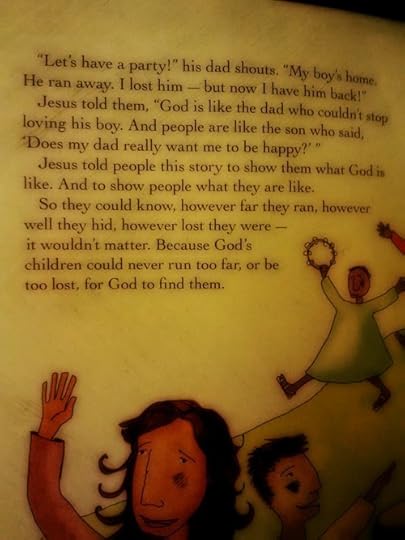
From “The Jesus Storybook Bible’s” retelling of the prodigal son.
December 18, 2012
Flower Gathering
I so love this poem by Robert Frost:
I left you in the morning,
And in the morning glow,
You walked a way beside me
To make me sad to go.
Do you know me in the gloaming,
Gaunt and dusty grey with roaming?
Are you dumb because you know me not
Or dumb because you know?
All for me, and not a question
For the faded flowers gay
That could take me from beside you
For the ages of a day?
They are yours, and be the measure
Of their worth for you to treasure,
Their measure of the little while
That I’ve been long away.
November 26, 2012
"We think that mercy is a sweeter and easier thing than justice, but it is not so; for justice takes..."
- Dr. Anthony Esolen
November 4, 2012
a second childhood
An interesting poem by Chesterton. Uncertain about what he meant in the fourth-to-last line—but it seems to fit with what was written in that chapter in Orthodoxy, “Ethics of Elfland.”
“When all my days are ending
And I have no song to sing,
I think that I shall not be too old
To stare at everything;
As I stared once at a nursery door
Or a tall tree and a swing…
Men grow too old to woo, my love,
Men grow too old to wed;
But I shall not grow too old to see
Hung crazily overhead
Incredible rafters when I wake
And I find that I am not dead.
A thrill of thunder in my hair:
Though blackening clouds be plain,
Still I am stung and startled
By the first drop of the rain:
Romance and pride and passion pass
And these are what remain.
Strange crawling carpets of the grass,
Wide windows of the sky;
So in this perilous grace of God
With all my sins go I:
And things grow new though I grow old,
Though I grow old and die.”
- G.K. Chesterton

October 30, 2012
"He had been too busy to think much about the real Anniera. It hovered in the distance of his best..."
He had been too busy to think much about the real Anniera. It hovered in the distance of his best dreams but remained a dream only. It was hard to believe it actually existed, that across these very waters a home awaited him…He knew enough to realize that the way before him would be hard.
Is it worth it? he asked himself. Was it worth losing his old life in order to learn the truth of who he was and who he was becoming? Yes.
”- Andrew Peterson, North! Or Be Eaten
Hannah Farver's Blog

- Hannah Farver's profile
- 12 followers

