Rob McClellan's Blog, page 3
December 10, 2015
Let’s Talk About Gun Control
After San Bernardino, many are talking about our gun laws. And they should be. We had a major incident, and whenever that happens — be it guns or otherwise — we should be looking at our policy and seeing if it’s still effective.
For the record, I don’t believe in “gun control” per se. This is America, we have guns in our constitution, and I see no reason not to have them in the future.
However, that doesn’t mean I condone a weapons free for all, like we seem to have today.
Before we go too much farther, gun control is as much in our culture as guns themselves. I’m sure many have seen this familiar scene in movies, and I never recall seeing anyone stand up and run out of a movie theater screaming about the 2nd Amendment:
And, for those on the other side, yes, guns have been used to remove tyranny in the US — 1946, Athens, Tennessee. The so called “Battle of Athens” where local citizens (including many WWII veterans) stood up in response to corruption and electoral fraud. It’s rare, but it has happened.
And, just to be plain up front, let’s stop bringing Hitler into the gun debate. Sure, he collected guns. He was also a huge advocate for prayer in school and affordable cars. Unless you’re talking about the actual holocaust, you should refrain from throwing the Hitler hysteria card. All that does is distract from the actual discussion, which is about policy. And, again, no one (reasonable, anyway) is calling for wholesale gun collection. Even Australia didn’t do that.
So, let’s just get all of that nonsense out of the way — on both sides.
Having rules about gun use and ownership doesn’t mean someone is coming to get your guns. And, gun ownership does have value outside of fighting tyranny. City folk may forget, but many beyond the suburbs still hunt for meat, not just for sport (though there is that, too, and nothing wrong with it).
Instead, I want to discuss guns, rules, regulations, and capitalism to see how the “American Way” can get us out of the mess we find ourselves in.
Regulation Isn’t Terrible
 Right now, any attempt to further regulate guns by the government is seen as an aberration of freedom. I’m sorry, but that’s bullshit. A ton of stuff in this country is regulated and we are all much better off for it.
Health Codes, business rules, highways, power distribution, telephone, OSHA, Hazardous material, nuclear power, shipping — hell, freaking elevators! Literally, a million things in your life are regulated and, yet, still freedom. So, please, your argument is invalid.
However, as always with regulation, the real question is: “What should we regulate and how?”
I’ll make it extremely simple for everyone. We make owning a gun just like owning a car.
Licenses, Insurances, and Ending the Black Market
We’ve all been there in the DMV taking our driver’s test the first time. We took drivers ed, rode around with our parents, and practiced parallel parking in the parking lot down the street on Sunday mornings when no one was there.
We took our written test, our practical test, and then we got a license. Not the car, mind you, just the license.
We started driving some old beater car with insurance our parents could barely afford to pay, because nothing says trouble like a new driver. As we got older, more experienced, and mroe stable, our insurance rate went down and, with earning power, eventually got a nicer car.
And with every car we ever owned, we had to register it, provide proof of insurance, and maintain it.
So, why can’t we do this exact same thing with guns?
Seriously. I want to know how, exactly, gun ownership should be any different than car ownership?
Why shouldn’t any prospective gun owner be required to show a valid license and insurance before purchasing?
Why shouldn’t said gun, once purchased, be registered with the state and added to your insurance policy?
We have to do this with our cars, our homes, our motorcycles, our boats, jetskis — all kinds of things in our lives we do this and never blink an eye.
Guns should be no different.
The Gun Show Conundrum
As for gun shows… No. Oh, you can still have them, but it’s not a valid justification for waiving the three day waiting period (under this plan, the insurer would be responsible for the background checks). I’m sorry, but it isn’t. No reasonable person would ever agree to that. I mean, what goes through your mind when you say this out loud:
Customer: And I really have to wait three whole days before I can take my gun to the range?
Gun Store Owner: Yes, sir, that is the law. We require a 3 day waiting period to ensure you’re not taking a gun in anger or duress. It’s safer for everyone, you and me. And three days really isn’t a long time in the big scheme of things.
Customer: But, I feel like my life is in jeopardy — I just don’t feel safe right now.
Gun Store Owner: Well, have you called the police to let them know you feel threatened? How about you head over to your folks’ house, or a friend’s?
Customer: No, I need a gun. I need it today. Right now.
Gun Store Owner: Oh, that’s different. Just head over to the blue tent at the fair grounds, they’ll give you anything you want. No waiting, no questions.
How would a gun show make money if no one can take home any guns bought at the show? How about partnering with a local gun store? You can buy the gun with the dealer at the show, they have to verify license and insurance, and then the actual weapon and copies of the sale documentation are left with a local gun store for pick up later in the week. Just swing by, let the gun store re-verify the paperwork, and you’re on your merry way.
Again — just like cars. I bought a car overseas from the NEX in Okinawa, picked it up three weeks later from a dealer in Mississipi. Walked in, flashed my ID and purchase paperwork, and drove out.
This isn’t rocket science.
How to Implement This
How do we make this happen? Like nearly everything else in America, we put a code onto your drivers license.
Non-Motorcyle riders may not know this, but those who do ride have a little “M” on their drivers license. To get that “M” (in most states), you need to take the motorcycle safety course, get a little blue certification card, and take it with you to the DMV. That card states that you have passed the written and practical tests and are certified as competent to ride. The DMV issues you a new license with your hard earned “M” and you can then go and buy a motorcycle. But, as with any vehicle, you can’t ride it around without insurance.
There is a similar process for truck drivers, equipment operators, and even RV owners.
For guns, I propose the same thing with a slight change in the order.
First, you should have to take a certified gun safety course (written and practical) for gun use, which you can then take to the DMV to have a code (“G” I assume) added to your license. This isn’t your uncle showing you how to shoot in the back yard. It’s a state certified course, with a state certified instructor. Just like drivers ed.
With that shiny new license, you can go to your local gun shop and buy whatever you want. Seriously. I don’t care. Whatever you want. You should still have to wait 3 days before you take it home, though, because crimes of passion are a real thing and, if I was a gun store owner, I’d like to make sure everyone was cool before sliding that gun across the counter.
Here’s the change I was talking about: Before you pick the gun up, you need to show proof of insurance for the gun you are going to purchase. You have three days to get it sorted, come back with your insurance card stating someone will back you for injury or misuse of the firearm you chose.
And, let’s be honest, depending on what you are trying to buy, it might not be cheap.
This is where capitalism comes in.
Just like 16 year olds and cars, depending on what you want to buy your insurance might get prohibitive. I fully expect to see discounts on gun insurance for good students, military service, trigger locks, and gun ownership history. But, I also think that a first time gun owner wanting to buy an AR-15 is going to have a whopper of an insurance bill, if they can even get coverage at all.
And before the gun rights drama starts — this is exactly the same as cars. I bought a sports car when I was covered by my parent’s insurance — I could afford the monthly payment and I liked the car. When I left college and went out on my own, I had to get my own insurance — and I dumped the car 3 months afterward. Why? Because a 22 year old junior officer with a sports car equated to $417/mo for insurance — twice the actual car payment. Economic forces won out, and my next car was a Ford Ranger pick up which USAA (my insurer) liked a whole lot more.
The government never said what car I could buy, or even how many cars I could own. But, I had to be a responsible owner, and that meant having insurance.
Insurance Changes Everything
Let’s talk about guns and insurance. Death by gun-assisted suicide? Insurer doesn’t have to pay benefits.
Shoot someone? If on purpose, it’s criminal. If by accident, your insurance is liable. Probably going to get a premium increase for that.
Property damage? Insurance — again, look for the price hike.
Happen too many times? Probably going to lose your insurance, same as you would if you were reckless with your car.
Gun ownership is directly equated to risk. Period, all stop, no exceptions. It’s no different than sports cars and smoking.
We don’t need fifty new gun laws. We don’t need crazy drama. We have a system for handling this already, we should use it.
A gun is not some mythical device. It isn’t inherently more special or dangerous than anything else in our life. As Kurt Russel recently said in response to the threat of guns, “They can also get cars and run you over. What are you gonna do about that?”
You’re absolutely right, Kurt.
But, you need to license, register, and insure a car. Now, let’s do the same for guns.


November 30, 2015
Chocolate, Gummi Bears, and Why Google Music Sucks Right Now

Special Note: This post is an artfully arranged set of cuts from a larger article I wrote on Medium. If you want the full experience, head over there to check it out.
The Summer, Google Music updated from being a music player to being a streaming service that also has a music player. And it Sucks.
While many of the same basic functions are there, the execution and philosophy behind them is long gone. The result is a music app clouded by the tastes of others.
I can understand this if it was a stand alone streaming up, like Spotify or Pandora, but it’s the packaged Android music player. Like, for your music. That you own.
That’s right. This Summer Google hijacked it’s own music player and turned into a Spotify wannabe. The net result here is that many are not happy.
So what? Tech companies do whatever, right? I mean, just look at Facebook, they screw over users all the time. We’re used to it.
The difference here is subtle but powerful. Users of services like Facebook are not paying customers. They use Facebook and, in return, Facebook can serve them advertising. Those paying for advertising on Facebook are the actual customers, and Facebook treats them very well. The unpaying users, well, they are at Facebook’s mercy.
In contrast, every Google Music user is a paying customer — you have to buy the music to put it on the player. It’s your music — you bought it from somewhere. And, for that matter, you paid for the phone itself that houses the player that plays the songs you bought. With Google Music, the individual user is the customer.
And that’s why so many are so unhappy — but, more importantly, it’s why this is a far more significant event than the software update of a music player.
June 23rd, 2015 is the day Google told all of its paying customers that they don’t matter. It was the day they declared victory in the fight for individual digital rights. A fight most people didn’t even know they were in.
The YouTube Red Switcheroo

I’ve been going back and forth with Google for months now since this update to their Music Player, participating in forums and keeping track of updates. Working my way up the customer service ladder. During my climb, I signed up for the YouTube Red free trial, something I was very interested in. And, it worked great! Ads disappeared from YouTube and my enjoyment factor went way up.
Then, half way through the Red trial, Google decided to bundle in their Music Unlimited service with YouTube Red, creating a kind of “Google Premium” service. Unfortunately, Music Unlimited makes a bad music player even worse, eliminating the key function for listening to your own music on the player, Instant Mix.
I immediately went back to Google to rectify this, only to be told they couldn’t do that. The free trial would have to run it’s course. I continued to pursue this through multiple vectors, only to get the same answer (got to give it to Google, they are consistent).
However, today I received an email from Google Customer Support asking why I am so intent on turning of my trial and returning to pre-Premium Google services. Here is what they wrote:
Communication From Google Customer Service
Hello Rob,
Thank you for contacting Google!
I understand you’ve canceled your free trial, and would like to revert the Play Music app back to the Free version. At this time there isn’t a way to do that, however I don’t understand why you’d need to, even if you only really want to listen to Radio stations or uploaded music. If you disregard having access to Google’s enormous library of songs, then you still have YouTube Red and unlimited skips with the Radio service. You could use this period of unlimited skips to better personalize the radio station feature for the future. The more data you’re able to feed into the system the better music is going to be because it’ll make choices that you’re more likely to enjoy.
Is there a particular reason you need this changed? I might be able to assist you better if I understand why this is such a necessity for you.
Let me know and we’ll look into it further if need be,
Thanks!
Name
The Google Support Team
Does Google Really Understand People?

“Option to disable Google Play Music radio features.” is currently the most viewed Support Forum topic in Google Play. Closely followed by “Play Music: Missing Subgenres and Explore tab?”
While I appreciate Google sending me a note to ask for clarification, the text of their email really drives home the problem — why do they think I want to listen to the Radio Stations? I don’t “only want to listen to Radio”, I do NOT want to listen to their Radio Stations at all.
Furthermore, I didn’t want to have my existing service trumped for their radio service. I like my own music, it’s why I bought it in the first place. And, I’m not the only one that feels this way.

Current snapshot of Google Music App Reviews showing a 200% increase in 1-Star reviews since the Radio Update.
In June 2015 there were approximately 72,000 1-Star reviews of Google Music. There are now 218,860.
For those doing the math at home, since its inception in 2011, four years ago, the Music Player app accumulated 72,000 intensely negative reviews — that’s 1,500 negative reviews a month. Considering there are billions of users, that’s not too bad. In the last four months alone, Google Music has generated an additional 146,800 intensely negative reviews — a staggering 36,715 a month!
In other words, since the “radio update” in June, the Google Music App has earned a 200% increase in intense dislike overall and dropped an entire point in it’s ratings.
I think it’s pretty obvious that many actual users of Google Music are not happy with what’s going on. What is equally obvious is that Google isn’t going to change course.
My Full Response Back to Google
Hey, Name, thanks for writing back.
The larger issue here is that Google Play Music Unlimited is not a service I’m interested in. At all. I am a huge fan of Google Music before the radio stations were bundled into them, however, and if I could have that back I would be very happy indeed. The current version is, to be honest, horrid. The main reason for that is the access and usage of my own music — bought and paid for — has been significantly worsened by the Radio updates.
I am interested in YouTube Red — ad free YouTube is a benefit to me and one I’m happy to pay for. But, the addition of Music Unlimited makes it no longer worth it. Forcing Music Unlimited on me is too high I price. Happy to pay for Red, but not if it includes Music Unlimited.
If you want to sum it all up into a bottom line: the Google update to Music removed the control I have over my purchased music, as well as the actual enjoyment of the music itself, and that is unacceptable to me.
Keep in mind, I’m referring to music that I PAID for. Truly, I bought it. Either from iTunes, Google Play, or a rip from an owned CD. It’s MY music. The player is also something I paid for — those phones aren’t cheap, and one of the specific reasons I chose Android over iPhone was the music app. Yes, seriously.
Another reason I chose Android over iPhone is that it afforded me a significant amount of personal control over my device. I control the look, feel, and function through custom launcher apps, icon sets, and my own layouts. To be able to decide how I use my digital property is a big deal to me – and many others.
The Google Music Radio Update — and Music Unlimited — was a smack across the face from Google, boldly stating the company’s view that I have no rights to anything, purchased or otherwise.
Basically, by this update, Google said “you may own the music, but you rent the player”. And they proceeded to change it in a way that made Apple’s design intrusion look like child’s play. Hats off for the chutzpah, but don’t expect me to be happy about it.
The reality is, Google Radio should have been a separate app. How it was bundled into the music player, taking over or eliminating many of the key functions, was as intrusive and humiliating a thing I have experienced in digital tech. It was a deliberate sucker punch to anyone who has bought music from you over the years. And a wake up call for anyone foolish enough to think that the individual has any rights whatsoever in the digital economy.
When I opened Google Music after the big update months ago, I felt like a chump. Plain and simple. With each update, I thought for sure the engineers at Google would see they had gone a bit too far and return options to users.
But, they never did. And it’s only gotten worse with each new update.
This experience with Google Music, and now YouTube Red, has made me think very hard about buying anything online and I seriously don’t know if I’ll trust Google quite the same going forward. After all, if Google can so offhandedly cripple my ability to listen to the music I’ve purchased, what next? Movies I’ve bought? Books? Are my purchases nothing more than a stronger rated recommendation for a future algorithm?
The implementation of Music Unlimited does not empower me. It does not give anything to me. It TAKES from me. It treats me, and my money, as less than an individual. Less than a customer. I’m just now a source of funds and my uses, desires, and tastes are marginalized. Superseded to the desires of a larger sponsor — Google, record labels, shareholders, and whoever else.
It, literally, cheapens me as a person.
If these Radio updates were another tab in the player for me to access and enjoy, then one could say it provided something new to me. But, that’s not what happened. The update took over the app, reduced my options, and put my own purchases to the back of the pile, buried underneath the corporate streaming agenda.
I understand the viewpoint that having more access to music is perceived as a benefit — except it isn’t. Perhaps to some it is — but, most likely, they are already using Spotify (since the excellent RDIO just shuttered it’s doors), or perhaps Pandora or even XM/Serious (what my family uses, as its integrated with our car) to get their music exploration. The Music Radio “upgrade” is, to me, a classic case of “if some is great, then more must be greater!”
I, as an individual consumer, have absolutely no interest in having third party generated “radio stations” on my personal music app. It’s a player for MY music, not a giant feed for someone else to tell me what’s popular. I have many, many ways of discovering new music. I don’t need Google’s help with that. And, if I did, I would like it as a separate tab in the player, “Explore” perhaps, that would access such a function. To have it plastered all over the app, in a way that interferes with using my own music, is just inexcusable. I mean, seriously. It feels like a violation.
To be so brazenly intruded upon by Google is bad enough — and it is REALLY BAD — but to have Instant Mix, the music player’s key differentiating feature, deprecated is going a step too far. That one REALLY hurts. Instant Mix is the killer app of Google Music. It uses the Google algorithm in a way that actually helps the user instead of burdening them. It made listening to your own music refreshing, adding to discovering old classics in your collection and taking the pain out of generating playlists. It really made listening to the music in your collection a pleasure.
And, so, of course the Radio update killed it.
If you are NOT a member of Music Unlimited, you still have access to Instant Mix, though it’s only half what it was before (25 song limit, no ability to save them). However, if you “upgrade” to Music Unlimited, you lose that feature entirely, as it is replaced by “Radio”. Making a Radio Station out of a song in your personal inventory results in Google using it’s algorithm to build a playlist out of all accessible songs in the entire catalog. Again, that sounds like a bargain — except it isn’t. Unlimited skips doesn’t change the fact that I am trying to listen to my own music and, instead, Google is serving me music I don’t want.
Trust me, it only takes on Justin Bieber song to kill a trial of the radio feature.
I don’t feel like Google is at all interested in serving me music that I prefer. I do get the feeling that it is serving me music someone else prefers I listen to or buy (though it seems no one cares as much about buying these days). My music collection is on Google’s servers, it’s accessible to them. But the Radio Stations sent to me are confusing, full of songs I’m not interested in, and, quite frankly, don’t work.
As a test just now, I clicked on a “Station” on my Music App and there was nothing in it. It just says “click a song to start” but there are no songs listed. I just don’t get it — makes no sense. You can’t even click the “play” button. The result is it’s just stupid clutter on my screen that provides no benefit to me in any way
Instant Mix provided benefit to me. Radio stations do not. As long as I am a part of YouTube Red/Music Unlimited, I don’t have access to Instant Mix. So, the answer is obvious — I want out of Red/Unlimited. It’s that simple.
I was interested in YouTube Red because I would like YouTube without advertising. That has a real appeal to me, and I was looking forward to that program — indeed, happy to pay the fee for it. If I could have done so without the “free trial” I would have.
However, again, there was another case of “more is better” and Music Unlimited was bundled in. Doing so took away Instant Mix and significantly impacted my ability to listen to my own music. Once that happened, I immediately inquired about getting out of the trial — or at least separating Red from Unlimited.
The key problem here is that Google took away something of value from me, gave back something that has little value to me, and is now confused why I don’t want it.
Think about this issue with a different perspective. I like premium dark chocolate — the really good stuff. Fair Trade, single location, hand crafted. I pay a premium for that, and I enjoy it greatly.
Now, imagine if someone broke into my house, took my chocolate (that I paid for!), and hid it somewhere in the house. Then, where I usually keep my chocolate, they left a huge bag of gummi bears with a note that said “anytime you want more gummi bears, just ask — they are free forever”. So, while my gourmet chocolate wasn’t stolen, I now have to look all over my house to find it. And, while I now have unlimited gummi bears, I don’t want them. If I did, I would have bought gummi bears. Saying “well, it’s all candy — and now you have more then ever before” doesn’t change my feelings about it. That was MY chocolate and someone came in and took it. Not only impacting my ability to enjoy my chocolate, but violating me as a person in the process.
I didn’t ask to have my candy switched out. I don’t want the candy chosen for me. I want the candy I chose myself. That I chose enough to buy. I want it undisturbed and in the place I like to store it and I reserve the ability to consume it as I wish.
The way Google has chosen to “update” their music app is the same as the theoretical thief who swapped my chocolate for gummi bears.
I didn’t ask for Music Unlimited or these stupid radio stations. I didn’t ask for unlimited access to music I care nothing about. I just wanted to curate and enjoy my own music. Again, that I PAID for. But, Google’s update and all of the policies and updates since then, are intent on not allowing that.
Does that make sense?
I would like to have the reminder that my digital life was casually violated by a corporate entity removed from my device.
I would like to have control of my own music returned to me.
I would like to be treated as a valued, paying customer instead of a chump.
Please remove the effects of your free trial from my life. No harm, no foul, just take it away. It’s not wanted.
Thanks,
Special Note: For the complete back-and-forth between Google Customer Service and myself, as well as some more stats and history, please head over to the main article on Medium.
November 10, 2015
When the Baggage Drops
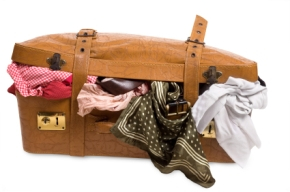 Every once in a while, life gets the better of you.
The little struggles, and sometimes the big ones, just get to be more than you can contain. The hurt or resentment or sadness bubbles out, leaking through the tight wrapping we all keep on our lives.
And, it is usually little things that cause it — the literal straw that breaks the camel’s back.
Maybe you were cut off in traffic, or your weekend plans got blown. Perhaps the kids left their lunchbox at school, or your spouse ate the last piece of chocolate you were saving for yourself.
None of these things, on their own, are tragic or terrible or life threatening. There is no danger. It’s just an aggravation. But, when coupled with other stresses, it can be enough. Suddenly, the weight of the baggage you’re carrying around with you — that we ALL carry around with us — shifts loose, falls out of your hands, and spills out all over. And how do you feel when that happens? More angry, more frustrated, and, yes, a little embarrassed. Maybe even hurt.
And that’s when it jumps out… in your anger and frustration, you try and push back at the world, hitting whatever target is closest to you.
Social Media memes abound about how everyone is struggling with something. Everyone is fighting a battle you don’t see. The battle they keep hidden inside themselves, that they fight alone. But what do you do when you, not someone else, loses the battle that day? Or, when you are that battle’s casualty and get unloaded on.

Sometimes Sh!t Happens
It’s rough when your baggage spills out. I’m sure anyone who travels has seen it at some point — a person’s in baggage check, has fifty things in their hands, and the suitcase goes over the edge.
You can see it in your mind in slow motion, simply waiting for the inevitable conclusion.
The case hits and everything inside dumps on the floor. Suddenly, this person is trying to hold their shit together while using the other hand to sweep their underwear up off a stranger’s shoes.
“I’ve got it! I’ve got it!” they cry, as the fallen struggles to hold themselves together, digging deep to maintain that last shred of identity they have inside.
A lot of the time, people keep going about their business, glancing down at that poor overworked soul from their cell phones, silently judging the shame of someone who couldn’t keep their life together. Never realizing that it’s really only chance that’s saved them from the same fate.
Sometimes a person will stop to help — greeted with grateful thank you as they help to put their life back in its case. Other times, the person needing it is too ashamed and rejects that help — “No! I’ve got it!” And so the helper backs off, confused, possibly even a little hurt themselves by the rejection.
And the shame of it all multiplies.
Bag back together, the traveler buckles down to continue their journey — thinking about the entire episode over the next few days. The walkers continue on, oblivious, secretly hoping it never happens to them, afraid that it might. And the failed helper nurses a feeling they don’t understand and tries to put themselves in the other traveler’s shoes.
One event, three hurts.
Is It All Too Much?
It’s kinda rare that someone’s baggage actually spills out on the floor. Much more common is the emotional baggage. The life baggage.
What happens when that falls?
Usually, it’s quickly followed by the sharp remark, the hurtful phrase, the lashing out. Sometimes it’s the opposite: the full retreat, the closing down. I’m not talking about abuse here — I’m talking about the human reaction to the very increasing phenomenon of modern life. The visible result of overload.
The reality is, not only are many Americans under a tremendous amount of stress, they are increasingly aware of the humongous amount of emotional and life baggage they are carrying. And, our culture really doesn’t prepare people for that. We aren’t taught how to manage, control, and deal with our ever growing stress, much less how to do so while carrying all we have to carry. Even those who have found a way to do so slip sometimes. Or, their method of control is causing stress of it’s own — drinking, binge eating, video games, or exercise to the point of exhaustion to name a few.
Financial stress. Emotional stress. Feeling put upon. Feeling like a sucker. Feeling abandoned. Feeling inadequate. Feeling overwhelemd. Feeling angry. Feeling ashamed. Feeling afraid. Feeling like a failure. Feeling loss.
Seems we are all dealing with these things — and more — at some point in our lives. Heck, in our week. However, it’s rare that we are all trying to contain a spillover at the same time.
So, when you see someone on the edge lash out, try not to take it too personally. It’s likely they are not upset at you. Instead, try and reach out and just say “hey, what’s going on?” Show some empathy — because I’ll bet a dollar you’ve been there yourself, feeling angry or frustrated as life overwhelms you.
What Can We Do?
I don’t know why so many today are hurting the way they are. People blame the economy, social media, lifestyle, commute, competition, keeping up with the Joneses, or overall uncertainty. Maybe it’s deeper than that — troubled childhood, missed opportunity, sick child or spouse. Job stress, lack of fulfillment, hopelessness. But, the reality is, many are carrying more stress than ever before.
As we see our pathetic politicians on both sides, the future doesn’t seem as sunny as it once did. Driving by the homeless vets on the roadside, our victories seem a little hollow. As we come back from a Sunday at the park with our spouse or kids, the news tells us another child molester was picked up in town, and you hold your children a little closer that night, fearful of what could happen.
Has the world changed, or were we always Polly-Annas? Is it actually darker, or just daylight savings time? Did the electric bill go up from last year, or is it our imagination?
Are we going to be OK?
I don’t know. I wish I did, I’d probably sleep better at night.
I do know, that I don’t want to live like I’m broken. Or afraid. Or any of those things. Not because I don’t feel that way sometimes, but because I refuse to feel that way all of the time.
Yeah, life can be a little too much every now and then. We’ve all been there. The poor and the rich alike, makes no difference. We all have our battles, our turmoil, our baggage. All of us.
Maybe — just maybe — we should stand together a little more. And when it gets too much and someone snaps, try not to be offended. Just try and be understanding. Sure, you don’t know exactly what it was that beat them today, but you do know that you might need their help tomorrow. So reach out, say “hey”.
Maybe you can help, maybe you can’t, but you can try.
September 24, 2015
Book Review: Phoenix Lights
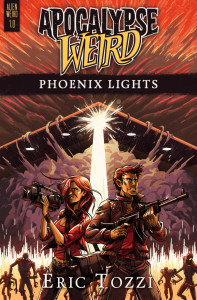 When I was a kid growing up, Aliens were pretty friendly. You had ET, the background characters of Star Wars and Star Trek. Even the creepy goings on of “Close Encounters of the Third Kind” had a positive alien outcome — wondrous, even.
Of course, then came the original Alien from Ridley Scott, and it all went to hell. Gone were the days of friendly, benign, or curious aliens and in came the hunter killers of our nightmares. Creatures so alien in both appearance and demeanor, so cruel in their difference, that you couldn’t help but be leery, even afraid. From Sigourney’s armed struggles against a jet black mercurial death machine, to Arnold’s hand to hand duke out with a split faced hunter from the stars, the sci-fi world was forever changed.
Sure, there was a little return to the wonder of yore with The Abyss, and an endearingly over the top triumph with Will Smith, but for many (me included) the alien zeitgeist remains deeply imprinted with the vision of slavering double jaws and red-blood explosions.
About The Book
With that alien duality in mind, I approached Eric Tozzi’s Aliens End The World segment in the Apocalypse Weird universe with a little trepidation. Given the subject matter, I was fully expecting a rehash of the 80’s series V, with a slathering of Klaatu, a pinch of X-Files, and a dash of human rebel bravado.
But, I didn’t get that. Heck, I’m not even sure if there are aliens in this book, or just humans enhanced with Alien DNA. Are those lights in the sky the return of 1997’s Phoenix Lights, or are they giant US Military helicarriers?
At the end of the book, I still have no idea what’s what — except that I really want to read the next book in the series.
The story centers around two characters: Gage, a burnt out government researcher who just wants to go home to his girlfriend, and Kris, a TV reporter for an alien conspiracy show (looks to be a cheesy, low budget one, at that). Kris also just happens to be Gage’s estranged sister. Turns out, both of these characters have more than a passing history with alien encounters, and not in a good way.
When they reconnect in the Arizona desert, Gage is looking for a way to quit his job without being murdered and Kris is trying desperately to bring to the public what she long suspects Gage already knows. As they start to argue, the end of the world happens — and that’s when it all goes crazy.
From then on it’s a mad rush of darkness, paranoia, abductions, and strange encounters — culminating in a daring twist that, quite frankly, I did not see coming.
The Final Verdict
The prose is wonderfully written and paced. It’s obvious that Mr. Tozzi, a noted film maker, has a gift for storytelling. The dialog flows well, never kitschy or cliche. Each character has their own voice — no carbon copies or window dressing. The plot is engaging, the twists surprising, and it never tires. Frequently these days, many of the Indie and small pub books tend to drag, lost in some meandering side path. But not here — this book is a taut conspiracy thriller that is on mission.
While I started the book as just a way to kill a little time, I read the last 100 pages in a dead sprint, staying well up into the night, to see how it would all end. It was time well spent.
And now, I wait patiently for Eric and the team at Apocalypse Weird to finish book 2…
Want a Good Read? Get Phoenix Lights

Apocalypse Weird: Phoenix Lights

 (based on 3 ratings)
Buy Book
KindleNookKoboIbooks
The Aliens Have Come to End the World…
On March 13, 1997, the incident now known as the Phoenix Lights left thousands of witnesses at a loss to explain the sudden appearance of the massive V-shaped craft that hovered in the skies above Phoenix that day.
Now, eighteen years later, the Vs have returned. Bargains will be made with an intelligence beyond our grasp deep within a super-secret government blacksite. Can a crew of TV UFO Busters find out the truth about the visitors or are they going to get far more than they ever bargained for? Whereas once they were blind, now they will see.
Welcome to the invasion.
Welcome to the Apocalypse Weird.
Book author : Eric TozziSeries Name :
Primary Genre :
Subgenre :
Amazon Reviews :
GoodReads Reviews :
June 14, 2015
The Five Best Sword Fights in Fiction
I love sword fighting. Seriously — doesn’t matter if it’s steel, lightsabers, or plasteel. If it’s a clash of sword shaped weapons, I’m there.
Like a lot of kids, I grew up swinging sticks and plastic lightsabers. But, unlike many, I kept at it and studied the sword for years. I fenced varsity in college, I helped start a fencing school a decade later, and for the last fifteen years I’ve dabbled when the opportunity arose. Recently, I got my kids started along the warrior’s path with a little Jedi training. While I’m not an Olympian, I considered myself qualified to judge a literary sword fight.
And so, my with my credentials in place, I’m giving you my top five sword fights in recent fiction — feel free to share your favorites in the comments below.
5. Caine vs Berne, Heroes Die
 Matthew Stover’s Caine is a magnificent character, and throughout the Acts of Caine series there have been more fights, brawls, take downs, and acts of wanton violence than any ten normal adventure books. Incredibly, it never seem gratuitous — it’s just how that world is, and Stover presents it head on, eyes open, and without a flinch in sight.
Caine isn’t really a sword kinda guy, more of a weapon of opportunity type of fighter, but his nemesis Berne has a penchant for swords. Add in the magical blade of Kosall, enchanted to cut through anything, and you’ve got a real battle on your hands.
What unfolds on the grounds of Ma’el Koth’s temple at the story’s climax when Caine’s knives face Berne’s sword, is as exceptional a portrayal of combat as any you’ll come across. And that’s earned it a spot in the top five.
4. St Vier vs Applethorpe, Swordspoint
 “The left arm is for balance…”
Ellen Kushner is an exceptional storyteller, and one of her most powerful creations is the swordsman Richard St Vier. The ultimate swordsman of his generation, St. Vier is steel eyed killer for hire who gets wrapped up in the games of the nobility.
As the nobles maneuver for power, St Vier is content to be what he is. He takes no sides, plays no favorites.
When hired to kill an errant young noble, he finds him away from the manicured lawns and parties on The Hill, finding him instead in a small fencing salon in Riverside, where he’s learning the art of defense from the swordmaster of the previous generation. Knowing St Vier would easily kill his pupil, the elder swordsman acts as his champion.
The result is one of the most compelling swordfights in fantasy.
3. Durendal vs Herat, The Gilded Chain
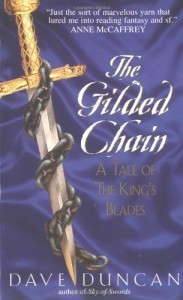 Dave Duncan’s King’s Blade series is exactly as it sounds: Swordsman doing brave deeds for the king. Trained to be the best fighters in the world, then enchanted to be a little faster, a little stronger to better serve their king, the Blades of Ironhall are pretty awesome — and Durendal, sent on foreign assignment to bring back a lost brother, proves his metal in the sands of the fighting pits.
When Durendal is challenged by the immortal swordsman Herat, a man who makes a sport of killing every day in the arena the battle that ensues as Durenadal looks to avenge his fallen comrade is nothing short of epic.
Every parry a daring escape, every thrust a brush with death, and every word a poet’s prose. Number 3 on my list.
2. Master vs Lady, The Fencing Master
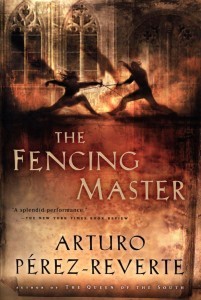 Arturo Perez-Reverte is known for his Mediterranean pirate epic, Captain Alatriste, but his modest, historical passion play about an aging sword master is nothing short of perfection.
When the fencing master takes on a young, female student he sees it as the inevitable changing of the times, where the arte of defense is now reduced to a common sport. Soon, though, he comes to realize he has instead taken on the training of a deadly assassin, who’s target is one of his closest friends.
The final act, where the master faces his pupil, is one of the most elegant and best informed fencing scenes I’ve ever read.
1. Lancelot vs Curdagh, The Darkest Road
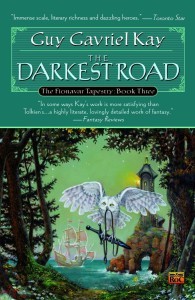 Guy Gavriel Kay is a man who knows his way around a sword fight. A huge runner up to this list is the battle between Rodrigo and in Lions of Al Rassan, but when it really came down to it, there is little that beats the epic showdown between Lancelot and the demon Curdagh in Lissen’s wood over a boy’s soul.
In The Darkest Road, Lancelot fights the battle he was born for, when he faces a shapeshifting elder demon in hand to hand combat — his sword, vs the demon’s hammer (and sword hands, knife feet, stone body, and… aw forget it!). This whole showdown absolutely reeked of epic awesomeness. I was practically expecting Lancelot to say “I’m your huckleberry” when he stepped forward to act at the boy’s champion.
Unlike Reverte and Duncan, Kay focuses less on the technical details of the fight to buckle down on the intensity. His always elegant prose provides such an impact to the fight, nailing the stakes of the struggle directly into the reader’s heart.
Lancelot may have damned Camelot, but he was not going to fail twice. And that purity of purpose combined with the emotional intensity and that magnificent prose is what elevates this fight to my Number 1.
Are you a fantasy or adventure reader? What is the best sword fight scene you’ve ever read?
May 14, 2015
The Hard Facts About eBook Pricing
 As the head of the publishing venture Apocalypse Weird, and the founder of the author support service ThirdScribe, I pay A LOT of attention to the production cost and sales pricing of books.
And when I say “a lot” I don’t mean as a passing fancy. I mean as daily spreadsheet tracking, bottom line trimming, “holy crap how are we going to make this work” kind of attention. I would hazard to say that at this point there are very few people on the planet more familiar with the costs of book production than me.
Since February, Apocalypse Weird has published 10 books, with two more due out this month. We’ve also been running an Indiegogo campaign to build the bank for production costs (yes, feel free to go and contribute to that right now, I can wait!). Apocalypse Weird books retail in digital for $3.49. One of the new AW authors, Jon Frater, recently wrote how a friend of his would never pay more than 99 cents for a digital book, saying there was simply “no reason” to pay more.
Hey, I get that. I do. I mean, it’s just a digital copy of a book, right? It’s not like it’s paper or anything. And, there’s the cost of the tablet/e-reader, too.
99 cents… Man, that’s just a lot to spend!
How about, just for fun, we have a frank chat about the cost of books? Ready? Let’s go!
Getting Your Money’s Worth
Before I delve into the costs behind producing that 99 cent book, let’s compare a few forms of digital entertainment:
Ebook ($0.99+) Generally about 50,000 words or more. Approximate entertainment time: 3 hours. Number of partial or re-reads: infinite.
Song ($1.29) Approximate entertainment time: 4 minutes. Number of partial or re-listens: infinite
Digital Comic book ($2.99+) Approximate entertainment time: 5 minutes. Number of partial or re-reads: infinite
Movie in theater ($9 matinee) Approximate entertainment time: 2 hours. Number of partial or re-watches: zero.
Looks to me like a digital book stacks up pretty well when you compare entertainment value with other digital media, even at a much higher price. Once could even argue that pricing it the same as a movie would still be pretty fair. Most don’t, except for the big publishers, but when you break it down to an apples and apples comparison, you can see that ebooks provide a pretty good bang for your entertainment buck.
Looking for some good books? Try these!
Apocalypse Weird: Texocalypse Now
 (based on 4 ratings)
Buy Book
AmazonKindleBarnesnobleNookKoboDirectfromauthor

Apocalypse Weird: Genesis
(based on 2 ratings)
Buy Book
KindleNookKoboIbooks

Apocalypse Weird: Medium Talent
 (based on 1 rating)
Buy Book
KindleNookKoboIbooks
Back To The Costs of Book Production
So, what does it cost, exactly, to produce a quality book?
Writing the Manuscript
First, let’s start with the writing of the manuscript. Some authors can just grind them out, some take a year (or years). That’s pretty hard to bring to a normal, so let’s just base that cost on some reported numbers and call it $10k.
Self published and most small press published authors don’t get an advance, but it still takes time and, as they say, time is money. After all, I’ll posit that many authors could be making a lot more money by working extra hours in a part time job than they would selling books. For most writers, it takes a while until their writing career can sustain them — if it ever does. And, while it may be a labor of passion, that isn’t what pays the mortgage.
Writing is a choice to use time to create something — but, that choice means you’re not doing something else, something business people call an “opportunity cost”, and that is what a publisher’s advance is supposed to be about — paying the author to write the book. And, on average, that’s $10k (but, often quite less).
Editing
Once you have that glorious manuscript finished, you need to send it to an editor.
There are a lot of people out there who think they can “self-edit” and I would say they are deluding themselves. Good books require good editing. Period. And, good editing costs.
How much does an edit cost? Industry average for a line edit is 2-3 cents/word, or 30-40/hour. Breaking that down to a 50,000 word novel, you’re looking at between $1,000 – $1,500. Now, that’s hard cash. There is no “I’ll pay you out of my earnings” when it comes to editors. They know the chances of your book becoming a best seller with a movie deal — it’s a cash service. You may be able to get a better deal with some editors, or, if you use Author Solutions or any of it’s branches, you’ll probably get a lot worse.
As an average, $1200 or so is a pretty fair guide for a novel.
Cover Art
Now, what about that cover art? I’ve seen the costs for covers range from $65 to $1500. Amazon pays it’s cover artists $1500 a cover. Jason Gurley, when he was doing covers, charged independent authors $750 a cover. You can get some decent bargains for the $400 range. I’ll go with $400 just for this article — but, generally, better artists are looking closer to $750.
Do you need better cover art? Yes. Yes, you do.
There are over 3 million ebooks on Amazon — a cover is not only essential to standing out from the crowd, it is the first hurdle to cross when convincing a potential buyer that your book is a quality read that’s worth their time and money.
Cover art is the first hurdle to cross when convincing a new reader that your book is a quality read
Formatting
Now, with your complete, edited manuscript and quality cover art, you’re primed to get that thing ready to publish — which means formatting it into three versions: mobi, epub, and pdf. Mobi is for Kindle, ePub is for everyone else, and pdf is for print. If you have the time and the skill, you can do all of this yourself using tools like Sigil, Calibre, Scrivener, or others. But, you’re probably better off paying someone to do it, which will range between $60 and $200, depending on the formats you want and the time you want it in. Why? Again, because quality counts and time really does cost.
Formatting is one of those things that is generally worth paying for when you get to novel length. For our purposes, I’m calling it at $100.
Promotion
Your ebook is complete and uploaded — Happy Day! Time to market it!
What, you think books market themselves? That cream rises to the top? Well, if you think that, you’re an idiot. Promotion costs. Period.
Now, there are a ton of ways to throw away money with advertising, but there are a few smart ways well. The smartest is to invest long term with an author newsletter. But, even with that, you’re going to want to make a push or two with a sale or paid ad. The most effective book advertising right now is BookBub.
In our genre (sci-fi), a BookBub promotion (if you can get one) is $400+ for a book you intend to sell (it’s $200 if giving it away for free). Advertising, especially for books, works best when combined with a sale, i.e. you reduce price to 99 cents. That doens’t mean you get 99 cents. No such luck. It means your take home per sale goes down from 70% of cover price ($2.09 for a $2.99 ebook) to 35% of cover price (or 35 cents/copy during a 99 cent sale).
To make your ad money back — not to mention making a profit! — you need to sell a ton of books. Most books don’t sell enough to make their money back, but they do a decent job of expanding the audience. The goal is to use the promo/sale combo to move more copies and entice readers to buy some other full price books in your list.
Cost for advertising: $400.
There are also tons of other costs involved — website, taxes, newsletter service, graphics, flyers, banners, convention tickets, etc, etc, etc. But, I’m actually going to leave them off the table for now. For this article, it’s just basic, bootstrap costs.
Tallying these up…
Editing: $1,200
Cover Art: $400
Formatting: $100
Promotion: $400
Grand total: $2,100 ($12,100 if you count the author’s time).
That is a real, no bullshit, actual, honest to God cost of what it takes to produce a quality book in the digital age.
With these costs in mind, we can now have a real discussion on the pricing of books. Moving on…
The Hard Numbers of Book Pricing
Once you’ve made your book and uploaded it to all of the many platforms you can find, it’s time to make your money back. The first (and biggest) question is how to price it?
A big part of ebook pricing boils down to Amazon.
Kindle books priced under $2.99 and above $9.99 only get 35% of the cover price, Amazon keeps the rest. Other book stores — nook, Kobo, iBooks, etc — followed their lead. If you price between $2.99 and $9.99 you get 70% of the cover price. That’s right — double.
Undoubtedly, you’ve heard of John Locke and how he sold a million copies by pricing his books at 99 cents a piece, right? He wrote a book about it. Yeah, that was pretty awesome. Guess what? His books are now ALL priced at $2.99.
Why? Because 70% of 2.99 is a heck of a lot better than 35% of 99 cents.
With that in mind, you know you’re looking at $2.99 or above, because after shelling out $2,100 you want to earn some money back. But, how much above?
The Big 5 publishers fought really hard with Amazon to be able to price ebooks however they want. In addition to that, they get better terms than most people do. You’ll see a majority of their books (especially new ones) at $9.99 or above — the latest Alex Cross novel by Patterson is priced at $15.99 for the Kindle version.
Hugh Howey and the Data Guy over at Author Earnings have calculated that the best price range for books is $4.99 or less. That price range provides a good return for the author and is not overly expensive for the reader. Basically, it rounds out to 99 cents/hour of entertainment, and, when you get right down to it, that’s a pretty good rule of thumb for pricing.
Based on the cost per hour of entertainment, you should be pricing short stories at 99 cents and full novels between $2.99-$4.99.
Apocalypse Weird books are $3.49, which gives us a gross from Amazon at $2.44 a copy. Remember that number.
Speaking of Apocalypse Weird books… Check these out!
Apocalypse Weird: Reversal
 (based on 3 ratings)
Buy Book
KindleNookKoboIbooks
Apocalypse Weird: Texocalypse Now
(based on 4 ratings)
Buy Book
AmazonKindleBarnesnobleNookKoboDirectfromauthor

Apocalypse Weird: Immunity
Buy Book
KindleNookKoboIbooks
The Hidden Costs of Sales
To earn back your actual production expenditures, at a $3.49 cover price you have to sell a minimum of 860 copies. At a 99 cent cover price, you have to sell 6,000 copies.
6,000 copies is a LOT of copies. That’s 16 copies a day, every day, for a year. Just to cover your costs. There are a lot of authors — both self and traditionally published — that would kill to sell 16 copies a day.
However, to make 860 copies, you only need to sell a little over 2 books a day.
Which do you think is the better business decision?
The smart authors and publishers pay close attention to the same numbers I do. The same numbers John Locke and Hugh Howey do. 99 cents may move some copies, but it doesn’t generate revenue. And, with an industry average of less than 2% click rate on ads, paid promotions won’t be used as much, either. Why? Because everyone is doing it — which means no one is paying attention to it anymore.
Books at $2.99, $3.99, $4.99 — these are great prices for a book. Never in the history of books have readers been able to get better quality for such a low price. Never.
But, everyone is on the hunt for something cheaper… Here’s how you can get it.
I’d advise you to start signing up for author and publisher newsletters
How Readers Can Get Cheap Books
If you are a bargain hunter looking for cheap, quality books, I’d advise you to start signing up for author and publisher newsletters because that’s there those deals will be coming from.
Over the last year, authors and publishers have all learned a pretty powerful lesson: paying to take a loss sucks.
I’m happy to give loyal customers a price break. Heck, I’m happy to give books away for free as long as those receiving it promise to leave a review. But, it’s really hard to reduce price AND pay to promote that reduced price. Simple economics begin to prevail.
At $400+ a pop, an author has to sell 1,143 copies just to break even on a BookBub promotion of a discounted book, widely accepted as the most successful book advertising service right now. Given that BookBub has a average sales rate of 1,640 books for their promotions (in Science fiction, my genre), that’s a tall order. Even if you make the average (average, not the median, mind you), you’re only going to clear $173. Not a whole lot — and more risk is involved there than you think. It is not a guarantee.
I’ve found that successful authors and publishers resist the race to the bottom of the pricing barrel, and instead cost their books at a sustainable price. Every so often there’s a price drop and something goes on sale, just to keep things warm — a week at 99 cents here, a Kindle Daily deal there. But paid ads? Ehh… sparingly. Very sparingly.
If I decide on a 99 cent sale and announce it only to my email subscribers, I may sell less copies than if I run a paid ad campaign. But, I also don’t have to eat 1,143 copies to pay for that campaign. So, I focus on building that email list. It’s the only sustainable business model.
Again, if you’re a bargain shopper looking for cheap books, I suggest you either support a crowdfunding campaign or sign up for a newsletter. Luckily, the Apocalypse Weird has both… 
March 30, 2015
Lightsabers and Jedi Training
 “Hi-Yaaahhh!”
“Kssshhh!” “Wommmm!” “Ha!” “szzzllle…”
The year is 1981 and my friend Gary and I are in his back yard, having the lightsaber duel of our lives. We dance back and forth with absolutely reckless abandon, all technique (if we ever had any) thrown to the wind. Far from suburbia, we are racing the halls of the Death Star, walking through the ancient ruins of Yavin, or baking under the twin suns of Tatooine.
We are smugglers, rebels, heroes… Jedi.
At least until we’re called home for dinner.
More than 30 years have passed since those glory days, but the lure of the Jedi is a strong today as it was then — maybe even stronger. My children have seen all of the movies, watched the Clone Wars on Netflix and Rebels on apple tv. They are fascinated by their feats of derring-do, just as my friend and I were back then.
I don’t know what it is about Lucas’ creation, but it became one of the most timeless creations of sci-fi, possibly even THE most timeless creation. Certainly one of the most recognized. Whether they like Star Wars or not, nearly every human alive since 1977 knows what a lightsaber is.
This is three minutes of pure awesome
Lightsabers have become so popular — so desired — that an entire cottage industry has arisen to provide “fighting” quality lightsabers. Fencing studios across the country have re-ignited their business by offering “Jedi training” — the perfect gateway for young swordsmen.
And so, three weeks ago, on a sunny Saturday morning, I signed my three younglings up for Jedi training.
That may have been the best thing I’ve ever done as a Dad. Well, OK, that’s probably a little extreme – but it’s up there!
Some quick background — I’m a classically trained sabre fencer, and fenced varsity in college and continued into grad school. Over the years I’ve tried to stick with it, but, let’s face it, it’s not like there are weekend pick-up matches at the local club. I figured my fencing days were long over.
So, when we paraded into Swordplay over in Burbank, I expected to just have a pleasant Saturday morning where the kids got to try something new. They were thrilled to see Jedi Master Akon there, in full robes, corralling them through their paces. I was thrilled to see that he taught actual fencing techniques — starting with proper footwork.
Even better, I was invited to fence with the Sabre instructor who had some time between lessons. Yeah, I was rusty, but in a few passes it all started coming back to me. And, even better, my kids got to see me do it. But, as excited as I was to loosen up my fencing instincts, my three were absolutely filled to the brim with awesome. They made me promise to come back. Now, it’s part of our Saturday routine.
And the other day, I actually bought them each lightsabers of their own (I’ll post pics when they arrive!). This morning, we had Jedi training at home for an hour. I want to do more. A lot more. And so do they. I’m looking at how to set up my schedule so we can have some time in the morning before school to “train” (my kids are crazy early risers).
Previously, my boys have been into soccer and baseball. My daughter did dance for a while. They have music lessons once a week – piano and guitar. I’ve never done these things — they aren’t even my interest, much less my passion. I’m thrilled to see them happy, but I’m not that knowledgeable. I was a swimmer, a fencer, and a shooter. But, now we’ve all got lightsabers in common and it’s brought us a lot closer.
And as a Dad, it’s pretty cool, because I finally have something to teach that they’re all interested in learning.
So, when you swing by the park and see a middle aged dad trying to hold his own against three Jedi — don’t smirk too hard. You know you slashed like a fool when you were a kid, too. Maybe you will again.
And, besides, it’s not like we have Jedi robes or anything… At least, not yet.
Can You Believe I Made Comics?

The Guard: Defense of Ketarra
Buy Book
Kindle

SOLDIERS: Zero
Buy Book
Appleappstore
December 5, 2014
Interviewed on The Author Stories Podcast
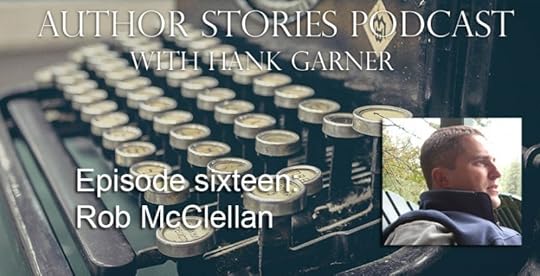
Hank Garner interviewed me for his fantastic “Author Stories Podcast” last week — and now it is LIVE!
We spent about an hour talking about ThirdScribe, the writing industry, how authors can promote their books, and how new authors can get started. It was a blast. Please, click through and give it a listen!
October 23, 2013
Quick Update on ThirdScribe
Quick Summary: ThirdScribe is a social platform for readers and authors to connect online. For Authors, it has the benefit of making their online marketing efforts immensely easier and more cost effective. For Readers, it makes following authors and discussing books online a lot simpler and much more fun. ThirdScribe is free for anyone to join, but an author account has an annual fee. If you want to learn more about ThirdScribe, I encourage you to visit our About and FAQ pages.
Now, on to the update!
What's Tested and In Place
ThirdScribe, being a complete social system, has three parts: Social Network, Author Blogs, and Book Pages. Here's how everything stands as of last night:

Social Network
- All basic social network functions are up and running. This includes the ability to make a profile, post text updates, post media updates (photo, link, video), make friends, send messages, like posts, favorite posts, etc.
- Write Book Reviews (including ability to post video reviews or link to other blogs for full review).
- Share ThirdScribe network posts outside the network via Twitter and Email
- Sync user feeds with Facebook, Twitter, RSS (including tumblr), and LinkedIn
- Find, join, participate with Book Pages
- Activity Stream Filters
- Sitewide Forums
- Sign-Up process
- Book Index with Genre/SubGenre highlights
- Author Blog Index with latest posts
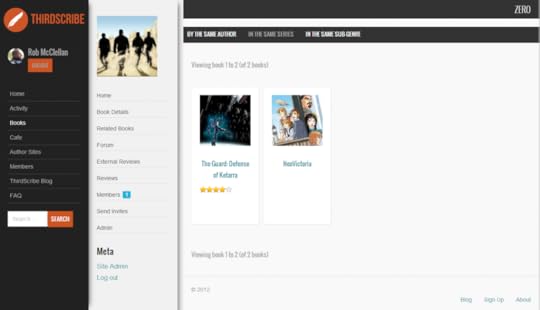
Book Pages
- Book Creation Process (cover art, description, details)
- Individual Book Forums
- Individual Book Social Stream
- Book Reviews (ThirdScribe, GoodReads, and Amazon)
- Book Events Calendar
- Book Sales Links
- Related Books (By Same Author, In Same Series, Top in Sub Genre)
- Book Details (credits, publisher, contributors, review information, excerpts)
- Multiple Author Support
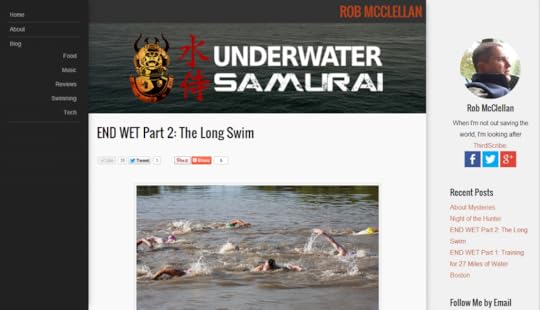
Author Blogs
- Website creation process
- Site Framework (responsive to mobile)
- "Enter Once" Framework (data transfer)
- eNewsletter System
- Support System (submit support tickets, support ticket tracking, FAQs)
- Follow by Email
- Ability to patch in external RSS feeds
- Syncronized to ThirdScribe Network
- Advanced SEO embedded in post/page creation
- FAQ capability
- Add Forums to sites
- Data importers (Blogger, tumblr, and WordPress)
- Multiple Post types (standard, image, link, aside, quote)
- Forms, Polls, quizzes
- Create landing pages
- Writing Progress bar
- Social Media Sidebar Widget
*** Special note: Alpha testers have been using the Author websites for a couple of weeks now, and are really liking it. Just saying... ***
What's Next?
Obviously, our first priority is to continue work on the site and get it ready to launch. That being said, part of that process is to widen our Alpha testing and bring in a few more people to use the system -- we'll be announcing that opportunity in our next newsletter, so stay tuned!
When do we think we'll launch? Not to be blunt, but we'll launch when we're ready and not before. We're doing all we can to get this done and out in the world. If you have any questions, feel free to leave a comment, ask a question , or contact us .
And now, back to work!
March 30, 2013
The Hollywood Pitch

If we had to sum up ThirdScribe as a Hollywood Pitch...