Rob McClellan's Blog, page 2
July 6, 2016
Book Review: ‘Til Death
While on travel recently, I took the time to read ‘Til Death, by Jason Anspach (@jonspach), and I’m really glad I did.
Here is the review I posted on ThirdScribe:
I read “‘Til Death” by Jason Anspach ( @jonspach ) during a recent trip. I’m not gonna lie — I stayed up late a few nights to keep reading it.The prose is exceptional, great dialog, and a real capturing of what I must imagine is the “feel” of the ’50’s. The style had a lightheartedness to it, but no loss of character, plot, or tension. Just a level of… comfort, perhaps? I can only describe it as the difference between a Humphry Bogart movie and a darker, modern thriller. It gave me a nice noir thriller without the swearing and sex — and, admittedly, I didn’t miss it at all.More than a mystery, though, the book had a lot to say about life, love, and family. And, in a certain way, about the need to take a chance for something you care about.The story centers around LA supernatural detective Sam Rockwell and his charming secretary, Amelia, as they investigate the murder of Sam’s father, who has returned as a ghost. Throughout the investigation,…[Read more]– Rob McClellan (@robmc) June 30, 2016
Get The Book
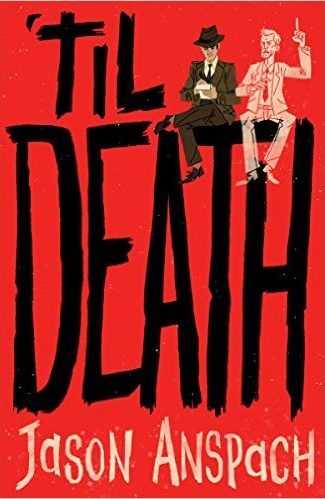
’til Death
Buy Book
Kindle


June 30, 2016
Book Review: Sidekick
Read a great book recently by Christopher Valin (@cvalin) called Sidekick and I liked it so much I wrote a review for it over on it’s book page in ThirdScribe, which you can read below:
I saw this book over at @Leighgendarium and decided to give it a try. I knew nothing of @cvalin before that, but have since learned he is a fellow comics enthusiast, which certainly shows in the book.The Red Raptor Files follows the adventures of “The Red Kite” who is the sidekick to “The Black Harrier” — both of which are taken from Robin and Batman, pretty much in every detail. There are other heroes and villains as well, all with a Gothamite doppleganger. Because of these similarities, one could almost say this is a Batman fanfic piece – and it may be. But, it’s also a VERY good one.The book is a page turner — I finished it all in one sitting, unable to put it down. The style was light and engaging, and the plot moved at a rapid pace. Almost movie-like. If you’re familiar with comics, you’re going to love this book.Whenever I read books like this (and I don’t read many), I always think of the novelizations of popular DC storylines that I see in…[Read more]– Rob McClellan (@robmc) May 31, 2016
Get The Book
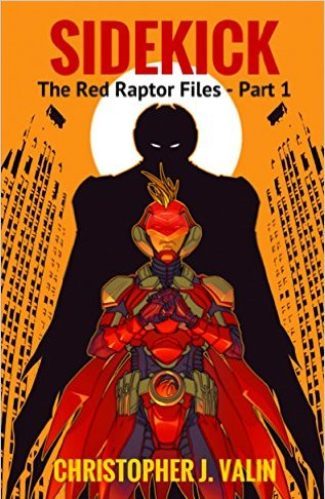
Sidekick: The Red Raptor Files – Part 1
Buy Book
AmazonKindleAudible
May 18, 2016
Do We Really Need Darker And Edgier?

Marvel TV announced they are moving “Agents of Shield” to a later time slot so it can be — and I quote — “darker and edgier”.
I’m not a fan of this decision or this direction. Here’s why.
Because I like my heroes to be heroic. I like being able to watch shows and share my heroes with my kids. And, I like to stop feeling like my dog is dead every week.
TV and movies are entertainment. I don’t always need to examine the darkest heart of humanity. There are plenty of shows that do that already. It would be nice to have some hope during the week.
Not “7th Heaven” hope, but perhaps some Supergirl hope. Or some “Agent Carter” hope. Or maybe even some “Flash” hope (before the show’s color scheme changed to washout gray).
What? Agents was cancelled and Supergirl transferred? Let me guess, bean counters didn’t like the ratings?
Maybe instead of saying “meh” and looking to cut their losses, perhaps studios might have been better off investing.
Want to know what started going wrong with Supergirl? The answer is in the eyes of my 8 year old daughter who went from enthusiasm to cringe by episode 16. Why? Two words: Evil Supergirl. When my daughter doesn’t want to watch Supergirl, you’ve got a real problem.
Want to know why Agent Carter started to tank in its 2nd season? Crappy writing and pathetic characters, plain and simple. By episode 6, it wasn’t worth watching any more. It was a great concept for a show — just poor execution. Even Howard Stark isn’t gonna overcome the bad taste pathetically inept gangsters leaves behind.
I used to let my young sons watch the Flash with me. Not this season. At least not since episode 8 (Vandal Savage). Why? A little too much murder for an 8 year old. Last night’s graphic execution of Barry’s dad is one more step down a pretty dark path for DC’s most positive super hero.
We don’t need “darker” and “edgier” story lines. We’ve got The 100 for that. Or The Expanse. Or Lucifer.
What we don’t have much of? A hero show I can watch with my kids at 8 PM on a Tuesday.
How about more of that? Get family viewing and build franchise fans for life. Sounds like a plan.
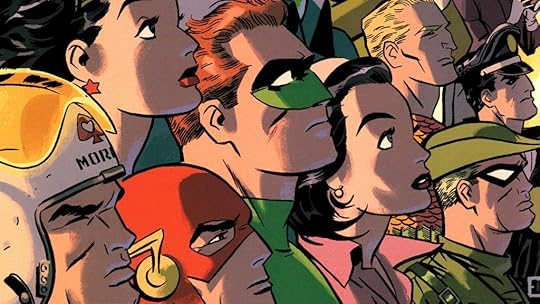
We need to turn the corner on the Frank Miller era of comic stories. Frank was great, he was a visionary. But, the cold war is over, and maybe we need some more hope about now. Lord knows the world is a dark enough place already. Perhaps we should be looking at a little more “New Frontier” and a little less “New World Order”, know what I mean?
But, by all means, keep shoveling darker and edgier at 10PM, please. I just can’t get enough of that…
March 8, 2016
What To Do About Nook?
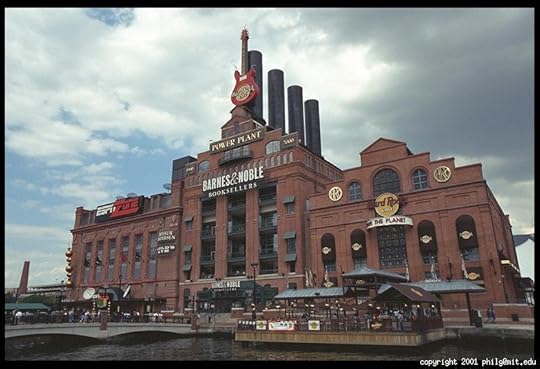
Still my favorite Barnes and Noble store
OK, I’ve been seeing this article about nook everywhere on social media today and I wanted to address it quickly. Plus, Hank Garner asked for my opinion and I don’t like to let Hank down.
The Big Controversy
If you haven’t seen the article, you can do so here. It has the “not alarming at all” title of B&N nukes the NOOK with a 15 March deadline for customers to save content.
This is an extremely alarmist article title that isn’t accurate. Nook is shutting down their ridiculous app store (like for apps, not books), that was in place long before their deal with Google Play, in place since last year. Every app you can get on nook is also on Google Play, which they now have on their tablets (both old ones and the current Samsung partnership ones).
This “backup your stuff” cry is in regards to that and, honestly, I’m not sure what you would back up aside from a few standalone nook only apps that were most likely early pre-Comixology comic book apps.
Regarding their ebooks, they are committed to continuing ebooks, as, let’s face it, they have little choice in the matter. It’s just part of the industry now. They are looking to streamline costs, which will most likely include going down to a single version of their e-reader at a moderate price, instead of the multiple versions they are supporting now — but, that’s just a guess. They are probably also looking to outsource/third-party nook accessories, much like Apple does with iStuff accessories and cases.
How’s B&N Really Doing?
The real story is that B&N is doing better than many expected, with real improvements over last quarter and year-for-year. Also, surprisingly, their “other retail” items — toys, etc — are doing better than expected as well. So, B&N isn’t going anywhere. And, to be honest, I have a feeling that the increase in trade pub digital pricing may have something to do with that, because it makes paper copies more appealing.
Yes, they are looking to cut back overseas, so there is that. Nook users in Britain are going to kinda lose out, and that is unfortunate. I guess things just aren’t going as well in the overseas market and they are retreating. I think that is a mistake, but I don’t see their finances so who am I to judge? And, to keep from being more alarmist, no one in the UK will lose their books, they’ll be accessible through another vendor (Sainsbury).
The real issue here, for me, is to wonder why authors aren’t rallying around nook right now — and in a big way. Because, and let’s be plain, nook is the only real competition to Amazon/Kindle. And if nook goes down, Kindle will have free reign.
Preventing the Kindle Monopoly is Important
If you think the Kindle store will continue to have such author-beneficial policies once competition is removed, you’re kidding yourself. KU will look a lot more like Spotify, with authors losing royalties. And, I’ll bet other fees and pricing will change as well. Why would Amazon continue to operate on the fringe if there is no competition?
I, personally, think that every author should seriously reconsider where they sell their books. They should be on as many stores as possible, and authors should be extremely tactical when taking advantage of special programs (like KU or Nook Serial Reads).
We used to fight hard to get our books into every store, why are we now so eager to go exclusive?…
Click To Tweet
Also, I think that authors need to REALLY REALLY REALLY focus on selling their books and proving their value, instead of relying on 99 cent pricing, free, or KU — all programs designed to essentially devalue your book and prevent you from earning out.
Bottom line: Competition among retailers is good for authors. It costs you pretty much nothing to list books on platforms across the board (Draft2Digital anyone?), and it’s a good thing to make sure anyone who wants your book can get your book however they want it.
More is Ultimately Better
We used to fight hard to get our books into as many stores as possible — now, we seem to be falling over ourselves to give exclusivity to one store. To put it another way: Authors have power through retailer competition and they give that power away by going exclusive to a single retailer.
One of the big arguments to self publishing was control. “I own the eggs and I can move them to another basket at any time.” Can you? Really? Where will you go besides Kindle? If other retailers are available, the system keeps itself in check. If there is only one retailer, it will not.
Hugh Howey used to champion hard for having books in every store — then he changed his mind and went exclusive. He said it was for better sales and revenue via lending and KU, and for him that is probably true. But, is that a smart long term play? And, also remember, giant authors who go kindle exclusive generally have more business options than normal self-published authors. When you sell millions of copies of your books, I’m sure you’ll learn what they are.
For now, though, I would seriously recommend listing your books anywhere you can. Actively break down barriers to reaching readers and encourage competition among the retailers. Provide links to ALL of your sales channels instead of just Kindle by sharing a book page on your website on social media instead of direct links to a single store.
Maybe it pays off today, maybe later, but it doesn’t cost you anything, so why not?
Plus, if Amazon “wins” and becomes the only one left standing, trust me, you’re going to wish you had more options. Amazon has proven itself to be cut throat in every business they take on. And, if nook and kobo fold, self published authors will be the ones lined up to get their’s cut. After all, there is no big publisher legal team backing you up.
Just saying.
February 24, 2016
Book Marketing in 2016: Getting Social Media Right
 “No, I just posted it on Facebook”
I hear this from authors all the time, and each time I cringe a little bit inside.
Social Media, as wonderful as it is, is not a content platform. Every social media service out there is an ad platform — a distribution platform at absolute best. You, as a user, have very little control over it. Nor, quite frankly, can it do you a terrible amount of good.
For instance, what is the value of a “Like” on a Facebook post? How long will that post be visible in the newsfeed and how many will see it? How about a tweet? An update on Google+? SnapChat?
Yet, despite this, so many authors use Social Media as a substitute for posting to their website. That’s a lot like cleaning the restaurant down the street, but never maintaining your own house.
Over the last year, I’ve been paying a fair amount of attention to the interaction between social media, author site traffic, and book sales.
Here’s what we’ve learned and some rules for how you can use social media in 2016.
The Limitations of Social Media
H.M. Ward says Facebook transformed her sales. But, she said that in 2011. Things are different now (though that link is still a great read, just keep in mind that Facebook requires a lot more effort and interaction now than it did in the past).
There are still Facebook power users from the earlier era that get decent returns from Facebook, but they are very active and have a following large enough that the small engagement still yields a lot of eyeballs. Are you one of these people? I don’t know. If you already have upwards of 80,000 followers on your Facebook page, then you probably are. If you’re just getting started, you might want to re-think Facebook as a marketing strategy.
Since Facebook’s IPO in 2012, they have focused on monetizing — and part of how they do that is to get businesses (including authors) to buy ads. Creating a Facebook Group, while easy, and even fun, probably won’t help you very much in 2015 when it comes to sales, because Facebook intentionally throttles your reach to members of your Facebook Groups and Pages. Facebook makes its ads worthwhile by limiting your exposure without an ad. Same with twitter.
Not sure what all of this talk about “reach” means?
“Reach” is the number of people who saw what you posted somewhere. Every platform has it’s own “reach”. The more tight knit you are with your followers on a platform, generally the better reach. Sharing improves reach, as does promoting the post.
A few things have come to light about social media, specifically Facebook since it gets the most attention. Much like our earlier data on Kindle, or our chart for Newsletters, here is one for Facebook “organic” reach (i.e. non-paying), courtesy of the exceptional crew at Convince and Convert:
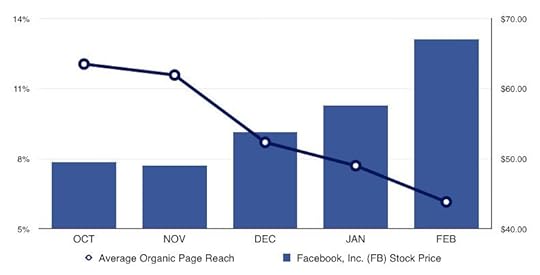
This chart tells us that, despite what spokespeople may say, Facebook’s value is directly tied to keeping you from your intended audience.
All of those Facebook followers you have for your Facebook Author Page? Well, most likely, they don’t see much of what you are posting. Only the true die-hards who stay constantly engaged with you will see your updates. That means about 5-6%. Obviously, this rate varies from person to person, but it’s pretty low. And, you still have to convert them from that post to a sale — hard to do from a facebook post, which, according to Salesforce’s Social Advertising Benchmark Report, only yields an average click-through-rate of 0.14% — that’s 1.4 clicks per thousand views!
There are a few ways to make Facebook (and other social platforms) work better for you in 2016, though. It takes some effort, but the payoff can make a big difference.
Here’s how.
Post From Your Website Outward
If you look at the social activity of most major media and news sites, one thing becomes apparent almost immediately: the links they are sharing are their own, from their sites. Even if it’s a video — even a YouTube video! — they embed it in a post on their website and share that post, not the raw video. Why? Because sending traffic to YouTube doesn’t help them.
It’s great to share links from other sources, but remember that if it coming from you, post on your website first, then share it. The best use of social media is to use posts and updates to drive traffic to your website, not to another aspect of social media (page, group, YouTube, etc).
Why it works: It uses the sharing power of social media to bring readers back to your platform.
Be Mobile Friendly
The web is now consumed on mobile devices more than desktops and laptops — we are crossing 50% viewership on mobile as we speak (ThirdScribe data shows 52% of its viewers are on mobile, up from 38% last year). Social media is already prepared for mobile, but the links you share, especially links from your own website, also need to be mobile ready.
Why it works: You won’t close the deal if your blog post or book sales page doesn’t look good on the devices your readers use to see it.
Provide Value
Posts and updates, regardless of where they are — Facebook, Twitter, your website — should provide some kind of value. Maybe that value is simple entertainment, or some interesting piece of information. However, and whatever, you choose to share, make sure it has some kind of intrinsic value — that is how you get interaction.
Why it works: People share the good and pass over the bad, simple as that.
Good Graphics Count
Social media is extremely visual. Posts with good graphics are not only liked and shared more, they are clicked more. Take the time to create a meaningful graphic that is in the proper shape for your platform. This is important not only for Pinterest and Instagram, but also for Facebook, Twitter, and Google+, all of which are heavily influenced by images.
Why it works: Posts with images generate 84% more clicks than those without.
Buy Ads
As “organic” reach continues to decline, paid ads and promoted posts are going to be necessary. The trick is to find out which kind of ad, and on what platform, make the best sense for you. While ad click through rate is very low, ads themselves are pretty cheap — about 75 cents/1000 views. Even at the low rate of 1.0% click rate, that means 10 possible sales out of every 75 cents spent. Even if there is only one sale per thousand, that would be a profit of $1.30 per sale (if the list price of your book is $2.99), or doubling your money.
Why it works: Social media are becoming extremely powerful ad platforms, with deep demographic targeting. Why not use them as intended?
Have Options
Try and be a little more “platform neutral” — meaning, don’t put all of your eggs in one social media basket. Pick 2-3 that you can easily maintain, hopefully that compliment each other. For example, Facebook, Instagram, and Twitter. All of these can be inter-connected (minimizing how much you have to post to each), but each has their own unique audience.
Why it works: The point of social media is to get your voice heard, using complimentary services allows you to reach more people with minimal extra effort.
Social media is an exceptionally powerful method to deliver your message. While not as direct and sure as email, it does allow for the opportunity for content to go viral if it touches the right nerve in the zeitgeist.
Sharing content across social media should be a part of your marketing strategy, but it shouldn’t be the only part. And it is essential that authors remember that social media is a method for distribution, not content generation. But, even as a distribution system, it’s not the only one, or even the best one. When used the right way, however, it can be a potentially powerful one.
Next Up…
The next topic in this series will be tackling advertising — what’s available, what works, and how to budget for it.
This is the third part of a 5 part series on trends and advice in Book Marketing as we start 2016. This series is the summation of research, data, observations, and insights taken in over the last year from a variety of sources, including data from ThirdScribe.
Part 1: Understanding the Game
Part 2: Supercharge Your Newsletter
Part 3: Getting Social Media Right
Part 4: Using Advertising
Part 4: How To Market Your Books in 2016
February 23, 2016
The Long Skate Back To Health
When I retired, I decided to take a little time “off” from working out. My back hurt, my shoulder hurt, and, quite frankly, I was just tired. After 20 years in the military, I figured I had earned my rest.
Naturally, a little time turned into a few months which turned into a year. I got on the scale a couple of weeks ago and the number shocked me: 196 lbs.
Considering I’m 5’8″ tall, that was not a good number. It means I’m 30 lbs overweight.
To really drive the point home, for Christmas many of my gifts were larger clothes.
Time — past time! — to do something to change this.
Finding The Right Goal
I lead an extremely busy life, between full time work during the day, a start up at night, and making time for my lovely wife and three children, I’m very, very busy. I realized early on in my life that I can’t maintain the motivation to work out and stay healthy just by saying “I need to work out and stay healthy”. I need to have a goal to work towards. Something definite that I can rally behind and stay focused on.
My last big goal was to do an ultra-distance swim. This year? An ultra-distance skate.
I’ve decided to go after the longest distance skate race in America — the 87 mile Athens to Atlanta Road Skate.
My History With Skating
 I’ve been skating since I was about 6 years old. After quickly destroying my plastic strap on kid skates (Playschool, maybe? I don’t know — that was way back), my folks got me a pair of quads that had metal wheels. Yeah, that’s how old I am. They were black boots, with actual steel wheels so you could use them outside in the street without wearing the wheels down. I went out into our cul-de-sac practically every day and skated around. Awkwardly at first, then with growing confidence.
I don’t know what my next pair of skates were (I do remember they had real wheels!), but I skated even more with them. Miraculously, a skating rink — a real, honest to God skating rink — opened up at the edge of our neighborhood. The 80’s were cool like that.
I spent a lot of time there.
Yeah, skating might not have been all that cool, but I just loved the feeling of it. Almost like you’re floating over the ground.
Sadly, though, those old quads weren’t really great outside of a rink, or at least a nice patch of smooth pavement. As I grew into my teens, I spent less and less time skating and more doing other things.
Then, inlines were invented.
I bought a bike to take with me to college, figuring it would help with getting around. But, the campus at NCSU just wasn’t that bike friendly. Then, one day, I was riding up Hillsborough Street and I saw a pair of Bauer Inline Skates in the window of Cycle Logic. I stopped my bike, went inside, and traded my bike for skates. Right then and there. They took the bike, I laced up the skates.
I didn’t wear shoes to class again for 4 months.
If this existed when I was in college, I would totally have done it!
Those first generation of Bauers had a plastic boot, full laces, and probably some crappy 72mm wheels — but they were perfect. I skated everywhere. In the mornings I got up and skated 6-10 miles around the campus. I’d grab a shower, then strap them back on and skate to class. At night, I might skate some more. It was not unusual to find me skating through the streets of downtown Raleigh at 1AM on the weekends.
My Junior year, a running buddy of mine pointed out that the local 5K run had a skate event. That was it. From then on, I raced.
When I commissioned into the Navy, my skating took a backseat to work. Not much opportunity to skate on deployment. But, in 2000 when I was stationed in DC, I went out with the Washington Area Rollerbladers every chance I got.
Things didn’t really pick up again until I saw Chad Hedrick in the 2006 Olympics. I remember watching him skate, my newborn son on my lap, and looking over to my wife and saying “You know, I used to do that. I think I’d like to go back to skating.” She looked at me like I was an idiot.
I ordered a new set of Powerslide R2’s from Rich over at NettRacing (always my go-to skate shop), and started skating in the mornings around the neighborhood before work.
Soon, though, an expanding family and a new duty station brought an end to regular skating. Yeah, I went out every now and then, but I can’t say it was even remotely serious training. Instead, workouts devolved to hard hitting gym sessions and swimming. Worked great, certainly, but not nearly as fulfilling.
Until now.
Getting Back in the Groove
I have to admit, I had to get some new skates. Terrible, I know. I needed something that could handle the large diameter wheels I would need for the 87 mile A2A, but had enough boot that I wouldn’t kill myself in training. My ankles haven’t had to withstand a double push for more than 100 yards in years, much less 87 miles. I still have my R2’s, but with their low cut boot, my ankles would give out before I got in any meaningful amount of miles. And I need to train.
After consulting with Rich, the answer became quickly apparent — a pair of SEBA FR1’s kitted out for larger diameter wheels. Kinda like this:

There is a 16 mile long rails-to-trails not far from my work, which has become the new training ground. Smooth pavement, low traffic, pretty scenery. You’ll find me there around 6AM a few times per week.
I’ve got a lot of miles to make up.
February 5, 2016
How To Supercharge Your eNewsletter
This is the second part of a 5 part series on trends and advice in Book Marketing as we move into 2016. This series is the summation of research, data, observations, and insights taken in over the last year from a variety of sources, including data from ThirdScribe. Click here to read Part 1: Understanding the Game
“How do I grow my newsletter?” This is an extremely common question among authors. They read about the importance of newsletters on various book marketing blogs or other author websites — I’ve written about it myself. And, by the time they get signed up for a newsletter service (Mail Chimp being the most popular) and they place an opt-in form on their site, they start to wonder “How the heck do I build this thing?”
Building your email list is a gigantic task. It is not easy and it takes time and concerted effort. Everyone knows this and everyone says it.
What is not often discussed is the exact mechanics of how to build a list, the number of subscribers you should be targeting, and what to do with them once you’ve got them.
This second article in the Book Marketing in 2016 series goes through:
1) Why you newsletter may not be growing very quickly
2) Why your newsletter may not be getting you the response you want from readers
3) How to fix these issues and get it rolling again.
Let’s get started!
Why Your Newsletter Isn’t Growing
As the head of ThirdScribe, I can see the deep details of the effectiveness of certain marketing strategies. One of the biggest pushes by all authors right now is building your email list. And many authors — especially new authors — are having a tough time with it.
The reason for this, in my opinion, is pretty simple: The methods others have used in the past to build that list do not work as well in the present.
Unless you are already selling very well, you’re going to have to do something different than what has worked for others in the past, because a new author needs a better lead than a couple of free books to get newsletter signups. You’re going to have to expend real effort to promoting yourself in order to get your books/content/website so it can be seen by enough people to enable them to sign up for your newsletter.
“Your primary problem revolves more around getting readers to notice you.”
If you are NOT already selling a lot of books — perhaps, because you just started — your primary problem revolves more around getting readers to notice you in the first place. A free book isn’t going to do that on it’s own, so you have to approach the entire prospect here very differently. You need to take a broad spectrum, multi-vector approach to reach the people you need to grow that newsletter.
More on that process below, but first let’s talk about those members you already have.
Why Your Newsletter Might Not Be Working
It’s become apparent as we move into 2016 that the quality of your subscribers is much more important than the quantity.
These charts are illustrations of the data from the 55 mailings sent out to Apocalypse Weird’s general email list, from the beginning of the list to it’s close, specifically Open and Click rates. We built our mailing list, primarily, by offering a free book for it — specifically Nick Cole’s The Red King, the first book in the Apocalypse Weird maxi-series. As you can see in this first chart, as Nick is a prominent author, the “free book” method worked very well to build the list. But, building a list under the pretense of a free book may not get you the response you may be hoping for.
Subscribers vs Opens vs Clicks — Raw Data

What we see here is that once The Red King caught on, the list started building subscribers quickly. However, even though we were always building subscribers, our newsletter opens quickly stagnated and our actual click rate remained almost static with the pre-growth numbers.
Despite having nearly 20 times more subscribers, the actual action rate barely rose above baseline, averaging 55 unique clicks per mailing. Why?
For those wondering, there was a lot of spam protection on those forms. We are very confident the signups we got were real people. So why didn’t clicks grow in proportion to subscribers?
When we dice the data up a bit, things become more clear.
Open Rates and Click Rates

When you look at the action rates — the percentage of subscribers who are opening and clicking — a clear trend becomes apparent.
Yes, we gave away copies of a great book for free — as many now feel is common practice for building your list. But, the problem here is that the allegiance to many of those subscribers was purely to a free book. When we promoted other books — books to be bought — response went WAY down, aside from our strongest fans. The ones who joined us not for a free book, but because they genuinely loved the books and authors involved.
When I talk about “Super Fans” vs “Casual Fans”, this is a great representation of what I’m talking about.
How To Improve This
The mistake made above, and that many continue to make, is to treat the “free book for signing up” as a transaction. “Thanks for signing up, here’s your book.”
Don’t think like that!
“If it’s just an impersonal transaction… they’ll walk away with their free book and never return.”
If it’s just an impersonal transaction, then the person who signed up will take it that way, and they’ll walk away with their free book and never return. Just like what you see in the charts above.
Authors need to think of newsletter signups as an opening, akin to buying someone a drink in a bar. You’ve met, you gave them a book, and now you can talk a bit. Make that first email more than the delivery of a free book and use that opportunity to bring them into your growing community.
In other words, in 2016 you need to focus on the fan, not the giveaway.
A newsletter registration isn't a transaction. It's an invitation. #selfpub #pubtip
Click To Tweet
How To Build Your Newsletter in 2016
Whether your newsletter prompt is in a free book or on your website (preferably both!), the first challenge is always getting it seen. After all, no one will sign up if they never see that they should.
To that end, there are FIVE actions an author can take that are the most likely to improve their newsletter signups:
Set Up A Funnel. “Funnel” is a sales term for when you create a system to drive people to an action. A common way to do this is to offer up something of value (like a free book) to get them to take an action (like sign up for you newsletter). At the end of that free book, is perhaps another action — buy a book, for example. It’s a chained series of events. If you don’t have one, you should set one up. Not sure how to do that? Then read this.
Ask Nicely – And Keep Asking. The most effective tactic for new authors? Telling people about your newsletter (and free offer, if applicable) and asking them to sign up. Yes, that means actually getting engaged with the audience. You CAN NOT remain static. Prompt for it in every blog post. Mention it every now and then on social media. Tell your friends.
Draw Them In With Content. The first order of business is to raise your own profile, and you do that by writing regular, timely, shareable content on your website. In other words, you need to blog. Preferably about topics your audience is interested in reading about.
It is imperative that you are reaching out to both new and existing readers in a way that brings them back to you, your books, and your newsletter — and that means bringing them to your website. The best way to do that is through compelling content that is shared across the social web.
A Personal Appeal At The End Of Your Book. The other action item is to ensure that everything you publish has a prompt for action – to visit your site, join your newsletter, and review a book. A great way to do this is in a short, personal letter, immediately at the conclusion of the story, asking the reader for these three things. Don’t make it an ad, make it a nice letter thanking them for reading your work, hoping they enjoyed it, and informing them how they can help.
Treat Them Special. You only have one chance to make a first impression, so make sure you do a great job at it. That first email to a new follower should happen right away, have the offer in it (if applicable), and have a nice message welcoming them. Preferably with some kind of cool, special access info or link.
You should then follow up once or twice a month with something interesting. Some kind of insider information that only subscribers get. It could be upcoming news, insights into your next book, book signings, sales, specials. You can even enable special protected pages and posts in your website only subscribers can open. Get creative and see what works for you.
If you want to offer a free story of some kind as an incentive, that’s up to you. I recommend it, it works. However, it is crucial you remember that giving away a free book does not mean those readers are now fans of yours — it doesn’t even mean they read it. The follow up email to that free book is crucial to getting that new reader on board with you.
Next Up…
The next topic in this series focuses on social media — what works and what doesn’t. See ya then.
This is the second part of a 5 part series on trends and advice in Book Marketing as we move into 2016. This series is the summation of research, data, observations, and insights taken throughout the last year from a variety of sources, including data from ThirdScribe.
Part 1: Understanding the Game
Part 2: Supercharge Your Newsletter
Part 3: Maximizing Social Media
Part 4: Using Advertising
Part 5: A Book Marketing Guide For 2016
February 4, 2016
Book Marketing in 2016: Supercharge Your Newsletter
This is the second part of a 5 part series on trends and advice in Book Marketing as we move into 2016. This series is the summation of research, data, observations, and insights taken in over the last year from a variety of sources, including data from ThirdScribe. Click here to read Part 1: Understanding the Game
“How do I grow my newsletter?”This is an extremely common question among authors. They read about the importance of newsletters on various book marketing blogs or other author websites — I’ve written about it myself. And, byt the time they get signed up for a newsletter service (Mail Chimp being the most popular) and they place an opt-in form on their site, they start to wonder “How the heck do I build this thing?”
Building your email list is a gigantic task. It is not easy and it takes time and concerted effort. Everyone knows this and everyone says it.
What is not often discussed is the exact mechanics of how to build a list, the number of subscribers you should be targeting, and what to do with them once you’ve got them.
This second article in the Book Marketing in 2016 series goes through:
1) Why you newsletter may not be growing very quickly
2) Why your newsletter may not be getting you the response you want from readers
3) How to fix these issues and get it rolling again.
Let’s get started!
Why Your Newsletter Isn’t Growing
As the head of ThirdScribe, I can see the deep details of the effectiveness of certain marketing strategies. One of the biggest pushes by all authors right now is building your email list. And many authors — especially new authors — are having a tough time with it.
The reason for this, in my opinion, is pretty simple: The methods others have used in the past to build that list do not work as well in the present.
Unless you are already selling very well, you’re going to have to do something different than what has worked for others in the past, because a new author needs a better lead than a couple of free books to get newsletter signups. You’re going to have to expend real effort to promoting yourself in order to get your books/content/website so it can be seen by enough people to enable them to sign up for your newsletter.
“Your primary problem revolves more around getting readers to notice you.”
If you are NOT already selling a lot of books — perhaps, because you just started — your primary problem revolves more around getting readers to notice you in the first place. A free book isn’t going to do that on it’s own, so you have to approach the entire prospect here very differently. You need to take a broad spectrum, multi-vector approach to reach the people you need to grow that newsletter.
More on that process below, but first let’s talk about those members you already have.
Why Your Newsletter Might Not Be Working
It’s become apparent as we move into 2016 that the quality of your subscribers is much more important than the quantity.
These charts are illustrations of the data from the 55 mailings sent out to Apocalypse Weird’s general email list, from the beginning of the list to it’s close, specifically Open and Click rates. We built our mailing list, primarily, by offering a free book for it — specifically Nick Cole’s The Red King, the first book in the Apocalypse Weird maxi-series. As you can see in this first chart, as Nick is a prominent author, the “free book” method worked very well to build the list. But, building a list under the pretense of a free book may not get you the response you may be hoping for.
Subscribers vs Opens vs Clicks — Raw Data
What we see here is that once The Red King caught on, the list started building subscribers quickly. However, even though we were always building subscribers, our newsletter opens quickly stagnated and our actual click rate remained almost static with the pre-growth numbers.
Despite having nearly 20 times more subscribers, the actual action rate barely rose above baseline, averaging 55 unique clicks per mailing. Why?
For those wondering, there was a lot of spam protection on those forms. We are very confident the signups we got were real people. So why didn’t clicks grow in proportion to subscribers?
When we dice the data up a bit, things become more clear.
Open Rates and Click Rates
When you look at the action rates — the percentage of subscribers who are opening and clicking — a clear trend becomes apparent.
Yes, we gave away copies of a great book for free — as many now feel is common practice for building your list. But, the problem here is that the allegiance to many of those subscribers was purely to a free book. When we promoted other books — books to be bought — response went WAY down, aside from our strongest fans. The ones who joined us not for a free book, but because they genuinely loved the books and authors involved.
When I talk about “Super Fans” vs “Casual Fans”, this is a great representation of what I’m talking about.
How To Improve This
The mistake made above, and that many continue to make, is to treat the “free book for signing up” as a transaction. “Thanks for signing up, here’s your book.”
Don’t think like that!
“If it’s just an impersonal transaction… they’ll walk away with their free book and never return.”
If it’s just an impersonal transaction, then the person who signed up will take it that way, and they’ll walk away with their free book and never return. Just like what you see in the charts above.
Authors need to think of newsletter signups as an opening, akin to buying someone a drink in a bar. You’ve met, you gave them a book, and now you can talk a bit. Make that first email more than the delivery of a free book and use that opportunity to bring them into your growing community.
In other words, in 2016 you need to focus on the fan, not the giveaway.
A newsletter registration isn't a transaction. It's an invitation. #selfpub #pubtip
Click To Tweet
How To Build Your Newsletter in 2016
Whether your newsletter prompt is in a free book or on your website (preferably both!), the first challenge is always getting it seen. After all, no one will sign up if they never see that they should.
To that end, there are FIVE actions an author can take that are the most likely to improve their newsletter signups:
Set Up A Funnel. “Funnel” is a sales term for when you create a system to drive people to an action. A common way to do this is to offer up something of value (like a free book) to get them to take an action (like sign up for you newsletter). At the end of that free book, is perhaps another action — buy a book, for example. It’s a chained series of events. If you don’t have one, you should set one up. Not sure how to do that? Then read this.
Ask Nicely – And Keep Asking. The most effective tactic for new authors? Telling people about your newsletter (and free offer, if applicable) and asking them to sign up. Yes, that means actually getting engaged with the audience. You CAN NOT remain static. Prompt for it in every blog post. Mention it every now and then on social media. Tell your friends.
Draw Them In With Content. The first order of business is to raise your own profile, and you do that by writing regular, timely, shareable content on your website. In other words, you need to blog. Preferably about topics your audience is interested in reading about.
It is imperative that you are reaching out to both new and existing readers in a way that brings them back to you, your books, and your newsletter — and that means bringing them to your website. The best way to do that is through compelling content that is shared across the social web.
A Personal Appeal At The End Of Your Book. The other action item is to ensure that everything you publish has a prompt for action – to visit your site, join your newsletter, and review a book. A great way to do this is in a short, personal letter, immediately at the conclusion of the story, asking the reader for these three things. Don’t make it an ad, make it a nice letter thanking them for reading your work, hoping they enjoyed it, and informing them how they can help.
Treat Them Special. You only have one chance to make a first impression, so make sure you do a great job at it. That first email to a new follower should happen right away, have the offer in it (if applicable), and have a nice message welcoming them. Preferably with some kind of cool, special access info or link.
You should then follow up once or twice a month with something interesting. Some kind of insider information that only subscribers get. It could be upcoming news, insights into your next book, book signings, sales, specials. You can even enable special protected pages and posts in your website only subscribers can open. Get creative and see what works for you.
If you want to offer a free story of some kind as an incentive, that’s up to you. I recommend it, it works. However, it is crucial you remember that giving away a free book does not mean those readers are now fans of yours — it doesn’t even mean they read it. The follow up email to that free book is crucial to getting that new reader on board with you.
Next Up…
The next topic in this series focuses on social media — what works and what doesn’t. See ya then.
This is the second part of a 5 part series on trends and advice in Book Marketing as we move into 2016. This series is the summation of research, data, observations, and insights taken throughout the last year from a variety of sources, including data from ThirdScribe.
Part 1: Understanding the Game
Part 2: Supercharge Your Newsletter
Part 3: Maximizing Social Media
Part 4: Using Advertising
Part 5: A Book Marketing Guide For 2016
January 29, 2016
Book Marketing in 2016 – Understanding the Game
The book market is in constant flux.
 New programs, new technologies, new players pop up all the time.
2015 saw the collapse of Oyster and the resurgence of Kindle Unlimited. Paper comes back into vogue. Barnes and Noble keeps nook, but spins off college textbooks. FlipKart sold out to Kobo.
However, while the big picture continues to churn and swirl, the individual author is still plagued with one simple problem: “How do I sell more books?”
It’s hard to make sense of the dozens, perhaps hundreds, of book guru’s out there these days, many of which have confusing, even contradictory advice. And that’s to be expected, because what worked for them may not be valid any more, or they may not be something that scales well to other people.
The end result is thousands of authors out there trying to figure out what they should be doing right now to sell their books.
This short blog series was written to help provide some clear information, possibly even a path forward, for authors in 2016.
And, it starts with an understanding of the book market, past and present, and how the changes between the two affect authors today.
Can authors still break out in 2016? #selfpub #amwriting
Click To Tweet
So, What’s Different?
In the turbulent realm of self published authors, there is a dream of “making it big”. That dream is fueled by looking to successes like Hugh Howey, Amanda Hocking, Bella Andre, and H. M. Ward. All indy authors who wrote some great stories and made it HUGE. Like, MEGA huge.
But, there aren’t so many making it “mega” huge anymore. Or even just the “mildly successful” iteration of huge. Thousands of books are loaded up into the digital kindle stacks and shelves every day, growing the Amazonian empire. Independent authors are now better in terms of story and production value than they ever were, and, as the stigma of self publishing continues to diminish, more and more swarm to their ranks. Overall quality is up, overall sales are up, and the bar rises higher every day.
Just from a sheer numbers standpoint, with so many authors writing so many stories, probability suggests there should be magnificent breakout stories left and right.
This year’s sudden success story was The Martian — but it wasn’t sudden, was it? The Martian was originally published in 2011 as an independent – where it did quite well. In a recent interview, Andy reported that he was selling 300 copies a day right from the beginning — an amount per day that most authors are unlikely to sell in their lifetime.
What is the some common denominator between the sensational success of past authors and the lack of breakouts in recent years? Does such a thing even exist? And, if it does, what can authors in 2016 do about it?
Quality, Effort, or Timing?
In a recent study by Idealab regarding the qualities of a start-up’s success, one of the most influential factors was not quality or buzz. But something that was, in reality, out of their control.
Yes, there had to be a certain level of quality and marketing effort, but, by far, the most important factor was “market timing.” Things too far “before their time” usually don’t make it, and “too little, too late” kinda says it all. Companies outside this timing window may earn some mild success — but not UBER success.
I got to thinking whether success as an author fell into the same pattern.
Real author trend data is hard to come by, but checking out the best selling Kindle authors list over on Kindle Boards, there is a listing of the , and it actually has some data we can extrapolate from. Here’s what that data can tell us about the publishing history of the top 100 authors:
Authors first published in 2011 and prior: 70
Authors first published in 2012: 15
Authors first published in 2013: 13
Authors first published in 2014: 2
No author on the list had started publishing in 2015. A whole lot had books ready in 2011. And, what this graph doesn’t show, is that there are no authors in the first 25 spots (the highest sellers) who had published after 2012.
Was 2011 the “sweet spot” for getting in on the Indy Publishing movement?
Possibly.
Let’s take a look at what was going on with Kindle in 2011 and see how it compares to what is happening today in 2016.
The Market Conditions of 2011 vs Now
Number of Books In The Kindle Store, Then and Now
To get a good perspective of the difference between now and then, we need to take The Wayback Machine to 2011.
And our first stop is to look at the number of titles on Kindle over time, to get a good understanding of the overall market competition for Kindlespace.

Number of Book Titles on Kindle Over Time (according to Amazon)
As you can see in the chart above, there is a huge difference in the breadth of competition for readers. With less than a million titles on Kindle in 2011, there was a lot more room to breathe for individual authors. Plus, there was a clear breakout in price at the time, with traditional publishers all hugging towards the $9.99 end while self publishers started exploring the cheaper side of $2.99 and below.
The bottom line of this chart: There are significantly more titles competing for reader attention in 2016 than there were in 2011.
The Great Kindle Price Plummet
Next step in our Wayback Journey is to look at Kindles themselves. What has been happening with Kindles, and was there anything special about the year 2011?
While we have little actual sales data of Kindles (Amazon doesn’t like to share that), we know a lot about their sales price. And, though it’s hard to make a direct data correlation, it definitely apepars that the e-reader market changed dramatically in 2011.
Here’s a chart showing the cost of a Kindle over the years:
List cost for Kindle from 2007 to 2015
Quite a drop in 2011, right?
I’ll go into some more detail on the data behind this chart.
The Kindle came out November 19th, 2007 for the bargain price of $399. It was cool, but a niche product. Not a lot of books were converted to kindle format (about 90,000 titles), and the whole thing got pushback from readers everywhere — I like paper!
In 2008, the second gen came out, for $360.
In 2009, the Kindle 2 arrived and price dropped further down to $299 – wait, now $259!
2010 saw the 3rd gen — the Kindle Keyboard — drop in at $189. Now, it’s getting serious.
On September 8th, 2011, the 4th generation showed up in stores at $79! Holy Shit! But, the kindle catalog remained shy of a million titles. Still, the price was now $79 — and Amazon expected to sell over 500,000 kindles that year.
And they did.
Audience Met Opportunity in 2011
This explosion of kindle readers combined with an undersized digital bookstore provided an almost ideal market situation.
A lot of people now had a kindle and were hungry for the promised savings on books their eReader was to provide. After all, they had just paid for a device to read books – they did not want to buy digital books at paperback prices.
Publishers resisted this urge, keeping their books priced at the higher end of the $2.99-$9.99 spectrum, and argued with Amazon to price higher. Self publishing authors, on the other hand, embraced cheap pricing as a result of their control of the royalty.
Authors with quality books (story, edit, format, cover art) willing to price to the market started to see large growth in sales.
Those authors who were already on kindle in 2011 and flexible on pricing — H.M. Ward, Hugh Howey, John Locke, Michael Sullivan, Nathan Lowell, Amanda Hocking, David Dalglish, Michael Hicks, Bella Andre — started to sell. A little at first, then it cascaded. They rose up the Kindle charts due to low prices and good reviews.
Almost no one else was pricing at 99 cents back then – publishers certainly weren’t! Those readers who had just spent $100 for an eReader were happy to get the bargain, and as more sales came in, those cheap, quality books rose into top spots on the Kindle book charts. Success fueled more success.
By 2013, the Kindle boom began to wane. And, again, this is evident in the Kindle Boards ranking — in the top 100, only 2 listed started publishing after 2013.
Is There Still Opportunity For New Authors?
OK, I can see how these facts can be a little depressing for authors just starting out. But, it doesn’t mean there is no hope. There are still books and authors that jump out of the pile — Jennifer Wells is a great example, so is Richard Gleaves — and if you’re consistently good, authors can make a decent living at writing and self publishing.
The key here is to understand and accept that the methods of success authors used in the past may no longer be valid. The Marketplace is very different now than it was then. Technology, market, and cultures have changed significantly.
As authors move into 2016, I urge them to keep these three things in mind:
It will take a whole new bag of tricks to be successful moving forward than it did prior to 2013. And a lot more work.
If authors want to make a living at writing — or even just see a decent return on their investment — they need to have strong tools and a solid plan for marketing their books.
You don’t know when the market will shift, so be proactive and have everything in place to ensure you’re in a strong position for when it does.
Want your book to break out? Stop following the herd. #selfpub #pubtip
Click To Tweet
Speaking of New Tricks…
The next topic in this series talks about Newsletters. No single tip is more recommended for authors than eNewsletters — growing them and using them. So stay tuned for that one coming up next week.
This is the first part of a 5 part series on trends and advice in Book Marketing as we move into 2016. This series is the summation of research, data, observations, and insights taken throughout the last year from a variety of sources, including data from ThirdScribe.
Part 1: Understanding the Playing Field
Part 2: The Newsletter Conundrum
Part 3: Problems With Social Media
Part 4: Using Advertising
Part 5: How To Market Your Books in 2016
January 7, 2016
Trouble Marketing Your Book? You Might Be In The Wrong Era
It started out innocently enough.
I was grabbing a bite to eat with a client at a little SoCAL beach town Mexican place in Long Beach, when in between bites of a burrito, he dropped the question:
“If Hugh Howey was just starting today, in 2015, would he still have made it big?”
I get asked things like this a lot, as authors bring up different sales or marketing things to me. They are disappointed that they published a book last week and it only sold 6 copies. Or that when they put a prompt to their email newsletter on social media that they didn’t get 1,000 sign ups in the first hour.
They get disheartened, and that’s only to be expected. After all, Hugh Howey has sold millions, seemingly without effort (but we all know it was with tremendous effort, it just doesn’t seem that way to those looking in from the outside), so why does it seem so hard now? (And, also keeping with honesty here, it IS harder now).
I racked my brain for the answer, and, as always with these kinds of hypotheticals, my answer was “possibly”. But, deep in my brain, I had the nagging suspicion that the more truthful answer was “probably not.”
Can authors still break out on Kindle in 2016? #selfpub #amwriting
Click To Tweet
So, What’s Different?
Why did I feel that way? I’m usually a very hopeful guy, and it is, after all, my business to help authors build their audience and promote their books. Shouldn’t it be a natural, hopeful thing to say “of course he would, he’s a talented writer with a great story, and quality always rises to the top!”
In the turbulent realm of self published authors, there is a dream of “making it big”. That dream is fueled by looking to successes like Hugh Howey, Amanda Hocking, Bella Andre, and H. M. Ward. All indy authors who wrote some great stories and made it HUGE. Like, MEGA huge.
Yet, there aren’t so many making it “mega” huge anymore. Or even just the “mildly successful” iteration of huge. Thousands of books are loaded up into the digital kindle stacks and shelves every day, growing the Amazonian empire. Independent authors are now better in terms of story and production value than they ever were, and, as the stigma of self publishing continues to diminish, more and more swarm to their ranks. Overall quality is up, overall sales are up, and the bar rises higher every day.
Now that the top cover artists and editors are applying their trade to the indy market, isn’t it reasonable to assume that this bubbling and improving level of quality should be rising to the top?
Yet, still, so few breakout stars. The odds should be otherwise.
Just from a sheer numbers standpoint, with so many authors writing so many stories probability suggests there should be magnificent breakout stories left and right.
But, there aren’t. And haven’t for a while.
Yes, there was the Martian, this year’s sudden success — but it wasn’t sudden, was it? The Martian was originally published in 2011 as an independent – where it did quite well. In a recent interview, Andy reported that he was selling 300 copies a day right from the beginning — an amount per day that most authors are unlikely to sell in their lifetime.
There has to be some common denominator for this success. There has to be.
I decided then and there to put a little time and research into it. See what would turn up.
Finding The Pattern
I have to admit, I had a really hard time trying to figure out what it was that brought on an author’s success, until I saw this TED talk about the common denominator of start up success.
Turns out, product quality has little to do with a start up’s success. Far more important is the factor of “market timing.” Things too far “before their time” usually don’t make it, and “too little, too late” kinda says it all. Sure, they may earn some mild success — but not UBER success.
I got to thinking whether success as an author fell into the same pattern.
Checking out the best selling Kindle authors list over on Kindle Boards, here’s what we get from the listed there:
Authors 2011 and prior: 70
Authors 2012: 15
Authors 2013: 13
Authors 2014: 2
No author on the list had started publishing in 2015. A whole lot had books ready in 2011. And, what this graph doesn’t show, is that there are no authors in the first 25 spots (the highest sellers) who had published after 2012.
Was 2011 the “sweet spot” for getting in on the Indy Publishing movement?
Possibly.
Let’s take a look at what was going on with Kindle in 2011.
The Market Conditions of 2011
Number of Books In The Kindle Store, Then and Now
To get a good perspective of the difference between now and then, we need to take The Wayback Machine to 2011.
And our first stop is to look at the number of titles on Kindle then and now, to get a good understanding of the overall competition at the time.
Number of Book Titles on Kindle Over Time (according to Amazon)
As you can see in the chart above, there is a huge difference in the breadth of competition for readers. With less than a million titles on Kindle in 2011, there was a lot more room to breathe for individual authors. Plus, there was a clear breakout in price at the time, with traditional publishers all hugging towards the $9.99 end while self publishers started exploring the cheaper side of $2.99 and below.
The bottom line of this chart: There are significantly more titles competing for reader attention in 2015 than there were in 2011.
The Great Kindle Price Plummet
Next step in our Wayback Journey is to look at Kindles themselves. What has been happening with Kindles, and was there anything special about the year 2011?
While we have little actual sales data of Kindles (Amazon doesn’t like to share that), we know a lot about their sales price. And, though it’s hard to make a direct data correlation, it definitely apepars that the e-reader market changed dramatically in 2011.
Here’s a chart showing the cost of a Kindle over the years:
List cost for Kindle from 2007 to 2015
Quite a drop in 2011, right?
I’ll go into some more detail on the data behind this chart.
The Kindle came out November 19th, 2007 for the bargain price of $399. It was cool, but a niche product. Not a lot of books were converted to kindle format (about 90,000 titles), and the whole thing got pushback from readers everywhere — I like paper!
In 2008, the second gen came out, for $360.
In 2009, the Kindle 2 arrived and price dropped further down to $299 – wait, now $259!
2010 saw the 3rd gen — the Kindle Keyboard — drop in at $189. Now, it’s getting serious.
On September 8th, 2011, the 4th generation showed up in stores at $79! Holy Shit! But, the kindle catalog remained shy of a million titles. Still, the price was now $79 — and Amazon expected to sell over 500,000 kindles that year.
And they did.
Audience Met Opportunity in 2011
This explosion of kindle readers combined with an undersized digital bookstore provided an almost ideal market situation.
A lot of people now had a kindle and were hungry for the promised savings on books their eReader was to provide. After all, they had just paid for a device to read books – they did not want to buy digital books at paperback prices.
Publishers resisted this urge, keeping their books priced at the higher end of the $2.99-$9.99 spectrum, and argued with Amazon to price higher. Self publishing authors, on the other hand, embraced cheap pricing as a result of their control of the royalty.
Authors with quality books (story, edit, format, cover art) willing to price to the market started to see large growth in sales.
Those authors who were already on kindle in 2011 and flexible on pricing — H.M. Ward, Hugh Howey, John Locke, Michael Sullivan, Nathan Lowell, Amanda Hocking, David Dalglish, Michael Hicks, Bella Andre — started to sell. A little at first, then it cascaded. They rose up the Kindle charts due to low prices and good reviews.
Almost no one else was pricing at 99 cents back then – publishers certainly weren’t! Those readers who had just spent $100 for an eReader were happy to get the bargain, and as more sales came in, those cheap, quality books rose into top spots on the Kindle book charts. Success fueled more success.
By 2013, the Kindle boom began to wane. And, again, this is evident in the Kindle Boards ranking — in the top 100, only 2 listed started publishing after 2013.
How To Market Books Moving Forward
My Dreams Are Destroyed — Is There No Hope?
OK, I can see how these facts can be a little depressing for authors just starting out. But, it doesn’t mean there is no hope. There are still books and authors that jump out of the pile — Jennifer Wells is a great example — and if you’re consistently good, authors can make a decent living at writing and self publishing.
But, there are two things that have to be kept in mind:
It will take a whole new bag of tricks to be successful moving forward than it did prior to 2013.
If authors want to make a living at writing — or even just see a decent return on their investment — they need to have strong tools and a solid plan for marketing their books.
Want your book to break out? Stop following the herd. #selfpub #pubtip
Click To Tweet
Why Your Newsletter Isn’t Growing
As the head of ThirdScribe, I can see the deep details of the effectiveness of certain marketing strategies. One of the biggest pushes by all authors right now is building your email list. And many authors — especially new authors — are having a tough time with it.
The reason for this, in my opinion, is pretty simple: The methods others have used in the past to build that list do not work as well in the present.
For example, the Nick Stephenson method most likely isn’t going to work as well for you in 2015 as it did for him in 2013. That method relies on the success of free books and newsletter signups. Well, free books were huge in 2013 when he published, but now they are ubiquitous enough that consumers pass over them, or they just get “kindle stuffed”. Newsletters were cool back then, too, but now every author has one and readers, tired of getting beaten over the head with them, are much more cautious about signing up.
Unless you are already selling very well, you’re going to have to do something different than Nick, because a new author needs a better lead than a couple of free books.
Don’t get confused — I am not discouraging an email list. You should be building one. What I am saying is that putting up a couple of free books with a prompt to an email list isn’t going to cut it anymore. It will take a different tactic.
Why Your Newsletter Might Not Be Working
It’s also becoming apparent that the quality of your subscribers is much more important than the quantity.
These charts are illustrations of the data from the 55 mailings sent out to Apocalypse Weird’s general email list, from the beginning of the list to it’s close, specifically Open and Click rates. We built our mailing list, primarily, by offering a free book for it — specifically Nick Cole’s The Red King, the first book in the Apocalypse Weird maxi-series. As you can see, in this first chart, that this method worked very well to build the list. But, building a list under that pretense may not get you the response you may be hoping for.
Subscribers vs Opens vs Clicks — Raw Data
What we see here is that once The Red King caught on, the list started building subscribers quickly. However, even though we were always building subscribers, our newsletter opens quickly stagnated and our actual click rate remained almost static with the pre-growth numbers.
Despite having nearly 20 times more subscribers, the actual action rate barely rose above baseline, averaging 55 unique clicks per mailing. Why?
For those wondering, there was a lot of spam protection on those forms. We are very confident the signups we got were real people. So why didn’t clicks grow in proportion to subscribers?
When we dice the data up a bit, things become more clear.
Open Rates and Click Rates
When you look at the action rates — the percentage of subscribers who are opening and clicking — a clear trend becomes apparent.
Yes, we gave away copies of a great book for free — as many now feel is common practice for building your list. But, the problem here is that the allegiance to many of those subscribers was purely to a free book. When we promoted other books — books to be bought — response went WAY down, aside from our strongest fans. The ones who joined us not for a free book, but because they genuinely loved the books and authors involved.
When we talk about “Super Fans” vs “Casual Fans”, this is a great representation of what they’re talking about.
In other words, in 2016 you need to focus on fans not giveaways.
The Limitations of Social Media
How about social media? A lot of authors put effort into social media — after all, H.M. Ward says it transformed her sales. But, she did that in 2011. Things are different now (though that link is still a great read, just keep in mind that facebook requires a lot more effort and interaction now than it did in the past).
Since Facebook’s IPO in 2012, they have focused on monetizing — and part of how they do that is to get businesses (including authors) to buy ads. Creating a Facebook Group, while easy, and even fun, probably won’t help you very much in 2015 when it comes to sales, because Facebook intentionally throttles your reach to members of your Facebook Groups and Pages. Facebook makes its ads worthwhile by limiting your exposure without an ad. Same with twitter. And Goodreads.
So, if social media is your big drive, be prepared to buy a lot of ads. Or, learn to get really creative with other social media not yet ad-obsessed — Pinterest, Instagram, Snapchat, Medium, and niche networks.
What About Book Bub? It Can Save Us!

BookBub started in 2012 and immediately worked overtime to get signups for their mailing list. It currently has many millions of subscribers — a huge pool of people! — and authors can tap into that mailing list for a fee. Earlier in it’s history, it generated a reputation for creating USA Today Best Selling authors. The common way to do that was to promote the heck out of a series of books wrapped into a single discount bundle. If you cross 5,000 copies during the week, bang, you’re a USA Today Best Seller.
Problem is, again, things are changing. Here’s what I mean:

Actual BookBub sales trend taken directly from KDP
The Apocalypse Weird promoted a book, Phoenix Lights, in September 2015 via BookBub. The book had a professional cover and a slew of outstanding reviews behind it. Per BookBub, it had been reduced in price to 99 cents, and they charged $450 to send it out to their Science Fiction mailing list of 1.65+ million members — a lot of people.
You can see in the chart above that it sold 914 copies immediately. We augmented that sale with mailings to our own 1,780 person email list. We sold, all told, about 1200 copies as a result of this marketing push. Per Amazon, they pay out 30% of the list price when under $2.99, which equates to 29.7 cents/copy.
Doing the math, 1200 x 29.7 cents = $356.40.
It did not earn enough to make back the cost of advertising.
Our BookBub sold a bunch of copies, but we lost money doing so. Also, you can see from the chart that long term sales did not increase above baseline. We did not gain many more book reviews, nor did we see many more signups to our mailing list (and, yes, for those more savvy, our back matter did have prompts for other books and our mail list).
And, this is not a singular case. Other successful authors who have been willing to share their data with me have reported the same, selling under 1,000 copies in their last BookBub, despite previously clearing 3,000 copies in earlier BookBub promotions. Here’s another real-life example, completely unrelated to me, about a recent advertising campaign that centered around BookBub and didn’t perform as well as it had in the past.
The bottom line here is clear: BookBub is a solid promotional tool, but not a marketing solution. Nor can it work miracles.
It takes more than just an advertising blast these days. The marketing has to be a sustained effort.
How Can Authors Break Out in 2016 Without Spending A Fortune?
Before we get too far into this, while I don’t think any author needs to go broke marketing their books, they must understand that some spending is going to be involved. The trick is to make sure that the money you spend and the effort you take is providing a return.
To that end, based on data over the last year, here’s how authors can most effectively promote their books in the current market:
Create a Great Book. The book must be good. There’s only so much that can be done to push a bad book. Authors should take their time writing it, do multiple rounds of editing, hire a good editor (not a bargain one or a friend), and have a strong cover. Spend real time and effort on the book description and book meta data. Your book must be comparable to any book from a traditional publishing house if you expect to catch a reader’s eye and convince them your book is quality enough to be worth their time and money.
Concentrate on Building Your Following. Significant effort needs to be spent by the author in communicating with fans and in building their own personal brand. This can not be stressed enough. This action is only superseded by the book itself. This means reader interaction, email lists, signed copies of books, book groups, forums, and regular blogging.
Find Allies. Authors that band together and support each other do better than those who don’t. Find a group of like minded authors and start helping each other out. Cross promote, do anthologies, guest blogging, book reviews, podcasts — be the help to others that you would like to see yourself. It is not a competitive market — there are enough readers for everyone.
Cultivate Super Fans. There are always those who are truly touched by your work — it hits them “right in the feels.” It is vitally important for authors to find and empower these people. It’s far better to have 100 super fans on a mailing list than 1,000 people looking for a free book.
Use Ads Tactically. There is too much clutter in the current market, advertising will be needed to break out. BookBub works, but it can only be used a couple of times a year (if you’re lucky). Facebook Ads are an excellent option for an ongoing advertising presence, as is Google Adsense. But, be warned, there is an art to these ads. It’s not as simple as slapping your cover on and saying “Sale!”. Do some research and be willing to test different ads, and types of ads, to dial in what works for you. Be prepared to budget about $5/day — possibly more if it takes off.
Tie It All Together. These efforts can not, and should not, be on their own. They must act in support of a larger strategy. Call it a marketing plan, a funnel, a platform — doesn’t matter. Authors or publishers must have a framework in place that pulls all of these actions together and channels them into a cohesive result.
A Few More Details In Closing
Blog on your website. Real content — personal content — not that “hey, I wrote a book look at my cover” BS. Be interesting. And, be smart. Learn about SEO and graphics, and keywords, and optimization. Learn to love google and bit.ly and affiliate links.
But, most of all, remember these three words: Fascinate, Entertain, and Empower.
Authors who use their blogs to create interesting content and write with their authentic, real, honest voice are read and shared more. Those who write about topics their readers are interested in are not only read, but their books are bought and promoted by word of mouth (provided the book is good).
Quality counts now more than ever. Lots of books out there, more than any human can read, and the overall quality level is rising every week. It is hyper-competitive. Your book has to be good to stand out and build a following. It just does, so take your time and don’t skimp on editing or cover art. Pay real attention to the description you post on Amazon. Your cateogries and key words. It all has to work.
Superfans are key. Everyone hates when an author pushes their book, but they listen when a real, honest-to-goodness, “I was so moved by it”, “best book I ever read” fan pushes it. They say authors shouldn’t be reading the reviews of their books — can’t say I agree with that anymore. I would definitely look at those reviews and I would pay a lot of attention to the 4-5 star people. See who they are, what else they’ve read. Maybe find them on facebook or twitter and follow them. Perhaps even thank them publicly for the glowing review. If they’re cool, invite them to your ARC group and start giving them special access.
In other words, pull them out of the crowd and into the “first class lounge”.
If 2011 was about having a decent book at a low price, and 2013 was about email newsletters, 2016 is about connecting with your readers.