
Trevor Schmidt's Blog, page 4
February 12, 2015
Free Short Story, My Gift To You For Now And Forever
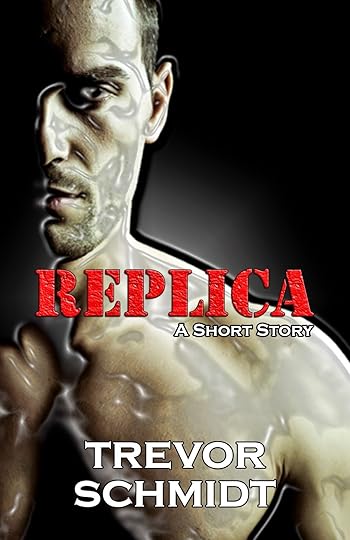 Now, you can read my short story Replica anytime, anywhere, absolutely free. Head over to Smashwords and download your free copy in .epub, .mobi, .pdf, .doc, .rtf, and more.
Synopsis:
In the year 2054, Army Sergeant Logan Martel hunts for an insurgent plotting a horrific attack on the West. It is in this world of high-tech equipment and prolific robotics that Logan finds himself set adrift, searching for what's left of his own humanity. Will he find what he's looking for? Or will he become merely a replica of his former self?
If you like what you read I'd encourage you to write a review on any of your favorite retailer's websites or give it a quick rating on goodreads.
Note: Amazon is still selling Replica for $0.99 but I expect them to price match soon. Don't let this stop you from rating it though!


February 11, 2015
4 Steps to Creating Tension in a Scene or Novel
Creating tension between characters can be hard if you're used to reading books and searching for that happy ending. Your mind may lead you to begin tying everything up with a neat little bow toward the middle to end or your manuscript. If your inclination is to avoid complicated situations between your main characters, you may be doing it wrong. Here are four steps to creating the tension your readers deserve.
1. The Necessity of Tension: Have you ever read a book in which there are several main characters and from the beginning they present a united front against the 'baddies?' How boring is that? Real people have problems with each other, whether it's differences in appearance, race, gender, personality, or any number of other reasons. If you want to make your characters three-dimensional so they are popping off the page, you need to create tension. It can be something small like an event in two characters' back story where they had an argument and those feelings are creeping up again. Whether they admit it or not, readers love gossip, love triangles or quadrangles, shouting matches, fist fights, and all the rest that comes along with tension. No scene is complete without some level of tension.
2. Finding Equilibrium: If all of your characters argue throughout every scene, not much is going to get done, unless your novel or story takes place solely in an anger management class. Someone or something needs to bring your characters back to reality or the natural progression of events might not lead where you expect. If three prisoners are fighting over how best to escape, the scene must end somewhere. Do they escape? Do they agree on a plan? Do two of them kill the third so they can have consensus? All are valid paths to take, but whatever path you choose must fit within the characters' personalities as well as the realm of possibility.
3. Every Character Interacts Differently With Every Other Character: Just as in real life, you might speak to your bank teller in one manner of speech and your lover in another. Realizing this change before you write a scene can go a long way toward setting the tone and securing the proper voice for the scene. In this same vein, every character will have different tensions with every other character. If one character was cuckolded by his wife, his best friend might empathize with the cuckold, but he won't be able to feel exactly what he's feeling. Knowing this difference can bring your writing to a new level. Remember that different personality types will respond differently to the same catalyst.
4. Creating Tension: So you've mastered the first three steps and now you're ready to dive into creating tension in your scene. To do so, I would recommend you first look not to the scene at hand, but to the larger picture. What is the point of creating this tension? Are two characters fighting because they are actually in love? If so, why don't they know how to express their feelings? Did something in their past put them off from the notion of love? How will this scene affect your character's behavior going forward? As an example, say your main character is a cop. You're about to write a scene in which his wife tells him she wants a divorce. A few scenes before, he was nearly killed in a shootout. Whatever happens with the cop and his wife should reflect the trials and tribulations he's just faced on duty. If he's just had a near-death experience, losing his wife might be far more painful. Now say that the wife is leaving him for his partner. The cop has just lost both of the foundational people in his life. How is he going to take it? Does he break down? Does he kill his wife? Context is everything. It would be perfectly plausible for this to lead to a crime of passion.
If you follow these four steps, there is no reason your scene shouldn't improve for the better. What are some ways you've created tension in a scene? Sound off in the comments below and I'll make sure to respond!
1. The Necessity of Tension: Have you ever read a book in which there are several main characters and from the beginning they present a united front against the 'baddies?' How boring is that? Real people have problems with each other, whether it's differences in appearance, race, gender, personality, or any number of other reasons. If you want to make your characters three-dimensional so they are popping off the page, you need to create tension. It can be something small like an event in two characters' back story where they had an argument and those feelings are creeping up again. Whether they admit it or not, readers love gossip, love triangles or quadrangles, shouting matches, fist fights, and all the rest that comes along with tension. No scene is complete without some level of tension.
2. Finding Equilibrium: If all of your characters argue throughout every scene, not much is going to get done, unless your novel or story takes place solely in an anger management class. Someone or something needs to bring your characters back to reality or the natural progression of events might not lead where you expect. If three prisoners are fighting over how best to escape, the scene must end somewhere. Do they escape? Do they agree on a plan? Do two of them kill the third so they can have consensus? All are valid paths to take, but whatever path you choose must fit within the characters' personalities as well as the realm of possibility.
3. Every Character Interacts Differently With Every Other Character: Just as in real life, you might speak to your bank teller in one manner of speech and your lover in another. Realizing this change before you write a scene can go a long way toward setting the tone and securing the proper voice for the scene. In this same vein, every character will have different tensions with every other character. If one character was cuckolded by his wife, his best friend might empathize with the cuckold, but he won't be able to feel exactly what he's feeling. Knowing this difference can bring your writing to a new level. Remember that different personality types will respond differently to the same catalyst.
4. Creating Tension: So you've mastered the first three steps and now you're ready to dive into creating tension in your scene. To do so, I would recommend you first look not to the scene at hand, but to the larger picture. What is the point of creating this tension? Are two characters fighting because they are actually in love? If so, why don't they know how to express their feelings? Did something in their past put them off from the notion of love? How will this scene affect your character's behavior going forward? As an example, say your main character is a cop. You're about to write a scene in which his wife tells him she wants a divorce. A few scenes before, he was nearly killed in a shootout. Whatever happens with the cop and his wife should reflect the trials and tribulations he's just faced on duty. If he's just had a near-death experience, losing his wife might be far more painful. Now say that the wife is leaving him for his partner. The cop has just lost both of the foundational people in his life. How is he going to take it? Does he break down? Does he kill his wife? Context is everything. It would be perfectly plausible for this to lead to a crime of passion.
If you follow these four steps, there is no reason your scene shouldn't improve for the better. What are some ways you've created tension in a scene? Sound off in the comments below and I'll make sure to respond!
February 10, 2015
The Azure Key is $2.99, sequel out next month!
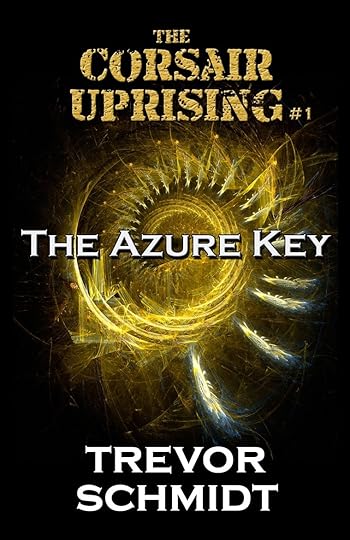 The Corsair Uprising #1: The Azure Key is now $2.99 on Kindle! In appreciation for all of my readers, I'm making the first novel in my epic Steampunk Space Opera series available for the lowest price yet. This March, I will release the second installment in the series, entitled Nightstalkers. If you haven't read The Azure Key yet, now is the perfect time to catch up before its planet-hopping sequel is released to the world.
The Azure Key synopsis:
Liam Kidd was a freelancer for Vesta Corporation, Earth’s largest and most corrupt asteroid mining company. Through a series of events he finds himself working the mines, a fate worse than death. When an opportunity presents itself, he and two other miners escape through a nearby wormhole. They find themselves across the galaxy in the middle of a conflict between three alien species. Liam’s only chance of getting home lies in finding a device rumored to be capable of opening a singularity. Now, he and his crew must face the horrors of war to return to their own system, a challenge that might prove deadly.
The Azure Key now $1.99, sequel out next month!
The Corsair Uprising #1: The Azure Key is now $1.99 on Kindle! In appreciation for all of my readers, I'm making the first novel in my epic Steampunk Space Opera series available for the lowest price yet. This March, I will release the second installment in the series, entitled Nightstalkers. If you haven't read The Azure Key yet, now is the perfect time to catch up before its planet-hopping sequel is released to the world.The Azure Key synopsis:
Liam Kidd was a freelancer for Vesta Corporation, Earth’s largest and most corrupt asteroid mining company. Through a series of events he finds himself working the mines, a fate worse than death. When an opportunity presents itself, he and two other miners escape through a nearby wormhole. They find themselves across the galaxy in the middle of a conflict between three alien species. Liam’s only chance of getting home lies in finding a device rumored to be capable of opening a singularity. Now, he and his crew must face the horrors of war to return to their own system, a challenge that might prove deadly.
February 8, 2015
Science Sunday: Uber May Compete Against Google for Self-Driving Cars
This week Uber announced a partnership with Carnegie Mellon University researchers to develop an "Autonomous Taxi Fleet." Uber has been in the news a lot lately with controversy surrounding taxi companies and local ordinances that have ratcheted up taxes and fees on Uber drivers. This play flies in the face of everything they've espoused so far. Uber has built a following because it's allowed unemployed or underemployed individuals make some extra cash on the side, some people even making a living being drivers. However, getting into the autonomous car business wouldn't immediately diminish their appeal in my opinion. It will likely take years before they can even implement such a plan and once they do, they won't immediately gain market share that threatens their own human drivers or those of taxi companies. That said, withing 25 to 50 years I think almost all taxis will be autonomous.
Who remembers the "Johnny Cab," from the beloved 1990 science fiction film Total Recall? If not, check out this video:
I think the taxi cabs of the future will be a little more sophisticated than this, but for 25 years ago, it got a lot right. If you want to go back further, Total Recall is based on the 1966 short story, "We Can Remember It For You Wholesale," by one of my favorite authors, Philip K. Dick. While Johnny Cab might not have been in the short story, Philip K. Dick was one of those futurists who got a lot right. He was also known for his story which turned into the 2002 film of the same name, "Minority Report."
With autonomous vehicles a practical certainty at this point, I'm led to a point I've been thinking about for some time and which played a small role in some of my previous works. According to the Bureau of Labor Statistics, there are about 233,000 Taxi Drivers and Chauffeurs in the United States alone. This is only one area in which technology is shaping the future of jobs in the United States and the rest of the world. If Uber and Google compete in the autonomous car business they will inevitably eat into these jobs, but replace them with more jobs for engineers and people to maintain the vehicle fleets. I think there will still be a net job loss, though, because the people who are driving the taxi cabs probably don't have skills that translate to more technical work.
This is also being seen in banks, where there might only be one or two employees working in a branch with the rest being automated. Is it a bad thing that we're losing jobs that don't require much training or technical skills? Maybe, but maybe not. The world is getting more competitive every day, but I wonder what the job markets of the future will look like? Will we all be repairing our robotic overlords until they can learn to repair themselves? At that point they certainly wouldn't need us anymore, as Elon Musk and several others have recently pointed out. I'm going to approach this one with cautious optimism. It is likely that autonomous cars will drive down the cost of transportation, especially in big cities, and that will mean more people can afford to commute. This would certainly be good for the overall job market. Unless you are a Taxi driver that is.
Who remembers the "Johnny Cab," from the beloved 1990 science fiction film Total Recall? If not, check out this video:
I think the taxi cabs of the future will be a little more sophisticated than this, but for 25 years ago, it got a lot right. If you want to go back further, Total Recall is based on the 1966 short story, "We Can Remember It For You Wholesale," by one of my favorite authors, Philip K. Dick. While Johnny Cab might not have been in the short story, Philip K. Dick was one of those futurists who got a lot right. He was also known for his story which turned into the 2002 film of the same name, "Minority Report."
With autonomous vehicles a practical certainty at this point, I'm led to a point I've been thinking about for some time and which played a small role in some of my previous works. According to the Bureau of Labor Statistics, there are about 233,000 Taxi Drivers and Chauffeurs in the United States alone. This is only one area in which technology is shaping the future of jobs in the United States and the rest of the world. If Uber and Google compete in the autonomous car business they will inevitably eat into these jobs, but replace them with more jobs for engineers and people to maintain the vehicle fleets. I think there will still be a net job loss, though, because the people who are driving the taxi cabs probably don't have skills that translate to more technical work.
This is also being seen in banks, where there might only be one or two employees working in a branch with the rest being automated. Is it a bad thing that we're losing jobs that don't require much training or technical skills? Maybe, but maybe not. The world is getting more competitive every day, but I wonder what the job markets of the future will look like? Will we all be repairing our robotic overlords until they can learn to repair themselves? At that point they certainly wouldn't need us anymore, as Elon Musk and several others have recently pointed out. I'm going to approach this one with cautious optimism. It is likely that autonomous cars will drive down the cost of transportation, especially in big cities, and that will mean more people can afford to commute. This would certainly be good for the overall job market. Unless you are a Taxi driver that is.
February 4, 2015
3 Steps to Tricking Your Reader (A Guide to Ethically Misleading Your Readers to Reaching Specific Conclusions)
What a title! You're here reading this because I've just suggested something that a lot of people might take offense to. Tricking the reader? What kind of madman would do that to the very people that provide his subsistence? Never bite the hand that feeds! To that, I say listen close, because this might be the most important thing you do as a writer.
How many times have you been watching a TV show and known how it would end within the first fifteen minutes? If you haven't, you ought to pay closer attention. Media today of all types and formats have become predictable. What's the point of binge-watching that series on Netflix if you have every detail figured out before it plays out on screen? Perhaps even more, who wants to spend the time to read a book when they already know the conclusion? I'm going to present a few ways I try to spice up my writing to keep it fresh and, yes, mislead the reader into reaching false conclusions.
1. Laying the foundation: The first thing I do in many stories and novels that I write is figure out where I want to go. I may write an outline for the whole book, or certain chapters, but I certainly know where I'm going. From this point, I work backward to find the most effective way to get this information to you, the reader. If I come right out and say everything up front, not only would the novel be short, it would have no character. There would be no point to read it. It's important to provide a journey. Every journey begins with a single step (Or so they say). If I know a character is going to die much later in a story, I might provide clues, or I might not, but I'll certainly be thinking about it as I write. Often in TV, I find that characters that are about to die have more screen time than usual in that episode to get the viewer more invested emotionally (See any episode of The Walking Dead). As a literary device, this is the standard format. However, some writers don't play by those rules. Look at George R. R. Martin, who kills off major characters in the middle of a sentence, as though talking about their demise in passing. Which brings me to...
2. Set the reader's expectations: As an example from my own works, in the first book in The Corsair Uprising series entitled "The Azure Key," the first three chapters took place on Earth in the future. I set up expectations as to what technology had been developed, what was feasible, and I even wrote it from a semi-Hard Science Fiction standpoint. That's when all hell broke loose and I'm forced to talk about #3.
3. Break the expectations: Around Chapter 4, things get a little weird. I would still classify the story as a little harder on the Hard-Soft Science Fiction scale (Hard being entirely scientifically accurate and soft laughing in the face of all human knowledge of physics). Without spoiling anything, it is at this point in the story when the reader's expectations are dashed and they are led quite literally to a place where our understanding of the Universe is minute by comparison to the others beings present.
Now it's time for an example of how this is put into play. Say I have three characters and I wanted to create distrust between them. If I am showing the perspective of only one of those characters, I would create multiple scenarios that set up and then verify that character's expectations. For instance, they could see someone stealing, lying, cheating, or any number of other less-than-savory acts. Then, I might set up a scenario in which tension rises between the characters until it's almost unbearable to write, let alone read.
But is this lying, cheating, stealing person bad? What if they were doing it for another purpose, something noble? From one character's perspective it might be hard to tell. This is where I might break the reader's expectations, or I might not. What if the scenario I created was too effective and the reader knew that person couldn't be all bad? Wouldn't it be more surprising to make the reader think they are redeemable and then show they are truly bad? I try to create multiple scenarios like this in each of my books and so by the time my reader is finished they should feel surprised at least once or twice.
My goal here is not to be another M. Night Shyamalan, creating shocks for the sake of it. Rather, I aim to enrich the reading experience by providing thrills where possible but keeping the pages turning and the questions forming in my reader's mind. If I've done my job, the reader's emotional palette will be raw by the time they're finished and they feel compelled to see how I can toy with them next. In relation to The Corsair Uprising series, I would say that in addition to individual books containing this misleading tactics, there is an arch, or perhaps several arches, between the books that are perhaps even more compelling.
Writers: How have you toyed with your reader and what was your purpose in doing so?
Readers: Do you like reading works that surprise you, or is predictable your style of choice?
How many times have you been watching a TV show and known how it would end within the first fifteen minutes? If you haven't, you ought to pay closer attention. Media today of all types and formats have become predictable. What's the point of binge-watching that series on Netflix if you have every detail figured out before it plays out on screen? Perhaps even more, who wants to spend the time to read a book when they already know the conclusion? I'm going to present a few ways I try to spice up my writing to keep it fresh and, yes, mislead the reader into reaching false conclusions.
1. Laying the foundation: The first thing I do in many stories and novels that I write is figure out where I want to go. I may write an outline for the whole book, or certain chapters, but I certainly know where I'm going. From this point, I work backward to find the most effective way to get this information to you, the reader. If I come right out and say everything up front, not only would the novel be short, it would have no character. There would be no point to read it. It's important to provide a journey. Every journey begins with a single step (Or so they say). If I know a character is going to die much later in a story, I might provide clues, or I might not, but I'll certainly be thinking about it as I write. Often in TV, I find that characters that are about to die have more screen time than usual in that episode to get the viewer more invested emotionally (See any episode of The Walking Dead). As a literary device, this is the standard format. However, some writers don't play by those rules. Look at George R. R. Martin, who kills off major characters in the middle of a sentence, as though talking about their demise in passing. Which brings me to...
2. Set the reader's expectations: As an example from my own works, in the first book in The Corsair Uprising series entitled "The Azure Key," the first three chapters took place on Earth in the future. I set up expectations as to what technology had been developed, what was feasible, and I even wrote it from a semi-Hard Science Fiction standpoint. That's when all hell broke loose and I'm forced to talk about #3.
3. Break the expectations: Around Chapter 4, things get a little weird. I would still classify the story as a little harder on the Hard-Soft Science Fiction scale (Hard being entirely scientifically accurate and soft laughing in the face of all human knowledge of physics). Without spoiling anything, it is at this point in the story when the reader's expectations are dashed and they are led quite literally to a place where our understanding of the Universe is minute by comparison to the others beings present.
Now it's time for an example of how this is put into play. Say I have three characters and I wanted to create distrust between them. If I am showing the perspective of only one of those characters, I would create multiple scenarios that set up and then verify that character's expectations. For instance, they could see someone stealing, lying, cheating, or any number of other less-than-savory acts. Then, I might set up a scenario in which tension rises between the characters until it's almost unbearable to write, let alone read.
But is this lying, cheating, stealing person bad? What if they were doing it for another purpose, something noble? From one character's perspective it might be hard to tell. This is where I might break the reader's expectations, or I might not. What if the scenario I created was too effective and the reader knew that person couldn't be all bad? Wouldn't it be more surprising to make the reader think they are redeemable and then show they are truly bad? I try to create multiple scenarios like this in each of my books and so by the time my reader is finished they should feel surprised at least once or twice.
My goal here is not to be another M. Night Shyamalan, creating shocks for the sake of it. Rather, I aim to enrich the reading experience by providing thrills where possible but keeping the pages turning and the questions forming in my reader's mind. If I've done my job, the reader's emotional palette will be raw by the time they're finished and they feel compelled to see how I can toy with them next. In relation to The Corsair Uprising series, I would say that in addition to individual books containing this misleading tactics, there is an arch, or perhaps several arches, between the books that are perhaps even more compelling.
Writers: How have you toyed with your reader and what was your purpose in doing so?
Readers: Do you like reading works that surprise you, or is predictable your style of choice?
February 2, 2015
Startup Interview: Devan Stormont, Creator of the Popular Weather Route App
 Hello, Devan. Thank you for joining me for this interview. Why don’t we start by having you give a little background about yourself?
Hi Trevor, it's my pleasure to join you. I'm a software engineer at a mid-size company here in Reno, where I'm heavily involved with product development and internal training. On the side, I wrote a little app called Weather Route.
What inspired you to create the Weather Route App?
Two winters ago, I had plans to visit my out-of-state parents for Christmas. A large weather system moved in that wasn't completely a "bad storm". It had areas of being clear, but they would shift around as the weather system moved. I tried for a while to plan a road trip through the storm, but getting information about which roads were clear and which were not was almost impossible from existing weather sites, especially when long hours of driving were factored in.
Eventually, I gave up and canceled my plans for the trip. But, Weather Route was born!
Currently, Weather Route is limited to the United States. Do you have plans to expand to International Markets?
Yes. I just completed a big overhaul in the weather forecasting that will allow the app to work internationally. I've begun rolling this out to some foreign markets.
I understand you’re coming off some pretty significant gains in membership after this holiday season. What can you tell me about that?
Absolutely! This was a very exciting winter for me. Once the weather started turning bad, I began getting very consistent user growth - about 12% user growth a week, very regularly, almost like clockwork. By the time that had slowed down with the winter trailing off, I had 5x as many users as I'd started with.
Reno has been getting some buzz lately for a number of tech startups in the area, how does it feel to be a part of this movement and have you had a chance to work with any other entrepreneurs in town?
It's very exciting to see the local tech industry growing with such momentum. I haven't been as involved as I should be, but I have participated in a couple of hackathons (the annual Space Apps Challenge). That has been a great way to meet other entrepreneurs and see what they're working on. Colin Loretz at the Reno Collective, Eric Jennings at Pinocc.io, and Joe Chavez (who runs the local Space Apps Challenge) are each fantastic local entrepreneurs.
Will Weather Route be available in other languages?
Yes. Right now, it is English-only, but I am planning on providing multiple languages, if the international version picks up well.
How can I find Weather Route?
The app is available on Google Play. Just type in "Weather Route" and it will pop right up!
What kind of users make up your core demographic and what markets are you trying to expand into?
I wrote the app to target vacationers, originally. What took me by surprise was the number of truckers that have started to use it. One thing I'd like to do is target that segment more with app solutions.
Can you tell me any future plans for Weather Route?
We've already touched on a couple areas - expanding to international markets and providing localization for other languages. I'm also examining porting the app over to the iPhone, as well. I've gotten some requests from coworkers to do so, indicating that the demand is there.
Customer satisfaction is arguably the core reason apps exist. How do you keep your customers satisfied and do customer suggestions affect the development of future versions of the app?
I pay very close attention to what my users are telling me. Some of the best ways to get users impassioned about your product is when they complain to you about a problem or a missing feature and you go above-and-beyond in response. There's always some part of code I'd like to fix or some new feature I'd like to put in, but I take a "drop everything" approach with user feedback. If a user reports a problem, I'll hunker down until it's fixed. And if I start to hear about a wanted feature from two or three users, you can bet I'm working on implementing it!
Ultimately, it's users who drive adoption of an app forward. If a developer gets in the way of that adoption, they're only hurting themselves. Plus, it's just great to hear directly from users that you've fixed their issue!
Thank you for taking the time to answer some questions, now get back to work!
February 1, 2015
Science Sunday: Virtual Driver's Licenses
Delaware is looking to become the first state (again) by adopting a secure mobile app that will allow users to use their cell phone as their driver's license at traffic stops. It actually makes a lot of sense given that these days people are more likely to forget their wallets than their cell phones. There are already 30 states that let you show your proof of insurance electronically, and that number is growing. Why talk about this on my first Science Sunday? I'll tell you why.
Years ago, there was talk of implanting an RFID the size of a grain of rice in between people's thumb and index fingers for tracking and various purposes. Apart from a very small number of people, Americans rejected this idea. Privacy wonks abound, Americans have vocally rejected ideas that inhibit their privacy, yet hypocritically demand more safety by way of increasing video surveillance and the like. Here's what I'm concerned with: the app Delaware is talking about is a secure app, likely created by the state.
It's been known for some time that a lot of apps make you agree to absurd conditions before being allowed to use the app. I wonder what kind of privacy the users will have to give up when they accept the terms of this app. There's really nothing stopping them from using your cell phone to find your location. With a warrant they can do it already. It's possible this app would give them this ability without a warrant, something the Patriot Act has also already been doing in 'extreme' cases. However cool this technology is and however convenient it is to carry your phone as a driver's license and perhaps as a method of payment, it's worth noting that the potential benefits are marred by the potential risks.
Those who know me know that I'm no Luddite. I use some of the latest gadgets and I love imagining the future. What I'm concerned about is aloof consumers who don't question the government or the companies selling them these products. Without asking these kinds of questions, becoming a victim of a society run amok is not a possibility, but an eventual certainty. I spoke of some similar issues in my dystopian thriller Memory Leak. In my book, technology could be a great defensive weapon or the catalyst for my characters' destruction.
What do you think about using your cell phone as a driver's license? Am I being too paranoid, or is there merit in moving forward in this area with caution?
Years ago, there was talk of implanting an RFID the size of a grain of rice in between people's thumb and index fingers for tracking and various purposes. Apart from a very small number of people, Americans rejected this idea. Privacy wonks abound, Americans have vocally rejected ideas that inhibit their privacy, yet hypocritically demand more safety by way of increasing video surveillance and the like. Here's what I'm concerned with: the app Delaware is talking about is a secure app, likely created by the state.
It's been known for some time that a lot of apps make you agree to absurd conditions before being allowed to use the app. I wonder what kind of privacy the users will have to give up when they accept the terms of this app. There's really nothing stopping them from using your cell phone to find your location. With a warrant they can do it already. It's possible this app would give them this ability without a warrant, something the Patriot Act has also already been doing in 'extreme' cases. However cool this technology is and however convenient it is to carry your phone as a driver's license and perhaps as a method of payment, it's worth noting that the potential benefits are marred by the potential risks.
Those who know me know that I'm no Luddite. I use some of the latest gadgets and I love imagining the future. What I'm concerned about is aloof consumers who don't question the government or the companies selling them these products. Without asking these kinds of questions, becoming a victim of a society run amok is not a possibility, but an eventual certainty. I spoke of some similar issues in my dystopian thriller Memory Leak. In my book, technology could be a great defensive weapon or the catalyst for my characters' destruction.
What do you think about using your cell phone as a driver's license? Am I being too paranoid, or is there merit in moving forward in this area with caution?
Science Sundays: Science Never Rests
Welcome to Science Sunday! This page will serve as an exhaustive index of all of my Science Sunday Posts. Feel free to browse around, you never know what you might find.
Science Sunday Week 1: Virtual Driver's Licenses
Science Sunday Week 1: Virtual Driver's Licenses
January 28, 2015
What would you do if your dreams came true?
All of us have dreams of some kind. For some of us, it's simply being able to pay the bills. For others, it's that mega-mansion you've seen on TV. I have plenty of dreams of my own, but I think there's something a lot of people are missing about this whole thing. What would you do if your dreams DID come true? What if you didn't have to work anymore and could do whatever you want? I think I've found my answer and I doubt many others have come to the same conclusion.
I would continue writing, even if I hardly sold a book. But that's not all. If money was no object, I would probably stay in college forever. I would obtain every degree that interests me, and trust me there are a lot, and while doing that I would keep my mind fresh enough to continue writing at my best. Some would say I'd be chasing youth, but they'd be wrong. At the core of it, I'm chasing knowledge, even the ever-elusive 'wisdom.'
And now for some clarification. I would not go on to get doctorates in everything. I think that amount of dissertations would drive me nuts and sap any creativity I had left. No, I'd pursue engineering degrees, science degrees, business and finance degrees, anything I thought would be helpful to my writing. I don't think I'll ever need that Mc-Mansion because I'd be spending all of my time studying and trying to become a better writer. Heck, maybe I'd even blog more. One thing is for sure, I would not blow it on material things. That is, unless you consider a yacht material...
So there you have it. What would you do if your dreams came true?
I would continue writing, even if I hardly sold a book. But that's not all. If money was no object, I would probably stay in college forever. I would obtain every degree that interests me, and trust me there are a lot, and while doing that I would keep my mind fresh enough to continue writing at my best. Some would say I'd be chasing youth, but they'd be wrong. At the core of it, I'm chasing knowledge, even the ever-elusive 'wisdom.'
And now for some clarification. I would not go on to get doctorates in everything. I think that amount of dissertations would drive me nuts and sap any creativity I had left. No, I'd pursue engineering degrees, science degrees, business and finance degrees, anything I thought would be helpful to my writing. I don't think I'll ever need that Mc-Mansion because I'd be spending all of my time studying and trying to become a better writer. Heck, maybe I'd even blog more. One thing is for sure, I would not blow it on material things. That is, unless you consider a yacht material...
So there you have it. What would you do if your dreams came true?


