
Trevor Schmidt's Blog, page 3
March 15, 2015
The Corsair Uprising #2: Nightstalkers Has Been Released on Amazon!
That's right, now you can own the second installment of The Corsair Uprising Space Opera Science Fiction Series! Nightstalkers has hit the Kindle shelves and now you can get the first in the series, The Azure Key, for just 99 cents for a limited time.
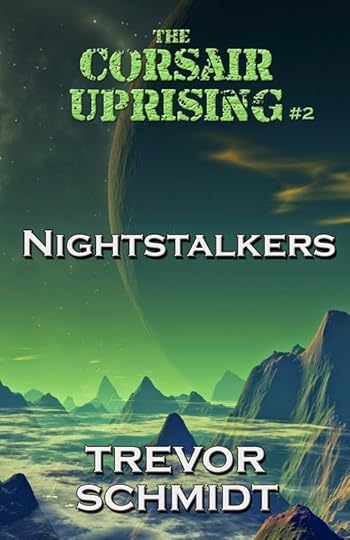 Also, to promote the release of my newest novel, get my science fiction thriller Symbiote for Free on Kindle through 3/18/2015! Symbiote has been related by critics to works by John Grisham and has garnered rave reviews from readers. Don't miss this chance to add it to your collection for free. Read it. Tell a friend. Review it on your social media site of choice. If you like my writing, please check out The Corsair Uprising series!
Nightstalkers Synopsis:
"Two months has passed since the battle for Garuda Colony, and Captain Liam Kidd is tired. His crew has worked diligently to retrieve a stolen artifact, but all of their efforts have failed. Finally, during a brutal boxing match, a lead has surfaced. The clue comes with entangled rumors of a nefarious Ansaran research facility on the Planet Narra, and a new danger from the Kraven Throng that threatens to destroy them all. Even stranger is what they find when they land on the wayward planet. Will Captain Kidd and his crew discover the truth before it’s too late? Or will they fall prey to the NIGHTSTALKERS?"
Also, to promote the release of my newest novel, get my science fiction thriller Symbiote for Free on Kindle through 3/18/2015! Symbiote has been related by critics to works by John Grisham and has garnered rave reviews from readers. Don't miss this chance to add it to your collection for free. Read it. Tell a friend. Review it on your social media site of choice. If you like my writing, please check out The Corsair Uprising series!Nightstalkers Synopsis:
"Two months has passed since the battle for Garuda Colony, and Captain Liam Kidd is tired. His crew has worked diligently to retrieve a stolen artifact, but all of their efforts have failed. Finally, during a brutal boxing match, a lead has surfaced. The clue comes with entangled rumors of a nefarious Ansaran research facility on the Planet Narra, and a new danger from the Kraven Throng that threatens to destroy them all. Even stranger is what they find when they land on the wayward planet. Will Captain Kidd and his crew discover the truth before it’s too late? Or will they fall prey to the NIGHTSTALKERS?"


March 14, 2015
Symbiote, a Sci-Fi Thriller, is FREE on Amazon Through Wednesday!
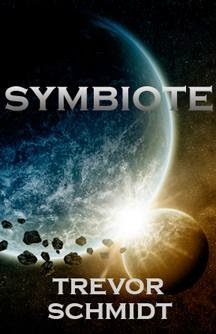 My Science Fiction Thriller
Symbiote
is free on Amazon from now through Wednesday, March 18th. Grab a free copy and tell your friends to do the same. It's Spring Break and what better way to spend that extra free time on a good book. Don't have time to read now? Add it to your library for a rainy day.
My Science Fiction Thriller
Symbiote
is free on Amazon from now through Wednesday, March 18th. Grab a free copy and tell your friends to do the same. It's Spring Break and what better way to spend that extra free time on a good book. Don't have time to read now? Add it to your library for a rainy day.Here's what the critics are saying:
"Schmidt’s writing reads much like a John Grisham novel, but he asserts his own particular writing style skillfully to the betterment of the novel."
"The autopsy scene is one that will stay with me for awhile. A most poignant ending." (Amazon Top 500 Reviewer)
Here's a synopsis:
"When a normally meek Bay Area insurance agent suddenly turns into a voracious, homicidal maniac with an uncontrollable appetite, doctors quickly determine that the cause must be a brain parasite that can only be extra-terrestrial. Now, San Francisco Police Detectives Karen Hall and Yuri Markov are on a mission to end this wave of violence before more citizens become infected. But at every turn their investigation seems to be hindered by shadowy federal agents with a hidden agenda. Can they stop this reign of terror before one of them becomes the next Symbiote?"
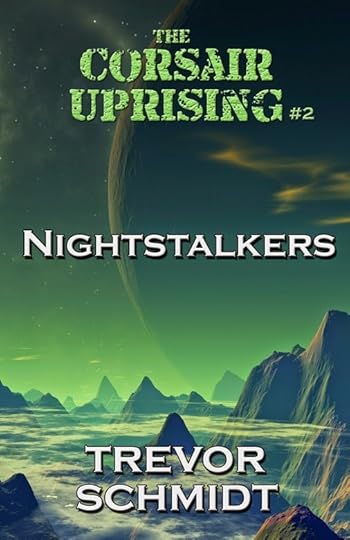 Additionally, don't forget my new novel, The Corsair Uprising #2: Nightstalkers, comes out Sunday (3/15/2015)! Here's an advance look at the cover.
March 11, 2015
Tips for Writing Popular Fiction Part 3:
Welcome to part three of this ongoing series addressing how to write popular fiction (successfully). To catch up, start with Part 1 and Part 2, or continue straight into Part 3 if you like to live dangerously.
The Fallacy of the Love Triangle. Let me start with this: how many teen romances, chick flicks, and garden-variety romances have you read or seen that utilize the love triangle? Probably more than you can count. While I can understand the practice in circumstances like a movie in which there is limited time to tell a story, doing so in a novel willy-nilly is flat out lazy. Hear me out. Why have some soap operas been on the air for 40+ years? I would argue it's not their use of cutting-edge writing teams, but rather their ability to play at the emotions of their viewers. I would argue that if you have time to create a love triangle, you have time to make a love quadrangle. Why is this better? It allows the story to take on a new dynamic. Now there are the interconnections between four characters which can up the ante when it comes to urgency.
A love quadrangle need not be as complicated as it sounds. Circumstances could prevent two characters from being together, and that means those feelings may prevent them from jumping into the sack with yet another character. The reader might have a preference for who a main character ends up with, (Team Jacob), but the reader shouldn't always get exactly what they want (Any page from A Song of Ice and Fire/Game of Thrones). The love triangle has been used over and over because it happens in real life. All. The. Time. What's more confusing for your character, though? Choosing between two men, or choosing between two men who are also being courted by another female. If she chooses wrong she may lose the chance to be with the one she chose, and then how likely is the other guy to be okay with being the leftovers? In my opinion, there's a lot more places to go with this dynamic, even if the fourth character isn't a character at all, but a situation that adds to the dilemma.
The Red Herring. This technique used to be a lot more common, but I think it has fallen out of favor by an abundance of audiences that wants everything handed to them on a silver platter. The concept of the Red Herring is that a clue, character, or some other plot device is introduced to throw off the reader and ends up having no effect on the conclusion of the novel. Why would you want to use this technique? The classic case is the Scooby Doo mystery, in which midway through the story a character is introduced and all signs point to them as the perpetrator of some crime, only to have those signs be misleading. (Obviously it was the caretaker of the lighthouse the whole time!) While this isn't used as heavily in novels these days, it is used in TV Shows. If you don't believe me, watch any police procedural on TV today. If they "catch the killer" and there's still fifteen minutes left in the show, they are a Red Herring. Every. Damn. Time.
Here's the context in which I think this should come back. Most popular fiction these days is too predictable. Nothing can ever happen to the good guys that will cause them lasting harm and who the bad guys are is generally pretty clear from the outset. (In the case of Twilight, *SPOILER* there really are no bad guys of importance, only a situation that is easily fixed if Edward wasn't such a wimp. There, I said it). Instead, I like to introduce characters and give them backstories even if they don't end up playing a major part in the plot. If everyone is described well, everyone could be important. It makes the reader pay attention more. In my upcoming book Nightstalkers I introduce several new characters. Some of them will never be seen again, and some others will go on to play major roles in the lives of my characters and in the overarching story of my series. Why? In real life, if you go through your day you meet all kinds of people. At the time, you never know who's going to end up being important. You could meet your future spouse in passing, but you're just as likely to meet someone at the grocery store who ends up cutting your hair years later (though you'd never know it). By introducing these characters I not only get to introduce important characters under less than important circumstances, I can introduce small plot devices in the beginning of a story that don't resurface until much later, even if they are just to confuse my characters, or you, my loyal readers.
My advice: take a chance, use a Red Herring for something other than a perp walk or Scooby Doo-esque mystery. While you're at it, create a web of love that's hard to untangle. You never know what side stories might come to you as a result. This is the kind of stuff that makes a series successful. Readers will come back time after time to see what happens to your characters if you give them a reason to care. It's more interesting to write and it's more interesting to read. I call that a win-win.
The Fallacy of the Love Triangle. Let me start with this: how many teen romances, chick flicks, and garden-variety romances have you read or seen that utilize the love triangle? Probably more than you can count. While I can understand the practice in circumstances like a movie in which there is limited time to tell a story, doing so in a novel willy-nilly is flat out lazy. Hear me out. Why have some soap operas been on the air for 40+ years? I would argue it's not their use of cutting-edge writing teams, but rather their ability to play at the emotions of their viewers. I would argue that if you have time to create a love triangle, you have time to make a love quadrangle. Why is this better? It allows the story to take on a new dynamic. Now there are the interconnections between four characters which can up the ante when it comes to urgency.
A love quadrangle need not be as complicated as it sounds. Circumstances could prevent two characters from being together, and that means those feelings may prevent them from jumping into the sack with yet another character. The reader might have a preference for who a main character ends up with, (Team Jacob), but the reader shouldn't always get exactly what they want (Any page from A Song of Ice and Fire/Game of Thrones). The love triangle has been used over and over because it happens in real life. All. The. Time. What's more confusing for your character, though? Choosing between two men, or choosing between two men who are also being courted by another female. If she chooses wrong she may lose the chance to be with the one she chose, and then how likely is the other guy to be okay with being the leftovers? In my opinion, there's a lot more places to go with this dynamic, even if the fourth character isn't a character at all, but a situation that adds to the dilemma.
The Red Herring. This technique used to be a lot more common, but I think it has fallen out of favor by an abundance of audiences that wants everything handed to them on a silver platter. The concept of the Red Herring is that a clue, character, or some other plot device is introduced to throw off the reader and ends up having no effect on the conclusion of the novel. Why would you want to use this technique? The classic case is the Scooby Doo mystery, in which midway through the story a character is introduced and all signs point to them as the perpetrator of some crime, only to have those signs be misleading. (Obviously it was the caretaker of the lighthouse the whole time!) While this isn't used as heavily in novels these days, it is used in TV Shows. If you don't believe me, watch any police procedural on TV today. If they "catch the killer" and there's still fifteen minutes left in the show, they are a Red Herring. Every. Damn. Time.
Here's the context in which I think this should come back. Most popular fiction these days is too predictable. Nothing can ever happen to the good guys that will cause them lasting harm and who the bad guys are is generally pretty clear from the outset. (In the case of Twilight, *SPOILER* there really are no bad guys of importance, only a situation that is easily fixed if Edward wasn't such a wimp. There, I said it). Instead, I like to introduce characters and give them backstories even if they don't end up playing a major part in the plot. If everyone is described well, everyone could be important. It makes the reader pay attention more. In my upcoming book Nightstalkers I introduce several new characters. Some of them will never be seen again, and some others will go on to play major roles in the lives of my characters and in the overarching story of my series. Why? In real life, if you go through your day you meet all kinds of people. At the time, you never know who's going to end up being important. You could meet your future spouse in passing, but you're just as likely to meet someone at the grocery store who ends up cutting your hair years later (though you'd never know it). By introducing these characters I not only get to introduce important characters under less than important circumstances, I can introduce small plot devices in the beginning of a story that don't resurface until much later, even if they are just to confuse my characters, or you, my loyal readers.
My advice: take a chance, use a Red Herring for something other than a perp walk or Scooby Doo-esque mystery. While you're at it, create a web of love that's hard to untangle. You never know what side stories might come to you as a result. This is the kind of stuff that makes a series successful. Readers will come back time after time to see what happens to your characters if you give them a reason to care. It's more interesting to write and it's more interesting to read. I call that a win-win.
March 8, 2015
The Azure Key is FREE on Kindle 3/8/15 - 3/12/15!
Grab your copy of The Corsair Uprising #1: The Azure Key for free on Amazon Kindle or the Kindle App Sunday March 8th through Thursday March 12th. The Azure Key is the first novel in a new Steampunk Space Opera series readers have likened to a love child between Star Wars and Firefly.
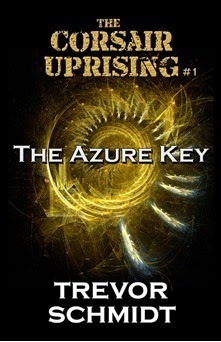 Here's a brief synopsis to whet your appetite:
"Liam Kidd was a freelancer for Vesta Corporation, Earth’s largest and most corrupt asteroid mining company. Through a series of events he finds himself working the mines, a fate worse than death. When an opportunity presents itself, he and two other miners escape through a nearby wormhole. They find themselves across the galaxy in the middle of a conflict between three alien species. Liam’s only chance of getting home lies in finding a device rumored to be capable of opening a singularity. Now, he and his crew must face the horrors of war to return to their own system, a challenge that might prove deadly."
The second installment in the series, entitled Nightstalkers, arrives next week! Take this chance to read the first book for free before the next one is released.
Here's a brief synopsis to whet your appetite:"Liam Kidd was a freelancer for Vesta Corporation, Earth’s largest and most corrupt asteroid mining company. Through a series of events he finds himself working the mines, a fate worse than death. When an opportunity presents itself, he and two other miners escape through a nearby wormhole. They find themselves across the galaxy in the middle of a conflict between three alien species. Liam’s only chance of getting home lies in finding a device rumored to be capable of opening a singularity. Now, he and his crew must face the horrors of war to return to their own system, a challenge that might prove deadly."
The second installment in the series, entitled Nightstalkers, arrives next week! Take this chance to read the first book for free before the next one is released.
March 4, 2015
Tips for Writing Popular Fiction Part 2
Last week I talked about writing at an accessible level to expand your audience and the art of subtlety in writing. This week, I'm moving on to two new tips that I've found to be really successful in my own writing. Perhaps you already use them, perhaps you're only now being introduced. Either way, using these tips is a great start toward pushing your craft to the next level.
1. The Cliffhanger. Everyone has been reading that book that always seems to be begging you to read one more chapter to find out what happens. Why is this? Usually, it's a factor of the author using psychological tools to leave the reader, you, wanting more. How do they do it? You'll often find that chapters end in the middle of a dramatic scene or right before something big happens. In television, this is known as the commercial break. It's something that's been used on the small screen for decades to build anticipation to ensure you won't change the channel when you've seen your third Charter Spectrum commercial in a row (This actually happened to me once and the theme song is still in my head. Curse you Charter!)
How can you as a writer build this into your story structure? It's simple. As you're writing your scene, imagine it as a TV show. If you were watching a TV show, where would the producers pause for a commercial? Use this trick as a basic guideline and it will take you a long way. The key here is not to do it every single time because it can be a bit formulaic if every chapter ends in the same way. This is where it's good to throw in some twists. Instead of ending just before a big reveal, end a little further back, but put in some choice words so that the reader knows it's coming, whetting their appetite to continue reading. This method is how you get readers to pick up your book and be unable to put it down until they are finished. In case you haven't been paying attention, that is rarely a bad thing.
Note: If you are writing in a series, it is paramount that you put in at least some kind of cliffhanger to get the reader to click 'buy now' on the next book in the series. This doesn't have to be epic, but the reader must know that there is more to the story and that they would benefit from continuing on this journey with you. Readers who have already read one of your books are incredibly more likely to read more of your work, especially if there is a series involved. Why? If a reader has already invested time in an author and if that author is any good, readers would rather read more work by an 'acceptable' author than to venture into unknown territory. Prior readers should be one of your main target audiences.
2. The Audience. Literary Fiction has its function. It is meant to be thought-provoking, but at its core it is all about the author. The author is expressing a feeling from deep within and is writing a story without regard to the reader. It is, perhaps, the loneliest genre an author can write. Popular Fiction is a different story. Popular Fiction exists because of the reader. The story and the emotions of the characters are far more important than what is under the surface in popular fiction because it exists for a different reason. Popular Fiction exists to evoke emotion in the reader, to get them to care about a character or situation, and to spin a story that will live on in their memory as though it were their own. While Literary Fiction can manifest some of these traits, its purpose is not to do so. The reader's desires are under the surface. When writing Popular Fiction, it is important to always have your audience in mind. Why are they reading this? Are my characters likable, and if not, is that intentional? Your audience can differ depending on what genre you choose to write (or combination of genres), but truly it doesn't matter, as long as you know who you're writing for.
Very few people write a novel without the expectation or desire that someone will read it (mostly academic types). A good rule of thumb is to ask yourself as you're writing if this is something you would read as an objective reader. If it is, great, keep it up! If you aren't sure, you might want to take some time and read a few books from the genre you're writing. I don't say this so you can write a carbon-copy of something that's already out there. Instead, you should see what elements worked and what elements did not work for you. Find out what drew you into the story, or perhaps what did not draw you in. Perhaps you're writing in a genre because you haven't found a story (say about vampires) that you really enjoy. Maybe the book you're writing is exactly what the market needs to freshen up that genre, giving birth to a new sub-genre. In that case, you won't know until you publish (and likely years after you publish).
For example, a novel I published five years ago has recently seen a second life and the sales have spiked. It's taken a while (without much of a marketing plan) for it to begin to shine. That novel is particularly polarizing, where many people like it, but the writing is not for everyone. I drum this up to some experimental styles I used with an interrupting narrator that is a subconscious voice within the head of my main character, inspired by Kurt Vonnegut. Was it commercially smart? Probably not, but it sure was fun. The point here is that writing for your audience is generally a smart thing to do, but that doesn't mean it's always the right thing to do. You see, maybe that strange thought in your head is just crazy enough to resonate with that very same audience. Maybe they don't know they want it because they've never seen it before. The only way to know for sure is to publish and engage in what I like to call "The Long Wait."
1. The Cliffhanger. Everyone has been reading that book that always seems to be begging you to read one more chapter to find out what happens. Why is this? Usually, it's a factor of the author using psychological tools to leave the reader, you, wanting more. How do they do it? You'll often find that chapters end in the middle of a dramatic scene or right before something big happens. In television, this is known as the commercial break. It's something that's been used on the small screen for decades to build anticipation to ensure you won't change the channel when you've seen your third Charter Spectrum commercial in a row (This actually happened to me once and the theme song is still in my head. Curse you Charter!)
How can you as a writer build this into your story structure? It's simple. As you're writing your scene, imagine it as a TV show. If you were watching a TV show, where would the producers pause for a commercial? Use this trick as a basic guideline and it will take you a long way. The key here is not to do it every single time because it can be a bit formulaic if every chapter ends in the same way. This is where it's good to throw in some twists. Instead of ending just before a big reveal, end a little further back, but put in some choice words so that the reader knows it's coming, whetting their appetite to continue reading. This method is how you get readers to pick up your book and be unable to put it down until they are finished. In case you haven't been paying attention, that is rarely a bad thing.
Note: If you are writing in a series, it is paramount that you put in at least some kind of cliffhanger to get the reader to click 'buy now' on the next book in the series. This doesn't have to be epic, but the reader must know that there is more to the story and that they would benefit from continuing on this journey with you. Readers who have already read one of your books are incredibly more likely to read more of your work, especially if there is a series involved. Why? If a reader has already invested time in an author and if that author is any good, readers would rather read more work by an 'acceptable' author than to venture into unknown territory. Prior readers should be one of your main target audiences.
2. The Audience. Literary Fiction has its function. It is meant to be thought-provoking, but at its core it is all about the author. The author is expressing a feeling from deep within and is writing a story without regard to the reader. It is, perhaps, the loneliest genre an author can write. Popular Fiction is a different story. Popular Fiction exists because of the reader. The story and the emotions of the characters are far more important than what is under the surface in popular fiction because it exists for a different reason. Popular Fiction exists to evoke emotion in the reader, to get them to care about a character or situation, and to spin a story that will live on in their memory as though it were their own. While Literary Fiction can manifest some of these traits, its purpose is not to do so. The reader's desires are under the surface. When writing Popular Fiction, it is important to always have your audience in mind. Why are they reading this? Are my characters likable, and if not, is that intentional? Your audience can differ depending on what genre you choose to write (or combination of genres), but truly it doesn't matter, as long as you know who you're writing for.
Very few people write a novel without the expectation or desire that someone will read it (mostly academic types). A good rule of thumb is to ask yourself as you're writing if this is something you would read as an objective reader. If it is, great, keep it up! If you aren't sure, you might want to take some time and read a few books from the genre you're writing. I don't say this so you can write a carbon-copy of something that's already out there. Instead, you should see what elements worked and what elements did not work for you. Find out what drew you into the story, or perhaps what did not draw you in. Perhaps you're writing in a genre because you haven't found a story (say about vampires) that you really enjoy. Maybe the book you're writing is exactly what the market needs to freshen up that genre, giving birth to a new sub-genre. In that case, you won't know until you publish (and likely years after you publish).
For example, a novel I published five years ago has recently seen a second life and the sales have spiked. It's taken a while (without much of a marketing plan) for it to begin to shine. That novel is particularly polarizing, where many people like it, but the writing is not for everyone. I drum this up to some experimental styles I used with an interrupting narrator that is a subconscious voice within the head of my main character, inspired by Kurt Vonnegut. Was it commercially smart? Probably not, but it sure was fun. The point here is that writing for your audience is generally a smart thing to do, but that doesn't mean it's always the right thing to do. You see, maybe that strange thought in your head is just crazy enough to resonate with that very same audience. Maybe they don't know they want it because they've never seen it before. The only way to know for sure is to publish and engage in what I like to call "The Long Wait."
February 25, 2015
Tips for Writing Popular Fiction Part 1
There are a lot of truly great novels out there; books with deep meaning behind every carefully chosen word and a story that holds a special place in the heart of generations. Chances are, your book is not that book. That doesn't mean that the talent needed to create such a work doesn't exist in abundance, it means that today's reader isn't looking for the next great American novel. They are looking for an escape. Hear me out.
Many classic American novels deal very deeply with the human condition. The plot is secondary to the meaning the writer is trying to convey. There's a lot of meaning behind Ernest Hemingway's The Sun Also Rises , but most readers just read something they think is about drinking your way across western Europe and bull fighting. The problem for today's reader often lies with the plot. The older the literature is, the less likely it is to capture the readers attention with vivid action sequences and the like. Why do today's readers enjoy blistering pacing and Michael Bay-esque action sequences. I blame it on Hollywood blockbusters that change great books into mindless drivel.
Still, this puts us writers at a crossroads. Do we sell out and write solely for an audience that eschews content with literary merit (See: Twilight, Fifty Shades of Grey, etc.)? Or, do we spend years completing our masterpiece, only to have the Big 5 publishers tell us it's garbage and they want more vampires and zombies to sell books? I don't think it has to be exclusively one or the other and I'll tell you why.
It is possible to write the plot of a story so that it will entertain those who want to be entertained, and provoke thought in those looking for meaning behind your words. It's a fine line, but it's something I've been working on for some time. Here's how I do it:
1. Write at an accessible level. Twilight was written at an eighth-grade level, but sprinkled throughout are what scholars call SAT words. It's as though Meyer is trying to assure her more educated audience that she is, in fact, intelligent despite the content of her books. In my opinion, I would bring up the level to perhaps tenth grade and still use SAT words as long as it doesn't distract the reader (for instance, using a complicated word in dialogue that the character should never have known, like using anthropomorphic instead of human-like). A certain amount of making your reader stumble is necessary if you want their vocabularies to grow, but make sure using those words fits within the story.
2. The Art of Subtlety. In my first two novels, subtle was not a word I was familiar with when it came to writing. My plot was very heavy-handed, shoving opinions down the throats of my characters so they would spew my righteous dogma. No more. After years of reflection and reading, I learned to put much more content between the lines. Not only should the reader assume certain things, the characters within your novel should jump to conclusions like any regular person would. Just because someone hasn't directly said something or you didn't describe something directly, doesn't mean it didn't happen within the contents of the story. For instance, in my latest novel Nightstalkers (out in March), misunderstandings are central to the plot. My main characters are at each other's throats for much of the story, and for what? Not just to get my jollies, I assure you. If you read deep enough, there are plenty of cues in the first two thirds of the novel that foreshadow what's going to happen, but they are carefully inserted in prose that is accessible to a major audience. If you don't read deeply then close to the end of the book you'll find out why anyway, and while the timing works, it would read differently on a second read-through. Subtlety.
Do you know who a master of subtlety is? J.K. Rowling. She put in countless clues in the first six books regarding the true allegiance of the character everyone loves to hate. If you read it from the beginning knowing what happens, there are countless references that could have tipped you off. Also, Horcruxes! Most of them we'd seen at some point or another, introduced well before we knew such a thing existed. Subtlety and foreshadowing are close cousins.
I have a lot more to talk about regarding writing popular fiction that will have to wait until future posts. For instance, why should we write for the masses? What's the best genre to reach the greatest number of people? How do I get people to read X? Stay tuned for more.
Many classic American novels deal very deeply with the human condition. The plot is secondary to the meaning the writer is trying to convey. There's a lot of meaning behind Ernest Hemingway's The Sun Also Rises , but most readers just read something they think is about drinking your way across western Europe and bull fighting. The problem for today's reader often lies with the plot. The older the literature is, the less likely it is to capture the readers attention with vivid action sequences and the like. Why do today's readers enjoy blistering pacing and Michael Bay-esque action sequences. I blame it on Hollywood blockbusters that change great books into mindless drivel.
Still, this puts us writers at a crossroads. Do we sell out and write solely for an audience that eschews content with literary merit (See: Twilight, Fifty Shades of Grey, etc.)? Or, do we spend years completing our masterpiece, only to have the Big 5 publishers tell us it's garbage and they want more vampires and zombies to sell books? I don't think it has to be exclusively one or the other and I'll tell you why.
It is possible to write the plot of a story so that it will entertain those who want to be entertained, and provoke thought in those looking for meaning behind your words. It's a fine line, but it's something I've been working on for some time. Here's how I do it:
1. Write at an accessible level. Twilight was written at an eighth-grade level, but sprinkled throughout are what scholars call SAT words. It's as though Meyer is trying to assure her more educated audience that she is, in fact, intelligent despite the content of her books. In my opinion, I would bring up the level to perhaps tenth grade and still use SAT words as long as it doesn't distract the reader (for instance, using a complicated word in dialogue that the character should never have known, like using anthropomorphic instead of human-like). A certain amount of making your reader stumble is necessary if you want their vocabularies to grow, but make sure using those words fits within the story.
2. The Art of Subtlety. In my first two novels, subtle was not a word I was familiar with when it came to writing. My plot was very heavy-handed, shoving opinions down the throats of my characters so they would spew my righteous dogma. No more. After years of reflection and reading, I learned to put much more content between the lines. Not only should the reader assume certain things, the characters within your novel should jump to conclusions like any regular person would. Just because someone hasn't directly said something or you didn't describe something directly, doesn't mean it didn't happen within the contents of the story. For instance, in my latest novel Nightstalkers (out in March), misunderstandings are central to the plot. My main characters are at each other's throats for much of the story, and for what? Not just to get my jollies, I assure you. If you read deep enough, there are plenty of cues in the first two thirds of the novel that foreshadow what's going to happen, but they are carefully inserted in prose that is accessible to a major audience. If you don't read deeply then close to the end of the book you'll find out why anyway, and while the timing works, it would read differently on a second read-through. Subtlety.
Do you know who a master of subtlety is? J.K. Rowling. She put in countless clues in the first six books regarding the true allegiance of the character everyone loves to hate. If you read it from the beginning knowing what happens, there are countless references that could have tipped you off. Also, Horcruxes! Most of them we'd seen at some point or another, introduced well before we knew such a thing existed. Subtlety and foreshadowing are close cousins.
I have a lot more to talk about regarding writing popular fiction that will have to wait until future posts. For instance, why should we write for the masses? What's the best genre to reach the greatest number of people? How do I get people to read X? Stay tuned for more.
February 22, 2015
Science Sunday: Private Companies Seek to Mine the Moon!
I came across this gem of a news article from Sen.com, in which the reporter outlines the aims of multiple companies in the race to mine elements from the moon. Texas-Based Shackleton Energy Company (SEC) is one of the first to express this interest, and they are creating a plan to separate the ice from the poles of the moon in order to create a propellent for spacecraft. There are an estimated 1.6 Billion tons of Water Ice on the moon, and the Shackleton company will use a combination of human and robotic miners to secure the payload, after which they plan to sell off the propellent as an after-product in a Low-Earth Orbit gas station of sorts. For years, scientists have said that part of the problem with a Mars mission is the return trip. If our spacecraft can refuel after hitting Low-Earth Orbit, they would have plenty for the trip home.
Ideas like this one inspired the premise of my scifi series, The Corsair Uprising, in which an asteroid mining company gains control over the precious metal market and hits the highest valuation of any company in existence. In the story, Vesta Corporation has control over political offices and diplomats and they have their own mafia-style enforcers to do their bidding. In the short term, meaning the next 50 years, I think there are a lot of great benefits to mining the moon as well as asteroids and eventually Mars. However, in the long term, meaning 100+ years, I think there's cause for concern. Let me explain why.
Here's an infographic (not the best I acknowledge) but an effective enough representation of when we will run out of certain minerals and metals on the Earth. If these predictions are even semi-accurate, then we will need to find other places to find these minerals and metals or we'll have to drastically change what and how we produce. It is this kind of situation that leads to desperate acts. In my series, Vesta Corporation was the only company with the technology to deliver these precious metals at first, and so they held a monopoly on the market. Eventually other companies would join in, but they were all, in actuality, arms of the same company. Undoubtedly we will need to search for new sources of metals and minerals someplace other than Earth in the next 100-200 years, and I think we should be hesitant when it comes to the companies involved.
Right now, the Sen.com article mentions a few companies vying for the same goal of mining on the moon. But who owns the moon? I think we as a world need to come together at some sort of summit and discuss exactly how this is going to pan out. Is it going to be the Wild West where possession is everything? Will different space-faring countries stake claims? Can a company legally sell something that they have no right to have? Does the company own the land on the moon or the country they represent? My head is brimming with questions on the ethics of space travel and of ownership of extraterrestrial bodies of land. The American Flag sits atop the Moon. Does that make it ours? It's a question for far brighter minds than mine. I wonder what Neil Degrasse Tyson would say?
The good news is, if you want to buy a plot of land on Mars, look no further. (Disclaimer: This is B.S. Do not waste your money on this).
What do you think of mining the moon's Helium, Oxygen, and other materials? What do you think of claims of ownership by corporations on the Moon, Mars, or anywhere else?
To find my books regarding the subject of extraterrestrial mining, find me on Amazon.
Ideas like this one inspired the premise of my scifi series, The Corsair Uprising, in which an asteroid mining company gains control over the precious metal market and hits the highest valuation of any company in existence. In the story, Vesta Corporation has control over political offices and diplomats and they have their own mafia-style enforcers to do their bidding. In the short term, meaning the next 50 years, I think there are a lot of great benefits to mining the moon as well as asteroids and eventually Mars. However, in the long term, meaning 100+ years, I think there's cause for concern. Let me explain why.
Here's an infographic (not the best I acknowledge) but an effective enough representation of when we will run out of certain minerals and metals on the Earth. If these predictions are even semi-accurate, then we will need to find other places to find these minerals and metals or we'll have to drastically change what and how we produce. It is this kind of situation that leads to desperate acts. In my series, Vesta Corporation was the only company with the technology to deliver these precious metals at first, and so they held a monopoly on the market. Eventually other companies would join in, but they were all, in actuality, arms of the same company. Undoubtedly we will need to search for new sources of metals and minerals someplace other than Earth in the next 100-200 years, and I think we should be hesitant when it comes to the companies involved.
Right now, the Sen.com article mentions a few companies vying for the same goal of mining on the moon. But who owns the moon? I think we as a world need to come together at some sort of summit and discuss exactly how this is going to pan out. Is it going to be the Wild West where possession is everything? Will different space-faring countries stake claims? Can a company legally sell something that they have no right to have? Does the company own the land on the moon or the country they represent? My head is brimming with questions on the ethics of space travel and of ownership of extraterrestrial bodies of land. The American Flag sits atop the Moon. Does that make it ours? It's a question for far brighter minds than mine. I wonder what Neil Degrasse Tyson would say?
The good news is, if you want to buy a plot of land on Mars, look no further. (Disclaimer: This is B.S. Do not waste your money on this).
What do you think of mining the moon's Helium, Oxygen, and other materials? What do you think of claims of ownership by corporations on the Moon, Mars, or anywhere else?
To find my books regarding the subject of extraterrestrial mining, find me on Amazon.
February 18, 2015
Don't Stop The Flow: 4 Tips For Writing The Guts Before The Skin
I'm not one of those writers who agonizes over every detail as they go through a book, producing a book only every year or two at most. I've developed a system that works for me, and might be able to work for you, to get you through those sluggish times so you can actually produce a novel and do so within a time frame that works for you. Here's 4 tips for writing the guts of a novel before you stretch the skin over the top.
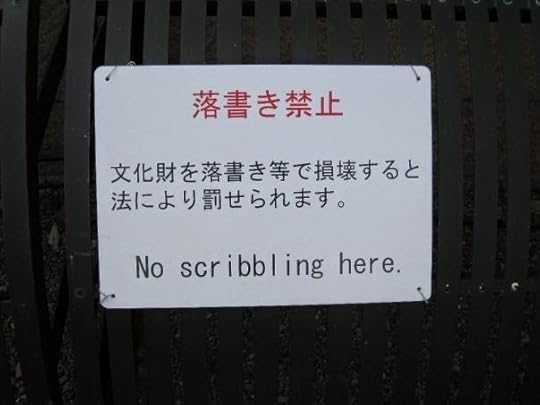 I Really Saw This In Japan!
1. Write Dialogue First. By this, I don't mean writing just the dialogue, I mean writing just enough stage direction so when you go back through, the scene is still in your head. I might start a chapter with a few paragraphs of text and then jump into dialogue between two or more characters, which could go on for pages. Why? For me, it's easier to see the scene if I have dialogue that flows. What I find happens when I struggle over the details in mid-thought-stream is the dialogue becomes choppy and unnatural. I want to write the conversation as though I'm hearing it in my head as it's happening. Once that's accomplished, it's time to head to the second step.
2. What Are They Doing? When I go back through, usually the same day, I start describing the things the characters are doing while they are talking, or the intonation they use when they speak. I find it's important to give the reader enough to go on that they could see the scene as though it were a movie. That said, I find myself leaving a lot of things up to the reader. The reason is because when someone reads a text that might be a little vague, their mind fills in the blanks. I do this because then each reader has their own vision of events in their head and it makes the story more personal for them. Some things are important to describe outright, like a character's physical appearance or a pivotal scene. Physical appearance is also something I add during this stage.
3. The Five Senses. One of the later things I add is the five senses: sight, sound, touch, taste, and smell. These things bring the scene to life and make it easier for the reader to be transported to the world you've created. I add it later than the rest because I don't want to continuously use one sense over and over and I find it easier to insert later rather than remember as I go through.
4. Nuance. There's a fourth thing that a lot of writers seem to forget, and that's nuance. This is where I put in character quirks, the things that make that character who they are. Maybe a character has a dark past and he's constantly remembering the things he's done. Maybe a character drinks or smokes too much or is concerned about their weight. Looking back on a story I find I have a better perspective into where these small mentions need to be inserted to have the best effect given what's happening in the story. You don't want these small quirks to become too common or it will annoy the reader. For instance, mentioning that a character is from a certain town fifteen times in a novel is probably too many, but one to three times might be reasonable. The key here is that if you look at your completed story as a whole, you can understand where these words and phrases need to go.
The overall writing process for me is more like a 3D printer than anything else. I continue to add layer after layer until adding more wouldn't add to the story or plays out a story I want to address later (in the case of a series). Is this way right for everyone? Definitely not. I doubt it's even right for a lot of people. It is, however, right for my brain, which craves closure. By finishing my rough draft of a novel rather quickly (in about a month to a month and a half), I can go back over each chapter, using the notes I made as I went along, and know that I'm on track. It feels infinitely better to me to know that I have a novel-length work completed and I'm only editing it rather than struggling to make it through to the end. Writing is a psychological activity. It doesn't come easily to most people. Getting in the right frame of mind can mean the difference between publishing or shelving a work.
The bottom line: Don't Stop The Flow. Keep writing every day, even if it's only a page or a lonely paragraph. You'll find there's time to agonize over the details later.
How does my way of writing compare to your way? Sound off in the comments below, I'd love to hear about it. For making it this far, feel free to download one of my short stories, my gift to you.
I Really Saw This In Japan!1. Write Dialogue First. By this, I don't mean writing just the dialogue, I mean writing just enough stage direction so when you go back through, the scene is still in your head. I might start a chapter with a few paragraphs of text and then jump into dialogue between two or more characters, which could go on for pages. Why? For me, it's easier to see the scene if I have dialogue that flows. What I find happens when I struggle over the details in mid-thought-stream is the dialogue becomes choppy and unnatural. I want to write the conversation as though I'm hearing it in my head as it's happening. Once that's accomplished, it's time to head to the second step.
2. What Are They Doing? When I go back through, usually the same day, I start describing the things the characters are doing while they are talking, or the intonation they use when they speak. I find it's important to give the reader enough to go on that they could see the scene as though it were a movie. That said, I find myself leaving a lot of things up to the reader. The reason is because when someone reads a text that might be a little vague, their mind fills in the blanks. I do this because then each reader has their own vision of events in their head and it makes the story more personal for them. Some things are important to describe outright, like a character's physical appearance or a pivotal scene. Physical appearance is also something I add during this stage.
3. The Five Senses. One of the later things I add is the five senses: sight, sound, touch, taste, and smell. These things bring the scene to life and make it easier for the reader to be transported to the world you've created. I add it later than the rest because I don't want to continuously use one sense over and over and I find it easier to insert later rather than remember as I go through.
4. Nuance. There's a fourth thing that a lot of writers seem to forget, and that's nuance. This is where I put in character quirks, the things that make that character who they are. Maybe a character has a dark past and he's constantly remembering the things he's done. Maybe a character drinks or smokes too much or is concerned about their weight. Looking back on a story I find I have a better perspective into where these small mentions need to be inserted to have the best effect given what's happening in the story. You don't want these small quirks to become too common or it will annoy the reader. For instance, mentioning that a character is from a certain town fifteen times in a novel is probably too many, but one to three times might be reasonable. The key here is that if you look at your completed story as a whole, you can understand where these words and phrases need to go.
The overall writing process for me is more like a 3D printer than anything else. I continue to add layer after layer until adding more wouldn't add to the story or plays out a story I want to address later (in the case of a series). Is this way right for everyone? Definitely not. I doubt it's even right for a lot of people. It is, however, right for my brain, which craves closure. By finishing my rough draft of a novel rather quickly (in about a month to a month and a half), I can go back over each chapter, using the notes I made as I went along, and know that I'm on track. It feels infinitely better to me to know that I have a novel-length work completed and I'm only editing it rather than struggling to make it through to the end. Writing is a psychological activity. It doesn't come easily to most people. Getting in the right frame of mind can mean the difference between publishing or shelving a work.
The bottom line: Don't Stop The Flow. Keep writing every day, even if it's only a page or a lonely paragraph. You'll find there's time to agonize over the details later.
How does my way of writing compare to your way? Sound off in the comments below, I'd love to hear about it. For making it this far, feel free to download one of my short stories, my gift to you.
February 17, 2015
The Great Tea Conspiracy
No, I'm not talking about the Tea Party. I'm referring to the health benefits of Green, Black, and Oolong Tea and the relative lack of support by government regulators and American health officials. Let's break it down.
The National Cancer Institute acknowledges that tea contains Polyphenols which are antioxidants. These are well-researched to be related to cancer prevention. In addition, Green tea has been tangentially linked to a host of health benefits. For a good starting point, visit the University of Maryland's page dedicated to Green tea. On this page, it describes multiple times when the FDA has prevented tea makers from using statements regarding the health benefits. I'm about to go out on a limb here and discuss some of the reasons why.
First, many studies regarding the health benefits of Green tea and other teas have been conducted. One of the main inconsistencies is how the tea is brewed: how long it steeps, temperature, what kind of water is used, etc. Because of this, it could be difficult for blanket statements to be made about the effectiveness of tea if one way of preparation trumps another. So far, I have not seen a study that attempts to find the best methods of brewing to maximize polyphenol content or the compound EGCG (the most active polyphenol in Green tea). It is because of things like this lack of creditable research that the National Cancer Institute and other organizations cannot advocate drinking tea as a cancer prevention tool.
Second, and I'm really going out on a limb here, what could the FDA gain from allowing these statements on Green tea labels? I recently bought 100 packets of Green tea on Amazon for $14.39 at a cost of 14 cents a packet. Big Pharma has lobbyists in Washington that protect their interests (see: making a profit). We know this. Big drug companies don't want a product as cheap and ubiquitous as tea to eat away at their bottom line when they can come out with a drug that essentially does the same thing as green tea but costs the consumer 1,000 or 2,000 percent more. That is the real reason I think we will not see health statements on tea packages anytime soon.
Tea has been in use in India and China for thousands of years. If even 1% of the proposed health benefits of drinking tea (green in particular) are well-founded, we would be fools not to drink a few cups a day. It's cheap, it's accessible, and there haven't been any studies that have proven a downside to drinking it (at least that I've found; please comment if you can find one). If a product has no downside and a huge potential upside, I say go for it. The best thing about it is that it doesn't matter who you are, you can afford to drink it. It would cost less than $50 a year to have a cup a day. Most people spend more than double that on Bottled Water. Water!
In conclusion, if you are in a position at a University or Research Laboratory to run a study on the health benefits of Green tea or the effectiveness of various brewing methods, please do so. I would love to hear about it and will be glad to post any findings, regardless of the outcome, on my blog. I'm fully prepared to eat my words should the health benefits of tea be ill-founded. Until then, I'm going to continue drinking it regularly.
Are you a tea drinker? What kind is your favorite and why? I'm currently hooked on Morrocan Mint Green Tea from Stash. Do you think there is a conspiracy afoot to limit the wording available for tea producers in favor of prescription medications?
The National Cancer Institute acknowledges that tea contains Polyphenols which are antioxidants. These are well-researched to be related to cancer prevention. In addition, Green tea has been tangentially linked to a host of health benefits. For a good starting point, visit the University of Maryland's page dedicated to Green tea. On this page, it describes multiple times when the FDA has prevented tea makers from using statements regarding the health benefits. I'm about to go out on a limb here and discuss some of the reasons why.
First, many studies regarding the health benefits of Green tea and other teas have been conducted. One of the main inconsistencies is how the tea is brewed: how long it steeps, temperature, what kind of water is used, etc. Because of this, it could be difficult for blanket statements to be made about the effectiveness of tea if one way of preparation trumps another. So far, I have not seen a study that attempts to find the best methods of brewing to maximize polyphenol content or the compound EGCG (the most active polyphenol in Green tea). It is because of things like this lack of creditable research that the National Cancer Institute and other organizations cannot advocate drinking tea as a cancer prevention tool.
Second, and I'm really going out on a limb here, what could the FDA gain from allowing these statements on Green tea labels? I recently bought 100 packets of Green tea on Amazon for $14.39 at a cost of 14 cents a packet. Big Pharma has lobbyists in Washington that protect their interests (see: making a profit). We know this. Big drug companies don't want a product as cheap and ubiquitous as tea to eat away at their bottom line when they can come out with a drug that essentially does the same thing as green tea but costs the consumer 1,000 or 2,000 percent more. That is the real reason I think we will not see health statements on tea packages anytime soon.
Tea has been in use in India and China for thousands of years. If even 1% of the proposed health benefits of drinking tea (green in particular) are well-founded, we would be fools not to drink a few cups a day. It's cheap, it's accessible, and there haven't been any studies that have proven a downside to drinking it (at least that I've found; please comment if you can find one). If a product has no downside and a huge potential upside, I say go for it. The best thing about it is that it doesn't matter who you are, you can afford to drink it. It would cost less than $50 a year to have a cup a day. Most people spend more than double that on Bottled Water. Water!
In conclusion, if you are in a position at a University or Research Laboratory to run a study on the health benefits of Green tea or the effectiveness of various brewing methods, please do so. I would love to hear about it and will be glad to post any findings, regardless of the outcome, on my blog. I'm fully prepared to eat my words should the health benefits of tea be ill-founded. Until then, I'm going to continue drinking it regularly.
Are you a tea drinker? What kind is your favorite and why? I'm currently hooked on Morrocan Mint Green Tea from Stash. Do you think there is a conspiracy afoot to limit the wording available for tea producers in favor of prescription medications?
February 15, 2015
Science Sunday: Tesla to Create Batteries to Power Home
Tesla's earnings may have disappointed, but what Elon Musk said in passing could change the way our power grid works. Seriously, the implications of this are huge. Musk said, "Some will be like the Model S pack: something flat, 5 inches off the wall, wall-mounted, with a beautiful cover, an integrated bi-directionl inverter, and plug and play." Apparently a fully charged cell could power a typical home for a week. A week! Think about that. If there was a power outage on the grid, almost all of them are fixed within a week. But that's not where things get interesting.
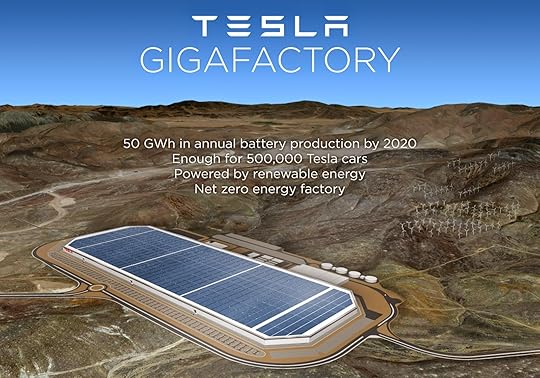
This isn't just some off-the-cuff statement. This is actually happening. Musk said that about 30% of the Gigafactory being constructed near Reno, Nevada will be dedicated just to this function and they're in talks with utility companies to discuss terms (on a side note, it's possible the Gigafactory will be completed in 2016, rather than 2017). Anyone familiar with Nikola Tesla's headbutting that occurred between him and the utility companies of his day will get a kick out of this.
So, what is Tesla Motors, an electric car company, doing in the utility business? Musk also started SolarCity, a solar power company. His cousin is the current CEO and Musk is the Chairman of the Board. If you have SolarCity's panels on your roof, they can power your home and store excess electricity in the Tesla battery, which you can use to power your home or charge your Tesla car. It's beginning to become one big circle.
Consumers should embrace this advance in technology because it not only makes sense, it will save them money. Customers lease their roof space out to SolarCity, so there's no cost to it. Currently, you only pay a minimal amount to the utility company for power during night hours and some extra fees. Overall you still pay far less for your utilities. As long as you don't mind the aesthetic of a solar panel on your roof (which I think looks like the future and is awesome), then there's really no downside. Admittedly, this model works better in the Southwest and places that get more direct sunlight. In the future, we need to harness every bit of power we can as the population of the planet balloons.

I think we'll get a lot smarter as a collective people and start implementing more ideas such as this. Something I've always been fascinated by since I first saw it mentioned is Vertical Farming. I've used this concept to some extent in my writing because it not only makes sense, but I think it will become a necessity as an estimated 80% of the world's population will live in Urban areas by 2050. By that time I expect our abilities to increase crop yields and create these ingenious urban farming practices. Those buildings might just be powered by solar panels by SolarCity or a similar company and store power in batteries created at the Gigafactory.
I'll leave you with this: if Tesla's Gigafactory isn't a flop (which I don't think it will be), and SolarCity continues to expand, how will our power grids change and who stands to make out? Do you think this news is overstated or do you think it will truly change how we get power in this country and potentially the world? I'd love to hear your comments and thoughts!
This isn't just some off-the-cuff statement. This is actually happening. Musk said that about 30% of the Gigafactory being constructed near Reno, Nevada will be dedicated just to this function and they're in talks with utility companies to discuss terms (on a side note, it's possible the Gigafactory will be completed in 2016, rather than 2017). Anyone familiar with Nikola Tesla's headbutting that occurred between him and the utility companies of his day will get a kick out of this.
So, what is Tesla Motors, an electric car company, doing in the utility business? Musk also started SolarCity, a solar power company. His cousin is the current CEO and Musk is the Chairman of the Board. If you have SolarCity's panels on your roof, they can power your home and store excess electricity in the Tesla battery, which you can use to power your home or charge your Tesla car. It's beginning to become one big circle.
Consumers should embrace this advance in technology because it not only makes sense, it will save them money. Customers lease their roof space out to SolarCity, so there's no cost to it. Currently, you only pay a minimal amount to the utility company for power during night hours and some extra fees. Overall you still pay far less for your utilities. As long as you don't mind the aesthetic of a solar panel on your roof (which I think looks like the future and is awesome), then there's really no downside. Admittedly, this model works better in the Southwest and places that get more direct sunlight. In the future, we need to harness every bit of power we can as the population of the planet balloons.
I think we'll get a lot smarter as a collective people and start implementing more ideas such as this. Something I've always been fascinated by since I first saw it mentioned is Vertical Farming. I've used this concept to some extent in my writing because it not only makes sense, but I think it will become a necessity as an estimated 80% of the world's population will live in Urban areas by 2050. By that time I expect our abilities to increase crop yields and create these ingenious urban farming practices. Those buildings might just be powered by solar panels by SolarCity or a similar company and store power in batteries created at the Gigafactory.
I'll leave you with this: if Tesla's Gigafactory isn't a flop (which I don't think it will be), and SolarCity continues to expand, how will our power grids change and who stands to make out? Do you think this news is overstated or do you think it will truly change how we get power in this country and potentially the world? I'd love to hear your comments and thoughts!


