
Gary Allen's Blog, page 22
January 17, 2013
Food Sites for February 2013
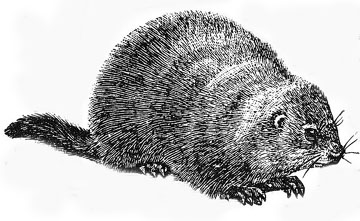 Groundhog (AKA "Woodchuck"), Marmota monax
February is fast approaching, and a certain resident of Punxatawny, PA is preparing to elate or depress us with his prognosticating. In the event that the rotund rodent's forecast is not simpatico with your plans for the remainder of winter, we offer this website. If youâre feeling especially vindictive, try this (you'll find some satisfaction in the fact that the instructions call for boiling the miscreant violently).
Regular subscribers to our updates newsletter receive these updates from our blog, Just Served, directly -- but there is much more at the blog that isn't sent automatically. Just Served slings more leftovers than most people want to face, especially this time of year -- but, if you that feel you're up to the challenge, you can follow us on Facebook, or Twitter. In the unlikely event that you find yourself stranded and book-starved, there's even a kind of index at A Quiet Little Table in the Corner.
It's a little late now, but procrastinators might want to check out "Hoppin' John for the New Year Celebration: Hope For a Rosy Future."
Leitesculinaria has reposted several of our own articles â and there should be another new one appearing there, hard upon year's end. Our backlist of LC pieces is available here, along with several articles by more noteworthy writers on food history & science.
For this month's quotation from On the Table's culinary quote pages, two naturalists speak of the beast du jour:
My enemies are worms, cool days, and most of all woodchucks. The last have nibbled for me a quarter of an acre clean. Henry David Thoreau
As I came home through the woods with my string of fish, trailing my pole, it being now quite dark, I caught a glimpse of a woodchuck stealing across my path, and felt a strange thrill of savage delight, and was strongly tempted to seize and devour him raw; not that I was hungry then, except for that wildness which he represented. Henry David Thoreau
Every time I shoot a woodchuck, eight come to the funeral. John Burroughs
GaryFebruary, 2013
PS: If you encounter broken links, changed URLs -- or know of wonderful sites we've missed -- please drop us a line. It helps to keep this resource as useful as possible for all of us. To those of you who have suggested sites -- thanks, and keep them coming!
PPS: If you wish to change the e-mail address at which you receive these newsletters, or otherwise modify the way you receive our postings or -- if you've received this newsletter by mistake, and/or don't wish to receive future issues -- you have our sincere apology and can have your e-mail address deleted from the list immediately. We're happy (and continuously amazed) that so few people have decided to leave the list but, should you choose to be one of them, let us know and we'll see that your in-box is never afflicted by these updates again. Youâll find links at the bottom of this page to fix everything to your liking.
----the new sites----
20 Things Everyone Thinks About the Food World (but Nobody Will Say)(opinion piece by Chris Schonberger, Nick Schonberger, and Foster Kamer)
Amy Cotler(food writer and radio host of The Locavore Way)
Archive for the "Food and Beverage Plants" Category(some medieval favorites from The Cloisters in NYC)
BeerSci: How Beer Gets Its Color(details of the Maillard reaction and caramelization, in malting and brewing)
Evolutionary Whodunit: How Did Humans Develop Lactose Tolerance?, An(some current ideas about the advantages of milk-drinking; on NPR)
First We Feast (e-zine about food, drink, and travel, served with humor and a side of iconoclasm)
How Old Is Herbal Medicine?(evidence of herb use in medicine and cookery, back to he Neanderthals)
Impossibility of Historical Flavour, The(when Thomas Wolfe wrote, "you can't go home again" was he talking about the tastes of foods and wines of the past?)
Inside the Meat Lab: The Future of Food(Alex Renton's editorial, in The Guardian, about why the world's food supply must change, and some of the technologies that may be employed to do it)
Man and Molluscs(data base of edible -- and inedible -- molluscs with many links)
Nitty Grits(searchable international culinary dictionary)
Our Absurd Fear of Fat(Paul Campos' article, in The New York Times, questions the supposed connection between obesity and mortality)
Our Global Kitchen: Food, Nature, Culture(an exhibit at the American Museum of Natural History)
Salt, We Misjudged You(Gary Taubes' article, in The New York Times, on the lack of scientific basis for restricting salt in the diet)
SPIR.IT, The (newsletter about distilled liquors & cocktails; with recipes, articles, and trade news)
Surprisingly Manly History of Hot Cocoa, The(the drink of choice for royalty and warriors, from the Aztecs to today's MREs)
Using Cookbooks in Historical Archaeological Research: New Mexico as a Case Study(Cynthia D. Bertelsen points to a recent paper on what cookbooks can tell us about the past)
-- inspirational (or otherwise) sites for writers/bloggers --
10 Feature Story Formats for Freelancers
15 Food Blogger Trends of 2012 That Need to Go
Are Food Blogs Killing the Joy of Cooking?
Complicated Case of the Simple Cookie, The
Descriptive Words vs. Technical Terms: Not Always the Same
Giles Coren on Food Writing
How to Write (Better)
Readers Gravitating to e-Books
Shady Business(the pros & cons of literary agents)
Ten Bold Predictions for Ebooks and Digital Publishing in 2013
Tweets, Shoots and Leaves
Why Study Food?
Yo! Cookbook Authors (& Wannabes): When Chronicle's Bill LeBlond Speaks You Ought to Listen
-- yet another blog --
Austerity Kitchen, The
-- changed URL --
Multi Cultural Cooking Network
--- that's all for now ---
Except, of course, for the usual legalistic mumbo-jumbo and commercial flim-flam:
Your privacy is important to us. We will not give, sell or share your e-mail address with anyone, for any purpose -- ever. Nonetheless, we will expose you to the following irredeemably brazen plugs:
Would you be willing to support this newsletter, if it didn't require you to spend a dime of your own money on it? It's easy. Whenever you want to shop on Amazon. Com, click on any of the book links below, then whatever you buy there (it doesn't even have to be one of our books) will earn a commission for On the Table.
The Resource Guide for Food Writers (paper)
The Herbalist in the Kitchen (hardcover)
The Business of Food: Encyclopedia of the Food And Drink Industries (hardcover) or (Kindle)
Human Cuisine (paper) or (Kindle)
Herbs: A Global History (Hardcover) or (Kindle)
Terms of Vegery (Kindle)
How to Serve Man: On Cannibalism, Sex, Sacrifice, & the Nature of Eatin g (Kindle)
Here endeth the sales pitch(es)...
...for the moment, anyway.
______________
"The Resource Guide for Food Writers, Update #148" is protected by copyright, and is provided at no cost, for your personal use only. It may not be copied or retransmitted unless this notice remains affixed. Any other form of republication -- unless with the author's prior written permission -- is strictly prohibited.
Copyright (c) 2013 by Gary Allen.


December 17, 2012
food sites for January 2013
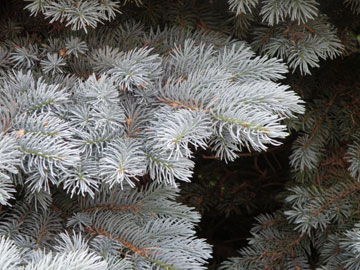
âA Goose of Spruceâ Picea pungens âR. Kluisâ(an excerpt from Terms of Vegery)
January is named after Janus, the Roman god of doorways, the god with two faces â one facing forward and one facing back â a perfectly appropriate household deity for any writer. The Greeks, who â we are told on good authority â had a word for everything, believed that Mnemosyne (memory) was the mother of the Muses. So (as soon as youâve finished abandoning your New Yearâs resolutions and gotten back to your writing), remember to look back in a forward-thinking way.
Regular subscribers to our updates newsletter receive these updates from our blog, Just Served, directly -- but there is much more at the blog that isn't sent automatically. Just Served slings more leftovers than most people want to face, especially this time of year -- but, if you that feel you're up to the challenge, you can follow us on Facebook, or Twitter. In the unlikely event that you find yourself stranded and book-starved, there's even a kind of index at A Quiet Little Table in the Corner.
You can also download our latest book, How to Serve Man: On Cannibalism, Sex, Sacrifice, & the Nature of Eating , a Kindle book from Amazon. Itâs creepy, intriguing, funny, scary, illuminating, puzzling, and addictive; everything you could want in a book about something you would rather not think about. If that doesnât provide sufficient anthropophagic thrills, weâve also made our earlier book, Human Cuisine , available as a Kindle book.
So, two books on herbs and two books on cannibals. Theyâre all very different, but we do hope weâre past those subjects now, and can think about something else for a change. For an article that has nothing to do with cannibals, and only passing reference to herbs, check out Leitesculinaria has reposted several of our own articles â and there should be another new one appearing there, hard upon year's end. Our backlist of LC pieces is available here.
For this month's quotation from On the Table's culinary quote pages, I couldnât really stray far from Bitter Bierce.
Our uniform vanity has given us the human mind as the acme of intelligence, the human face and figure as the standard of beauty. Of course we cannot deny to human fat and lean an equal superiority over beef, mutton and pork. Ambrose Bierce
GaryJanuary, 2013
PS: If you encounter broken links, changed URLs -- or know of wonderful sites we've missed -- please drop us a line. It helps to keep this resource as useful as possible for all of us. To those of you who have suggested sites -- thanks, and keep them coming!
PPS: If you wish to change the e-mail address at which you receive these newsletters, or otherwise modify the way you receive our postings or -- if you've received this newsletter by mistake, and/or don't wish to receive future issues -- you have our sincere apology and can have your e-mail address deleted from the list immediately. We're happy (and continuously amazed) that so few people have decided to leave the list but, should you choose to be one of them, let us know and we'll see that your in-box is never afflicted by these updates again. Youâll find links at the bottom of this page to fix everything to your liking.
----the new sites----
Beefâs Raw Edges(articles, videos, and slide shows about the meat-packing industry, in the Kansas City Star)
Biomolecular Archaeologist Uncorks World's Oldest Known Grape Wine(Stacey Shackfordâs article in Cornell Universityâs Ezra Magazine, about the "Indiana Jones of ancient ales, wines and extreme beverages")
Cheddaring Cheese â The Process(a step-by-step explanation of what makes cheddar cheddar; from The Master Cheesemakers of Wisconsin)
Chunky History of Peanut Butter, A(Jon Michaudâs article in The New Yorkerâs annual food issue)
Eating Nano(nanoparticles are already being used in processed foods and food packaging, without FDA oversight)
Food Porn Daily(get your mind out of the gutter; itâs just a gallery of food photography)
Foodbeast(âfood news, culture and entertainmentâ plus reviews and recipes)
Fortuneâs Cookies(Jan Whitakerâs post on the place of these âChineseâ lagniappes in American restaurants)
Holy Cow! First Cheesemakers Date Back 7,500 Years(archaeological evidence of early cheesemakers and their possible effects on human evolution; in LiveScience)
Ilian Food Photography(portfolio of a former photojournalist who took his camera from the streets into the kitchen)
Legend of the Potato King, The(Christophe Niemann retells an old food story, graphically, with spud prints)
Lost in Translation: Brown Sugar(Melissa Bedinger explores brown sugar and molasses â and the processes used to make them from cane and sugar beets)
No Innocent Spice: The Secret Story of Nutmeg, Life and Death(Michael Krondl and Kathleen Wall dish about some spicy seventeenth-century food history, on NPR)
Origin of the Word âBaconâ(a little etymology, with added bacon trivia)
Peacock-Harper Culinary History Collection(Cynthia Bertelsenâs âBibliography of Virginia-Related Cookbooks;â a PDF)
Quest for Wine's Origins, The(âthrough DNA profiling and archaeology, researchers have found what they believe is the cradle of wine grape growing;â article in Wine Spectator magazine )
tea trekker(an informative site from a purveyor of fine teas from Asia and Tanzania, tea wares from China and Japan, and books about tea)
Tip of the Tongue: The 7 (Other) Flavors Humans May Taste(recent research into our ability to perceive more than the four or five basic tastes; in LiveScience)
To Live and Die in Avoyelles Parish(video about cochon du lait, from UM Media Documentary Projects and Southern Foodways)
Toothpicks(Jan Whitakerâs post about the place of these little devices in restaurant history)
War of the Stinky Cheeses, The(video about the risk of French âartisanalâ cheesesâ demise, at the same time as North Americans are learning to make their own versions; in French, with English subtitles available)
What Makes Some Food Awful and Other Food Offal?(Gary Truittâs article in Hoosier Ag Today)
-- inspirational (or otherwise) sites for writers/bloggers --
Chefâs Adventure in Self Publishing, A
From Plate to Page
Giz Explains: How Youâre Gonna Get Screwed by Ebook Formats
John Cleese on Creativity
Why E-Book Subscriptions Are The Future
-- yet another blog --
Upstart Kitchen, The
----that's all for now----
Except, of course, for the usual legalistic mumbo-jumbo and commercial flim-flam:
Your privacy is important to us. We will not give, sell or share your e-mail address with anyone, for any purpose -- ever. Nonetheless, we will expose you to the following irredeemably brazen plugs:
Want to support this newsletter, without spending a dime of your own money on it? Itâs easy. Whenever you want to shop on Amazon. Com, click on any of the book links below, then whatever you buy there (it doesnât even have to be one of our books) will earn a commission for On the Table.
Our books:
The Resource Guide for Food Writers (paper)
The Herbalist in the Kitchen (hardcover)
The Business of Food: Encyclopedia of the Food And Drink Industries (hardcover)The Business of Food: Encyclopedia of the Food And Drink Industries (Kindle)
Human Cuisine (paper)Human Cuisine (Kindle)
Herbs: A Global History (Hardcover)Herbs: A Global History (Kindle)
Terms of Vegery (Kindle)
How to Serve Man: On Cannibalism, Sex, Sacrifice, & the Nature of Eating (Kindle)
Here endeth the sales pitch(es)...
...for the moment, anyway.
______________
"The Resource Guide for Food Writers, Update #147" is protected by copyright, and is provided at no cost, for your personal use only. It may not be copied or retransmitted unless this notice remains affixed. Any other form of republication -- unless with the author's prior written permission -- is strictly prohibited.
Copyright (c) 2012 by Gary Allen.

November 16, 2012
Food Sites for December 2012
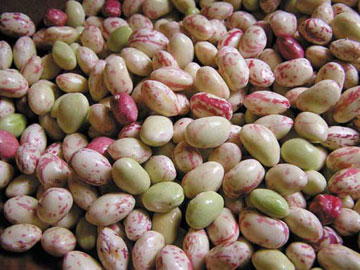 "A Flatulence of Beans," an entry from
Terms of Vegery
"A Flatulence of Beans," an entry from
Terms of Vegery
December is almost here, which means that (officially, at least) the election- and hurricane- seasons are blessedly over. It's a month for shopping, avoiding shopping, and serious digesting (all of which seem like exhausting work to us). Consequently this issue is a tad lighter than our usual over-stuffed newsletter.
Regular subscribers to our updates newsletter receive these updates from our blog, Just Served, directly -- but there is much more at the blog that isn't sent automatically. Just Served slings more leftovers than most people want to face, especially this time of year -- but, if you that feel you're up to the challenge, you can follow us on Facebook, or Twitter. In the unlikely event that you find yourself stranded and book-starved, there's even a kind of index -- including a recently-added article from Roll Magazine, on Roquefort Dressing -- at A Quiet Little Table in the Corner.
Leitesculinaria has reposted several of our own articles â and there should be another new one appearing there, hard upon the year's end. Our backlist of LC pieces is available here, along with several articles by more noteworthy writers on the history and science of food.
This month's quotation from On the Table's culinary quote pages offers some advice for the endless dinner party that is the holiday season, but it comes from someone who was probably known as "Buzz-kill Bill" to his friends:
At a dinner party one should eat wisely but not too well, and talk well but not too wisely.W. Somerset Maugham
GaryDecember, 2012
PS: If you encounter broken links, changed URLs -- or know of wonderful sites we've missed -- please drop us a line. It helps to keep this resource as useful as possible for all of us. To those of you who have suggested sites: thanks, and keep them coming!
PPS: If you wish to change the e-mail address at which you receive these newsletters, or otherwise modify the way you receive our postings or -- if you've received this newsletter by mistake, and/or don't wish to receive future issues -- you have our sincere apology and can have your e-mail address deleted from the list immediately. We're happy (and continuously amazed) that so few people have decided to leave the list but, should you choose to be one of them, let us know and we'll see that your in-box is never infested with these updates again. You'll find links at the bottom of this page to fix everything to your liking.
----the new sites----
Check Out This Food Atlas Created by "Guerrilla Cartographers"(Sara Johnson's well-illustrated article about Food: An Atlas, by Darin Jensen and Molly Roy)
Deconstructing the California Roll(Lexi Dwyer's article, at Gourmet Live, on the history of the now-ubiquitous avocado-laced sushi)
Flowers that Have Changed the World of Food #1: Orchids(first in a series of blog posts, by Laura Kelly, that merge botany, gastronomy, and photography)
Flowers that Have Changed the World of Food #2: Saffron(Laura Kelly's blog continues...)
Flowers that Have Changed the World of Food #3: Cloves(Laura Kelly's blog continues...)
Garlic's Origin, Medicinal Uses, and a Recipe for Garlic Dessert from King Nala(a tale told from a distinctly sub-continental perspective)
Interview with Marcella Hazan, An(conducted by Aussie Margaret Hogan)
Language of Food Photography is Universal, The(The Splendid Table's Lynne Rossetto Kasper interviews Penny De Los Santos)
New Push to Reduce Antibiotic Use in Farm Animals(Todd Sperry's article on CNN)
Origin of the Adage of Eating Oysters Only in Months with an 'R', The(Nigel Moore tracks down the sources of, and justifications for, this bit of culinary advice)
----yet another blog----
Food Politics
----that's all for now----
Except, of course, for the usual legalistic mumbo-jumbo and commercial flim-flam:
Your privacy is important to us. We will not give, sell or share your e-mail address with anyone, for any purpose -- ever. Nonetheless, we will expose you to the following irredeemably brazen plugs:
Our books, The Resource Guide for Food Writers , The Herbalist in the Kitchen , The Business of Food: Encyclopedia of the Food And Drink Industries , Human Cuisine , Herbs: A Global History, and Terms of Vegery are currently available.
Here endeth the sales pitch(es)...
...for the moment, anyway.
__________________
"The Resource Guide for Food Writers, Update #146" is protected by copyright, and is provided at no cost, for your personal use only. It may not be copied or retransmitted unless this notice remains affixed. Any other form of republication -- unless with the author's prior written permission -- is strictly prohibited.
Copyright (c) 2012 by Gary Allen.

October 24, 2012
food sites for November 2012
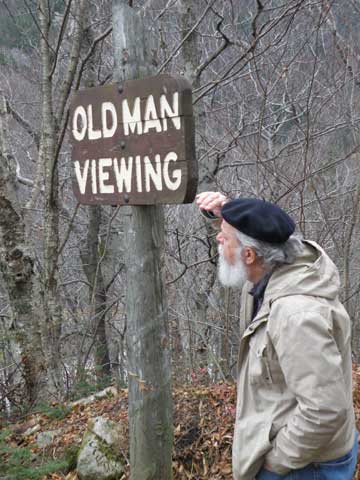
Unsubstantiated sightings of Dr Sanscravat
reported from Franconia Notch, NH (however, the same person
also reported seeing Amelia Earhart in conversation
with an Ivory-billed Woodpecker).
November is fast upon us -- the beginning of the feasting/dyspepsia season. If NPR's Susan Stamberg can regale us â every Thanksgiving â with her mother's cranberry sauce recipe, we experience little shame in dragging out Sanscravat's researches into one of the more puzzling aspects of the holiday menu.
Regular subscribers to our updates newsletter receive these updates from our blog, Just Served, directly -- but there many items that the blog doesn't sent automatically. Much of it is more than reasonable people want to chew -- but, if you're feeling particularly unreasonable, and don't want to wait for these newsletters, you can follow us on Facebook, or Twitter. In the unlikely event that you find yourself stranded and book-starved, you can access a kind of index -- of orts and morsels of our (and the good doctor's) writings, wedged (as it were) among the back-teeth of the web â at A Quiet Little Table in the Corner.
Leitesculinaria has reposted several of our own articles (the entire list is available here, along with several more noteworthy pieces on food history & science.
This month's quotation from On the Table's culinary quote pages is intended to provide a bit of cosmic perspective:
O woe, woe, man is only a dot:
Hell drags us off and that is the lot;
So let us have a little space,
At least while we can feed our face. Petronius Arbiter
GaryNovember, 2012
PS: If you encounter broken links, changed URLs -- or know of wonderful sites we've missed -- please drop us a line. It helps to keep this resource as useful as possible for all of us. To those of you who have suggested sites -- thanks, and keep them coming!
PPS: If you wish to change the e-mail address at which you receive these newsletters, or otherwise modify the way you receive our postings or -- if you've received this newsletter by mistake, and/or don't wish to receive future issues -- you have our sincere apology and can have your e-mail address deleted from the list immediately. We're happy (and continuously amazed) that so few people have decided to leave the list but, should you choose to be one of them, let us know and we'll see that your in-box is never afflicted by these updates again. You'll finds links at the bottom of this page to fix everything to your liking.
----the new sites----
"Adult" Restaurants(Jan Whitaker exposes some breastaurant history)
Crabs(a chart of US species and crab terminology)
Did the Ancients Know the Artichoke?(Clifford Wright examines, in Gastronomica, the scientific and historical evidence and doesn't think so; in PDF format)
Food in the Middle Ages: Eight Things You Probably Didn't Know(David Morton's overview of the subject)
Gastro-nationalism(a bibliography of over 200 books; from the Center for History and New Media, George Mason University.)
Guide to Dumpling Styles around the World(J. Kenji Lopez-Alt is ecstatic about stuffed pouches of dough at Serious Eats)
History of Baklava, The(the multi-layered story of the classic Middle Eastern dessert; with recipes)
Maillard Reaction Turns 100, The(that wonderful browning that occurs when proteins and carbohydrates interact -- and, no, it's not caramelization â no matter what they say on food TV shows)
Old Recipes, Retried(Jessica Weisbergs' article in the New Yorker, on Sarah Lohman's recreation of long lost dishes)
Paileontology(a history of American lunchboxes)
Refined Dining(Stephen Cave's essay, in The Financial Times, on our sugar cravings, and how three books address the subject)
Sausagefans("the internet home of British sausages and beyond;" sausage news, recipes, tips, and a guide to best producers in England)
Simply Irresistible: Scientists Trace Gluttony's Path in the Brain(Daisy Yuhas's Scientific American article about brain chemistry and over-eating)
Sprudge("coffee news & frothy gossip")
Systematic Treatment of Fruit Types, A(all the technical botanical information one could possibly need â unless, just possibly, you're a botanist)
Taste of America(Josh Ozersky's food column in Time magazine)
Vanilla, Saffron Imports(a company site that provides a lot of information about the two products they sell)
-- inspirational (or not) sites for writers/bloggers --
cook n scribble
DNA of a Successful Book, The
F is for Foodie: An Alphabet of Unappetizing Words
Is Food Writing Important?
----yet another blog----
Salon Piquant
----changed URLs----
Beer Archaeologist, The
Blue Crab Archives
----that's all for now----
Except, of course, for the usual legalistic mumbo-jumbo and commercial flim-flam:
Your privacy is important to us. We will not give, sell or share your e-mail address with anyone, for any purpose -- ever. Nonetheless, we will expose you to the following irredeemably brazen plugs:
Our books: The Resource Guide for Food Writers ; The Herbalist in the Kitchen ; The Business of Food: Encyclopedia of the Food And Drink Industries ; Human Cuisine ; Herbs: A Global History ; and Terms of Vegery are still available for purchase.
Here endeth the sales pitch(es)...
...for the moment, anyway.
_______________________
"The Resource Guide for Food Writers, Update #145" is protected by copyright, and is provided at no cost, for your personal use only. It may not be copied or retransmitted unless this notice remains affixed. Any other form of republication -- unless with the author's prior written permission -- is strictly prohibited.
Copyright (c) 2012 by Gary Allen.

October 16, 2012
The Scent of Madness
There was a time when I believed that I was possessed of a particularly keen sense of smell -- and because of my ultrasensitivity (I admit, up front, that this is the only form of sensitivity I've ever noticed in myself) I could, invariably, identify psychotics by their body odor alone! This sensation was so powerful that, when profoundly reality-challenged individuals were in close quarters with me, I often found it difficult to breathe.
Needless to say, this was a very useful ability in the sixties.
I wondered how this valuable atavistic skill, the ability to smell insanity, could have become so rare. Surely, it offered great survival advantages to anyone who had the gift of "second smell." It flew in the face of everything I thought I knew about Darwinian principles. Not being one of the crazies myself, I realized that I should keep this bizarre talent a secret (even in the sixties there was a low tolerance for pronouncements of this sort).
I decided to test my new-found super-powers.
It was truly amazing! Wacko after wacko was revealed in the bright light of smell-o-vision. I knew that our little town attracted more than its share of strange beings -- people who believed that all the great rock stars' faces could be found through close scrutiny of Italian Renaissance paintings, people who believed that the terms used by quantum physicists (strangeness, charm, etc.) reflected the emotional states of sub-atomic particles, people who believed that the our local river and the Nile were the only two rivers in the world that flowed north (and hence were sources of immense psychic power) -- you know the types -- but I was awed by the predictive power of my nose. Even more impressive was the sheer number of crazy people living in this fairly small town.
But, alas, the miracle was not to last.
My ability to perceive the characteristic reek did not fade. Nor was it a case of olfactory fatigue brought on by dwelling in this living museum of lunacy. No, my own researches led me to the source of this phenomenon. No, that's giving too much historical weight to the discovery -- I actually found the answer by accident.
In the health food store, I chanced upon a little bottle, its cap slightly askew, an odd oily residue clinging to its sides.
Eureka!
No -- patchouli.
All the craziest people in town wore it.
My sheltered life, in the dark little basement I called home, had protected me from the very knowledge of patchouli's existence. This missing fact had led to my grand delusion.
Now, there may have been a case for an examination of the relationship between possession of an insufficient number of marbles and the urge to smear this foul-smelling stuff on one's person -- but, by then, like you gentle reader, I had lost interest in the whole thing.

September 19, 2012
Food Sites for October 2012
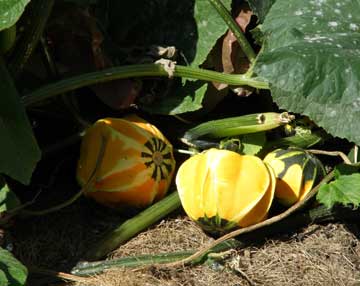
Gourds in the King's Gardens, Ticonderoga, NY
So, this is issue number 144... a gross of these updates to The Resource Guide for Food Writers . Since they come out approximately monthly, that means Dr Sanscravat and I have been at this for twelve years. Amazing.
"Amazingly gross" might once have described the Doctor's feeding habits (though somewhat less so of late; the man is, after all, well-aged). As often as not, it referred to the sheer volume he consumed, not to mention his disgusting displays of public ingestion, his eagerness to imbibe substances that more refined diners assign to the category of "non-foods," and his over-all messiness. Being forced to wear the Scarlet G has been an insignificant sacrifice to him (since, obviously, he doesn't embarrass easily).
"'Twas fair enough," he has told me, "as long as I could succeed in delivering a tiny vicarious shiver of a gastronomic thrill -- a frisson, if you will..." to anyone willing to listen.
There, but for the grace of good taste, go you.
Regular subscribers to our updates newsletter receive these updates from our blog, Just Served, directly -- but there is much more at the blog that isn't sent automatically. For example, last month visitors to the blog were exposed to Dr Sanscravat's rant, On the Mysteries of Puritanism (or why does the name 'Savonarola' provoke a longing for barbecue?. Just Served dishes out more than reasonable people want to chew -- but, if you're feeling particularly unreasonable, and don't want to wait for these newsletters, you can follow us on Facebook, or Twitter. In the unlikely event that you find yourself stranded and book-starved, you can access a kind of index -- of orts and morsels of our (and the good doctor's) writings, wedged (as it were) among the back-teeth of the web – at A Quiet Little Table in the Corner.
Leitesculinaria has reposted several of our own articles (the entire list is available here, along with several more noteworthy pieces on food history & science.
These quotations from On the Table's culinary quote pages are in keeping with this month’s theme:
"The Americans are the grossest feeders of any civilized nation known. As a nation, their food is heavy, coarse, and indigestible, while it is taken in the least artificial forms that cookery will allow. The predominance of grease in the American kitchen, coupled with the habits of hearty eating, and the constant expectoration, are the causes of the diseases of the stomach which are so common in America." James Fenimore Cooper
"I'm a light eater. When it gets light, I start eating." Tommy John
GaryOctober, 2012
PS: If you encounter broken links, changed URLs -- or know of wonderful sites we've missed -- please drop us a line. It helps to keep this resource as useful as possible for all of us. To those of you who have suggested sites -- thanks, and keep them coming!
PPS: If you wish to change the e-mail address at which you receive these newsletters, or otherwise modify the way you receive our postings or -- if you've received this newsletter by mistake, and/or don't wish to receive future issues -- you have our sincere apology and can have your e-mail address deleted from the list immediately. We're happy (and continuously amazed) that so few people have decided to leave the list but, should you choose to be one of them, let us know and we'll see that your in-box is never afflicted by these updates again. There're links at the bottom of this page to fix everything to your liking.
----the new sites----
1850s & 1860s Hotel and Restaurant Menus(a searchable collection of 80 menus at the University of Houston)
American Indians of the Pacific Northwest(a search for "food" at this Library of Congress site turned up historic 118 documents, from late nineteenth- through early twentieth-centuries)
Canning Jars: From Faux To Best Preserving Choices(Susan Lutz explains some dos and don'ts for home canners)
Cavemen Ground Flour, Prepped Veggies(Jennifer Viegas writes, in Discovery, about starchy residues on grinding stones used by Neanderthals and other early humans)
Cured Meat is In, but is it Safe?(Andy Frame's article in Food Safety News)
Discover the History of Sushi(Tori Avey's article from PBS's The History Kitchen)
Drink Globally, Hop Locally("boutique" hop farms and micro-breweries, natural partners )
Eating Etiquette(how to eat oysters on the half shell)
Evolutionary Biology: The Lost Appetites(Ewen Callaway writes, in Nature, about the reasons species experience taste differently)
Fearless Eating: It May Be in Our Genes(Jaimal Yogis's Huffington Post article about research that suggests a genetic link for adventurous eating)
For Gastronomists, a Go-To Microbiologist(Peter Andrey Smith's New York Times article about Harvard's Rachel Dutton, the leading expert on using fermentation to make fine-tasting cultured foods)
Genetic Variation of an Odorant Receptor OR7D4 and Sensory Perception of Cooked Meat Containing Androstenone(Norwegian scientific paper that finds that the scent of wild boar meat, cinghiale, is genetically off-putting to some humans)
Gustatory System: The Finer Points of Taste(how we perceive tastes; Bijal P. Trivedi's Nature article on the latest science)
Kitchen Antiques("historic kitchen equipment, culinary objects;" with lots of links to articles on old cookwares)
Kitchen in Upper Egypt, A(Nancy Harmon Jenkins, in The Art of Eating, takes a close look at Egyptian home cooking)
Kitchen That Time Forgot, The(photos of a Victorian kitchen, discovered intact in the basement of a British home)
Lunch: An Urban Invention(interview with Laura Shapiro and Rebecca Federman about their exhibit, Lunch Hour NYC, at the New York Public Library)
Mrs. Fisher's Cigarettes(John Martin Taylor's article about one of the earliest African-American cookbooks)
Neuroscience: Hardwired for Taste(Bijal P. Trivedi's article, in Nature, exploring the body's ways of detecting taste – and not just via the tongue)
New Books in Food("discussions with chefs and food writers about their new books;" introductory paragraphs and podcasts)
Oyster Varieties(detailed descriptions of 110 varieties of oysters found in US waters, plus availability and storage info)
Oyster's My World, The("history of oysters and oyster cultivation;" plus oyster lore, science, and wine pairing)
Patience Gray(Ed Behr's article, in The Art of Eating, on "possibly the best writer ever about food")
Preaching Lost Art of Fermentation(Ben Harris' article, in Jewish Daily Forward, on Sandor Katz's efforts to "to convince the world of both the wonders and the essentialness of fermentation")
Science on the Silk Road: Taste for Adventure(Alison Abbott's Nature article about an expedition to find genetic explanation for food preferences)
Sensory Science: Partners in Flavour(Nicholas Bakalar explains, in Nature, how all of our senses cooperate to create the composite sensation we call "flavor")
Story Of: Bourbon, The(Sara Kay's Snooth article on America's whiskey)
Taste of a Decade: 1820s Restaurants(part of Jan Whitaker's continued investigations into the history of American restaurants)
U. Researcher Studying What Mormons Eat and Why(Peggy Fletcher Stack's Salt Lake Tribune article about Kate Holbrook's doctoral research into Mormon eating habits)
World's Oldest Champagne Tastes Sweet After 200-Year Shipwreck(Richard Vines, in Bloomberg News, describes the discovery and tasting of some really old Veuve Cliquot)
Writer Food From A To Z(an alphabetical feastiary)
-- inspirational (or otherwise) sites for writers/bloggers --
Download Your Free, Comprehensive, Step-By-Step Guide to Internet Marketing
Food Photography 101
Joys and Hazards of Self-Publishing on the Web, The
New FTC Rules on Writing Reviews, Affiliations, and Sponsored Posts
Publishing Process in GIF Form, The
Q&A: Peter Reinhart on What it Takes to Be a Successful Cookbook Author
Write, Publish, and Market Your Ebook: Free Step-by-Step Tutorial
----yet more blogs----
Culture: The Word on Cheese
Eve's Apple
Food Bridge: Food. Culture and Family
Michael Laiskonis: Notes from the Kitchen
Multicultural Cooking Network
----changed URL----
Ideas in Food
----that's all for now----
Except, of course, for the usual legalistic mumbo-jumbo and commercial flim-flam:
Your privacy is important to us. We will not give, sell or share your e-mail address with anyone, for any purpose -- ever. Nonetheless, we will expose you to the following irredeemably brazen plugs:
Our books, The Resource Guide for Food Writers , The Herbalist in the Kitchen , The Business of Food: Encyclopedia of the Food And Drink Industries , Human Cuisine , Herbs: A Global History, and Terms of Vegery are currently available.
Here endeth the sales pitch(es)...
...for the moment, anyway.
——————————————————————
"The Resource Guide for Food Writers, Update #144" is protected by copyright, and is provided at no cost, for your personal use only. It may not be copied or retransmitted unless this notice remains affixed. Any other form of republication -- unless with the author's prior written permission -- is strictly prohibited.
Copyright (c) 2012 by Gary Allen.

August 30, 2012
On the Mysteries of Puritanism (or why does the name "Savonarola" provoke a longing for barbecue?)
Dietitians are the cowled monks of today's religion, one that celebrates culinary self-restraint the way older ones celebrated morality. It's an oddly self-indulgent church that substitutes "health" for "piety," but it's still the same story: bliss can only be achieved through purity. While their science is respectable, it is too often served in an entirely humorless and otherwise unappetizing fashion. I’m not jealous that prohibitionists get some sort of joy from their peculiar addiction to non-addiction -- nor do I have any desire to join in their incomprehensible obsession.
It's difficult to understand the joy that some people seem to take in the gastronomic equivalent of self-flagellation, the mortification of one’s own flesh via non-consumption of tasty viands. Their smug self-satisfied proselytizing robs the very air of any pleasures it might hold for an appreciative nose. The promise of carnal bliss conjured by the aroma of a perfectly-grilled steak -- a vast glistening slab of proteinaceous pulchritude, encircled by crisply browned fat -- are banished, forthwith, as the temptations of a baser instinct, a crude and unenlightened coarseness that is as disgusting as it is unforgivable.
But there are even more vexing questions.
Why are these true believers always so deadly boring to be around? Nothing about them suggests the presence of wit or any other form of human comaraderie. Is brilliance and bonhomie dependent on sugar, saturated fat, and ethyl alcohol in the diet?
Why does encouraging self-deprivation in others translate to self-righteous satisfaction for them?
In short, how does the absence of pleasure pleasure them?
We may never learn the answers, but one thing is certain: A lion-sized portion of well-roasted beast , followed by a thick wedge (or two) of fat- and calorie-laden cake -- not to mention a flagon (or three) of ale -- usually makes the sermonizing much easier to swallow.

August 22, 2012
Ah, Youth
In my salad days (a period in which, to the best of my recollection, salad was not a major part of my diet), I frequently explored the far reaches of the edible world in search of new adventures. Some were of the typical variety: chocolate-covered ants and the like. These novelty items are intended to titillate the squeamish, but offer little gastronomic excitement.
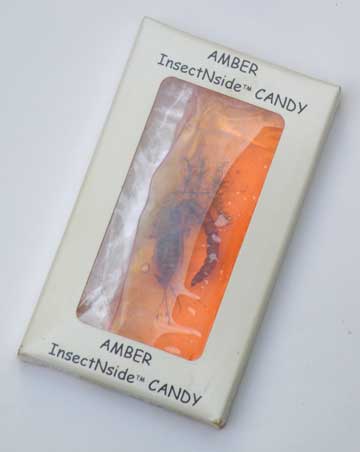
Real adventures do not begin with gag (or gag reflex) gifts.
I once (around age 17) ate steamed clams with maple ice cream for breakfast. I vaguely recall the reaction of whatever witnesses were present, but not the gustatory experience itself. It probably wasn't awful -- I know it didn't sicken me. To put this in context, around the same time I ingested a sandwich that consisted of hot pickled peppers and Hershey’s chocolate syrup on white bread.
The white bread provided my only regret.
Another time, I consumed an entire quart jarful of hot cherry peppers. These, of course, are the mildest of chiles; their vinegary bark is worse than their peppery bite. The vinegar/chile theme was also in evidence when I drank a standard bottle of Tabasco before vaguely amused, but otherwise unimpressed, friends.
They've seen stunts like this too often to react in any other fashion.
This desire to extend the boundaries of the gustatorially possible has never been successfully suppressed. It's a form of arrested development, no doubt. When ordering at a restaurant of obscure ethnicity, my choice is invariably the dish I will be least likely to ever have another chance to try. This, as you might expect, has led to mixed results. While I have experienced some remarkable (and sometimes remarkably repulsive) dishes, I suspect that this disgusting behavior has more often spoiled the meals of many of my dining companions -- but I have no choice.
What must be done must be done.

August 16, 2012
Food Sites for September 2012
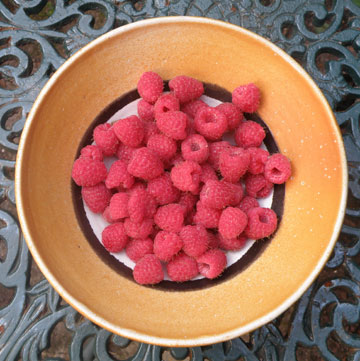
With September we enter the beginning of the fall harvest, before the bounty of summer has even passed. If you live for food, this is the time to live. August is just about gone, but we escaped (some of the) the heat by releasing a new Kindle book: Terms of Vegery .* It's not really a food book, even if it does contain a large section called "Edibilia." It is nice to look at, but you probably shouldn't read if there's a risk of pulling out any abdominal stitches (it's chock full of snarky humor and perfectly dreadful puns).

"I laughed. I cried. I wet my plants."
*Terms of Vegery looks best on Kindle Fire, iPad, and Kindle apps for other platforms; there may be some slight formatting issues on smaller smartphone screens.
Regular subscribers to our updates newsletter receive these updates from our blog, Just Served, directly -- but there is much more at the blog that isn't sent automatically. Just Served dishes out more than reasonable people want to chew -- but, if you're feeling particularly unreasonable, and don't want to wait for these newsletters, you can follow us on Facebook, or Twitter. In the event that you find yourself stranded and book-starved, you can access a kind of index -- of orts and morsels of our writing, wedged (as it were) among the back-teeth of the web – at A Quiet Little Table in the Corner.
This month's quotation from On the Table's culinary quote pages Celebrates Julia Child's first hundred years:
"As you get older, you shouldn't waste time drinking bad wine."
"How can a nation be great if its bread tastes like Kleenex?"
"I was 32 when I started cooking; up until then, I just ate."
"I'm awfully sorry for people who are taken in by all of today's dietary mumbo jumbo. They are not getting any enjoyment out of their food."
"Noncooks think it's silly to invest two hours' work in two minutes' enjoyment; but if cooking is evanescent, well, so is the ballet."
"The best way to execute French cooking is to get good and loaded and whack the hell out of a chicken. Bon appétit."
"The only real stumbling block is fear of failure. In cooking you've got to have a what-the-hell attitude."
"The only time to eat diet food is while you are waiting for the steak to cook."
GarySeptember, 2012
PS: If you encounter broken links, changed URLs -- or know of wonderful sites we've missed -- please drop us a line. It helps to keep this resource as useful as possible for all of us. To those of you who have suggested sites -- thanks, and keep them coming!
PPS: If you wish to change the e-mail address at which you receive these newsletters, or otherwise modify the way you receive our postings or -- if you've received this newsletter by mistake, and/or don't wish to receive future issues -- you have our sincere apology and can have your e-mail address deleted from the list immediately. We're happy (and continuously amazed) that so few people have decided to leave the list but, should you choose to be one of them, let us know and we'll see that your in-box is never afflicted by these updates again. There're links at the bottom of this page to fix everything to your liking.
----the new sites----
Bagel, Perfected by Science, The(Andy Altman-Ohr reports on Dan Graf's efforts to bring NY bagels to SF )
Bread of Beirut(Annia Ciezadlo's Granta article about the place of the bakery in Lebanese life)
Designer Kitchens And Why We Think We Need Them(Jessica Stoller-Conrad discusses our absurd addiction to expensively elaborate kitchens; in The New York Times)
Five Key Wine Components and How to Detect Them(Nancy Hawks Miller serves up "a lesson on the basic words and phrases you need to know about wine;" at Snooth)
Food Art(a collection of posts, from Eater, about some of the amazing – and amazingly quirky – things done with or about food)
Heads, Yes. Tails, No.(Melena Ryzik's New York Times article about an art event that featured a dinner of rat, "broiled and smoked and grilled")
History You Thought You Knew(Alice Wilkinson's article about the foods of Maine, as explained by Sandy Oliver)
Maíces(the different races of corn, a project in Mexican Biodiversity from the National Commission for Knowledge and Use of Biodiversity; in English and Spanish)
North Carolina Barbecue Society, The(a glossary of porcine terminology, recipes, a map of classic NC BBQ joints, and archive of their newsletter, NCBS Pig Tales)
Oxford Dictionaries Online's New Food Word Additions Include "Frankenfish," "Locavore"(a quick review from Huffington Post)
Research at Historical Societies and Manuscript Cookbooks in Print(bibliography of sources)
What Good Is a Pig? Cuts of Pork, Nose to Tail(Walter Jeffries's article in Mother Earth News)
-- inspirational (or otherwise) sites for writers/bloggers --
Act of Worship
Blogger Beware: You CAN Get Sued For Using Photos You Don't Own on Your Blog
Getting to Yes on Foodgawker and Tastespotting
How to Learn Food Journalism
Plan a Book Launch Party for an Ebook
Stick a Fork in 'Em: Which Food-Writing Clichés Should We Toss Out Forever?
Struggling With Food Writing? Make a Pie.
Take Food Photos Like Matt Armendariz (Meaning, Like a Pro)
WritersDiet Test, The
----yet more blogs----
cooking in my heels
History Kitchen, The
Researching Food History - Cooking and Dining
----that's all for now----
Except, of course, for the usual legalistic mumbo-jumbo and commercial flim-flam:
Your privacy is important to us. We will not give, sell or share your e-mail address with anyone, for any purpose -- ever. Nonetheless, we will expose you to the following irredeemably brazen plugs:
Our books, The Resource Guide for Food Writers , The Herbalist in the Kitchen , The Business of Food: Encyclopedia of the Food And Drink Industries , Human Cuisine , Herbs: A Global History , and Terms of Vegery are currently available.
Here endeth the sales pitch(es)...
...for the moment, anyway.
_________________________________
"The Resource Guide for Food Writers, Update #143" is protected by copyright, and is provided at no cost, for your personal use only. It may not be copied or retransmitted unless this notice remains affixed. Any other form of republication -- unless with the author's prior written permission -- is strictly prohibited.
Copyright (c) 2012 by Gary Allen.

July 25, 2012
Food Sites for August 2012
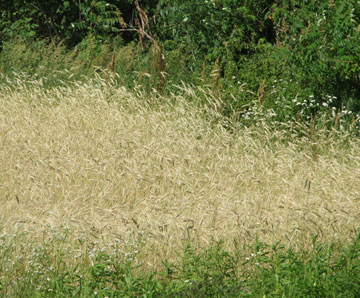 Edge of a wheat field. Tompkins County, NY
It's not quite August yet, but it feels like it's been August for months. If this is what global warming is about, I don't much care for it. A couple of scoops of gelato -- perhaps peach and hazelnut -- however, might make all the difference.
Regular subscribers to our updates newsletter receive these updates from our blog, Just Served, directly -- but there is much more at the blog that isn't sent automatically. Just Served dishes out more than reasonable people want to chew -- but, if you're feeling particularly unreasonable, and don't want to wait for these newsletters, you can follow us on Facebook, or Twitter. Our Facebook and Twitter friends already know about our recent blogpost, "Dream Dish" in which we speculate on the taste of things not tasted in our adolescence. In the event that you crave more of our stuff, there's a kind of index -- of bits and pieces of it lodged into odd corners, all over the web – at A Quiet Little Table in the Corner.
Leitesculinaria has reposted several of our articles (the entire list is available here, along with several more noteworthy pieces on food history & science.
This month's quotation from On the Table's culinary quote pages --
If your regrets linger, if you cannot find inspiration in solitude, then you still have much to learn from the writers and poets and the cooks on becoming the artist of your own life... you can never re-create the past. But you can shape your own future. And you can make a cake. Jacqueline Duval
GaryAugust, 2012
PS: If you encounter broken links, changed URLs -- or know of wonderful sites we've missed -- please drop us a line. It helps to keep this resource as useful as possible for all of us. To those of you who have suggested sites -- thanks, and keep them coming!
PPS: If you wish to change the e-mail address at which you receive these newsletters, or otherwise modify the way you receive our postings or -- if you've received this newsletter by mistake, and/or don't wish to receive future issues -- you have our sincere apology and can have your e-mail address deleted from the list immediately. We're happy (and continuously amazed) that so few people have decided to leave the list but, should you choose to be one of them, let us know and we'll see that your in-box is never afflicted by these updates again. There’re links at the bottom of this page to fix everything to your liking.
----the new sites----
ALBC Quick Reference Guide to Heritage Hog Breeds(descriptions from the American Livestock Breeds Conservancy; in PDF format)
Coffee Ad from the 1650s(a handbill in the collection of the British Museum)
Dan Barber's Culinary Crusade(an opinion piece, in The Wall Street Journal, on self-righteousness and the interdependence of meat and vegetable agriculture)
Heritage Radio Network(over 20 different online radio programs about food, with podcasts of prior shows)
How the Chicken Conquered the World(an article in Smithsonian magazine, by Jerry Adler and Andrew Lawler, on the cultural, agricultural, historical, and gastronomical aspects of the original white meat)
Libido-Killing Food(Lexi Dwyer's article, at Gourmet Live, on dishes to avoid on date night)
Long History of the Espresso Machine, The(informative, and well-illustrated, article from The Smithsonian)
Multiple Pieces of Food are More Rewarding than an Equicaloric Single Piece of Food in Both Animals and Humans(a report from the Society for the Study of Ingestive Behavior)
Soda vs. Pop with Twitter(Edwin Chen uses new technologies to re-vamp some classic maps of linguistic geography)
Somebody has to Bring Home the Bacon(Bob Nickas' article, in Slate, on Andy Warhol and food)
Three Asparagus Recipes and Four Centuries of Cookbooks(Virginia Willis leafs through part of Anne Willan's and Mark Cherniavsky's collection of rare cookbooks, the basis for The Cookbook Library: Four Centuries of the Cooks, Writers, and Recipes that Made the Modern Cookbook)
Tour de Hamdel: Chicken of the Sea Edition, or Who Invented the Tuna Melt?(The Columbia Review's Editor in Chief, Jason Bell, tells the tale of a famous sandwich -- which, as you'll discover in the article, I am unlikely ever to taste)
-- inspirational (or not) sites for writers/bloggers --
How Do You Know?
How George Carlin Changed Recipe Writing
How Literary Agents Find Talent on Twitter
What Happens When We Tell Peter Meehan to Rewrite a Recipe for Batter Pudding
----yet more blogs----
art & lemons
Foodgeekology
----that's all for now----
Except, of course, for the usual legalistic mumbo-jumbo and commercial flim-flam:
Your privacy is important to us. We will not give, sell or share your e-mail address with anyone, for any purpose -- ever. Nonetheless, we will expose you to the following irredeemably brazen plugs:
Our books, The Resource Guide for Food Writers , The Herbalist in the Kitchen , The Business of Food: Encyclopedia of the Food And Drink Industries , Human Cuisine , and Herbs: A Global History are currently available.
Here endeth the sales pitch(es)...
...for the moment, anyway.
___________
"The Resource Guide for Food Writers, Update #142" is protected by copyright, and is provided at no cost, for your personal use only. It may not be copied or retransmitted unless this notice remains affixed. Any other form of republication -- unless with the author's prior written permission -- is strictly prohibited.
Copyright (c) 2012 by Gary Allen.


