
Josh McDowell's Blog, page 14
March 29, 2021
Why God? He Accepts the Imposter
At the start of Covid, I attended a wedding and got exposed to a guest who unknowingly had the virus. I had to quarantine for two weeks. It felt like my world was crashing down, in part because I couldn’t spend time with my fiancée, Hannah. But we made the best of it: every night we would crack open our computers and FaceTime for hours.
I’d like to share with you the highlights from one of our discussions. It changed my life — and it could change yours.

Why God? blog #hurthealedwhole
For 50+ years, Josh McDowell Ministry has been leading seekers into a deeper knowledge of God’s truth and power. We offer you our accumulated knowledge and research to help you find truth and encouragement to live a healthy and whole life in Christ.
Imposter AlertI know what you’re thinking: “I get that you’re in love, but what could you possibly talk about for hours every single night?”
Well, one thing we spent a lot of time discussing were two relationship books by Shaunti and Jeff Feldhahn, titled For Men Only and For Women Only. Hannah and I want to enjoy a great marriage that glorifies God, so we’ve been reading everything we can get our hands on about how God has uniquely created man and woman.
As I began reading aloud from Chapter 3 of For Women Only, I looked up to see Hannah taking vigorous notes. I smiled, grateful that she truly wants to fully understand and love me.
But then I began to squirm. Because the chapter began talking about male imposter syndrome, a topic I know all too well.
It took only a second for the familiar feelings of shame to rise up. Tears welled in my eyes as my stomach churned at the old lie that flooded my thoughts: I’m not enough.
Imposter Syndrome: A psychological pattern in which an individual doubts their skills, talents or accomplishments and has a persistent internalized fear of being exposed as a fraud.Feeling the Fraud
My fear of not being enough has plagued me my entire life. (Perhaps you can relate?)
For me, the fear began in high school, when a friend told me that girls would never like me simply because I was me.
Why did I listen to him? Because I struggle with being seen as smart and capable. I am well aware of my weaknesses and failures, but I’d rather keep them to myself.
As a pastor’s kid, I always felt the expectation to be perfect to be accepted. I secretly struggled with an addiction to porn at that time; I remember thinking, “If my parents or the kids in my youth group find about this, they won’t believe I have a real relationship with Jesus.”
I still often walk around with the fear of being found out for being a fraud. I don’t want Hannah to view me that way.
Sitting there, afraid to look into her eyes, all I could think was, “Will Hannah keep loving me, if she realizes how weak I really am?
Hannah provided the answer.
“Austin, there is nothing you can do or say that will cause me to think less of you. I am so sorry you feel this way. I’m not going anywhere; I love you.”Freed to Be Authentic
In that moment, Hannah gave me the security of showing up as my authentic self. Her words reaffirmed her commitment to love me like God does: fully known and fully accepted.
The promise of Romans 8:35-39:
“Who shall separate us from the love of Christ? Shall tribulation, or distress, or persecution, or famine, or nakedness, or danger, or sword? As it is written, “For your sake we are being killed all the day long; we are regarded as sheep to be slaughtered.” No, in all these things we are more than conquerors through him who loved us. For I am sure that neither death nor life, nor angels nor rulers, nor things present nor things to come, nor powers, nor height nor depth, nor anything else in all creation, will be able to separate us from the love of God in Christ Jesus our Lord.”
Because of my worth in Christ, I don’t need to live as an imposter. Because He fully loves and accepts me, I can better affirm and love others. Especially Hannah.
Since those two weeks of nightly FaceTime chats, I have gained enormous confidence from Hannah’s respect and support. Her love pushes me to love and meet her needs, too.
Proverbs 31:10 wisely notes, “An excellent wife who can find? She is far more precious than jewels.” We’re getting close to our wedding date, but I’ve already received the best wedding gift I could wish for: Hannah!
Next StepsWhere do you struggle with imposter syndrome?Do you know anyone who struggles with imposter syndrome? How might you remind them of their God-given worth?Do you struggle with hiding who you are? Check out our Resolution Movement!As an Associate Communicator with Josh McDowell Ministry, Austin is part of the speaking team.The post Why God? He Accepts the Imposter appeared first on Josh.org.


March 27, 2021
Why God? Because He’s Trustworthy
The universe is a messy place, filled with forces beyond our control. That must be one reason why God put so many verses in His Word about trusting Him. Two of my favorites: “Trust in the Lord forever, for in God the Lord, we have an everlasting Rock” (Isaiah 26:4), and “Trust in the Lord with all your heart and do not lean on your own understanding” (Proverbs 3:5).
So how can we hope to put out the “fires” that overwhelm us, when we’re consumed by worries and conflicts and problems? How do we gain the knowledge that God is trustworthy?
We learn from personal experience. We can also look at biblical examples of ordinary people, such as Ruth, Abraham, and Job.

Why God? blog #hurthealedwhole
IS God Trustworthy?RUTHIn this Bible story we learn that Naomi and Ruth have both become widows.
With limited means, and lacking the protection of husbands, the women face a grim future.
Yet Ruth demonstrates integrity, loyalty, and love when she chooses to forsake her country of Moab after Naomi, her mother-in-law, decides to return home to Judah. Ruth’s decision is incredibly selfless; before her lies an arduous journey and a lifetime of service to Naomi. Naomi encourages Ruth to stay in Moab and find a new husband, but Ruth is not having it.
“Do not urge me to leave you or turn back from following you,” Ruth doggedly pledges. “Where you go, I will go, and where you lodge, I will lodge. Your people shall be my people, and your God, my God” (Ruth 1:16).
Don’t miss this: Ruth is ALL IN. In making her decision, Ruth also chooses God and His ways without reservation.
God blesses Ruth for her humility and servant attitude. He not only gives her a wealthy husband (a relative of Naomi’s, which also restores Naomi’s good fortune and social standing), but also a baby who becomes the grandfather of King David, a direct ancestor of Jesus. Cool!
What I love about this story is God’s provision. Neither woman, as they imagined their bleak futures, had any inkling that God was directing their steps to bless them and accomplish His plans to bring Jesus to earth.
ABRAHAMIn the book of Genesis we learn that Abram, at 75, is already an old man. At 65, his wife, Sarai, is also old. But God visits the childless couple, promising that one day their direct descendants will be as plentiful as the stars. This is the stuff of fantasy novels!
Abram chooses to believe God.
“And [God] took [Abram] outside and said, ‘Now look toward the heavens, and count the stars, if you are able to count them.’ And He said to him, ‘So shall your descendants be.’ Then [Abram] believed in the LORD; and [God] reckoned it to him as righteousness.” (Genesis 15:5-6).
Over the next two decades, as God holds back on his promise, Abram’s faith wavers. Sarai’s crashes and burns.
Give birth in her eighties? Impossible!
Only as Abram nears the VERY ripe age of 100, does God finally invite Abram to step into His promise. (God enjoys the miraculous!)
“When Abram was ninety-nine years old, the LORD appeared to him and said, ‘I am — God Almighty. Serve me faithfully and live a blameless life. I will make a covenant with you, by which I will guarantee to give you countless descendants.’ At this, Abram fell face down on the ground.” (Genesis 17:1-3)
As part of the covenant, God changes Abram’s name to Abraham, which means “Father of a great multitude,” and Sarai’s name to Sarah, which means “Princess or Lady.” Despite her lack of faith, God still calls her into His vision for her. God wants to do that for us, too.
JOBJob might be one of the most difficult books in the Bible to understand. Why, we wonder, would God allow Job, whom the Bible describes as “upright and approved by God,” to endure so much suffering if God is good and loving?
God sometimes allows difficult circumstances to teach us and help us (or others) to grow.
In Job’s case, God allows Satan to rip Job’s cushy life to shreds. He kills Job’s children. He steals Job’s crops and livestock. And he tortures Job by covering his body in painful sores. Despite the incredible loss and suffering, Job does not follow his wife’s advice to “curse God and die.” But he does question God’s justice and benevolence — just as you and I would have likely done.
God replies.
And as He calls Job to explain the origins of the universe, Job comes to realize the limitations of the human mind. More importantly, he comes to trust in God’s justice.
“Then Job answered the LORD and said, ‘I know that You can do all things, and that no purpose of Yours can be thwarted.'” (Job 42:1-2)
God restores to Job all that was taken. Satan can only slink into the shadows, licking his wounds at having failed to steal Job’s trust in God.
God IS Trustworthy.You and I will never have God’s understanding. We don’t know how He is directing our path. So we must choose to trust Him. What God allows, He has purpose for.
Fortunately, God understands that our trust can take time to grow. But in our attitude of surrender, which starts with our choosing to open our hearts to Him, God is pleased. When we allow God to take control and trust Him in all things, we can live with hope and strength. And we can fully lean into the assurance of His unceasing love.
I continue to have my own moments of digging deep to trust God. I’ve had financial scares, health scares, and floundering when I feel out of control. But I have learned the truth of Luke 18:27: “What is impossible with man is possible with God.”
I leave you with this promise from Romans 8:28: “And we know that in all things God works for the good of those who love him, who have been called according to his purpose.”
God wants us to trust like Ruth, when our future is unclear. God wants us to trust like Job, when life feels dark and painful. God wants us to trust like Abraham, when we’re facing the impossible. God is trustworthy. Believe!>>> God wants a relationship with you. Click here to learn more!
Guest blogger Dan Muenchau is a retired engineer who enjoys showing the love of God to others.The post Why God? Because He’s Trustworthy appeared first on Josh.org.
March 16, 2021
Note from Josh: My Tool to Share the Good News
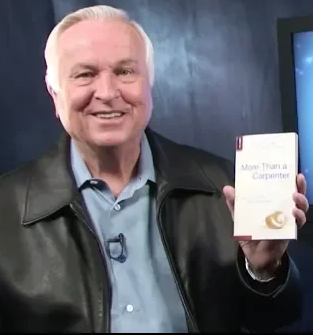
 You likely know that I have been teaching on the historical evidence for the Bible and Christ for more than 50 years now.But did you know, as a pre-law student in college, I enjoyed belittling the Christians in my classes? It wasn’t lost on me that most of them were easy targets because they weren’t really sure why they believed in God and Jesus. When a small group of committed Christians on campus challenged me to prove my claims that God, Jesus, and the Bible were fantasy, I agreed. I smugly looked forward to knocking the props from under their sham religion!But……after months of meticulous research, including taking time off from college to study the collections of various libraries in Europe, I found evidence in abundance that the Old and New Testaments are incredibly reliable.I didn’t want to accept that Christianity could be historically proven. But to stick to my bias, I would have had to admit that I am okay with being intellectually dishonest. I’m not.Why am I telling you this story? Because I have a tool that will change your life, if you’re like most Christians I’ve met over the years:People who say they believe in God, but who lack knowledge of historical evidence that gives them the firm foundation to confidently share the facts of their Christian faith.We don’t get very far with skeptics if our go-to response is,“Because the Bible says so,” or “Because I have faith,” do we?My tool for you is my bestselling paperback,
More Than a Carpenter
, which I first published in 1977 to answer questions like:
You likely know that I have been teaching on the historical evidence for the Bible and Christ for more than 50 years now.But did you know, as a pre-law student in college, I enjoyed belittling the Christians in my classes? It wasn’t lost on me that most of them were easy targets because they weren’t really sure why they believed in God and Jesus. When a small group of committed Christians on campus challenged me to prove my claims that God, Jesus, and the Bible were fantasy, I agreed. I smugly looked forward to knocking the props from under their sham religion!But……after months of meticulous research, including taking time off from college to study the collections of various libraries in Europe, I found evidence in abundance that the Old and New Testaments are incredibly reliable.I didn’t want to accept that Christianity could be historically proven. But to stick to my bias, I would have had to admit that I am okay with being intellectually dishonest. I’m not.Why am I telling you this story? Because I have a tool that will change your life, if you’re like most Christians I’ve met over the years:People who say they believe in God, but who lack knowledge of historical evidence that gives them the firm foundation to confidently share the facts of their Christian faith.We don’t get very far with skeptics if our go-to response is,“Because the Bible says so,” or “Because I have faith,” do we?My tool for you is my bestselling paperback,
More Than a Carpenter
, which I first published in 1977 to answer questions like:Friend, wouldn’t you like to have the mental, physical, and spiritual strength that comes with gaining rock-solid convictions about God and His proven love for you? Wouldn’t you like to have boldness in sharing this Good News?Get your copy of More Than a Carpenter today. Or purchase a 6-pack, so you have extras on hand to give out to others. Your sharing it could be the reason someone chooses Christ.Is the Bible reliable?
Can Jesus be who He says He is?
Why does the resurrection matter in my life?
Until the whole world hears about Jesus,

Josh D. McDowell
P.S. I would love to hear from you if you have a story about or have used More Than a Carpenter in a unique way!
The post Note from Josh: My Tool to Share the Good News appeared first on Josh.org.
March 8, 2021
Note from Josh: Father Absence Crisis

A study by the National Center on Child Abuse and Neglect in Washington, D.C., has clearly identified that we’re facing a father absence crisis in America.
We’re talking 18.3 million children — that’s 1 in 4 kids! — living without a biological, step, or adoptive father in the home. Why is this a big deal? Here’s why:Children from single-parent families face:74% greater risk of suffering from emotional neglect77% greater risk of being physically abused165% greater risk of experiencing significant physical neglect
I’m sharing these stats with you because they break my heart — and remind me of my own childhood abuse.
If you know my story, then you know that my dad, the town drunk, was rarely sober. He neglected me when he was drunk, and abused me when he wasn’t. He didn’t affirm me, like a father should; he intentionally broke me. He didn’t protect me like a father should; he left me open to sexual abuse by another adult.
Friends, like me, these hurting kids will become hurting adults.
But you and I can help to show them how deeply they are valued and loved by God. Ask God to open your eyes to this problem, and your heart to where you can get involved, with either your income or your time. The National Fatherhood Initiative is just one resource I can suggest. I love their tagline: Creating a world in which every child has a 24/7 dad.Until the whole world knows God’s love,
Josh D. McDowell
P.S. If you haven’t read or watched my story, visit www.josh.org/undaunted.
Children from Single-Parent Families are More Likely be Victims of:a 77% greater risk of being physically abusedan 87% greater risk of being harmed by physical neglecta 165% greater risk of experiencing notable physical neglecta 74% greater risk of suffering from emotional neglect
an 80% greater risk of suffering serious injury as a result of abuseoverall, a 120% greater risk of being endangered by some type of child abuse.
(Sedlak, Andrea J. and Diane D. Broadhurst. The Third National Incidence Study of Child Abuse and Neglect: Final Report. U.S. Department of Health and Human Services. National Center on Child Abuse and Neglect. Washington, D.C., September 1996.) (“Father Facts,” National Fatherhood Initiative, accessed November 21, 2011, )
The post Note from Josh: Father Absence Crisis appeared first on Josh.org.
March 2, 2021
Note from Josh: Parents, Teachers and … Google
It’s true: Parents and teachers can do things that Google can’t.I can hear you saying, “Oh, yeah? Like what?”For starters:Parents and teachers can build authentic relationships with kids, through active listening and empathizing.
Parents and teachers can guide kids by asking them great questions that get them thinking, not just reacting, to info they learn.Parents and teachers can introduce kids to other significant people who will help them to develop into their best selves.
As this article on GrowingLeaders.com wisely points out, parents and teachers still hold the key role of helping kids to interpret the avalanche of info that Google pushes out every second. Our kids only think they’re smarter than us.
Hope this encourages you!
The post Note from Josh: Parents, Teachers and … Google appeared first on Josh.org.
February 25, 2021
Why Would God Ask Us to Fear Him?
I admired their willingness to cover a subject that is hardly discussed in the Church. But I have to admit, I suspect they brought me in because no one on their team was eager to address the topic themselves! I don’t blame them. This topic is difficult to understand, and raises legitimate questions about how God has chosen to relate Himself to us.
Christians say that God is good. They say that God is our friend. That we can draw near to Him because of what Jesus did for us on the cross. So why, then, we are supposed to fear God? Let’s discuss!

Why God? blog #hurthealedwhole
Christians Can’t Ignore ThisI would bet you’d be more likely to hear about the “fear of God” at an atheist convention than at a church. Churches today tend to focus on God’s love so attendees don’t feel “uncomfortable.” But the fear of God doesn’t take long to stumble across in the Bible. It is literally throughout God’s Word, from Genesis to Revelation — in at least 274 verses!
Here are just a few examples:
Deuteronomy 6:13: “Fear the LORD your God, serve Him only and take your oaths in His name.”Psalm 2:11: “Serve the LORD with fear and celebrate His rule with trembling.”2 Corinthians 5:11: “Since, then, we know what it is to fear the Lord, we try to persuade others.”1 Peter 2:17: “Show proper respect to everyone, love the family of believers, fear God, honor the emperor.”Some say that to “fear God” is simply to have a sense of awe, wonder, reverence, and respect for Him. But if that’s the case, why doesn’t the Bible simply tell us to “revere” or “respect” God, rather than “fear” Him? Evidently, the word “fear” is still most fitting to describe this biblical concept in most contexts. It’s not a perfect translation, but it’s close. This can feel troubling for many people, particularly those who fear their own father.
So… Is God Using Fear Tactics?Western culture tends to view fear as bad, especially when used to manipulate others into submission. But the biblical concept of fear has a wider concept. It captures more than just the negative perception we may have of it.
In the verses above, I hope you can see that the concept of fearing God is connected to our obedience.
The author of the book of Ecclesiastes considered fearing God to be the most meaningful thing we could do with our life (Ecclesiastes 5:7, 12:13). The prophet Nehemiah even called Israel to fear their God so that they wouldn’t be taunted by their enemies (Nehemiah 5:9).
In our modern culture, however, we’re so removed from this thinking that “fearing God” is a difficult concept for us to appreciate.
But would the Jewish authors of the Bible really want us to believe that God is a tyrannical bully who manipulates us, His children, with fear tactics? No way! No devout author of Scripture would ever mean to communicate this. No devout Jewish community would have considered including such a crazy notion in their religious writings.
The concept of “fearing God,” then, must have a meaning different from our modern understanding.
Fear Can Be Good For Us (And We Know it)Today, we talk about “healthy fear” being a useful tool for our making wise choices. For instance, we buckle our seat belts because we fear what might happen to our body in a car accident. And young men protect their girlfriends while out on dates, because they fear how the fathers might react if they don’t return their daughters home safely. I’m sure you can think of other actions you take on a daily basis because of a perceived negative outcome.
Similarly, God wants to instill a sense of healthy fear in our hearts to keep us from making poor decisions contrary to His commandments. Because we believe His guidelines are for our good, our posture of submission and gratitude compels us to obey His voice.
Our response has nothing to do with a damaged or unhealthy relationship between us and God. Any argument to the contrary ignores the moments of Scripture that clearly imply otherwise. Just a few examples:
Psalm 25:14 reminds us, “The Lord is a friend to those who fear Him.” Psalm 103:17 says, “But the love of the Lord remains forever with those who fear Him.”By the path opened to us through the blood of Christ, we can be close to God. Does this involve an element of fear? You bet! But at the same time, we affirm that it is good. Because God is good, and He loves us, we can trust Him.
Simply put: God’s power over the universe is so extraordinary that it’s scary. I would suggest that any person in his or her right mind would respond accordingly. Our response should one of reverence; our awe, obedience, and showing Him due honor and respect.Next Steps:We’d love to pray for you! Please send us a prayer request via this form.Is something keeping you from loving and worshipping God?Want to start a relationship with God? Click here! Matthew Tingblad is a communicator at Josh McDowell Ministry with a seminary education from Talbot School of Theology.The post Why Would God Ask Us to Fear Him? appeared first on Josh.org.
February 22, 2021
Note from Josh: Teens Need to Feel Loved
A question for you: When do you think teens need to feel most loved?
When you find out they’re pregnant?
When you learn of their addiction(s)?
When they tell you they’re turning from Christianity?For sure, teens need to feel loved in these high-stress moments! But a suggests that it’s how parents react to normal, daily conflict with their teens that determines whether the teens feel loved on a daily basis.
Don’t miss this point: Parental warmth, note the researchers, needs to be conveyed on the same day as the conflict — though the warmth and conflict don’t need to be related.
Read the study summary and let me know what you think.
Until the whole world knows God’s love,
Josh D. McDowell
The post Note from Josh: Teens Need to Feel Loved appeared first on Josh.org.
February 17, 2021
Why God? He Hears Our Prayers
Let’s look at prayer, and some truths about our response to God’s response to them.

Why God? blog #hurthealedwhole
For 50+ years, Josh McDowell Ministry has been leading seekers into a deeper knowledge of God’s truth and power. We offer you our accumulated knowledge and research to help you find truth and encouragement to live a healthy and whole life in Christ.
Are My Prayers Heard?We tend to view prayer as the vehicle for asking for stuff. Nothing wrong with that. We should ask, as the Bible tells us to bring our needs and requests before God. To confidently approach the throne room, repeatedly, knowing how deeply God loves us.
Where that gets confusing is that some verses seem to promise that we will receive anything we ask for. It is because of these verses that prosperity theologists declare, “Name it, claim it, and it’s yours!” Umm, no. It doesn’t work that way. Some will receive what they “claim,” while others won’t. And it’s not because they lack faith or are “bad” people. It’s simply that God isn’t our lamp genie. He knows that answering some of our prayers wouldn’t be good for us.
He is our loving Heavenly Father, and He knows best. Oh, but that can be so hard to trust, right?
My single friend in her mid-fifties has sent up a million prayers to “claim” her desired husband. So far, she’s still batting zero at even going on a date. No boyfriend in high school. No boyfriend in college. Each year that passes, still no relationship. She admitted to me that she struggles with being mad at God for His seemingly withholding of this deeply desired relationship.
Her pain at feeling rejected and overlooked by God is so raw and real that it tears my heart as I listen to her. But I also know a pain she has been spared: the unraveling of a marriage that takes years to emotionally overcome. I share this with her, but my friend argues that getting a chance at even trying would be worth any pain.
Looking at her set jaw, I realize that sometimes it’s so hard to let go of what we want. Especially when society views us as a loser for not acquiring it. We want the Prince Charming we’ve been promised since childhood. We want the white picket fence. The kids. The vacations. Etc., etc.
But I’m with singer Garth Brooks on this. In his song Unanswered prayers, he reminds us that sometimes it might take years (if not stepping into heaven) for us to realize that what we prayed so doggone hard for would not have been good for us. And it is from God’s kindness that He withheld it.
“Just because He doesn’t answer, ” croons Brooks, “doesn’t mean He don’t care. Some of God’s greatest gifts are unanswered prayers.”Trust That God is GoodSo does God like — love?? — some of us more than others? Is that why our prayers go unanswered?
NO! We need to stop these negative thoughts ASAP, as the Bible promises that God doesn’t play favorites. This is huge. This trust in God’s integrity keeps us from judging Him. Even when we want to scream, “IT’S NOT FAIR!” at the top of our lungs.
Basically, we have to choose to live unoffended at God, resting in the knowledge that He knows best. That the circumstances we find ourselves in are the very circumstances God purposefully allowed. Too often we pray to get out of what God wants to use.
“Living an unoffended life is not some Zen-like experience,” asserts Pastor Mark Batterson in his book The Circle Maker. “It’s living a life surrendered to His sovereignty, His mystery, and His love.”
Every toddler who demands candy thinks his or her parents are being mean when they withhold it, right? Because the toddler doesn’t see the big picture, including the potential pain of dental visits and the very real possibility of developing early diabetes. (Seriously, check out these stats.)
God isn’t willy-nilly in answering our prayers. There is purpose behind His decisions; His master plan. Some of our prayers simply don’t fit in with it. Even when we’re in anguish. Save my child, God! Save my job, God! Heal me, God! In these moments, when God says no, trusting that He is good and for us can feel like a stretch. But He is. And working all things for our good, if not also the good of others, if we allow it.
In the comedy movie Bruce Almighty, there’s a scene in which actor Jim Carrey raises his fist to the sky and yells, “The only one not doing His job around here is YOU!” So God, played by Morgan Freeman, temporarily hands Carrey supernatural powers, challenging Carrey to do a better job as God. It’s pretty funny to watch Carrey part the tomato soup in his bowl (HA!) and strut down the street singing, “I got the power!” But his selfish use of the loaned powers gets old fast. He doesn’t have God’s heart.
Carrey uses the power to play tricks, get even with his enemies, and satisfy his selfish desires. About a week in, God pointedly asks him, “How many people have you actually helped?”So Should I Not Pray?We absolutely SHOULD pray! Repeatedly. “Circle” your prayers, as Batterson puts it, asking again and again, until God makes it clear the answer is no. But check your motivation. And recognize that if you seem to be in a waiting period, it might simply be because YOU haven’t taken action.
There’s a joke that goes something like this: a poor man prayed daily that God would bless him with a winning lottery ticket. When he finally arrived in heaven, still penniless, the man asked why God had never honored his request. The answer: the man had never bought a ticket. He didn’t take action.
In his book, Batterson shares an example of when he kept waiting for God to make the first move. In “circling” his prayers about God providing a drummer for his church services, Batterson finally felt God ask, “Have you thought about buying a drum set?” Duh! Nope! Even though the church was financially strapped, Batterson hunted down and purchased a used drum set. Two days later, a professional drummer walked into his church, volunteering to serve.
Remember the old Kevin Costner movie Field of Dreams? Sometimes we have to step out that boldly, even when others tell us we’re flipping crazy. Sometimes, as Batterson puts it, we need to “take a flying leap of faith.” God is always stage right, he adds, ready to make His grand entrance. But again, in His timing.Batterson’s first church plant failed — despite his circled prayers and boldly stepping out — because it wasn’t in God’s timing. When we step out and crash and burn, it can feel like God is saying, “No,” when sometimes He’s just saying, “Not right now.” Batterson took the lessons he learned from his failed attempt and used them to relaunch when God made it clear that NOW was the time. Batterson’s ministry, which now blesses so many hurting people, is flourishing full steam ahead.
When our prayers go unanswered, it may be because God knows we’re simply not ready. Evangelist Joyce Meyer would agree.
Meyer *knew* that God had told her that she would have a world-wide ministry. But for years, Meyer was only able to attract small groups of people — and they met in her living room! No lights. No stage. No television. Meyer chomped at the bit, wondering why God appeared to be holding her in place. Only years down the road — when God finally allowed Meyer to speak to stadium crowds — did she realize that she had to go through a lot of growth and maturing in her faith before God could move her into the role He promised her. She wasn’t anywhere ready for the ministry responsibilities that she now capably shoulders.
It might be the same for you. Keep praying! But allow God to be God. Patiently endure the waits. Humbly accept when He says, “No.” Trust that He wants the very best for you. He alone knows what that “best” is. We have to get over our human, and even societal definition of “best.” God’s definition is what matters. Being used by Him — whether it’s as a janitor scrubbing toilets or as a CEO leading thousands of employees — is the best you can offer Him if that’s where He wants you. There is beauty and joy in knowing that we are working for His purposes, rather than our own.
Praying feels unpredictable. Praying is sometimes scary. Praying is sometimes frustrating. Because we realize how little control we hold; that we’re dependent on God. Which is a good thing. Because then we can Hear His voice. So keep praying. Keep testing the waters by stepping out in faith. If God makes you wait, wait humbly. If He says, “No,” trust that there’s a good reason!Next StepsWe’d love to pray for you! Submit a prayer request to us here . Do you want to have a relationship with Jesus? Start here.Sheri Bell writes and edits for Josh McDowell Ministry.The post Why God? He Hears Our Prayers appeared first on Josh.org.
February 8, 2021
Note from Josh: Parent Power
Guess what I’ve realized to be true — regardless of the country or culture — that I’ve had the opportunity to minister in?
It’s that in every corner of the globe, moms and dads play a critical role in whether their kids develop physical, mental, and emotional healthiness, able to leave home to thrive in our hectic world.Research confirms that:Children who spend time in positive activities with their fathers have much better academic performance.Good academic performance often dictates the opportunities they’ll receive in life.Adolescents with involved parents tend to display fewer behavioral problems. Kids with healthy self-esteem and self-control enjoy happier lives.
Youth with open lines of communication with their parents are less likely to engage in violent behavior. Kids often act out when they’re not given the opportunity to express what they’re thinking, feeling, and experiencing in life.
Teens who frequently sit down to dinner with their families are at a lower risk for substance abuse. Loneliness is one of society’s biggest contributors to addiction.Our kids desperately need our hearts, our minds, our ears, and our time. They’re the best investment we’ll ever make. Let’s parent well!
Until the whole world hears about Jesus,
Josh D. McDowell
P.S. This 2-page by FamilyFacts.org contains other parenting tips that will be valuable and helpful to families. Click the link to download it to your computer.
(A Wise Investment: Benefits from Families Spending Time Together”, Family Facts.org, Accessed 6.22.2020, )
The post Note from Josh: Parent Power appeared first on Josh.org.
February 6, 2021
Why God? For the Gift of Living Broken
If the word “broken” scares you, you’re not alone. Society has taught us to perceive the word negatively. Broken plates … broken appliances … broken down cars … the homeless … the incarcerated … those with destructive addictions. Society would have us believe that these things and people have zero worth. And we all want to be viewed as having worth, right?
But brokenness, in God’s economy, speaks to a different value. A value independent of what’s in our bank account, our reputation, our position. A value unaffected by our mistakes and missteps. A value dependent only upon our choosing to live surrendered to Him.
Let’s discuss!

Bridging the Gap blog #hurthealedwhole
God doesn’t need our help to further His plans. But He invites us to be His hands and feet. This requires that we surrender to His will for our lives. That we live broken.Broken for Purpose“Who does God most often use?” asks Pastor Craig Groeschel in his book Dangerous Prayers. His answer: Those who are broken and dependent on Him.
One broken, surrendered person who stands out in the Bible is the apostle Paul. Another is Moses. A third is Simon Peter, one of the 12 disciples Jesus personally selected to join His ministry.
Peter appears to have thought he was broken — all in for Jesus — right up to the moment where Jesus allowed Himself to be arrested. What?!! Submission to Roman and Jewish authority wasn’t what Peter signed up for. He wanted Jesus to kick butt. To conquer. To give Peter a seat at the table of power.
It’s safe to say that Peter loved Jesus, but as the rooster crowed as he denied even knowing Jesus for the third time, Peter realized his unwillingness to give up control; his attachment to his personal agenda. So how did Peter later become famous for boldly proclaiming the Good News of the Messiah?
Broken for SignificancePeter became broken. Jesus redeemed Peter, reminding him of the man Jesus saw in him, and Peter became fully committed. Goodbye, fear! Goodbye, straddling the fence! Now all in, Peter could be used by God to fish for seas of men, even at the risk of death.
When authorities tried silencing Peter with the threat of crucifixion, Peter didn’t cower. Rather, he boldly requested to be crucified upside down, as he didn’t feel worthy to be crucified like his Savior!
In choosing brokenness, Peter gain a life of purpose and significance and eternal achievement beyond anything he could have accomplished on his own. So don’t fear living broken. God might call you to serve as a missionary in Africa, but it’s more probable that He will call you to serve your neighbors. Whatever He asks, it’s the best you can offer!
“When you are surrendered to Him,” writes Groeschel, “you will have eyes to see where He’s working. A heart to feel what touches His heart. And hands to show His love. You will see people who need encouragement, and His Spirit will give you words to say. You will see someone who has a need, and God will prompt you to meet the need. You will see someone who is alone, and you will show them God’s love. You are His servant. Available. Eager. And ready to go.”
Surrendered. Broken. Are you willing?Next Steps:We’d love to pray for you! Submit a prayer request to us here .Do you want to have a relationship with Jesus? Start here.Download this PDF: 7 Ways to Minister to Others From a Distance.Sheri writes and edits for Josh McDowell Ministry.The post Why God? For the Gift of Living Broken appeared first on Josh.org.
Josh McDowell's Blog

- Josh McDowell's profile
- 644 followers

