
Magen Cubed's Blog, page 42
August 10, 2011
Ten reasons you should read Flesh Trap
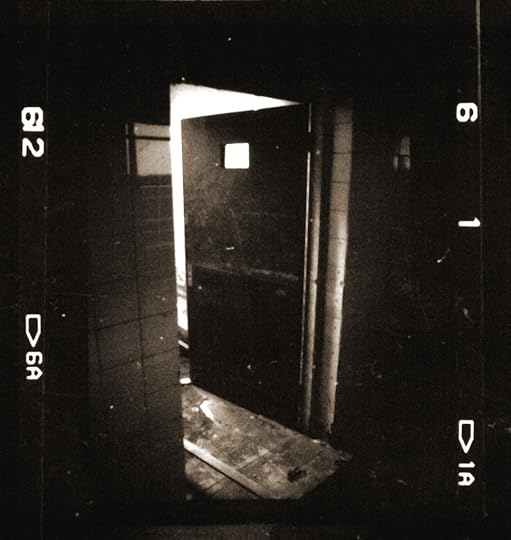
Image by Dan O'Connell
There are many reasons you should Flesh Trap. Some of them are legitimate, some of them are completely baseless lies. Only I know the difference. These are ten such reasons.
Ten. This is a psychological horror story.
The lockbox sat on the kitchen table. Casey paced around the room from counter to counter, studying the box from a safe distance. He had locked the doors and shut the curtains, closing himself in with it as he moved around the box, inspecting every dent, every nick or scratch. Worked through possibilities, the how's and why's behind it. No one had known he was going to the house but Joel and Mariska, neither of whom had anything to accomplish from placing the box there. It wasn't Paul trying to confuse him, even if he was likely psychotic underneath that tightly buttoned sweater, and he knew it wasn't his father. David Way was dead, no matter how easily he crept into Casey's bed or into the corner of the living room, flattened between the bookshelf and the corner table when Casey wasn't paying attention.
"Alright, you little bitch," Casey said, if only to hear himself say it. "What's inside you?"
Retrieving a butter-knife from the silverware drawer, he pried at the lock, twisted the blade in the shoddy catch to lever it open. The lock gave out in a jerk and scrape, and holding a breath he pulled back the lid. The smell of rotting meat struck Casey first, like the stink of an animal carcass left in the sun. Inside the metal box was a lining of sweating flesh, thin and heavily veined by blue arteries. Fingernails and tiny canines like a baby's milk-teeth flanked all sides of the box in staggered rows, circling the throat at its center. A wide gullet of corded musculature, flapping open and shut in a wet slap of flesh and smelling like dead animal and intestinal juices. Slap, gurgle, sigh.
Gagging, Casey slammed the box shut and scrambled back across the kitchen, tripping, falling. The room lurched and narrowed his field of vision into a motion-sick tunnel. His pulse beat against in his temple until his sight cleared, grabbing the edge of the counter to drag himself upright. He disregarded the decorative pot of spatulas and spoons that he had sent across the floor, grabbing instead for a kitchen knife from Joel's cutlery set and brandishing it at the box. The box didn't move. The sounds of its digesting gullet thinned into a tight sucking noise. Another sigh and the box sounded pleased with itself.
It's weird, it's scary, and it doesn't play around. Flesh Trap follows Casey Way's hallucinatory ride through his broken memories and brutal visions, haunted by the all-encompassing shadow of the pedophile father whose murder left him with a hole he can't fill. Something is waiting for Casey at his childhood home, the site of his father's death, and it follows him out again into the world. It might be his father; it might be something else entirely, taking the faces of those closest to him and hiding in plain sight in boxes made of skin and teeth.
All Casey knows is that it's coming for him, one night at a time.
Nine. This is a mystery story.
The dust hadn't yet settled in her boot prints, kicked up and fresh as Mariska made her way through the kitchen, living room and down the hallway to the bedrooms. Specks of it shimmered in the beam of her flashlight, held close to her face with one hand, the other fisted around the crowbar at her thigh. Flight-or-flight made her strong, ready, tight like tension wire and prepared. Heavy boot prints raced circles around the kitchen island counter, Casey's size nine Converse shuffling to the living room, disappearing in the carpet. She hadn't expected to find new footprints, but it would have made the looking easier. The trash in the living room parted like a sea to the empty fireplace, new beer cans with old gas cans and nothing seemed all that different.
A monster had been living there, if Casey was right. It hid in boxes made of their childhood, wearing other people's faces. Only Casey saw these things but she believed him, wanted to prove him right. There was no trace of it now. No claw marks on the doors or teeth left behind in the dust; no sheets of torn skin or shed hair marking its territory. She half-expected to find David Way's skeleton in the corner, creeping out from the shadows to choke her. It would have given her proof, something more to cling to than the box of flesh Casey had been carrying. It would have been more to hide from, more to hate than just David's face in old photographs. She was done hating people. David was dead. He just needed to stay dead. It was easier that way.
Mariska stopped in the hallway. She counted the steps that stretched from door to door. Ten to their parents' bedroom, five from Casey's to hers. The bedrooms were scars in the home, ugly things scored into the walls from the nights Casey hadn't slept. His eyes had burned holes into them, whispers from the cracks beneath her bedroom door etching words into the plaster and under the paper, to the studs where the nails remembered. She didn't see them now, but she remembered. The same way she didn't see the devils that had rested there once before, lying in the trash and the dirt where the box had sat in the fireplace and held court over its possessions. She didn't see the evidence of their chains in the dust, the trails where they had dragged themselves across the carpet from one room to the next. Instead she sighed and walked away.
It's about a man finding himself at the center of a series of deaths and disappearances, and being forced to confront long-forgotten childhood memories to find the cause. Casey just has half the story about his father's death, only part of the puzzle. The memories of the event are locked inside his head, slowly tumbling out of him through dreams and hypnosis, pieces of time. Journal entries, missing persons fliers, lockboxes, Polaroid pictures, 911 tapes – every little detail brings Casey closer to the night his father died.
Casey is a detective of his own emotional damage, and everybody close to him is working the case, his step-sister Mariska and his boyfriend Joel. Either they find the answers, or more people die. It's only a matter of time.
Eight. This is a story about family.
"You know what happened that night? After I left? I was going to go to some older kid's party with my friend Stevie. I told Mom I was going to the movies, 'cause it was a school night, you know? You wanted to come but I called you a dork and made you stay home." She shrugged, looked down at the dirt ground into the carpet. "I should've let you come. I shouldn't have left you there. I was so stupid."
Casey dropped his head back with a sigh, connected the stains on the ceiling in an invisible line. "You can't blame yourself."
"What do you remember?" Mariska sounded more hesitant than she meant to.
"I don't remember much. I was watching TV when Dad got home from work. He and Alyona were yelling in the kitchen. I thought it was another argument, but then she was just screaming, over and over. Then my Dad started screaming, and there was this loud, wet sound."
"Aunt Cheryl said that when the police came you were in the kitchen with your dad, just sitting in the blood. She always said that they told her Mom was there with you, just screaming."
He shook his head. "I don't remember."
"I should've never left you there with those fuckers." She dragged a knuckle across her eyes, digging the tears out before they had a chance to fall. "I'm so sorry."
"Hey. Mar, hey." Casey leaned in, nudged her knee with his foot. "Don't. I'm not sorry."
"I know I shouldn't have taken off all the time. I just hated him, you know? I hated him so much; I couldn't stand to be there when he was home. The way he looked at me, the way he touched me, always telling me how beautiful I was. He said he loved me even more than Mom, because she didn't take care of him the way he needed. She didn't make him feel good. Can you believe that shit? My real dad ditched us before I turned two so I didn't remember him, but I just knew that's not the way a father touched his daughter, you know?"
Casey felt five-years-old again, padding down the hallway in green dinosaur pajamas in the middle of the night. Mariska's door was always closed. In the morning there were bruises on her thighs whenever her nightgown pulled up, thick like his father's fingers. He brought his knees up to his chin, hugged them to himself.
"I could've said something," he said to the ceiling and the constellation of tobacco and smoke stains. "I was down the hall for eight years."
"Who would've listened to you? Mom?" She scoffed into her beer. "She was married to him, slept down the same hall, too. She was too busy being June Cleaver to see anything. We didn't really have anything before my mom met your dad. He could do whatever he wanted to me as long as we all played happy fucking family at the church picnic and PTA meetings."
"You know what the worst part of it is?" Casey asked. Mariska shook her head. "I loved my Dad so much. He was Father of the Year since day one. Baseball games, Disney World, fishing trips." He shrugged. "He never hurt me, he barely even yelled at me. Now I can't help but think he was just buying me off so I wouldn't tell anyone. All along I knew, though. It should've been me instead."
"No, Casey. Don't say that. You didn't deserve it."
"It should've been me, Mar. I'm his son. If somebody was supposed to take the brunt of it, it should've been me." Casey hadn't felt his arms shake until his fingers dug into his shins, leaving bruises that he would find in the shower later. "I could've taken it."
"Casey, don't."
"He ruined your life."
"Yeah." She sniffled, smiled. "And my mom ruined yours. I think we're even."
The laugh that rattled out of his chest was cold and ugly.
"Happy anniversary, Little Brother."
"Happy anniversary, Sis," Casey answered when he finally stopped shaking.
Family can bind and maim. It can hold you down just as easily as it can prop you up; tear you apart just as soon as shape you into a better person. Casey and Mariska are the products of their parents, veterans in the silent war made of their childhoods, bearing scars of shame and abuse that run deep to this day. Now the step-siblings keep each other's heads on straight, keep each other above water. Sometimes this closeness blinds them to the harm they can do, so co-dependent that their shared baggage can drag them down. Even for it, this is a story about family. Living with family and forgiving family, knowing when to fight and when to walk away.
Just as much as their family has torn them down, they have each other because of it. At the end of the day, that's all that matters.
Seven. This is a love story.
It was dark outside by the time Casey heard the door open and Joel slip out, making his way across the patio on bare feet to wrap his arms around Casey's neck. He closed his eyes to the brush of Joel's lips against his ear, held a breath.
"You still mad?" Casey asked.
"No, I'm not mad." Joel sighed, slid his arms down to Casey's waist. "Hey."
"Hey, what?"
"Just come to bed. Okay?"
Abandoning the shears on the planter stand, Casey did what he was told. Followed as Joel retreated to the bedroom, locked the patio door behind them before he did so. Turned off the light, looked at his mother's picture, and looked away. Down the hallway to the threshold of their room Joel was already undressing himself, opening his vest and button-up. Casey stubbed his cigarette out in the ashtray on the nightstand and slipped out of his t-shirt, tossed it at the corner hamper. He reached for Joel at the foot of the bed, taking him by the chin to kiss him, first softly then firm. It was easier than saying sorry or trying to explain. He didn't want to talk about anything at all.
"I didn't mean to be snotty to your sister," Joel said sincerely.
"I think she's used to it at this point."
"Rude." Joel punched Casey's shoulder lightly. Casey smirked. "I mean it."
"I know." Casey cupped Joel's face and kissed him until he was quiet. "I really don't want to talk about that right now, okay?"
"Casey."
"Hey." Caught Joel's bottom lip between his teeth, held him by the base of his throat with fond fingers. "Don't be sorry. Not right now."
This is a kissing book; I'm going to be very upfront about that. This is not a public service announcement or an after-school special. This is not a romance novel. This is a story about two people trying to save themselves and each other from circumstances spinning violently out of control. Their relationship is the backbone of the story, the details and history of which are woven into the events of the plot. At the end of the day, Joel is what keeps Casey together, keeps him sane, and keeps him from coming apart in the face of what's bearing down on all of them. They just happen to both be male.
If that bothers you, the door is to your left. Thank you for your time.
Six. These are normal people.
"Hey," Mariska called out, voice rougher than usual from coffee and cigarettes. "I was about to call a doctor. I didn't know if you were going to come around."
"How long was I out?"
Through the doorway to the kitchen, the box still sat on the table with the blade. Blood had dried on the table-top in a black puddle. Casey swallowed.
"About a day now. You, uh, blacked out yesterday morning. I cleaned you up and moved you to the bed." On the couch Mariska snuffled and scratched her nose. "I left the box there. Didn't know what to do with it."
Casey nodded. "Thanks. And for the clothes, too."
Moved to the couch and he dropped onto it with a sigh. He found himself staring at the morning news through the haze of smoke from Mariska's cigarette. An anchor with a blue tie and a gap in his front teeth made mention of the strange attack at Jay's Diner, flashing a picture of Sherrie and a thirty-second clip of a taped interview with an officer on scene. Standing outside the diner beside a squad car, she made passive assurances that the police department was taking the report seriously. Restaurant workers in the area need not be alarmed. It appeared to be an isolated personal incident. Casey learned forward and shook his head.
"Jesus."
"Is that your friend?" Mariska asked carefully. "The waitress?"
"Yeah."
She nodded. "You need a ride to the hospital?"
"Probably. I should go see her, make sure she's okay."
"Is that the game plan? Go talk to her and see what she knows?"
Casey shrugged. "I don't really have a game plan at the moment."
"Well, look, you think this thing hurt your friend, right? If it did, you need to find out what it did to her and what she saw. Maybe she can help you out."
His eyebrow bounced. "You know you're really taking this well, all things considered."
Mariska stubbed her cigarette out in the neighboring coffee table ash tray with a cough. "Yeah, well. Look at our family, Case. Crazy shit kind of just follows us around."
"So you believe me?"
"I don't know what I believe. But after yesterday, what can I even say, man?" Her eyes jumped to the kitchen to watch the box carefully. "What are we going to do with it, anyway?"
He didn't say anything. She took a deep breath.
"So you need a ride or not?"
This is not a story about FBI agents or hard-boiled detectives or well-trained professionals with guns and nice six-packs. This is a story about a guy who works in the library. His boyfriend is a therapist. His step-sister is a late-night radio DJ. These are normal people, who have problems and pay taxes and usually go to bed at a reasonable hour. They have relationship troubles and bleed easily. There are no heroes or villains or damsels in distress.
As an aside, Casey is not cool. Mariska, however, is way cooler than he is. That's just the way it has to be.
Five. Casey's therapist is probably a vampire. And he's probably trying to kill him. And that was really fun to write about.
Casey borrowed the space at the end of Paul Orman's black sofa. His dark jeans and t-shirt helped him fade into the upholstery, cross-legged, shrinking away between the cushions he slouched against. Paul's office was a cave carved out of cinderblocks and mahogany on the eighth floor of a high-rise building, black leather and wood stain stretching from wall to wall. In the center of the room was a high-backed leather armchair with heavy pleats and ornate brass decorations, an end table, and the sofa.
"What would you like to talk about today, Casey?"
Between the tall arms of his chair, Paul was sallow with thinning gray hair and dark eyes. The bony peaks of his skull recalled Max Schreck, Count Orlock, Nosferatu, stalking dark corridors and staircases. The notion that Paul Orman had ever instructed a classroom of future therapists made Casey uneasy. That Paul held a fond place in Joel's heart as his thesis advisor ultimately left a bad taste in his mouth.
"I don't know." He said nothing about vampires. "What should we talk about?"
Casey saw Paul on Tuesday mornings with black coffee still fresh in his mind. Joel made terrible coffee, half-caff piss-water, not at all like the black tar Casey needed in his veins every day. Joel made up for it on most mornings, when squeezing Casey's small bicep Joel kissed him goodbye at the door and warned him to play nice. For the first three sessions Casey agreed. This morning Casey had promised nothing.
"You know it's up to you, Casey." Paul smiled vacantly. "You can talk about whatever you like here. It's a safe space."
Casey shrugged. "There's not a lot to talk about. I told you that last week." And the week before that.
"Humor me, Casey."
"I'm pretty sure Joel already told you everything you needed to know. I mean, you're on his Christmas card list, right?"
"Joel only came to me and asked me to review your case. That was all."
"Then you already know I'm just here so Joel will feel better, right?" The thought of Joel sitting bright-eyed and gullible in the front row of Paul's yawning classroom, some cathedral-auditorium, all dark glossy wood fixtures and overcompensation, made Casey uncomfortable in a way he couldn't fully articulate. "And you get paid either way, so I think it's a win-win no matter what happens."
Four. Medical bondage porn and amputee fetishism.
The girl on the closed circuit television was there, a stripe of shadow against a gray burst of streetlight. She was skinny in the hips like a boy, one of his porno models in a cheap white party dress and plunging neckline. Strips of gauze and electric tape crisscrossed to cover bruises on her arms and thighs, pressing her breasts together under her blouse. Beneath the elbow her arms were amputated and healed in thick scars and a wrapping of hospital bandages crowned her head. It obscured one eye and part of her nose in blood-and-dirt smeared bindings, the other eye blackened with bruises.
She opened her mouth and let out a sound like television static and Harold took a step backward. Dropped the bags and his feet skittered across the greasy concrete, unsure of his footing when she took a step toward him, bare foot and silent. Hot panic worked through Harold's stomach to his groin. She came to him, dress transparent around her hips and breasts as to outline the pink of her nipples and slit between her thighs. It made Harold's heart thump as the girl got down to her knees, mouth open and damp like her good eye when she blinked in a lazy flutter of lashes. Harold reached down cautiously, combed through the hair sticking from her crown of bandages. She leaned into the touch like a cat and he stroked her for it, enjoying the way she rubbed her stubby elbows against the front of his pants.
"Did somebody leave you like this?" he rasped. He slipped his fingers through her sweaty hair, between the bandages to rub into her scalp. Spit ran from her mouth in a thick string as she drooled against his pant leg, eager like a dog. For it Harold sucked a breath between his teeth, hardening against his fly. "Okay. Okay, I'll give you what you want, Baby, no problem."
I regret nothing.
Three. Psychedelic head-trips.
"Slow your breathing, Casey," Paul said soothingly. "Allow every muscle to relax, from your head to your feet. Feel your eyes and your face relax, your neck and your shoulders. Can you feel it? I'm going to count back from ten to one, Casey. With each number you will become more and more relaxed. Slower and slower, deeper and deeper, until you're completely relaxed. Is that okay, Casey?"
Casey took a deep breath. "Fine."
"Good."
Paul's smile was audible. Casey exhaled. He felt himself begin to slip, loose inside his clothes and from the couch. The watery unbalance of his equilibrium told Casey that he was falling, sliding in liquid descent between the cushions and the upholstery of the sofa.
"Ten, nine, eight. Slower and slower…"
Casey felt limp like a ragdoll and falling through the floor. Through the cracks of the floorboards and the spaces between levels, all concrete and pink cotton candy insulation. His eyelids twitched. He took another breath.
"Seven, six, five. Deeper and deeper…"
He dropped freely through the floors of Paul's high-rise office, through the steel and wood. Gravity pressed down onto Casey's chest and caught in his clothes and hair, fluttering at his back. He fell through plaster and carpet, light fixtures and glass, through to the ground floor and everything underneath it.
"Four, three, two, one…"
Casey gasped and felt his back strike solid ground.
"When you open your eyes, you'll be home. It's the house where you grew up, Casey. Can you see it?"
Casey opened his eyes and saw the sky above him. It was a faded blue sheet pinned in place by the tops of skinny green trees, surrounded in bushels of needles that gleamed like bone-flint in Casey's mind. He blinked twice in the light of a bulbous yellow sun and felt sore all over.
"Yeah, I can."
Casey pushed himself upright, sitting in the green stretch of lawn and amid the snapping mouths of his mother's flytraps. They knotted around him in thick clusters of toothy smiles, catching in his sleeves and pants as Casey stood. Across the yard he saw himself as a child. Three-years-old, he was chubby in the face under shaggy hair and freckles, tugging at his mother's skirt as she tended to her garden of mouths. They grinned cartoonishly for their breakfast, and perhaps for her as well, long and beautiful in her white sundress and sandals. Her hair dark like Casey's and tumbling past her shoulders, her eyes bluer and brighter.
In the distance their home was white and fat with heavy shutters protecting curtained windows, enclosed by dense brush and tall trees. Casey watched his mother carry him across the patio, short fat fingers catching in her blouse and hair. She smiled with her whole face, from her eyelids to her chin. She looked happy.
"Where are you, Casey?" Paul asked from somewhere far away.
"I'm in my backyard." Beneath him his mother's traps snapped at him, hissing in his wake as he cautiously crossed the yard. "My mom's here with me."
"Your stepmother?"
"No, my real mom."
"What do you see, Casey?"
"I can see my house."
"Can you see the backdoor?"
Up the patio and over the steps, Casey stopped in front of the door. It was taller than he was by three heads and white like the rest of the house. "Yes."
"Walk through the backdoor, Casey."
Swallowing, Casey grabbed the knob, turned and pushed. Inside there was only a hallway, long and white, sterile like a hospital room. The cold air blew stale against Casey's cheek and smelled like chemicals, making him acutely aware of the hairs at the back of his neck. Logic told him he was on Paul's sofa, but at the end of the hallway there was a black metal door, crisscrossed in an intricate mesh of chains and padlocks. The locked door was broader and taller than a man and emitting static from behind it, the snow between television stations or between Casey's toes when he dreamt of his father.
"What do you see, Casey?"
"A locked door."
"Walk through it."
"I can't. I can't get in, there's too many locks."
"Walk through it, Casey."
From the other side of the door there was a moan, a clanging and mechanical sound like pornography on bad speakers. Casey shook his head and against his better judgment walked forward. Moans moved down the passage like a degenerating signal, voices faded between stations to pull Casey closer. A splash and feeling of wetness drew his attention to his feet. Water closed over his ankles, thick and syrupy, black on first glance then red. The moans spiked into a scream and Casey realized it was blood.
"Oh god." It filled the hall in a swamp that sloshed against the walls, quickly climbing Casey's legs to his knees to choke his movements. "There's nothing but blood here."
"You have to keep walking, Casey," Paul insisted coldly from the space behind Casey's head. "You have to get to the door."
Thud.
Casey looked up, jumped at the sound of steel and flesh. From behind the door something beat against it. The frantic animal sounds of fists and shoulders, bone and skin, pounding through the shackles to reach Casey. His heart thumped as he moved through blood, hands out to clutch uselessly at the chains. He screamed and tasted iron, shaking at the padlocks, scratching and tearing and
"One, two, three, four, five—"
biting and ripping and bleeding from his nails where they chipped away and
"Six, seven, eight, nine, ten."
Two. Faceless children.
From the floor the box opened in a creak of hinges and metal parts. Casey heard it but didn't have to, already aware of the lid moving, opening to its throat. Out of the throat crawled five fingers, one arm and then another, two hands reaching out for leverage. A boy with no face lifted himself from the box's guts, lean under his clothes and his mop of dark hair. There was a hole where his face should have been, an empty space that made a void of his skull that the light coming from the bedside lamp couldn't reach. Casey knew this before he saw it, the boy dragging himself to his feet in a pop-snap-pop of ligaments and bones, unfolding himself into flesh. Bare toes wriggling, solid weight on the floor, breathing like Casey breathed, shallow like a rabbit.
The boy picked up the box, closed the lid and held it, skinny fingers tap-tap-tapping behind Casey's eyes.
One. Did I mention vampire therapists, medical fetishism and faceless children?
Oh, I did. Well, that about wraps it up then. The serial is coming Fall 2011.


August 6, 2011
Why I stopped reading superhero comics, and learned to love the indie scene

Okay, so. You grow up surviving on a steady diet of comic books, Saturday morning cartoons and sandwiches out of lunchboxes with superheroes on the front. Coming up in the world, you play with action figures and wear t-shirts with your favorite comic book characters proudly displayed on your chest. The greasy-looking guy behind the counter at the local comic book shop knows you by name. There are probably pictures of you cosplaying on friend's Facebook pages and convention round-up reports all over the internet. You're what we call a geek. A dork. A nerd. Whatever the current nomenclature, that's you, through and through.
But every representation you find in comic books that you could possibly identity with, well. They're all kind of strange. These characters are scantily clothed, their anatomy stretched and mutilated by lengthened spines, wildly pivoted hips, heaving chests. They're often posed like Playboy models with drooping lids and pouting mouths, crammed into impossible latex outfits and stiletto heels. All these characters can't possibly have anything to do with you, though. They really don't look like you, or anybody you know. They don't really act like anybody you know, either. Still, they're your heroes, the characters you have to look up to. So you keep reading, because you grew up on these things, and you hope for the best.
As you get a little older, get out of the safety of comic book shops and conventions, and begin interacting with a larger body of fans, things start to change. The stories really don't get better, and the people that you're supposed to look up to drift further and further away from any reality you've ever known. Your heroes are still shown as grossly sexualized objects. (There have been some good moments, of course, but even those moments are usually mixed with sour notes.) Comic book publishers disregard you. They say you don't really matter to their bottom line and you're not their core audience but they really appreciate your patronage, batting you away with one hand while taking your money with the other.
But it doesn't stop there. You're not really worth hiring as writers or artists, because publishers and editors only hire the best in the business, and you're apparently not it. Smart-mouthed bloggers and pop culture news hosts ignore you, claiming that you don't exist one moment then bemoaning your absence the next. (Unless you're fat, or unattractive, or whatever other adjectives they can throw at you, in which case they can't stop talking about you.) If you try to complain about these problems, these absurd representations, these hurtful business tactics perpetrated by major publishing houses, you're called a bully. You're told to sit down and shut up, but to have your wallet out for next month's issue or movie or new limited edition what-have-you. You don't matter, anyway. It's not like you really read comics or have opinions or anything. You should just be happy with what you get. (Hey, they put pants on Wonder Woman, right? That should be good enough.)
Congratulations. You're me, the average female superhero comic fan. Now you know why I've given up on DC and Marvel, and gone on to smaller publishers who at least pretend to give a damn. They may not all be perfect, but none of their editors or creative staff have attempted to boo me out of a panel, either…
Why I stopped reading super hero comics, and learned to love the indie scene
Okay, so. You grow up surviving on a steady diet of comic books, Saturday morning cartoons and sandwiches out of lunchboxes with super heroes on the front. Coming up in the world, you play with action figures and wear t-shirts with your favorite comic book characters proudly displayed on your chest. The greasy-looking guy behind the counter at the local comic book shop knows you by name. There are probably pictures of you cosplaying on friend's Facebook pages and convention round-up reports all over the internet. You're what we call a geek. A dork. A nerd. Whatever the current nomenclature, that's you, through and through.
But every representation you find in comic books that you could possibly identity with, well. They're all kind of strange. These characters are scantily clothed, their anatomy stretched and mutilated by lengthened spines, wildly pivoted hips, heaving chests. They're often posed like Playboy models with drooping lids and pouting mouths, crammed into impossible latex outfits and stiletto heels. All these characters can't possibly have anything to do with you, though. They really don't look like you, or anybody you know. They don't really act like anybody you know, either. Still, they're your heroes, the characters you have to look up to. So you keep reading, because you grew up on these things, and you hope for the best.
As you get a little older, get out of the safety of comic book shops and conventions, and begin interacting with a larger body of fans, things start to change. The stories really don't get better, and the people that you're supposed to look up to drift further and further away from any reality you've ever known. Your heroes are still shown as grossly sexualized objects. (There have been some good moments, of course, but even those moments are usually mixed with sour notes.) Comic book publishers disregard you. They say you don't really matter to their bottom line and you're not their core audience but they really appreciate your patronage, batting you away with one hand while taking your money with the other.
But it doesn't stop there. You're not really worth hiring as writers or artists, because publishers and editors only hire the best in the business, and you're apparently not it. Smart-mouthed bloggers and pop culture news hosts ignore you, claiming that you don't exist one moment then bemoaning your absence the next. (Unless you're fat, or unattractive, or whatever other adjectives they can throw at you, in which case they can't stop talking about you.) If you try to complain about these problems, these absurd representations, these hurtful business tactics perpetrated by major publishing houses, you're called a bully. You're told to sit down and shut up, but to have your wallet out for next month's issue or movie or new limited edition what-have-you. You don't matter, anyway. It's not like you really read comics or have opinions or anything. You should just be happy with what you get. (Hey, they put pants on Wonder Woman, right? That should be good enough.)
Congratulations. You're me, the average female super hero comic fan. Now you know why I've given up on DC and Marvel, and gone on to smaller publishers who at least pretend to give a damn. They may not all be perfect, but none of their editors or creative staff have attempted to boo me out of a panel, either…
August 4, 2011
Genderswapped
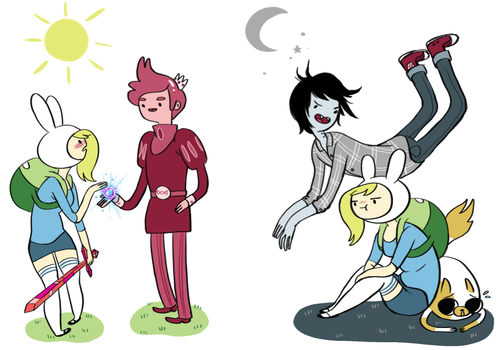
So, I'll be honest: I have a deep and abiding love for Cartoon Network's Adventure Time with Finn and Jake. You can argue all you like about the obnoxious hipsters now roaming mall food courts and sushi restaurants across the planet in licensed Hot Topic Adventure Time hats and t-shirts (believe me, they get on my nerves too), the show remains one of my favorite things on television. Brightly colored and absurd, it tells the episodic adventures of Finn the Human, Jake the Dog, and the hijinks they get into with the weird citizens of the Land of Ooo. (All of which take place in a post-apocalyptic reality where mankind was wiped out by nuclear warfare, only to be replaced by anthropomorphic candy and the occasional vampire. Just so you know.) It has great character designs, inventively strange stories and a tongue-in-cheek sense of humor, making the show fun for kids and adults alike.
For an episode airing in September, Adventure Time with Fionna and Cake, the creative staff has gender-swapped the entire cast. Male to female, female to male, humans and dogs and candy-people alike. As a fan of the show, I'm looking forward to it. As a writer, I'm positively giddy. To see a major network show throw gender out the window, even for a day, and prove that they can tell the same ridiculous stories regardless of the identities of the characters themselves, is kind of awesome. And I know I'm not the only one who thinks so.
The idea of exploring the gender identities of beloved characters is nothing new. Gender-swapping has been going on as long as I've been wandering the halls of the internet, and longer. This underlying interest among fans has spawned waves of gender-swap alternate reality fanfiction, about everything from Starfleet captains to Hogwarts wizards, demon hunters to Tarantino characters. The group The Girls on Film have been refilming scenes from major Hollywood movies with women in the roles of notable male characters, drawing attention to how viewers respond to women doing typically "masculine" things. It's something I've often heard discussed in literature and film theory classes, and feminist blogs. Me? I try to be aware of how much I rely on gender in my writing, and strive to make my characters as gender-neutral as possible. Gender is a part of them, just as my gender is a part of me, but I don't let it control or define them. If the story hinges on a female character being female, like a gay character being gay, or a black character being black, that's not a story. That's an after-school special. (Sometimes these kinds of stories need to be told, especially in the context of overcoming adversity or coming-of-age, but I don't tell them. That's just not my speed.)
So if I write a story with a male protagonist, use Find/Replace to change his name and gender, and I still end up with the same story in the end as I'd started with, I feel like I did my job. I told a solid story with a believable character. Analyzing just how much gender informs a character, and how much that influences his or her role in a story — and to a greater extent, how that character will now be read/viewed in the context of his/her culture's gender roles — is a topic worth pursuing. For me, it helps me balance the tone of my writing. For a lot of fans I encounter, it helps them explore and enjoy their favorite stories and characters in new ways. For a lot of people, both in the writing community and outside of it, it's a way to evaluate the kind of stories we're telling, the types of archetypes we're putting out into the world. Still, it's not something that usually comes a lot outside of the classroom or message board.
Sure, gender-swapping turns up in film and fiction, but usually as the butt of a joke or as the plot of a formulaic body-swap comedy. It's not taken very seriously in mainstream popular culture, where we still argue about gender roles and cliches, over-muscled male heroes and half-naked women trying to fight crime in lingerie. Even for it, this children's show is the first that I've seen in a long time to throw the rule book out the window and have some fun with their characters. It may not be deep or particularly thought-provoking, but it is refreshing. A girl adventurer with a silly hat, her cat Cake, a pervy ice queen and a prince in need of saving. Oh, and some hipster vampires and anthropomorphic candy-people. It's Adventure Time, but in a new light. What's not to love?
Kind of makes you wonder what the rest of us are waiting for. After all, it's 2011. Girls can be heroes and princes can be damsels in distress too, damnit.
(And for those of you out there who don't have genders, I will try to come up with something to coherent to say about that and discuss that topic in a later post…)
August 2, 2011
Buy This Book II: The Reckoning

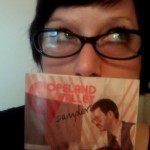
Have you heard enough of my sales pitches yet? Yes? Too bad, because my contributor's copies of Copeland Valley Sampler arrived in the mail yesterday. Sufficed to say, I'm pleased with the final product. Fresh from the Copeland Valley Press and Civic Society, this weird and wonderful anthology showcases short stories from some names you might know (such as the distinguished Misters Pauley III, Revert, Cook and Krall), some others you might not, and a whole lot of stories you won't find anywhere else. It features two of my flash fiction pieces, In Case of Armageddon and Single Singularity. Also, I think I'm the only girl in the book (well, biologically speaking, anyway), which makes it a special privilege to stand shoulder-to-shoulder with such a truly lovely bunch of weirdos.
Interested? You should be.
The Three Stooges meeting William S. Burroughs…in the wild west! A man in love with his apartment! An in-depth and pathological analysis of Driller Killer! Satanic Panic…'80s style! Skater haircuts and slap bracelets! And much, much more! This collection defies genre labels and provides a wild ride through the eccentric world of COPELAND VALLEY, a place you will never, ever want to leave.
The Sampler is on sale now at Amazon and Barnes & Noble. It's only $8.95. That's like, a cup of coffee at Starbucks, so go buy a copy instead. You'll feel better. (Except for that strange tingling sensation, but you'll get used to that.)
August 1, 2011
Buy This book. (No, really.)

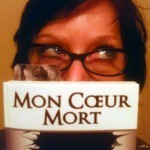
From Post Mortem Press, the paranormal romance anthology Mon Coeur Mort is on sale now. My contributor's copy came in the mail this weekend and I had a chance to go over it. Once again I'm pleased with the quality of Post Mortem's formatting and publishing, which is steps above a lot of other small/indie pubs that I've encountered. Also, I'm in it! Isn't that exciting? (Yes, I thought so.) The book also features twenty-six other authors, showcasing varied and unique perspectives on what it takes to love the things that go bump in the night. My story, At the Heart of Mina Jones, is about a struggling shop-keep named Jason who gets in above his head with a mysterious woman that offers to take care of his financial problems, in exchange for one night of his company.
As you can imagine, things don't exactly go according to plan.
I didn't move. She took my fingers in hand, leading me down the hallway and to her room to stand at the foot of the bed. My heart pounded in my ears, my hands uselessly clenching at my sides. Mina was unflappable.
"Take off your shirt."
I immediately slipped off my t-shirt and held it to give my hands something to do. Without a shirt I realized just how warm it was, feeling the heat coming off the box-sized radiator across the room. She looked me over carefully, studying me, skimming her hands up and down my sides. Her fingers were frigid, making me shiver. I tried to kiss her but she turned her head. I took a deep breath and felt embarrassed.
"Sorry."
"Don't be." She smelled good up close, like some flowery perfume, but sweeter. Like old ladies at my mom's church wore for Sunday service. "You can keep your clothes on, if you like."
"No. I mean, if that's what you want."
I licked my lips and let my shirt drop to the floor. She watched me undress, slipping out of my jeans and my briefs, tracing light touches over my ribs and hips like she was taking inventory. I couldn't tell if it was the heat making me sweat but I was, hot all over under her hands.
"Sit down on the bed."
She turned, moving for the drawer of the bedside table to retrieve a pair of handcuffs. "Can I put these on you?"
I swallowed, tensing up and trying not to let it show. "Yeah. I mean, yes."
Sitting down, holding out my hands for her to cuff, the cold snap around my wrists made me harshly aware of how naked I was, already hard. I didn't know if I would even get hard, the look in her eyes enough to make me want to go along with this, no matter how cheap and stupid that made me.
It's a heartfelt paranormal romance about interrupted lives, unintended consequences and the restlessness of death. And there's not a twinkling vampire in sight! It's probably the tamest thing I've written in a long time (having spent an entire year up to my elbows in blood, faceless children amputee fetishism while working on my novel) but it's a story I really love. So buy a copy, why don't you? It's on sale now at Amazon.com and through Post Mortem's website.
Buy this book. (No, really.)
From Post Mortem Press, the paranormal romance anthology Mon Couer Mort is on sale now. My contributor's copy came in the mail this weekend and I had a chance to go over it. Once again I'm pleased with the quality of Post Mortem's formatting and publishing, which is steps above a lot of other small/indie pubs that I've encountered. Also, I'm in it! Isn't that exciting? (Yes, I thought so.) The book also features twenty-six other authors, showcasing varied and unique perspectives on what it takes to love the things that go bump in the night. My story, At the Heart of Mina Jones, is about a struggling shop-keep named Jason who gets in above his head with a mysterious woman that offers to take care of his financial problems in exchange for one night of his company.
As you can imagine, things don't exactly go according to plan.
I didn't move. She took my fingers in hand, leading me down the hallway and to her room to stand at the foot of the bed. My heart pounded in my ears, my hands uselessly clenching at my sides. Mina was unflappable.
"Take off your shirt."
I immediately slipped off my t-shirt and held it to give my hands something to do. Without a shirt I realized just how warm it was, feeling the heat coming off the box-sized radiator across the room. She looked me over carefully, studying me, skimming her hands up and down my sides. Her fingers were frigid, making me shiver. I tried to kiss her but she turned her head. I took a deep breath and felt embarrassed.
"Sorry."
"Don't be." She smelled good up close, like some flowery perfume, but sweeter. Like old ladies at my mom's church wore for Sunday service. "You can keep your clothes on, if you like."
"No. I mean, if that's what you want."
I licked my lips and let my shirt drop to the floor. She watched me undress, slipping out of my jeans and my briefs, tracing light touches over my ribs and hips like she was taking inventory. I couldn't tell if it was the heat making me sweat but I was, hot all over under her hands.
"Sit down on the bed."
She turned, moving for the drawer of the bedside table to retrieve a pair of handcuffs. "Can I put these on you?"
I swallowed, tensing up and trying not to let it show. "Yeah. I mean, yes."
Sitting down, holding out my hands for her to cuff, the cold snap around my wrists made me harshly aware of how naked I was, already hard. I didn't know if I would even get hard, the look in her eyes enough to make me want to go along with this, no matter how cheap and stupid that made me.
It's a heartfelt paranormal romance about interrupted lives, unintended consequences and the restlessness of death. And there's not a twinkling vampire in sight! It's probably the tamest thing I've written in a long time (having spent an entire year up to my elbows in blood, faceless children amputee fetishism while working on my novel) but it's a story I really love. So buy a copy, why don't you? It's on sale now at Amazon.com and through Post Mortem's website.
July 29, 2011
More art from Flesh Trap
This week Anna has been kind enough to send me more illustrative work from Flesh Trap. This time it's the inked Casey Way portrait, from the sketches I put up previously. I think the noise I made as it downloaded was suitably embarrassing. However, I'll just let the previews speak for themselves.
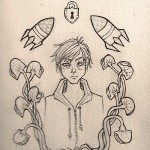
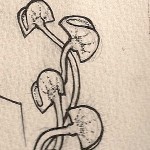
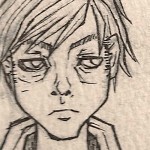
He sat out on the patio on a chair stolen from the kitchen table and watched the sun rise between the buildings. The flytraps didn't stir. He half-expected them to, crawling upward to him as they had for his mother in his mind's eye, eager for her attention. Smoking made him cough wetly but he ignored the inconvenience to skim his fingers over the toothed cups of a red trap, grinning at him with an empty mouth. Blowing smoke into the cups, snapping closed on his fingertips.There was something comforting in the familiarity of it, the faces that didn't change.
More art, excerpts and news coming soon as I get ready for a Fall 2011 launch.
The strange nature of being around cool people
"Don't meet your heroes if you can possibly help it because the odds are against it turning out well."
- Warren Ellis, on not meeting Hunter S. Thompson
I was at an after-party once in Dallas a few years ago, on the rooftop patio of the Palladium Ballroom. It was after an Interpol show, the first of a few I went to, as I was and still am a huge fan of their music. So I was standing around in the middle of the night looking out over the dirty Dallas skyline, surrounded by some middle-aged hipsters in leather pants and young art-types in plaid shirts with beards and lip-rings. It wasn't really my scene, but I wanted to see the band, who was sitting at a table inside the pocket-sized bar. Carlos D (then bassist), Sam Fogarino and Daniel Kessler (with Gaius, Carlos' Italian Greyhound) sans Paul Banks, who was back at the hotel room reading according to bar-chatter.
I made it to their table at around 1am, in a crowd of people drinking and talking with them. Standing next to Gaius (who really was charming in real life, by the way), surrounded by this band whose work I really enjoy and admire, and has been a huge influence on a lot of my writing. And in a spectacular show of social awkwardness, I turned around, found the person I came with, and left the party with little more than passing eye contact. When asked later if I got to talk to them, I said no. I walked up to their table and I couldn't think of anything to say. Hi, I love you guys. I think you're cool. I like to throw myself around my room at night listening to your music. Wow, that's a really attractive Greyhound, and his scarf is so chic.
On one hand, yes, absolutely. I should have said that. (Well, maybe something a little more eloquent, but you get the idea.) We were both there, they the artists, producers of art, and me the fan, the consumer of their work. It wouldn't be weird or inappropriate to express my appreciation. They might have even liked to hear it. But when I got up close, I realized I had nothing to say. I'd just paid $30 to press myself up to the front of a dark sweaty club to listen to their music for two hours. That was really all I needed, so I got one good long look at the dog, and I left.
I've had a chance to meet other people over the years, musicians at concerts and festivals, actors at conventions and expos. In the end, I always back out, or do my best to avoid doing it as my friends eagerly shove me toward people I would consider celebrities. (My definition of celebrity differs from yours, obviously. Your version of a celebrity is rich and famous. Mine are all in relatively small East Coast rock or freak-folk outfits, or on bad network television shows, or write weird books nobody ever reads.) It feels weird to me. I only enter social situations when A) I'm stuck participating, and B) there's a reason for me to be there. I have something to contribute to the overall experience. As a fan (a consumer), I feel like I have nothing of interest to offer to the discussion, and as a writer (a producer), I feel like I should have at least something interesting to say.
Me, standing in a crowd of people screaming and waving ridiculous signs, attempting to force out the words to tell some strange person I don't know (and/or stalk on Twitter like a wounded gazelle) how much I appreciate their work? It doesn't make me feel like I've accomplished anything, or that this person even knows just how much I really do appreciate them. I'm a head in a sea of heads, all shouting to be heard. I'd might as well sit down and write a letter, and hope it makes it past the agents and the shredder for this person to see it. Then I'd feel like I might have actually conveyed the amount of love I have for this person's work, the depth of my emotional experience when enjoying it, how it's informed my own work, and whatever else I'd attempt to spew out at them in a crowded convention center.
There are people I'd love to meet, don't get me wrong. People whose work has deeply moved and inspired me, and at times forced me to reconsider the way I view my own writing. Hell, some of them just seem like really cool people and I'd love to pick their brains one day. Would I fight my way through a crowd to shake their hands, or wait outside a club in the middle of the night, or pay money at a convention for a meet-and-greet? The idea makes me die of embarrassment, because I know that the minute I get there, I'll just do what I did to Interpol. Walk up, give them one good hard look, then walk away. And I'd rather not be known as "That weird girl who gave [insert celebrity here] stink-eye," okay?
All of that said, however, I will admit, I was forced upon Norman Reedus at this year's Texas Frightmare Weekend. I dodged him all weekend, helping to man the Post Mortem Press table while my brother got his autograph for me and basically planned my escape in order to get me and Norman in the same room together. Few people realize how much I just love Norman Reedus, and that's okay. It's not something I often talk about in public, for fear of putting others off with my foaming mouth and pawing hands. As you can see, I just wanted to avoid the whole thing, but my brother wouldn't take no for an answer. So on Sunday while all the guys from the Boondock Saints table were packing up to hit the road, my brother walked up to Norman. He told him I was a huge fan and that I had been stuck at a booth all weekend, so I never had a chance to meet him, which I (apparently) desperately wanted to do. Norman, forever a champ about fan encounters (I know this from seeing him at Comic Con 2009 for the Boondock Saints II panel, where I totally backed out of shaking his hand), agreed to meet me.
We met. I tried to shake his hand. He laughed and hugged me instead. We chatted very briefly and we got a picture together. I was probably the most nauseatingly polite person in the world as I thanked him sincerely and shook his hand, and wished him a good trip. Before the end of it he ended up with a copy one of the anthologies I was in. I thought I was going to throw up. I probably looked like I was going to throw up, too. How I refrained from vomiting remains a mystery even today.
Evidence attached, because, as they say: Pics or it didn't happen.

Was it a bad experience? Are you kidding me? I hugged Norman Reedus and it was awesome. It's not every day you get to hug Murphy MacManus and Daryl Dixon, okay? Even then it still hasn't completely cured me of my celebrity-weirdness, but I guess it's a start. Because I definitely feel like I could stand to give Misha Collins a hug if I ever saw that man (What? I can appreciate his contributions to society as an actor and philanthropist and still think he's adorable — I'm not a savage), but let's not rush into anything just yet.
July 28, 2011
On the writer's life
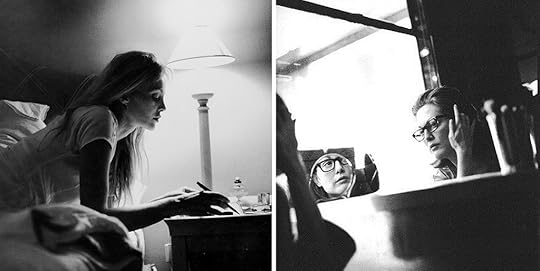
Photos by Veronique Vial
Get up. Open the curtains. Check phone. Feed the turtle, the dogs and the cats. Find caffeine. (Coffee with milk or herbal tea will do). Check phone again because you're forgetful. Check messages. Eat vitamins. Turn on the television. Flip through channels. (CNN, National Geographic, History Channel, Discovery Channel, Science Channel, MSNBC, BBCAmerica, then give up and leave it on TNT to watch Supernatural reruns). Stretching, yoga, deep-breathing, weight-lifting, cardio. Try to stretch out everything as far as it goes and hope you don't break something. Yogurt and granola, maybe oatmeal, maybe last night's black beans. More tea or coffee. Get out notebook. Write down crap about medical fetishism and black holes and children with holes in their heads. Maybe draw or paint. Turn off the TV. Go to the store and the bank, pay people money you don't have. Go home. Check phone. Check messages. Listen to music. Waste time on Tumblr and Livejournal. Get out notebook. Try to make sense of the crap you just wrote. More music. Edit manuscripts. Lunch. Watch Mythbusters on Science Channel. Go for a walk. Walk for an hour. Listen to music. Think about the crap you just wrote. Think about the crap you need to write when you get home. Shower. Check phone. Check messages. Dinner. Watch an hour or so of bad television. Get out notebook. Write while you watch bad television. Call your girlfriend. Talk about bad television and the crap you just wrote. More vitamins. More tea. More Tumblr and Livejournal. Look at the crap you just wrote. Check messages. Close the curtains. Feed the turtle, the dogs and the cats. Go to bed. Get up.


