
Magen Cubed's Blog, page 45
July 16, 2011
Summer Sessions 2011: Session Four
Session Four: BeRIT ELLINGSEN, INTERVIEWED BY MAGEN TOOLE
Drawing on Eastern philosophy and taking advantage of a wide variety of mediums, science journalist and fiction author Berit Ellingsen discusses her work, her processes and the sources of her inspiration. You can find more on Berit at her blog.
Who are you, and how would you describe your work?
My name is Berit Ellingsen and I'm a Norwegian science journalist and fiction writer working in English. I write literary fiction and some science fiction and fantasy. I enjoy writing all kinds of lengths, from nano- and twitter fiction and flash, to short stories and novels.
My stories are about zen, dreams, consciousness, love, relationship, family, death and everything in between. All my published stories are linked here: http://emptycitynovel.com/short-fiction. My long work, The Empty City, is serialized online here: http://emptycitynovel.com
Much of your writing is inspired by the philosophies of Zen, Taoism and nonduality. What is it about these particular themes that appeal to you, and how have they informed your work?
The core of these philosophies is the same. It points to the heart of human existence and knowledge, even something as radical your true nature, which may not be as simply or as clearly expressed elsewhere. I find that knowledge very valuable and appealing. Those themes often sneak into my stories, but they are rarely the purpose of the stories or the only thing they are about.
From what other sources do you typically draw your inspiration?
I read several literary magazines online; the short stories there are some of the best available from emerging and established writers. It's more updated and alive, I feel, than what's churned out by the large publishing houses years after it was originally written. Reading the stories in these magazines is very learning and inspiring, sometimes awe-inspiring.
I have also beta read several novels written by writer friends this year, and I find it very learning to read and give feedback to other writers.
Books, films, tv-series, games, music, visual art, I find them all to be inspiring in various ways, because they are different types of expression and storytelling.
What is your creative process like?
I write a first draft, then make grammar and linguistic corrections, and polish it a few times. I pay attention to plot, characterization, atmosphere, voice, vocabulary and rhythm etc. I work a lot to find the right words and the right flow.
If the story requires it, I send it to beta readers for feedback. Then I do the necessary changes, leave the story for some weeks, and then do final rounds of polishing. Then I submit the story to a suitable lit mag or anthology, or publish it on my website.
What, if anything, do you want readers to take away from your work?
Readers have their own and often very different interpretations of the stories, and that's the way it should be. If the stories make the readers reflect a little on the world or their own situation, that's great.
The events and characters in my stories are rarely ethically right or wrong. If that can make people reflect over the complexity and simplicity of human existence, it would be wonderful.
What have been your biggest creative influences?
Reading a lot of different fiction, from various time periods and all kinds of genres, non-fiction, reviewing and watching a lot of different films, games and tv-series. I've been a reader and watcher much longer than I've been a writer. Traveling, studying and working have also been sources for inspiration.
How do you balance your professional life with your creative life?
Like most people, and most writers, I find it a little difficult. I love to write and sometimes wake up in the middle of the night to jot down a story. But daily work must come first. I always get that done before I start on the fiction writing and editing for the day.
Is there anything in your own work that you have found particularly challenging in the past?
When I started writing The Empty City I was inexperienced as a writer and editor. As a result, the story has changed a lot, been shortened drastically and edited a large number of times. The stories that I have written afterwards were not as unfinished as The Empty City and have fortunately needed fewer rounds of editing. Although I always find something I would have changed when I read my old stories. I'm constantly editing.
Do you have any plans for future projects?
I have two long (for me) short stories that have more plot and are more linear than what I usually write. They will need some feedback, editing and cooldown before they are finished.
I've been thinking about a few longer works, but not sure if or when they will happen. I will also collect my current short stories into an anthology.
Thank you for sharing your words and work with us, Berit. Do you have any parting words for readers?
Thank you very much for the interview and for including me in the Summer Sessions! It's been great!
I really appreciate the company of all the readers and writers and editors I have gotten to know the last year. It's been an adventure! I can see why people don't leave writing once they start with it. I hope to write for a long time to come.


July 15, 2011
Summer Sessions 2011: Session Three
SESSION THREE: CHRISTINE DANSE, INTERVIEWED BY M. RAOULEE
Discussing everything from literary tropes to gaming to furries, genre-bending author Christine Danse takes a moment to share her thoughts, her processes, and her work. You can find more about Christine at her website.
#1: Who are you? What are you doing here? Why do you have my martini?
Hi! I'm–what? Oh. Oh! Excuse me. I thought that was my glass of absinthe. (I thought it was tasting a little too good…) I'm Christine. I'm an author, and I'm here for interrogation–er, being interviewed?
#2: What is your thing? Er, I mean your writing thing, specifically. We'll talk about other things soon enough.
My writing thing is speculative fiction–usually with romantic or erotic themes. By speculative fiction I mean science fiction, fantasy, paranormal…anything magical or out-of-this-world. The more I blend genres together, the happier I am. I especially love the 'punk genres: steampunk, biopunk, cyberpunk. And I especially love mixing fantasy and paranormal into the 'punks.
#2A: You know, I've noticed that a lot of people who write enjoy the blending of genres, while people who talk ABOUT writing tend to give the advice of sticking to ONE AND ONLY ONE genre. As someone who has gotten out there and written multigenre stories, what would your thoughts on genre happen to be?
There is only one kind of genre that matters to me: bookstore sections. Fortunately for me, science fiction and fantasy stories of all subgenres are included in one section. The same with romance. Erotic Romance. Young Adult. I target the story for one of those and have fun with the other details.
Obviously, my focus is going to be a little different for each. Young Adult is going to have young adult characters, and I'm probably going to have coming-of-age, rebellion, and romantic themes (okay, so I realize YA can be way more than that–I'm painting broad strokes here). Romance is going to focus on the love story, and it's going to have a happy ending. Erotic romance is going to leave nothing to the imagination. Science Fiction & Fantasy has the broadest "guidelines"–main characters can be practically any age, there can be full-blown romantic plots or no romance at all, and the heat level varies wildly.
As long as my story fits neatly into a bookstore section, I'm happy. And I'll mix subgenres inside of that as much as I damned well please…as long as it's coherent! The mix has to make sense.
#3: And if you could tell me about your current project, that would be awesome too.
My current project… Well, there's this middle-grade steampunk fantasy that I'm working on, although I don't know if I'm writing it. It might actually be written by someone else. I'm not sure yet. And then there's this urban fantasy erotica that's a piece of homework from my crit partner. (Best homework ever!) And then there's this really sweet modern myth about loss and love involving a man and a dryad in the mountains of southern Oregon. And then there's this novel about the son of a god. And then…
#3A: Did you bring a clip? Sorry, I always wanted to ask someone that. So, umm, more to the point: would this be your first time collaborating with another author if things work out?
Oh! Well, it isn't precisely a collaboration. She gave me a prompt. I'm running with it.
A clip… A sample of my writing? Or a clip to load my gun with to shoot my partner if she doesn't like where I go with my writing prompt.
Unfortunately, most of my projects are in deep outlining phase or complete terrible-draft phase.
Here is a somewhat more polished clip from my dryad story. It's the opening:
I sleep.
I sleep while snow weighs on our branches and wind rattles through our leaves. Sunshine lights us and brings us life. Our roots dig deep into the embracing ground, always warm in the winter, cool in the summer.
Cycles pass. I dream deeply of sunlit days, of moonlit nights, of others who dance beneath our cover. In my dream, I dance in my mother's trunk and her leaves shake, waving with the movement of my arms.
But in reality, we are still, because we sleep. We sleep for a very long time, as if through a winter that does not end. And the world around us changes.
The November morning was brisk, the Eastern Oregon air a world of change from the lukewarm, humid autumn temperatures in South Florida that Corey was used to. It went straight through his old knit sweater, the only warm thing he owned besides a ski jacket—and it certainly wasn't cold enough to warrant that.
Corey followed a narrow game path through the woods. The air was still under the shelter of the trees, almost hushed, save for the crackling of his footsteps over the leaves. It felt good to stretch his legs, never mind that he had no clue where he was going.
For one entire week, Corey had been cooped up in his new cabin, unboxing. Or rather, avoiding unboxing. There were things in the boxes he wasn't sure he should have packed at all. Knitting needles, balls of yarn, photo albums, the trio of little jointed stuffed cats, the set of samurai swords—all things he should have given to Marion's mother when he was still in Florida. But he couldn't bear parting with them, not while Marion's memory still clung to every rainbow thread and button eye. Counterproductive, really, considering he'd driven across the United States to escape her ghost. Now it lived in those boxes, taped shut and stacked against the bare white walls.
#3B: Also, I'm not sure, so I'll ask. By middle-grade, do you mean aimed at a younger audience or is this a 'punk shop talk? You've baffled the great Google!
Yes, aimed at a younger audience. Usually 9-12.
#4: How long have you been writing? When did you know you were a writer? What about the first thing you wrote that you were really, truly proud of?
Well, that's kind of a three-for-one, isn't it? This is probably cliche, but I've been writing for as long as I've been able to put sentences together. The first "book" I can remember writing was this storybook about a winged schnauzer named after my first dog. It had a sad ending, and reading it years later, I had to shake my head. Kids say the darndest things. Anyway. I guess that kind of set the precedent for writing fantasy stories.
In the seventh grade, I wrote a short story titled "Howling Werewolves" (original, yeh?). I was very proud of that. My teacher took me aside and told me that I should really consider writing, you know, for publication. After that, my mind was pretty set.
#5: What do you need to write? Besides the obvious. I mean the kind of music you write to, a place you like, other goodness along those lines.
I need my netbook, because it's small and light and has these amazing flat keys that my fingers just fly over. And I need my notebook, because sometimes I just need to write longhand to break through a block.
Sometimes, I need silence to write so that I can hear my thoughts. And sometimes I need music to stay in the zone. I'm in love with Pandora. I have some fantasy soundtrack stations in there, and some trance stations, and a few New Age things.
Besides that, I need to take walks every now and then to shake things loose. Something about staring at a screen or a blank space on a piece of paper can turn my imagination off. It's amazing how stepping outside can get ideas flowing again. I dread the summer months. I live in South Florida, and there's really nowhere to go when the world beyond the front door is a sauna.
#6: Every writer's got tropes, so what's your favorite page at TV Tropes and why do you like using or abusing that trope so much? Oh, and leave the tab open if you can. I have another question coming up to which that may or may not be relevant.
The trope I most familiar with and really keep my eyes open for is the MacGuffin. It's the object in a story that serves no actual purpose except to move the plot. You could replace the object with almost anything without actually doing damage to the story. I watch for MacGuffins when I write, because I think every element should be integral.
#6A: Truly, a classic trope. Is there a particular MacGuffin out there in the world of fiction which spurred you into this, or is it more of an acquired distaste?
Acquired, I suppose. Although as I write this, I've begun to plot a story that sort of depends on a MacGuffin. I'll see if I can make it a not-MacGuffin by the time I'm finished writing it.
#7: How do you come up with what you write? What do your outlines and such look like?
That's…a big question. Hoo boy. Um. All right, so here's the deal. Every time I write, I think I have it down. You know…"it." My system. I think, "Great. I finally know the secret to writing well and writing fast. See, first I…" But it changes every time. My first novel sprang from a single first line, and I pretty much blundered through it. I'm glad it never made it to print. Island of Icarus, my debut novella from Carina Press, came from a steampunk brainstorm session. I outlined that, although the "outline" was really more like plot notes.
My current work in progress, the middle-grade steampunk, stemmed from a short story I wrote a couple years back, although I'm not sure where I got the short story idea from… I outlined the novel's plot and laid out the sections in Celtx. This is the first time I'm using Celtx, a free program that's a bit like Scrivener, a writing program for the Mac. It has a sort of file system and notecards, so you can attach character files, other files, and notes to a single story document and have it all available in one window. So I put notes for each chapter onto individual notecards–just brief statements of what happens and where the chapter "moves" (because every chapter should serve to push the story forward).
Now, as I get to each new chapter, I jot out what I call a "skeleton outline" of what's going to happen, based on those notes. "Tea wakes and is tired. She trudges downstairs to breakfast." Paragraph break. "Her mom tells her and her brother that she needs to visit the old woman down the street. They'll be alone at home for half the day." And so on. And then I go back and flesh those points out into actual narrative. I call this the sh– Um. The very rough draft. Later, when I'm done with the book, the plan is to completely revise the entire story–but this time, I'll know exactly what happens, and how it happens, and what the characters feel about all of these things that happen, so I'll just be able to focus on the writing itself.
But that's just how I'm writing this novel. For the urban fantasy erotica novella, I have a feeling of where the plot is going, but I'm probably just going to go ahead and write that one straight through (I feel better doing that with shorter stories). And for the dryad romance, I'm actually writing each chapter as a mini saga first–a really useful trick for testing the narrative structure and emotional development of each chapter. More about mini sagas here: http://en.wikipedia.org/wiki/Minisaga
#7A: That is a stupendous answer which I'm sure is going to help a Newbie Writer Leopard out there somewhere. However, I'm curious how you got into using Mini Sagas.
A doctoral nursing class, believe it or not. It was a theory development course. We were assigned to read "A Whole New Mind" by Daniel Pink. (Great book, by the way.) The author introduces mini sagas in it, and we were required to craft one for the class. (I say "craft" because we didn't just write one. We slaved over the damned thing till it was PERFECT. A lot goes into 50 words… Yeesh.) After that, I got the bright idea to punish myself further by using them as a fiction writing tool.
#7B: And, how did you come to end up writing erotica? Did you sit down one day and say "I am going to write some PORN!" or was it more of things getting progressively sexier?
I pretty much sat down one day. My dear friend and writing partner, Dena Celeste, introduced me to the genre. Actually, not erotica, but erotic romance. She was having fun at it and getting published, so I thought I'd get in on the action, too. So to speak.
#8: What is your dream project? Or, at least your next project. Both if you're in the mood to discuss that much.
That's another big question for me, but I'll keep my answer to this one relatively short.
I have, literally, enough well-fleshed novel ideas to keep me writing for at least ten years, maybe twenty. No kidding. I started collecting my ideas when I was about thirteen. And there's about a dozen of them that I really want and need to write before I kick the bucket, or my ghost will cry. So I guess you can say that I have multiple dream projects.
There's a paranormal steampunk trilogy, a young adult cyberpunk fantasy series, a young adult paranormal about the Underworld, a space opera romance about an immortal…the list kinda goes on.
What's my next project? See #3. When I'm done with all of those, I've got another half a dozen waiting backstage.
#9: What was your childhood like? Do you come from an environment where creativity was encouraged? What did you grow up reading and writing?
In a nutshell: I grew up in Disney World. We live in South Florida and went almost every month at one point. When I wasn't in school and we weren't in Disney, we were on a road trip or camping in the mountains of North Carolina. And when I was home, my dad was telling me interactive stories, or I was pretending to be animals with my friends. So I kind of grew up in this Wonderland atmosphere, without the creepy grinning cat.
The first series I remember reading was Goosebumps by R. L. Stine. It was also the first thing I geeked over. The second series I read like a maniac was K. A. Applegate's Animorphs, which was just re-released, by the way. Around that time (age 11 or 12), I started reading the Dragonriders of Pern series. Then Mercedes Lackey's The Mage Wars. Then Michael Crichton's Sphere, which I read in one day when we were on vacation when I was about 12. I still haven't beat that record yet.
#10: Can you tell me about anything non-writing or literature related that ended up having a big impact on your writing?
Traveling. If my stories are not set in South Florida (most are), they're set in San Francisco or in Oregon, two places I love and wish I was at. Right now.
Also, the health professions. I'm a registered nurse, and I also practice modalities like herbalism, so a lot of nurses, physicians, and other sorts of healers pop up in my stories.
And role-play gaming. It's a bit like group storytelling, or gaming without a computer… It's definitely changed the way I think of stories, characters–how they're told, what they do.
#11: What do you like to read now?
I like to read…almost anything with a note of speculative fiction. Of course, I love speculative fiction romance. But honestly, it takes me months to read a novel now. I mostly suffocate under piles of articles and books for my doctoral studies. When I'm done with those, I'm sick of looking at words.
#12: What is your favorite book and what thrills you about it?
Ooooh maaaaaan. Um. Hem. Er.
Okay, so if I had to pick one favorite book to be stuck on a desert island with, it would be Tad Williams' Otherland. That's a bit of a cheat. It's technically four books, but it's one continuous story that–if books could physically be made large enough to hold the massive amount of pages–would read as one book when printed as an omnibus.
If I had to put Otherland in a genre, I'd stick it firmly in cyberpunk. Most of it takes place in virtual reality–really breathtaking, really realistic virtual reality. There are several individual, parallel subplots; some of the plots don't connect directly until the end of the series. And all of the characters–there are a LOT of them–are unique and interesting and feel like real people. Because the majority of the story takes place in virtual reality, the author was able to explore numerous different worlds–from virtual pleasure clubs to a house that never ends to an alternate South America that was never colonized by Europeans.
Pretty much, the quartet combines everything I love about speculative fiction between…eight covers. Pure love.
#13: How about your favorite character that someone else created? What did you love about that person, imaginary though they may be?
Wait–let me take a breath and a drink of water.
Okay. Vanyel from Mercedes Lackey's Valdemar series. He went through a lot of crap when he was a kid for being different. And he had this secret dream to be a bard, but that dream died pretty hard. After significant bumps in the road, he discovered his true potential as a mage and a protector of his kingdom. He really matured over the course of The Mage Wars trilogy, and because of his experiences when younger, he became this virtuous, empathetic, sometimes-too-good-for-his-own-good man…who is also very, very good looking. All the good ones are gay…
#13A: I seriously have to wonder if Merceds Lackey realizes what she started with Vanyel? His stories come up a lot in conversations among this nascent generation of writers. So, how did you find Valdemar?
Ha! Does he? That doesn't surprise me.
In a word: gryphons. I love gryphons. Mercedes Lackey books had gryphons on the covers. I thought, "Hey, these look cool." And they were. And eventually I read some of her books that didn't have gryphons on their covers. And that was that.
#14: Only negative question I promise: what's something you really despise when you find it in fiction, to the point where if you found it, you couldn't read any more? Is it part of the one book you loathe above all others?
Um, I hate it when authors try to make up for really. flat. characters by over-telling the characters' emotional states. Also, I hate when the characters feel very, very strongly about something…but act completely contrary. Honestly, "show don't tell" isn't just a cliche. It's sound advice.
The story I'm thinking about went something like this, "Man acts very stoic. But inside, he is roiling. Who is this woman who has come into her life? She shakes him to his very bones. In fact, he might get a bone. But he doesn't. Because he is acting very emotionally flat, and is not even feeling any physical effects of his attraction. But he continues to feel emotionally troubled–in every paragraph–even though it doesn't show in his voice, expression, or body."
I threw that book down quickly.
#15: When you're not writing, what are you doing, creatively and otherwise?
I go to school. I game when I can. Occasionally, I do something in the kitchen that could be mistaken for cooking. Even rarer still, I pull out my pen tablet and try to make graphic art. Many attempts end in utter #fail.
#15A: I'm guessing based on your other answers you mean table-top RPGs, but I could be totally wrong. Either way, what do you like play?
Table-top, yes. Usually, Exalted and Star Wars d6. Computer games, too. Mostly World of Warcraft, but I grew up on Hexen and Tomb Raider. Now and then, I'll steal some time on my boyfriend's Xbox. I use it to play Bioshock. I'm still playing Bioshock the first. Don't laugh.
#16: Do you enjoy socializing with other authors? Is there an author out there now you'd love to meet?
Yes! I love socializing with other authors. Twitter has been wonderful for this. That's something I highly recommend to any author who wants to network: Get on Twitter. Take it from a former skeptic. Once you get the hang of it, nothing beats it.
I'm not sure which author I'd love to meet. There are just so many. And I don't want to meet any of my really favorite authors just because I think I'd forget how to talk.
#17: Looking at your homepage (it's really stylish, by the way) I noticed you seem to enjoy anthropomorphs and gay men. Are you into furries or yaoi culture? What do you think about those fandoms?
Ha!
Yaoi. I've heard of it, thought I'm not very familiar with it.
But Furry fandom–I've been lurking at its fringes since I was about twelve. I especially love the fiction and comics published by Sofawolf Press. I keep playing with the idea of writing something for their 'zine Heat, just for the fun of it.
#18: Oh, and speaking of fandoms: do you aspire to have one? Would you let people fanfic with your characters or your world?
*blush* Well, I just can't imagine having one. I'm used to being the fan. But if I ever earned that kind of following…yes, I'm totally pro-fanfic. Quite a few writers that I know got their start writing fanfiction–even I did, to a limited degree. And I would never think of trying to police peoples' imaginations. I just wrote the story. Where readers take it is up to them–just as long as they don't take it to the bank. I like to afford the occasional piece of meat with my bread crusts.
#19: As a writer, I'm sure you have opinions on free speech, and I'd like to give you a moment to speak freely about those. How about warnings and trigger tags? How do you feel about those, now that the wild, untamed internet of yesteryear is fading?
Warnings and trigger tags?
Wait, the world is changing? I didn't notice. I've been hunched over my computer.
#20: Do you think you can change the world? What do you WANT to changed about the world?
Do I think I can change the world? I feel like an ant, honestly. It's one of the reasons I write. I WANT to make magic and strange technology real, so I DO make it real. In my own little worlds.
#21: Now that this interview is winding down, what are you going to do? Some closing thoughts? Another martini?
A martini would be good. Also, a good stretch. And a spellchecker. But first, I'm going to scrounge together some bread crusts, because I'm hungry.
#21A: Is a martini your preferred author!booze? Because if we had gotten to do this on my veranda (boo, thousands of miles), I do have an entire bar at my disposal.
Such a tease. Actually, my preferred drink is an amaretto sour. I've also taken a liking recently to bottled sangria. I'm a sangria snob who's only ever liked fresh sangria in the past, but it's been a while since I've been to a good Spanish restaurant and I guess my tastebuds will take what they can get now.
M: On a more serious note, I would like to thank you for the wonderful intero-… interview. You've been a great victim and a better sport and I'm really looking forward to see what you whip up in the future. Cheers!
CD: Thank you!
July 14, 2011
You don't move me anymore

So I was out at a mall the other day. I'm not much of a shopper (I'd rather be at the movies or the zoo, or palms pressed against the glass at the aquarium) but I do like to walk around and look at things. I have my favorite places to browse around in, some big and some small, where sometimes I buy things and sometimes I don't. Making mental checklists of stuff I'd like to get maybe next time, maybe when it's on sale, maybe if I remember to come back at all. It doesn't really matter. Like I said, I'm not much of a shopper.
And so I'm wandering around the mall with my hands in my pockets, waiting up for somebody I'm supposed to be meeting with. I'm killing time, store to store, hitting all the usual suspects on slow a Friday afternoon. Everywhere I go, I make the trek to the back to the store, the corner marked Plus Size. I'm used to it. For most of my adolescence and adult life I was trained by shops and labels to think of myself in a very narrowly defined set of terms. Round. Curvy. Heavy-set. Thick. Big. Stocky. Those were the positive terms. Everybody else just said Fat. Whatever. It's an ugly and flawed and imperfect system. I'm operating inside of it, just trying to make do.
Trained to shop in my corner of the store, I found myself immediately drawn to the large printed blouses and elastic-waist jeans of the Plus Size section. When I got there this time, I forgot that nothing fit me anymore. Leafing through the racks of clothes that used to fit me, looking over labels that used to describe me as Curvy or Heavy or Thick, everything was too big. Then when I was standing in an Old Navy (which I kind of dislike as a rule, but they were having a sale and like I said, I was killing time) it dawned on me that the Size 14 jeans and the Size 12 capris, well, that was what fit me now. Held up to my waist, these hitherto "skinny people" sizes covered me in all the right ways. Nothing was hanging out, nothing needed to be covered up, layered over for fear of the dreaded muffin-top, the embarrassing tightness that used to drive me insane when shopping for pants to fit me.
For the first time that I could remember, I fit into Size Medium tops, Size 12 (maybe 16, if the designer was making them for Olympic runners and super-models) jeans. I was standing there in the middle of the store, and it finally occurred to me that Plus Size no longer applied. So who — or what — does that make me now? I've been trained to think of myself as Fat, by everyone from svelte-thin fashionista television show hosts to my crappy friends growing up, who expected me to stay around as the Fat Friend so they had someone to compare themselves to when they had a bad day. And while I certainly don't put much stock into the words of pompous fashion gurus or abusive people whose relationships I've taken steps to sever for good, it's still a shock to the system.
Yes, I'm still curvy. I have big hips that won't go away no matter how much weight I lose. I have strong legs from walking that will never be long and slender, no matter how much I wish and hope. My butt is about as small as it's ever going to get given my proportions, and won't be fitting on any nickles anytime soon. But not having the Plus Size banner to hang over myself, I feel unsure. It was safe being Plus Size. I felt a sense of solidarity with Plus Size women, whether on a Plus Sized fashion blog or just sharing a nod and a smile with another girl shopping in my section, because it felt like a comfortable space. We made it a comfortable space.
This isn't an Us v. Them thing. Skinny v. Fat. That kind of thinking doesn't help anybody. No matter how much weight I lose, no matter what size I end up as, I'll still be me. Just a smaller version of me. I'll still follow blogs and communities dedicated to body image issues and Plus Size fashion and models. I don't regret losing the weight, because I am happier and healthier than I was before, and that's the only reason I did it. For myself, and nobody else.
I just have to get used to it, one day, one pair of jeans at a time.
Summer Sessions 2011: Session Two
SESSION TWO: NOEL GAYLE, INTERVIEWED BY MELISSA DOMINIC.
Recovering from a lack of time for writing (which he used as the focus of his blogging), Noel Gayle takes time out to discuss his influences and work, his history and goals, and how he's taking steps to reclaim his writing process.You can find more about him at his blog, Blue Marble.
1. Who are you, what do you do, where can we find your work and what do you hope to accomplish in this world?
Well. *looks around; coughs* My name is Noel Gayle and I am an aspiring writer from the Caribbean, Jamaica specifically, but don't tell anyone that; that tends to get you typecast, ugh. Right now my work is mainly up on my blog, Blue Marble (www.lekayrnthon.wordpress.com). My desires are simple; complete all the stories that I start, get my stories read by others than me and be able to live off of the returns of my writing at some point…but I'll settle for (guess which) two out of three. :)
2. What is your writing process and space like?
Oh lord. Umm. I HAD a writing process until a few months ago, when it and school and my hectic life ran afoul of each other and my writing process lost. Terribly. I documented this (very painful) loss on my blog and tried to move on. I've decided, after a bit of experimentation, that a return to my original writing methods is best. This was simply to carve out a solid block of time, usually 4 hours minimum, wherein I would isolate myself from all distraction (ESPECIALLY TWITTER), sit in a secluded area and stare at the screen or paper and pencil and will myself to organise the images, themes and ideas in my head into a sequence and order that I could then turn into words and put down. My ideal space is an unadorned table, with either the laptop or a legal writing pad and pencil + giant eraser center. Silence or music loud or unique enough to drown out background noise is essential.
3. What about your inspiration? You've spoken about your interest in things like comic books and Stephen King, do they find their way into your work? What else does as well? Do you put a lot of effort into inspiration? Finding it, cultivating it, etc?
Yes, they most certainly do. Stephen King, for instance, was one of my very early and still influential teachers with regards to weaving a universe out of disparate pieces; see the interconnectedness of his pre- Bag of Bones work, which culminated in Insomnia, his only Dark Tower book that isn't a Dark Tower book. As for comics, I fell in love with Marvel and DC upon introduction, but it wasn't until I found Manga and started to read Webcomics then non-mainstream comic work like the entire Vertigo Imprint (my favourite) or anything by Alan Moore or Grant Morrison or Warren Ellis that I REALLY realised just what could be done with words and pictures. It all finds its way into my work one way or another; if I like something I get it and pore over it and dig at its seams and get beneath the story to see the narration or dialogue flows and the characters work, so that I can then use it in my own writing. I put a lot of work into finding inspiration and I am very picky about what I want to expose myself to, so much so that I've been called a snob, most pointedly by my wife. I, however, believe that with all that we have to do outside of being able to read or watch or experience all we want, we should choose what we do devote time to very carefully. All of my entertainment is in this vein; I cultivate very carefully what I watch and read, though I am also guilty of staring at twitter for hours on end when I could be reading or writing. *shame*
4. You've mentioned that you decided you were a writer while you were growing up in Jamaica. Talk a bit about that, if you would? Does your location or particular experience living there have any effect on your work? Do you feel you are a voice for Jamaica? Do you find it seeping into your writing at all?
I fell in love with stories early on. I used to read the kid version of the British classics put out by Penguin and MacMillan, classics such as The Fall of the House of Usher (still gives me chills). Coming up through Disney (where I got my love for animation) and then comics (where I got my love for, well, comics) I was always creating stories in my head, moving characters around and spinning out scenes for fun. I enjoyed these inner flights of fantasy immensely. I cannot pinpoint when I started saying that I wanted to be a writer, but I had always had skill with writing and manipulating the English language and I believe I settled on being a writer because it was the easiest and most immediately available avenue that I saw to creating stories, which is what I REALLY love. I could do it anytime, with only paper, a pencil and an eraser; I did not have to go to school to do it and I believed that I had some level of talent, so being a writer it was. If anything, my location and experience with Jamaica and its authors and Caribbean authors on a whole has made me NOT want to write anything set in the Caribbean or concerned with Caribbean issues, or if so, only in a superficial sense. They are, by and large, a most depressing set of writers; well, the ones that we got exposed to in school are and the few that I have ventured to explore beyond that. Depressing and disheartening. Thinking on it now, this opinion may be a holdover from a juvenile reaction to the levels of bitterness and despair evident in the stories we were made to read at that time. There are so many others who are better informed and (seem to) possess so much more insight into the Jamaican condition than me who DO strive to be voices for Jamaica that it would be remiss of me to even consider to pretend to that role. *takes breath* As for it seeping into my writing…I imagine that it must. There are times when I am moved to write about Jamaica and its state of developmental stasis and frequent bouts of regression, but to do so I would have to sort out what is factual from my emotional reactions to same, and that is a process that would require a closer examination than I am willing to give to certain situations.
5. Style and Genre: do you feel you fit into any one particular genre? How would you define your style? Would you define them at all?
I would be quicker to define my (lack of a) style than the genre that I might fit in, but…hurm. A very broad definition of Fantasy, with some Sci-Fantasy thrown in. This is in relation to the stories that I have in mind now, however…who knows what the future may bring. My style is annoying. Stream of consciousness with the odd complete book/story/setting bubbling up to my conscious mind from below, leaving me scrabbling for a means to get it all down before it fades back into the roiling purple mass that is my under-mind. I never mastered sitting down and squeezing out that one word per minute that you need to get through the days when inspiration has stayed in bed, that little skill that you need to actually finish stories and have successful rewrites. I am in the process of doing so, however, so my style is still very much incomplete.
6. Is there something in literature/writing/what-have-you that you haven't tried that you'd really like to try? Some sort of story or genre or issue you haven't touched on that you'd love to get your hands on?
There's so much. I've only recently, in the last year or so, achieved the confidence in myself that I needed to stop writing what I felt I should be writing and start writing the stories that I wanted to write. Outside of these stories there is just so much that I want to attempt and work on with regards to writing that I don't actively think about it; I would lock up and never get any work done, always afraid that while I am working on something I am losing time on doing a hundred other things. With that said…two things. I would like to write a believable, likable and even admired (by females) female hero in a medieval fantasy setting and I would also like to write about someone going mad, from the perspective of the person going insane; very much a work of Ergodic Literature, a la House of Leaves. I would have so much fun with that.
7. What project, if any, is dear to your heart right now? Something you're working on at this exact moment. Do you have any of it you can share with everyone?
Junkie. It is one of the first two stories I wrote right after I made up my mind to be a writer. The short of it is that he works for a shady corporation who has him by the balls because of past discretions and his job is to be a janitor for the lives of specific human beings; wiping them out of memory at the direction of the company. Here, he comes face to face with his current assignment. Taken from the first draft.
[He breathed out, closed his eyes and conjured up an image of a door in his mind. The itch in his palm intensified to a burning sensation. Oak, polished to a high sheen. It was a firebrand in his palm, searing hot. He stood now in the center of the living area, back to the kitchen and facing the front room and door. He lined the door in his mind with metal, hard and solid, outlined against a white infinity behind which billions of lines of code and interminable reams of colour roiled. He refocused on the door, felt as the connection was made by the watch between his mind, his body and the central computers. He felt/knew that the door was solid, suspended in some half reality/space occupied by all four at once. His palm was now a raging fire. He used his burning palm to touch the door and it vanished in a flash of white, behind which stood the subject...no.
Behind which stood Grace McDonald. He shook her hand.] (Let me know if this is good enough?)
8. Do you have any messages or themes you keep going back to in your work? Something you'd like to share with the world and you hope it plays out in your words?
Not at the moment. I know what I, as a person, believe in and would like to see more of in the world, but me as a writer, who I believe may have his own spin on my views, is still feeling himself out. If that makes any sense to you.
9. Part of being a writer is putting yourself on par with other writers, I think, even those we admire for their own literature. What other writers do you enjoy reading? What other writers write things that align with your own work? What other writers would you like to be in a short list with?
These are works which I did not expect to enjoy as much as I did. David Lukyanenko's Night Watch series, George R. R. Martin's A Song of Ice and Fire, The Tourist by Olen Steinhauer, Bram Stoker's Dracula (still better than all the hype, if you don't mind the thick language), Stephen King's The Dark Half and Insomnia, anything by Alistair Maclean, Dick Francis or Agatha Christie (barring Miss Marple) and, of course, the science fiction and fantasy classicists such as Asimov, Fritz Leiber, R. E. Howard, Lovecraft, Poe and so on. Night Watch lined up remarkably well with my ideas of an effortless and stereotype free integration of magic with a contemporary setting, so much that I feel like not doing it anymore. Little, Big, by John Crowley, though I've never read it, seems to fall very close to my views on how the world of Fae should be presented; no hard and fast rules, but dreamy and ephemeral. Not a book but the anime No Ein and its views on dimensional travel in a branching universe reality. In fact, I have a story up on my blog influenced by it; it was a part of a writing project that I did with three other bloggers and can be found here: http://bit.ly/hmMoUr. Who would I like to be on a short list with? Well. I honestly have no idea. I would like to be on a list with people whose work resonated with mine on a level beyond earning power or genre. It is easy for me to read my work and see what I put into it, but it would be the readers that complete their half of the conversation that is all art and storytelling that see it objectively, for what it is. They will ultimately determine this list. Sounds like a BS answer, I know, but it is what I believe.
10. What would you tell a younger version of yourself, the version of yourself that just picked up a pen and started writing, about what you know now? Some bit of wondrous knowledge that only you could share?
Friendships are not a one way street (long story) and belief in yourself and your stories are the greatest tool that you as a writer will ever have. Keep your ass in the chair and write through the blank, painful, despair ridden moments as many times as is needed to get the words on the page to match the narratives in your head. Keep at this and the rest will come.
11. Lastly, any cool things you'd like to share with us?
My backyard is the home of an ancient race of fae that split off from the Seelie Court decades ago…um, not really. Cool things…believe in each other. Believe in people, give the persons you meet during your day the chance to surprise you and if they disappoint you, then be forgiving. Utopia's are not automatic, they are built, one community minded person at a time.
Also, drink more water. Your skin loves it. :)
July 13, 2011
Summer Sessions 2011: Session One
What is The Summer Sessions?
The Summer Sessions is a project I organized in Summer 2010 with the help of Melissa Dominic, bringing authors, poets, photographers and artists together under a common theme: A desire to create. This year's project consists of ten people, in different stages of their careers and creative development, from different cultural and educational backgrounds, who agreed to be interviewed and interview one another, with the goal of cross-posting each others' interviews in our respective blogs. It's a project about knowing who's in our community, and giving back to that community by helping one another promote our own work.
For the next ten days, I will be posting these interviews. Welcome to The Summer Sessions.
SESSION ONE: SHILO COULTER, INTERVIEWED BY JOLENE FRANCES.
As a writer with a deep love of music and an ever-changing style, Shilo Coulter shares with us a little bit about her work, her love of journals, and her favorite words. You can find more about Shilo at her website, Faux Riot.
1. When did you first consider yourself a writer?
8th grade Science class. I started, very suddenly, to write my very first story. It was a hideous teenage love drama, written in first person (and of course, I shamelessly lived vicariously through the main female character) and cleverly called "My Story." After 40 pages and an entire semester, I had had enough, and didn't start writing again until 10th grade Art class. I began writing 5 of 7, a crime thriller, and an Untitled vampire story that was inspired, no surprise, by Anne Rice's Vampire Chronicles. I eventually scrapped the vampire project, and put 5 of 7 on the sidelines because at fifteen I knew that I didn't have the skills to give it the dedication it deserved (I still don't, as far as I'm concerned, but it sits quietly in a folder on my computer). In 11th grade, my family moved to a new city, and I had a whole new life that, at sixteen, I couldn't adjust to. I felt alone and scared, so I turned to my stories for comfort, and through them, I made new friends (specifically, met my best friend), and I discovered the person I wanted to be, and the life I wanted to live. That was the defining point for me. When I realized how much writing, and telling stories, and creating characters and worlds, meant to me — how much it helped me express everything I was, that. That was when I knew writing was what I wanted to do with my life.
2. Do you listen to music while writing?
That's basically like asking if I breathe while I write! Music is one of my biggest inspirations. It helps set the mood for scenes, it becomes anthems for characters and themes for entire projects. One of my biggest branch-hobbies from my writing is that I make soundtracks (not playlists, no, I consider these full fledged soundtracks) for everything. Characters, relationships, scenes, plots… I'll even choose a song to listen to on repeat just because it may have a lyric that's similar to a line of dialogue I wrote.
In fact, one of my favourite times to write, is Thursday nights when I go downtown to a little café for the Open Mic night. Answering most of these interview questions, I'm actually sitting at a table there right now, listening to a friend as she's up on stage. I'm friends with all the performers, and listening to them sing and play music is so inspiring to me that I find myself pulling out my notebook and writing things down, even if they're just sentences or entire chapters. Music plays a very crucial role in my writing.
3. Have you learned anything from other writers? What's the best writing tip you've ever been given?
I'm always, always, always learning from other writers, both published and unpublished. You should never stop learning things about your writing, or someone else's writing, or writing in general, just like you should never stop learning about other things in life. Can I think of anything I've learned specifically? No, not really — at least, not one thing that would be more important than the countless others.
The best tip I've ever been given, though not verbatim, would be: to write what I want, whatever it is, no matter who is going to like it and who is going to hate it, and to write how I know to write, not how someone else can teach or tell me to. My friends are the best at giving me tips, without even realizing they're doing it. They all have this habit of saying something that just hits me, and lets me know that this, writing, is what I'm meant to do.
4. Where do you draw inspiration from in your writing?
Existing.
5. Do you have a specific style? If so, what would you call it or define it as?
I have a hideous writing style that would give English teachers aneurisms. I am full of run on sentences, fragments, repetition, and an excess of italics and em-dashes. I like to think that my style emphasizes the emotion in the scene. If something is dramatic, action packed, overwhelming, then I like to write it that way, until you're practically losing (or holding) your breath while reading it.
My style also changes from project to project. For example, with The Forgetting Boy, my fantasy novel, I'm much more eloquent and… gentle, with my words, than I am in, say, The De Sade Virus, a co-written project about survivors in a world where a deadly disease has ruined any chance of recovering from the series of natural disasters that destroyed everything — in De Sade, I write much more violently, and urgently.
It can also vary from character to character. Writing Dodge Kelly, an average but sad boy who's basically a living, breathing embodiment of the city he lives in, is much more subdued and passive, but also more intuitive, than writing Gemini, a vulgar hitman struggling with his conscience, whose personality is reflected in the way I describe the actions he takes and his surroundings.
Basically, my style is inconsistent, and I guess that's a style in and of itself.
6. Is it difficult to keep the motivation to finish an entire story? How do you keep yourself motivated?
For me, it's never about the motivation, that's the one thing I never lose. I have a lot of trouble focusing on one project long enough to finish it. I finish chapters and scenes and snippets all the time, all the time, but eventually I wander to another project. In a roundabout way, that's how I do keep my motivation though. If I begin to write something, I get… basically homesick, for other characters and worlds, and I'll think about them until finally I just go back to them. It keeps me pushing forward on several things, but it's a slow pace. I don't really complain, though.
7. Where do you write, most often?
Currently, my couch. I moved into a two-bedroom apartment specifically so that I could create a writing room for myself, but I've since adopted a second bed and couch, and the room has become crowded and gone from a writing room to a spare bedroom. I write downtown at the café I mentioned before, but there's really no where that I go to specifically to write, no. I write when I need to, so, wherever I am, I write.
8. Do you express yourself creatively, in ways other than writing?
I do! I have several other outlets, actually. I paint and collage, both traditionally and digitally. I absolutely love doing graphic design, and make digital journal pages. I dabble in interior decorating, or at least I like to think I do, and, though it feels so cliché these days, I'm also really into photography. I've been trying to justify spending the money on a nice, respectable DSLR camera, but I can wait until I both deserve it and can afford it. I also love to cook extravagant meals, if that counts as expressing myself creatively?
9. Do you keep a written journal?
I am an elite, obnoxious hipster. I carry on my person, at all times, three Moleskine notebooks. One is the classic black cover with lined pages, the other has a red cover with blank pages, and the last is one of the tiny brown cardstock ones. I would never have owned a Moleskine in my life had it not been for the fact that I got my first one as a Christmas present, and then I was hooked. They are personal journals that I write absolutely everything in, from trivial moments in my life, to Chinese food menus, to really important thoughts, to bits and pieces of stories. I also carry another notebook with me, and I have a shoebox in my writing room stuffed with journals I haven't touched yet. I'm always buying more, even if I know I won't be using them for years. I also get journals specifically for projects, and I've even started to keep a journal written from one of my character's point of view. So, yes. I am a journal whore.
10. Do you have a favourite author? If so, why are they your favourite?
I have several. I grew up on Stephen King, which isn't all that rare, I know. Desperation was the first book I read that wasn't mandatory for school. I read it when I was ten. I'm reading his autobiography, On Writing, at the moment. He's a staple author for me, I need his stories in my life, but he's not my favourite.
Christopher Moore is my favourite author. I stumbled upon him by pure fluke (Moore fans will get that joke), and was hooked instantly. My favourite of his is LAMB, and A Dirty Job. His novels are all, or mostly, comedies, and he's great with wit, and dark humour, with some really well-placed slapstick moments, but through all of that, he never fails to tell a really ingenious, touching story. I'm not a big fan of comedy, especially in movies and television, so he's my outlet for that.
I also admire and respect Chuck Palahniuk, though more for his style of writing and less for his actual stories. Haunted had a really, really big impact on my writing style, though.
11. Do you have a favourite word, or a list of favourite words?
This is pretty much my dream interview question. I have both. My two, be-all end-all favourite words, are civil and riot, and I honestly never noticed the juxtaposition between them before until just now. That speaks volumes about the person I am.
I do have a list of favourite words. It's huge and always growing, so I'll just pick some at random to share: awkward, runaway, average, context, raw, weathered, gentleman, freakshow, vertigo, intentions, hipbone, wires, street, loyalty, revolutionary, technophobia, motherfucker, theory, mechanical, wreck, fool, worst, role, guts, method, gypsy, knot, city, bone, this, exist, thrill, anatomy, state, basis, worth, vulgar, legend, still, scrapes, satisfy, boy, dirt, nerve, and settle
July 7, 2011
Thirty pounds later

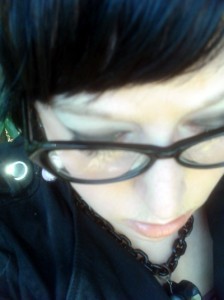
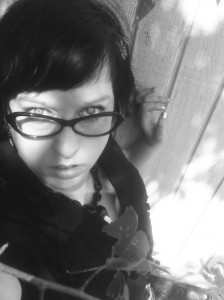
I started losing weight philosophically in November 2010, at the start of the Great Unemployment Crisis. (Some of you may remember it. What a barrel of monkeys that was.) I did it by changing my habits and getting rid of the people that were driving me to the Doritos bag, and the rest I walked off. You can ask Melissa Dominic. I was just at her house last week, and despite some whining about the blister on my toe, that was the most active vacation in the whole of human history. Since then I've acquired a new hair color and a new pant size. Well, several new pant sizes. The current is between 12 and 14. (I fit in a pair of Melissa's work-out pants on Monday, and she's a newly minted 10. So that's my story and I'm sticking with it.)
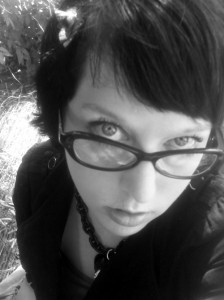
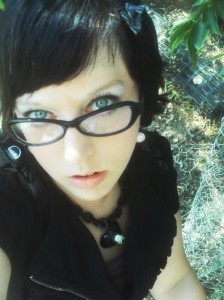
To celebrate, there were photos taken in a suitably run-down locale. (Got to keep up with the weird street cred.) Because mother always said I was a camera-whore, and, hey, you know me. I aim for consistency.
(Self-improvement is masturbation. Unless you end up looking really good in the end. Then it's cool.)
July 6, 2011
A study in small lifestyles

Florida came and went in a flash, like a scatter of Polaroids on the kitchen floor. Airports, highways, palm trees. Damp air and sunshine and early morning tea, and quiet nights spent sleeping next to somebody I love very much. In a flash I was home again, drinking coffee in my pajamas, sitting on my sofa, looking around at my life in Texas.
I've only been home a day, and already I want to leave again.
Home means family. Don't get me wrong, I love my family. They're important to me, and I can't imagine life without them. My family just isn't such a good fit for me anymore. They all like to draw lines in the sand that they bury their heads in, having intellectual disagreements that spiral into wars over the dinner table, then throwing their hands in the air and proclaiming This is it, this is it. I've had it with you, we're never speaking again. Of course they do speak again, but only after I broker peace treaties and try to open friendly dialogue. Hostage negotiations. Holiday armistices. Cease and desist notices served over car rides and lunches.
I'm the family therapist some days, and the court mediator others. I'm in the middle of everything, between one brother who's just like our father, another who's just like our mother, and our parents who talk and talk but still manage to say nothing. Everything is an uphill battle, and I don't really feel like one of them anymore. I don't feel the same tugs and have the same goals and throw my hands up over the same things. I'm trying to take care of myself, and focus on my writing, and get my life in order. Still last night I had to put together an action plan at the dinner table to deal with all the apocalyptic drama that exploded during my absence last week. I'd only been home for six hours.
As you can imagine, I already miss Florida.
More than that, I miss Melissa. I miss the lifestyle. I miss how she lives and what she has, because that's what I want for myself. A tiny quiet life in a tiny quiet apartment, where she and I can take care of one another. That's all I really need, all it takes to make me happy. My family doesn't know this, and I don't care if they never do. This is mine, not theirs. After everything I do for them, I'm allowed to have this.
Maybe this is what growing up feels like?
Whatever. I'm going to finish my coffee and listen to some New Order. I deserve that much.
June 28, 2011
Leave a message at the beep
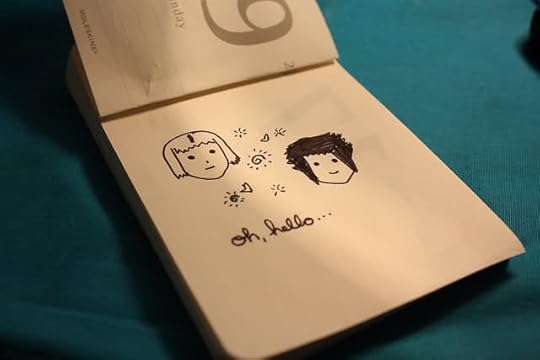
I'm not here right now. I'm in Florida with Melissa Dominic (pictured above). We're going to the zoo and the aquarium and have a picnic and eat sushi and maybe even go bowling. I hear I'm also supposed to sit around her living room with her mother watching Supernatural DVDs and discussing our feelings on Castiel, hitherto known as "Our man."
If you wish to talk to me, you'll just have to wait.
Sunburn and embarrassing photos to follow.
June 20, 2011
Writing, happiness, and why the two never go together

Yury Shpakovski
People keep telling me that a happy artist is a stagnant artist. A content writer is a writer with nothing important to say. I have no idea if happiness makes you lazy. I was born discontent. And I don't mean that in some cute philosophical way. When your earliest memories circle around the neuroses typical of people far bigger than you with far more to worry about, being content is relative.
I wasn't a fearful child, just a wary and meticulous one. I had counting games and rituals that couldn't be broken. I always looked for patterns in everything, from the number of windows in a room to the arrangement of pictures on the wall. There were colors to be avoided and words that couldn't be said, because the clunky way their consonants were arranged irritated me. Every so often, yes, I became convinced I had some mysterious jungle illness and thought I would surely die. After my third or fourth non-existent heart attack (it was probably a panic attack, or maybe gas), I got used to the idea of death. I got used to the Devil and Hell, too, because I was pretty well-convinced they would take me at some point, for one thing or another. Even ghosts didn't scare me after a while. Death was a man with a scythe lurking around the corner and Hell was a place, and I kind of just stopped caring about the whole lot of it after a while. I think I was eight, maybe nine at the time.
Anxiety wasn't some terrible oppressive force that needed to be tamed, lest it take me away. It was like a passenger, that sat in the backseat and nagged at me all day. It needed to be given a nice snack and a book to read, and told to shut up. I was in control. I knew where we were going. It just needed to cool its jets and let me do this. Writing is a lot like anxiety for me, in that it's always with me. It sits in the backseat, making loud noises and demanding I pay attention to it. Like anxiety it always has me doing something. Always moving, always thinking, always scribbling something down. Otherwise I feel like my head might explode.
Yeah, sometimes it gets irritating.
So even if I'm happy, I feel like I could be doing better. Working harder. Making something out of nothing, and doing everything I can to make it worth reading, even when it probably isn't. It's never quite enough, even when it ought to be. I can never really rest, never really get a break from it, never really clear my head. I'm never totally happy with my writing, even when I'm happy in my own every day life. So that's why I don't worry about being happy. Even if it's crap, I'll have something to say. I just finished my first novel a few weeks ago, and I'm already plotting/outlining/sketching out scenes from its follow-up. Why? I like to tell everybody it's because I'm allergic to sleep. That's the funny response.
These days, I'm starting to think there might be some truth to it.
June 15, 2011
Publishing news
Last summer, when I was still slugging through the first draft of Flesh Trap, I took a few weeks off to write about a guy named Jason. Jason had a business degree that landed him $30,000 in debt and a minimum wage job stocking shelves at his local Craigen Books, living in a cereal box apartment by the docks and borrowing money from his mom to make rent. Things were looking pretty dire for Jason, who has surrounded by trust fund babies and coworkers whose parents picked up the tab while they partied through paychecks, and he still scrimped and starved and struggled to get by on less and less.
(Jason may or may not be based on my own life experiences in the customer service industry, and a few names may or may not have been changed to protect the innocent. But read on.)
Then one day Jason met Mina, who came in the book store before they closed up shop some nights, to pick out books about corporate powerhouses looking for love. Mina was a pretty girl who never wore the same thing twice, and smiled at Jason and made chit-chat at the register. And yeah, okay, maybe Jason kind of liked Mina, but he knew better than to try to pick up a girl like that. She had money and confidence and choices. She didn't need a guy like Jason, who had a dingy apartment he couldn't pay for and a degree he couldn't use and growing debt that would surely swallow him before all was said and done.
Then one night after closing shop, Mina approaches Jason with an offer: $10,000 for one night of his company. No strings attached, no phone calls in the morning, no questions asked. He just can't tell anybody about her or what they did together. And, yeah, maybe Jason likes Mina. Maybe he likes her a whole lot, and maybe that makes things complicated, even when it shouldn't. And maybe Mina's not telling Jason the whole story, when he wakes up the next morning with scratches in his chest that burn with the memories of what they did or didn't do, turning Jason inside out for this girl with cold hands and an old house full of secrets.
The story is At the Heart of Mina Jones. This morning it was picked up by Post Mortem Press for the upcoming paranormal romance anthology Mon Cœur Mort, due out this summer. More information on this one as it develops, but don't worry: There's no twinkling vampires or crying werewolves involved.


