
P.M. Newton's Blog, page 3
October 6, 2012
Criminal Worlds : Writers @ Don Bank
For the last couple of months I've been tucked away as North Sydney Council's Writer in Residence.
As part of my residency I suggested to Council we could invite people to come to the rather beautiful and very special Don Bank Museum, a mid 19th century house tucked away behind the skyscrapers of North Sydney,
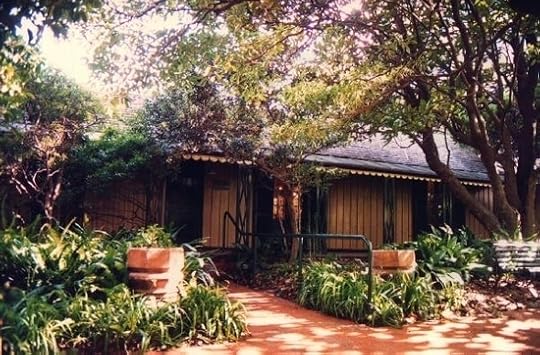 Don Bank House
and have a kind of First Tuesday Book Club affair.
They liked the idea so we sat down and worked out some important things, like dates and whether there would be wine and nibbles*.
Now I'm very excited to announce that on Wednesday 17th October you are invited to join Malla Nunn
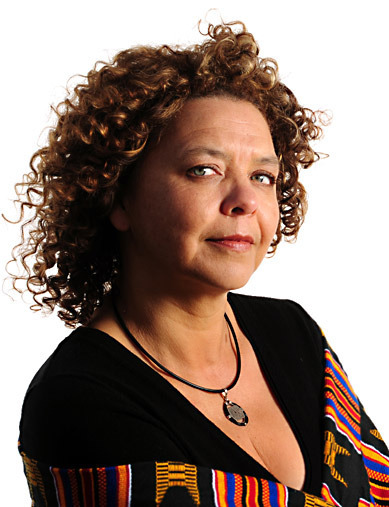 Malla Nunnauthor of the stunning Detective Emmanuel Cooper series, crime fiction set in apartheid-era South Africa
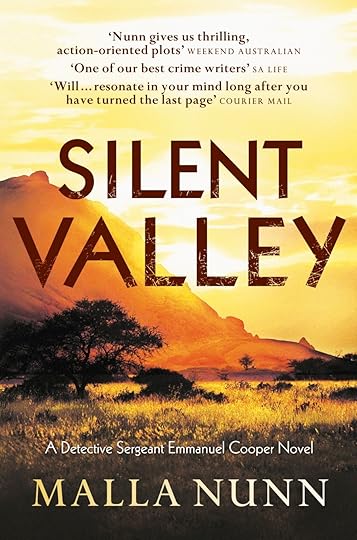 The most recent book in the series
and myself, as we talk about crime fiction in all its forms: the authors we admire, the books we read and the TV series we watch. We wanted to make the "reading & watching" list as wide as possible, so that everyone will be able to have their two cents worth about the sort of crime fiction they like, and why they like it. On the night we'll be talking about - Â
Â
Books: Miss Smillaâs Feeling for Snow, Peter HøegBoney and the Black Virgin, Arthur UpfieldCrooked letter, Crooked letter, Tom FranklinThe Broken Shore, Peter Temple (+ series)The Naming of The Dead, Ian Rankin (+ series)Blacklist, Sara Paretsky (+series)Mystic River, Dennis LehaneAuthors: Kerry GreenwoodSulari Gentil Henning MankellGeorge PelecanosAttica LockeWalter Mosleyand TV Series:The KillingFoyle's WarBoardwalk EmpireThe WireUnderbellyWallander (the Swedish & the English versions)
Come along - it's free!
Details:
Wednesday 17 October, 6.30-8.00 pm
Writers @ Don Bank- Criminal Worlds
Join crime writers Malla Nunn and PM Newton for a night of conversation about the crime novels and series that crime writers read and watch. It will be a night to talk about criminal worlds, what makes them real and why we keep going back to them.
*Drinks and nibbles provided. This event will be held at Don Bank Museum, 6 Napier Street North Sydney. For bookings, phone the library on 9936 8400 or email library@northsydney.nsw.gov.au.
And put Wednesday 21st November in your diary - Writers @ Don Bank will be back talking Imagined Worlds with SFF writers, Claire Corbett, M.J. Hearle and Momentum Book's Mark Harding.
As part of my residency I suggested to Council we could invite people to come to the rather beautiful and very special Don Bank Museum, a mid 19th century house tucked away behind the skyscrapers of North Sydney,
 Don Bank House
and have a kind of First Tuesday Book Club affair.
They liked the idea so we sat down and worked out some important things, like dates and whether there would be wine and nibbles*.
Now I'm very excited to announce that on Wednesday 17th October you are invited to join Malla Nunn
 Malla Nunnauthor of the stunning Detective Emmanuel Cooper series, crime fiction set in apartheid-era South Africa
 The most recent book in the series
and myself, as we talk about crime fiction in all its forms: the authors we admire, the books we read and the TV series we watch. We wanted to make the "reading & watching" list as wide as possible, so that everyone will be able to have their two cents worth about the sort of crime fiction they like, and why they like it. On the night we'll be talking about - Â
Â
Books: Miss Smillaâs Feeling for Snow, Peter HøegBoney and the Black Virgin, Arthur UpfieldCrooked letter, Crooked letter, Tom FranklinThe Broken Shore, Peter Temple (+ series)The Naming of The Dead, Ian Rankin (+ series)Blacklist, Sara Paretsky (+series)Mystic River, Dennis LehaneAuthors: Kerry GreenwoodSulari Gentil Henning MankellGeorge PelecanosAttica LockeWalter Mosleyand TV Series:The KillingFoyle's WarBoardwalk EmpireThe WireUnderbellyWallander (the Swedish & the English versions)
Come along - it's free!
Details:
Wednesday 17 October, 6.30-8.00 pm
Writers @ Don Bank- Criminal Worlds
Join crime writers Malla Nunn and PM Newton for a night of conversation about the crime novels and series that crime writers read and watch. It will be a night to talk about criminal worlds, what makes them real and why we keep going back to them.
*Drinks and nibbles provided. This event will be held at Don Bank Museum, 6 Napier Street North Sydney. For bookings, phone the library on 9936 8400 or email library@northsydney.nsw.gov.au.
And put Wednesday 21st November in your diary - Writers @ Don Bank will be back talking Imagined Worlds with SFF writers, Claire Corbett, M.J. Hearle and Momentum Book's Mark Harding.


Criminal Worlds : Writers @ Don Bank
For the last couple of months I've been tucked away as North Sydney Council's Writer in Residence.
As part of my residency I suggested to Council we could invite people to come to the rather beautiful and very special Don Bank Museum, a mid 19th century house tucked away behind the skyscrapers of North Sydney,
Don Bank House
and have a kind of First Tuesday Book Club affair.
They liked the idea so we sat down and worked out some important things, like dates and whether there would be wine and nibbles*.
Now I'm very excited to announce that on Wednesday 17th October you are invited to join Malla Nunn
Malla Nunnauthor of the stunning Detective Emmanuel Cooper series, crime fiction set in apartheid-era South Africa
The most recent book in the series
and myself, as we talk about crime fiction in all its forms: the authors we admire, the books we read and the TV series we watch. We wanted to make the "reading & watching" list as wide as possible, so that everyone will be able to have their two cents worth about the sort of crime fiction they like, and why they like it. On the night we'll be talking about - Â
Â
Books: Miss Smillaâs Feeling for Snow, Peter HøegBoney and the Black Virgin, Arthur UpfieldCrooked letter, Crooked letter, Tom FranklinThe Broken Shore, Peter Temple (+ series)The Naming of The Dead, Ian Rankin (+ series)Blacklist, Sara Paretsky (+series)Mystic River, Dennis LehaneAuthors: Kerry GreenwoodSulari Gentil Henning MankellGeorge PelecanosAttica LockeWalter Mosleyand TV Series:The KillingFoyle's WarBoardwalk EmpireThe WireUnderbellyWallander (the Swedish & the English versions)
Come along - it's free!
Details:
Wednesday 17 October, 6.30-8.00 pm
Writers @ Don Bank- Criminal Worlds
Join crime writers Malla Nunn and PM Newton for a night of conversation about the crime novels and series that crime writers read and watch. It will be a night to talk about criminal worlds, what makes them real and why we keep going back to them.
*Drinks and nibbles provided. This event will be held at Don Bank Museum, 6 Napier Street North Sydney. For bookings, phone the library on 9936 8400 or email library@northsydney.nsw.gov.au.
And put Wednesday 21st November in your diary - Writers @ Don Bank will be back talking Imagined Worlds with SFF writers, Claire Corbett, M.J. Hearle and Momentum Book's Mark Harding.
As part of my residency I suggested to Council we could invite people to come to the rather beautiful and very special Don Bank Museum, a mid 19th century house tucked away behind the skyscrapers of North Sydney,
Don Bank Houseand have a kind of First Tuesday Book Club affair.
They liked the idea so we sat down and worked out some important things, like dates and whether there would be wine and nibbles*.
Now I'm very excited to announce that on Wednesday 17th October you are invited to join Malla Nunn
Malla Nunnauthor of the stunning Detective Emmanuel Cooper series, crime fiction set in apartheid-era South Africa
The most recent book in the seriesand myself, as we talk about crime fiction in all its forms: the authors we admire, the books we read and the TV series we watch. We wanted to make the "reading & watching" list as wide as possible, so that everyone will be able to have their two cents worth about the sort of crime fiction they like, and why they like it. On the night we'll be talking about - Â
Â
Books: Miss Smillaâs Feeling for Snow, Peter HøegBoney and the Black Virgin, Arthur UpfieldCrooked letter, Crooked letter, Tom FranklinThe Broken Shore, Peter Temple (+ series)The Naming of The Dead, Ian Rankin (+ series)Blacklist, Sara Paretsky (+series)Mystic River, Dennis LehaneAuthors: Kerry GreenwoodSulari Gentil Henning MankellGeorge PelecanosAttica LockeWalter Mosleyand TV Series:The KillingFoyle's WarBoardwalk EmpireThe WireUnderbellyWallander (the Swedish & the English versions)
Come along - it's free!
Details:
Wednesday 17 October, 6.30-8.00 pm
Writers @ Don Bank- Criminal Worlds
Join crime writers Malla Nunn and PM Newton for a night of conversation about the crime novels and series that crime writers read and watch. It will be a night to talk about criminal worlds, what makes them real and why we keep going back to them.
*Drinks and nibbles provided. This event will be held at Don Bank Museum, 6 Napier Street North Sydney. For bookings, phone the library on 9936 8400 or email library@northsydney.nsw.gov.au.
And put Wednesday 21st November in your diary - Writers @ Don Bank will be back talking Imagined Worlds with SFF writers, Claire Corbett, M.J. Hearle and Momentum Book's Mark Harding.
July 20, 2012
The story is alive ...
I'm a big fan of Sci-fi or SFF or Speculative Fiction or whatever you want to call stories that have spaceships, and travel between the stars, or between time, and aliens, or not ....
And I've had the chance to go a see Supanova in Sydney a couple of times, and once even went to a Star Trek Convention in Las Vegas.
And it's always struck me, how engaged the fans of that genre are. They love their stories. They love their worlds. They love their characters.
They'll cosplay at conventions
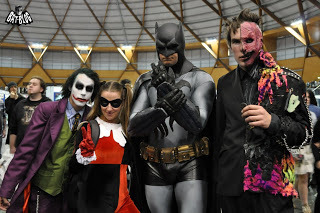 Batman Cosplay at Supanova Sydney 2011, via The Bat Blog
They'll write fan fiction or original fiction, set within the universes created.
They are not passive consumers.
If studio executives try and stop their stories, they'll agitate to get them back.
And even when the stories end, they'll remember them, returning to them again and again, and keep writing them, building on the mythology, adding layers to characters.
This particular quality of active engagement was summed up - beautifully - by Joss Whedon at ComiCon when he was reunited with many of the cast members of Firefly. They were in a room packed with fans of the show - a show that has been off air for ten years.
When asked what the fans of the show mean to the creator of the show Whedon became emotional, the cast and audience became emotional, and there was a standing ovation before a word could be said.
What Whedon then said was this:
When you're writing, it's not until that moment that the story feels alive, that the characters start to live and begin to say and do things that feel autonomous, rather than obeying the demands of some vague plot you've got knocking around in your skull, but when they suddenly start creating plot by actually being alive - yeah, that! That's when the writing starts to click, when the excitement starts to bubble, when the world you've created and the imaginary friends you've peopled it with, all start to live inside you.
That's when you start to carry the world of the book with you wherever you go, whatever you're doing.
It's what you hope you're creating for anyone who reads your words.
As a reader the same thing happens when I close a book, and the characters follow me, and I can imagine them acting and thinking and behaving and responding to events - when that happens I know that I have been captured by the writer and their world.
For those moments we cross over. As a reader we inhabit the world of the writer. As a writer we inhabit the world of imagination. And we connect with each other through worlds made of words.
David Lodge, in Consciousness and The Novel put it well:
Here's a video of the whole panel ComiCon Firefly panel.
And I've had the chance to go a see Supanova in Sydney a couple of times, and once even went to a Star Trek Convention in Las Vegas.
And it's always struck me, how engaged the fans of that genre are. They love their stories. They love their worlds. They love their characters.
They'll cosplay at conventions
 Batman Cosplay at Supanova Sydney 2011, via The Bat Blog
They'll write fan fiction or original fiction, set within the universes created.
They are not passive consumers.
If studio executives try and stop their stories, they'll agitate to get them back.
And even when the stories end, they'll remember them, returning to them again and again, and keep writing them, building on the mythology, adding layers to characters.
This particular quality of active engagement was summed up - beautifully - by Joss Whedon at ComiCon when he was reunited with many of the cast members of Firefly. They were in a room packed with fans of the show - a show that has been off air for ten years.
When asked what the fans of the show mean to the creator of the show Whedon became emotional, the cast and audience became emotional, and there was a standing ovation before a word could be said.
What Whedon then said was this:
It's that element of the story being "alive" that is the key.
“When you come out of a great movie, you feel like you’re in that world. When you’re telling a story, you’re trying to connect to people in a particular way. It’s about inviting them into a world. The way you’ve inhabited this world, this universe, you have become part of it. When I see you guys, I don’t think the show is off the air. I think there’s spaceships and horses — the story is alive.”
When you're writing, it's not until that moment that the story feels alive, that the characters start to live and begin to say and do things that feel autonomous, rather than obeying the demands of some vague plot you've got knocking around in your skull, but when they suddenly start creating plot by actually being alive - yeah, that! That's when the writing starts to click, when the excitement starts to bubble, when the world you've created and the imaginary friends you've peopled it with, all start to live inside you.
That's when you start to carry the world of the book with you wherever you go, whatever you're doing.
It's what you hope you're creating for anyone who reads your words.
As a reader the same thing happens when I close a book, and the characters follow me, and I can imagine them acting and thinking and behaving and responding to events - when that happens I know that I have been captured by the writer and their world.
For those moments we cross over. As a reader we inhabit the world of the writer. As a writer we inhabit the world of imagination. And we connect with each other through worlds made of words.
David Lodge, in Consciousness and The Novel put it well:
"The novel is arguably man's most successful effort to describe the experience of individual human beings moving through space and time."It's an intimate miracle really.

Here's a video of the whole panel ComiCon Firefly panel.
July 11, 2012
Planning, plotting and preparation.
Just back from a wonderful panel at the ALIA 2012 conference. I had the absolute pleasure of listening to Anita Heiss, Melina Marchetta, Richard Glover and Matthew Reilly, as we fielded questions from the audience on writing discipline, using libraries, eBooks and copyright.
It's always fun listening to other writers talking about how they wrangle out the words: Melina made herself a promise never to turn the TV on during the day, Richard wrestles his partner, the writer Debra Oswald, for the right to take the washing out to the line as an excuse to escape from the computer screen; Anita works from an office (and knowing her and her work schedule, she has a work ethic that would terrify most mortals).
I was intrigued when Matthew Reilly spoke about his process as being less angst -filled and more like "being allowed to eat chocolate ice cream everyday." He had a ball writing. I asked him if he planned a lot in advance, or like Indiana Jones "made it up as he went along." He came down on the side of extensive research and planning in advance.
After the panel he showed me an image on his phone of the "map" of his next book. It was a large piece of paper stuck up on the wall of his study. And it was fascinating.
He warned us that it would be meaningless to us - and it was, it looked like a magical piece of abstract art - but to him it was the landscape of the book. It was the path his characters would travel through this landscape and the events that would happen to them along the way. It spiraled ever inwards.
"How much do you plan?" Is a question that comes up a lot at writers festivals and amongst writers. I like to plan a bit, but I invariably find that things change along the way as I get to know my characters better. I know some writers plan extensively, with detailed chapter by chapter breakdowns before they sit down to write. I heard China Miéville say he relies on wall charts - vertical axis is character, horizontal axis is time.
I've always been a bit leery of writing too detailed a plan. I've felt that I'd have sort of sucked the life out of the story before I even began. It's bad enough writing a synopsis when you finish.
As I looked at Matthew's fantastically visual map I realised it was an incredible example of planning that nailed the difference between plot and story: story is like a map of a landscape and plot is the way through it. There are numerous ways through a landscape, just as there are a variety of potential plots by which you could tell your story. Matthew's pre-planning is this maxim brought to life. It's a non-verbal image driven trail map. It struck me that this is a brilliant way to plan, because by planning in such a visual way when Matthew sits down to write he switches on the "wordy" side of his brain, so even though the story is well and truly planned and plotted, it still feels fresh.
Thanks for the invitation to come along ALIA. I had a ball and I learned things. A good day.

It's always fun listening to other writers talking about how they wrangle out the words: Melina made herself a promise never to turn the TV on during the day, Richard wrestles his partner, the writer Debra Oswald, for the right to take the washing out to the line as an excuse to escape from the computer screen; Anita works from an office (and knowing her and her work schedule, she has a work ethic that would terrify most mortals).
I was intrigued when Matthew Reilly spoke about his process as being less angst -filled and more like "being allowed to eat chocolate ice cream everyday." He had a ball writing. I asked him if he planned a lot in advance, or like Indiana Jones "made it up as he went along." He came down on the side of extensive research and planning in advance.
After the panel he showed me an image on his phone of the "map" of his next book. It was a large piece of paper stuck up on the wall of his study. And it was fascinating.
He warned us that it would be meaningless to us - and it was, it looked like a magical piece of abstract art - but to him it was the landscape of the book. It was the path his characters would travel through this landscape and the events that would happen to them along the way. It spiraled ever inwards.
"How much do you plan?" Is a question that comes up a lot at writers festivals and amongst writers. I like to plan a bit, but I invariably find that things change along the way as I get to know my characters better. I know some writers plan extensively, with detailed chapter by chapter breakdowns before they sit down to write. I heard China Miéville say he relies on wall charts - vertical axis is character, horizontal axis is time.
I've always been a bit leery of writing too detailed a plan. I've felt that I'd have sort of sucked the life out of the story before I even began. It's bad enough writing a synopsis when you finish.
As I looked at Matthew's fantastically visual map I realised it was an incredible example of planning that nailed the difference between plot and story: story is like a map of a landscape and plot is the way through it. There are numerous ways through a landscape, just as there are a variety of potential plots by which you could tell your story. Matthew's pre-planning is this maxim brought to life. It's a non-verbal image driven trail map. It struck me that this is a brilliant way to plan, because by planning in such a visual way when Matthew sits down to write he switches on the "wordy" side of his brain, so even though the story is well and truly planned and plotted, it still feels fresh.
Thanks for the invitation to come along ALIA. I had a ball and I learned things. A good day.
July 5, 2012
How not to workshop
The wonderful Charlotte Wood tweeted this beauty today.
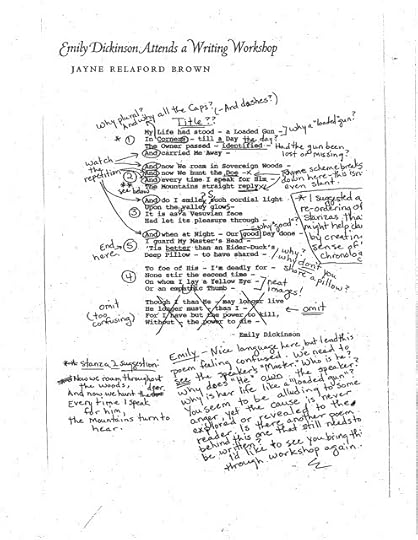 I love it so much that I'm going to use it - in my workshops!
Workshopping in writing classes is a bit of a contested area. Some writers, teachers and students swear by it, and equal numbers loathe it with a passion.
My personal experience was that I gained confidence from the process. I went to university with an 80,000 word manuscript that wanted to be a novel but which for the life of me I couldn't see how to finish, or if in fact it was worth finishing. Friends and family had said nice things - but that's kind of what friends and family do. I went along to writing class because I *wanted* strangers to read my words and tell me, was it working? Did they care about the people, the story, the words? I wanted to replicate the experience of writing something for publication, sending the words off into the world where they would be read by people who weren't related to me and felt no compulsion to love me - or be kind.
I was fortunate to be in a class where most of the students took their role as workshop participants very seriously. They read in advance. They were thoughtful. They considered what the work was trying to do, rather than what they personally "liked" or "disliked," and provided feedback that was constructive.
I've since been in workshops, and taught workshops, where for the most part people have tried to do this. But the thing that I loved about this "workshopped" poem is that is a great example of everything that can go wrong in a workshop.
Over critiquing work, critique for the sake of it, doing a line edit of a small piece rather than thinking about the big and basic questions is a common failing in workshops. This often goes hand-in-hand with lack of preparation.
In each semester I found there were always a (mercifully) few participants who - without fail - never prepared responses to other people's work. Excuses would range from "didn't get the email," "couldn't print it out," "thought you were bringing it." They would then make up for their lack of preparation by being overly-critical, critiquing on the fly, obsessing over full stops and commas.
I can still hear their voices as I look at the comments on poor Emily's work here.
The image comes from this blog http://www.lit-hum.org if you want more literary goodies.

 I love it so much that I'm going to use it - in my workshops!
Workshopping in writing classes is a bit of a contested area. Some writers, teachers and students swear by it, and equal numbers loathe it with a passion.
My personal experience was that I gained confidence from the process. I went to university with an 80,000 word manuscript that wanted to be a novel but which for the life of me I couldn't see how to finish, or if in fact it was worth finishing. Friends and family had said nice things - but that's kind of what friends and family do. I went along to writing class because I *wanted* strangers to read my words and tell me, was it working? Did they care about the people, the story, the words? I wanted to replicate the experience of writing something for publication, sending the words off into the world where they would be read by people who weren't related to me and felt no compulsion to love me - or be kind.
I was fortunate to be in a class where most of the students took their role as workshop participants very seriously. They read in advance. They were thoughtful. They considered what the work was trying to do, rather than what they personally "liked" or "disliked," and provided feedback that was constructive.
I've since been in workshops, and taught workshops, where for the most part people have tried to do this. But the thing that I loved about this "workshopped" poem is that is a great example of everything that can go wrong in a workshop.
Over critiquing work, critique for the sake of it, doing a line edit of a small piece rather than thinking about the big and basic questions is a common failing in workshops. This often goes hand-in-hand with lack of preparation.
In each semester I found there were always a (mercifully) few participants who - without fail - never prepared responses to other people's work. Excuses would range from "didn't get the email," "couldn't print it out," "thought you were bringing it." They would then make up for their lack of preparation by being overly-critical, critiquing on the fly, obsessing over full stops and commas.
I can still hear their voices as I look at the comments on poor Emily's work here.
The image comes from this blog http://www.lit-hum.org if you want more literary goodies.
June 18, 2012
Genre Mash Up
Honestly, I should know better.
Having no sooner recovered from the 24 Hour Book stress, I'm sitting here scratching my head and coming up with a Genre Mash Up pitch for the New South Wales Writers Centre.
What is a Genre Mash Up? Well may you ask.
I think it's an excuse to get together and have a giggle at some of the NSW Writers Centre's tutors as they stray far - FAR - from their comfort zone. It's purported to be all about the launch of the second half of the Writing Program for NSW Writers Centre, but I see right through that.
Here's what's going to happen: Authors will pitch a book idea totally out of their genre - you might hear a sci-fi writer pitching an office romance novel, a non-fiction author write a fraudulent fantasy or a crime author pen a cookbook for kids.
The victims participants include myself, James Roy - author of the young adult novels Full Moon Racing, Anonymity Jones, Town and City; Bem le Hunte - bestselling author of There, Where The Pepper Goes and The Seduction of Silence and Pat Grant - author of the critically acclaimed graphic novel Blue.
Audience members are also going to be invited to pitch, baby, pitch. We'll pull two genres out of a hat, and watch them mash.
So if you think this sounds like fun come along to Shearers in Leichhardt on Wednesday 20th June at 7pm.
FREE ENTRY. Refreshments and nibblies provided.
Bookings are essential. Please email events@nswwc.org.au to book your place.

Having no sooner recovered from the 24 Hour Book stress, I'm sitting here scratching my head and coming up with a Genre Mash Up pitch for the New South Wales Writers Centre.
What is a Genre Mash Up? Well may you ask.
I think it's an excuse to get together and have a giggle at some of the NSW Writers Centre's tutors as they stray far - FAR - from their comfort zone. It's purported to be all about the launch of the second half of the Writing Program for NSW Writers Centre, but I see right through that.
Here's what's going to happen: Authors will pitch a book idea totally out of their genre - you might hear a sci-fi writer pitching an office romance novel, a non-fiction author write a fraudulent fantasy or a crime author pen a cookbook for kids.
The victims participants include myself, James Roy - author of the young adult novels Full Moon Racing, Anonymity Jones, Town and City; Bem le Hunte - bestselling author of There, Where The Pepper Goes and The Seduction of Silence and Pat Grant - author of the critically acclaimed graphic novel Blue.
Audience members are also going to be invited to pitch, baby, pitch. We'll pull two genres out of a hat, and watch them mash.
So if you think this sounds like fun come along to Shearers in Leichhardt on Wednesday 20th June at 7pm.
FREE ENTRY. Refreshments and nibblies provided.
Bookings are essential. Please email events@nswwc.org.au to book your place.
The Scene of The Crime
Place in fiction is a powerful factor.
At its most basic it's about getting a sense of the physicality of a location. Reading this descriptive rendering of place sometimes provokes a sense of familiarity, sometimes a sense of discovery.
At its most complex, place in fiction excavates layers, going beyond the mere physical make up of a location to reveal the historical, social, cultural and political strata that construct a place and its people.
When it comes to crime fiction - place is usually one of the elements of the work that is most commented on in reviews. What would a review of James Lee Burke be without commentary on the "sense of place" he creates in writing about Mississippi, or Ian Rankin's rendering of Edinburgh?
The way place is used in crime fiction lends itself to close consideration.
I've written about it as part of my Masters degree.
In The Millennial Detective: Essays on Trends in Crime Fiction, Film and Television, 1990-2010
I wrote a chapter, Crime Fiction and The Politics of Place: The Post 9/11 Sense of Place in Sara Partesky and Ian Rankin, and talked at length about Blacklist and The Naming of The Dead, and the way place not only informed the location of the novels but shaped the plot, the politics, the people and the crime.
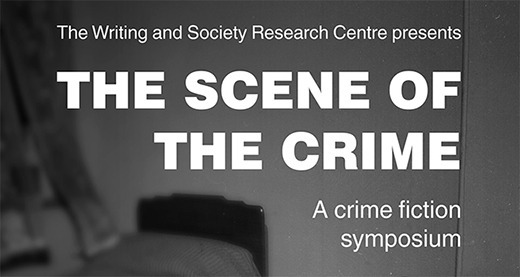
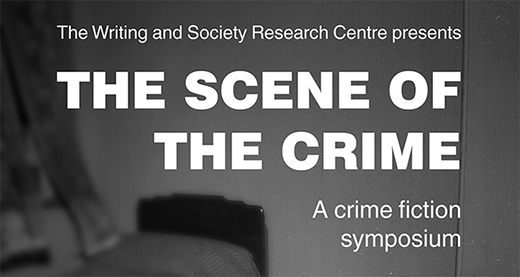
Place, politics and people were central elements in my novel The Old School and I'm really excited to have been invited to come along and talk about this at The Scene of the Crime a crime fiction symposium being held at The University of Western Sydney's Writing and Society Research Centre on Wednesday 27th June.
Come along.
It's going to be a fascinating day talking about crime fiction.
The details are below. If you fancy a day talking crime with crime writers and crime readers then RSVP to writing@uws.edu.au
Crime Fiction SymposiumVictorian London, post-WWI England, the mean streets of L.A.: in crime fiction, place matters. It is crucial to the evolution of the genre and the signifying possibilities of specific texts. Has this changed in recent years? Intensified? Diversified? Think Rebus’s Edinburgh, Wallander’s Ystad, Ellroy’s L.A.
How do crime narratives imagine the city and the country, the sprawling metropolis and the regional locale, urban decay and vanishing wilderness?
From Melbourne to Massachusetts, New Orleans to New Zealand, Botswana to Bankstown, from the Yorkshire moors to the Siberian tundra, from bayou to desert reservation: the scene of the crime and the journey of detection shape popular and literary crime fiction alike. ‘The Scene of the Crime’ asks, what is the relationship between crime fiction and representations of place?
Morning session-Matt Mcguire: Ian Rankin’s Edinburgh
Sara Knox: ‘An Englishman’s Home is His Castle’: the crimes of Alan Bennett
Respondent: Jane Goodall
Afternoon session-Ross Gibson: “A Hammer is Struck in the Mind”
Novelist Pam Newton: reading from ‘The Old School’
Comments: Jane Goodall
Lunch will be provided.
10.30—2pm, Wednesday 27 June 2012, UWS Bankstown Campus, room 3.G.55
Please RSVP to writing@uws.edu.au
At its most basic it's about getting a sense of the physicality of a location. Reading this descriptive rendering of place sometimes provokes a sense of familiarity, sometimes a sense of discovery.
At its most complex, place in fiction excavates layers, going beyond the mere physical make up of a location to reveal the historical, social, cultural and political strata that construct a place and its people.
When it comes to crime fiction - place is usually one of the elements of the work that is most commented on in reviews. What would a review of James Lee Burke be without commentary on the "sense of place" he creates in writing about Mississippi, or Ian Rankin's rendering of Edinburgh?
The way place is used in crime fiction lends itself to close consideration.
I've written about it as part of my Masters degree.
In The Millennial Detective: Essays on Trends in Crime Fiction, Film and Television, 1990-2010
I wrote a chapter, Crime Fiction and The Politics of Place: The Post 9/11 Sense of Place in Sara Partesky and Ian Rankin, and talked at length about Blacklist and The Naming of The Dead, and the way place not only informed the location of the novels but shaped the plot, the politics, the people and the crime.
Place, politics and people were central elements in my novel The Old School and I'm really excited to have been invited to come along and talk about this at The Scene of the Crime a crime fiction symposium being held at The University of Western Sydney's Writing and Society Research Centre on Wednesday 27th June.
Come along.
It's going to be a fascinating day talking about crime fiction.
The details are below. If you fancy a day talking crime with crime writers and crime readers then RSVP to writing@uws.edu.au
Crime Fiction SymposiumVictorian London, post-WWI England, the mean streets of L.A.: in crime fiction, place matters. It is crucial to the evolution of the genre and the signifying possibilities of specific texts. Has this changed in recent years? Intensified? Diversified? Think Rebus’s Edinburgh, Wallander’s Ystad, Ellroy’s L.A.
How do crime narratives imagine the city and the country, the sprawling metropolis and the regional locale, urban decay and vanishing wilderness?
From Melbourne to Massachusetts, New Orleans to New Zealand, Botswana to Bankstown, from the Yorkshire moors to the Siberian tundra, from bayou to desert reservation: the scene of the crime and the journey of detection shape popular and literary crime fiction alike. ‘The Scene of the Crime’ asks, what is the relationship between crime fiction and representations of place?
Morning session-Matt Mcguire: Ian Rankin’s Edinburgh
Sara Knox: ‘An Englishman’s Home is His Castle’: the crimes of Alan Bennett
Respondent: Jane Goodall
Afternoon session-Ross Gibson: “A Hammer is Struck in the Mind”
Novelist Pam Newton: reading from ‘The Old School’
Comments: Jane Goodall
Lunch will be provided.
10.30—2pm, Wednesday 27 June 2012, UWS Bankstown Campus, room 3.G.55
Please RSVP to writing@uws.edu.au
June 11, 2012
How to write a book in 24 hours (aka How to go mad in 24 hours or less).
Anyone who has followed my conversations on twitter with Georgia Blain, Charlotte Wood, MargoLanagan and Sophie Cunningham about the relative difficulty of writing novels and short stories, will know that I find the short story form particularly taxing. At around 2pm yesterday, with a word count still hovering somewhere under the 1,000 word mark and refusing to budge I was wondering why the hell I had ever thought I could write a short story in a day, and what special kind of madness had taken hold of me when I said yes to the 24 Hour Book. There I was, sitting in a room at the Queensland Writers Centre with eight other writers all madly writing, not just a stand alone short story, but a series of short stories all linked in various ways by location, characters, themes and objects. Stressful? Oh yes. In keeping with the spirit of the event we writers arrived with some vague ideas about characters but pretty much nothing else. As an exercise in discovering your comfort level, discovering how you write and how you don’t – it was fascinating. My writing approach is a mix of planning, plotting, and discovery. I usually start with an idea of a character, a character who grows into a person, and once I get to know that person I know how they’ll react, what they'll say, what they’ll do and won’t do.I’ll usually write a bit, think a bit. Plan what might happen next. Write a bit. Think a bit. Plan a bit. Repeat as needed.The experience of the 24 Hour Book was different. It was plunging in. Writing, finding out who this character was as I wrote him, finding out what was going to happen next as it happened. It was real seat of the pants writing. And as the word count ticked oh so slowly upwards, I wondered where the story was, would I find it, how would I fill my allotted chapter within the allotted time, and what would I fill it with.It was a great example of writing from concept not character. I was quite literally writing the beginning of scenes with no idea what was going to come out of the characters’ interactions. My vague idea of the “story” was shaken inside and upside down when the characters in the scene gradually developed a certain sort of energy, a creepy energy that took my idea of what dark secret lurked in their past and speared it into much darker and more uncomfortable territory. In the space of about fifteen minutes I had suddenly fleshed out the back story for my character and knew how the story would end. That just left about seven hours of solid writing and plot conferencing and pizza and wine and a shot of vodka, to get to the end. And, as always, landing the plane is the trickiest bit. With only time for one quick read through, to add a few links to other stories with mentions of common characters and events, and it was time to turn it over to the Keith Stevenson and his trusty band of young editors.Things I’ve learnt about the experience?When pushed, the words can flow and in short sharp burst like the Jane Espenson Writing Sprints a deadline can be an excellent tool for getting them down.But the most important thing I didn't so much learn, as have reconfirmed, is that nothing – and I’ll repeat – NOTHING beats time. Not having enough of it, to think, to plan, to write and rewrite, and more importantly, to let the words sit, and then come back to them with fresh eyes, that really makes you appreciate just how important time is in writing.Writers will often tell you, first drafts are for making a mess. No one will ever see them, so relax and go for it. It’s in the editing and the redrafting and the rewriting that you actually “find” your characters, your themes and motifs. Generally you won’t ever get to read writing this “raw” from a bunch of authors. Don’t miss out on the opportunity – head on over to the 24 hour book and see for yourself.
It was a mad idea, but we did it. And I think we made something pretty amazing, with a surge of energy that leaps off the page.

June 8, 2012
The 24-Hour Book
24 Hours
9 Writers
1 Book
So, a while back I got this email from Simon Groth who has something of an interest in The Future of The Book. Anyway, he approached me, (and a bunch of other victims writers) with this totally insane idea -
You know the expression LOL, and how very rarely you actually do it? Laugh Out Loud. Well, I read Simon's email and I LOLed. Oh how I LOLed. I barked with laughter. I hooted. If I'd been drinking coffee I'd have done a shoot out through the nose over the keyboard spray. I answered yes, instantly. It sounded so insane that I was still chuckling as I shot back my reply.
Not laughing now.
Now, I visit the 24-Hour Book page and watching the countdown clock ticking away, the moment of truth growing closer and closer, and I'm thinking ...... WHAT WAS I THINKING?
Simon wrote this whole blog about was he was thinking. But it sort of came down to -
And it will be.
Fun.
But it will also be .... kind of frightening.
I'm a slow writer. (Ask my publishers.) And those public writing exercises you do in classes ..... always felt like I wrote crap in them.
So this is all rather confronting. And did I mention - terrifying.
But, I won't be alone. I'll be sharing the fun and terror with Nick Earls, Steven Amsterdam, Krissy Kneen, Christopher Currie, Rjurik Davidson, Angela Slatter, Geoff Lemon, and Simon Groth. And while we eventually sleep Keith Stevenson will be leading his band of hero editors Jack Venning, Sarah Kanake, Laura Elvery, Chris Przewloka, Andrea Baldwin, Imogen Smith, Matt Shepard, Kelsey Bricknell, and Sasha Mackay through the night to make the morning publication deadline.
I've decided that I'm going to pretend I'm in a TV writers writers' room. I've always thought that being in the writers' room, planning a season of something like Buffy, or BSG, or The Wire, or The Killing, would just be amazing. Bouncing ideas, seeing how they build, how the creativity sparks and snaps and sizzles to produce something bigger than any one mind ... and we've been promised pizza, and alcohol to get us to the finish line .... so, what could go wrong?
Follow us live on Monday 11 June, 2012.
It'll probably be a bit like this -
And a lot like this.
Wish us luck.

9 Writers
1 Book

So, a while back I got this email from Simon Groth who has something of an interest in The Future of The Book. Anyway, he approached me, (and a bunch of other victims writers) with this totally insane idea -
On 11 June 2012, if:book Australia will challenge a team of writers and editors to collaborate, write, and publish a book in a single 24-hour period.
You know the expression LOL, and how very rarely you actually do it? Laugh Out Loud. Well, I read Simon's email and I LOLed. Oh how I LOLed. I barked with laughter. I hooted. If I'd been drinking coffee I'd have done a shoot out through the nose over the keyboard spray. I answered yes, instantly. It sounded so insane that I was still chuckling as I shot back my reply.
Not laughing now.
Now, I visit the 24-Hour Book page and watching the countdown clock ticking away, the moment of truth growing closer and closer, and I'm thinking ...... WHAT WAS I THINKING?
Simon wrote this whole blog about was he was thinking. But it sort of came down to -
“because we can” and “because it’ll be fun”
And it will be.
Fun.
But it will also be .... kind of frightening.
I'm a slow writer. (Ask my publishers.) And those public writing exercises you do in classes ..... always felt like I wrote crap in them.
So this is all rather confronting. And did I mention - terrifying.
But, I won't be alone. I'll be sharing the fun and terror with Nick Earls, Steven Amsterdam, Krissy Kneen, Christopher Currie, Rjurik Davidson, Angela Slatter, Geoff Lemon, and Simon Groth. And while we eventually sleep Keith Stevenson will be leading his band of hero editors Jack Venning, Sarah Kanake, Laura Elvery, Chris Przewloka, Andrea Baldwin, Imogen Smith, Matt Shepard, Kelsey Bricknell, and Sasha Mackay through the night to make the morning publication deadline.
I've decided that I'm going to pretend I'm in a TV writers writers' room. I've always thought that being in the writers' room, planning a season of something like Buffy, or BSG, or The Wire, or The Killing, would just be amazing. Bouncing ideas, seeing how they build, how the creativity sparks and snaps and sizzles to produce something bigger than any one mind ... and we've been promised pizza, and alcohol to get us to the finish line .... so, what could go wrong?
Follow us live on Monday 11 June, 2012.
It'll probably be a bit like this -
And a lot like this.
Wish us luck.
May 26, 2012
I'll Tell You Mine - Australian Women Writers Challenge 2012
In a response to the debates about gender bias in writing which flared up in 2011 after yet another all male Miles Franklin shortlist, Elizabeth Lhuede set readers and authors a bit of a challenge. It was the Australian Women Writers Reading and Reviewing Challenge. Elizabeth asked for people to read and review fiction written by Australian women writers. At last count 354 had signed up for the challenge and 776 reviews have been linked. Elizabeth suggested that writers review books from a outside their own genre.
So, it's taken me sometime but it was worth the wait, because reading I'll Tell You Mine and writing a review for the Challenge has been a delight.

As book reviews go, this one is perhaps a little odd. It focuses (perhaps obsesses?) over some rather arcane writer geek-nerd-trainspottery stuff. But hey, I write, therefore I look at how other writers write, and at how they make things work. I'm especially interested when they make things work that I think are really very difficult.
So, let me set the scene.
I was a goodly way into I’ll Tell You Mine before I noticed something. It was something I’m often aware of straight up in a book, and generally I notice it because it irritates me.
The narrator of the tale, Kate, an angry 15 year old Goth, was telling me her story, in the first person and in the present tense. That’s quite a tricky combination to pull off. In fact it often doesn’t work, because as the novel unfolds and tries to sustain an “in-the-momentness” it can all end up being less than Buddhist and more than a little bit laboured. In I’ll Show You Mine, not only does Pip Harry use both voice and tense with total control, she uses them to pitch-perfect affect.
I first met Pip in a writing course at UTS, we reconnected again through our marvelous agent, Sophie Hamley. There's a lot of excitement in finally holding in your hands the book of someone who was sitting in the same night class at uni, workshopping our pieces and dreaming our dreams. When that book is a rip-roaring read and a skillful piece of writing - it's even more exciting.
The first person point of view puts a lot of pressure on the writer to maintain our interest and engagement as we set up camp inside the brain of a fictional character. We are trapped there for the duration, so if this relationship doesn’t work out, if we are not interested, if our empathy is not engaged, then the reader will probably bail. This is not to say we have to love, or even like, the head we are in, but we better be interested enough to want to stay there.
Coupling that kind of an intense voice with a present tense telling, where everything is happening now, where there is no distance from the moment we are in, or the voice of the character who has put us in it – well, I’ve sometimes found that particular combination to be wearing. Eventually the writer gives in and resorts to lengthy recounts in the past tense to fill us in on all that has happened in a life up till now, and I’m often left wondering why a more conventional narrative choice of past tense storytelling wasn’t chosen from the outset. But for a story told by a teenager, where small moments are of monumental importance, where the world is seen in absolute single focused, zoom-to-close-up clarity – it’s a compelling storytelling technique.
In fact, I’d venture to say, what better way to tell the tale of a teenager than in the most immediate way. When you’re in your teens you honestly don’t have a huge life experience to look back on. It all lies ahead but more importantly it’s all happening NOW!
As I read, I’ll Tell You Mine, I was swept up by the story. This is not just a technically clever book. As angry Kate does her best to burn every bridge, break every rule and jeopardize every friendship, I was consumed, caught up in the world of the boarding house of a girl’s school, the like of which would have had Enid Blyton reaching for a stiff drink.
The book reminded me that I haven’t read a lot of Young Adult literature for a long time. I guess like a lot of "no longer young" readers I’ve tended to leave it all behind, thinking it had nothing to say to me. Reading I’ll Tell You Mine reminded me what a wealth of story and emotion lies within the tales that a talented author can tell young adults.
As Kate makes poor choices, subsumes into a sea of hurt, obsesses over the wrong boy, fights the wrong battles for the right reasons, it all came flooding back. The memories. The way as a teenager you really did feel stripped of your skin, nerves exposed, each slight, each setback capable of detonating your world and sending you into an abyss of misery. I confess I was somewhat relieved that I didn't live in that world anymore, but I'll tell you mine, I had an absolute ball re-visiting it.
Congratulations, Pip on a fabulous debut novel. May it be the first of many.


