
P.M. Newton's Blog, page 2
January 24, 2013
Donât Write a Second Book - Advice from guest blogger Walter Mason
My wonderful mate Walter Mason and I have many things in common. A love of travel, good food, good books, good conversations over good food about good books, and one more thing - we are both currently trapped in Second Book Hell. Forget your Nine Circles of Hell, Second Book Hell is a very particular hell. Read on and let Walter explain exactly what it is.
Donât Write a Second Book My major piece of advice to any writer would be: Donât write a second book. Seriously. Why not just leave it at the one little masterpiece, a brief high point in an otherwise mundane life. No-one will think any less of you. You could easily waste the rest of your life, but at your funeral they are still going to say, âThe well-known and beloved author...â Plenty of people stopped at the one with little or no repercussions for their literary reputation. Harper Lee seems to be doing ok with just the one. Margaret Mitchell decided to take a break between books and got hit by a car, but last time I checked Gone With the Wind is still the same camp classic it always was. Iâm writing like this because I am almost finished my own second book, a travel memoir about my conflicted relationship with Cambodia(yes, I have relationships with entire countries â I never promised Iâd be exclusive) called Destination Cambodia. Itâs due to come out this year some time, if I havenât taken the Margaret Mitchell route or been arrested in a public place giving in to a fit of rage.
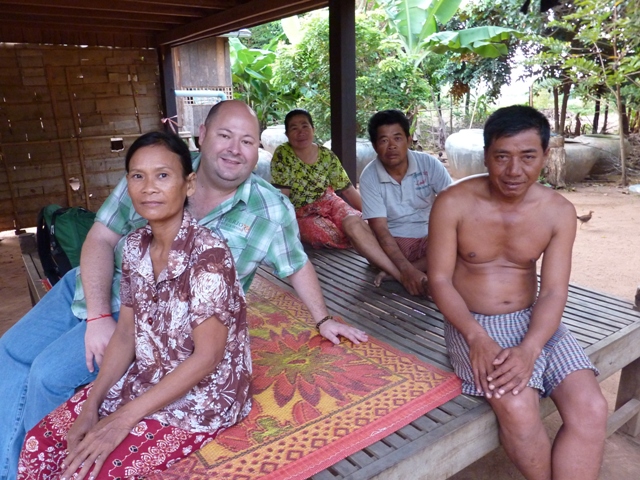 Walter Mason in Cambodia. Research! The fun part of the Second Book.
But you see, it hasnât been at all easy, this second book. Destination Saigon , my first book, flowed out of me. It was the product of a lifetimeâs preoccupation. I had been toying with the idea of writing a âVietnam bookâ for the best part of sixteen years. Each chapter came out almost perfectly formed, and I found it a breeze to sit down and write one at set times (many of them during a holiday in Hong Kong, where my partner wouldnât allow me to eat or sightsee until I had finished another chapter). But DestinationCambodia has been a very different beast. It has demanded its weight in blood, sweat and tears, and there comes a point every week where I stop and think, in blind despair, âI canât do this.â When I actually concentrate and get writing, it begins to snake its way out, and stories and characters and amusing and poignant incidents emerge on paper. This is most likely to happen when I am writing properly, i.e. sitting down at 7.30 every morning, turning off Twitter and forcing myself to belt out 4,000 words or so. If I can manage to do this for a number of days, I convince myself once more that I am a literary genius.
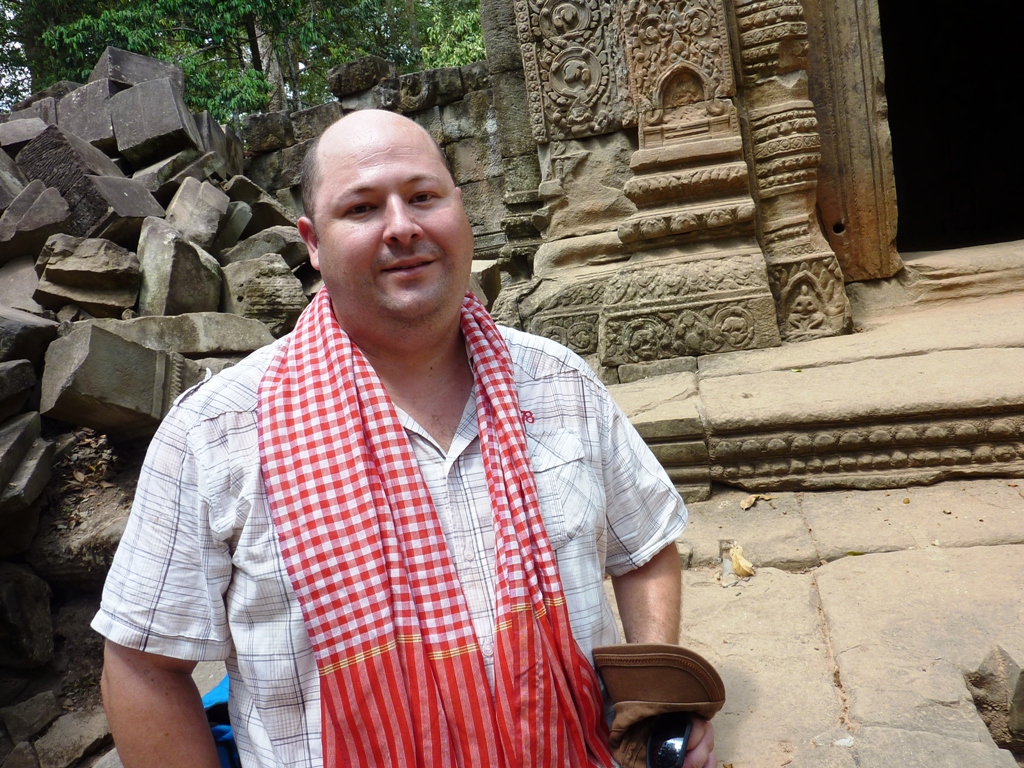 In the field for the Second Book.
But on those other days, those ones where nothing at all comes to mind and before I know it itâs 6pm and all Iâve done is watch Fail compilations on Youtube for nine hours, I begin to think Iâve been fooling myself and everyone else. Those are the days when I wonder if Red Rooster is still hiring. Whatâs the big deal? I hear you ask. Plenty of people have more difficult jobs, real jobs where the stress and strain is earned. Brain surgeons, say, or bridge builders. But the writer is the most fragile creature in existence, always conscious of what Jonathan Fields describes as âthe impact of fear of judgement on our tolerance for ambiguity, uncertainty, risk taking and creativity.â We can destroy ourselves before weâve even written a word. It is our unique talent.But itâs too late for me. Iâve signed the contract and someone told me they saw the book listed in my publisherâs catalogue, as though it were finished and just sitting up on a shelf ready to roll out in cartons across the nation. Whatâs more, I have written 100,000 words, and still there seems to be no end in sight. Itâs not that Iâm almost there. Itâs that I went past the finish line a long time ago and have almost woven my way around to it a second time. So stop stressing, fellow scribblers, thereâs no need to do anything more. Rest on your laurels, glory in your obscure fame and think of the lifetime of free cheap wine and invitations to speak at service clubs that can be yours purely on the basis of that first, blissfully easy, book you wrote.
---------------------------------------------------------------------------------------------
Walter Mason is a travel writer and academic whose first book, âDestination Saigon,â was named by the Sydney Morning Herald one of the Ten Best Travel Books of 2010.In 2013 Walterâs second book, âDestination Cambodia,â is due to be released by Allen & Unwin, when he eventually finishes it.This year Walter is also hosting a series of Inspirational Conversations with some of Australiaâs leading authors at Ultimo Library. Details can be found here.


January 21, 2013
Finding The Secret River at the end of your street.
Over the last couple of months I've had the opportunity to write a few articles on various subjects for the ABC's online opinion pages at The Drum.
Today they've published a piece I wrote after seeing the Sydney Theatre Company's production of Kate Grenville's wonderful novel, The Secret River.
I won't go into detail here about how both the book and the play affected me. You can read it at The Drum.
What I thought might be interesting is to share some photos of the place I talk about in the piece. A headland ten minutes from the heart of Sydney's CBD, still rich with the traces of the people who lived here for thousands of years, the Cameraygal.
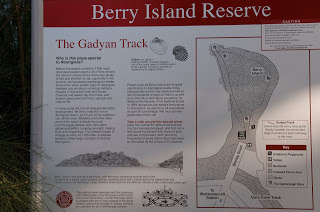 The entrance to the Gadyan Track.
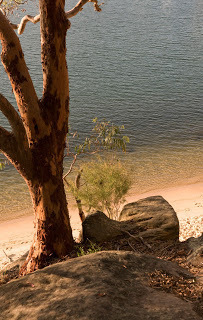 The sandy cove beneath the rock shelf and carving.
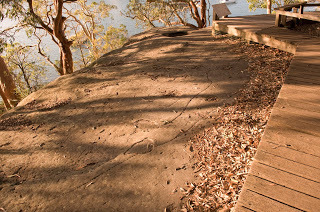 Sandstone carving. You can still see the 4 round scars left by the park bench.
 Stands of red gums.
 The red gums' flesh glows in the afternoon light.
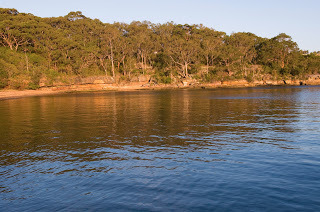 The shoreline of sandstone and oysters.
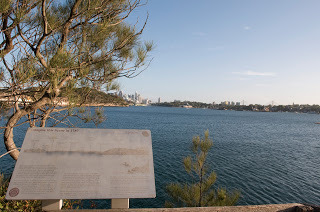 The storyboard asks you to 'Imagine this scene in 1787' and sketches the headlands of Balmain, Mort Bay, White Bay.
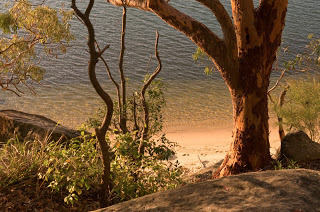 The setting for the final scene in my novel.
Today they've published a piece I wrote after seeing the Sydney Theatre Company's production of Kate Grenville's wonderful novel, The Secret River.
I won't go into detail here about how both the book and the play affected me. You can read it at The Drum.
What I thought might be interesting is to share some photos of the place I talk about in the piece. A headland ten minutes from the heart of Sydney's CBD, still rich with the traces of the people who lived here for thousands of years, the Cameraygal.
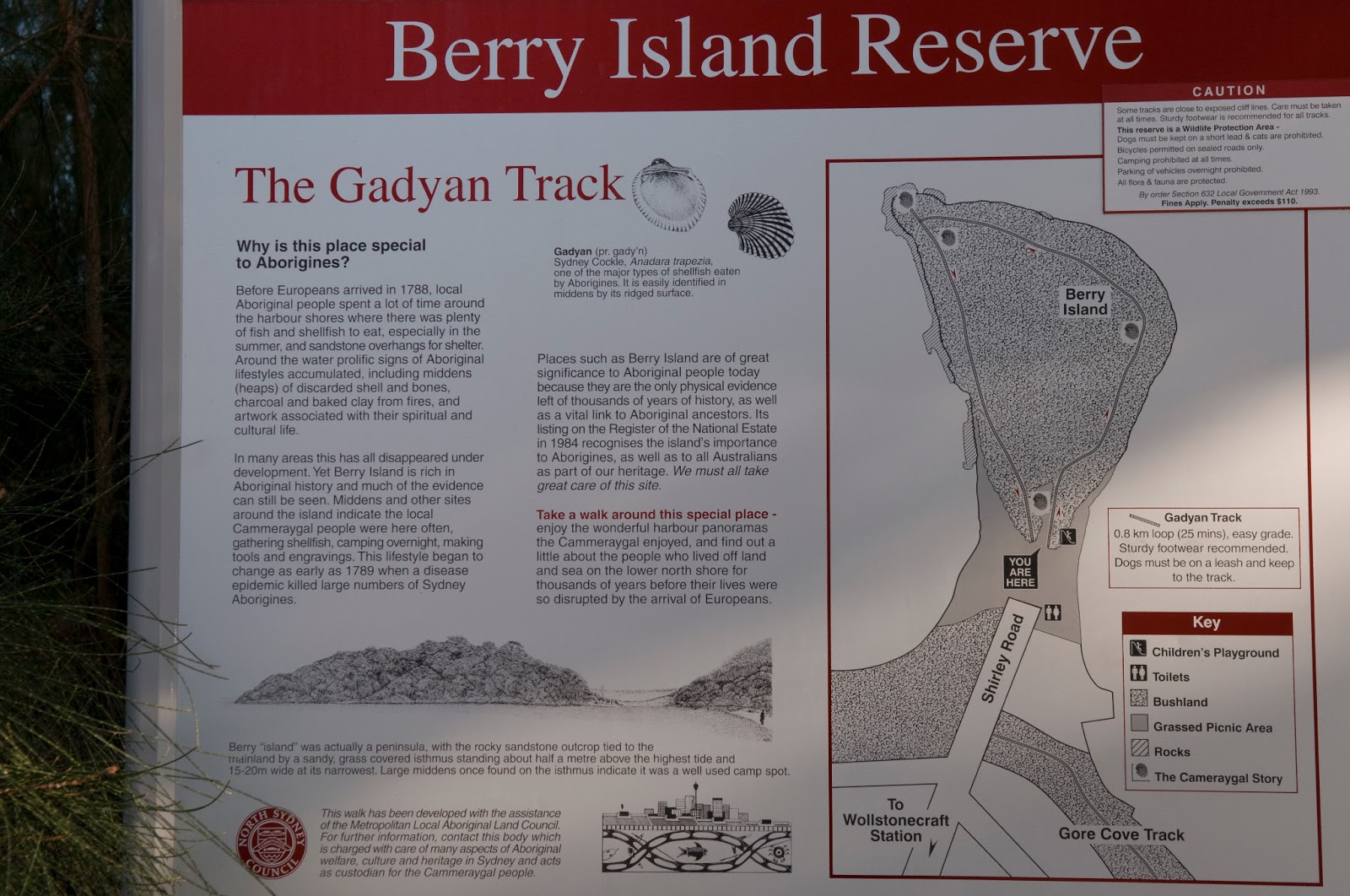 The entrance to the Gadyan Track.
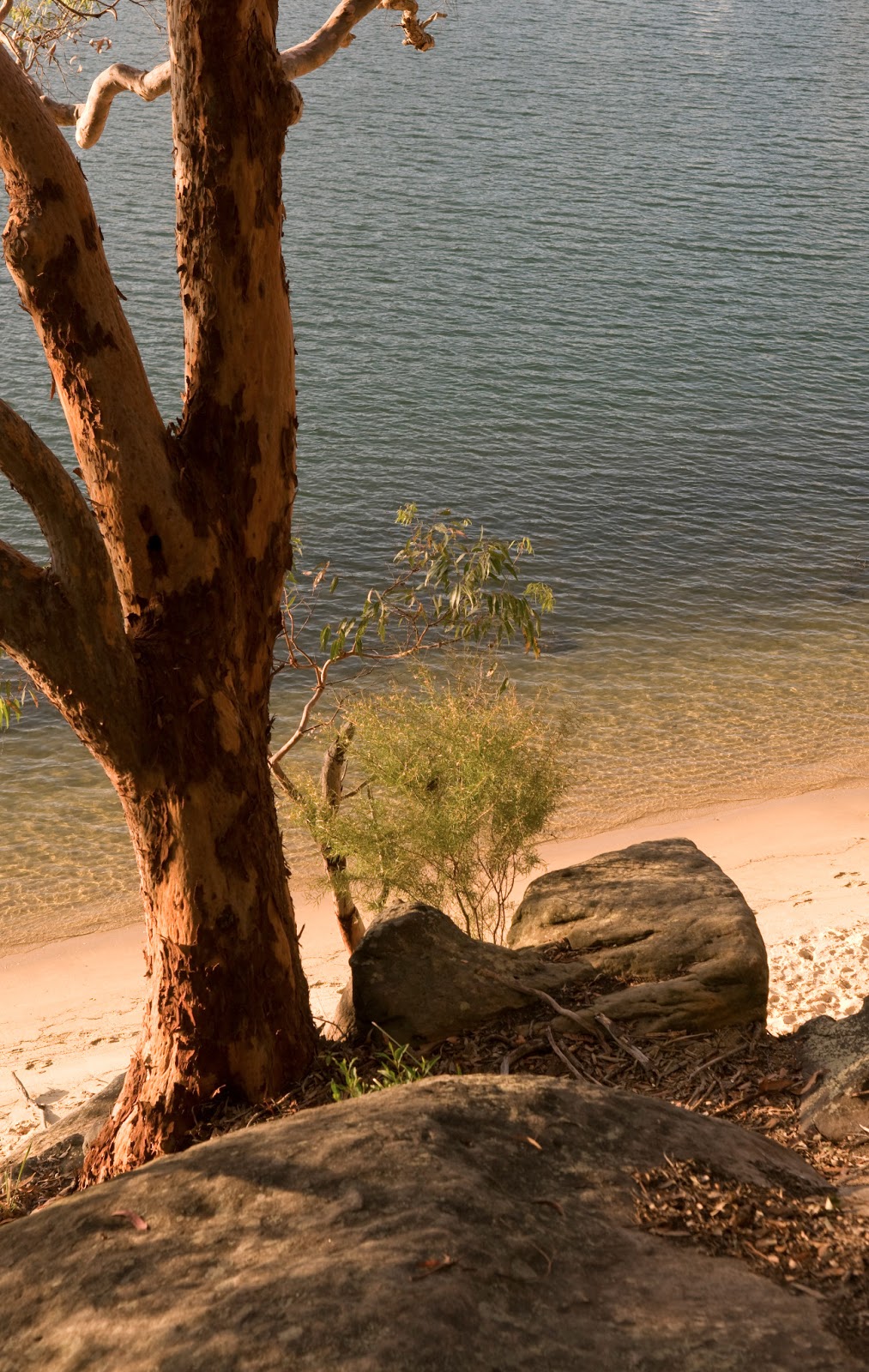 The sandy cove beneath the rock shelf and carving.
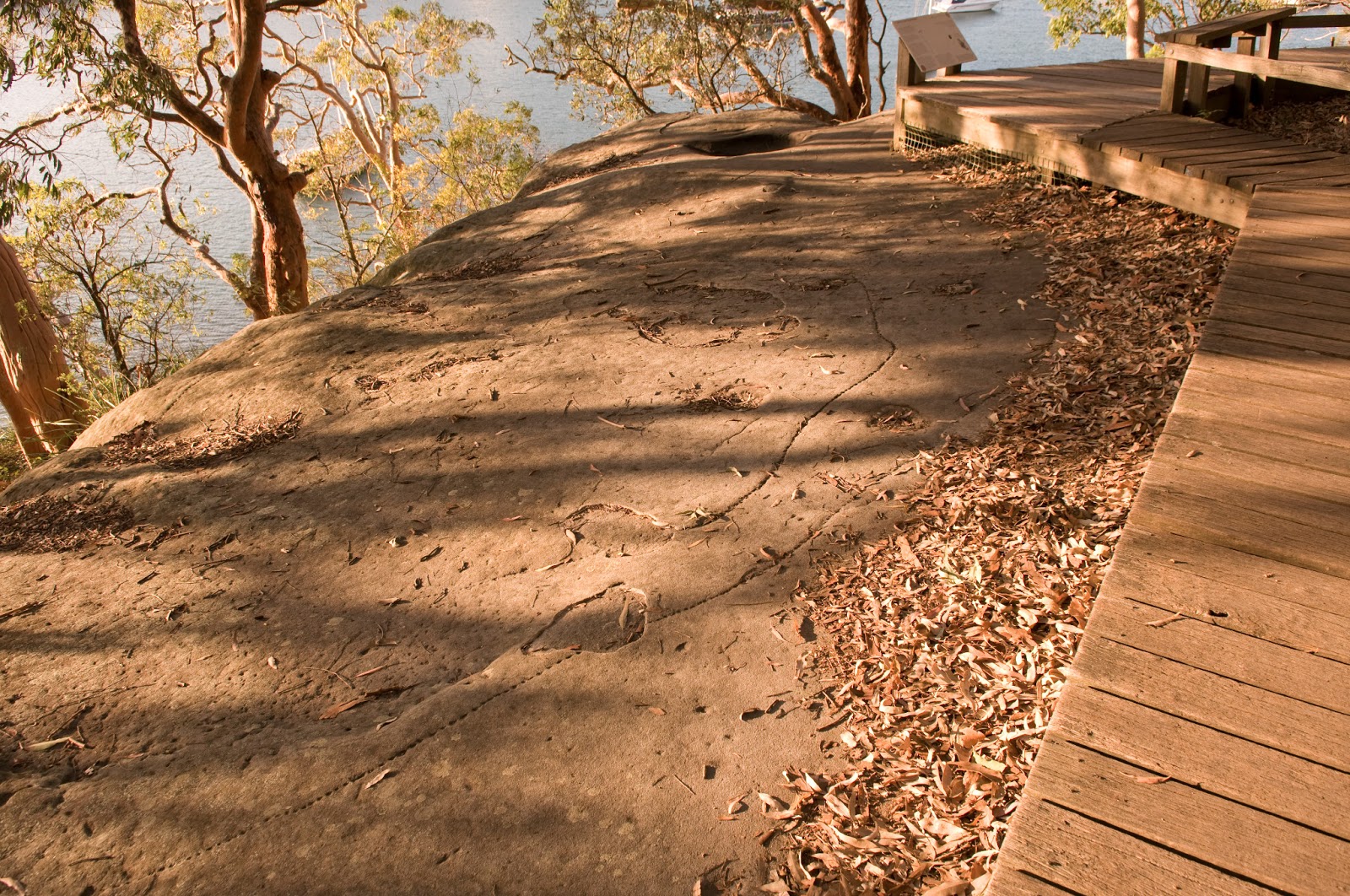 Sandstone carving. You can still see the 4 round scars left by the park bench.
 Stands of red gums.
 The red gums' flesh glows in the afternoon light.
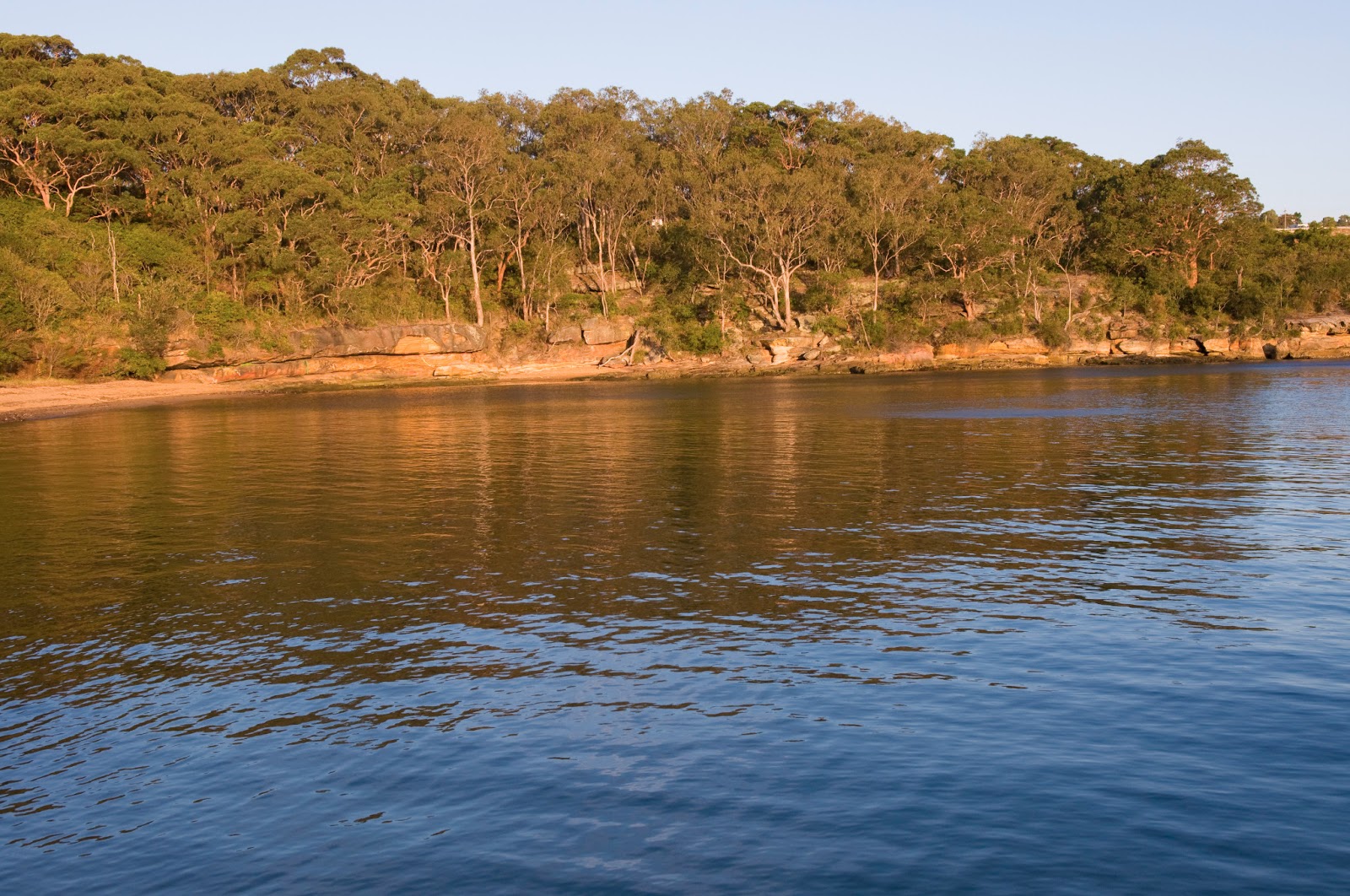 The shoreline of sandstone and oysters.
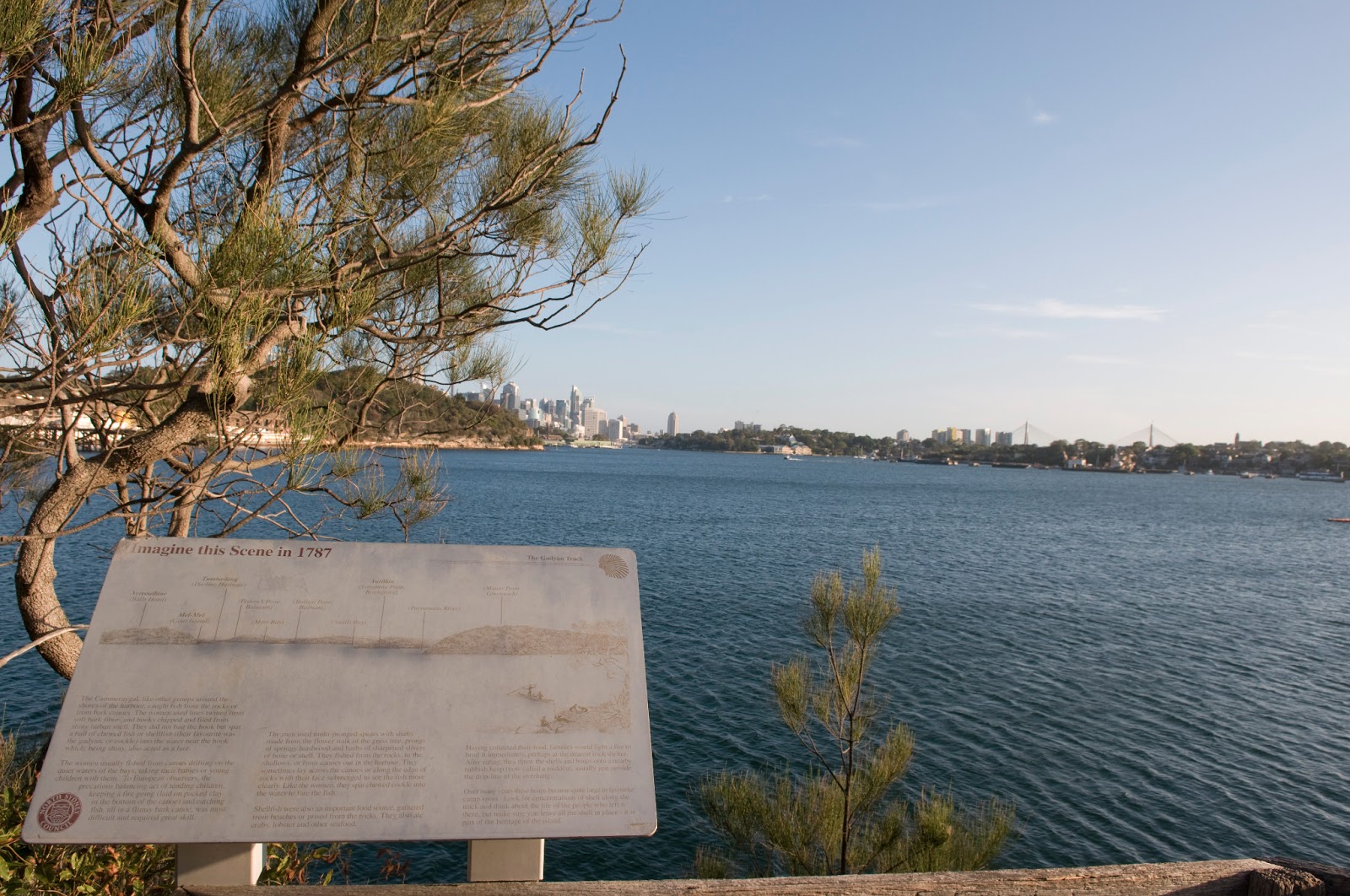 The storyboard asks you to 'Imagine this scene in 1787' and sketches the headlands of Balmain, Mort Bay, White Bay.
 The setting for the final scene in my novel.
December 5, 2012
Next Big Thing
Well it's BIG, being that it's tipping the scales at over 120,000 words at the moment and it is the next thing.
This post is part of a meme of writers tagging other writers to talk about their next project. At the bottom of the post there are links to other writers' pages where you can discover what their next big things are going to be - a sort of virtuous circle.
1) What is the working title of your next book?
Book 2.
Not because I donât secretly have a title for it (I have a list and one in particular that I love). However I know that the one I love probably wonât be the title that goes on the cover. My titles are always a little too idiosyncratic, or tangential to make it through title production meetings (Exhibit 1: the name of this blog is the name of my first book, only it wasn't - see what I mean?). So this time, I think Iâll just offer a list of possibles, wait and see what comes out at the other end.
2) Where did the idea come from for the book?
I want to write a series of crime novels that chart what happened to us here in Australia during the 1990s. A lot changed during this time. Police wise, there was the Wood Royal Commission in New South Wales that started half way through the 90s and blew up the force. It was still detonating landmines into the early 2000s.
In federal politics there was a change of government and as Paul Keating said at the time, when you change the government, you change the country. The change of government precipitated the rise of One Nation and a sanctioning of language and attitudes towards race that I think led all the way to the Cronulla riots.
So Book 2 was always going to be a book that continued on from where The Old School left off. And as my main character, Nhu âNedâ Kelly finishes thatfirst book in pretty rough shape, I wanted this one to address a realistically slow healing process for her. And frankly, it's been a tough place to dwell.
A surprising number of people wanted to know if I was going to âsend her to Vietnamâ to get in touch with her âroots.â I never had any plans to do that. Instead, Iâve sent her to Cabramatta in the first months of 1993, to get in touch with the newly established Australian-Vietnamese community here.
3) What genre does your book fall under?
Itâs crime. Police procedural with a social history twist.
4) What actors would you choose to play the part of your characters in a movie rendition?
Ha! In The Old School the main character of Ned Kelly is an Australian-Vietnamese woman in her early twenties. It says a bit about casting on mainstream TV that no name springs readily to mind to play her, doesn't it?
So, I like to think that sheâs a blank slate waiting to be filled by an actress that no one knows yet but who everyone will know after theyâve seen her playing Detective Ned Kelly. The same goes for Marcus Jarrett. A role for a 30 something Aboriginal actor who isnât Aaron Pedersen or Wayne Blair (not because they arenât any good, they are, but because I want to see the next generation of Aarons and Waynes given a big breakthrough role).
5) What is the one-sentence synopsis of your book?
Sometimes asking who did it, isnât the right question.
6) Will your book be self-published or represented by an agency?
My agent is the ever-patient and ever-optimistic Sophie Hamley of Camerons Management and she secured a two book contract with Penguin. They are tough loving the drafts through to publication as we speak.
7) How long did it take you to write the first draft of the manuscript?
About a year. More if I count the thinking about it. Then another year on the second draft, which also included lots of thinking time. Quicker turnaround on the third draft. Waiting for that to come back now.
8) What other books would you compare this story to within your genre?
Oh, the chance to be delusional! Iâve recently read Attica Lockeâs The Cutting Season. Itâs so very, very good - it it is what I *aspire* my book to be. A slow paced character driven crime story that unwraps crimes greater than those under investigation. Crooked Letter, Crooked Letter, by Tom Franklin, set in Mississippi in the 1980s is another character driven social history expose that I admire enormously. In writing crime that also acts as an investigation into social history I'm inspired by the work of Mala Nunn, who dissects the establishment of apartheid in 1950s South Africa and David Whish-Wilson, who is accounting for the dirty secrets of Perth and Western Australia in the 1970s. Read them. Also, this time I have tried to do something technically similar to The Laughing Policeman, by Sjöwall and Wahlöö in that I want to have one last big reveal as close to the final lines of the book as possible.
I invite you to check out these writers for their next big things:
Angela Savage
David Whish-Wilson
Sulari Gentill
Walter Mason (Watch this space - more to follow)
This post is part of a meme of writers tagging other writers to talk about their next project. At the bottom of the post there are links to other writers' pages where you can discover what their next big things are going to be - a sort of virtuous circle.
1) What is the working title of your next book?
Book 2.
Not because I donât secretly have a title for it (I have a list and one in particular that I love). However I know that the one I love probably wonât be the title that goes on the cover. My titles are always a little too idiosyncratic, or tangential to make it through title production meetings (Exhibit 1: the name of this blog is the name of my first book, only it wasn't - see what I mean?). So this time, I think Iâll just offer a list of possibles, wait and see what comes out at the other end.
2) Where did the idea come from for the book?
I want to write a series of crime novels that chart what happened to us here in Australia during the 1990s. A lot changed during this time. Police wise, there was the Wood Royal Commission in New South Wales that started half way through the 90s and blew up the force. It was still detonating landmines into the early 2000s.
In federal politics there was a change of government and as Paul Keating said at the time, when you change the government, you change the country. The change of government precipitated the rise of One Nation and a sanctioning of language and attitudes towards race that I think led all the way to the Cronulla riots.
So Book 2 was always going to be a book that continued on from where The Old School left off. And as my main character, Nhu âNedâ Kelly finishes thatfirst book in pretty rough shape, I wanted this one to address a realistically slow healing process for her. And frankly, it's been a tough place to dwell.
A surprising number of people wanted to know if I was going to âsend her to Vietnamâ to get in touch with her âroots.â I never had any plans to do that. Instead, Iâve sent her to Cabramatta in the first months of 1993, to get in touch with the newly established Australian-Vietnamese community here.
3) What genre does your book fall under?
Itâs crime. Police procedural with a social history twist.
4) What actors would you choose to play the part of your characters in a movie rendition?
Ha! In The Old School the main character of Ned Kelly is an Australian-Vietnamese woman in her early twenties. It says a bit about casting on mainstream TV that no name springs readily to mind to play her, doesn't it?
So, I like to think that sheâs a blank slate waiting to be filled by an actress that no one knows yet but who everyone will know after theyâve seen her playing Detective Ned Kelly. The same goes for Marcus Jarrett. A role for a 30 something Aboriginal actor who isnât Aaron Pedersen or Wayne Blair (not because they arenât any good, they are, but because I want to see the next generation of Aarons and Waynes given a big breakthrough role).
5) What is the one-sentence synopsis of your book?
Sometimes asking who did it, isnât the right question.
6) Will your book be self-published or represented by an agency?
My agent is the ever-patient and ever-optimistic Sophie Hamley of Camerons Management and she secured a two book contract with Penguin. They are tough loving the drafts through to publication as we speak.
7) How long did it take you to write the first draft of the manuscript?
About a year. More if I count the thinking about it. Then another year on the second draft, which also included lots of thinking time. Quicker turnaround on the third draft. Waiting for that to come back now.
8) What other books would you compare this story to within your genre?
Oh, the chance to be delusional! Iâve recently read Attica Lockeâs The Cutting Season. Itâs so very, very good - it it is what I *aspire* my book to be. A slow paced character driven crime story that unwraps crimes greater than those under investigation. Crooked Letter, Crooked Letter, by Tom Franklin, set in Mississippi in the 1980s is another character driven social history expose that I admire enormously. In writing crime that also acts as an investigation into social history I'm inspired by the work of Mala Nunn, who dissects the establishment of apartheid in 1950s South Africa and David Whish-Wilson, who is accounting for the dirty secrets of Perth and Western Australia in the 1970s. Read them. Also, this time I have tried to do something technically similar to The Laughing Policeman, by Sjöwall and Wahlöö in that I want to have one last big reveal as close to the final lines of the book as possible.
I invite you to check out these writers for their next big things:
Angela Savage
David Whish-Wilson
Sulari Gentill
Walter Mason (Watch this space - more to follow)
Next Big Thing
Well it's BIG, being that it's tipping the scales at over 120,000 words at the moment and it is the next thing.
This post is part of a meme of writers tagging other writers to talk about their next project. At the bottom of the post there are links to other writers' pages where you can discover what their next big things are going to be - a sort of virtuous circle.
1) What is the working title of your next book?
Book 2.
Not because I donât secretly have a title for it (I have a list and one in particular that I love). However I know that the one I love probably wonât be the title that goes on the cover. My titles are always a little too idiosyncratic, or tangential to make it through title production meetings (Exhibit 1: the name of this blog is the name of my first book, only it wasn't - see what I mean?). So this time, I think Iâll just offer a list of possibles, wait and see what comes out at the other end.
2) Where did the idea come from for the book?
I want to write a series of crime novels that chart what happened to us here in Australia during the 1990s. A lot changed during this time. Police wise, there was the Wood Royal Commission in New South Wales that started half way through the 90s and blew up the force. It was still detonating landmines into the early 2000s.
In federal politics there was a change of government and as Paul Keating said at the time, when you change the government, you change the country. The change of government precipitated the rise of One Nation and a sanctioning of language and attitudes towards race that I think led all the way to the Cronulla riots.
So Book 2 was always going to be a book that continued on from where The Old School left off. And as my main character, Nhu âNedâ Kelly finishes thatfirst book in pretty rough shape, I wanted this one to address a realistically slow healing process for her. And frankly, it's been a tough place to dwell.
A surprising number of people wanted to know if I was going to âsend her to Vietnamâ to get in touch with her âroots.â I never had any plans to do that. Instead, Iâve sent her to Cabramatta in the first months of 1993, to get in touch with the newly established Australian-Vietnamese community here.
3) What genre does your book fall under?
Itâs crime. Police procedural with a social history twist.
4) What actors would you choose to play the part of your characters in a movie rendition?
Ha! In The Old School the main character of Ned Kelly is an Australian-Vietnamese woman in her early twenties. It says a bit about casting on mainstream TV that no name springs readily to mind to play her, doesn't it?
So, I like to think that sheâs a blank slate waiting to be filled by an actress that no one knows yet but who everyone will know after theyâve seen her playing Detective Ned Kelly. The same goes for Marcus Jarrett. A role for a 30 something Aboriginal actor who isnât Aaron Pedersen or Wayne Blair (not because they arenât any good, they are, but because I want to see the next generation of Aarons and Waynes given a big breakthrough role).
5) What is the one-sentence synopsis of your book?
Sometimes asking who did it, isnât the right question.
6) Will your book be self-published or represented by an agency?
My agent is the ever-patient and ever-optimistic Sophie Hamley of Camerons Management and she secured a two book contract with Penguin. They are tough loving the drafts through to publication as we speak.
7) How long did it take you to write the first draft of the manuscript?
About a year. More if I count the thinking about it. Then another year on the second draft, which also included lots of thinking time. Quicker turnaround on the third draft. Waiting for that to come back now.
8) What other books would you compare this story to within your genre?
Oh, the chance to be delusional! Iâve recently read Attica Lockeâs The Cutting Season. Itâs so very, very good - it it is what I *aspire* my book to be. A slow paced character driven crime story that unwraps crimes greater than those under investigation. Crooked Letter, Crooked Letter, by Tom Franklin, set in Mississippi in the 1980s is another character driven social history expose that I admire enormously. In writing crime that also acts as an investigation into social history I'm inspired by the work of Mala Nunn, who dissects the establishment of apartheid in 1950s South Africa and David Whish-Wilson, who is accounting for the dirty secrets of Perth and Western Australia in the 1970s. Read them. Also, this time I have tried to do something technically similar to The Laughing Policeman, by Sjöwall and Wahlöö in that I want to have one last big reveal as close to the final lines of the book as possible.
I invite you to check out these writers for their next big things:
Angela Savage
David Whish-Wilson
Sulari Gentill
Walter Mason (Watch this space - more to follow)
This post is part of a meme of writers tagging other writers to talk about their next project. At the bottom of the post there are links to other writers' pages where you can discover what their next big things are going to be - a sort of virtuous circle.
1) What is the working title of your next book?
Book 2.
Not because I donât secretly have a title for it (I have a list and one in particular that I love). However I know that the one I love probably wonât be the title that goes on the cover. My titles are always a little too idiosyncratic, or tangential to make it through title production meetings (Exhibit 1: the name of this blog is the name of my first book, only it wasn't - see what I mean?). So this time, I think Iâll just offer a list of possibles, wait and see what comes out at the other end.
2) Where did the idea come from for the book?
I want to write a series of crime novels that chart what happened to us here in Australia during the 1990s. A lot changed during this time. Police wise, there was the Wood Royal Commission in New South Wales that started half way through the 90s and blew up the force. It was still detonating landmines into the early 2000s.
In federal politics there was a change of government and as Paul Keating said at the time, when you change the government, you change the country. The change of government precipitated the rise of One Nation and a sanctioning of language and attitudes towards race that I think led all the way to the Cronulla riots.
So Book 2 was always going to be a book that continued on from where The Old School left off. And as my main character, Nhu âNedâ Kelly finishes thatfirst book in pretty rough shape, I wanted this one to address a realistically slow healing process for her. And frankly, it's been a tough place to dwell.
A surprising number of people wanted to know if I was going to âsend her to Vietnamâ to get in touch with her âroots.â I never had any plans to do that. Instead, Iâve sent her to Cabramatta in the first months of 1993, to get in touch with the newly established Australian-Vietnamese community here.
3) What genre does your book fall under?
Itâs crime. Police procedural with a social history twist.
4) What actors would you choose to play the part of your characters in a movie rendition?
Ha! In The Old School the main character of Ned Kelly is an Australian-Vietnamese woman in her early twenties. It says a bit about casting on mainstream TV that no name springs readily to mind to play her, doesn't it?
So, I like to think that sheâs a blank slate waiting to be filled by an actress that no one knows yet but who everyone will know after theyâve seen her playing Detective Ned Kelly. The same goes for Marcus Jarrett. A role for a 30 something Aboriginal actor who isnât Aaron Pedersen or Wayne Blair (not because they arenât any good, they are, but because I want to see the next generation of Aarons and Waynes given a big breakthrough role).
5) What is the one-sentence synopsis of your book?
Sometimes asking who did it, isnât the right question.
6) Will your book be self-published or represented by an agency?
My agent is the ever-patient and ever-optimistic Sophie Hamley of Camerons Management and she secured a two book contract with Penguin. They are tough loving the drafts through to publication as we speak.
7) How long did it take you to write the first draft of the manuscript?
About a year. More if I count the thinking about it. Then another year on the second draft, which also included lots of thinking time. Quicker turnaround on the third draft. Waiting for that to come back now.
8) What other books would you compare this story to within your genre?
Oh, the chance to be delusional! Iâve recently read Attica Lockeâs The Cutting Season. Itâs so very, very good - it it is what I *aspire* my book to be. A slow paced character driven crime story that unwraps crimes greater than those under investigation. Crooked Letter, Crooked Letter, by Tom Franklin, set in Mississippi in the 1980s is another character driven social history expose that I admire enormously. In writing crime that also acts as an investigation into social history I'm inspired by the work of Mala Nunn, who dissects the establishment of apartheid in 1950s South Africa and David Whish-Wilson, who is accounting for the dirty secrets of Perth and Western Australia in the 1970s. Read them. Also, this time I have tried to do something technically similar to The Laughing Policeman, by Sjöwall and Wahlöö in that I want to have one last big reveal as close to the final lines of the book as possible.
I invite you to check out these writers for their next big things:
Angela Savage
David Whish-Wilson
Sulari Gentill
Walter Mason (Watch this space - more to follow)
November 24, 2012
Meeting people for the first time on the worst day of their lives.
That's something I often say to people when they ask me why I left the police force.
This week I wrote about that and expanded on it for The Drum in a piece that I submitted, not really sure if it worked or it didn't.
I couldn't even come up with a title. The editors at The Drum called it: Giving up the licence to kill.
I was a bit unprepared for how it spread. The following afternoon I found myself talking with Richard Glover about it on ABC702 Drive. I've been fortunate to have had the opportunity to chat on regional radio when The Old School came out, but this was different. When you talk about your book you have that distance, they're characters, it's fiction, but this was personal, it touched on real people and real tragedies and I was terribly nervous.
I walked out knowing I'd been talking for close to twenty minutes but, rather like when you walk out of a job interview you're not entirely sure of what you've been saying.
The piece was a response to the number of incidents involving the police and the use of both deadly force and alternatives to deadly force that have ended badly in recent times. Even today, as I write this, the news is full of discussion about another incident.
There's one thing which I didn't address in The Drum piece which I might add here. When police do use their firearm, people have often asked me why it is they don't just shoot to wound someone. Wing them. Shoot their arm so they can't stab. Or their hand so they drop their gun. Or their leg so they can't escape.
There's a very good reason.
An arm, or a hand, is a few inches wide. In the sort of circumstances where police use their weapons people are generally not standing stock still. Their movements are frantic. The police involved are probably shaking with adrenaline as well. The kind of sharp shooting that involves hitting a small moving target with pinpoint precision in a frantic scenario isn't even seen in Olympic sharp shooting competitions. And cops are not Olympic level shooters and they are not shooting in Olympic controlled conditions.
There's a basic brutal reason police are taught to aim and shoot at the body mass. It's because it's the biggest thing. It's to maximize the likelihood of hitting the target and the target alone, not anybody else because, as I explain in The Drum, if a police officer takes out their firearm, a really specific set of circumstances have to exist. It's not there to scare, to warn, or to wound, but to stop someone.
Today is another day I'm glad the most stressful things I had to do was give a talk at a library, write a blog entry or two, and prepare a lecture for tomorrow. And I have the good fortune to know that if I stuff up any of them no one is going to die.
This week I wrote about that and expanded on it for The Drum in a piece that I submitted, not really sure if it worked or it didn't.
I couldn't even come up with a title. The editors at The Drum called it: Giving up the licence to kill.
I was a bit unprepared for how it spread. The following afternoon I found myself talking with Richard Glover about it on ABC702 Drive. I've been fortunate to have had the opportunity to chat on regional radio when The Old School came out, but this was different. When you talk about your book you have that distance, they're characters, it's fiction, but this was personal, it touched on real people and real tragedies and I was terribly nervous.
I walked out knowing I'd been talking for close to twenty minutes but, rather like when you walk out of a job interview you're not entirely sure of what you've been saying.
The piece was a response to the number of incidents involving the police and the use of both deadly force and alternatives to deadly force that have ended badly in recent times. Even today, as I write this, the news is full of discussion about another incident.
There's one thing which I didn't address in The Drum piece which I might add here. When police do use their firearm, people have often asked me why it is they don't just shoot to wound someone. Wing them. Shoot their arm so they can't stab. Or their hand so they drop their gun. Or their leg so they can't escape.
There's a very good reason.
An arm, or a hand, is a few inches wide. In the sort of circumstances where police use their weapons people are generally not standing stock still. Their movements are frantic. The police involved are probably shaking with adrenaline as well. The kind of sharp shooting that involves hitting a small moving target with pinpoint precision in a frantic scenario isn't even seen in Olympic sharp shooting competitions. And cops are not Olympic level shooters and they are not shooting in Olympic controlled conditions.
There's a basic brutal reason police are taught to aim and shoot at the body mass. It's because it's the biggest thing. It's to maximize the likelihood of hitting the target and the target alone, not anybody else because, as I explain in The Drum, if a police officer takes out their firearm, a really specific set of circumstances have to exist. It's not there to scare, to warn, or to wound, but to stop someone.
Today is another day I'm glad the most stressful things I had to do was give a talk at a library, write a blog entry or two, and prepare a lecture for tomorrow. And I have the good fortune to know that if I stuff up any of them no one is going to die.
Meeting people for the first time on the worst day of their lives.
That's something I often say to people when they ask me why I left the police force.
This week I wrote about that and expanded on it for The Drum in a piece that I submitted, not really sure if it worked or it didn't.
I couldn't even come up with a title. The editors' at The Drum called it: Giving up the licence to kill.
I was a bit unprepared for how it spread. The following afternoon I found myself talking with Richard Glover about it on ABC702 Drive. I've been fortunate to have had the opportunity to chat on regional radio when The Old School came out, but this was different. When you talk about your book you have that distance, they're characters, it's fiction, but this was personal, it touched on real people and real tragedies and I was terribly nervous.
I walked out knowing I'd been talking for close to twenty minutes but, rather like when you walk out of a job interview you're not entirely sure of what you've been saying.
The piece was a response to the number of incidents involving the police and the use of both deadly force and alternatives to deadly force that have ended badly in recent times. Even today, as I write this, the news is full of discussion about another incident.
There's one thing which I didn't address in The Drum piece which I might add here. When police do use their firearm, people have often asked me why it is they don't just shoot to wound someone. Wing them. Shoot their arm so they can't stab. Or their hand so they drop their gun. Or their leg so they can't escape.
There's a very good reason.
An arm, or a hand, is a few inches wide. In the sort of circumstances where police use their weapons people are generally not standing stock still. Their movements are frantic. The police involved are probably shaking with adrenaline as well. The kind of sharp shooting that involves hitting a small moving target with pinpoint precision in a frantic scenario isn't even seen in Olympic sharp shooting competitions. And cops are not Olympic level shooters and they are not shooting in Olympic controlled conditions.
There's a basic brutal reason police are taught to aim and shoot at the body mass. It's because it's the biggest thing. It's to maximize the likelihood of hitting the target and the target alone, not anybody else because, as I explain in The Drum, if a police officer takes out their firearm, a really specific set of circumstances have to exist. It's not there to scare, to warn, or to wound, but to stop someone.
Today is another day I'm glad the most stressful things I had to do was give a talk at a library, write a blog entry or two, and prepare a lecture for tomorrow. And I have the good fortune to know that if I stuff up any of them no one is going to die.
This week I wrote about that and expanded on it for The Drum in a piece that I submitted, not really sure if it worked or it didn't.
I couldn't even come up with a title. The editors' at The Drum called it: Giving up the licence to kill.
I was a bit unprepared for how it spread. The following afternoon I found myself talking with Richard Glover about it on ABC702 Drive. I've been fortunate to have had the opportunity to chat on regional radio when The Old School came out, but this was different. When you talk about your book you have that distance, they're characters, it's fiction, but this was personal, it touched on real people and real tragedies and I was terribly nervous.
I walked out knowing I'd been talking for close to twenty minutes but, rather like when you walk out of a job interview you're not entirely sure of what you've been saying.
The piece was a response to the number of incidents involving the police and the use of both deadly force and alternatives to deadly force that have ended badly in recent times. Even today, as I write this, the news is full of discussion about another incident.
There's one thing which I didn't address in The Drum piece which I might add here. When police do use their firearm, people have often asked me why it is they don't just shoot to wound someone. Wing them. Shoot their arm so they can't stab. Or their hand so they drop their gun. Or their leg so they can't escape.
There's a very good reason.
An arm, or a hand, is a few inches wide. In the sort of circumstances where police use their weapons people are generally not standing stock still. Their movements are frantic. The police involved are probably shaking with adrenaline as well. The kind of sharp shooting that involves hitting a small moving target with pinpoint precision in a frantic scenario isn't even seen in Olympic sharp shooting competitions. And cops are not Olympic level shooters and they are not shooting in Olympic controlled conditions.
There's a basic brutal reason police are taught to aim and shoot at the body mass. It's because it's the biggest thing. It's to maximize the likelihood of hitting the target and the target alone, not anybody else because, as I explain in The Drum, if a police officer takes out their firearm, a really specific set of circumstances have to exist. It's not there to scare, to warn, or to wound, but to stop someone.
Today is another day I'm glad the most stressful things I had to do was give a talk at a library, write a blog entry or two, and prepare a lecture for tomorrow. And I have the good fortune to know that if I stuff up any of them no one is going to die.
Not at all stalkery ... no, really.
Last Thursday I had the great pleasure of being in the question asking chair and having Ian Rankin in the question answering chair at a great event for Shearers Bookshop. Leichhardt Council generously hosted the event at the Town Hall, for free, with added wine and nibbles and around three hundred people duly turned up.
It was a lot of fun doing the research to prepare for the event. Took me back to my MA exegesis and the conference papers I wrote one of which, Crime Fiction and The Politics of Place: The Post 9/11 Sense of Place in Sara Partesky and Ian Rankin ended up as a chapter in The Millennial Detective.
I finally found some clips of Ian Rankin's Evil Thoughts, as it's not made it to OZ. I highly recommend the scene of Mr Rankin being exorcised by a sad-eyed old priest at the Vatican.
It was a marvelous atmosphere, and Ian Rankin was an engaging and generous interviewee, particularly as I had attended his event the previous day at Stanton Library where I was directed to fill up a front seat and proceeded to slightly freak the poor man out by taking copious notes. No, not at all stalkery.
The good people at Shearers have blogged a round up of the night - so if you missed it, you can catch up on all the news about Rebus. He's baaaaaaaaaaaack!!!!!!
And in today's Sydney Morning Herald, my review of Standing in Another Man's Grave .
Read more: http://www.smh.com.au/entertainment/books/standing-in-another-mans-grave-20121123-29yik.html#ixzz2D7p6NR8g
Read more: http://www.smh.com.au/entertainment/books/standing-in-another-mans-grave-20121123-29yik.html#ixzz2D7p6NR8gWhatever the future holds, Rebus is back and there's likely to be a bit more rage before the dying of his light.
Read more: http://www.smh.com.au/entertainment/books/standing-in-another-mans-grave-20121123-29yik.html#ixzz2D7p6NR8gWhatever the future holds, Rebus is back and there's likely to be a bit more rage before the dying of his light.
Read more: http://www.smh.com.au/entertainment/books/standing-in-another-mans-grave-20121123-29yik.html#ixzz2D7p6NR8g
It was a lot of fun doing the research to prepare for the event. Took me back to my MA exegesis and the conference papers I wrote one of which, Crime Fiction and The Politics of Place: The Post 9/11 Sense of Place in Sara Partesky and Ian Rankin ended up as a chapter in The Millennial Detective.
I finally found some clips of Ian Rankin's Evil Thoughts, as it's not made it to OZ. I highly recommend the scene of Mr Rankin being exorcised by a sad-eyed old priest at the Vatican.
It was a marvelous atmosphere, and Ian Rankin was an engaging and generous interviewee, particularly as I had attended his event the previous day at Stanton Library where I was directed to fill up a front seat and proceeded to slightly freak the poor man out by taking copious notes. No, not at all stalkery.
The good people at Shearers have blogged a round up of the night - so if you missed it, you can catch up on all the news about Rebus. He's baaaaaaaaaaaack!!!!!!
And in today's Sydney Morning Herald, my review of Standing in Another Man's Grave .
"Whatever the future holds, Rebus is back and there's likely to be a bit more rage before the dying of his light."Whatever the future holds, Rebus is back and there's likely to be a bit more rage before the dying of his light.Whatever the future holds, Rebus is back and there's likely to be a bit more rage before the dying of his light.
Read more: http://www.smh.com.au/entertainment/books/standing-in-another-mans-grave-20121123-29yik.html#ixzz2D7p6NR8gWhatever the future holds, Rebus is back and there's likely to be a bit more rage before the dying of his light.
Read more: http://www.smh.com.au/entertainment/books/standing-in-another-mans-grave-20121123-29yik.html#ixzz2D7p6NR8g
Read more: http://www.smh.com.au/entertainment/books/standing-in-another-mans-grave-20121123-29yik.html#ixzz2D7p6NR8g
Whatever the future holds, Rebus is back and there's likely to be a bit more rage before the dying of his light.
Whatever the future holds, Rebus is back and there's likely to be a bit more rage before the dying of his light.
Read more: http://www.smh.com.au/entertainment/books/standing-in-another-mans-grave-20121123-29yik.html#ixzz2D7p6NR8g
Read more: http://www.smh.com.au/entertainment/books/standing-in-another-mans-grave-20121123-29yik.html#ixzz2D7p6NR8gWhatever the future holds, Rebus is back and there's likely to be a bit more rage before the dying of his light.
Read more: http://www.smh.com.au/entertainment/books/standing-in-another-mans-grave-20121123-29yik.html#ixzz2D7p6NR8gWhatever the future holds, Rebus is back and there's likely to be a bit more rage before the dying of his light.
Read more: http://www.smh.com.au/entertainment/books/standing-in-another-mans-grave-20121123-29yik.html#ixzz2D7p6NR8g
Not at all stalkery ... no, really.
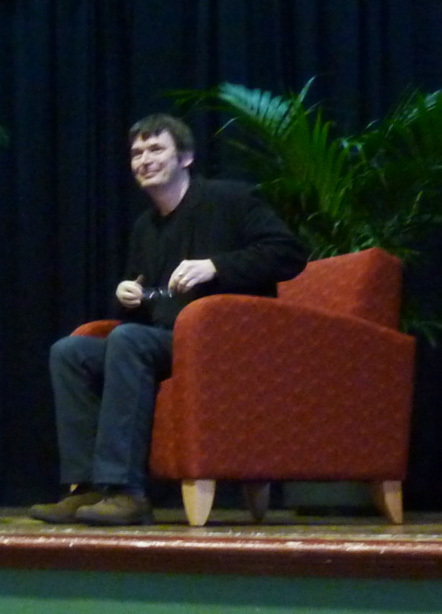
Last Thursday I had the great pleasure of being in the question asking chair and having Ian Rankin in the question answering chair at a great event for Shearers Bookshop. Leichhardt Council generously hosted the event at the Town Hall, for free, with added wine and nibbles and around three hundred people duly turned up.
It was a lot of fun doing the research to prepare for the event. Took me back to my MA exegesis and the conference papers I wrote one of which, Crime Fiction and The Politics of Place: The Post 9/11 Sense of Place in Sara Partesky and Ian Rankin ended up as a chapter in The Millennial Detective.
I finally found some clips of Ian Rankin's Evil Thoughts, as it's not made it to OZ. I highly recommend the scene of Mr Rankin being exorcised by a sad-eyed old priest at the Vatican.
It was a marvelous atmosphere, and Ian Rankin was an engaging and generous interviewee, particularly as I had attended his event the previous day at Stanton Library where I was directed to fill up a front seat and proceeded to slightly freak the poor man out by taking copious notes. No, not at all stalkery.
The good people at Shearers have blogged a round up of the night - so if you missed it, you can catch up on all the news about Rebus. He's baaaaaaaaaaaack!!!!!!
And in today's Sydney Morning Herald, my review of Standing in Another Man's Grave .
Read more: http://www.smh.com.au/entertainment/books/standing-in-another-mans-grave-20121123-29yik.html#ixzz2D7p6NR8g
Read more: http://www.smh.com.au/entertainment/books/standing-in-another-mans-grave-20121123-29yik.html#ixzz2D7p6NR8gWhatever the future holds, Rebus is back and there's likely to be a bit more rage before the dying of his light.
Read more: http://www.smh.com.au/entertainment/books/standing-in-another-mans-grave-20121123-29yik.html#ixzz2D7p6NR8gWhatever the future holds, Rebus is back and there's likely to be a bit more rage before the dying of his light.
Read more: http://www.smh.com.au/entertainment/books/standing-in-another-mans-grave-20121123-29yik.html#ixzz2D7p6NR8g
It was a lot of fun doing the research to prepare for the event. Took me back to my MA exegesis and the conference papers I wrote one of which, Crime Fiction and The Politics of Place: The Post 9/11 Sense of Place in Sara Partesky and Ian Rankin ended up as a chapter in The Millennial Detective.
I finally found some clips of Ian Rankin's Evil Thoughts, as it's not made it to OZ. I highly recommend the scene of Mr Rankin being exorcised by a sad-eyed old priest at the Vatican.
It was a marvelous atmosphere, and Ian Rankin was an engaging and generous interviewee, particularly as I had attended his event the previous day at Stanton Library where I was directed to fill up a front seat and proceeded to slightly freak the poor man out by taking copious notes. No, not at all stalkery.
The good people at Shearers have blogged a round up of the night - so if you missed it, you can catch up on all the news about Rebus. He's baaaaaaaaaaaack!!!!!!
And in today's Sydney Morning Herald, my review of Standing in Another Man's Grave .
"Whatever the future holds, Rebus is back and there's likely to be a bit more rage before the dying of his light."Whatever the future holds, Rebus is back and there's likely to be a bit more rage before the dying of his light.Whatever the future holds, Rebus is back and there's likely to be a bit more rage before the dying of his light.
Read more: http://www.smh.com.au/entertainment/books/standing-in-another-mans-grave-20121123-29yik.html#ixzz2D7p6NR8gWhatever the future holds, Rebus is back and there's likely to be a bit more rage before the dying of his light.
Read more: http://www.smh.com.au/entertainment/books/standing-in-another-mans-grave-20121123-29yik.html#ixzz2D7p6NR8g
Read more: http://www.smh.com.au/entertainment/books/standing-in-another-mans-grave-20121123-29yik.html#ixzz2D7p6NR8g
Whatever the future holds, Rebus is back and there's likely to be a bit more rage before the dying of his light.
Whatever the future holds, Rebus is back and there's likely to be a bit more rage before the dying of his light.
Read more: http://www.smh.com.au/entertainment/books/standing-in-another-mans-grave-20121123-29yik.html#ixzz2D7p6NR8g
Read more: http://www.smh.com.au/entertainment/books/standing-in-another-mans-grave-20121123-29yik.html#ixzz2D7p6NR8gWhatever the future holds, Rebus is back and there's likely to be a bit more rage before the dying of his light.
Read more: http://www.smh.com.au/entertainment/books/standing-in-another-mans-grave-20121123-29yik.html#ixzz2D7p6NR8gWhatever the future holds, Rebus is back and there's likely to be a bit more rage before the dying of his light.
Read more: http://www.smh.com.au/entertainment/books/standing-in-another-mans-grave-20121123-29yik.html#ixzz2D7p6NR8g
November 23, 2012
Playing catch up - with GenreCon 2012 and Faber Academy
The end of the year is hurtling towards me and Iâm not sure whether to duck, dodge, or weave. It feels like the last few weeks have been a full on mix of completing a structural edit of Book 2, teaching, talking and researching and preparing for the aforementioned teaching and talking.A few weekends ago I was very lucky and very happy to be a special guest at the inaugural Genre Con.

It was very exciting to feel part of an event, which is, Iâm certain, going to be a permanent fixture on the Australian writing calendar - an event that is only going to get bigger. Congratulations to Australian Writersâ Marketplace and Queensland Writersâ Centre for having the insight and initiative to recognise that genre writers and readers are a tribe, a tribe who needed an event to meet, share experiences, talk about the craft and learn about each otherâs story telling.It was a stroke of genius to run the workshops and talks in mixed genres rather than as streams. So I shared panels with Anna Campbell, a romance writer, Joe Abercrombie, a fantasy writer, Simon Higgins, a crime, sci-fi and childrenâs writer and Charlotte Nash Stewart, a romantic suspense writer. And it meant our audiences were drawn from across the genre divides as well.If you werenât there then check out the AWMâs blogand the links to a whole range of wrap ups.I also had the pleasure a few weeks back, of teaching a day course for the Faber Academy in Sydney â Troubleshooting Crime.

It was a small class and gave us the absolute luxury of spending the day intensively working on the studentsâ projects. Some classes consist of picking apart the pieces of writing crime â the genre conventions and how to break the rules, the significance of writing place, what makes a plot work, how to create a character that steps from the page and into your life. And then occasionally you have the opportunity to teach a class that allows you to roll your sleeves up and work on the particular rather than the abstract; to talk plot in respect of the studentsâ own plots, character as it applies to the cast they have assembled, to wrestle with issues of structure and tone â itâs a rare treat.
Playing catch up - with GenreCon 2012 and Faber Academy
The end of the year is hurtling towards me and Iâm not sure whether to duck, dodge, or weave. It feels like the last few weeks have been a full on mix of completing a structural edit of Book 2, teaching, talking and researching and preparing for the aforementioned teaching and talking.A few weekends ago I was very lucky and very happy to be a special guest at the inaugural Genre Con.
It was very exciting to feel part of an event, which is, Iâm certain, going to be a permanent fixture on the Australian writing calendar - an event that is only going to get bigger. Congratulations to Australian Writersâ Marketplace and Queensland Writersâ Centre for having the insight and initiative to recognise that genre writers and readers are a tribe, a tribe who needed an event to meet, share experiences, talk about the craft and learn about each otherâs story telling.It was a stroke of genius to run the workshops and talks in mixed genres rather than as streams. So I shared panels with Anna Campbell, a romance writer, Joe Abercrombie, a fantasy writer, Simon Higgins, a crime, sci-fi and childrenâs writer and Charlotte Nash Stewart, a romantic suspense writer. And it meant our audiences were drawn from across the genre divides as well.If you werenât there then check out the AWMâs blogand the links to a whole range of wrap ups.I also had the pleasure a few weeks back, of teaching a day course for the Faber Academy in Sydney â Troubleshooting Crime.
It was a small class and gave us the absolute luxury of spending the day intensively working on the studentsâ projects. Some classes consist of picking apart the pieces of writing crime â the genre conventions and how to break the rules, the significance of writing place, what makes a plot work, how to create a character that steps from the page and into your life. And then occasionally you have the opportunity to teach a class that allows you to roll your sleeves up and work on the particular rather than the abstract; to talk plot in respect of the studentsâ own plots, character as it applies to the cast they have assembled, to wrestle with issues of structure and tone â itâs a rare treat.


