Kenn Bivins's Blog, page 2
June 19, 2019
the truth about Juneteenth
June 19, 1865, the news was delivered that slavery was over. Hallelujah! Freedom at last! The problem is there was a bit of a delay. Two years, in fact, since President Abraham Lincoln had signed the executive order of the Emancipation Proclamation. Talk about showing up late for the party.
It wasn’t until more recently that states began recognizing Juneteenth as a holiday, but as of today there are only four states that don’t recognize it as such. Earlier this year, New Hampshire joined the state-sponsored club of acknowledging American history as it indeed was.
Dearest Hawaii, Montana, North Dakota and South Dakota, what’s taking you so long? Are you still sorting through your censorship records to see if it’s worth your time? Or maybe Black Americans just aren’t worth your consideration. I tell you what. I’ll spend my vacation money in your state as soon as you lift your ban on truth. Deal?
What’s more confusing than states being stuck in 1865 is having a whole federal government that refuses to follow the course of action of 46 states and declare Juneteenth, or Freedom Day, as a Federal holiday.
I have an idea, though. Since the current president has built his administration’s platform on undoing all that President Obama did or going in the opposite direction, I think this would be an excellent cause for him to support and influence.
Dearest Donald Trump, would you consider making Juneteenth a federal holiday? It would really piss Obama off that he didn’t think of it first. Come on. “The Blacks” will love ya! </ end sarcasm>
By the way, Juneteenth does not mute or cancel the 4th of July. One has very little to do with the other, besides the fact that they both boast emancipation from a government’s stronghold. One has to do with the thirteen American colonies gaining independence from the rule of Great Britain (I like to think of this as the original Brexit). The other has to do with the American government finally proclaiming that slavery was illegal and, in theory, Black people were free.
Juneteenth is slowing gaining popularity and maybe one day, people of all cultures will celebrate freedom from slavery with expressions of debauchery and consuming copious amounts of alcohol, much like St Patrick’s Day or Cinco de Mayo. But I digress.
I give thanks to the ancestors that I am free. Happy Juneteenth, all.


June 10, 2019
when they (don’t) see us
When They See Us is a four-part Netflix mini-series which chronicles the horrific, true story of the Central Park Five case of 1989 where five teenagers were accused and wrongfully convicted of the rape and assault of a female jogger. The series is presented from the perspective of these boys whose lives were upended by a miscarriage and manipulation of justice where the viewer is left wondering, “What if all boys were created equal?”
Ava DuVernay constructed a masterpiece with the cast who would take on the child and adult roles of Raymond Santana, Kevin Richardson, Antron McCray, and Korey Wise. While it’s hard to watch, you need to see it.
It’s heavy, but the payoff is
It’s not the justice system. It’s the just-us system where black women also refer to us like animals or lesser than.
It’s not a story of overcoming as much as it is a story of persevering
At least look at this from the perspective of what happens when you don’t know your rights.
Most of us who read books and watch movies do so for the escapism of it all. Sure, there is a learning aspect, but at the end of the day, we just want to escape our real world of adulting and enjoy the possibility of something else. Watching a mini-series about how the justice system failed five teenagers is not exactly many people’s idea of a good, relaxing time.
It happened in 1989 but it still happens every day. Every. Day.
We say we want to be represented in the media. We prefer being powerful figures as opposed to defeated ones. But if we don’t control the narrative of the defeated ones, there will never be a Wakanda.
The conversation has started among many people on how they don’t want to see it. The subject matter is too much and the emotional impact is too close to home for many of us.
The justice system failed those boys and it’s still failing Black children today. Some might argue that it’s not failing at all when it wasn’t designed for us. It’s working exactly how it was designed to. I mean it is the Constitution that declares slavery still.
Neither slavery nor involuntary servitude, except as a punishment for crime whereof the party shall have been duly convicted, shall exist within the United States, or any place subject to their jurisdiction. That’s the Amendment of the Constitution that was passed in 1865 and is still active today. Today! Slavery is abolished except as a punishment for crime. This should be clear why over-policing and profiling feeds into the pockets of the state that have privatized the prisons
http://tucmag.net/movies/television/what-i-took-away-from-ava-duvernays-when-they-see-us/
Pat Buchanan Donald Trump
that sought to where they as four Black and one Hispanic teenager were labeled as guilty .
Though they were coerced into giving false testimony, all of the boys pled not guilty throughout the trial.
During the trial, all five boys pled not (Trisha Meili) in 1989. The series, which director Ava Duvernay, said she originally envisioned as a feature film, focuses on the story from the perspective of the boys and their family.
The Central Park Five, a film from award-winning filmmaker Ken Burns, tells the story of the five black and Latino teenagers from Harlem who was wrongly convicted of raping a white woman in New York City’s Central Park in 1989. The film chronicles The Central Park Jogger case, for the first time
Having seen this case play out in real time, the portrayal was scaringly accurate. From an artistic point-of-view, this was well done and thorough in its portrayal.
This is a 30-year old case that reflects our justice system today.
People say they can’t watch but it is necessary that they do. For awareness.
We need to make sure that they don’t know what happens when they don’t see us. We are not invisible.
While it may be hard to witness even a dramatization of atrocities, we have to be the conduit to bear witness to others. We have a responsibility to make it seen. Like showing up for jury duty. Please don’t be that person who wants to get out of jury duty because..
https://en.wikipedia.org/wiki/Central...
Netflix ‘When They See Us’ Defendants Received Additional State Compensation For Imprisonment
Matias Reyes Now: Where Is He Today? Is He Still in Jail?
It may be difficult to take on such emotional weight in the form of this series, but I think it’s an important film for every American to watch. Note, I did not say Black American because this isn’t a Black film. This is a body of work that shines a light on the modern justice system where people are not treated equal or with equity. It’s important that you know this. It’s important that you see this.
Can you imagine what it’s like to be in the body of someone who is not seen except for the benefit of brutalizing and punishing? It’s imperative that they see us.+
But I also felt a deep sense of solidarity and reverence, a culmination of sorts.
Something was instilled into my spirit: a measure of strength before unknown.
June 1, 2019
since 1970 (an open letter to my friends)
Dearest and beloved, it’s been a matter of busied hours and circumstance for which I have not been able to communicate as succinct as I would have preferred, but inevitable destiny abounds as this transmission reaches you now. Know this. Your existence coupled with your presence means a lot to me. Your availability and support humble me. You mean more than you can know and I’m thankful you are here.
I am elated and reflective right now on this first of June 1. Where I started and where I am today are on almost opposite sides of the spectrum. My life has witnessed many failures that have ultimately lead to many successes. I dwell on how life means so much to me now wherein once upon a time, I was far from impressed with its offerings. Looking back gives me greater reason to move forward with purpose. And again you make the difference.
Since 1970, I have shared words and love and oxygen with you. Thank you for your wishes, kinds words, grace and forgiveness. I love you, friends, family, foes and foreign. I love you madly.
Here’s to more hours, days and years.
Cheers.
Kenn.
May 28, 2019
expiring soon: Her rights
So far this year, eight states have passed bills to limit or criminalize a woman’s right to abortion. At this rate, we’re very quickly headed back to a time when “a woman and a Negro knew their place.”
I mean, we’ve been making progress for decades. Or so I thought. It was all the way back in 1973 when the Supreme Court ruled in the landmark case of Roe v. Wade that state regulation of abortion was unconstitutional. In other words, the government can’t criminalize abortion because, in most instances, this violates her constitutional right of privacy, which it found to be implicit in the liberty guarantee of the due process clause found in the Fourteenth Amendment.
“…nor shall any state deprive any person of life, liberty, or property, without due process of law”
Unfortunately, this current administration has emboldened hate, misogyny and institutional racism. To hell with a Constitution or a woman’s rights. This is ‘Merica where things are once again great. It’s as if the nation is being punished for their eight years of having the audacity to hope.
This month in my home state of Georgia, the governor signed a draconian bill into law that criminalizes all abortions after six weeks. According to women (who would know best), they don’t even realize that they’re pregnant at this time.
I’m having trouble with making sense of this though. A bunch of men who have been elected into positions of power to enact policies that best serve the people at large has decided to hijack the rights of women to govern their own bodies.
As men, aren’t we supposed to protect women? So you’re telling me that if a woman is assaulted, raped, mistreated or abused in any way that leads to a pregnancy, there are more specific laws in place for the state to penalize her and the medical staff that assists her than there are to laws to punish the man who has wronged her.
There may be a glimmer of hope in all of this because the ACLU has successfully blocked legislation from going into effect in Kentucky, Iowa and North Dakota. And this week, the Supreme Court hinted at a reluctance to take on the core abortion precedents of Roe v. Wade and Casey v. Planned Parenthood as they upheld a block on an Indiana provision that would prohibit abortions.
Now, let me step back for a moment and state the obvious – I am a man. What is not as obvious is that I am also a believer. That is, I believe in and have a personal relationship with God. Some people would call me a Christian. I shrink a little bit at that label these days because of the many political and intolerant implications associated with it. But I do believe in the sanctity of life. I also believe that not one of us is God. We don’t have the right to judge another or her choices just in the same way that she has the right to make those choices and bear responsibility for them.
It is my role and responsibility to love. That means I have a responsibility to protect, provide for and nurture. Choose life, right?
I can’t side with the anti-abortionists or pro-lifers because I don’t believe that they sit on the side of love. I feel like their passion is born from a judgemental, unloving space.
If all of this was really about life; if this was really about all lives mattering, the same advocates of choice would fight for the lives that take place after birth.
What of the 700, 000 children who spend time in foster care or the 2 million that face homelessness every year? What of the children who don’t have an equitable opportunity at life, liberty and the pursuit of happiness because of the socioeconomic status of their parents? What of the black boys who are gunned down by their peers or overzealous police? Do black lives matter? Does any life matter? Or is it really about party lines and talking points?
In addition to stripping a woman of her right to choose what to do with her body, these laws will also likely abolish services that Planned Parenthood provide that include STD testing and treatment, birth control, well-woman exams, cancer screening and prevention, abortion, hormone therapy, infertility services, and general health care. But they’re worried about preserving and protecting lives, right?
Am I being ridiculous? Okay, for the sake of argument, let me go back to the consideration of life in the womb. If these draconian laws were to pass, there should be other laws and statutes that are a domino effect.
According to the heartbeat bill, if you’re six to eight weeks pregnant, there is a heartbeat within you. If there is a heartbeat within you, there is another person there. If another person is there, one person is now two.
All pregnant women can now ride the HOV lane for free. All pregnant women can now qualify for the “under 12” discount at state parks and restaurants because they’re carrying a child that is well under the age qualification. All pregnant women can now claim their embryo and fetus on their taxes as dependents. Maybe this bill isn’t so bad after all, huh?
Yeah, I am being ridiculous now.
This surge of boldness among Republicans is really about one thing — patriarchy! Patriarchy is a system of government in which men hold the power and women are largely excluded from it. There has to be some degree of Stockholm syndrome going on because many women are supporting the very system that is oppressing them. But I digress.
Banning abortions after the detection of a fetal heartbeat prevents a woman’s free choice, which is central to her personal dignity and autonomy. We can’t regress now. Her rights can’t expire. We’ve come too far.
May 25, 2019
memorial day
Remember anticipating Spring and the life it would avail?
The baby birds, innocent words, and how clouds could grow a tail?
Remember the smell of honeysuckle while the earth was dark and moist
And the ice cream truck peddling its wares reminded us we had a choice?
Remember the rain and smells that came and frogs and earthworms too
And the robins were in a candy store because of the evening dew?
Remember the jar with ants inside to see them build a maze
And feeling exhausted at the sight of it all, unlike our lazy days?
Remember the aggressive kiss the Summer had made upon our skin
We wanted so much to play with him but his heat drove us back in?
Remember the haze ‘neath the furnace we played and off-distance some mirage
And the idea of going and retiring there as we cooled in the garage?
Remember Fall’s vivid paintings started over with a breeze
The foliage that once hid our hideaway became a skeleton of trees?
Remember running for that touchdown and pine straw would fake you out
Your footing was lost before that ten-yard win and everyone would roll about?
Remember cold rains and football games and homecoming’s top hats and lace
Anticipating Christmas would make us forget that Winter would soon embrace?
His cold feet and wind felt as some reprimand for living a carefree life
And then flu’s and colds and a red runny nose were as cookies and milk from his wife?
Remember the day when dad went away and all we could do was cry?
Why didn’t he want us and what did we do and other exclamations of why?
Remember mom’s glance at our hard-headed stance and how we tried to look away
Yet her disapproving stare would always take us there and it brings me here today?
Remember remembering and how it once healed and showed me how far I’d come
To look at my now and make-way-somehow and how I never resorted to just run?
Remember God’s seal despite my hard-headed will and despite how alone I felt?
God will never forsake or leave or repudiate and still, my greatest adversary is… self.
May 14, 2019
boy meets God
Once upon a time, there was a young boy whose name was… well, let’s see.
To protect the innocent, we’ll address young Kenn discreet and anonymously.
So this shy, young boy who lacked no love, grew up in a loveless town.
Shy though spry with a detailed eye his imagination knew no bounds.
Then teenage years and the furlough of tears and more than his share of rage,
Young Boy departed from Nadine and pristine to work where sin offered wage.
Of Shakespearean tragedy or a life less than raggedy, Boy succumbed to be spent.
Not Allah nor Buddha nor Vishnu nor Gouda could clarify at all what it meant.
Near ending his zeal, Boy cried to the ceiling for a purpose or some hint of reason.
Then a fit of pure Grace and a Love apt for lace gave fruit to seeds planted out of season.
Intellectually revealed, God showed Boy His will and how Yahweh was more than a cross
How He suffered then died and is now living inside and with Spirit he’d never be lost.
Hallelujahs and praise and bent knees for days and walking together in the rain.
Then sudden or slow or how I don’t know, but Boy experienced a dim change.
Boy didn’t call half as much or want to be touched or trust that God could allay his fear
And the forbidden thought of taking hold of another came close where it never came near.
Duplicitous and ambiguous and suddenly conspicuous, this accord an inconsistent haze
No engrossed studying His missives or echoes of praise or covenant of sun-filled days.
Who was this boy? This Jekyll and Hyde? This Yahweh on his skin yet someone else inside?
Mirror mirror on the wall, please do confide. He’s not Clark Kent so one of them must die
I… no, he… no, Boy… no… you see… this story, my story, like rain… grace and peace
Forgiveness and a funeral dirge have become this boy’s recurring theme. Continued to be.
May 9, 2019
pesado
Gravity like lead, could I be dead?
Can’t focus my mind, can’t feel my legs,
Worn down to the wire and way past the treads.
I’m beginning to think I’m whatever they said.
Eyes half-closed, can’t seem to get out of bed.
What faces me otherwise or stands in my stead
Fills me with fear that I’m frozen to dread.
What grade would I get? Is it marked up in red?
It’s getting harder to breathe, someone please call a med.
I’m in a crowd full of grooms and the only unwed
Away from home for weeks and the fish haven’t been fed,
Maybe manna from heaven or just molded old bread
Perspective is vigilant if I could just lift my head.
No forcing squares into triangles or building tents without pegs
I’m sure I’m not dead while my Creator has more than once said
These destructive and weighted interpretations are all in my head.
May 8, 2019
the debilitating truth with being Black and blue
Imagine the sun is shining, the sky is blue and you haven’t a care in the world. Not a single care. What I mean is: you don’t care — about anything. You’re unmotivated, unenthused, restless and easily agitated. If these feelings last for long periods of time, you might very well be depressed.
According to the American Psychiatric Association, depression is a serious medical illness that negatively affects how you feel, the way you think and how you act. It also has a negative connotation so to make it more palatable, let’s say you might be blue.
Being blue or having the blues is common and 80% of the people who suffer from it will recover completely after seeking help or remedy. The larger problem lies in seeking help. Many of us don’t. And by us, I mean people, but let me delve further and say that I’m particularly in this article talking about black people.
Black people, or African Americans, are least likely to seek help because of cultural beliefs born of stigmas. We are not largely open to acknowledging potential psychological issues and, as a result, we struggle in silence. I mean, who wants to be labeled as weak or crazy? It’s easier to smile to the public and dismiss any unexpressed feelings simply as being stressed, tired or in need of a vacation. This is isolating or masking the problem and will usually deepen and solidify the issue. In an effort to cope, some self-medicate through alcohol or drugs (prescripted and otherwise), which leads to greater and more widespread problems.
The truth is it’s okay to not be okay.
We as Black people endure a greater degree of debilitating stressors than our peers on the other side of the hue aisle. These stressors have become so commonplace among us that we may be unaware of how our minds are affected. Despite what some would regard as progress, racism continues to have a pervasive and negative effect on our mental health.
Historical adversity, race-based exclusion from health, educational, social and economic resources and modernized versions of the same have led to a mistrust of government and police. Misrepresentation in leadership translates into socioeconomic disparities. These disparities are linked to depression. Er… I mean the blues. People who are underemployed, homeless, incarcerated or have substance abuse problems are at higher risk for poor mental health.
If you’re a Black mom, dad, teenager or anyone who is the least bit socially aware, you can’t help but see the lack of equity in the workplace, at school or in society as a whole. It’s difficult to unlearn the implied lack of value that is placed on Black lives when you see yet another Black life snuffed out for no reason and covered up by the state. We seem to not be privileged enough to be taken into custody when confronted by police or treated with a deserved human dignity. That, in turn, can cement into feelings of unimportance or insignificance.
Many Black people are in a perpetual and constant state of PTSD (Post Traumatic Stress Syndrome) due to their own personal traumas as well as the injustice they witness.
In addition to societal mistreatment, the blues can be triggered by a number of factors including cognitive issues, biological causes, medication side effects, situations or events. And for some people, the blues can come for no apparent reason. Regardless of its causes, the good news is that it’s treatable. Of course, in order to fix something, one has to acknowledge that it’s broken first.
Some signs that you might have the blues include:
Persistent sadness, anxiety or an empty mood
Loss of interest or pleasure in activities once enjoyed
Reduced appetite and weight loss or increased appetite and weight gain
Feelings of guilt, worthlessness, hopelessness or despair
Excessive sleeping or spending time in bed
Inability to concentrate, remember things or make decisions.
Constant fatigue or loss of energy
Thoughts or fixations of death or suicide
As I stated earlier, depression is an illness, not a weakness. If you’ve been enduring any of the previous signs, don’t suffer alone. Seek out and talk to a doctor or a professional. Your problem may be minimal and simply require a shift in lifestyle or it may necessitate more intervention. There are varied forms of treatment available including but not limited to therapy, exercise, diet and medication. Regardless, seek help.
We can’t change society, but we can change our response to it.
Many of us spend time bettering our bodies through exercise. Our brain deserves the same, if not more, attention because it’s responsible for the whole of us.
Mind over matter. Your mind matters. Mind your mind.
April 23, 2019
open letter 2 my Wife
Dearest daughter of all daughters, beautiful apple of these eyes
It is with much longing that I write you through blurred words and lines.
My transgressions and digressions and diversions are allayed
That you may hurry to me quickly that my heart not lose its way.
In the darkness, I whisper loudly wherein my thoughts I’m most at home.
In the light, I scream in silence therein the crowds I’m so alone.
Calamities and tragedies, if advance me to you then I embrace
These forty lashes and weeping gnashes just to finally caress your face.
Impatience does not become me, but then neither does your void
Deficiency of you and me has made me apprehensive and annoyed
Yet I repent this near lament for you are worthy of a finer muse
And that I’m stuck on temporary, well, there’s really no excuse
True love waits in haunted attics and the most unlikely of all spans
Dearest bride, begin this circle synonymous to our unbroken hands
Strangers, suitors, lovers, and less that may delay our rendezvous
Have mercy on their souls, dear Lord; I commit their souls to you
I will rub your tired feet and rest your weary head upon my breast
I will hear your unfiltered thoughts and massage your much-neglected neck
I will say, “I do” and do I will and will do what you will
I miss you, need you, want you, plead that soon you be revealed
Dearest heart, I save the best I am and the man I have yet to be
That I might carry you over the threshold and consummate what is we
I intercede now for the seeds of those unborn and already here
To bounce our babe upon my lap or to show our teen how not to fear
Firmaments, expanse, and destiny declare it’s written before its played
Before seeded in the womb while being fearfully and wonderfully made
Dearest Love, come to me quickly, tarry not I do implore.
One day I will look in you deeply saying, “He encontrado mi amor.”
——————————————————-
* While this piece (originally published August 8, 2006) has a romantic beauty about it, it was written one Saturday evening at the realization of a bitter loneliness that I was experiencing at the time. The original title in my journal was “suicide note” but I figured that to be a bit dark for most people’s sensibilities. I renamed the piece to more positively address the woman who I have yet to meet, who may one day be my Wife.
April 16, 2019
the Redacted History of the Burning Black Church
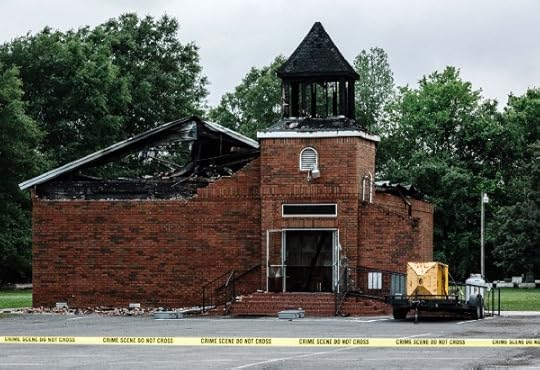
Three black churches were set ablaze over the course of 10 days in Louisiana and the charred remains are pretty much the sum total of how much we seem to care.
From March 26 through April 4, St. Mary Baptist Church in Port Barre, Greater Union Baptist Church and Mount Pleasant Baptist Church in Opelousas were victims of arson. These churches had been pillars of their communities for more than 100 years and, tragically, they also have the same arsonist in common, who happens to be the son of a deputy sheriff in the district.
This is especially disturbing because these fires are reminiscent of the continual assault on black churches in the South during the Jim Crow era, but officials dragged their figurative feet on declaring these as hate crimes. It wasn’t until April 15th (that was just a couple of days ago) that the man responsible was charged accordingly.
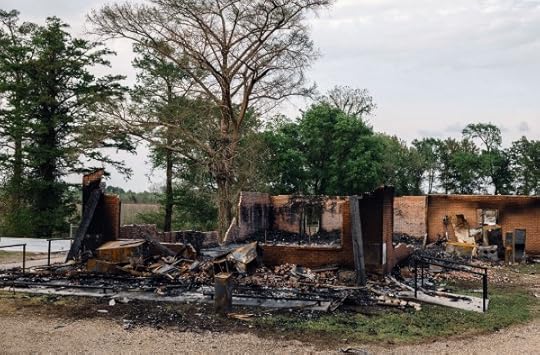
There are dozens of other places of worship in the area that makes up St. Landry Parish where these churches were burned down. The racial divide is almost half and half in a population of 84,000. If the arsonist simply had an anti-religion statement to make through his despicable acts, there were dozens of other churches he could have targeted. But he didn’t. He set fire to and demolished sanctuaries that have been the spiritual cornerstone for generations of black people and their families.
Why are we and the media at large quiet about this? Aren’t we the same people who are culturally hypersensitive about the use of words like ██████ or ██████ ? Aren’t we the same people who’ve adopted “cancel culture” when someone executes a standard of behavior that violates the code of decency according to what is deemed social-media-litically correct? So why aren’t we furious that this scumbag not only terrorized several communities, but he also destroyed institutions of historical significance in the state of Louisiana?
Why did it take two weeks after the third fire for Federal authorities to say, “Okay, this might be a hate crime,” when the pattern was obvious? The delay reminds me of a similar state-sponsored reluctance that was a response to when a shooter opened fire on a dozen churchgoers during a prayer service, killing nine and injuring three others.
redact — to hide, remove or censor (parts of a text) before publication or distribution.
Attacks against the black church have been carried out through mass murder, arson, bombings and vandalism. While we don’t like to consider this level of hatred and racism as still existing in 2019, ignoring or redacting it from the history books and the headlines won’t make it any less true.
On September 15, 1963, in a cowardly response to the integration of Alabama schools, Birmingham’s 16th Street Baptist Church was bombed and four little girls were killed. The outrage over this led to the Civil Rights Act of 1964 and the Voting Rights Act of 1965. These were significant pieces of legislation that would change the course of history for black people, the underprivileged and the unheard.
But where’s our outrage now? Why aren’t these atrocities igniting a movement of a similar nature in this day and age?
As children, if we feared there was a monster under the bed, we would stuff our heads under the pillow and hide beneath the covers. This juvenile force field would temper our anxiety until sleep ushered us to safety. But we can’t ignore this.
The evils of our society won’t vanish into thin air like some monster under the bed when we close our eyes tightly and hum ourselves to an ignorant sleep.
In the age of social media, we can no longer point the finger at CNN, FOX and other news outlets as cherry picking what stories they deem worthy of their attention. I mean, sure, they dominate TV screens across the world, but guess who rivals them now. Us.
We are the media now.
Through social media channels, we can generate a conversation or message quicker than any of the news conglomerates. We carry broadcasting stations around in our pockets in the form of cell phones. It starts with us.
So, again… why aren’t we more outraged that three black churches were set ablaze over the course of 10 days in Louisiana?
In the end, we will remember not the words of our enemies, but the silence of our friends.
On Monday, April 15, Paris’ Notre Dame Cathedral burned. People all over the world were fixated in front of screens everywhere as they watched this Gothic stone building topple in flames. The public response was a stark contrast to the aforementioned.
One of my neighbors had literal tears streaming down her face as she told me about it. Since then, the government and a handful of billionaires have led the way in calling for and pledging hundreds of millions of dollars toward the reconstruction effort.
Here’s what I know. It’s unlikely that this place of worship was the target of racism or terrorism. If I were a gambling man, I’d stake my money on this being an accident or negligence at the worst.
Here’s another thing I know. The Catholic church has plenty of money to rebuild if they choose to. They don’t need your money. They’ll take it, but they don’t need as much as so many other ministries and churches who struggle to make rent from month to month.
Imagine if these agencies and philanthropists pledged hundreds of millions of dollars to smaller churches and ministries instead. You know, the ones who are in actual and dire need of assistance; the ones you don’t hear about or that are worthy of media attention? I mean, it is Holy Week. What could be a more appropriate and perfect response? Just imagine it. Or just do it.
But I digress.
There was a Washington Post article that was written in response to the 1996 burnings of black churches, where the author stated, “The people burning down black churches in the South are generally white, male and young, usually economically marginalized or poorly educated, frequently drunk or high on drugs, rarely affiliated with hate groups, but often deeply driven by racism.”
I know. Racism is an ugly word. If you’re white, being called a racist is the hardest thing to respond to or recover from if someone brands you as such. But racism is still real. We can’t redact it from our history just because it soils our origins.
It doesn’t matter how many times you say Christopher Columbus discovered America, it won’t be true. He didn’t discover ███. In the same way, the pilgrims didn’t have a potluck with the native Americans, Thomas Edison didn’t solely invent the lightbulb and so on.
A redacted history may change the narrative, but history is unchanging no matter what we say.
It’s 2019. We can do better. We don’t need to redact, amend or hide from the truth. We simply need to have the right response to what is happening around us. Whether black or white or any of the myriad of cultures that make up us, we have to do better. We have to acknowledge that we are no better than another person.
If one person suffers, we all suffer. If one part is honored, we can all rejoice together.