Susan Henderson's Blog, page 4
July 2, 2017
Question of the Month: Endings and Beginnings
How do you transition between endings and new beginnings?
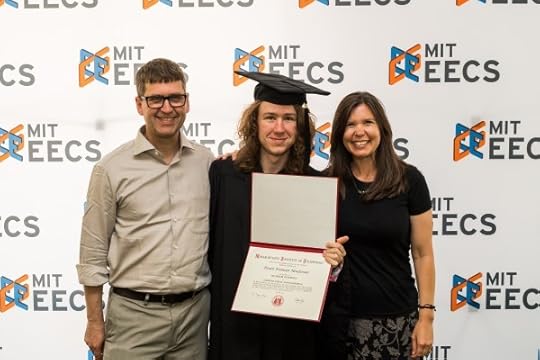
So much happened last month. My oldest son graduated from college, and my youngest son moved in with him, so they’re now sharing an attic in Boston. This will be the first summer since they were born when I don’t have a child living at home.
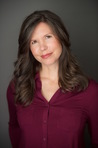
I’m also experiencing a deep sense of being finished with my book that will launch in March of 2018. Lots of steps have now been completed. I’ve done my big edits and my copy edits and my first-pass edits. The layout designers have chosen a font and a look for the inside of the book. I got my author photo taken. (I highly recommend Taylor Hooper Photography!) And we’ve chosen a cover, which I’ll share when I’m allowed.
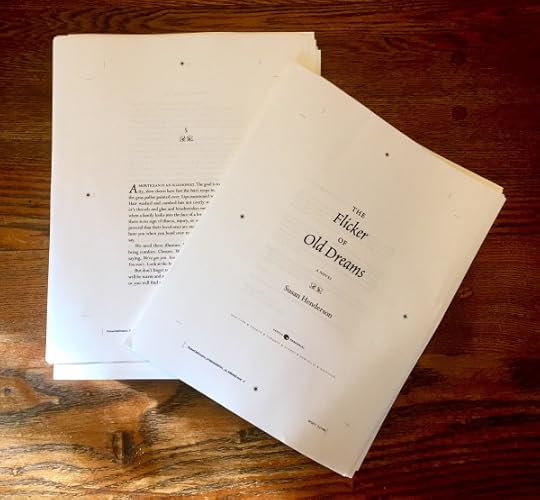
We’re getting awfully close to the stage where a galley (sort of a pretend copy of the book) will be sent to potential blurbers and reviewers. The book is basically out of my hands at this point, and this lull before its March publication date is a good time for me to dive deeply into the new work.
But what exactly is that new work?
I definitely have a sense of the next book I’m trying to write—its premise, its setting. The characters and plot are coming more into focus. But it’s early in the creative process, and so much is still unknown. Also, I don’t know that I’ve fully left the last one behind.
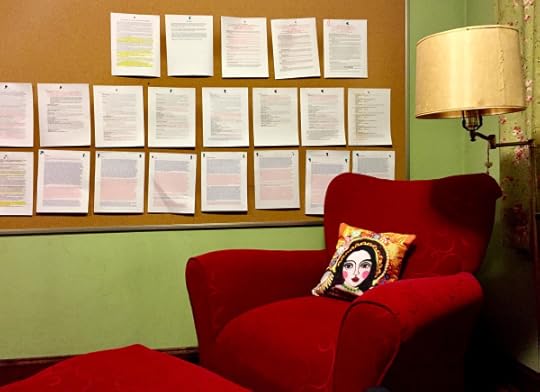
It’s a funny feeling, shifting gears. Like my son, I’m considering my next steps and still feel like I’m decompressing from the intense work that’s consumed my mind for the past few years. Right now I’m in some weird in-between space.
Talk to me about where you are in your own writing process, and how you transition from endings to new beginnings in your work or just in life.
As always, I’ll end by sharing the books I’ve read since my last post:
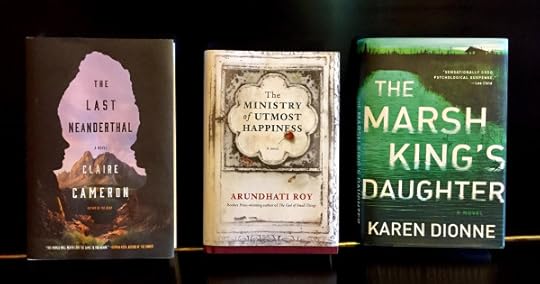
Arundhati Roy, The Ministry of Utmost Happiness
Margaret Atwood, Cat’s Eye
Elisabeth Tova Bailey, The Sound of a Wild Snail Eating
Elizabeth Crane, Turf: Stories
Thomas Mann, The Magic Mountain
Taylor Larsen, Stranger, Father, Beloved
Samanta Schweblin (translated by Megan McDowell), Fever Dream
Claire Cameron, The Last Neanderthal
William Landay, Defending Jacob
Lidia Yuknavitch, The Book of Joan
Kim Chinquee, Veer
Stephen Pimpare, Ghettos, Tramps, and Welfare Queens
Donna Tartt, The Secret History
Patrick B. Osada, Changes
Karen Dionne, The Marsh King’s Daughter
Jennifer Gilmore, The Mothers
Kate Clifford Larson, Rosemary: The Hidden Kennedy Daughter
And one re-read…
Arundhati Roy, The God of Small Things
That’s it for now. I look forward to your stories in the comments section!


April 30, 2017
Question of the Month: The Blank Page
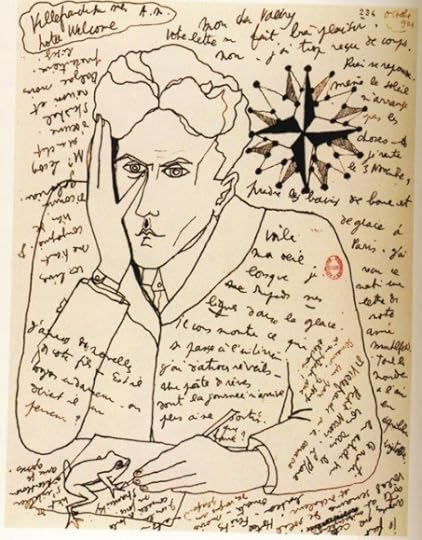
What do you do when your new book is only a blank page? How do you start getting ideas? The picture just below is how the great works with a blank page. What’s your process of mapping things out or free-wheeling it? I want to hear any tips you’d like to share.
HarperCollins has my final edits on the Montana book, and I should get the copy-edits back from them any day now. Soon the book will be out of my hands. Next steps are more about collaboration than anything else as we move to blurbs, cover design, and marketing.
So now it’s on to the blank page of something new.
It’s taken me a while to leave the old book—to leave the small Montana town and the blizzard and the mortician’s tools behind. I’d stare at the new, blank page and wonder if there was another story in me that could hold my attention for two, three years. And for a long while, the page stayed blank.
What an exhilarating, intimidating thing a blank page is.
At some point, I began to make some marks on my paper—random doodles, bits of ideas I’d had over the years that I still remembered. But none of them were big enough to excite me. I need fire, obsession, ideas that send my head and heart racing.
So I set out to recharge my senses and my imagination.
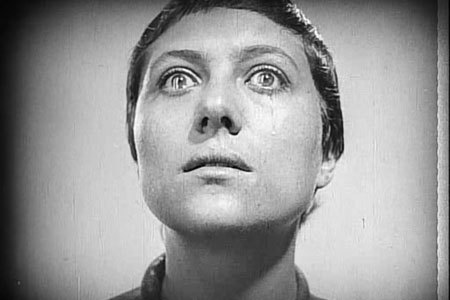
During what would normally be my writing time, I watched silent movies and foreign films with the subtitles turned off, taking in images and emotions and music, trying to spark any sense of curiosity or anything unresolved and burbling inside of me. I doodled on pieces of paper as I watched these movies.
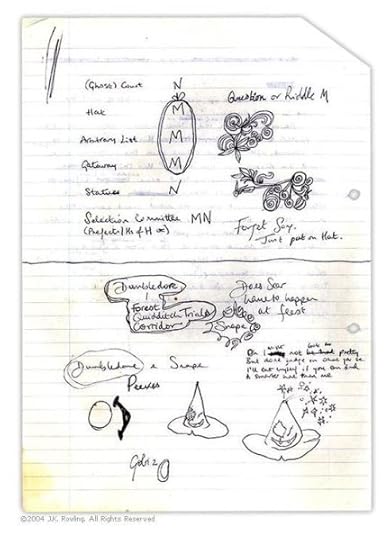
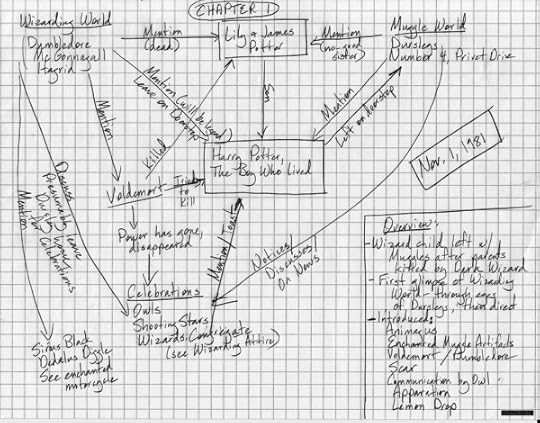
This is one of J.K. Rowling’s early pages. Same, further down.
Whenever I left the house or read the newspaper, I tried to become more conscious about what moved or enraged or frightened me. I walked a lot. And that’s when I became aware of my first notable obsession: a particular abandoned building in my town. I began walking and jogging past it regularly, transfixed.
My stories tend to begin with my interest in settings. Some writers talk about the main character’s voice beaming down, fully-formed. Other writers begin with concepts. Some dig through their personal history.
I fall for settings, I guess. What’s on the other side of this window? What’s this interesting decoration or this elaborate padlock about? I wonder what happened in this room?
I start to collect puzzle pieces and questions. And before long, these tangible images and textures spark old longings and fascinations and wounds I carry with me. My imagination wakes up. I wonder…? What if…? And suddenly my head is popping with ideas and I begin to fill page after page, chasing a new story.
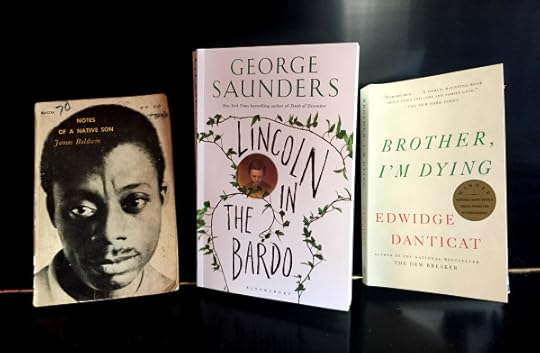
As always, I’ll end with the books I’ve read since my last post…
Mohsin Hamid, Exit West
Sue Monk Kidd, The Invention of Wings
George Saunders, Lincoln in the Bardo
Jim Daniels, Rowing Inland
Dan Chaon, Ill Will
Adam Haslett, Imagine Me Gone
Mark Haddon, The Curious Incident of the Dog in the Night-Time
Sally Koslow, The Widow Waltz
Ian McEwan, Amsterdam
John Bingham, The Courage to Start: A Guide to Running for Your Life
Carlos Ruiz Zafón, The Shadow of the Wind
Edwidge Danticat, Brother, I’m Dying
Elisabeth Tova Bailey, The Sound of a Wild Snail Eating
And one re-read:
James Baldwin, Notes of a Native Son
Jump into the comments below and share what you’re reading or how you approach the blank page or whatever else you’d like to talk about.

March 5, 2017
Question of the Month: Research
What kinds of research are you doing for your writing projects?
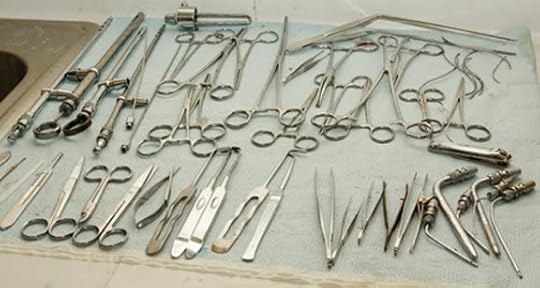
Most of the research I did for the book I just finished was on dead people: bodies, dead bodies, the weight and feel of things, bathing the dead, embalming.
I watched YouTubes of surgeries and autopsies to listen to sounds of cutting and the sounds of the room itself. I learned about tools and machines. I talked to morticians and I listened to people who had lost loved ones.
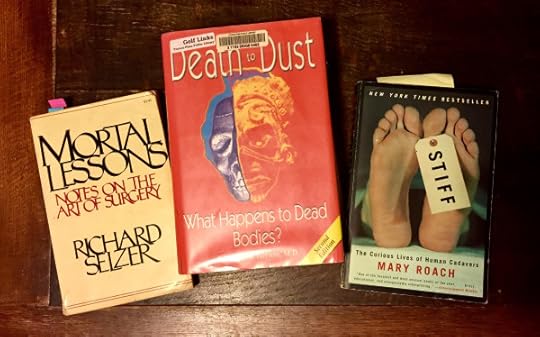
My favorite research books were Mary Roach’s Stiff, a collection of essays about what happens when you donate your body to science, and Richard Selzer’s Mortal Lessons, a book of essays I’d first read in middle school when I found it on my mom’s bookshelf. That book is pure poetry.
What I discovered as I delved into the research was this: the more you study and write about death, the more you are examining what it means to be alive. And this became something I wrestled with via my narrator, an embalmer who would rather spend her time with the dead than the living. So I gave her the uncomfortable task of leaving her basement workroom and stepping into the world outside of her workroom, where she feels so vulnerable.
*
There’s research for this new book, too. But I’ll keep it to myself for now. I always love the spectacular alone time with a book in its earliest stages, when no one in the world knows what’s in your head and what’s developing on the page. Some people like to share and get feedback early in the process. I don’t.
*
I’ll end (as usual) with the books I read since my last post:
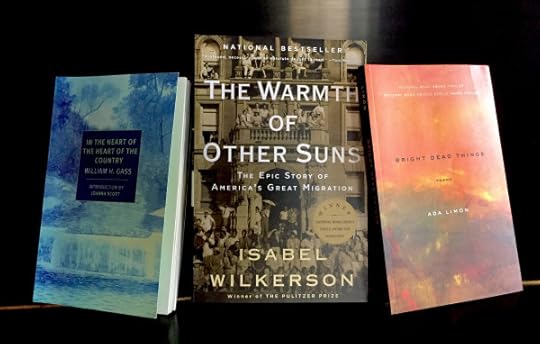
Isabel Wilkerson, The Warmth of Other Suns: The Epic Story of America’s Great Migration
Karan Mahajan, The Association of Small Bombs
Arlie Russell Hochschild, Strangers in Their Own Land: Anger and Mourning on the American Right
Miranda July, No One Belongs Here More Than You: Stories
Jose Saramago, Blindness
Elizabeth Crane, The History of Great Things
Ada Limón, Bright Dead Things: Poems
Bruce Springsteen, Born to Run
Andre Dubus III, House of Sand and Fog
Jim Crace, Harvest
Natashia Deón, Grace
William Gass, In the Heart of the Heart of the Country
Elm Leaves Journal, The Dirt Edition (Winter 2016)
Bill Dedman and Paul Clark Newell, Empty Mansions
Melissa and Dallas Hartwig, Whole30
John Lewis, Andrew Aydin, and Nate Powell, March: Book Three
And two re-reads of poetry collections:
Jim Daniels, Punching Out
Cornelius Eady, Victims of the Latest Dance Craze
*
In the comments, share with me the research you’re doing, or have done, to find a way into your stories. Also, share any good books you’ve been reading, or just share about your life in general. It’s always good to hear from you.

December 1, 2016
Question of the Month: A Book
For those of you working on a book or some other long project, tell me a little about where you are in the process. Or maybe just how that process feels right now.
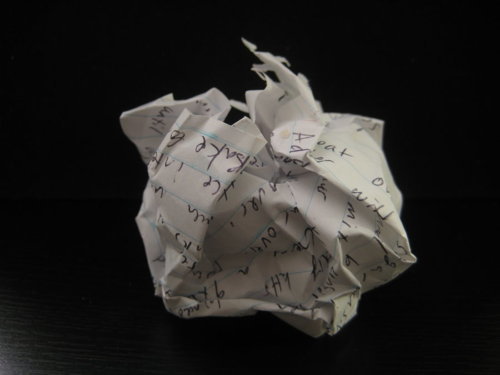
It will take a few LitPark posts to describe the long project I just completed. (I wasn’t willing to talk about it at length until I was certain I’d come out the other side.) At times, the process felt like chaos. I felt lost, full of doubt, and afraid I was writing something too big for my capabilities. As many of you know, at one point, I threw everything away and started over.
Again, I’ll share more specifics later. But I read an interesting book recently, Jack Kerouac’s Old Angel Midnight. In the forward to the book, it’s described as Kerouac’s 11-year writer’s block. He worked feverishly at this manuscript, but the result is kind of a glorious gibberish, almost like a jazz artist scatting. Sometimes he makes observations or writes what he hears in the accents he hears them in. Sometimes the work is emotional, sometimes pointed, and most often, it is a look into the soup of his mind.
I found it so comforting to read because it’s the closest thing I’ve ever found to my thought process and why creating something that is eventually linear and comprehensible is such a struggle for me.
Here’s a page from the book (I just randomly opened to this one):
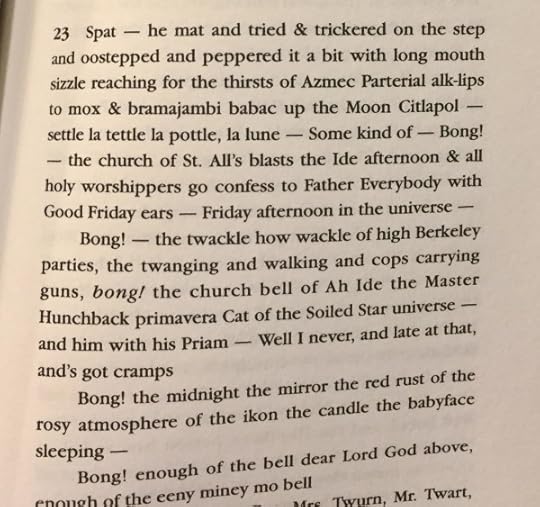
This page happens to be one of the easier to follow and visualize (and hear). It actually reminds me a good bit of James Joyce. Other parts of the book are harder to reach. But I wanted to share this because we each fall into stories in different ways. Our brains are different. What we attend to most easily is different. And in the end, the journeys we take to find and tell our stories are as unique as we are. After eleven years of working on Old Angel Midnight, Kerouac wrote On the Road in one short burst. My hunch is that he couldn’t have written it without first writing this.
So I had described much of the process of my latest project as being one of chaos and doubt. But at some point, the chaotic pieces began to make sense and fit together and tell the story I didn’t know if I was capable of telling. The passages I had worried were digressions turned out to be crucial. I wasn’t as lost as I felt. And one day, I looked at the stack of pages and thought, wait a minute, I think this has finally become a book.

Oh! So I almost forgot to share my news! I sold my new book, again to HarperCollins. My editor this time is Sara Nelson. I’m unbelievably grateful to Sara and to the whole crew there and to my incredible agent, and to you, my writer’s support group.
We’re on this long, winding journey together and I couldn’t ask for better company.
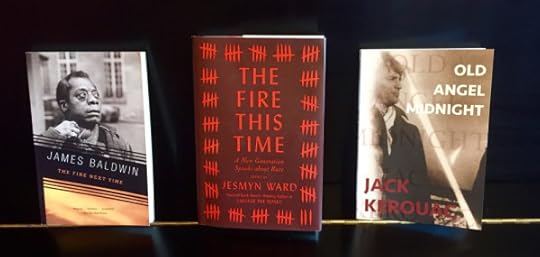
I’ll end, as usual, by sharing the books I read since my last post:
Octavia Butler, Kindred
H.G. Wells, War of the Worlds
Caroline Leavitt, Cruel Beautiful World
Jack Kerouac, Old Angel Midnight
Jack Kerouac, On the Road
Hans Fallada (translated by Michael Hoffman), Every Man Dies Alone
Marcy Dermansky, The Red Car
James Baldwin, The Fire Next Time
Jesmyn Ward, The Fire This Time
Paul Harding, Tinkers
Emma Cline, The Girls
and Triple No. 3 (a chapbook from Ravenna Press)
Oh, and one re-read:
William Faulkner, As I Lay Dying (It’s kind of embarrassing how often I re-read this book.)
*
Now, let’s hear from you. Tell me about your work. Tell me about its heart, what excites you, and what terrifies you about it. And what you need to see it through.

October 2, 2016
Question of the Month: Partners
Tell me about your partner.
We talk so much here about ourselves and our writing lives. But who’s that person (or animal or drug or ritual) you go home to, or that person you rely on to balance out your life? I want to hear all about him or her.
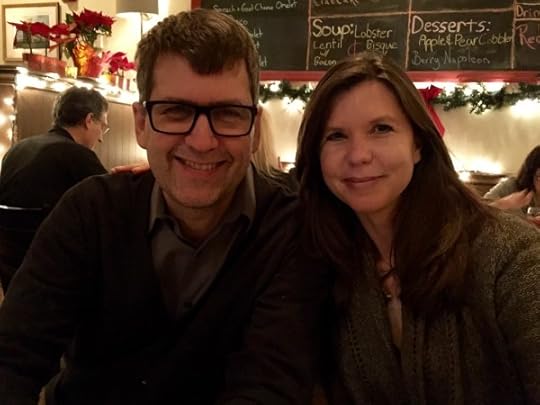
Mr. H and I met our second year in college. He was a drama major reading Einstein. I was still a science major reading Oliver Sacks. We traded books. He read mine and I pretended to read his.
Our first date was to an August Wilson play.
He grew up in Honolulu, Singapore, and London. He had a British accent when we first started dating, but now you mostly hear it in his syntax or in his funny choice of adjectives.
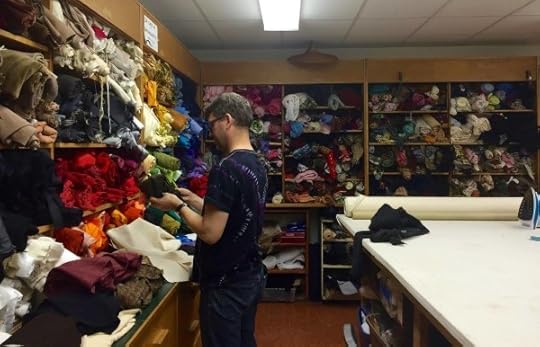
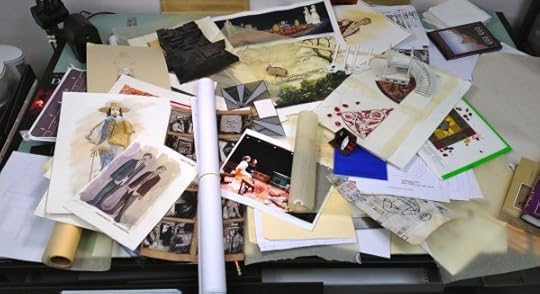
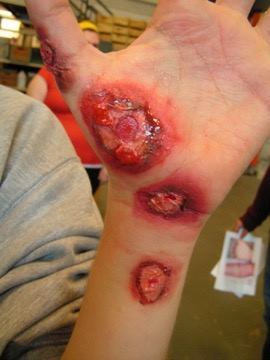
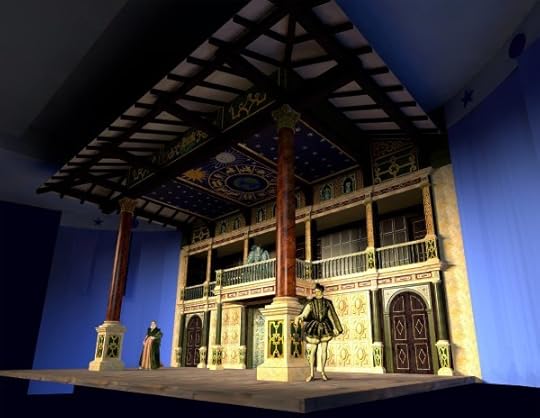
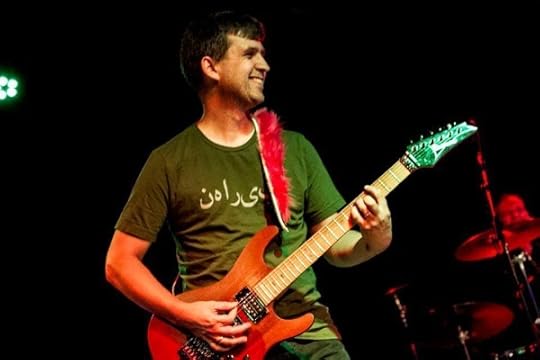
Mr. H teaches, paints, designs and builds sets, designs and builds costumes, creates cool scar make-up, writes songs when he’s in the shower, and plays guitar in a punk band.
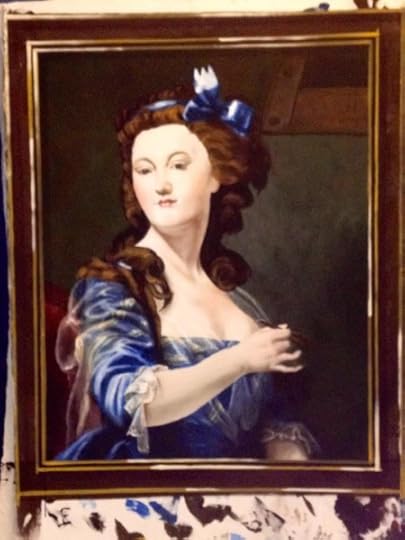
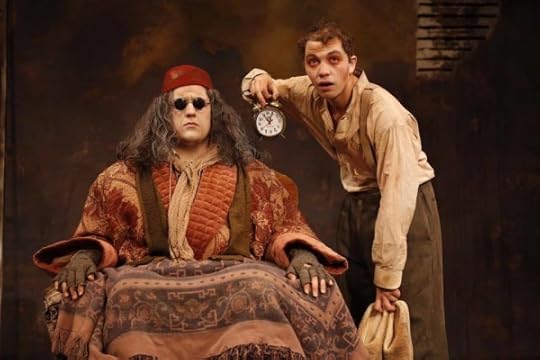
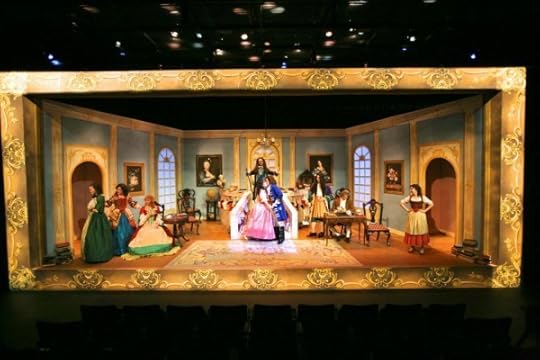
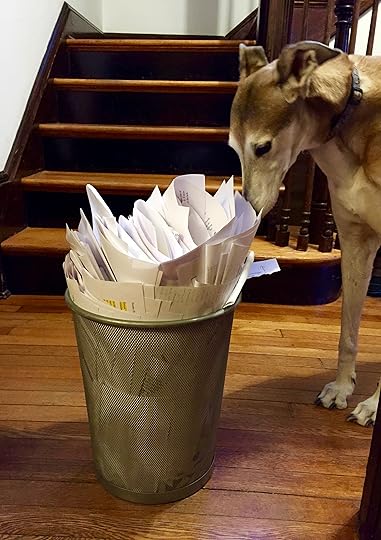
When our first dog was dying, he carried him up the stairs every night so he could sleep in our bed and carried him down the stairs every morning. Our boys were the first babies he ever held.
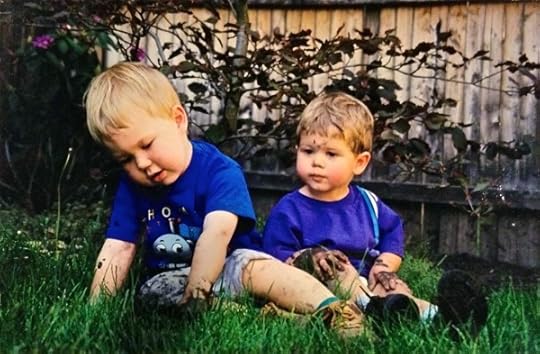
He played Lego with the boys and sewed costumes for them. And when they got older, he taught them games like Magic Cards and Glory to Rome.
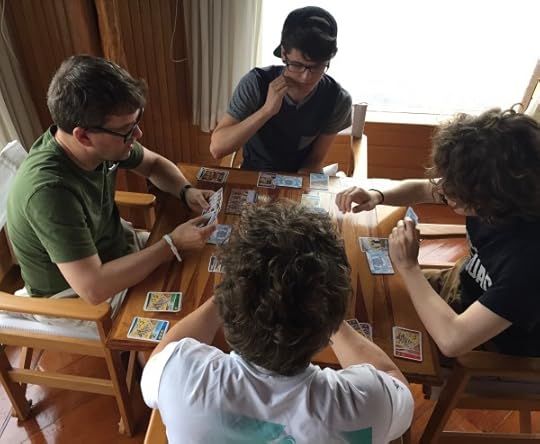
How is my life better because of him? Because we talk about anything and everything. Because we’re both constantly curious and constantly learning. Because we laugh. We laugh a lot. Because we know life has ups and downs, and he’s the person I want with me on this great rollercoaster of life.

I’ll end by sharing the books I read since my last post:
Ocean Vuong, Night Sky with Exit Wounds
Max Porter, Grief Is the Thing with Feathers: A Novel
Yaa Gyasi, Homegoing
Aimee Bender, The Particular Sadness of Lemon Cake
Yukio Mishima, Death in Midsummer
Helen Simonson, The Summer Before the War
Jessica Anya Blau, The Trouble with Lexie
Thelma Adams, The Last Woman Standing
Natalie Baszile, Queen Sugar
Don DeLillo, Zero K
Anand Giridharadas, The True American: Murder and Mercy in Texas
Sari Wilson, Girl Through Glass
Tracy K. Smith, Life on Mars: Poems
Jack Gilbert, Refusing Heaven
Paula Whyman, You May See a Stranger
Aleksandar Hemon, The Lazarus Project
Jack Gilbert, Refusing Heaven
Gina Frangello, Every Kind of Wanting
Akhil Sharma, Family Life
Joyce Carol Oates, The Gravedigger’s Daughter
Colson Whitehead, The Underground Railroad
And some re-reads:
Elie Wiesel, Night
Italo Calvino, Invisible Cities
John Steinbeck, Of Mice and Men
So that’s it for this month. But jump into the comments section and tell me about your partner. I want to know that side of you.

May 31, 2016
Question of the Month: Failure
Tell me about a time in your life that looked like failure and became something positive.
I just got back from a trip to Peru, where we slept on a boat at night and hiked through the Amazon by day. I’ll share more about the trip next month, once I’ve sorted through the photos. Our kids are still there, wanting to stay on a few days without parents. It was a phenomenal time, and I love how close my boys are and how much they laugh when they’re together.

So, the book is done. “Done.” And now it’s going out to my most-trusted readers. But I wanted to talk here about some of the reasons it took me five years to write this book.
Reasons one and two are easy. Writing a novel is hard work. There is the effort of emptying that first draft out of your head and heart. Then comes the harder step (for me, anyway) of shaping and deepening the novel and discovering what it really wants to be about.
A third reason why the novel took so much time was that my kids were finishing high school, applying to college, and then making that transition. And life comes first.
But reason number four is that I ran into a big snag, one I didn’t realize until I was five years and 54 chapters in. It was just before this past Christmas, my boys were due home from college, and I sat in a chair by the tree we’d just decorated with my printed out novel and started to cry. Because it wasn’t going to work. It didn’t need another tough edit (and there were many, believe me). It really, no-kidding-around wasn’t going to work. So I just cried with that hard truth and let it sink in.
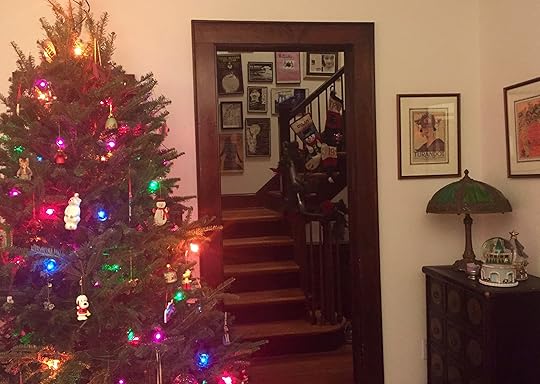
The next day, one boy came home, and then another. It felt unbelievably good to have them close. They asked about the novel, and I told them about its failure—because I think it’s important to share things like that, how you can work hard and still not reach your goal and it sucks and life is still good. Vacation continued with music and fires and walks and home-cooking and teenagers coming in and out of the house.
I wasn’t planning to think about the lost novel over winter break, but things churn in the back of your mind when you relax and focus on other things.
And what I started to realize is the reason the book hadn’t been working, edit after edit, was because I had two ideas that didn’t belong together, like conjoined twins who were entirely separate beings except that they were mistakenly attached.
So, the next day, because I couldn’t help myself, I began to surgically separate the conjoined novels. I scooped the messy cuttings into two separate folders and was happy to leave them there a while without thinking about them further. But one of the novels began to call desperately for me. Because the town and the surviving characters, so grateful not to have a plot thrust upon them, began to tell me the story they wanted to tell.
I simply listened and wrote. Sometimes I couldn’t write fast enough to keep up. And four months later, it was done. I saved maybe 30 pages from the original conjoined thing it had been.
I’m happy with the story, which was written not from the head but from some subconscious place. I’m a very heady person, so this was new for me.
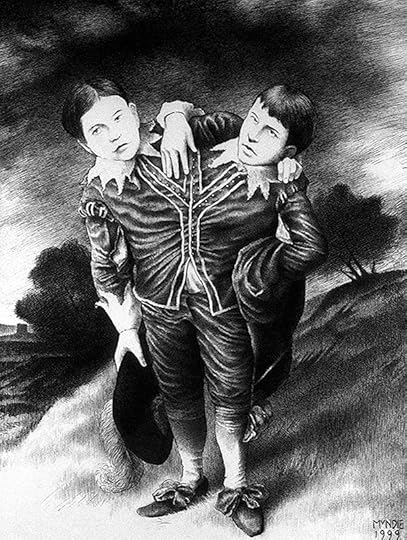
Lately, the other half of the conjoined novels has been calling me, but the story doesn’t belong to those gentle characters I had thrust it upon. The second story wants to be told by quite a different team, and I am trying to listen more than steer. I’m not pinning any expectations on what I write or how fast I write it or whether it becomes a novel or something much shorter.
Anyway, I feel I’ve emerged from a long journey wiser (and grayer) than when I set out. And now I have two books, not one. I mean sort of. And I have generous, talented, big-hearted people helping. How grateful I am for that!
Would love to hear your stories about process or failure or whatever you want to chat about in the comments.
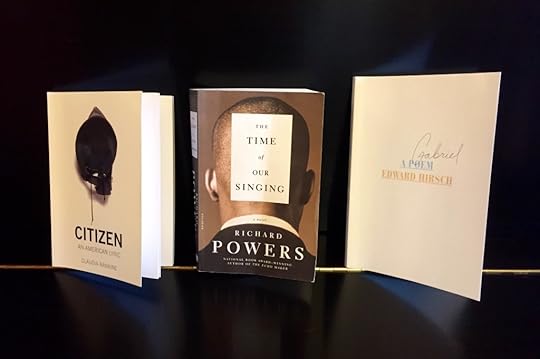
As always, I’ll close with a list of books I read since my last blog post:
Ta-Nehisi Coates, Between the World and Me
Edward Hirsch, Gabriel: A Poem
Mary Gaitskill, The Mare
Ray Bradbury, Fahrenheit 451
John Steinbeck, Grapes of Wrath
Alice Sebold, Lucky: A Memoir
Richard Powers, The Time of Our Singing
Claudia Rankine, Citizen
Galway Kinnell, The Book of Nightmares
Edith Pearlman, Honeydew: Stories
Ransom Riggs, Miss Peregrine’s Home for Peculiar Children
Jim Daniels, Jane McCafferty, Charlee Brodsky, From Milltown to Malltown
Ron Carlson, At the Jim Bridger
David Margolick, Elizabeth and Hazel: Two Women of Little Rock
Kurt Vonnegut, Slaughter House-Five
Don DeLillo, Underworld
Elana Ferrante, My Brilliant Friend
Elizabeth Strout, Olive Kitteridge
Rob Roberge, Liar: A Memoir
Karen Russell, St. Lucy’s Home for Girls Raised by Wolves: Stories
Toni Morrison, Home
Ruth Ozeki, All over Creation
Lauren Groff, Arcadia
John Steinbeck, Cannery Row
John Steinbeck, The Winter of Our Discontent
Larry Levis, The Darkening Trapeze
Christina Baker Kline, Orphan Train
Bruce Bauman, Broken Sleep
Paula Hawkins, The Girl on the Train
David Mitchell, The Bone Clocks
Noon magazine, 2016 issue
And a few re-reads:
James Baldwin, Go Tell It on the Mountain
Marilynne Robinson, Home
Virginia Woolf, To the Lighthouse
Franz Kafka, The Metamorphosis
Tillie Olsen, “I Stand Here Ironing”
Oh, and one that Mr. H read to me:
Magnus Mills, All Quiet on the Orient Express
Let me end with this beautiful piece Dylan Landis brought to my attention: Learn this: you don’t write in competition with others.

December 4, 2015
Question of the Month: Writing and Living
Tell me about your life and where writing fits into it.

This is a photo of a hatching nest. See the baby praying mantises? My neighbor called me away from my writing one day so we could watch it together. Incredible, isn’t it?
A lot of my neighbors know that, if they want to reach me during the day, I’m either writing in my office or I’m walking, which is my more productive way of thinking through a story.
If they happen to see me out and about, they’ll often ask, How’s the book going? It’s a perfectly sensible question, but I always feel like there’s the answer people want to hear, and then the one I’m going to give them.
What they’re really asking about is the end-product. Is the book done yet? Is it on a shelf in the bookstore?
When you’re a writer, you regularly answer such questions with no and no. Which gives an illusion of failure. Maybe you’re not writing fast enough. Maybe you’re not smart enough. Maybe you don’t work hard enough. Maybe you’re fooling yourself when you say you’re a writer.

But most of a writer’s work is not about this end result. It’s about the private and often circular process of thinking, scribbling, re-thinking, rearranging, erasing, scribbling again. This process can take months or years or decades, depending on the writer and depending on the work.
My first book took roughly 6 years of thinking and scribbling and revising. For many of us, ideas come in fragments. Or perhaps they seem whole when you get the great idea while you’re shampooing your hair. But when you sit down to explore the idea more fully, it starts to look small, ordinary, dumb. Sometimes that’s enough to ball up the idea and toss it in the trash.
Except some of these unformed ideas nag at you, beg you to dig deeper. You can’t share your ideas at this stage because they’re like soap bubbles, easily punctured. And so you close your door and think and scribble where no one can look over your shoulder and whisper, Are you sure that’s what you want to write about? Don’t you think it’s cliché? Far-fetched? Dumb?
This is my office buddy today. He’s never once called my ideas dumb.

By the time you accidentally share the idea that you’re working on a book, you may have a first draft. For me, the first draft is only the beginning of a very long journey. There will be many drafts, most of them terrible, but each showing a glimmer of hope—a character who starts to feel real, a puzzle you’re invested in figuring out, some phrasing here and there that reminds you sometimes your writing doesn’t suck. For most of the 6 years I spent working on the first book, I had to tell people, No, I’m not done yet. No, it hasn’t sold yet.
Over those same 6 years, plenty of life happened. I was not simply thinking and scribbling behind a closed door. Think of how many pairs of shoes a kid can outgrow in that time. Think of all the meals and sick days and vacations together. All the stories shared. How many hairstyles and friends and hobbies may come and go.
My children were short and cuddly when I started the book. Here’s how we all looked then…

They were much taller when they came to the book launch, rolling their eyes because they were too cool to be there with their mom.
I loved the rolly-eyed version of my kids as much as the cuddly version.  But the point is, life happens while you’re writing and you don’t want to miss it.
Measuring a writer’s merit by whether the work is finished is kind like measuring a relationship by whether there was a wedding, or measuring a life by whether there was a birth or a death. Most of who we are and what we do happens in between, in the being.
What I learned in writing and publishing the first book is that you better find ways to enjoy the process because that’s the longest leg of it. Enjoying doesn’t mean that the writing is suddenly easy or without frustration. For me, it means that you’ve chosen a topic, a storyline, a setting, a cast of characters that intrigues you. That you value the process of creating, of being able to go in any direction you choose. That you enjoy the dreaming and digging and puzzling, the search for meaning, for answers, for more questions. Writing, like life, like relationships that matter, isn’t all one singular emotion, doesn’t move in one singular direction; but you commit, you are present, you have chosen to devote your time and your heart.
So this is where I am with book #2: thinking, scribbling, revising. And maybe getting close. I’m also remembering to live my life. I’m writing these words for those of you who feel like you’re failing. Not reaching that end-product fast enough. I’m also writing these words for myself.

Books I read since my last blog post:
Hanya Yanagihara, A Little Life
Toni Morrison, Beloved
Nathaniel Hawthorne, The House of Seven Gables
Fred Botting, Gothic (The New Critical Idiom)
Justin D. Edwards and Rune Graulund, Grotesque (The New Critical Idiom)
Valerie Martin, Property
Thomas Merton, The Seven Storey Mountain
Aldous Huxley, Brave New World
Paul Laurence Dunbar, The Strength of Gideon and Other Stories
I also re-read…
Oscar Wilde, The Picture of Dorian Gray
Nicole Krauss, The History of Love
Sharon Olds, The Dead and the Living
And I have just started Broken Sleep by my friend, Bruce Bauman.

A couple of newsy things: I did an interview with the talented Karen Stefano, which you can listen to here. It’s over a half-hour of us chatting about books and writing, so make yourself a cup of coffee first.
I also published a story in New World Writing. It’s a glimpse into the new book. Many thanks to the amazing editors, Kim Chinquee and Frederick Barthelme, for including me in such a tremendous magazine.
And a quick shout out to Connie Mayo for this.
That’s all from me for now. But I’d like to hear from you. Talk to me about your writing, your life, what you’re reading, how you’re doing.

October 13, 2015
Question of the Month: Unplugging
Talk to me about your experience with social media, the good and the bad.

I’m just back from California, where I worked on my book with some truly brilliant people. (Special thanks to David Ulin, the best line-editor I know.)
I have been unplugged from social media since April of this year. It’s been good for me in ways I’d hoped and in ways I never expected. My goal when I made this decision was to take back the time I frittered away online and apply it to my novel-in-progress.
What I didn’t expect was the clear head. Because I thought social media was something that stole my time, when the truth is it clogged my head.
Let me explain what I mean.
Whenever I signed on to FaceBook or Twitter, I would scroll through feed. What I liked about this was a quick sense of catching up with friends and writers and the world. What I didn’t realize until I let it go of this habit was how much it affected my thinking and my mood.
Every time I checked in, I would absorb the daily happenings, medical scares, triumphs, political rants, looming deadlines, vacations photos, linked articles, world news, and so on of the roughly 5,000 people posting in my feed. And I would respond as best I could, hopping between congratulations to a friend who’d won an award and sympathy to a friend who’d hospitalized a family member. I fretted about my responses. They always felt rushed, but I had to move along. That list would grow hour by hour and never stop.
When I moved from the social online world to my novel, my head was so full I could no longer find the thoughts and feelings that were mine before I’d opened the computer. I didn’t even realize the effect of this until I stepped away from it.
And so, when I unplugged, it was not so much that I gained time but that my thoughts and feelings were uncluttered. More accessible. I could be more present with my work, and more importantly, with the people sitting across from me in real life.

So just quickly, for those of you wondering how I’ve been… Mr. H and I are feeling all the newness of our now-empty nest. We miss the boys and their friends and the noise and the chaos of a much busier life. We eat on the front porch more, where there’s only room for two, and watch storms and walk through museums and see cheap afternoon movies and plan trips to visit the boys. Right now we’re all dealing long-distance with the deep grief of losing one of our beloved pets. Something that doesn’t feel real yet and still catches me by the throat. I’m so glad we’re seeing both boys this month. I want to hold them so badly.
I know many of you are also curious how the book’s going. I want to talk at length about the writing process, and the process of writing this particular book, but not now, not while I’m still in it. All I can say is I’m working deeply on it. I’m allowing the process to be what it is, one of discovery, of digging, of circling back to early pages after I know more. While I keep loose deadlines in mind, my real goal is not to finish at a certain speed but rather to make this book be all it can.

Before I go, I’ll share with you the books I finished since going off-line:
Connie Mayo, The Island of Worthy Boys (I blurbed this beautiful book!)
Lidia Yuknavitch, The Chronology of Water
W. Somerset Maugham, Of Human Bondage
Kate Atkinson, Life After Life
Vladimir Nabokov, Speak Memory: An Autobiography Revisited
John Steinbeck, East of Eden
Anthony Doerr, All the Light We Cannot See
Sara Gruen, At the Water’s Edge
William Faulkner, The Sound and the Fury
Annie Jacobsen, The Pentagon’s Brain: An Uncensored History of DARPA
Saeed Jones, Prelude to Bruise
Harold Michael Harvey, Justice in the Round
Kent Haruf, Our Souls at Night
John Lewis, Andrew Aydin, Nate Powell, March: Book One and March: Book Two
Sylvia Plath, The Bell Jar
David L. Ulin, Sidewalking
Ford Maddox Ford, Parade’s End
Saeeda Hafiz, The Healing: A Memoir of Food, Family, and Yoga
Jen Grow, My Life as a Mermaid
Thomas Wolfe, Look Homeward Angel
Monica Wesolowska, Holding Silvan
Therese Anne Fowler, Z: A Novel of Zelda Fitzgerald
Brett Easton Ellis, American Psycho
F. Scott Fitzgerald, This Side of Paradise
Ray Bradbury, Something Wicked This Way Comes
Flannery O’Connor, Wise Blood
And I re-read these books:
Zora Neale Hurston, Their Eyes Were Watching God
William Faulkner, As I Lay Dying
Flannery O’Connor, A Good Man Is Hard to Find and Other Stories
So that’s a little about my world. Would love it if you’d catch me up on your life and your writing and your experience with social media before I disappear again.

April 3, 2015
Question of the Month: Nest
Anyone here have kids leaving the nest, or already flown? How is it for you? For your children? I don’t just want to hear your stories; I need to hear them.

Two autumns ago, my oldest went off to MIT. I can’t count how many times I passed his empty room or sat at the dining room table beside his empty seat and just started crying. I waited for phone calls, emails, texts, but his life was not about missing what he’d left behind and waiting to hear from us. His life was full, fast-moving. He was stretching his wings, deciding for himself how he would spend his day, how he would decorate his dorm room, who he’d share his time with, what he would choose to study. Each time he comes home, he is new and changed in remarkable ways—deeper, with more life experience, and more opinions about the world and the direction of his own life. He left for college thinking he wanted to be a mathematician, but he’s since fallen in love with the space where quantum physics meets quantum computing. And more importantly, his friends, the music he creates in his free time, and the larger world interests him as much as his studies.
Now it’s my youngest’s turn. He just said yes to the Eastman School of Music, where he’ll study jazz guitar. That’s a photo of the beautiful school up above and a shot of one of the concert halls below. He got an absolutely massive 4-year scholarship and will be a part of a tight-knit conservatory, only 500 undergrads total, most of them classical musicians. Soon, he’ll begin his great adventure and spread his wings. Our home will be so terribly quiet.

My youngest has always been creative. Even before he discovered the guitar, he’s been all about creating art of one kind or another. When he was small, he loved costumes, wearing several a day.

He went through a phase of patterning and sewing shirts. I’d find needles and thread under his pillow and realize he was only pretending to go to sleep. As soon as we left the room, he would thread a needle and get to work.
He tried to create board games and often wrote the first chapters of novels. He’d say things like, “This one’s Treasure Island meets The Hitchhiker’s Guide to the Galaxy.”
For a while he loved gourmet cooking—especially intricate recipes and anything requiring a blow torch. And there was a drawing phase. He drew these at eleven.

He loves watching, critiquing, writing, editing and scoring films. (He’s quite the expert at mixing batches of fake blood!)

But it’s his love for playing the guitar that’s been constant over the years. He’s had amazing teachers, all gifted artists themselves: Ed Lozano, Carl Roa, Patrick Brennan, Nils Weinhold, Rick Stone. And there are the teachers he’s never met, those artists he listens to when he walks around wearing his ear buds: Jim Hall, Wes Montgomery, Django Reinhardt, Charles Mingus, Art Blakey, Mike Stern, George Benson, John Scofield, Snarky Puppy.
Next fall, as he lugs his guitar through the Eastman hallways (this original Maxfield Parrish is hanging in one of them!), he’ll start to grow and change in ways I will be so interested to discover. But until then, I only hope that time will slow down, because I love this here and now in the nest.

October 5, 2014
Question of the Month: Discovering the Story
How many of you know precisely what you’re writing about when you begin a novel?

I love this painting, Lantern Parade by Thomas Cooper Gotch, because it reminds me of how my stories develop.
Say you’re driving or taking a shower or trying to fall asleep (these are the times most of my stories come to me), and suddenly you see an image in your mind that looks like this painting. Compelling but not quite in focus, much of it in shadow. You love the image, the mood it evokes. But mostly it engages your curiosity.
Where are they going? Is this festive or solemn? Are they silent or singing? You can’t quite see it all, but you slowly start to feel the ground under a patent leather shoe. Whose shoe? Is it broken-in or bought only for this occasion? Why are you drawn to this one girl? Will this be your narrator? Someone important to your narrator? Or simply someone who’s symbolic of… what? Sometimes images don’t hold your interest. They’re too straight forward. But this one has more and more lurking in the shadows. Who are those boys standing above it all? What are they standing on? Is it chilly or humid? What will I see in the daytime? What of this procession will be left on the ground. And where are we?
This is often how it starts… an image or scene, a voice or question comes to you, trembling and underdeveloped. You don’t even know what it is you’re holding in your mind, but it’s got you.
And from here, you are following characters and details, looking under blankets and stones. Where does this one go after the parade? What does she keep in her pockets? Who is she meeting or avoiding? You can do this for hours, weeks, okay, years. Sometimes you even think you’ve got the story figured out.
And then, aha, you bump into that one crucial object or put two unlikely characters together and something clicks. That initial image that had so entranced you has attached itself to something fierce and unsettled at your core. Your story has brought you to a question or conflict that nags at you, that lies tangled in the gut. It’s brought you to something you’re afraid to voice, something that makes you want to shut your eyes, but you are going to follow it anyway. Now you have urgency. Now you have a journey that’s not only for these characters you’ve come to know, but one you must follow to the end because there’s a stake in it for you, an answer you’ve been seeking.

This wandering in the dark, hands out, bumping into one thing and then another, is what I love about the work. It’s also what I find maddening. Because you don’t entirely know what you’re doing or where you’re going. E. L. Doctorow described it this way: “Writing is like driving at night in the fog. You can only see as far as your headlights, but you can make the whole trip that way.”
To be honest here, if you have a profoundly bad sense of direction, a drive in the fog means there’s a good change you’ll lose your way or find yourself upside-down in a ditch. Sometimes there’s a lot of backtracking, needed repairs, and intense searching to find the road again. Eventually, though, you arrive at your destination. Sometimes it’s a place that surprises you, and sometimes it’s a place that is as familiar as an old soul you lost touch with years ago.
Is your writing process anything like mine or something entirely different? Tell your stories! I always learn so much from them.
*
If you have a minute, please head over to the Type Rope Walkers blog, where I was invited to share some thoughts on writing. My piece is called, Perseverance: 3 Tips to Help Writers Keep the Faith. Hope it offers help to some of you.
*
Many thanks for the mentions in Soho Press, Tumblr, and HarperCollins. Many thanks, as always, to all of you who share your stories here and make our lives richer for it!