Susan Henderson's Blog, page 3
January 13, 2018
Question of the Month: Intensity
Do you know the feeling when too much is flying your way at once and you’re trying to keep calm?
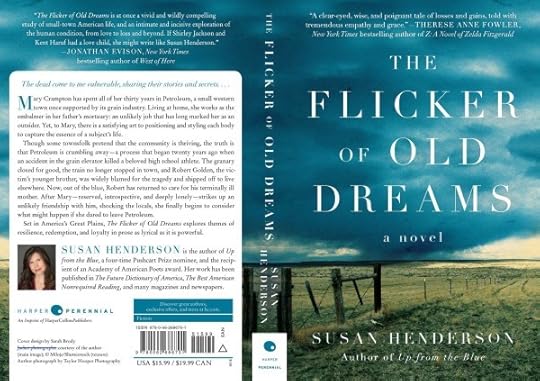
Two months till launch, and I’m starting to feel the intensity pick up. All last minute edits are in. No more changes allowed. This is the final cover, front and back.
Discussion questions are ready for book clubs.
I’ve contacted a baker for my book launch. (She’s going to make cemetery-themed desserts!)

I’ve made several trips to HarperCollins. (In the first picture, it’s the building on the right, with the World Trade Center in the middle. The second picture shows what it looks like inside.) One trip was for a party, another for a marketing meeting, and a third to film a video about The Flicker of Old Dreams with my editor, the amazing Sara Nelson.
I feel good about my book and about my team at HarperCollins. Most of what happens from here is out of my hands. And most days I’m okay with that.
But sometimes the fear sets in… Will any of the big outlets want to review my book? Will they like it? Will they even know it exists? Did I do enough? Should I do more? Am I going to lose friends because I’m talking about my book so much?
The intensity can get inside of me. I can look at all the good things that are happening and see failure. I can look at a beautiful day and see gloom.
I’m trying to stay steady, no matter what good or bad comes my way. I’m trying to keep it in perspective, in the background where it belongs. And I know how to do this—it’s what I’ve done since college—don’t get caught up in the last thing you wrote, keep moving forward, keep creating. This is the only world I have a shot at controlling, this one on the page, and I’m working hard on something new.
The other thing that keeps me steady is remembering to notice the gifts that are in my life each day, whether it’s a sunrise, a smile at the checkout line, or a word from my kids.
Rather than comparing this time to what it might be like in my most fevered imagination, I need to notice each act of kindness and generosity, however small. Some thank you’s are in order: Eric Forbes at Good Books Guide, Jennifer Haupt at Psychology Today, Publishers Weekly, Ron Block, Virginia Stanley, Binnie Klein, Eileen Tomarchio, Amy Wallen at Savory Salons, LibraryThing, LibraryLoveFest (here and here because they’re that awesome), A Cook and a Book, and folks who posted reviews at GoodReads.
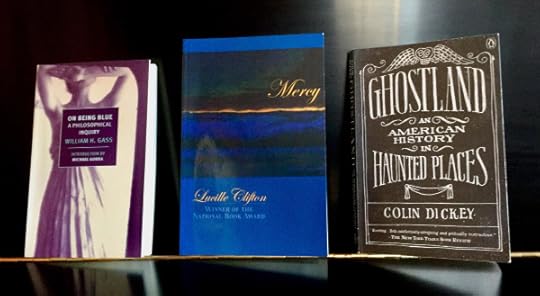
As always, I’ll end by sharing the books I’ve read since my last post:
Yoko Tawada, Memoirs of a Polar Bear
William H. Gass, On Being Blue
Colin Dickey, Ghostland: An American History in Haunted Places
Luke Dittrich, Patient H.M.: A Story of Memory, Madness, and Family Secrets
A.J. Finn, The Woman in the Window
Lucille Clifton, Mercy
Melissa Scholes Young, Flood
Carl A. Zimring, Clean and White: A History of Environmental Racism
Marisa De Los Santos, I’ll Be Your Blue Sky
Jean Cocteau (translated by Mary-Sherman Willis), Grace Notes
*
That’s it for now. Talk to me about keeping steady, about not losing perspective. Tell me some stories. Oh, and I have a gift coming for you soon! One of my personal heroes will be here with Words for the Weary. I’m so looking forward to hearing what she has to say, and I can’t wait for you to meet her!


December 3, 2017
Question of the Month: Introverts on Book Tour
How do you make the transition from the person who wrote in private for years to someone who must now help sell your book?
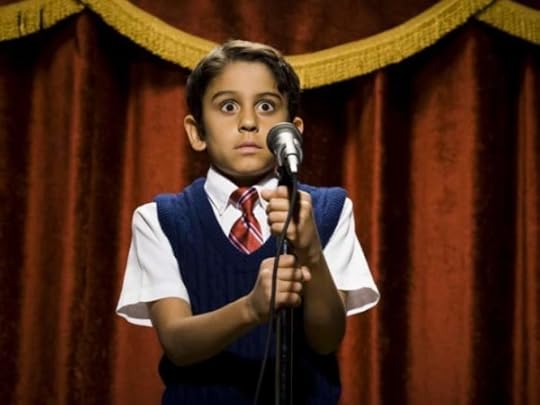
Most writers I know—me included—are introverts. And suddenly, when our books are published, we have to wear makeup, mingle, and speak into microphones. Worst of all, we’re asked to help promote our books when we are not salespeople.
The shift can be jarring.
And yet, we worked so hard on our books. We want people to read the thoughts and obsessions that consumed us for years.
So how do we make this shift, and how can we help each other?
First, we must swallow our discomfort and our pride and do what our publisher asks. They want us to post advertisements and reviews. They want us to send out letters and change the photos on our social media pages. We don’t want our publicists and sales reps to tell us how to edit the sentences in our books. Likewise, they don’t want shy, rejection-phobic authors to tell them how to make sales. They simply want us to help them do their job.

What is the most helpful thing we can do for each other before a book’s launch? Pre-order!
It matters, and this is why. Publishers look at the number of pre-orders to help determine which authors to invest their marketing dollars in and whether to send their authors on book tour.
The other important thing about pre-orders is that they are the number one shot authors have at landing on a bestseller list. The first day a book goes on sale is usually the most explosive day of sales. The more sales we’ve already banked, the better our chances.
Here are some links to where you can pre-order The Flicker of Old Dreams: IndieBound * Amazon * Barnes & Noble * Books-A-Million * Target * Turn of the Corkscrew (You can also pre-order more than one copy if you plan to give the book as gifts!)
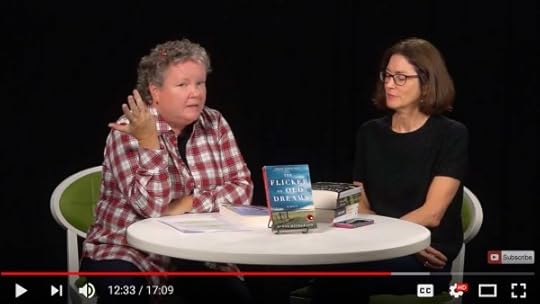
What is the most helpful thing we can do for each other after a book’s launch? Make some noise!
If we are enthusiastic about a book or simply want to be supportive of an author, our best way to help them is to post reviews or pictures of the cover on FaceBook, Instagram, Twitter, Amazon, GoodReads, and on our blogs. Authors often repost positive reviews, and sometimes the publisher will as well, so this kindness has a way of coming back around.
Some of the folks I need to thank this month… Marilyn Berkman for including me in her WNBA write-up; Marcia Butler for interviewing me on the Creative Imperative Video Project; Virginia Stanley, Director of Library Marketing, for talking about my novel on Under the Radar, Over the Moon; and High Country News magazine for including The Flicker of Old Dreams among its must-reads for books about the American West.
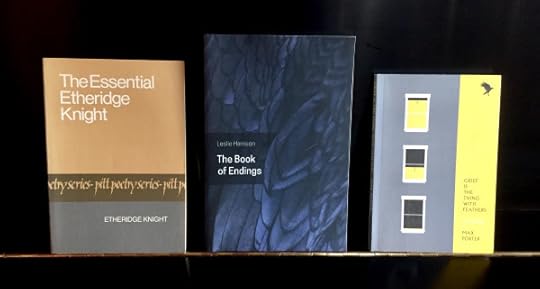
As always, I’ll end by sharing the books I’ve read since my last post (not counting manuscripts I’m editing or blurbing—the bulk of my reads this month.):
Janet Fitch, The Revolution of Marina M.
Vicki Croke, Elephant Company
Leslie Harrison, The Book of Endings
And two re-reads because I love these books so:
Etheridge Knight, The Essential Etheridge Knight
Max Porter, Grief Is the Thing with Feathers
That’s it for now. I look forward to hearing from you in the comments section. Let me know how you deal with getting out of your comfort zone!

November 5, 2017
Question of the Month: Post-Mortem Photos
What are your curiosities regarding the dead and the dying and our customs for mourning them?
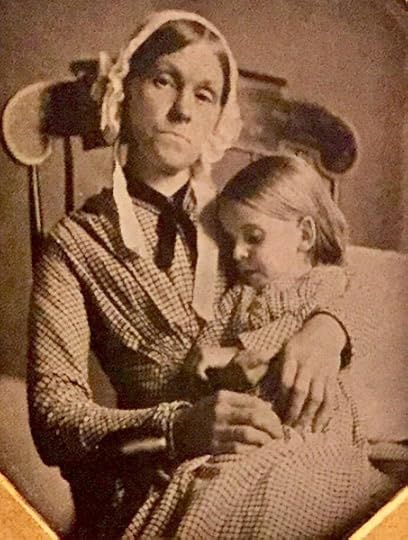
The Flicker of Old Dreams, my new novel that’s narrated by a mortician, explores all kinds of death—the death of a town and a way of life, the death of a body, the death of a spirit.
I’ve been obsessed all my life with looking closely at the things others find uncomfortable or hurry past. And our often-peculiar rituals for mourning the dead have particularly consumed me.
And so, when I first stumbled upon a post-mortem photo, I couldn’t turn away.
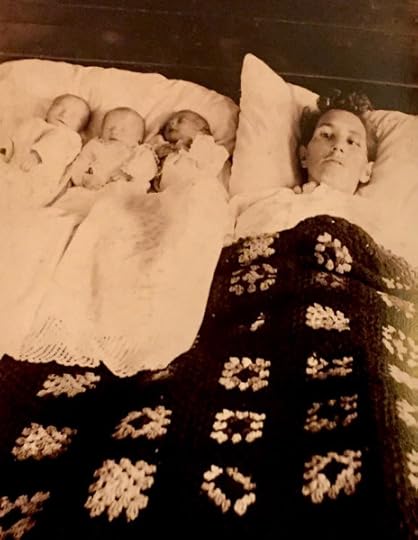
This mother died in childbirth. Two of the triplets died as well.
Sit with that shock for a moment, the bereaved family members dressing and arranging them so lovingly. Needing to do this though it must have also felt wrong. And then to see that death, and not peace, crept into the mother’s eyes.
But it’s the photos of the living with the dead that wreck me. Just imagining the grief.
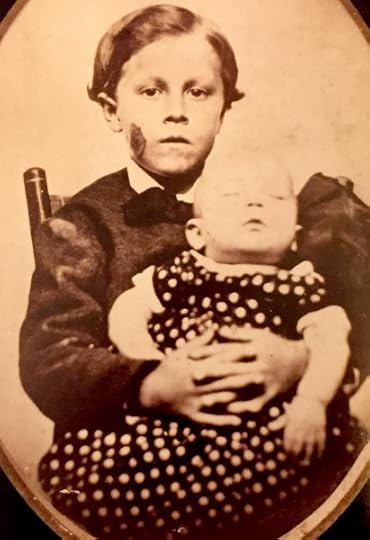
This little boy is holding his deceased sibling. All of these pictures, by the way, come from The Thanatos Archive and appear in the book, Beyond the Dark Veil.
It’s jarring, isn’t it? The photo is both tender and gruesome, an expression of profound grief and also a portrait of our greatest fear. I wonder, when I look at photos like these, whether it soothed some family members while haunting others.
In my book, a post-mortem photo is taken in the opening pages. And it is touched upon throughout the novel. I wanted to walk as close as I could to death and to grief and see what it all had to say to me.
Talk to me in the comments about what these photos stir in you. Tell me stories about your family rituals for mourning, or for bypassing that painful process.
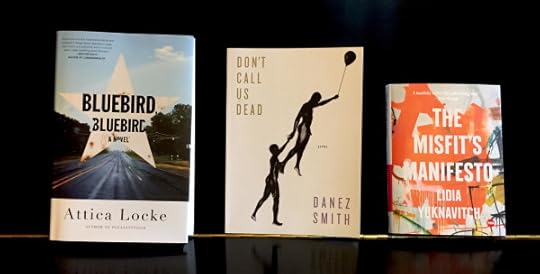
As always, I’ll share the books I’ve read since my last post:
Paul Kalanithi, When Breath Becomes Air
Alfred Lansing, Endurance: Shackleton’s Incredible Voyage
Jesmyn Ward, Sing, Unburied, Sing
Ronlyn Domingue, The Plague Diaries: Keeper of Tales Trilogy
Attica Locke, Bluebird, Bluebird
Stephen King, Firestarter
Nicole Krauss, Forest Dark
Danez Smith, Don’t Call Us Dead
Marcia Butler, The Skin Above My Knee
Lidia Yuknavitch, The Misfit’s Manifesto
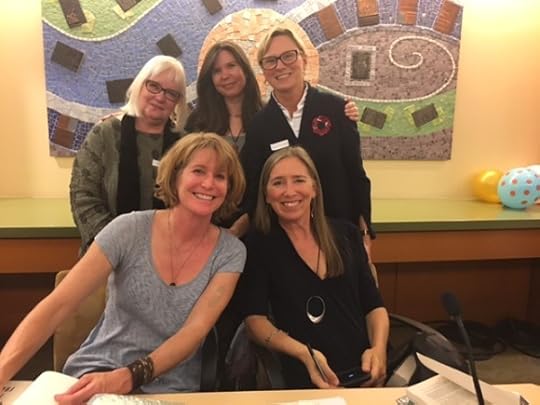
Oh, and I owe some thank you’s:
To Jill Tardiff, National Reading Group Month Chair, for inviting me to be a part of a panel celebrating the WNBA’s centennial and National Reading Group’s 10th anniversary. It was a pleasure to talk books, writing and publishing with Susan Larson, Laurel Davis Huber, Julia Franks, Margaret Wrinkle, and a great joy to spend time with friends (Melissa Connolly, Wayétu Moore, and ) who showed up for support.
Thanks also to Library Journal, Virginia Stanley (Director of Library Marketing), and Bookish Roundup for the kind words.
And last but not least, gratitude to those of you who’ve pre-ordered The Flicker of Old Dreams and added it to your GoodReads lists!
That’s it for now. I look forward to your stories in the comments section!

October 1, 2017
Question of the Month: Firsts
Tell me something you’ve done recently for the first time—a public reading, a crossfit class, a trip to another continent. Whatever it is, I’d like to hear your story.
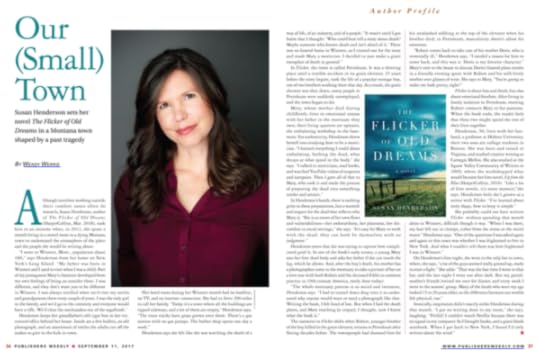
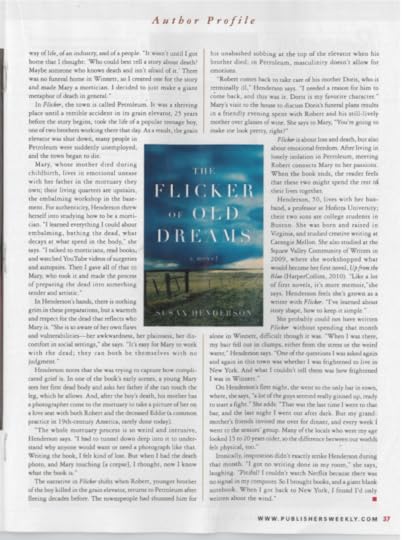
Last month, I did my first interview for The Flicker of Old Dreams. It was fun to talk about the new book, about embalming and researching a dying town and how the book became a giant meditation on death. It’s a very generous, 2-page Author Profile in the September 11th issue of Publishers Weekly, and the interviewer, Wendy Werris, was lovely and engaging—a great writer herself, as you’ll see when you read the profile.
My publicist was able to copy the pages so they’re legible, and I’m including them below.
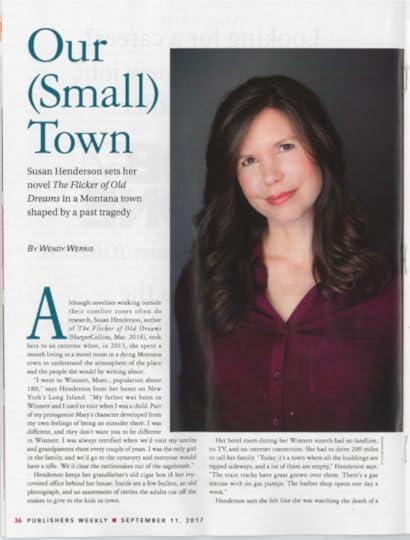
Since it was my first time talking about the new book, I wasn’t sure what kinds of questions I’d be asked. And then, after talking for an hour, it’s always interesting to me what the interviewer chooses to highlight.
There was a little concern from my publisher that the profile was running so many months before the book will be available. It doesn’t launch until March 2018. But if you’re interested in pre-ordering, you can follow this link. It will give you options for all the main book outlets.
Oh, later this month, I’ll be on a panel, along with Julia Franks and Margaret Wrinkle and moderated by Susan Larson, celebrating the 10th anniversary for National Reading Group Month. If you want to go, it’s Friday, October 27th in NYC at Cafe Auditorium at 1745 Broadway.
And I also want to give a shout-out to A Bookaholic Swede for featuring The Flicker of Old Dreams on her weekly Cover Crush. And to Peter de Kuster for interviewing me on The Heroine’s Journey.
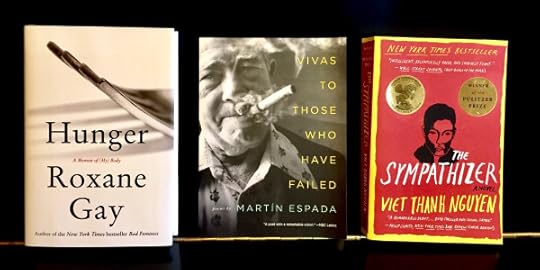
I’ll end, as usual, by sharing the books I’ve read since my last post.
Rene Denfeld, The Child Finder
Viet Thanh Nguyen, The Sympathizer
Stephen King, Firestarter
Jamie Ford, Love and Other Consolation Prizes
Roxane Gay, Hunger
Martin Espada, Vivas to Those Who Have Failed
That’s all for October. I look forward to your stories in the comments section. 

September 10, 2017
Let’s Talk with Jamie Ford
Jamie Ford is the author of three novels: Hotel on the Corner of Bitter and Sweet, Songs of Willow Frost, and out tomorrow (I’m so excited!!), Love and Other Consolation Prizes.
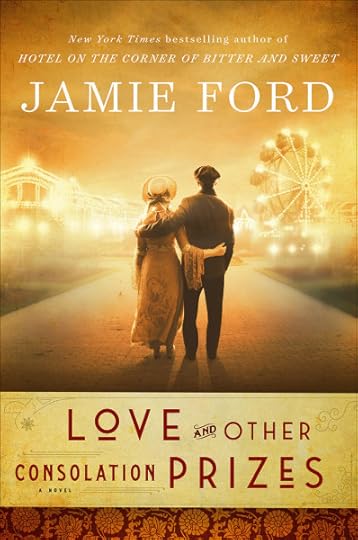
Here’s a description of it…
1909, Seattle. For twelve-year-old Ernest Young, a charity student at a boarding school, the chance to go to the World’s Fair feels like a gift. But when he’s there amid the exotic exhibits, the half-Chinese orphan discovers that he will actually be a prize, raffled off to ‘a good home’. He is claimed as a servant by the flamboyant madam of a high-class brothel. There he forges new friendships and discovers a sense of family.
Jamie’s debut novel spent two years on the New York Times bestseller list and went on to win the 2010 Asian/Pacific American Award for Literature. His work has been translated into 34 languages. But, maybe more importantly, he’s a happily married father of six with a great sense of humor and a regular D&D habit.
Here is the one and only Jamie Ford with some writerly wisdom. Be sure to leave your messages for him in the comments section.
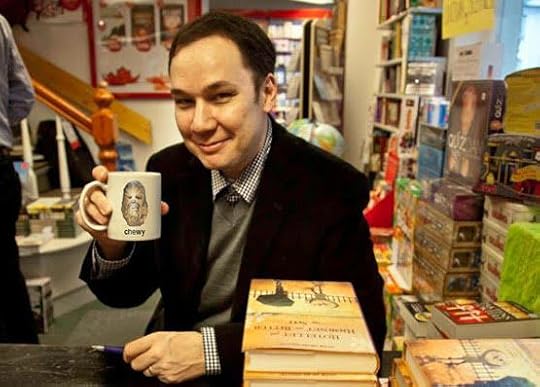
Dear You,
Let’s talk. Because I’ve been where you are right now. Well, not literally, but figuratively. (Literally would be weird).
I’ve been that hopeful, aspiring writer, trying to figure it all out. And honestly, I’m still aspiring, still hopeful. And still trying to untie the Gordian Knot that is…writing.
You’d think that it would get easier with each book but it doesn’t. Sometimes it’s even harder.
So if that sounds a bit discouraging, perhaps you should consider the tradecraft of plumbing. Seriously, plumbers make great money and on certain frustrating writing days, sludging through other people’s sewage seems like a welcome respite.
Hmmm. You seem unconvinced? But you’re still reading this, so you must be somewhat determined. And if you have determination, then let’s keep going.
In general, I feel reluctant to dispense advice. Because, who knows, maybe I just got lucky? (Ah, can you sense my fading confidence already? That twitch in my swagger? We writers are a hopelessly insecure lot).
I sometimes avoid this type of pontification because I’m only on my third book. So come back in twenty years after I’ve published ten, including my magnum opus—a 1,200-page epic, written in second-person plural, which Publisher’s Weekly will rave about despite my not using commas, periods, paragraph breaks, or the letter Q.
But most of all, I shy away because what works for me may not work for you.
Nevertheless, here are some thoughts.
It’s okay to plink away
As a writer, I still give myself a healthy margin for self-improvement. You wouldn’t sit down at a piano for the first time and try to play Mozart, would you? Of course not. You’d play scales and work your way up. But so many first-time writers sit down and try to write an epic seven-book series, with twenty point-of-view characters, and when it doesn’t turn out well they shrug, “I guess I’m not a writer.”
It doesn’t work that way. Start small. Then kick off the training wheels when you feel the wind in your hair.
Stop scraping burnt toast
There’s a danger in being wedded to one idea, or rehashing the same idea over and over if it’s not working. Sometimes you just have to divorce yourself from a story or at least agree to explore a trial separation.
My path to publishing with Hotel on the Corner of Bitter and Sweet was remarkably easy. But my time of longsuffering was spent on an un-publishable book that I just couldn’t let go of. I hung on for years.
So step away from that 300,000-word slipstream fantasy you began in the 8th grade. It’ll still be there, I promise. You’ll find more words, an inexhaustible supply.
Don’t wait for the short bus
The market for short fiction is theoretical these days—so don’t waste years of your life trying to pad your literary curriculum vitae with short fiction before jumping into longer forms. If you enjoy writing short fiction (I do), spin that yarn, but don’t hold up your career waiting on rejections from literary journals that pay you in contributor’s copies. Finishing an unpublished novel is a greater achievement than a short story published for free in Hog Caller’s Quarterly Review.
Write for the most important audience of all: yourself
Write stories that fill the void in your imagination first. By that, I mean write stories that answer your own questions. Don’t write for a market or target audience. Octavia Butler, who wrote science fiction, once said, “There are no black people in the future, therefore the future is a dangerous place.” Instead of writing to reflect the genre, she explored her own point of view, shattering the expectations of others.
Being a writer is easy. Writing is hard
As a student, I was once asked, “Which do you like more—writing, or the idea of being a writer?” It was, and is, a very delicate and powerful question. If you enjoy the process of writing, you’ll be fine. But if you romanticize the idea of being a writer, you should keep your day job, buy a Vespa, and hang out at Starbucks and brood a lot. You can enjoy all of the affectations without the struggle.
Avoid the beauty contest
We all have a favorite author that makes us go all drooly when we savor their work. Stop reading them, at least for a while. Doing so is like leafing through fashion magazines while trying to lose weight—they’ll only make you feel fat. Instead, go to a garage sale and spend 25¢ on three, random, out-of-print paperbacks and force yourself to read them. Pick them apart for all their flaws. Then you’ll be more apt to notice those same mistakes in your own writing.
Weaponize your weaknesses
As the great Pat Conroy once said, “the greatest gift a writer can ever receive is an unhappy childhood.” Pat is right. The things that scare us the most—the things that have caused us the most pain are actually our dormant superpowers. Write about them. Spend some of that emotional equity on the page. Give your weaknesses and insecurities to your characters. They’ll come alive. And you’ll sleep better.
And lastly…
If you can write, then write. But if you can’t, then do what I do.
Also, there’s always plumbing.
Jamie’s newest book, Love and Other Consolation Prizes, is available everywhere, but I know you’ll buy it from an indie bookstore. Please leave Jamie a comment here because it’s always nice to respond when someone writes you a letter. You can also visit him at www.jamieford.com.

Author Profile in Publishers Weekly!
So excited and unbelievably grateful for this generous, 2-page Author Profile in the September 11 issue of Publishers Weekly!
The fabulous Wendy Werris interviewed me. We talked about small towns, morticians, death in its many forms, and a little about the writing process. It’s a really lovely, well-written article.
I took a screenshot so you can see what it looks like, but you need to be a subscriber (for either the print or digital edition) to read. I’ll link to the digital version of the PW Author Profile in case you’re interested.

September 3, 2017
Question of the Month: Out of Your Hands
Talk to me about how you stay calm and emotionally present when important parts of your lives are out of your hands.
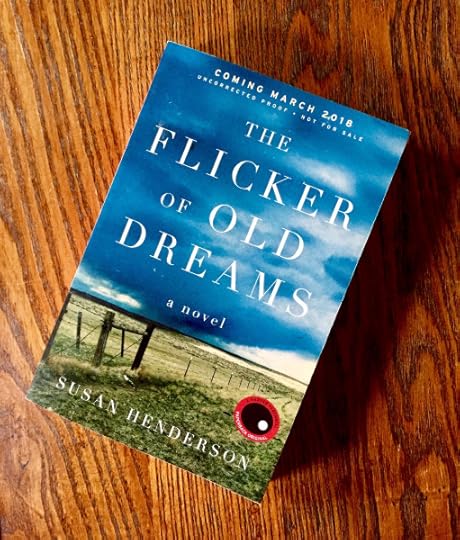
This is the ARC of The Flicker of Old Dreams. ARC stands for either Advanced Reading Copy or Advanced Review Copy. It’s a free book that still has typos in it, and it goes out early to newspaper and magazine editors who might review it, as well as to authors who might offer a blurb for it.
Up until this point, you feel like you still have control over the book. You can still make small edits to the text. You can still dream big about the life it will have. You still have time, perhaps, to lose ten pounds or become an extrovert before you go on book tour.
But then you arrive at this place. And the novel that was such a private affair for all the years you wrote in your garage office or in the back of a café has now become something public. The ARC is sent far beyond your circle of kind friends, who would never say anything to hurt your feelings, and to people who might hate it and say so loudly. Or they might interpret the book or the characters in ways you never imagined or intended.
It’s out of your hands.
Reviewers will have their opinions. The book will have its own life outside of you.
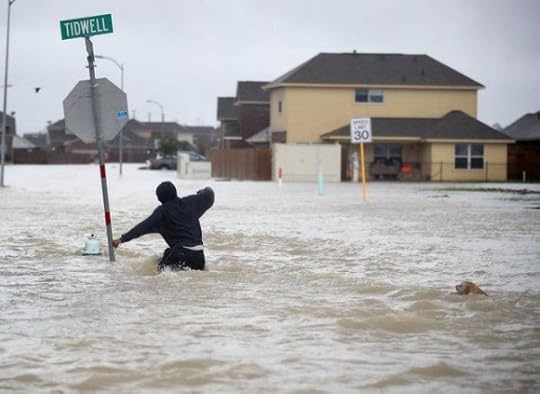
We learn this again and again. We’re not in control of as much as we like to believe. We can do things to help. We can be proactive. But the art we send into the world becomes one more thing (like illness, rain, and the choices our loved ones make) that may impact us deeply and personally, but is not ours to steer.
So how do you make peace with what you can’t control, and get busy with what you can?
Talk to me in the comments.
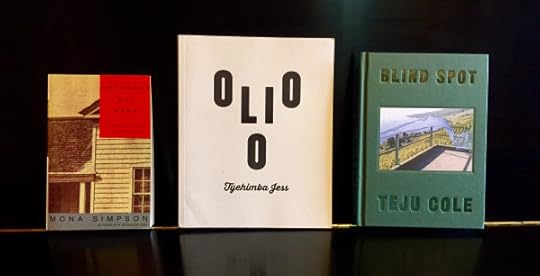
I’ll end, as usual, by sharing the books I’ve read since my last post.
Tyehimba Jess, Olio
Miranda Beverly-Whittemore, Bittersweet
Mona Simpson, Anywhere but Here
Julia Fierro, The Gypsy Moth Summer
Maile Meloy, Do Not Become Alarmed
David Niall Wilson, Gideon’s Curse: A Novel of Old Mill, NC
Robin Black, Life Drawing
Teju Cole, Blind Spot
Wendy Werris, An Alphabetical Life
Walt Whitman, Leaves of Grass
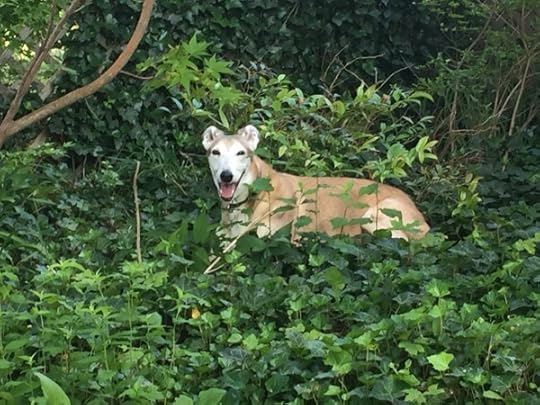
One last thing. Some sad news. We lost our beloved Steve in August and we miss him every day. I can’t say more here without breaking down, but I’ll be around in the comments.

August 6, 2017
Caroline Leavitt & The Sticky Subject of Success
Talk to any successful writer and they will tell you stories of rejection and doubt, reading to empty rooms, and writing stories that tie themselves in knots. I wanted to bring those writers here to talk with you, and I could think of no one better to kick off my series, Words for the Weary, than Caroline Leavitt, who knows all about the highs and lows of being an author. She is, honestly, the most generous writer out there—an advocate for the unsung hero, a voice for writers without confidence or platforms.
Caroline is the New York Times and USA Today bestselling author of Is This Tomorrow, Pictures of You, Girls In Trouble, Coming Back To Me, Living Other Lives, Into Thin Air, Family, Jealousies, Lifelines, Meeting Rozzy Halfway. She has appeared on The Today Show, The Diane Rehm Show, and has been a judge in both the Writers’ Voice Fiction Awards in New York City and the Midatlantic Arts Grants in Fiction. She teaches novel writing online at both Stanford University and UCLA Extension Writers Program, as well as working with writers privately.
But the resume never tells the full story. Here’s the one and only Caroline Leavitt with a letter that is just for you.
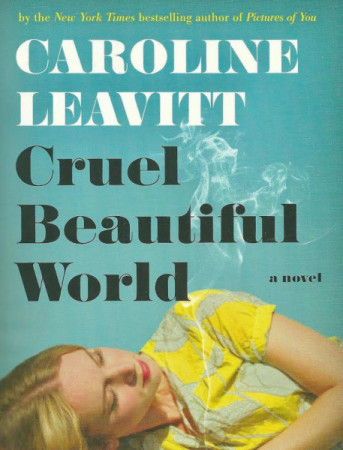
Find this amazing novel on Amazon and IndieBound.
Dear You,
Most of the writers I know have had messy childhoods. We write to heal. to say I am, I Am, and hope someone else says, Me, too, Me, Too. We want to be known, and that leads to the sticky subject of being known all too well, which is (sigh) fame.
Why do we want it? Maybe to feel validated. To have enough money to pay our rent, and go out to dinner and have enough to quit that horrible 9 to 5 job where you are yelled at for not dressing coherently enough. (It happened.) We want enough notice so we can write another book, or be known enough to get reviewed in top places, to be noticed, and oh, okay, to feel important.
Every writer I know feels the sting of envy. Why did that writer get that review when I didn’t? That prize? That crowd in the bookstore? I compared and despaired. Did people not like my work? Or was it me? Nothing was ever enough, until a friend of mine asked me, would I be finally satisfied if I won the Pulitzer? I knew the answer.
I had early, dramatic success with my first novel, Meeting Rozzy Halfway and I mistakenly thought it would always be that way. I was flown to NYC and interviewed by Publisher’s Weekly and by TV and radio stations. I read and appeared everywhere and even had a movie deal. Then I wrote my second novel. My publisher went out of business and the novel tanked. I got a new publisher, and guess what? They went out of business, too. Next I had a 3 book deal with a major publisher who wasn’t really interested in marketing or promotion, and I had enough sales only to buy my husband and I dinner at a fancy restaurant. I cried a lot. I was deeply ashamed.
I wasn’t successful. I knew it. My friends were getting prizes and important reviews and bookstores so filled that people had to wait outside. When people asked me what I did, I said, “I’m a writer?” with a questioning lilt to my voice because I wasn’t so sure, since success seemed so scarce.
I roamed the bookstores and looked at books and I couldn’t figure out, why was this bestseller better than my book? Why did friends of mine get the things I yearned for—and get them so easily? Was I doing something wrong?
I cried to my friends and they commiserated. I wrote a new novel that my agent loved, my writing friends loved—and my then publisher rejected on the grounds that it was “not special” enough. I knew then that I was finished. If you haven’t made money after 8 novels, and no one knows who you are, what publisher would take the risk of buying your new book? I couldn’t’ worry about success anymore because I was obviously a failure. But a writer friend of mine wouldn’t let me give up, and got my manuscript to her editor at Algonquin. I knew nothing would happen.
Until it did. They took that non-special book and put it into 6 printings months before publication. They turned it into a New York Times Bestseller its first month out. I was suddenly sort of famous. The people who wouldn’t take my calls were now making them to me. I was asked for blurbs, asked for essays, feted.
But was I happy?
No, I was not. I was scared because I felt pressure to make the next book even better. What if I couldn’t? What if no one liked it? What if I grew less famous instead of more?
I was devastated by insecurity, I started trying to figure out the secret. I asked my editor a while ago about a writer who seemed to be getting everything on the planet and I couldn’t tell why because I had read the novel and thought it was, well…pleasant and light. My editor shook her head. “That writer is adorable,” she told me. “And also very well connected.”
Somehow, that made me feel better. Some writers are insanely good at making themselves adorable to the public, at gaining a following because they are handsome human beings, or they are part of a clique of writers who always go to the same coffee shop and order the same coconut latte. That’s not me, so I’m guessing it isn’t you, either. You have to have time to hang out to be adorable and for those of us who are solitary souls, that isn’t going to happen.
It all felt so discouraging that I stopped writing altogether. “I don’t want to do this anymore,” I told a disbelieving writer friend. “And it feels like a relief.” And for three months it was. I didn’t write, I didn’t think about writing, I didn’t care. Instead, I lived. I had fun with my husband, with my son, with my friends. I didn’t read book reviews, but read the books I wanted to read for pleasure, not comparison.
I began to realize from being a book critic that some books I adored were savaged by other critics, and books that I had some problems with were touted. Then, to my surprise, one day, I felt a story simmering inside me. It had to be heard. And so I listened, and I began to write, not thinking about anything but story. I became happy, immersed in my work. I hope the book will be read, but if it isn’t, then there’s a next one, and a next one after that.
Now, when I feel a flare of envy, I turn it into good karma. Someone gets a prize I wanted? I immediately warmly congratulate them. Someone gets a rave? I send flowers. I try more and more to help other writers any way I can. It actually knocks out any jealousy. It makes me feel like a better person, and it puts things into perspective, and truthfully, we are all swimming in the same sea, so why wouldn’t it make me happy if someone got attention?
I know now that career is a long road, not a short stop. Any writer might have a Pulitzer one time, and a book that barely sells the next. It doesn’t matter. What matters to me is the writing, being in that incredibly heady state when you are in the zone and you inhabit your characters so vividly, you swear you can feel them breathing beside you. It’s that necessity to create, that deep, abiding emotion that spurs you on. It’s not commerce. It’s making art. Hey, I still have green eyes, but they’re not filled with envy anymore.
Love, Caroline
Caroline Leavitt’s latest novel Cruel Beautiful World is out in paperback this August. Visit her at www.carolineleavitt.com

July 30, 2017
Book Giveaway! Caroline Leavitt’s Cruel Beautiful World!
I’m in the mood to celebrate. Want to win some cool prizes?
Good, because I have something special for you:
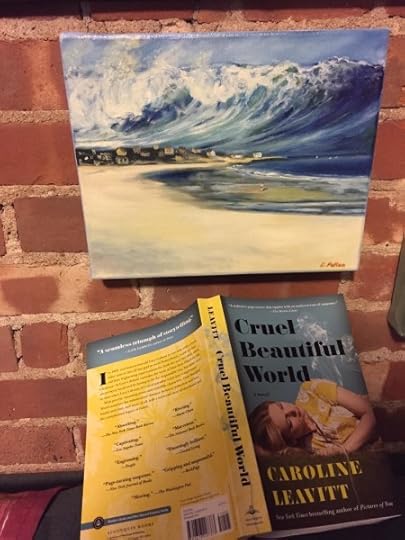
Bestselling author, Caroline Leavitt, will give away 3 signed copies of her incredible, haunting novel, Cruel Beautiful World. I read this book in one sitting, my heart racing, as a lonely girl makes a series of terrible choices in order to feel loved. Here’s the official description:
Sixteen-year-old Lucy Gold is about to run away with a much older man to live off the grid in rural Pennsylvania, a rash act that will have vicious repercussions for both her and her older sister, Charlotte. As Lucy’s default parent for most of their lives, Charlotte has seen her youth marked by the burden of responsibility, but never more so than when Lucy’s dream of a rural paradise turns into a nightmare.
Cruel Beautiful World examines the intricate, infinitesimal distance between seduction and love, loyalty and duty, chaos and control, as it explores what happens when you’re responsible for things you cannot make right.
Set against a backdrop of peace, love, and the Manson murders, the novel is a reflection of the era: exuberant, defiant, and precarious all at once. And Caroline Leavitt isat her mesmerizing best in this haunting, nuanced portrait of love, sisters, and the impossible legacy of family.
So, wait. A signed copy of this extraordinary book is not the only thing you will win…
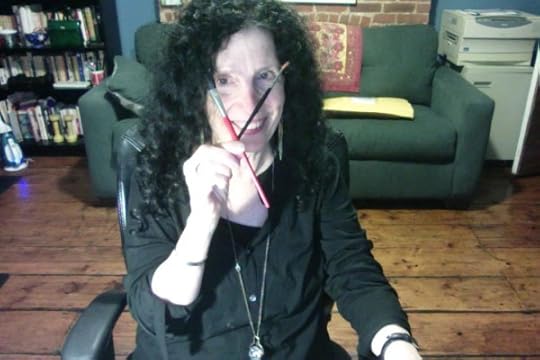
…because Caroline is also going to watercolor a bookmark just for you!
Okay, so she only knows how to paint these things, but you get to choose:
1. mermaid
2. dogs
3. fishes
4. a hand wearing a pair of pants (I know! Wha?!)
5. cups of coffee
6 cats
How do you enter to win? Easy. Just post a comment below, and I will make sure your name goes into a hat. This is the hat.
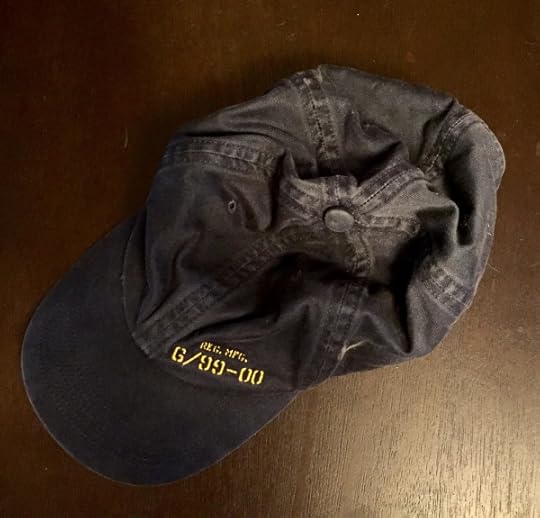
At the end of the week, I’ll draw three names and announce the winners!
One last thing. Remember that first picture with a cover of Caroline’s book in it? Scroll back up to the top and look at the painting. I love this story: This painting (by Eileen Patten Oliver) is very important to Caroline because she’s terrified of the ocean but also loves it. So Eileen painted a small figure standing in front of a tsunami. And Caroline says this painting gives her courage.
And I love Caroline—for this and a million more reasons.
Okay, post a comment, and I’ll put your name in the hat. Hope you win because this book is spectacular!! (And if you’ve already read it, you can post a note to Caroline just because.)

July 19, 2017
Introducing Words for the Weary
Words for the Weary is a new blog featuring interviews by Susan Henderson. Please check back soon for the latest post!