Susan Henderson's Blog, page 2
February 12, 2019
Montana Book Awards… Honor Book!
Many of you know I’m on hiatus from social media while I work on the new book. I’ve spent part of my hiatus in Japan and Vietnam. I’ll share more down the road, but this break has been good for my head and for the new book, so I’m going to stay with it until I have a solid first draft.
But… need to share the news: The Flicker of Old Dreams was chosen by the Montana Book Award judges as an Honor Book. I’m grateful to be in such stellar company! Congratulations to the other Honor Award recipients—Rick Bass (The Traveling Feast), Sneed Collard (Warblers and Woodpeckers: A Father-Son Big Year of Birding), and Katie Yale (Howl Like a Wolf)—as well as to the big prize winner, Chris La Tray (One-Sentence Journal: Short Poems and Essays from the World at Large)!
Here are some news clips about it: KPVI News, The Missoulian, and Fact and Fiction.
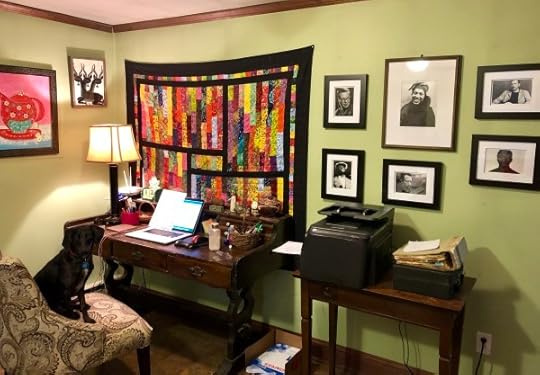
Okay… heading back to my writer’s cave!


October 29, 2018
Reaching for the Impossible
Tell me about some risks you are taking or ways you are stretching out of your comfort zone, either for your career or your life in general. And if you haven’t been taking risks, tell me what’s stopping you.

Since I turned 50, I started applying for things that are more prestigious than I had previously allowed myself to dream for, and most times these risks have ended in rejection. But no one can choose you for an award or opportunity if you don’t apply, right?
So here is some unexpected good news… I was chosen as a Hawthornden International Fellow. For a month (don’t know which month yet), I’ll live for free at the Hawthornden Castle in Midlothian, Scotland. There will be four other writers there, as well as a cook and a housekeeper. We are there—without internet or cell phone service—to write.
I’m grateful to Drue Heinz for this generous gift, and I vow to work hard on my third novel while I’m there.
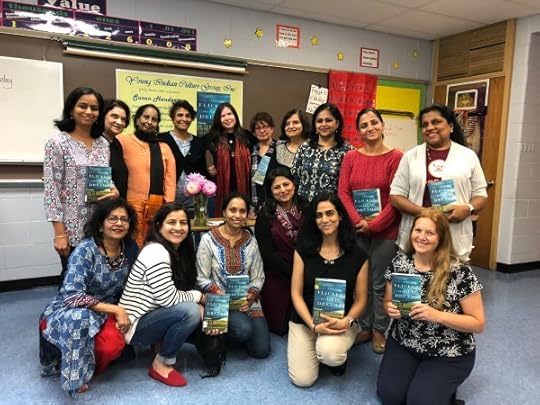
My traveling and events for The Flicker of Old Dreams have slowed down. But there have been a few lovely moments, such as the Saturday I spent with these brilliant women at the Young Indian Culture Group, where their book club has run for over 13 years. We had long, deep discussions about death, dying, burial practices, hate, compassion, books and more.
I also spent time at the Hockessin Book Shelf, Whisper Woods assisted living community, and the Montana Book Festival (you can see pictures on my instagram account).
Online, you can find interviews I did with Zara Potts for her New Zealand publication, Dear Reader; with Crystal-Lee Quibell for her Canadian podcast, Literary Speaking; and with Okoyomoh Egbekhuwa for her Nigerian podcast, The Spoken World.
And, if you’re not already an avid listener of Ozan Varol’s Famous Failures podcast, you can start by listening to our interview, where we discuss writer communities, DARPA, high school janitors, New York Times bestseller lists, 1- and 2-star Amazon reviews, and all kinds of failure. It’s 36 minutes long, so brew a cup of coffee first or listen as you go for your daily walk… but do listen. I think the work Ozan puts out into the world is terribly important. Here is the link… click it! Please.
And now to my beloved alma mater in Pittsburgh…
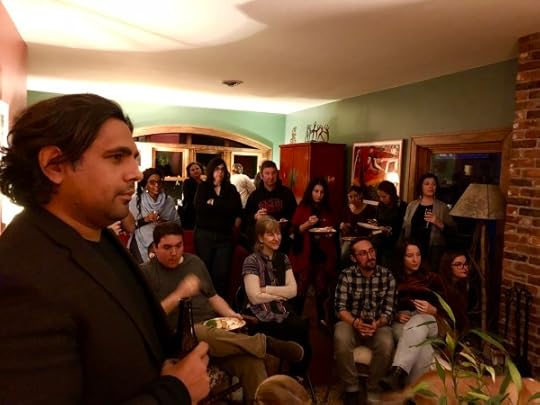
I traveled there in October to spend four days with professors, students and alumni of Carnegie Mellon’s Creative Writing Program. It was a terribly intimate time, partly because any honest conversation with other writers lends itself to the discussion of rejection, insecurity, work that is deeply personal and underfunded.
Then, on the morning of Saturday, October 27th, as we gathered together to hear a panel of alumni who became teachers, we started to hear about an active shooter in a synagogue down the street. Most of us have long roots in the Squirrel Hill neighborhood, and we were stunned and frightened and not even aware that we were also in lockdown.
The photo up above was taken that evening, after we’d all gone together to one of the professor’s homes to try to heal. We ate and drank and pet the dog. And gave a speech about radical kindness. It helped. I’m still hurting, but it helped.
Please vote on Tuesday. Your voice matters.
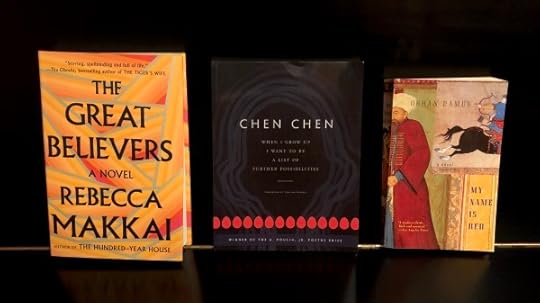
As always, I’ll end by sharing the books I’ve read since my last post:
Orhan Pamuk (and translated by Erdag Goknar), My Name Is Red
Bob Woodward, Fear
Angie Thomas, The Hate U Give
Ellen Notbohm, The River by Starlight
Rebecca Makkai, The Great Believers
Chen Chen, When I Grow Up I Want to Be a List of Further Possibilities
Robert McKee, Story
Megan Abbott, Give Me Your Hand
Maude White, Brave Birds
Brandon Hobson, Where the Dead Sit Talking
Carrie La Seur, The Weight of an Infinite Sky
John McPhee, Draft No. 4
And one re-read: Terry Pratchett, The Amazing Maurice and His Educated Rodents
Oh… and a few thank you’s… to Ed Davis, Book Bound with Barbara, and Vanderbilt Magazine.
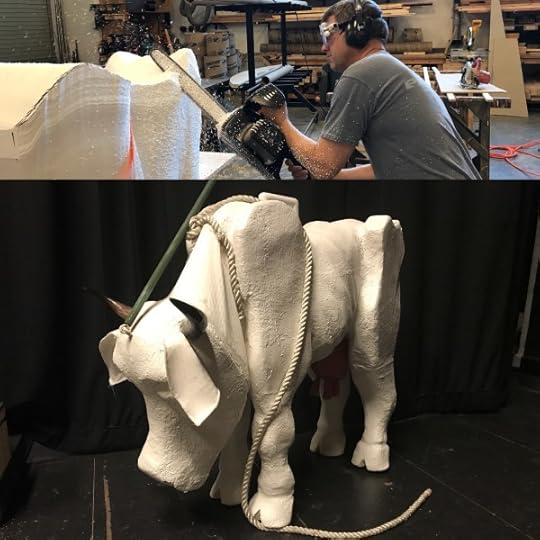
I’ll finish with reminder that I’m not the only artist in my family. My husband’s been working late nights in tech- and dress-rehearsals for Sondheim’s Into the Woods. Then he goes right into rehearsals for We Are Pussy Riot.
And our youngest comes home tomorrow to use our house for a several day film shoot. More about that soon!
But first let’s talk about risk-taking, or your fear of risk-taking. Post your thoughts in the comments thread, and I’ll see you there.

September 9, 2018
Wayétu Moore asks, Who Makes Up Your Village?
I am so thrilled to share Wayétu Moore with all of you who don’t know her yet. She is one of my favorite writers with an old soul, an astounding ear for dialogue, and the courage to tackle big issues in her work. She is also one of my favorite humans, from when we first met as roommates at the Squaw Valley Community of Writers, to laughing and telling stories back here in New York, to seeing all she has done for others, particularly those who live in Liberia, her first home.
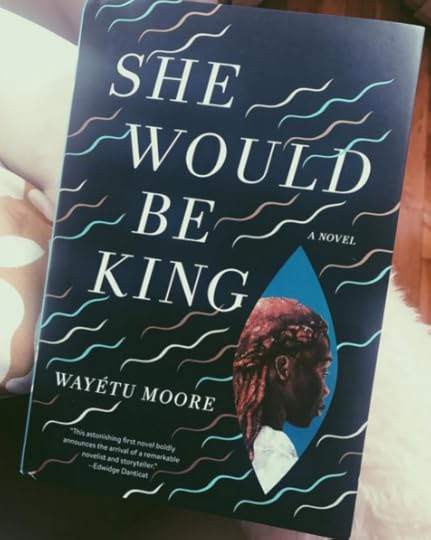
Wayétu is the founder of One More Book; she owns the only bookstore in Monrovia, Liberia; and she’s a Margaret Mead Fellow at Columbia University Teachers College. Her debut novel, She Would Be King, is out tomorrow, and it is a masterpiece.
This is the blurb I was honored to write for it: “This magical retelling of Liberia’s beginning is so original, so bold and poetic, Wayétu Moore is destined for comparisons to Yann Martel, Markus Zusak, and Paulo Coelho. Her unforgettable heroine, Gbessa, leads those who’ve been stripped of their homes and their language to rise up and defend not only their own futures but the memory of those who would never see freedom.”
And this is is Edwidge Danticat’s blurb that’s on the cover: “Epic, beautiful, and magical, this astonishing first novel boldly announces the arrival of a remarkable novelist and storyteller.”
So here is Wayétu, on the day before her book launch, with a letter for those of you who feel weary and beaten up by the writer’s life. Hang in there!
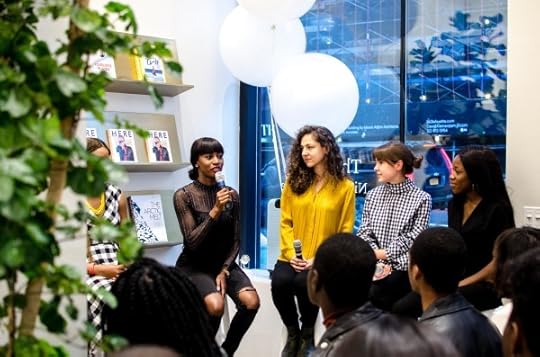
Dear Writer,
I have to admit it’s odd offering advice on writing because I find myself still negotiating the madness associated with this process every day. I suppose rather than guidance on the many events on your pages and screens, the best words I can offer are those relating to the world off the page, the one you have to navigate and at times even protect yourself from to preserve the part of your spirit most vital to your craft.
You are sensitive and you cannot help it. At times this is what you hate the most about yourself, but this frustration about your soft heart and fragile skin is coupled with the realization that your sensitivity is needed to move about your craft in the way that you do. If you are anything like me, this sensitivity causes a number of functions in your life, and at times is at the root of undesirable interactions. So, my advice speaks to those.
Who Makes Up Your Village?
We all know the saying, “it takes a village.” Growing up, my parents abided by this, and were very strict about who my siblings and I spent our time with. It used to infuriate me, but later I understood their wisdom, and that they were only trying to protect us from the heartaches that stem from bad company and influences. I would honor their methods later in life—the care they took in choosing their friends and those they let into our home, and their circle. This circle, this village, has power. The members of this group give counsel, and bad counsel can sometimes lead to devastating outcomes. You’re pursuing a profession that is competitive, stressful, and to be honest, downright hard. None of us become writers to become rich. This may perplex those closest to you who aren’t writers or artists. Why pursue something with no guarantee of monetization? Those who are around you will either be your greatest encouragers, pushing you toward that extra page or chapter, or be the reason why you abandon (ed) those stories in that unnamed desktop folder. Choose them wisely and choose them well.
Make Friends With No
Rejection is not only a rite of passage in one’s path to seeing the book on the shelf of their favorite bookstore, it’s an active, enthusiastic component of your relationship with writing. It’s the mention of that ex, or the nagging recurring argument, the in- law, or the one stubborn thing your partner won’t let go of. “No” isn’t going anywhere. It comes in different shapes. It may be from an agent, an editor, destroying your “darlings,” a publisher, a magazine, or, even readers. It’s inevitable and it isn’t going anywhere. Making friends with that word will diminish the chances that you eventually become resentful of writing, and of the literary industry in which it exists. When I became okay with rejection, and stopped taking ‘no’ so seriously, my writing suddenly felt like it belonged to me again.
Govern Your Sensitivity
Someone said something to you that felt like a jab. Or they did that passive aggressive thing to get under your skin. Suddenly, you can’t think straight. It’s difficult to concentrate on any task following that encounter, especially your writing. I will tell you something that I have to tell myself: govern your sensitivity. How people treat you exposes more about that person than it does about you. Dissecting and internalizing every conversation or interaction doesn’t only take away from valuable time that can be used toward productive ends, but over time, it can affect your overall health. Govern your sensitivity. It is okay to feel in the way that you do. Empathy is a gift. But, learning to discern which slights were worth my attention and which I should tune out took a long time. The stricter I became with myself about preserving my energy, the more energy I had to produce.
I hope these three things are helpful. Good luck, today. Happy writing.
With love, Wayétu

September 1, 2018
One Foot in Each Book
Ever feel like you’re trying to run in two different directions at once?
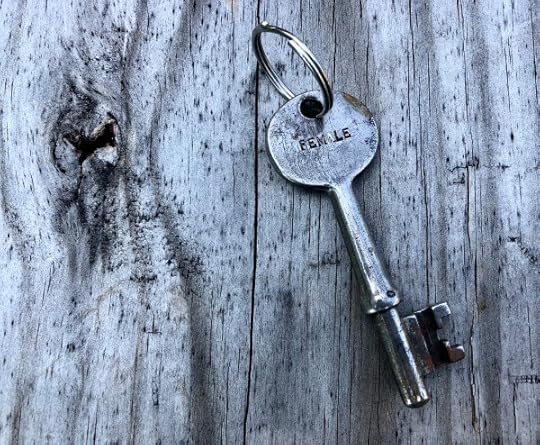
I’ve been heavy into research for my new novel. I’ve interviewed a locksmith, a storehouse manager, a ward charge, a ward attendant, a photographer, a graffiti artist, and more—all to find out about their experiences working at, living in, or exploring a now-abandoned psychiatric hospital.
That’s a picture of a key the locksmith brought to our interview.
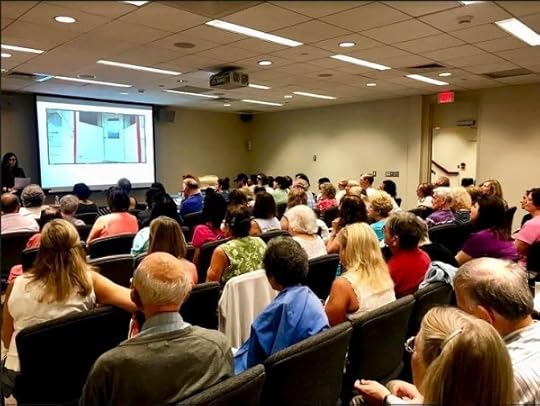
But while I’ve been busy with the new novel, I’ve also been doing a number of book clubs and speaking engagements for THE FLICKER OF OLD DREAMS. Here’s a link to my interview with Helen Little at the iHeart Radio studio in Manhattan. And below is a photo from my talk at the Syosset Public Library.
I’m not a multi-tasker by nature, so this—splitting my attention, sometimes living out of a suitcase or running from back-to-back appointments—can be stressful. But I’m learning how to break out of my comfort zone and appreciate where it takes me.
There have been some wonderful surprises along the way, and I took screenshots so, later, I would know they truly happened.
Like this…
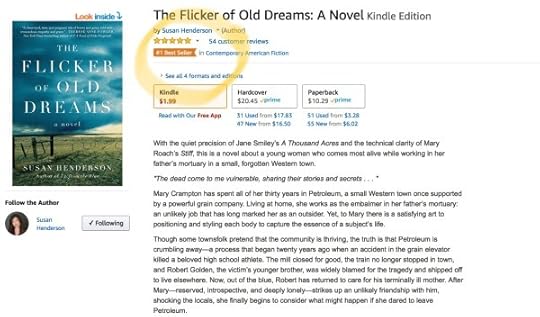
And, OMG, this…
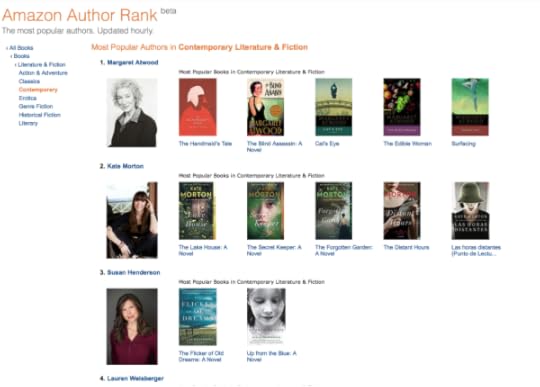
I understand they are fleeting moments, gone even as I post this. But I believe in feeling gratitude for all the big and, usually, small delights that happen in a day—a dog wagging its tail, a stranger holding a door open, a neighbor slowing down to chat, a reader posting an enthusiastic review, a cool day after a heat wave.
It all matters.
Some thanks are in order… to The Writer magazine; 7:30 BookClub; My Life, My Books, My Escape; The Coachella Review; Hers for the Reading; Book Beat; Syosset Library; A. F. Compson; Liz Morgan PR; Andie Behling; Alexa Melliot; Pookapyle; and Marilyn Cole.
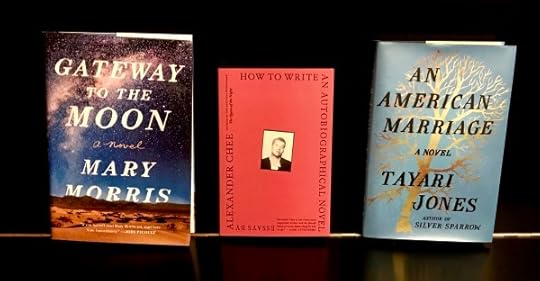
As always, I’ll end by sharing the books I’ve read since my last post… though most of my reading lately is research for Novel #3, and I don’t post my research:
Gabriel Tallent, My Absolute Darling
Tayari Jones, An American Marriage
Celeste Ng, Little Fires Everywhere
Dorothy Bryant, Confessions of Madame Psyche
Ari Folman and David Polonsky, Anne Frank’s Diary: The Graphic Adaptation
Alexander Chee, How to Write an Autobiographical Novel
*
That’s it for now. Talk to me in the comments section about something that’s keeping you busy these days.

July 1, 2018
Catching My Breath
Sometimes life is crazy. Sometimes the whole world is crazy. How are you managing the stress? How are you staying active and engaged, but still caring for your mind and body? I don’t think I’m the only one here who’s struggling with this.
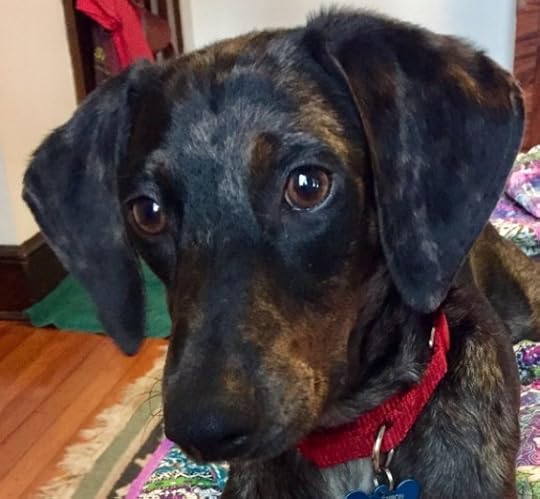
I’m still doing a lot of events and traveling for THE FLICKER OF OLD DREAMS. Seems like a nutty time to rescue a dog, but… meet Douglas!
These last few weeks have included time with librarians, indie booksellers, fellow writers and readers: Ron Block hosted me at the Cuyahoga County Public Library and showed me all around Cleveland; Carol Ann Tack chatted with me on Merrick Library’s Top Shelf podcast; Joan Galante hosted me at Levittown Library‘s Adult Summer Reading Program (and my favorite bookseller, Carol Hoenig of Turn of the Corkscrew Books & Wine, sold my books there); I read at the KGB Bar with Caroline Leavitt, Jennifer Haupt, and Julie Maloney; the brilliant historical fiction writer, Connie Mayo, hosted a conversation between Amy Wallen, myself, and 40 amazing humans who met to discuss death and dying in Sharon, Massachusetts; Kym Havens, from An Unlikely Story, sold books for us there; I joined up with Books on the T to leave free copies of THE FLICKER OF OLD DREAMS at subway stops throughout Boston and Cambridge; and Jessica Keener moderated a conversation with Amy and me at Porter Square Books.
I’m grateful to every single person who set up and came out to these events!
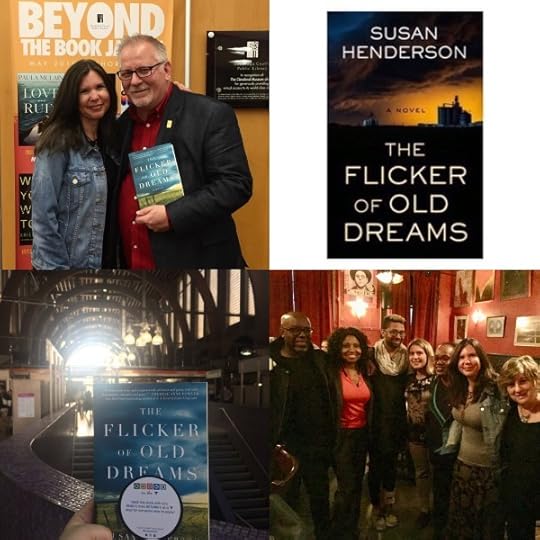
I have some fun events coming up at Delaware’s Hockessin Bookshelf, the Syosset Library, Helen Little’s Public Library podcast, and the Montana Book Festival. I’m also starting to find time again for the new book… I’m in research mode, soaking up stories, taking photos, and reading all I can about the setting where my new story will take place!
Oh, and the large print version of my book came out at the end of last month. Very different cover!
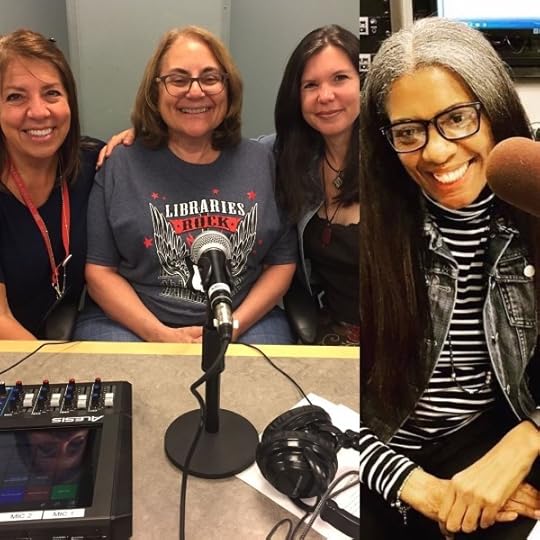
Some thank you’s are in order. Thank you to everyone who snapped photos of my book at airports, including Hollywood Burbank, Pittsburgh International, JFK, and MacArthur.
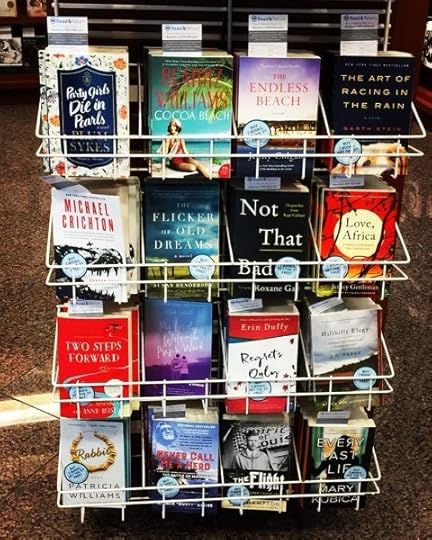
And thank you to Wonderlust travel magazine; Little Miss Funeral; Lydia Cornell; America Reads; The Nervous Breakdown; the brilliant and adorable Brad Listi and his Other People Podcast; Writers Read; Ranger Review; Billie Hinton; Beyond the Book Jacket; The Memphis Flyer; North Central PA; Marjorie’s World of Books; 730 Book Club; Eudora Watson; My Book, The Movie; Lou Pendergrast; and everyone who posted kind reviews on Amazon. (Did you know you can purchase a book at an indie bookstore or borrow it from the library and then post on Amazon?)
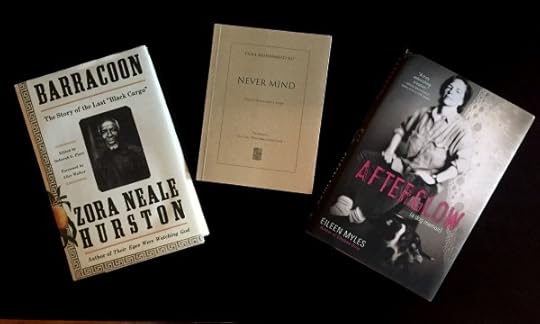
As always, I’ll end by sharing the books I’ve read since my last post:
Ayobami Adebayo, Stay with Me
J. Ryan Stradal, Kitchens of the Great Midwest
John Kessel, Pride and Prometheus
Thomas Lynch, The Undertaking
Sigrid Nunez, The Friend
Zora Neale Hurston, Barracoon
Alma Katsu, The Hunger
Eileen Myles, Afterglow
Sigrid Nunez, The Friend
Fredrik Backman, Beartown
Caitlin Doughty, Smoke Gets in Your Eyes
Taha Muhammad Ali (translated by Peter Cole), Nevermind
Jim Crace, Being Dead
*
That’s it for now. Talk to me about what you’re doing to stay well, even when you’re super-busy, even when the world feels off its axis.

April 27, 2018
In Praise of Indie Bookstores
Today is Independent Bookstore Day. How will you celebrate? And tell us a story about a favorite indie store.
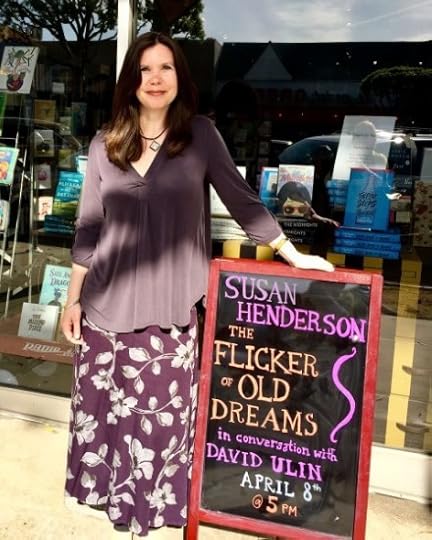
Robert Gray of Shelf Awareness asked me some questions about indie bookstores and then wrote this gorgeous column that makes me feel all warm and fuzzy. I hope you’ll click over and read it: “IBD & Measuring Success by Relationships.”
But today, I’d like to tell a little longer story about the indie bookstores that fed my soul and helped me find my tribe, even in cities where I felt like an outsider…
It’s a bittersweet story because so many of those stores are gone. There was Chapters bookstore in DC, where I started my collection of James Baldwin novels and essays. There was Mills bookstore in Nashville, where I had a long conversation with staff about which translations of Dante are best and, on another day, about the great wisdom of Anne Moody’s Coming of Age in Mississippi. And there’s Pittsburgh’s Phantom of the Attic (it’s still there!), where I learned of the glorious existence of The Sandman series and gamers (like finding out you have weird, distant cousins who don’t shower).
*
Here’s a glimpse at each indie bookstore I visited since The Flicker of Old Dreams came out…
Turn of the Corkscrew on Long Island with co-owner, Carol Hoenig…
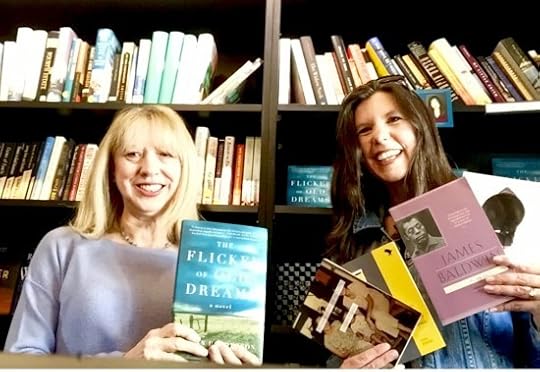
Chevalier’s Books in Larchmont Village (LA) with the great David Ulin…
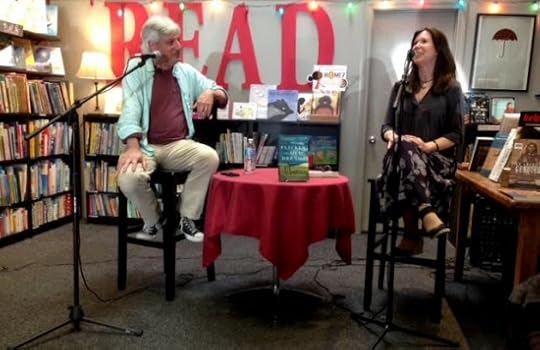
Book Show in Highland Park (LA) with Peter H. Z. Hsu, reading for the Vermin on the Mount literary series…
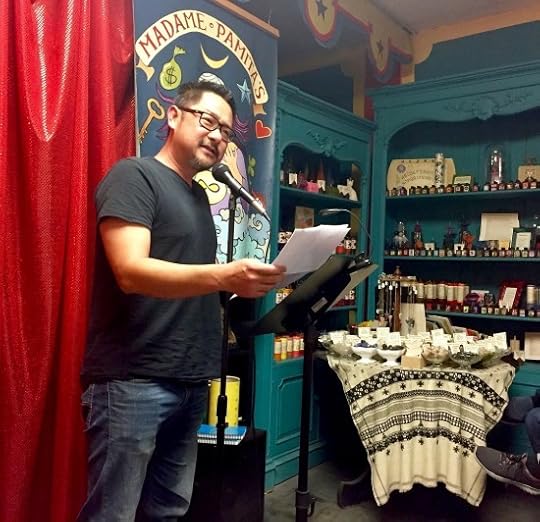
The Book Catapult in San Diego with When We Were Ghouls author, Amy Wallen…
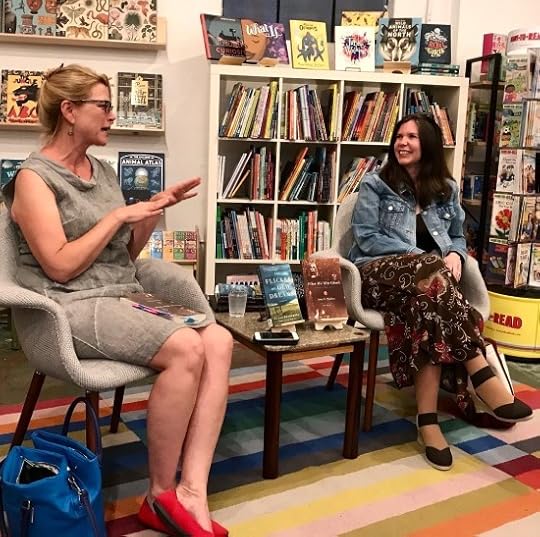
Main Street Books in St. Charles, Missouri with co-owner, Emily Hall…
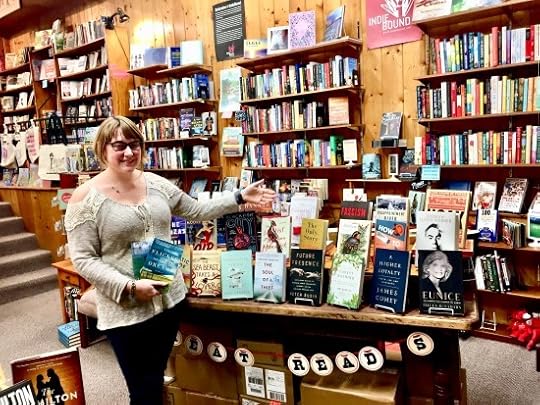
Fun fact about Emily: She used to train birds of prey. And she said this, which I wanted to pass along to you: “It’s an incredibly empowering and humbling experience to have a bird of prey on your arm. The raptor trusts you enough to make you its perch, which is what is keeping it safe from danger and providing it a place from which to view the world. You are basically home base for an exquisitely evolved killing machine. It doesn’t matter if the bird is a tiny kestrel or screech owl, or a massive golden eagle- being that close to a raptor is… whew.”
*
Last but not least, I want to thank the Montana indies that have reached out to me… Donna at Keystone Bookstore in Lewistown, Mara Lynn at Chapter One Book Store in Hamilton, Country Bookshelf in Bozeman, and Cassiopeia Books in Great Falls. I am grateful to all of you!
*
As I said in the Robert Gray column (and please read it), “No matter the city, I know where to find my tribe. And I don’t just ask them for book recommendations. I also let them lead me to the coffee shops, the restaurants, the music venues, and the art and recreation of their town. Because booksellers are the creative and intellectual heart of that community. And just as word of mouth keeps books alive, word of mouth keeps these small, vibrant bookstores and their communities alive.”
*
Some thank you’s are in order. Thank you to David Abrams, who has so generously featured my bookshelf, my book trailer, and “my first time” over at The Quivering pen; to Gina Frangello, who reviewed my book for the Los Angeles Review of Books; to Barbara DeMarco-Barrett for interviewing me on KUCI-FM’s Writers on Writing; to Hubert O’Hearn for reviewing my book for The London Economic; to Caroline Leavitt for interviewing me on Caroline Leavittville; to BookPage for publishing my essay, Looking Death in the Eye; to Jason Schott, who reviewed my book in the Brooklyn Digest; to The Voice of Oma; to Tabitha Lord for interviewing me on Book Club Babble and live on the Author’s Cut; to Marshal Zeringue for featuring my book on the My Book, The Movie and The Page 69 Test; to Sally Christie for reviewing my book on Life Is A Story–Tell It Big; to June McInerney for reviewing my book on June’s Literary Blog; to Ric Marion for reviewing my book on Along the River; to Lori for reviewing my book on She Treads Softly; to Myfanwy Collins for name-checking my book on Bookish; to Lou Pendergrast for reviewing my book on More2Read; to Jennifer Haupt for talking with me at Psychology Today; to Shannon for choosing my novel as a Literati staff pick; and to Jen for highlighting my book on Book Club Girl.
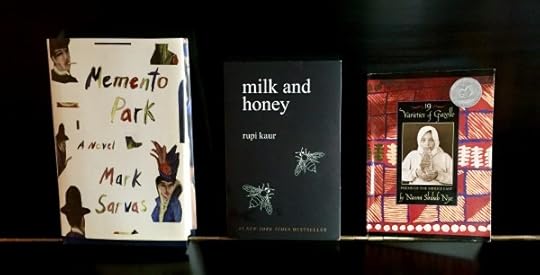
As always, I’ll end by sharing the books I’ve read since my last post:
Hala Alyan, Salt Houses
Zadie Smith, Feel Free
Mark Sarvas, Memento Park
Rupi Kaur, milk and honey
Naomi Shihab Nye, 19 Varieties of Gazelle
Rachel Khong, Goodbye, Vitamin
Julia Fierro, The Gypsy Moth Summer
Jennifer Haupt, In the Shadow of 10,000 Hills
Roxane Gay, Bad Feminist
Amanda Palmer, The Art of Asking
Marilynne Robinson, What Are We Doing Here?
*
That’s it for now. Go visit your favorite indie store, and then come back here and tell me about it in the comments section, where all the cools stuff happens.

March 30, 2018
Jennifer Haupt, Six Tips for Putting Your WIP Aside – without Declaring It RIP
In 2009, I went the Community of Writers at Squaw Valley to see if I could get unstuck with the novel I was writing. What a gift it was to meet Jennifer Haupt there! She was on her own quest, and we bonded right away over our love of literature, our broken spirits, and our struggle to create a story from traumatic material.
In the Shadow of 10,000 Hills , her profoundly moving novel, out this month, takes readers on a journey that spans from the turmoil of Civil Rights Era Atlanta to an orphanage in Rwanda born of unspeakable tragedy. In this hopeful story that transcends race and cultural differences, Jennifer Haupt guides both the survivors and readers toward the courage to believe in love again. An important story reminding us that when a crime is unforgivable, only grace will do.
I asked Jen if she’d write a letter to you because she is full of wisdom and heart. I had no idea she was going to give you something so beautiful as this. Enjoy!
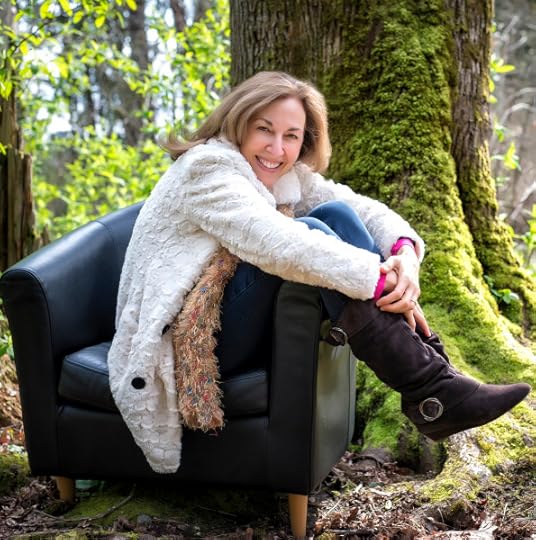
Dearest You,
Every author dreads hearing these words from their agent or editor or mean little voice in their head: “Well, that’s the end of the road. Time to put this novel to rest and start writing something new.”
I heard these words from my then-agent, seven years ago after the novel I had been working on for three years was rejected by, as I recall in my memory warped by time, every editor in the universe and their mother. I cried every day for at least a month, my soul ached for much longer. I was ashamed. I was embarrassed. I was grieving.
(Spoiler alert!) Thankfully, there’s a happy ending to this story: That novel became In the Shadow of 10,000 Hills, which was finally — finally!! — published this week after 11 years of work.
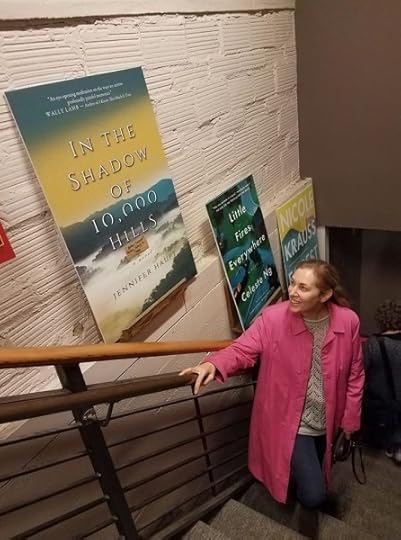
No wait, I just lied. Yes, it’s been 11 years since I first started writing this book but I did put it aside several times. That first time was not my choice, and it was extremely painful. The second time, the time I really want to tell you about, was my choice. I want to spare you some of the pain, self-doubt and humiliation I heaped on myself that first time, before I found my footing on a new path (and a new agent!) because these are the tools that resistance uses to keep us all from writing.
I want you to write and be happy. That’s why I’m sharing some strategies I gleaned over the past 11 years for how to stop writing — at least for a little while. Here are six tips for putting your WIP aside, without declaring it RIP:
Tip #1: Buy yellow tissue paper and gold stars.
This is a variation of advice I received from our very own Susan Henderson when we met at the Squaw Valley Writers Conference, a month after my agent told me to bury my novel. I shared my secret shame with this lovely woman, and she told me her debut novel recently sold after years of turmoil. She told me she had to fight for her novel, including sending it to editors wrapped in colored tissue paper, scattered with gold stars. (This may not be exactly correct but it’s how I remember it.) Susan, along with other writers I met that week who had their own stories of perseverance, inspired me not to give up.
I went home with a renewed commitment to deepening my characters and their plot lines. Long-story-short: After another three years, I sent my novel to three agents. One took me on as a client and sent my novel to a handful of editors. All of them had nice things to say, but none offered a publishing contract.
This time, it was my choice to put aside my novel, and I did it with love. I printed out my manuscript, wrapped it in yellow tissue paper (because sunflowers were my spirit flower for this novel), and lovingly placed it in a drawer of my desk. (Not the bottom drawer, that seemed a little cliché.) I didn’t know exactly when I’d unwrap those pages again, but I knew I would not forget it was there. You may actually buy whatever color tissue paper speaks to you and your WIP!
Tip #2: Don’t forget about your WIP — even while it’s in the drawer.
You’re probably wondering about those gold stars from tip one. Here’s what I did with mine: I put them in a sea-green glass jar, along with a note that said, simply: Don’t Give Up. I kept that jar on my fiction alter, a small table next to the chair I like to sit in (and nap in) while working on a novel.
I didn’t want to give up, to lose the characters and world I had spent six years lovingly creating even though my novel was still flawed and I had no idea how to fix it. This helped ward off the grief I had experienced when I hit the end of the road three years earlier; I knew my WIP was still alive and well. We just needed some time apart.
Tip #3: Start a new, totally unrelated, creative project.
Remember this: it’s not cheating on your WIP to write that essay you’ve been mulling over, taking painting lessons, weed the front garden and plant spring flowers… all of the things you haven’t had time for because, let’s face it, WIPs can be high-maintenance and jealous of the time you spend away from them.
The thing I learned, while my WIP was slumbering in yellow tissue paper and stars is that waking up other passions, broadening my creativity, was actually good for my WIP! I spent a few months cooking, gardening, taking longer walks in the woods, reading — lots of reading! — and when I re-entered novel-land I had more to bring to the pages.
Tip #4: Practice self-compassion.
This tip is closely related to the last one. Do what you love, and the story will follow. (I give no guarantees about the money!)
In retrospect, I was so very mean to myself the first time I put aside my WIP. It’s impossible to be compassionate with your characters, or real folks for that matter, when you aren’t practicing self-compassion. So, don’t beat yourself up for taking a break from your WIP — sometimes, that’s the best thing you can do for yourself and your book.
Tip #5: Don’t stop working on craft.
Sorry, but I’m afraid you aren’t going to become a better writer without, well, actually writing. The good news is that putting aside your WIP leaves more time for studying the work of authors you admire. I’ve taken a lot of workshops over the past 11 years, and I truly believe the most effective way I’ve upped my skills is studying the books I love reading. I underline passages I wish I had written, and then I copy them into a notebook and rewrite them using my own words. Most of these passages make it into whatever WIP I’m working on.
I actually kept my first novel wrapped in yellow tissue paper for two years and wrote a completely new novel, instead of carving up my poor first novel yet another time. I set 50 pages at a time to a consulting editor who worked part-time at a major publishing house, had launched a successful literary magazine, and was the author of a bestselling novel. I also took workshops at Hugo House in Seattle, I read a lot (again)… I invested in what I wanted to be my career.
Tip #6: Set a begin-again date.
One thing that keeps writers from putting aside their beloved WIP is the fear that it will, in fact, wind up being the end of the road — and with good reason! Setting a begin-again date, even if it seems arbitrary, helps to soothe that worry. Although, the truth is, your gut will tell you when you’re ready to re-enter novel-land.
My gut told me, after I spent two years writing my second novel, that the book I really wanted to be my debut was wrapped in yellow tissue paper. I felt absolutely no sense of failure wrapping novel #2 in lavender tissue paper. My begin-again date was one year. I knew it would take me that long to not just revise, but restructure my first novel. (Restructuring… that’s another story for another time!)
So there you have it, permission to set aside your WIP. I’m quite certain that’s a huge relief for some of you! For others, I hope it’s a safety net. When you begin to feel your book is a burden instead of a joy, give yourself permission to set it aside — without burying it for good.
Love,
Jen
*
Jennifer Haupt went to Rwanda as a journalist in 2006, twelve years after the genocide that wiped out over one million people, to explore the connections between forgiveness and grief. She spent a month interviewing survivors and humanitarian aid workers, and returned to Seattle with something unexpected: the bones of a novel. Haupt’s essays and articles have been published in O, The Oprah Magazine, The Rumpus, Spirituality & Health, Psychology Today, Travel & Leisure, The Sun and many other publications. In the Shadow of 10,000 Hills is her first novel.

March 5, 2018
Marisa de los Santos – It’s a big world, honey.
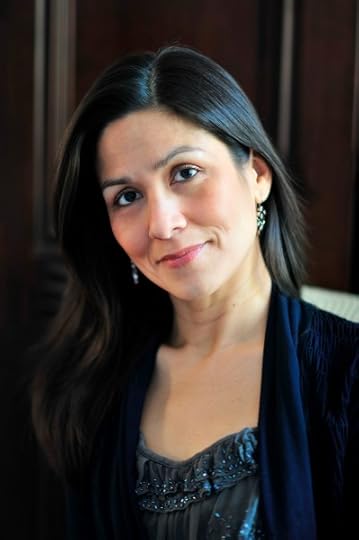
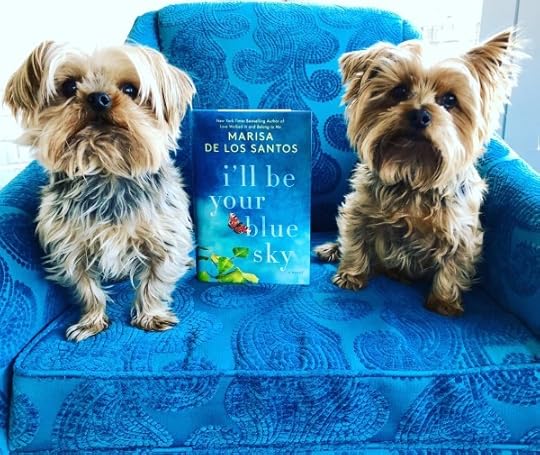
I’m so excited to introduce you to Marisa de los Santos—a mom, a dog lover, and author of I’ll Be Your Blue Sky… out today!
My copy of the book is dog-eared to death with lines I loved. And Library Journal says this about it: “De los Santos…here revisits the next generation of her beloved characters, moving the family saga forward with this engrossing story of unshakable love, personal ethics, and a commitment to life’s larger truths.” I don’t know how to tell you what it’s about without giving away the book’s best secrets and surprises. But I will say this… it’s both a BIG book and an intimate one, and someone’s going to snatch up movie rights for it, I’m certain.
So here’s Marisa, who has written a letter to those of you who feel discouraged and need a lift.
Dear You,
Here are some things people have said about my books:
“I thought this was going to be a romance, but there’s so much other stuff going on that I lost interest.”
“This book was way too wordy, too many big words and long sentences.”
“Annoying and pretentious. If I wanted poetry, I’d read poetry.”
“If you want a light, fun read, this is not the book for you.”
“You need a PhD in English to appreciate this.”
“Too long, too deep, too slow.”
“I like books that just tell the story without all the fancy language.”
And here are some things that other people have said about my books:
“I don’t usually read fluffy books like yours, but my friend gave me your book for my birthday, and I thought, hey, why not.”
“I usually go for more literary books, but I needed something light and fun for the beach.”
“Ugh. Saccharine.”
“Maybe one day, this writer will put her considerable talents toward a book that is actually worthy of them.”
“Someone needs to tell Marisa de los Santos that nice characters are boring.”
Every single one of these remarks—the ones that were said to my face and the ones that I read in reviews or blog posts, even the ones that I’m pretty sure were meant as compliments—hit its mark, left its bruise.
Not because these remarks outweigh the positive ones. They don’t, not in number and not in my own estimation of them. I never stop being astonished by the kindness of my readers, by their generosity in telling me what my books have meant to them, exactly why and how they love them.
Not because the comments I listed are especially mean-spirited. They aren’t. I’ve had much crueler dismissals of my work hurled at me full-force, and I’ve easily dodged them and walked away.
And not even because I am particularly thin-skinned. When my kids have come to me upset because someone was mean to them, I have never (okay, almost never) tried to explain this meanness away by saying, “She’s just jealous,” or “He’s just insecure.” Instead, I tell them, “It’s a big world, honey. Not everyone is going to like you.” While these words might not be especially comforting, I believe them; I apply them to myself. It’s a big world. Not everyone is going to like your books. Get over it. And mostly I do get over it.
No, these criticisms hurt because, in my lowest moments, I am afraid they might be true, all of them. All of them? But they contradict one another! How can a book be fluffy and deep? Lightweight and requiring an advanced degree to be appreciated? These comments cancel each other out, don’t they? They can’t possibly all be accurate, so why not forget about them? But it’s precisely the contradictory nature of them that stings because it gets right to the heart of my own identity crisis as a writer.
My main goal is to make readers happy. No, my main goal is to make readers think. I don’t care about the New York Times “Book Review.” I read that sucker cover to cover every Sunday. I want to charm and make people laugh. I want to give people raw insights into pain and loss. I don’t care that I will never win a Pulitzer or a National Book Award. Of course, I want to win a Pulitzer and a National Book Award!
Truly, if I were to think too long about these tricky, confusing matters of career and identity and purpose and worth, I might just stop writing altogether.
Look, rejection hurts. You know that. I know that. I am not talking about thoughtful criticism from those who have faith in you and your writing. That can be a gift. It can make you better. But casual—or not so casual—dismissals of the work you spend your time and heart on? They don’t help. At their worst, they can paralyze you or send you reeling, wrecked by self-doubt, away from all that writing you need to do.
You can’t let that happen. You cannot. I forbid it.
Here is what I do when I find myself near that calamitous edge (and there is no uncorny way to say this): I remind myself of why I write.
Do it. Remind yourself. Mine your memory, clear away the clutter of ambition, competition, injured feelings, rejection, do whatever it takes to find the reason you write, the reason you started in the first place. And when you find it, walk straight into it the way you’d walk into that house you remember from your childhood, the one you’ve measured every place you’ve ever lived since against, the touchstone house. Home.
See what you find there.
What I find is a woman sitting in the center of a group of characters and making sentences. Choosing. Listening. Lifting one word, then another, arranging them, rearranging them. Being in love with cooing vowels and L-sounds and consonants purring or sharp as flint. Apart from this music she makes, the woman isn’t listening to anyone but her characters, as they teach her how to tell a story that no one else—not a single other person who has ever walked on the planet or won a Pulitzer—can tell.
It’s a big world, honey. Not everyone is going to like you. Get over it. And then go home.
Go home and write your book.
Love,
Marisa
*
Bio:
I became a writer because I love the sound and texture of words (current favorite consonant sounds: Ls and hard Cs) and love to hear what happens when they bump up against each other. I was a poet for a long time (my first book is a collection of poetry called FROM THE BONES OUT), and then, one day, unexpectedly, I found that I had a voice inside my head. As you might imagine, this was a bit alarming. However, in time, I discovered that the voice belonged to a character named Cornelia Brown, so I wrote a novel called LOVE WALKED IN about her and an eleven-year old girl named Clare. After that, I became addicted to writing novels. I wrote a second one called BELONG TO ME that continues Cornelia’s and Clare’s stories, and then wrote a another book for adults called THE PRECIOUS ONE, about two sisters, and co-wrote two for middle grade readers with my husband, David Teague. Those are called SAVING LUCAS BIGGS and CONNECT THE STARS. My new novel I’LL BE YOUR BLUE SKY completes the Cornelia and Clare trilogy (if it doesn’t turn into a series because–who knows?), and I’m working on another one, probably titled I’D GIVE ANYTHING. I live with David Teague, our two kids, Charles and Annabel, and our ridiculously cute Yorkies, Finny and Huxley, in lovely Wilmington, Delaware, home of Joe Biden and tax-free shopping.

February 17, 2018
Question of the Month: Celebration
Tell me how you’ve celebrated big moments in your life, whether it’s a book launch, a birthday, a marathon run, a clean bill of health, a sobriety anniversary, weight loss, or any other hard-won accomplishment.
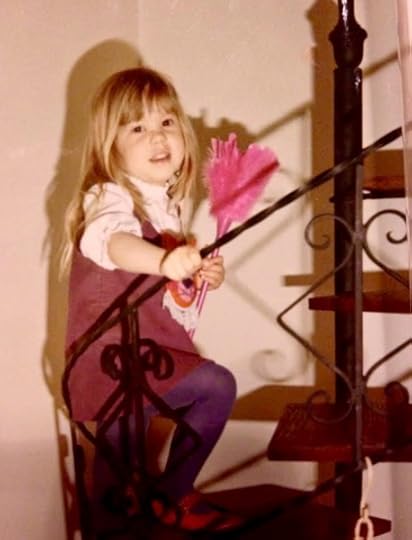
I’m not actually very good at celebrating. The above picture is how I look when I try to party. Unsure. Off in the back corner of the room, awkward and alone.
I’m not much into whooping it up. In school, I didn’t dress up for St. Patrick’s Day or Halloween. I didn’t cheer at pep rallies, though all students were required to go. I don’t celebrate Valentine’s Day or New Year’s Eve. I find it all tiring, burdensome—a real stretch for my personality.
But March is the month my new book goes out into the world, and I worked too hard on it not to acknowledge its birth. So while I suck at parties, I’m always willing to try something new. If you have ideas about how to celebrate, put them in the comments section. I will at least think about trying them!
*
As far as my book launch goes, it will be at The Turn of the Corkscrew on Long Island. You can RSVP here. They are a block and a half from the Rockville Center stop on the LIRR, and they have a fantastic menu. And wine! I will be gloriously happy to see you there.
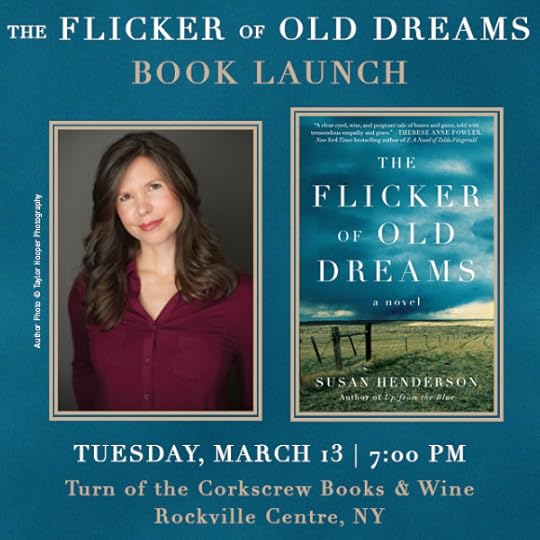
If you want to help this little book’s trajectory into the world, here are some things you can do: Pre-order or buy on the launch day (it’s all about first-day sales). Post photos of yourself or your pet with the book. If you go to an event, post photos of yourself and the book while you’re there. And if you like what you read, tell others or post reviews on social media.
*
All of that said, if you have been on this long journey and have yet to celebrate a finished manuscript, an acceptance letter, or a book launch, what I’m posting below is for you with love, because this has been a long journey, and so much of it has felt like failure. Keep hanging in there and keep sending out your work!
Temporary Ecstacy: The First Book Deal
I’m going to leave you with a few hopeful thoughts—and yes, I’ve shared them before because they’ve buoyed me through hard times: Harper Lee only wrote one book (To Kill a Mockingbird). E. Annie Proulx published her first novel (Postcards) when she was 57, Frank McCourt published his first (Angela’s Ashes) at 66, and so did Karl Marlantes, who worked on his (Matterhorn) for 33 years.
You still have time to tell your stories.

January 28, 2018
LeConté Dill, Back for the First Time
I am so honored to introduce you to one of my personal heroes, Dr. LeConté Dill, who has something to say to those of you who feel beaten down by rejection or overlooked by the writing community. LeConté is a professor, a brilliant poet, and a powerful advocate for social justice, particularly in the area of public health.
After you read the letter she’s written to you, check out some of her poetry in berfrois and as part of the National Academy of Sciences’ Visualize Health Equity Project (I find this direct link easier). Or read this groundbreaking piece for the National Institutes of Health.
If you are a magazine editor or chapbook publisher and want to see some brilliant, important writing, or if you’re planning a local reading and want a vibrant speaker who will raise goosebumps on the arms in the audience, let me know and I’ll put you in touch.
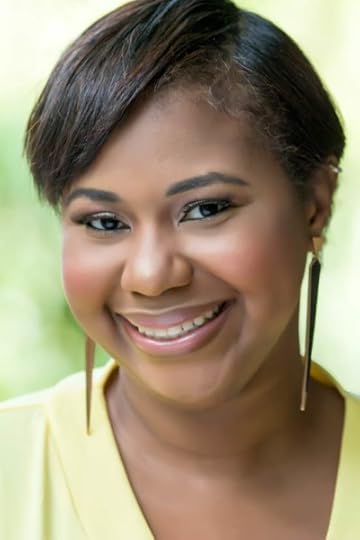
Dear You,
I’m approaching 40, and I feel like I’m back for the first time. When I was a college student in Atlanta, the rapper Ludacris put out his “first” commercial album, entitled “Back For The First Time,” because he has been a local radio personality and had already put out numerous mixtapes and a full-length album years before this commercial release. In a similar vein to Luda, I, too, have been honing my craft for a long time. Still, at times, perhaps like Luda in 2000, I feel ‘unseen.’ The invitation to even write this blog is a reminder that, nah, folks do indeed see me! So, I offer to YOU, I see you, too, Boo!
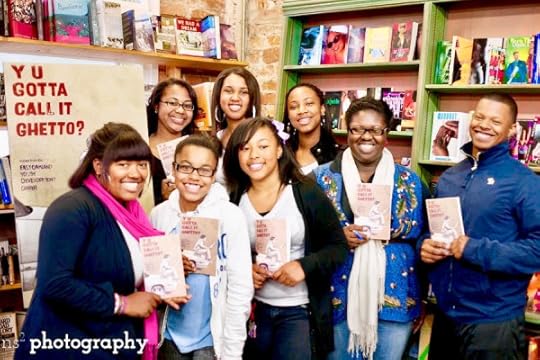
Even if folks don’t seem to see you or don’t see you exactly as you want to be seen, write anyway! Write like a 1st grader filling time in the space between lunchtime and recess. Write like a 5th grader turning in a book report. Write like a 10th grader submitting to the high school lit magazine editors who meet to review submissions on Tuesdays at 2pm. Write like a college student with a minor in Creative Writing, navigating your way from the science labs to the social science libraries, looking for a major, but always having a home in the English Department. Write like you’re applying for your first writing workshop, first learning the leap-and-land routine that is this writing life. Write like you’re actually sitting in that writing workshop, surrounded by strangers who emerge as writing partners and wind up as dear friends. Write by building community—going to readings, even when you’re not the one reading, buy the books that will topple off your bookshelf, meet up for “writing dates” with your folks or even with just yourself and your pen. Take the writing classes, the webinars, the workshops—the free ones that you still contribute a donation, the ones that take sliding scale payments that you save up for, the pricey ones that you crowdfund. Teach the writing classes and workshops to young folks, to peers, to elders. Whether you call yourself a “Teacher” or not, just teach your work, share your practice, learn with the community of learners you’re gathering. Write like you saw your work in a major publication for the first time, and want to feel that warm feeling in your chest again and again. Take care of yourself when you get that “no,” that “thank you, but…,” that “we’re sorry, but we had an unexpectedly large amount of submissions this year.” Pout! Definitely pout! And engage in any selfcare and squadcare practices that you lean on… or that you’ve put on your to-do list to try out. And continue to write like you claim “writer” in your bio, in your intro, on your webpage. Write for your own page, whether you call them morning pages or evening pages, a gratitude journal or a blue day journal, the back of the light bill or the corner of a cocktail napkin.
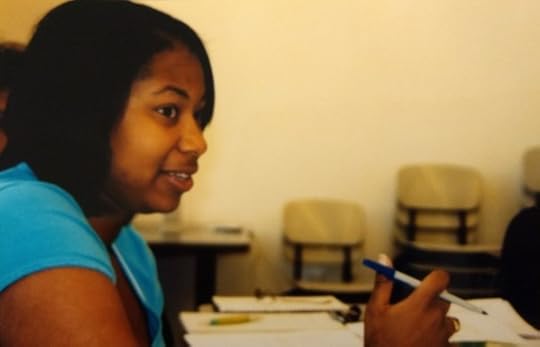
At least that’s been my journey since I was that 1st grader, finding my way from writing as a hobby to writing as praxis and writer as identity. This writing now feels urgent. This writing now feels hopeful. This writing now can hold bold urgency and hope together. I am urgently working to publish my poetry chapbook, and hopeful that it will enter the world this year. I am urgently working on an ethnographic book manuscript that also integrates biomythography, autoethnography, and poetry, and hopeful that it will thoughtfully articulate how young people of color across the U.S. activate resilience in their lives. I am urgently developing a poetry workshop/community intervention that will engage Black girls in Central Brooklyn in reading, analyzing, writing, and sharing poetry, and am hopeful that our emerging community will conjure strategies of resistance in our everyday lives. I am urgently remembering to play!, and hopeful that I’m actually back… for the first time.
Love,
LeConté
*
LeConté Dill was born and raised in South Central Los Angeles and is creating a homeplace in Brooklyn with her husband Umberto. She is an alumna of Spelman College and holds graduate degrees in Public Health from UCLA and UC Berkeley. LeConté has participated in VONA Voices and Cave Canem workshops and was a 2016 Callaloo Creative Writing Workshop Fellow. She’s been published in literary journals, online magazines, and academic journals, such as Poetry Magazine, The Killens Review, Berfrois, The Feminist Wire, Very Smart Brothas, and Journal of Adolescent Research. Her creative writing, community work, and applied research focus on safety, healing, wellness, and justice, particularly for urban Black girls. Currently, LeConté is an Assistant Professor of Public Health at SUNY Downstate.