Rachel Maddow's Blog, page 3400
June 4, 2013
Oklahoma Dem going for it on safe rooms
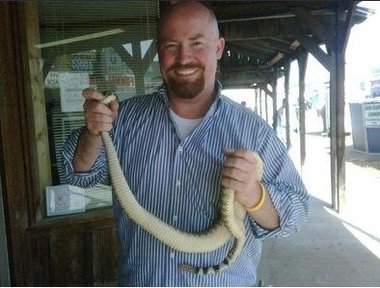
We heard today from Oklahoma State Representative Joe Dorman, one of the minority Democrats in the legislature there. For the last few years, Dorman has worked on trying to get the state better prepared for extreme weather like tornadoes. After the devastating tornado killed seven kids at Plaza Towers Elementary last month in Moore, he put forward a $500 million bond issue for building safe rooms in schools.
His proposal happened late in the legislative session, and it didn't go far. Dorman is getting ready to bring the bill back next session, but he tells us he doubts the Republican-controlled legislature will pass it. Figuring his odds are still long, Dorman has come up with a different approach.
Dorman wants to put the question of state funding for safe rooms directly before voters as an up-or-down citizens' referendum.
The plan calls for gathering signatures starting in August or September when the big fairs and football games generate big crowds filled with people who can be asked to sign the petitions. If the referendum qualifies for the ballot, he tells us he expects the kind of broad coalition from ordinary voters that can be hard to come by these days in a legislature, with knock-on effects:
Republican soccer moms would vote for something like this, and they would vote against a Tea Party type who would oppose a shelter.
And because the idea of protecting kids could prove to have bipartisan appeal at the ballot box, Dorman says he expects real opposition from conservatives who wouldn't want the question to drive up turnout. It's a fascinating political study, both the electoral dynamics and the strategy of just trying to get something done as a political minority -- in this case a blue dot in our nation's reddest state.
P.S. I don't know what Representative Dorman is doing with that snake. Maybe we can ask him later. We're expecting him on the show tonight.


Cantor seeks your governing help
Getty Images
House Majority Leader Eric Cantor (R-Va.) doesn't excel when it comes to actual governing, but he's a big fan of "rebranding" -- so much so that he's launched four rebranding initiatives in the last four years.
There is, however, a fair amount of overlap between the projects. In 2010, for example, Cantor came up with a gimmick called the "YouCut" project -- House Republicans would come up with a list of government programs they don't like, and the public could go online and vote on which one GOP lawmakers would eliminate first. As is usually the case with so many of the Majority Leader's rebranding ideas, this caused a bit of a stir for a few days, before quietly fading away.
Cantor is nothing if not persistent (thanks to my colleague Tricia McKinney for the heads-up).
House Republicans are launching a new website aimed at engaging citizens in the legislative process by allowing them to "co-sponsor" bills introduced in Congress.
Majority Leader Eric Cantor (R-Va.) touted the new site, cosponsor.gov, at a press conference Tuesday. "This is a program and a website designed to engender a national conversation online about legislation that we're considering here in Congress," Cantor said. "It is yet another example of our trying to live up to the commitment of transparency, the fact that this is a government that belongs to the people, and they ought to know what's going on."
Even as public-relations gimmicks go, I'm not entirely sure what the point of this is (unless voters have to register to participate and the Republican Party just wants to collect personal info). If John Doe likes a bill, he can go online and "cosponsor" it? That's nice, I suppose, but why bother? There already public-opinion polls that let policymakers know what proposals are popular (as a rule, Cantor and his caucus don't care what enjoys broad public support, and only pursue legislation that serves the GOP's ideological goals).
But there's a larger concern here: Congress generally doesn't function and struggles badly to complete basic tasks. House Republicans are deeply divided and can't pass any meaningful legislation. Federal lawmakers have important responsibilities and the nation has pressing challenges that require serious responses.
And the House Majority Leader is preoccupied with online gimmicks? Again?
If Cantor and House Republicans excelled in governing, had a compelling policy agenda, and wanted to occasionally have fun with Internet stunts, it'd be easy to overlook harmless distractions like these. But therein lies the point: the Majority Leader has abandoned the pretense of governing, taking his party's "brand" more seriously than his party's ability to get anything done.
Christie pursues unexpected course in New Jersey
Associated Press
With the late Sen. Frank Lautenberg (D) passing away yesterday, New Jersey Gov. Chris Christie (R) found himself in an awkward, election-year position. As of this afternoon, he's choosing an unexpected course, intended to do as little political damage as possible.
Gov. Chris Christie today called for a primary election and a special election this year to fill U.S. Sen. Frank Lautenberg's seat , saying the issues facing the country are "too great" to leave the position vacant.
Christie said the Democratic and Republican primaries would be held on Aug. 13, and the general election on Oct. 16.
This wasn't supposed to be one of the governor's choices. Christie was basically supposed to pursue one of two unattractive options. First, he could appoint a temporary replacement to serve until the end of Lautenberg's term in 2014, at which point there would be an election, which Newark Mayor Corey Booker (D) would be expected to win. If Christie chose this course, however, Democrats would have sued and likely won.
Second, he could schedule the special election for this November, which would be convenient since the Garden State is holding statewide elections that day anyway. Christie, however, didn't care for this, because if Democrats turned out in greater numbers on Election Day -- to, say, vote for Booker -- it might undermine the governor's own chances at re-election.
Today, Christie chose Door #3: he's scheduled the Senate special election for October 16 -- a Wednesday -- even though the state will have other statewide elections a few weeks later, and this election will cost the cash-strapped state an extra $12 million. [Update: there are other uses for that money.]
"There's no reason not to have the special election outside the date of general election." state Sen. John Wisniewski , the state Democratic chairman, said before Christie's announcement. "The decision to hold an election one month before the general elections seems to be politically motivated, not governmentally motivated."
Ya don't say.
The governor will also name an interim senator, to serve until the special election, and he or she will be introduced next week.
GOP officials were reportedly pushing for the governor to hold the Senate special election the same day as his own re-election, thinking that Christie supporters would turn out and give the yet-unnamed Republican candidate a better chance at success. By choosing this route, the governor helps himself, but not his party.
As for the Chris Christie "brand," he's supposed to be the tough, confident leader who doesn't shy away from a fight. The fact that he's ducking this fight -- despite an enormous lead in the polls -- won't do his reputation any favors.
'Pungent rats will serve as bait for endangered beetles along pipeline route'

The Journal-Star in Nebraska wins headline of the day for the above punchy summation of the dilemma facing the proposed Keystone XL oil pipeline. To wit:
The U.S. Fish & Wildlife Service this month said Keystone's proposed route across Nebraska put the endangered American burying beetle at risk. The agency said the black and orange-spotted insect could be spared, and the project move forward, if proper procedure is followed.
That means pipeline builder TransCanada Corp. will have to trap and relocate the one-inch beetles, using frozen rats that have thawed for at least three days for maximum pungency, according to detailed protocols U.S. authorities have drawn up to protect the burrowing bug.
Setting to one side the issue of stinky rats, carnivorous beetles and environmentally disastrous tar sands pipelines, if the name, "Maximum Pungency" isn't a moniker for a punk band waiting to happen, I'll eat my hat. "Burrowing Bug" radiates promise, as well.

Just a rat. Not an important rat. Maybe not even a pungent rat.
If Democrats put the South in play
We keep reading about a purple Texas in the making. We hear talk about a purple Georgia and even a purple Mississippi. Today in the American Prospect, Bob Moser looks at the widening consequences that would follow the end of the solid red South:
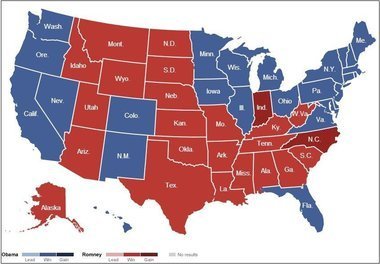
2012 map from the New York Times; striped states indicate gains for that party.
Over the next two decades, it will become clear to even the most clueless Yankee that the Solid South is long gone. The politics of the region’s five most populous states -- Virginia, North Carolina, Georgia, Florida, and Texas -- will be defined by the emerging majority that gave Obama his winning margins. The under-30 voters in these states are ethnically diverse, they lean heavily Democratic, and they are just beginning to vote. The white population percentage is steadily declining; in Georgia, just 52 percent of those under 18 are white, a number so low it would have been unthinkable 20 years ago.
By the 2020s, more than two-thirds of the South’s electoral votes could be up for grabs. (The South is defined here as the 11 states of the former Confederacy.) If all five big states went blue, with their 111 electoral votes, only 49 votes would be left for Republicans. (That’s based on the current electoral-vote count; after the next census, the fast-growing states will have more.) Win or lose, simply making Southern states competitive is a boon to Democrats. If Republicans are forced to spend time and resources to defend Texas and Georgia, they’ll have less for traditional battlegrounds like Ohio and Pennsylvania. Even if Democrats aren't competitive in those states for another decade, they will benefit from connecting with millions of nonvoters who haven’t heard their message. They are building for a demographic future that Republicans dread: the time when overwhelming white support will no longer be enough to win a statewide election in Texas and Georgia.
Moser's story today in the American Prospect is the first of four parts.
Rubio-brand policymaking
Associated Press
In the summer of 2009, Sen. Chuck Grassley (R-Iowa), one of the leading Republican lawmakers in the talks over health care reform, told Fox News, "I believe that there is a bipartisan consensus to have an individual mandate." Was there a massive freak-out on the right? Not even a little -- at the time, there really was a bipartisan consensus to have an individual mandate.
We've come a long way since then.
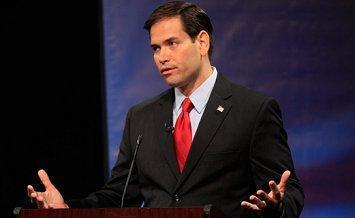
Sen. Marco Rubio (R-FL) on Tuesday introduced a constitutional amendment aimed at invalidating the individual mandate to buy health insurance under Obamacare.
The text of the "Right To Refuse" amendment, according to Rubio's office: "Congress shall make no law that imposes a tax on a failure to purchase goods or services."
His press release mentioned the IRS controversy three times, which reinforces the argument that the right is opportunistically (and shamelessly) using the story to push for their unrelated agenda items, whether it makes sense or not.
In the bigger picture, there are a few relevant angles. First, on the politics of health care, perhaps now would be a good time to point out that the individual mandate on insurance was a Republican idea. As long-time readers may recall, Nixon embraced the mandate in the 1970s, and George H.W. Bush supported the idea in the 1980s. Mitt Romney embraced the mandate as governor, and in the Senate, it's enjoyed the backing of GOP notables, including John McCain, Orrin Hatch, Bob Bennett, Tommy Thompson, Lamar Alexander, Lindsey Graham, John Thune, and Scott Brown. Indeed, several of them not only endorsed the policy, they literally co-sponsored legislation that included a mandate.
And yet, Rubio now wants a constitutional amendment to eliminate a GOP-inspired policy that the White House only embraced to keep health care premiums lower.
Of course, Rubio's amendment has no realistic chance of success, which leads to the obvious question of why he'd bother.
The answer, I suspect, has everything to do with the party's far-right wing -- the kind of folks who, say, might vote in the GOP's presidential primaries -- which strongly disapproves of Rubio's work on a bipartisan immigration-reform bill.
We were reminded of this just a few hours ago.
During a segment on Fox & Friends on Tuesday, Sen. Marco Rubio (R-FL) joined conservative radio host Laura Ingraham to discuss the scandals surrounding the IRS and the Department of Justice. The conversation quickly turned to Rubio's efforts to reform the immigration system where Ingraham and Rubio found themselves on opposing sides of that issue. Ingraham implored the junior senator from Florida to drop immigration reform, stop "dividing the Republican Party," and focus on Americans' true priorities. [...]
She noted that her radio audience wants the Senate to stop "dividing the Republican Party" on the issue of immigration and stick to focusing on augmenting the economic recovery.
Of course, immigration reform will have economic benefits, but even putting that aside, the hostility Rubio is facing from the right explains quite a bit about his motivations.
The far-right Floridian isn't making conservatives happy on immigration, so he decides to push, out of the blue, a pointless constitutional amendment to eliminate a policy idea Republicans spent a generation promoting.
It's all quite sad, really.
Tuesday's campaign round-up
Associated Press
Today's installment of campaign-related news items that won't necessarily generate a post of their own, but may be of interest to political observers:
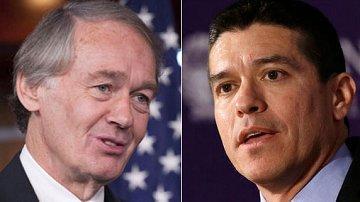
* With just three weeks to go in Massachusetts' U.S. Senate special election, a new poll from New England College shows Rep. Ed Markey (D) leading Gabriel Gomez (R), 52% to 40%.
* On a related note, though the polls will likely discourage outside GOP donors from jumping into the Bay State, Gomez and the state Republican Party are launching a "$400,000-plus" ad buy this week.
* In Virginia's gubernatorial race, Terry McAuliffe's (D) campaign was pleased to announce yesterday two endorsements from Republicans: Earle Williams, a former GOP gubernatorial candidate in the commonwealth, and Dwight Schar, a former Republican National Committee finance chairman from Virginia.
* As Rachel explained on the show last night, New Jersey Gov. Chris Christie (R) has a complicated task when it comes to choosing a temporary replacement for the late Sen. Frank Lautenberg (D). As of this morning, does anyone know what's likely to happen? Not really.
* As of late yesterday, it looked as if the NRA and its allies had collected enough signatures in Colorado to trigger a recall campaign for state Senate President John Morse (D).
* In West Virginia, the DSCC is still without a top-tier candidate to go up against Rep. Shelley Moore Capito (R), and yesterday, the top Democratic recruit, attorney Nick Preservati, announced he will not run.
* And Gallup is still working through the process of explaining how and why it got the 2012 presidential election so very wrong.
June 3, 2013
Ahead on the 6/3 Maddow show
Tonight's show includes:
Steve Kornacki, host of "Up with Steve Kornacki" and senior writer for Salon.com
Elizabeth Goitein, co-director of the Liberty and National Security Program at the Brennan Center for Justice
And here is executive producer Bill Wolff with a preview of tonight's show:
Week in Geek: Way back edition

Andreas Freise
This week we're taking the geek back, way back. Back to the original days of Atari and the minimalist, addicting game of Pong. But while Pong simulated ping pong (or table tennis), this remake simulates black holes! And instead of batting a simulated ball back and forth, you now have to use the gravitational effects of a black hole to sling shot stars past your opponent. The trailer for the game (video's after the jump) shows the game in action. Should you decide you simply must play around black holes, this is by far the safest way to do it. You can download versions for both Mac and Windows here.
As if you needed another reason to play around on the Internet.
The rest of your geek fix:
Language geeks: Did Neil Armstrong misspeak on the Moon or did he just speak like an Ohioan?
More word fun: National Spelling Bee winning word is Yiddish with multiple accepted spellings.
This stunning Silk Pavilion at MIT Media Labs is a joint project between engineers and silk worms [VIDEO]
Female Madagascar sucker-footed bats are nowhere to be found despite thriving numbers.
Russian scientists extract liquid blood from a 10,000-year-old woolly mammoth found in Siberia.
Rat's eyes move in opposite directions when they are running, with one always looking up.
When we get hot, we take off a layer of clothing. When starfish get hot, they lose an arm!
Think cicadas are crazy? Check out these other bizarre life cycles found in nature.
Scientists identify the cause of Ireland's potato famine by extracting DNA from diseased potato leaves stored in museum.
Watch on YouTube
That should tide you over until next week. @Summer_Ash
Monday's Mini-Report
Today's edition of quick hits:
* Protests in Turkey extend into their fourth day.
* Afghanistan: "Taliban attacks in eastern Afghanistan on Monday killed two American soldiers and 19 Afghans, including at least 11 children, adding to a particularly deadly season for civilians this year."
* A 5-4 ruling: "The Supreme Court on Monday upheld the police practice of taking DNA samples from people who have been arrested but not convicted of a crime, ruling that it amounts to the 21st century version of fingerprinting."
* IRS: "The new acting IRS chief stressed Monday that he was pressing ahead to fix the problems that allowed the agency to target conservative groups, saying the current controversies had sparked a difficult time at the IRS."
* More on this on tonight's show: "U.S. military prosecutors on Monday argued classified information sent to WikiLeaks by former Army private Bradley Manning may have ended up in the hands of al Qaeda and other Islamic militant groups."
* Oh my: "A Texas couple at the center of the investigation into ricin-tainted letters sent to President Barack Obama and New York Mayor Michael Bloomberg are reportedly trading accusations back and forth."
* It's still a very good thing that President Obama rescued the American auto industry.
* Many had high hopes that Illinois would approve marriage equality this year, but proponents came up short and will have try again in the future.
* What would "conservative reform" look like? Greg Sargent has a good piece on this.
* My friend Jesse Ferguson, who does exceptional work at the DCCC and is one of the hardest working people I know, has cancer. I obviously wish Jesse all the best and hope for a speedy recovery, but I also have a warning for cancer: you picked the wrong guy to mess with.
* Rep. Steve King (R-Iowa) is willing to defend harsh prison sentences handed out by the Russian government against democracy activists. Of course he is.
* The funniest thing I've seen today is the Wall Street Journal's Dorothy Rabinowitz's spirited condemnation of a privately sponsored bike-share program in New York City. "I represent the majority of citizens," Rabinowitz declared without proof.
Anything to add? Consider this an open thread.