Rachel Maddow's Blog, page 3375
July 9, 2013
Tuesday's campaign round-up
Today's installment of campaign-related news items that won't necessarily generate a post of their own, but may be of interest to political observers:
* In a remarkably self-indulgent spectacle, Texas Gov. Rick Perry (R), already the longest-serving governor in the state's history, announced he will not seek a fourth term in 2014. "I remain excited about the future and the challenges ahead," he said, "but the time has come to pass on the mantle of leadership." It is widely assumed Perry will now seek national office.
* With Perry out, state Attorney General Greg Abbott (R) appears to be the early gubernatorial frontrunner in 2014. Two weeks ago, Abbott released this biographical video that looked quite a bit like a campaign announcement.
* In New Jersey, a new Quinnipiac poll shows Newark Mayor Cory Booker with an enormous lead in the U.S. Senate special election Democratic primary. In fact, Booker has a 42-point advantage over his next closest Democratic competitor, Rep. Frank Pallone. In a hypothetical general-election match-up, the Newark Mayor tops Republican Steve Lonegan, 53% to 30%.
* In Pennsylvania, a new Harper Polling survey shows that only 24% of voters in the commonwealth believe Gov. Tom Corbett (R) deserves a second term.
* In Virginia, Republican gubernatorial hopeful Ken Cuccinelli is refusing to participate in an AARP Virginia/League of Women Voters gubernatorial debate, rejecting the event as a "left wing, stacked" affair. For proof, Cuccinelli pointed to the fact that CBS host Norah O'Donnell agreed to moderate the debate, and O'Donnell used to work for MSNBC.
* And in Illinois, former Rep. Bobby Schilling (R), who lost last year after one term in office, announced yesterday that he'll seek a rematch against Rep. Cheri Bustos (D) next year.


Florida may have accidentally banned access to the Internet
Getty Images
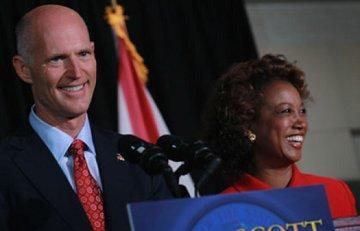
Back in March, an ugly scandal unfolded in Florida, where Lt. Gov. Jennifer Carroll (R) was forced to abruptly resign from office, after her company was accused of helping oversee a fraudulent veterans' charity and using gambling at Internet cafes to launder money.
A month later, Florida Republicans, who control every branch of the state government, were eager to distance themselves from the accusations surrounding Carroll, and approved a statewide ban on Internet cafes where gaming has been common. It had the desired effect -- as the Tampa Bay Times reported, an estimated "200 operators of adult arcades, more than 1,000 Internet cafes and hundreds of Miami's maquinitas have been forced to close down across Florida."
But a new lawsuit, brought by a business owner shut down by the ban, is raising the prospect of the law's unintended consequences (via the Huffington Post).
The lawsuit filed in Miami-Dade Circuit Court on behalf of Incredible Investments, LLC, owned by Consuelo Zapata, alleges that the Legislature effectively applied the ban to all computers when it defined illegal slot machines as any "system or network of devices" that may be used in a game of chance. The state effectively made every smartphone and computer an illegal device, the plaintiff argues.
"They rushed to judgment and they took what they saw as a very specific problem and essentially criminalized everything," said Justin Kaplan of the Miami law firm of Kluger, Kaplan, Silverman, Katzen & Levine, which is representing Zapata.
The argument, crafted with the help of constitutional law attorney and Harvard professor Alan Dershowitz, is based on the assumption that the definition of illegal slot machines is now so broad that an illegal game could be potentially played on every computer. Under the law, the Legislature's own computers, "the ones they used to draft this legislation, are illegal,'' Kaplan said.
The Miami Herald posted the complaint online here (pdf). I'm no lawyer, but on the surface, the plaintiffs seem to have a point -- Florida's prohibition on any "system or network of devices" that can be used in a game of chance is remarkably broad, and would apply to every computer, tablet, or smart phone with the ability to go online.
Only Florida could accidentally ban Internet access.
GOP finds new excuse to oppose immigration reform
Rep. John Fleming (R-La.)
One of the challenges for Republicans engaged in the debate over comprehensive immigration reform is that they've run out of rationales for saying, "No." The Senate bill gave the right just about everything it asked for, including the so-called "border surge," leaving bipartisan legislation that doubles the border patrol, shrinks the deficit, boosts the economy, improves the finances of the Social Security and Medicare systems, and help private-sector employers.
What's not to like?
The right has been left to scramble, looking for something to complain about. Yesterday, they came up with a new one.
The talking point appears to have started in earnest with this Washington Examiner piece from Conn Carroll, who argued that the Obama administration delayed implementation of the employer mandate in the Affordable Care Act -- a move the right should, in theory, love -- which proves the White House shows discretion when it comes to enforcing parts of major laws, which proves Obama might not enforce the border-security elements of immigration reform, which proves Republicans can't trust him, which proves Congress should kill the bipartisan bill.
As is usually the case, the argument quickly moved from online conservative commentary to the lips of Republicans on Capitol Hill.
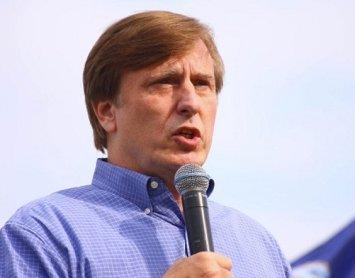
Rep. John Fleming (R-La.) said Monday night that Republicans who oppose the Senate's immigration bill don't trust President Obama to enforce the border enforcement provisions in that bill.
"One of the biggest fears we have about the Senate amnesty bill ... is we can't trust the president," Fleming said on the House floor. "We can't trust him."
Indeed, it appears Fleming went on quite a rant yesterday, arguing, "Whatever we pass into law, we know he's going to cherry-pick. How do we know that? ... ObamaCare; he's picking and choosing the parts of the law that he wants to implement. This president is doing something I have never seen a president do before: in a tripartite government with its checks and balances, we have lost the balances. We have a president that picks and chooses the laws the he wants to obey and enforce. That makes him a ruler. He's not a president, he's a ruler."
There is, in case you were curious, no evidence of Fleming complaining when George W. Bush issued signing statements explaining which parts of laws he intended to ignore.
Regardless, that's the new pitch: Republicans have to kill immigration reform because of the delay in the employer mandate in health care reform. Does this make sense? I'm afraid not.
It's really not that complicated. When it comes to the Affordable Care Act, the administration has some discretion when it comes implementing various provisions. It's not unusual -- the employer mandate isn't even the first "Obamacare" element to be delayed -- and it's not unique to health care. Plenty of parts of the Dodd/Frank financial-regulatory reform law were delayed, too. This has long been the norm, and using it as an excuse not to trust the entire executive branch is silly.
Brian Beutler added yesterday:
The administration isn't unlawfully writing the employer mandate out of existence, just like it wouldn't unlawfully refuse to send thousands of agents to the border if an immigration reform law required them to.
And because immigration reform will be a bipartisan law if it passes, Republicans in Congress will have less incentive to stand in the way if the implementation process reveals real problems with its drafting. Which means the administration won't be left, as it is with the ACA, facing a suboptimal choice between implementing the law poorly or taking clunky administrative steps to smooth the process out.
It's a thin pretense, even by GOP standards. Let's say Obama were to announce today, "OK, fine, we'll bring back the problematic employer mandate in health care law if it helps restore trust and encourages the House to pass immigration reform." Would that work? Of course not. Far-right opponents of immigration would simply come up with some new excuse -- this isn't about policy or substance; it's about partisanship and ideology.
So why bother with this nonsense at all? Because Republicans aren't just looking for an excuse; they're also looking for a way to avoid blame. Immigration reform is, after all, popular, and the House GOP doesn't want to suffer any electoral consequences for once again blowing off the wishes of the American mainstream to follow the wishes of the far-right.
And so, this new shtick is intended to pass the buck. Republicans are, in effect, hoping to say it's the White House's fault that they killed immigration reform, so point fingers somewhere else.
Voters are sometimes fooled by garbage talking points, but it's hard to imagine anyone finding this nonsense persuasive.
Obama eyeing expedited departure from Afghanistan

Associated Press
In recent years, we've seen occasional reports about a changing timetable for troop withdrawal from Afghanistan, some of which have proven accurate, others less so. And with this history in mind, it's generally best not to overreact to rumors.
That said, if this front-page New York Times piece is accurate, U.S. policy in Afghanistan may soon receive a major shake-up -- and the end of the war may come far sooner than expected.
Increasingly frustrated by his dealings with President Hamid Karzai, President Obama is giving serious consideration to speeding up the withdrawal of United States forces from Afghanistan and to a "zero option" that would leave no American troops there after next year, according to American and European officials.
The option of leaving no troops in Afghanistan after 2014 was gaining momentum before the June 27 video conference, according to the officials. But since then, the idea of a complete military exit similar to the American military pullout from Iraq has gone from being considered the worst-case scenario -- and a useful negotiating tool with Mr. Karzai -- to an alternative under serious consideration in Washington and Kabul.
An unnamed senior Western official in Kabul told the NYT, "There's always been a zero option, but it was not seen as the main option. It is now becoming one of them, and if you listen to some people in Washington, it is maybe now being seen as a realistic path."
The Obama's administration's stated policy is an end to the U.S. military involvement in Afghanistan by the end of 2014, with the to-be-negotiated "residual force" remaining in the country in 2015 and beyond. That policy reportedly came under review after President Obama talked directly to Karzai two weeks about peace talks with the Taliban -- the conversation was intended to diffuse tensions, but the Afghan leader nevertheless used the occasion to accuse the U.S. of acting in bad faith towards the Karzai government.
Obama apparently reminded Karzai that it's been American lives that have been sacrificed to bolster the Afghan leader. The White House soon after began reconsidering whether Karzai is a reliable partner worthy of an ongoing war.
What we don't know, of course, is who talked to the NYT. Is this a trial balloon intended to get Karzai's attention? Is it the result of elements from within the administration eager for an expedited withdrawal? Is it an accurate reflection of the president's current thinking? Without more information we don't yet know.
But it suggests this 12-year war -- the longest in American history -- may be ending even sooner than expected. Conservatives will no doubt howl, insisting that our departure will only lead to more violence. That may well be true, though that's also a recipe for an indefinite presence and decades-long conflict, which no one seriously considers a credible option.
Fooling politicians is easy; fooling actuaries is hard

Associated Press
The scene outside of Sandy Hook Elementary School in Newtown, Conn., in December.
Politicians and pundits care about talking points. Actuaries care about data. (Thanks to reader C.R. for the heads-up.)
As more schools consider arming their employees, some districts are encountering a daunting economic hurdle: insurance carriers threatening to raise their premiums or revoke coverage entirely.
During legislative sessions this year, seven states enacted laws permitting teachers or administrators to carry guns in schools. Three of the measures -- in Kansas, South Dakota and Tennessee -- took effect last week.
But already, EMC Insurance Companies, the liability insurance provider for about 90 percent of Kansas school districts, has sent a letter to its agents saying that schools permitting employees to carry concealed handguns would be declined coverage.
The insurer's letter explained to officials in Kansas, "We are making this underwriting decision simply to protect the financial security of our company."
And this, of course, makes quite a bit of sense. In the wake of the massacre at Sandy Hook Elementary, far-right policymakers in a variety of states decided the appropriate response was bringing in more loaded firearms into schools, to be kept around children. This is precisely what the NRA recommended -- schools will be safer, the group insisted, with armed school personnel -- and policymakers acted accordingly.
But insurance companies don't much care about political rhetoric, and have fiduciary responsibilities to consider. And wouldn't you know it, the actuaries ran the numbers and decided insuring schools that may include gun-toting teachers is not a wise investment.
Remember, it's not like EMC Insurance was lobbied to make this decision by the White House, Michael Bloomberg, or Gabrielle Giffords. Rather, the company made a straightforward business decision based on the same policies EMC Insurance has always maintained.
"We've been writing school business for almost 40 years, and one of the underwriting guidelines we follow for schools is that any on-site armed security should be provided by uniformed, qualified law enforcement officers," Mick Lovell, EMC's vice president for business development, told the Des Moines Register. "Our guidelines have not recently changed."
Kansas schools aren't the only ones affected by insurers' concerns.
From the NYT article:
In northeast Indiana, Douglas A. Harp, the sheriff of Noble County, offered to deputize teachers to carry handguns in their classrooms less than a week after 26 children and educators were killed in a school shooting in Newtown, Conn. A community member donated $27,000 in firearms to the effort. School officials from three districts seemed ready to sign off. But the plan fell apart after an insurer refused to provide workers' compensation to schools with gun-carrying staff members.
The Oregon School Boards Association, which manages liability coverage for all but a handful of the state's school districts, recently announced a new pricing structure that would make districts pay an extra $2,500 annual premium for every staff member carrying a weapon on the job.
Scott Whitman, an administrator at the Jackson County school district in southern Oregon, where a committee is looking at arming school staff members next year, said costs would be a factor in the decision. With 10 buildings, the expense of arming and training more than one staff member at each school would easily exceed $50,000 a year.
As other states consider related policies, plenty of insurers aren't looking forward to making these decisions.
The political impact is real. Officials who originally thought the question came down to, "Do we listen to the NRA or not?" are quickly realizing that the better question is, "Can we afford the higher premiums for a dangerous policy or not?"
Boehner completes his 180-degree turn on immigration
Associated Press
For those eagerly watching comprehensive immigration reform work its way through Congress, it's difficult to know what to make of House Speaker John Boehner (R-Ohio). Are his signals reliable? Does he have any authority? Is he bluffing? Does he have any strategy in mind at all?
The answers are more than just insider trivia. The fate of the entire initiative may very well rest in the Speaker's hands, and if we take his words at face value -- which may or may not be wise -- Boehner appears to be in the process of killing immigration reform.
The trajectory of his posturing sheds quite a bit of light on how Boehner is approaching the issue. As the process got underway, the Speaker endorsed "comprehensive" reform, vowed the House would "work its will" on whatever the Senate passed, and refused to rule out the possibility of passing reform by relying on Democratic votes.
That was then; this is now. Boehner now rejects the notion he wants a "comprehensive" bill, refuses to let the House even cast a vote on the bipartisan Senate legislation, has said categorically he'll only consider a bill most House Republicans support, and yesterday, seemed to drive a nail into immigration reform's coffin.
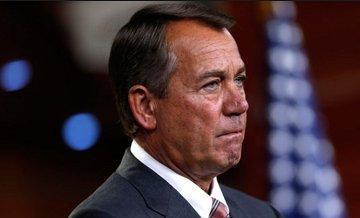
Speaker John A. Boehner told reporters Monday that border security will come before legalization.
"The American people expect that we'll have strong border security in place before we begin the process of legalizing and fixing our legal immigration system," the Ohio Republican said.
The secure-the-border-first position is popular with the GOP's far-right wing, but as best as I can tell, yesterday was the first time the House Speaker endorsed this line publicly. The argument is that Democrats should give Republicans what they want, at which point, the GOP will consider, maybe, if they feel like it, questions regarding citizenship status.
Oh, and when Boehner says this view has been endorsed by "the American people," he has no idea what he's talking about -- polls show strong national support for comprehensive reform, which the Speaker and his party appear eager to destroy.
What we're left with is a House Speaker who has completed a 180-degree turn on the biggest piece of legislation pending in this Congress. Does this mean it's over?
The problem with the question is that no one, not even Boehner himself, seems to know the answer. There isn't a soul involved in this process who knows whether to take the Speaker seriously, whether his rhetoric has any value or connection to his true intentions, or even whether he has any influence over the members he ostensibly leads. Indeed, Boehner has finished a wholesale reversal from the positions he took in the early spring, and it's certainly possible he may yet reverse himself again. It's anybody's guess.
Part of the fight may well come down to who Boehner is inclined to listen to most. On the one hand, reform proponents include a bipartisan Senate majority, private-sector employers, party strategists, deficit hawks, leaders from minority communities, and as we saw yesterday, religious leaders.
On the other, we see a whole lot of conservatives. Indeed, just this morning, Weekly Standard editor William Kristol and National Review editor Rich Lowry -- two of the most influential Republican voices in media -- co-signed an editorial urging House Republicans to put "a stake through" immigration reform's "heart." As they see it, GOP lawmakers should do literally nothing on the issue -- no House alternative, no conference committee, no attempt at finding "common ground" -- and should instead shift its electoral intentions.
If Republicans take the Senate and hold the House in 2014, they will be in a much better position to pass a sensible immigration bill. At the presidential level in 2016, it would be better if Republicans won more Hispanic voters than they have in the past -- but it's most important that the party perform better among working-class and younger voters concerned about economic opportunity and upward mobility.
I've been harping on this a bit lately, but the Kristol/Lowry argument is predicated on the assumption that the party is not really facing a demographic challenge. Sure, Republicans are alienating every racial and ethnic minority group in an increasingly diverse nation, but so long as they "perform better" with white people, the GOP can remain competitive.
Six months ago, most prominent voices in the party saw this as ridiculous, and committed themselves to expanding the Republican base. Now, the forget-everyone-but-white-people strategy is starting to dominate party thought.
Court blocks Wisconsin's new restrictions on reproductive rights
Associated Press
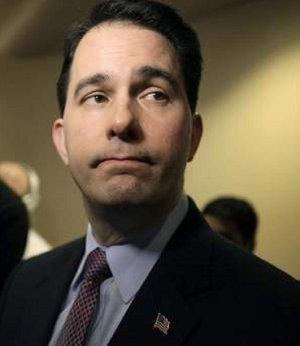
On Friday, when he hoped no one was looking, Wisconsin Gov. Scott Walker (R) approved sweeping new restrictions on reproductive rights, including a requirement that women receive a medically unnecessary ultrasound before terminating a pregnancy, and regulatory measures that would close half of the state's abortion clinics.
The law was supposed to go into effect statewide yesterday. A federal court had other ideas.
A federal judge Monday temporarily blocked part of Wisconsin's new abortion law and scheduled a hearing for next week.
The law, which went into effect Monday, includes provisions similar to those in several other states that require women to undergo an ultrasound procedure before having an abortion and require doctors who provide abortion services to have admitting privileges at a hospital.
U.S. District Judge William Conley issued a temporary restraining order yesterday afternoon, blocking the admitting privileges requirement. He also set a hearing on a full injunction for July 17 -- a week from tomorrow.
Specifically, Conley noted in his 19-page ruling that the admitting-privileges provision of the Republican measure serves "no medical purpose" and was rushed into law for no apparent reason. It is up to state officials to prove that it safeguarded women's health, he wrote, which he said "does not bear even superficial scrutiny on the current record."
For opponents of reproductive rights, Wisconsin was discouraging, but they saw far more progress in Texas, where a state House committee, following a nine-hour hearing, easily approved sweeping new restrictions. The process did not go smoothly -- as committee Democrats noted, GOP committee leaders "limited testimony at a public hearing, declined to hear from hundreds more waiting to testify and refused to consider Democratic amendments -- and at times even failed recognize Democrats to speak at all to raise questions."
Texas Republicans didn't much care, approved the restrictions, and sent the package to the state House floor, where debate is scheduled to begin today.
Before we move on, though, let's not overlook the larger context.
The Guttmacher Institute published an important report yesterday on the scope of the fight in state legislatures.
In the first six months of 2013, states enacted 106 provisions related to reproductive health and rights; issues related to abortion, family planning funding and sex education were significant flashpoints in several legislatures. Although initial momentum behind banning abortion early in pregnancy appears to have waned, states nonetheless adopted 43 restrictions on access to abortion, the second-highest number ever at the midyear mark and is as many as were enacted in all of 2012.
Following the 2012 elections, Republicans at the state level decided what the party really needs is an even-more-aggressive culture-war posture, giving up on mainstream priorities such as job creation, and devoting excessive attention to reproductive rights.
Morning Maddow: July 9
President Obama is reportedly considering removing all troops from Afghanistan next year.
Der Spiegel releases a previously unpublished interview with Edward Snowden.
Report: The IRS mistakenly exposed thousands of social security numbers.
64 arrested at last night's "Moral Monday" protest in North Carolina.
VA Gov. Bob McDonnell repays the state for nearly $2,400 in food his kids took to college.
Three Cleveland, Ohio kidnap victims release a video to say thanks.
A federal judge says she's powerless to stop force feedings at Guantanamo, urges the President to do what she can't.
That time Osama bin Laden was stopped for speeding in Pakistan...
Decryptomaddowlogical #73
After tonight's segment on the death of AltaVista, I was boasting to fellow tweeters that I used Gopher when it was still new and several times in 1993/94 successfully communicated from England to New York by real time text chatting on a computer with a monitor that could only display green type on a black field. This was while the students at the next terminal obsessed over a new game called Doom.
There aren't many brands still around from the early days of the internet, so AltaVista's run was pretty remarkable (even if much of it was in obscurity). That said, search is still a very integral and lucrative aspect of the internet, so AltaVista's downfall is not necessarily the result of obsolescence so much as
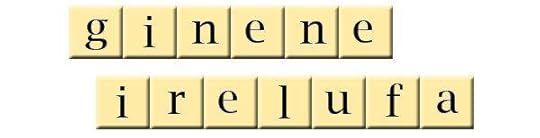
Need help? Need to shout out the answer without spoiling anyone else's game?
*Remember to mention the number of the puzzle you're talking about.
July 8, 2013
House GOP draws up 'menu' for debt-ceiling crisis

Following up on an item from two months ago, Congressional Republicans have no reason to use the debt ceiling to hold the nation hostage again. None. The deficit is already shrinking with remarkable speed; the last GOP debt-ceiling crisis did real harm to the nation; GOP leaders have ruled out default; and Republican lawmakers themselves don't even have anything specific in mind in terms of demands. There's just no need to put Americans through this again.
But National Journal reports that House Republicans intend to do it anyway.
With an anxious eye toward the coming debt-ceiling negotiations, House Republicans are drafting what members call a "menu" of mandatory spending cuts to offer the White House in exchange for raising the country's borrowing limit.
This menu is more a matrix of politically fraught options for the Obama administration to consider: Go small on cuts and get a short extension of the debt ceiling. Go big -- by agreeing to privatize Social Security, for example -- and get a deal that will raise the ceiling for the rest of Obama's term.
It's a strategy meant to show the GOP is ready to deal. But even conservatives admit that this gambit might do little to help them avoid blame should the negotiations reach a crisis stage.
We've reached a level of true madness here. We are, after all, talking about paying for things congressional Republicans have already bought, and so they have to raise the debt limit to avoid default. And yet, their official position is, in effect, "Give us a treat or we'll start deliberately hurting Americans. No goodies = no peace."
But it's this "menu" that really rankles -- Republicans will promise not to threaten to hurt Americans on purpose for a certain period of time, based on which part of Paul Ryan's House GOP budget plan Democrats accept.
If Democrats agree to more means testing of Social Security benefits, Republicans will agree not to hold the nation hostage again for a short while.
If Democrats agree to cut food stamps for struggling families or block-grant Medicaid, Republicans will agree not to hold the nation hostage again for a slightly longer period of time.
And if Democrats agree to privatize social-insurance programs altogether, Republicans promise they won't threaten to hurt the country again on purpose until after the president leaves office. How gracious of them.
This is dangerously stupid and reflects a degree of post-policy nihilism that's hard to fully appreciate. This is arguably the single dumbest, manufactured, self-imposed crisis imaginable, but at least for now, it's going to happen anyway.
For the last few months, the political world has been preoccupied with some ridiculous "scandal" narrative, hoping to tie together unrelated stories -- which really weren't that interesting anyway -- to tell the public there are meaningful controversies unfolding in Washington. But so-called scandals like Benghazi and IRS scrutiny evaporated into nothing.
But if the political world is eager to fill the void, the debt-ceiling story strikes me as a genuine scandal. For the first time in generations, we have a major political party vowing to do deliberate harm to Americans unless their demands are met.
How is that not a scandal?
For its part, the Obama administration has said in no uncertain terms that it will not negotiate with those who would hold the nation's wellbeing hostage. "We will not negotiate over the debt limit," Treasury Secretary Jack Lew said in writing in May. "The creditworthiness of the United States is non-negotiable. The question of whether the country must pay obligations it has already incurred is not open to debate."