Misha Angrist's Blog, page 5
November 6, 2011
Programming note: All atwitter

On Tuesday November 8 (don't forget to vote!) at 3PM EST, I will be having a Twitter chat with the extraordinary Rebecca Skloot. In the event you've been on Alpha Centauri for the last two years, Rebecca is the author of The Immortal Life of Henrietta Lacks, a book for which I have huge admiration. She and I will be discussing creative nonfiction and writing about science, medicine, human beings and dogs. Please join us.
One of the easiest ways to participate in a Twitter chat is to go to www.tweetchat.com and authorize the tweetchat app. Then type in the hashtag, which is #creativenf. This opens another window in which you can see only the chat (plus saves you the trouble of trying to remember to type the hashtag all the time). Send your comments and questions and we will get to as many as we can in an hour. I am totally geeked about this!


October 28, 2011

October 27, 2011
Turn and face the strange
Dr. Jerry Menikoff, M.D., J.D.
Office for Human Research Protections
Department of Health and Human Services
1101 Wootton Parkway, Suite 200
Rockville, MD 20852
Re: Comments on Docket No. HHS-OPHS-2011-0005
Human Subjects Research Protections: Enhancing Protections for Research Subjects and Reducing Burden, Delay, and Ambiguity for Investigators
76 Federal Register 44512 (proposed July 26, 2011) (to be codified in Title 45 CFR parts 46, 160, and 164).
Dear Dr. Menikoff:
Thank you for undertaking the long-overdue task of reforming the way in which research involving human participants is governed in this country. You and your colleagues are to be commended for your efforts. Your critiques of the current system, made manifest by the Common Rule over the last 20 years, are right on the money:
Minimal-risk research is over-regulated at the expense of genuinely risky research
Multi-site studies suffer from redundant review by multiple IRBs
The informed consent process has gone haywire: forms are long, complicated, opaque and focus on protecting institutions rather than individual research participants
Privacy rules are inadequate for a postgenomic world
The current system does not allow for efficient data collection so that existing regulations can be monitored and adjusted on an iterative basis
Under the current system some high-risk studies, such as those that are not federally funded, escape oversight altogether
There is disharmony: Researchers often find it impossible to honor the letter and/or the spirit of different and sometimes-conflicting regulatory regimes (e.g., the Common Rule and HIPAA)
Anyone involved in research on human beings in any capacity would be hard-pressed to dispute the truth of these seven criticisms.
That said, based on the analysis and proposed remedies set forth in the Advanced Notice of Proposed Rulemaking, I am deeply concerned that HHS is in the process of missing a major opportunity to reimagine and improve the entire human participant research enterprise. Instead I fear that the Department has succumbed to an ad hoc approach that will, sooner or later, be exposed: it will come to be seen as a failure to address the deep-seated systemic flaw that has led to frustration and dissatisfaction on the part of both investigators and participants.
The ANPRM's self-described mission is to find ways "to better protect human subjects who are involved in research, while facilitating valuable research and reducing burden, delay and ambiguity for investigators." While noble on its surface and perhaps salutary in the short term, this goal offers little long-term hope of unburdening investigators or keeping the taxpaying public financially and emotionally invested in research. Why not? What is missing is the rhetoric of collaboration. Of partnership.
If, as research participants, we are worthy only of "protection" and not engagement or education, then we will remain, in the words of Kohane et al (Science. 2007 May 11;316(5826):836-7), "passive, disenfranchised purveyors of biomaterials and data." The disenfranchised, it seems to me, are unlikely to blossom into loyal constituents.
Similarly, if researchers are not encouraged—or obliged—to transcend their treatment of participants* as repositories of data to be mined or worse, bureaucratic hurdles to be overcome, then those researchers are destined to be disappointed. Participants who give of their time and biological materials—to say nothing of their tax dollars—without any eventual promise that they or their descendants will benefit, cannot be expected to roll up their sleeves forever, can they?
In his 2010 Presidential Address to the American Society of Human Genetics (Am J Hum Genet. 2011 Mar 11;88(3):254-61), Roderick McInnes observed:
In our model, the subjects have little voice in the research process, they waive rights of benefit sharing in general, the data and samples are ''owned'' by the researcher, and the results go to journals and are not specifically ever directed back to or shared with the research subjects.
Dr. McInnes was speaking about genetic research performed on indigenous peoples, but I ask you: Is what he describes not the norm for research involving human research participants from all cultural groups and economic strata in the United States?
The consequences of this "let them eat cake" attitude have already become apparent. People who are curious about science but weary and wary of the status quo found in academic studies, have begun to organize and do research themselves: in their garages, in their kitchens, in silico, and in community labs. DIYbio, BioCurious, GenSpace, DIYgenomics and Genomera are just a few of these grassroots organizations.
Chronically ill people, for whom research is neither a hobby nor an abstraction, have grown impatient as well. PatientsLikeMe, the online health platform predicated on openness, information sharing and patient ownership and control of data, had less than 5000 users in 2007. Today it has over 117,000. It is difficult to see this sort of exponential growth as anything less than an indictment of the way conventional biomedical research on human beings is governed. And it is difficult to imagine that anything less than wholesale change will sustain such federally funded and federally governed research over the long haul.
I understand, Dr. Menikoff, that you have taken on a thankless and quixotic task. But I would argue that that's all the more reason to take this opportunity to swing for the fences. Don't settle for tweaking the Common Rule or harmonizing it with HIPAA. Don't settle for "protecting" and "facilitating." Aim higher.
Change the game. Change the culture.
Sincerely,
Misha Angrist, PhD, MFA
*the obsequious connotations of the word "subjects" in this context is noteworthy and makes this an opportune time to eschew its usage altogether

October 21, 2011
I gotta have faith
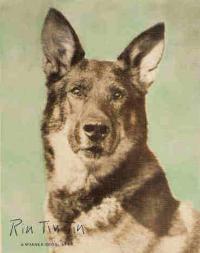
"The unbroken strand is not one of genetics but one of belief."
- Susan Orlean on the fact that Rin Tin Tin was played by more than 20 dogs

October 19, 2011
Dear Sir or Madam will you read my book
My ace publicist tells me that the hours are ticking down to win a free copy of the soon-to-be-released paperback edition of Here is a Human Being. That's $10.87 you're now free to spend on, I don't know…bubbles. For the love of God, enter here before it's too late!

October 17, 2011
I suppose it beats a trip to the DMV
Thank you for contacting your Bill Pay service.
You are not currently in a chat session.
You are not currently in a chat session.
You are not currently in a chat session.
You are now chatting with 'Takia'
Takia: Hello and thank you for contacting Bill Pay Support. In order to assist you, I will need to access your bill pay account.
Takia: Would you please provide me the following information for the primary user on the bill pay account: first and last name and the last 4 digits of the social security number?
Misha Angrist: I was chatting with Tina but lost her
Misha Angrist: Misha Angrist SS# —-
Misha Angrist: mother's maiden name: B———
Takia: Thank you.
Takia: I do apologize, I am chatting with Misha Angrist, correct?
Misha Angrist: yes
Takia: Thank you.
Takia: For security purposes, may I please verify your father's middle name?
Misha Angrist: W—-
Takia: I do apologize, that response is not listed. Would you like to provide a different response, Mr. Angrist?
Misha Angrist: I don't have a different response: my father's middle name is W—-
Takia: I do apologize, I am not showing that response listed.
Takia: For security purposes, may I please verify your pet's name?
Misha Angrist: I guess I'm stuck with my BillPay problem then, aren't I?
Takia: If you have a general question, I will be able to assist you. If it is something specific, that requires me to access any information, a security question must be verified, before I can assist you.
Misha Angrist: Django is my pet's name
Takia: Awesome.
Takia: I do show that listed.
Takia: We are currently updating our files. May I please verify your email and contact number?
Takia: I show your email as misha DOT angrist AT duke DOT edu and your contact number as 919——.
Takia: Are these correct, Mr. Angrist?
Misha Angrist: yes
Takia: Thank you.
Takia: How may I assist you today, Mr. Angrist?
Takia: Are we still chatting, Mr. Angrist?
Misha Angrist: I received an email today saying, "To continue receiving eBills for Duke Energy, you must re-enter your log-in and/or security information within online bill pay. Please log into your account at www.dukefcu.org and click the bill pay link. You may re-enter this information by clicking "Troubleshooting" within the eBill summary". When I go to dukefcu.org and log onto my credit union account and click iBillPay, it is not obvious to me where I would enter that information or, for that matter, why I would need to re-enter my account number when they already have my account number.
Takia: I'll be happy to assist you with this.
Takia: Were you able to access the payees site successfully, Mr. Angrist?
Takia: Also, in Bill Pay, to enter in the payee login, you will select 'troubleshoot', on your e-bill dashboard (Bill Pay's Homepage).
Misha Angrist: You mean the Duke Energy page? Yes. But I'm in the process of moving–I was hoping to avoid having to go digging through boxes and track down an old bill in order to find my account number.
Takia: Thank you.
Takia: I do apologize for the inconvenience, however, at this time, we are experiencing technical difficulty communicating with your payee's site. Please try to set up ebill for this payee at a later time.
Misha Angrist: that seems like a fitting end to this exchange…

October 15, 2011
Old and in the way
FLAGSTAFF, ARIZONA – This morning at the National Association of Science Writers meeting, Esther Thorson gave a riveting plenary address on "The Digital News Consumer." Early on she put up a slide showing how baby boomers refuse to ever see themselves as old. For the most part, I suppose I subscribe to this. Despite the loss of hair and neurons and the accumulation of pounds and pain, I don't feel old. But after hearing Thorson describe the transformation of news consumption into an increasingly shallow, banal, attention-poor activity, I have to admit I felt about 102 years old.
Of course I already suspected much of what Thorson made frighteningly manifest with data. My undergraduate students–like most of their peers–don't read newspapers in any kind of committed way. Most of them don't read books regularly. I don't say this with contempt; it's simply a fact (albeit one that saddens me). I text and blog and tweet, too. I watch YouTubes, I've got my laptop open and phone next to me while I watch TV with my kids. My wife will tell you how easily distractible I am. I am not proud of this. Too often I am looking for the same shot of dopamine as my students.
One of my favorite songs about unrequited love goes, "Well, it's over, I know it, but I can't let go." At my lowest moments, this is how I feel about teaching science writing: that, at some level, what I am doing is akin to teaching conversational Latin. It is a pursuit with diminishing returns, at least in financial terms. So maybe there are a zillion blogs and perhaps science blogs like this one have finally "found a place at the table," even if the table has been deserted because, like, hey–someone's playing Angry Birds in the next room!
But I can't let go. And in particular what I can't let go of is story: how we tell stories, how we respond to them, what works and what doesn't. A good science story must first of all be a good story (here's a definitive example). My worry (old fart alert!) is that as an ever growing number of sources of "content" compete for our attention and students like mine choose "strategic communication" over, you know, actual writing, then teaching science-writing-as-storytelling, i.e., what I try to do, will increasingly come to be viewed as an ossified, ivory-tower pursuit.
As we used to say back in the day, "Quod me nutrit, me destruit."

October 12, 2011
The soft parade
I'm sorry, but transistors will never be this sexy…

"To inform and surprise"
I regret to say that I completely missed this lengthy and wonderful discussion next door. Three weeks late or not (thanks Seth!), as a so-called science writer and teacher of science writing, I am compelled to pay and call attention to it. The big question: What is the writer obligated to share/copy correct with his/her sources prior to publication? This is an issue that still nags at me every time I send an email to or call a source. David Kroll does a great job of setting the table and the comments include all kinds of free wisdom, including these Rules for Manuscript Review by Maryn McKenna (who is both award-winning and, IMHO, totally Super Duper).
…if I am using these, I send them by email to the source/character, and ask them to reply indicating their acceptance before any text is sent.
RULES FOR MANUSCRIPT REVIEW
1. Please understand that I am sending this to you as a courtesy; the purpose of this review is fact-checking only, for maximum accuracy.
2. To respect copyright, you may not share the text with anyone other than those who are named in it, or reproduce or republish it in any way.
3. The ground rules for potential changes are:
- If something is factually incorrect — e.g., wrong date, wrong name — and you can point me to a source that confirms the correct version, I commit to changing that fact in the text.
- If a quote is correct according to a sound file or transcript, but you feel you misspoke, or feel you need to withdraw or change what you said, then I commit to having a conversation about it, but I do not guarantee that I will make a change. Allowing sources to change quotes is an extremely significant act for journalists, and so there must be a very good reason for such a change.
- If I have described your emotional state or drawn a conclusion about events or circumstances, and you think my description is inaccurate, then I commit to having a conversation about it, and invite you to present any evidence that shows my construal is incorrect, but I do not guarantee that I will make a change.
4. To respect the author's contracted obligation to be the sole author of the text, please do not do any significant rewriting. If you feel changes are needed, your options are to:
- use Track Changes to indicate areas you feel need to be changed
- type the correct fact into the text in a different color or different font, e.g. ALL CAPS
- write/type out the changes on a separate sheet, or put them on a new page within the Word file, using a "page break" to delimit them from the main text.
5. Finally, it is important to understand that this text is a work in progress and may change further as it goes through edits. If the text changes significantly after our mutual review is done, I commit to letting you know about it, but please understand that my ability to change it back from the editor's emendations will be limited.
And this quote from George Johnson, author of the sublime The Ten Most Beautiful Experiments, offers words to live by for ink-stained wretches of all stripes:
We are not conduits, and our job is not to avoid surprises. It is to inform and to surprise.

October 5, 2011
But can we still be friends?
The other day I met an endocrinologist (no, this is not the setup for a bad hormone joke). She described the nervousness among her colleagues when they receive Facebook friend requests from their patients. The American Medical Association tells its members, in so many words, be very very careful. Accordingly, 75% of US physicians receiving friend requests from patients decline them. The British Medical Association explicitly urges physicians to "Just Say No":
"Difficult ethical issues can arise if, for example, doctors become party to information about their patients that is not disclosed as part of a clinical consultation. The BMA recommends that doctors and medical students who receive friend requests from current or former patients should politely refuse and explain to the patient the reasons why it would be inappropriate for them to accept the request."
Do lawyers decline friend requests from their clients? What about orthodontists from their patients?
What are these ethical issues? Is this about separating one's work from one's personal life? Liability? HIPAA Privacy? Or something else?
The doctor-patient relationship is intimate, fragile, important. But does it preclude friendship, even of the highly curated online variety?