
Huckleberry Hax's Blog, page 40
August 19, 2014
Two places at once
I've written a third short story featuring my 'Avatar Dining Club'. It's called 'Two places at once' and considers an avatar who appears to be in two different places in SL at exactly the same time. But how...?
This one has been published at Virtual Writers' World and you can read it here.
This one has been published at Virtual Writers' World and you can read it here.


July 20, 2014
Ten facts about early Second Life
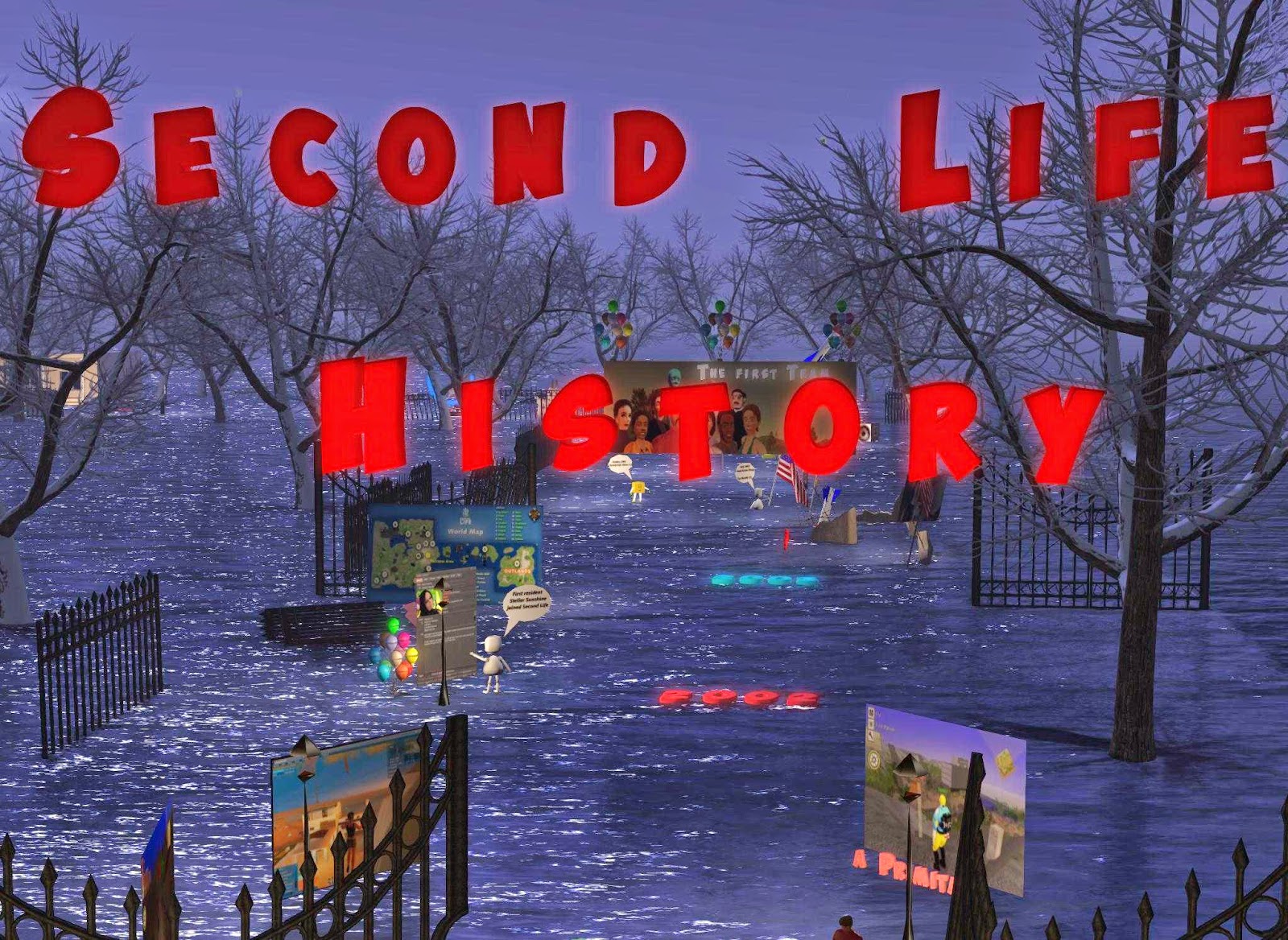
Following a signpost from Ziki Questi's blog, I spent some time yesterday at 'Second Life History', an LEA (Linden Endowment for the Arts) installation by Sniper Siemens which presents a walk through SL's history, from 2001 right up to 2014 (where a set of steps leads towards SL2).

It's a fascinating virtual stroll and it's particularly easy to linger on some of the photographs along the way, snapshots of a world that looks very different from the metaverse today. My only real complaint, in fact, would be that there weren't enough of these. This got me thinking: personal snapshots are amongst the few inventory items not bound eventually to perish so long as they get saved out onto a hard disk before SL gets switched off; wouldn't it be great if someone created a year-by-year collection of these, contributed to by as many different residents as possible?
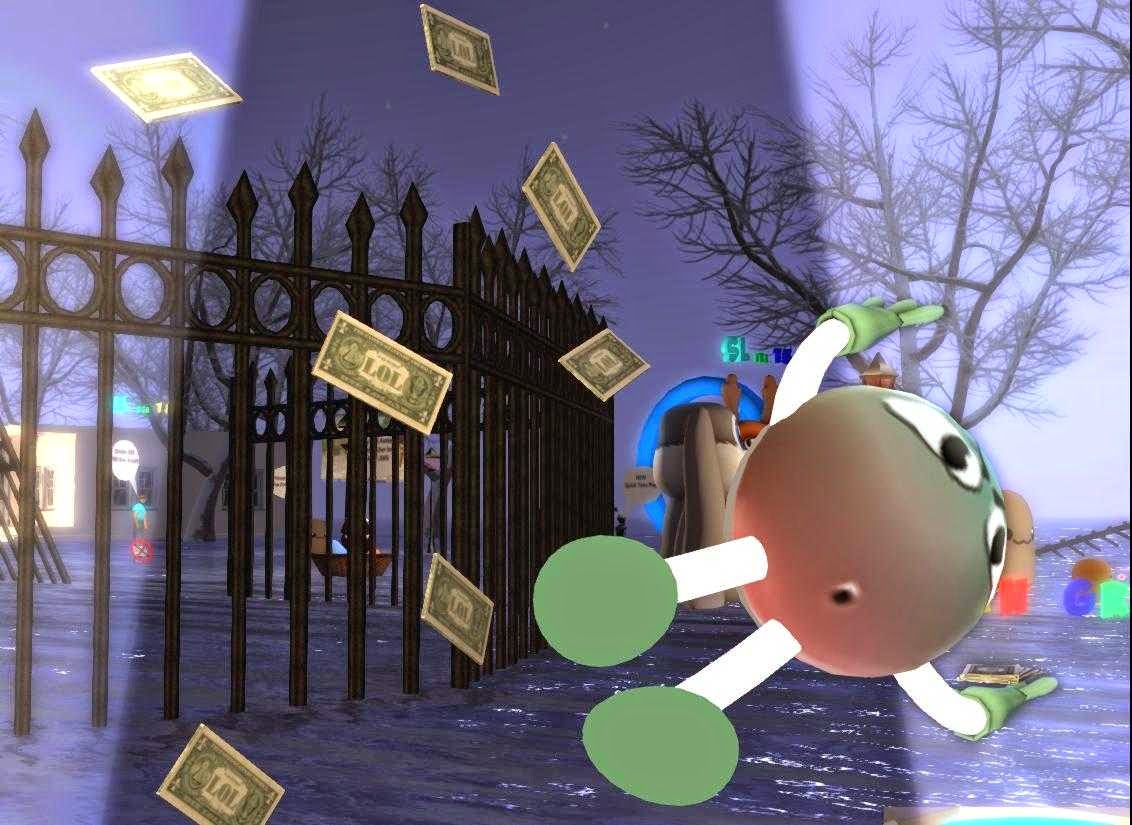
Around the exhibit, information is also presented through a series of sculptures depicting key SL events in the order that they occurred. Personally, I'm most interested in the period before I joined (although it was still interesting to revisit some of the headlines from my own time in SL). Here are ten facts you may or may not know about that period:
SL started out as 'LindenWorld' in 2001. 'Da Boom' was the first SL sim (and it still exists today). Stellar Sunshine was the first SL resident. She joined in March 2002 and is now aged 12 years and four months old.Linden Dollars were introduced in December 2003.The full range of basic prim shapes we have for building inworld today wasn't complete until 2004.Teleporting was introduced in 2004, but it was only from one 'telehub' to another and you had to pay to use it. Free point-to-point teleporting as we know it today wasn't introduced until December 2005.The free basic account wasn't introduced until October 2005. Free accounts used to pay a L$50 stipend every week, but this stopped in May 2006.The first 'gateway' for the first hour experience was opened in November 2005 (Orientation Island).Megaprims were created by Gene Replacement aka Plastic Duck in 2006.A hack in September 2006 allowed access to residents' real names, contact information and passwords.
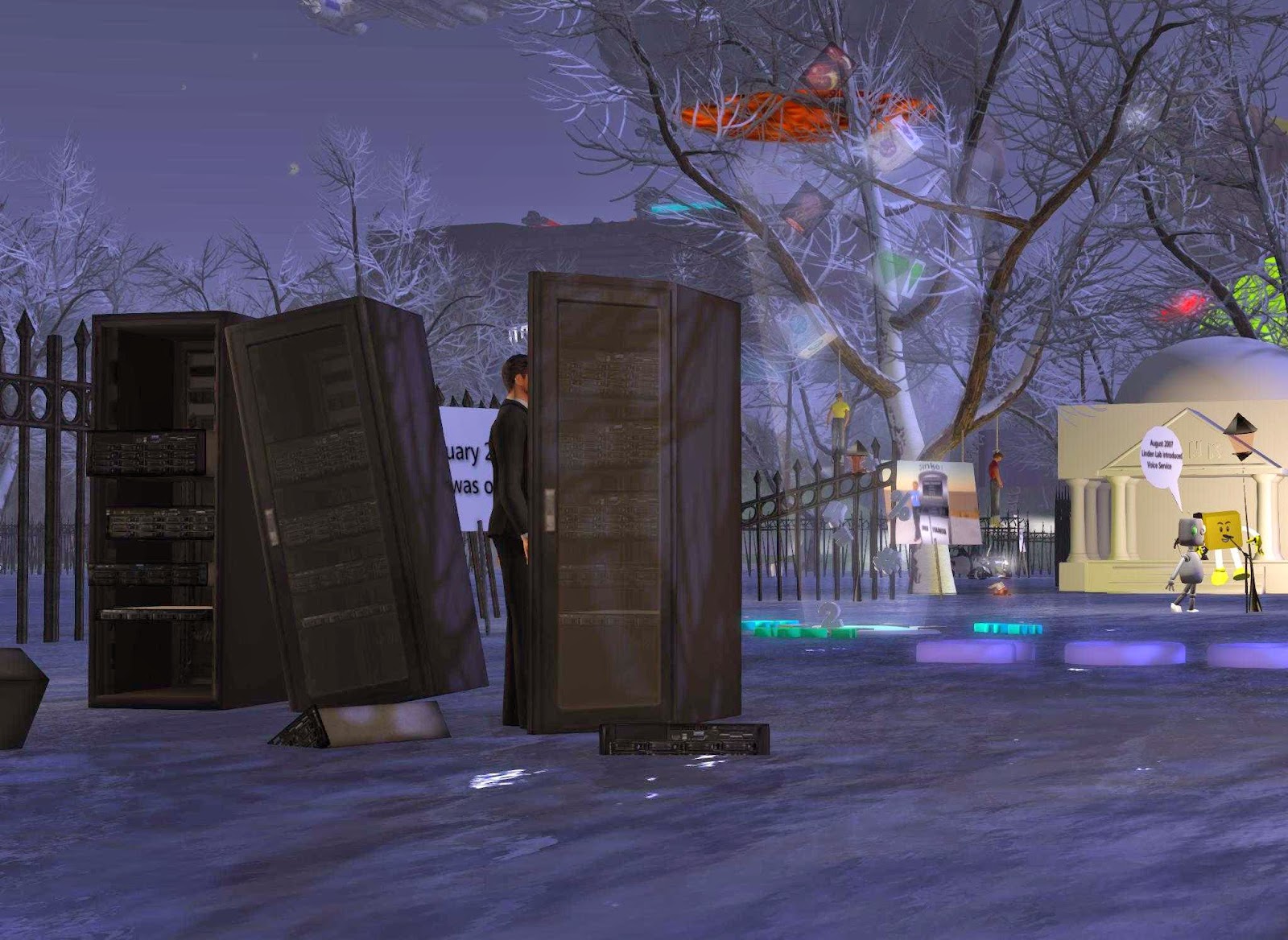
The installation is only open until 30 July, so hurry over to take a look if you can. It's an immersive reminder of what a fascinating story the tale of SL is, and one I count myself privileged to have witnessed unfolding.
July 5, 2014
Could an office in Second Life 2 be the killer app that virtual reality is looking for?
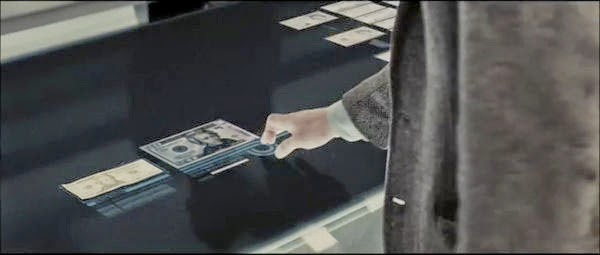
Screenshot from 'Quantum of Solace' created by hwww.inventinginteractive.com.
Now that everyone’s panicking about the atomic bomb dropped by Linden last month when they announced their successor to Second Life (which, I’m now given to understand, has nothing whatsoever to do with competing in a suddenly rapidly expanding market and is just the next step in the company’s mission to screw residents in every last way achievable), I thought it might be a good moment to start thinking about the ways in which a ‘next generation’ virtual world could differ from the present one.
A new metaverse which works in broadly the same way as the present one – albeit with better graphics, less lag, and full immersion via the Oculus Rift – might sound like a good thing, but would it really capture the imagination of the masses? A lot of us thought that 3D cinema was a new and amazing thing when Avatar was released a few years back, but when it came to buying a 3D TV, few people could really be bothered and Nintendo’s 3DS handheld games console – complete with its built-in 3D camera that would enable us all to record our moments in stereoscopy – completely failed to capture the public’s imagination (though, admittedly, not as much as the Wii U did). If SL2 really is going to capture the attention of hundreds of millions of people rather than just millions of people, as Linden CEO Ebbe Altberg has recently claimed as its objective, it will need to bring with it something genuinely new. The same is true of VR more generally. In my mind, one such thing is objects with function.
Many objects in SL do already have function, but it’s an extremely limited function. You can sit on a chair. You can lie on a lounger. You can open a door. You can close your blinds. Perhaps the most sophisticated functional object I’ve seen so far is one of those fancy television screens that links to channels showing old movies or which can play YouTube videos: it’s a method for watching something with someone, for sure, but it’s hardly bringing into being something that can’t be done outworld. No. The sort of function I’m thinking of is far more complex.
Just over a year ago, I was fortunate enough to get a short tour of future concepts being developed by IBM. These included a facial recognition system for use in commercial environments (remember those billboards in Minority Report that changed when Tom Cruise walked past them to show him personalised adverts? - that technology exists right now) and a remote control toy car that you can drive with your mind. But centre stage for me was the big black table in the room with a surface that acted like a giant iPad. If it had actually just been a giant iPad it wouldn’t really have impressed me all that much; what blew my mind was the way in which it was possible to manipulate documents on this thing: you could spread them all around you like pieces of paper, you could tap one to bring up a localised keyboard alongside it for editing; when you were done with it you just pushed it to one side for filing. We’ve seen similar fictional systems to this in movies like Quantum of Solace and, more recently, The Amazing Spider-man 2; what I saw at IBM was nowhere near as whizz-bang as either of these, but it was real and – by God – it worked.
I’m particularly excited by technology such as this because for years I‘ve struggled with the concept of the ‘paperless office’. I’ve been interested in computers for over thirty years now, but my enjoyment and knowledge of them hasn’t stretched so far to any acceptance on my part for replacing paper in my everyday work. Sure, I use a PC to write reports and emails like everyone else, but the moment two documents are required for any particular job, I start reaching for the print button. To give you an example, when I’m marking an essay I need to see both the essay itself and the marking grid I use: I could switch between them on my PC screen, but I dislike doing so intensely. I want to see them side by side, so I end up printing both essay and grid, completing the latter by hand and then later typing it up. It’s an inefficient way of working, I know, but it’s the best fit there is for the way in which I need to think. For people like me, then, the interactive surface I saw at IBM represents a way in which the paperless office could actually happen.
But do I see such technology turning up in regular office spaces such as mine in the near future? I do not. The cost is likely to be prohibitive without a mass market to sell to and a mass market is likely going to be very difficult to establish when – quite apart from anything else – people are living in smaller and smaller spaces. If 3D TVs costing hundreds of pounds were a difficult sell, I hardly imagine interactive tables costing thousands or tens of thousands of pounds are going to walk their way into people’s dining rooms.
But virtual reality might just be the way through which people like me could access this way of working, and at a fraction of the price. I sit at my regular table or desk and put on my Oculus Rift and activate/teleport to my office in the virtual world: there I’m sitting at an interactive desk where I can spread all my electronic documents around me and work on them in the manner that suits me. So what I feel through my fingers is the surface of my real life desk, but what I see is my interactive desk with all its documents and applications. The system would of course be linked to a cloud storage account so that I can access outside of the metaverse the work I do inside it: swiping a document into a particular folder on my desk would store it in – let’s say – my Dropbox account, so I would then be able to bring it up in the real world on a PC or tablet.
There would be other benefits to working this way. Rather than being an isolated room, my office in virtual reality could be connected to the virtual offices of all my co-workers so that we could use the interactive desks for meetings or joint working. Whole buildings could be constructed in the metaverse for individual companies or organisations: buildings where people actually work rather than the business-themed dolls’ houses we see in SL composed of empty room after empty room. Working from home would never have to be the solitary thing that it is now, where contact with other people comes in the form of emails and the occasional phone call.
Is current technology up to this? I don’t know. I’ve not had any experience so far of using a virtual reality headset, so it might be that my expectations don’t quite match the reality of this technology as it stands at the moment. It might be, for example, that the graphics resolution isn’t quite so good that I’d be able to read the text on documents comfortably without enlarging it significantly or bending over to see it. Also, in addition to the headset, some sort of device would be required for reading my hand and finger movements. I know that the Microsoft Kinect is capable of reading body movement, but I don’t know whether it’s fine-tuned enough to do so sufficiently well to distinguish between different virtual key presses or to be able to keep up with my typing speed. A system that constantly produced typing errors because it was only 99 per cent accurate would be infuriating.
Then there’s the creation of the document management software itself. Whilst not beyond the scope of technology today (as I saw at IBM), this would be no small issue: it would effectively be the creation of a whole new operating system, the sort of thing it takes Microsoft, Apple and Google years to develop (and, in the case of Windows, still get wrong). I say it wouldn’t be beyond the scope of technology today, but there I’m thinking of a system for use in real life: implementing such a thing in a virtual world would require an inworld scripting system light years ahead of what’s achievable with something like Linden Scripting Language. And it would require lots and lots of processing power.
But this is future-gazing, and from the vantage-point of a period in time that’s not even yet the beginning of the virtual reality era. Whatever does start to emerge next year, it will be certain to be improved upon quickly. And it’s been acknowledged by the current architects of virtual reality that VR as yet has no ‘killer application’ concept that might make it a must-have rather than a novelty or niche interest. The first ever killer app, incidentally, was VisiCalc, the first spreadsheet program (for the Apple II computer). Can you imagine working life now without spreadsheets or any other the other killer apps that succeeded them, such as word processing software or email?
I realise you were probably hoping for something a little more exciting from the metaverse than yet another reworking of the way you use a word processor, but it might just be that one day you can’t imagine working life as possible without your virtual reality office.
Working from home in Second Life 2
Could an office in Second Life 2 be the killer app that virtual reality is looking for?
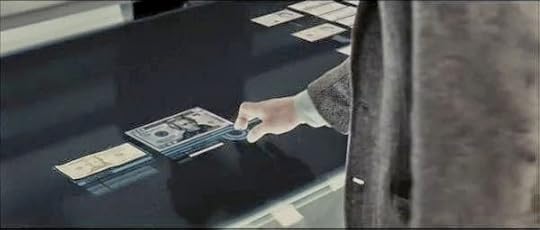 Screenshot from 'Quantum of Solace' created by hwww.inventinginteractive.com.
Now that everyone’s panicking about the atomic bomb dropped by Linden last month when they announced their successor to Second Life (which, I’m now given to understand, has nothing whatsoever to do with competing in a suddenly rapidly expanding market and is just the next step in the company’s mission to screw residents in every last way achievable), I thought it might be a good moment to start thinking about the ways in which a ‘next generation’ virtual world could differ from the present one.
A new metaverse which works in broadly the same way as the present one – albeit with better graphics, less lag, and full immersion via the Oculus Rift – might sound like a good thing, but would it really capture the imagination of the masses? A lot of us thought that 3D cinema was a new and amazing thing when Avatar was released a few years back, but when it came to buying a 3D TV, few people could really be bothered and Nintendo’s 3DS handheld games console – complete with its built-in 3D camera that would enable us all to record our moments in stereoscopy – completely failed to capture the public’s imagination (though, admittedly, not as much as the Wii U did). If SL2 really is going to capture the attention of hundreds of millions of people rather than just millions of people, as Linden CEO Ebbe Altberg has recently claimed as its objective, it will need to bring with it something genuinely new. The same is true of VR more generally. In my mind, one such thing is objects with function.
Many objects in SL do already have function, but it’s an extremely limited function. You can sit on a chair. You can lie on a lounger. You can open a door. You can close your blinds. Perhaps the most sophisticated functional object I’ve seen so far is one of those fancy television screens that links to channels showing old movies or which can play YouTube videos: it’s a method for watching something with someone, for sure, but it’s hardly bringing into being something that can’t be done outworld. No. The sort of function I’m thinking of is far more complex.
Just over a year ago, I was fortunate enough to get a short tour of future concepts being developed by IBM. These included a facial recognition system for use in commercial environments (remember those billboards in Minority Report that changed when Tom Cruise walked past them to show him personalised adverts? - that technology exists right now) and a remote control toy car that you can drive with your mind. But centre stage for me was the big black table in the room with a surface that acted like a giant iPad. If it had actually just been a giant iPad it wouldn’t really have impressed me all that much; what blew my mind was the way in which it was possible to manipulate documents on this thing: you could spread them all around you like pieces of paper, you could tap one to bring up a localised keyboard alongside it for editing; when you were done with it you just pushed it to one side for filing. We’ve seen similar fictional systems to this in movies like Quantum of Solace and, more recently, The Amazing Spider-man 2; what I saw at IBM was nowhere near as whizz-bang as either of these, but it was real and – by God – it worked.
I’m particularly excited by technology such as this because for years I‘ve struggled with the concept of the ‘paperless office’. I’ve been interested in computers for over thirty years now, but my enjoyment and knowledge of them hasn’t stretched so far to any acceptance on my part for replacing paper in my everyday work. Sure, I use a PC to write reports and emails like everyone else, but the moment two documents are required for any particular job, I start reaching for the print button. To give you an example, when I’m marking an essay I need to see both the essay itself and the marking grid I use: I could switch between them on my PC screen, but I dislike doing so intensely. I want to see them side by side, so I end up printing both essay and grid, completing the latter by hand and then later typing it up. It’s an inefficient way of working, I know, but it’s the best fit there is for the way in which I need to think. For people like me, then, the interactive surface I saw at IBM represents a way in which the paperless office could actually happen.
But do I see such technology turning up in regular office spaces such as mine in the near future? I do not. The cost is likely to be prohibitive without a mass market to sell to and a mass market is likely going to be very difficult to establish when – quite apart from anything else – people are living in smaller and smaller spaces. If 3D TVs costing hundreds of pounds were a difficult sell, I hardly imagine interactive tables costing thousands or tens of thousands of pounds are going to walk their way into people’s dining rooms.
But virtual reality might just be the way through which people like me could access this way of working, and at a fraction of the price. I sit at my regular table or desk and put on my Oculus Rift and activate/teleport to my office in the virtual world: there I’m sitting at an interactive desk where I can spread all my electronic documents around me and work on them in the manner that suits me. So what I feel through my fingers is the surface of my real life desk, but what I see is my interactive desk with all its documents and applications. The system would of course be linked to a cloud storage account so that I can access outside of the metaverse the work I do inside it: swiping a document into a particular folder on my desk would store it in – let’s say – my Dropbox account, so I would then be able to bring it up in the real world on a PC or tablet.
There would be other benefits to working this way. Rather than being an isolated room, my office in virtual reality could be connected to the virtual offices of all my co-workers so that we could use the interactive desks for meetings or joint working. Whole buildings could be constructed in the metaverse for individual companies or organisations: buildings where people actually work rather than the business-themed dolls’ houses we see in SL composed of empty room after empty room. Working from home would never have to be the solitary thing that it is now, where contact with other people comes in the form of emails and the occasional phone call.
Is current technology up to this? I don’t know. I’ve not had any experience so far of using a virtual reality headset, so it might be that my expectations don’t quite match the reality of this technology as it stands at the moment. It might be, for example, that the graphics resolution isn’t quite so good that I’d be able to read the text on documents comfortably without enlarging it significantly or bending over to see it. Also, in addition to the headset, some sort of device would be required for reading my hand and finger movements. I know that the Microsoft Kinect is capable of reading body movement, but I don’t know whether it’s fine-tuned enough to do so sufficiently well to distinguish between different virtual key presses or to be able to keep up with my typing speed. A system that constantly produced typing errors because it was only 99 per cent accurate would be infuriating.
Then there’s the creation of the document management software itself. Whilst not beyond the scope of technology today (as I saw at IBM), this would be no small issue: it would effectively be the creation of a whole new operating system, the sort of thing it takes Microsoft, Apple and Google years to develop (and, in the case of Windows, still get wrong). I say it wouldn’t be beyond the scope of technology today, but there I’m thinking of a system for use in real life: implementing such a thing in a virtual world would require an inworld scripting system light years ahead of what’s achievable with something like Linden Scripting Language. And it would require lots and lots of processing power.
But this is future-gazing, and from the vantage-point of a period in time that’s not even yet the beginning of the virtual reality era. Whatever does start to emerge next year, it will be certain to be improved upon quickly. And it’s been acknowledged by the current architects of virtual reality that VR as yet has no ‘killer application’ concept that might make it a must-have rather than a novelty or niche interest. The first ever killer app, incidentally, was VisiCalc, the first spreadsheet program (for the Apple II computer). Can you imagine working life now without spreadsheets or any other the other killer apps that succeeded them, such as word processing software or email?
I realise you were probably hoping for something a little more exciting from the metaverse than yet another reworking of the way you use a word processor, but it might just be that one day you can’t imagine working life as possible without your virtual reality office.
Screenshot from 'Quantum of Solace' created by hwww.inventinginteractive.com.Now that everyone’s panicking about the atomic bomb dropped by Linden last month when they announced their successor to Second Life (which, I’m now given to understand, has nothing whatsoever to do with competing in a suddenly rapidly expanding market and is just the next step in the company’s mission to screw residents in every last way achievable), I thought it might be a good moment to start thinking about the ways in which a ‘next generation’ virtual world could differ from the present one.
A new metaverse which works in broadly the same way as the present one – albeit with better graphics, less lag, and full immersion via the Oculus Rift – might sound like a good thing, but would it really capture the imagination of the masses? A lot of us thought that 3D cinema was a new and amazing thing when Avatar was released a few years back, but when it came to buying a 3D TV, few people could really be bothered and Nintendo’s 3DS handheld games console – complete with its built-in 3D camera that would enable us all to record our moments in stereoscopy – completely failed to capture the public’s imagination (though, admittedly, not as much as the Wii U did). If SL2 really is going to capture the attention of hundreds of millions of people rather than just millions of people, as Linden CEO Ebbe Altberg has recently claimed as its objective, it will need to bring with it something genuinely new. The same is true of VR more generally. In my mind, one such thing is objects with function.
Many objects in SL do already have function, but it’s an extremely limited function. You can sit on a chair. You can lie on a lounger. You can open a door. You can close your blinds. Perhaps the most sophisticated functional object I’ve seen so far is one of those fancy television screens that links to channels showing old movies or which can play YouTube videos: it’s a method for watching something with someone, for sure, but it’s hardly bringing into being something that can’t be done outworld. No. The sort of function I’m thinking of is far more complex.
Just over a year ago, I was fortunate enough to get a short tour of future concepts being developed by IBM. These included a facial recognition system for use in commercial environments (remember those billboards in Minority Report that changed when Tom Cruise walked past them to show him personalised adverts? - that technology exists right now) and a remote control toy car that you can drive with your mind. But centre stage for me was the big black table in the room with a surface that acted like a giant iPad. If it had actually just been a giant iPad it wouldn’t really have impressed me all that much; what blew my mind was the way in which it was possible to manipulate documents on this thing: you could spread them all around you like pieces of paper, you could tap one to bring up a localised keyboard alongside it for editing; when you were done with it you just pushed it to one side for filing. We’ve seen similar fictional systems to this in movies like Quantum of Solace and, more recently, The Amazing Spider-man 2; what I saw at IBM was nowhere near as whizz-bang as either of these, but it was real and – by God – it worked.
I’m particularly excited by technology such as this because for years I‘ve struggled with the concept of the ‘paperless office’. I’ve been interested in computers for over thirty years now, but my enjoyment and knowledge of them hasn’t stretched so far to any acceptance on my part for replacing paper in my everyday work. Sure, I use a PC to write reports and emails like everyone else, but the moment two documents are required for any particular job, I start reaching for the print button. To give you an example, when I’m marking an essay I need to see both the essay itself and the marking grid I use: I could switch between them on my PC screen, but I dislike doing so intensely. I want to see them side by side, so I end up printing both essay and grid, completing the latter by hand and then later typing it up. It’s an inefficient way of working, I know, but it’s the best fit there is for the way in which I need to think. For people like me, then, the interactive surface I saw at IBM represents a way in which the paperless office could actually happen.
But do I see such technology turning up in regular office spaces such as mine in the near future? I do not. The cost is likely to be prohibitive without a mass market to sell to and a mass market is likely going to be very difficult to establish when – quite apart from anything else – people are living in smaller and smaller spaces. If 3D TVs costing hundreds of pounds were a difficult sell, I hardly imagine interactive tables costing thousands or tens of thousands of pounds are going to walk their way into people’s dining rooms.
But virtual reality might just be the way through which people like me could access this way of working, and at a fraction of the price. I sit at my regular table or desk and put on my Oculus Rift and activate/teleport to my office in the virtual world: there I’m sitting at an interactive desk where I can spread all my electronic documents around me and work on them in the manner that suits me. So what I feel through my fingers is the surface of my real life desk, but what I see is my interactive desk with all its documents and applications. The system would of course be linked to a cloud storage account so that I can access outside of the metaverse the work I do inside it: swiping a document into a particular folder on my desk would store it in – let’s say – my Dropbox account, so I would then be able to bring it up in the real world on a PC or tablet.
There would be other benefits to working this way. Rather than being an isolated room, my office in virtual reality could be connected to the virtual offices of all my co-workers so that we could use the interactive desks for meetings or joint working. Whole buildings could be constructed in the metaverse for individual companies or organisations: buildings where people actually work rather than the business-themed dolls’ houses we see in SL composed of empty room after empty room. Working from home would never have to be the solitary thing that it is now, where contact with other people comes in the form of emails and the occasional phone call.
Is current technology up to this? I don’t know. I’ve not had any experience so far of using a virtual reality headset, so it might be that my expectations don’t quite match the reality of this technology as it stands at the moment. It might be, for example, that the graphics resolution isn’t quite so good that I’d be able to read the text on documents comfortably without enlarging it significantly or bending over to see it. Also, in addition to the headset, some sort of device would be required for reading my hand and finger movements. I know that the Microsoft Kinect is capable of reading body movement, but I don’t know whether it’s fine-tuned enough to do so sufficiently well to distinguish between different virtual key presses or to be able to keep up with my typing speed. A system that constantly produced typing errors because it was only 99 per cent accurate would be infuriating.
Then there’s the creation of the document management software itself. Whilst not beyond the scope of technology today (as I saw at IBM), this would be no small issue: it would effectively be the creation of a whole new operating system, the sort of thing it takes Microsoft, Apple and Google years to develop (and, in the case of Windows, still get wrong). I say it wouldn’t be beyond the scope of technology today, but there I’m thinking of a system for use in real life: implementing such a thing in a virtual world would require an inworld scripting system light years ahead of what’s achievable with something like Linden Scripting Language. And it would require lots and lots of processing power.
But this is future-gazing, and from the vantage-point of a period in time that’s not even yet the beginning of the virtual reality era. Whatever does start to emerge next year, it will be certain to be improved upon quickly. And it’s been acknowledged by the current architects of virtual reality that VR as yet has no ‘killer application’ concept that might make it a must-have rather than a novelty or niche interest. The first ever killer app, incidentally, was VisiCalc, the first spreadsheet program (for the Apple II computer). Can you imagine working life now without spreadsheets or any other the other killer apps that succeeded them, such as word processing software or email?
I realise you were probably hoping for something a little more exciting from the metaverse than yet another reworking of the way you use a word processor, but it might just be that one day you can’t imagine working life as possible without your virtual reality office.
July 4, 2014
The impossible snapshots
As a treat on Independence Day, here's a new story featuring The Avatar Dining Club. You can read the first of these, by the way, here.
For the second meeting of the Avatar Dining Club, our host Edward set up a laptop at the far end of the table. For some reason, perhaps because we were all still relative strangers and perhaps because we were using the same restaurant in Basingstoke (and, at that, the same table), the other six of us had taken the positions we'd more or less randomly chosen at the first meal. Mary-Anne Middlemarch, a fashion blogger, was to my right, Raw Concrete, a builder, was to my left, the man who called himself Jennifer Bit in the metaverse sat opposite me and to his/her respective left and right were Rainy September, a clubber and explorer, and Indigo Williams, a club owner and skin designer.
That meant Edward sat at the head, as before, and the laptop was positioned opposite him. On its screen was a plump man in his early thirties with a week’s growth of beard and neatly parted hair. As Edward took his seat, the man tucked a napkin into his collar. "Everybody, this is Takin," Edward announced. "He is to be our guest for the evening." We all said slightly uncomfortable hellos and Takin returned the gesture in a strong Welsh accent, adding "Well, Takin's not my real name, of course. I feel a little uncomfortable introducing myself with that name in the flesh."
"Not exactly the flesh," Raw commented, as he eyed up the menu.
"Now now, Takin," Edward said. "Remember the rules: here we all assume the character we adopt in the virtual world. There's to be no real life information shared at this table."
"I'm Jennifer, by the way," said Jennifer, somewhat underlining that point. We took that as our prompt to introduce ourselves in turn. And then the starters came.
It was a little odd, to say the least, to be tucking into food prepared for us by a chef whilst Takin went to get his supper from the microwave. Edward enquired politely about the distant meal and our distant diner guest obliged us all by holding up the box in front of his webcam. Beef lasagne for one, with slices of white bread on the side. I tried not to make too much noise when I cracked open my crusty roll and took my first sip of a delicious chicken and asparagus soup. An uncomfortable silence settled and, after a minute or so, even Edward started to look distinctly restless, perhaps worried that he'd tampered with the format to our meeting too quickly.
"Anyway," said Raw, though a mouthful of garlic bread, "you were right about the whole spelling thing, Edward. I asked her. She thought it was hilarious it took seven people to work it out."
"Work what out?" asked Takin, his personal volume not quite right.
"Raw got spotted as an alt by his girl," Indigo said to the screen. "He couldn't work how she knew, and it turned out it was his diabolical spelling."
Raw growled. "She's not my 'girl'."
"So you say," said Rainy.
"And,” he added, “I'm dyslexic."
"Which means nothing more complicated than 'problems with words'," Indigo stated. She had smoked salmon for her starter. I detest smoked salmon and the smell was turning my stomach a little.
Raw growled, "Why don't you try, 'problems with words despite years and years of trying to read and spell better.'?"
"Do you get that thing where the letters jump about?" Mary-Anne asked, leaning forward so she could see around me.
"No," he replied.
"So what is it like?" asked Rainy.
"Remember when you were learning to drive and it was really hard because you had to keep everything in your head?" We all nodded. "Like that," he said, "only for reading instead of driving."
“In any case,” I commented, “it didn’t take seven people to work it out: six people failed and Edward succeeded.”
“Oh my dear fellow,” said Edward, brushing my compliment away like it was a crumb fallen from the broken breadstick he held in his hand, “don’t be so dismissive of the initial questioning: I couldn’t have seen the answer without all of your very helpful enquiries.”
"So you say," said Rainy.
“Tell everyone here about your online identity, Takin,” said Edward, directing our attention back towards the computer. Takin paused to wipe tomato sauce from the corner of his mouth (I was desperately relieved that he had noticed it) then said with a shrug, “I make cars in the metaverse.”
“What sort of cars?” Raw asked, with interest.
“The cars I grew up with, mostly. I just finished a beige Austin Maestro today - the first car I ever went in.”
“Keeping up with the orders must be a challenge for you,” said Indigo, dryly.
Takin chuckled. “Well, I don’t only build piles of British junk. I have a whole range of 70s and 80s cars: Citroen, Ford, Vauxhall, Volkswagen, Volvo, Peugeot 205 - my 205 is quite a seller, actually.”
Jennifer sighed suddenly, happily. “I had a lot of fun in my old 205,” s/he said.
“There you go, see?” said Takin with satisfaction. “People like the memories they get from messing about in old cars they used to own. It’s not just the exteriors I do either: I spend a lot of time in research to make sure I get the fittings and fabrics right too.”
“A new metaversian application,” said Indigo. “Re-own all the stuff you once had to get rid of.”
“I have memories of the back seat of a Ford Orion I’d prefer stayed firmly in my forgotten past,” commented Rainy. Which led to a few moments of a slightly awkward silence.
“Why the Maestro, then?” asked Mary-Anne. “Have you done all the good cars?”
“Oh, that was just for me, see?” Takin replied. “I needed a bit of cheering up.”
“Really?” said Edward. “What’s wrong, old friend?”
Takin reddened slightly. “Well, me and Sophie split up, Edward.”
“Oh, I’m so sorry to hear that. You two were the perfect couple.”
“I take it this is an online relationship we’re talking about?” queried Indigo.
Takin nodded. “Don’t be sorry for me, Edward,” he said quietly. “Actually, I’m surprised you hadn’t already heard.”
“My connections to the community gossip - nor, indeed, my energy for it - aren’t quite what they used to be, I’m afraid.” Edward rubbed his chin for a moment, massaging the short growth of white beard there, then wagged his finger at the laptop. “Have you been a bad boy?”
Now Takin reddened much more fiercely. He started to speak, but Edward cut him off abruptly. “Don’t answer that; I shouldn’t have asked. This is a conversation you and I need to have privately, not out in public.”
Takin sat up straight. “It’s not exactly public here though is it, Edward? In any case, the pictures are all over her facebook for everyone to see. And they do say confession is good for the soul.”
“Though not necessarily good for my appetite,” said Indigo.
“There’s pictures?” said Jennifer.
“Lots of pictures,” said Takin miserably. “Though how they got taken I’ll never know"
“Generally speaking,” said Raw, as he accepted his pizza from the waiter, “it involves a camera of some sort.”
“Well I know that, of course,” Takin snapped. “But they got taken at my skyhouse, see? The only person who could have taken them was the lady I was with at the time - and she swears blind it wasn’t her.”
“She’s lying,” said Indigo straight away, waving a forked carrot dismissively. “She set you up. She’s a detective. She’s probably not even a she. No offense,” she added, looking at Jennifer.
Jennifer sat up straight. “Why would I take offence?”
“But I’ve known her for years,” argued Takin. “Mellia and I have always been mates, but when she was unattached I wasn’t and vice versa. Why would she set me up?”
“Well then it’s obvious what happened,” said Raw. “Whoever it was that took the pictures zoomed in on you from far away. That’s hardly difficult in the metaverse.”
“But I told you I was at my skyhouse,” said Takin firmly. “I own the land down below it and I’ve set my parcel’s settings to private so no one looking in from the outside can see avatars on the inside. Anyone who zoomed in on the place would have seen it empty. Only I can change the settings.”
“You might have changed them once and forgot about it,” Raw suggested.
“Well of course it was the first thing I checked once the photos got sent to me the next day,” said Takin. “But they were still set to private.”
"These photos," I said, "I take it they're-"
"Of my indiscretion, yes," Takin finished, bristling slightly. "Well, one of them."
"Oh, Takin!" Edward said, despairingly.
"Serves you right," said Rainy, firmly. "Serves you right. No sympathy here."
"If I wanted sympathy, I'd tell you about the endless arguments Sophie and I had gotten into," Takin said. "Or I'd tell you some of the names she called me."
"Then you should have ended it with her," Rainy replied. "Simple."
"I know that, and I'm absolutely not trying to defend myself. All I really want to know is how she did it."
"Just out of interest," said Raw, as he sprinkled yet more parmesan over his four cheese supreme, "what names did she call you."
Takin reddened again. "I'd rather not say."
"Are you certain there wasn't anyone else hidden away in your house when you were... indiscretioning?" Jennifer asked.
"Not only would my security system have ejected them, but I'd have seen them on my personal radar," Takin replied.
"So what about Mellia?" I asked. "Did you have to add her to the system?"
"Every time," Takin said. "And afterwards, I'd take her off the list so Sophie didn't see her name there."
"Men are such deceitful pigs," muttered Rainy, glaring into her wine glass.
Takin frowned. "Though now that you come to mention it, I didn't have to add her that night."
"The first clue!" Declared Mary-Anne.
"Can't you tell us at least one of the names she called you?" Raw pleaded.
Takin hesitated for a brief moment, then leaned in towards his camera. "She called me a pervert!" he whispered. "She told me one of her fantasies and asked me about mine, and when I told her, she called me a pervert!"
Edward coughed and studied his broccoli intently. Indigo giggled into her napkin..
Raw said, "What was the fan-"
"Perhaps you should tell us," said Edward, loudly, "what happened that evening. I don't mean the details of the indiscretion," he added. "Think 'storyboard'."
"Well I knew Sophie was early to bed that night, see?" Takin paused to open a new can of lager. "Just before she logged out, she messaged me to say she wanted a goodnight hug. I was getting the knobs right on the air vents for a Vauxhall Cavalier at the time, but also messaging Mellia, because we'd agreed to meet up that evening once Sophie was off. So I took the teleport Sophie sent me back to our skyhouse, gave her the hug and wished her sweet dreams."
"How many seconds elapsed between her logging off and you teleporting over your mistress?" Rainy asked, acidly.
"Actually, it was at least ten minutes, but that was because I was waiting for everything to rezz."
"It was laggy?" Raw asked.
"That's what I thought at first. In the end, I realised it had to be one of those glitchy evenings where only half your stuff appears and I so gave up waiting."
"So long as the bed was there, right?" Rainy commented.
"And the settee," Takin replied, levelly. "And the hat stand. And the, um, fridge." He cleared his throat. "Sophie has an eye for... functionality. So I teleported Mellia over and, well, I suppose there's not much else to tell, really. The next evening I logged on and there were all these impossible snapshots sent to me plus a very long and very vitriolic letter."
"What if," said Mary-Anne, "they dressed two other avatars up like you and Mellia and staged the whole thing?"
"Who's 'they'?" Raw asked.
"Even if they'd gone to all the trouble of finding out our body shapes and our skins and our hairstyles, not to mention makeups and tattoos and Lord knows what else," said Takin, "How could they possibly know what we were wearing that evening?"
"Isn't it part of the deal that you weren't wearing anything at all?" asked Indigo.
"Oh, we were wearing stuff," Takin assured us. "And using stuff."
"Storyboard, Takin," Edward repeated.
"Well I'm stumped," I said. "Unless Sophie had somehow managed to disable your security and someone was hiding in there."
"She might have disabled my system," Takin said, "though I've no idea how; but there's no way she could have disabled my radar. I'm telling you, there was no-one within at least 200 metres of us. And even if the security system was turned off, my land settings were still set to private, so no-one could have seen what we were doing."
"Do you have any ideas, Edward?" Indigo asked. "After all, you solved the puzzle last time."
"Possibly, my dear," Edward said, thoughtfully. "Nothing really definite, but maybe..."
"I'm all ears," said Takin.
"Perhaps if I could ask a couple of questions," our host said. "Would I be correct in assuming that the house itself belonged to Sophie?"
"You would indeed," Takin replied. "I pay the rent on the land and Sophie picked out the house."
"And the furnishings?"
"Not all of them," he said. "She does have a better eye than me, though. Well, did."
"She's not dead just because she stopped going out with you," Rainy pointed out. “You are allowed to use the present tense.”
Edward continued. "Would I also be correct then in assuming that the items you couldn't see when you teleported there were all your items?"
Takin frowned. "Now that you mention it, I think you might be right."
"Well then," Edward said, "it seems fairly clear to me."
"It seems fairly unclear to me!" Raw declared.
"It's a simple matter of logic, my boy: if was impossible for someone to take pictures of Takin at his home, then he could not have been at his home."
"I don't understand," said Takin.
"I imagine it happened something like this: Sophie linked up her house and all the furnishings she bought for it, and took the whole lot into her inventory, leaving all your bits and pieces floating in mid-air. Then she teleported to a different location where there were no security or privacy restrictions and re-rezzed it all at the same altitude as you were used to. Then she messaged you for that goodnight hug: I take it she did send you a teleport to her location rather than just asking you to come home?"
"Yeah," Takin said. "She did."
"So in the end, all the photographer had to do - whoever he or she was - was keep a respectable distance away and zoom in to get the pictures. By the time you logged in to your home spot the following evening, Sophie had moved everything back to its original location."
"I'll be damned," said Indigo. "Edward, you did it again."
“Just a theory, my dear. Though if you log your system messages, Takin, then it should be recorded the name of the region you actually teleported to that night: if it’s not your home location then that’s the proof.”
Takin’s gaze changed as he did some typing and some mouse-pointer moving, bringing up the log to check there and then. Finally, he sighed and nodded.
"So she suspected me all along," he said. “Bloody hell.”
"Cheats are never as good at lying as they think they are," Rainy said, not without a touch of satisfaction.
“And there is nothing quite so ingenious as a suspicious partner,” Edward added. “Inside the metaverse or out of it.”
For the second meeting of the Avatar Dining Club, our host Edward set up a laptop at the far end of the table. For some reason, perhaps because we were all still relative strangers and perhaps because we were using the same restaurant in Basingstoke (and, at that, the same table), the other six of us had taken the positions we'd more or less randomly chosen at the first meal. Mary-Anne Middlemarch, a fashion blogger, was to my right, Raw Concrete, a builder, was to my left, the man who called himself Jennifer Bit in the metaverse sat opposite me and to his/her respective left and right were Rainy September, a clubber and explorer, and Indigo Williams, a club owner and skin designer.
That meant Edward sat at the head, as before, and the laptop was positioned opposite him. On its screen was a plump man in his early thirties with a week’s growth of beard and neatly parted hair. As Edward took his seat, the man tucked a napkin into his collar. "Everybody, this is Takin," Edward announced. "He is to be our guest for the evening." We all said slightly uncomfortable hellos and Takin returned the gesture in a strong Welsh accent, adding "Well, Takin's not my real name, of course. I feel a little uncomfortable introducing myself with that name in the flesh."
"Not exactly the flesh," Raw commented, as he eyed up the menu.
"Now now, Takin," Edward said. "Remember the rules: here we all assume the character we adopt in the virtual world. There's to be no real life information shared at this table."
"I'm Jennifer, by the way," said Jennifer, somewhat underlining that point. We took that as our prompt to introduce ourselves in turn. And then the starters came.
It was a little odd, to say the least, to be tucking into food prepared for us by a chef whilst Takin went to get his supper from the microwave. Edward enquired politely about the distant meal and our distant diner guest obliged us all by holding up the box in front of his webcam. Beef lasagne for one, with slices of white bread on the side. I tried not to make too much noise when I cracked open my crusty roll and took my first sip of a delicious chicken and asparagus soup. An uncomfortable silence settled and, after a minute or so, even Edward started to look distinctly restless, perhaps worried that he'd tampered with the format to our meeting too quickly.
"Anyway," said Raw, though a mouthful of garlic bread, "you were right about the whole spelling thing, Edward. I asked her. She thought it was hilarious it took seven people to work it out."
"Work what out?" asked Takin, his personal volume not quite right.
"Raw got spotted as an alt by his girl," Indigo said to the screen. "He couldn't work how she knew, and it turned out it was his diabolical spelling."
Raw growled. "She's not my 'girl'."
"So you say," said Rainy.
"And,” he added, “I'm dyslexic."
"Which means nothing more complicated than 'problems with words'," Indigo stated. She had smoked salmon for her starter. I detest smoked salmon and the smell was turning my stomach a little.
Raw growled, "Why don't you try, 'problems with words despite years and years of trying to read and spell better.'?"
"Do you get that thing where the letters jump about?" Mary-Anne asked, leaning forward so she could see around me.
"No," he replied.
"So what is it like?" asked Rainy.
"Remember when you were learning to drive and it was really hard because you had to keep everything in your head?" We all nodded. "Like that," he said, "only for reading instead of driving."
“In any case,” I commented, “it didn’t take seven people to work it out: six people failed and Edward succeeded.”
“Oh my dear fellow,” said Edward, brushing my compliment away like it was a crumb fallen from the broken breadstick he held in his hand, “don’t be so dismissive of the initial questioning: I couldn’t have seen the answer without all of your very helpful enquiries.”
"So you say," said Rainy.
“Tell everyone here about your online identity, Takin,” said Edward, directing our attention back towards the computer. Takin paused to wipe tomato sauce from the corner of his mouth (I was desperately relieved that he had noticed it) then said with a shrug, “I make cars in the metaverse.”
“What sort of cars?” Raw asked, with interest.
“The cars I grew up with, mostly. I just finished a beige Austin Maestro today - the first car I ever went in.”
“Keeping up with the orders must be a challenge for you,” said Indigo, dryly.
Takin chuckled. “Well, I don’t only build piles of British junk. I have a whole range of 70s and 80s cars: Citroen, Ford, Vauxhall, Volkswagen, Volvo, Peugeot 205 - my 205 is quite a seller, actually.”
Jennifer sighed suddenly, happily. “I had a lot of fun in my old 205,” s/he said.
“There you go, see?” said Takin with satisfaction. “People like the memories they get from messing about in old cars they used to own. It’s not just the exteriors I do either: I spend a lot of time in research to make sure I get the fittings and fabrics right too.”
“A new metaversian application,” said Indigo. “Re-own all the stuff you once had to get rid of.”
“I have memories of the back seat of a Ford Orion I’d prefer stayed firmly in my forgotten past,” commented Rainy. Which led to a few moments of a slightly awkward silence.
“Why the Maestro, then?” asked Mary-Anne. “Have you done all the good cars?”
“Oh, that was just for me, see?” Takin replied. “I needed a bit of cheering up.”
“Really?” said Edward. “What’s wrong, old friend?”
Takin reddened slightly. “Well, me and Sophie split up, Edward.”
“Oh, I’m so sorry to hear that. You two were the perfect couple.”
“I take it this is an online relationship we’re talking about?” queried Indigo.
Takin nodded. “Don’t be sorry for me, Edward,” he said quietly. “Actually, I’m surprised you hadn’t already heard.”
“My connections to the community gossip - nor, indeed, my energy for it - aren’t quite what they used to be, I’m afraid.” Edward rubbed his chin for a moment, massaging the short growth of white beard there, then wagged his finger at the laptop. “Have you been a bad boy?”
Now Takin reddened much more fiercely. He started to speak, but Edward cut him off abruptly. “Don’t answer that; I shouldn’t have asked. This is a conversation you and I need to have privately, not out in public.”
Takin sat up straight. “It’s not exactly public here though is it, Edward? In any case, the pictures are all over her facebook for everyone to see. And they do say confession is good for the soul.”
“Though not necessarily good for my appetite,” said Indigo.
“There’s pictures?” said Jennifer.
“Lots of pictures,” said Takin miserably. “Though how they got taken I’ll never know"
“Generally speaking,” said Raw, as he accepted his pizza from the waiter, “it involves a camera of some sort.”
“Well I know that, of course,” Takin snapped. “But they got taken at my skyhouse, see? The only person who could have taken them was the lady I was with at the time - and she swears blind it wasn’t her.”
“She’s lying,” said Indigo straight away, waving a forked carrot dismissively. “She set you up. She’s a detective. She’s probably not even a she. No offense,” she added, looking at Jennifer.
Jennifer sat up straight. “Why would I take offence?”
“But I’ve known her for years,” argued Takin. “Mellia and I have always been mates, but when she was unattached I wasn’t and vice versa. Why would she set me up?”
“Well then it’s obvious what happened,” said Raw. “Whoever it was that took the pictures zoomed in on you from far away. That’s hardly difficult in the metaverse.”
“But I told you I was at my skyhouse,” said Takin firmly. “I own the land down below it and I’ve set my parcel’s settings to private so no one looking in from the outside can see avatars on the inside. Anyone who zoomed in on the place would have seen it empty. Only I can change the settings.”
“You might have changed them once and forgot about it,” Raw suggested.
“Well of course it was the first thing I checked once the photos got sent to me the next day,” said Takin. “But they were still set to private.”
"These photos," I said, "I take it they're-"
"Of my indiscretion, yes," Takin finished, bristling slightly. "Well, one of them."
"Oh, Takin!" Edward said, despairingly.
"Serves you right," said Rainy, firmly. "Serves you right. No sympathy here."
"If I wanted sympathy, I'd tell you about the endless arguments Sophie and I had gotten into," Takin said. "Or I'd tell you some of the names she called me."
"Then you should have ended it with her," Rainy replied. "Simple."
"I know that, and I'm absolutely not trying to defend myself. All I really want to know is how she did it."
"Just out of interest," said Raw, as he sprinkled yet more parmesan over his four cheese supreme, "what names did she call you."
Takin reddened again. "I'd rather not say."
"Are you certain there wasn't anyone else hidden away in your house when you were... indiscretioning?" Jennifer asked.
"Not only would my security system have ejected them, but I'd have seen them on my personal radar," Takin replied.
"So what about Mellia?" I asked. "Did you have to add her to the system?"
"Every time," Takin said. "And afterwards, I'd take her off the list so Sophie didn't see her name there."
"Men are such deceitful pigs," muttered Rainy, glaring into her wine glass.
Takin frowned. "Though now that you come to mention it, I didn't have to add her that night."
"The first clue!" Declared Mary-Anne.
"Can't you tell us at least one of the names she called you?" Raw pleaded.
Takin hesitated for a brief moment, then leaned in towards his camera. "She called me a pervert!" he whispered. "She told me one of her fantasies and asked me about mine, and when I told her, she called me a pervert!"
Edward coughed and studied his broccoli intently. Indigo giggled into her napkin..
Raw said, "What was the fan-"
"Perhaps you should tell us," said Edward, loudly, "what happened that evening. I don't mean the details of the indiscretion," he added. "Think 'storyboard'."
"Well I knew Sophie was early to bed that night, see?" Takin paused to open a new can of lager. "Just before she logged out, she messaged me to say she wanted a goodnight hug. I was getting the knobs right on the air vents for a Vauxhall Cavalier at the time, but also messaging Mellia, because we'd agreed to meet up that evening once Sophie was off. So I took the teleport Sophie sent me back to our skyhouse, gave her the hug and wished her sweet dreams."
"How many seconds elapsed between her logging off and you teleporting over your mistress?" Rainy asked, acidly.
"Actually, it was at least ten minutes, but that was because I was waiting for everything to rezz."
"It was laggy?" Raw asked.
"That's what I thought at first. In the end, I realised it had to be one of those glitchy evenings where only half your stuff appears and I so gave up waiting."
"So long as the bed was there, right?" Rainy commented.
"And the settee," Takin replied, levelly. "And the hat stand. And the, um, fridge." He cleared his throat. "Sophie has an eye for... functionality. So I teleported Mellia over and, well, I suppose there's not much else to tell, really. The next evening I logged on and there were all these impossible snapshots sent to me plus a very long and very vitriolic letter."
"What if," said Mary-Anne, "they dressed two other avatars up like you and Mellia and staged the whole thing?"
"Who's 'they'?" Raw asked.
"Even if they'd gone to all the trouble of finding out our body shapes and our skins and our hairstyles, not to mention makeups and tattoos and Lord knows what else," said Takin, "How could they possibly know what we were wearing that evening?"
"Isn't it part of the deal that you weren't wearing anything at all?" asked Indigo.
"Oh, we were wearing stuff," Takin assured us. "And using stuff."
"Storyboard, Takin," Edward repeated.
"Well I'm stumped," I said. "Unless Sophie had somehow managed to disable your security and someone was hiding in there."
"She might have disabled my system," Takin said, "though I've no idea how; but there's no way she could have disabled my radar. I'm telling you, there was no-one within at least 200 metres of us. And even if the security system was turned off, my land settings were still set to private, so no-one could have seen what we were doing."
"Do you have any ideas, Edward?" Indigo asked. "After all, you solved the puzzle last time."
"Possibly, my dear," Edward said, thoughtfully. "Nothing really definite, but maybe..."
"I'm all ears," said Takin.
"Perhaps if I could ask a couple of questions," our host said. "Would I be correct in assuming that the house itself belonged to Sophie?"
"You would indeed," Takin replied. "I pay the rent on the land and Sophie picked out the house."
"And the furnishings?"
"Not all of them," he said. "She does have a better eye than me, though. Well, did."
"She's not dead just because she stopped going out with you," Rainy pointed out. “You are allowed to use the present tense.”
Edward continued. "Would I also be correct then in assuming that the items you couldn't see when you teleported there were all your items?"
Takin frowned. "Now that you mention it, I think you might be right."
"Well then," Edward said, "it seems fairly clear to me."
"It seems fairly unclear to me!" Raw declared.
"It's a simple matter of logic, my boy: if was impossible for someone to take pictures of Takin at his home, then he could not have been at his home."
"I don't understand," said Takin.
"I imagine it happened something like this: Sophie linked up her house and all the furnishings she bought for it, and took the whole lot into her inventory, leaving all your bits and pieces floating in mid-air. Then she teleported to a different location where there were no security or privacy restrictions and re-rezzed it all at the same altitude as you were used to. Then she messaged you for that goodnight hug: I take it she did send you a teleport to her location rather than just asking you to come home?"
"Yeah," Takin said. "She did."
"So in the end, all the photographer had to do - whoever he or she was - was keep a respectable distance away and zoom in to get the pictures. By the time you logged in to your home spot the following evening, Sophie had moved everything back to its original location."
"I'll be damned," said Indigo. "Edward, you did it again."
“Just a theory, my dear. Though if you log your system messages, Takin, then it should be recorded the name of the region you actually teleported to that night: if it’s not your home location then that’s the proof.”
Takin’s gaze changed as he did some typing and some mouse-pointer moving, bringing up the log to check there and then. Finally, he sighed and nodded.
"So she suspected me all along," he said. “Bloody hell.”
"Cheats are never as good at lying as they think they are," Rainy said, not without a touch of satisfaction.
“And there is nothing quite so ingenious as a suspicious partner,” Edward added. “Inside the metaverse or out of it.”
June 21, 2014
Linden Lab announce a successor to Second Life
My thoughts on this announcement.
The breaking news yesterday on Wagner James Au’s always excellent New World Notes was that Linden Lab were first rumoured and then confirmed to be working on a successor virtual world to Second Life. In a statement sent to the site, Linden said that the new, ‘next generation’ world will be “an open world where users have incredible power to create anything they can imagine and content creators are king. [It] will go far beyond what is possible with Second Life, and we don't want to constrain our development by setting backward compatibility with Second Life as an absolute requirement from the start” - meaning it likely will not be compatible with SL and any inventory you have will not transfer over (see my recent post on the finite life of virtual inventory here). They do go on to add, however, that this “doesn’t mean you necessarily won’t be able to bring parts of your Second Life over, just that our priority in building the next generation platform is to create an incredible experience and enable stunningly high-quality creativity, rather than ensuring that everything could work seamlessly with everything created over Second Life’s 11 year history.”
Big surprise? Not really. I speculated earlier in the year about the coming age of virtual reality – which, let’s all take a deep breath and remind ourselves, could yet turn out to be as actually popular as 3D TV – and how this might give SL a boost in popularity because it’s essentially a free product out of the Oculus Rift box; part of my speculation was that whatever the take-up is, however, it will probably only be short-lived: Whilst SL’s various bolt-on upgrades over the years have undoubtedly improved its graphical appeal hugely, these are finicky things that require skill and experience to organise, and many newbie VR explorers, therefore, just won’t get the experience we know is possible. Something better – and a great deal simpler – is needed, and SL will only endure as a popular VR virtual world experience so long as that alternative doesn’t exist. If Linden don’t supply this then someone else will.
Other than reporting that the new world is only in its “very early” stages and that the company is “actively hiring”, Linden doesn’t give much information about the status of this project. Potentially, it’s entirely conceptual right now (although it’s tempting to wonder if there is any flow of information between Linden and High Fidelity via Philip Rosedale). Whilst this likely means that the new world is potentially years away at this stage, getting the word out to SL’s core user base that something new is on the horizon might just help keep them loyal whilst other tempting products start to appear. It’s ultimately a much wider user-base than this that Linden will want to attract, but long-term SL residents will include the skin-makers and the clothes designers and the furniture builders and the landscapers without whom any serious attempt at a user-content driven world will fail.
What I find most interesting about the statement are two things. First, the use of the phrase ‘next generation’ suggests a new reframing of business at Linden. Former CEO Rod Humble previously reframed the company’s work as making ‘creative spaces’, an ethos which resulted in a veritable tumble of products into the marketplace which were thought to fit this brief – dio, Versu and Blocksworld to name but a few. Any of those that failed to turn a profit got swept away quickly and brutally when current CEO Ebbe Altberg took up the reigns (although Versu got a new lease of life recently following an outcry from fans of Emily Short when it emerged that her Magnus Opus for the interactive fiction platform, Blood and Laurels, was complete and unreleased) and with this new announcement we’re seeing Altberg stamp his mark firmly on what many of us have been feeling of late is a somewhat ailing franchise. ‘Next generation’ is a phrase we’re used to seeing in connection with such markets as mobile phones and games consoles and mobile data networks, business areas we also associate with a large range of products. The use of this phrase, therefore, signifies not just a step forward in technology but also Linden’s acknowledgement that we’re now moving into an era where they will face something they have never previously encountered: serious competition. Over the eleven years of its existence, there have of course been a few alternatives to SL crop up here and there, but none have attracted anything like SL’s numbers. This time, however, it’s different, and Linden’s experience in this field will not necessarily give it any more advantage in the approaching market than Nokia’s experience did when Apple popularised the Smartphone. The question has to be, are Linden acting fast enough, or will they become yet another market leader that failed to respond in time to the developments in its own field?
Second, I find the phrase ‘content creators are king’ especially meaningful, and it gives me hope that Linden have actually tuned in to what has made SL, in its own words, “the most successful user-created virtual world ever.” In a fractured metaverse of competing virtual worlds, content will become the new apps of this market. As we have seen, time and time again – VHS versus Betamax, Blu-ray versus HDDVD, Windows Phone versus Android and iOS, to name but the headliners – content is what wins format battles. I can think of no better combination for developing rapidly an attractive content base than straight-forward tools and an open system for user-generated content, and the means to make money out of it. User-generated content has made SL what it is and any new virtual world product which fails to take into account this tremendous success – and which fails to put it at the very heart of its philosophy – is unlikely to make any long-term impact. When you stop to think about it, user-generated content is what gave MySpace the edge over social networking pioneers such as Friends Reunited (anyone remember them?) and then Facebook over MySpace.
But what excites me most of all about this announcement is the sense of new energy it communicates. Has Altberg managed to shake Linden out of its fatigue and re-inject some of the pioneering spirit we all miss from the old days? I sincerely hope so. Now needs to be a time of group huddles and fist-bumps and air punches and battle cries at Linden HQ. If it all comes to pass as the pundits are predicting and VR really does become the Next Big Thing in the IT world (again – deep breaths – it might not), we will be faced with a whole range of competing worlds and experiences; the very notion that Linden wouldn’t be there with its sleeves rolled up and slugging it out confidently with the newcomers is alarming. Second Life is an amazing product and its architects should be diving in to whatever is approaching: they have earned their place there.
I’ll reiterate now my (previously expressed) belief that the company has to rethink its policy on land if it’s going to achieve a mass-market appeal in its future ventures: content is great, but you need somewhere to display it and nothing roots you to a world more than having a home there. Hopefully, these early days of the construction of ‘Second Life 2’ will include a period of reflection on what’s been learned from SL that will include such issues.
There is, after all, so much that has been learned. SL always was a product ahead of its time, but that time is now approaching. In years to come, we might look back on our current world as ultimately the testbed pilot that led to a metaverse as pervasive as Facebook, as inspiring as nature, as unifying as sport and music. Get in there, Linden: no-one knows this business better than you do; make us the place we have all been dreaming of.
The breaking news yesterday on Wagner James Au’s always excellent New World Notes was that Linden Lab were first rumoured and then confirmed to be working on a successor virtual world to Second Life. In a statement sent to the site, Linden said that the new, ‘next generation’ world will be “an open world where users have incredible power to create anything they can imagine and content creators are king. [It] will go far beyond what is possible with Second Life, and we don't want to constrain our development by setting backward compatibility with Second Life as an absolute requirement from the start” - meaning it likely will not be compatible with SL and any inventory you have will not transfer over (see my recent post on the finite life of virtual inventory here). They do go on to add, however, that this “doesn’t mean you necessarily won’t be able to bring parts of your Second Life over, just that our priority in building the next generation platform is to create an incredible experience and enable stunningly high-quality creativity, rather than ensuring that everything could work seamlessly with everything created over Second Life’s 11 year history.”
Big surprise? Not really. I speculated earlier in the year about the coming age of virtual reality – which, let’s all take a deep breath and remind ourselves, could yet turn out to be as actually popular as 3D TV – and how this might give SL a boost in popularity because it’s essentially a free product out of the Oculus Rift box; part of my speculation was that whatever the take-up is, however, it will probably only be short-lived: Whilst SL’s various bolt-on upgrades over the years have undoubtedly improved its graphical appeal hugely, these are finicky things that require skill and experience to organise, and many newbie VR explorers, therefore, just won’t get the experience we know is possible. Something better – and a great deal simpler – is needed, and SL will only endure as a popular VR virtual world experience so long as that alternative doesn’t exist. If Linden don’t supply this then someone else will.
Other than reporting that the new world is only in its “very early” stages and that the company is “actively hiring”, Linden doesn’t give much information about the status of this project. Potentially, it’s entirely conceptual right now (although it’s tempting to wonder if there is any flow of information between Linden and High Fidelity via Philip Rosedale). Whilst this likely means that the new world is potentially years away at this stage, getting the word out to SL’s core user base that something new is on the horizon might just help keep them loyal whilst other tempting products start to appear. It’s ultimately a much wider user-base than this that Linden will want to attract, but long-term SL residents will include the skin-makers and the clothes designers and the furniture builders and the landscapers without whom any serious attempt at a user-content driven world will fail.
What I find most interesting about the statement are two things. First, the use of the phrase ‘next generation’ suggests a new reframing of business at Linden. Former CEO Rod Humble previously reframed the company’s work as making ‘creative spaces’, an ethos which resulted in a veritable tumble of products into the marketplace which were thought to fit this brief – dio, Versu and Blocksworld to name but a few. Any of those that failed to turn a profit got swept away quickly and brutally when current CEO Ebbe Altberg took up the reigns (although Versu got a new lease of life recently following an outcry from fans of Emily Short when it emerged that her Magnus Opus for the interactive fiction platform, Blood and Laurels, was complete and unreleased) and with this new announcement we’re seeing Altberg stamp his mark firmly on what many of us have been feeling of late is a somewhat ailing franchise. ‘Next generation’ is a phrase we’re used to seeing in connection with such markets as mobile phones and games consoles and mobile data networks, business areas we also associate with a large range of products. The use of this phrase, therefore, signifies not just a step forward in technology but also Linden’s acknowledgement that we’re now moving into an era where they will face something they have never previously encountered: serious competition. Over the eleven years of its existence, there have of course been a few alternatives to SL crop up here and there, but none have attracted anything like SL’s numbers. This time, however, it’s different, and Linden’s experience in this field will not necessarily give it any more advantage in the approaching market than Nokia’s experience did when Apple popularised the Smartphone. The question has to be, are Linden acting fast enough, or will they become yet another market leader that failed to respond in time to the developments in its own field?
Second, I find the phrase ‘content creators are king’ especially meaningful, and it gives me hope that Linden have actually tuned in to what has made SL, in its own words, “the most successful user-created virtual world ever.” In a fractured metaverse of competing virtual worlds, content will become the new apps of this market. As we have seen, time and time again – VHS versus Betamax, Blu-ray versus HDDVD, Windows Phone versus Android and iOS, to name but the headliners – content is what wins format battles. I can think of no better combination for developing rapidly an attractive content base than straight-forward tools and an open system for user-generated content, and the means to make money out of it. User-generated content has made SL what it is and any new virtual world product which fails to take into account this tremendous success – and which fails to put it at the very heart of its philosophy – is unlikely to make any long-term impact. When you stop to think about it, user-generated content is what gave MySpace the edge over social networking pioneers such as Friends Reunited (anyone remember them?) and then Facebook over MySpace.
But what excites me most of all about this announcement is the sense of new energy it communicates. Has Altberg managed to shake Linden out of its fatigue and re-inject some of the pioneering spirit we all miss from the old days? I sincerely hope so. Now needs to be a time of group huddles and fist-bumps and air punches and battle cries at Linden HQ. If it all comes to pass as the pundits are predicting and VR really does become the Next Big Thing in the IT world (again – deep breaths – it might not), we will be faced with a whole range of competing worlds and experiences; the very notion that Linden wouldn’t be there with its sleeves rolled up and slugging it out confidently with the newcomers is alarming. Second Life is an amazing product and its architects should be diving in to whatever is approaching: they have earned their place there.
I’ll reiterate now my (previously expressed) belief that the company has to rethink its policy on land if it’s going to achieve a mass-market appeal in its future ventures: content is great, but you need somewhere to display it and nothing roots you to a world more than having a home there. Hopefully, these early days of the construction of ‘Second Life 2’ will include a period of reflection on what’s been learned from SL that will include such issues.
There is, after all, so much that has been learned. SL always was a product ahead of its time, but that time is now approaching. In years to come, we might look back on our current world as ultimately the testbed pilot that led to a metaverse as pervasive as Facebook, as inspiring as nature, as unifying as sport and music. Get in there, Linden: no-one knows this business better than you do; make us the place we have all been dreaming of.
June 14, 2014
Yamato Memorial

Following a link from a recent blog post by the amazingly talented Eve Kazan (the header image on my site is by her), I came to the Yamato Memorial by Masakado.

This extraordinarily detailed 1:1 model remembers the heaviest and most powerful warship built by Japan during the Second World War. The ship is moored quietly between a hilled museum area and an airplane shop, where Masakado's equally precise Japanese WWII aircraft can be bought.
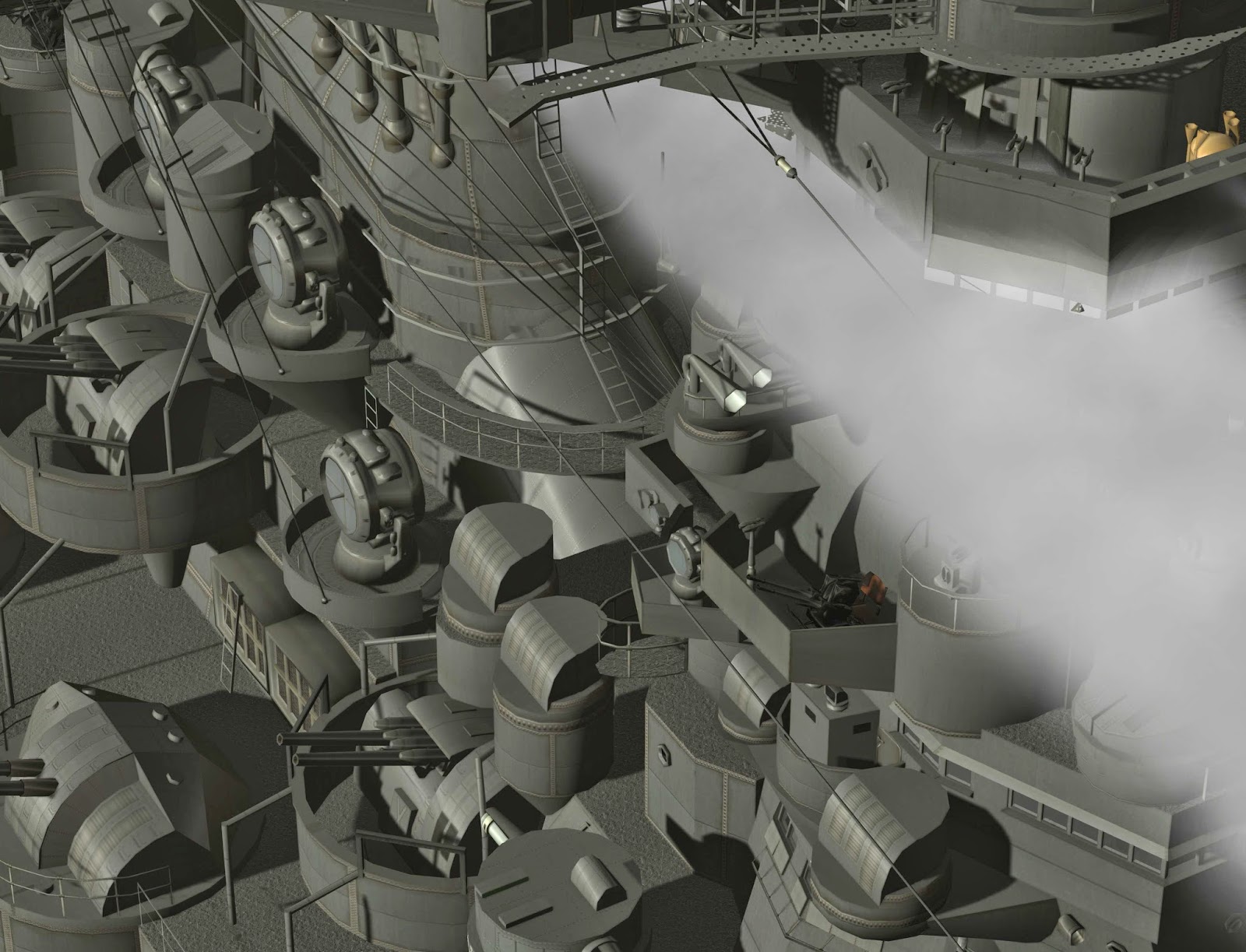
At over 4,000 prims, it's one of the most detailed builds I've ever seen in Second Life. It's a staggering achievement. Masakado was nearby when I visited and I IMed him, hoping to learn if he had a personal connection to the vessel, but I think he was AFK.

The potential for virtual worlds for teaching history is enormous. We can recreate any era, any place, any building, any machine. I cannot begin to imagine the hours of research and construction that must have gone into the Yamato, but whatever it was, it was worth it. This is an awesome, beautiful, frightening work.

The Yamato was sunk by American bombers in April 1945, taking with it over 3,000 of its crew.
June 9, 2014
Arromanches: The Mulberry harbour
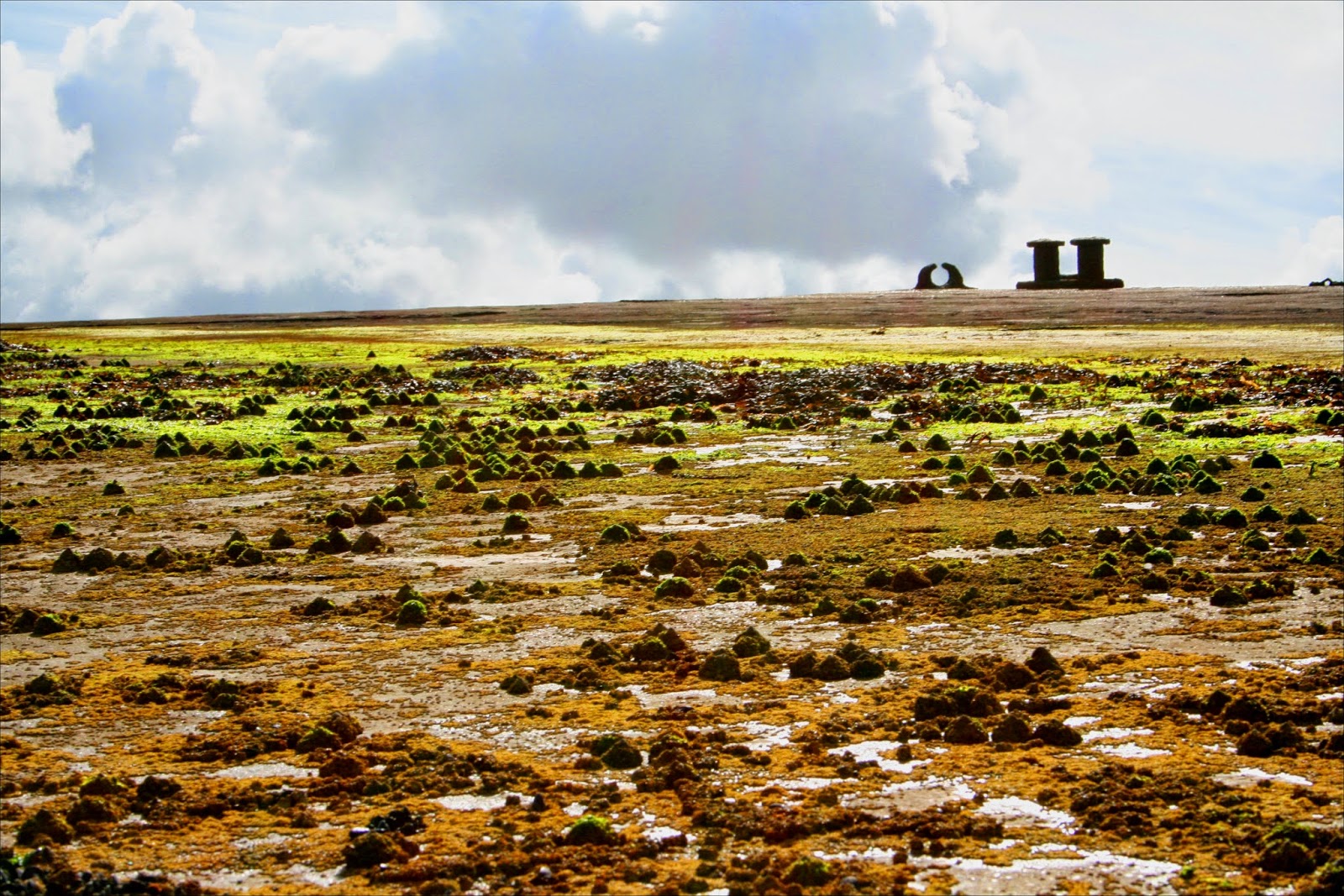
70 years ago today, the Mulberry harbours at Omaha beach and at Arromanches were open for business. These extraordinary constructions - built because existing suitable French ports were too heavily defended - enabled the landing of over two million soldiers and 500,000 vehicles following the capture of the Normandy beaches on D-Day. The various sections were built in the UK and then towed across the channel, making it one of the most audacious engineering feats of the Second World War.
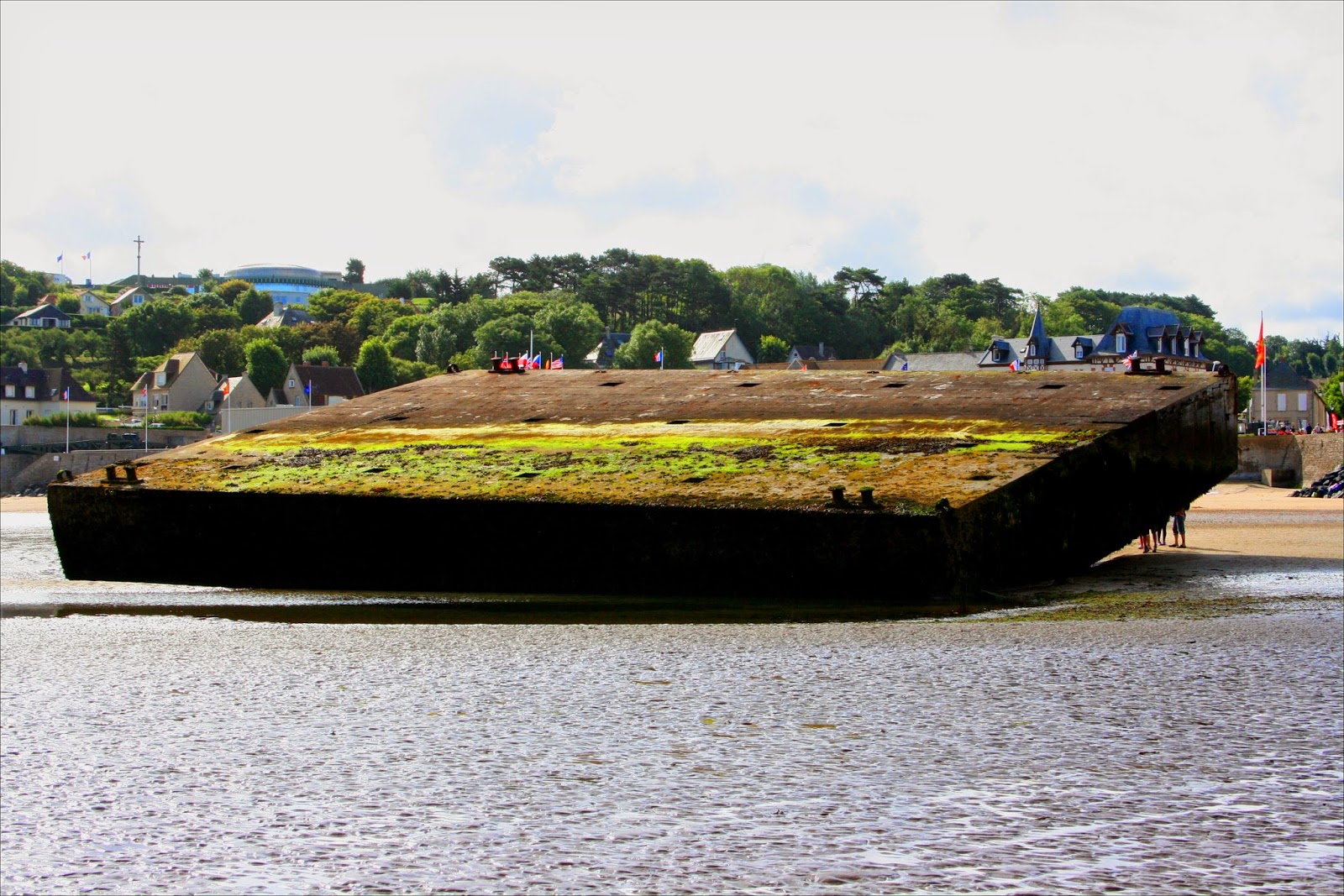
A heavy storm on 19 June destroyed the American harbour, however the British harbour at Arromanches - nicknamed 'Port Winston' - survived and was repaired using parts from the Omaha harbour. It operated for ten months in total. 70 years later, the remains of the harbour can still be seen at Arromanches, including this huge 'Spud Pier' section that has become washed up on the beach. At low tide, you can walk up to and around it, reach out and touch this incredible artefact of an incredible conflict.
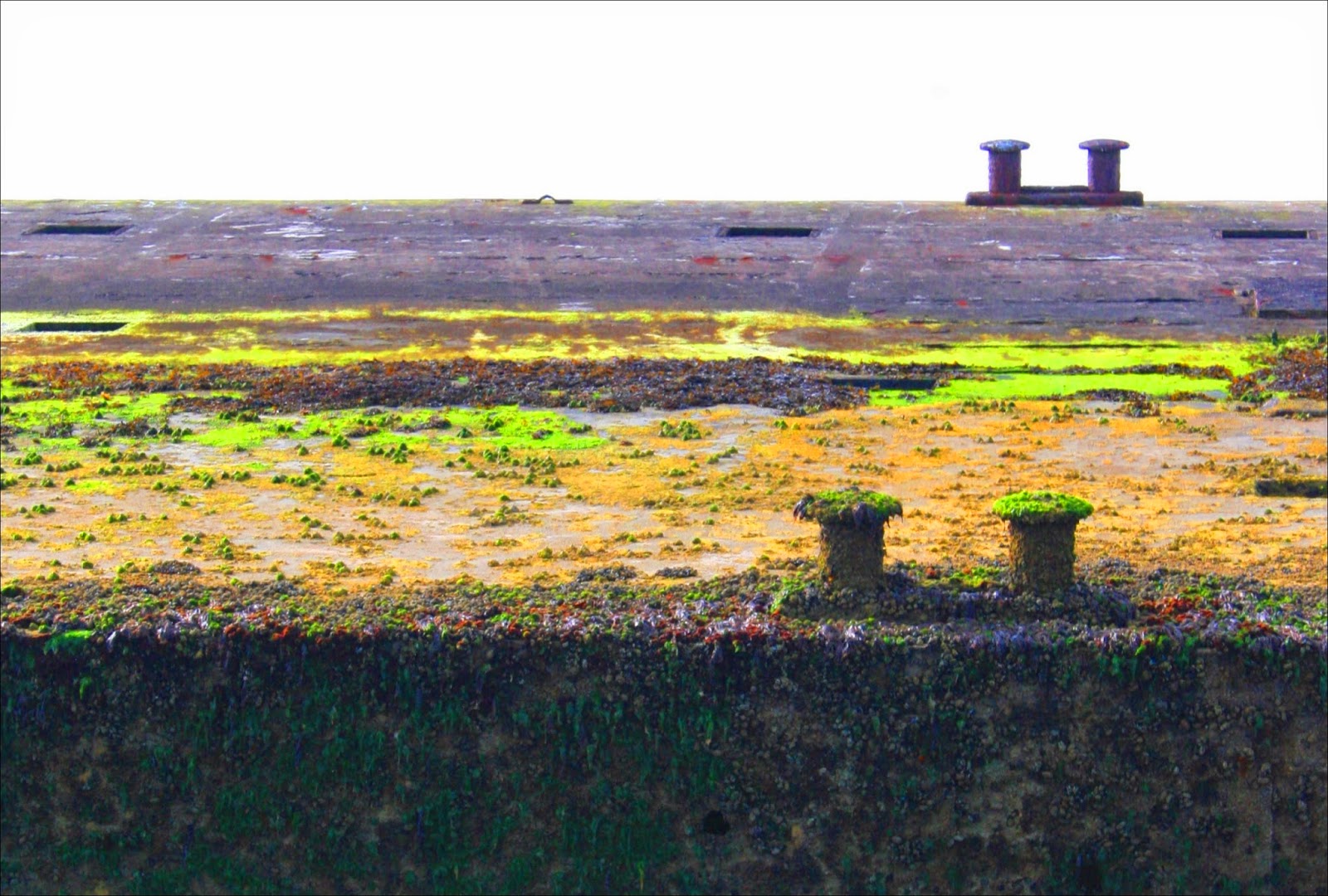
At hide tide, the sea rises halfway up the landing surface, creating an even split between erosion by sea and erosion by air.

Now, seaweed, barnacles and limpets cover the surface where once men's feet fell.

Out at sea, a number of the Phoenix breakwaters remain lined up, a permanent feature now of the Arromanches horizon.

Photographs by Huckleberry Hax.
June 7, 2014
Inventory: Your own personal ticking time bomb
How one day you’ll have nothing to remember your Second Life by, and possibly the real reason for that terms and conditions update.
There are a couple of completely unrelated activities I’ve become involved in lately that have got me thinking about the stuff we hold on to. The first of these, in chronological order, is the clearing out of my mother’s attic. It’s a long overdue job and I’m approaching it slowly and methodically, going through everything one box at a time and sorting according to whether each item should be thrown out, scanned/photographed and thrown out, kept, or ebayed. After four, hour-long sessions, I’m approaching the end of my first box and there must be at least fifty boxes up there (most of them much larger than the one I’ve nearly finished). Many of the boxes haven’t been touched in over twenty years.
When I committed to this project, I did so with a somewhat heavy heart and only because I knew that it had to be done sooner or later. Much to my surprise, however, I’m actually quite enjoying the task. I’ve discovered all kinds of things that have brought back memories of moments lost or simply a recollection of the world as it once was through my then more innocent eyes. Letters, photographs, Christmas cards, magazines, things my father wrote when he was alive, toys long forgotten; and so on. It’s nice to occasionally reconnect with how things once were, even if only for a few minutes.
The second activity is far less wholesome for the soul. I’m somewhat ashamed to say I’ve become addicted to the online game ‘Simpsons Tapped Out’. Those of you familiar with this app for phones and tablets will know it involves creating your very own version of Springfield by saving up virtual dollars accrued through sending the various residents available on jobs; these dollars can then be used to buy land or construct buildings. All well and good, but the game involves a lot of waiting around because these jobs can take anything up to twenty-four hours for residents to complete, as can building construction. To get around this, you can speed everything up using the second currency of donuts. But here’s the catch: donuts can only be bought using real money, and this is where EA Games, the makers of Tapped Out, make their return on the app. Buying donuts is a temptation I’ve so far avoided, however there are clearly plenty of users who take this approach, since the game – free in all other respects – is reportedly a huge financial hit.
How is this relevant to my musings on stuff? I went to a discussion forum a few days ago to find out what people were saying about a new set of quests that have recently been added to this game, with a whole new set of items than can be earned. People were discussing these with some excitement, and one of them eagerly posted, “I’ve got them all already with some donuts I got bought for my birthday”.
It’s a funny old world. I can listen to some truly dreadful news items with the most dispassionate of responses, but for some reason this really hit me. Actually, anything concerning childhood innocence usually does it. I once saw a really aggressive kid I knew taking a glimpse through a crack he’d found in the papered-over window over of a Santa’s grotto and the look of childhood joy on his face made me want to blub uncontrollably. I assumed, you see, that this post had been written by a child (I might be wrong) and it upset me that for his or her birthday they had received something they would never one day be able to come across in their attic and hold and feel and smell. One day, Simpsons Tapped Out will be an obsolete title and all these purchased items will be gone. The game doesn’t work without a connection to the game server, and when it reaches the point, to quote Troy McClure, where it’s no longer profitable, that server will get its plug pulled and everything anyone ever ‘owned’ on it will vanish.
As it is also with Second Life. Everything in our inventory – everything we think somehow belongs to us – actually resides on Linden servers which one day will get turned off. Everything: every picture, every notecard, every outfit, every building, every piece of furniture you ever bought or made, every trinket and curio, every garden feature, every single hairstyle you’ve ever worn; one day, it will all of it be gone. You do not own any of it.
Whatever you think Second Life is, it cannot last forever. Whatever improvements are made to it, it will not in the long term be able to compete with new virtual worlds that aren’t built on an eleven year old architecture (happy birthday, by the way, SL). Eventually, there just won’t be enough people buying land or paying tier or purchasing stuff on the marketplace for Linden (or whoever ends up owning SL, if Linden one day decides to sell it) to make money out of it. Some people will definitively leave; others will drift over to new products and find their visits to the first ever virtual world less and less frequent. Whatever. Whether it’s a year from now or five or ten or twenty, that moment must inevitably come. There are things we can export, such as pictures and notecards and any objects we’ve built ourselves, but more or less anything we’ve bought or received from others is stuck forever in our inventory, and the stuff we can take out the majority of us will probably never get around to moving because there’s just too much of it. By the time we realise we want to keep hold of it because of the memories these things unlock, it will all be too late.
The more and more I think about it, the more I feel a pull towards the conclusion that this inevitable, unavoidable truth is the real reason – or part of it, at least – why Linden changed its terms and conditions regarding ownership of inventory last year. Because we tend only to think in the here and now, this got misread as some sort of nefarious plot to make money out of our intellectual property. I don’t think it’s that at all; Linden denied this and we’ve yet to see any evidence to the contrary. But now that most commentators seem to agree that our metaverse is now entering its final age, anxiety at the labs over what rights people have to items in their inventories must have started to grow considerably. Solution: let everyone know that Linden owns the lot so that if (when) they chose to extinguish it, then they have every right to do so.
What, if anything, can be done about this? Experimentally, I’ve exported a couple of items I made in the past to InWorldz and it worked okay – textures had to be uploaded separately, but that’s doable. InWorldz, however, isn’t all that different from SL as I understand it, insofar as it’s still one central organisation holding all the server space. OpenSim would appear to be a much better long-term storage option, since (as I understand it) you can use it to run your own region on your own PC, rather than having to connect to regions online. Still, this is only a solution for things you have actually made yourself, which in my case would be less than one per cent of my total inventory. And even some of those are un-exportable: much of my own furniture, for example, uses all-permission sculpted elements I’ve bought such as mattresses and cushions; using these in my items is entirely ‘legal’, but, when it comes to exporting, just one of them in an item I've made will block the whole thing from being saved to my hard disk.
Perhaps, between now and the end of SL, someone will come up with some sort of magic tool – a deus ex machine to my prophecy of doom – that will allow the export and conversion of everything to some new virtual world we’re all emigrating to. I’m not technically knowledgeable enough to know whether such a thing might be possible, but even if it is it’s likely to cause an outcry among sellers, who have been fighting the copybots for years. It would probably get banned.
We should probably reconcile ourselves, then, to saving what we can while we can. For my part, that will mean saving my snapshots to hard disk and maybe trying to take a few more pictures than I ordinarily do in the time we have remaining. Regarding objects, the vast majority of my stuff is junk I no longer use and I suppose it won’t be the end of the world if it should all pass into non-existence. Like so much stuff we get rid of in real life, pictures of it will suffice. There are a few gems here and there, however, which I will really, really miss: the first home I built (it included cheap bits and pieces I picked up from dollar stores), my unbelievably cool 70s bed (not actually finished as a saleable item yet, but you simply have to see the furry leopard skin cover), the neck chain my best friend Dizi made for me from a maze design (carved into stone at a place in Tintagel) when I told her how much I liked it.
I would love one day, years from now, to come across these things in a virtual box in a virtual attic so that I can look at them for a while and enjoy the memories they evoke.
But I’m pretty sure that I won’t.
There are a couple of completely unrelated activities I’ve become involved in lately that have got me thinking about the stuff we hold on to. The first of these, in chronological order, is the clearing out of my mother’s attic. It’s a long overdue job and I’m approaching it slowly and methodically, going through everything one box at a time and sorting according to whether each item should be thrown out, scanned/photographed and thrown out, kept, or ebayed. After four, hour-long sessions, I’m approaching the end of my first box and there must be at least fifty boxes up there (most of them much larger than the one I’ve nearly finished). Many of the boxes haven’t been touched in over twenty years.
When I committed to this project, I did so with a somewhat heavy heart and only because I knew that it had to be done sooner or later. Much to my surprise, however, I’m actually quite enjoying the task. I’ve discovered all kinds of things that have brought back memories of moments lost or simply a recollection of the world as it once was through my then more innocent eyes. Letters, photographs, Christmas cards, magazines, things my father wrote when he was alive, toys long forgotten; and so on. It’s nice to occasionally reconnect with how things once were, even if only for a few minutes.
The second activity is far less wholesome for the soul. I’m somewhat ashamed to say I’ve become addicted to the online game ‘Simpsons Tapped Out’. Those of you familiar with this app for phones and tablets will know it involves creating your very own version of Springfield by saving up virtual dollars accrued through sending the various residents available on jobs; these dollars can then be used to buy land or construct buildings. All well and good, but the game involves a lot of waiting around because these jobs can take anything up to twenty-four hours for residents to complete, as can building construction. To get around this, you can speed everything up using the second currency of donuts. But here’s the catch: donuts can only be bought using real money, and this is where EA Games, the makers of Tapped Out, make their return on the app. Buying donuts is a temptation I’ve so far avoided, however there are clearly plenty of users who take this approach, since the game – free in all other respects – is reportedly a huge financial hit.
How is this relevant to my musings on stuff? I went to a discussion forum a few days ago to find out what people were saying about a new set of quests that have recently been added to this game, with a whole new set of items than can be earned. People were discussing these with some excitement, and one of them eagerly posted, “I’ve got them all already with some donuts I got bought for my birthday”.
It’s a funny old world. I can listen to some truly dreadful news items with the most dispassionate of responses, but for some reason this really hit me. Actually, anything concerning childhood innocence usually does it. I once saw a really aggressive kid I knew taking a glimpse through a crack he’d found in the papered-over window over of a Santa’s grotto and the look of childhood joy on his face made me want to blub uncontrollably. I assumed, you see, that this post had been written by a child (I might be wrong) and it upset me that for his or her birthday they had received something they would never one day be able to come across in their attic and hold and feel and smell. One day, Simpsons Tapped Out will be an obsolete title and all these purchased items will be gone. The game doesn’t work without a connection to the game server, and when it reaches the point, to quote Troy McClure, where it’s no longer profitable, that server will get its plug pulled and everything anyone ever ‘owned’ on it will vanish.
As it is also with Second Life. Everything in our inventory – everything we think somehow belongs to us – actually resides on Linden servers which one day will get turned off. Everything: every picture, every notecard, every outfit, every building, every piece of furniture you ever bought or made, every trinket and curio, every garden feature, every single hairstyle you’ve ever worn; one day, it will all of it be gone. You do not own any of it.
Whatever you think Second Life is, it cannot last forever. Whatever improvements are made to it, it will not in the long term be able to compete with new virtual worlds that aren’t built on an eleven year old architecture (happy birthday, by the way, SL). Eventually, there just won’t be enough people buying land or paying tier or purchasing stuff on the marketplace for Linden (or whoever ends up owning SL, if Linden one day decides to sell it) to make money out of it. Some people will definitively leave; others will drift over to new products and find their visits to the first ever virtual world less and less frequent. Whatever. Whether it’s a year from now or five or ten or twenty, that moment must inevitably come. There are things we can export, such as pictures and notecards and any objects we’ve built ourselves, but more or less anything we’ve bought or received from others is stuck forever in our inventory, and the stuff we can take out the majority of us will probably never get around to moving because there’s just too much of it. By the time we realise we want to keep hold of it because of the memories these things unlock, it will all be too late.
The more and more I think about it, the more I feel a pull towards the conclusion that this inevitable, unavoidable truth is the real reason – or part of it, at least – why Linden changed its terms and conditions regarding ownership of inventory last year. Because we tend only to think in the here and now, this got misread as some sort of nefarious plot to make money out of our intellectual property. I don’t think it’s that at all; Linden denied this and we’ve yet to see any evidence to the contrary. But now that most commentators seem to agree that our metaverse is now entering its final age, anxiety at the labs over what rights people have to items in their inventories must have started to grow considerably. Solution: let everyone know that Linden owns the lot so that if (when) they chose to extinguish it, then they have every right to do so.
What, if anything, can be done about this? Experimentally, I’ve exported a couple of items I made in the past to InWorldz and it worked okay – textures had to be uploaded separately, but that’s doable. InWorldz, however, isn’t all that different from SL as I understand it, insofar as it’s still one central organisation holding all the server space. OpenSim would appear to be a much better long-term storage option, since (as I understand it) you can use it to run your own region on your own PC, rather than having to connect to regions online. Still, this is only a solution for things you have actually made yourself, which in my case would be less than one per cent of my total inventory. And even some of those are un-exportable: much of my own furniture, for example, uses all-permission sculpted elements I’ve bought such as mattresses and cushions; using these in my items is entirely ‘legal’, but, when it comes to exporting, just one of them in an item I've made will block the whole thing from being saved to my hard disk.
Perhaps, between now and the end of SL, someone will come up with some sort of magic tool – a deus ex machine to my prophecy of doom – that will allow the export and conversion of everything to some new virtual world we’re all emigrating to. I’m not technically knowledgeable enough to know whether such a thing might be possible, but even if it is it’s likely to cause an outcry among sellers, who have been fighting the copybots for years. It would probably get banned.
We should probably reconcile ourselves, then, to saving what we can while we can. For my part, that will mean saving my snapshots to hard disk and maybe trying to take a few more pictures than I ordinarily do in the time we have remaining. Regarding objects, the vast majority of my stuff is junk I no longer use and I suppose it won’t be the end of the world if it should all pass into non-existence. Like so much stuff we get rid of in real life, pictures of it will suffice. There are a few gems here and there, however, which I will really, really miss: the first home I built (it included cheap bits and pieces I picked up from dollar stores), my unbelievably cool 70s bed (not actually finished as a saleable item yet, but you simply have to see the furry leopard skin cover), the neck chain my best friend Dizi made for me from a maze design (carved into stone at a place in Tintagel) when I told her how much I liked it.
I would love one day, years from now, to come across these things in a virtual box in a virtual attic so that I can look at them for a while and enjoy the memories they evoke.
But I’m pretty sure that I won’t.
June 6, 2014
Remembering D-Day
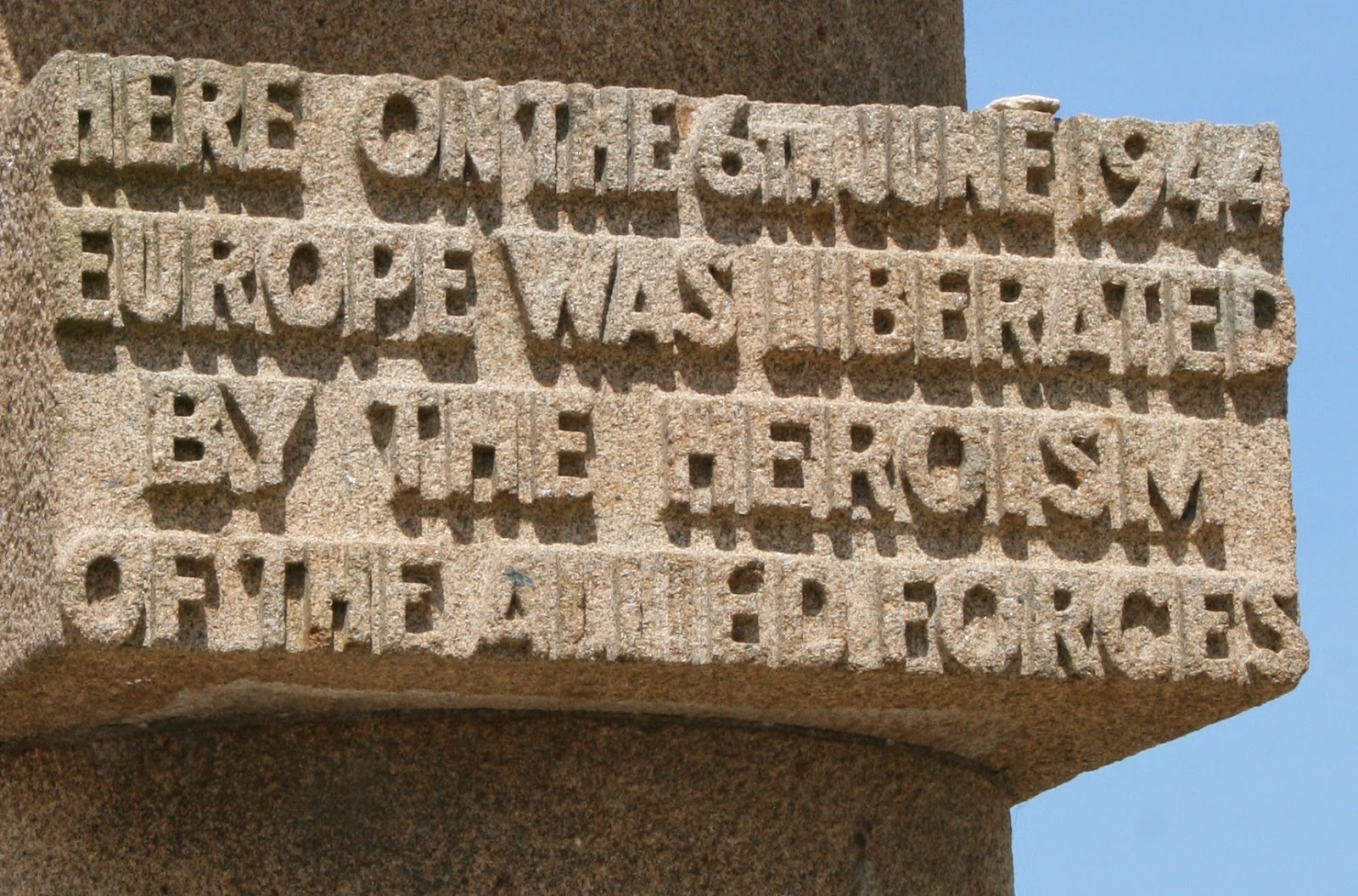
In 2008, I spent a week on holiday just outside of Bernières-sur-mer, the seafront of which forms part of Juno Beach, the Canadian landing point on D-Day 70 years ago today. During that time, I also visited Sword and Gold, the British landing points, and Omaha, one of the two American beaches (and the bloodiest). My visit to the latter of these in particular led me to making my first real attempt at writing poetry, 'At the beach', which you can read here.
By chance, a couple of weeks before the trip I'd picked up in a charity shop a copy of "Not in Vain" by Ken Bell, a Canadian photographer who landed on Juno on D-Day. For this beautiful book of photographs, Ken revisited in 1979 some of the locations he'd photographed in 1944, taking new pictures to show the contrast created by 25 years of peace. It turned out that Ken's exact landing point was Bernières-sur-mer and I resolved to seek out during my trip some of the locations photographed so I could create 2008 versions of these pictures.
I the end, I managed to track down four of these - three in Bernières-sur-mer and one on the way to Ouistreham. Today, the last major event to commemorate this historic moment, seems a good day to publish these.
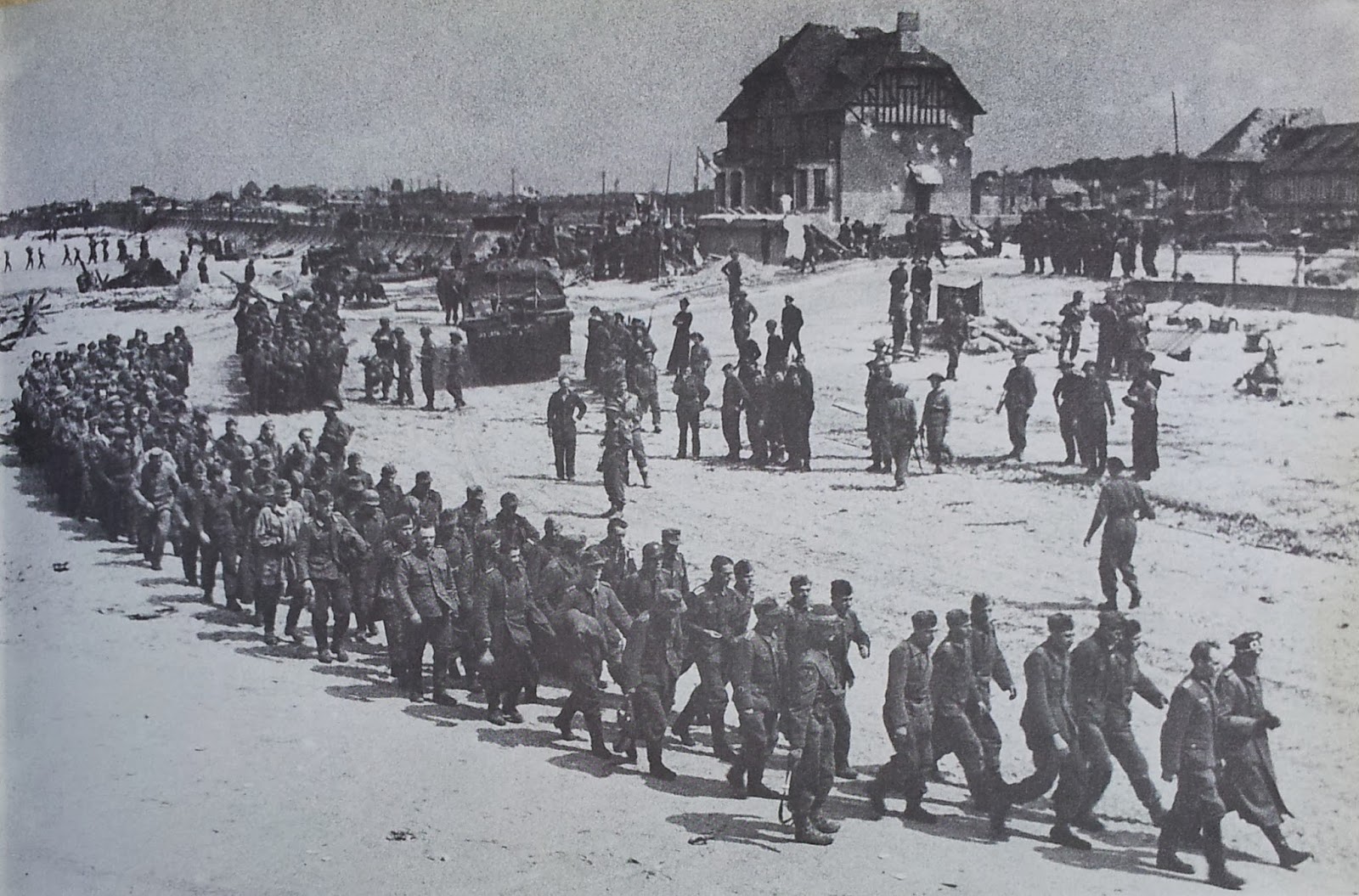
Landing at Bernières-sur-mer, 1944. Photograph by Ken Bell.
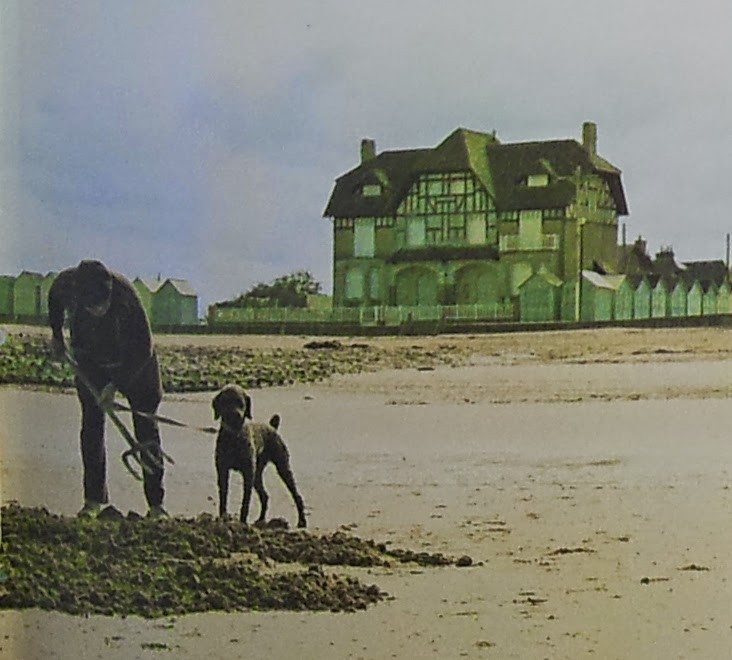
The beach in 1979. Photograph by Ken Bell.
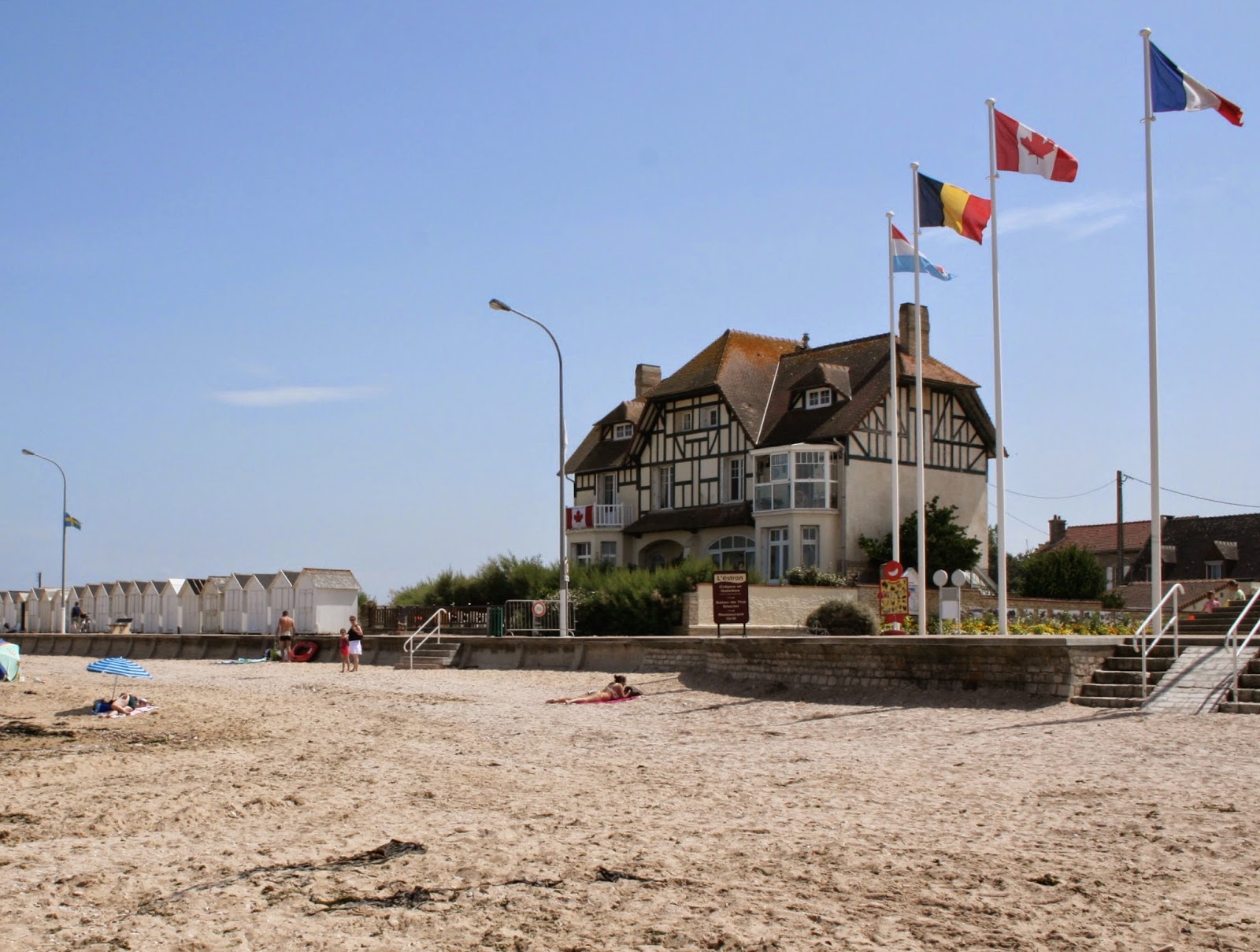
In 2008, a plaque identifies this house as the first to be liberated in France. Photograph by Huckleberry Hax.
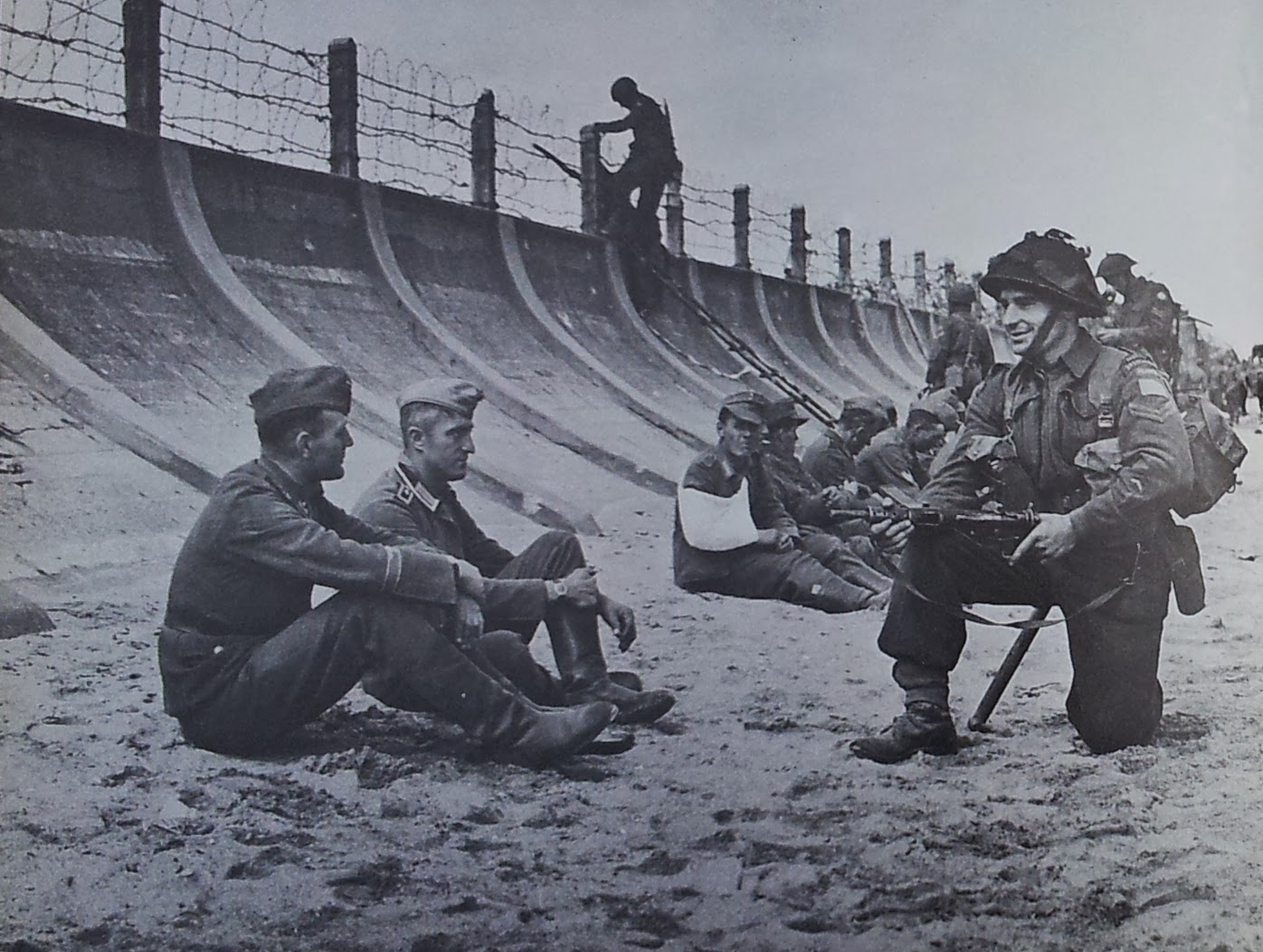
1944. Photograph by Ken Bell.
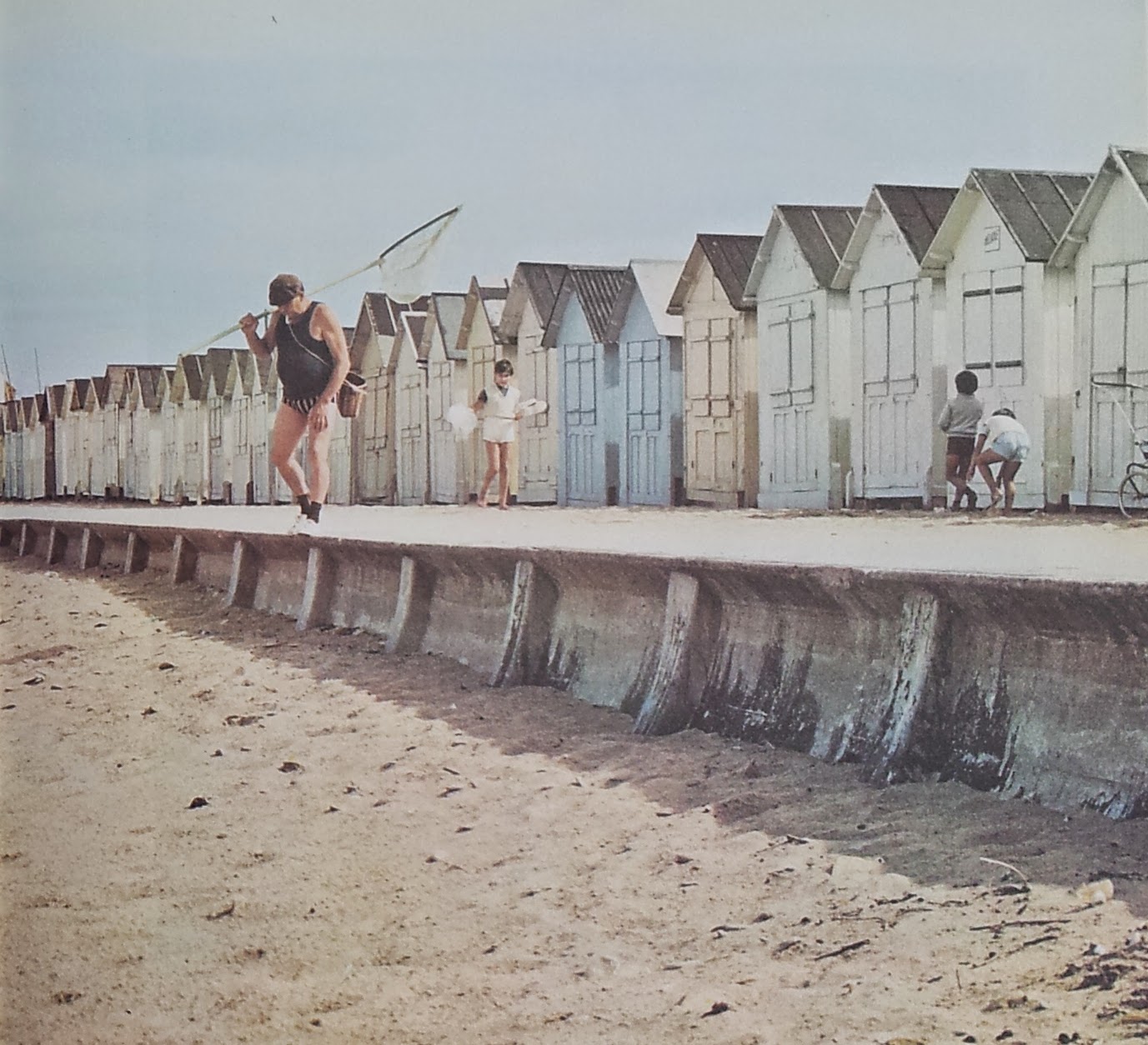
1979. Photograph by Ken Bell.
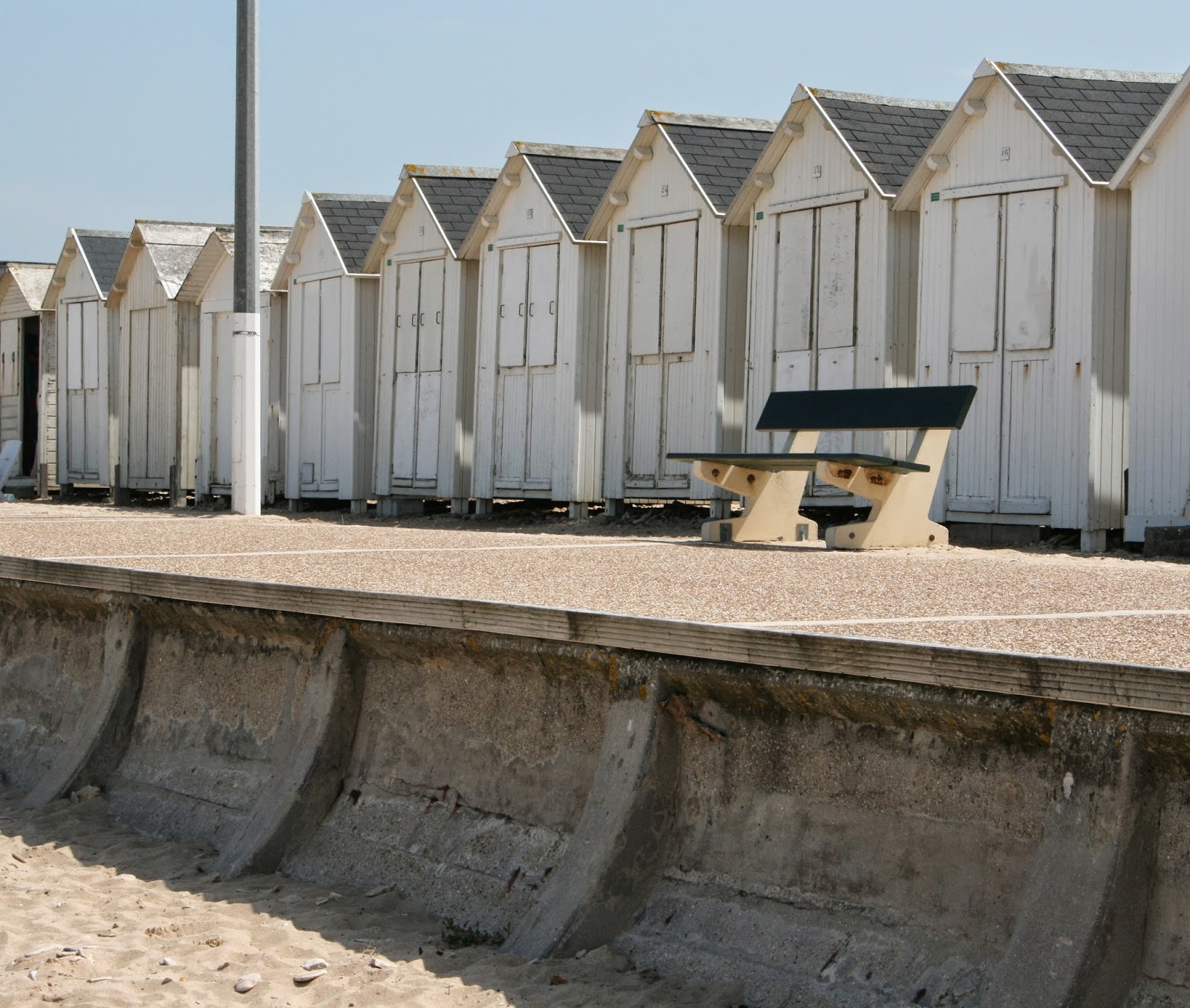
2008. Photograph by Huckleberry Hax.
The railway station in 1944. Photograph by Ken Bell.
A bus station in 1979. Photograph by Ken Bell.
And a tourist office in 2008. Photograph by Huckleberry Hax.
The road to Ouistreham in 1944. Photograph by Ken Bell.
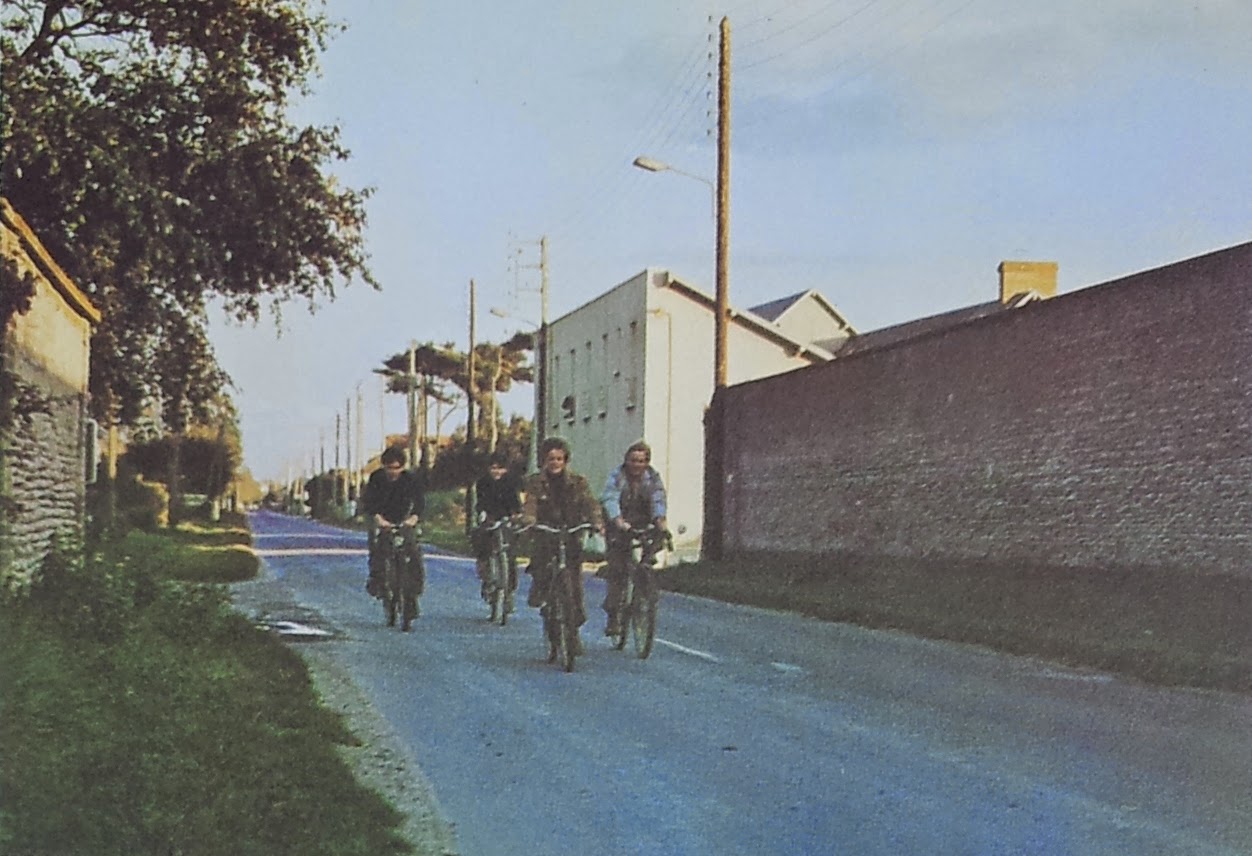
And in 1979. Photograph by Ken Bell.
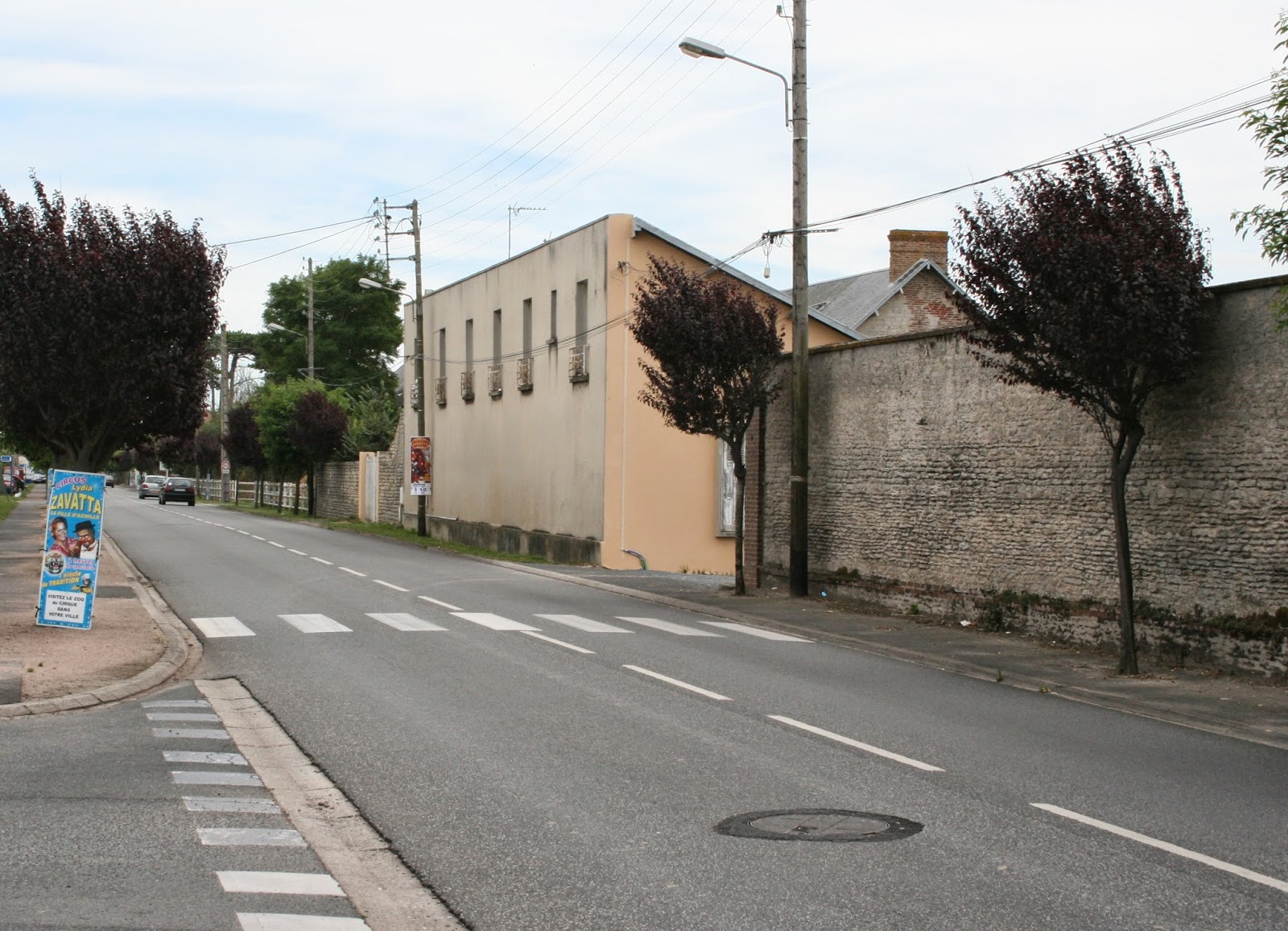
And in 2008. Photograph by Huckleberry Hax.


