
Adam Heine's Blog, page 47
January 24, 2011
Answers the First (or "Hi, This is What I Do")
Apparently 88% of us would rather be lonely (and smart) than stupid (with friends). I'm with you guys, but you should know this is how super villains are made.
You guys asked some fantastic questions! I'll be answering some today, some Wednesday, and on Friday we have a double sketch featuring a very special guest artist. Now, to the questions!
An anonymous visitor from Natalie's blog asks: Can I ask what your main profession is?
Believe it or not, the "About Me" description over there is...
You guys asked some fantastic questions! I'll be answering some today, some Wednesday, and on Friday we have a double sketch featuring a very special guest artist. Now, to the questions!
An anonymous visitor from Natalie's blog asks: Can I ask what your main profession is?
Believe it or not, the "About Me" description over there is...


January 21, 2011
Questions! 2011!
It's been a while since we've done questions, and there are a number of new faces around the blog lately. I figure it's time to do it again.
The rules are simple. Put your questions in the comments. You may ask anything you like, serious or silly, professional or totally inappropriate. I'll answer all of them as best I can and may even do so honestly!
You may, if you like, review old questions and answers, but it's not required. Part of thinking like a pro means realizing some questions wil...
The rules are simple. Put your questions in the comments. You may ask anything you like, serious or silly, professional or totally inappropriate. I'll answer all of them as best I can and may even do so honestly!
You may, if you like, review old questions and answers, but it's not required. Part of thinking like a pro means realizing some questions wil...
January 19, 2011
Books I Read: Favorites of 2010
I know it's a bit late, but here are some of my favorite books I read last year. A few I've talked about before. Those have just a brief summary and a link to my original post on the topic, but there are a couple here outside my regular genre(s) that I wanted to point out.
Curious Incident of the Dog in the Night-time
Mark Haddon, 2003, Mystery/Literary
An autistic teenager investigates the death of the neighbor's dog and ends up learning secrets about his parents he was never meant to know....
Curious Incident of the Dog in the Night-time
Mark Haddon, 2003, Mystery/Literary
An autistic teenager investigates the death of the neighbor's dog and ends up learning secrets about his parents he was never meant to know....
January 17, 2011
Think Like a Pro
"There is a secret that real writers know that wannabe writers don't, and the secret is this: It's not the writing that is hard. What's hard is sitting down to write."
-- David Mack, Kabuki: The Alchemy
Do you want to be a pro?
I didn't at first. I knew I wanted to write. I wanted to prove to myself I could finish a novel, maybe publish it if anyone was interested (little did I know finishing a novel is the easy part).
Then I learned about the system. I read the blogs of authors and agent...
-- David Mack, Kabuki: The Alchemy
Do you want to be a pro?
I didn't at first. I knew I wanted to write. I wanted to prove to myself I could finish a novel, maybe publish it if anyone was interested (little did I know finishing a novel is the easy part).
Then I learned about the system. I read the blogs of authors and agent...
January 14, 2011
Books I Read: Leviathan
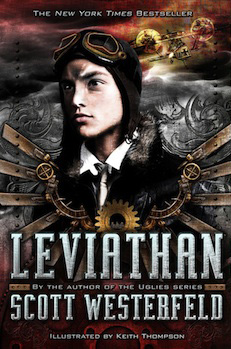 Title: Leviathan
Author: Scott Westerfeld
Genre: YA steampunk
Published: 2009
Content Rating: PG for action and mild violence
It's around the start of World War One, except Archduke Ferdinand (whose murder started the war) has a son, Alek, who could inherit Austria should the emperor die. He goes into exile with only a walking warmachine and a small band of men to help him. On the other side is Deryn, a girl from Britain who wants to join the air corps so badly she disguises herself as a bo...
January 12, 2011
So You Think You Can Write
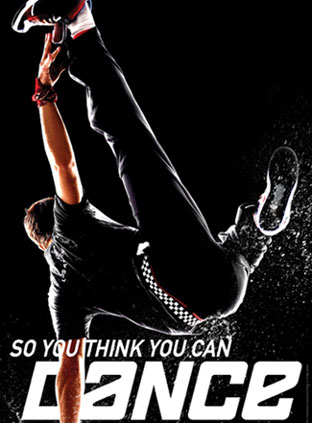 Cindy and I are going through last season's So You Think You Can Dance (one of the drawbacks(/benefits) of living out here: we miss a lot of TV). She watches it for the dancing, of course. Being as I'm totally clueless on the subject, I watch it for the characters.
Seriously, except for the hilarious weeding-out rounds, all the dancers look good to me. The judges' critiques for me are like:
Nigel: You need to bring more passion to your work.
Me: ?
Mia: You don't have that quiet fire this da...
January 10, 2011
I'm a Gamer. This is What We Do.
Our buddy Emmet is in town, which means we've been playing more games than normal. It's been a while since I talked about board games. Here's what we've been playing. (I promise to be less crazy than last time).
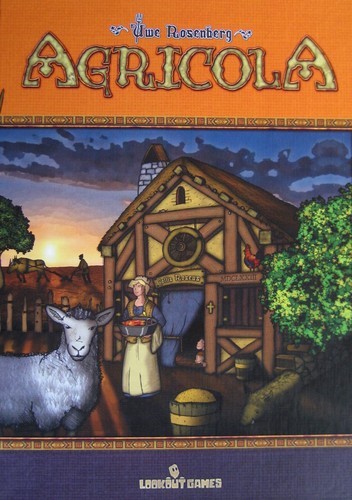
 Agricola
Start off as a poor farmer. You and your spouse have to choose how to manage their time. Do you collect building resources to build fences or improve your house? Do you plant grain? Collect animals? Build a fireplace so you can actually cook them? Eventually you'll want a la...
 Agricola
Start off as a poor farmer. You and your spouse have to choose how to manage their time. Do you collect building resources to build fences or improve your house? Do you plant grain? Collect animals? Build a fireplace so you can actually cook them? Eventually you'll want a la...
January 7, 2011
Proving the Rules Wrong
As Professional Aspiring Writers, we hear a lot about the Rules of Writing. Aspects of the craft that we are supposed to adhere to in order to "write well." More experienced PAWs know that the Rules are, in fact, only guidelines. If you don't know what you're doing, you should follow them, but a story can break them and still be good.
I submit here five fairly standard rules and their counter-examples: books or authors that have blatantly broken them, yet remain extremely successful.
Yes, you could argue that the reading public is dumb because it doesn't recognize "Great Literature" (which isn't a very nice thing to say about your future fans, btw). Or you could decide that maybe -- just maybe -- each of these authors does something SO right, their rule-breaking just doesn't matter.
Rule: Write what you know.
Counter-Example: The Dresden Files
Jim Butcher has never been a private eye nor a wizard (I don't think), but it doesn't seem to affect his income much.
Rule: Your protagonist must be proactive.
Counter-Example: The Twilight Saga
Say what you will about Bella, the books about her sell. And Stephanie Meyer now has the freedom to write pretty much whatever she wants.
Rule: Show, don't tell.
Counter-Example: James Patterson novels
(From London Bridges):
It was amazing footage--black and white, which somehow made it even more powerful. Black and white was more realistic, no? Yes--absolutely.
Rule: Never use adverbs.
Counter-Example: Harry Potter
(From Chamber of Secrets):
"We wanted to ask you if you've seen anything funny lately," said Hermione quickly."I wasn't paying attention," said Myrtle dramatically. "I was so upset I tried to kill myself. Then I remembered that I'm -- ""Already dead," said Ron helpfully.
Rule: Be original.
Counter-Example: Eragon
(From TVTropes.org): The novels feature the tale of a farmboy who discovers a Plot Coupon sent to a wise old mentor by a captured princess, and has his uncle who raised him killed by the impenetrably cowled servants of the Evil Empire. The mentor is a former knight, who teaches the farmboy how to use his mystical powers in about five days. Luckily, the farmboy meets up with a Badass AntiHero, rescues the princess, who is also a major player in the Rebel army, and joins the rebellion, becoming a key member before going to train with a half-mad old hermit in the forest. After this, he discovers that his father was the Empire's right-hand man and he's been betrayed by his own family.
So don't let the rules scare you. They can be trumped.
Where else have you seen rules broken, but where it didn't ruin the story at all?
I submit here five fairly standard rules and their counter-examples: books or authors that have blatantly broken them, yet remain extremely successful.
Yes, you could argue that the reading public is dumb because it doesn't recognize "Great Literature" (which isn't a very nice thing to say about your future fans, btw). Or you could decide that maybe -- just maybe -- each of these authors does something SO right, their rule-breaking just doesn't matter.
Rule: Write what you know.
Counter-Example: The Dresden Files
Jim Butcher has never been a private eye nor a wizard (I don't think), but it doesn't seem to affect his income much.
Rule: Your protagonist must be proactive.
Counter-Example: The Twilight Saga
Say what you will about Bella, the books about her sell. And Stephanie Meyer now has the freedom to write pretty much whatever she wants.
Rule: Show, don't tell.
Counter-Example: James Patterson novels
(From London Bridges):
It was amazing footage--black and white, which somehow made it even more powerful. Black and white was more realistic, no? Yes--absolutely.
Rule: Never use adverbs.
Counter-Example: Harry Potter
(From Chamber of Secrets):
"We wanted to ask you if you've seen anything funny lately," said Hermione quickly."I wasn't paying attention," said Myrtle dramatically. "I was so upset I tried to kill myself. Then I remembered that I'm -- ""Already dead," said Ron helpfully.
Rule: Be original.
Counter-Example: Eragon
(From TVTropes.org): The novels feature the tale of a farmboy who discovers a Plot Coupon sent to a wise old mentor by a captured princess, and has his uncle who raised him killed by the impenetrably cowled servants of the Evil Empire. The mentor is a former knight, who teaches the farmboy how to use his mystical powers in about five days. Luckily, the farmboy meets up with a Badass AntiHero, rescues the princess, who is also a major player in the Rebel army, and joins the rebellion, becoming a key member before going to train with a half-mad old hermit in the forest. After this, he discovers that his father was the Empire's right-hand man and he's been betrayed by his own family.
So don't let the rules scare you. They can be trumped.
Where else have you seen rules broken, but where it didn't ruin the story at all?
January 5, 2011
Choosing What to Write Next
Usually, the way I choose the next story -- assuming I have more than one idea -- is just to write the one I like the most. But after two failed query rounds, and my hopes resting all too precariously on an upcoming third, I'm taking more care with what I invest my writing time in. In my friend Ricardo's words, I'm leveling up.
I have two criteria now for what I write next:
It has to be something people want to read.
It has to be something I want to write.
Not that I (or anyone, really) knows what the public wants. Mostly the first criteria helps me look critically at my concepts. Is it a strong premise I can explain in a sentence? Has it been done before? If it has, do I have a unique enough twist on it to keep it interesting? (Or was it done so obscurely that I can do it again without anyone noticing?)
The second criteria is more about theme. Usually I just jump into a story because I think the plot or the world is cool; only when I get to the end do I realize the story's supposed to mean something too. I've been a Professional Aspiring Writer* long enough to know that I'll enjoy most any speculative premise, but I can't be passionate about every theme.
So now I'm thinking not just what are the themes of my story ideas, but what themes am I interested in writing? Like I had this idea of a kid born perfect in a Gattaca-style world where people are obsessed with genetic perfection, but he resents the pressure and attention people put on him. I like the idea a lot, and the theme of trying to be yourself is common enough I think I could write it. But the idea of writing a popular kid, when popularity is something I've never really "struggled" with, makes me wonder if it's really my story to tell. Especially when I've got other characters in my head whose struggles I have shared.
That doesn't mean I won't write it (I really like the idea), but it's one of the negative points I'm going to weigh when I decide what to write next. Although maybe I should finish these current projects first...
What about you? How do you decide what to write next?
* Feel free to borrow that term.
I have two criteria now for what I write next:
It has to be something people want to read.
It has to be something I want to write.
Not that I (or anyone, really) knows what the public wants. Mostly the first criteria helps me look critically at my concepts. Is it a strong premise I can explain in a sentence? Has it been done before? If it has, do I have a unique enough twist on it to keep it interesting? (Or was it done so obscurely that I can do it again without anyone noticing?)
The second criteria is more about theme. Usually I just jump into a story because I think the plot or the world is cool; only when I get to the end do I realize the story's supposed to mean something too. I've been a Professional Aspiring Writer* long enough to know that I'll enjoy most any speculative premise, but I can't be passionate about every theme.
So now I'm thinking not just what are the themes of my story ideas, but what themes am I interested in writing? Like I had this idea of a kid born perfect in a Gattaca-style world where people are obsessed with genetic perfection, but he resents the pressure and attention people put on him. I like the idea a lot, and the theme of trying to be yourself is common enough I think I could write it. But the idea of writing a popular kid, when popularity is something I've never really "struggled" with, makes me wonder if it's really my story to tell. Especially when I've got other characters in my head whose struggles I have shared.
That doesn't mean I won't write it (I really like the idea), but it's one of the negative points I'm going to weigh when I decide what to write next. Although maybe I should finish these current projects first...
What about you? How do you decide what to write next?
* Feel free to borrow that term.


