Warren Rochelle's Blog, page 8
October 13, 2021
Dropnauts by J. Scott Coatsworth
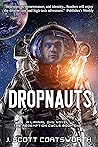 Dropnauts by J. Scott Coatsworth
My rating: 5 of 5 stars
The year 2282.
Over a century has passed since the Crash and the end of human civilization on Earth. There were no victors in the Last War. As far as they know, humanity's sole survivors, some 12,000+ souls, are living on the Moon. The colony of Redemption (formerly Moon Base Alpha) has created something of an egalitarian society, one which accepts the diversity of humanity, and strives to live up to the Redemption Creed: "I will not take another life's. I will not take what is not mine. I will not violate another. I will not lie. I will help build a better world" (385). More and more lunar quakes spell trouble. It's time to go home. The first two ships are dropping to Earth, with crews of dropnauts, primed for any number of possibilities. Or so they think. One ship is destroyed, with all aboard, the other shot out of the sky as it comes down for a landing. It seems the old world is not devoid of human life after all. Someone had to fire those missiles, right? Or a lot of booby-traps were left behind...
Complications ensue.
J. Scott Coatsworth has created a richly detailed and believable dystopian future, yet one with the promise of utopian solutions. The main characters, the four dropnauts on the Zhenyi, the craft shot out of the sky, are diverse indeed: a disabled individual, a gay man, a transgender woman, and a bisexual man. Back home on Luna, the Return project is shepherded by a sentient AI, Sam. These people are not, however labels or symbols. Rai Ramirez, for example, is a man who is gay, and a botanist, and a man who spent a good part of his childhood in a creche, a friend, a lover, among other things. Rather, here Coatsworth is exploring the possibilities of what it means to be a human, humans who are flawed and imperfect and engaging, annoying and lovable, as we all are,. The AIs are equally diverse, and are also people in their own right. I found myself cheering for them all, human and AI.
The diverse cultures that survived and evolved after the Crash are a testament to Coatsworth's skill as a world-builder. These cultures include the lunar attempt at an egalitarian society, to a matriarchal society living underground on Earth, and not willing to forgive men for past crimes. The details of each are varied, well-crafted, and believable, on the Moon and on the Earth, a post-Crash world of ecological catastrophe and global war.
Dropnauts is both a dystopian and a utopian novel, and a novel about what it means to be human, and how, when things are at their worst, sometimes we are our best. We can redeem ourselves, repair out mistakes. As author Lee Hunt says, the novel is "Fast, optimistic and entertaining. Coatsworth's Dropnauts shows that forgiveness may the best fuel for redemption" (back cover). This is a novel of hope.
According to the review in Publisher's Weekly, "Redemption, perseverance, and identity ... Readers will enjoy the diverse cast and high-tech adventure" (front cover). This reader sure did. A real page turner.
Recommended.
View all my reviews


October 8, 2021
Every Heart A Doorway, by Seanan McGuire
a href="https://www.goodreads.com/book/show/2..." style="float: left; padding-right: 20px"> Every Heart a Doorway by Seanan McGuire
My rating: 5 of 5 stars
Yes, as Paul Cornell, author of London Falling and Witches of Lychford says, "Seanan McGuire once again demonstrates her intimate knowledge of the human heart in a powerful fable of loss, yearning, and damaged children" (back cover). These children found the way out, the doors to their true homes, portals to other worlds. But they couldn't stay, they were sent back. Now, many like Nancy, are sent by desperate parents, or parents who don't want these strange children, to Eleanor West's Home for Wayward Children. Here, they are with others who are also desperate to go back to their true homes, and keep seeking the way out, even though some know they will never get back.
But someone in this sanctuary of a boarding school is a murderer. Can Nancy and Kade and Jack find the killer before it is too late.
I love this book. In part, I feel I was such a wayward child, wanting to go to Narnia or Oz or Prydain,. Instead, I make up these other worlds and write about them. This brings to my question: why aren't there more boys here? I applaud Kade as a transgender boy, but there are more than a few boys who have knocked on the backs of wardrobe, and are not "too loud, on the whole, to be easily misplaced or overlooked" who are somehow "[protected] ... from doors" (McGuire 59).
Recommended.
View all my reviews
Every Heart a Doorway by Seanan McGuireMy rating: 5 of 5 stars
Yes, as Paul Cornell, author of London Falling and Witches of Lychford says, "Seanan McGuire once again demonstrates her intimate knowledge of the human heart in a powerful fable of loss, yearning, and damaged children" (back cover). These children found the way out, the doors to their true homes, portals to other worlds. But they couldn't stay, they were sent back. Now, many like Nancy, are sent by desperate parents, or parents who don't want these strange children, to Eleanor West's Home for Wayward Children. Here, they are with others who are also desperate to go back to their true homes, and keep seeking the way out, even though some know they will never get back.
But someone in this sanctuary of a boarding school is a murderer. Can Nancy and Kade and Jack find the killer before it is too late.
I love this book. In part, I feel I was such a wayward child, wanting to go to Narnia or Oz or Prydain,. Instead, I make up these other worlds and write about them. This brings to my question: why aren't there more boys here? I applaud Kade as a transgender boy, but there are more than a few boys who have knocked on the backs of wardrobe, and are not "too loud, on the whole, to be easily misplaced or overlooked" who are somehow "[protected] ... from doors" (McGuire 59).
Recommended.
View all my reviews
July 21, 2021
324 Albercorn, by Mark Allan Gunnells
a href="https://www.goodreads.com/book/show/5..." style="float: left; padding-right: 20px">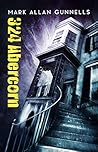 324 Abercorn by Mark Allan Gunnells
My rating: 4 of 5 stars
Haunted houses, a horror trope, are mythic, dark and dangerous. The ghosts in these places want our attention, want us to do something, and they want it now. Often, at first, a haunted house is welcoming. They are dream houses, the first home for a newly-wed couple, the house longed for years, but only now can it afford to be bought. But the resident ghosts are only biding their time.
324 Albercorn, by Mark Allan Gunnells, is just such a house. Brad Storm, horror writer, has made it big, bestseller after bestseller. Now he can afford the house in Savannah he saw years ago, a house supposedly haunted. But Brad Storm doesn't believe in ghosts except as fodder for his fiction. He meets Bias, a charming young man, in a bookstore, and falls in love, meets his neighbor, Neisha, a new friend. The world is good.
His house has other ideas.
Gunnells is a storyteller par excellence and he drew him into this well-crafted tale, rich with authentic detail in place and character. I loved the growing relationship between the two men and loved how it paralleled the growing sense of peril in 324 Albercorn. I did not expect the twist at th end.
Well done, and recommended.
View all my reviews
324 Abercorn by Mark Allan GunnellsMy rating: 4 of 5 stars
Haunted houses, a horror trope, are mythic, dark and dangerous. The ghosts in these places want our attention, want us to do something, and they want it now. Often, at first, a haunted house is welcoming. They are dream houses, the first home for a newly-wed couple, the house longed for years, but only now can it afford to be bought. But the resident ghosts are only biding their time.
324 Albercorn, by Mark Allan Gunnells, is just such a house. Brad Storm, horror writer, has made it big, bestseller after bestseller. Now he can afford the house in Savannah he saw years ago, a house supposedly haunted. But Brad Storm doesn't believe in ghosts except as fodder for his fiction. He meets Bias, a charming young man, in a bookstore, and falls in love, meets his neighbor, Neisha, a new friend. The world is good.
His house has other ideas.
Gunnells is a storyteller par excellence and he drew him into this well-crafted tale, rich with authentic detail in place and character. I loved the growing relationship between the two men and loved how it paralleled the growing sense of peril in 324 Albercorn. I did not expect the twist at th end.
Well done, and recommended.
View all my reviews
July 15, 2021
The House in the Cerulean Sea, by T.J. Klune
a href="https://www.goodreads.com/book/show/4..." style="float: left; padding-right: 20px"> The House in the Cerulean Sea by T.J. Klune
My rating: 5 of 5 stars
What a lovely story. Linus Baker, a caseworker in the Department in Charge of Magical Youth, believes in the manual with its endless regulations as how one should handle these strange children and the orphanages set up to care for them. He truly believes he is doing what's best for them when called to investigate each orphanage and sometimes recommend its closing. Then, the DICOMY higher-ups send him to see if "whether six dangerous magical children are likely to bring about the end of the world" (Amazon review). That one of these six is the Antichrist only adds to the danger and necessity for an investigation.
Things are not quite what they seem. Linus falls in love: with the cerulean sea, and the house, all six children, and it master, Arthur Parnassus. Linus finds himself in an inner struggle, the regulations, his safe and yet grey life as a caseworker, his tiny house vs. the sea, the children, the house, and Arthur, with whom he is love. Can he save them? Can Linus save himself?
This is is a love story, and a story of finding family, and finding yourself.
This is the first Klune novel I have read and I am eager to try more. Recommended.
View all my reviews
The House in the Cerulean Sea by T.J. KluneMy rating: 5 of 5 stars
What a lovely story. Linus Baker, a caseworker in the Department in Charge of Magical Youth, believes in the manual with its endless regulations as how one should handle these strange children and the orphanages set up to care for them. He truly believes he is doing what's best for them when called to investigate each orphanage and sometimes recommend its closing. Then, the DICOMY higher-ups send him to see if "whether six dangerous magical children are likely to bring about the end of the world" (Amazon review). That one of these six is the Antichrist only adds to the danger and necessity for an investigation.
Things are not quite what they seem. Linus falls in love: with the cerulean sea, and the house, all six children, and it master, Arthur Parnassus. Linus finds himself in an inner struggle, the regulations, his safe and yet grey life as a caseworker, his tiny house vs. the sea, the children, the house, and Arthur, with whom he is love. Can he save them? Can Linus save himself?
This is is a love story, and a story of finding family, and finding yourself.
This is the first Klune novel I have read and I am eager to try more. Recommended.
View all my reviews
July 11, 2021
Out of Character, by Annabeth Albert
 Out of Character by Annabeth Albert
My rating: 5 of 5 stars
Jasper, the good guy, " is tired of being everyone's favorite sidekick." He want to be the hero of his own life." Enter Milo, former best friend (and "his old secret crush"), turned jock enemy, and albeit not the ring leader," Milo was part of the crew that made high school awful. He needs help. Milo has lost his brother's rare and expensive Odyssey cards and he turns to Jasper for help.
"[Jasper] could never resist him," the hunt for the rare cards is on, but this has to be a two-way street. The children's hospital Jasper and his Odyssey friends support, has a charity ball coming up. Time for Milo suit up as Prince Neptune and join Jasper, as Frog Wizard, and yes, time for Milo to come out of his closet (back cover).
Complications, of course ensue, but the affection between these two is palpable and, as it blooms and matures, it drives the story to a most satisfactory conclusion.
A worthy sequel to Conventionally Yours. Recommended.
View all my reviews
May 11, 2021
To Find Him and Love Him Again, Volume 3, by Harper Fox
a href="https://www.goodreads.com/book/show/5..." style="float: left; padding-right: 20px">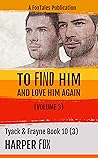 To Find Him and Love Him Again: Volume 3 by Harper Fox
My rating: 5 of 5 stars
Big Harper Fox fan here.
Loved this wild mythic romp in and out of more than one alternate time line for Gideon and Lee, whose love story is, of course, the heart of this tale. That Gideon and Lee, and others in their lives, are slip in and out of different mythic roles, such as prophet, beast, priest, and the lord of misrule, adds to the richness of this tale. The interconnectedness of their lives, and the influence of how Gideon and Lee have lived and loved, is a powerful statement, I would argue, for what it means to be human.
Very satisfying indeed, and a very satisfying end to this trilogy. Yes, evil is dealt with, but this comes with a price, but doesn't it always?
Recommended.
View all my reviews
To Find Him and Love Him Again: Volume 3 by Harper FoxMy rating: 5 of 5 stars
Big Harper Fox fan here.
Loved this wild mythic romp in and out of more than one alternate time line for Gideon and Lee, whose love story is, of course, the heart of this tale. That Gideon and Lee, and others in their lives, are slip in and out of different mythic roles, such as prophet, beast, priest, and the lord of misrule, adds to the richness of this tale. The interconnectedness of their lives, and the influence of how Gideon and Lee have lived and loved, is a powerful statement, I would argue, for what it means to be human.
Very satisfying indeed, and a very satisfying end to this trilogy. Yes, evil is dealt with, but this comes with a price, but doesn't it always?
Recommended.
View all my reviews
April 21, 2021
Fix the World, edited by J. Scott Coatsworth
a href="https://www.goodreads.com/book/show/5..." style="float: left; padding-right: 20px"> Fix the World by J. Scott Coatsworth
My rating: 4 of 5 stars
A couple of years ago, Scott Coatwsorth, like the rest of us, found the “almost unrelentingly bad news day after day” more than a little depressing. He “felt like we needed a little hope, some light at the end of the tunnel” ( Fix the World ix). To meet this need, Coatsworth, a co-owner of the publishing company, Other Worlds Ink, came up with a thought-experiment: pose a “what-if” question, answer it in fiction. Thought experiments, and their “what-if” questions, are often used in science fiction, and science fiction is the genre of possible futures, futures that comment on the present. Coatsworth sent out a call for stories “about ways to fix what’s wrong with the world” (back cover).
Fix the World: Twelve Sci-Fi Writers Save the Future, offers twelve different ways to fix the future, possible solutions that answer “what-if?” They are all engaging, interesting, and they kept me reading. As I read the stories, one pattern, or rather, one common theme emerged. For the future to be fixed, to find a solution to one of the dire problems facing humanity, it seems there first has to be a prerequisite. We have to be on the precipice, standing on the edge of the cliff. Or we’ve gone over the cliff: there has been a global catastrophe. There has been an environmental disaster, the waters have risen beyond the power of any dam or dike to fix. the waters have risen beyond the power of any dam or dike to fix. Or World War III, an endless drought—the horror is about to do us in. People are suffering, too many have died, and they keep dying. There is pain and sorrow and heartache. For a problem to be fixed, we have to be forced into action.
The twelve ways offered to fix one of the world’s pressing problems, are diverse and fascinating.
But, in the interest of brevity, I will highlight a few of my favorites in this fine collection. In “The Homestead at the Beginning of the World,” by Jana Denardo, what forced us into action to begin solving such problems as hunger and protecting the environment, wasn’t a human-made catastrophe. In this story, it was an alien invasion and a century of raping the planet and humans being used as slaves or “lab rats.” When the aliens are gone, how do we rebuild and restore the environment? One answer is to achieve balance and harmony, to create self-sustaining communities, to preserve and protect the environment, This can be done by following, and expanding upon, the already-present examples offered by Native Americans, combined with responsible use of science and technology. But, to my mind, the best SF, while about such thought-experiments and extrapolations and the like, are about people. How are individuals, as in “Homestead,” addressing these issues? How do they live and love—even if the aliens have spliced in chlorophyll, making one of our heroes, Kjell, a green man? How do he and Sam, whose algae lakes Kjell is inspecting, sort out loving each other?
That Sam’s mother loved The Lord of the Rings and his name is really Samwise, his brother and sister, Aragorn and Arwen, is a nice touch. This Tolkien fan loved it.
In another favorite, science is clearly just part of any solution to a particular problem. In Anthea Sharp’s story, “Ice in D Minor,” climate change is addressed through the right frequencies or sound—music. “The concert of a lifetime,” a symphony written and conducted by Rinna Sen, is what causes the temperature of the Arctic to drop, the snow to fall. “The thrum of sound transformed into super-cooled air” begins “long hard pull back from the precipice” (53).
Other solutions are no less engaging and original, no less human, include:
“Juma and the Quantum Ghost” (by Ingrid Garcia), a sentient AI, the power of community action, and a woman determined to fight political corruption and waste;
“Upgrade” (by Alex Silver), domed cities to survive ecological disaster, and cybertechnology and body modifications, and a determined man and a friendly cop, fight a cyber-attack;
“In Light” (by Mere Rain) the journey back from disaster, is helped by solar power, intentional communities, planned human evolution, and a potter and an angel falling in love.
That is just a sample. Will these stories “restore [your] faith in humanity, and our ability to change the future, to find a new path that just might save us” ? (ix). Yes, I think maybe so.
Maybe a disaster, the precipice, is necessary, for the world to be fixed. Thanks to World War II and the sources for natural rubber being in the hands of the Axis, we developed a much cheaper synthetic rubber that was desperately needed. But let’s hope another war isn’t what forces us to finally act.
As this book attests, what we need most, perhaps, is hope, and a belief that problems can be solved, that there are good solutions to “what-if” thought experiments. And these solutions must be human ones, found by human beings who fall in love, who care for each other.
Recommended.
View all my reviews
Fix the World by J. Scott CoatsworthMy rating: 4 of 5 stars
A couple of years ago, Scott Coatwsorth, like the rest of us, found the “almost unrelentingly bad news day after day” more than a little depressing. He “felt like we needed a little hope, some light at the end of the tunnel” ( Fix the World ix). To meet this need, Coatsworth, a co-owner of the publishing company, Other Worlds Ink, came up with a thought-experiment: pose a “what-if” question, answer it in fiction. Thought experiments, and their “what-if” questions, are often used in science fiction, and science fiction is the genre of possible futures, futures that comment on the present. Coatsworth sent out a call for stories “about ways to fix what’s wrong with the world” (back cover).
Fix the World: Twelve Sci-Fi Writers Save the Future, offers twelve different ways to fix the future, possible solutions that answer “what-if?” They are all engaging, interesting, and they kept me reading. As I read the stories, one pattern, or rather, one common theme emerged. For the future to be fixed, to find a solution to one of the dire problems facing humanity, it seems there first has to be a prerequisite. We have to be on the precipice, standing on the edge of the cliff. Or we’ve gone over the cliff: there has been a global catastrophe. There has been an environmental disaster, the waters have risen beyond the power of any dam or dike to fix. the waters have risen beyond the power of any dam or dike to fix. Or World War III, an endless drought—the horror is about to do us in. People are suffering, too many have died, and they keep dying. There is pain and sorrow and heartache. For a problem to be fixed, we have to be forced into action.
The twelve ways offered to fix one of the world’s pressing problems, are diverse and fascinating.
But, in the interest of brevity, I will highlight a few of my favorites in this fine collection. In “The Homestead at the Beginning of the World,” by Jana Denardo, what forced us into action to begin solving such problems as hunger and protecting the environment, wasn’t a human-made catastrophe. In this story, it was an alien invasion and a century of raping the planet and humans being used as slaves or “lab rats.” When the aliens are gone, how do we rebuild and restore the environment? One answer is to achieve balance and harmony, to create self-sustaining communities, to preserve and protect the environment, This can be done by following, and expanding upon, the already-present examples offered by Native Americans, combined with responsible use of science and technology. But, to my mind, the best SF, while about such thought-experiments and extrapolations and the like, are about people. How are individuals, as in “Homestead,” addressing these issues? How do they live and love—even if the aliens have spliced in chlorophyll, making one of our heroes, Kjell, a green man? How do he and Sam, whose algae lakes Kjell is inspecting, sort out loving each other?
That Sam’s mother loved The Lord of the Rings and his name is really Samwise, his brother and sister, Aragorn and Arwen, is a nice touch. This Tolkien fan loved it.
In another favorite, science is clearly just part of any solution to a particular problem. In Anthea Sharp’s story, “Ice in D Minor,” climate change is addressed through the right frequencies or sound—music. “The concert of a lifetime,” a symphony written and conducted by Rinna Sen, is what causes the temperature of the Arctic to drop, the snow to fall. “The thrum of sound transformed into super-cooled air” begins “long hard pull back from the precipice” (53).
Other solutions are no less engaging and original, no less human, include:
“Juma and the Quantum Ghost” (by Ingrid Garcia), a sentient AI, the power of community action, and a woman determined to fight political corruption and waste;
“Upgrade” (by Alex Silver), domed cities to survive ecological disaster, and cybertechnology and body modifications, and a determined man and a friendly cop, fight a cyber-attack;
“In Light” (by Mere Rain) the journey back from disaster, is helped by solar power, intentional communities, planned human evolution, and a potter and an angel falling in love.
That is just a sample. Will these stories “restore [your] faith in humanity, and our ability to change the future, to find a new path that just might save us” ? (ix). Yes, I think maybe so.
Maybe a disaster, the precipice, is necessary, for the world to be fixed. Thanks to World War II and the sources for natural rubber being in the hands of the Axis, we developed a much cheaper synthetic rubber that was desperately needed. But let’s hope another war isn’t what forces us to finally act.
As this book attests, what we need most, perhaps, is hope, and a belief that problems can be solved, that there are good solutions to “what-if” thought experiments. And these solutions must be human ones, found by human beings who fall in love, who care for each other.
Recommended.
View all my reviews
April 13, 2021
Aristotle and Dante Discover the Secrets of the Universe
 Aristotle and Dante Discover the Secrets of the Universe by Benjamin Alire Sáenz
My rating: 5 of 5 stars
I love this book.
Teenage angst, coming-of-age, growing up, coming out, falling in love.
Family secrets, about war, violence, and shame.
Finally, redemption, and love.
Beautifully written, lyrical, sometimes heartbreaking, and sometimes heart affirming.
Well done,
Recommended.
View all my reviews
February 26, 2021
2B, by Mark Allan Gunnells
 2 B: “When your ex wants you dead, they will take you to the grave with them!” -2 B by Mark Allan Gunnells
My rating: 4 of 5 stars
Mark Allan Gunnells' newest novel is a dark tale of murderous obsession, a dark twisted love, and lover who cannot let go, even after he blows his brains out.
Berkley Simmons picked the wrong boyfriend. When he breaks up, he finds out that Kevin is determined not to let him go. He haunts Berkley with phone calls and texts and finally in person. If Kevin can't have Berkley then nobody can. Kevin drowns him in the tub and then blows his brains out. "When your ex wants you dead, they will take you to the grave with them" (back cover).
The obsession doesn't seem to there. It looks Kevin is haunting Berkley, determined to that Berkley be with him in death. Berkley, helped by his best friend, Sasha, and his boss, Zane, does everything can to free himself from this dark spirit. Doing so turns out to be quite complicated
I wish this well-written novel had been longer. Dark, compelling, the story kept me turning the pages.
Well done.
View all my reviews
February 12, 2021
Ziggy, Stardust and Me, by James Brandon
 Ziggy, Stardust and Me by James Brandon
My rating: 5 of 5 stars
1973.
"On December 15, the American Psychiatric Association changed history. After a long and rigorous, seemingly insurmountable battle fought by the Gay Liberation Movement, the APA officially removed homosexuality from the Diagnostics and Statistical Manual of Mental Disorders. Simply put: if you identified as queer, for the first time in recorded history, you were considered 'normal'" (Brandon, "Author's Note," 349).
Before that, queer boys and girls (and adults) like 16-year-old Jonathan Collins were sick and treated to such aversion therapies as being electrically shocked when presented with a picture of a person of the same gender. Jonathan wants to be normal, to be fixed. His alcoholic father wants the same. Jonathan only has his father and his "sympathetic neighbor and friend, Starla," and no one else. He is bullied by the Apes at school, led by the first boy he ever kissed. He suffers from asthma and "escapes into the safe haven of his imagination where his hero David Bowie's Ziggy Stardust and his dead mother give him guidance and love.
In DC, the presidency of Richard Nixon is unraveling into lies and betrayal
Enter Web, "a Lakota boy ...who is everything Jonathan wishes he could be: fearless, fearsome, and, most importantly, not ashamed of being gay." Indeed, boys like Jonathan and Web, have a special place in Lakota culture.
That they fall in love is inevitable. That this first love comes with complications and pain and happiness and self-acceptance is inevitable. That there are lies and betrayal is, again, inevitable.
This "coming-of-age" and coming story is heartbreaking and sad, as it is powerful and hopeful and redemptive (front cover).
Highly recommended.
View all my reviews